
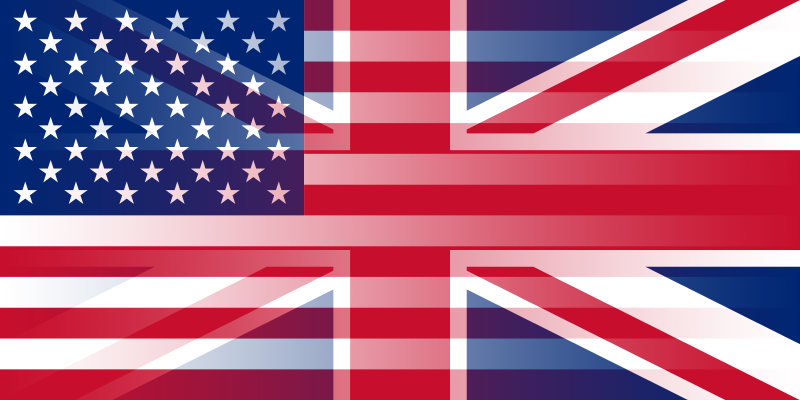
It is often said that the Americans and the British are two people divided by a common language. If that language is democracy, then developments in 2024 could lead to the divisions becoming wider than ever.
Both countries are expected to head to the polls this year – the United States (US) in November, and Britain sometime in the spring or autumn.[1] Both elections will have consequences for the United Kingdom (UK)’s foreign policy, be it towards the US itself or in other parts of the world. However, perhaps surprisingly, the most profound consequences for British foreign policy are more likely to arise not from its own election but from the one taking place on the other side of the Atlantic.
Despite the divisions caused by Brexit, there is remarkable cross-party consensus between the Labour and Conservative parties on the principles that should underpin British foreign policy. In both its 2021 Integrated Review and its 2023 foreign policy “refresh”, the Conservative Government committed to “working towards the higher goal of an open and stable international order”. It also placed heavy emphasis on ensuring the security of Europe, including by thwarting Russia’s designs on Ukraine.[2] In its response, the Labour Party has generally agreed with these goals and criticised the Government for not providing sufficient resources to achieve them.[3]
By contrast, the politics of American foreign policy is much less consensual. One result of the polarisation which has gripped American politics in recent years is that elections have become far more consequential. Because the two parties are so far apart on so many issues, the country can radically change direction based on a single election result.[4] This potential is heightened by the fact that Donald Trump, the candidate currently leading in the polls, and emboldened after his recent win in the Iowa caucus, has both an erratic personality and a marked hostility to most international institutions.
The result is that if Trump wins the November election, the UK Government’s “closest ally and partner” – to use the words of the 2023 Integrated Review refresh – will be led by a president profoundly hostile to the stated principles of UK foreign policy.[5] Trump has suggested that he may withdraw the United States from NATO, impose a 10% tariff on almost all imports, and withdraw support for Ukraine.[6] Any one of these decisions would send shockwaves around the world, including through London.
Regional security
According to the Integrated Review, the UK has two main regional priorities: Europe and the Asia-Pacific.[7] Ever since the full-scale Russian invasion of Ukraine in February 2022, London has seen the defence of Ukraine as pivotal to the defence of Europe as a whole. The UK has become the second biggest donor of military aid to Kyiv and the UK Government has increased defence spending in order to reinforce NATO’s eastern flank.
The goal of defending Ukraine is shared by American internationalists of both parties but contested by Trump and many within the Republican Party, including many members of Congress. This ‘America First’ camp disparages the idea that Russia poses a systemic threat to either the US or the international order, believing that China poses a far greater one. They portray Russia’s conflict with Ukraine as essentially a local dispute which should be managed either by Ukrainian concessions or by European countries themselves.[8] Congressional Republicans have already delayed – and may ultimately kill off entirely – a fresh tranche of aid to Kyiv requested by the Biden administration.
Despite this difficulty, a new Democratic administration would continue to provide strong diplomatic support for Ukraine and attempt to find alternative channels for aid, for instance from allies. Trump, by contrast, has claimed he would end the war in 24 hours – presumably by wielding diplomatic influence against Ukraine and forcing it into territorial concessions to Russia.[9] Even more dangerous to the UK Government’s priorities is Trump’s attitude towards NATO, which the UK Government regards as “the bedrock of our security”.[10] Trump was reportedly on the brink of ordering an American exit from the alliance several times during his first term.[11] Even if he doesn’t order an outright withdrawal, he has committed himself to “fundamentally reevaluating NATO’s purpose and NATO’s mission”.[12]
Any downgrade in the American commitment to Ukraine or NATO would force a re-evaluation of the most fundamental principles of British foreign policy. There is no conceivable way for Europe and the UK to replace American assistance to Ukraine, much less the capabilities that the US provides to NATO as a whole. Either development would likely lead to renewed calls for Europe to enhance its own defence capabilities and cooperation. But with its domestic economy struggling and the politics of Brexit complicating cooperation with Europe, Britain would be ill-placed to take a leading role in these efforts.
The US election will also have implications for Britain’s other main regional priority, the Asia-Pacific. There is a bipartisan consensus in Washington in favour of containing the rise of China, but the two parties differ significantly in their preferred methods. The Biden administration has placed heavy emphasis on multilateral cooperation with European countries, for instance with Britain through the AUKUS pact. It has also reinforced American security commitments in the region. In his first term, Trump was much more narrowly focused on trade and repeatedly questioned American defence commitments to South Korea, Japan and Taiwan.[13] Throughout the campaign he has continued to speak highly of Xi Jinping, who he seems to regard as a peer with whom he can cooperate rather than a systemic threat to the current international order.[14]
As a result, a Trump victory would likely also force London to re-evaluate its Asia-Pacific “tilt”. Firstly, any downgrade in US support for NATO and Ukraine would force the UK to divert its limited resources closer to home. Secondly, a new Trump administration would be much less interested in multilateral or so-called “minilateral” arrangements like AUKUS as a component of its approach to China. Rather than attempting to coordinate with Europe against China as the Biden administration is doing, Trump would be much more likely to pursue American interests unilaterally – including at the expense of Britain.
An open international economy
One area in which there is likely to be a direct clash between London and Washington in a second Trump administration is trade. UK policymakers are seeking a new free trade agreement with the US, which Conservatives have touted as a potential benefit of Brexit. More generally, policymakers in both major UK parties are in favour of maintaining an open international economic order based on the free flow of goods and capital.[15]
The first goal – a new US-UK trade agreement – is likely unobtainable whoever wins the November election. The Biden administration has refused to enter serious negotiations and is unlikely to do so in a second term given widespread hostility to new trade agreements across the American political spectrum.[16] The current administration has also resurrected American industrial policy, pouring state investment into strategic industries in a way which makes it difficult for British businesses to compete. This process is likely to accelerate whoever wins the election, although the Biden administration would almost certainly proceed with more sensitivity to the concerns of its allies.
It is Trump, however, who is likely to launch a broader assault on the entire international economic order. His campaign has called for a 10% tariff on “almost all” imports and a near-total decoupling of the American economy from China. This would affect UK interests as defined by its government in two ways. First would be the direct economic impact, which would be significant given the high volume of trade between the two countries. To mitigate the damage, UK policymakers would be forced to make a diplomatic scramble for exemptions, pitting them against dozens of other countries seeking the same relief. Yet British policymakers would likely find this need at odds with their desire to maintain open trade relations with China, a predilection which American China hawks view with suspicion and disdain and may wish to punish.[17]
Secondly, such a serious American challenge to the international economic order would likely rapidly accelerate its fragmentation. In a deglobalised world, nations and economic blocs will thrive if they possess large, integrated markets and deep pools of capital to drive investment and innovation. As with security affairs, the logical course of action for British policymakers would be to seek re-integration with Europe to pool resources and obtain a measure of protection by joining a large regional economic bloc. Yet post-Brexit politics would profoundly complicate this, likely rendering it a non-starter under a Conservative government and difficult to pursue in any impactful way even under Labour.
Which direction?
Perhaps the most profound impact of a second Trump victory on British policymakers will be psychological: the realisation that America is no longer a reliable partner in upholding a free and open international order. Although segments of the Conservative Party have some ideological affinity with Trumpian nationalism, no major grouping on the British political spectrum is hostile to international trade and investment or the European security order in the same way as the former president. Nationalism is ultimately a thin basis for cooperation given its emphasis on upholding the narrow material interests of nations, which often clash.
The result of the next American election hence has profound implications for Britain. Will America remain committed to upholding a relatively free, open and multilateral international order, or will it return to ‘America First’? For many decades before 2016, British foreign policy was based on two pillars: economic integration with Europe, and close alignment on diplomatic and security priorities with the US. Brexit severely complicated the first pillar. If the second pillar is undermined or even demolished in the aftermath of 2024, British policymakers of both parties will be forced into an agonising reappraisal unlike any in their post-war history.
Andrew Gawthorpe is an expert on US foreign policy and politics at Leiden University and the creator of America Explained, a podcast and newsletter. He was formerly a research fellow at the Harvard Kennedy School, a teaching fellow at the UK Defence Academy, and a civil servant in the Cabinet Office.
Disclaimer: The views expressed in this piece are those of the author and do not reflect the views of The Foreign Policy Centre.
[1] Archie Mitchell, Rishi Sunak Rules out a 2025 General Election: ‘2024 Will be an Election Year’, The Independent, December 2023, https://www.independent.co.uk/news/uk/politics/rishi-sunak-general-election-keir-starmer-b2466424.html
[2] HM Government, Integrated Review Refresh 2023: Responding to a More Contested and Volatile World, March 2023, pp. 7, 19, 22 – 28 (quote 19); HM Government, Global Britain in a Competitive Age: The Integrated Review of Security, Defence, Development and Foreign Policy, March 2021, pp. 10 – 22.
[3] David Lammy Responds in Parliament to the Government’s Statement on the Integrated Review, Policy Mogul, March 2023, https://policymogul.com/key-updates/27493/david-lammy-responds-in-parliament-to-the-government-s-statement-on-the-integrated-review; David Lammy, Britain Reconnected: A Foreign Policy for Security and Prosperity at Home (London: Fabian Society, 2023), p. 17.
[4] Andrew Gawthorpe, 2024 US Presidential Elections: A Fork in the Road for the Future of American Foreign Policy?, Foreign Policy Centre, November 2023, https://fpc.org.uk/2024-us-presidential-elections-a-fork-in-the-road-for-the-future-of-american-foreign-policy/
[5] HM Government, Integrated Review Refresh 2023, p. 23.
[6] Charlie Savage, Jonathan Swan and Maggie Haberman, A New Tax on Imports and a Split From China: Trump’s 2025 Trade Agenda, The New York Times, December 2023, https://www.nytimes.com/2023/12/26/us/politics/trump-2025-trade-china.html; Charlie Savage, Jonathan Swan and Maggie Haberman, Fears of a NATO Withdrawal Rise as Trump Seeks a Return to Power, The New York Times, December 2023, https://www.nytimes.com/2023/12/09/us/politics/trump-2025-nato.html
[7] HM Government, Integrated Review Refresh 2023, pp. 3, 6, 9.
[8] For instance, see Freddie Sayers, Elbridge Colby: China is More Dangerous than Russia, unHerd, April 2023, https://unherd.com/2023/04/elbridge-colby-china-is-more-dangerous-than-russia/; Sen. Josh Hawley on China and Ukraine, Heritage Foundation, May 2023, https://www.heritage.org/asia/heritage-explains/sen-josh-hawley-china-and-ukraine
[9] Jack Forrest, Trump Won’t Commit to Backing Ukraine in War with Russia, CNN, May 2023, https://edition.cnn.com/2023/05/10/politics/ukraine-russia-putin-trump-town-hall/index.html
[10] HM Government, Integrated Review Refresh 2023, p. 9.
[11] John Bolton, The Room Where it Happened: A White House Memoir (New York: Simon and Schuster, 2020).
[12] Donald J. Trump, Agenda47: Preventing World War III, March 2023, https://www.donaldjtrump.com/agenda47/agenda47-preventing-world-war-iii
[13] Josh Rogin, Chaos Under Heaven: Trump, Xi, and the Battle for the Twenty-First Century (Boston: Mariner, 2021).
[14] Newsroom, Hear Donald Trump Praise Dictators at New Hampshire Rally, CNN, November 2023, https://edition.cnn.com/videos/politics/2023/11/12/donald-trump-comments-xi-jinping-kim-jong-un-new-hampshire-rally-se-cupp-acostanr-vpx.cnn
[15] HM Government, Integrated Review 2023, p. 45; Lammy, Britain Reconnected.
[16] Graham Lanktree, Biden Quietly Shelves Trade Pact with UK before 2024 Elections, Politico, December 2023, https://www.politico.eu/article/us-president-joe-biden-shelves-trade-pact-with-uk-2024-election/
[17] HM Government, Integrated Review 2023, p. 31.