
Britain has long played a vital role in supporting international peace, security and prosperity. This has been a conscious choice on the part of our country – a recognition of both the socio-economic and moral sense that underpins a global, outward-looking approach to engaging with our neighbours. At the beginning of a new decade, we face a foundational shift in our world order. Britain’s departure from the EU has necessitated a fundamental reappraisal of our international role, as understood through the prism of prosperity, security and diplomacy. As we stand at the cusp of this defining time in our history, we face a formidable challenge: to design a new foreign policy which reflects the rapidly changing demands of our era. I believe that the best way to address this challenge is to turn it into an opportunity for ourselves and our global partners. With a renewed mandate to define and deploy a forward-thinking foreign policy, we must recognise the central role that British aid should play as an engine for global development and prosperity.
UK aid helps the poorest and neediest in the world – those who often have nowhere else to turn. Over the years, British aid has helped make Mozambique landmine-free following decades of deadly war, saved 6.2 million people from dying of malaria globally and immunised 6.7 million children across the world against preventable diseases.[1] As these interventions demonstrate, when deployed effectively, British aid can help shape a better world, save lives and improve the lives of and expectations for millions across the globe. In doing so, Britain sends out a clear message about the values we hold dear, whilst fulfilling our moral duty as a nation to support our neighbours far and wide. For these reasons, aid must play a key role in developing our future foreign policy.
The UK’s aid budget helps to create a safer, healthier, more prosperous world, which directly benefits Britain. It is our international development efforts which enable British businesses to build new trading relations, create safety for British citizens at home and abroad, and empower our leaders and diplomats to collaborate on tackling global issues. With Africa’s GDP set to hit $3.2 trillion in the next five years, initiatives such as Africado are key to cultivating the wealth needed to build possible future trading markets for UK business.[2] Developed with the support of UK foreign aid, Africado is now Tanzania’s largest cultivator and exporter of avocados; Britain alone spends an average of $144 million on avocados every year. Sustaining over 2,000 jobs for farmers in the East African country, Africado is a perfect demonstration of how UK aid is lifting living standards and creating opportunities to meaningfully tackle poverty. As a trading nation, Britain benefits when we stimulate global prosperity and growth. This is not an untested hypothesis. Whilst South Korea is a high-income country today, providing foreign direct investment, jobs and trade for the UK, it was once a recipient of aid too. In 2018 alone, trade between the UK and South Korea totalled £14.6 billion, making it one of the UK’s most valuable partners in East Asia.[3]
Beyond trade, the UK’s work in promoting global health is also protecting citizens at home as well as abroad. When Ebola broke out in the Democratic Republic of Congo (DRC) and previously in Sierra Leone, the UK was one of the first responders. I have seen first-hand in West Africa how UK aid played a leading role in mitigating one of the largest and most devastating outbreaks the modern world has seen. By dedicating resources to tackle the disease and halt its transmission, the UK has not only saved lives in the DRC, but also prevented possible deaths across the rest of the world, safeguarding British citizens worldwide.
Notably, UK aid is also protecting citizens of the UK and the world from the harms of social and political instability. UK aid in Somalia is a pertinent example of this in action. Following a spate of terrorism and coastal piracy in the country, in 2012 the UK started contributing to state-building, policing and local peace arrangements in areas newly liberated from Al-Shabaab.[4] The UK approach was widely credited by experts, including the United Nations, and is now being followed by other international actors.[5] This shows the power of UK leadership in stabilising a part of the world long plagued by insecurity and long known to promote instability abroad.
Lastly, development aid is crucial to building and sustaining the UK as a ‘soft superpower’ – a quality which British diplomats across the world value highly and utilise to great effect. UK aid flies the flag for Britain around the world and sends a clear message about Britain’s values and role at the supranational level. This standing helps to cement the UK as a key figure on the global stage, sending a message of international solidarity, and building prestige and influence. It also helps build goodwill for the UK in communities around the world, who see the food, tents and other supplies that we distribute proudly marked with the Union Jack.
More directly, the UK’s success in delivering aid has also made Britain a global leader and authority on development. The Department for International Development (DFID) is widely regarded to be one of the most effective distributors of international aid in the world. In 2018, the Aid Transparency Index, produced by Publish What You Fund, rated the department as the world’s third-most effective aid agency, out of 45 agencies analysed, categorising it ‘very good’ for its transparency and effectiveness.[6] This expertise does not go unnoticed and helps maintain the UK’s standing as a key international player, helping Britain to leverage international debates, exert influence on international action and create relationships with growing powers.
So, as we begin to shape our new foreign policy, we must choose to be an open and cooperative partner. A new approach to foreign policy will ensure we can prosper, but it can only do so sustainably if we recognise Britain’s moral responsibility to lift standards of living and security in the process. Post-Brexit, as we chart a new course for our nation, it is through the significant contribution of UK aid – functioning alongside diplomacy, defence and trade – that we can preserve our reputation as a force for good. That is why, at this pivotal moment in our history, it is vital our leadership sets out a positive vision for UK aid as part of any comprehensive future foreign policy.
Theo Clarke was elected MP for Stafford in 2019 and currently sits on the International Development Select Committee in the UK Parliament. She is the founder of The Coalition for Global Prosperity and former Director of the Conservative Friends of International Development. She has led the Conservative Party’s social action project in Sierra Leone and has delivered education, enterprise and employability training in several African countries. She previously sat on the Board of Africa House London which promotes trade between the UK and emerging markets.
[1] Theo Clarke, Read Our Essay in Bright Blue’s Magazine on Britain as a force for good, Coalition for Global Prosperity, 2018, https://www.coalitionforglobalprosperity.com/blog/emergency-first-responder
[2] AgDevCo, Africado, Investment Information. https://www.agdevco.com/our-investments/by-investment/Africado; Theo Clarke, Theresa May is right to focus on post-Brexit trading opportunities in Africa, Coalition for Global Prosperity, 2018, https://www.coalitionforglobalprosperity.com/blog/theresa-may-post-brexit-trading-africa
[3] BBC News, UK and South Korea sign ‘continuity’ trade agreement, August 2019, https://www.bbc.co.uk/news/business-49430207
[4] ICAI, UK aid in a conflict-affected country: Reducing conflict and fragility in Somalia, June 2017, https://icai.independent.gov.uk/html-report/uk-aid-conflict-affected-country-reducing-conflict-fragility-somalia/
[5] Ibid.
[6] Publish What You Fund is an international campaign to build transparency in the aid sector. Publish What You Fund, The 2018 Aid Transparency Index, 2018, https://www.publishwhatyoufund.org/the-index/2018/; Bond, DFID rated “very good”, FCO “poor”, in aid transparency index, June 2018, https://www.bond.org.uk/news/2018/06/dfid-rated-very-good-fco-poor-in-aid-transparency-index
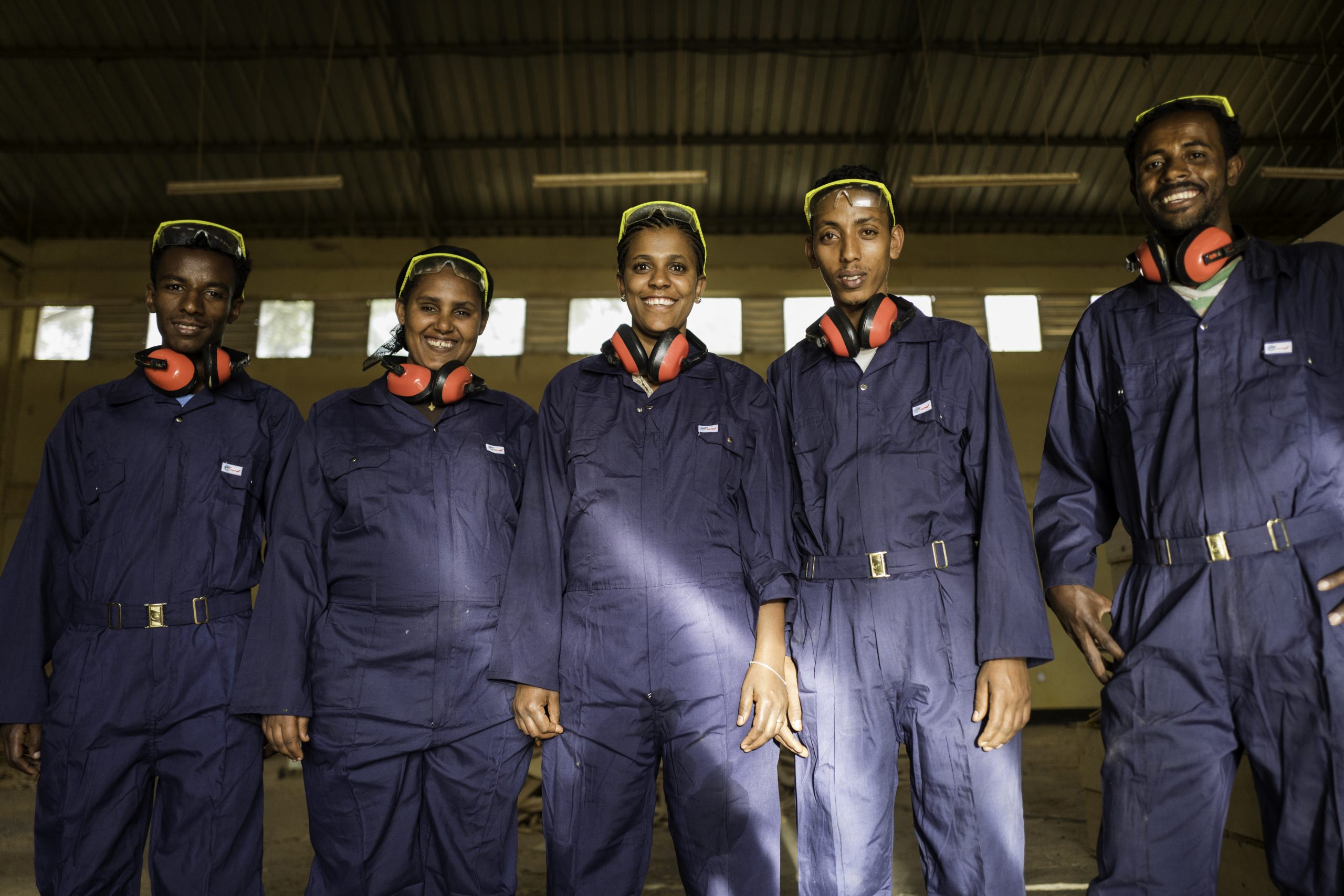
Photo: Workers at Oxfam’s beehive production workshop in Bahir Dar, Ethiopia. Oxfam is helping to assist and train the local community in honey production, distribution and selling. Photo credit: Kieran Doherty/Oxfam.