
Skip to content

Long Read | Immigration Policy: The Backdoor to Transnational Repression

Article by Siena Anstis, Marcus Michaelsen and Kate Pundyk

August 3, 2026

Long Read | Immigration Policy: The Backdoor to Transnational Repression

Did the United States (US) help Iran track down its own dissidents?

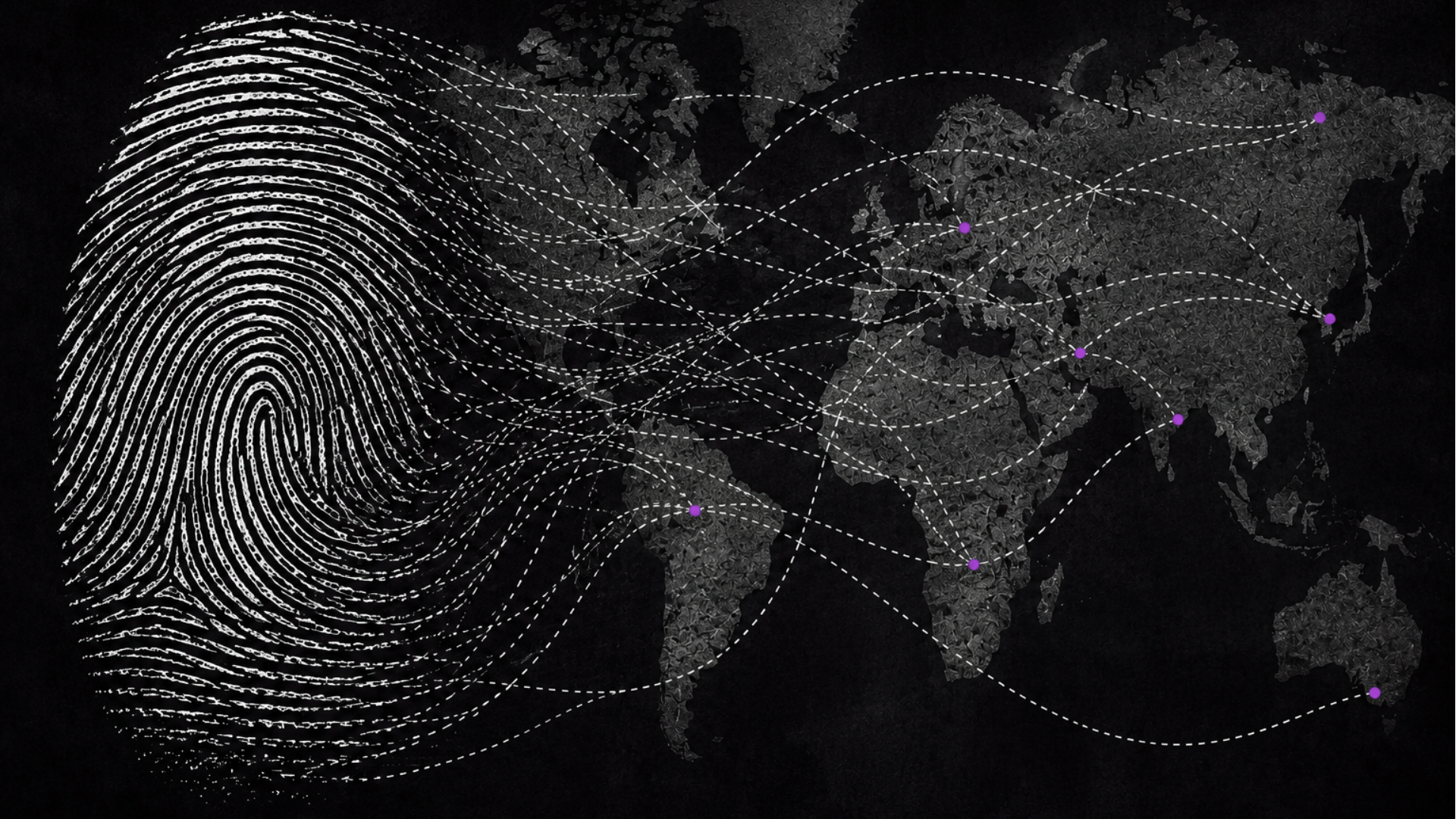
On 7 July, the Iranian American Legal Defense Fund (IALDF) filed a lawsuit alleging exactly that. The Complaint alleges US immigration authorities shared confidential information about Iranian asylum seekers with the Iranian government to facilitate their removal from the United States. If substantiated, the allegations reveal more than an extraordinary instance of cooperation between geopolitical adversaries. They suggest that the US immigration system may have become a vehicle for transnational repression, enabling an authoritarian regime to reach dissidents beyond its borders.


As such, the case exposes a broader paradox: democratic governments present themselves as committed to countering transnational repression, yet their increasingly restrictive migration policies may be helping autocrats achieve precisely what those efforts seek to prevent.


The Complaint

The Complaint filed by IALDF in the US District Court for the District of Columbia alleges that, from March 2025, the Trump administration began sharing “confidential information from the immigration files of Iranians seeking asylum in the United States” directly with the Iranian government.[1] It further alleges extensive cooperation between US and Iranian officials, including that “the U.S. government allowed the Iranian government to select the Iranians deported to Iran” (paragraph 42).


According to the complaint, this cooperation included sharing asylum file information, coordinating deportation flights, and facilitating in-person meetings between Iranian officials and Iranians detained in US Immigration and Customs Enforcement (ICE) facilities. IALDF states that many of those affected are “pro-democracy protestors, members of religious minorities such as Evangelical Christians, or members of the LGBTQ community” who sought refuge in the United States because of the dangers they faced in Iran. If disclosed, such sensitive information could enable the Iranian regime to further target these individuals, whether in the United States, following their return to Iran, or indirectly through family members who remain there.


Political Responses to Transnational Repression

Transnational repression arises where perpetrating states seek to intimidate, silence or otherwise target human rights defenders, journalists, political dissidents and other members of civil society beyond their own borders. The US is home to many individuals at risk of such practices, including Iranian asylum seekers. This overlap is no coincidence. Asylum seekers are often fleeing persecution because they have criticised or challenged authorities in their country of origin. As a result, many belong to the very groups most frequently targeted by transnational repression, making immigration systems an important part of efforts to protect them.


Under the Biden administration, the US government emerged as a global leader countering transnational repression through a “whole-of-government” approach that mobilised law enforcement, intelligence, diplomacy and cybersecurity agencies.[2] It established dedicated reporting mechanisms, pursued criminal prosecutions, imposed sanctions and issued guidance to vulnerable communities.[3] Ironically, current Secretary of State Marco Rubio previously co-sponsored a bill which would have expanded training for US immigration officials on transnational repression, including on “how foreign governments may try to coopt the immigration system.”[4]


Other democratic governments have likewise come to recognise transnational repression as a threat to national security and state sovereignty. The Group of Seven (G7), in a public statement in 2025, described transnational repression as an “aggressive form of foreign interference” and adopted a common toolkit to strengthen and coordinate national responses.[5] The United Kingdom alongside countries such as Canada and Australia have expanded law enforcement capacities and introduced new legislative instruments to better detect, investigate and prosecute acts of transnational repression.[6] In June, the European Parliament similarly called on the Commission and the Member States to “identify, assess and mitigate structural vulnerabilities in EU and national administrative, legal and financial systems that may be exploited for transnational repression.”[7]


Restrictive Immigration Policies and Transnational Repression

These initiatives reflect a growing consensus that countering transnational repression requires a coordinated response across government agencies. Yet one crucial area has largely escaped scrutiny: immigration policy. This omission may undermine positive steps taken to counter transnational repression.


Across the US and Europe, governments have embraced more restrictive immigration policies, prioritising deterrence, accelerated removals and closer cooperation with countries of origin. Such policies are driven by domestic concerns about migration and the increasing influence of right-wing and populist tendencies. Yet they also create opportunities for authoritarian governments to exploit immigration systems in host states against asylum seekers. As a result, the same governments that are investing resources in combating transnational repression are simultaneously pursuing immigration policies that can inadvertently facilitate it.


In the US, this dynamic extends beyond the alleged cooperation with Iran and is part of a broader anti-immigration policy shift. For example, US immigration enforcement is “turning its back” on individuals fleeing Russia, including defectors and anti-war critics.[8] One prominent case is the detention of Kseniia Petrova, a Russian scientist who faced deportation after allegedly filing an improper customs declaration and feared return to Russia after having publicly criticised the invasion of Ukraine.[9] A similar case arose with the Chinese dissident Guan Heng, who was threatened with deportation despite his role in exposing detention facilities in Xinjiang.[10] At the same time, similar to the United Kingdom in 2022, the Trump administration has explored an agreement with the government of Rwanda to receive third-country deportations, disregarding Rwanda’s well-documented record as a prolific perpetrator of transnational repression.[11]


The Cases of Germany and the United Kingdom

In the European Union, Germany illustrates the tension between responses to transnational repression and restrictive immigration policies. The current federal government has explicitly committed to combatting transnational repression.[12] It has established dedicated task forces across key ministries and amended the German Criminal Code to strengthen penalties for crimes committed on behalf of a foreign government.[13] However, these measures risk being compromised by the government’s promised “turnaround” in migration policy which comes with tightened border controls and asylum procedures.[14] In June 2026, for example, authorities deported Tajik opposition activist Asadullo Boboev despite concerns that he faced persecution upon return.[15] The Government also suspended humanitarian admission programs that previously provided safe pathways for journalists and others at risk from countries such as Russia, Belarus and Iran.[16]


The United Kingdom presents a similar dynamic. While successive governments have demonstrated greater awareness of foreign states’ threats to national sovereignty and security, recent immigration reforms have prioritised deterrence and prolonged migrants’ legal precarity.[17] The Conservative government’s proposal to externalise asylum processing to Rwanda, terminated by Labour in 2024, illustrated how migration control can conflict with protecting individuals at risk of political persecution.[18]


More recently, a parliamentary report warned that politically motivated INTERPOL Red Notices issued by states such as China, Russia and Turkey can create “an automatic presumption of criminality”, affecting asylum and citizenship proceedings.[19] Similar concerns have arisen in immigration cases involving Hong Kong democracy activists, among them Chloe Cheung, whose application for leave to remain was temporarily withheld because of criminal charges arising from her participation in the 2019 pro-democracy protests.[20] Such cases show how immigration systems that fail to account for politically motivated prosecutions and other tactics of transnational repression aimed at punishing dissent risk becoming instruments of the very repression they claim to counter.


All these immigration policies were not adopted with transnational repression in mind. But these examples demonstrate how increasingly restrictive immigration policies can weaken protections for those living in exile and create opportunities for authoritarian governments to exert pressure across borders.


Fighting Transnational Repression Through a Whole-of-Government Approach

Authoritarian regimes quickly learn to weaponise the vulnerabilities created by host states’ immigration systems. Since September 2023, for instance, Belarus has denied its citizens abroad the ability to extend or renew their passports in Belarusian consulates.[21] Unless host state authorities recognise the resulting protection gap and issue alternative identity documents, Belarusians abroad may be forced to return home to obtain valid documents, exposing them to arrest or persecution. The Associated Press documented this dilemma in Germany, where one Belarusian exile explained: “I have a terrible choice to make: become an illegal immigrant in Germany, or return to Belarus, where I will probably be arrested.”[22] This tactic is not unique. Freedom House has documented at least 12 countries, including Saudi Arabia and China, that strategically withhold consular services from dissidents or targeted groups to force them to return home.[23]


Against this backdrop, the complaint filed by IALDF is but one illustration of the broader problem: states are fighting transnational repression without addressing the role their own immigration policies play in perpetuating it. Immigration authorities necessarily collect sensitive information about asylum seekers and routinely cooperate with countries of origin over identity verification, travel documents, and removals. However, as the political environment shifts to prioritise “migration control” over refugee protection, the incentives for the removal and deterrence of migrants are increasing. Administrative cooperation with authoritarian countries of origin, once constrained by concerns about persecution, becomes a convenient tool for achieving such objectives. The result is perhaps not necessarily an intention to facilitate transnational repression, but a growing willingness to engage in arrangements that perpetrator states can exploit.


Addressing this paradox requires governments to recognise that immigration policy is a central battleground in the fight against transnational repression. Measures of border externalisation, such as offshore processing, trap people fleeing persecution in third countries under weak rule of law, where authorities may be more willing to cooperate with perpetrator states.[24] Lengthy and uncertain asylum procedures also discourage victims from reporting threats to law enforcement for fear of jeopardising their immigration status. Therefore, individuals at heightened risk of transnational repression should benefit from additional safeguards, including expedited asylum procedures, robust due diligence before information is shared with countries of origin and strict limits on cooperation that could expose them to repression. Host states should also issue travel documents to individuals unable to obtain them from their countries of origin because of political persecution or blacklisting. Finally, immigration officials need better training to identify and respond to transnational repression.


For the new UK Government, these safeguards should form part of the implementation of its wider immigration reforms.[25] As the Burnham government with Home Secretary Shabana Mahmood proceeds with changes to the asylum and settlement system, it should ensure that immigration authorities are equipped to identify victims of transnational repression, recognise politically motivated criminal proceedings and avoid administrative cooperation that could expose individuals to persecution by the states they sought to escape.[26]


More fundamentally, a comprehensive response to transnational repression requires confronting an uncomfortable truth: restrictive immigration and asylum policies leave open a backdoor that governments engaging in transnational repression readily exploit. Host states cannot claim to counter repression across borders while ignoring the role their immigration policies play in enabling it.


Siena Anstis is a PhD fellow in law at the University of Oslo and a senior legal advisor and senior researcher at the Citizen Lab (University of Toronto).


Dr. Marcus Michaelsen is a senior researcher at the Citizen Lab (University of Toronto).


Kate Pundyk is a researcher at the Citizen Lab (University of Toronto) and a JD candidate at McGill University.


Disclaimer: The views expressed in this piece are those of the individual authors and do not reflect the views of The Foreign Policy Centre.  (more…)
Footnotes
    Related Articles

    Resistance Is Not Enough: Rethinking the Belarusian Democratic Movement

    Article by Palina Brodik

    July 22, 2026

    Resistance Is Not Enough: Rethinking the Belarusian Democratic Movement

    A turning point is approaching for the Belarusian Democratic Forces, which emerged in response to the rigged presidential elections in 2020. They have begun to lose momentum after six years of tireless advocacy for democratic change – and it is time for the movement to have a serious conversation about its current shape and strategic direction.


    Negotiations between the US and Belarusian authorities, which resulted in the release of hundreds of political prisoners, have deepened divisions within the movement into two opposing camps: the supporters of the hard-pressure approach that allows no compromise until the regime is defeated, and the proponents of a flexible approach that accepts limited concessions as a means of securing incremental gains. This dilemma revealed much more than differences in tactics. It exposed a rupture around the fundamental question: what kind of political actor must the democratic movement become if it is to reclaim Belarus? Every geopolitical shift — negotiations over prisoners, the end of the war in Ukraine, changing Western priorities — will only deepen the divisions and further delay the prospect of returning home.


    The divide therefore runs deeper than tactics. It highlighted the very qualities that have sustained the movement over the past six years. Since 2020, it has drawn strength from shared memory, moral clarity, and organisational durability in the face of repression, exile and war. These qualities were essential for survival, but are insufficient for development.


    Resistance preserves identity under pressure. However, it offers little guidance on how to prevail against a regime that has repeatedly proven more violent, adaptable, and strategically agile. Resilience, by contrast, requires the capacity to adapt without losing that identity. The question, then, is whether the movement has mistaken preserving its existing form for the ability to evolve — confusing resilience for resistance, organisational visibility for political viability.


    Rebuilding political viability requires restoring three capacities that both repression and geopolitical turbulence have gradually eroded.


    1. Continuity of political meaning beyond the life-span of the current movement. Belarus has experienced three major waves of democratic mobilisation in the 21st century alone: in 2006, 2010, and 2020. Yet the history of the movement for our independence and European orientation goes back centuries. The regime does its best to break the chain of memory by obliterating historical milestones and replacing them with a state-sponsored narrative centred solely on the “Great Patriotic War”. Sometimes we contribute to this ourselves: each new generation believes the predecessors are not worth exploration if they have not succeeded – and they eventually replenish the ranks themselves. Yet democratic movements survive not through uninterrupted victories but through continuity of meaning. Otherwise every new mobilisation begins from zero.


    2. The second capacity is autonomous political agency. Operating in exile, the movement naturally relies on international support. However,  agency should not be built on external validation alone, such as through meetings with foreign country leaders and participation at global political fora. Legitimacy cannot be outsourced. A political actor that increasingly depends on outside confirmation is vulnerable to changing geopolitical priorities. And vice versa — it stays democratic and durable as long as it embodies the interests of the people it seeks to serve. No amount of international recognition can substitute for a living connection between democratic actors and the people they seek to serve.


    3. Third, and perhaps most demanding of all, is the capacity for self-reflection and, consequently, adaptation. It requires honesty about our successes and failures, an awareness about the changing context, and acknowledging our structural limits to prevent us from falling into obsolete ways of thinking. Democratic movements fail not only when they lose their values, but also when they become unable to distinguish those values from the strategies once used to defend them. The former should endure; the latter should evolve. Сonfusing the two turns adaptation into betrayal and criticism into disloyalty. It takes a lot of courage to be intellectually and emotionally honest with oneself and to be able to admit the necessity of revision. But it is an important marker of a movement’s political maturity and a precondition for further growth.


    Democratic movements can survive organisationally while collapsing politically. The Belarusian Democratic Forces risk precisely this: preserving their form while losing the capacity to act as a genuine political subject. This also has implications for foreign engagement: support is most effective when it contributes to adaptive political capacity rather than reinforcing institutional visibility.


    To prevent the negative scenario, the movement should return to the fundamental question that structures this argument — what kind of political actor must the movement become if it is to shape Belarus’s future rather than be shaped by the country’s decline and shifting geopolitical realities?


    Explore the full mini-series here.


    Palina Brodik is co-founder and director of the Free Belarus Center, a member of the Coordination Council of Belarus and an official CCB delegate to the Congress of Regional and Local Authorities under the Council of Europe.  Palina has over a decade of experience in human rights and election observation. She has collaborated with organisations including UNDP in Ukraine and Belarus, the US-based Advocates for Human Rights, and the Center for Civil Liberties and has taken part in international and domestic election observation missions. She has coordinated the Eastern European edition of the Personal Democracy Forum and the Ostrogski Forum, as well as four seasons of the festival of Belarusian culture and activism “Hučna Fest”.


    Disclaimer: The views expressed in this piece are those of the individual author and do not reflect the views of The Foreign Policy Centre.


    Footnotes
      Related Articles

      Op-ed | AI in Authoritarian States: Why Belarus’s AI Push Is a Human Rights Problem – and What International Actors Must Do

      Article by Maria Guryeva

      March 16, 2026

      Op-ed | AI in Authoritarian States: Why Belarus’s AI Push Is a Human Rights Problem – and What International Actors Must Do

      Authoritarian governments are racing to adopt artificial intelligence (AI). While they court international legitimacy by invoking “ethics,” “safety,” and “standards,” the real-world context is marked by systematic violations of human rights. Belarus is a telling example. The authorities are expanding AI across public life, promising high standards on privacy, security and non-discrimination. However, in a political environment marked by authoritarian practices that criminalise dissent and dismantle independent oversight, AI tools are far more likely to reinforce repression than to deliver public benefit.


      In this setting, where checks and balances are weak or absent, high-risk technologies tend to be repurposed for control; therefore, it will be the political environment in Belarus that will ultimately shape the real-world use of any advanced data system.


      Currently, Belarus’s civic space remains severely restricted. Independent media operate in exile; peaceful critics face prosecution under expansive “extremism” provisions. Civil society organisations have been dismantled, and people are jailed for what they say online and for content found on their phones.[1] In the past five years, the Human Rights Centre Viasna has documented over 100,000 cases of repression. Currently, over 1,000 political prisoners remain in detention.[2]


      Given longstanding concerns around the Belarusian government’s unlawful use of surveillance to curb dissent, their efforts to expand into ever-more invasive AI tech should raise serious red flags.[3]


      Since 2020, Belarusian authorities have used the Kipod, a software developed by Synesis, a local company, previously sanctioned by the EU. This tool allows searching and analysing video, including facial recognition and license plate recognition. The system was allegedly used to identify participants of the anti-government protests of 2020.[4] Additionally, government smart-city programmes emphasise Internet of Things (IoT) sensors, machine learning and large video-surveillance deployments (“Videokontrol”), tying multiple municipal systems together—traffic, environment, utilities, public security. Authorities say pilot projects are live across multiple cities.[5]


      Officials in Belarus also indicated AI will be implemented “in nearly all sectors of the economy by 2040,” with new management-system standards and a model CIS law prepared by a Belarusian state institute. Authorities also plan to draft a national AI strategy and begin implementing an AI law this year.[6]


      Public discourse surrounding AI development in Belarus – including policy drafts and official statements – frequently references human rights, safety, and non-discrimination. International actors can be tempted to take this at face value, engaging to “help get AI right.”


      For example, Belarusian AI ambitions are being supported by the United Nations Development Programme (UNDP). As the agency’s official webpage said: “With the support of the [UNDP], Belarus is developing a comprehensive regulatory framework for artificial intelligence, drawing on international best practices and rooting in national priorities”.[7] This particular programme is focusing on helping countries achieve Sustainable Development Goals, and ensure that society will benefit from the implementation of AI. While these goals are important, the overall approach in Belarus omits the human rights situation and allows risks related to expanded surveillance capabilities and more efficient mechanisms of control.


      Technologies such as facial recognition in public spaces, large-scale data fusion, and automated content moderation can be framed as service improvements or safety measures while, in practice, they are deterring assembly, suppressing pluralism and entrenching information control. Without independent regulators, free media and access to remedy, harmful or discriminatory outcomes will rarely be detected—let alone corrected.


      Another red flag indicating the Belarusian AI approach is not grounded in human rights standards is the fact that Belarus is developing its strategy in alignment with Russia’s push for what it describes as “sovereign” AI, based on “traditional values”.[8] It implies shared technical baselines, legislation and institutional cooperation, including with law enforcement. Independent research has already shown high levels of political censorship in leading Russian-language models, which routinely avoid sensitive topics or reproduce official state narratives.[9]If Belarus builds its AI infrastructure on this foundation, censorship is not an aberration to be discovered later; it is a design parameter.


      Any AI system that affects people’s rights must be governed by safeguards capable of preventing abuses of human rights law and data protection standards. It should meet basic tests: legality, necessity and proportionality; transparency and traceability; independent oversight; and accessible avenues to contest and remedy harmful decisions. Technologies that are incompatible with human rights protections, such as facial recognition technology, should be banned. While these safeguards represent minimum requirements in any context, in Belarus they are particularly critical.


      The principle is simple: no context-blind engagement. Before funding, advising or lending credibility, responsible actors should conduct and publish human-rights impact assessments that map realistic end-uses, end-users and risks. Where risks cannot be mitigated in practice, the appropriate decision is to refrain from engagement.


      The approaches and methodologies for such assessment are being actively developed. For example, the Council of Europe created the Methodology for the Risk and Impact Assessment of Artificial Intelligence Systems from the Point of View of Human Rights, Democracy and the Rule of Law (HUDERIA Methodology).


      While supporting governments that impose authoritarian practices with the development of AI systems is risky, there are important ways international actors can help.


      Instead of enabling state-driven AI development in authoritarian contexts, international actors should prioritise support that strengthens civil society resilience and protects vulnerable communities. This could include funding digital security for at-risk groups and independent media; documentation of abuses and strategic litigation; invest in a broader education process focusing on media literacy; as well as in access-to-rights services that help people navigate legal aid, asylum or social services without exposing sensitive data to hostile networks.


      Maria Guryeva is Senior Regional Campaigner, Eastern Europe Central Asia Region, Amnesty International.


      Disclaimer: The views expressed in this piece are those of the individual author and do not reflect the views of The Foreign Policy Centre.


      [1]  Amnesty International, Belarus 2024, https://www.amnesty.org/en/location/europe-and-central-asia/eastern-europe-and-central-asia/belarus/report-belarus

      [2] Viasna, Human rights situation in Belarus, August 2025, https://spring96.org/en/news/118626

      [3] Amnesty International, Belarus: “It’s enough for people to feel it exists”: Civil society, secrecy and surveillance in Belarus, July 2016, https://www.amnesty.org/en/documents/eur49/4306/2016/en/

      [4] Katya Pivcevic, Police facial recognition use in Belarus, Greece, Myanmar raises rights, data privacy concerns, Biometric Update, March 2021, https://www.biometricupdate.com/202103/police-facial-recognition-use-in-belarus-greece-myanmar-raises-rights-data-privacy-concern

      [5] Ministry of Communications and Informatization of the Republic of Belarus, Smart cities of Belarus, https://www.mpt.gov.by/ru/smart-cities-belarus?

      [6] Belta, Belarus to implement AI in nearly all sectors of economy by 2040, June 2025, https://eng.belta.by/economics/view/belarus-to-implement-ai-in-nearly-all-sectors-of-economy-by-2040-169138-2025; Interparliamentary Assembly of Member Nations of the Commonwealth of Independent States, Model codes and laws, https://iacis.ru/baza_dokumentov/modelnie_zakonodatelnie_akti_i_rekomendatcii_mpa_sng/modelnie_kodeksi_i_zakoni

      [7] UNDP, How Belarus is improving the quality of AI services, July 2025, https://www.undp.org/belarus/news/how-belarus-improving-quality-ai-services

      [8] Belta, State Secretary of the Union of Soviet Socialist Republics: Our task is to develop our own AI based on traditional values, July 2025, https://belta.by/society/view/gossekretar-sg-nasha-zadacha-razrabotat-sobstvennyj-ii-osnovannyj-na-traditsionnyh-tsennostjah-725782-2025

      [9] Meduza, ‘Commitment to providing facts without bias’ Russia’s flagship AI chatbot recommends reading Meduza and other ‘foreign agents’, August 2025, https://meduza.io/en/feature/2025/08/27/commitment-to-providing-facts-without-bias?

      Footnotes
        Related Articles

         Join our mailing list 

        Keep informed about events, articles & latest publications from Foreign Policy Centre

        JOIN