
Skip to content

Resistance Is Not Enough: Rethinking the Belarusian Democratic Movement

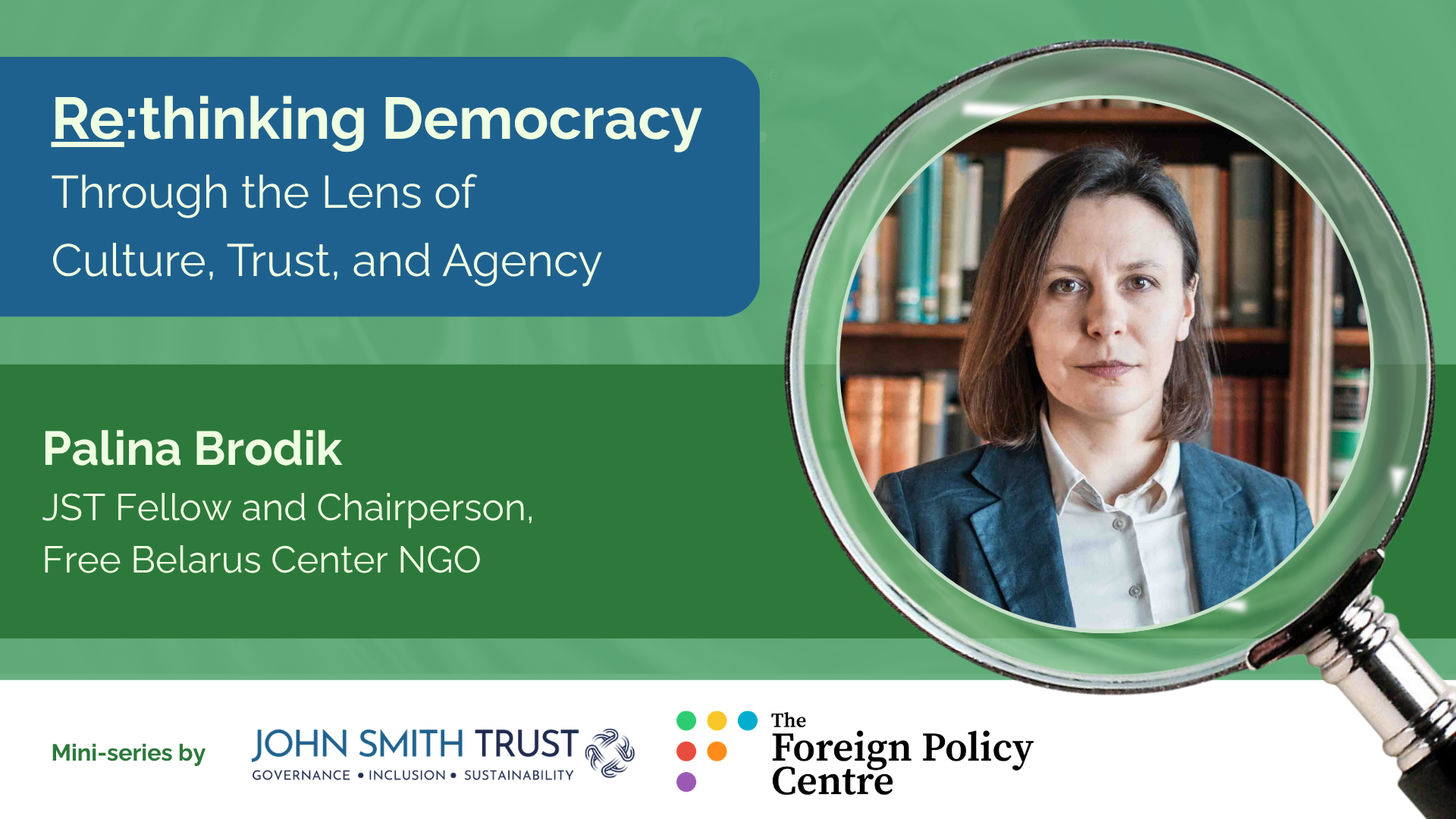
Article by Palina Brodik

July 22, 2026

Resistance Is Not Enough: Rethinking the Belarusian Democratic Movement

A turning point is approaching for the Belarusian Democratic Forces, which emerged in response to the rigged presidential elections in 2020. They have begun to lose momentum after six years of tireless advocacy for democratic change – and it is time for the movement to have a serious conversation about its current shape and strategic direction.


Negotiations between the US and Belarusian authorities, which resulted in the release of hundreds of political prisoners, have deepened divisions within the movement into two opposing camps: the supporters of the hard-pressure approach that allows no compromise until the regime is defeated, and the proponents of a flexible approach that accepts limited concessions as a means of securing incremental gains. This dilemma revealed much more than differences in tactics. It exposed a rupture around the fundamental question: what kind of political actor must the democratic movement become if it is to reclaim Belarus? Every geopolitical shift — negotiations over prisoners, the end of the war in Ukraine, changing Western priorities — will only deepen the divisions and further delay the prospect of returning home.


The divide therefore runs deeper than tactics. It highlighted the very qualities that have sustained the movement over the past six years. Since 2020, it has drawn strength from shared memory, moral clarity, and organisational durability in the face of repression, exile and war. These qualities were essential for survival, but are insufficient for development.


Resistance preserves identity under pressure. However, it offers little guidance on how to prevail against a regime that has repeatedly proven more violent, adaptable, and strategically agile. Resilience, by contrast, requires the capacity to adapt without losing that identity. The question, then, is whether the movement has mistaken preserving its existing form for the ability to evolve — confusing resilience for resistance, organisational visibility for political viability.


Rebuilding political viability requires restoring three capacities that both repression and geopolitical turbulence have gradually eroded.


1. Continuity of political meaning beyond the life-span of the current movement. Belarus has experienced three major waves of democratic mobilisation in the 21st century alone: in 2006, 2010, and 2020. Yet the history of the movement for our independence and European orientation goes back centuries. The regime does its best to break the chain of memory by obliterating historical milestones and replacing them with a state-sponsored narrative centred solely on the “Great Patriotic War”. Sometimes we contribute to this ourselves: each new generation believes the predecessors are not worth exploration if they have not succeeded – and they eventually replenish the ranks themselves. Yet democratic movements survive not through uninterrupted victories but through continuity of meaning. Otherwise every new mobilisation begins from zero.


2. The second capacity is autonomous political agency. Operating in exile, the movement naturally relies on international support. However,  agency should not be built on external validation alone, such as through meetings with foreign country leaders and participation at global political fora. Legitimacy cannot be outsourced. A political actor that increasingly depends on outside confirmation is vulnerable to changing geopolitical priorities. And vice versa — it stays democratic and durable as long as it embodies the interests of the people it seeks to serve. No amount of international recognition can substitute for a living connection between democratic actors and the people they seek to serve.


3. Third, and perhaps most demanding of all, is the capacity for self-reflection and, consequently, adaptation. It requires honesty about our successes and failures, an awareness about the changing context, and acknowledging our structural limits to prevent us from falling into obsolete ways of thinking. Democratic movements fail not only when they lose their values, but also when they become unable to distinguish those values from the strategies once used to defend them. The former should endure; the latter should evolve. Сonfusing the two turns adaptation into betrayal and criticism into disloyalty. It takes a lot of courage to be intellectually and emotionally honest with oneself and to be able to admit the necessity of revision. But it is an important marker of a movement’s political maturity and a precondition for further growth.


Democratic movements can survive organisationally while collapsing politically. The Belarusian Democratic Forces risk precisely this: preserving their form while losing the capacity to act as a genuine political subject. This also has implications for foreign engagement: support is most effective when it contributes to adaptive political capacity rather than reinforcing institutional visibility.


To prevent the negative scenario, the movement should return to the fundamental question that structures this argument — what kind of political actor must the movement become if it is to shape Belarus’s future rather than be shaped by the country’s decline and shifting geopolitical realities?


Explore the full mini-series here.


Palina Brodik is co-founder and director of the Free Belarus Center, a member of the Coordination Council of Belarus and an official CCB delegate to the Congress of Regional and Local Authorities under the Council of Europe.  Palina has over a decade of experience in human rights and election observation. She has collaborated with organisations including UNDP in Ukraine and Belarus, the US-based Advocates for Human Rights, and the Center for Civil Liberties and has taken part in international and domestic election observation missions. She has coordinated the Eastern European edition of the Personal Democracy Forum and the Ostrogski Forum, as well as four seasons of the festival of Belarusian culture and activism “Hučna Fest”.


Disclaimer: The views expressed in this piece are those of the individual author and do not reflect the views of The Foreign Policy Centre.
 

Footnotes
    Related Articles

    How Can We Secure a Healthy Political and Social Order in a Fragmented World?

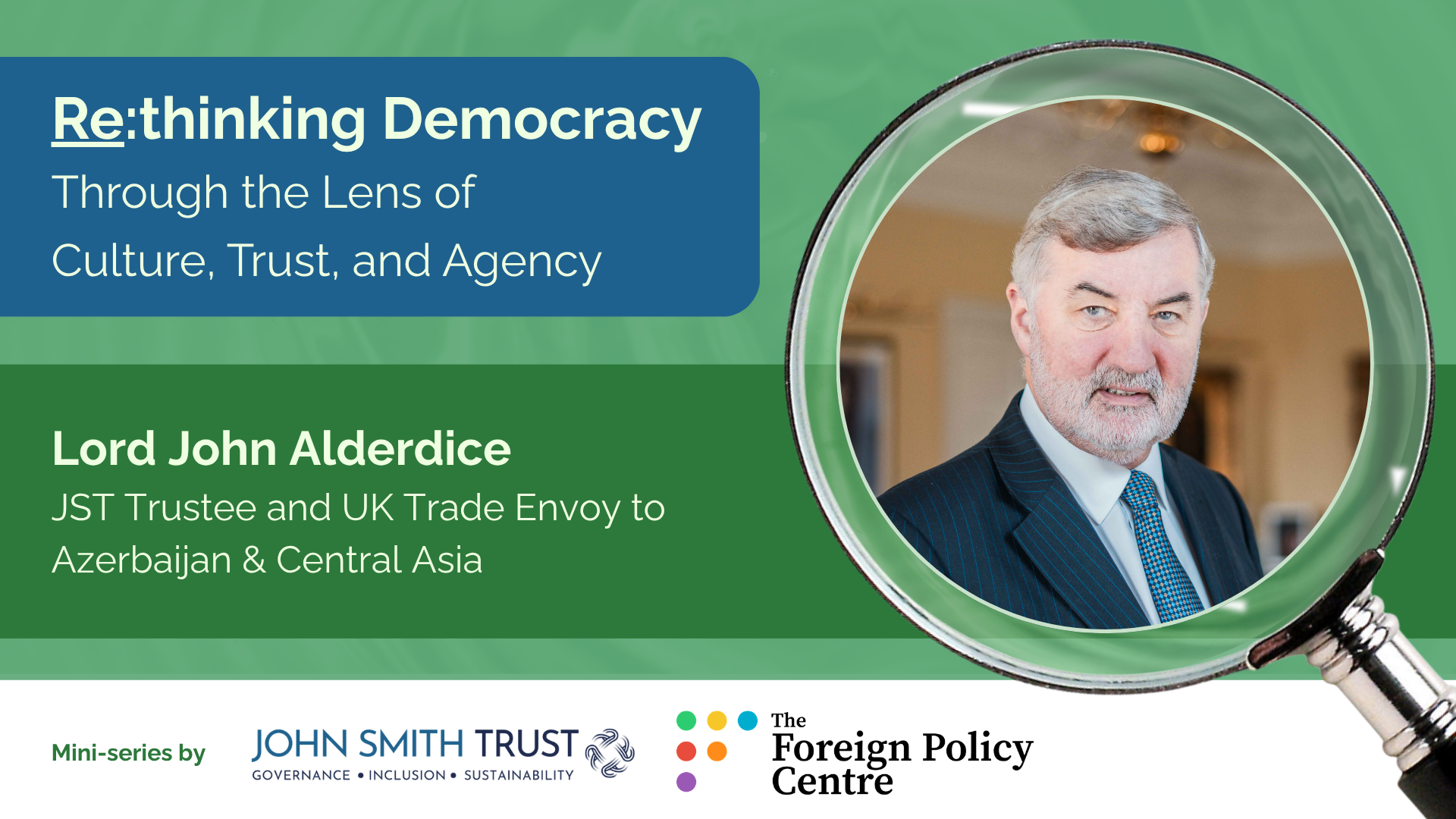
    Article by Lord John Alderdice

    July 13, 2026

    How Can We Secure a Healthy Political and Social Order in a Fragmented World?

    This article introduces a new series of short essays by JST Fellows – leaders working across Europe, the South Caucasus and Central Asia – exploring how societies can build the trust, agency and resilience needed for an era of fracture and flux.


    We are living through a period of profound change and uncertainty. The erosion of the rules-based international order is causing instability on a global scale. Familiar frameworks and alliances, such as NATO, are no longer seen as providing security guarantees and a basis for shared understanding between states. The institutions that form the foundations of healthy democracy – the media, government, judiciary, and civil society – are not functioning in the way that they should. Media ecosystems no longer offer a shared factual reference point; governments struggle to deliver on the concerns of those they represent; judiciaries face growing pressure on their independence; and civil society is increasingly recast – through propaganda and hostile narratives – as a threat rather than a mechanism for accountability and civic action. It all adds up to a climate of social and political polarisation, creating distrust: in governments, in one another, and in democracy itself.


    Added to this, the rapid development of artificial intelligence (AI) presents both opportunities and threats to how our societies and economies function. The political emergence of Gen Z, with youth-led protests in countries as disparate as Georgia, Nepal, Peru and Madagascar, is seen as evidence of growing frustration of young people with inequality, corruption, and the failure of existing institutions to respond to people’s concerns.[1]


    These forces are not temporary disruptions but structural shifts reshaping political and social life. As such, they demand a new approach. This is not a time for nostalgia but for a collective rethink. Throughout this mini-series, our contributors delve into experiences of culture, trust and agency in their societies to explore a central question: What actions do we need to take and what stories must we ensure are heard, in order to shape and secure a healthy political and social order for the emerging global era?


    In the articles that follow, JST Fellows explore this question in depth, offering diverse perspectives on what it means to rethink democracy through the lens of culture, trust, and agency. They look at opportunities and challenges emerging in media, technology, and information systems. They look at the power of identity and narratives, and their effect on social cohesion. And they look at agency and engagement, with a focus on young people.


    These are not separate strands but interwoven dynamics that reinforce each other. Technology drives identity narratives. Identity politics shape how young people engage. And youth movements reshape information ecosystems.


    Our Fellows, who come from countries across Europe, the South Caucasus and Central Asia, write about how these forces are playing out in the contexts in which they live and work. Questions of identity, culture and memory also run throughout the series. Olga Reka, from Ukraine, writes about the critical role of the arts, culture, and storytelling in creating meaning and agency as a precondition for democracy. Botagoz Zhumabekova examines the psychological foundations of democratic participation, arguing that active citizenship depends not only on political opportunity but also on people feeling safe enough to engage.


    Trust – or its absence – is a common theme. Gulshat Ayydova and Aaron Campbell look at what we can learn from the way young people already engage in informal spaces to encourage meaningful participation and build trust in political processes. Joldoshbek Osmonov, from Kyrgyzstan, looks at the legitimacy crisis facing civil society and how organisations can rebuild trust in the face of propaganda that presents them as a threat. Farrukh Irnazarov explores the role of education in building trust in institutions and civic responsibility across Central Asia.


    Looking at democratic renewal through a political lens, Palina Brodik reflects on the future of the Belarusian democratic movement, arguing that preserving collective memory while remaining adaptable is essential to sustaining political agency in exile.


    The series concludes with Liliana Gutan’s reflection on Moldova, where democracy is measured not only by elections but by what institutions deliver between them. Her article brings together many of the themes explored throughout the series, arguing that democratic resilience ultimately depends on whether people experience dignity, security, and belonging in their everyday lives.


    I hope these articles offer both provocation and possibility – showing what it looks like when values-driven leaders think seriously about the challenges of our time. They are part of the generation of diverse leaders needed in this moment, to shape a new order in which people can live in sustainable, peaceful and just societies.


    Explore the full mini-series here.


    John Alderdice, Professor, the Lord Alderdice. UK Trade Envoy to Azerbaijan & Central Asia and JST Trustee.


    Disclaimer: The views expressed in this piece are those of the individual author and do not reflect the views of The Foreign Policy Centre.


    [1] Daniel Boffey, ‘We are very strong’: Georgia’s gen Z drives protests against return to past, The Guardian, May 2024, https://www.theguardian.com/world/article/2024/may/16/georgia-gen-z-drives-protests-against-return-to-past-foreign-agents-law; Omkar Khandekar and Yam Kumari Kandel, How Gen Z-led protests put Nepal’s 1st female prime minister in power, NPR, September 2025, https://www.npr.org/2025/09/20/nx-s1-5545760/nepal-protests-gen-z; Marco Aquino and Alexander Villegas, Peru’s Gen Z rallies against President Boluarte, protesting over pensions and corruption, Reuters, September 2025, https://www.reuters.com/world/americas/perus-gen-z-rallies-against-president-boluarte-protesting-over-pensions-2025-09-27/; AP News, How Gen Z protesters brought down Madagascar’s government and now want the president out, October 2025, https://apnews.com/article/madagascar-protests-gen-z-rajoelina-e39ef11bd1f4a92f1f4b353900348219

    Footnotes
      Related Articles

      Op-ed | A Camel Called the Investor Visa

      29/07/26
      Article by Foreign Policy Centre

       Join our mailing list 

      Keep informed about events, articles & latest publications from Foreign Policy Centre

      JOIN