Skip to content

Five Priorities for the UK as it Retakes the Chair of the Media Freedom Coalition

Article by Martin Scott

March 12, 2026

Five Priorities for the UK as it Retakes the Chair of the Media Freedom Coalition

In 2023, Professor Martin Scott examined the early performance of the Media Freedom Coalition in an article for the Foreign Policy Centre, reflecting on whether the initiative had achieved the “re-set” recommended in an independent evaluation. As the UK now retakes the Coalition’s co-chairmanship, this article considers what practical steps the government should take to strengthen international support for media freedom.


The UK has just become the new co-chair of the Media Freedom Coalition (MFC), alongside Finland.[1]


This is a welcome move given the current vacuum in leadership for supporting media freedom on the international stage. However, this new role must be accompanied by demonstrable improvements in both the scale and scope of the UK’s international support for independent journalism.


The MFC is a global partnership of 51 countries working together to promote press freedom both domestically and internationally.


As a G7 country and permanent member of the UN Security Council, the UK’s leadership of the MFC provides an opportunity to bring significant visibility and political weight to its work.


The UK also has a comparatively large diplomatic service making it well placed to strengthen the activities of the MFC’s embassy network – which monitors specific court cases, engages in private diplomacy, and coordinates joint statements.[2]


In addition, as one of the MFC co-founders in 2019 and an inaugural co-chair until 2022, the UK has valuable institutional knowledge and established relationships with civil society organisations linked to the Coalition.


However, the UK’s recent track record in supporting media freedom internationally is not as strong as that of many other MFC member states. In 2025, the UK was ranked joint 12th out of 30 on the International Media Freedom Support (IMFS) Index – qualifying for the lowest, ‘bronze’ category.[3] The IMFS Index evaluates 30 states based on their contributions to diplomatic, financial and safety initiatives that promote media freedom. A fuller discussion of the IMFS Index can be found in a recent FPC article by Martin Scott and Professor Mel Bunce.


Sweden (2nd), the Netherlands (3rd), Germany (=5th), France (=5th), Canada (8th) – and even some countries with significantly lower state capacity such as Lithuania (1st) and Estonia (4th) – all scored significantly higher than the UK on the 2025 IMFS index.


Given this, the UK must make demonstrable improvements to the scale and scope of its international support for independent journalism if it is to offer credible international leadership on media freedom.


Here are 5 ways the UK can achieve this:


1. Introduce a dedicated emergency visa scheme that explicitly includes provision for media workers in exile. The MFC’s independent legal advisory arm – the High-Level Panel of Legal Experts on Media Freedom – has consistently designated this a priority area and provided MFC states with clear guidance on how to implement a suitable scheme for journalists at risk.[4] Unfortunately, only five MFC member states – Canada, Czechia, Estonia, Latvia and Lithuania – have so far implemented such a scheme. Between them, they have issued over 1,000 visas or residence permits to media workers in exile under these schemes since 2020. Implementing a similar scheme in the UK will require stronger internal collaboration between the Foreign, Commonwealth & Development Office (FCDO) and the Home Office.


2. Support a national initiative that promotes the protection and safety of media workers in exile. Journalists at risk require not only legal protection – but also practical support to rebuild their lives and continue their work. Germany, for example – who the UK is replacing as MFC co-chair – supports the Hannah Arendt Initiative, a network of civil society organisations that protects and supports journalists from Afghanistan, Ukraine, Russia, Belarus and elsewhere.[5] As co-chair of the MFC, the UK should be supporting a similar initiative.


3. Increase the proportion of international aid allocated to supporting independent media. In 2023 – the most recent year we have figures for – the UK allocated just 0.1% of its international aid to media development. This is nowhere near the benchmark of 1.0% recommended by the Forum on Information & Democracy and even lower than the average of 0.16% for all 30 states measured in the IMFS Index.[6] As its aid budget is reduced, support for media development must be retained as a strategic priority if the UK is serious about defending press freedom internationally.


4. Ensure consistent, long-term financial support for the BBC World Service. As one of the most trusted international news providers – reaching 435 million people each week – the BBC World Service is one of the most effective instruments in the world for supporting access to reliable information.[7] Speaking at the UK Media Freedom Forum, Foreign Affairs Select Committee Chair Emily Thornbury highlighted its strategic importance, asking: ‘Why aren’t we tripling funding to the BBC World Service? It should be a major priory for this country… Particularly with the cutbacks we are making on aid… Let’s at least have a really good presence in terms of helping people understand what’s going on in the world’.[8]


5. Contribute to multilateral pooled funds dedicated to supporting international journalism. The UNESCO-administered Global Media Defence Fund (GMDF) and other similar, pooled funds can, in principle, provide an effective way of coordinating resources, providing core support to local entities, reducing the earmarking of contributions, and supporting the principle of multilateralism. [9] However, in 2024, the UK only contributed to one such fund – the GMDF. By comparison, in 2024, France awarded funding to all four qualifying multilateral pooled funds and in 2025 hosted a high‑level conference on information integrity and independent media at the Paris Peace Forum – where further financial support was pledged. [10]


According to the 2025 IMFS Index, no country is currently performing consistently well across all three dimensions of support for media freedom: diplomacy, funding and safety.[11] As MFC co-chair, the UK has the opportunity – and obligation – to fill this gap in international leadership.


Achieving this does not require reinventing the wheel. Just the political will to deliver on existing commitments.


As Chris Elmore, FCDO Minister for Multilateral and Human Rights, recently said, “What I want to see, through us retaking the chair of the Media Freedom Coalition, is a move back to the original pillars of this work to ensure that we have meaningful outcomes”.[12]


I agree.


Martin Scott is a Professor of Media and Global Development at the University of East Anglia. His publications include, ‘Capturing News, Capturing Democracy’ (2024), ‘Humanitarian Journalists’ (2022), ‘Media and Development’ (2014) and ‘From Entertainment to Citizenship’ (2014).


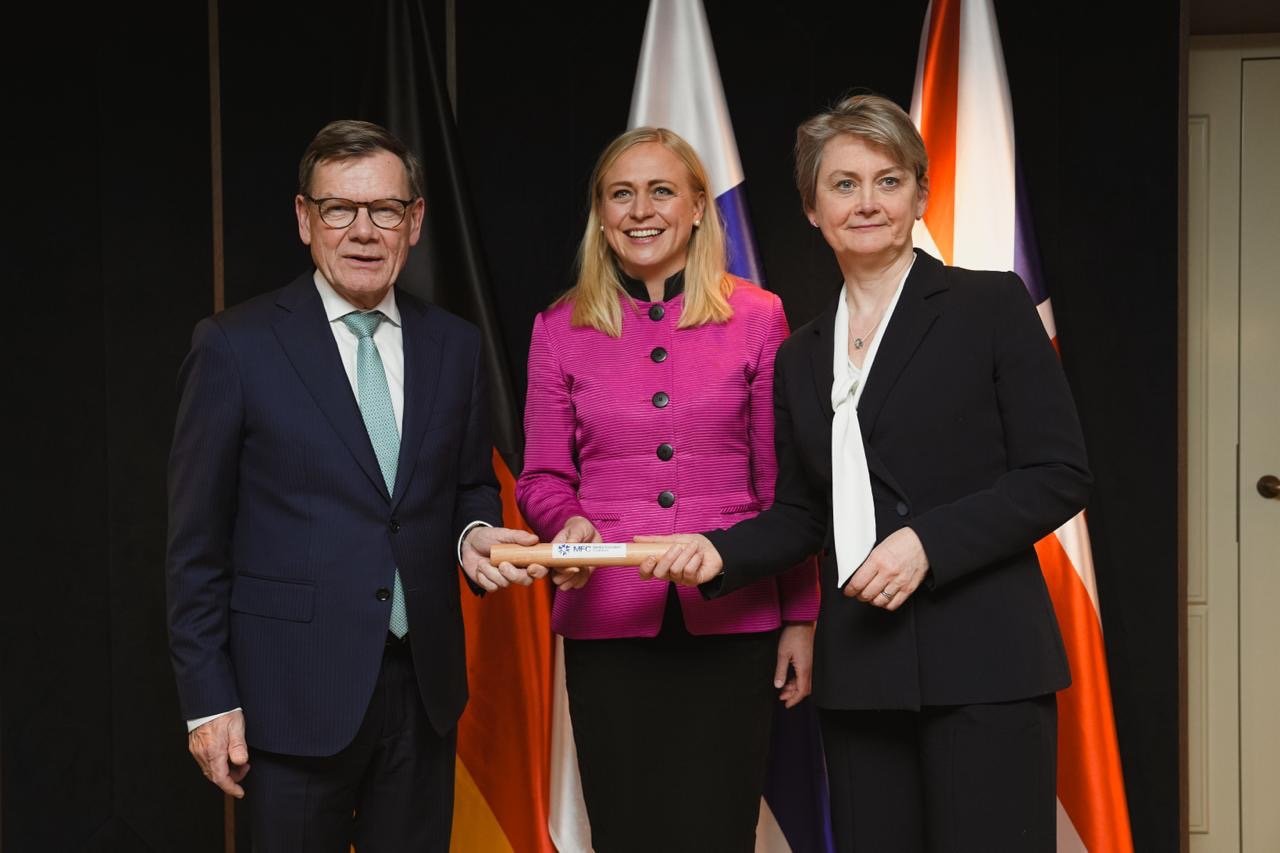
Image: Johann Wadephul, Federal Minister for Foreign Affairs of Germany (left), Elina Valtonen, Minister for Foreign Affairs of Finland (centre), and Yvette Cooper British Foreign Secretary (right); credit: Ben Dance / UK Foreign, Commonwealth & Development Office


Disclaimer: The views expressed in this piece are those of the individual authors and do not reflect the views of The Foreign Policy Centre.


[1] Media Freedom Coalition, Home Page, https://mediafreedomcoalition.org/

[2] Media Freedom Coalition, MFC Embassy Networks, https://mediafreedomcoalition.org/activities/embassy-networks/

[3] Centre for Journalism and Democracy, The Index on international Media Freedom Support (IMFS) 2025, 2025, https://jdem.org/wp-content/uploads/2025/10/IMFS-full-report.pdf

[4] Media Freedom Coalition, High-Level Panel of Experts, N.A., https://mediafreedomcoalition.org/who-is-involved/high-level-panel-of-legal-experts/

[5] Network for the protection of journalists and media worldwide, Hannah Arendt Initiative, https://hannah-arendt-initiative.de/en/hannah-arendt-initiative/

[6] Forum on Information and Democracy, The Forum on Information and Democracy calls for a New Deal for Journalism, June 2021, https://informationdemocracy.org/2021/06/16/the-forum-on-information-and-democracy-calls-for-a-new-deal-for-journalism/

[7] BBC, BBC’s response to global news events drives audience growth, July 2025, https://www.bbc.co.uk/mediacentre/2025/bbc-response-to-global-news-events-drives-audience-growth

[8] UK Media Freedom Forum, Home Page, https://mediafreedomforum.co.uk/

[9] UNESCO, Global Media Defence Fund, https://www.unesco.org/en/global-media-defence-fund

[10] French Embassy and Consulates General in the UKParis Peace Forum: 29 States commit to information integrity and independent media, November 2025, https://uk.diplomatie.gouv.fr/en/paris-peace-forum-29-states-commit-information-integrity-and-independent-media

[11] Centre for Journalism and Democracy, The Index on international Media Freedom Support (IMFS) 2025, 2025, https://jdem.org/wp-content/uploads/2025/10/IMFS-full-report.pdf

[12] UK Parliament, Foreign, Commonwealth and Development Office

Volume 781, March 2026, https://hansard.parliament.uk/Commons/2026-03-04/debates/8C008AEB-0F64-4A12-A157-368EA0118C0A/ForeignCommonwealthAndDevelopmentOffice#contribution-490D078B-AA2C-4241-8EE2-3F4DDDF44EF0

Footnotes
    Related Articles

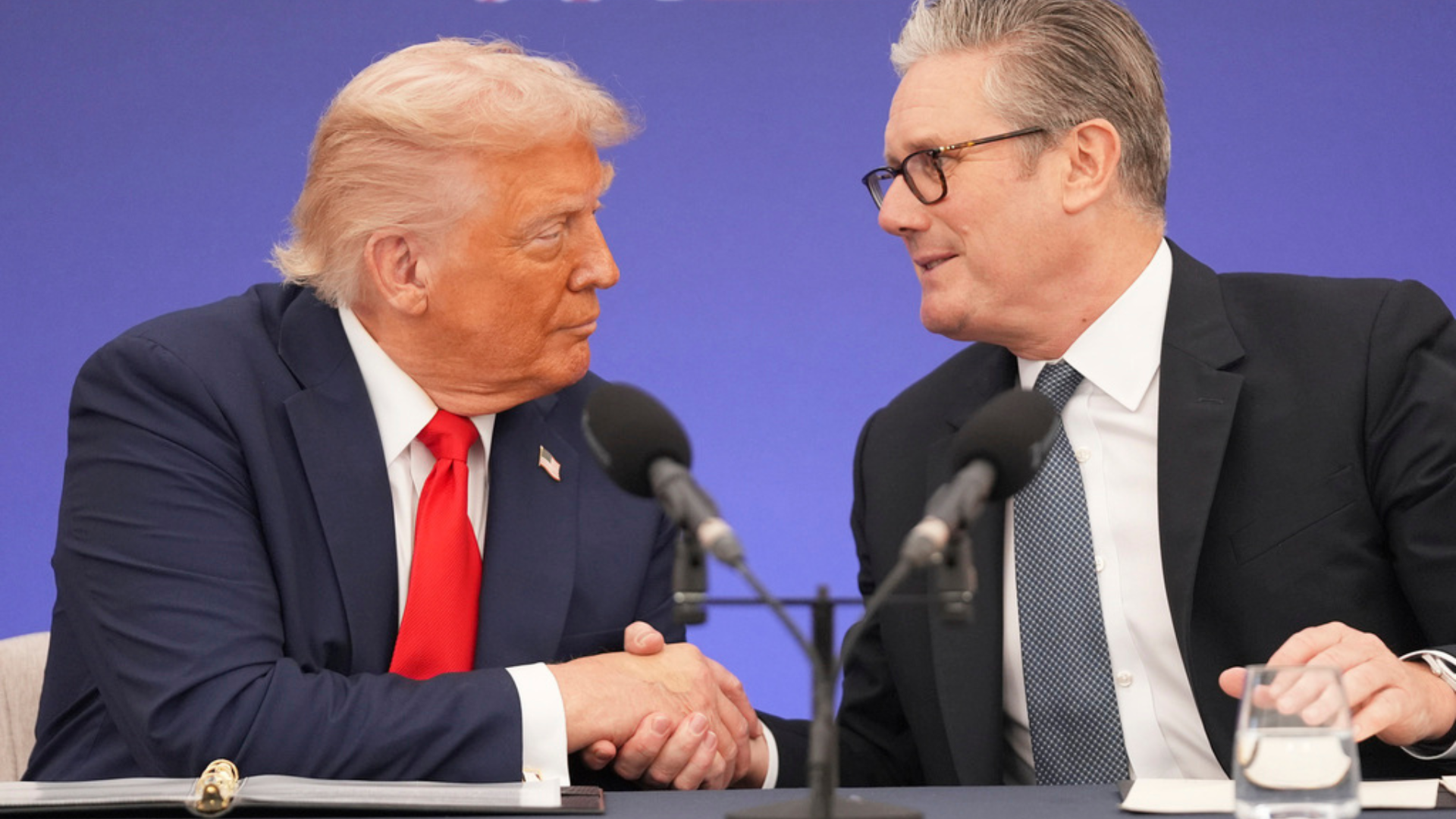
    Op-ed | Iran Attack Shows Limits of Starmer’s ‘Trump-Whispering’

    Article by Dr Andrew Gawthorpe

    March 4, 2026

    Op-ed | Iran Attack Shows Limits of Starmer’s ‘Trump-Whispering’

    Ever since Donald Trump returned to office in 2025, Keir Starmer has had to perform a difficult balancing act.


    On the one hand, he has sought to avoid open confrontation with Trump despite policies that have directly affected British interests, including imposing trade tariffs on the UK and threatening to annex Greenland, the territory of a NATO ally. On the other hand, the British Prime Minister has tried to carve out a space in which to pursue what he perceives as Britain’s national interests. One of the main bases of this strategy was the idea that appeasing Trump would allow Starmer to become “the Trump whisperer”, nudging the US President towards more amenable policies.[1]


    With the joint US-Israeli attack on Iran, this effort has reached an ignominious end. Like many UK prime ministers before him, Starmer appears to have discovered that a policy predicated on accommodating 90% of an American president’s agenda in the hope of influencing the remaining 10% is doomed to failure. When Washington decides to act, it will do so anyway – and London will often be left picking up the pieces.


    Starmer is not wrong that US foreign policy is very important for the United Kingdom, and that influencing it is desirable. In particular, the US commitment to NATO and the defence of Europe more broadly is vital to British security. Faced with trade-offs in other less vital areas – for instance the exact level of tariffs affecting US-UK trade – pragmatic concessions might be necessary to maintain it. Keeping channels of communication open and friendly is certainly wiser than engaging in unnecessary diplomatic spats.


    Ultimately, the administration of President Trump is not one that can be constrained through careful diplomatic management alone. Trump has an expansive view of his right to use military force across the world, scant respect for alliances or international law, and a chaotic decision-making process. It is not so easy to ‘nudge’ him in constructive directions.


    Starmer recognised the dangers inherent in the US military build-up in the Middle East at an early stage. He decided to deny the use of Diego Garcia and RAF Fairford as launching points for strikes on Iran and kept quiet about his views on the coming war. At the same time, Starmer – ever the balancer – did not directly state his opposition to it, either.


    Had he done so, he would have been on extremely firm ground for two reasons. The first is international law. The US and Israel’s attack on Iran was patently illegal. The UK government recognised this and it was apparently one reason why the use of UK territory for striking Iran was denied.[2] Whatever the horrendous crimes committed by the Iranian government against its own people, further weakening of the norm of non-aggression is clearly not in the UK’s interest.


    The second reason is geopolitical. At a time when the UK desperately needs the US to recommit to European security, Trump is once again leading his country down the path of launching a costly war of choice in the Middle East. Rather than preserving their military assets and diplomatic goodwill to deter Russia, both the United States and Europe are now expending them to justify and deal with the consequences of a war of aggression of their own. The economic consequences and strain on military readiness could significantly damage European and British security.


    Yet now that the war has begun, despite what appeared to be Starmer’s obvious private opposition, the UK once again finds itself being swept up in America’s wake. After Iran’s predictable retaliation against both Israel and Arab nations, the Prime Minister has authorised the use of Diego Garcia and RAF Fairford for what he terms “defensive” strikes on Iranian missile launchers.[3] Legal gymnastics aside, these “defensive” strikes are indistinguishable from the “offensive” operations that Starmer only a few days ago refused to allow Trump to launch from British bases.


    Nor can we be certain that this will end up being the full extent of British involvement. Already, an explosive drone has struck RAF Akrotiri, a British base in Cyprus, and others have been intercepted en route.[4] There are hundreds of thousands of British citizens in Israel and in the Arab nations that are now under Iranian bombardment. The possibility of UK involvement in opening shipping lanes threatened by Iran and its regional allies cannot be ruled out.


    In other words, the UK now shares much of the risk that the United States has taken on with this reckless war of choice. Starmer’s policy of balance could not prevent it, and nor can it protect Britain from its consequences.


    Disclaimer: The views expressed in this piece are those of the individual author and do not reflect the views of The Foreign Policy Centre.


    Andrew Gawthorpe is a Senior Fellow at the Foreign Policy Centre. He isa specialist in US politics and foreign policy at Leiden University. He also writes a newsletter called America Explained. He was previously a teaching fellow at the UK Defence Academy, a research fellow at the Harvard Kennedy School, and a civil servant in the Cabinet Office.


    [1] Rowena Mason, Starmer Faces Great Quandary Over ‘Special Relationship’ After Iran Attack, The Guardian, March 2026, https://www.theguardian.com/politics/2026/mar/01/keir-starmer-donald-trump-uk-us-special-relationship-iran.

    [2] Brad Lendon, Britain Blocking Use of Air Bases Trump Says Would Be Needed for Strikes on Iran, UK Media Reports, CNN, February 2026, https://edition.cnn.com/2026/02/20/europe/britain-air-base-access-us-iran-intl-hnk-ml.

    [3] Lucy Fisher and George Parker, Keir Starmer Will Let US use UK Bases for Attacks on Iranian Missile Sites, Financial Times, March 2026, https://www.ft.com/content/b988499b-1a89-4e56-b0cf-19d5a8ac7111.

    [4] Cachella Smith and Nikos Papanikolaou, Two Drones Intercepted Heading for RAF Base, Cyprus Says, BBC, March 2026, https://www.bbc.com/news/articles/cm2r0q310e3o.

    Footnotes
      Related Articles

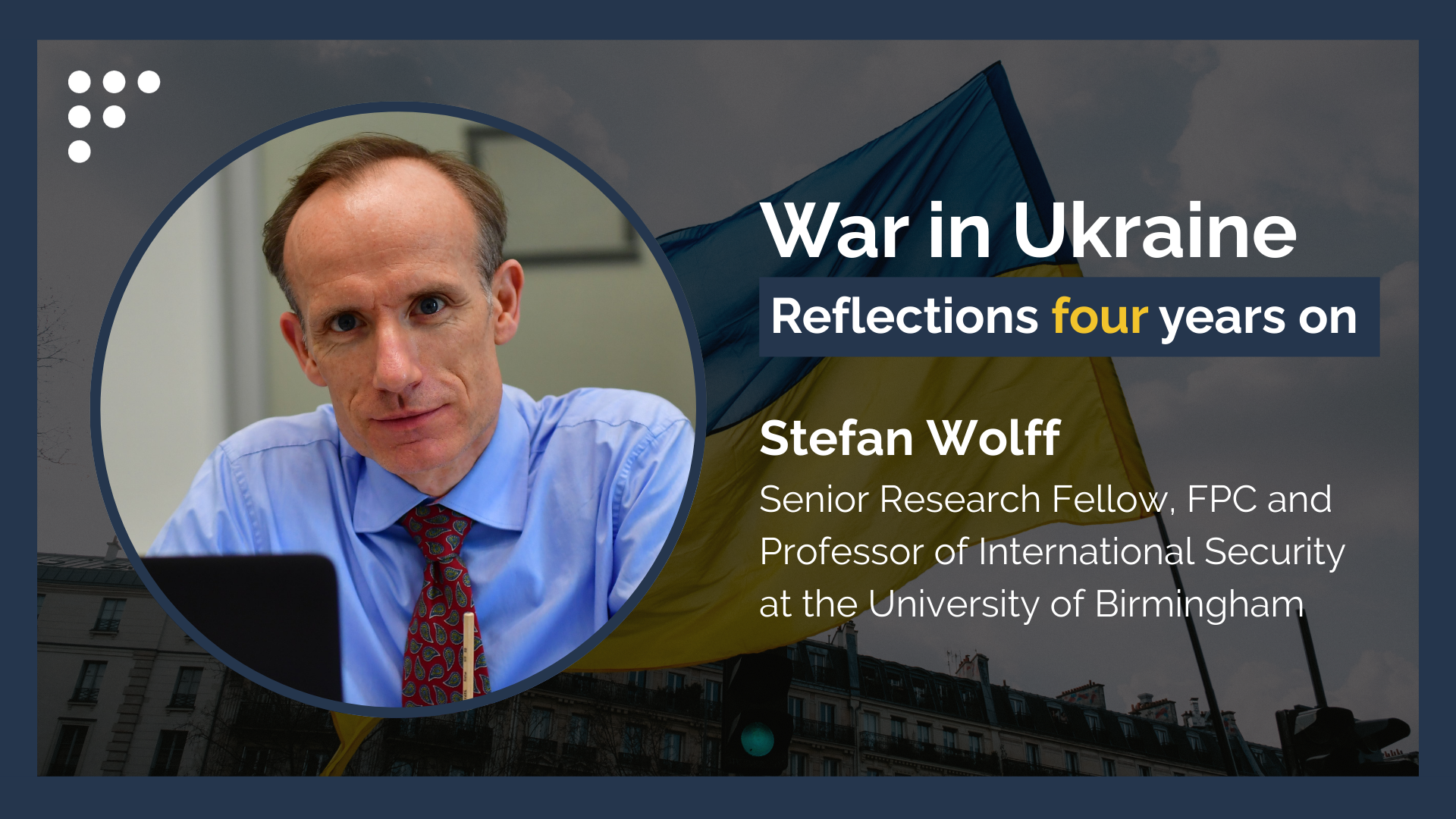
      Four Years On: Europe’s Strategic Test in Ukraine

      Article by Prof Stefan Wolff

      February 24, 2026

      Four Years On: Europe’s Strategic Test in Ukraine

      Four years into Russia’s full-scale invasion of Ukraine, the conflict remains unresolved and the strategic landscape increasingly complex. In this analysis, Stefan Wolff, FPC’s Senior Research Fellow, examines the evolving diplomatic scenarios, the limits of US-led negotiations, and the choices confronting the UK and its European partners as the war enters a fifth year.


      As Ukraine heads into a fifth year of defending itself against the unprovoked Russian full-scale invasion, the prospects of a just and sustainable peace agreement remain distant. On the ground, the land war continues to be in a stalemate, with the pace of Russian territorial gains now slower than some of the most protracted battles of trench warfare during the First World War. 


      In the air war, Moscow has demonstrated a ruthless and brutal efficiency in destroying much of Ukraine’s energy infrastructure. The repeated destruction of power generation and distribution facilities has taken a serious toll on the Ukrainian population and economy. Yet beyond inflicting hardship, these strikes have not had the kind of strategic effect Russia needs to achieve in order to turn the military tables decisively on Ukraine.


      All in all, the Kremlin narrative of inevitable victory looks more like Soviet-style propaganda than a reflection of battlefield reality. President Vladimir Putin, however, is not the only world leader guilty of wishful thinking. His American counterpart, President Donald Trump, at times, also appears to make policy untethered from the real world. First, there was his claim on the campaign trail that he could end the fighting in Ukraine within 24 hours. Upon returning to the White House, Trump issued multiple ceasefire demands and associated deadlines that Putin simply ignored without incurring any cost. The latest plan from Washington is for a peace deal to be concluded between Moscow and Kyiv, approved by a Ukrainian referendum, and followed by national elections — all before June.


      Scenarios for a US-Mediated Settlement

      The timeline for the American plan aside, a US-mediated deal between Russia and Ukraine remains possible. However, It is unlikely that it will take the form of the just and sustainable settlement that Kyiv and its European allies demand. If it comes to pass as a result of the ongoing trilateral negotiations currently underway, it is highly probable that Ukraine will have to make significant concessions on territory in exchange for US-backed security guarantees and a mostly European-financed package of post-war reconstruction measures. 


      An additional bitter pill to swallow for Ukraine and Europe would be an unashamed US-Russia rapprochement with a simultaneous end to American sanctions on Russia, a flurry of economic deals between the two countries, and pressure on Ukraine’s other allies to follow suit, at least on sanctions relief and possibly on the release and return of Russian frozen assets.


      The other — and more likely — possibility is that not even a bad deal will be forthcoming. The Russian side has given no indication that it is willing to make any significant concessions. Moscow’s position is that Kyiv should relinquish control over the entirety of the Donbas, including territory in Ukraine’s fortress belt that Moscow has so far been unable to take by military force. In return, or under the terms of what Russia refers to as the ‘Anchorage formula’ allegedly agreed between Putin and Trump at their Alaska summit in August 2025, the Kremlin is apparently willing to freeze the current frontlines elsewhere along the more than 1,000 km long line of contact. 


      Even at the very remote possibility that this was acceptable, or that Ukraine would be pressured into agreeing to such a deal, this would hardly seal a settlement, given that Russia continues to oppose the security guarantees currently on the table between Kyiv and its Western partners. Without them, territorial concessions make no sense for Ukraine, especially as there is no imminent danger of a collapse of Ukrainian defences. 


      The Hungarian blockage of the EU’s €90 billion loan to Ukraine — likely instigated by the country’s Prime Minister, Victor Orbán, at the behest of both Trump, whose Secretary of State, Marco Rubio, had visited the country just before the announcement, and Putin, with whom Orban has had close ties for a long time — is not going to change Kyiv’s calculations significantly. Not only is the EU surely going to find a work-around to deal with this blockage but Orban’s days as Ukraine’s principal foe inside the EU might be numbered given that he is trailing in opinion polls ahead of April’s parliamentary elections. As any embrace of and by Trump and Putin is unlikely to improve Orban’s prospects for another term, the Hungarian blockage might ultimately prove temporary regardless of the outcome of April’s elections.


      If, as is therefore likely, Trump’s latest deadline passes without a deal being reached, the question arises what next? Trump could simply walk away from the war. He threatened to do so in the past but a likely mix of ego and the prospect of economic deals in the event of peace prevented him from doing so. Nothing suggests at the moment that this time will be different. There might be some angry exchanges and finger pointing, but after that, the current, deeply flawed negotiation process is likely to resume in some form because the alternatives are worse for all sides, Trump included.


      The US President could walk away and finally realise that Putin is simply not interested in peace, no matter what is on offer. But this will not lead Trump to ramp up pressure on Russia in a significant way. He has had reason and opportunity to do so on multiple occasions since returning to the White House in January 2025. He has not done so then, and there is no reason to believe that he would do so now. 


      Trump could then instead pursue a bilateral deal with Russia. But without European participation, such a deal will be of limited benefit to both sides. The bulk of Russian foreign assets remain frozen in Europe, and would very likely stay so in the absence of coordinated transatlantic action. Russia has little of value to export to the US and lacks the market conditions to make it an attractive destination for US foreign direct investment. Some US companies might return or expand their still existing operations in the country, but these will hardly be the trillion-dollar deals that Trump, and possibly Putin, envisage.


      Even if any such separate US-Russia deal would be of limited economic value, it would still be politically damaging, especially to transatlantic relations. That, however, also makes it less likely to happen. By June, primaries in the United States ahead of the November midterm elections will largely have concluded and Republican candidates will be less susceptible to pressure from the White House. As was already obvious in the context of Trump’s threats to take over Greenland, if necessary by force, there remains a segment of foreign policy realists among congressional Republicans who, unshackled from the leverage Trump may have held over them in the primaries, are likely to push back more against his most disruptive foreign policy stances, including when it comes to any dealing with Russia reached at the expense of the transatlantic alliance.


      What Europe Must Do Now

      All of these scenarios, and a likely myriad of more or less minor variations of them, contain the ingredients of a British and European strategy for what is probably another year of Russia’s war against Ukraine. 


      The first is the utmost importance of unity behind Ukraine’s defence efforts. Across the multiple overlapping multi- and mini-lateral formats of EU, NATO, coalition of the willing, etc., there needs to be a clear message to Russia, the US, and Ukraine alike: Russia’s aggression is also Europe’s problem and will be treated as such for as long as the threat from Moscow — not just against Ukraine but against the fundamental tenets of the European security order as such — remains credible.


      This means, second, that Ukraine needs to be supported materially with military economic aid and politically when it comes to pushing back against both American and Russian designs for a deal to serve the interests of the current incumbents of the White House and the Kremlin first. For a more effective political pushback, Europe needs to cultivate relations with those in the US foreign policy establishment who continue to see value in established alliance structures, especially if they reflect more balanced burden-sharing.


      Third, the UK and its European allies also need to think beyond Ukraine — because this is what Russia is doing as well, despite the demands of its war of aggression. Though it need not be limited to the EU-Russia borderlands, this is where the focus needs to remain for the foreseeable future. 


      Moldova, for example, remains particularly vulnerable to Russian interference, notwithstanding the success of pro-European forces in the country in presidential and parliamentary elections in 2024 and 2025. Moscow still retains multiple channels of influence, including through the unresolved conflict in the Transnistrian region, which, if left to fester, could significantly impede Moldova’s EU accession process and provide opportunities for renewed destabilisation. 


      Similarly, parliamentary elections in Armenia in June will create an opportunity for the Kremlin to destabilise another of its neighbours that has increasingly turned away from Moscow and towards Brussels. Given the role of the US, and of Trump personally, in the peace process between Armenia and Azerbaijan, this also offers an opportunity to cooperate with Washington in working towards constraining Russian influence in the South Caucasus region as a whole. 


      A fourth and final ingredient in an evolving British and European strategy is a focus on becoming a credible player in the emerging new international order. This requires a certain amount of realism and modesty in aspirations and messaging. The UK is not pursuing a fast track to rejoining the EU, but closer alignment and cooperation across the English Channel is essential. 


      Equally important is that declarations of intent, be they about a UK-EU reset or an expanding coalition of the willing, are followed with concrete action — especially on investment in defence and a more credible European deterrence posture. This means both a more capable defence industrial base and doctrine for the kind of war being fought in Ukraine and improved defence readiness and resilience at the level of society. 


      A reconstituted European alliance, with a coalition at its heart that is not just willing but also capable of deterring Russia, is not beyond the reach of the UK and Europe. It may not be, nor ever become, a traditional great power, but by continuing to back Ukraine today and integrating it tomorrow, it will feel, and be, less vulnerable to the whims of the current or any future mercurial leader in the White House or the Kremlin. Crucially, it preserves the opportunity to rebuild the transatlantic alliance in the future, and to do so on stronger European foundations.


      Disclaimer: The views expressed in this piece are those of the individual author and do not reflect the views of The Foreign Policy Centre.


      Stefan Wolff is Professor of International Security in the Department of Political Science and International Studies, at the University of Birmingham. A political scientist by background, he specialises in the management of contemporary security challenges, especially in the prevention and settlement of ethnic conflicts, in post-conflict state-building in deeply divided and war-torn societies, and in contemporary geopolitics and great-power rivalry. Wolff has extensive expertise in the post-Soviet space and has also worked on a wide range of other conflicts elsewhere, including in the Middle East and North Africa, in Central Asia, and in sub-Saharan Africa. Wolff holds degrees from the University of Leipzig (Erstes Staatsexamen), the University of Cambridge (M.Phil.), and the LSE (Ph.D.).

      Footnotes
        Related Articles

        Op-ed | The Future of the OSCE and the UK’s Role

        Article by Prof Stefan Wolff

        February 20, 2026

        Op-ed | The Future of the OSCE and the UK’s Role

        The 25th Winter Meeting of the OSCE Parliamentary Assembly should be a moment of celebration and reflection on past successes in advancing the organisation’s broader goals of comprehensive and collective security. Yet, much like the 50th anniversary of the organisation in 2025, it will be anything but. The OSCE continues to be in a deep crisis.


        Triggered by the full-scale Russian invasion of Ukraine in February 2022, this is first and foremost a crisis of paralysis, with meaningful dialogue and decision-making among participating States in Vienna largely stalled. The OSCE continues to function operationally, with at least some meaningful and substantive business being conducted in the organisation’s specialised institutions – the Office for Democratic Institutions and Human Rights (ODIHR), the High Commissioner on National Minorities (HCNM), and the Representative on Freedom of the Media – as well as in its eleven field operations in eastern and southeastern Europe and Central Asia.


        The existing crisis of paralysis is further compounded by the wider crisis of multilateralism and the deliberate dismantling of the rules-based international order, which did not begin with, but has significantly accelerated since the return of Donald Trump to the White House 13 months ago. The implications for the OSCE became particularly evident at the Ministerial Council in Vienna on 4 December 2025, when a representative of the US State Department called for “a reduction of at least €15 million in the annual budget by December 2026”, a shift in priorities away from politically contentious issues, and renewed engagement with Russia. Implied, if not explicitly stated, was the threat of US withdrawal from the OSCE: “If the OSCE continues on its current path, the United States will continue to assess our participation and support.”[1]


        As with previous periods of institutional strain, the key question that arises from it is not new: can participating States reform the organisation and help it find a way back to being an effective contributor to security across its vast geographic area stretching from Vancouver to Vladivostok? And perhaps more importantly, should they?


        The priorities of this year’s Swiss Chairpersonship under the theme “Dialogue – Trust – Security” certainly suggest that a serious attempt will be made. Key objectives include safeguarding the OSCE’s operational capacity (“preserve the basic instruments … and to ensure their financing”) and revitalising multilateral diplomacy (“foster an open dialogue on security”, “maintain channels of communication on security, including between States in conflict”).[2]


        Another priority – to work for lasting peace on the basis of the Helsinki principles (enshrined in the organisation’s 1975 founding act) – envisages that “the OSCE is mobilising its instruments across all three dimensions to support a just and lasting peace in Ukraine”. Not only does this naturally align with the very purpose of the organisation but it also could give the OSCE a new lease of life in light of recent developments in the war against Ukraine.


        The prospect of elections, a referendum, and a possible peace deal could give the OSCE and its participating States an opportunity to bring to bear its experience and expertise in election observation, ceasefire monitoring, demining, on-the-ground mediation, and post-conflict institution building.


        However, not all of the OSCE’s past experiences in these areas were stellar successes. Getting the organisation into a position where it could meaningfully contribute to a lasting peace in Ukraine will require pain-staking, detail-oriented work in the corridors of the OSCE secretariat and the Hofburg in Vienna, not the megaphone diplomacy that tends to take place in the meetings of the Permanent Council or the Forum for Security Cooperation.


        For the UK, the OSCE – notwithstanding the organisation’s ongoing crisis – still represents an important forum to articulate and pursue its national interests. While just one among several minilateralisms that have recently emerged – including the ‘coalition of the willing’, the European Political Community, the Ukraine Defence Contact (or Ramstein) Group – it is unique in the sense that it is one of the few remaining fora where direct dialogue with Russia is not just possible but embedded in the organisation’s founding purpose.


        Such dialogue must, however, serve a concrete purpose and it needs to be based on clear principles. As Chair of the Forum for Security Co-operation in the last trimester of 2026, and as a member of the Forum’s Troika in the preceding and subsequent trimesters, the UK is well positioned to support the Swiss Chairpersonship’s reform agenda and to contribute to restoring the OSCE’s operational effectiveness. This is further enhanced by the fact that the Head of the UK Delegation to the OSCE, Ambassador Neil Holland, will also continue in his role as Chair of the Security Committee, one of the informal subsidiary bodies of the Permanent Council, specifically charged with discussing politico-military issues and supporting the preparation of the Annual Security Review Conference, which provides participating States with an opportunity to discuss regional security issues in plenary form.


        The UK’s long-standing experience in multilateral diplomacy, its role as one of the five permanent members of the UN Security Council, and its still pivotal role at the nexus of Euro-Atlantic security create a unique opportunity for making a lasting contribution to making the OSCE relevant again as a forum for dialogue among all its participating States. This will not be easy and success will not be guaranteed, but it will be a worthwhile investment of UK


        Disclaimer: The views expressed in this piece are those of the individual author and do not reflect the views of The Foreign Policy Centre.


        Stefan Wolff is Professor of International Security in the Department of Political Science and International Studies, at the University of Birmingham. A political scientist by background, he specialises in the management of contemporary security challenges, especially in the prevention and settlement of ethnic conflicts, in post-conflict state-building in deeply divided and war-torn societies, and in contemporary geopolitics and great-power rivalry. Wolff has extensive expertise in the post-Soviet space and has also worked on a wide range of other conflicts elsewhere, including in the Middle East and North Africa, in Central Asia, and in sub-Saharan Africa. Wolff holds degrees from the University of Leipzig (Erstes Staatsexamen), the University of Cambridge (M.Phil.), and the LSE (Ph.D.).


        Image Credit: © OSCE


        [1] United States Mission to the OSCE, “Plenary Statement 32nd OSCE Ministerial Council Vienna, Austria, December 4, 2025”, December 2025, https://www.osce.org/sites/default/files/documents/official_documents/2025/12/mcdel0056%20usa.pdf

        [2] OSCE, Programme and priorities of Switzerland’s OSCE Chairpersonship 2026, https://www.osce.org/sites/default/files/documents/publications/2026/01/OSCE2026_Broschuere_Faltkarte_EN_Web%20%282%29.pdf.

        Footnotes
          Related Articles

          Op-ed | UK Soft Power and the Soft Power Council

          Article by Patrick Stevens

          November 5, 2025

          Op-ed | UK Soft Power and the Soft Power Council

          Earlier this year the Soft Power Council (SPC) was formed to provide concrete and actionable advice and support in the development and delivery of a UK soft power strategy. Comprising of leading experts from outside of government, spanning the arts, culture, and education as well as foreign policy priorities, the SPC is co-chaired by the Foreign Secretary, Yvette Cooper, and the Secretary of State for Culture, Media and Sport, Lisa Nandy.


          Soft power is described by some as the power of attraction; it is a reason why people and other states might be drawn to the UK. Happily, the UK is blessed with many such reasons. Our language alone is a huge advantage globally; UK arts, music, and sport are loved the world over; the BBC (and the BBC World Service) provides us with unique levels of access and influence; Shakespeare, the Beatles, Coldplay are loved by billions; the Premier League is one of the world’s greatest brands, as is our reputation for education, science and technology.


          More recently, we have also recognised that the UK’s reputation, expertise and leadership in harder edged fields is not only welcomed by partners around the world but also provides significant additional advantages and opportunities (soft power). Despite what often seems like turbulent and discordant times at home, our reputation for the rule of law and justice, a stable democracy, and military leadership, allows the UK to lead on the international stage, be a partner of choice, and attract inward investment.


          So, soft power is already recognised as vital to UK growth, prosperity, and national security – if we want other countries to work with us and support us, we need them to value us, and soft power plays a critical part in achieving that. For evidence of this, one only has to look at the UK’s international successes in the last 12 months – trade deals with the US, the EU, and India; securing a more unified approach to NATO and supporting Ukraine through a coalition of the willing; and forging agreements with France and Germany to work together more effectively on irregular migration.


          Crucially, in each of these, the objectives were very clear, and the key decision makers and influencers could be identified. Deep and trusted relationships had to be built, and common ground found and agreed. Undoubtedly, all of this was achieved primarily as a result of intensive, sustained and skilled hard work, commitment, and diplomacy by a host of senior and working level ministers, officials and civil servants – both in London and around the globe. But soft power also played its own vital part. Recognising and understanding that contribution is essential if we are to seize the opportunity presented by the SPC and develop a more strategic and targeted approach to soft power.


          Even the most basic understanding of international affairs makes it obvious that, in addition to the intense political and diplomatic work, soft power plays a crucial role in advancing the UK’s interests. For example, President Trump’s second state visit in September (and the PM’s visit to the White House and more) was crucial to securing the US trade deal, support for the West in the face of aggression from Russia, and UK input to discussions re the Gaza ceasefire. That’s classic soft power, delivered by some of our greatest soft power assets: the Royal Family and the office of Prime Minister (and their iconic homes).


          Similarly, when President Zelensky was met and photographed on the steps of Downing Street – just 24 hours after his disastrous first visit to the White House, an event that is widely credited as a catalyst for getting US/Ukraine back on track – the event’s staging leveraged soft power. The symbolism of that greeting in Downing Street, is a classic use of that UK soft power asset, as is Sir Keir Starmer and President Macron together at the D-Day celebrations or travelling up the Champs Elysees in a tank. Every visit to Chequers by a European leader tells a similar story: this is who we are, and this is the welcome, the support, the history, and friendship the UK offers.


          Of course, these are top-level examples, and given their vital importance to the UK, the attention to, and use of, soft power is carefully considered and planned. And this is how I believe the Soft Power Council can add real value to the next level of UK efforts to deliver growth, prosperity, and enhanced security.


          The UK has consistently ranked very highly in global soft power. We have the fantastic GREAT campaign that strategically builds on and amplifies our many strengths. But there is undoubted room for improvement in a more tactical and transactional deployment of our many strengths, as too often, the coordinated use of soft power is a secondary or belated consideration. More generally, coordination across government departments in our engagement with soft power partners could be better joined up. This is precisely where the SPC can help: by ensuring UK efforts are more coherent and joined up, and by acting as a super connector between HMG and the UK’s soft power partners, the SPC can better harness and utilise these many assets. Moreover, the SPC can become a go to soft power hub for the whole of HMG when they are planning how best to deliver hard-edged, specific outcomes.


          To do this, we need to work very closely with our government leaders and senior civil servants. Ultimately, the onus is on them to recognise this opportunity, identify their priority objectives, and demand our input. With clear objectives, and briefings, the SPC must then deliver bespoke and targeted soft power – just as effectively as HMG has done on the very highest international priorities. And the best thing about all of this is that it does not have to cost very much at all; it is much more about being better joined up, thinking differently, and acting as a team than about expensive new initiatives. It also allows for us to use what is already in existence rather than reinventing the wheel.


          Of course, there is much talk about the reduction in our aid budget and its impact on UK soft power (and inevitably a reduction in spending can negatively impact levels of ambition). But the SPC exists to advise the Government on how best to harness and utilise what we do have, rather than to lament what we do not. So, taking the world as it is, the work of the SPC aligns clearly with the four stated shifts in UK aid support (as set out by Baroness Chapman in her recent essay for the Fabian Society).[1] These include partnering closely with countries to unlock growth and drive innovative finance and private sector investment; focusing on system support, so that we work alongside countries and move from grants to providing expertise, as they build their own education, health, economic, and legal systems. The UK’s soft power strengths, our world-class universities, and expertise in finance, law, health, and technology, perfectly aligns with this approach, enabling us to support others through partnership and shared expertise.


          Working together in this way and demonstrating the SPC’s added value to securing and deploying soft power in a manner that helps HMG deliver on its most important objectives over the next year or so, is the true marker of success. We all know that the UK is ‘Great’, but the challenge is to now use all those things that make us great in a strategic, impact-driven, and focused way.


          When we reach the point where, whenever our government partners think about their priority objectives and how to achieve them, and one of their first thoughts is “We need the support of the Soft Power Council”, then we will be able to confidently say that we are delivering on our remit.


          Patrick Stevens is Rule of Law Director at International Justice Development. He is an internationally renowned leader in justice development and delivery with two decades of unrivalled experience. After leading some of the UK’s most sensitive and serious terrorism cases in the unprecedented period immediately post 9/11, Patrick helped set up and lead the Crown Prosecution Service’s (CPS) International Division for over a decade. As the CPS’s first International Director, Patrick developed a global network of justice advisors and international engagement that delivered strategic and operational Rule of Law improvement at the heart of the UK’s national security effort worldwide. He now works as a justice development consultant for International Justice Development Ltd and is a member of the UK’s Soft Power Council.


          Disclaimer: The views expressed in this piece are those of the individual author and do not reflect the views of The Foreign Policy Centre.


          [1] Fabian Society, Promising development: The future of aid in an uncertain world, September 2025, https://fabians.org.uk/publication/promising-development/

          Footnotes
            Related Articles

             Join our mailing list 

            Keep informed about events, articles & latest publications from Foreign Policy Centre

            JOIN