
Drawing on fifteen years of experience working at the intersection of science and diplomacy, including a long-running scientific collaboration with North Korea, James Hammond explores the diplomatic and soft-power value of scientific partnerships, the risks posed by their disruption and why protecting them should be considered a national and international security priority.
Climate change is increasingly recognised as a national security threat. Recent statements by the Prime Minister at COP31[1] in Türkiye and the Foreign Secretary at the UN General Assembly[2], together with the appointment of Dame Madeline Alessandri as the world’s first Special Representative for Climate Security, reflect that growing awareness. Yet one aspect receives far less attention: climate security depends upon international scientific collaboration. As geopolitical tensions rise and scientific ties come under increasing pressure, protecting those collaborations should itself be viewed as a security imperative.
The Earth system does not respect national borders. Through interconnected atmospheric, oceanic and ecological processes, changes in one region can have consequences thousands of miles away. Its impacts extend far beyond environmental degradation. Climate change can exacerbate geopolitical instability, threaten food and water security, drive migration and increase the risk of conflict. Understanding and managing these risks requires a genuinely global perspective supported by international data sharing, scientific partnerships and the free exchange of knowledge. Without them, our ability to anticipate future risks, build effective early warning systems and inform national security policy is weakened. As geopolitical competition intensifies and international trust erodes, maintaining these connections is becoming increasingly challenging. We need to recognise that protecting scientific collaboration is not simply a matter of supporting academic research. It is an essential component of national and international security.
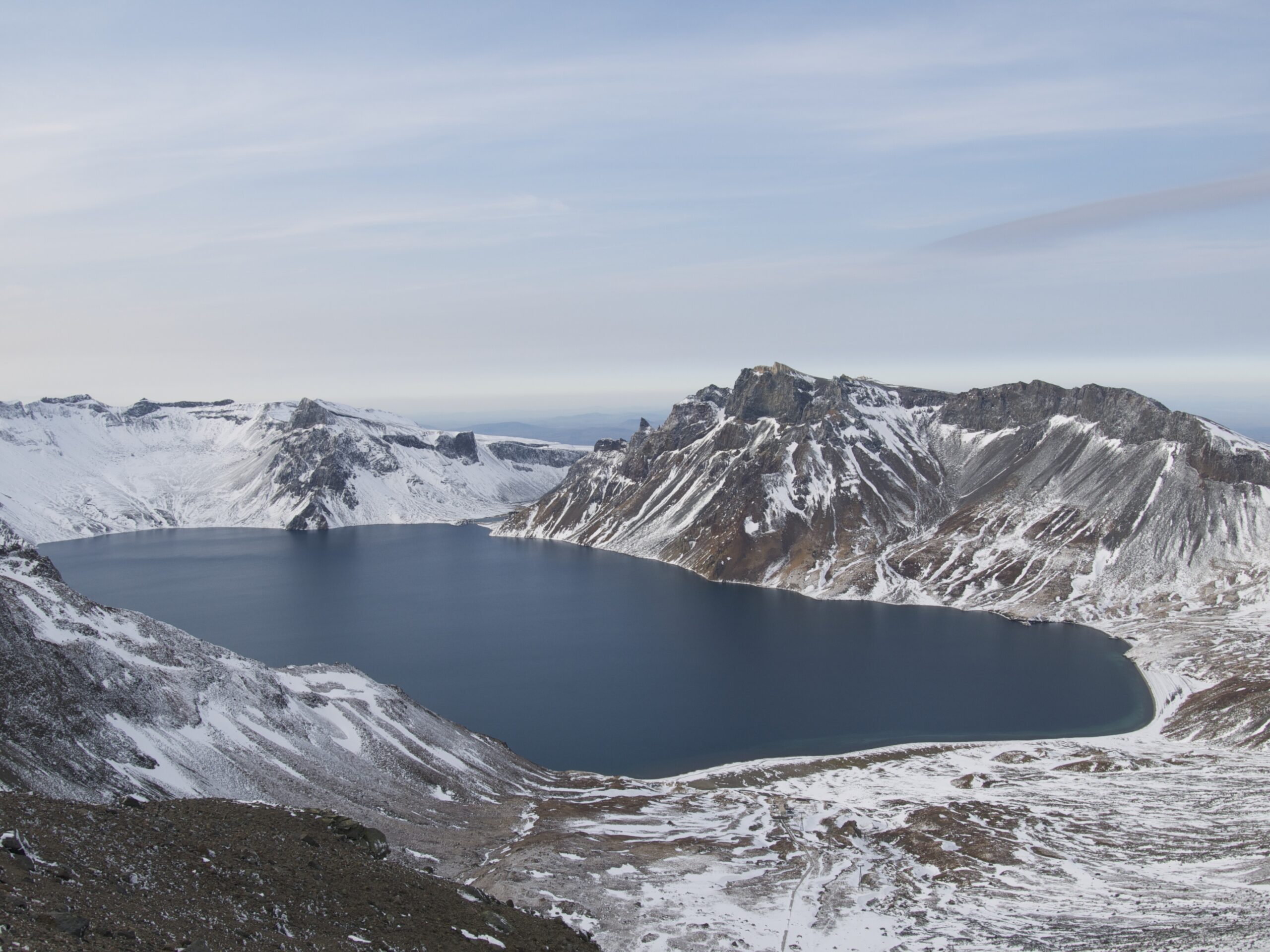
My perspective on this comes from fifteen years working at the intersection of science and diplomacy through a long-running collaboration with scientists from the Democratic People’s Republic of Korea (DPRK) – the formal name for North Korea. In 2011, signs of unrest at Mount Paektu, a volcano on the China-DPRK border, prompted international concern. This was understandable, as the volcano has a dramatic history having produced one of the largest eruptions in human history, releasing more material than the 1883 eruption of Krakatoa. This concern led to a rare invitation from DPRK to establish a scientific collaboration. UK and US scientists travelled to the DPRK, while DPRK scientists visited the UK.
The collaboration improved understanding of the volcano, but its most important achievement may have been demonstrating that sustained scientific cooperation can survive periods of profound geopolitical tension. Over 15 years, the project has required engagement not only between scientists, but also with diplomats and government officials from many countries. It has demonstrated the remarkable ability of science to build bridges between countries that might otherwise have little opportunity to engage.
In 2016, the DPRK conducted its fourth nuclear test. Later that year, the UN Security Council responded with new sanctions restricting scientific and technical collaboration with the DPRK.[3] Just as we published our first scientific paper[4] and plans for new, more ambitious projects were emerging, the collaboration seemed to be at an end. However, with support from the UK Government, particularly from officials at the British Embassy in Pyongyang and the UK Mission to the UN, we worked with the UN Security Council to establish a mechanism that allowed the collaboration to continue while fully complying with the letter and spirit of the international sanctions. Diplomatic engagement created the space within which scientists could keep working together.
This experience illustrates an important principle: scientists cannot maintain international collaboration on their own. Diplomats have a critical role in protecting the space for scientific discussion, particularly when relations between governments deteriorate. This role becomes even more important when the scientific knowledge being generated is essential to understanding shared global security threats.
Nowhere is this challenge more apparent than in the Arctic. This region is warming four times faster than the global average, with profound consequences for ice sheets, glaciers and permafrost. However, following Russia’s invasion of Ukraine, much of the scientific cooperation that underpinned Arctic climate monitoring was suspended. The rationale for sanctions was understandable. Nonetheless, as Russia accounts for approximately half of the Arctic region, the impacts are significant. Before the invasion, coordinated international collaborations enabled scientists to share observations and data across the Russian Arctic and the western hemisphere. Almost all of this collaboration has now ceased. Recent studies show that these data gaps have increased uncertainty and bias in climate models[5]. In effect, one consequence of the conflict is that our ability to understand a rapidly changing climate has deteriorated, at a time when this information is needed most. Furthermore, the loss of established relationships and the absence of new scientific connections mean that, when the conflict ends, restoring these data flows will take considerable time.
The scientific community must work with governments to identify strategically important scientific activities whose value extends beyond academic research and directly supports national and international security. These could include climate observation networks, Arctic monitoring programmes, infectious disease surveillance systems and natural-hazard early warning initiatives. Such projects provide information that benefits all nations, regardless of political differences.
The precedent already exists. Even after Russia’s invasion of Ukraine, cooperation continued in strategically important ventures such as the International Space Station[6] and the ITER nuclear fusion programme[7]. Climate science deserves similar consideration, with programmes such as the EU funded INTERACT project, which links monitoring stations across the Arctic, including 21 in Russia, representing the kind of collaboration that may warrant special protection.
This would not exempt scientific collaboration wholesale from sanctions, nor would it undermine legitimate national security concerns. Rather, it would provide policymakers with a clearer understanding of the long-term consequences of disrupting essential scientific networks and help them make decisions that safeguard our national security. Governments must respond to immediate threats, but they should also be equipped to consider how those responses might weaken their ability to manage future threats from climate change, environmental instability or global pandemics.
The UK is uniquely placed to lead this conversation. It combines world-leading scientific capability with a highly respected diplomatic service and an increasingly prominent role in international climate security. However, leadership will require more than simply recognising climate change as a security threat. It requires active efforts to protect the scientific relationships through which we understand climate change.
In an increasingly fragmented world, scientific collaboration is not a luxury that can be set aside when geopolitical relations deteriorate. It is part of the infrastructure that underpins our security. If we are serious about protecting future generations from the consequences of climate change and environmental instability, we must ensure that the scientific connections on which our understanding depends remain intact.
James Hammond is Professor of Geophysics at Birkbeck, University of London researching volcanoes, earthquakes and other geological hazards. He is co-Director of the Birkbeck-UCL Science Diplomacy Hub , exploring the role of science diplomacy in a geopolitically fragmenting world. At Birkbeck, he leads the Mount Paektu Research Centre (MPRC). This centre facilitates science collaboration with North Korea in areas of mutual interest between the UK and North Korea. The MPRC has led environmental science collaborations with DPRK scientists for over 15 years.
Disclaimer: The views expressed in this piece are those of the individual author and do not reflect the views of The Foreign Policy Centre.
Image: Mount Paektu
[1] Prime Minister’s Office, 10 Downing Street, ‘PM speech at COP31 climate summit: 12 November 2026’, GOV.UK, November 2026, https://www.gov.uk/government/speeches/pm-speech-at-cop31-climate-summit-12-november-2026
[2] Foreign, Commonwealth & Development Office, ‘Press statement by co-hosts of the UNGA Foreign Ministers Dialogue on Climate Change and Ecosystem Degradation as National Security Risks’, GOV.UK, September 2026, https://www.gov.uk/government/news/press-statement-by-co-hosts-of-the-unga-foreign-ministers-dialogue-on-climate-change-and-ecosystem-degradation-as-national-security-risks
[3] United Nations Security Council, Resolution 2321 (2016), November 2016, https://main.un.org/securitycouncil/en/s/res/2321-%282016%29
[4] Ri Kyong-Song et al., ‘Evidence for Partial Melt in the Crust Beneath Mt. Paektu (Changbaishan), Democratic People’s Republic of Korea and China’, Science Advances, Vol. 2, 2016, https://doi.org/10.1126/sciadv.1501513
[5] Efrén López-Blanco et al., ‘Towards an Increasingly Biased View on Arctic Change’, Nature Climate Change, Vol. 14, 2024, pp. 152–155
[6] NASA, ‘Partners Extend International Space Station for Benefit of Humanity’, NASA, April 2023, https://www.nasa.gov/blogs/spacestation/2023/04/27/partners-extend-international-space-station-for-benefit-of-humanity/
[7] ITER Organization, ‘ITER Signs Agreement with Russia’s Kurchatov Institute’, ITER, June 2026, https://www.iter.org/node/20687/iter-signs-agreement-russias-kurchatov-institute