
Skip to content

Op-ed | Iran Attack Shows Limits of Starmer’s ‘Trump-Whispering’

Article by Dr Andrew Gawthorpe

March 4, 2026

Op-ed | Iran Attack Shows Limits of Starmer’s ‘Trump-Whispering’

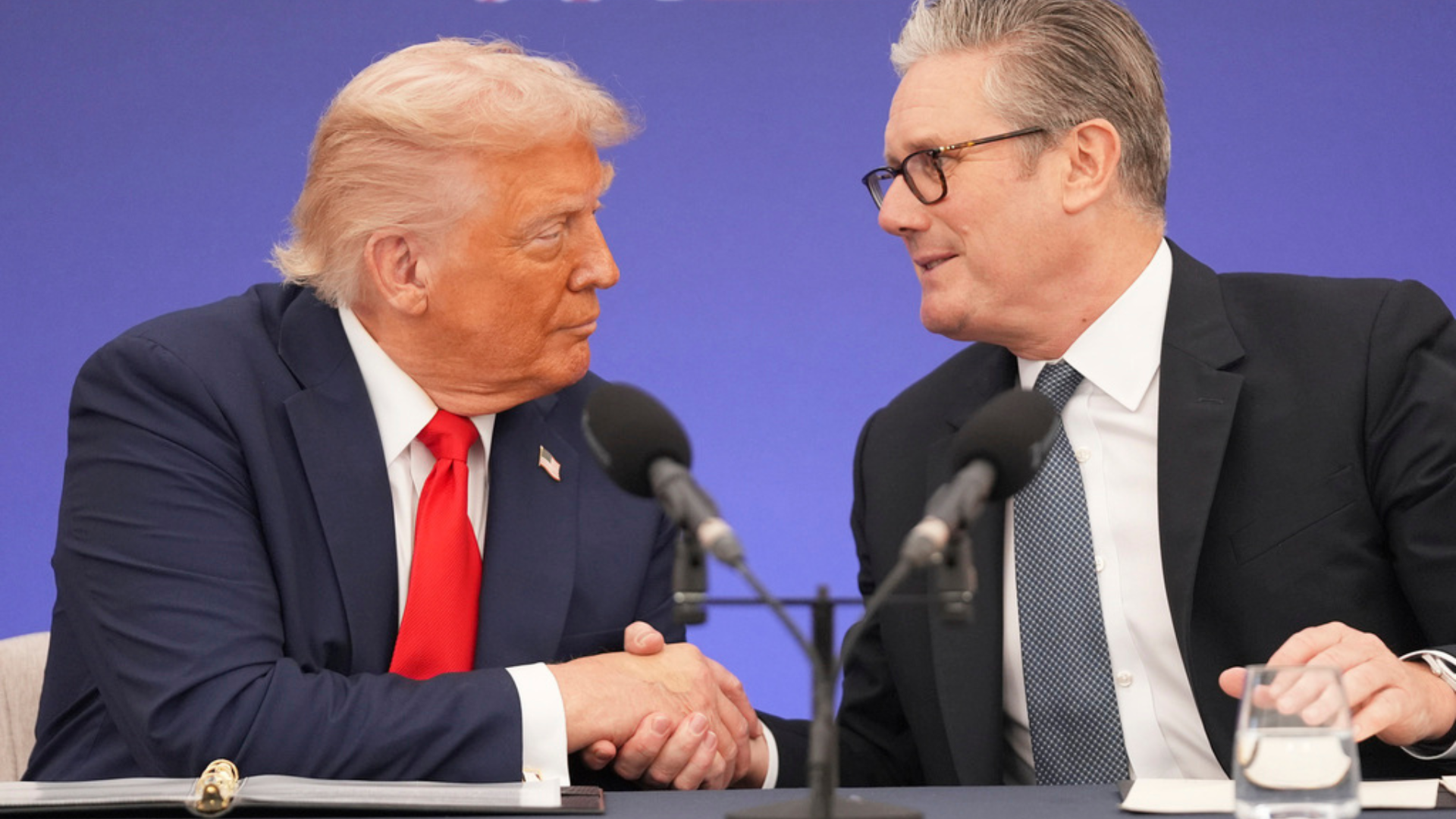
Ever since Donald Trump returned to office in 2025, Keir Starmer has had to perform a difficult balancing act.


On the one hand, he has sought to avoid open confrontation with Trump despite policies that have directly affected British interests, including imposing trade tariffs on the UK and threatening to annex Greenland, the territory of a NATO ally. On the other hand, the British Prime Minister has tried to carve out a space in which to pursue what he perceives as Britain’s national interests. One of the main bases of this strategy was the idea that appeasing Trump would allow Starmer to become “the Trump whisperer”, nudging the US President towards more amenable policies.[1]


With the joint US-Israeli attack on Iran, this effort has reached an ignominious end. Like many UK prime ministers before him, Starmer appears to have discovered that a policy predicated on accommodating 90% of an American president’s agenda in the hope of influencing the remaining 10% is doomed to failure. When Washington decides to act, it will do so anyway – and London will often be left picking up the pieces.


Starmer is not wrong that US foreign policy is very important for the United Kingdom, and that influencing it is desirable. In particular, the US commitment to NATO and the defence of Europe more broadly is vital to British security. Faced with trade-offs in other less vital areas – for instance the exact level of tariffs affecting US-UK trade – pragmatic concessions might be necessary to maintain it. Keeping channels of communication open and friendly is certainly wiser than engaging in unnecessary diplomatic spats.


Ultimately, the administration of President Trump is not one that can be constrained through careful diplomatic management alone. Trump has an expansive view of his right to use military force across the world, scant respect for alliances or international law, and a chaotic decision-making process. It is not so easy to ‘nudge’ him in constructive directions.


Starmer recognised the dangers inherent in the US military build-up in the Middle East at an early stage. He decided to deny the use of Diego Garcia and RAF Fairford as launching points for strikes on Iran and kept quiet about his views on the coming war. At the same time, Starmer – ever the balancer – did not directly state his opposition to it, either.


Had he done so, he would have been on extremely firm ground for two reasons. The first is international law. The US and Israel’s attack on Iran was patently illegal. The UK government recognised this and it was apparently one reason why the use of UK territory for striking Iran was denied.[2] Whatever the horrendous crimes committed by the Iranian government against its own people, further weakening of the norm of non-aggression is clearly not in the UK’s interest.


The second reason is geopolitical. At a time when the UK desperately needs the US to recommit to European security, Trump is once again leading his country down the path of launching a costly war of choice in the Middle East. Rather than preserving their military assets and diplomatic goodwill to deter Russia, both the United States and Europe are now expending them to justify and deal with the consequences of a war of aggression of their own. The economic consequences and strain on military readiness could significantly damage European and British security.


Yet now that the war has begun, despite what appeared to be Starmer’s obvious private opposition, the UK once again finds itself being swept up in America’s wake. After Iran’s predictable retaliation against both Israel and Arab nations, the Prime Minister has authorised the use of Diego Garcia and RAF Fairford for what he terms “defensive” strikes on Iranian missile launchers.[3] Legal gymnastics aside, these “defensive” strikes are indistinguishable from the “offensive” operations that Starmer only a few days ago refused to allow Trump to launch from British bases.


Nor can we be certain that this will end up being the full extent of British involvement. Already, an explosive drone has struck RAF Akrotiri, a British base in Cyprus, and others have been intercepted en route.[4] There are hundreds of thousands of British citizens in Israel and in the Arab nations that are now under Iranian bombardment. The possibility of UK involvement in opening shipping lanes threatened by Iran and its regional allies cannot be ruled out.


In other words, the UK now shares much of the risk that the United States has taken on with this reckless war of choice. Starmer’s policy of balance could not prevent it, and nor can it protect Britain from its consequences.


Disclaimer: The views expressed in this piece are those of the individual author and do not reflect the views of The Foreign Policy Centre.

 

Andrew Gawthorpe is a Senior Fellow at the Foreign Policy Centre. He isa specialist in US politics and foreign policy at Leiden University. He also writes a newsletter called America Explained. He was previously a teaching fellow at the UK Defence Academy, a research fellow at the Harvard Kennedy School, and a civil servant in the Cabinet Office.


[1] Rowena Mason, Starmer Faces Great Quandary Over ‘Special Relationship’ After Iran Attack, The Guardian, March 2026, https://www.theguardian.com/politics/2026/mar/01/keir-starmer-donald-trump-uk-us-special-relationship-iran.

[2] Brad Lendon, Britain Blocking Use of Air Bases Trump Says Would Be Needed for Strikes on Iran, UK Media Reports, CNN, February 2026, https://edition.cnn.com/2026/02/20/europe/britain-air-base-access-us-iran-intl-hnk-ml.

[3] Lucy Fisher and George Parker, Keir Starmer Will Let US use UK Bases for Attacks on Iranian Missile Sites, Financial Times, March 2026, https://www.ft.com/content/b988499b-1a89-4e56-b0cf-19d5a8ac7111.

[4] Cachella Smith and Nikos Papanikolaou, Two Drones Intercepted Heading for RAF Base, Cyprus Says, BBC, March 2026, https://www.bbc.com/news/articles/cm2r0q310e3o.

Footnotes
    Related Articles

    Four Years On: Europe’s Strategic Test in Ukraine

    Article by Prof Stefan Wolff

    February 24, 2026

    Four Years On: Europe’s Strategic Test in Ukraine

    Four years into Russia’s full-scale invasion of Ukraine, the conflict remains unresolved and the strategic landscape increasingly complex. In this analysis, Stefan Wolff, FPC’s Senior Research Fellow, examines the evolving diplomatic scenarios, the limits of US-led negotiations, and the choices confronting the UK and its European partners as the war enters a fifth year.


    As Ukraine heads into a fifth year of defending itself against the unprovoked Russian full-scale invasion, the prospects of a just and sustainable peace agreement remain distant. On the ground, the land war continues to be in a stalemate, with the pace of Russian territorial gains now slower than some of the most protracted battles of trench warfare during the First World War. 


    In the air war, Moscow has demonstrated a ruthless and brutal efficiency in destroying much of Ukraine’s energy infrastructure. The repeated destruction of power generation and distribution facilities has taken a serious toll on the Ukrainian population and economy. Yet beyond inflicting hardship, these strikes have not had the kind of strategic effect Russia needs to achieve in order to turn the military tables decisively on Ukraine.


    All in all, the Kremlin narrative of inevitable victory looks more like Soviet-style propaganda than a reflection of battlefield reality. President Vladimir Putin, however, is not the only world leader guilty of wishful thinking. His American counterpart, President Donald Trump, at times, also appears to make policy untethered from the real world. First, there was his claim on the campaign trail that he could end the fighting in Ukraine within 24 hours. Upon returning to the White House, Trump issued multiple ceasefire demands and associated deadlines that Putin simply ignored without incurring any cost. The latest plan from Washington is for a peace deal to be concluded between Moscow and Kyiv, approved by a Ukrainian referendum, and followed by national elections — all before June.


    Scenarios for a US-Mediated Settlement

    The timeline for the American plan aside, a US-mediated deal between Russia and Ukraine remains possible. However, It is unlikely that it will take the form of the just and sustainable settlement that Kyiv and its European allies demand. If it comes to pass as a result of the ongoing trilateral negotiations currently underway, it is highly probable that Ukraine will have to make significant concessions on territory in exchange for US-backed security guarantees and a mostly European-financed package of post-war reconstruction measures. 


    An additional bitter pill to swallow for Ukraine and Europe would be an unashamed US-Russia rapprochement with a simultaneous end to American sanctions on Russia, a flurry of economic deals between the two countries, and pressure on Ukraine’s other allies to follow suit, at least on sanctions relief and possibly on the release and return of Russian frozen assets.


    The other — and more likely — possibility is that not even a bad deal will be forthcoming. The Russian side has given no indication that it is willing to make any significant concessions. Moscow’s position is that Kyiv should relinquish control over the entirety of the Donbas, including territory in Ukraine’s fortress belt that Moscow has so far been unable to take by military force. In return, or under the terms of what Russia refers to as the ‘Anchorage formula’ allegedly agreed between Putin and Trump at their Alaska summit in August 2025, the Kremlin is apparently willing to freeze the current frontlines elsewhere along the more than 1,000 km long line of contact. 


    Even at the very remote possibility that this was acceptable, or that Ukraine would be pressured into agreeing to such a deal, this would hardly seal a settlement, given that Russia continues to oppose the security guarantees currently on the table between Kyiv and its Western partners. Without them, territorial concessions make no sense for Ukraine, especially as there is no imminent danger of a collapse of Ukrainian defences. 


    The Hungarian blockage of the EU’s €90 billion loan to Ukraine — likely instigated by the country’s Prime Minister, Victor Orbán, at the behest of both Trump, whose Secretary of State, Marco Rubio, had visited the country just before the announcement, and Putin, with whom Orban has had close ties for a long time — is not going to change Kyiv’s calculations significantly. Not only is the EU surely going to find a work-around to deal with this blockage but Orban’s days as Ukraine’s principal foe inside the EU might be numbered given that he is trailing in opinion polls ahead of April’s parliamentary elections. As any embrace of and by Trump and Putin is unlikely to improve Orban’s prospects for another term, the Hungarian blockage might ultimately prove temporary regardless of the outcome of April’s elections.


    If, as is therefore likely, Trump’s latest deadline passes without a deal being reached, the question arises what next? Trump could simply walk away from the war. He threatened to do so in the past but a likely mix of ego and the prospect of economic deals in the event of peace prevented him from doing so. Nothing suggests at the moment that this time will be different. There might be some angry exchanges and finger pointing, but after that, the current, deeply flawed negotiation process is likely to resume in some form because the alternatives are worse for all sides, Trump included.


    The US President could walk away and finally realise that Putin is simply not interested in peace, no matter what is on offer. But this will not lead Trump to ramp up pressure on Russia in a significant way. He has had reason and opportunity to do so on multiple occasions since returning to the White House in January 2025. He has not done so then, and there is no reason to believe that he would do so now. 


    Trump could then instead pursue a bilateral deal with Russia. But without European participation, such a deal will be of limited benefit to both sides. The bulk of Russian foreign assets remain frozen in Europe, and would very likely stay so in the absence of coordinated transatlantic action. Russia has little of value to export to the US and lacks the market conditions to make it an attractive destination for US foreign direct investment. Some US companies might return or expand their still existing operations in the country, but these will hardly be the trillion-dollar deals that Trump, and possibly Putin, envisage.


    Even if any such separate US-Russia deal would be of limited economic value, it would still be politically damaging, especially to transatlantic relations. That, however, also makes it less likely to happen. By June, primaries in the United States ahead of the November midterm elections will largely have concluded and Republican candidates will be less susceptible to pressure from the White House. As was already obvious in the context of Trump’s threats to take over Greenland, if necessary by force, there remains a segment of foreign policy realists among congressional Republicans who, unshackled from the leverage Trump may have held over them in the primaries, are likely to push back more against his most disruptive foreign policy stances, including when it comes to any dealing with Russia reached at the expense of the transatlantic alliance.


    What Europe Must Do Now

    All of these scenarios, and a likely myriad of more or less minor variations of them, contain the ingredients of a British and European strategy for what is probably another year of Russia’s war against Ukraine. 


    The first is the utmost importance of unity behind Ukraine’s defence efforts. Across the multiple overlapping multi- and mini-lateral formats of EU, NATO, coalition of the willing, etc., there needs to be a clear message to Russia, the US, and Ukraine alike: Russia’s aggression is also Europe’s problem and will be treated as such for as long as the threat from Moscow — not just against Ukraine but against the fundamental tenets of the European security order as such — remains credible.


    This means, second, that Ukraine needs to be supported materially with military economic aid and politically when it comes to pushing back against both American and Russian designs for a deal to serve the interests of the current incumbents of the White House and the Kremlin first. For a more effective political pushback, Europe needs to cultivate relations with those in the US foreign policy establishment who continue to see value in established alliance structures, especially if they reflect more balanced burden-sharing.


    Third, the UK and its European allies also need to think beyond Ukraine — because this is what Russia is doing as well, despite the demands of its war of aggression. Though it need not be limited to the EU-Russia borderlands, this is where the focus needs to remain for the foreseeable future. 


    Moldova, for example, remains particularly vulnerable to Russian interference, notwithstanding the success of pro-European forces in the country in presidential and parliamentary elections in 2024 and 2025. Moscow still retains multiple channels of influence, including through the unresolved conflict in the Transnistrian region, which, if left to fester, could significantly impede Moldova’s EU accession process and provide opportunities for renewed destabilisation. 


    Similarly, parliamentary elections in Armenia in June will create an opportunity for the Kremlin to destabilise another of its neighbours that has increasingly turned away from Moscow and towards Brussels. Given the role of the US, and of Trump personally, in the peace process between Armenia and Azerbaijan, this also offers an opportunity to cooperate with Washington in working towards constraining Russian influence in the South Caucasus region as a whole. 


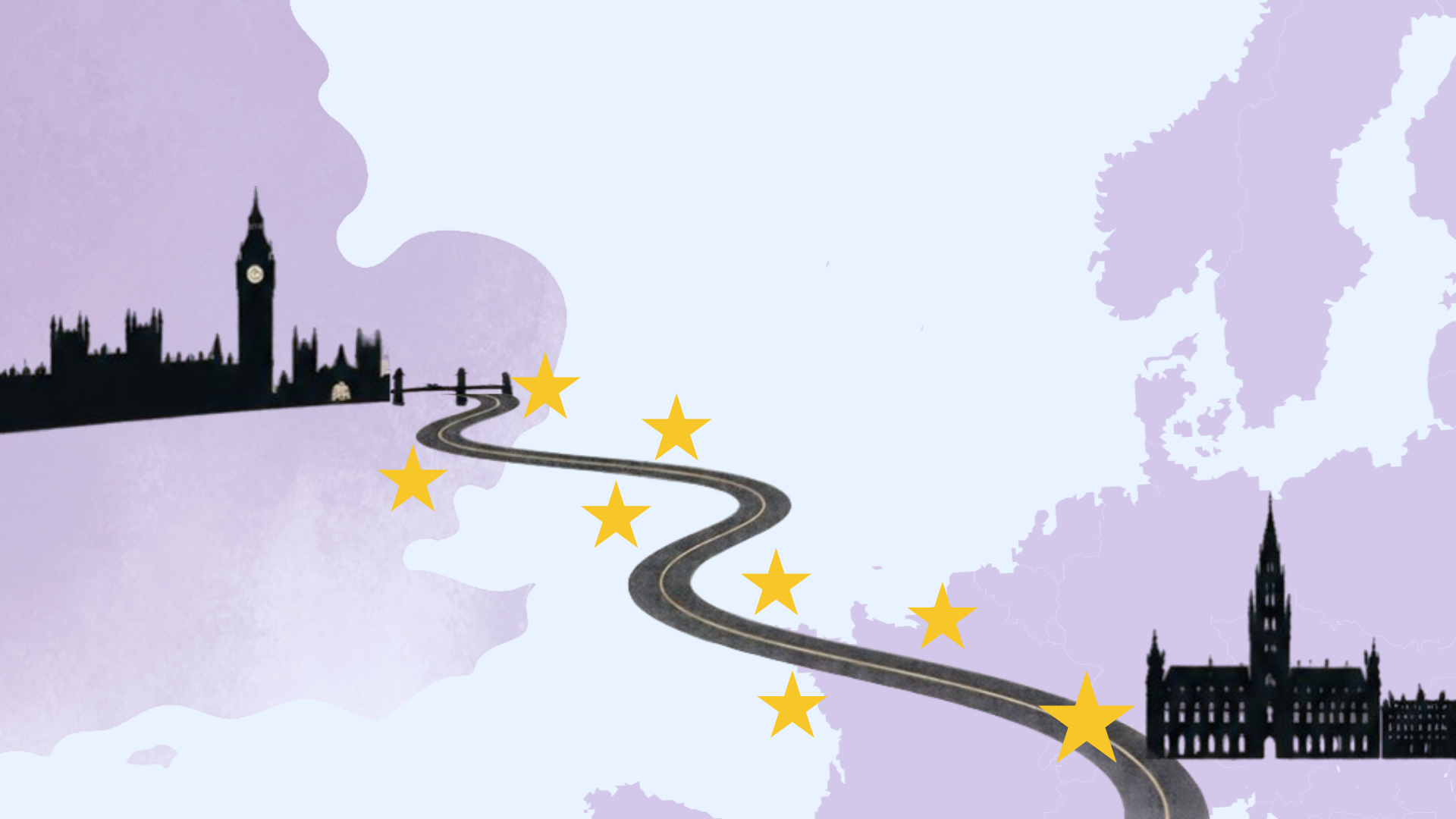
    A fourth and final ingredient in an evolving British and European strategy is a focus on becoming a credible player in the emerging new international order. This requires a certain amount of realism and modesty in aspirations and messaging. The UK is not pursuing a fast track to rejoining the EU, but closer alignment and cooperation across the English Channel is essential. 


    Equally important is that declarations of intent, be they about a UK-EU reset or an expanding coalition of the willing, are followed with concrete action — especially on investment in defence and a more credible European deterrence posture. This means both a more capable defence industrial base and doctrine for the kind of war being fought in Ukraine and improved defence readiness and resilience at the level of society. 


    A reconstituted European alliance, with a coalition at its heart that is not just willing but also capable of deterring Russia, is not beyond the reach of the UK and Europe. It may not be, nor ever become, a traditional great power, but by continuing to back Ukraine today and integrating it tomorrow, it will feel, and be, less vulnerable to the whims of the current or any future mercurial leader in the White House or the Kremlin. Crucially, it preserves the opportunity to rebuild the transatlantic alliance in the future, and to do so on stronger European foundations.


    Disclaimer: The views expressed in this piece are those of the individual author and do not reflect the views of The Foreign Policy Centre.


    Stefan Wolff is Professor of International Security in the Department of Political Science and International Studies, at the University of Birmingham. A political scientist by background, he specialises in the management of contemporary security challenges, especially in the prevention and settlement of ethnic conflicts, in post-conflict state-building in deeply divided and war-torn societies, and in contemporary geopolitics and great-power rivalry. Wolff has extensive expertise in the post-Soviet space and has also worked on a wide range of other conflicts elsewhere, including in the Middle East and North Africa, in Central Asia, and in sub-Saharan Africa. Wolff holds degrees from the University of Leipzig (Erstes Staatsexamen), the University of Cambridge (M.Phil.), and the LSE (Ph.D.).

    Footnotes
      Related Articles

      Op-ed | One Year into Trump 2.0: Domestic Instability and Foreign Policy Disruption

      Article by Dr Andrew Gawthorpe

      February 3, 2026

      Op-ed | One Year into Trump 2.0: Domestic Instability and Foreign Policy Disruption

      Over the past month, President Donald Trump has proven that he still has the capacity to shock the world. On 3 January, he ordered the US military to capture Venezuelan president Nicolás Maduro. A few days later, he renewed his threats to forcibly annex Greenland. This prompted one of the most severe crises in the history of transatlantic relations – before Trump abruptly backed off in a speech at Davos. Trump then authorised a substantial military build-up to take place around Iran, in what may be a precursor to an attempt to overthrow the country’s government – or just another negotiating ploy.


      At the same time, domestic tensions escalated sharply during what some have called the ‘Battle of Minneapolis’ – the most intense confrontation between the federal government and local citizens in modern American memory.[1] The struggle eventually left two people dead and called into question whether the Trump administration could continue implementing its immigration agenda so aggressively.


      In many ways, January 2026 has been a microcosm of Trump’s first year back in office. His foreign policy has been alternatively aggressive, flexible, and – to many allies – just plain confusing. Domestically, he has sought to implement a radical version of his nationalistic and frequently openly racist ‘Make America Great Again’ agenda. In doing so, Trump appears to have gone beyond what most of the public support, causing a huge electoral headache for his party ahead of the midterm elections later this year.


      Domestic woes

      Trump won the 2024 election extremely narrowly. His victory in the popular vote was by a margin of just 0.6%, 7.5 times smaller than Joe Biden’s margin in 2020.


      Although this narrow victory was mostly driven by voter concern over high inflation, since his inauguration Trump has governed as if he had received a broad-based mandate to pursue a radical version of his MAGA agenda.[2] He has attempted to persecute his political opponents and pursue a deportation campaign which has involved flagrant abuses of the rights of countless citizens and residents. When confronted by judges or disapproving members of Congress, he has branded their resistance as a betrayal.[3] At every step, he has sought to sow division rather than unite the nation.


      Americans do not appear to be enjoying the spectacle much. In a recent poll, Trump’s approval rating stood at just 37%, not far from its all-time low.[4] Voters are particularly frustrated that the President has done little to reduce the cost of living, which remains extremely high.[5] With Trump so unpopular, even members of his own party are becoming more willing to criticise him, and they only become more so as the midterms approach.


      Trump’s signature domestic policy initiative of mass deportation has received the most attention. Over the past year, the White House has fundamentally changed how immigration enforcement works. Gone are targeted raids on known undocumented persons with criminal records. Instead, immigration agents have taken to aggressively patrolling urban areas, demanding to see the papers of anyone whose skin colour raises their suspicion. This campaign has involved violations of constitutional rights on a massive scale.[6] It has been justified by openly racist rhetoric from Trump himself, who has referred to the members of some communities as “garbage” who come from “hellholes”.[7]


      Voters have been souring on Trump’s deportation campaign for some time, but events in Minneapolis over the past month led the dam to burst. For weeks, protesters in the city resisted attempts by immigration agents to arrest their neighbours, creating scenes that sapped support for the administration’s aggressive approach. After federal agents then killed two citizens – one a young mother, Renee Nicole Good, and the other a nurse at a veterans’ hospital, Alex Pretti – the nationwide backlash was extreme. In response, Trump removed Greg Bovino, the deputy in charge of the deportation campaign, and signalled a change of course. What comes next is unclear, but now even Trump’s signature domestic policy initiative is being challenged.


      Foreign adventures

      It is common for leaders who face frustration at home to instead look for achievements abroad. American presidents are remarkably free to chart their own course in foreign policy, with few formal requirements to consult Congress or civil servants. Trump has taken full advantage of this freedom, with the result that his foreign policy has been characterised by wild swings, ambitious goals, and little attention paid to practical implementation.


      Perhaps the biggest change from Trump’s first term has been his increased comfort with using military force. Both the capture of Maduro and the bombing of Iran showed that Trump is now looking to the military to score quick wins. Even Greenland became the subject of explicit military threats, prompting alarm among NATO allies. In each and every case, what seems to be missing is any long-term plan for what happens after the military action or threat is over. It rarely seems like Trump is engaging in a rational calculation of means and ends.


      The Greenland affair is a good example. Almost everything that Trump says he wants from Greenland – an increased military presence and mineral mining rights – could be accomplished with simple negotiations and no change of ownership. Instead, he threatened to seize the island outright, doing perhaps irreparable damage to the transatlantic alliance in the progress. He then retreated from his position, indicating that a negotiated arrangement within the existing territorial framework would suffice. All the damage, it seemed, was for nothing.[8]


      Another feature of Trump’s second-term foreign policy is its expansive scope. Trump is sometimes called an isolationist, but if he is then it is hard to explain why he took the time to try to broker peace between Thailand and Cambodia or Azerbaijan and Armenia. He often boasts that he has ended eight wars.[9] Even if his real impact on these conflicts has usually been temporary and marginal, his desire to play global peacemaker is another sign that he is trying to rack up wins on the world stage. It may also be an attempt to distract from his failure to end the war in Ukraine.


      Many European leaders entered the second Trump administration thinking that the main threat facing them was an American withdrawal. But over the last year, it has become increasingly apparent that the more immediate challenge may be something different: focused and hostile intervention in European affairs. From his threats to seize Greenland to his administration’s sustained criticism against European migration policy and liberal values, Trump seems to reshape Europe more than he wants to abandon it.


      For Europeans, this is an uncomfortable and dangerous place to be in. Since the dawn of American global power a century or so ago, every region of the world except Europe has been subject to Washington’s capricious and often destructive power. The alliances and bonds of affection that seemed to shield Europe from these attentions are fraying, and it is natural for Europeans to wonder what awaits them.


      It would be unwise for European leaders to assume that Trump’s domestic problems will constrain his international agenda. In fact, the harder things get at home, the more his gaze might shift abroad – with unpredictable consequences for us all.


      Andrew Gawthorpe is a Senior Fellow at the Foreign Policy Centre and a specialist in U.S. politics and foreign policy at Leiden University. He also writes a newsletter called America Explained.


      Disclaimer: The views expressed in this piece are those of the individual author and do not reflect the views of The Foreign Policy Centre.


      [1] Ryan Cooper, The Battle of Minneapolis is Not Over, Prospect, January 2026, https://prospect.org/2026/01/29/ice-trump-minneapolis-alex-pretti-border-protection-kristi-noem-stephen-miller/

      [2] Oxford Economics, Inflation was the Main Driver for Trump Victory, November 2024, https://www.oxfordeconomics.com/resource/inflation-was-the-main-driver-for-trump-victory/

      [3] Kevin Frey and Mychael Schnell, Trump Suggests Some Democrats should be Hanged – and Some Republicans Rush to his Defence, MS NOW, November 2025, https://www.ms.now/news/trump-calls-democrats-seditious-traitors-republicans-rcna245028; Dan Maurer, ‘On Treason and Traitors’, Lawfare, June 2025, https://www.lawfaremedia.org/article/on-treason-and-traitors

      [4] Hannah Hartig and Jocelyn Kiley, Confidence in Trump Dips, and Fewer Now Say They Support his Policies and Plans, Pew Research, January 2026, https://www.pewresearch.org/politics/2026/01/29/confidence-in-trump-dips-and-fewer-now-say-they-support-his-policies-and-plans/.

      [5] Kathryn Palmer, How is Trump on Affordability? What Most Voters Said in New Poll, USA Today, January 2026, https://eu.usatoday.com/story/news/politics/2026/01/22/trump-worse-affordability-new-poll/88302812007/

      [6] Kyle Cheney, Judges Across the Country Rebuke ICE for Defying Court Orders, Politico, January 2026, https://www.politico.com/news/2026/01/30/ice-immigration-court-orders-00757894; Walter Olsen, In Minnesota, ICE is Assaulting the Constitutional Rights of Citizens, Cato Institute, January 2026, https://www.cato.org/blog/ice-versus-fourth-amendment

      [7] Melissa Hellmann, Donald Trump in his Own Words – the Year in Racism and Misogyny, The Guardian, December 2025, https://www.theguardian.com/us-news/2025/dec/29/donald-trump-racism-dei-misogyny-2025-review

      [8] Katya Adler, Confronted over Greenland, Europe is Ditching its Softly-Softly Approach to Trump, BBC News, January 2026, https://www.bbc.com/news/articles/c0lx7j1lrwro

      [9] Jake Horton and Nike Beake, How Many Wars has President Trump Really Ended?, BBC News, October 2025, https://www.bbc.com/news/articles/c5y3599gx4qo

      Footnotes
        Related Articles

         Join our mailing list 

        Keep informed about events, articles & latest publications from Foreign Policy Centre

        JOIN