Skip to content

Op-ed | Armenia’s 2026 Parliamentary Election and the Future of the South Caucasus

Article by James Stanley and Stefan Wolff

June 4, 2026

Op-ed | Armenia’s 2026 Parliamentary Election and the Future of the South Caucasus

The upcoming Armenian elections are often framed as a choice between Russia and the West. In reality, the outcome will shape the country’s evolving relationship with Russia, the West, and its neighbours in the strategically important South Caucasus. This article forms part of the Foreign Policy Centre’s work on democracy and elections.


In the shadow of war in the Middle East and Russia’s ongoing war waged against Ukraine, Armenia is heading into parliamentary elections on 7 June that will not only be critical for the country’s own direction but are also likely to have an impact for the wider South Caucasus region; itself of broader geopolitical significance at a crucial north-south and east-west crossroads.


At stake is first of all the future of incumbent Prime Minister Nikol Pashinyan and his Civil Contract party government, which came to power in 2018 after the Velvet Revolution. The movement ousted the government of long-term leader Serzh Sarkisian, who had tried to prolong his stay in power “by moving from the office of president to that of prime minister”.[1] This triggered nation-wide protests propelling Pashinyan to the premiership that May and to electoral victory in December.


Under Pashinyan, who was re-elected in 2021, Armenia has generally gravitated towards the European Union and away from Russia.[2] The latter is mostly a result of Russia’s failure to support Armenia during the Azerbaijani offensive in Nagorno-Karabakh in September 2023. The offensive resulted in Azerbaijan retaking control over the territory, which Armenia had illegally occupied since the first Karabakh war in the early 1990s – causing the displacement of around 100,000 Armenians from the region. These events unfolded in the presence of Russian ‘peacekeepers’ deployed under the terms of a cease fire agreement that ended the second Karabakh war in 2020.[3]


Armenia’s election on 7 June therefore marks an important milestone not only domestically, but also for the wider region. Pashinyan campaigns on a platform “to reopen the country’s borders, lower dependence on Russia, and diversify its foreign and economic profile by normalising relations with traditional adversaries Azerbaijan and Turkey”.[4] If Pashinyan secures another term, this would give him the mandate to carry out a major shift in Armenia’s foreign policy orientation, and in this sense, the elections are also a “strategic referendum on Armenia’s geopolitical orientation.”[5]


A popular endorsement of Pashinyan’s agenda would enable the continuation of three important trends in the region: first, the gradual emergence of regional ties between Georgia, Armenia and Azerbaijan; second, further declining Russian influence in a region where Moscow once was the undisputed hegemonic power; and third, a strengthening foothold for the EU and the US in a region that is a strategic land bridge towards Central Asia and China.


The relationship between Moscow and Yerevan has steadily deteriorated over the past decade.[6] Since the beginning of Russia’s full-scale invasion of Ukraine in 2022, the weight and significance of Russia in the region has clearly diminished, but this has been a gradual process, rather than an abrupt rupture.[7]


While Russia retains significant influence in Georgia, and the Georgian Dream government in Tbilisi is, for now, seemingly more closely aligned with Moscow than with either Brussels or Washington, it is also trying to balance its relationship more carefully between Russia and the West. This includes forging closer ties with Azerbaijan and Türkiye.[8] A victory for Pashinyan and his pro-Western agenda is likely to reinforce the trend towards the geopolitical re-orientation of the region, but this will remain a more careful multi-vector balancing act – with a mixture of political, economic, and cultural relationships to different actors outside the region – rather than a more one-directional pivot towards the West.[9]


Although Russian influence may be declining, Moscow’s strategic interests in the South Caucasus, including in Armenia, remain strong. Russia is poised to use whatever tools and leverage it still has to prevent a further decline of its role as erstwhile regional hegemon, including by using cultural and religious channels of influence.[10] Economically, Russia remains Armenia’s most important trade partner and energy supplier.[11] Many opposition forces also remain closely aligned with Russia, including the Strong Armenia bloc led by billionaire Samvel Karapetyan.[12] Most Armenians favour diversification of relations rather than an outright rejection of Russia. According to recent polling, 43% see Moscow as the country’s most important partner, compared to 42% who think of Washington in that way, and 29% who think of Brussels.[13]


The geopolitical dynamics in and around Armenia are therefore more complex and nuanced than the political rhetoric accompanying them. Yet, Russia’s capacity to exercise real influence effectively – and comparably to its previous dominance – is more constrained than ever. For example, Armenia has completely shifted away from Moscow as a security provider not only rhetorically but also in terms of who now supplies most of its arms: where Russia once accounted for over 90% of Armenia’s weapons purchases, its share has now dropped to somewhere between 5% and 10%, while France and India have become Armenia’s primary defence partners.[14]


Armenia, thus, has not, and most likely will not, replace its close alignment with Russia with one that solely relies on the West. However, the change in foreign policy direction under Pashinyan has clearly shifted away from Russia and towards Brussels and Washington. On the European side, this has been reciprocated with the back-to-back European Political Community summit and first bilateral Armenia-EU summit held in Yerevan in May 2026.[15]


The United States under President Donald Trump has also demonstrated a continuing interest in the region, which is most evident in Trump’s engagement in trying to broker a permanent peace agreement between Armenia and Azerbaijan. While this has yet to be achieved, several pieces of this puzzle have been put in place, including, most recently, a bilateral framework agreement on the Trump Route for International Peace and Prosperity (TRIPP).[16] Given the transactional and erratic nature of much of Trump’s foreign policy, this is unlikely to be a pivotal game changer either for peace between Armenia and Azerbaijan or for long-term US commitment to the country or the region, but it is part of the broader picture of the geopolitical importance of Armenia and the South Caucasus – and the opportunities that this may create for Pashinyan’s agenda.


A careful balance therefore needs to be struck between dismissing Armenia’s parliamentary elections as the continuation of Armenia’s historic dependence on Russia, and exclusively reorienting strategic alignment in the much bigger geopolitical game surrounding the South Caucasus. The outcome of the elections will be important for the country’s direction, and speed of travel: whoever forms the next government in Yerevan will still have a range of pre-existing problems to resolve in an environment where external support is neither certain nor dependably benign.


James Stanley is an M.A. International Relations student at the University of Birmingham. He has experience in policy research and public engagement, including contributing to the Helios exhibition at The Exchange. His research interests include Russia, European security, and the wider Eurasian region.


Stefan Wolff is Senior Research Fellow at the Foreign Policy Centre and Professor of International Security in the Department of Political Science and International Studies, at the University of Birmingham. A political scientist by background, he specialises in the management of contemporary security challenges, especially in the prevention and settlement of ethnic conflicts, in post-conflict state-building in deeply divided and war-torn societies, and in contemporary geopolitics and great-power rivalry. Wolff has extensive expertise in the post-Soviet space and has also worked on a wide range of other conflicts elsewhere, including in the Middle East and North Africa, in Central Asia, and in sub-Saharan Africa. Wolff holds degrees from the University of Leipzig (Erstes Staatsexamen), the University of Cambridge (M.Phil.), and the LSE (Ph.D.).


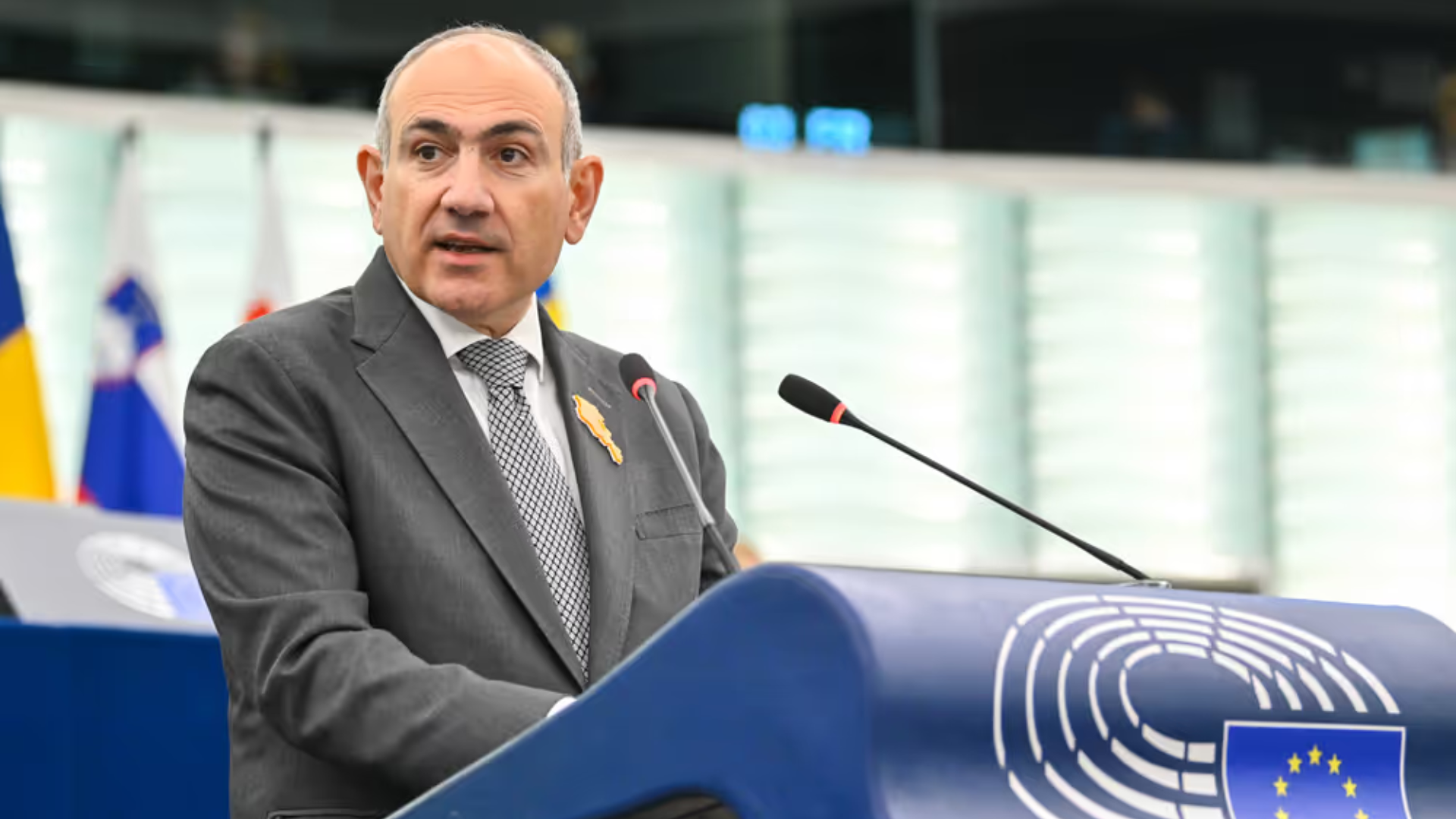
Image: © European Union 2026 – Source : EP


Disclaimer: The views expressed in this piece are those of the individual authors and do not reflect the views of The Foreign Policy Centre.


[1] Miriam Lanskoy and Elspeth Suthers, Armenia’s Velvet Revolution. Journal of Democracy, April 2019, https://dx.doi.org/10.1353/jod.2019.0027

[2] Council of the European Union, EU Relations with Armenia, https://www.consilium.europa.eu/en/policies/armenia/

[3] Michael Ertl, Nagorno-Karabakh: Conflict between Azerbaijan and Armenians explained, BBC News,September 2023, https://www.bbc.co.uk/news/world-europe-66852070

[4] Thomas de Waal, Armenia’s Election Is a Foreign Affair, Strategic Europe, November 2025, https://carnegieendowment.org/europe/strategic-europe/2025/11/armenias-election-is-a-foreign-affair

[5] Robert Lansing Institute, Armenia’s Parliamentary Elections 2026: A Battle for the State’s Geopolitical Future,May 2026, https://lansinginstitute.org/2026/05/18/armenias-parliamentary-elections-2026-a-battle-for-the-states-geopolitical-future/

[6] Ulviyya Asadzade, Russia’s Grip Weakens In The South Caucasus, Opening Doors To New Players, Radio Free Europe/Radio Liberty, July 2025, https://www.rferl.org/a/south-caucasus-russia-losing-influence-armenia-azerbaijan/33475018.html

[7] Emil Avdaliani, “Russian Influence Drains Away in the South Caucasus”, Center for European Policy Analysis, 22 May 2026, https://cepa.org/article/russian-influence-drains-away-in-the-south-caucasus/

[8] Mark Temnycky, Caught Between NATO And Russia, Georgia Turns To The South Caucasus, Forbes, December 2025, https://www.forbes.com/sites/marktemnycky/2025/12/13/caught-between-nato-and-russia-georgia-turns-to-the-south-caucasus/

[9] Laurence Broers, Armenia’s election: Voters to decide on Pashinyan’s peace agenda”, Chatham House, May 2026, https://www.chathamhouse.org/2026/05/armenias-election-voters-decide-pashinyans-peace-agenda

[10] Mikayel Zolyan, “Russia Won’t Give Up Its Influence in Armenia Without a Fight”, Carnegie Politika, 3 February 2026, https://carnegieendowment.org/russia-eurasia/politika/2026/01/armenia-russia-drifting-apart; Davit Gasparyan, Russian Religious Networks and Armenia’s Church-State Confrontation, Central Asia-Caucasus Institute, March 2026, https://substack.com/home/post/p-188618614

[11] SpecialEurasia, Trade as Leverage: Russia’s Enduring Economic Role in Armenia, March 2026, https://www.specialeurasia.com/2026/03/11/trade-russia-armenia-leverage/

[12] Sergey Kanev, Grabbing him by the ‘Beard’: The Insider identifies the FSB, GRU, and SVR agents Russia sent to Armenia to take on PM Nikol Pashinyan, The Insider, May 2026, https://theins.press/en/inv/292740

[13] International Republican Institute, Public Opinion Survey: Residents of Armenia, February 2026, March 2026, https://www.iri.org/resources/public-opinion-survey-residents-of-armenia-february-2026/

[14] Leonid Nersisyan and Sergei Melkonian, Escaping Russia’s Backyard: Armenia’s Strategic Defense Shift, War on the Rocks, November 2024, https://warontherocks.com/escaping-russias-backyard-armenias-strategic-defense-shift/

[15] Rayhan Demytrie, European leaders converge on Armenia as Russia looks on, BBC News, May 2026, https://www.bbc.co.uk/news/articles/cgkp1124y3yo

[16] Office of the Spokesperson, The United States and Armenia Announce the Trump Route for International Peace and Prosperity (TRIPP) Framework Agreement and Sign the Strategic Partnership Charter and Critical Minerals Memorandum of Understanding, US Department of State, May 2026, https://www.state.gov/releases/office-of-the-spokesperson/2026/05/the-united-states-and-armenia-announce-tripp-framwork-agreement-and-sign-the-strategic-partnership-charter-and-critical-minerals-mou/
Footnotes
    Related Articles

    Op-ed | International Aid as a Line of Defence: What Happens to Human Security Without Soft Power?

    Article by Anna Chernova

    April 24, 2026

    Op-ed | International Aid as a Line of Defence: What Happens to Human Security Without Soft Power?

    Securitisation of foreign (and domestic) policy is leading to a prioritisation of hard power approaches over civilian-led, soft power approaches, leaving many wondering about the future. As Europe rearms in response to the Russian threat to its collective security, and as the US proves itself an unreliable security partner, the UK finds itself repositioning within a fractured Euro-Atlantic alliance. This raises a broader question: how to de-securitise and return to “normal” politics?[1]


    If militarism shapes the next generation’s approach to public policy, what are the prospects for addressing the root causes of violence that are driving the skyrocketing humanitarian needs and record levels of forced displacement? The impact of armed conflict is increasingly more severe and violence is becoming the new normal, while political solutions are de-funded and militarised approaches take precedence.[2]


    As the UK and many other democratic states reduce investment into peacebuilding and other soft power efforts, resource constraints are affecting the very institutions that help prevent and mitigate conflict, support collective security, and promote diplomatic solutions.


    Today, the international community marks the importance of multilateralism and diplomacy for peace.


    This takes place in a context of increasing global arms transfers, the proliferation of non-state armed groups, a resurgence of international armed conflicts, and systematic violations of the UN Charter across continents.[3] The low cost of entry into conflict for both state and non-state actors (in part enabled by globalisation, including access to technology, finance, and information), combined with social, economic and environmental factors, is undermining peace and other development goals. In a globalised order, military escalations in one region risk pushing millions into poverty, including in already conflict-affected contexts.[4]


    This dynamic is also unfolding alongside increasing inequalities and restrictions on civic space. Democratic backsliding has reduced agency for civil society, including humanitarian actors, women’s rights groups, LGBTQI+ movements and many others relying on a rights-based, rules-based international world order – particularly in contexts where the states are unwilling or unable to adhere to a viable social contract. Without multilateral spaces, civil society voices risk further marginalisation and isolation in the face of expanding authoritarianism.[5] Without civic space, the positive peace agenda is undermined.


    At the same time, significant reductions in aid are reshaping the UN and the multilateral architecture underpinning diplomacy for peace. Regional and global multilateral institutions and their civil society partners are grappling with a steadily increasing wave of violence and militarism with dwindling resources. The private sector, philanthropy, and new donors (e.g. in the Gulf) seem willing to meaningfully engage in ways that come close to replacing USAID’s contribution to pathways for peace, and the wider Nexus approach that brings together Humanitarian Development and Peace.[6]


    Human Development progress, particularly around Women, Peace and Security and gender justice, are stalling and regressing. These trends point to the continued importance of investment in soft power, including support for democracy, human rights, gender equality, the rule of law, and security sector reform. While the UK has historically positioned itself as a leader in this area and continues to recognise its importance, current policy choices suggest a growing gap between this recognition and the protection of funding for peacebuilding, development and humanitarian relief.[7]


    Where does this leave the UK role in the wider European neighbourhood and globally?

    A renewed focus on human security is needed. A purely state-centric approach, driven by self-interest among a growing number of undemocratic and unequal states is likely to lead to a more violent world order that will not yield the desired collective human development dividends. The UK’s historic role in championing human security approaches in institutions like NATO, and reflected in its approaches at the UN Security Council is more needed than ever.  In a shifting global order, where collaboration among middle powers around shared geographic or sectoral interests and values is becoming critical, the UK’s track record on human security lends value regionally and globally.


    The UK’s Ministry of Defence review of strategic trends flagged important human security dimensions, outlining risks around inequalities and other socio-economic factors that are likely to drive instability and diminish UK’s global role and its national security.[8] Yet despite the availability of such detailed and well-considered analysis,  foreign policy and national security decision-makers continue to defund the human security agenda, and inadvertently make the world (and the country) less safe.


    With civic space narrowing, citizens and states must be represented in regional and global dialogues, as well as in the institutions that underpin them. While the UK prides itself on a long historic track record of soft power, particularly through its academic institutions, think tanks, vibrant media, and civil society – these all require public investment. Without a well-resourced and stable civil service to help deliver on these objectives, this historic soft power asset risks weakening, with implications for peacebuilding outcomes.


    Holding the pen, and running out of paper: what happens to penholding at the UN Security Council?

    A major factor in the UK’s global security positioning is in the power of its permanent seat on the UN Security Council. The UK holds the pen on some key thematic and geographic files, convening peace and security conversations across a wide range of diverse states.


    For a post-Brexit middle-power, the UK retains an impressive amount of influence in these soft power spaces. However, much of the political credit goes to historic investments by DFID and  the Foreign Office in regional institutions such as the Organization for Security and Co-operation in Europe, the UN aid systems, and the Human Security agenda within NATO. Without sustained investment in these spaces, including in the civil service staff and structures, the UK’s soft power positioning will not be sustainable and it will not be able to build on its impressive historic track record of conflict resolution and peacebuilding through collective security and human security approaches.


    Without diplomacy and resources to civilian-led processes, military solutions will be increasingly seen as “normal” and viable. A growing share of the population, particularly younger generations coming of age in a renewed period of geopolitical competition, may come to view conflict as an inevitable feature of international relations. Without diplomacy, there will be more bullets.[9]


    Anna Chernova has a background in foreign policy and international development, with a focus on human rights, conflict resolution and humanitarian action. She has worked in diplomatic and non-governmental sectors in Eurasia and West Asia. At the Parliamentary Assembly of the Organization for Security and Co-operation in Europe, she led work on human rights and democracy, including parliamentary diplomacy efforts in conflict resolution, election observation and inquiries. Prior to joining the OSCE, Anna managed large-scale humanitarian operations in Russia’s North Caucasus at the close of the second Chechen war, and had worked on refugee issues with the UN in Bulgaria. Since 2014, she has been advising humanitarian organisations on foreign policy analysis, political risk and transnational threats. Her research and policy work focuses on gender and conflict, human security, counter-terrorism and human rights. She is particularly interested in conflict prevention and addressing root causes of violence driving humanitarian crises, such as extreme inequalities and authoritarianism. Anna’s academic background is in International Studies, Russia/Eastern Europe and Global Security. She is a US Fulbright Research and IREX Public Service Fellow, and is based in the UK.


    Disclaimer: The views expressed in this piece are those of the individual author and do not reflect the views of The Foreign Policy Centre.


    [1] Jonathan Luke Austin, Philippe Beaulieu-Brossard, “(De)securitisation dilemmas: Theorising the simultaneous enaction of securitisation and descuritisation,” Review of International Studies (2017) https://www.cambridge.org/core/journals/review-of-international-studies/article/desecuritisation-dilemmas-theorising-the-simultaneous-enaction-of-securitisation-and-desecuritisation/FE45D2C1D20870EC0E74DF54FA487C06

    [2] ACLED Conflict Watchlist 2026, “What is driving conflict today? A review of global trends,” (2025) https://acleddata.com/report/whats-driving-conflict-today-review-global-trends

    [3] ICRC https://www.icrc.org/sites/default/files/document/file_list/challenges-report_ihl-and-non-state-armed-groups.pdf; SIPRI, Trends in International Arms Transfers, 2025 https://www.sipri.org/publications/2026/sipri-fact-sheets/trends-international-arms-transfers-2025

    [4] UNDP, “Military escalation in the Middle East could push more than 30 million people into poverty worldwide,” (2026) https://www.undp.org/press-releases/military-escalation-middle-east-could-push-more-30-million-people-poverty-worldwide-un-development-programme-warns

    [5] Freedom House – Freedom in the World 2026, “The Growing Shadow of Autocracy,” https://freedomhouse.org/report/freedom-world/2026/growing-shadow-autocracy

    [6] World Bank Group, “Pathways for Peace: Inclusive Approaches to Preventing Violent Conflict,” (2018) https://www.worldbank.org/en/topic/fragilityconflictviolence/publication/pathways-for-peace-inclusive-approaches-to-preventing-violent-conflict

    [7] International Development Committee, “Future of UK aid and development assistance: interim report, Government Response,” https://committees.parliament.uk/publications/52758/documents/293937/default/

    [8] Ministry of Defence, “Global Strategic Trends out to 2055,” 7th edition (2024) https://assets.publishing.service.gov.uk/media/68dba439dadf7616351e4bf8/GST_7_Final_post_pic_change_WEB.pdf

    [9] Forbes, “Heed General Mattis’ Warning, D.C.: Less Diplomacy Means ‘More Ammunition’”, June 2025https://www.forbes.com/sites/andrewtisch/2025/06/18/heed-general-mattis-warning-dc-less-diplomacy-means-more-ammunition/

    Footnotes
      Related Articles

      Op-ed | Iran Attack Shows Limits of Starmer’s ‘Trump-Whispering’

      Article by Dr Andrew Gawthorpe

      March 4, 2026

      Op-ed | Iran Attack Shows Limits of Starmer’s ‘Trump-Whispering’

      Ever since Donald Trump returned to office in 2025, Keir Starmer has had to perform a difficult balancing act.


      On the one hand, he has sought to avoid open confrontation with Trump despite policies that have directly affected British interests, including imposing trade tariffs on the UK and threatening to annex Greenland, the territory of a NATO ally. On the other hand, the British Prime Minister has tried to carve out a space in which to pursue what he perceives as Britain’s national interests. One of the main bases of this strategy was the idea that appeasing Trump would allow Starmer to become “the Trump whisperer”, nudging the US President towards more amenable policies.[1]


      With the joint US-Israeli attack on Iran, this effort has reached an ignominious end. Like many UK prime ministers before him, Starmer appears to have discovered that a policy predicated on accommodating 90% of an American president’s agenda in the hope of influencing the remaining 10% is doomed to failure. When Washington decides to act, it will do so anyway – and London will often be left picking up the pieces.


      Starmer is not wrong that US foreign policy is very important for the United Kingdom, and that influencing it is desirable. In particular, the US commitment to NATO and the defence of Europe more broadly is vital to British security. Faced with trade-offs in other less vital areas – for instance the exact level of tariffs affecting US-UK trade – pragmatic concessions might be necessary to maintain it. Keeping channels of communication open and friendly is certainly wiser than engaging in unnecessary diplomatic spats.


      Ultimately, the administration of President Trump is not one that can be constrained through careful diplomatic management alone. Trump has an expansive view of his right to use military force across the world, scant respect for alliances or international law, and a chaotic decision-making process. It is not so easy to ‘nudge’ him in constructive directions.


      Starmer recognised the dangers inherent in the US military build-up in the Middle East at an early stage. He decided to deny the use of Diego Garcia and RAF Fairford as launching points for strikes on Iran and kept quiet about his views on the coming war. At the same time, Starmer – ever the balancer – did not directly state his opposition to it, either.


      Had he done so, he would have been on extremely firm ground for two reasons. The first is international law. The US and Israel’s attack on Iran was patently illegal. The UK government recognised this and it was apparently one reason why the use of UK territory for striking Iran was denied.[2] Whatever the horrendous crimes committed by the Iranian government against its own people, further weakening of the norm of non-aggression is clearly not in the UK’s interest.


      The second reason is geopolitical. At a time when the UK desperately needs the US to recommit to European security, Trump is once again leading his country down the path of launching a costly war of choice in the Middle East. Rather than preserving their military assets and diplomatic goodwill to deter Russia, both the United States and Europe are now expending them to justify and deal with the consequences of a war of aggression of their own. The economic consequences and strain on military readiness could significantly damage European and British security.


      Yet now that the war has begun, despite what appeared to be Starmer’s obvious private opposition, the UK once again finds itself being swept up in America’s wake. After Iran’s predictable retaliation against both Israel and Arab nations, the Prime Minister has authorised the use of Diego Garcia and RAF Fairford for what he terms “defensive” strikes on Iranian missile launchers.[3] Legal gymnastics aside, these “defensive” strikes are indistinguishable from the “offensive” operations that Starmer only a few days ago refused to allow Trump to launch from British bases.


      Nor can we be certain that this will end up being the full extent of British involvement. Already, an explosive drone has struck RAF Akrotiri, a British base in Cyprus, and others have been intercepted en route.[4] There are hundreds of thousands of British citizens in Israel and in the Arab nations that are now under Iranian bombardment. The possibility of UK involvement in opening shipping lanes threatened by Iran and its regional allies cannot be ruled out.


      In other words, the UK now shares much of the risk that the United States has taken on with this reckless war of choice. Starmer’s policy of balance could not prevent it, and nor can it protect Britain from its consequences.


      Disclaimer: The views expressed in this piece are those of the individual author and do not reflect the views of The Foreign Policy Centre.


      Andrew Gawthorpe is a Senior Fellow at the Foreign Policy Centre. He isa specialist in US politics and foreign policy at Leiden University. He also writes a newsletter called America Explained. He was previously a teaching fellow at the UK Defence Academy, a research fellow at the Harvard Kennedy School, and a civil servant in the Cabinet Office.


      [1] Rowena Mason, Starmer Faces Great Quandary Over ‘Special Relationship’ After Iran Attack, The Guardian, March 2026, https://www.theguardian.com/politics/2026/mar/01/keir-starmer-donald-trump-uk-us-special-relationship-iran.

      [2] Brad Lendon, Britain Blocking Use of Air Bases Trump Says Would Be Needed for Strikes on Iran, UK Media Reports, CNN, February 2026, https://edition.cnn.com/2026/02/20/europe/britain-air-base-access-us-iran-intl-hnk-ml.

      [3] Lucy Fisher and George Parker, Keir Starmer Will Let US use UK Bases for Attacks on Iranian Missile Sites, Financial Times, March 2026, https://www.ft.com/content/b988499b-1a89-4e56-b0cf-19d5a8ac7111.

      [4] Cachella Smith and Nikos Papanikolaou, Two Drones Intercepted Heading for RAF Base, Cyprus Says, BBC, March 2026, https://www.bbc.com/news/articles/cm2r0q310e3o.

      Footnotes
        Related Articles

        Four Years On: Journalism Under Drones, Beyond Blackouts

        Article by Sergiy Tomilenko

        February 24, 2026

        Four Years On: Journalism Under Drones, Beyond Blackouts

        Four years into Russia’s full-scale invasion of Ukraine, the war’s impact on media and information integrity remains profound. In this anniversary reflection, Sergiy Tomilenko, President of the National Union of Journalists of Ukraine, examines how journalism has adapted to new battlefield realities and why sustained international support for independent media is essential. As the character of the war evolves, so too does the environment in which Ukrainian journalists operate.


        As Ukraine approaches the fourth anniversary of Russia’s full-scale invasion, the character of the war has changed – and so has the daily work of journalists. Missiles still strike. Artillery still destroys cities. But increasingly, it is the persistent, humming presence of drones above our towns and villages that defines this phase of the war.


        Shahed drones fly low over residential areas at night. First-person-view (FPV) drones hunt vehicles near the frontlines. Surveillance drones monitor movement even in places far from the battlefield. For Ukrainian journalists, this has created a new professional reality. The danger is no longer episodic, it is ambient. It hovers.


        At the same time, Ukraine is enduring one of its most difficult winters since 2022. Repeated attacks on energy infrastructure have triggered rolling blackouts across major cities. Heating failures have left entire districts without warmth in sub-zero temperatures. Internet and mobile networks periodically collapse when power supply fails.


        And yet, journalism continues. Not because it is easy. Not because it is safe. But because it is essential.


        Reporting Under Drones

        In recent months, safety protocols for journalists have evolved once again. Reporters covering frontline regions now routinely carry drone detectors — small handheld devices that warn of incoming unmanned aircraft.


        One Ukrainian fixer I recently met works with international correspondents in high-risk zones. He carries such a detector every day. Not long ago, he found himself under shelling after detecting drone activity nearby. Later, when we spoke, he asked me not to publicly describe the incident in detail.


        “Please,” he said quietly, “I don’t want my wife to worry.”


        That sentence captures the human dimension behind the statistics.


        We often speak in numbers – journalists killed, injured, detained, captured. These figures matter. But behind each one is a family, a daily calculation of risk, and a professional decision to continue.


        The Russian army does not distinguish between civilian and media targets. Journalists wearing “PRESS” markings remain vulnerable. Media vehicles have been hit. Newsrooms have been damaged. In occupied territories, journalists face detention and torture.


        Yet Ukrainian reporters continue to document war crimes, verify information, and provide context in an environment saturated with disinformation and propaganda.


        The Harsh Winter  and the Information Vacuum

        This winter has tested resilience in new ways. Blackouts are not new in Ukraine, but their scale and unpredictability have intensified. In some districts of Kyiv and other cities, electricity follows a fragile schedule — three hours on, seven hours off. In frontline regions, there is no schedule at all.


        For journalism, electricity is not a convenience. It means the ability to upload footage, confirm sources, publish missile alerts, verify rumours, and correct false information circulating online.


        When power disappears, connectivity follows. LTE signals may appear strong on a smartphone screen, yet nothing loads. Journalists drive to petrol stations to charge batteries. They work from cars, stairwells, and temporary co-working spaces.


        In many frontline areas, printed newspapers remain essential.


        This may surprise international audiences accustomed to digital-first ecosystems. But where electricity is unstable and internet access unreliable, local printed newspapers are often the most trusted and accessible source of verified information.


        Frontline newspapers in regions such as Kherson, Zaporizhzhia, Sumy, and Kharkiv continue to publish and distribute under extraordinary conditions. Delivery routes pass through areas regularly shelled or monitored by Russian drones. Advertising revenues have collapsed while printing costs rise. Staff members are sometimes mobilised to the armed forces, leaving skeletal editorial teams.


        Yet they persist because they understand something fundamental: when the information space collapses, disinformation fills the void.


        Russian propaganda adapts quickly. It exploits blackouts and uncertainty. It spreads fabricated narratives through Telegram channels and anonymous accounts. It seeks to undermine morale, inflame divisions, and distort battlefield realities.


        Journalism on the ground is the antidote. It sustains communities when uncertainty grows and prevents fear from turning into chaos.


        Just as electricity grids and heating systems are critical for survival in winter, reliable information is equally vital.


        During missile attacks, verified updates save lives. During evacuations, accurate reporting prevents panic. In de-occupied territories, local media help rebuild trust in institutions and reconnect fragmented communities.


        This is not abstract theory. It is visible in daily practice.


        Local editors receive calls from elderly readers asking whether evacuation rumors are true. Journalists coordinate with authorities to clarify curfews and safety measures. Reporters debunk fake announcements about chemical threats or mobilisation.


        Journalism in wartime requires discipline. It means resisting the temptation to publish unverified information for speed. It requires balancing transparency with operational security. It demands constant ethical judgment.


        Over the past four years, Ukraine’s media community has matured significantly. Newsrooms have strengthened verification standards. Journalists collaborate across outlets to counter disinformation. International partnerships have expanded investigative capacity.


        Yet the sustainability of this ecosystem remains fragile.


        The Role of the Journalists’ Solidarity Centres

        One of the most important developments since 2022 has been the expansion of the Journalists’ Solidarity Centres, coordinated by the National Union of Journalists of Ukraine with international partners.

        Located in cities including Kyiv, Lviv, Ivano-Frankivsk, Dnipro, Zaporizhzhia and Kharkiv, these Centres function as safe hubs for media professionals. They provide protective equipment, stable co-working spaces with electricity and internet, emergency power and Starlink access during blackouts, as well as psychological and legal support. They also assist international correspondents reporting from Ukraine.


        During the harshest weeks of this winter, these Centres once again became lifelines. When offices went dark, journalists relocated there to file stories. When regional outlets lacked charging capacity, equipment was shared. When trauma accumulated quietly, conversations provided relief.


        Beyond practical assistance, these Centres symbolise solidarity — domestic and international alike.They also demonstrate that press freedom support must adapt to wartime realities. Traditional media development models are insufficient when infrastructure is deliberately targeted and economic stability collapses.


        The Human Cost Continues

        We cannot mark this anniversary without acknowledging the ongoing human cost.

        Ukrainian journalists remain in Russian captivity. Others are missing. Families wait for news. Sisters, brothers, fathers, mothers, and spouses carry the burden of uncertainty.


        Recently, I met the sister of a journalist from Melitopol who remains detained. Her voice did not tremble with anger. It carried a quiet exhaustion — the exhaustion of waiting, of not knowing.


        The struggle for press freedom in Ukraine is not only about institutions, it is deeply personal.


        Why the World Should Still Care

        International fatigue is real. The news cycle shifts. Other crises emerge. Yet Ukraine remains a frontline for democratic resilience in Europe.


        If Russian aggression succeeds in silencing independent media in Ukraine, the consequences will extend far beyond our borders. It would signal that violence can erase truth.


        Conversely, every functioning newsroom in a frontline town is evidence that democratic values endure even under bombardment.


        Supporting Ukrainian journalism today is not an act of charity. It is an investment in a broader European security architecture where information integrity matters.


        What Is Needed Now

        The solutions are not complex, but they require sustained commitment.


        Local and regional media need predictable emergency funding that does not vanish when headlines shift. Journalists — particularly those working near the front — require long-term support for both physical safety and psychological resilience. Those still held in Russian captivity need consistent international attention, because silence around their cases risks becoming another form of abandonment.


        Two additional realities deserve clearer recognition. Disinformation does not stop at borders, and confronting it demands genuine cross-border cooperation. A frontline newspaper serving a shelled town in Zaporizhzhia or Kherson is not a lesser form of journalism; it is as strategically important as any national broadcaster.


        Beyond Resilience

        “Resilience” has become one of the defining words of these four years. Ukrainians are resilient. Ukrainian journalists are resilient.


        But resilience should not be romanticised.


        Journalists do not aspire to work under drones. Editors do not aspire to plan print runs around artillery strikes. Fixers do not aspire to calculate risk in order to shield their families from anxiety.

        What Ukrainian journalists aspire to is simple: to work safely, to report truthfully, and to serve their communities.


        Until that day arrives, their work will continue.


        I still think about that fixer — the way he looked at me before speaking, and then quietly asked that I not describe what had happened. He was not afraid for himself. He was afraid of what his wife would feel if she knew.


        Behind every statistic, every damaged newsroom, every equipment list and safety protocol, there are people doing necessary work — and trying to protect those they love from understanding just how dangerous that work has become.


        In wartime, truth does not sustain itself automatically. It endures because individuals choose, day after day, to protect it.


        And Ukrainian journalists continue to make that choice.


        Disclaimer: The views expressed in this piece are those of the individual author and do not reflect the views of The Foreign Policy Centre.


        Sergiy Tomilenko is the President of the National Union of Journalists of Ukraine (NUJU). With over two decades of experience in journalism and media advocacy, Tomilenko has been at the forefront of defending press freedom and journalists’ rights in Ukraine.


        Footnotes
          Related Articles

          Four Years On: Europe’s Strategic Test in Ukraine

          Article by Prof Stefan Wolff

          Four Years On: Europe’s Strategic Test in Ukraine

          Four years into Russia’s full-scale invasion of Ukraine, the conflict remains unresolved and the strategic landscape increasingly complex. In this analysis, Stefan Wolff, FPC’s Senior Research Fellow, examines the evolving diplomatic scenarios, the limits of US-led negotiations, and the choices confronting the UK and its European partners as the war enters a fifth year.


          As Ukraine heads into a fifth year of defending itself against the unprovoked Russian full-scale invasion, the prospects of a just and sustainable peace agreement remain distant. On the ground, the land war continues to be in a stalemate, with the pace of Russian territorial gains now slower than some of the most protracted battles of trench warfare during the First World War. 


          In the air war, Moscow has demonstrated a ruthless and brutal efficiency in destroying much of Ukraine’s energy infrastructure. The repeated destruction of power generation and distribution facilities has taken a serious toll on the Ukrainian population and economy. Yet beyond inflicting hardship, these strikes have not had the kind of strategic effect Russia needs to achieve in order to turn the military tables decisively on Ukraine.


          All in all, the Kremlin narrative of inevitable victory looks more like Soviet-style propaganda than a reflection of battlefield reality. President Vladimir Putin, however, is not the only world leader guilty of wishful thinking. His American counterpart, President Donald Trump, at times, also appears to make policy untethered from the real world. First, there was his claim on the campaign trail that he could end the fighting in Ukraine within 24 hours. Upon returning to the White House, Trump issued multiple ceasefire demands and associated deadlines that Putin simply ignored without incurring any cost. The latest plan from Washington is for a peace deal to be concluded between Moscow and Kyiv, approved by a Ukrainian referendum, and followed by national elections — all before June.


          Scenarios for a US-Mediated Settlement

          The timeline for the American plan aside, a US-mediated deal between Russia and Ukraine remains possible. However, It is unlikely that it will take the form of the just and sustainable settlement that Kyiv and its European allies demand. If it comes to pass as a result of the ongoing trilateral negotiations currently underway, it is highly probable that Ukraine will have to make significant concessions on territory in exchange for US-backed security guarantees and a mostly European-financed package of post-war reconstruction measures. 


          An additional bitter pill to swallow for Ukraine and Europe would be an unashamed US-Russia rapprochement with a simultaneous end to American sanctions on Russia, a flurry of economic deals between the two countries, and pressure on Ukraine’s other allies to follow suit, at least on sanctions relief and possibly on the release and return of Russian frozen assets.


          The other — and more likely — possibility is that not even a bad deal will be forthcoming. The Russian side has given no indication that it is willing to make any significant concessions. Moscow’s position is that Kyiv should relinquish control over the entirety of the Donbas, including territory in Ukraine’s fortress belt that Moscow has so far been unable to take by military force. In return, or under the terms of what Russia refers to as the ‘Anchorage formula’ allegedly agreed between Putin and Trump at their Alaska summit in August 2025, the Kremlin is apparently willing to freeze the current frontlines elsewhere along the more than 1,000 km long line of contact. 


          Even at the very remote possibility that this was acceptable, or that Ukraine would be pressured into agreeing to such a deal, this would hardly seal a settlement, given that Russia continues to oppose the security guarantees currently on the table between Kyiv and its Western partners. Without them, territorial concessions make no sense for Ukraine, especially as there is no imminent danger of a collapse of Ukrainian defences. 


          The Hungarian blockage of the EU’s €90 billion loan to Ukraine — likely instigated by the country’s Prime Minister, Victor Orbán, at the behest of both Trump, whose Secretary of State, Marco Rubio, had visited the country just before the announcement, and Putin, with whom Orban has had close ties for a long time — is not going to change Kyiv’s calculations significantly. Not only is the EU surely going to find a work-around to deal with this blockage but Orban’s days as Ukraine’s principal foe inside the EU might be numbered given that he is trailing in opinion polls ahead of April’s parliamentary elections. As any embrace of and by Trump and Putin is unlikely to improve Orban’s prospects for another term, the Hungarian blockage might ultimately prove temporary regardless of the outcome of April’s elections.


          If, as is therefore likely, Trump’s latest deadline passes without a deal being reached, the question arises what next? Trump could simply walk away from the war. He threatened to do so in the past but a likely mix of ego and the prospect of economic deals in the event of peace prevented him from doing so. Nothing suggests at the moment that this time will be different. There might be some angry exchanges and finger pointing, but after that, the current, deeply flawed negotiation process is likely to resume in some form because the alternatives are worse for all sides, Trump included.


          The US President could walk away and finally realise that Putin is simply not interested in peace, no matter what is on offer. But this will not lead Trump to ramp up pressure on Russia in a significant way. He has had reason and opportunity to do so on multiple occasions since returning to the White House in January 2025. He has not done so then, and there is no reason to believe that he would do so now. 


          Trump could then instead pursue a bilateral deal with Russia. But without European participation, such a deal will be of limited benefit to both sides. The bulk of Russian foreign assets remain frozen in Europe, and would very likely stay so in the absence of coordinated transatlantic action. Russia has little of value to export to the US and lacks the market conditions to make it an attractive destination for US foreign direct investment. Some US companies might return or expand their still existing operations in the country, but these will hardly be the trillion-dollar deals that Trump, and possibly Putin, envisage.


          Even if any such separate US-Russia deal would be of limited economic value, it would still be politically damaging, especially to transatlantic relations. That, however, also makes it less likely to happen. By June, primaries in the United States ahead of the November midterm elections will largely have concluded and Republican candidates will be less susceptible to pressure from the White House. As was already obvious in the context of Trump’s threats to take over Greenland, if necessary by force, there remains a segment of foreign policy realists among congressional Republicans who, unshackled from the leverage Trump may have held over them in the primaries, are likely to push back more against his most disruptive foreign policy stances, including when it comes to any dealing with Russia reached at the expense of the transatlantic alliance.


          What Europe Must Do Now

          All of these scenarios, and a likely myriad of more or less minor variations of them, contain the ingredients of a British and European strategy for what is probably another year of Russia’s war against Ukraine. 


          The first is the utmost importance of unity behind Ukraine’s defence efforts. Across the multiple overlapping multi- and mini-lateral formats of EU, NATO, coalition of the willing, etc., there needs to be a clear message to Russia, the US, and Ukraine alike: Russia’s aggression is also Europe’s problem and will be treated as such for as long as the threat from Moscow — not just against Ukraine but against the fundamental tenets of the European security order as such — remains credible.


          This means, second, that Ukraine needs to be supported materially with military economic aid and politically when it comes to pushing back against both American and Russian designs for a deal to serve the interests of the current incumbents of the White House and the Kremlin first. For a more effective political pushback, Europe needs to cultivate relations with those in the US foreign policy establishment who continue to see value in established alliance structures, especially if they reflect more balanced burden-sharing.


          Third, the UK and its European allies also need to think beyond Ukraine — because this is what Russia is doing as well, despite the demands of its war of aggression. Though it need not be limited to the EU-Russia borderlands, this is where the focus needs to remain for the foreseeable future. 


          Moldova, for example, remains particularly vulnerable to Russian interference, notwithstanding the success of pro-European forces in the country in presidential and parliamentary elections in 2024 and 2025. Moscow still retains multiple channels of influence, including through the unresolved conflict in the Transnistrian region, which, if left to fester, could significantly impede Moldova’s EU accession process and provide opportunities for renewed destabilisation. 


          Similarly, parliamentary elections in Armenia in June will create an opportunity for the Kremlin to destabilise another of its neighbours that has increasingly turned away from Moscow and towards Brussels. Given the role of the US, and of Trump personally, in the peace process between Armenia and Azerbaijan, this also offers an opportunity to cooperate with Washington in working towards constraining Russian influence in the South Caucasus region as a whole. 


          A fourth and final ingredient in an evolving British and European strategy is a focus on becoming a credible player in the emerging new international order. This requires a certain amount of realism and modesty in aspirations and messaging. The UK is not pursuing a fast track to rejoining the EU, but closer alignment and cooperation across the English Channel is essential. 


          Equally important is that declarations of intent, be they about a UK-EU reset or an expanding coalition of the willing, are followed with concrete action — especially on investment in defence and a more credible European deterrence posture. This means both a more capable defence industrial base and doctrine for the kind of war being fought in Ukraine and improved defence readiness and resilience at the level of society. 


          A reconstituted European alliance, with a coalition at its heart that is not just willing but also capable of deterring Russia, is not beyond the reach of the UK and Europe. It may not be, nor ever become, a traditional great power, but by continuing to back Ukraine today and integrating it tomorrow, it will feel, and be, less vulnerable to the whims of the current or any future mercurial leader in the White House or the Kremlin. Crucially, it preserves the opportunity to rebuild the transatlantic alliance in the future, and to do so on stronger European foundations.


          Disclaimer: The views expressed in this piece are those of the individual author and do not reflect the views of The Foreign Policy Centre.


          Stefan Wolff is Professor of International Security in the Department of Political Science and International Studies, at the University of Birmingham. A political scientist by background, he specialises in the management of contemporary security challenges, especially in the prevention and settlement of ethnic conflicts, in post-conflict state-building in deeply divided and war-torn societies, and in contemporary geopolitics and great-power rivalry. Wolff has extensive expertise in the post-Soviet space and has also worked on a wide range of other conflicts elsewhere, including in the Middle East and North Africa, in Central Asia, and in sub-Saharan Africa. Wolff holds degrees from the University of Leipzig (Erstes Staatsexamen), the University of Cambridge (M.Phil.), and the LSE (Ph.D.).

          Footnotes
            Related Articles

            Op-ed | The Future of the OSCE and the UK’s Role

            Article by Prof Stefan Wolff

            February 20, 2026

            Op-ed | The Future of the OSCE and the UK’s Role

            The 25th Winter Meeting of the OSCE Parliamentary Assembly should be a moment of celebration and reflection on past successes in advancing the organisation’s broader goals of comprehensive and collective security. Yet, much like the 50th anniversary of the organisation in 2025, it will be anything but. The OSCE continues to be in a deep crisis.


            Triggered by the full-scale Russian invasion of Ukraine in February 2022, this is first and foremost a crisis of paralysis, with meaningful dialogue and decision-making among participating States in Vienna largely stalled. The OSCE continues to function operationally, with at least some meaningful and substantive business being conducted in the organisation’s specialised institutions – the Office for Democratic Institutions and Human Rights (ODIHR), the High Commissioner on National Minorities (HCNM), and the Representative on Freedom of the Media – as well as in its eleven field operations in eastern and southeastern Europe and Central Asia.


            The existing crisis of paralysis is further compounded by the wider crisis of multilateralism and the deliberate dismantling of the rules-based international order, which did not begin with, but has significantly accelerated since the return of Donald Trump to the White House 13 months ago. The implications for the OSCE became particularly evident at the Ministerial Council in Vienna on 4 December 2025, when a representative of the US State Department called for “a reduction of at least €15 million in the annual budget by December 2026”, a shift in priorities away from politically contentious issues, and renewed engagement with Russia. Implied, if not explicitly stated, was the threat of US withdrawal from the OSCE: “If the OSCE continues on its current path, the United States will continue to assess our participation and support.”[1]


            As with previous periods of institutional strain, the key question that arises from it is not new: can participating States reform the organisation and help it find a way back to being an effective contributor to security across its vast geographic area stretching from Vancouver to Vladivostok? And perhaps more importantly, should they?


            The priorities of this year’s Swiss Chairpersonship under the theme “Dialogue – Trust – Security” certainly suggest that a serious attempt will be made. Key objectives include safeguarding the OSCE’s operational capacity (“preserve the basic instruments … and to ensure their financing”) and revitalising multilateral diplomacy (“foster an open dialogue on security”, “maintain channels of communication on security, including between States in conflict”).[2]


            Another priority – to work for lasting peace on the basis of the Helsinki principles (enshrined in the organisation’s 1975 founding act) – envisages that “the OSCE is mobilising its instruments across all three dimensions to support a just and lasting peace in Ukraine”. Not only does this naturally align with the very purpose of the organisation but it also could give the OSCE a new lease of life in light of recent developments in the war against Ukraine.


            The prospect of elections, a referendum, and a possible peace deal could give the OSCE and its participating States an opportunity to bring to bear its experience and expertise in election observation, ceasefire monitoring, demining, on-the-ground mediation, and post-conflict institution building.


            However, not all of the OSCE’s past experiences in these areas were stellar successes. Getting the organisation into a position where it could meaningfully contribute to a lasting peace in Ukraine will require pain-staking, detail-oriented work in the corridors of the OSCE secretariat and the Hofburg in Vienna, not the megaphone diplomacy that tends to take place in the meetings of the Permanent Council or the Forum for Security Cooperation.


            For the UK, the OSCE – notwithstanding the organisation’s ongoing crisis – still represents an important forum to articulate and pursue its national interests. While just one among several minilateralisms that have recently emerged – including the ‘coalition of the willing’, the European Political Community, the Ukraine Defence Contact (or Ramstein) Group – it is unique in the sense that it is one of the few remaining fora where direct dialogue with Russia is not just possible but embedded in the organisation’s founding purpose.


            Such dialogue must, however, serve a concrete purpose and it needs to be based on clear principles. As Chair of the Forum for Security Co-operation in the last trimester of 2026, and as a member of the Forum’s Troika in the preceding and subsequent trimesters, the UK is well positioned to support the Swiss Chairpersonship’s reform agenda and to contribute to restoring the OSCE’s operational effectiveness. This is further enhanced by the fact that the Head of the UK Delegation to the OSCE, Ambassador Neil Holland, will also continue in his role as Chair of the Security Committee, one of the informal subsidiary bodies of the Permanent Council, specifically charged with discussing politico-military issues and supporting the preparation of the Annual Security Review Conference, which provides participating States with an opportunity to discuss regional security issues in plenary form.


            The UK’s long-standing experience in multilateral diplomacy, its role as one of the five permanent members of the UN Security Council, and its still pivotal role at the nexus of Euro-Atlantic security create a unique opportunity for making a lasting contribution to making the OSCE relevant again as a forum for dialogue among all its participating States. This will not be easy and success will not be guaranteed, but it will be a worthwhile investment of UK


            Disclaimer: The views expressed in this piece are those of the individual author and do not reflect the views of The Foreign Policy Centre.


            Stefan Wolff is Professor of International Security in the Department of Political Science and International Studies, at the University of Birmingham. A political scientist by background, he specialises in the management of contemporary security challenges, especially in the prevention and settlement of ethnic conflicts, in post-conflict state-building in deeply divided and war-torn societies, and in contemporary geopolitics and great-power rivalry. Wolff has extensive expertise in the post-Soviet space and has also worked on a wide range of other conflicts elsewhere, including in the Middle East and North Africa, in Central Asia, and in sub-Saharan Africa. Wolff holds degrees from the University of Leipzig (Erstes Staatsexamen), the University of Cambridge (M.Phil.), and the LSE (Ph.D.).


            Image Credit: © OSCE


            [1] United States Mission to the OSCE, “Plenary Statement 32nd OSCE Ministerial Council Vienna, Austria, December 4, 2025”, December 2025, https://www.osce.org/sites/default/files/documents/official_documents/2025/12/mcdel0056%20usa.pdf

            [2] OSCE, Programme and priorities of Switzerland’s OSCE Chairpersonship 2026, https://www.osce.org/sites/default/files/documents/publications/2026/01/OSCE2026_Broschuere_Faltkarte_EN_Web%20%282%29.pdf.

            Footnotes
              Related Articles

              Long Read | The German Far-Right’s Subversive Foreign Policy

              Article by Rachel Herring

              February 5, 2026

              Long Read | The German Far-Right’s Subversive Foreign Policy

              The German right-wing populist party AfD (Alternative für Deutschland) has been at the centre of countless controversies since its formation in 2013, not least regarding its foreign policy. From AfD politicians’ downplaying of Nazi crimes to suspected links to the Russian and Chinese governments, the party is a source of disruption and debate in the media and in the German parliament itself.[1] This article analyses the AfD’s foreign policy outlook and considers its implications in the context of emerging foreign policy challenges.


              Why the AfD’s foreign policy matters

              Having entered parliament in 2017 and secured the second-highest share of votes in the 2025 federal election, the AfD has rapidly established itself in the German political landscape, and indeed the foreign policy landscape. Regardless of whether the party gains power or remains in opposition in the coming years, it will undoubtedly remain part of the foreign policy conversation in Germany and beyond.


              Identifying the party’s core positions and vision of Germany’s role in the world is therefore important, not only to understand the possible foreign policy implications of the AfD being in government, but also to understand how it is already shaping Germany’s relations with partner countries and institutions.


              Historical (re)interpretation

              Foreign policy is inseparable from national history, and there is no better example of this than Germany. For decades, the dominant interpretations shaping German foreign policy have been rooted in guilt, responsibility, and reconciliation in the aftermath of the Nazi regime. The AfD, however, both downplays such narratives and selectively invokes history to offer competing interpretations. For example, AfD parliamentary speeches on Israel and the conflict in Gaza appropriate narratives of historical responsibility to legitimise the party’s anti-Islam agenda. This kind of rhetoric fundamentally disrupts the relative consensus on key foreign policy pillars, challenging other parliamentarians to defend their positions and creating a divide between political elites who uphold existing pillars and those (primarily the AfD) who openly question them.


              At the international level, the AfD’s controversial historical interpretations have not gone unnoticed. In Germany’s bilateral relationship with Poland, a central partner and neighbour where historical debates are ongoing, the AfD has the potential to be a highly problematic force. In late 2025, Polish historian and adviser to President Nawrocki, Andrzej Nowak, accepted an invitation from the AfD to speak in the German Bundestag, stating that his aim was to warn AfD politicians against naive positions towards Russia.[2] Just a few months later, AfD politician Kay Gottschalk stated on X that his first act as Minister for Finance would be to demand 1.3 billion euros in reparations from Poland in response to the attacks on the Nord Stream pipelines in 2022.[3] Uncoincidentally, this is the same sum President Nawrocki has demanded from Germany in war reparations.[4] Such interactions have the potential to significantly sour relations, particularly given the AfD’s ongoing popularity.


              Questioning established cooperation

              The subversion of historical narratives is part of a wider challenge posed by the AfD to long-standing German partnerships and alliances. This is perhaps most evident – and most subversive – when it comes to the AfD’s stance towards the EU. Membership of the EU and European integration are fundamental pillars of German foreign policy, deeply intertwined with bilateral relations with other member states. While the other German political parties naturally differ regarding specific policy preferences, they are united in the position that EU membership is not only beneficial to Germany, but central to its identity and role in the world.


              In contrast, and in line with the populist radical right tendency towards anti-globalisation and anti-establishment views, the AfD accuses the EU of being technocratic, elitist, and threatening to German interests and sovereignty. Following the 2024 European elections, which showed a clear shift to the right, the 14 AfD Members of the European Parliament (MEPs) formed a new far-right parliamentary group named Europe of Sovereign Nations, together with 11 representatives from seven different countries.[5] The result indicated that the AfD’s scepticism towards the EU and championing of sovereignty over liberal institutionalism resonates beyond the national level.


              These positions reflect a wider worldview held by many AfD politicians, in which the international system is understood primarily in terms of power politics and pragmatism. The AfD frequently attacks arguments in favour of interdependence and common values in the German parliament, dismissing these as ideologically driven or detached from political reality. Instead, AfD politicians favour a non-aligned position which resists external influence, even from traditional allies such as the US. A particular source of controversy in this regard is the AfD’s position on Putin’s war against Ukraine, which emphasises the negative impact of sanctions on the German economy, and calls for negotiations with Putin. Such positions are met with widespread rejection in the German parliament and again have the effect of uniting the other parties in their rhetorical commitment to defending international law and the European peace order.


              Same positions, new context

              The AfD’s status as a disruptive force within the German foreign policy discourse is unlikely to diminish as long as it remains in opposition. Whether it would significantly adapt its foreign policy positions if it were to enter government remains uncertain. At the same time, Russia’s war against Ukraine and President Trump’s aggressive and unpredictable foreign policy pose ongoing dilemmas for ruling and opposition parties alike.


              In recent years, right-wing populists across Europe and the US have tended to uphold similar foreign policy positions and attitudes towards global security, including the pragmatic prioritisation of national interest, a non-aligned approach towards Russia and China, and a scepticism towards liberal institutions like the EU.[6] It has also been characteristic of these political actors to cultivate transnational networks of political support. President Trump has frequently served as a point of reference in this regard, from the friendly relationship between Trump and Polish President Karol Nawrocki to Elon Musk’s public backing of the AfD.[7]


              However, Trump’s recent aggressive foreign policy moves towards Venezuela and Greenland may signal the beginning of the decline of this era. Along with other European right-wing parties, AfD leaders Alice Weidel and Tino Chrupalla condemned Trump’s foreign policy in January 2026.[8] These developments pose important questions regarding the direction of the AfD’s foreign policy. Will the German right increasingly distance itself from its previously friendly stance towards the Trump administration? And how will AfD advocates of a non-aligned, pragmatic approach respond to attempts to uphold liberal institutions and diversify global cooperation, such as the recent EU trade deals with Mercosur and India?[9]


              The AfD’s stance towards the international system not only has implications for German and European foreign policy. It also resonates within broader debates about the future of the so-called liberal international order. At the World Economic Forum’s Annual Meeting 2026, Canadian Prime Minister Mark Carney addressed this discourse, arguing that the so-called rules-based order, and in particular American hegemony, had constructed a myth which has now been ‘ruptured.’[10] He went on to argue that the solution is not a ‘world of fortresses’ but ‘collective investments in resilience.’ While many parties and governments are rallying around liberal institutions and alliances, the AfD’s foreign policy discourse to date clearly indicates a preference for a ‘world of fortresses.’


              This article is based on a recently published original paper by Maximilian Tkocz and Rachel Herring, which can be found here.


              Rachel Herring is a PhD researcher at Aston University and the University of Birmingham. Her research focuses on German foreign policy, Germany’s relations with Central Europe, and the role of civil society actors in foreign relations. She was the Think Visegrad Fellow at the Institute of International Relations, Prague in 2024 and is currently a visiting researcher at the Jacques Delors Centre, Berlin.


              Disclaimer: The views expressed in this piece are those of the individual author and do not reflect the views of The Foreign Policy Centre.


              [1] Deutsche Welle, AfD chief downplays Nazi era as ‘bird shit’, Deutsche Welle, February 2018. https://www.dw.com/en/afds-gauland-plays-down-nazi-era-as-a-bird-shit-in-german-history/a-44055213; Der Spiegel, Maik Baumgärtner et al, How the AfD Became the Long Arm of Russia and China, May 2024, https://www.spiegel.de/international/germany/afd-spionageaffaere-russland-und-china-im-fokus-neue-enthuellungen-belasten-die-partei-1714480876-a-a1c05e64-b6bc-4c6b-844e-a78a32ec4f91

              [2] Jan Sternberg, Neue Annäherung zwischen der AfD und der polnischen Rechten, October 2025, https://www.rnd.de/politik/neue-annaeherung-zwischen-afd-und-der-polnischen-rechten-JRUDLEPR45FAZFVVCIEXQWCSKU.html

              [3] Welt, „Wer zuletzt lacht, lacht am besten“ – AfD-Politiker fordert 1,3 Billionen Euro von Polen, January 2026, https://www.welt.de/politik/deutschland/article6974fbce707d4aa2075800bf/reparationszahlung-wer-zuletzt-lacht-lacht-am-besten-afd-politiker-fordert-1-3-billionen-euro-von-polen.html

              [4] Tagesschau, Deutschland lehnt Reparationsforderungen erneut ab, September 2025, https://www.tagesschau.de/inland/innenpolitik/merz-steinmeier-polen-reparationen-100.html

              [5] Francois Hublet, 10 Key Lessons of the 2024 European Parliament Election, 2024, https://geopolitique.eu/en/articles/10-key-lessons-of-the-2024-european-parliament-election/

              [6] Jeremy Cliffe et al, Rise to the challengers: Europe’s populist parties and its foreign policy future, June 2025, https://ecfr.eu/publication/rise-to-the-challengers-europes-populist-parties-and-its-foreign-policy-future/

              [7] Jacek Lepiarz, What does Poland’s president hope to achieve in Washington?, February 2025, https://www.dw.com/en/poland-karol-nawrocki-washington-visit-donald-trump-nato-v2/a-73851111; Jessica Parker, Musk interviews German far-right frontwoman, January 2025, https://www.bbc.com/news/articles/cr7errxp5jmo

              [8] Sarah Marsh and Elizabeth Pineau, Europe’s far right and populists distance themselves from Trump over Greenland, January 2026, https://www.reuters.com/world/europes-far-right-populists-distance-themselves-trump-over-greenland-2026-01-21/; Die Zeit, AfD-Spitze geht auf Distanz zu Trumps Außenpolitik, January 2026, https://www.zeit.de/politik/deutschland/2026-01/afd-weidel-chrupalla-aussenpolitik-usa

              [9] European Commission, The EU-Mercosur trade agreement, 2026, https://www.weforum.org/stories/2026/01/davos-2026-special-address-by-mark-carney-prime-minister-of-canada/; Roshni Majumdar and Shakeel Sobhan, EU, India clinch historic free trade deal, January 2026, https://www.dw.com/en/india-eu-trade-deal-reached-modi-says/live-75669574

              [10] World Economic Forum, Davos 2026: Special address by Mark Carney, Prime Minister of Canada, January 2026, https://www.weforum.org/stories/2026/01/davos-2026-special-address-by-mark-carney-prime-minister-of-canada/

              Footnotes
                Related Articles

                 Join our mailing list 

                Keep informed about events, articles & latest publications from Foreign Policy Centre

                JOIN