
Did the United States (US) help Iran track down its own dissidents?
On 7 July, the Iranian American Legal Defense Fund (IALDF) filed a lawsuit alleging exactly that. The Complaint alleges US immigration authorities shared confidential information about Iranian asylum seekers with the Iranian government to facilitate their removal from the United States. If substantiated, the allegations reveal more than an extraordinary instance of cooperation between geopolitical adversaries. They suggest that the US immigration system may have become a vehicle for transnational repression, enabling an authoritarian regime to reach dissidents beyond its borders.
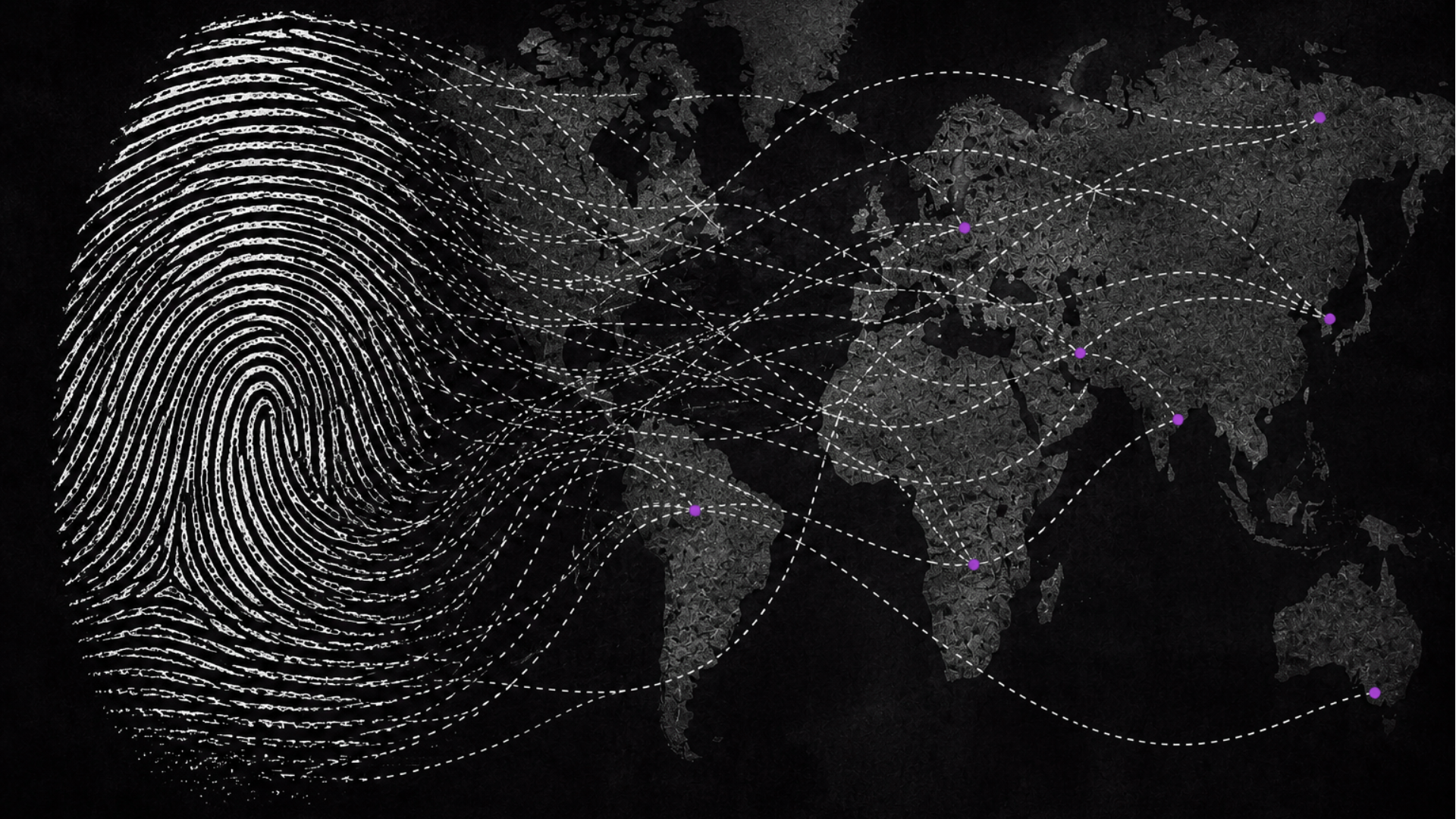
As such, the case exposes a broader paradox: democratic governments present themselves as committed to countering transnational repression, yet their increasingly restrictive migration policies may be helping autocrats achieve precisely what those efforts seek to prevent.
The Complaint
The Complaint filed by IALDF in the US District Court for the District of Columbia alleges that, from March 2025, the Trump administration began sharing “confidential information from the immigration files of Iranians seeking asylum in the United States” directly with the Iranian government.[1] It further alleges extensive cooperation between US and Iranian officials, including that “the U.S. government allowed the Iranian government to select the Iranians deported to Iran” (paragraph 42).
According to the complaint, this cooperation included sharing asylum file information, coordinating deportation flights, and facilitating in-person meetings between Iranian officials and Iranians detained in US Immigration and Customs Enforcement (ICE) facilities. IALDF states that many of those affected are “pro-democracy protestors, members of religious minorities such as Evangelical Christians, or members of the LGBTQ community” who sought refuge in the United States because of the dangers they faced in Iran. If disclosed, such sensitive information could enable the Iranian regime to further target these individuals, whether in the United States, following their return to Iran, or indirectly through family members who remain there.
Political Responses to Transnational Repression
Transnational repression arises where perpetrating states seek to intimidate, silence or otherwise target human rights defenders, journalists, political dissidents and other members of civil society beyond their own borders. The US is home to many individuals at risk of such practices, including Iranian asylum seekers. This overlap is no coincidence. Asylum seekers are often fleeing persecution because they have criticised or challenged authorities in their country of origin. As a result, many belong to the very groups most frequently targeted by transnational repression, making immigration systems an important part of efforts to protect them.
Under the Biden administration, the US government emerged as a global leader countering transnational repression through a “whole-of-government” approach that mobilised law enforcement, intelligence, diplomacy and cybersecurity agencies.[2] It established dedicated reporting mechanisms, pursued criminal prosecutions, imposed sanctions and issued guidance to vulnerable communities.[3] Ironically, current Secretary of State Marco Rubio previously co-sponsored a bill which would have expanded training for US immigration officials on transnational repression, including on “how foreign governments may try to coopt the immigration system.”[4]
Other democratic governments have likewise come to recognise transnational repression as a threat to national security and state sovereignty. The Group of Seven (G7), in a public statement in 2025, described transnational repression as an “aggressive form of foreign interference” and adopted a common toolkit to strengthen and coordinate national responses.[5] The United Kingdom alongside countries such as Canada and Australia have expanded law enforcement capacities and introduced new legislative instruments to better detect, investigate and prosecute acts of transnational repression.[6] In June, the European Parliament similarly called on the Commission and the Member States to “identify, assess and mitigate structural vulnerabilities in EU and national administrative, legal and financial systems that may be exploited for transnational repression.”[7]
Restrictive Immigration Policies and Transnational Repression
These initiatives reflect a growing consensus that countering transnational repression requires a coordinated response across government agencies. Yet one crucial area has largely escaped scrutiny: immigration policy. This omission may undermine positive steps taken to counter transnational repression.
Across the US and Europe, governments have embraced more restrictive immigration policies, prioritising deterrence, accelerated removals and closer cooperation with countries of origin. Such policies are driven by domestic concerns about migration and the increasing influence of right-wing and populist tendencies. Yet they also create opportunities for authoritarian governments to exploit immigration systems in host states against asylum seekers. As a result, the same governments that are investing resources in combating transnational repression are simultaneously pursuing immigration policies that can inadvertently facilitate it.
In the US, this dynamic extends beyond the alleged cooperation with Iran and is part of a broader anti-immigration policy shift. For example, US immigration enforcement is “turning its back” on individuals fleeing Russia, including defectors and anti-war critics.[8] One prominent case is the detention of Kseniia Petrova, a Russian scientist who faced deportation after allegedly filing an improper customs declaration and feared return to Russia after having publicly criticised the invasion of Ukraine.[9] A similar case arose with the Chinese dissident Guan Heng, who was threatened with deportation despite his role in exposing detention facilities in Xinjiang.[10] At the same time, similar to the United Kingdom in 2022, the Trump administration has explored an agreement with the government of Rwanda to receive third-country deportations, disregarding Rwanda’s well-documented record as a prolific perpetrator of transnational repression.[11]
The Cases of Germany and the United Kingdom
In the European Union, Germany illustrates the tension between responses to transnational repression and restrictive immigration policies. The current federal government has explicitly committed to combatting transnational repression.[12] It has established dedicated task forces across key ministries and amended the German Criminal Code to strengthen penalties for crimes committed on behalf of a foreign government.[13] However, these measures risk being compromised by the government’s promised “turnaround” in migration policy which comes with tightened border controls and asylum procedures.[14] In June 2026, for example, authorities deported Tajik opposition activist Asadullo Boboev despite concerns that he faced persecution upon return.[15] The Government also suspended humanitarian admission programs that previously provided safe pathways for journalists and others at risk from countries such as Russia, Belarus and Iran.[16]
The United Kingdom presents a similar dynamic. While successive governments have demonstrated greater awareness of foreign states’ threats to national sovereignty and security, recent immigration reforms have prioritised deterrence and prolonged migrants’ legal precarity.[17] The Conservative government’s proposal to externalise asylum processing to Rwanda, terminated by Labour in 2024, illustrated how migration control can conflict with protecting individuals at risk of political persecution.[18]
More recently, a parliamentary report warned that politically motivated INTERPOL Red Notices issued by states such as China, Russia and Turkey can create “an automatic presumption of criminality”, affecting asylum and citizenship proceedings.[19] Similar concerns have arisen in immigration cases involving Hong Kong democracy activists, among them Chloe Cheung, whose application for leave to remain was temporarily withheld because of criminal charges arising from her participation in the 2019 pro-democracy protests.[20] Such cases show how immigration systems that fail to account for politically motivated prosecutions and other tactics of transnational repression aimed at punishing dissent risk becoming instruments of the very repression they claim to counter.
All these immigration policies were not adopted with transnational repression in mind. But these examples demonstrate how increasingly restrictive immigration policies can weaken protections for those living in exile and create opportunities for authoritarian governments to exert pressure across borders.
Fighting Transnational Repression Through a Whole-of-Government Approach
Authoritarian regimes quickly learn to weaponise the vulnerabilities created by host states’ immigration systems. Since September 2023, for instance, Belarus has denied its citizens abroad the ability to extend or renew their passports in Belarusian consulates.[21] Unless host state authorities recognise the resulting protection gap and issue alternative identity documents, Belarusians abroad may be forced to return home to obtain valid documents, exposing them to arrest or persecution. The Associated Press documented this dilemma in Germany, where one Belarusian exile explained: “I have a terrible choice to make: become an illegal immigrant in Germany, or return to Belarus, where I will probably be arrested.”[22] This tactic is not unique. Freedom House has documented at least 12 countries, including Saudi Arabia and China, that strategically withhold consular services from dissidents or targeted groups to force them to return home.[23]
Against this backdrop, the complaint filed by IALDF is but one illustration of the broader problem: states are fighting transnational repression without addressing the role their own immigration policies play in perpetuating it. Immigration authorities necessarily collect sensitive information about asylum seekers and routinely cooperate with countries of origin over identity verification, travel documents, and removals. However, as the political environment shifts to prioritise “migration control” over refugee protection, the incentives for the removal and deterrence of migrants are increasing. Administrative cooperation with authoritarian countries of origin, once constrained by concerns about persecution, becomes a convenient tool for achieving such objectives. The result is perhaps not necessarily an intention to facilitate transnational repression, but a growing willingness to engage in arrangements that perpetrator states can exploit.
Addressing this paradox requires governments to recognise that immigration policy is a central battleground in the fight against transnational repression. Measures of border externalisation, such as offshore processing, trap people fleeing persecution in third countries under weak rule of law, where authorities may be more willing to cooperate with perpetrator states.[24] Lengthy and uncertain asylum procedures also discourage victims from reporting threats to law enforcement for fear of jeopardising their immigration status. Therefore, individuals at heightened risk of transnational repression should benefit from additional safeguards, including expedited asylum procedures, robust due diligence before information is shared with countries of origin and strict limits on cooperation that could expose them to repression. Host states should also issue travel documents to individuals unable to obtain them from their countries of origin because of political persecution or blacklisting. Finally, immigration officials need better training to identify and respond to transnational repression.
For the new UK Government, these safeguards should form part of the implementation of its wider immigration reforms.[25] As the Burnham government with Home Secretary Shabana Mahmood proceeds with changes to the asylum and settlement system, it should ensure that immigration authorities are equipped to identify victims of transnational repression, recognise politically motivated criminal proceedings and avoid administrative cooperation that could expose individuals to persecution by the states they sought to escape.[26]
More fundamentally, a comprehensive response to transnational repression requires confronting an uncomfortable truth: restrictive immigration and asylum policies leave open a backdoor that governments engaging in transnational repression readily exploit. Host states cannot claim to counter repression across borders while ignoring the role their immigration policies play in enabling it.
Siena Anstis is a PhD fellow in law at the University of Oslo and a senior legal advisor and senior researcher at the Citizen Lab (University of Toronto).
Dr. Marcus Michaelsen is a senior researcher at the Citizen Lab (University of Toronto).
Kate Pundyk is a researcher at the Citizen Lab (University of Toronto) and a JD candidate at McGill University.
Disclaimer: The views expressed in this piece are those of the individual authors and do not reflect the views of The Foreign Policy Centre. (more…)