As the international order becomes increasingly fragmented, the United Nations appears weaker than it has for decades. But what has actually been lost, and what does the UN still provide that states cannot easily replace? Ahead of the 81st session of the UN General Assembly, Fred Carver examines what a weakened UN means for the UK and where the new Government should invest its political capital.
The United Nations (UN) is not in good shape, but it is worth considering a little more carefully what precisely it is that is not working, and what actually still is.
The UN delivers an extraordinary amount of development and humanitarian work. For a long time the organisation leaned into this aspect of its work because it showed tangible results.Yet commendable as much of this work is, it was not an irreplaceable function, and perhaps others are far better placed to deliver it. Donors, Trump foremost among them, are now demanding a drastic and rapid downgrading of this capability, resulting in much short-term pain and waste.
When people think about the UN, they mostly think about its role in setting standards and expectations for behaviour. Human rights is often called the “forgotten pillar” of the UN’s work, and receives less than 1% of the organisation’s funding, but it is perhaps its most irreplaceable function, and certainly the most visible.[1] The UN’s standard setting role also extends well beyond the narrow field of human rights, providing a common language of diplomatic expectation across global cooperation and bringing predictability and process, particularly when it comes to conflict.
A lot has been written about how and when the UN can act in “binding” and “non-binding” ways. This is an important technical and legal distinction, but its political effect is exaggerated. As the UN’s work on apartheid in South Africa and decolonisation has shown, if enough states are willing to put enough political capital into implementing non-binding resolutions they can still have dramatic impacts, whereas when binding resolutions have no enforcement mechanisms, or when states have no interest in applying them, then the binding nature of those resolutions becomes moot – Israel colonisation of the West Bank, for instance, has taken place in the face of multiple “binding” Security Council resolutions over the decades.[2]
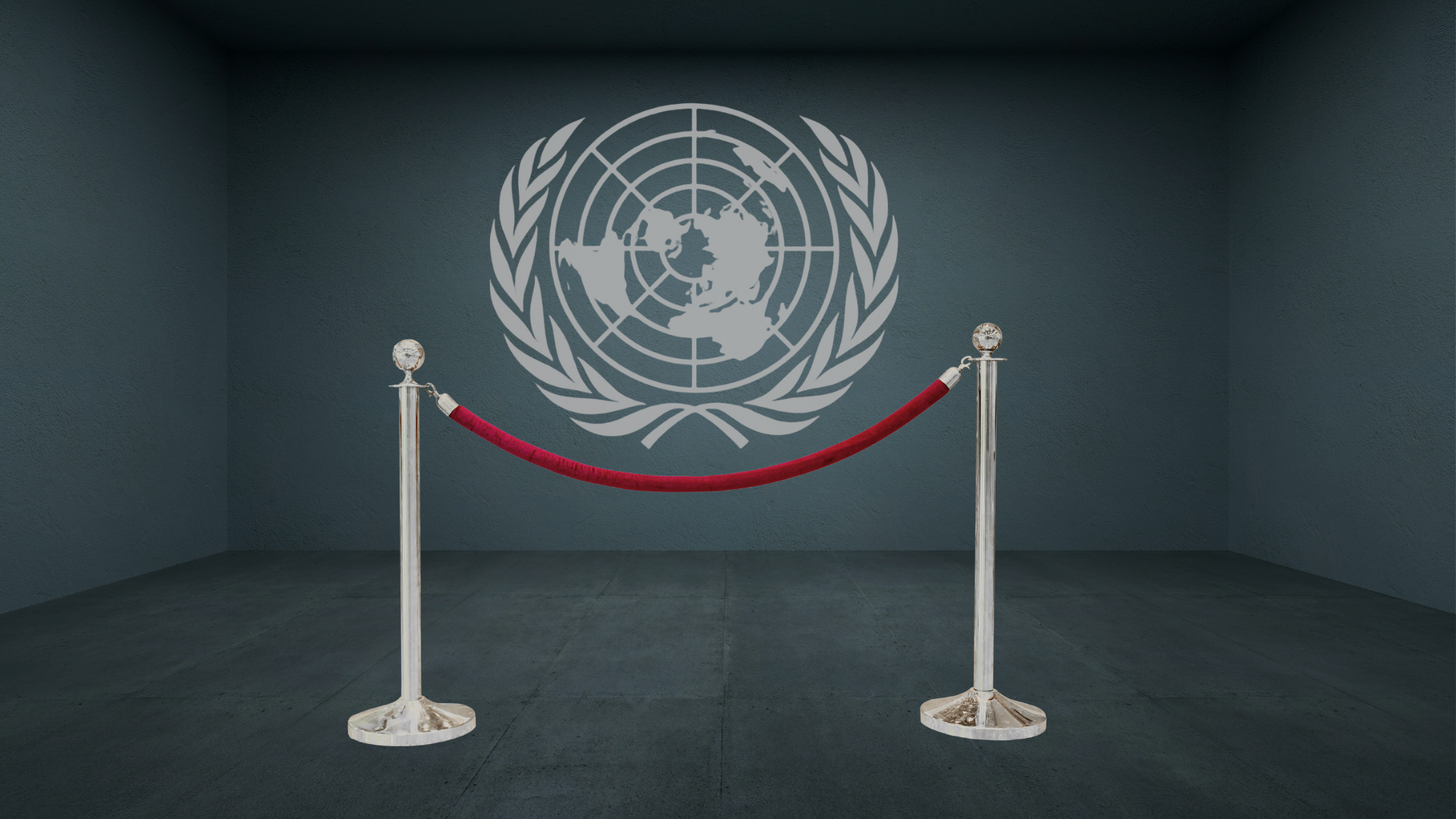
The UN can therefore be thought of as the velvet rope of diplomacy. It cannot really stop anyone who wants to cross it from doing so, but nevertheless has an extraordinary ability to shape behaviour. However, as soon as some people start crossing it, everyone else does, and the rope ceases to serve any purpose beyond signalling that something is amiss.
Many would say that that is what has happened recently. Others would counter that the UN has never meaningfully constrained the behaviour of the world’s major powers – whether that be French or American actions in Vietnam, the Soviet invasion of Afghanistan, or the British and French invasion of Suez. A more nuanced view is that, while major powers have certainly ensured the uneven application of international law, they have at least played lip service to the concept, and tried to avoid too publicly and egregiously violating it for the most part (at least without some semblance of an excuse – however flimsy). They do so because they recognise how much they benefit from such a system, and it is this restraint that may now be lost. Others would place the departure from this approach earlier, with the US-UK invasion of Iraq rather than Trump’s exceptionalism or Russia’s invasion of Ukraine. There’s probably some truth to all of the above.
A System Designed for Another World
The UN was not necessarily intended to be a mere velvet rope. As the International Crisis Group expert Richard Gowan likes to point out, the UN Charter even allows for the creation of a UN air-force, and discusses at some length provisions to cut off rail, telephone, and postal connections to states that do not play ball.[3] The UN was born out of the alliance that won World War II, and some participants saw it as a means to continue that alliance – or, as Frantz Fanon famously described it, the “card used by the imperialist interests when the card of brute force has failed.”[4]
However, the organisation quickly became, and has continued to be, one that does not provide more than the softest of challenges to national sovereignty. This is largely because baked into the design of the organisation was a desire to avoid the fate of the League of Nations – which fell apart when powerful states walked away from it. By establishing itself as an organisation whose power to limit state behaviour is highly limited, the UN ensured that states remained bought into it. Such success as the UN has had, notably in preventing conflict between major powers, probably owes much to that.
The UN is, however, an organisation designed for a world we no longer live in. It is not just that the major powers of 1945 – whose privileges when it comes to preventing collective action are enshrined in the UN Charter – are no longer the major powers of 2026, it is that today’s distribution of global power is itself less clear. The US has recently very publicly demonstrated the limits of its ability to shape global politics, while China’s interest and ability to do so are still largely untested. The UN Security Council is therefore increasingly anachronistic. Africa remains underrepresented, as do major population centres such as India and Brazil, while former imperial powers such as Russia, the UK, and France retain permanent seats.
But it is an anachronism we are stuck with. The Security Council can veto its own reform, and none of the five permanent members – the US, the UK, Russia, China, or France – will willingly give up their privileges. And any that suggest otherwise do so knowing the others will ensure their bluff is never called.
The Security Council is increasingly ignored, but there is more to the UN. However, the other parts of the organisation, notably the General Assembly, have not really stepped up to fill the leadership gap. Meanwhile the Secretariat, who once upon a time showed incredible creativity and willingness to ask forgiveness rather than permission in pushing the limits of what the UN can do, has been ground down by resource constraints and fearful leadership into a culture of meek compliance. Perhaps this will change if and when a new Secretary-General is selected this autumn, but given it is the Security Council who largely decide upon the choice of Secretary-General we should not assume that the next Secretary-General will be a transformational figure.[5]
All these things limit the UN’s ability to set standards, but do not abolish it entirely, and taking the UN down risks further constraining the good it can do. Even Vladimir Putin is not quite as unconstrained as he would be if the UN truly did not matter, in part because the UN still matters to him as one of the last remaining global institutions that still treats Russia like a global power.
The UN as a Venue, Not an Actor
The UN is perhaps best understood not as a political actor but as a venue in which political actors, primarily states, operate. Former US Ambassador to the UN Richard Holbrooke famously described blaming the UN for the Rwandan genocide as the equivalent of blaming Madison Square Gardens when the New York Knicks lose (neglecting to mention that in that analogy he would be a Knick who had missed a number of shots).[6] The UN undoubtedly receives blame that should more rightly be directed at the states who behave so appallingly within it.
Nevertheless, forums do have a powerful ability to shape the conversations that take place within them, and it is here that the UN really has worth. It gives states somewhere to theatrically let off steam, forums in which states can meet and discuss on terms closer to equality, access to expertise and mediation, and processes through which negotiated outcomes can be validated in treaties or resolutions.
If the UN’s enduring value lies in providing a venue for diplomacy, the question is what kind of diplomacy remains possible in the current political climate. In January, Canadian Prime Minister Mark Carney, during the World Economic Forum in Davos made a speech suggesting that the decline in our international system’s ability to set and impose standards probably did spell the death of a universalist rules-based global order in favour of more ad-hoc and transactional diplomacy.[7] But transactionalism need not be value free or amount to might-makes-right. He emphasised the long-term value of consistency, reliability, predictability, cooperation in mutual self-interest, and the potential for collective action by the many to rein in the excesses of the mighty.
The problem is that, while there is undoubtedly a long-term net benefit to building a reputation as a reliable partner, few of our political economies currently reward taking the long-term beneficial option over the immediate return. There is a clear logic to such an approach, but little political reward. So far, we have seen little sign of this form of leadership.
The UN is undoubtedly in poor shape, but it is far from useless. It continues to provide the tools and location to allow states to conduct diplomacy in a more sustainable and reliable way, alongside mechanisms to uphold international standards that benefit us all. But it cannot compel states to make use of the international machinery it provides. You can lead a government to the negotiating room, but you cannot make them talk.
What Does this Mean for the UK?
The UK’s ability to affect change at or through the UN is hamstrung by the loss of one of the main sources of added value: its status as a development superpower.[8] This also limits the resource base the UK can mobilise in order to help the UN pivot to its core areas of standard-setting and mediation. Nevertheless, in the context of global peace and security budgets, or even development budgets, these are relatively cheap functions. Often a major part of the difference between successful and failed peace processes has been external human rights monitoring with a cost in the low millions. Likewise effective mediation and peacebuilding work is similarly cheap but not free, and has been neglected in recent years.[9] Relatively small, strategic, investments in resources to strengthen the UN’s monitoring and mediating functions could have a significant multiplier effect on the organisation’s effectiveness.
Meanwhile the UK’s political engagement needs to be sophisticated and context specific: it is neither the strongest nor the weakest state at the UN, and has neither the best nor the worst reputation. It can and should be confident and firm, as long as it does not sound arrogant or hypocritical. The UK can look to states that punch above their weight at the UN (among them Ireland, Spain, above all tiny Liechtenstein) who combine being useful, being principled (and thus predictable), and articulating a clear vision for the kind of global institution they want to see. Generally speaking British diplomats have done a reasonable job of displaying such sophistication in recent years, but it has not always been reflected by the political leadership in either their decisionmaking or their presentation on the global stage. Having senior political leaders genuinely invest time and interest in building a safer and more prosperous world for its own sake, and not merely to perform statesmanship for a domestic audience, is vitally necessary, if insufficient, first step.
Fred Carver is a Managing Director at Strategy for Humanity, which works with mission-driven organizations and those who fund them on a range of policy and strategy issues. He has written a number of articles on international relations, with specific expertise on the United Nations, Peacekeeping, Atrocity Prevention, civil wars and political violence. From 2011-2016 he ran the Sri Lanka Campaign for Peace and Justice, a human rights NGO, and from 2016-2020 he was head of policy at UNA-UK, a UK campaigning organisation for multilateralism. Prior to that he worked as a researcher specialising in South Asia (primarily Pakistan) and in UK politics. He lives in Norway.
Disclaimer: The views expressed in this piece are those of the individual author and do not reflect the views of The Foreign Policy Centre.
[1] United Nations Association – UK, Strengthening the UN’s Human Rights Pillar, May 2025, https://una.org.uk/publication/think-piece-strengthening-the-uns-human-rights-pillar; Hilary Power, UN Financial Crisis Threatens to Halt Human Rights Work, Human Rights Watch, February 2026, https://www.hrw.org/news/2026/02/13/un-financial-crisis-threatens-to-halt-human-rights-work
[2] UN Security Council, Resolution 446 (1979) (S/RES/446), United Nations, March 1979, https://docs.un.org/S/RES/446(1979)
[3] Richard Gowan, Once Again, the U.N. Will Have to Adapt to Survive, World Politics Review, October 2025, https://www.worldpoliticsreview.com/un-day-guterres-trump/
[4] Frantz Fanon, Toward the African Revolution, trans. Haakon Chevalier, Grove Press, 1967, https://files.libcom.org/files/%5BFrantz_Fanon%5D_Toward_the_African_Revolution(BookZZ.org).pdf
[5] Ben Donaldson and Fred Carver, Compromised Candidates: How backroom deals shape the race for secretary-general and prevent U.N. reform, Foreign Policy, July 2026, https://foreignpolicy.com/2026/07/28/united-nations-security-council-secretary-general-corruption-reform/
[6] Samuel Moyn, Imperial Graveyard, London Review of Books, February 2020, https://www.lrb.co.uk/the-paper/v42/n03/samuel-moyn/imperial-graveyard
[7] World Economic Forum, Davos 2026: Special Address by Mark Carney, Prime Minister of Canada, January 2026, https://www.weforum.org/stories/forum-institutional/davos-2026-special-address-by-mark-carney-prime-minister-of-canada/
[8] United Nations Association – UK, Global Britain in the United Nations, February 2019, https://una.org.uk/publication/global-britain-in-the-united-nations/
[9] United Nations Office of Internal Oversight Services, Evaluation of the United Nations Verification Mission in Colombia (IED-23-005), June 2023, https://oios.un.org/system/files/confidential-files/Reports/2023_ied_23_005.pdf; Ian Martin and Tamrat Samuel, Being Serious About Peace, PassBlue, August 2026, https://passblue.com/2026/08/30/being-serious-about-peace/