
This article is co-published by the Foreign Policy Centre and Bond
Examining the devastating consequences of the UK’s complicity in trade-related illicit financial flows
New research published by Results UK estimates that the countries most affected by child undernutrition experienced at least $309.8bn in trade-related illicit financial flows (IFFs) in 2024.[1] Trade-related IFFs, such as those generated through the manipulation of customs invoices, are considered a major component of IFFs as a whole, which the UN defines as ‘financial flows that are illicit in origin, transfer or use, that reflect an exchange of value and that cross country borders’.[2]
The consequences for the public purse are punishing. The Results UK report, released to mark World Health Day (7 April), estimates that government revenue losses from trade-related IFFs amount to 86% of India’s and 65% of Nigeria’s domestically funded public health spending.[3] Tackling these and other IFFs would generate substantial funds for low- and middle-income countries, enabling them to address child undernutrition more effectively.
There is much to be gained by tackling IFFs, but the British Government is failing to take action domestically to end the UK’s status as a hotbed for illicit finance. It is also doing far too little to support low- and middle-income countries directly, and at times even undermines them in global forums relating to IFFs.
It is little wonder, then, that the UK is responsible for more tax losses linked to IFFsthan any other nation in the world.[4] The consequences of these losses are stark: they are estimated to cause 221,580 under-five deaths and 27,290 maternal deaths every decade.[5]
Addressing the domestic issues that enable illicit finance
First and foremost, the British Government must force the UK’s overseas territories and Crown dependencies to publish public registers of beneficial ownership. Such registers disclose the real people who ultimately own and control corporate vehicles.
In recent years, despite promising greater transparency, most of these jurisdictions have done nothing. For example, by the third deadline of June 2025, imposed by the UK Parliament on the country’s 14 overseas territories to establish such registers, only Gibraltar and Montserrat had done so.[6] It is very odd that the Government continues to call for other overseas territories to establish these registers while simultaneously defending their clear lack of progress..[7]
The UK also suffers from a massive enforcement gap in relation to professional enablers. These nefarious actors – including lawyers, accountants, estate agents and others – are central to driving IFFs. Last year, the Financial Conduct Authority (FCA) became the sole anti-money laundering supervisor for professional services. Campaigners welcomed this move as it promises more consistent levels of oversight and enforcement.[8] Nevertheless, the FCA needs to be adequately resourced if it is to combat the UK’s money laundering problem, estimated to be worth over £100bn a year.[9]
Another important domestic reform needed relates to sharing information on foreign account holders. Although financial institutions in the UK collect data on all account holders, HM Revenue & Customs (HMRC) does not receive this data if countries do not implement the Organisation for Economic Co-operation and Development’s (OECD) burdensome standards on the automatic exchange of financial account information between governments.[10] These countries are almost exclusively low- or middle-income. If HMRC published this data, all such authorities could check whether their taxpayers’ reporting aligns with UK records.[11]
Transforming international policy on illicit financial flows
The British Government has provided direct support to some countries that receive development assistance to strengthen their laws, institutions and processes relating to IFFs. Yet recent cuts to official development assistance do not only risk that people in need of support – including children – will die (something the Government has admitted, albeit in incredibly anodyne language).[12] Beyond the humanitarian consequences, it also means that funding for work to counter IFFs is in danger.[13]
Countries like Nigeria, for example, could benefit from investment in digital technologies for customs management and stronger inter-agency collaboration for enforcing laws relating to its own public beneficial ownership register.[14] But whether it will be able to secure such investment remains to be seen.
The UK has also backed the Stolen Asset Recovery (StAR) Initiative, which seeks to both facilitate the systematic and timely return of corrupt funds and deny safe havens for the proceeds of corruption.[15] However, by the end of 2023, the UK had returned assets to overseas jurisdictions in only 26 out of 78 cases on the StAR database.[16] Clearly, the British Government needs to step up its efforts in this sphere, which should include working with low- and middle-income countries to address wider barriers to cross-border cooperation.
The British Government’s performance on tackling IFFs at the global level is similarly dire. The UK was one of only nine states to vote against the UN General Assembly resolution initiating negotiations for a UN Framework Convention on International Tax Cooperation.[17] This treaty could see a legitimate and rights-based entity replace the inequitable and ineffective OECD as the premier global body for tax. It is essential that the Government reverses its position.
Almost as bad is the fact that the British Government is uncritical of the Financial Action Task Force (FATF), a powerful intergovernmental organisation focusing on money laundering and terrorist financing. Unfortunately, the FATF is unrepresentative of low- and middle-income countries and thus unresponsive to their challenges.[18]
FATF standards have actually been weaponised by some governments to attack human rights.[19] The FATF has also failed to tackle IFFs in high-income countries.[20] As the UK currently holds the FATF vice-presidency, it is well placed to address these concerns.
No excuses for the damage illicit finance causes
Of course, properly tackling IFFs would also generate huge sums for the UK, which could be invested in public services at home. That is before even considering the broader benefits of combatting illicit finance, from enhancing financial stability to weakening criminals and despots, which improves the security of all nations.[21] There are simply no excuses for the UK’s atrocious track record in this area.
The British Government is set to host the Illicit Finance Summit on 23-24 June.[22] Thanks to lobbying by parliamentarians and civil society, what was originally a very narrow summit agenda has been expanded to include professional enablers and asset recovery – though there are concerns their inclusion is only superficial. Moreover, major issues like beneficial ownership and global governance are currently not on the agenda at all. The summit will fall well short of its ambitions if it does not confront the UK’s key position as a promoter of secrecy and facilitator of theft.
The British Government likes to highlight the assistance it provides to the governments of low- and middle-income countries to increase their tax revenue collection.[23] But this assistance is completely undermined by the UK’s central role in enabling IFFs. It is akin to extending a hand of solidarity while delivering a knockout blow with the other fist.
Sunit Bagree is a consultant at Results UK and a research associate in international development at the University of Sussex.
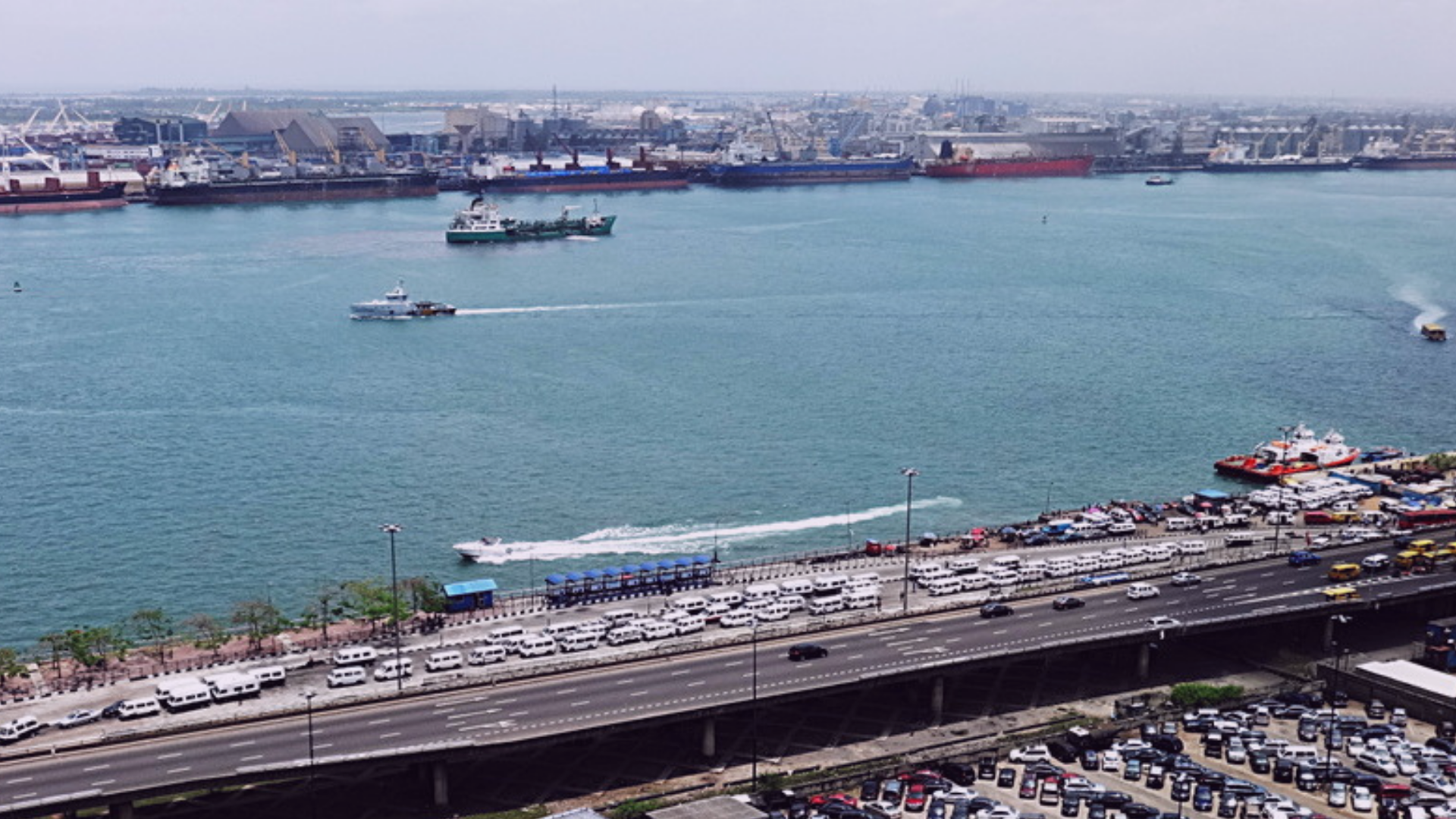
Image: Apapa Port Complex in Lagos, Nigeria. Credit: Adedotun Ajibade.
Disclaimer: The views expressed in this piece are those of the individual author and do not reflect the views of The Foreign Policy Centre.
[1] Results UK, Press release: ‘Trading Hunger’ report, April 2026, https://results.org.uk/2026/04/07/press-release-trading-hunger-report/
[2] Lourenco S. Paz, Measuring illicit financial flows: A gravity model approach to estimate international trade misinvoicing, Working Paper 2022/24, UNU-WIDER, 2022, https://www.wider.unu.edu/publication/measuring-illicit-financial-flows; UNCTAD and UNODC, Conceptual framework for the statistical measurement of illicit financial flows, October 2020, https://unctad.org/publication/conceptual-framework-statistical-measurement-illicit-financial-flows
[3] Results UK, Press release: ‘Trading Hunger’ report, April 2026, https://results.org.uk/2026/04/07/press-release-trading-hunger-report/
[4] Mark Bou Mansour, World losing half a trillion to tax abuse, largely due to 8 countries blocking UN tax reform, annual report finds, Tax Justice Network, November 2024, https://taxjustice.net/press/world-losing-half-a-trillion-to-tax-abuse-largely-due-to-8-countries-blocking-un-tax-reform-annual-report-finds/
[5] University of St Andrews, University of Leicester, and GRADE (Government Revenue and Development Estimation), Policy Brief – #1.3 Case study – United Kingdom: The impact of the United Kingdom’s tax policies on determinants of Health and Mortality rates, https://medicine.st-andrews.ac.uk/grade/wp-content/uploads/sites/39/2021/04/United-Kingdom.pdf
[6] Mike Lewis, The transparency registers that weren’t, Tax Watch, August 2025, https://www.taxwatchuk.org/the-transparency-registers-that-werent/
[7] Stephen Doughty, Implementation of Beneficial Ownership Registers across the Overseas Territories, Statement made on 3 July 2025, UK Parliament, https://questions-statements.parliament.uk/written-statements/detail/2025-07-03/hcws774
[8] Izzy Lewis, RELEASE: UKACC members welcome new anti-money laundering powers for regulator to crack down on enablers of crooks and kelptocrats, UK Anti-Corruption Coalition, October 2025, https://www.ukanticorruptioncoalition.org/work/release-ukacc-members-welcome-new-anti-money-laundering-powers-for-regulator-to-crack-down-on-enablers-of-crooks-and-kleptocrats
[9] National Crime Agency, NCA and FCA publish priorities to combat biggest economic crime threats, July 2025, https://www.nationalcrimeagency.gov.uk/news/nca-and-fca-publish-priorities-to-combat-biggest-economic-crime-threats
[10] Financial Transparency Coalition, Automatic Exchange of Information, https://financialtransparency.org/issues/automatic-tax-information-exchange/
[11] Matt Colin, Two Ways the UK Could Fight Illicit Finance Just by Publising More Data, CGD, September 2024, https://www.cgdev.org/blog/two-ways-uk-could-fight-illicit-finance-just-publishing-more-data
[12] Foreign, Commonwealth & Development Office, FCDO Official Development Assistance programme allocations 2025 to 2026: equality impact assessment, Impact Assessment, Gov.uk, July 2025, https://www.gov.uk/government/publications/fcdo-official-development-assistance-programme-allocations-2025-to-2026-equality-impact-assessment
[13] Justin Moore, A strategic investment: The case for continuing governance and anti-corruption aid, Spotlight on Corruption, June 2025, https://www.spotlightcorruption.org/the-case-for-anti-corruption-aid/
[14] The Nation, Weighing the strengths, weaknesses of Customs’ B’Odogwu, July 2025, https://thenationonlineng.net/weighing-the-strengths-weaknesses-of-customs-bodogwu/; Naheem Mustapha, Beneficial Ownership Disclosure Under Cama 2020: Balancing Transparency and Privacy, SSRN, June 2025, https://papers.ssrn.com/sol3/papers.cfm?abstract_id=5272728
[15] Stolen Asset Recovery Initiative, https://star.worldbank.org/
[16] Aine Clancy, The UK’s Relationship with Overseas Grand Corruption, Chapter 1, Unexplained Wealth Orders and the UK’s Anti-Corruption Regime, November 2025, https://academic.oup.com/book/61638/chapter/539761037?searchresult=1
[17] United Nations Digital Library, Promotion of inclusive and effective international tax cooperation at the United Nations: resolution / adopted by the General Assembly, 2024, https://digitallibrary.un.org/record/4070016?ln=en
[18] FACTI Panel, Financial Integrity for Sustainable Development, February 2021, https://factipanel.org/docpdfs/FACTI_Panel_Report.pdf
[19] Georgios Pavlidis, The dark side of anti-money laundering: Mitigating the unintended consequences of FATF standards, Journal of Economic Criminology, Volume 2, December 2023, https://www.sciencedirect.com/science/article/pii/S2949791423000404
[20] Eyes on FATF, https://eyesonfatf.org/
[21] Kathy Nicolaou-Manias, Joelle Traore, and Amelie Ville, Fostering Change: Tax-motivated illicit financial flows, Study on Tax Motivated Illicit Financial Flow, 2024, https://www.eeas.europa.eu/sites/default/files/documents/2024/Study%20on%20Tax.pdf
[22] Foreign, Commonwealth & Development Office and The Rt Hon Yvette Cooper MP, Illicit Finance Summit to build international coalition against dirty money, Press release, Gov.uk, December 2025, https://www.gov.uk/government/news/illicit-finance-summit-to-build-international-coalition-against-dirty-money
[23] Tony Diver, UK to give poor countries advice instead of aid, The Telegraph, September 2025, https://www.telegraph.co.uk/politics/2025/09/21/uk-give-poor-countries-advice-instead-aid-jenny-chapman-fco/