Skip to content

Op-ed | International Aid as a Line of Defence: What Happens to Human Security Without Soft Power?

Article by Anna Chernova

April 24, 2026

Op-ed | International Aid as a Line of Defence: What Happens to Human Security Without Soft Power?

Securitisation of foreign (and domestic) policy is leading to a prioritisation of hard power approaches over civilian-led, soft power approaches, leaving many wondering about the future. As Europe rearms in response to the Russian threat to its collective security, and as the US proves itself an unreliable security partner, the UK finds itself repositioning within a fractured Euro-Atlantic alliance. This raises a broader question: how to de-securitise and return to “normal” politics?[1]


If militarism shapes the next generation’s approach to public policy, what are the prospects for addressing the root causes of violence that are driving the skyrocketing humanitarian needs and record levels of forced displacement? The impact of armed conflict is increasingly more severe and violence is becoming the new normal, while political solutions are de-funded and militarised approaches take precedence.[2]


As the UK and many other democratic states reduce investment into peacebuilding and other soft power efforts, resource constraints are affecting the very institutions that help prevent and mitigate conflict, support collective security, and promote diplomatic solutions.


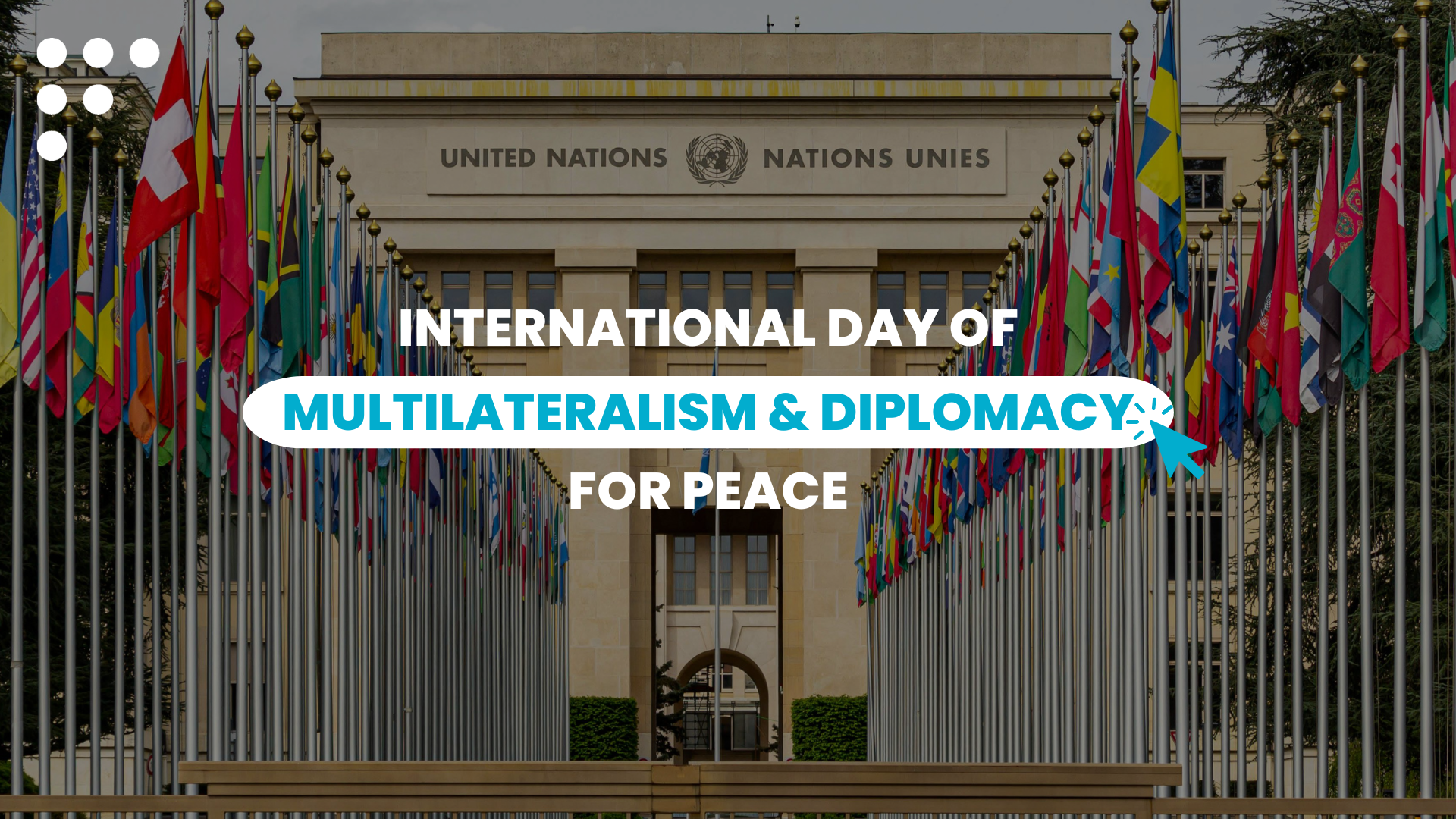
Today, the international community marks the importance of multilateralism and diplomacy for peace.


This takes place in a context of increasing global arms transfers, the proliferation of non-state armed groups, a resurgence of international armed conflicts, and systematic violations of the UN Charter across continents.[3] The low cost of entry into conflict for both state and non-state actors (in part enabled by globalisation, including access to technology, finance, and information), combined with social, economic and environmental factors, is undermining peace and other development goals. In a globalised order, military escalations in one region risk pushing millions into poverty, including in already conflict-affected contexts.[4]


This dynamic is also unfolding alongside increasing inequalities and restrictions on civic space. Democratic backsliding has reduced agency for civil society, including humanitarian actors, women’s rights groups, LGBTQI+ movements and many others relying on a rights-based, rules-based international world order – particularly in contexts where the states are unwilling or unable to adhere to a viable social contract. Without multilateral spaces, civil society voices risk further marginalisation and isolation in the face of expanding authoritarianism.[5] Without civic space, the positive peace agenda is undermined.


At the same time, significant reductions in aid are reshaping the UN and the multilateral architecture underpinning diplomacy for peace. Regional and global multilateral institutions and their civil society partners are grappling with a steadily increasing wave of violence and militarism with dwindling resources. The private sector, philanthropy, and new donors (e.g. in the Gulf) seem willing to meaningfully engage in ways that come close to replacing USAID’s contribution to pathways for peace, and the wider Nexus approach that brings together Humanitarian Development and Peace.[6]


Human Development progress, particularly around Women, Peace and Security and gender justice, are stalling and regressing. These trends point to the continued importance of investment in soft power, including support for democracy, human rights, gender equality, the rule of law, and security sector reform. While the UK has historically positioned itself as a leader in this area and continues to recognise its importance, current policy choices suggest a growing gap between this recognition and the protection of funding for peacebuilding, development and humanitarian relief.[7]


Where does this leave the UK role in the wider European neighbourhood and globally?

A renewed focus on human security is needed. A purely state-centric approach, driven by self-interest among a growing number of undemocratic and unequal states is likely to lead to a more violent world order that will not yield the desired collective human development dividends. The UK’s historic role in championing human security approaches in institutions like NATO, and reflected in its approaches at the UN Security Council is more needed than ever.  In a shifting global order, where collaboration among middle powers around shared geographic or sectoral interests and values is becoming critical, the UK’s track record on human security lends value regionally and globally.


The UK’s Ministry of Defence review of strategic trends flagged important human security dimensions, outlining risks around inequalities and other socio-economic factors that are likely to drive instability and diminish UK’s global role and its national security.[8] Yet despite the availability of such detailed and well-considered analysis,  foreign policy and national security decision-makers continue to defund the human security agenda, and inadvertently make the world (and the country) less safe.


With civic space narrowing, citizens and states must be represented in regional and global dialogues, as well as in the institutions that underpin them. While the UK prides itself on a long historic track record of soft power, particularly through its academic institutions, think tanks, vibrant media, and civil society – these all require public investment. Without a well-resourced and stable civil service to help deliver on these objectives, this historic soft power asset risks weakening, with implications for peacebuilding outcomes.


Holding the pen, and running out of paper: what happens to penholding at the UN Security Council?

A major factor in the UK’s global security positioning is in the power of its permanent seat on the UN Security Council. The UK holds the pen on some key thematic and geographic files, convening peace and security conversations across a wide range of diverse states.


For a post-Brexit middle-power, the UK retains an impressive amount of influence in these soft power spaces. However, much of the political credit goes to historic investments by DFID and  the Foreign Office in regional institutions such as the Organization for Security and Co-operation in Europe, the UN aid systems, and the Human Security agenda within NATO. Without sustained investment in these spaces, including in the civil service staff and structures, the UK’s soft power positioning will not be sustainable and it will not be able to build on its impressive historic track record of conflict resolution and peacebuilding through collective security and human security approaches.


Without diplomacy and resources to civilian-led processes, military solutions will be increasingly seen as “normal” and viable. A growing share of the population, particularly younger generations coming of age in a renewed period of geopolitical competition, may come to view conflict as an inevitable feature of international relations. Without diplomacy, there will be more bullets.[9]


Anna Chernova has a background in foreign policy and international development, with a focus on human rights, conflict resolution and humanitarian action. She has worked in diplomatic and non-governmental sectors in Eurasia and West Asia. At the Parliamentary Assembly of the Organization for Security and Co-operation in Europe, she led work on human rights and democracy, including parliamentary diplomacy efforts in conflict resolution, election observation and inquiries. Prior to joining the OSCE, Anna managed large-scale humanitarian operations in Russia’s North Caucasus at the close of the second Chechen war, and had worked on refugee issues with the UN in Bulgaria. Since 2014, she has been advising humanitarian organisations on foreign policy analysis, political risk and transnational threats. Her research and policy work focuses on gender and conflict, human security, counter-terrorism and human rights. She is particularly interested in conflict prevention and addressing root causes of violence driving humanitarian crises, such as extreme inequalities and authoritarianism. Anna’s academic background is in International Studies, Russia/Eastern Europe and Global Security. She is a US Fulbright Research and IREX Public Service Fellow, and is based in the UK.


Disclaimer: The views expressed in this piece are those of the individual author and do not reflect the views of The Foreign Policy Centre.


[1] Jonathan Luke Austin, Philippe Beaulieu-Brossard, “(De)securitisation dilemmas: Theorising the simultaneous enaction of securitisation and descuritisation,” Review of International Studies (2017) https://www.cambridge.org/core/journals/review-of-international-studies/article/desecuritisation-dilemmas-theorising-the-simultaneous-enaction-of-securitisation-and-desecuritisation/FE45D2C1D20870EC0E74DF54FA487C06

[2] ACLED Conflict Watchlist 2026, “What is driving conflict today? A review of global trends,” (2025) https://acleddata.com/report/whats-driving-conflict-today-review-global-trends

[3] ICRC https://www.icrc.org/sites/default/files/document/file_list/challenges-report_ihl-and-non-state-armed-groups.pdf; SIPRI, Trends in International Arms Transfers, 2025 https://www.sipri.org/publications/2026/sipri-fact-sheets/trends-international-arms-transfers-2025

[4] UNDP, “Military escalation in the Middle East could push more than 30 million people into poverty worldwide,” (2026) https://www.undp.org/press-releases/military-escalation-middle-east-could-push-more-30-million-people-poverty-worldwide-un-development-programme-warns

[5] Freedom House – Freedom in the World 2026, “The Growing Shadow of Autocracy,” https://freedomhouse.org/report/freedom-world/2026/growing-shadow-autocracy

[6] World Bank Group, “Pathways for Peace: Inclusive Approaches to Preventing Violent Conflict,” (2018) https://www.worldbank.org/en/topic/fragilityconflictviolence/publication/pathways-for-peace-inclusive-approaches-to-preventing-violent-conflict

[7] International Development Committee, “Future of UK aid and development assistance: interim report, Government Response,” https://committees.parliament.uk/publications/52758/documents/293937/default/

[8] Ministry of Defence, “Global Strategic Trends out to 2055,” 7th edition (2024) https://assets.publishing.service.gov.uk/media/68dba439dadf7616351e4bf8/GST_7_Final_post_pic_change_WEB.pdf

[9] Forbes, “Heed General Mattis’ Warning, D.C.: Less Diplomacy Means ‘More Ammunition’”, June 2025https://www.forbes.com/sites/andrewtisch/2025/06/18/heed-general-mattis-warning-dc-less-diplomacy-means-more-ammunition/

Footnotes
    Related Articles

    Op-ed | A Symptom and a Catalyst: Orbán, Ukraine and the Institutional Remaking of the European Security Order

    Article by Mayank Sethi, Tamzin-Lily Trigg, and Stefan Wolff

    April 1, 2026

    Op-ed | A Symptom and a Catalyst: Orbán, Ukraine and the Institutional Remaking of the European Security Order

    When Hungarians head to the polls on 12th April 2026, there will be more at stake than whether the country’s current Prime Minister, Viktor Orbán, wins another term. The outcome of the elections will reverberate well beyond Hungary, particularly in relation to the dynamics surrounding the Russian war against Ukraine.[1] As a member of both the European Union (EU) and the North Atlantic Treaty Organisation (NATO), the next Hungarian government will have significant influence over a range of major, and closely connected geopolitical issues, especially Russia’s ongoing  war in Ukraine and the future of the transatlantic alliance.


    The current Hungarian government, and Orbán personally, have had strong pro-Kremlin leanings for years.[2] This has on many occasions delayed crucial EU support for Ukraine and the imposition of further sanctions on Russia.[3] At the time of writing, Hungary is holding up the disbursement of an already agreed €90 billion loan to Ukraine over a dispute about the delivery of Russian oil via the Druzhba pipeline that crosses Ukraine. The pipeline was damaged by a Russian strike in late January, and Hungary alleges that Ukraine is deliberately dragging its feet in repairing it.[4] EU leaders, in turn, have accused Hungary of blackmail over the issue; but despite their collective outrage, they have so far failed to release the funds because of the Hungarian veto, which Orbán has also turned into a key campaign issue.[5]


    While Orbán’s defeat could mean progress on this specific issue, it would hardly shift the dial on two other related issues. One is the Hungarian dependence on Russian oil: with the opposition candidate, and Orbán’s main challenger, Peter Magyar,  already stating  that there is no short-term alternative to the continued imports of Russian oil.[6] This potentially sets up a new battle between Budapest and Brussels, as the EU is firmly committed to ending Russian oil and gas imports.[7] A proposal to legally ban any imports of Russian oil into the EU may be currently on hold, but is hardly off the agenda.[8]


    The second issue is that this is not only a ‘Hungarian problem’ for the EU. Orbán’s stance on the loan to Ukraine has also been backed by the leaders of Slovakia (another Russian oil customer) and the Czech Republic, Robert Fico and Andrej Babiš respectively.[9] Both have expressed similar EU- and Ukraine-sceptic views as Orbán, and are likely to continue acting as a thorn in the side of other EU member states and the institutions in Brussels that are more supportive of Ukraine. They also share Orbán’s framing of Ukraine as an economic burden and a security threat, which has been one of the dominant themes of the Hungarian election campaign.[10]


    To complicate matters further, Magyar takes a very similar line and is likely to uphold Hungary’s veto on Ukraine’s fast-track EU accession.[11] Orbán’s election defeat, if it were to happen, might be welcomed in Brussels and other European capitals,–but as others have already commented Magyar’s “victory would not signal an overnight thaw in ties with Kyiv”[12]. Nor would it be an end to divisions within the EU over how to support Ukraine and deal with Russia.


    There is also an important transatlantic angle. Orbán has received strong endorsements from US President Donald Trump and his Secretary of State, Marco Rubio, with the latter telling him that “your success is our success”.[13] This underlines Orbán’s role in the broader global alliance of illiberal populists, ranging from Trump’s MAGA movement in the US to the far right parties the National Rally in France and the AfD in Germany, as well as the Hungarian Prime Minister’s  Czech and Slovak allies.[14] The concept  of ‘the West’ pushed by this alliance sits comfortably with Trump’s vision of a new world order, as articulated by Rubio at the Munich Security Conference earlier this year.[15] However, it is fundamentally at odds with the hitherto prevailing European vision of a rules-based international order.


    This order of old is now under threat from both Russia and the US. A win for Orbán would therefore clearly be as much a setback from a European perspective as it would be celebrated in the White House, as the endorsement of an illiberal Christian nationalist vision of the West. It would potentially boost other ideological allies of the Trump administration in upcoming elections elsewhere in Europe, such as in France and Poland next year (for which the Hungarian elections could be an important bellwether); as well as  further fragment and disrupt what is left of the once solid Euro-Atlantic alliance that underpinned the rules-based international order.


    Despite the setbacks that can be expected, a win for Orbán will not necessarily spell the complete end of a liberal democratic model anchored in the EU. Yet the space within which this model can survive will be a shrinking one in need of allies.


    The Hungarian elections crystallise both the fragility of the EU consensus on Ukraine and the rupture in the transatlantic alliance. Regardless of their outcome, they are a symptom of, and a catalyst for, the further acceleration of the institutional remaking of the European security order, especially around the core of EU and NATO members that have come together in the ‘coalition of the willing’. Such a core, once it has become more firmly established, could also become a more effective counterweight to the undoing of the rules-based order and the unmaking of the West. It would not preserve the liberal order that has already been eroded, but might anchor a new order that is less illiberal than that envisaged by Orbán and his transatlantic and Eurasian supporters and allies.


    Mayank Sethi is a final year Master’s student in International Relations from the University of Birmingham. Mayank has previously served with the Embassy of Denmark in India and other diplomatic missions in Delhi. He has been an active debater and has participated in national and international debates. He actively participates in forums and policy events in London which are hosted by Embassies and think tanks.


    Tamzin Trigg is an MA International Security student at the University of Birmingham, with a BA in Law with Humanities. She is currently a Research Intern at the State Capture Accountability Project.


    Stefan Wolff is Professor of International Security in the Department of Political Science and International Studies, at the University of Birmingham. A political scientist by background, he specialises in the management of contemporary security challenges, especially in the prevention and settlement of ethnic conflicts, in post-conflict state-building in deeply divided and war-torn societies, and in contemporary geopolitics and great-power rivalry. Wolff has extensive expertise in the post-Soviet space and has also worked on a wide range of other conflicts elsewhere, including in the Middle East and North Africa, in Central Asia, and in sub-Saharan Africa. Wolff holds degrees from the University of Leipzig (Erstes Staatsexamen), the University of Cambridge (M.Phil.), and the LSE (Ph.D.).


    Disclaimer: The views expressed in this piece are those of the individual authors and do not reflect the views of The Foreign Policy Centre.


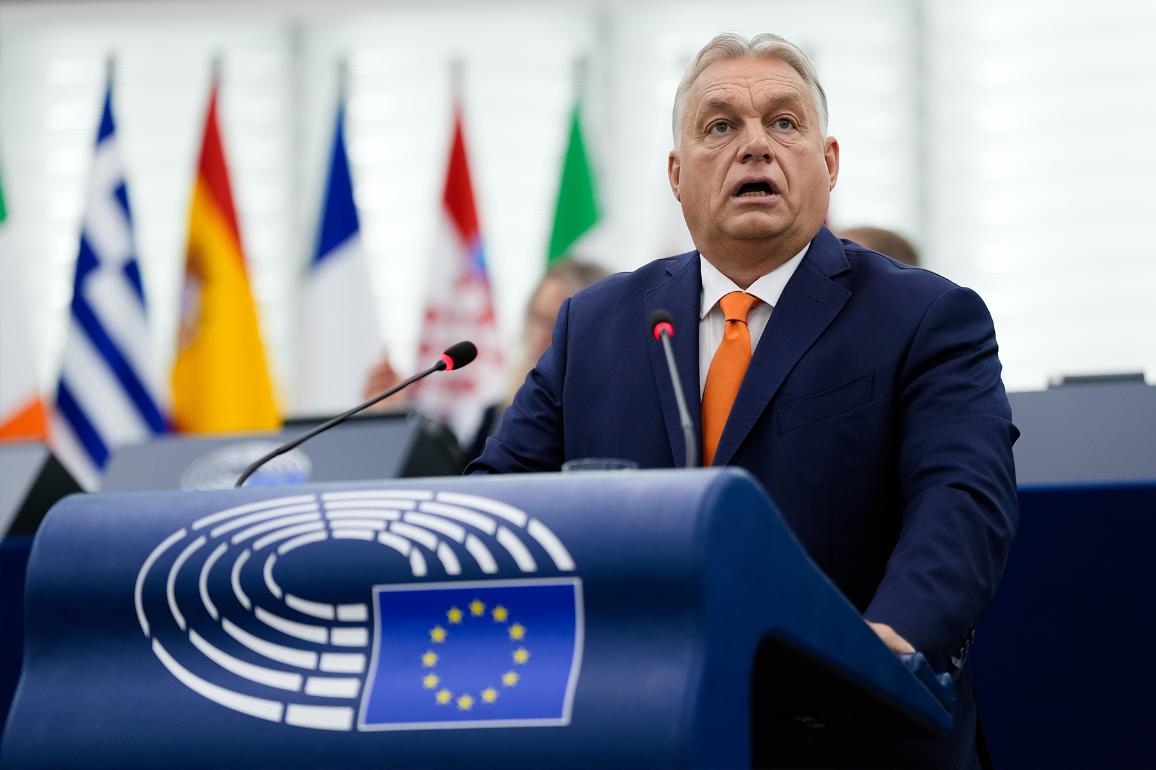
    Image: Prime Minister Viktor Orbán addresses the plenary on the priorities of the Hungarian Council Presidency © European Union 2024 – EP  


    [1] Donatienne Ruy and Maria Snegovaya, What Is at Stake in Hungary’s Election?, Center for Strategic and International Studies, March 2026, https://www.csis.org/analysis/what-stake-hungarys-election.

    [2] Jamie Dettmer, How Viktor Orbán became Vladimir Putin’s best friend in the EU, Politico, March 2026, https://www.politico.eu/article/viktor-orban-vladimir-putin-eu-hungary-russia/.

    [3] Richard Whitman and Stefan Wolff, EU agrees €90 billion loan to Ukraine, but squabbles over frozen Russian assets expose the bloc’s deep divisions, The Conversation, December 2025, https://theconversation.com/eu-agrees-90-billion-loan-to-ukraine-but-squabbles-over-frozen-russian-assets-expose-the-blocs-deep-divisions-272095.

    [4] Nick Thorpe and Vitaliy Shevchenko, Ukraine-Hungary oil pipeline row threatens EU loan, BBC, March 2026, https://www.bbc.co.uk/news/articles/cr71rkeg7xxo.

    [5] Alys Davies, Hungary’s Orbán accused of disloyalty and blackmail over Ukraine loan veto, BBC, March 2026, https://www.bbc.co.uk/news/articles/cq6jrvgqeejo.

    [6] Pablo Gorondi and Ray Furlong, Hungarian Opposition Leader Magyar Tells RFE/RL No Quick End To Russian Energy Imports, RFE/RL, October 2025, https://www.rferl.org/a/hungarian-opposition-leader-magyar-russia-energy-imports/33559475.html

    [7] European Council, Timeline – Ending Russian energy imports, https://www.consilium.europa.eu/en/policies/ending-russian-energy-imports/timeline-ending-russian-energy-imports/.

    [8] Lili Bayer and Kate Abnett, EU to propose permanent ban on Russian oil after Hungary election, document shows, Reuters, February 2026, https://www.reuters.com/business/energy/eu-propose-permanent-ban-russian-oil-after-hungary-election-document-shows-2026-02-24/ and Kate Abnett, EU delays April 15 proposal to permanently ban Russian oil imports, Reuters, March 2026, https://www.reuters.com/business/eu-delays-april-15-proposal-permanently-ban-russian-oil-imports-2026-03-24/

    [9] Alex Stezhensky, Hungary, Czech Republic, Slovakia refuse to join €90 billion EU loan program for Ukraine, The New Voice of Ukraine, December 2025, https://english.nv.ua/nation/hungary-czech-republic-slovakia-opt-out-of-eu-s-90b-loan-plan-to-support-ukraine-in-2026-2027-50569771.html

    [10] Flora Garamvolgyi and Ashifa Kassam, Hungary’s Viktor Orbán seeking to drum up votes by doing down Ukraine, The Guardian, February 2026, https://www.theguardian.com/world/2026/feb/27/hungarys-viktor-orban-seeking-to-drum-up-votes-by-doing-down-ukraine. Hungarian (and/or Czech and Slovak) opposition to Ukrainian EU accession could also impede the prospects of neighbouring Moldova and cause further delay to EU enlargement in the Western Balkans.

    [11] Bohdan Babaiev, Orbán’s top rival shocks with mixed message on Ukraine and Russia, RBC Ukraine, July 2025, https://newsukraine.rbc.ua/news/orb-n-s-top-rival-shocks-with-mixed-message-1753550644.html

    [12] Max Griera, Zoya Sheftalovich and Nicholas Vinocur, Orbán’s gambit to revive his election hopes: A battle against the EU, Politico, February 2026, https://www.politico.eu/article/hungary-viktor-orban-gambit-to-revive-his-election-hopes-a-battle-against-the-eu/

    [13] Ellen O’Regan, “Trump affirms ‘total endorsement’ of Orbán ahead of Hungary election”, Politico, 21 February 2026, https://www.politico.eu/article/trump-affirms-complete-and-total-endorsement-of-orban-amid-clash-with-eu/; Milena Wälde, “‘Golden age’: Rubio praises Orbán ahead of Hungary election”, Reuters, 16 February 2026, https://www.politico.eu/article/golden-age-marco-rubio-gushes-over-viktor-orban-pre-election-meeting/

    [14] Gellert Tamas, The global authoritarian right loves Orbán – and that could cost him in Hungary’s elections, The Guardian, March 2026, https://www.theguardian.com/commentisfree/2026/mar/24/viktor-orban-hungary-elections-global-authoritarian-right.

    [15] Felicia Schwartz, Rubio calls on Europe to join Trump’s new world order, Politico,  February 2026, https://www.politico.eu/article/marco-rubio-msc-europe-we-belong-together/

    Footnotes
      Related Articles

      Op-ed | One Year into Trump 2.0: Domestic Instability and Foreign Policy Disruption

      Article by Dr Andrew Gawthorpe

      February 3, 2026

      Op-ed | One Year into Trump 2.0: Domestic Instability and Foreign Policy Disruption

      Over the past month, President Donald Trump has proven that he still has the capacity to shock the world. On 3 January, he ordered the US military to capture Venezuelan president Nicolás Maduro. A few days later, he renewed his threats to forcibly annex Greenland. This prompted one of the most severe crises in the history of transatlantic relations – before Trump abruptly backed off in a speech at Davos. Trump then authorised a substantial military build-up to take place around Iran, in what may be a precursor to an attempt to overthrow the country’s government – or just another negotiating ploy.


      At the same time, domestic tensions escalated sharply during what some have called the ‘Battle of Minneapolis’ – the most intense confrontation between the federal government and local citizens in modern American memory.[1] The struggle eventually left two people dead and called into question whether the Trump administration could continue implementing its immigration agenda so aggressively.


      In many ways, January 2026 has been a microcosm of Trump’s first year back in office. His foreign policy has been alternatively aggressive, flexible, and – to many allies – just plain confusing. Domestically, he has sought to implement a radical version of his nationalistic and frequently openly racist ‘Make America Great Again’ agenda. In doing so, Trump appears to have gone beyond what most of the public support, causing a huge electoral headache for his party ahead of the midterm elections later this year.


      Domestic woes

      Trump won the 2024 election extremely narrowly. His victory in the popular vote was by a margin of just 0.6%, 7.5 times smaller than Joe Biden’s margin in 2020.


      Although this narrow victory was mostly driven by voter concern over high inflation, since his inauguration Trump has governed as if he had received a broad-based mandate to pursue a radical version of his MAGA agenda.[2] He has attempted to persecute his political opponents and pursue a deportation campaign which has involved flagrant abuses of the rights of countless citizens and residents. When confronted by judges or disapproving members of Congress, he has branded their resistance as a betrayal.[3] At every step, he has sought to sow division rather than unite the nation.


      Americans do not appear to be enjoying the spectacle much. In a recent poll, Trump’s approval rating stood at just 37%, not far from its all-time low.[4] Voters are particularly frustrated that the President has done little to reduce the cost of living, which remains extremely high.[5] With Trump so unpopular, even members of his own party are becoming more willing to criticise him, and they only become more so as the midterms approach.


      Trump’s signature domestic policy initiative of mass deportation has received the most attention. Over the past year, the White House has fundamentally changed how immigration enforcement works. Gone are targeted raids on known undocumented persons with criminal records. Instead, immigration agents have taken to aggressively patrolling urban areas, demanding to see the papers of anyone whose skin colour raises their suspicion. This campaign has involved violations of constitutional rights on a massive scale.[6] It has been justified by openly racist rhetoric from Trump himself, who has referred to the members of some communities as “garbage” who come from “hellholes”.[7]


      Voters have been souring on Trump’s deportation campaign for some time, but events in Minneapolis over the past month led the dam to burst. For weeks, protesters in the city resisted attempts by immigration agents to arrest their neighbours, creating scenes that sapped support for the administration’s aggressive approach. After federal agents then killed two citizens – one a young mother, Renee Nicole Good, and the other a nurse at a veterans’ hospital, Alex Pretti – the nationwide backlash was extreme. In response, Trump removed Greg Bovino, the deputy in charge of the deportation campaign, and signalled a change of course. What comes next is unclear, but now even Trump’s signature domestic policy initiative is being challenged.


      Foreign adventures

      It is common for leaders who face frustration at home to instead look for achievements abroad. American presidents are remarkably free to chart their own course in foreign policy, with few formal requirements to consult Congress or civil servants. Trump has taken full advantage of this freedom, with the result that his foreign policy has been characterised by wild swings, ambitious goals, and little attention paid to practical implementation.


      Perhaps the biggest change from Trump’s first term has been his increased comfort with using military force. Both the capture of Maduro and the bombing of Iran showed that Trump is now looking to the military to score quick wins. Even Greenland became the subject of explicit military threats, prompting alarm among NATO allies. In each and every case, what seems to be missing is any long-term plan for what happens after the military action or threat is over. It rarely seems like Trump is engaging in a rational calculation of means and ends.


      The Greenland affair is a good example. Almost everything that Trump says he wants from Greenland – an increased military presence and mineral mining rights – could be accomplished with simple negotiations and no change of ownership. Instead, he threatened to seize the island outright, doing perhaps irreparable damage to the transatlantic alliance in the progress. He then retreated from his position, indicating that a negotiated arrangement within the existing territorial framework would suffice. All the damage, it seemed, was for nothing.[8]


      Another feature of Trump’s second-term foreign policy is its expansive scope. Trump is sometimes called an isolationist, but if he is then it is hard to explain why he took the time to try to broker peace between Thailand and Cambodia or Azerbaijan and Armenia. He often boasts that he has ended eight wars.[9] Even if his real impact on these conflicts has usually been temporary and marginal, his desire to play global peacemaker is another sign that he is trying to rack up wins on the world stage. It may also be an attempt to distract from his failure to end the war in Ukraine.


      Many European leaders entered the second Trump administration thinking that the main threat facing them was an American withdrawal. But over the last year, it has become increasingly apparent that the more immediate challenge may be something different: focused and hostile intervention in European affairs. From his threats to seize Greenland to his administration’s sustained criticism against European migration policy and liberal values, Trump seems to reshape Europe more than he wants to abandon it.


      For Europeans, this is an uncomfortable and dangerous place to be in. Since the dawn of American global power a century or so ago, every region of the world except Europe has been subject to Washington’s capricious and often destructive power. The alliances and bonds of affection that seemed to shield Europe from these attentions are fraying, and it is natural for Europeans to wonder what awaits them.


      It would be unwise for European leaders to assume that Trump’s domestic problems will constrain his international agenda. In fact, the harder things get at home, the more his gaze might shift abroad – with unpredictable consequences for us all.


      Andrew Gawthorpe is a Senior Fellow at the Foreign Policy Centre and a specialist in U.S. politics and foreign policy at Leiden University. He also writes a newsletter called America Explained.


      Disclaimer: The views expressed in this piece are those of the individual author and do not reflect the views of The Foreign Policy Centre.


      [1] Ryan Cooper, The Battle of Minneapolis is Not Over, Prospect, January 2026, https://prospect.org/2026/01/29/ice-trump-minneapolis-alex-pretti-border-protection-kristi-noem-stephen-miller/

      [2] Oxford Economics, Inflation was the Main Driver for Trump Victory, November 2024, https://www.oxfordeconomics.com/resource/inflation-was-the-main-driver-for-trump-victory/

      [3] Kevin Frey and Mychael Schnell, Trump Suggests Some Democrats should be Hanged – and Some Republicans Rush to his Defence, MS NOW, November 2025, https://www.ms.now/news/trump-calls-democrats-seditious-traitors-republicans-rcna245028; Dan Maurer, ‘On Treason and Traitors’, Lawfare, June 2025, https://www.lawfaremedia.org/article/on-treason-and-traitors

      [4] Hannah Hartig and Jocelyn Kiley, Confidence in Trump Dips, and Fewer Now Say They Support his Policies and Plans, Pew Research, January 2026, https://www.pewresearch.org/politics/2026/01/29/confidence-in-trump-dips-and-fewer-now-say-they-support-his-policies-and-plans/.

      [5] Kathryn Palmer, How is Trump on Affordability? What Most Voters Said in New Poll, USA Today, January 2026, https://eu.usatoday.com/story/news/politics/2026/01/22/trump-worse-affordability-new-poll/88302812007/

      [6] Kyle Cheney, Judges Across the Country Rebuke ICE for Defying Court Orders, Politico, January 2026, https://www.politico.com/news/2026/01/30/ice-immigration-court-orders-00757894; Walter Olsen, In Minnesota, ICE is Assaulting the Constitutional Rights of Citizens, Cato Institute, January 2026, https://www.cato.org/blog/ice-versus-fourth-amendment

      [7] Melissa Hellmann, Donald Trump in his Own Words – the Year in Racism and Misogyny, The Guardian, December 2025, https://www.theguardian.com/us-news/2025/dec/29/donald-trump-racism-dei-misogyny-2025-review

      [8] Katya Adler, Confronted over Greenland, Europe is Ditching its Softly-Softly Approach to Trump, BBC News, January 2026, https://www.bbc.com/news/articles/c0lx7j1lrwro

      [9] Jake Horton and Nike Beake, How Many Wars has President Trump Really Ended?, BBC News, October 2025, https://www.bbc.com/news/articles/c5y3599gx4qo

      Footnotes
        Related Articles

         Join our mailing list 

        Keep informed about events, articles & latest publications from Foreign Policy Centre

        JOIN