
Skip to content

Op-ed | After the Locals: How Reform and the Greens Could Reshape Foreign Policy

Article by Dr Thomas Martin

May 12, 2026

Op-ed | After the Locals: How Reform and the Greens Could Reshape Foreign Policy

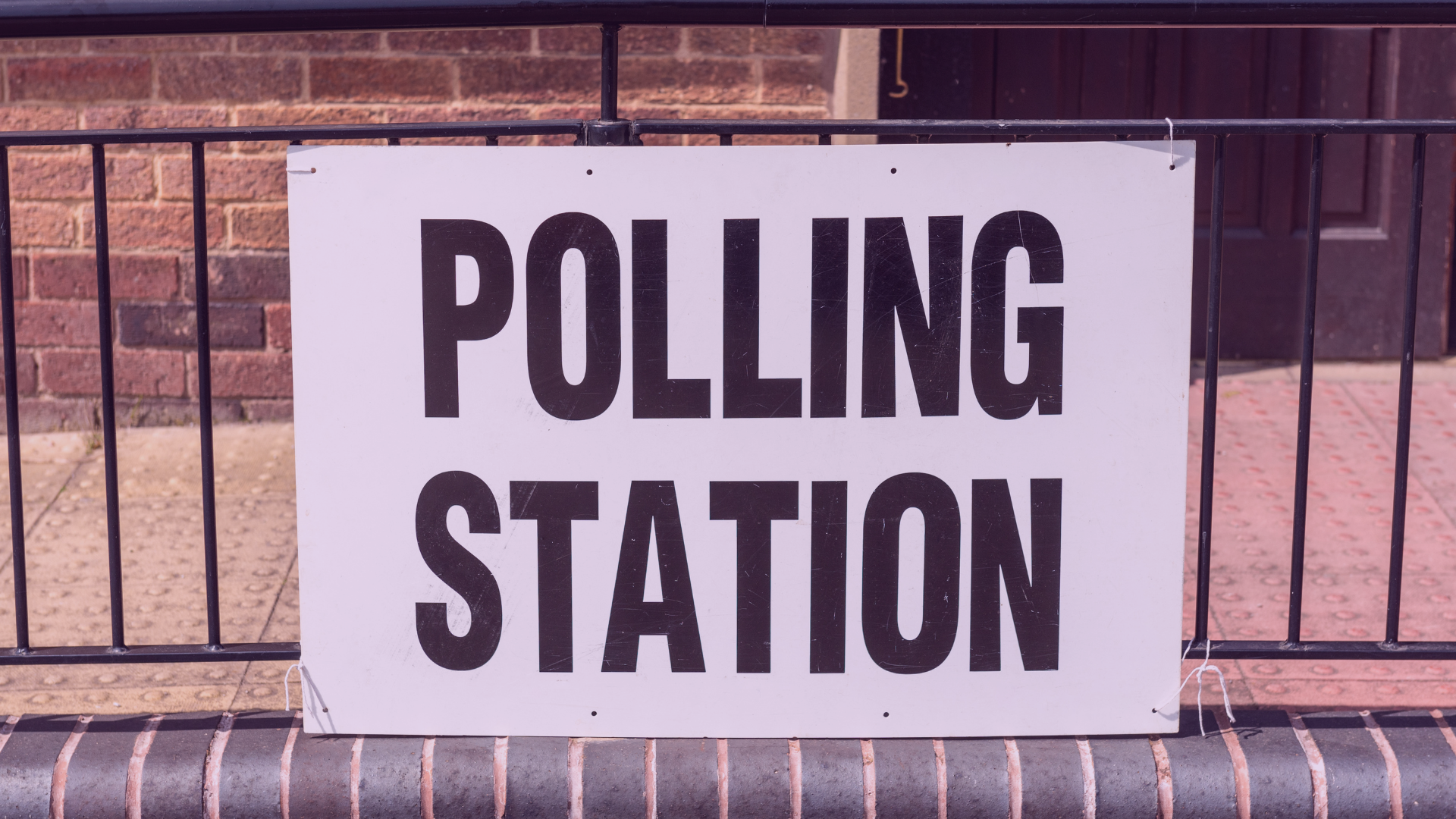
The local elections have shown how politically fragmented the UK has become in recent years. Both Labour and the Conservatives – the traditional parties of Government – have lost out. Reform UK are the big winners; and the Greens and Liberal Democrats are making gains, with the Greens continuing to make inroads into the UK’s urban centres.


This turbulence is likely to have impacts on the UK’s foreign and national security politics. It has long been the case that foreign policy in the UK has been driven by a broad, cross-party consensus. Yet the emergence of Reform, and to a lesser extent the Greens, threatens to disrupt this.


In my research, I have been looking into how people in the UK think about national security and foreign policy. What threats do they perceive as most significant? What makes them feel secure or insecure? And what are people’s national security priorities? My research (conducted at the end of 2025, prior to subsequent developments such as the war in Iran) shows that people’s perspectives on national security have become inseparable from their politics. National security is experienced and perceived differently within the UK – with those in different political communities believing very different things.


A notable finding is that those saying they would vote Reform UK tended to feel less secure in the UK. It is perhaps unsurprising that a sense of insecurity might lead people to vote for parties outside of the mainstream. They identify migration as their biggest concern, and are much more likely to do so than others in the UK. Conversely, they are much less concerned than others about global instability and climate change. They are more likely to see the UK’s nuclear deterrent as a source of security, and at the time of polling, were the voting cohort who were much more likely to see the UK’s relationship to the US, and President Donald Trump himself, as contributing positively to UK security They felt that UK foreign and economic policies made them less secure, and are less likely to see the UN and NATO as sources of security. Their policy priorities tend to include reducing migration and increasing defence spending.


Those intending to vote Green shared some similarities with potential Reform voters. They too, were less likely to feel that UK foreign and economic policies would make them secure. Yet their diagnosis of the problem was fundamentally different. Green voters were much less concerned about ‘traditional’ security threats such as terrorism, and instead placed greater emphasis on climate and economic insecurity. They were the voting cohort most concerned about President Trump and the UK’s relationship to the US, as well as the only cohort who overall felt that the UK’s nuclear deterrent made them less secure. They were notably the most opposed to increasing defence spending, instead, they would prioritise human security concerns, such as the economic and health insecurities of those living in the UK, alongside efforts to tackle climate change.


Green voters nevertheless viewed the UK as a global actor, seeing the UN as a source of security, and the UK as playing a role in global peacebuilding. When asked about the UK Government’s policy towards Ukraine, they were the cohort most likely to state that we have a moral obligation to help Ukraine protect itself. This contrasts with Reform voters, who were most likely to state we should instead prioritise spending money on those in need at home.


While these findings are not necessarily surprising, they are nevertheless important. In essence, they outline divergent paths for the UK’s national security and foreign policy that depart in significant ways from the current broad consensus.


Reform voters tend to want a more insular and self-sufficient United Kingdom, with resources focused domestically rather than on involvement in foreign conflicts, while maintaining ties with the US and Trump.


Green voters, by contrast, tend to be highly critical of the UK’s current tools of deterrence, such as defence spending and the nuclear deterrent, and instead see security as being produced through multilateralism, tackling the climate emergency, and investing in the human security needs of the UK.


The recent Strategic Defence Review and National Security Strategy both called for a ‘national conversation’ on the future of UK defence and security.[1] My research highlights the challenges involved in that ambition.[2] As the two-party system fractures, questions around what the UK’s national security and foreign policy priorities should be are likely to become increasingly politicised. If the UK is going to achieve cross-societal solidarity in a more difficult and dangerous world – and convince the public to pay for coherent long-term responses to wide-ranging security challenges – it is going to need a much more expansive, democratic conversation about what security is for, who it is for, and how it should be delivered.


Dr Thomas Martin is a Senior Lecturer in International Studies at The Open University. He is interested in national security politics, public opinion, and terrorism and counterterrorism.


Disclaimer: The views expressed in this piece are those of the individual author and do not reflect the views of The Foreign Policy Centre.


[1] Ministry of Defence, The Strategic Defence Review 2025 – Making Britain Safer: secure at home, strong abroad, June 2025 ,https://assets.publishing.service.gov.uk/media/683d89f181deb72cce2680a5/The_Strategic_Defence_Review_2025_-_Making_Britain_Safer_-_secure_at_home__strong_abroad.pdf

[2] Dr Thomas Martin, Public Opinion & National Security in the UK: A People-Centred Approach, GCSJ Policy Report, Centre for Global Challenges and Social Justice, The Open University, https://fass.open.ac.uk/research/centres/GCSJ/policy-incubator
Footnotes
    Related Articles

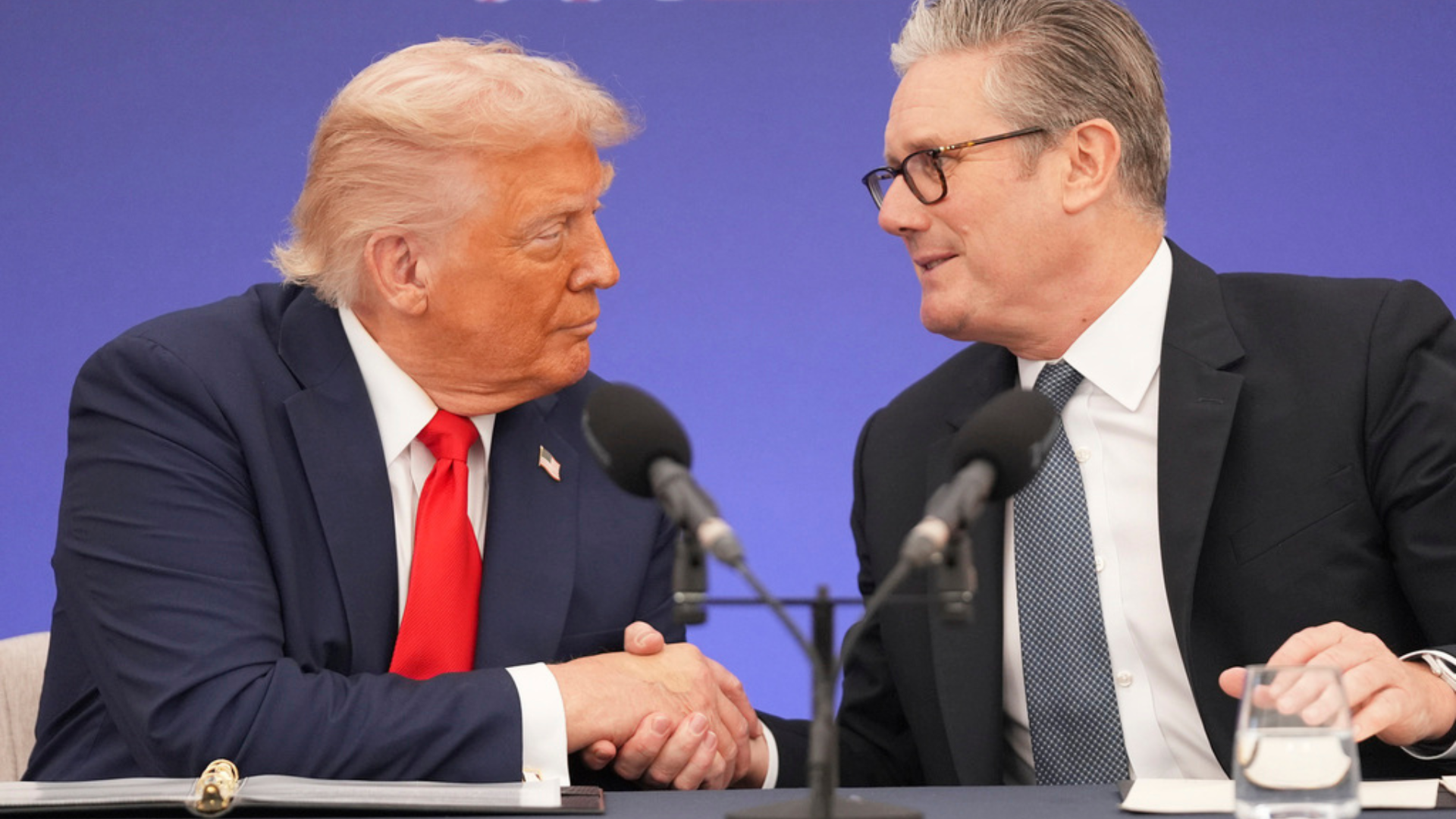
    Op-ed | Iran Attack Shows Limits of Starmer’s ‘Trump-Whispering’

    Article by Dr Andrew Gawthorpe

    March 4, 2026

    Op-ed | Iran Attack Shows Limits of Starmer’s ‘Trump-Whispering’

    Ever since Donald Trump returned to office in 2025, Keir Starmer has had to perform a difficult balancing act.


    On the one hand, he has sought to avoid open confrontation with Trump despite policies that have directly affected British interests, including imposing trade tariffs on the UK and threatening to annex Greenland, the territory of a NATO ally. On the other hand, the British Prime Minister has tried to carve out a space in which to pursue what he perceives as Britain’s national interests. One of the main bases of this strategy was the idea that appeasing Trump would allow Starmer to become “the Trump whisperer”, nudging the US President towards more amenable policies.[1]


    With the joint US-Israeli attack on Iran, this effort has reached an ignominious end. Like many UK prime ministers before him, Starmer appears to have discovered that a policy predicated on accommodating 90% of an American president’s agenda in the hope of influencing the remaining 10% is doomed to failure. When Washington decides to act, it will do so anyway – and London will often be left picking up the pieces.


    Starmer is not wrong that US foreign policy is very important for the United Kingdom, and that influencing it is desirable. In particular, the US commitment to NATO and the defence of Europe more broadly is vital to British security. Faced with trade-offs in other less vital areas – for instance the exact level of tariffs affecting US-UK trade – pragmatic concessions might be necessary to maintain it. Keeping channels of communication open and friendly is certainly wiser than engaging in unnecessary diplomatic spats.


    Ultimately, the administration of President Trump is not one that can be constrained through careful diplomatic management alone. Trump has an expansive view of his right to use military force across the world, scant respect for alliances or international law, and a chaotic decision-making process. It is not so easy to ‘nudge’ him in constructive directions.


    Starmer recognised the dangers inherent in the US military build-up in the Middle East at an early stage. He decided to deny the use of Diego Garcia and RAF Fairford as launching points for strikes on Iran and kept quiet about his views on the coming war. At the same time, Starmer – ever the balancer – did not directly state his opposition to it, either.


    Had he done so, he would have been on extremely firm ground for two reasons. The first is international law. The US and Israel’s attack on Iran was patently illegal. The UK government recognised this and it was apparently one reason why the use of UK territory for striking Iran was denied.[2] Whatever the horrendous crimes committed by the Iranian government against its own people, further weakening of the norm of non-aggression is clearly not in the UK’s interest.


    The second reason is geopolitical. At a time when the UK desperately needs the US to recommit to European security, Trump is once again leading his country down the path of launching a costly war of choice in the Middle East. Rather than preserving their military assets and diplomatic goodwill to deter Russia, both the United States and Europe are now expending them to justify and deal with the consequences of a war of aggression of their own. The economic consequences and strain on military readiness could significantly damage European and British security.


    Yet now that the war has begun, despite what appeared to be Starmer’s obvious private opposition, the UK once again finds itself being swept up in America’s wake. After Iran’s predictable retaliation against both Israel and Arab nations, the Prime Minister has authorised the use of Diego Garcia and RAF Fairford for what he terms “defensive” strikes on Iranian missile launchers.[3] Legal gymnastics aside, these “defensive” strikes are indistinguishable from the “offensive” operations that Starmer only a few days ago refused to allow Trump to launch from British bases.


    Nor can we be certain that this will end up being the full extent of British involvement. Already, an explosive drone has struck RAF Akrotiri, a British base in Cyprus, and others have been intercepted en route.[4] There are hundreds of thousands of British citizens in Israel and in the Arab nations that are now under Iranian bombardment. The possibility of UK involvement in opening shipping lanes threatened by Iran and its regional allies cannot be ruled out.


    In other words, the UK now shares much of the risk that the United States has taken on with this reckless war of choice. Starmer’s policy of balance could not prevent it, and nor can it protect Britain from its consequences.


    Disclaimer: The views expressed in this piece are those of the individual author and do not reflect the views of The Foreign Policy Centre.


    Andrew Gawthorpe is a Senior Fellow at the Foreign Policy Centre. He isa specialist in US politics and foreign policy at Leiden University. He also writes a newsletter called America Explained. He was previously a teaching fellow at the UK Defence Academy, a research fellow at the Harvard Kennedy School, and a civil servant in the Cabinet Office.


    [1] Rowena Mason, Starmer Faces Great Quandary Over ‘Special Relationship’ After Iran Attack, The Guardian, March 2026, https://www.theguardian.com/politics/2026/mar/01/keir-starmer-donald-trump-uk-us-special-relationship-iran.

    [2] Brad Lendon, Britain Blocking Use of Air Bases Trump Says Would Be Needed for Strikes on Iran, UK Media Reports, CNN, February 2026, https://edition.cnn.com/2026/02/20/europe/britain-air-base-access-us-iran-intl-hnk-ml.

    [3] Lucy Fisher and George Parker, Keir Starmer Will Let US use UK Bases for Attacks on Iranian Missile Sites, Financial Times, March 2026, https://www.ft.com/content/b988499b-1a89-4e56-b0cf-19d5a8ac7111.

    [4] Cachella Smith and Nikos Papanikolaou, Two Drones Intercepted Heading for RAF Base, Cyprus Says, BBC, March 2026, https://www.bbc.com/news/articles/cm2r0q310e3o.

    Footnotes
      Related Articles

      Op-ed | Patterns of History in Transatlantic Relations

      Article by David Harley

      January 30, 2026

      Op-ed | Patterns of History in Transatlantic Relations

      In this op-ed, David Harley, FPC Advisory Council member and former EU diplomat, offers an insider perspective on the historical continuities in US foreign policy and their implications for the future of transatlantic relations.


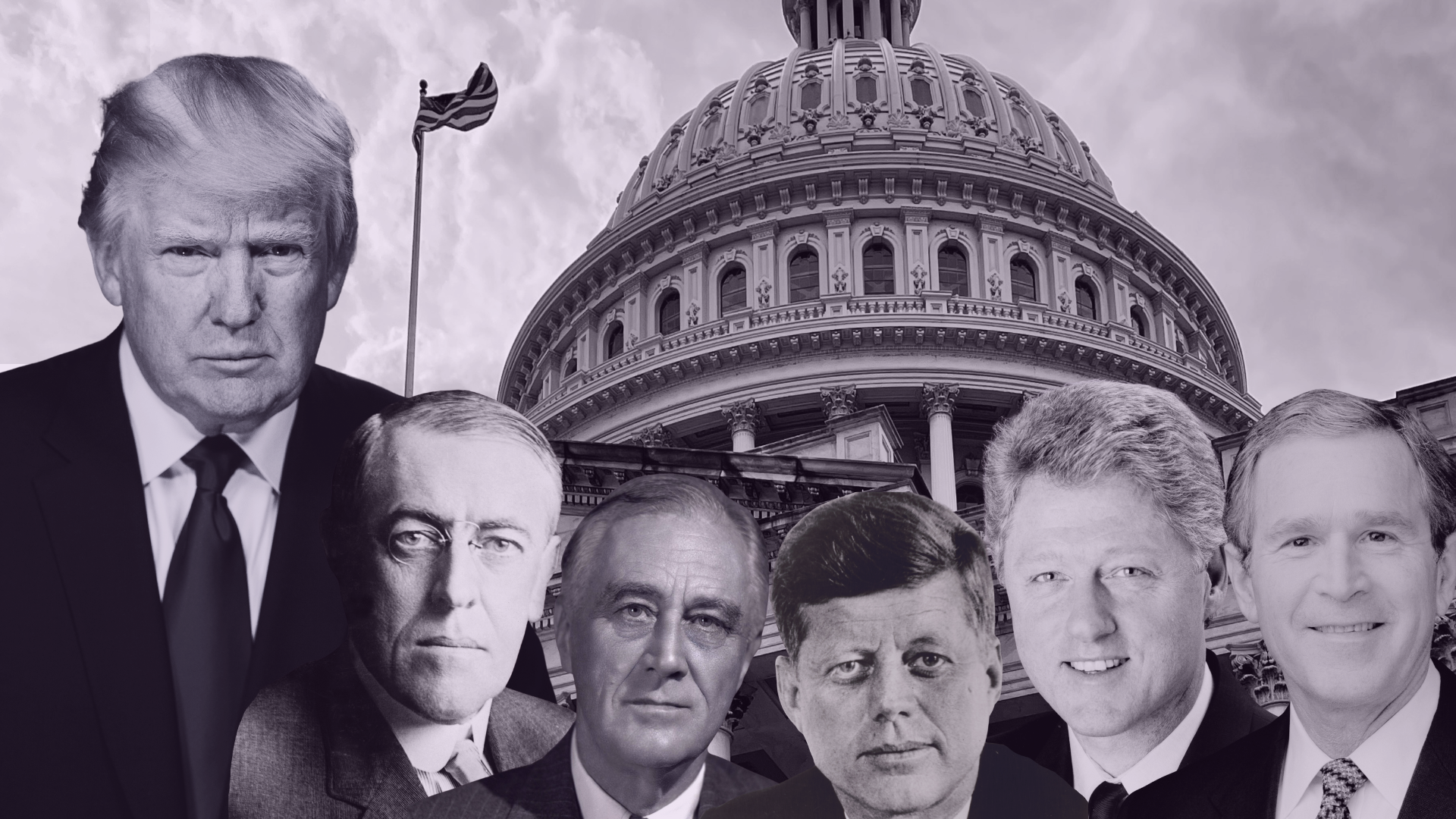
      The slogan ‘America First’ has a long history. Often used by President Donald Trump, the phrase was first coined by President Woodrow Wilson during his 1916 presidential campaign, when he pledged to keep the United States (US) out of the First World War. The US nevertheless entered the war in April 1917. The non-intervention movement in America remained strong during the inter-war years, personified by the pro-Nazi stance taken by Joseph P. Kennedy, the US ambassador to the UK from 1938 to 1940 and father of John F. Kennedy. 


      Despite strong pleading from Winston Churchill, President Franklin Roosevelt would not commit the US to enter the Second World War after the start of hostilities in September 1939. It was only after the Japanese attack on Pearl Harbor on 7 December 1941 that Congress, at Roosevelt’s bidding, unanimously voted to declare war. Six days later, in conditions of utmost secrecy, Churchill set sail for America in the battleship Duke of York. At Roosevelt’s invitation, he was to stay for three weeks in the White House: from their conversations, often until long into the night, the special relationship was born and an alliance forged with the ultimate goal of defeating Nazi Germany and restoring freedom to Western Europe.


      Transatlantic relations today are, in many respects, very different, yet with certain similarities. Trump 2.0 and the machinations of the President himself represent and greatly accentuate a deep-seated historical trend of US foreign policy. Once again, Britain and Europe are under threat of war, this time from Russia, but Trump is clearly no Roosevelt, and clear, decisive leadership on the European side is notably absent. Moreover the scourge of populist nationalism is on the rise, on both sides of the Atlantic. The strong likelihood is that the US under President Trump will disengage from Europe and NATO. 


      Not since the Suez crisis in 1956 has an American president treated Britain with such disdain as the current incumbent. A particularly low point was reached by Trump’s remarks at Davos regarding British soldiers who lost their lives in Afghanistan. These comments have intensified concerns about the future of the transatlantic partnership. The British government now faces an urgent strategic question: how did the UK reach this position, and what should its next course of action be? The current British government’s line of refusing to choose between the US and the EU is becoming increasingly less tenable. 


      As a senior EU official, I witnessed at first hand, at various meetings in Washington and New York, the continued trend of ruthlessly promoting American interests as they defined them. This was evident both under President Clinton and President George W. Bush. In the case of Iraq, both administrations used unproven allegations of WMD (weapons of mass destruction) held by Sadam Hussein as justification for first bombing and then waging war. The Blair government seemed to swallow the American line unquestioningly.


      President Trump’s recently stated objective of taking over Venezuela’s oil reserves echoes words spoken by Vice-President Dick Cheney at a meeting I attended at the White House in July 2002. Cheney made clear that the primary US concern about Iraq was that ‘Saddam is sitting on 10% of the world’s oil reserves, which it cannot allow to fall into the hands of a rogue state or a murderous dictator who refuses to cooperate with the international community’. At the time, Cheney had recently served as CEO of the oil and gas company Haliburton (1995-2000), and as Vice-President he still retained significant stock options. 


      At a meeting later that day with Condoleezza Rice, national security adviser to President Bush, she began with a little joke that policy differences between Europe and the US had always existed, ever since American independence and even to the burning of the White House by British Forces in 1814. She went on to state forcefully the US’s ‘profound reservations’ about ever submitting to judgments of the International Criminal Court. Rice made it abundantly clear that the US would only recognise or cooperate with international institutions ‘such as the UN or even the EU if and when it served their national interest’. 


      Although Britain backed the Bush administration over Iraq, other political leaders in mainland Europe were not blind to these long-standing features of US foreign policy and took a very different view. During a lunch I attended in June 2003 at the Élysée Palace, President Jacques Chirac launched into a furious diatribe against US policy. I discreetly noted down the President’s words as follows: ‘Since the fall of the Berlin Wall, Europe has no longer been strategically important for the US. The Balkans conflict masked this change. The main objective of US foreign policy is to break up Europe.’


      If Chirac’s analysis may have sounded exaggerated at the time, over 20 years later his words have proved prescient. The warnings from the patterns of history were there but we – Britain and Europe – chose to ignore them. We must hope that it is not too late to change course as we face the dual threat of Russian expansion and American withdrawal. As Mark Carney memorably said earlier this month in Davos nostalgia is not a strategy.’ In today’s turbulent times, nor is the special relationship.


      David Harley is a former EU diplomat, political communications consultant, and author. Posts held include Deputy Secretary-General of the European Parliament and Senior Advisor at the Brussels public affairs agency Burson Cohn & Wolfe. He holds a degree in Modern Languages from the University of Cambridge and a Diploma in Creative Writing from the University of East Anglia. In 2021 David published the transcription of his political diaries in ‘ Matters of Record – Inside European Politics’ and in 2022 co-edited ‘The Forgotten Tribe – British MEPs 1979-2020’. He is currently a member of the Foreign Policy Centre’s Advisory Board, and is a regular speaker and commentator on UK-EU relations.


      Disclaimer: The views expressed in this piece are those of the individual author and do not reflect the views of The Foreign Policy Centre.

      Footnotes
        Related Articles

         Join our mailing list 

        Keep informed about events, articles & latest publications from Foreign Policy Centre

        JOIN