
Alex Sobel and Luke Cooper were recently in Gdańsk, Poland, for the Ukraine Recovery Conference where there is a clear and perceptible shift in tone and actions, mirroring our own shifting political focus.
Andy Burnham’s pitch to lead Labour promises to overturn “four decades of neoliberalism”.[1] His ‘Manchesterism’ centres on an interventionist state: more public ownership within a foundational economy, an end to the privatisation premium that has raised the cost of basic services, and a restored state role in core utilities. He also pledges to devolve significant fiscal power to cities and regions. Burnham builds on existing Labour policies but frames them far more stridently – as a radical break with market fundamentalism.
Having been deeply involved in a range of meetings and events at the annual Ukraine Recovery Conference (URC), which took place in Gdańsk, Poland, on the 25-26 June, we feel it is important to emphasise though that this new economic thinking is not something unique to Britain – and, quite on the contrary, we are actually playing catch-up.
Governments all over the world are looking at how markets can be made to work in the public interest – and the large majority of states never went as far down the road of privatisation as the UK in the first place.
What we learnt at the URC
Ukraine along with the other post-Soviet economies offers an important lens on this process. After its failed neoliberal transition in the 1990s, which enabled the oligarchic capture of large parts of its economy, Ukrainian public opinion has moved sharply against privatisation over the last two decades.[2] Ukraine’s political debates, like any country, are complicated and diverse, but there is a discernible effort to move away from the old bureaucratic Soviet model while also recognising the importance of maintaining a key role for the state, including local government, in the economy. This is reflected above all in its wartime economy that sees, not only state enterprises, but also smaller and nimbler tech and drone firms, play a critical role.
There has been a notable mood shift on these issues at the URC. Even privatisation’s most ardent supporters tend to concede that Ukraine’s strategically important industries should remain in public ownership, and there is a renewed interest in cooperatives and mutuals. Coordination between the public and private sector is the framing of choice of most panel contributions, advancing targeted and international calibrated industrial policy. A Japanese programme for example offers grants for technology transfer to Ukraine through business partnerships and co-creation, an approach Tokyo argues reflects how Europe and East Asia rebuilt after World War II.[3]
In shifting toward Manchesterism, we could do far worse than take a closer look at Ukraine’s domestic policy. Yuliya Yurchenko, in her book Ukraine and the Empire of Capital, offers a trenchant criticism of Ukraine’s post-Maidan, IMF-mandated neoliberal reform programme. She highlights how the failure of that agenda to deliver sustainable growth has opened up new opportunities for social democratic thinking in Ukraine – and that this can have global policy implications, including for western countries. “Britain has a lot to learn from Ukraine’s experience”, she argues, having also spent several days at the URC, with the “national rail and the recently rebuilt from scratch Mykolayiv water pipeline and treatment facility… the shining examples of efficacy and efficiency of state ownership combined with responsive management and relying on local contractors”.[4]
While the UK gradually reverses rail privatisation, Ukraine’s state-run rail network has provided a critical lifeline for citizens through the war. Privatbank, which was nationalised in 2016 during Ukraine’s mid-decade financial crisis, is today highly profitable having been cleaned up and reformed under public ownership.[5] State owned firms like Ukrhydroenergo (hydropower), Energoatom (nuclear), GTS Operator of Ukraine (gas transmission), Naftogaz (gas), and Ukrainian Defence Industry (defence production), all made significant contributions to Ukraine’s budget in 2024 and 2025.
In 2023, President Zelensky announced an ambition that, by 2027, all primary school children would receive free school meals. By 2025, just over half of children in this cohort were receiving meals, thanks to an ambitious programme of kitchen upgrades and the training of cooks to improve nutritional value, all against the challenges of operating schools in a war.
Ukraine’s system of local government also has the kind of fiscal powers that Burnham has advocated for cities and regions. Territorial communities receive some 64% of money raised through personal income taxes to spend on public services, housing and municipal and infrastructure investments.[6] This fiscal freedom has been absolutely essential to the war effort, for instance, allowing free public transport in several cities including Kharkiv where the metro also acts as the main public shelters for citizens. In Lviv, which has a close relationship with Manchester under Mayor Andriy Sadovyi, there has been a huge expansion in the tram and guided bus network, as well as cycle infrastructure called “Lion on Wheels”, with over 50% of residents now using public transport or cycles for journeys. Lviv has also expanded its city centre pedestrian zone creating one of the largest pedestrianised historic centres in Europe. The challenges that Ukraine has faced in the unevenness of local technical and administrative capacity to make the most of these powers and resources may well also prove to have shared lessons for Burnham’s reform agenda for kickstarting regional development.
International policy is central to Burnham’s mission
This is why international policy should never be an afterthought when it comes to building our transformative agenda at home. The international arena provides a wellspring of ideas and global relationships that will be vitally important in creating a strong, foundational ballast for Burnham’s transformative domestic agenda. The lessons emerging from Ukraine can also support new Labour thinking in areas like defence production and international development, where we have often struggled to develop a distinctively social democratic approach and vision.
Alex Sobel is the Labour MP for Leeds Central and Headingley, and the Prime Minister’s Trade Envoy to Ukraine.
Luke Cooper is an Associate Professorial Research Fellow in International Relation at London School of Economics and Director of the LSE Ukraine Programme.
Disclaimer: The views expressed in this piece are those of the individual authors and do not reflect the views of The Foreign Policy Centre.
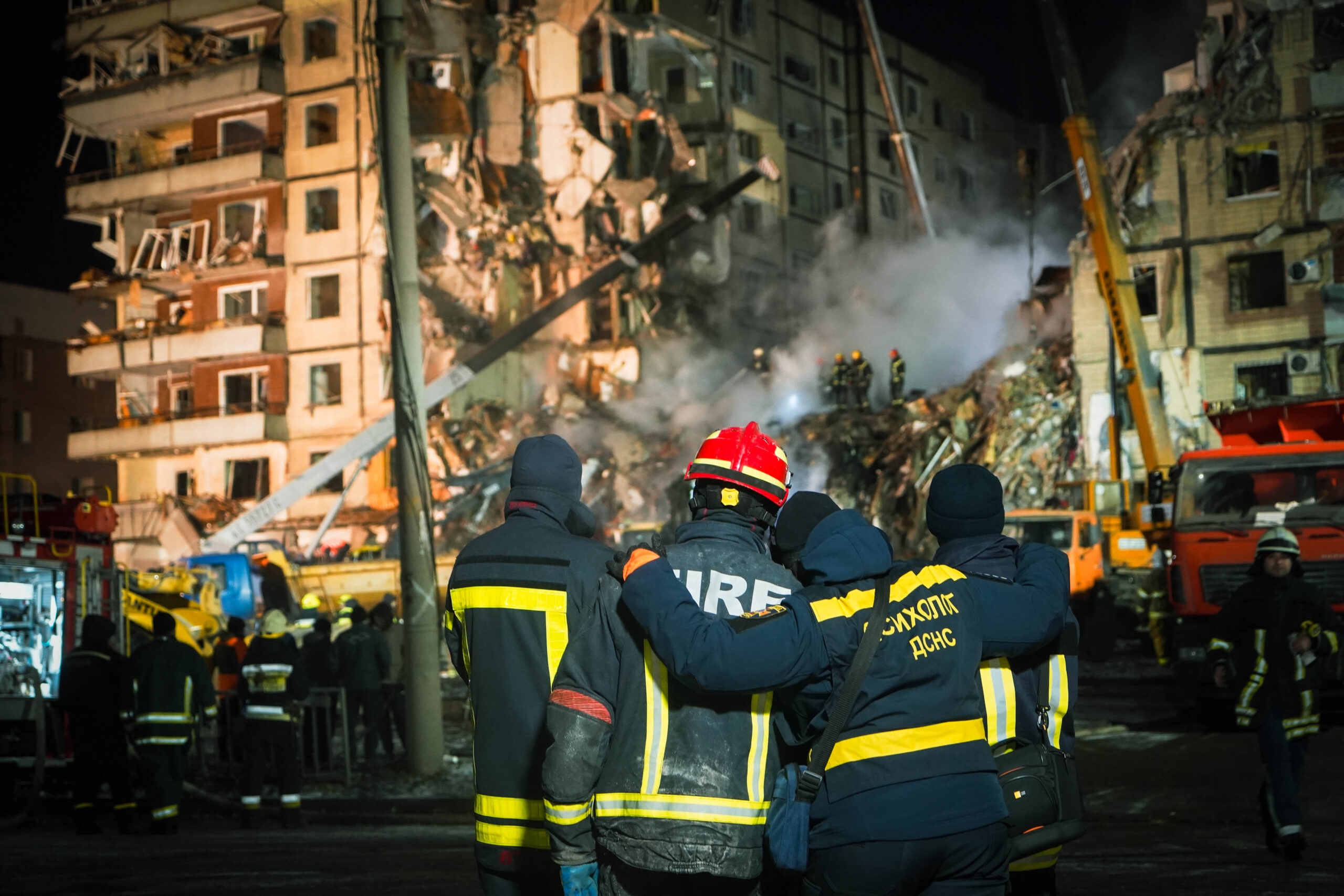
Photo via war.ukraine.ua (Collection of War Photos)
[1] The Mirror, LIVE: Andy Burnham gives speech at the Great North Investment Summit ahead of Makerfield by-election, YouTube, May 2026, https://www.youtube.com/watch?v=xWObFdHYz0A
[2] Tymofii Brik and Vitalii Protsenko, Does crime undermine support for privatization? Evidence from Ukraine, Volume 39: Issue 1, pp. 91-117, Bristol University Press, March 2024, https://bristoluniversitypressdigital.com/view/journals/jpfpc/39/1/article-p91.xml
[3] United Nations Industrial Development Organization, Green industrial recovery project for Ukraine, https://www.unido.org/girp-ukr-jpn
[4] Autostrada, see: https://vodogin.autostrada.ua/en
[5] Privatbank, Growing trust and supporting the national economy: PrivatBank has released its financial results for 2025, February 2026, https://privatbank.ua/en/news/2026/2/9/growing-trust-and-supporting-the-national-economy-privatbank-has-released-its-financial-results-for-2025
[6] Igor Piddubnyi, Serhii Tytiuk, Andrii Darkovich, “Military” PIT: How the Tax Allocation System Can Change and What It Will Lead To, Vox Ukraine, September 2023, https://voxukraine.org/en/military-pit-how-the-tax-allocation-system-can-change-and-what-it-will-lead-to