Skip to content

Dr Ilya Roubanis

Research Fellow

Ilya Roubanis is a researcher of the South Caucasus and the Levant whose work explores how conflict, political identity, and geopolitical competition reshape regional order. Drawing on extensive field research and policy engagement, he analyses the interaction between local actors and wider regional powers, with a particular interest in conflict management, regional connectivity, and political transformation.

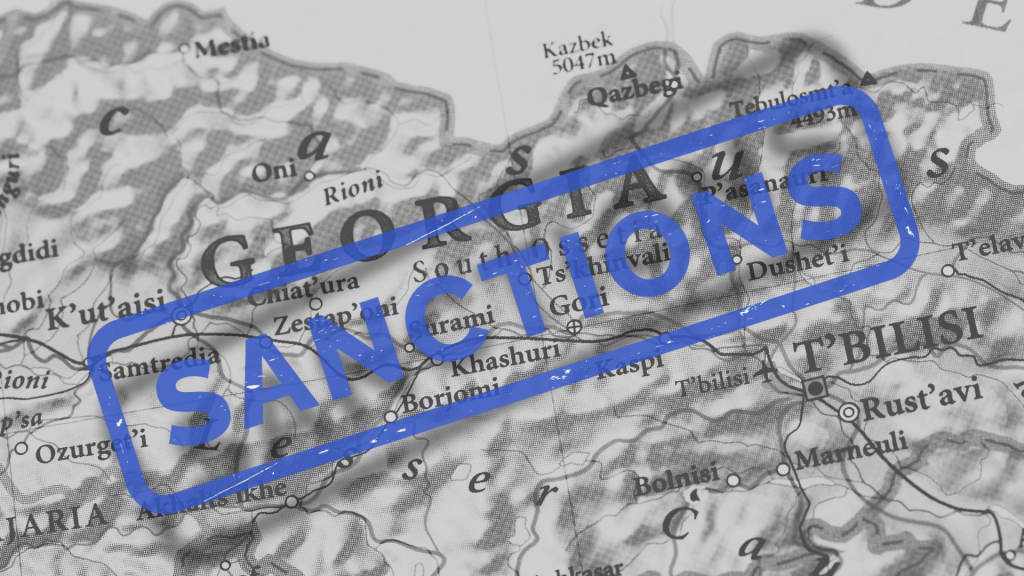
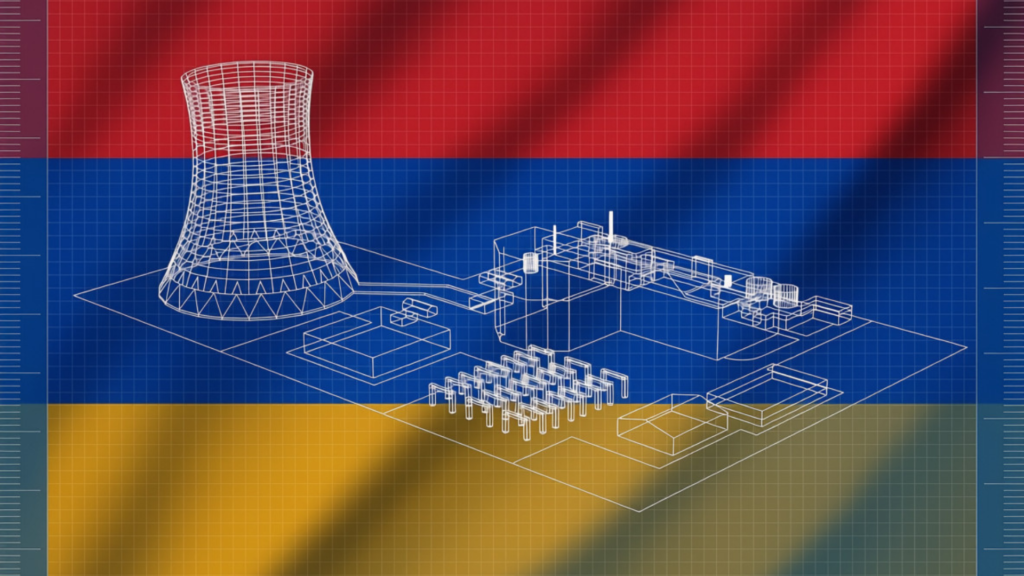
Array ( [0] => WP_Post Object ( [ID] => 9131 [post_author] => 114 [post_date] => 2026-07-14 12:00:14 [post_date_gmt] => 2026-07-14 11:00:14 [post_content] => Armenia must decide on its nuclear technology path. The upper-middle-income state in the South Caucasus depends on nuclear energy for upwards of 30% of its energy mix; building a new plant would require a decade. Yerevan looks determined to extend the operation of the Metsamor’s nuclear power plant for as long as possible, potentially until 2036. What happens thereafter is a decision that must be taken by the end of 2026 or early 2027.    This paper explores the technological, political, and economic factors Armenia must factor in as it considers moving away from its long-standing commitment to Russian technology with Rosatom.   Read the full paper here.   Key conclusions: 1. The consensus for analysts interviewed for this paper is that Rosatom’s value proposition cannot be matched from an industrial policy perspective, particularly given unique spent-fuel-take-back and soft financing elements.   2. There is no apparent benefit for countries that assume the cost of de-risking private investment in experimental US SMR technology, such as Romania, Poland, or indeed Armenia.   3. The one measure Armenia can take to hedge its singular dependence on Rosatom is to consider an alternative supply of nuclear fuel, in cooperation with Westinghouse.   4. The South Caucasus is no longer dominated by a single military power. In this sense, technological ‘lock-ins’ and economic influence are factors that are likely to become diplomatically significant.   Dr Ilya Roubanis (PhD, EUI Florence) is Senior Fellow at the Institute of International Relations in Athens (IDIS) and Research Fellow at the Aletheia Research Institution. His business intelligence work spans energy and security, driven by HUMINT and strategic analysis across Europe and the MENA regions.   Disclaimer: The views expressed in this piece are those of the individual author and do not reflect the views of The Foreign Policy Centre. [post_title] => Long Read | The Technological Limits to Armenia’s Rosatom Decoupling Ambitions [post_excerpt] => [post_status] => publish [comment_status] => closed [ping_status] => open [post_password] => [post_name] => long-read-the-technological-limits-to-armenias-rosatom-decoupling-ambitions [to_ping] => [pinged] => [post_modified] => 2026-11-24 17:07:31 [post_modified_gmt] => 2026-11-24 16:07:31 [post_content_filtered] => [post_parent] => 0 [guid] => https://fpc.org.uk/?p=9131 [menu_order] => 0 [post_type] => post [post_mime_type] => [comment_count] => 0 [filter] => raw ) [1] => WP_Post Object ( [ID] => 8475 [post_author] => 38 [post_date] => 2025-10-29 01:00:10 [post_date_gmt] => 2025-10-29 00:00:10 [post_content] => Summary Western sanctions against Russia, designed to isolate and weaken the Kremlin’s war economy, have instead generated a global “sanctions bubble”: an adaptive ecosystem of intermediaries, offshore jurisdictions, and political enablers that convert constraint into profit. At the center of this system stands Georgia, which has evolved from passive circumvention to strategic facilitation, leveraging its geography, financial infrastructure, and political flexibility to become a key node in Russia’s sanctions-evasion network.   Rather than crippling Russia’s capacity to sustain its war effort, successive sanction rounds have redirected trade and capital flows through the Caucasus, Central Asia, Türkiye, and the United Arab Emirates. These channels have allowed sanctioned goods, funds, and individuals to re-enter global markets through legal, semi-legal, and illicit means. Georgia’s economic and political elite have capitalised on these gaps, transforming re-exports, dual-use technology transfers, and permissive financial regulation into sources of revenue. As a result, the Georgian economy has become structurally dependent on Russian-linked capital inflows, turning sanctions into an instrument of enrichment rather than deterrence.   This dependency has reshaped Georgia’s political and institutional landscape. The influx of Russian money, businesses, and professionals has deepened the capture of state institutions by oligarchic interests aligned with Moscow’s economic sphere. At the same time, the Georgian government has sought to protect these interests through legislative measures that have shielded domestic actors from Western regulatory scrutiny. These developments have coincided with democratic backsliding, the erosion of Euro-Atlantic alignment, and ideological convergence with sovereigntist regimes that promote “peace through neutrality” while shielding their economies from sanction-related costs.   The weaknesses of the Western sanctions regime are both structural and conceptual. By targeting categories of individuals rather than specific financial and corporate networks, the system has blurred legal and moral distinctions, creating opportunities for evasion and undermining its own legitimacy. Fragmentation within the European Union and declining transatlantic coordination have further limited the coherence and effectiveness of enforcement. The result is a sanctions framework that produces symbolic political gains for Western states while enabling material enrichment for those it was intended to constrain.   To address these challenges, a strategic recalibration of the sanctions regime is needed. This includes shifting from broad-based designations toward targeted, precision instruments that isolate key enablers within the global evasion network; strengthening regulatory coordination among willing states; and creating structured pathways for economic and political defection from the Russian sphere of influence. The objective is not punitive isolation but strategic disruption: dismantling the protection economies that sustain kleptocratic governance in both Russia and its partner states.   The Georgian case demonstrates that sanctions, when poorly designed or inconsistently enforced, do not simply fail but transform. They create new centres of power, profit, and dependency. Reversing this dynamic is essential if sanctions are to remain a credible tool of international governance rather than an accelerant of global authoritarian capital.   Read the full piece here.   Disclaimer: The views expressed in this piece are those of the individual authors and do not reflect the views of The Foreign Policy Centre.   Dr Ilya Roubanis (PhD, EUI Florence) is Senior Fellow at the Institute of International Relations in Athens (IDIS) and Research Fellow at the Aletheia Research Institution. His business intelligence work spans energy and security, driven by HUMINT and strategic analysis across Europe and the MENA regions. [post_title] => Long Read | Dealing with the Sanctions Bubble in Georgia [post_excerpt] => [post_status] => publish [comment_status] => closed [ping_status] => open [post_password] => [post_name] => dealing-with-the-sanctions-bubble-in-georgia [to_ping] => [pinged] => [post_modified] => 2026-11-24 17:07:55 [post_modified_gmt] => 2026-11-24 16:07:55 [post_content_filtered] => [post_parent] => 0 [guid] => https://fpc.org.uk/?p=8475 [menu_order] => 0 [post_type] => post [post_mime_type] => [comment_count] => 0 [filter] => raw ) )
Articles
Publications

 Join our mailing list 

Keep informed about events, articles & latest publications from Foreign Policy Centre

JOIN