Skip to content

President al-Sisi’s Expanding Authority: Rule by Extra Judicial Powers

Article by Dr. Lucia Ardovini

December 13, 2018

President  al-Sisi’s Expanding Authority: Rule by Extra Judicial Powers

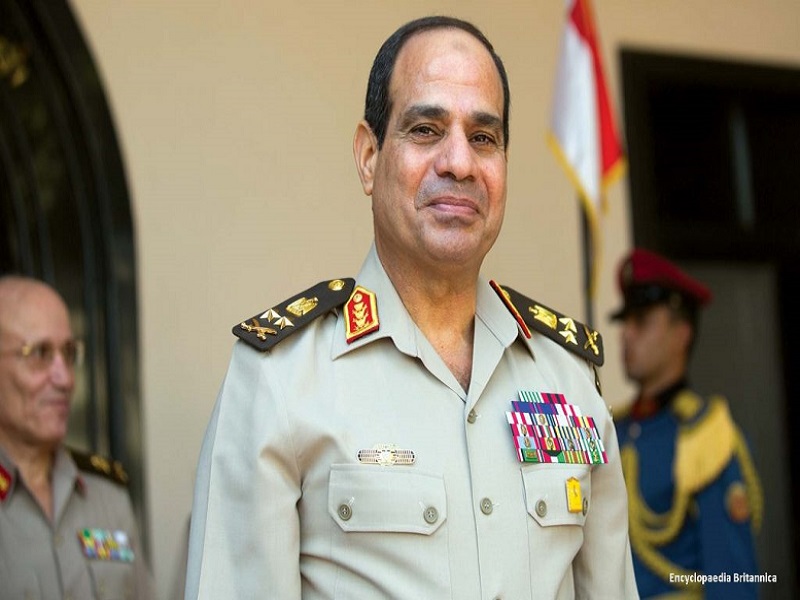
At the beginning of December 2018, Egypt-based news outlet Mada Masr revealed that sources from the office of Egyptian President al-Sisi’s office had disclosed the existence of plans already underway to amend the Egyptian Constitution. The proposed ‘reforms’ are scheduled to be implemented in the first half of 2019, and reveal a worrying move towards the seizing of extra-judicial and constitutional powers by the Presidency. Among other proposed changes, key amendments that would significantly reduce the authority and size of the Parliament (cutting the number of MPs from 595 to 350) and retrospectively extending the Presidential term of office to 6 years, meaning that President al-Sisi  could be in power until at least 2026, rather than 2022. In addition, the ‘reforms’ would oversee the creation of a ‘High Council for the Protection of the Constitution’, a new body with far reaching powers aimed at ‘protecting the identity of the state’. The creation of this council also comes with an interesting catch: Al-Sisi would be appointed as its head for life, regardless of whether he remains President.

The exposure of these constitutional changes come at the same time as another set of puzzling speculations: rumours have it that on December 23rd a Cairo Court will hear a citizens’ petition asking for the amendment of Article 140 of the Constitution. This article specifically deals with setting a limit to Presidential terms, which the petitioners claim should be extended, as “Art. 140 (…) is ‘unfair to the great Egyptian people´”, for eight years in office give a President little time to deal with the economic and security challenges facing the country.[2] If adopted and implemented, these measures would not only add to the long list of al –Sisi’s extra judicial incursions aimed at expanding his authority, but also reveal the extent to which these practices have become normalised in Egypt.

The proposition of significant amendments to the Constitution aimed at extending the powers of the Presidency does not come as a surprise in itself. In fact, various regimes in modern Egypt have relied on the seizing of extra judicial powers to crack down on dissent and hold onto power despite crumbling legitimacy. This has historically been done through the routine imposition of Emergency Statuses and the consequent normalization of regimes of rule by extraordinary powers, meaning that Egyptian citizens have existed under de facto emergency conditions for the majority of the country’s history as an independent state.[3] The permanence of almost 30 years of Emergency rule under former President Hosni Mubarak was one of the core grievances at the heart of the 2011 popular uprisings, and although briefly lifted during the transitional period, it has since been re-instated as a paradigm of rule. Under al-Sisi, Egypt has existed under an uninterrupted state of emergency since the Alexandria and Tanta’s church bombings in April 2017, with emergency legislations being routinely renewed every three months ever since. Together with the escalation of increasingly restrictive measures targeting journalists, NGOs and media usage, these conditions further stress the normalization of the Presidency having to rely on the seizure of extra judicial powers as a governance technique.

However, while it is convenient to draw parallels with Hosni Mubarak’s regime, the current developments in Egypt require a deeper analytical look. Though there is an undeniable element of historical continuity, what we are witnessing is the trialling of new experimental practices of power-building, as the regime attempts to circumvent the rule of law to institutionalize authoritarianism. The proposed Constitutional reforms are part of a wider trend that sees the current regime slowly enforcing a hardened version of autocracy since the 2013 coup that removed the Muslim Brotherhood from power and witnessed the return of military rule. While there are clear historical precedents, under al-Sisi, these techniques are being taken to unprecedented levels.

The timing of this is also telling – as the 8th anniversary of the January 2011 popular uprisings approaches, Egypt is under increasing scrutiny by several human rights organizations that are prepared to openly condemn the gross abuses coming out of the country. The recent waves of arrests against human rights defenders reveal a further escalation of crackdown measures that go beyond the targeting of opposition forces, and is  slowly eroding what little pockets of activism left.[4] Moreover, the recent ban on the sale of yellow vests – a direct reference to the popular protests currently enveloping France— showcases the depth of the Government’s concern with security as the anniversary of the revolution approaches on January 25th.[5] However, despite Egypt’s rich history when it comes to civil society and opposition movements, there is barely any political space left in the country. From this, the message that these proposed constitutional amendments send to Egyptians, regardless of whether they are implemented or not, is: this is the new normal.

These moves towards a rapid institutionalization of authoritarianism also offer an insight into what the internal preoccupations of the regime really are. As insurgency in the Sinai continues, Egypt is seeking to reposition itself within the broader power alliances across the region. Al-Sisi’s ongoing support of Saudi Crown Prince Mohammed bin Salman, despite the backlash that followed the assassination of journalist Jamal Khashoggi, demonstrates that Egyptian-Saudi ties are closer than ever.[6] Internationally, while the country’s strategic position historically made it a valuable ally to the US, the result of the recent midterm elections might lead to a re-think of the annual US$1.3 billion military assistance aid.[7] Moreover, while Egypt’s economy is showing some signs of recovery, al-Sisi’s attempts to reduce public debt through austerity measures risk ignoring the structural reforms that would be necessary to confront the growing crisis.[8] In the long term, as discontent grow, protests against austerity are likely to increase.

This is why it is fundamentally important to keep an eye on international and domestic reactions towards the rapid institutionalization of authoritarianism in Egypt. So far these measures have not been publically denounced – arguably because the preservation of the current military regime serves the interest of both international and regional actors. However, as political space continues to steadily disappear, it remains to be seen what will be harder to uproot: the state’s deep unwillingness to relinquish power, or Egypt’s long history of political activism and resistance.

[1] Egypt’s new political order in the making, Mada Masr,  4 December 2018 https://madamasr.com/en/2018/12/04/feature/politics/egypts-new-political-order-in-the-making/

[2] Egyptian court to hear petition to cancel presidential term limits, Reuters, 8 December 2018 https://mobile.reuters.com/article/amp/idUSKBN1O61EN?__twitter_impression=true

[3] Revolution and Counter-revolution in Egypt’s Emergency State, Oxford Human Rights Club, 9 March 2018  http://ohrh.law.ox.ac.uk/revolution-and-counter-revolution-in-egypts-emergency-state/

[4] Egypt: At least 19 arrested in alarming escalation of crackdown on human rights workers, Amnesty International, 1 November 2018, https://www.amnesty.org/en/latest/news/2018/11/egypt-at-least-19-arrested-in-alarming-escalation-of-crackdown-on-human-rights-workers/

[5] Egypt bans sale of yellow vests in fear of gilets jaunes copycat protests, The Guardian, 11 December 2018 https://www.theguardian.com/world/2018/dec/11/egypt-bans-sale-of-gilets-jaunes-yellow-vests-in-fear-copycat-protests?CMP=fb_gu&fbclid=IwAR2bpClTsnri7u4afTCPIgfRuaRBvhLwT_fMBRd3R8J6XvErc-3AN-EqXGI

[6] Saudi Prince Woos Mideast Allies Ahead of Tougher Test, The Wall Street Journal, 27 November 2018, https://www.wsj.com/articles/saudi-prince-woos-mideast-allies-ahead-of-tougher-test-1543341198

[7] US midterm elections: Bad news for Sisi?, Mada Masr, 15 November 2018 https://madamasr.com/en/2018/11/15/feature/politics/us-midterm-elections-bad-news-for-sisi/

[8] Sisi’s Debt Crisis, Carnegie Endowment for International Peace, 20 November 2018 https://carnegieendowment.org/sada/77756

Footnotes
    Related Articles

    Bahrain: Will elections mark new chapter or deepen & embed division?

    Article by Drewery Dyke & Layla C.

    November 30, 2018

    Bahrain: Will elections mark new chapter or deepen & embed division?

    Bahrain goes to the polls tomorrow, 1st December, for the second, run-off, round in elections to the 40-seat lower house. So what? It is surely less significant than the ramifications of the grisly murder of Saudi Arabian journalist, Jamal Khashoggi at the Saudi Arabian consulate in Istanbul in October; the increasingly devastating conflict in Yemen – marked by widespread famine and destruction – and the nagging dispute between Qatar and its Gulf neighbours. Maybe, but its own ramifications are likewise significant and deep.


    Bahrain election tracker – November 2018

    Indicator Yes  ✓ No Assessment / Comment
    Opposition participation In 2016, the government dissolved (banned) previous, longstanding political societies that functioned as opposition. Candidates for this election were required, de facto, to stand as independents in order to be permitted to stand; with members or former members of now-banned political bodies prohibited from standing.
    Independent monitoring of election conduct Committees or bodies appointed do not have independence; one previously refused to publish findings.
    Independent media (to hold process and candidates to account) All media is subject to government license and scrutiny; the last platform perceived as independent, al-Wasat, closed in 2017.
    Role of political prisoners Thousands, including former political leaders – generally prisoners of conscience – were specifically banned from standing.
    Equitably-balanced electoral districts The distribution of electoral districts is skewed to ensure a pro-government majority; subject to careful gerrymandering.
    (copied and adapted from an Americans for Democracy and Human Rights in Bahrain image of the same information)

    The 2018 elections in Bahrain look set to embed another entrenched, simmering domestic dispute that has pitted the island country’s majority Shi’a Muslim population against the minority Sunni Muslims, to which the ruling al-Khalifa family belong.

    The 2018 parliamentary elections (some 30+ municipalities also held elections) were not designed to open a new chapter or to heal wounds that come with the mass arrests, killing and gross human rights violations that took place amidst the mass unrest of Bahraini edition of the ‘Arab Spring’ in 2011 and in subsequent years but rather to try and bury unfinished business of quashing dissent; to put an end to the political and social unrest that had plagued the island since the 2011 uprisings and to clearly show – put crudely – who’s boss.

    Should it matter to us? Bahrain is, after all, small – the population of greater Manchester is around double that of the country. But Bahrain is a key western ally, strategically located in the Gulf. The United States Fifth Fleet is headquartered there, and in April 2018 the United Kingdom officially opened a new Naval Support Facility, consisting of up to 500 personnel.[1]

    Moreover, the fallout from the 2011 uprisings – and evisceration of relationship between minority rulers and majority ruled – provided an opportunity for non-Bahraini regional players, both ‘allies’ such as Saudi Arabia and ‘enemies’ such as Iran, to seek to instrumentalize these divisions, to push at these, often sectarian, divisions for their own ends. There is plenty to draw on to advance notions of division: the al-Khalifa’s close links with the Saudi Arabian authorities; historic, yet lingering ties of swathes of the population to Iran, mean that the dispute is bound to draw in the big regional players, and their own regional supporters, amongst states and people, exacerbating sectarian tension throughout the Gulf region and beyond.[2] This further undermines security and stability in Bahrain, across the Gulf and quite possibly that of the US and UK, too, who maintain military facilities on the island.

    Round 1 – ‘orderly and transparent’

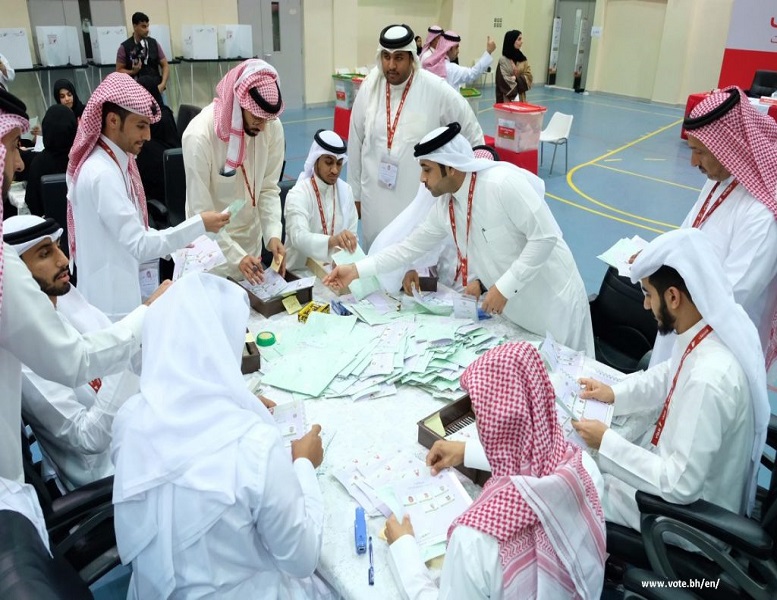
    Upon closure of the first round of voting on 24th November, the government estimated voter turnout to be at 67 percent.[3] This exceeded the 53 percent claimed in the in 2014 election. An opposition figure assessed turnout this year to be around 30 percent.[4] In the first round, nine (of 40) MPs secured their seats by way of an outright majority, with pro-government independents seeing a big win.[5]

    In the absence of any neutral monitoring body offering an objective assessment, government-approved bodies charged with ‘observing’ the election led the self-congratulatory chorus of self-praise. Faisal Fulad, well-known for his strong connection to the government but also the head of the The Election Monitoring Centre of the Bahrain Human Rights Watch Society (no relation to the US NGO Human Rights Watch) stated that the elections were held, by and large, ‘in an orderly and transparent manner’.[6]  He accused Iran of playing a major role in boycott calls that were designed to ‘thwart elections’ in the country. The absence of any independent media did not concern the Bahraini Jurists Society – another pro-government civil society organisation. They applauded what they termed free and impartial election coverage.[7] The Bahraini authorities, their allies and those governments willing to overlook flagrantly unfair practices are expected to extoll the outcome after tallying results of 1st December’s second round.

    The twisting, barb-filled path to the November 2018 election

    Mass demonstrations in early 2011, at the capital, Manama’s Pearl Roundabout, and marches in other areas, called for greater transparency, political reforms and more equality and political representation from the Shi’a majority. The government ignored the calls of the mainly peaceful, mass demonstrations: they crushed those making them, in confrontations in February 2011, then, in March 2011, when mainly Saudi Arabian and other Gulf Cooperation Council troops forcibly dispersed demonstrators, killing at least 35, after which the government declared martial law.[8]

    Jawad Fairooz is the Director of Salam for Democracy and Human Rights (Salam DHR), a Bahrain-focused human rights group. He was an MP in 2010, when 18 of the 40 MPs in Bahrain’s parliament were from his political group, al-Wefaq, supported by a great many of Bahrain’s mainly Shi’a Muslim population. They collectively resigned in 2011, amidst the government-lead violence against demonstrators.

    In advance of the 2014 parliamentary elections, the government re-drew constituency borders. A member of the al-Wefaq political group released a detailed report setting out the manner in which the government changed the numbers of voters in specific constituencies in order to increase the number of the seats that government supporters would be likely to win, decreasing the representation of the majority Shi’a community.[9]

    After the government quelled the mass demonstrations, the security services sought to silence any further public dissent. They targeted numerous individuals for harassment and arbitrary arrest: in May 2012, they arbitrarily arrested the prominent human rights activist, Nabeel Rajab. Despite at least several months’ liberty at the end of 2014 and early 2015, and international calls for his release, the government continues to imprison him, a powerful symbol of the repression felt in Bahrain.[10]

    Between 2012-2017, the government sought to whitewash its conduct through the Bahrain Independent Commission of Inquiry (BICI), but the government ignored even its substantive recommendations. The government also denied access to United Nations human rights experts and either deported or drastically limited the amount of time human rights advocates were able to spend in the country. They also prevented Bahraini activists from travelling to take part in human rights events.[11]

    In 2016 the government dissolved al-Wefaq, the largest political group in Bahrain. The government asserted it fostered violence and terrorism, and liquidated its assets. In 2017, they then dissolved the National Democratic Action Society (Wa’ad), the largest liberal party, likewise asserting that its members also incited terrorism.

    In terms of an independent media to hold the authorities to account, in 2017, the government closed Al-Wasat, the last independent media platform. As a result, voters must rely on highly restrictive and selective, government-controlled media that provides partial and biased information in favour of the authorities.

    In June 2017, the UN High Commissioner for Human Rights and post holders of UN human rights mechanisms condemned the government’s use of lethal force that killed at least five and injured dozens of others in the city of Duraz in order to quell a peaceful ‘sit-in’ demonstration. The official press release quoted them as saying that:[12]

    “The authorities have resorted to drastic measures to curb dissenting opinions such as torture, arbitrary detention, unfounded convictions, the stripping of citizenship, the use of travel bans, intimidation, including death threats, and reprisals for cooperating with international organizations, including the Office of the High Commissioner for Human Rights” they noted.

    “We are particularly worried about these measures, coupled with the campaign of harassment aimed at human rights defenders, who are increasingly being charged with offences for which the death penalty may be imposed,” the experts said, highlighting in this regard the use of repressive legislation, in particular the Law of Associations, and anti-terrorism laws.

    Into 2018, the Bahraini authorities continued to harass people in areas associated with Shi’a unrest, such as by way of roadblocks and police checkpoints, limiting freedom of movement on the citing legal provisions relating to national security or public order. The government has also been shown to be using Israeli-sourced malware targeting Bahraini activists amongst a number of measures to silence online dissent.[13]

    A legal framework that provides for fair elections?

    The government weaponized laws and the administration of justice to further repression and disenfranchisement. They drew on new and existing provisions, some that criminalise acts which either are not recognizably criminal under international law or which constitute protected conduct – such as the peaceful exercise of freedom of expression – in order to silence dissent or opposition.

    Article 178 of Bahrain’s Penal Code, for example expressly criminalises a gathering ‘of at least five people in a public place, the goal of which is to commit a crime or acts preparatory to or facilitating a crime or to infringe public security, even if done to achieve a legitimate end’.  This closed down public dissent.

    On 10 June, Act 25/2018 entered into force, amending Act 14/2002, the Exercise of Political Rights Act and having a devastating impact on the recent election. It prohibits, permanently, ‘active leaders and members of dissolved political associations’ from standing in elections. Amnesty International has set out how this, too, is discriminatory[14]:

    ‘This law prevents al-Wefaq and Wa’ad, which are respectively the major religious and secular political opposition groups in Bahrain, from participating in parliamentary elections. Given that the majority of Bahrain’s population is Shi’a, and that al-Wefaq comprises the largest Shi’a opposition group in the country, the law will have a de facto discriminatory effect on Shi’as’ political participation.’

    On 13 June 2018 European Parliament passed a joint resolution on the human rights situation in Bahrain, notably addressing the case of imprisoned human rights defender, the case of Nabeel Rajab, it stated that:

    […] the situation in Bahrain has become critical as regards freedom of expression, association and peaceful assembly; whereas the increased crackdown on human rights defenders and peaceful opposition activists includes prison sentences, exile, travel bans, revocation of citizenships or severe threats and intimidation as a result of their peaceful work.’

    With regard to the recent election, the resolution added:

    ‘[…] the Council of Representatives and the Shura Council of Bahrain have approved an amendment to the Law on the Exercise of Political Rights that will prevent independent political participation in the 2018 elections

    Only weeks before the election, moreover, the government sent powerful messages – threats – to the island’s Shi’a electorate: on 4th November, an appeals court convicted the (former) leader of al-Wefaq, Sheikh Ali Salman, to life imprisonment. Held since December 2014, the government charged him with spying for Qatar, in a case that arose as a result of an attempt made by Qatar in 2011 – prior to the current dispute between that country, Bahrain and others in the region – to mediate during Bahrain’s own strife.

    On 13th November, the Office for Public Prosecution stated that it had monitored tweets, including those calling on people not to participate in the election. The government met such peaceful calls with arrest and prosecution: they summoned and interrogated one person thus charged: former MP, Ali Rashed al-Asheeri. They detained him for ‘transgressing against the vote and confusing the electoral process’. He had said that he had been banned from both standing and voting.

    In contrast, on 15th November, the United Nations’ Human Rights Committee, an independent body of experts charged with assessing states’ implementation of the International Covenant on Civil and Political Rights, issued its Concluding Observations on Bahrain’s first (10 years’ late) report on its implementation of this core international human rights treaty.[15] Addressing a wide range of issues, with respect to the right to take part in the conduct of public affairs, the Committee expressed its concern:

    ‘[…] about reports that the Shia population is underrepresented in political and public life, including in the National Assembly. It is also concerned that the opposition parties Al-Wefaq and Wa’ad have recently been dissolved and that their leaders and members have been prosecuted. In addition, the Committee is concerned about allegations of gerrymandering and voter fraud during elections. Despite the existence of the National Audit Office, in charge of investigating cases of public corruption, the Committee finds it regrettable that high-ranking officials suspected of corruption are rarely punished.’

    The independent human rights experts called on the Bahraini government to review ‘decisions to dissolve opposition parties and ensure that political parties and their members are allowed to participate in political life’.

    In October 2018, the Bahraini authorities announced plans to take ‘all security measures’ during the election period and warned NGOs not ‘to use their programs and activities to support candidates for legislative and local council as per the law’.

    On 20th October, reports emerged that a number of people with applications for housing assistance were told that their applications would be rejected if they did not vote, or that they would be referred to the police’s criminal investigations department if they did not vote. These allegations of coercion went unnoticed by the officially charged monitoring bodies.[16]

    The authorities have rejected the involvement of international observers in monitoring the electoral process, by limiting observers’ nationality to Bahrainis. Consequently, there is no guarantee of sound and impartial administration nor non-partisan observers of the electoral process of Bahrain.

    Under the threat of intimidation and legalised repression, Bahraini voters were denied the opportunity of genuinely free and fair elections – despite the assurances of domestic ‘monitors’. The conduct of the election flies in the face of the Inter-Parliamentary Union’s 1994 Declaration on Criteria for Free and Fair Elections. While the outcome has been hailed in Bahrain and by its regional allies, the international community must be aware of the strictures under which the newly elected MPs will find themselves.

    The value of democracy to the government of Bahrain

    Once, in 2011, when Bahraini security officials were torturing former Bahraini MP, Jawad Fairooz, they asked why he spoke out against the government. He replied that he did so since he took an oath to uphold the interests of his constituents. For this they arrested and tortured him; then arbitrarily stripped him of his citizenship. [17]

    By torturing him the Bahraini authorities rejected the inherent dignity of what it means to be human. He has never received an apology, let alone compensation.[18] He was an MP for the now banned (see below) al-Wefaq political organisation, now he cannot vote, let alone stand for election.

    Moreover, Bahrain’s National Assembly consists of an upper chamber, the Consultative Council and the lower chamber, its parliament, or Council of Representatives. Each house consists of 40 representatives. The upper chamber is entirely appointed while the lower house is elected. As we have seen, it has been an election in which the opposition has been banned, even threatened over and the electoral districts have been gerrymandered. Even if it were fairer, legislation cannot originate from either house; at most, they can make suggestions for laws to the government and review whatever comes back. In order to question even a minister, the question must be submitted to a committee which determines the question’s legitimacy, and therefore, whether it can be put to the official.

    Dr Abdulhadi Khalaf, Senior Lecturer in sociology at Sweden’s Lund university told the authors of this essay that “Bahrain’s National Assembly cannot introduce legislation; it cannot summon ministers. It has no effective power and cannot hold the government to account.”

    This and the Jawad Fairooz case are shorthand for what the Bahraini government appears to really think of democracy and the rights of anyone save its own supporters. The only winner in this tawdry process is a government that has used sectarianism and division in Bahraini society to exert its control.

    Round 2 and beyond

    On 26th October 2018, Salam for Democracy and Human Rights (see above) wrote to Federica Mogherini, the High Representative of the European Union for Foreign Affairs and Security Policy and the European External Action Service (EEAS), the EU’s diplomatic service.[19] The organisation called on the EU ‘to publicly express the view, as soon as possible, that the general election scheduled for 24th November 2018 in Bahrain cannot and will not constitute free or fair elections, in terms of the Inter-Parliamentary Union’s 1994 Declaration on Criteria for Free and Fair Elections.’

    Perhaps quixotically, Salam DHR called on the EU to urge the Bahraini authorities to:

    • Postpone the 24th November election pending changes in law that would facilitate free and fair elections;
    • End its persecution of political activists, including by releasing political prisoners, imprisoned for non-violent acts relating to the expression of their conscientiously held beliefs; and to
    • Enter into genuine dialogue with a view to achieving a national reconciliation and genuine power sharing.

    On 31th October, an EEAS official replied to say that representatives had recently visited the island and that they conveyed to the authorities that they would closely monitor the elections. Facing the realpolitik of the situation, the official added that it is difficult to have leverage. And, needless to say, none of the recommendations appear to have been taken up.

    Salam DHR’s recommendations are echoed, in part, by Brian Dooley’s recommendations for the United States. Some of his go farther, but they are equally applicable to the UK and the EU, that these governments should[20]:

    • Acknowledge that they were neither free nor fair;
    • Not endorse the election;
    • Not be pictured with officials connected to the election, and
    • Call for the release of political prisoners.

    The international community must engage with the government of Bahrain to ensure, additionally, that all recommendations by UN treaty bodies should be acted upon in meaningful way; they should engage with the elected parliamentarians in order to ensure they understand the context in which they were elected and what they can do about it, not least in terms of the oath they will be take in the coming weeks.

    Above all, the international community must engage with the government – relentlessly and in a coordinated fashion – so that they understand the impact and ramifications of longstanding and ongoing discriminatory laws and policies, not just in terms of administration of justice but in terms of access to jobs and services; and political representation, and how this reinforces sectarianism and intolerance, not just on the island but across the Gulf.

    Hussain Abdalla, the Executive Director of Americans for Democracy and Human Rights in Bahrain (ADHRB), a US-based human right organisation, told the authors of this report that

    “The government of Bahrain is mistaken if they think that this election has provided stability. Bahrain is a pressure cooker. It would be a false sense of security that they take from this manifestly unfair election. And the US and UK, who previously encouraged the now-crushed opposition to engage with the political process will be the first to regret their stance, if the pressure cooker cracks.”

    Following elections that seem to be designed to deepen and embed division, the Bahraini government knows it has the power to end the dispute. Does it have the will to do so? Do the UK and US likewise have the capacity to take any meaningful action that might induce a change in the government’s conduct?

    We will see.

    [1] Peter Stubley, UK opens permanent military base in Bahrain to strengthen Middle East presence, Independent April 2018, https://www.independent.co.uk/news/uk/home-news/uk-bahrain-military-base-juffair-royal-navy-mina-salman-middle-east-hms-queen-elizabeth-a8291486.html

    [2] See, for example: Foreign Policy Centre – Saudi Arabia and Iran: The Struggle to Shape the Middle East: https://fpc.org.uk/publications/saudi-arabia-and-iran/

    [3]Bahrain News Agency, High levels of voter participation ensure 2018 elections build on the success of previous elections, November 2018,  

    [4] The New Arab – Polls close in Bahrain election marked by unfair ballot, November 2018, https://www.alaraby.co.uk/english/news/2018/11/24/polls-close-in-bahrain-election-marked-by-unfair-ballot

    [5] Gulf Daily News – Noor Zahra, Independents Big Winners after first round, Gulf Daily News Online, November 2018, http://www.gdnonline.com/Details/442780/BAHRAIN-POLLS-Independents-big-winners-after-first-round

    [6] Bahrain Human Rights Watch – First Report of the Election Monitoring Centre, November 2018, via https://twitter.com/BHRWS/status/1066685247243341825

    [7] Bahrain News Agency –  Election monitoring report on electoral process, November 2018, 

    [8] Amnesty International – Flawed Reforms – Bahrain Fails to Achieve Justice for Protester, 17 April 2012, Index number: MDE 11/014/2012; https://www.amnesty.org/en/documents/mde11/014/2012/en/  – see pp 5-7

    [9] Project on Middle East Democracy – Bahraini Opposition Party Releases Report Detailing Vote Re-Distribution Ahead of Elections, https://pomed.org/bahraini-opposition-party-releases-report-detailing-vote-re-distribution-ahead-of-elections/ see also Chatham House – Jane Kinninmont and Omar Sirri: Bahrain: Civil Society and Political Imagination, October 2014; https://www.chathamhouse.org/sites/default/files/publications/research/20141028BahrainKinninmontSirri.pdf

    [10] Frontline Defenders: Case History – Nabeel Rajab; https://www.frontlinedefenders.org/en/case/case-history-nabeel-rajab

    [11] Human Rights Watch – Bahrain: Events of 2017 (annual report); https://www.hrw.org/world-report/2018/country-chapters/bahrain

    [12] UN Office of the High Commissioner for Human Rights (OHCHR), Bahrain must end worsening human rights clampdown, UN experts say, June 2017,  https://www.ohchr.org/EN/NewsEvents/Pages/DisplayNews.aspx?NewsID=21762&LangID=E

    [13]Bill Marczak, John Scott-Railton, Adam Senft, Bahr Abdul Razzak, and Ron Deibert, The Kingdom Came to Canada-

    How Saudi-Linked Digital Espionage Reached Canadian Soil, October 2018, https://citizenlab.ca/2018/10/the-kingdom-came-to-canada-how-saudi-linked-digital-espionage-reached-canadian-soil/

    [14] Amnesty International – Bahrain: Public Statement – Suppression of opposition ahead of Bahraini election, November 2018, https://www.amnesty.org/download/Documents/MDE1194402018ENGLISH.pdf

    [15] UN Office of the High Commissioner for Human Rights (OHCHR), Reporting status for Bahrain https://tbinternet.ohchr.org/_layouts/TreatyBodyExternal/countries.aspx?CountryCode=BHR&Lang=EN

    [16] Information via Ebtisam Alsaegh of Salam DHR https://twitter.com/ealsaegh/status/1064962148282105857

    [17] Amnesty International, Released Bahraini politicians still under threat from government repression, August 2011, https://www.amnesty.org/en/latest/news/2011/08/released-bahraini-politicians-still-under-threat-government-repression/

    [18] Redress, Tortured and Exiled: Former Bahrain MP Jawad Fairooz, https://www.youtube.com/watch?v=kuhr91SxVZk

    [19] Salam’s website is here: https://www.salam-dhr.org/

    [20] Project on Middle East Democracy – Brian Dooley, Policy Brief – No Applause for Bahrain’s Sham Election, November 2018, https://pomed.org/policy-brief-no-applause-for-bahrains-sham-election/

    Footnotes
      Related Articles

      Come December, Could Armenia Get Away with Democracy?

      Article by Dr Kevork Oskanian

      Come December, Could Armenia Get Away with Democracy?

      One perennial question confronting students of the former Soviet Union has been to what extent democratisation and geopolitical orientation can be separated from each other in their region of interest. Conventional wisdom holds that Russia will be opposed to democratising movements within its claimed periphery: in states like Ukraine and Georgia, many pro-Western politicians have long assumed that a pro-Russian orientation would preclude the thorough-going democratisation aspired to by their electorates.  Numerous scholars have also pointed to Russian opposition to democratisation, particularly in light of the pro-Western colour revolutions of previous decades.[1]

      Several explanations can account for this. Firstly, the fact that (at least declaratory) adherence to democratic norms and geopolitical orientation have become intermingled for most of the past 25 years: the European Union and NATO have (however imperfectly) included democratic conditionalities in various policy instruments – including the ENP and EaP – and a state’s liberal-democratic aspirations have therefore become closely associated with a pro-European orientation, both for the participants in these programmes, and Moscow itself. Secondly, a truly democratic political culture would provide an awkward fit with the unaccountable clientelistic methods employed in Russian politics, domestic and foreign: with so much of its interaction in the region based on back-room diplomacy, Moscow would be at a loss how to deal with former Soviet republics if they somehow opened up to the scrutiny of an assertive electorate and dynamic civil society. Thirdly, democratisation in societies displaying a strong cultural affinity with Russia – Ukraine, for example – would discredit one of the central planks of the Kremlin’s argument in favour of ‘sovereign democracy’: namely, that Russia in particular, and Eurasia in general, has a different interpretation of ‘democracy’ than the West by virtue of its particular history and culture.

      These assumptions will soon be put to the test in Armenia, where, earlier this year, an entrenched pro-Russian old guard was swept away in a pro-democratic revolution that simultaneously avoided any challenges to the geopolitical status-quo. The ‘velvet revolution’, as it came to be known, was led by a new generation of politicians, whose ‘My Step’ alliance is widely predicted to win the upcoming parliamentary elections on 9 December by a landslide.  From the very beginning, its leadership – fronted by incumbent Prime Minister Nikol Pashinyan – made clear its intention to separate their democratising aspirations from Armenia’s geopolitical orientation: the emphasis was on revolutionary domestic change, combined with continuity in the country’s heavily (but not exclusively) pro-Russian foreign and security policies.[2] In the coming months and years, Armenia might provide observers with valuable insights as to how far such a separation is at all possible in the former Soviet Space, depending on whether or not the country is able to meet several considerable challenges that will likely flow from its democratising push.

      First and foremost, there is the question of whether Armenia’s recent revolution will indeed result in the kind of ‘deep democratisation’ aspired to by much of its population (something on which this whole thought exercise will remain contingent). Eurasia is littered with the broken promises of failed, or half-baked revolutions that, have, over time, resulted in disillusionment in a new, unsatisfactory status-quo. Both the Orange Revolution and the Euromaidan failed to deliver on initially sky-high expectations in an increasingly disillusioned Ukraine[3]; Georgia’s recent – and quite acrimonious – elections also exhibited a worrying return to questionable methods before and during the poll.[4] Pashinyan’s alliance will not only have to surmount considerable internal resistance and potential disruption from the ‘darker’ side of Armenia’s political economy; it will also have to fight the multiple structural temptations that could come from the expected landslide, and the absence of a credible, constructive opposition to its rule – something not conducive to the emergence of a healthy political culture based on the effective management of contestation and debate. The ultimate test of Armenia’s nascent democracy will lie in the Pashinyan bloc’s ability to avoid a descent towards a typical, post-Soviet ‘party of power’, as evidenced by a peaceful transfer of authority at some point in the future.

      But even if Armenia’s internal dynamics were to allow for democracy to successfully take root in coming years, a clear separation between the international and the domestic might prove difficult to uphold. While the leaders of the revolutionary movement have taken great care to stress the absence of geopolitical motives in their push for accountable government, whether Russia will be able or willing to separate these two phenomena over the longer term very much remains to be seen.[5]

      Because, in spite of the ritual assurances of state sovereignty proclaimed by Lavrov, even if Armenia did not move towards ‘deep integration’ with the EU at the expense of Moscow’s own regional projects, accountable government would require Moscow to possibly accept a higher level of scrutiny than it would be used to in other allies. It may, for instance, have to accept an impartial and wide-ranging investigation into possible crimes committed by the closely allied ancien régime; its thinly veiled displeasure this summer’s post-revolutionary proceedings against former president Kocharyan looks ominous in that regard.[6] It might also have to swallow increased scrutiny of the activities of Russian multinationals in Armenia, as demonstrated, for instance, in recent investigations into possible tax evasion by Gazprom’s local subsidiary.[7] Moreover, would Moscow be willing to separate geopolitics from the economic sphere so as to allow for the transparent management of the economy, and, for instance, the outbidding of Russian companies on a level playing field in investment projects or procurements? Openness and transparency do not lend themselves to the back-room deals the Kremlin so often employs in the region.

      Even if the above challenges are met, one would have to take care not to generalise towards the other states of the former USSR: paradoxically, because of Armenia’s dependence, size and cultural specificity. In the still unlikely event that democratisation succeeds and is tolerated by Russia, the question still remains whether this is simply because the Kremlin feels confident enough in its strategic dominance over Armenia, both in the military and economic spheres: Armenia’s dependence might make Moscow sufficiently self-assured to put up with the emergence of democratic government, where it might be seen as a geopolitical threat in other, less reliably dependent neighbours. The fact that Armenia is a small state, and culturally distinct from Russia might also allow it to get away with rather more democratisation than, say, a more sizeable and culturally proximate Ukraine: it would not provide quite the liberal-democratic counter-example to Russia’s ‘sovereign democracy’, allegedly feared by the Kremlin.

      The dangers of Russia becoming a ‘spoiler’ in Armenia’s move towards democratisation without geopolitical reorientation remain. Moscow might simply be waiting for Armenia’s democratic experiment to go awry for purely internal reasons; failing that, it may find itself confronted with any number of situations that would prompt it to subvert accountable government in Yerevan. Only time will tell if democratisation and geopolitics can be separated in the former Soviet space, but a measure of a priori scepticism is definitely in order.  And even if Armenia could pull off the improbable and successfully disassociate the foreign and the domestic, it would not mean that its experiences can be applied elsewhere.  And that is regrettable, considering the potential advantages – for all involved – of such a separation.

      [1] See, for instance: Ambrosio, T. (2007) Insulating Russia from a Colour Revolution: How the Kremlin Resists Regional Democratic Trends, Democratization, 14:2, 232-252, DOI: 10.1080/13510340701245736; Delcour, L. & Wolczuk, K. (2015) Spoiler or facilitator of democratization?: Russia’s role in Georgia and Ukraine, Democratization, 22:3, 459-478, DOI: 10.1080/13510347.2014.996135; Risse, T. & Babayan, N. (2015) Democracy promotion and the challenges of illiberal regional powers: introduction to the special issue, Democratization, 22:3, 381-399, DOI: 10.1080/13510347.2014.997716. For a dissenting view, see: Sontag, R. (2014, 8 May) Compromise With Russia, Compromise on Democracy?, The National Interest, available at https://nationalinterest.org/feature/compromise-russia-compromise-democracy-10395

      [2] Thomas De Waal, Sometimes Armenian Protests Are Just Armenian Protests, Foreign Policy, April 2018, https://foreignpolicy.com/2018/04/23/sometimes-armenian-protests-are-just-armenian-protests/

      [3] Christopher Miller, Ukrainians Reflect Bitterly On ‘Betrayed Hopes’ Of Euromaidan, Radio Free Europe/ Radio Liberty, December 2016, https://www.rferl.org/a/ukrainians-reflect-bitterly-on-betrayed-hopes-euromaidan/28203245.html

      [4] Civil Georgia, NDI: Georgia Risks “Squandering” Democratic Asset, November 2018,

      https://civil.ge/archives/268633

      [5] Tert, No geopolitical context behind Armenia’s ‘velvet revolution’, Prime Minister tells Russia Today, July 2018, https://www.tert.am/en/news/2018/06/16/Nikol-Pashinyan/2715673

      [6] AFP, Moscow warns Armenia against ‘political’ crackdown on old elite, July 2018,  https://www.expatica.com/ru/news/country-news/Russia-Armenia-politics-corruption_2012306.html

      [7] Organised Crime and Corruption Reporting Project (OCCPR), Armenia’s Gazprom Operator Accused of Tax Evasion, November 2018, https://www.occrp.org/en/27-ccwatch/cc-watch-briefs/8944-armenia-s-gazprom-operator-accused-of-tax-evasion

      Footnotes
        Related Articles

        100 Years On, What’s Left Of Georgian Social Democracy?

        Article by Eric Lee

        November 20, 2018

        100 Years On, What’s Left Of Georgian Social Democracy?

        Earlier this year, Georgia celebrated the 100th anniversary of its independence. [1] The celebrations in Georgia stood in sharp contrast to the muted commemoration in Russia, just a few months earlier, of the Bolshevik Revolution.

        While the Russians, including President Putin, have mixed feelings about the Bolshevik seizure of power and the seven decades of Communist Party rule that followed, the Georgians have a rather more positive take on their country’s history. To them, the three years of Georgian independence which preceded the Red Army invasion of 1921 are something to be proud of. This is because their republic was hailed at the time as a model social democratic society, despite the difficult conditions of war and economic crisis.[2]Though its Menshevik leaders claimed to be Marxists, like Lenin and the Bolsheviks, their state could not have been more different than Soviet Russia.

        For one thing, it was democratic. Though Lenin wrote about how the Soviets had achieved a higher form of democracy by getting rid of such annoyances as free elections, the Georgians created a genuinely multi-party society, with free and fair elections based on universal suffrage. In addition to the Social Democrats, Georgia had National Democrats, Socialist Federalists and Social Revolutionaries, all of whom won seats in the Constituent Assembly. Not only could women vote – and this happened before it happened in Britain or the US – but they could be elected to the Constituent Assembly, and were. In fact, the first Muslim woman elected to a parliament was elected in Georgia in 1919.

        Human rights were largely respected, and there was a free press, an independent judiciary, freedom of assembly and religion. It may be argued – and it was argued by Trotsky, among others – that the Georgian Social Democrats, who won 80% of the votes in the elections, were no less dictatorial than the Bolsheviks. The local Bolshevik party, they asserted, was illegal. [3]

        But this neglects the fact that the Bolsheviks in Georgia, as elsewhere, operated in the underground by choice. They believed in the violent overthrow of Georgia’s democratically-elected government, and worked diligently – though fruitlessly – toward that end. Their attempts to stage a coup d’etat in Tbilisi, the Georgian capital, were laughable failures. Following a peace treaty in 1920, in which the Russians recognised Georgian independence, the Georgian Bolsheviks emerged from the shadows – and worked tirelessly again to subvert the state.

        The Georgian Democratic Republic during its three short years of independence was characterised by a thriving civil society. There were powerful, independent trade unions which demanded, and won, a constitutionally-guaranteed right to strike. They were instrumental in setting up something called the Wages Board – a forerunner of the post-World War II social partnerships that social democratic politicians would embrace. This body, which included representatives of trade unions, employers and government, regulated wages and working conditions, and ensured that the basic food staples were available at low cost to working people. As a result, there were fewer and fewer strikes. Urban working class support for the government remained strong.

        The Georgians were most proud of their agrarian reform which aimed at the creation of a middle class in the countryside, and the avoidance of a war between town and country such as happened in Soviet Russia, and which resulted in mass starvation and famine. This was accomplished by distributing land to the peasants which had belonged to the nobles, the tsarist state or the church. There was no forced collectivisation in Georgia as there would be in the USSR.

        And independent Georgia also witnessed the rise of a powerful, independent cooperative movement which increasingly played a central role in the gradual transformation of Georgia from a purely capitalist society to a social mixed economy. Those cooperatives retained their autonomy, unlike in Russia where they quickly fell under state control.

        That first Georgian republic was not perfect.  The treatment of national minorities, for example, left much to be desired. The South Ossetians were particularly badly treated, after they rebelled – with Russian support – against the central government. Georgian had its problems. But unlike the Bolsheviks, the Georgian Social Democrats never aspired to create a perfect society, just a better one. They were not Utopians.

        Their state was, inevitably, militarily weak. Georgia was surrounded by hostile neighbours, and was attacked by Turkey, Russia and even little Armenia. The Georgians relied upon the Germans, and then the British, to guarantee their sovereignty. Their best efforts to woo the European powers – and international social democracy – eventually came to nothing, when the Red Army invaded in February 1921. For the next seventy years, Georgia was part of the USSR.[4]

        In 1991, following the collapse of the Soviet Union, Georgia regained its independence.  It adopted many of the trappings of the first republic: its crimson flag, its national holiday on May 26th, and even the constitution which was finally adopted by the Social Democrats in 1921, as the Russian troops closed in on the port city of Batumi, to which the government had fled. [5]

        But these were only trappings: the actual content of the new Georgian state quickly became neo-liberal (once the civil wars that marred the 1990s had ended), and no worthy successor of the Social Democratic Party emerged. Today, Georgia is a liberal capitalist society with a multi-party system and free elections. It aims to eventually become a full member of both the European Union and NATO, and has carried out a series of reforms to show that is suited to join those elite clubs of nations.

        Its political system includes a small Social Democratic Party and a Labour Party, with the former having joined the coalition government led by the Georgian Dream, the ruling party. But these parties are not genuine successors to the Georgian Social Democratic Party which led the first republic, and do not claim to be so.

        So why did no successor organisation emerge once Georgia was finally free of Soviet rule?  During the very early years of Soviet Georgia, the Social Democrats remained hugely popular, leading an armed rebellion in 1924 and maintaining a high level of support even under the totalitarian regime. But over the years, their influence weakened and eventually disappeared entirely. And more important, thanks in part to the efforts of the Soviet Communist regime, all memory of the first Georgian republic was deliberately erased.

        Fantastic lies were told about the Social Democrats. One that comes to mind was the allegation that the government leaders fled in the face of the Red Army invasion, taking all the country’s gold with them.  Considering the poverty in which the exiled Georgian Social Democrats would later live, this was patently absurd. And it was said repeatedly that they were not real Georgian patriots and that they allowed their country to be occupied by foreign troops (the Germans and later the British).

        This same historical amnesia explains why throughout the post-Communist world, political parties which existed prior to the Communist takeovers did not simply re-emerge from the shadows to take their rightful places after 1989. This is particularly true in Russia, where nothing like the pre-1918 Mensheviks, Social Revolutionaries and Kadets emerged in 1991 when the Communist regime fell, though some of their ideas were found in new parties created after the fall of the Soviet Union.

        Part of the reason that this happened is that the political ecosystem in which the Georgian Social Democrats grew up no longer existed. Their ideas were imported by young Georgian social democrats who spent time abroad.  Foremost among them was Noe Zhordania, who went on to become the country’s first president.  Zhordania, like so many others, travelled to Germany, France and Britain, learning from the existing mass social democratic parties. Those parties with their democratic Marxist worldview barely exist these days, and long ago abandoned their Marxism. In the absence of a global democratic Marxist current, one cannot expect the Georgians to revive ideas that were popular a century ago.

        By the time the 100th anniversary of the first Georgian republic was commemorated, there appeared the first books – mostly academic ones – which aimed to overcome that amnesia and to restore the memory of the Social Democrats and their republic. At an international scholarly conference in Tbilisi in June 2018, young Georgian historians presented their work alongside men (and they were all men) from all over the world who had been the leading writers about Georgia and the South Caucasus for many decades.  The first republic was finally, tentatively, being discussed. [6]

        But that discussion was taking place only in small groups. To the vast majority of Georgians, the ideas of social democracy remain long forgotten. As elsewhere in the post-Communist world, everything which was considered wrong and evil under Stalinism became popular. For that reason, the Georgian Church has become an enormously powerful and popular institution. The role is has played in Georgian politics has not always been a good one.

        For example, attempts by Tbilisi’s vibrant LGBTI community to publicly commemorate the International Day Against Homophobia have been broken up in recent years by church-led conservative groups, sometimes involving physical violence. In 2018, on the very eve of the commemoration of the centenary of Georgia’s social democratic republic, fears of violence led the LGBTI leaders to cancel planned actions.[7]

        Does anything remain of social democracy in Georgia? Probably not much in the country’s political parties, but one could argue that the spirit of the Mensheviks is kept alive most notably in the country’s trade unions. Those unions are organised into the Georgian Trade Union Confederation (GTUC), which in 2005 was taken over by younger leaders keen to replace a fossilised, corrupt post-Soviet leadership. They have stubbornly fought to preserve the union’s independence.

        In 2017, the leadership of Irakli Petriashvili was challenged from within the GTUC, and he charged the government with interference.  His call was backed up the International Trade Union Confederation, to which the GTUC has long been affiliated. Petriashvili prevailed, and the GTUC remains in the forefront of workers’ struggles for better wages and working conditions. [8]

        Last year an attempt to close down a Stalin-era sugar factory in the town of Agara and replace it with a crypto-currency mining operation was met by fierce resistance by workers, who marched the 90 kilometres from their town to Tbilisi. They were joined by left-wing students for part of the march, and eventually they prevailed: the government intervened to keep the factory open. [9]

        Later in the year, workers on the Tbilisi metro went on strike, again with some support from students, and this time were told that while they had the right to strike, they could only do so at times when they were not working (e.g. late at night). [10]This prompted more protests and eventually the local government relented.

        There doesn’t seem to be much talk in the unions of the creation of a Labour Party though in 2016 Petriashvili himself made a run for a parliamentary seat in Tbilisi, campaigning as an independent. The campaign was not successful.

        The emergence of a student movement that has repeatedly intervened in support of striking railway workers, sugar workers and so on, reminds one of the early days, more than a century ago, in the history of the Georgian labour movement. The Social Democratic Party which ruled Georgia from 1918-1921 came out of the revolutionary student movement of that time. Today there is much talk of a radicalised student movement and the rise of a Georgian “new left”. [11]Maybe Georgian social democracy is going to get a second chance?

        About the author

        Eric Lee is the founding editor of LabourStart, the news and campaigning website of the international trade union movement.  He is the author of several books, the most recent of which is The Experiment: Georgia’s Forgotten Revolution 1918-1921 published by Zed books (see: https://www.zedbooks.net/shop/book/the-experiment/)

        [1] The full text of the Georgian Declaration of Independence from 26 May 1918 is available in English here: http://www.ericlee.info/theexperiment/declaration.php

        [2] For a sympathetic eyewitness account of the Georgian Democratic Republic, see Karl Kautsky’s short 1921 book, Georgia: A Social-Democratic Peasant Republic – Impressions And Observations.  https://www.marxists.org/archive/kautsky/1921/georgia/

        [3] For a Bolshevik view of the Georgian republic, see Leon Trotsky, Between Red and White: A Study of Some Fundamental Questions of Revolution, With Particular Reference to Georgia – https://www.marxists.org/archive/trotsky/1922/red-white/index.htm

        [4] For a comprehensive recent look at the first Georgian republic, see Eric Lee, The Experiment: Georgia’s Forgotten Revolution 1918-1921 (London: Zed Books, 2017).

        [5] The full text of that constitution is available in English here: https://matiane.wordpress.com/2012/09/04/constitution-of-georgia-1921/

        [6] Régis Genté, Georgia’s new generation of historians: seeking democracy’s past, Civil.ge, August 2018 https://civil.ge/archives/250000

        [7] Peter Tatchell and Eric Lee, In The Streets Of Tbilisi, Georgians Need To Make A Choice, Huffington Post, May 2018 https://www.huffingtonpost.co.uk/entry/georgia-lgbt-rights_uk_5b080f32e4b0802d69ca88d9

        [8] Georgia: Government Interference in Trade Union Affairs – International Trade Union Confederation. https://www.ituc-csi.org/georgia-government-interference-in

        [9] Bradley Jardine, As Stalin-era factory turns to crypto mining, Georgian workers protest: Workers are concerned that energy-hungry cryptocurrency mining is killing jobs, Eurasianet, April 2018, https://eurasianet.org/as-stalin-era-factory-turns-to-crypto-mining-georgian-workers-protest

        [10] OC Media,  Tbilisi court indefinitely bans metro strike ‘during working hours’, May 2018, http://oc-media.org/tbilisi-court-indefinitely-bans-metro-strike-during-working-hours/

        [11] Luka Pertaia, Are Georgia’s disparate left-wing protesters consolidating into a coherent political force? February 201, OC Media,  http://oc-media.org/are-georgias-disparate-left-wing-protesters-consolidating-into-a-coherent-political-force/

        Footnotes
          Related Articles

          Saudi Arabia and Iran: Executive Summary

          Article by Dr Simon Mabon

          November 12, 2018

          Saudi Arabia and Iran: Executive Summary

          This report examines the impact of the increasingly fractious rivalry between Saudi Arabia and Iran upon politics across the Middle East, focussing upon Bahrain, Iraq, Lebanon, Syria and Yemen. It documents the devastating impact of the rivalry and the mechanisms in which Riyadh and Tehran have become involved in, what have become viewed as ‘proxy arenas’. Since the Iranian revolution in 1979, the two states have become embroiled in an increasingly vitriolic rivalry that is shaped by geopolitical aspirations but given existential importance by claims to Islamic legitimacy, with repercussions felt across Muslim communities worldwide.

          As the rivalry took on a sectarian dimension it began to play out in divided societies such as those covered in this report, where domestic politics took place within the context of broader geopolitical events. The presence of allies and proxies across the region, often along sect-based lines, provided Riyadh and Tehran with the means of shaping political life and countering the influence of their rival.

          Regimes across the region have used sectarian language as a means of maintaining power, entrenching divisions within society. Political, social and economic life quickly became viewed through the prism of sectarian difference, deepening divisions and creating opportunities for grassroots ‘sectarian entrepreneurs’ to capitalize on such conditions.

          Whilst there are links between sectarian groups and their kin in the Gulf, it is important to recognise that many of these groups exercise their own agency independent of Saudi Arabia or Iran. The report argues that whilst the rivalry between Riyadh and Tehran plays a prominent role in shaping regional politics, we must not ignore domestic forces that find traction within the fallout from the struggle between the two states.

          As life in Syria and Yemen – in particular – worsens, leaving millions in need of humanitarian assistance, facilitating dialogue and ultimately rapprochement between Saudi Arabia and Iran is a necessity.

          The report makes a number of recommendations: 

          • Work towards creating a ‘grand bargain’ that brings both Iran and Saudi Arabia into the system of regional states through creating space for discussion of regional issues;
          • Facilitate dialogue and trust building between Riyadh and Tehran;
          • Work towards a cease-fire in Yemen and Syria;
          • Reject the use of language such as ‘Shi’a Crescent’ that plays such a damaging role in deepening divisions within and between communities;
          • Western states must avoid the mobilisation of sect-based groups who advocate violence as proxies or allies;
          • Encourage adherence to the rule of law and recognition of individual rather than community rights;
          • Respect the development of political projects which cut across sectarian, ethnic and tribal cleavages such as those seen in Beirut and the YOU STINK movement;
          • Advocate and support the development of interest-based political projects that cut across social cleavages.
          Footnotes
            Related Articles

            Introduction: Saudi Arabia, Iran and the struggle to shape the Middle East

            Article by Dr Simon Mabon

            Introduction: Saudi Arabia, Iran and the struggle to shape the Middle East

            On 22nd September 2018, an attack on a military ceremony in Ahvaz, a city in the southwest of Iran, resulted in the deaths of 25 people and left many more injured, including members of Iran’s elite Revolutionary Guards Corps. Iran’s Supreme Leader Ayatollah Ali Khamenei quickly blamed a number of states for this event. In a statement posted on his official website, Khamenei stated that “this cowardly act was committed by the same people who are saved by the Americans whenever they are trapped in Syria and Iraq and whose hands are in the pockets of Saudi Arabia and the UAE”.[1] Khamenei’s comments were followed by similar remarks from Javad Zarif, the Foreign Minister of Iran who blamed “regional terror sponsors and their US masters”,[2] and General Hossein Salami, the acting commander of the IRGC (Islamic Revolutionary Guard Corps), who vowed revenge against the perpetrators, referred to as the “triangle” of Saudi Arabia, Israel and the United States.[3]

            This report seeks to critically engage and analyse the impact of the rivalry between Saudi Arabia and Iran in the Middle East. Whilst there are a myriad other factors and forces at play in shaping the contemporary Middle East, we will focus purely on the rivalry between Saudi Arabia and Iran which is, as Gregory Gause suggests, ‘the best framework for understanding the regional politics of the Middle East’.[4] As a consequence, we must put aside the roles played by Turkey, Qatar, Russia and many others (including the US and UK), along with intra-Sunni tensions for examination at a future point.

            The rhetoric that emerged in the aftermath of the attack in Ahvaz has been a common feature of tensions between Riyadh and Tehran. Comments from prominent figures in the Iranian regime match those of their Saudi counterparts, who have routinely accused Iran of funding terrorist groups across the region, propping up the regime of Bashar Al Assad in Syria, supporting Houthi rebels in Yemen, and provoking political unrest in Bahrain. Adel Al Jubeir, the Foreign Minister of Saudi Arabia, suggested that Iran sought to “obscure its dangerous sectarian and expansionist policies, as well as its support for terrorism, by levelling unsubstantiated charges against the Kingdom of Saudi Arabia”. He later suggested that Iran is “the single-most belligerent actor in the region”.[5] Al Jubeir’s views are shared by many across the Kingdom, who view instability across the Middle East as a direct consequence of nefarious Iranian intent. Such positions stem from decades of enmity between the two states that dramatically escalated in the aftermath of the 1979 revolution that resulted in the establishment of the Islamic Republic of Iran. The emergence of the Islamic Republic added a theological dimension to a rivalry that was predominantly based upon geopolitical competition and a long-standing suspicion of the ethnic ‘other’.

            Khamenei’s words were the latest incident in a fractious rivalry that has played a dominant role in shaping the Gulf – and wider Middle East – since the Iranian revolution of 1979. More recently, the 2003 US-led invasion of Iraq created space for the intensification of the rivalry following the removal of the Ba’ath regime of Saddam Hussein from regional politics. After the Arab Uprisings, the rivalry escalated as relations between regimes and societies began to fragment, creating new arenas of competition either directly or through proxies.

            Yet the rivalry is not fixed across time and space. Indeed, consideration of the rivalry reveals five distinct time periods: pre-revolution, characterised by mutual suspicion but a capacity to work together; 1979-1991, a period of intense enmity driven by the revolution and Iran-Iraq war; 1991-2003, a period of burgeoning rapprochement where security was seen in a mutually beneficial manner after Khomeini’s death and the emergence of more reform- minded politicians in Iran, along with shared fears of Iraqi belligerence[6]; 2003-2011, the re-emergence of hostilities driven by the War on Terror and belligerence of Iranian President Mahmoud Ahmadinejad (2005-2013); and 2011-present day, where the rivalry takes place amidst the backdrop of the Arab Uprisings. Across these periods, the rivalry plays out in a number of different arenas, shaped by opportunity and building on networks often – but not exclusively – constructed along sectarian lines.

            Underpinning much of this geopolitical tension is an incongruent vision of the organisation of security in the Gulf. For Saudi Arabia, security in the Gulf is maintained through a long-standing alliance with the United States. However, from Iran’s perspective, security should be maintained solely by those within the region.[7] This contradiction was exacerbated in the years after the 2003 invasion of Iraq, where Saudi officials urged their American counterparts to curtail the burgeoning Iranian influence across the state. The late King Abdullah urged the US at the time to “cut off the head of the snake[8] whilst similar comments were made by members of the Bahraini ruling family, the Al Khalifa, who are long-standing Saudi allies.

            The rivalry is also shaped by US policies towards the Gulf States. During the presidency of Barak Obama, diplomatic overtures to Iran caused a great deal of consternation amongst many in Saudi Arabia, prompting a more pro-active foreign policy. These fears were exacerbated by the Joint Comprehensive Plan of Action, the 2015 nuclear deal agreed by the permanent five members of the UN Security Council, Germany, and Iran.[9] Under Obama’s successor, the vehemently anti-Iranian Donald Trump, relations with the Saudi Kingdom – and the Crown Prince Mohammad Bin Salman in particular – dramatically improved, in no small part due to the decision to withdraw from the nuclear deal and the belligerent stance taken against Iran.

            Efforts to understand the rivalry between the two major Gulf powers traditionally fall into three main camps: first are those who reduce the tensions to national interest[10]; second, those who suggest that the rivalry is a consequence of theological tensions[11]; and third, those who suggest that we must look at a combination of religion and geopolitics to understand the way in which the rivalry plays out[12]. This report falls into the third category, accepting the primacy of states and national interests but also stressing the importance of religion within such calculations. It also seeks to show how the rivalry plays out across time and space, leading to different forms of competition and rivalry across the region.

            Whilst sectarian difference can be shaped and cultivated by regional forces and state elites ‘from above’, it can also emerge ‘from below’, as actors across the Middle East capitalise upon instability to pursue their own agendas. Commonly referred to as ‘sectarian entrepreneurs’, these individuals capitalise upon the contingency of specific socio-economic, cultural and historic events which are constructed through the interaction of regional forces with domestic politics. As Toby Matthiesen articulates, sectarian entrepreneurs are ‘people whose political, social, and economic standing depends on the skilful manipulation of sectarian boundaries and who profit if these boundaries become the defining markers of a particular segment of society’[13]. Finding traction when political organisation begins to fragment, the descent into uncertainty and instability creates fertile ground for sectarian divisions to become increasingly entrenched.

            As a consequence, to understand the emergence of sectarian divisions and increasingly unstable political contexts we must look at the interaction of regional politics with domestic events. Focussing on events in Bahrain, Iraq, Lebanon, Syria and Yemen, this report offers a detailed analysis of the ways in which the rivalry between the two states is shaping regional politics. From the direct military intervention of Saudi Arabia in Yemen and Iran in Syria to the economic investment in Lebanon, the rivalry manifests in a range of different forms with serious implications for political organisation, regional security and everyday life.

            [1] Lauren Said-Moorhouse and Sarah El Sirgany, Iran accuses Saudi Arabia, UAE of financing military parade attackers, CNN, September .2018,  https://edition.cnn.com/2018/09/24/middleeast/iran-attack-military-parade-intl/index.html

            [2] Javad Zarif, 9.08AM 22.09.18  https://twitter.com/JZarif/status/1043411744314601472

            [3] Richard Spencer, Iran vows bloody revenge on US, Israel and Saudis, The Times, September 2018 https://www.thetimes.co.uk/article/iran-vows-bloody-revenge-on-us-israel-and-saudis-jvh0fswtn

            [4]F. Gregory Gause III, Beyond Sectarianism: The New Middle Eastern Cold War, Brookings, 2014,  https://www.brookings.edu/wp-content/uploads/2016/06/English-PDF-1.pdf

            [5] Adel Bin Ahmed Al-Jubeir, Can Iran Change?, The New York Times, January2016, http://www.nytimes.com/2016/01/19/opinion/saudi-arabia-can-iran-change.html?_r=2

            [6]BBC, Landmark Iran-Saudi Security Deal (BBC, April2001, http://news.bbc.co.uk/1/hi/world/middle_east/1283010.stm

            [8] Ross Colvin, “Cut off head of snake” Saudis told U.S. on Iran, Reuters, November 2010, https://www.reuters.com/article/us-wikileaks-iran-saudis/cut-off-head-of-snake-saudis-told-u-s-on-iran-idUSTRE6AS02B20101129

            [9] Simon Mabon, ‘Muting Trumpets of Sabotage: Saudi Arabia, the US and the quest to securitize Iran‘, British Journal of Middle Eastern Studies 45(5) 2018.

            [10] See: Henner Furtig, Iran’s Rivalry with Saudi Arabia Between the Gulf Wars, 2006,Reading: Ithaca Press; Shahram Chubin and Charles Tripp, Iran-Saudi Arabia Relations and Regional Order, 1996, London: OUP for IISS, Banafsheh Keynoush, Saudi Arabia and Iran: Friends or Foes?, 2016, London, Palgrave,  and Robert Mason, Foreign Policy in Iran and Saudi Arabia: Economics and Diplomacy in the Middle East, 2014, London: I.B. Tauris.

            [11] Vali Nasr, The Shia Revival: How Conflicts within Islam will Shape the Future, 2007, New York: W.W. Norton.

            [12] Simon Mabon, Saudi Arabia and Iran: Power and Rivalry in the Middle East, 2015, London: I.B. Tauris.

            [13] Toby Matthiesen, Sectarian Gulf: Bahrain, Saudi Arabia and the Arab Spring That Wasn’t 2013, Stanford University Press, p127

            Footnotes
              Related Articles

              The view from Riyadh

              Article by Professor Madawi Al-Rasheed

              The view from Riyadh

              Most analysis of the Saudi-Iranian rivalry seems to miss the fundamental points that underline the tension.[1] Iran is trying to save itself from either foreign intervention or domestic unrest[2] while Saudi Arabia does not fear foreign intervention, like Iran it is concerned with domestic dissent.

              Arguably, the Saudi Arabian Crown Prince Mohammed bin Salman (MBS) is determined to perpetuate four decades of rivalry and conflict with Iran. The Prince has been struggling with a domestic context that is beneficial to perpetuating this conflict. He has used the rivalry with Tehran to deflect from the complexity of his own domestic uncertainties. The same may be true of Iran.

              As Iran became an Islamic Republic, Saudi Arabia was threatened by the high expectations of its own Islamists, who must have been inspired by the Iranian success and intensified their activism to establish their own version of the Islamic state. Riyadh embarked on a project to spread its Wahhabi version of Islam and its clerics increased the frequency of their anti-Shi’a theology.

              While not underestimating Saudi regional ambitions that underpin the most recent episode of the troubled and volatile Saudi-Iranian relations, to understand the current roots of antagonism we need not go beyond Saudi domestic uncertainties. These are different from those that in the past had fuelled the conflict.

              Today Mohammad bin Salman needs to keep Iran isolated to deflate the current uncertainties he faces, not all of them are related to the prospect of radical Saudi Islamist violence such as the kind that ravaged Syria and Iraq. Previous Kings, Khalid (1975-1982), Fahd (1982-2005), and Abdullah (2005-2015) faced different domestic challenges that the rivalry with Iran helped to deflate but today there are new sets of uncertainties that Mohammad bin Salman is currently unable to resolve to his own advantage.

              The most important challenge facing the Crown Prince is consolidating his own rule and centralising major policy decisions under his umbrella, thus excluding a whole range of other aspiring princes. From swift dismissals (eg. sacking Crown Prince and Minister of Interior Muhammad ben Nayif and the Commander of the Saudi National Guard Mitab ben Abdullah), to the detention of wealthy princes (Walid ben Talal in an allegedly anti-corruption campaign), Mohammad bin Salman feels restless. The unprecedented marginalisation and even humiliation of senior princes still haunt not only the young prince but also a large pool of disgruntled brothers and cousins. It is uncertain what the outcome of such drastic and unprecedented measures would be in the long term, particularly after the Khashoggi affair.

              The Crown Prince’s strong anti-Iranian rhetoric and multiple promises to roll back Iranian influence in Bahrain, Yemen, Lebanon, Syria and Iraq, where it had so obviously  been proliferating  by the time he became Crown Prince in 2016, are meant to create a war like situation in which internal dissent is silenced. Under the threat of Iran, his domestic policies have become sacrosanct.

              The regime wants to remind both the marginalised princes and Saudis more broadly that the young Crown Prince is fighting an existential threat, represented by the hawkish Iranians. By amplifying the Iranian threat and magnifying his own Arab mission to save the region from Persianisation and shiification, MBS blames Iran for any dissent in the country. This applies not only to the Shi’a protest movement in the Eastern province but also Sunni dissidents, especially those who emerged during the 2011 Arab uprisings.[3] He frightens the Sunni majority with the threat of an Iranian backed conspiracy to destabilise the kingdom, create a Shi’a enclave in the oil-rich province, and eventually partition Saudi Arabia along regional and sectarian lines.[4]

              By highlighting his determination to curb Iran, the Crown Prince aspires to emerge as the sole saviour of not only Saudi Arabia but also the region as a whole.  The unresolved uncertainties surrounding his own kingship and the prospect of internal dissent among both the princes and ordinary Saudis prompt him to amplify the external enemy.

              Amplifying the Iranian danger and perpetuating enmity with Tehran is a prerequisite for the domestic ideological shift that MBS, under the auspices of his father King Salman, has instigated since 2015. King Salman adopted the title malik al-hazm, king of steadfastness, in contrast with the soft face of King Abdullah, who became known as the King of Humanity before he died in 2015. Although old King Salman adopted a symbolic aggressive title, it was his son Muhammad who was entrusted with the mission to show masculine steadfastness, nowhere but in Yemen where Saudi militarised nationalism was to be tested against the Houthis, dubbed as Iranian clients.[5]

              With the Saudi Wahhabi legitimacy narrative subsiding and even gradually being denied and suppressed, the Saudi leadership adopted a populist Saudi militarised nationalism, whose main target is Iran with its alleged aggressive Persian counter nationalism. The Saudi war in Yemen was perceived as a necessary response to an existential threat, and a battle for survival for the Saudi nation. Rivalry with Iran keeps the momentum of the emerging Saudi populist nationalism. It strengthens the abstract sense of Saudi national solidarity. Continuing a proxy war with Iran even without a decisive victory in Yemen remains important for domestic reasons. Saudi Arabia is yet to find a diplomatic solution to a conflict that proved to be difficult to win.

              The economic supremacy of Saudi Arabia is inevitably still dependent on the country maintaining its historical share in the global oil market, and its position as an investment destination for global capital in the region. Keeping a large oil producing country under international pressure and a huge market with great potential like Iran excluded remains so important to Saudi Arabia. Saudi Arabia sees the Iranian economy through the lens of competition rather than regional integration. It seeks the shrinking or even the collapse of the Iranian economy under sanctions and has never engaged into a bid to create regional integration in which Iranian human resources and products become readily integrated in a wider Gulf regional initiative. In retaliation, in 2016, the Iranians have used cyber warfare against Saudi ARAMCO, the oil company, to undermine the Saudi oil economy especially after Saudi Arabia refused to lower its oil production in 2014, a move that resulted in even lower oil prices.[6]

              Finally, perpetuating enmity with Iran is extremely important for Saudi Arabia’s relationship with the West. Any rapprochement between the West and Iran- such as the one that led to the 2015 Iran Nuclear Agreement – is seen with suspicion and fear.[7] Saudi Arabia needs to be the only US client not only in the Arabian Peninsula but also in the region and beyond. Saudi Arabia currently does not accept a return to the status quo ante during the Cold War when Iran provided the military base and Saudi Arabia provided Islamic ammunition against the Soviet Union.

              Conflict with Iran contributes above all to Saudi Arabia maintaining its position as an Arab regional force, loyal to the US and willing to pursue policies and strategies favourable to US national interests.  Saudi Arabia’s worse nightmare is for the US to contemplate normalisation of relations with Iran, albeit unlikely under President Donald Trump, or even diversify the countries the US can rely on as regional partners in the Persian Gulf.

              While Mohammad bin Salman cannot expect US-Israeli relations to worsen more than they did under the Obama administration, he fears most a US rapprochement with Iran. Since 2015 Mohammad bin Salman has stepped up his demonisation of Iran during his several visits to the US. He held it responsible for radicalisation in Saudi Arabia, global terrorism and the rise of the Islamic State in Iraq and Syria (ISIS) in areas where Iranian influence and Shi’a ascendance had led to marginalising the Sunni population such as in Iraq, Syria and Lebanon. On several occasions, he reminded American audiences that Al-Qaida affiliates and relatives of Osama bin Laden took refuge in Iran.[8] More recently, he held Iran responsible for creating violent sectarian militia that terrorise Sunni populations under the guise of fighting terrorism in Iraq and Syria. He referred to Supreme Iranian leader Ayatollah Ali Khamenei as the new Hitler, thus striking a chord among US and other Western audiences.[9]  Saudi Arabia is constantly trying to mitigate against its nightmare scenario, namely the reintegration of Iran in the international community.

              [1] This essay is adapted from an article first produced for the LSE Middle East Centre entitled Saudi Domestic Uncertainties and the Rivalry with Iran published in June 2018, which is available at:  http://blogs.lse.ac.uk/mec/2018/06/18/saudi-domestic-uncertainties-and-the-rivalry-with-iran/

              [2] ABC News, Iran’s supreme leader Ayatollah Khamenei claims foreign plot to overthrow system has failed, January 2018, http://www.abc.net.au/news/2018-01-10/iran-foiled-plot-to-use-protests-to-overthrow-system-khamenei/9316406.

              [3]Toby Matthiesen, Saudi Arabia: the Middle East’s most under-reported conflict, January 2012,  https://www.theguardian.com/commentisfree/2012/jan/23/saudi-arabia-shia-protesters

              [4] Al-Rasheed, Madawi, 2017, Sectarianism as counter-revolution: Saudi responses to the Arab Spring. In: Hashemi, Nader and Postel, Danny, (eds.) Sectarianization: Mapping the New Politics of the Middle East. London: C Hurst & Co Ltd, http://eprints.lse.ac.uk/83593/

              [5]Al-Rasheed, Madawi (ed.), 2018, Salman’s Legacy: The Dilemmas of a New Era in Saudi Arabia , London: C Hurst & Co Ltd, https://www.hurstpublishers.com/book/salmans-legacy/

              [6] Sam Jones, Cyber warfare: Iran opens a new front, FT, April 2016, https://www.ft.com/content/15e1acf0-0a47-11e6-b0f1-61f222853ff3

              [7]Iran nuclear deal: Key details, BBC News, http://www.bbc.co.uk/news/world-middle-east-33521655

              [8] Norah O’Donnell, Saudi Arabia’s heir to the throne talks to 60 Minutes, CBS News, March 2018, https://www.cbsnews.com/news/saudi-crown-prine-talks-to-60-minutes/

              [9] Ben Hubbard, Khamenei is Hitler: MBS, March 2018, https://www.telegraphindia.com/world/khamenei-is-hitler-mbs-216032

              Author: Professor Madawi Al-Rasheed is Visiting Professor at the Middle East Centre, London School of Economics. Previously she was Professor of Social Anthropology at King’s College, London and Visiting Research professor at the Middle East Institute, National University of Singapore. Her research focuses on history, society, religion and politics in Saudi Arabia and the Gulf, Middle Eastern Christian minorities in Britain, Arab migration, Islamist movements, state and gender relations, and Islamic modernism.

              Footnotes
                Related Articles

                Religion and geopolitics in Iranian foreign policy

                Article by Dr Edward Wastnidge

                Religion and geopolitics in Iranian foreign policy

                Saudi Arabia and Iran, as key power brokers in the Middle East, continue to couch their bilateral relations in antagonistic terms as they chafe against each other in a battle for influence in the region. Characterising this rivalry in the purely sectarian terms of a deep-rooted Sunni-Shi’a enmity is simplistic and fails to understand the complex geopolitical dynamics at play. However, for the Islamic Republic, Iran’s religious identity as the pre-eminent ‘Shi’a power’ gives it a means of influence and co-optation over its co-religionists. A key element of building such relationships is its transnational religious networks which form the basis of much of its cultural and religious diplomacy work.

                Religion, justice and contemporary Iranian foreign policy

                Iran’s commitment to the core revolutionary themes of ‘justice’, ‘resistance’, and the cultivation of Shi’a networks act as a continual thread in its foreign policy since the revolution. While high-level diplomacy relating to Iran is often cast in terms of its elected President and their own foreign policy outlooks,[1] this only tells part of the story, with the religious networks and cultural outreach work fostered by the Islamic Republic abroad coming under the purview of the Supreme Leader.

                Iran’s ability to make use of its transnational links to Shi’a communities has been aided by regional developments, most notably the ouster of Saddam Hussein and coming to power of a friendly government in Iraq. Iran’s position as the Shi’a metropole gives it the ability to make use of its transnational religious networks as and when they serve its national interests. This has long been the case in its sponsorship of Hizballah, and also in the religious justification seen in taking the fight to Daesh in Syria and Iraq. Iran sees itself and by extension Shi’a communities it has ties with, as a victim of sectarianism in the region. The Islamic Republic has tied this fight to its long-standing resistance narrative, and thus carrying out its own ‘war on terror’ in the face of the Sunni ‘takfiri’ threat.[2] Resistance to Israeli and Western aims in the region, support for the Palestinian cause, and protection of the Shi’a draw on ideas of ‘justice’ and which form part of the Islamic Republic’s constitutionally-defined foreign policy objectives,[3] which seek to give support to the oppressed.

                Religious networks

                Having abandoned the active export of the Islamic revolution in the 1980s, Iran went on to invest in building its diplomatic and religious infrastructure, expanding its religious outreach activities across the Shi’a world, drawing on its position as something of a Shi’a metropole in a demonstration of its growing soft power. This, in combination with the repression of Iraqi Shi’a until the removal of Saddam Hussein, meant that Iranian centres of religious learning, most notably Qom, came to rival and in some cases overtake the traditional Shi’a centre of Najaf in Iraq, though the balance has been redressed somewhat in recent years.[4] Iran’s transnational religious linkages help to provide legitimacy for Iran’s actions in terms of its activities in the region. This can be seen in its application of a religious overlay in its active military engagements in Iraq and Syria, such as through the channelling of ‘shrine defenders’ to conflict zones from Shi’a communities in the region.[5] This gives Iran a significant role among Shi’a communities that it can utilise to enhance its standing among its co-religionists.[6]

                Iran has historical ties to Iraqi Shi’a which go back to long-standing religious and familial ties with shrine cities in southern Iraq, most notably Najaf and Karbala. The latter, being the site of the martyrdom of the third Shi’a imam, Hussein, carries great significance to Shi’a worldwide and symbolises the fight against oppression and unjust rulers which has proved so foundational to the Islamic Republic’s revolutionary message. These ties were also strengthened through political sanctuary provided by the Islamic Republic to Shi’a opposition fleeing Saddam. Similarly, the religious links with Lebanese Shi’a are well-documented and go back centuries, as do religious ties to the Shi’a populations in Bahrain, India, Pakistan and Afghanistan.[7] The centrality of Iran in the Shi’a world can be seen in the cosmopolitan nature of Qom – the centre of Iranian religious learning. Here students and clerics from across the world attend its various seminaries, and then go back to their own countries having earned their religious education in Iran, further cementing ties.

                However, this transnational network not only comprises traditional ‘religious’ activities affiliated to the hawza but also involves the educational and diplomatic missions undertaken abroad by the Iranian government. The transnational linkages that Iran has as a result of its position as religious hub are used as vector to enhance diplomatic relations and deepen ties with communities across the Shi’a world, acting as an enhancer of its soft power.[8] This work is carried out through various parastatal organisations, such as the Ahl ul-Bayt World Assembly, Islamic Culture and Relations Organisation (ICRO) and the Imam Khomeini Relief Foundation (Emdad). The Ahl ul-Bayt grouping brings Shi’a scholars and religious leaders from around the world together every four years for a conference in Tehran.[9] The ICRO direct Iran’s cultural diplomacy and employ its cultural attaches abroad – they have a flexible remit in terms of their cultural outreach,[10] though much of its work is done in the religious sphere.  Emdad,[11] as one of Iran’s largest charitable foundations, carries out development work primarily inside Iran, but also has an active international operation providing development assistance to Muslim communities worldwide.

                Iran thus has a multiplicity of networks which draw on its position as a centre of Shi’a learning and influence, and which allow it to harness an identity-based narrative that finds a practical utility in both its soft and ‘hard’ engagements in the region. Its position as a Shi’a metropole gives it a means of influence among Shi’a worldwide, with its cultural and religious outreach work further reinforcing ties to these communities.

                [1] See, for example: Shahram Akbarzadeh and Dara Conduit (Eds.), Iran in the World:

                President Rouhani’s Foreign Policy, 2016, (Basingstoke: Palgrave MacMillan:; Maaike Warnaar, Iranian Foreign Policy during Ahmadinejad: Ideology and Actions, 2013 New York: Palgrave MacMillan; Edward Wastnidge, Diplomacy and Reform in Iran: Foreign Policy under Khatami, 2016,  London: I.B. Tauris.

                [2] Edward Wastnidge,‘Iran’s own ‘War on Terror’: Iranian foreign policy towards Syria and Iraq during the Rouhani Era, in Luciano Zaccara (ed) The Foreign Policy of Iran under President Hassan Rouhani (Palgrave MacMillan, forthcoming 2019).

                [3] Article 3.16 of Constitution of the Islamic Republic of Iran (in Persian), available online at: http://www.moi.ir/Portal/File/ShowFile.aspx?ID=ab40c7a6-af7d-4634-af93-40f2f3a04acf. English version available online at: https://www.constituteproject.org/constitution/Iran_1989.pdf?lang=en

                [4] Ali Mamouri, ‘Competition Heats Up Between Qom, Najaf’, Al Monitor, May 2013: https://www.al-monitor.com/pulse/originals/2013/05/qom-najaf-anxiety-competition-shiite.html

                [5] Wastnidge, Iran’s own ‘War on Terror’

                [6] For an example of  how this translates into positive views of Iran’s regional role among Iraqi Shia, see Fotini Christia, Elizabeth Dekeyser, and Dean Knox, ‘To Karbala: Surveying Religious Shi’a from Iran and Iraq’, MIT Political Science Department Research Paper, No. 2016-39. 2016

                [7] See, for example, Sabrina Mervin (ed), The Shi’a Worlds And Iran 2010, London: Saqi Books: London.

                [8] Edward Wastnidge, ‘The Modalities of Iranian Soft Power – from Cultural Diplomacy to Soft War’, Politics, Vol. 35, issue 3-4. 2015.

                [9] See website of the Ahl ul-Bayt World Assembly:  http://www.ahl-ul-bayt.org/en/introducing-the-assembly

                [10] Wastnidge, The Modalities of Iranian Soft Power

                [11] See website of the Imam Khomeini Relief Foundation: https://portal.emdad.ir/

                Author: Dr Edward Wastnidge is Lecturer in Politics and International Studies at the Open University where he is also the Director for the International Studies programme. He holds a PhD in Middle Eastern Studies from the University of Manchester. His main research interests concern the politics and international relations of the Middle East and Central Asia, with a particular focus on contemporary Iranian politics and foreign policy. His current research explores the intersection of ideas and foreign policy, soft power, cultural and religious diplomacy, and the role of identity in international relations. His monograph Diplomacy and Reform in Iran was published in 2016.

                Footnotes
                  Related Articles

                  Sectarianized geopolitical contests and the rise of armed sectarian nonstate actors

                  Article by Bassel F. Salloukh

                  Sectarianized geopolitical contests and the rise of armed sectarian nonstate actors

                  The rise of armed sectarian nonstate actors (NSAs) is one of the main consequences of the grand Saudi-Iranian contest over regional dominance unleashed in the wake of the 2003 US invasion and occupation of Iraq.[1] Albeit this contest predated the popular uprisings, its sectarianization[2] after the uprisings led to the ‘return of the weak Arab state[3] and the concomitant rise of sectarian, ethnic, or tribal non-state actors. Whether in Iraq, Lebanon, Libya, Syria, or Yemen local and transnational nonstate actors have assumed paramount domestic and geopolitical roles.

                  Two kinds of NSAs emerged as a consequence of this sectarianization of geopolitical contests: 1) armed, local or transnational, NSAs operating in a proxy capacity to advance the geopolitical interests of their regional patrons; and 2) others that pursue strictly local objectives but are nevertheless supported by regional states in a bid to accumulate more geopolitical capital. Hizballah, the plethora of groups organized in Iraq’s Popular Mobilization Units (PMU), and other NSAs in Syria and Libya are examples of the former type. The relationship between Iran and the Houthis in Yemen exemplifies the latter, however.

                  This explosion of local and transnational armed nonstate actors as a result of the return of the weak Arab state underscores another trend in regional dynamics: the changing nature of the system’s permeability, a process that began in earnest before the popular uprisings of 2011, but which has since intensified. The regime-induced, top-down, state-building permeability of the 1950s and 1960s,[4] driven by Arab nationalist ideology, is replaced by a bottom-up state-destroying permeability driven by sectarian nonstate actors.

                  This new kind of permeability expressed by transnational nonstate actors is bound to complicate future prospects for state rebuilding in the Arab world in at least two ways.

                  • Demands for greater local autonomy by ethnic, tribal, or sectarian groups may have become irreversible and cannot be ignored any longer.
                  • The type of post-war state that will emerge in Libya, Yemen, or even Syria, may be captured by different NSAs vying for the political economic and ideological control of ethnic, sectarian, or tribal parts of the population – much like the one that exists in Lebanon, or has been emerging in Iraq since 2003.

                  Given the destructive local and transnational roles played by armed sectarian nonstate actors, two kinds of bargains, at both the domestic and regional levels, are required to restore a modicum of political stability in post-war reconstituted states. First, there must be democratic power-sharing arrangements that cross-cut sectarian, ethnic, and tribal cleavages with interest-based ones, whether along regional or socioeconomic lines. Only this will launch the difficult process of peacebuilding, and state building and rebuilding, along a democratic path, thus reversing the erosion of the state’s ideological and infrastructural capabilities.

                  Second, there must be a grand regional geopolitical bargain identifying or acknowledging spheres of influence among the main international and regional actors vying for influence in the Middle East as a means of reducing fear and perception of nefarious intent. This is especially true for Saudi Arabia and Iran. Describing the contest between Iran and Saudi Arabia in existential or sectarian terms misses each state’s real security concerns. Riyadh views Tehran in offensive realist terms. By contrast, Iran considers itself engaged in a defensive realist confrontation with Israel, Saudi Arabia, and the United States. From this perspective, transnational sectarian armed nonstate actors are instruments in Iran’s strategy to escape its regional isolation and deter potential American or Israeli attacks. Refusing to recognize Tehran’s newfound role in the Middle East and real geopolitical interests is a recipe for more wars in the region. By the same token, Saudi Arabia exerts substantial political influence in Lebanon, Iraq, and parts of post-war Syria as a balance to Iran’s overwhelming position in these crucial states. Moreover, Yemen will always remain Saudi Arabia’s security backyard. Consequently, Tehran may have to roll back its military and political engagement in Yemen – to alleviate Riyadh’s fears – in exchange for its reintegration into the system of regional states.

                  Only these dual bargains can help extricate the Middle East from the domestic and regional security dilemmas that have proliferated since the sectarianization of geopolitical contests after the popular uprisings.[5]

                  [1] Bassel F. Salloukh, The Arab Uprisings and the Geopolitics of the Middle East, The International Spectator 48, June 2013: 32-46.

                  [2] Nader Hashemi and Danny Postel, eds. 2017, Sectarianization: Mapping the New Politics of the Middle East. New York: Oxford University Press

                  [3] Bassel F. Salloukh, 2017, Overlapping Contests and Middle East International Relations: The Return of the Weak Arab State, PS: Political Science and Politics 50: 660–63.

                  [4] Rex Brynen, Permeability Revisited: Reflections on the Regional Repercussions of the al-Aqsa Intifada, in Bassel F. Salloukh and Rex Brynen (ed.), 2004,  Persistent Permeability? Regionalism, Localism, and Globalization in the Middle East, London: Ashgate Publishing Limited,  125–48.

                  [5] Marc Lynch, The New Arab Order: Power and Violence in Today’s Middle East, Foreign Affairs 97, 5, September/October 2018, 116-126.

                  Author: Bassel F. Salloukh is Associate Professor of Political Science at the Lebanese American University (LAU) in Beirut. His recent publications include the co-authored The Politics of Sectarianism in Postwar Lebanon (Pluto Press, 2015), “The Arab Uprisings and the Geopolitics of the Middle East” in The International Spectator (June 2012), the co-authored Beyond the Arab Spring: Authoritarianism and Democratization in the Arab World (Lynne Rienner Publishers, 2012), and the co-authored article “Elite Strategies, Civil Society, and Sectarian Identities in Postwar Lebanon” in International Journal of Middle East Studies (November 2013). His current research looks at post-conflict power-sharing arrangements, the challenge of re-assembling the political orders and societies of post-uprisings Arab states, and the geopolitics of the Middle East after the popular uprisings.

                  Footnotes
                    Related Articles

                    Iraq and Muhasasa Ta’ifia; the external imposition of sectarian politics

                    Article by Professor Toby Dodge

                    Iraq and Muhasasa Ta’ifia; the external imposition of sectarian politics

                    In the aftermath of invasion and regime change in 2003, Iraq’s political field was deliberately and overtly restructured around an informal version of consociationalism, the Muhasasa Ta’ifia (sectarian apportionment) system. This exclusive elite pact was designed to empower people and parties who claimed to be acting as representatives of three allegedly distinct communities, Shi’a, Sunni and Kurd.[1] The empowerment of those wielding sectarian rhetoric left Iraq with a post-invasion civil war, endemic corruption, institutional weakness and the widespread alienation of the populous from the governing elite.

                    The planning for the Muhasasa Ta’ifia system was done in the early 1990s, by a disparate group of exiled Iraqi politicians.  It was then imported into the country, along with those exiles that went on to form Iraq’s new ruling elite, under American force of arms. At various points in its history, the functioning of the Muhasasa Ta’ifia has been defended and extended by US, Iranian and Saudi Arabian intervention.

                    The System

                    Plans for the Muhasasa Ta’ifia system were agreed upon by the Iraqi opposition at a conference in October 1992. Here a number of councils and committees were established to act as a government-in-waiting. Most importantly, positions on these governing bodies were allocated according to the ‘Salah al-Din principles’, with a ‘virtual census’ upon dividing jobs according to the conference’s assessment of the percentage of the population that were Shi’a, Kurdish and Sunni.[2] An assertion of religious and ethnic identities was placed at the centre of this agreement. The seven major parties that came to dominate Iraqi politics post – 2003 were the Kurdistan Democratic Party, the Patriotic Union of Kurdistan, the Iraqi National Council, the Iraqi National Accord, the Supreme Council for Islamic Revolution in Iraq, the Dawa Islamic Party and the Iraqi Islamic Party. They all agreed to work within the Muhasasa Ta’ifia to solidify and expand their grip on Iraq.

                    In June and July 2003, the Coalition Provisional Authority, the American civilian body running the occupation of Iraq, created the Iraq Governing Council, (IGC) the first political body after regime change designed to represent the Iraqi population during the occupation. The predominance of a sectarian understanding of Iraq was so strong that the process of its formation was an act of ethno-sectarian balancing.

                    The seven parties that formed the majority of the ICG’s membership were then given the job of picking ministers to run Iraq’s government. Not only had the Muhasasa system been used to pick Iraq’s first post-2003 governing body, it had given economic power to those parties promoting ethno-sectarian division. Each party appointed Ministers who controlled the resources and payroll of their ministries, accelerating the sacking of existing civil servants, justified through de-Ba’athification, whilst hiring those linked to their parties and the sectarian communities they claimed to represent.

                    After the IGC was formed in 2003, during the interim government of 2004, and after each national election in 2005, 2010, 2014 and most recently in 2018, the Muhasasa system has dictated that ministries and their resources were awarded to the ethno-sectarian parties in governments of national unity. Each party has used its ministers to exploit government resources. They expand government payrolls to employ their members and followers. As a result, access to government employment, dominant in the Iraqi job market, is only guaranteed by pledging alliance to one of the political parties promoting the Muhasasa system. Iraqis seeking government jobs are interpolated as members of exclusive ethno-sectarian communities, Sunni, Shi’a or Kurd. The extent of this practise can be seen in the rapid growth of the state payroll that swelled from 850,000 employees a year after regime change to between seven and nine million in 2016.

                    The external players

                    Although the US and their formerly exiled allies set up and imposed the Muhasasa Ta’ifia system, both Iran and Saudi Arabia have at times intervened to ensure it works in their interests. Major General Qassem Suleimani, the Commander of the Quds Forces of Iran’s Revolutionary Guard, is the central coordinator of Iran’s presence in Iraq. Dr Mowaffak al-Rubaie, Iraq’s former National Security Adviser, has proclaimed that Suleimani is ‘the most powerful man in Iraq without question. Nothing gets done without him’.[3] Suleimani has been in Baghdad and actively involved in the process of government formation in 2006, 2010, 2014 and 2018. Of equal importance, he has been central in defending the Muhasasa system when it has been in crisis, during the ‘Charge of the Knights’ in 2008, the strong showing of the anti-Muhasasa, Iraqiyaa coalition, in the 2010 elections and in the aftermath of the fall of Mosul to the Islamic State in 2014. Clearly, Iran sees Muhasasa as the best vehicle for empowering its client Shi’a Islamist parties and keeping the Iraqi state weak enough to secure its own interests.

                    Saudi Arabia’s role in Iraq has been more informal and covert. Initially, Saudi intervention was constrained by a strong American presence. Support for the post-war insurgency and one side in the civil war came from senior religious figures in the kingdom, with societal actors supplying resources and encouraging a sizeable number of Islamic radical ‘Jihadi tourists’ to fight and die in Iraq.

                    However, in the run- up to the second election of 2005, the Saudi government leant its considerable financial support to establishing a specifically Sunni electoral coalition, Jabha al-Tawafuq al-Iraq (the Accord Front). This coalition successfully mobilised the Sunni section of Iraqi society, interpolating them specifically as Sunnis and juxtaposing them against the Shi’a and Kurdish sections of society, integrating them into the Muhasasa Ta’ifia system as minority players.

                    Conclusions

                    The dominance of Iraq’s political field by the Muhasasa Ta’ifia system has greatly weakened the Iraqi state, while the widespread political and personal corruption it encourages has reduced the state’s ability to deliver public goods. From at least 2015 onwards, this has produced a large protest movement within Iraqi society, calling for the removal of religion from politics and the creation of a civic state. It is this popular alienation that led to such a low electoral turn out in the May 2018 elections. However, parties that have benefitted from Muhasasa have simply ignored popular pressure for change and formed yet another government using the system. In doing so, they were strongly supported by both the United States and Iran.

                    [1] On exclusive elite pacts see Stefan Lindemann, ‘Do inclusive elite bargains matter? A research framework for understanding the causes of civil war in Sub-Saharan Africa’, Crisis States Discussion Paper 15, Crisis States Research Centre, LSE, February 2008, http://www.lse.ac.uk/international-development/Assets/Documents/PDFs/csrc-discussion-papers/dp15-Do-Inclusive-Elite-Bargains-Matter.pdf. On its application to Iraq see Toby Dodge, Iraq; from war to a new authoritarianism, 2012,  Abingdon: Routledge, 2012.

                    [2] Ibrahim Nawar, ‘Untying the Knot’, Al-Ahram Weekly, No. 625,  February 2003, http://weekly.ahram.org.eg/archive/2003/625/sc5.htm.

                    [3]Martin Chulov, Qassem Suleimani: the Iranian General “Secretly Running” Iraq, The Guardian, July 2011, http://www.guardian.co.uk/world/2011/jul/28/qassem-suleimani-iran-iraq-influence.

                    Author: Professor Toby Dodge is a professor in the International Relations Department at the London School of Economics and Political Science. He is also Research Director for Iraq, in the DFID funded Conflict Research Programme. His main areas of research include the comparative politics and historical sociology of the Middle East, the politics of intervention, the evolution of the Iraqi state and state-society dynamics and political identities in Iraq. His publications include Inventing Iraq: The failure of nation building and a history denied (2003), Iraq’s Future: The Aftermath of Regime Change and Iraq: From War to a New Authoritarianism (2013).

                    Footnotes
                      Related Articles

                       Join our mailing list 

                      Keep informed about events, articles & latest publications from Foreign Policy Centre

                      JOIN