Skip to content

From the streets to a tragedy: A change in the Brazilian election panorama

Article by Foreign Policy Centre

September 2, 2014

From the streets to a tragedy: A change in the Brazilian election panorama

On those protests, there was no clear agenda or defined objectives. The contradictions were easily identified. The protests were driven essentially by young people from the middle and higher socio-economic classes. What can be extracted from that atypical situation of June 2013, was the great desire for change. This desire change was not embodied by a single person or on a political party but the message was given: we want changes in the way of thinking, in the way of making politics and in the way of constructing Brazil.

The model that had been working since the beginning of the Lula government, focusing on consumption, easy access to credit and big construction projects financed by the state, today is being criticized by economists who have previously been allied to the ruling Workers Party (PT) and to former President Lula da Silva. The most interesting factor was that this change did not necessarily needed to be linked to someone new. Research numbers indicated that even though the desire for a change was strong during the second half of 2013 and the beginning of 2014, this change could have been met by President Dilma Rousseff herself. However, in a change from only a few months ago, when the consolidation of President Dilma as favourite for re-election as President seemed clear, today the scenery is unclear and the outlook the worst ever faced by PT since Lula became President of Brazil.

A poll on Tuesday 26th August by IBOPE gave Dilma 34%, Marina Silva 29% and Aécio Neves 19%. If we compare this to Datafolhas report from previous week that gave Dilma 36%, Marina 21% and Aecio 20%, we see Marina Silva from the centrist Brazilian Socialist Party (PSB) rising fast, the fall of Dilma and stagnation in the position of Aécios Neves. We can also see that finally previously undecided voters, many of whom were on the streets last year, are beginning to come out in support of Marina Silva.

Even with all the potential that the former candidate Eduardo Campos was carrying, he wasn’t nationally recognized that way he could not be perceived as the representative of such change. Both Dilma and Aécio represent the Brazilian Government from the last 20 years. They may even talk about change, but the society doesn’t see it that way. When Marina arose on the scene, even though the policy content of her platform is unknown by a large part of the population, the impact of her name, her face and posture of challenging the ‘old politics’ pleases important parts of the society, mainly those from the middle and upper classes and voters between 16 and 34 years old that are supporting her candidacy.

Marina’s candidacy has merged not only the emotional aspect of the tragic death of Eduardo Campos but the idea of change itself, a new era for Brazil. Escaping from all those political stereotypes, Marina presents herself as a typical Brazilian from the northern region of the country, the poorest area of Brazil. However, Marina first reached the hearts and minds of the middle and upper classes in the most developed cities in Brazil. Could it be by the fact that she carried the content that they wanted to consume or could it be because she represents the abolition of old political models seen as saturated by the elites?

As opinion creators, those elites are daily trying to legitimate Marina, trying to transform that wave of change that she represents into something solid. While President Dilma and Senator Aécio Neves are trying to attribute the growth in her popularity to the emotive moment (following the death of Campos) and to the fact that she is something new, Marina had already demonstrated to have the power of a competitive candidate. In the 2010 Presidential election she received 20 million votes, as a candidate for the small Green Party, and showed up as a political force that came to stay. However in the following years she failed trying to create her own political party as she didn’t manage to obtain the required 500,000 signatures. The explanation to that could be the anti status quo posture of her electorate. Why do you need a party?

As she seemed doomed to be a great second rank Brazilian politician, as candidate to be the vice president on Eduardo Campos’ political ticket, destiny seems to have put her back on an unexpected track. The tragic change that ended the life of one of the most promising Brazilian politicians in many years was also the change in Marina’s trajectory, that aims to be the change claimed by a society that doesn’t know very well what it wants, but knows exactly what it doesn`t want.

We should not forget that Marina already had 27% of the vote intentions on a Datafolha research from April. It was one of the tested sceneries, but since Eduardo was the candidate and she was the Vice-Presidential candidate, just a few paid attention to those numbers. Of course there is an emotional wave that benefits her, but this emotional wave had begun during the 2013 protests and has just been accentuated by Eduardo Campos death. The third chapter of this emotional wave that could take over Brazil depends on whether Marina Silva can continue to build her strength until the end of the campaign.

September 2014

Topics
Footnotes
    Related Articles

    Britons have already said no to citizens travelling abroad to fight, no matter what the cause

    Article by Prof Thomas J. Scotto, Dr Jason Reifler, Prof Paul Whiteley, Prof Harold Clarke

    August 27, 2014

    Download PDF
    Britons have already said no to citizens travelling abroad to fight, no matter what the cause

    In this article, four senior UK and US academics use data gathered in a May 2014 survey they commissioned that focused on British foreign policy attitudes. The researchers asked UK respondents how the British Government should deal with UK nationals travelling abroad to fight against al-Assad in Syria, in Ukraine, and against Boko Haram in Nigeria. They found that pluralities of respondents in all three situations favour stripping such individuals of UK citizenship, and less than 20% of those surveyed believe the Government should allow its citizens to fight in any of these emerging conflicts. They argue that Home Secretary Theresa May would have public support behind her if, as planned, new measures are brought forth to crack down on UK citizens fighting for foreign armies or groups.

    Topics
    Footnotes
      Related Articles

      FPC Briefing: Seven geo-political challenges facing China

      Article by Foreign Policy Centre

      August 21, 2014

      Download PDF
      FPC Briefing: Seven geo-political challenges facing China

      This FPC Briefing by Matthew Funaiole examines seven of the key current geopolitical challenges currently facing China. Issues covered include the ambiguous regional order, the disputed Diaoyu/Senkaku Islands, the North Korean nuclear weapons program, cross strait relations with Taiwan, energy reserves in the South China Sea, domestic separatist movements in Xinjiang and Tibet, and the challenges of energy security and climate change.

      Topics
      Footnotes
        Related Articles

        FPC Briefing: IS, Regional Security and the End of Sykes-Picot

        Article by Dr Stephen Royle

        August 20, 2014

        Download PDF
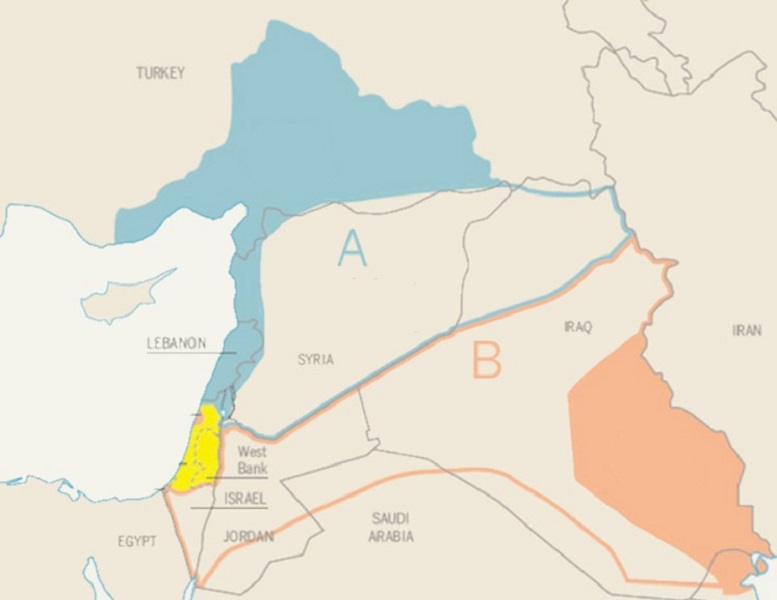
        FPC Briefing: IS, Regional Security and the End of Sykes-Picot

        In this briefing paper Dr Simon Mabon and Dr Stephen Royle examine the rise of the so-called ‘Islamic State’ or IS group in Syria and Iraq. They explore roots of sovereignty in the region and possible approaches for regional actors and the international community to take in combating the threat posed by IS.

        Topics
        Footnotes
          Related Articles

          BRICS Development Bank: Challenges and opportunities for Africa

          Article by Foreign Policy Centre

          August 19, 2014

          BRICS Development Bank: Challenges and opportunities for Africa

          1. New BRICS Development Bank and Contingent Reserve Fund. Dramatic shake-up of the global financial system, dominated by Western multinationals since the Second World War

          After two years of protracted negotiations, the leaders of Brazil, Russia, India, China and South Africa (BRICS) signed a treaty to launch a BRICS Development Bank when they met at a BRICS summit in the northern Brazilian city of Fortaleza on 15 July 2014.

          In documents prepared for the summit, the planned BRICS Development Bank is called the ‘New Development Bank (NDB)’. BRICS countries also set up a $100bn currency reserves pool to help members if they are hit by short-term liquidity crises. The BRICS grouping also signed a memorandum of understanding on cooperation among BRICS export credit insurance agencies to boost trade. South African President Jacob Zuma said “We recognised the huge potential for BRICS insurance and reinsurance markets to break new ground and pool our capacities”.

          The BRICS Development Bank will rival the US and European-led World Bank and its private lending affiliate, the International Finance Corporation (IFC), which have dominated development finance since the Second World War. The BRICS Development Bank has been positioned as a bank that will provide developing countries with alternative funding. This development finance comes without the punishing strings attached and particularly reinstating the power of recipient countries to make their own policies.

          In addition, the BRICS Development Bank also promises to make lending processes faster, simpler and cheaper, as opposed to the current protracted, complicated and expensive processes undertaken by the World Bank. The BRICS Development Bank will have start-up capital of $50bn, which will be built over time to $100bn. As part of this start-up fund, countries will each put in $10bn in cash over seven years and $40bn in guarantees, which will be used to raise capital on international markets. The BRICS Development Bank will start lending in 2016 and membership will be open to other countries, but the capital share of the BRICS will not be allowed to drop below 55 per cent.

          The BRICS bank will be ratified by the parliaments of the individual BRICS member states. The investment rules, management and leadership will be negotiated after ratification of the treaty establishing the bank. The BRICS account for almost half the world’s population and one-fifth of global economic output.

          The World Bank sits on a fund of $223bn. The World Bank will lend $61bn by the end of 2014. The UN Conference on Trade and Development forecasts that in a decade the BRICS Development Bank could lend $3.4bn. The bank and the contingent reserve fund will be the first visible, real and practical joint programme of the BRICS countries – which have been under pressure to show that they can act in concert as an emerging market grouping, given their diversity of interests, priorities and global locations.

          2. New BRICS emergency fund set up to protect members against financial crises

          One of the potential mutually beneficial policies on the BRICS agenda has been the proposal that members should combine their estimated $240bn in foreign exchange reserves to protect individual members from short-term liquidity volatility. The idea would be that the funds would be accessible to individual members as an emergency fund if they experience balance of payment problems.

          The BRICS members have set up a $100bn contingency reserves pool (called the Contingent Reserve Arrangement – CRA), denominated in US dollars. This is to help members who face sudden foreign capital flight. China will contribute $41bn to the reserve, Russia, Brazil and India $18bn each and South Africa $5bn. This new contingency reserve fund is also seen as an alternative to the International Monetary Fund (IMF).

          The contingency reserve fund will be based on the Chiang Mai Initiative, the emergency fund established by the Association of Southeast Asian Nations (ASEAN) in May 2000. The Chiang Mai Initiative is aligned to the IMF and its rules. If a member of the ASEAN countries is in financial difficulty, it must follow IMF reforms if it wants to access more than 40 per cent of its (the member’s) borrowing quota.

          The BRICS members are yet to decide on the final details of the reserve. BRICS, African and developing countries have failed to get industrial nations to give them a greater voice in decision-making at the World Bank and IMF. These institutions continue to advance punishing and inappropriate structural adjustment programmes on developing countries. Policies which dominant industrial countries themselves would never implement in their own economies in return for funding.

          The new BRICS contingency reserve fund is also seen as an alternative to the IMF’s much criticised failure to deal with global monetary crises, which have often left developing countries worse off. In January 2014 a mini-financial crisis among many emerging markets saw many experience capital flight, partially following the sudden easing by the United States of its monetary stimulus. The Federal Reserve did this without consulting emerging markets likely to be affected due to the global dominance of the US dollar. On this occasion, the BRICS failed to coordinate their responses to the flight of capital from emerging markets.

          The BRICS contingency currency pool will be held as part of the reserves of each BRICS country and will be used to support members experiencing balance-of-payments difficulties. If, for example, China is in a financial crisis, it would be eligible to ask for half of its contribution, South Africa for double its contribution – because of its relatively smaller contribution, and Russia, Brazil and India for the amount they originally contributed to the pool. Brazilian President Dilma Rouseff said at the launch: “It will help contain the volatility faced by diverse economies as a result of the tapering of the United States’ policy of monetary expansion”. The launch statement declared the Contingency Reserve Arrangement would help BRICS countries to deal with ‘short-term liquidity pressures, promote further BRICS co-operation, strengthen the global financial safety net and complement existing international arrangements’.

          The BRICS Development Bank and the contingency reserve fund are the first real and practical attempts by developing countries to create an alternative monetary, development finance and trade system. Arguably, this rivals both the Bretton Woods Institutions and ironically the dominance of the US dollar currency – given that the BRICS capital reserves are actually held in US dollars.

          3. Differences between members over the BRICS Development Bank has delayed the ratification of the bank and reserve fund until now

          Given the diversity of interests of BRICS members, it is not surprising that it has not only been very difficult to get the members to agree on priorities, but it is also very difficult to get them to act in concert. The BRICS have been under pressure to show that it is not just a loose grouping or a talk shop – but a real global emerging force to be reckoned with. Finally agreeing on the BRICS Development Bank and the reserve fund give the grouping a cohesive joint programme to formalise the alliance.

          After a long period of negotiations, the BRICS have only been able to agree to establish the bank, but have disagreed on most of the important details. They could not agree on where the envisaged bank would be located, how it should be capitalised or how its funding model would work.

          One of the big debates was whether every member will have equitable shareholding, with equal voting rights – in spite of the potential domination of China. The World Bank and IMF do not exercise the principle of equal voting – with Western countries having a bigger say in decisions. Whether other countries should join later was also a thorny issue. India, for example, wanted the founders to allow non-BRICS to join at a later stage. India also wanted to ensure the name of the bank was not exclusionary.

          Where the bank should be situated has also been a bone of contention. China wanted the BRICS bank to be located in China. However, other BRICS countries, in particular India, feared that if the bank was based in China, it would be dominated by Chinese financial institutions, such as the China Development Bank. India also wanted the bank to be located in India, as a counterweight to possible Chinese domination.

          South Africa wanted the bank to be based in Africa, as a ‘neutral’ location. South Africa has been lobbying to have the new BRICS Development Bank based in Johannesburg as it would essentially serve as an African infrastructure bank. In 2013, South African President Jacob Zuma told delegates at the World Economic Forum on Africa in Cape Town “Africa feels the bank should be established here, particularly because the greater need for the bank is on the continent of Africa”.

          However, South Africa’s argument that a BRICS bank should be an African-based one was simply too narrow. Countries such as China and India see a BRICS bank as a global bank, competing with the World Bank and IMF, rather than a specifically Africa focused. India has argued for a BRICS Development Bank to use budget surpluses from BRICS countries to invest in other developing countries, not necessarily in Africa alone.

          It was decided that the bank will be based in Shanghai. The bank’s first chair of the board of governors will be from Russia, the chair of the board of directors from Brazil and the president of the bank will be from India. The BRICS development bank’s regional office will be based in South Africa.

          Having contributed the largest amount, there is a real danger that China, whose foreign exchange reserves are three times larger than those of the four other member states combined, will dominate the BRICS foreign reserves pool. The big question is whether China would have a significant command over the new bank – and its future practices. India in particular, has pushed for equitable shareholding, with equal voting rights for all members, regardless of their economic weight.

          4. What could the BRICS bank offer Africa?

          BRICS countries have proposed setting up a BRICS-Africa Council to accelerate trade and investment between BRICS countries and Africa.

          Africa desperately needs reliable and cheaper long-term development finance, which is not consistent with the restrictive World Bank and IMF conditions. A typical example has been Joyce Banda, the former Malawian President, who in May this year lost the elections partly because she was forced to introduce ruinous reforms by the IMF, including devaluation of the currency and abolishing subsidies for the vulnerable and help to farmers, in return for development aid. These reforms unleashed widespread popular anger. A BRICS Development Bank may offer new hope to African and developing countries such as Malawi.

          The bank could also be a source of finance for infrastructure, not only for member states, but also for Africa. It could potentially provide the finance for development and infrastructure Africa so desperately needs.

          Finance for infrastructure is often difficult to secure for African countries. Given the financial difficulties experienced in the aftermath of the global financial crisis – that many industrial economies in Western Europe and North America still find themselves in – traditional sources of funding may also dry up for Africa. But the BRICS could provide finance to build Africa’s manufacturing sectors – crucial for meeting the expanding demand for jobs and thereby significantly reducing inequality and poverty.

          The mere presence of a BRICS bank which does not adhere to the World Bank and IMF’s structural adjustment philosophy may strengthen the hands of African governments to develop more independent and relevant national development policies. The BRICS Development Bank may also offer African countries new development aid alternatives which do not come with punishing conditions.

          For most of the post-war period, African countries were not given the ‘policy space’ to make independent economic or political decisions . Without question, African countries need to grasp the opportunity that the BRICS Development Bank provides for developing quality development policies.

          The bank could also help Africans secure better investment deals in their negotiations with traditional multilateral banks and the private sector. The establishment of a BRICS Development Bank and the prospect of new competition may also finally bring accountability, responsiveness and inclusivity to the World Bank and IMF – which have long been in short supply.

          The BRICS Development Bank offers African countries the potential for new ideas on development, sustainable technologies and institutional innovation. The World Bank and IMF not only appear to suffer from a crisis of credibility in the developing world, but also from a poverty of ideas. As a case in point, the two institutions largely failed to resolve or mitigate the effects of the recent global financial crises, whether in individual economies or regionally (e.g. the Eurozone crises).

          5. The BRICS bank: No panacea for Africa and developing countries

          Of course, the very difficult issues of deciding on the investment rules, management and leadership of the new BRICS Development Bank will only be negotiated after the ratification of the treaty establishing the bank.

          There is no guarantee that a BRICS Development Bank would not attach as onerous a suite of conditions as the World Bank or other development financial institutions. In addition, it might not prioritise the development and infrastructure policies important to African economies. The reality is that only if to ameliorate risks, the BRICS Development Bank is likely to attach conditions to its lending to Africa and developing countries. Most individual current BRICS development banks, such as the Brazilian Development Bank (BNDES) lend at market rates to African countries. Or, in the case of the China Development Bank, aggressively pursue commercial interests abroad.

          There is also absolutely no guarantee that the envisaged BRICS inspired development bank would be more development-oriented than the Bretton Woods Institutions or other global or regional development agencies. Of the BRICS countries, only South Africa has foreign investment guidelines – which are rarely enforced – to hold local companies to account, in terms of good governance, respect for human rights and the environment when operating overseas.

          Although the BRICS development founders have said they will allow African and other developing countries to secure shares in the new bank, it is not yet clear whether the bank would be just another club, not unlike the World Bank is for the rich. The BRICS bank could be merely the preserve of large emerging powers.

          Africans will have to learn the lessons from their unequal and disadvantageous engagement with traditional development institutions and strike smarter partnerships, through African development banks, state-owned enterprises and the private sector, as well as the BRICS Development Bank.

          6. What can BRICS civil society groups do to ensure the BRICS Development Bank provides more accountability than the World Bank and IMF?

          The jury is still out as to whether the BRICS Development Bank and the contingent reserve fund will be substantially different in their development approaches compared to the World Bank and IMF – which they have so passionately criticised. Furthermore, the big question remains whether the BRICS bank will be based on good corporate governance. BRICS civil society groups, the media and academics will have to work together to ensure the BRICS Development Bank pursues lending that is ecologically sustainable, promotes inclusive economic growth and development and bases its operations on good corporate governance.

          The very first thing that BRICS civil society groups will have to do is to monitor the investment activities of the BRICS Development Bank and make certain such information is widely available. BRICS civil society groups do not currently have sufficiently broad-based platforms in BRICS institutions to influence decision-making. This is a major shortcoming, which BRICS civil society groups will have to agitate for.

          August 2014

          Topics
          Footnotes
            Related Articles

            The shape of things to come in Turkish politics

            Article by Foreign Policy Centre

            August 14, 2014

            The shape of things to come in Turkish politics

            The prime minister’s campaign was conducted at full speed with the full resources of the state at his disposal and the clear support of most of the public and private broadcast media. Meanwhile, Ihsanoglu, a respected but little known academic theologian chosen strategically by the centre-left Republican People’s Party (CHP) and the nationalist, right-wing National Movement Party (MHP) to attract more votes from the conservative, pro-religious base, struggled to find a voice that could resonate beyond those parties’ voters. The combined vote-share of both parties in April’s local elections had been 43%. Erdogan built his campaign on a platform promoting a narrative of steep economic improvements and general prosperity in the country as well as a deeply polarizing rhetoric that sought to shore up the conservative Sunni voting base by emphasising the otherness of his opponents. In doing so, his candidacy also attracted a lot of support from the MHP’s core electoral base in the Anatolian heartland.

            On the other hand, Demirtas, the long-standing leader of the pro-Kurdish political movement and the People’s Democratic Party (HDP), campaigning on a liberal-left platform, was appealing to many people and proved his mettle as an attractive public figure in the political arena. Gathering almost 10%, more than any party rooted in the Kurdish political movement normally attracts, this holds out the possibility that the HDP could emerge as a new, potent liberal-left force in Turkish politics with Demirtas at its helm.

            Held in the middle of Turkey’s traditional holiday season, there was an unusually low turnout of only 73% for the elections, leading to speculations that many people had not wanted to sacrifice their vacations to return to vote in their hometowns. It may also be that the certainty of Erdogan’s victory in the election deterred many people from turning up at the ballot box. A second surprise was the very low turnout from Turkish people living abroad. From the approximately 2.8 million strong community of eligible voters, barely 10% decided to vote.

            This is the 7th election in total that Erdogan has won since the Justice and Development Party (AKP) that he leads was first elected in 2002. In his almost 11 years in power, he has presided over a country that has seen immense economic and infrastructural development and which has become a much more significant actor in international and regional politics. However, the country has also become steadily more authoritarian and deeply polarized, especially in the last 4 years. The widespread Gezi protests in the summer of 2013, which have sporadically re-occurred, attest to this. The last year was especially tumultuous in Turkish politics. Allegations of corruption reaching to the highest level were publicly fielded against the government in December 2013. The terrible mining disaster of Soma in May, killing 301 people, was seen to be handled badly and callously by the government and the situation across the border in Syria’s civil war has significantly deteriorated with a militant religious insurgency now having also swept into Iraq. Importantly, as well, Turkey’s economic growth has declined in recent years due to domestic and international turmoil and may develop more serious problems in the near future.

            In the aftermath of Turkey’s first ever direct election for the presidency there are many questions circulating as to the future direction of the country’s political system. Firstly, the government has by August 28th to pick a new prime minister, at which time Erdogan will assume his new presidential office. While it is certain that he would favour a candidate that he would be able to control easily, such a choice could also weaken the AKP’s public image in the looming national elections, due to be held in July 2015. A useful comparison can be made here with former Prime Minister Turgut Özal, a titan of Turkish politics in the 1980s and early 1990s, who became president in 1989. In doing so he handpicked a prime minister, Yildirim Akbulut, that he could easily influence. Özal’s choice, however, significantly weakened the Motherland Party (ANAP) and was a factor in it losing the dominance it previously held in Turkish party politics.

            Secondly, it is certain that one of the big objectives of the next government will be to change the constitution in order to shift Turkey along towards a more fully presidential system. At present, the presidential office is relatively weak vis-à-vis the legislature in terms of its power. It is clear that the current prime minister would want to significantly bolster the office in order to retain his dominant hold over Turkish politics. In order to achieve this within the frame of law, more than 330 of the Turkish parliament’s 550 members would need to vote through a series of constitutional changes. At present the AKP occupies only 313 seats in parliament and it is unlikely that opposition parties would lend their support to legislate these constitutional changes. In that sense, the next general elections will be key to determining what shape Turkey’s political system will acquire.

            The ill-fated presidential campaign of the conservative Ihsanoglu has aroused deep anger within the MHP and especially the CHP, which sees itself as entrusted with the safekeeping of Turkey’s secularist legacy. There is already a leadership challenge under way in the CHP. Although the AKP government has stated that it would not seek to call early elections, doing so while the opposition parties are experiencing a climate of disarray and disillusionment would clearly benefit it.

            This is the environment in which Turkish politics will be moving in the next year. It remains to be seen how this shift towards a presidential political system under the rule of Erdogan will affect the crucial issues that the country is currently facing in its domestic and foreign politics.

            August 2014

            Topics
            Footnotes
              Related Articles

              The State Monitors Citizens Monitoring the State: The New Face of Civic Engagement in Russia

              Article by Foreign Policy Centre

              July 3, 2014

              The State Monitors Citizens Monitoring the State: The New Face of Civic Engagement in Russia

              The law centres on the slippery concept, obshchestvennyi kontrol’, which translates into English as public oversight, public monitoring or public scrutiny. It is used both by the Kremlin and by independent civic groups to refer to ways in which citizens can monitor the activities of local and regional government. Kremlin-founded corporate bodies such as the Federal Public Chamber and the myriad public councils attached to government ministries claim to enact obshchestvennyi kontrol’ by acting as discussion platforms for government-selected ‘civil society leaders’ and officials. The plethora of grassroots collectives that sprang up to monitor the Presidential election in March 2012, widely perceived to be riddled with fraud, also used the concept to refer to their activities. The fact that this form of obshchestvennyi kontrol’ played a key role in drawing citizens to some of the largest protests seen since the collapse of the Soviet Union should not be overlooked as a possible motive for the decision to restrict this concept in law.

              While the law states that obshchestvennyi kontrol’ may take any form that does not contradict the principles set out in the document, it nonetheless delineates five examples of what such activities should consist of, what their outputs should be and how government departments should respond. First, a public examination (obshchestvennaya ekspertiza) requires ‘public experts’, that is local academics, researchers or NGO leaders, to study draft laws and existing legislation and assess their social impact and whether they comply with the ‘public interest’. Second, public discussions (obshchestvennye obshuzhdeniya) consist of public meetings between public monitory bodies and local government, which aim ‘to include the widest range of views of different social groups’ in the development of legislation. Third, public hearings (obshchestvennye slushaniya) are similar to public discussions, but allow any concerned citizen to take part. Fourth, public monitoring (obshchestvennyi monitoring) is an on-going form of surveillance of local government activities. Fifth, public inspections (obshchestvennie proverki) are auditing processes of government bodies or official perceived to be failing in the work, which involve public monitory bodies collecting information and developing proposals to remedy the situation. Importantly, in order to enact obshchestvennyi kontrol’, interested parties must join the existing network of Kremlin-initiated corporate bodies. Citizens and NGOs cannot take part independently. It thus harks back to the governance practices of the Soviet Union, in which practices of narodnyi kontrol’ (people’s oversight) were co-ordinated through centrally controlled monitory bodies (and frequently resulted in the co-optation of the so-called people’s inspectors into the corrupt system they were supposed to be monitoring).

              The law is a product of the growing desire to shift the state-dependent Soviet-era mentality still common among the population by fostering active citizens and including them in governance processes, as stipulated in the second wave of government administrative reforms between 2006 and 2010. These reforms were based on the assumption that one of the main problems with the administrative system was its closed nature and the lack of feedback channels between the authorities and the citizens. Information held by the authorities was considered secret and there were no structural opportunities for consultation with civil society groups before decisions were made. Thus, institutional mechanisms were proposed, which would promote more effective engagement between NGOs and the authorities and increase the overall transparency of government activity. In order to do this, a system of ‘public councils’ was mooted, which would bring citizens and authorities together to debate policy areas, conduct scrutiny of government decisions, and include ‘civil society’ in oversight commissions and working groups. This network of public councils and other similar bodies would provide the framework through which NGOs could influence decision-making and work with the state on policy delivery. It is this network that has now been charged with co-ordinating the sum total of civic engagement in Russia.

              The development of the law has spanned the last two years and has clearly been a pet project of Vladimir Putin, who has championed obshchestvennyi kontrol’ in his own speeches and articles to the nation. For instance, in his February 2012 pre-election article ‘’, Putin made it clear that the extension of obshchestvennyi kontrol’ would be central to developing civic participation in governance in his coming term. ‘Above all,’ he stated, ‘it is a citizens-wide discussion of the draft laws, decisions and programmes adopted at all levels of government, as well as the evaluation of existing laws and their application.’ Similarly, in his , Putin reiterated his desire to see more discussion and collaboration between the authorities and citizens: ‘Modern Russia needs a broad public debate, moreover, with practical results, when public initiatives are part of public policy and society monitors their execution.’ He went on to ask the Public Chamber and the Presidential Human Rights Council to work hard on the preparation of the law.

              In January 2014, the first draft of the proposals were sent to the Presidential Administration for further development. It was at this point the provisions on who could conduct obshchestvennyi kontrol’ were changed: the original idea was to allow every citizen and NGO to monitor the authorities, now only the existing state-controlled bodies could do so. It also deleted the clause stipulating the creation of a single unified portal through which the results of scrutiny exercises would be published, citing a lack of funding and stating that it would be more efficient to use the Federal Public Chamber website. On 12 March 2014, Putin introduced the law into the Duma. On 25 March 2014, during a Duma debate, it was noted that the passing of the law would require more than 25 changes to existing legislation. However, the Federation Council indicated their support and called for the bill to be passed quickly. In May 2014, the bill received prime airtime on Russian state-controlled TV channels. On 2nd July, it was passed by the Duma. Given the Federation Council’s vocal support, we can expect the bill to become law imminently.

              Now, the meaning of obshchestvennyi kontrol’ has been fixed as the monitoring of the activities of government departments by state-founded corporate bodies. Its aims include protecting the rights and freedoms of Russian citizens and enabling the consideration of public opinion during government decision-making processes. According to the document, the proposals will help to develop a sense of legal consciousness in citizens, as well as increase the level of trust in the actions of the state, facilitate the realisation of civic projects, and reduce corruption.

              However, this new law could have at least three serious consequences for state-society relations in Russia. First, the narrow definition of what it means to enact obshchestvennyi kontrol’ will curtail the development of new and imaginative ways in which citizens can engage with authorities – and possibly prevent such activities as independent election monitoring. Second, since all monitoring activities must be conducted through the Kremlin’s existing corporate bodies, the authorities will retain an oblique control over who can take part and will be able to influence the processes and outcomes of the public monitoring exercises. Third, while the law recognises that citizens are an important source of expertise, it nonetheless seeks to control and direct this knowledge. The law promotes a consensual relationship between authorities and citizens and discourages political contestation, the essence of a vibrant public sphere. In sum, it could signal a death knoll for independent civic life in Russia.

              July 2014

              Topics
              Footnotes
                Related Articles

                Why Pakistan is the key to Britain’s South Asian renaissance

                Article by Jack Goodman

                June 4, 2014

                Why Pakistan is the key to Britain’s South Asian renaissance

                William Hague said during a with Pakistan’s Prime Minister, Nawaz Sharif, that bilateral relations aim to improve the ‘prosperity’ of both countries. Hague emphasised a policy that still engages with Pakistan on security but also becomes more developed economically and culturally. The UK Foreign and Commonwealth Office (FCO) recently laid out a new education plan for Pakistan. According to an ‘By 2015 we aim to help put 4 million more children into school; train 90,000 teachers per year and construct more than 20,000 classrooms’. And a new business centre, the first of several, will be to boost UK-Pakistan trade and investment.

                The UK is right in its more holistic policy approach because Pakistan holds strategic potential for Britain. A new independent and a carefully constructed engagement with Pakistan might bring the credible position of authority it seeks, but is currently lacking, in India and across South Asia.

                The competition for influence
                Generally speaking, Britain has kept up appearances in South Asia without needing to ‘shift’, the commonly wheeled out term in the phraseology of foreign policy experts. China has set their sights on the region through the widely touted ‘Maritime Silk Road Venture’, and the United States through their ‘Pivot to Asia’. Britain’s historical attachment gives them little need for a foreign policy facelift. Thankfully no longer a space Britain calls home. They are the region’s consultants, superior in the experience-stakes than other Western states that lack the colonial connection.

                However perceptions about Britain’s role in South Asia have changed. Britain does not offer the same commercial trappings for other states in South Asia. Indian policy makers hold this point of view. ‘Talk of an especially close bond with Britain does not really ring true in India’, wrote in 2013.

                David Cameron has called the relationship with India one of the “most important relationships of the 21st century”. But Britain’s overall ability to exert itself has weakened in South Asia because it struggles to compete with more powerful exporting nations such as Germany, France, Korea and Japan. This isn’t to say there are not strong financial and educational linkages in South Asia, rather that Britain does not stand out. It does not have the economic clout to lever independent political influence.

                To boost Britain’s strategic influence in South Asia is now less tangible. Throwing money or arms at regime change is not sustainable nor a good idea. Startling defence cuts have the ; very real proof of decline. These fears don’t resonate in India and others states because defence cuts aren’t relevant for forward-thinking business-focused South Asian policy makers. Relying on cultural and historical symbolism largely attracts distain from Governments. Policy makers in the UK will have to develop a new diplomatic strategy to win back influence in South Asia. To reverse a trend so countries strategically involved in South Asia rely on Britain.

                Improve the UK-Pakistan Enhanced Strategic Dialogue
                Britain’s bold position in Pakistan might be the answer. The early stages of what might be new priorities in South Asian policy were illuminated recently. UK Foreign Secretary William Hague and Pakistan’s National Security Advisor Sartaj Aziz met in London to discuss the ‘Enhanced Strategic Dialogue’. The tête–à–tête bolstered the status quo. Britain’s intent to bring the states closer together was publically put up in lights. “This dialogue represents a continuing, long-term commitment by both countries to work together to create the conditions necessary for greater security and prosperity”, said . National Security Advisor Aziz said “We agreed to intensify efforts to achieve meaningful and mutually beneficial progress in a holistic manner under the framework of the Enhanced Strategic Dialogue”. The Foreign Secretary has since set out a Roadmap for Trade and Investment between Pakistan and the UK and a Roadmap for Culture and Education. This represents Britain’s commitment, it appears, to be a more rounded diplomatic partner to Pakistan. Trade and investment is important to accompany the vast sums of aid. Meeting the in May 2014, Hague said “Pakistan and the UK continue to work together to strengthen the security and prosperity of both our countries”.

                Why the time is right for Britain in Pakistan: US, India and China
                The two statesmen discussed improving bilateral trade between the two nations, promoting British investment in Pakistan and combatting extremism, militancy and terrorism. There was a lot of familiar jargon, but for Britain there are potential strategic gains to be won from a closer bilateral relationship with Pakistan. The time is now; the trajectory of the political dynamics in South Asia works in Britain’s favour. There is an opportunity for Britain to become Pakistan’s closest diplomatic ally.

                Ties between the United States and Pakistan have become increasingly complex since the invasion of Afghanistan and encroachment into Pakistan’s territory via its mountainous border region. Relations were effectively broken after the assassination of Osama Bin Laden in Pakistan in 2011. Both sides felt that they were kept in the dark. It will take a lot to get away from the ‘sense of distrust’, according to . Since 2011 improving diplomatic relations and regional strategic positions with ‘soft power’ gains, beyond a security perspective, has not been the US’s modus operandi in Pakistan.

                A rapprochement to mend a seemingly broken relationship has taken the form of bilateral talks. It is too early to assess whether differences will be reconciled. According to “the governments are exchanging positive words and rhetoric, not particularly significant accomplishments”.

                Consequently the two remain suspicious of each other. At the very least Pakistan is still viewed by the United States within the Af-Pak paradigm. The main concern for the US after the withdrawal of troops is still security vis-à-vis Afghanistan. Winning hearts and minds in Pakistan plays second fiddle to this. Senior American figures in foreign policy believe this trend should be addressed. Ambassador Munter, speaking at the , stressed it would be wise for America not to view Pakistan through the prism of security. Until this changes dramatically, it means the role of a new benevolent political ally is ‘open’.

                History tells us that at the beginning of new Indian Governments, relations with Pakistan have often improved. For example, the BJP Government signed the Lahore Declaration in 1999 shortly after elections. Some in Pakistan are hopeful that the same will occur after BJP’s Narendra Modi victory in the Indian Elections. ‘’, Kishwer Zehra member of National Assembly of Pakistan, told the Economic Times.

                In terms of foreign policy it is likely that a continued form of arms-length diplomacy will suffice for both India and Pakistan. The withdrawal of troops from Afghanistan will also impact India. Fears of extremism and terrorism are high on the Indo-Pak security agenda. Even if relations improve with the Modi-led Government, foreign policy will still be curtailed by a ubiquitous sense of mutual caution. Again, it leaves room for another state to form closer diplomatic ties with Pakistan.

                The door is open because no other state has the same regional aspirations and existing connections as Britain. China still has a large financial stake in Pakistan. But Beijing has no desire to mediate in the region to create political influence. Author William Dalrymple even wrote recently that their 50-year alliance “”.

                Strategic potential as Pakistan’s ‘middle-man’
                It will be an asset for the UK to be Pakistan’s sole or closest Western political representative. In this role Britain will have the opportunity to act as problem solver or point of access, if required, between Pakistan, India, the US and the International Community in general. It is likely that there will be issues with the US because of their continued military presence in Afghanistan and if drone strikes continue in Pakistan. For India the threat of terrorism that might warrants the input of a ‘middle-man’.

                Compared with recent overseas forays, it is in Britain’s interest to maintain the status quo on the ground in Pakistan. Typically for British foreign policy, sometimes pursuing an American aim, regime change has been the objective. In Iraq, Afghanistan and more recently Libya and Syria. Clearly, this is off the agenda if Britain intends to cultivate a reciprocal bilateral relationship with Pakistan. Knowing its own limitations and assets will force Britain to rethink its position in South Asia in the future. William Hague seems to have adopted a very positive stance already with Pakistan.

                There have been no formal documents stipulating that Pakistan has become the British priority in South Asia. No personalised label for their position in Pakistan. We may not yet have to deal with a new inelegant abbreviation, Pak-UK. To some extent there is now a waiting game to play. A chance to monitor the shift in British strategic interests towards Pakistan through Direct Financial Investment in the private sector, engaging the British Pakistani diaspora, continued aid for development, joint-security ventures, cultural initiatives and more high level diplomatic meetings.

                Indian foreign policy makers have in the past, according to The Times of India, grown suspicious of Britain’s perceived favouritism toward Pakistan. ‘They seem to be placing Pakistan at the centre of a peace deal’, was apparently India’s view of a between Pakistan and Afghanistan in 2013. ‘India also remains deeply sceptical of British interests and intentions in this region’, the article continued.

                This article was written within a specific context and related more to a concern about Britain’s inability to create a meaningful agreement between Afghanistan and Pakistan once NATO troops are withdrawn. It invoked memories of the legacy of post-colonial bloodshed in India. If Britain does seek to redefine its position in South Asia, it will have to overcome and accept the suspicions, even the animosity of friendly states such as India and the United States, to reside as an equal constituent part of the South Asian strategic landscape.

                Still, the objectives behind the ambiguous ‘Enhanced Strategic Dialogue’ can only be guessed at. Lots of relationships are elevated by lofty titles. But whether or not British policy makers are consciously setting their sights on a new bilateral policy with Pakistan, it appears to make sense. A push for trade, investment and education indicates a strategic shift. Varying the language of engagement beyond the security context is good for the relationship.

                Britain does not intend to shy away from profiting from its unique position in South Asia and it wants to have a role that exerts greater influence than it does at the moment. It has the opportunity to feature prominently in the future trajectory of the region by gaining a significant political foothold in Pakistan with due financial investment and diplomatic collaboration.

                June 2014

                Jack Goodman is former Research Associate at The Regional Centre for Strategic Studies in Colombo, Sri Lanka. Currently working as a freelance writer and researcher on UK foreign policy and South Asian affairs.

                Topics
                Footnotes
                  Related Articles

                  Summary note – Employment, enterprise and skills: building business infrastructure for African development- Roundtable 1

                  Article by Foreign Policy Centre

                  May 30, 2014

                  Download PDF
                  Summary note – Employment, enterprise and skills: building business infrastructure for African development- Roundtable 1

                  Refocusing the development agenda

                  The current global financial crisis has led to an economic age of unprecedented austerity, mounting uncertainty and rising inequality. Today, there is a pressing need to forge a new global consensus on how best to build Africa’s productive capacity. In essence: supporting the continent to develop and employ its productive resources, harness and grow its entrepreneurial capabilities and build robust and dynamic networks and linkages essential for supporting the production of goods and services to power national and regional economies. In order to move beyond the Millennium Development Goals, no longer can addressing the multiple challenges of how to promote development transformation, cultivate entrepreneurship and drive employment-led growth continue to be considered in isolation. How can the physical, social and human capital needed to expand business and enterprise development in the formal sector be promoted? How might access to, as well as the distribution of appropriate business education, skills and training across Africa be improved, replicated and scaled-up?

                  Mounting global concerns about inclusive growth are illustrated by the World Bank’s 2013 World Development Report, focused on jobs and the G20 development agenda’s training strategy explored developing employment related skills. Yet, there are a number of issues which need to be considered. How can national development strategies focus on job creation? How best can their impacts be measured and scaled-up? Beyond micro-enterprise, how best can entrepreneurship be developed and fostered within and beyond national borders? Which investment and trade sectors have the greatest development impact potential, particularly with respect to creating professional employment for young people and women? How best can such sectors be developed and supported? What type of investments are required in education, training and skills development to enhance business infrastructure, expand networks and build the innovations required to transform long term employment prospects?

                  Topics
                  Footnotes
                    Related Articles

                    Summary note – Employment, enterprise and skills: building business infrastructure for African development- Roundtable 2

                    Article by Foreign Policy Centre

                    Download PDF
                    Summary note – Employment, enterprise and skills: building business infrastructure for African development- Roundtable 2

                    Refocusing the development agenda

                    The current global financial crisis has led to an economic age of unprecedented austerity, mounting uncertainty and rising inequality. Today, there is a pressing need to forge a new global consensus on how best to build Africa’s productive capacity. In essence: supporting the continent to develop and employ its productive resources, harness and grow its entrepreneurial capabilities and build robust and dynamic networks and linkages essential for supporting the production of goods and services to power national and regional economies. In order to move beyond the Millennium Development Goals, no longer can addressing the multiple challenges of how to promote development transformation, cultivate entrepreneurship and drive employment-led growth continue to be considered in isolation. How can the physical, social and human capital needed to expand business and enterprise development in the formal sector be promoted? How might access to, as well as the distribution of appropriate business education, skills and training across Africa be improved, replicated and scaled-up?

                    Mounting global concerns about inclusive growth are illustrated by the World Bank’s 2013 World Development Report, focused on jobs and the G20 development agenda’s training strategy explored developing employment related skills. Yet, there are a number of issues which need to be considered. How can national development strategies focus on job creation? How best can their impacts be measured and scaled-up? Beyond micro-enterprise, how best can entrepreneurship be developed and fostered within and beyond national borders? Which investment and trade sectors have the greatest development impact potential, particularly with respect to creating professional employment for young people and women? How best can such sectors be developed and supported? What type of investments are required in education, training and skills development to enhance business infrastructure, expand networks and build the innovations required to transform long term employment prospects?

                    Topics
                    Footnotes
                      Related Articles

                       Join our mailing list 

                      Keep informed about events, articles & latest publications from Foreign Policy Centre

                      JOIN