Dr Stephen Royle, who has been a consultant to the outgoing Palestinian Authority Prime Minister Rami Hamdallah, gives his views on the progress made over the last year under Hamdallah’s leadership.
FPC Briefing: Climate change cooperation within the Global South: Finance, policy and institutions
April 9, 2014
Download PDF
FPC Research Associate Stephen Minas analyses the growing and dynamic area of climate change cooperation in the Global South. His briefing looks at the role of the BRICS and a growing range of other regional groupings that are sharing policy best practice, creating innovative finance arrangements and developing new institutions to tackle the challenges of climate change.
Join our mailing list
Keep informed about events, latest publications & articles from Foreign Policy CentreFPC Briefing: Turkey’s Year-Long Election Cycle
April 7, 2014
Download PDF
FPC Senior Research Associate Firdevs Robinson gives her analysis of the recent local government elections in Turkey. She examines the pre-election corruption scandals and government pressure on the media and access to YouTube and Twitter. She looks ahead at what the successful result for the ruling AKP means for the August 2014 Presidential elections.
Join our mailing list
Keep informed about events, latest publications & articles from Foreign Policy CentreSyria’s Forever War
April 2, 2014
Arguments towards a way out of the darkness have surrendered to the cold hard geopolitics of a conflict that is layered in both character and complexity. A US military observer described Syria as an arena for three simultaneous conflicts; localised fighting, often between elements of the Opposition, a larger civil war and finally a regional fight with international connections and ramifications. Crucially the conflict’s current equation is balanced enough to fuel continued fighting with no side believing that compromise or serious commitments to peace talks are necessary. A former Syrian minister on a trip to London proposed that a unjust peace is preferable to a just war, but with a cacophony of voices and players involved nobody is clear who is able to spend the political capital needed to change the conflicts dynamics and more importantly why would they do so now.
The UN and Arab League Special Envoy to Syria, Lakhdar Brahimi, is perhaps as good a diplomatic chess player as they come but even he is struggling to keep into the notion of a peace process alive. Geneva 2 with all its hubbub and media attention came and went with little feedback into what was happening on the ground. Rumours abound that Assad will stand for another Presidential term, a nail that would surely close the coffin of a negotiated transition and force the Opposition and their backers to reassess tactics. Against this backdrop of various fronts opening and closing on the ground, with the general narrative one of steady regime gains, the chances for a diplomatic solution have been further battered by the events in Ukraine. The crisis there has not only brought back memories of Cold War tensions but has also blown apart the Moscow-Washington dente that was crucial in securing the Geneva process in the first place. Behind the scenes ‘proximity talks’ between Opposition and Regime figures were quickly shut down when the crisis emerged and the tit for tat unwinding of the meagre progress that had been made continued when the Americans expelled the remaining Syrian Diplomats and closed their Embassy in March.
The Ukrainian crisis has relegated Syria’s war to media oblivion and has essentially created another hurdle to the success of diplomacy over the use of force. However it also comes at a fascinating crossroads of US-Saudi relations with Obama’s visit to the Kingdom and the appointment of Prince Nayef to the Syria file suggesting to many observers both a rapprochement between Washington and Riyadh and a change of Saudi tactics towards Syria could be in the offing. The fundamental unknown remains Obama’s decision making horizon and whether he is willing to be influenced by the Editorials of the main US papers which are increasingly critical of his hands off approach to the conflict. Questions over US support, both lethal and non-lethal, continue to pop up but are lost in both the politics of the Beltway and an inability to see clearly how they translate into an outcome inside Syria itself.
It is of course a cliché to compare one war to another but it is worth remembering how long the Lebanese Civil War (1975-1990) went on for. A deadly equilibrium within a grinding conflict that is seeing the country endure both an exodus and a collapse cannot be in any ones geopolitical interest. However without a significant change to the current equation to the crisis it would appear that Syria has further bloody anniversaries to endure ahead.
Join our mailing list
Keep informed about events, latest publications & articles from Foreign Policy CentreFPC Briefing: Carpe Diem- India’s 2014 General Elections and the BJP-led NDA
March 26, 2014
Download PDF
FPC Senior Research Associate Dr Chris Ogden analyses what a possible victory for the Bharatiya Janata Party (BJP) in the upcoming April/May 2014 Indian Parliamentary elections would mean for India. He examines the implications of a new BJP- led coalition (or outright majority) on India’s domestic and foreign policy, building on the experience of its past coalition from 1998-2004.
Join our mailing list
Keep informed about events, latest publications & articles from Foreign Policy CentreAn Association Agreement with a state that may soon cease to exist?
March 20, 2014
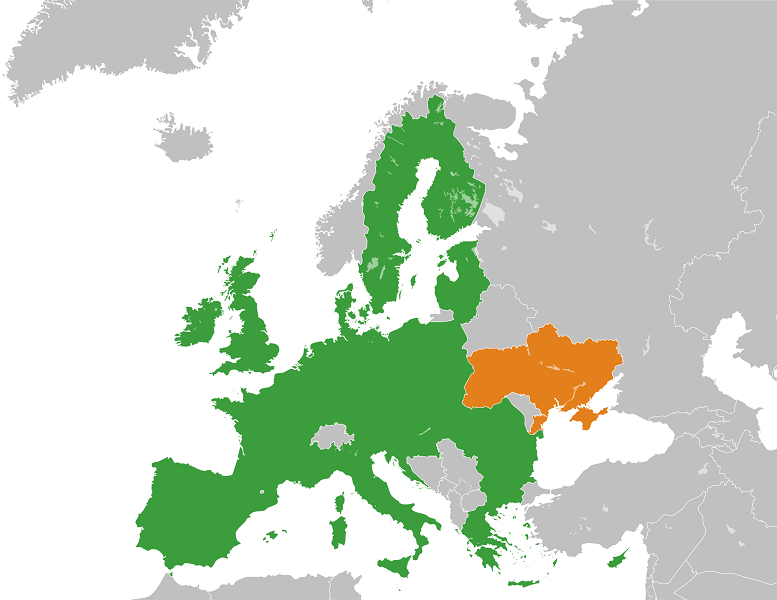
Today EU leaders are back in Brussels. It is now fourteen days later. Russian forces are not only on the streets but Crimea has also been annexed. But the European Union looks fundamentally unable to carry out its threat. The rhetoric from London, Brussels and Washington may have been of ‘costs’ and ‘consequences’.
But the more relevant language may be that coming from Russia ‘laughing’ at the restrictive measures already announced, calling the European Union ‘all bark and no bite’ and even ‘the Wizard of Oz’. Ukraine has labelled our response ‘a mosquito bite’.
It is right for the European Union to look beyond the war of words. Each step at a very dangerous moment in European history should be calibrated on the likelihood of it provoking or deterring a further escalation of the crisis. It is possible but impossible to know that the steps taken so far may have contributed to Moscow hesitating to send its troops in to Eastern Ukraine already.
It may be that Vladimir Putin’s chosen alternative is to foment discontent amongst Russian minorities in the region’s other frozen conflict areas. This has already seen Transnistria apply to join the Russian Federation. What started with Crimea may also extend to Russian-occupied Abkhazia and South Ossetia in coming days or weeks.
Europe has rightly been cautious in not wanting to portray its Eastern neighbourhood policy to strengthen its relations with former Soviet states as a ‘tug of war’ with Russia. The problem for Brussels is that it may indeed suit Putin to treat it as such – as his personal popularity soars to record levels at home in a trial of strength he believes he can win.
The European Parliament in a resolution I co-sponsored already referred to a Russian ‘invasion’ and not the ‘incursion’ preferred by our Governmental colleagues, and voted in favour of actions against Russian companies and their subsidiaries. The argument for EU economic sanctions is that they could have sufficient impact on Putin’s inner circle and on the oligarchs who yield real influence in the Kremlin, to genuinely start to curtail Russia’s behaviour.
But negotiations before and after Monday’s EU Foreign Affairs Council leave no sign that Europe has the political will to take the ‘third step’ it pronounced. Talk of unity can’t disguise Europe’s failure to achieve a unified position. Although names of further political and military figures are expected to be added to the list, I do not expect the ‘restrictive measures’ to be extended to business figures such as the Chief Executive of Gazprom. These were completely excluded by the Foreign Ministers who whittled down a proposed list of 120 names to just 21 earlier this week and the dinner table in Brussels is set to see EU leaders do exactly the same. Nevertheless, at their last meeting the leaders showed a degree more incisiveness than their own Foreign Ministers, and it is possible they will do so again today.
So what can they do?
First, it is sensible to take further diplomatic moves to indicate Russia is isolating itself, including confirming action to block Russian participation in international institutions such as the OECD, IAEA and the G8.
Second, even if there is no stomach for economic sanctions at present, the military situation could quickly alter the balance of argument, and it may be possible for detail on specific trade measures being considered to be specified now which could have a significant deterrent effect.
In any case, EU leaders must mandate urgent work if sanctions are to be agreed, on the consequent impact on Europe’s trade if reciprocal measures are taken. Fear of the ‘consequences’ not on Russia but on ourselves, symbolised by the embarrassing leak from a Downing Street official, appear to have prevented such work from even beginning in earnest. The results should be used to plan mitigating measures, not to add to the argument against taking the measures in the first place.
And I find it very surprising that EU member states at least say they are discussing economic sanctions, but have yet to announce an arms embargo against Moscow. Surely an obvious step is to avoid supplying arms to a country which in short shrift may use them to carry out more aggressive military actions, which we deem to be illegitimate and illegal?
However, I do expect today’s meeting to be specific on announcing energy diversification measures, to send a long-term message that Europe will not let itself be held hostage by dependence on Russian gas. Informed opinion in Brussels is that alternative sources are and will exist. Europe has used the time since Russia turned off the gas taps in 2009 to build up its reserves, in much the same way that Britain’s Thatcher Government did after the first miners’ strike all those years ago.
The most persuasive argument in favour of Europe’s approach is that Putin’s grand vision for a Greater Russia may best be challenged by showing Europe’s own long-term resolve for a different future. However, in the short-term that is today, the pictures on the TV screens will be of the European leaders signing the association agreement with Ukraine, whose rejection by Yanukovich sparked the crisis in the first place. It is being carefully choreographed to include political not trade elements only, but it is an open question how the same pictures will be greeted in Moscow?
It is to be hoped that we are not signing an agreement with a state that very quickly ceases to exist.
Richard Howitt MEP is Labour Foreign Affairs Spokesperson in the European Parliament and a member of the Socialist and Democrat Group Ukraine Task Force.
March 2014
Join our mailing list
Keep informed about events, latest publications & articles from Foreign Policy CentreBalancing Ukraine
February 27, 2014
And yet, Kremlin policymakers should have known better; everyone in Moscow would have been well aware of the manifold splits and contradictions within Ukrainian society. In much simplified language: much of the East looks East, much of the West looks West, and much of the Crimea – which only became part of the country in the 1950s as, quite literally, a Soviet-era ‘present’ from Russia> – sees its current position an unfortunate quirk of history. While realities on the ground are much more complicated than what such neat geographic line-drawing would suggest – the East-West division is actually more of a gradual transition – the basic point on a deeply conflicted society remains acutely valid: Ukraine could not move towards Eurasia without first tearing itself apart.
Ever since it emerged from the Soviet Union, Ukraine has been an incoherent state. And incoherent states have a peculiar problem: they are unable to generate the security practices or, in Joel Migdal’s terms, the collective “survival strategies” required for the state to function as a coherent institutional and social corpus. If the state is to enjoy a monopoly of legitimate force over a given territory and population, such a monopoly would require some measure of agreement on the values and identities it is meant to safeguard, as well as the means through which such safeguarding should occur. That minimal amount of consensus on state identity has been woefully absent since 1991.
As a result, Ukrainians remain in fundamental disagreement over which values and identities their state should secure; and this, in turn, shapes their diverging threat perceptions to a considerable degree. If you define Ukraine as Western, and see Moscow as the West’s other, you will tend to see Russia – especially Putin’s Russia – as an autocratic neo-imperial threat; if, on the other hand, you place Ukraine in the Russian/Eurasian cultural sphere, you will see the liberally decadent West – as it has widely come to be portrayed in Putin’s Russia and beyond – as a fundamental menace to that identity. Needless to say, such selective and contradictory world-views present benign policymakers with complications, and, conversely, those of a more malicious bent with fertile opportunities for meddling and provocation.
What has been remarkable over the past few weeks has been the way both sides in this conflict – including their Western and Russian supporters – have generated the sort of selective narratives that, in the context of an incoherent state, are pregnant with danger, regardless of the relative merits of closer European ties or membership in the Eurasian Union. The pro-Russian press has latched onto the (admittedly highly disturbing) presence of right-wing extremists among the Euromaidan demonstrators <http://www.youtube.com/watch?v=RrxOl9daoMo to dehumanise the Euromaidan opponents of Yanukovych’s volte-face as ‘Nazis’ and ‘fascists’>. The Kremlin’s policymakers had clearly over-estimated their point man’s ability to repress the large part of the Ukrainian population that had adopted values and identities fundamentally at odds with Putin’s plans for his ‘Near Abroad’. Resistance to a perceived existential threat to those values – membership of the Eurasian Union – had to be conveniently explained away, delegitimised and marginalised, so as to allow for its repression without affecting the narrative of shared economic interests and ‘shared Soviet/Russian values’ on which the Eurasian project is supposedly based.
The danger now is of events swinging to the other extreme. Just as Yanukovych provoked his Western-leaning countrymen onto the streets by ignoring their sensitivities, Ukraine’s parliament – or Verkhovna Rada – risks inflaming similar ‘securitisations’ in the Russian-speaking parts of the country. Russian has already been demoted as a regional language, and deputies from the virulently right-wing Svoboda party have proposed an end to the retransmission of Russian Television channels. Presenting a government consisting entirely of pro-European elements as one of “national unity” when it is clearly not further complicates matters. Such selective perception should not remain unchallenged; it risks repeating those mistakes that were made earlier in places like Georgia and Moldova, where nationalist post-Soviet governments needlessly excluded and provoked their minorities in avoidable blunders that then led Ossetians, Abkhazians and Trasniestrians to break away in response to perceived existential threats to their divergent values and identities – with, as is now widely accepted, the help of elements in Moscow.
Could these elements do it again – on a much larger scale – in Ukraine? Russia is emphatically not interested in a violent, uncontrolled breakup of its large neighbour; but the key words here are violent and uncontrolled. The stakes for Russia being what they are, some in Moscow’s corridors of power could see the Crimea in particular as a place where Georgian- or Moldovan-style meddling could be feasible. It is the most clearly pro-Russian corner of Ukraine. As a peninsula, it is geographically separated from the rest of the country, and, therefore, relatively more self-contained than the Eastern regions. With the Black Sea port of Sevastopol acting as the headquarters of Russia’s Black Sea Fleet since Tsarist times, it is seen as absolutely crucial to the Kremlin’s military capabilities (not to mention its prestige).
The Kremlin is interested in keeping ‘Little Russia’ within its orbit. Ukraine is not just an essential part of Russia’s creation myth. More significantly, it is a westward transit corridor for Russian and Central Asian gas, still central to the hydrocarbon-powered strategy that Moscow has been pursuing under Putin, targeted at stemming (and partially reversing) the effects of the ‘geopolitical disaster’ that the fall of the Soviet Union is still seen as by large parts of the Siloviki elite. The Kremlin could simply not allow Ukraine to follow Poland, Hungary and Romania – in a continuation of 1989-1991 – without putting up a spirited fight. In terms of Russia’s territorial sensitivities, the Western frontier would otherwise move far too close to Moscow for comfort.
This does not necessarily mean playing the separatist card: there are several other punitive levers of influence at Moscow’s disposal – Ukraine’s energy dependence, its weak financial position, its largely Russian export market. Moscow is not interested in a violent breakup of Ukraine, and the ethnic variant remains unlikely because of the enormous risks involved. However in the Crimea at least, some could come to think these risks manageable and proportionate in light of the enormous stakes involved. The new authorities in Kiev should therefore aim to maximise their inclusiveness in the weeks and months to come, and prudently avoid any moves that would present the ethnic card on a silver platter. Marginalising the extreme right and its provocative nationalist bravura would be a good place to start.
February 2014
Join our mailing list
Keep informed about events, latest publications & articles from Foreign Policy CentreFPC Briefing: Constructing Sectarianisms and Conflict in the Middle East
February 6, 2014
Download PDF
Dr Simon Mabon explores the geo-political competition between Saudi Arabia and Iran, looking at how this struggle impacts on local sectarian tensions in Syria, Iraq, Bahrain and Lebanon.
Join our mailing list
Keep informed about events, latest publications & articles from Foreign Policy CentreFPC Briefing: The path to inclusivity and stability in Kosovo
December 18, 2013
Download PDF
Gilberto Algar-Faria explores the current situation in Northern Kosovo where ethnic Serbs feel excluded from the state. He examines some of the available options to encourage stability and integration.
Join our mailing list
Keep informed about events, latest publications & articles from Foreign Policy CentreChina sticks to ‘red line’ in global climate talks while pursuing green transition at home
December 5, 2013
The conference saw significant agreements on a number of fronts. These included a long-awaited deal on reducing greenhouse gas emissions from deforestation and an agreement to create a new mechanism to address loss and damage suffered by developing countries that are particularly vulnerable to climate change.
However, delegations left Warsaw with longstanding divisions unresolved on fundamental questions of finance for climate change mitigation and adaptation and the respective responsibilities of developed and developing countries. On both issues, developed countries such as the United States and major emerging economies including China remained at odds, as governments face a self-imposed 2015 deadline for the agreement of a new global climate deal.
On finance, China set the tone in its opening statement by <http://www.iisd.ca/vol12/enb12584e.html calling for> a roadmap to the $100 billion per year by 2020 in climate finance for developing countries first pledged by developed countries at the Copenhagen summit in 2009. China was speaking for the BASIC countries, the negotiating group of Brazil, South Africa, India and China <http://fpc.org.uk/articles/625 that has worked together> since 2009. But a proposal by developing countries for climate funding to reach ‘at least $70 billion’ a year by 2016 was rejected by wealthy nations. Instead, the <http://unfccc.int/files/meetings/warsaw_nov_2013/decisions/application/pdf/cop19_ltf.pdf agreed text> merely ‘urges’ developed countries to provide climate finance out of public funds ‘at increasing levels’ in the run-up to 2020.
‘In the end, what they did is just painting a pie’, <http://news.xinhuanet.com/english/indepth/2013-11/24/c_132913490.htm claimed> Chinese delegation head Xie Zhenhua of the outcome. The central question of who will pay for climate mitigation and adaptation has long stoked distrust and <http://thediplomat.com/2009/12/biggest-show-on-earth/ sometimes incendiary> recriminations among national delegations. This year’s meeting heard <http://thediplomat.com/2009/12/biggest-show-on-earth/ developing country complaints> about a lack of funds in the Green Climate Fund that governments had previously agreed to set up to support developing countries and which <http://blogs.ft.com/beyond-brics/2013/12/04/uns-green-climate-fund-much-like-a-pension-fund/ opened its doors in Songdo, South Korea> on Wednesday (4th December 2013).
On the respective responsibilities of developed and developing countries, Warsaw proved a reminder that consensus remained elusive despite earlier compromises. The 1992 climate convention includes the principle of ‘common but differentiated responsibilities and respective capabilities’ (CBDR), which places a greater onus on industrialised nations (annex 1) than on developing nations (non-annex 1) to respond to climate change.
This division of labour between developed and developing countries has emerged as a ‘red line’ issue in the negotiations to develop a new global deal. China and other developing nations have repeatedly insisted that the 2015 agreement must be faithful to the CBDR principle. The United States, however, has <http://www.state.gov/e/oes/rls/remarks/2013/215720.htm dismissed> as ‘unacceptable’ using ‘fixed, 1992 categories to determine who is expected to do what in a new agreement taking effect nearly 30 years later’. US climate envoy Todd Stern recently stated that the annex 1 and non-annex 1 categories ‘cannot have an operational role of defining obligations and expectations’ in any new deal.
At Warsaw, the BASIC group and other developing countries objected to a draft decision which invited ‘all Parties to initiate or intensify domestic preparations for their intended nationally determined commitments’ ahead of 2015. Chinese negotiator Su Wei <http://www.scmp.com/news/world/article/1363893/un-delegates-agree-basis-global-climate-pact asserted> that ‘only developed countries should have commitments’. This prompted Stern <http://www.rtcc.org/2013/11/23/un-climate-talks-head-for-conclusion-amid-bitter-divisions/#sthash.EZkxgvVo.dpuf to complain> that he felt he was ‘going back into a time warp … I think most of us understood we did something quite different when we signed up to the Durban Platform’. Stern went on to remind delegates that the Durban mandate for ‘some kind of legal agreement – an outcome with legal force’ was ‘applicable to all parties’. But the phrase ‘outcome with legal force’ was only added to the 2011 Durban agreement after India baulked at committing to the more precise ‘protocol or legal instrument’. Similarly, at Warsaw ‘commitments’ was dropped in favour of the broader ‘contributions, without prejudice to the legal nature of the contributions’.
Where the fault line of CBDR is concerned, the language that all parties can agree to is language that is open to different interpretations, which are then thrashed out in subsequent negotiating rounds. As Xie Zhenhua <http://news.xinhuanet.com/english/indepth/2013-11/24/c_132913490.htmlater told> the Xinhua news agency, the interpretation of ‘contributions’ could itself be expected to become a point for negotiation. According to Xie, ‘contributions’ could refer to either developed country ‘commitments’ or developing country ‘actions’, potentially leaving the distinction between the two intact. He added, referring to the Warsaw agreements on ‘contributions’, finance and loss and damage: ‘On the surface, the three issues are all solved, but in substance, they are not’.
The end of the Warsaw meeting came as <http://www.un.org/apps/news/story.asp/www.wmo.int/html/realfile/www.unmin.org.np/story.asp?NewsID=46602&Cr=Green+Economy&Cr1=#.Up80838aySM a new UN Environment Programme (UNEP) report> provided a snapshot of China’s renewables and environmental sectors. The study, co-sponsored by China’s Ministry of Environmental Protection, reports ‘significant progress’ in the development of renewable energy and the ‘greening’ of industry in China. The paper credits China with a ‘strong policy framework to support a green economy transition’, citing carbon intensity targeting, feed-in tariffs and stricter environmental regulations. It also acknowledges major Chinese investment in renewables and energy efficiency, including as part of the $570 billion stimulus package in response to the global financial crisis. In 2012, China led the world with an estimated $67.7 billion of investment in renewable energy.
However, the report also details the scale of the challenge China faces if it is to further develop its renewables sector. It warns that ‘[a]cross every sector studied, a technology gap between Chinese firms and their industrialised-world competitors exists’. For example, even though China has rapidly become the world’s leading solar PV manufacturer, the report concludes that China is ‘a follower, not a leader, in the technology of the solar sector’. The paper calls on the government to further support ‘domestic innovation’ and investment in R&D, including with tax breaks and stronger intellectual property protections.
China is continuing to roll out its domestic climate policies. Last week, pilot carbon trading exchanges opened in Beijing and Shanghai, joining an existing exchange in Shenzhen. Further pilot schemes are set to open in other cities and provinces. Zou Ji, deputy director of China’s National Centre for Climate Change Strategy (and a facilitator of the Warsaw conference’s <http://unfccc.int/meetings/warsaw_nov_2013/workshop/7911.php expert dialogue>) offered an insight into China’s overall approach when he <http://dotearth.blogs.nytimes.com/2013/11/22/a-closer-look-at-chinas-you-first-stance-in-climate-treaty-talks/?_r=1 recently told the New York Times>: ‘we expect more emission reductions from developed countries while we have new innovative development pathways for emerging economies’.
China is already the world’s largest greenhouse gas emitter. Recently, its per capita emissions equalled those of the EU. Even so, further fault lines lie ahead. ‘Our emissions are different from yours’, maintained Xie Zhenhua, referring to developed countries. ‘Ours are produced in the process of industrialization while you are already in the post-industrialization era’.