Skip to content

FPC Briefing: Assessing Russia’s role in Central Asia

Article by Craig Oliphant OBE

September 9, 2013

Download PDF
FPC Briefing: Assessing Russia’s role in Central Asia

FPC Senior Research Associate Craig Oliphant assesses the key strategic policies, challenges and opportunities for Russia in relation to Central Asia. It explores the development of Russian led regional institutions and Russia’s continuing role as the leading security actor in the region, while assessing the impact of China’s increasing economic engagement in Central Asia.

Topics
Footnotes
    Related Articles

    FPC Briefing: The vote was not British isolationism. It was about the legitimacy of international action.

    Article by Foreign Policy Centre

    September 3, 2013

    Download PDF
    FPC Briefing: The vote was not British isolationism. It was about the legitimacy of international action.

    In this FPC Briefing our Senior Research Associate Prof. Jason Ralph sets out his analysis of the recent House Commons vote against UK participation in Syria. He argues that Labour’s insistence that UN processes should play a crucial role in formulating the international response helps UK foreign policy move on from the problems of Iraq.

    Photo by Alisedare Hickson, published under Creative Commons with no changes made. 

    Topics
    Footnotes
      Related Articles

      Egypt 2013: What can you tell?

      Article by Fadi Elhusseini

      August 30, 2013

      Egypt 2013: What can you tell?

      Coup d’état
      First and foremost, what the army has committed in Egypt is nothing but a “coup”. Discharging a president who was democratically elected through fair elections (the first of its kind in decades in Egypt), the suspension of the constitution (voted for by referendum), the resolution of the Shura (legislative) Council and the closure of radio and TV stations in synch with scores of arrests without warrant or court orders are all signs of a coup.

      Meanwhile, the attempts to draw an analogy between what happened on June 30, 2013 and January 25, 2011 is erroneous. In the revolution of January 25th 2011, the toppled regime did not derive its power from democratic and fair elections and its supporters didn’t have any real presence, on the ground, when compared to the rebels. As for what happened on June 30th, removing a president that took power through fair elections and who has evident presence and supporters in every city in Egypt is an entirely different case.

      Moreover, the allegations the Egyptian army tried to make were marred by a lot of impurities. Talking about siding with the people in the face of the Muslim Brotherhood (MB) is erroneous, especially if the classification criterion is the presence in squares and streets. This is because the bias and siding would be to one side’s advantage at the others expense. Additionally, saying that the performance of the previous government was one of the weaknesses of the degree that prompted the military action to stop this decline is misleading too. Evaluating the performance of a president or a government cannot be reasonable after less than a year in power, bearing in mind the difficult political, economic and social conditions Egypt suffered before and during this year, plus the continuous instability and demonstrations throughout this year.

      Egypt 2013 and Chile 1973- Similarities and differences
      In effect, the toppling of President Mohamed Morsi and the ensuing violence and human rights violations, committed mainly by the army in Egypt, retells the 1973 US-funded coup d’état in Chile.

      The main difference between the two cases is the role of external and internal factors. For instance, in Chile, the coup was instigated by CIA and the following government was ostensibly supported by the US. In Egypt, poor economic performance, government wrongdoings, the state of polarization and the continuous incitement against Muslim Brotherhood (MB) were the main reasons behind the coup. In the case of Egypt there is no evidence of external involvement prior to the coup and even the welcoming reaction of the some Arab countries who have started to pour money in order to assist the new- de facto government, does not prove any external role either.

      Despite such differences, overall the Egyptian coup appears as a repeated scenario of the Chilean Coup d’état. First and foremost, the two coups took place within the context of major global and regional events (Cold war, Chile’s case & the Arab Spring Egypt’s case). Freely elected presidents were civilians (Chile’s Salvador Allende was a physician & Egypt’s Mohamed Morsi is an engineer- PhD holder) and they came to power with narrow plurality. Both toppled presidents were overthrown by military commanders (Augusto Pinochet in Chile & Abdel Fattah el-Sisi in Egypt), who were promoted and assigned as Commanders-in-Chief of the army by Allende and Morsi respectively. Chile and Egypt were living constitutional crises and massive economic and social instability as a prelude to coups. Last but not least, the clash in both cases was between two ideological camps; conservative-dominate Congress of Chile (US supported) versus socialists (USSR supported), while in Egypt the conflict was between MB, as a representative of ‘moderate’ Islam, against liberals (secular) camp

      Muslim Brotherhood in Power
      Throughout one year of their rule, the MB failed to smooth Egyptians’ fears, and could not walk the walk of other successful Islamic parties in the region, like Turkey’s AKP whose political and economic success was striking and dubbed by many Arabs as a model. Thus, it can be inferred that the sole reason behind this current state of affairs is the lack of political experience of the MB, which was reflected in a number of controversial incidents.

      The most striking mistake the MB fall in was passing the new constitution, despite opposition from Christians and civil society. This has caused a rift between the MB and the rest of civil and political actors in the Egyptian society. The rift widened after a series of changes brought about by Morsi’s government of Prime Minister Hisham Qandil, who appointed new governors and refused a national consensus government. The dismissal of presidential adviser Khaled Alameddine, a member of the senior leadership of the Salafi Nour Party, is a stark example of how the MB began to lose many of their allies.

      While suspicions mounted, the political exclusion of non-MB actors became evident and new political appointments of MB members and their supporters and allies proved these doubts. Such actions and decisions deepened and increased uncertainty, and their attitude was interpreted as a rejection of any form of political partnership with other segments of the society, especially non-Muslim ones.

      Furthermore, and following the hasty dismissal of Defense Minister Tantawi and Chief of Staff Sami Anan, discontent among security and military forces became prevalent. This led dozens of officers to support the revolution (June 30th), especially after Morsi’s accusations that the security forces where incapable of protecting MB headquarters.

      Such tense environment came in tandem with poor political performance, the continued economic downturn, declining rates of employment and investment and accusations of marginalizing several segments of the society, all leading to a growing state of polarization. Tension and incitement escalated, fiery speeches, articles and feverish TV shows aimed to attack the other side became common, until the eruption occurred.

      Prognosis
      First, it should be underscored that disqualifying the MB, or any other political or social actor, from political life will have momentous repercussions. The longer violence, social hatred and exacerbated cultural polarization lasts, the less likely it is to develop into a sound democratic environment. For that, it is important for newly fledged democracies to understand that tolerance should replace hatred and partnership should overcome disqualification, and that this is the sole path towards more healthy and stable societies.

      Another conclusion which can be drawn is that the longer coup-makers remain in power, the more likely their rule turns into dictatorship, even if they exercise some sort of democratic practices. The moment such regimes sense a menace to their reigns; they would start gritting teeth to protect and bolster their rule.

      Simply put, the Egyptian experience was within striking distance to achieve sound democracy, yet this will not now be realized except with a peaceful transfer of power from military to civil institutions, in tandem with better educating people on how they can practice their democratic choice, peacefully, and accepting partnership and living side by side with the others.

      Fadi Elhussani is a political and media counsellor based in Turkey and served as a Diplomat at the Palestinian Ministry of Foreign Affairs.

      Photo by Lilian Wagdy, published under Creative Commons with no changes made. 

      Topics
      Footnotes
        Related Articles

        FPC Briefing: Two-state solution still indispensable and achievable

        Article by Dr Toby Greene

        July 10, 2013

        Download PDF
        FPC Briefing: Two-state solution still indispensable and achievable

        Even whilst the US engages in intensive efforts to revive final status negotiations, lack of progress in recent years and apparent gaps between Israeli and Palestinian leaders are causing some to claim that the window is closing on a two state solution. In this briefing Dr Toby Greene makes the case that there is no alternative one state ‘solution’ to the Israeli Palestinian conflict, and that whilst adverse trends are making a two-state agreement harder to achieve, none of these are fatal to it. Although scepticism abounds, the briefing points out that majorities on both sides still favour in principle a two-state solution, and looks at ways in which third parties can support the process.

        Topics
        Footnotes
          Related Articles

          FPC Briefing: Putin’s Eurasian Union- from pre-electoral sideshow to quest for empire?

          Article by Dr Kevork Oskanian

          July 9, 2013

          Download PDF
          FPC Briefing: Putin’s Eurasian Union- from pre-electoral sideshow to quest for empire?

          In this FPC Briefing Dr Kevork Oskanian examines President Putin’s proposed Eurasian Union, looking both at Russia’s objectives and how the project is viewed in the countries across the former Soviet Union. It looks at how such a proposal competes with the EU’s Eastern Partnership and creates potential problems for WTO membership.

          Topics
          Footnotes
            Related Articles

            FPC Briefing: BASIC positions-Major emerging economies in the UN climate change negotiations

            Article by Foreign Policy Centre

            July 5, 2013

            Download PDF
            FPC Briefing: BASIC positions-Major emerging economies in the UN climate change negotiations

            FPC Research Associate Stephen Minas examines the positions taken by the so-called BASIC group (Brazil, South Africa, India and China) of emerging economies in UN global climate change negotiations. The report explores their priorities and the relationships with both developing and developed countries, looking at their cooperation so far and what challenges lie ahead.

            Topics
            Footnotes
              Related Articles

              The opposition aims to capitalise on popular dissatisfaction towards Dilma while the government seeks Lula’s help

              Article by Foreign Policy Centre

              June 21, 2013

              The opposition aims to capitalise on popular dissatisfaction towards Dilma while the government seeks Lula’s help

              Although there does not seem to be any anti-PT, anti-Lula or anti-Dilma sentiment among the protesters, their resentment may suggest that they are no longer solely satisfied with the economic and social benefits provided by the PT’s leadership since 2003.Fully aware of this, the opposition – especially the PSDB – allied with sectors of the mainstream press and financial markets are leveraging the negative turn of events to try and undermine the President’s popularity.

              In recent months, despite the president’s high approval rating (above 50%), various events have managed to generate a negative atmosphere in Brazil. They include: 1) rumour-mongering surrounding the supposed end of the Bolsa Família welfare programme, 2) inflationary increases 3) the rise of the dollar against the real 4) Dilma’s falling approval ratings 5) The booing of Dilma during the ceremony opening the Confederations Cup. These factors combined with the outbreak of demonstrations opposing the government have created a favourable environment for the opposition, who also have the covert support of the press and the financial markets.

              It was not by chance that yesterday, during the inauguration of an exhibition that celebrated the 25th anniversary of the PSDB and 19 years of the Real Plan, former President Fernando Henrique Cardoso warned of “discontent” among the population and said this was being illustrated through the protests across the country. He said, “All is not going as well as the government would like to think.” Cardoso stated, “when inflation starts to rise, the people on the street start to get restless” and in his opinion the “thermometer” of this dissatisfaction is inflation.

              On the same line Senator Aécio Neves (MG), the likely PSDB candidate for the presidency in 2014, declared that “it is clear that the rose-tinted version of Brazil, disseminated through official propaganda, of a Brazil without poverty, companies setting records for production and the advancement of health and education clearly bears no resemblance to the life of real people.” Another potential candidate for the presidency in 2014, Governor Eduardo Campos (PSB-PE) also sent a message. He suggested that senior government figures “open their ears to society.” In his view, there is a need for a new agenda, an “agenda for the 21st century, which is based on improving the quality of life.”

              As a result of the action of her main rivals, President Dilma, her government allies and her supporters were keen to be seen addressing the issue at hand. Yesterday in São Paulo the president met with former President Lula, the Education Minister Aloizio Mercadante, PT president Rui Falcão and campaign manager João Santana. The presence of Santana indicates that the government is already considering the impact of the demonstrations on Rousseff’s popularity.

              The strategy of the opposition will be to exploit the negative press to the furthest extent thereby co-opting the force of the demonstrations of the last days to convince the public that the country is experiencing paralysis at a governmental level. For Dilma, former president Lula is essential to help contain the climate of radicalisation, principally due to his extensive union experience. The idea is to use his experience to help avoid a scenario that would be detrimental for the government in the 2014 elections.

              Another important player in this process will be the PMDB, especially the vice-president, Michel Temer, President of the House, Henrique Eduardo Alves, and the Senate President Renan Calheiros. Their role as political arbiters will be instrumental in guiding Congress through the resolution of the crisis. As a consequence, Dilma’s dependence on the PMDB will be further entrenched.

              The protests:
              • Will force the federal government to put pressure on mayors and governors to use measures to alleviate the demonstrations. According to press reports, the federal government will provide additional help to cities struggling with the costs of transportation
              • Could affect the popularity of the president Dilma in the short term
              • May assist the opposition
              • Could exacerbate the tension between the executive and legislative branches at a federal level
              • May generate apprehension in the markets and the wider economy because there is no way to accurately predict the consequences of the demonstrations.

              Dilma’s reaction to the demonstrations
              Yesterday during the announcement of the new Mining Code, President Dilma spoke about the events that are occurring across the country. In her speech, she said “The great extent of demonstrations yesterday illustrates the power of our democracy, the strength of the popular voice and the civil nature of our people. It’s good to see so many young people and adults – grandchildren, fathers, grandfathers – together with the Brazilian flag, singing the national anthem with pride and saying ‘ I’m Brazilian’ and advocating a better country. Brazil is proud of them. We praise the peaceful character of the protests.” She also revealed that her government is “engaged and committed to social change.” With her conciliatory approach, Dilma is trying to avoid confrontation with the protesters and, if possible capitalise on the support from her support base.

              It is also worth noting that, even after the protests in Brasilia, the president continued with launch of the new mining framework despite the demonstration that took place in Congress yesterday. The decision shows that the government continues to function as normal and does not want to be seen as being overly affected by the events of the past week.

              However, the president’s trip to São Paulo for a meeting with Lula Rui Falcão, the Aloizio Mercadante, and João Santana has been widely misunderstood. The meeting gives the impression that the president did not know what to do, so she went to consult the former president. The participation of João Santana shows that Dilma is concerned about what effect the demonstrations could have on her electoral prospects. An emergency meeting in Brasilia with authorities linked to the transport sector would have had a more positive impact on public opinion. Rousseff also could also have had an audience with the CDES (Conselhão), which brings together representatives of civil society to listen to their concerns.

              June 2013

              Photo by Jose Cruz, published under Creative Commons with no changes made. 

              Topics
              Footnotes
                Related Articles

                FPC Briefing: Protests in Turkey and the discontents of a flawed model

                Article by Prof. Mehmet Ugur

                June 20, 2013

                Download PDF
                FPC Briefing: Protests in Turkey and the discontents of a flawed model

                Mehmet Ugur, Professor of Economics and Institutions at the University of Greenwich, examines some of the major issues around the Summer 2013 protests in Istanbul, looking at the historical and economic background as well as some of the major human rights issues that fuel the protests.

                Photo by Nevit Dilmen, published under Creative Commons with no changes made. 

                Footnotes
                  Related Articles

                  A Prime Minister for Peace and the Unity of Palestine?

                  Article by Stephen Royle

                  June 19, 2013

                  A Prime Minister for Peace and the Unity of Palestine?

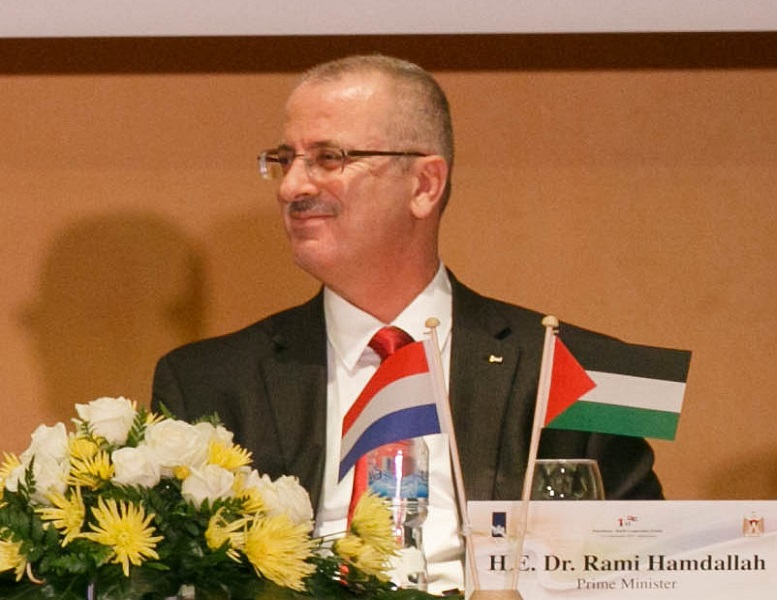
                  The Emerging Prime Minister
                  Hamdallah heralds from Anupta near Tulkarem in the north of the West Bank. Embarking on an academic path he specialised in linguistics, obtaining an undergraduate degree from Jordan before moving onto the UK where he was awarded with a Masters from the University of Manchester and PhD from Lancaster University. On returning to the occupied Palestinian territories (oPt), Hamdallah rose through the ranks of academia at An Najah National University in Nablus where he became President in 1998. A published writer, avid reader and enthusiastic lecturer, he earned his reputation as a scholar and academic leader not only in the Middle East but throughout the Mediterranean region and Europe, becoming a committee member and representative of numerous international academic organisations. Indeed, under his tenure An Najah University has developed in both size and quality with 20,000 students and 3,000 staff making it the largest university in the oPt, while facilities such as a state of the art media centre, a specialised IT centre, plus a teaching hospital make it a valuable institution for the sustainable development of a Palestinian state.

                  However, such success in a highly politicised and restricted environment has required a considerable degree of savoir faire, particularly in a university that has shown itself in the past to be a microcosm of the larger unstable framework, a place where political actors such as chief negotiator for the Palestinian Authority (PA) Saeb Erakat, and Nasr Al-Shaer the former Deputy Prime Minister of the Hamas formed government from 2006, form part of the academic faculty. At times, disharmony amongst both staff and students reflecting either the Fatah-Hamas divide or more local grievances have on occasion spilled over into violent confrontations. In facing the constant threat of Israeli incursions (as witnessed during the First Intifada), it has been Hamdallah’s ability to negotiate and remain uncompromising in many of his decisions in the process that has created the necessary stability for An Najah to flourish. In sum, during a presidency that has covered an intifada (the Second) and an election victory for Hamas, Hamdallah has proven himself to be a strong leader, and one that has chosen to put the welfare of society and education above all discriminatory accusations and political beliefs. During a meeting with Hamdallah in 2011, he stated “We Palestinians have helped build countries all over the world, particularly the Gulf, and one day we will have the chance to build our own. It is therefore important that we put education at the foundation of this development as to enable our competitive growth”.
                  Maintaining this emphasis in regards to An Najah has however required considerable infrastructural development and subsequently financial support, which under the circumstances of the occupation has proved a difficult task. According to a financial advisor of An Najah “There is a sustainable running cost deficit of 14%. However, with the state covering only 2% of the overall costs and tuition fees 73%, there is a constant need to boost revenue by other means, through expat donors or international projects for example.” Based on an ethos of ‘build it and they will not only stay but come’, the establishing of alumni networks and an international relations office under the guidance of Hamdallah have gone some way to supporting this goal, but it is the current Prime Minister’s relations with the Gulf States that have provided the most significant source of funding for the University’s expansion. As an advisor of Hamdallah stated “he has spent weeks at a time in the Gulf negotiating with various dignitaries which more often than not has produced positive results”. This is evidenced by the 870 seat theatre built on the University’s new campus with funds provided by Prince Turki Bin Abdul Aziz of Saudi Arabia. It is therefore estimated that during his time as President of An Najah, Hamdallah through various networks has helped raise US$400 million for the University.

                  It is precisely this acumen which led to Hamdallah being appointed as Secretary General of the Palestinian Central Elections Commission in 2002, where as part of a body called by former U.S. President Jimmy Carter as “”, he oversaw the 2006 Legislative elections. Although to the dismay of the international community this resulted in a victory for the Hamas-led political bloc, it did nevertheless universally bolster the reputation of Hamdallah as a transparent and efficient professional, which also led to his being selected as the Chairman of the Palestine Securities Exchange in 2008. National development and politics have therefore remained an integral part of Hamdallah’s career path and it is understandable that as his credibility has increased, so have the demands for his expertise amongst the local and international political elite. As a close associate of Hamdallah said “even Abbas and Fayyad themselves have sought consul with Rami at regular intervals”.

                  A Poisoned Chalice?
                  Despite being a very important period of time for Palestinian politics, the restrictive framework in which the PA’s political leaders have to work within can be considered somewhat of a curse rather than an opportunity. Therefore, for close observers the resignation of Fayyad from his position as Prime Minister did not come as such a surprise. Relations with Abbas, Fatah and Hamas were at an all time low, and with national debt reaching there have been justifications for concern regarding the long term stability of the PA and Palestine itself. Given the conditions and lack of progression in regards to peace negotiations, Abbas has also begun to feel the strain and his reputation amongst the international community has waned somewhat, particularly since Fayyad stepped down. In Rami Hamdallah however, Abbas has had a natural replacement for PM in waiting, a man whose credibility spreads across the political divide plus the diplomatic community and therefore is a person who has been presented as the last opportunity for Abbas to maintain international relations and ultimately funding for the PA.

                  Nevertheless, from the perspective of the new PM the situation inherited is far from ideal and relative success will depend on how much political and financial flexibility he will be able to obtain in implementing an administrative strategy. It has been stated that Hamdallah will fulfil his duties as an interim PM up until August, when it is thought that upon the announcement of successful unity talks between Fatah and Hamas, elections will finally take place. Nevertheless, this as history tells us is an uncertain process and despite Hamdallah’s reluctance to continue beyond this period, the interim situation could be prolonged. It is therefore advised that Hamdallah be given the necessary space to fulfil his role as a proven leader. This of course will require concessions and less interference from the President’s office, which up until now under both Arafat and Abbas has held considerable sway over Palestinian national affairs. Even Abbas himself has suffered such restrictions when serving as Prime Minister alongside Arafat and a repeat of the Fayyad situation will only further decrease his popularity domestically and internationally. From a financial perspective it is also essential that the PM be able to service both the debt incurred under the state building process and the needs of the people, who require access to land, water, work and finance. In the short term, Israel can aid this by agreeing upon a return to the logistic agreements and financial mechanisms developed under the Oslo Accords and respectively, despite their , as this will allow for a more consistent flow of goods and revenue, particularly . Beyond this, new agreements will need to be forged but as it stands it is in the best interest of Abbas and the Israeli government for that matter to allow the PM a less restrictive framework in which to work within.

                  The Challenge Ahead
                  If the international community is determined in promoting peace and a two state solution then it should fully endorse the appointment of Rami Hamdallah as Prime Minister by providing both financial and political support for his office’s activities. For the first time then, and unlike his predecessor, Hamdallah is a leader who by majority commands the respect of the Palestinian people, domestic political parties, Gulf States, Israel and key Middle East peace process actors such as the United States, United Kingdom and France. Therefore, acknowledging prospective unity, pushing for negotiations that recognise the growing imbalance between Israeli settlement expansion and Palestinian needs, and fulfilling funding obligations will provide sufficient leeway for the PM to carry out his domestic duties in the short term. As we know, the long term is uncertain but by pledging support to the new PM at this current juncture will undoubtedly improve stability and perhaps as a consequential positive promote Hamdallah’s name as a future President, a prospect that would be welcomed by many internally and externally.

                  June 2013

                  Stephen Royle is a PhD candidate at Lancaster University and over the past five years has operated as an international relations consultant for An Najah National University.

                  Photo by Minister-president Rutte, published under Creative Commons with no changes made. 

                  Topics
                  Footnotes
                    Related Articles

                    From Mountain People to Partner?

                    Article by Foreign Policy Centre

                    June 17, 2013

                    From Mountain People to Partner?

                    Against the backdrop of the current round of bloodletting that is wracking the region, the Kurdish success story continues to establish itself. In Turkey before the headlines became dominated by the street protests one of the biggest story’s of the year was the deal made in the decades old conflict between Ankara and the PKK. The negotiated agreement that saw hundreds of PKK fighters moving into the borderland of Iraqi Kurdistan followed a sustained improvement in relations between Turkey and the Kurdish Regional Government (KRG) of Iraqi Kurdistan. The landlocked KRG have steadily looked to connect their two greatest assets, energy supplies and stability, through to Turkey. Albright would never have predicted that Turkey, previously so opposed to Kurdish autonomy, would develop such close economic relations with the nearest thing to a state-like entity that the World’s largest stateless people have ever had. As Iraq endures its most violent period in five years, with over 1,000 people killed in May according to the UN, those media that visit the north of the country run out of superlatives to describe the contrast. The standard headlines involves variant around the word ‘boom’ or ‘booming’.

                    This month the Guardian’s Ian Black made the pilgrimage to Iraqi Kurdistan to witness the final steps towards the completion of an oil pipeline that will snake into Turkey carrying with it 300,000 barrels of crude oil a day. Back in the UK industrialists, entrepreneurs, analysts and journalists alike receive a regular stream of invitations from the Middle East Association, the KRG’s office in London or the well connected All-Party Parliamentary Group (APPG) on Kurdistan to tourism conferences (In 2012, over 2.2 million tourists visited Kurdistan), business talks or trade delegations to the region. The invitations often tease with introductions outlining how with 45 billion barrels of oil reserves and 3-6 trillion cubic meters of gas reserves, the Kurdistan Region of Iraq is “one of the last remaining conventional oil and gas frontiers on earth”.

                    Iraqi Kurdistan’s geography, landlocked with conflict-ravaged Syria to the West and quasi-Pariah Iran to the East, may have been a blessing in pushing the KRG towards finding a modus vivendi with Turkey but it limits their long term supply of international investors. I travelled to the region in March and saw their newfound wealth translated into five star hotels, conference centres and infrastructure. It can come as no surprise to see the KRG look to Europe for high-tech investment. Against this frenzy of opportunity and activity you’d think that a government in Westminster that has put commercial diplomacy at the heart of its foreign policy would be at the vanguard of international relations with the nascent Kurdish entity. There are flickers of the potential for a far stronger relationship in the making; this February the UK Parliament recognised Saddam Hussein’s murderous ANFAL campaigns as genocide against the Kurds. This important political recognition is backed by steadily increasing economic links – in July the KRG is holding a one-day tourism infrastructure development, investment and business match-making conference in London, with the support of UK Trade and Investment. However an Iraq-phobia felt by British politicians has combined with an innate wariness as to the region’s long term stability by economic investors.

                    The Director of the APPG, Gary Kent, who has visited the Kurdistan Region 12 times since 2006 with fact-finding delegations, told me: “People were initially confused as to where Kurdistan was, literally. When Iraq was mentioned, they became wary. The APPG and others have made the case that increasing cultural and commercial connections with the Kurdistan Region are of mutual benefit to the UK and the Kurdistan Region. The message has got through. Kurdistan is now on the map…..the export of oil and gas to Turkey will also benefit the UK and Europe. Turkey can become an important energy hub, fuel its growing economy and become a critical cog in the secure and reliable energy resources to Europe”.

                    Indeed the pipeline is both a moment of high opportunity and risk. Relations between Erbil and Baghdad have been poor for some time and in the absence of a constitutional agreement around the hydrocarbons law some fear that a cold war between the centres of Iraqi power could turn hot. Black wrote in the Guardian that the Kurds were “improving their bargaining position to try to force a reluctant Baghdad to comply with the federal constitution”. This tension has manifest in fire fights across the internal border between Iraqi Kurdistan and Iraq. In May three suicide bombers attacked Kurdish security forces and the local headquarters of a Kurdish political party in the disputed area around Kirkuk. Only this week AFP reported that more than 1,000 Kurdish career soldiers in the Iraqi army have deserted and want to be integrated into forces loyal to the KRG.

                    A stronger relationship with a UN Security Council permanent member like the UK could prevent the completion of independent exporting capacity to Turkey becoming an issue of systemic division, as has happened between Sudan and South Sudan. The UK government commitment to the KRG does not have to come with an implicit acceptance of Kurdish independence as paradoxically enough that appears to be that last thing on the KRG’s mind. Independence brings a host of unpredictable consequences in a region whose only stability lies in the seeming permanence of the borders lovingly drawn by Britain and France nearly 100-years ago. Far better, it would seem, to embrace the pragmatisms of trade than the explosive redlines of separatism. Iraq descent into violence is of course a worry to Erbil but their security forces and internal borders buffer themselves against the aftershocks of surrounding regional conflicts.

                    Downing Street should not underestimate the warmth of feeling generated by the House of Commons debate recognising the Kurdish Genocide. A formal government acceptance of this history and real commitment to economic partnership would appear to be a politically and economically sensible step forward. Such a surge in relations could be launched with the hugely symbolic agreement of direct flights, an issue apparently sitting in a technical no-man’s land but surely one that a little bit of political leadership can cure. As Gary Kent explained “we need improved visa issuing facilities in Erbil and direct flights”. The Kurds famous phrase that they have ‘no friends except the mountains’ could be one for the history books as the UK and other European powers discover that amongst the bloodshed of the region there is an emerging gem in the Kurdish north of Iraq.

                    June 2013

                    Photo by Kurdishstruggle, published under Creative Commons with no changes made.

                    Topics
                    Footnotes
                      Related Articles

                       Join our mailing list 

                      Keep informed about events, articles & latest publications from Foreign Policy Centre

                      JOIN