

Skip to content

Footnotes
    Related Articles

    Long Read | The State of the UN

    07/09/26
    Article by Camila Mateos Betancourt

    Expert Briefing | ‘Rhetoric, Disorder, and the Crisis of Democracy’

    Article by Foreign Policy Centre

    July 7, 2026

    Download PDF
    Expert Briefing | ‘Rhetoric, Disorder, and the Crisis of Democracy’

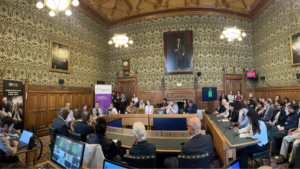
    On 15th June 2026, the Foreign Policy Centre (FPC), the Global Disorder Group at City St. George’s, University of London (City), Shout Out UK (SOUK), and the All-Party Parliamentary Group (APPG) on Political and Media Literacy co-hosted a discussion examining the relationship between political rhetoric, information disorder, and democratic resilience.


    The event was chaired by Susan Coughtrie, FPC’s Executive Director, and brought together an expert panel including: Dr Sasikumar Sundaram, Senior Lecturer at the Department of International Politics at City; Professor Inderjeet Parmar, Professor of International Politics at City; Effie Webb, reporter on The Bureau of Investigative Journalism’s (TBIJ) Big Tech team; Amelia Fairney, SOUK’s Head of Strategy and Communications; and closing reflections from Matt Bishop MP, Chair of the APPG on Political and Media Literacy.


    The discussion explored how increasingly polarised political rhetoric, widening inequality, AI-driven misinformation, and fragmented media ecosystems are reshaping democratic discourse. Speakers examined the structural drivers of democratic strain, the role of technology in amplifying division, and practical approaches to strengthening political and media literacy.


    This briefing outlines key themes and insights from the parliamentary panel discussion:

    • Political rhetoric is a symptom of deeper structural transformations.
    • The concentration of economic and technological power is reshaping democratic discourse.
    • AI is accelerating existing vulnerabilities in the information ecosystem.
    • Political and media literacy must be treated as democratic infrastructure.
    • Strengthening democratic resilience requires systemic responses.


    To explore the key thematic takeaways from this expert discussion, you can download the full briefing here.


    “Democracy depends on freedom of speech, just as a democratic international order depends on the free flow of ideas and dialogue. Yet rhetoric has become a mainstay of power politics, displacing democratic dialogue. The rhetoric of civilizational glory, decline of the West, technological inevitability, and ideological discontentments among others reflect deeper inequalities between states, societies, actors, and institutions. Specifically, rising wealth inequalities and oligarchies have displaced state entrepreneurism aimed at public well being, which is driving rhetoric, disorder, and the crisis of democracy. Political and media literacy should therefore cultivate social purpose and critical judgment, asking not only how we communicate, but what kind of good life and accountabilities democratic societies ought to pursue.”

    Dr Sasikumar Sundaram


    “The challenges posed by misinformation, AI, and polarised rhetoric cannot be separated from the wider political economy of contemporary democracy. Extreme concentrations of economic and technological power have contributed to growing public distrust and of political exclusion and alienation. There is a widespread legitimacy crisis which fosters dangerous political movements. Political and media literacy are therefore not optional additions to democracy; they are vital democratic infrastructure. However, lasting democratic resilience will depend not only on helping citizens navigate information environments, but also on addressing the inequalities and imbalances of power that erode trust in the first place.”

    Professor Inderjeet Parmar


    Footnotes
      Related Articles

      Long Read | The State of the UN

      07/09/26
      Article by Camila Mateos Betancourt

      Op-ed | A Camel Called the Investor Visa

      29/07/26
      Article by Foreign Policy Centre

      Op-ed | Standing up to the Kremlin: Lessons from Moldova for Defeating Russian Election Interference

      Article by Philip J. Javens and Stefan Wolff

      March 25, 2026

      Op-ed | Standing up to the Kremlin: Lessons from Moldova for Defeating Russian Election Interference

      Foreign Information Manipulation and Interference (FIMI) has been high on the agenda of liberal democracies for years.[1] The European External Action Service has just published its fourth annual report on the subject, and the UK Parliament’s Foreign Affairs Committee is due to release the result of its inquiry into disinformation on 27 March.[2] The threat to liberal democracies from hostile autocrats is real and growing, but democratic states and societies are far from defenceless, as the case of one Europe’s smallest and poorest countries vividly illustrates.


      On 28 September 2025, Moldova held its parliamentary elections in the shadow of the Russian war against Ukraine while itself being under relentless attack from the Kremlin – not by enemy soldiers, missiles, and drones, but by an army of chatbots, covert operators, and willing proxies.[3] The choice before the Moldovan people was simple: to cast their vote in support of EU integration or to back parties prioritising an amicable relationship with Russia.


      In many ways it was a litmus test: could a small nation of 2.5 million people preserve the integrity of its electoral process in the face of Russia’s hybrid war? With President Maia Sandu’s pro-European Party of Action and Solidarity (PAS) winning more than 50% of the votes, Moldova has become a success story for how a democracy under attack by a revanchist Russia can protect its sovereignty.[4]  This offers vital lessons for the broader efforts to make liberal democracies more resilient and future-proof them against autocratic subversion.


      It is estimated that the Russian regime spent between €100m and €200m in its effort to undermine Moldova’s parliamentary elections.[5] These resources were partly poured into a multi-layered interference architecture that applied behavioural insights, cross-platform access, and AI-generated content to coordinate its reach. Pro-Russian narratives were pushed on a myriad of fabricated websites employing deepfakes designed to mimic legitimate news media from across the world to create the illusion of an international consensus aligned to the Kremlin’s interests.


      In one instance, hackers impersonated the Council of Europe and “fabricated a story portraying Moldova as condemned by European institutions”. Moldova’s government institutions were also targeted by hackers “to gain access to sensitive information”.[6] Evidence has shown that “on TikTok alone, 1,347 fake accounts generated 42 million interactions”, demonstrating Russia’s capability to bypass traditional media to push pro-Kremlin content directly to its targets.[7]


      Importantly, Russia’s manipulation campaign was not just limited to the digital realm. Another significant part of the resources that Moscow mobilised was used to transfer money to around 130,000 Moldovan citizens in an attempt to buy their votes. Cash from Russia was also used to bribe groups and individuals to provoke disorder and spread fear, including through bomb threats against polling stations for expatriates living in Italy, Romania, Spain and America.[8] The Kremlin even went as far as enlisting Moldovan Orthodox priests to post pro-Russian and anti-European messages on dedicated Telegram channels.[9]


      Russia’s attempts to manipulate the outcome of the elections clearly presented a grave threat to Moldova’s future. Yet despite the vast resources the Kremlin mobilised and the sophistication of its tools, Moldova’s democracy proved remarkably resilient, offering important insights for strategies to counter election interference.


      Moldova’s political leaders, civil society, and European partners pushed back against Russia’s unprecedented influence operation on multiple fronts. To pre-empt election fraud, strategic communication was harnessed.[10] Russian lies were proactively exposed in government communications. Senior EU officials and leaders from key member states visited the country in the run-up to the elections to show their support against Russian manipulation efforts.[11]


      Moldova’s government not only worked to denounce Russian interference, but the country’s law enforcement agencies also made sustained and successful efforts to dismantle Russia’s vote-buying network. This included banning two political parties from participating in the elections, issuing 25,000 fines to individuals who sold their votes and a large-scale public awareness campaign that exposed this fraud through billboards, traditional media and social media.[12]


      Moldovan authorities also coordinated closely with EU neighbours to defend itself against Russian cyberattacks by sharing intelligence and collaborating on investigations. This cross-border cooperation successfully thwarted major disruptions in the days leading up to the vote and thus protected the integrity of Moldova’s electoral process.[13]


      EU institutions and Moldovan NGOs also worked together to highlight the benefits of integration into the EU in a campaign that engaged with celebrities, popular magazines, artists and religious leaders to promote EU values and partnership. By focusing on the concrete results of the EU-funded and Moldovan government-led “European Village” programme, that supports local community projects from building playgrounds to repairing roads, the message to voters was very clear: Moldovans will benefit much more from a future inside the EU rather than outside of it.[14] Ultimately, this too, was a message that cut through the fog of Russian disinformation.


      Moldova’s experience highlights both the vulnerability of countries in the crosshairs of Russian interference campaigns and the limits that these campaigns have in the face of well-conceived and coordinated resistance. Russia’s well-funded and highly sophisticated ‘hybrid war’ poses a real threat. However, European democracies are not defenceless. As the Moldovan experience demonstrates, they can emerge more resilient from the fight back against foreign information manipulation and election interference.


      Philip J. Javens is a Writer/Producer currently studying an MA in International Relations at the University of Birmingham. His professional credits include working on documentaries for Amazon Prime, Netflix, Apple TV+ and more.


      Stefan Wolff is Professor of International Security in the Department of Political Science and International Studies, at the University of Birmingham. A political scientist by background, he specialises in the management of contemporary security challenges, especially in the prevention and settlement of ethnic conflicts, in post-conflict state-building in deeply divided and war-torn societies, and in contemporary geopolitics and great-power rivalry. Wolff has extensive expertise in the post-Soviet space and has also worked on a wide range of other conflicts elsewhere, including in the Middle East and North Africa, in Central Asia, and in sub-Saharan Africa. Wolff holds degrees from the University of Leipzig (Erstes Staatsexamen), the University of Cambridge (M.Phil.), and the LSE (Ph.D.).


      Disclaimer: The views expressed in this piece are those of the individual authors and do not reflect the views of The Foreign Policy Centre.


      [1] Camilla Cavendish, Britain must be more vigilant to the risk of sabotage by hostile states, Financial Times, March 2026, https://www.ft.com/content/720543d3-bdfc-4008-b64d-5a8abbdb0d61

      [2] European External Action Service, 4th EEAS Annual Report on Foreign Information Manipulation and Interference Threats, March 2026, https://www.eeas.europa.eu/eeas/4th-eeas-annual-report-foreign-information-manipulation-and-interference-threats_en; UK Parliament, Foreign Affairs Committee, Disinformation diplomacy: How malign actors are seeking to undermine democracy, https://committees.parliament.uk/work/8818/disinformation-diplomacy-how-malign-actors-are-seeking-to-undermine-democracy/

      [3] David Smith, Engineering Doubt: Cyber Operations and Hybrid Election Interference in Moldova’s 2025 Elections, Watchdog.md, 2026, https://watchdog.md/wp-content/uploads/2026/03/Cyberwarfare-Moldovas-Elections.pdf

      [4] Stefan Wolff, Moldova: pro‑EU party wins majority in election dominated by Russian interference, The Conversation, September 2025, https://theconversation.com/moldova-pro-eu-party-wins-majority-in-election-dominated-by-russian-interference-266179

      [5] The Stimson Center relies on an interview with a senior Moldovan police officer by the Moldovan state information agency for the lower figure, while the Economist cites the Moldovan government as a source of the higher figure. See Sanda Sandu, Moldova’s 2025 Elections: A Test Case for Russia’s Hybrid Warfare, September 2025, https://www.stimson.org/2025/moldovas-2025-elections-a-test-case-for-russias-hybrid-warfare/; Moldpres, Interview with the Head of the General Inspectorate of Police, March 2026, https://www.moldpres.md/rom/interviuri/interviu-moldpres-seful-igp-viorel-cernauteanu-federatia-rusa-fie-prin-interpusul-ilan-sor-fie-prin-alte-elemente-va-incerca-continuu-sa-gaseasca-anumiti-algoritmi-prin-care-sa-ajunga-la-dezordini-si-destabilizari; The Economist, Moldova defies Russia by re-electing its pro-European government, September 2025, https://www.economist.com/europe/2025/09/29/moldova-defies-russia-by-re-electing-its-pro-european-government

      [6] Ancuța (Anna) Hansen, How Russia tried to manipulate Moldova’s election – and what it reveals, The Interpreter, November 2025, https://www.lowyinstitute.org/the-interpreter/how-russia-tried-manipulate-moldova-s-election-what-it-reveals

      [7] Ibid.

      [8] Leo Litra and Gabrielė Valodskaitė, From success to strategy: Three lessons from Moldova’s election, https://ecfr.eu/article/from-success-to-strategy-three-lessons-from-moldovas-election; RFE/RL’s Moldovan Service, EU Monitoring Threats To Moldova’s Elections Amid Alleged Russian Plot To Train Provocateurs In Serbia, September 2025, https://www.rferl.org/a/moldova-russia-parliamentary-election-arrests-provocation-marta-kos-european-commission-maia-sandu/33539603.html; Anna Hansen, How Russia tried to manipulate Moldova’s election, November 2025. https://www.lowyinstitute.org/the-interpreter/how-russia-tried-manipulate-moldova-s-election-what-it-reveals

      [9]  Christian Lowe, Polina Nikolskaya and Anton Zverev, Holy war: How Russia recruited Orthodox priests to sway Moldova’s voters, Reuters, September 2025, https://www.reuters.com/investigations/holy-war-how-russia-recruited-orthodox-priests-sway-moldovas-voters-2025-09-26/

      [10] The Moldovan parliament established a Centre for Strategic Communication and Countering Disinformation in 2023. See Parliament of Moldova, ‘Law No. 242 of 31 July 2023’, https://www.legis.md/cautare/getResults?doc_id=138661&lang=ro. The website of the Centre for Strategic Communication and Countering Disinformation can be accessed here: https://stratcom.md/en/

      [11] EU Neighbours East, European Commissioner for Enlargement Marta Kos visits Moldova, September 2025, https://euneighbourseast.eu/news/latest-news/european-commissioner-for-enlargement-marta-kos-visits-moldova/; Alexander Tanas and Andreas Rinke, German, Polish, French leaders visit Moldova in pre-election show of support for pro-EU president, Reuters, August 2025, https://www.reuters.com/world/german-polish-french-leaders-visit-moldova-pre-election-show-support-pro-eu-2025-08-27/

      [12] Abbey Fenbert, Moldova bans 2 pro-Russian parties on eve of key election, The Kyiv Independent, September 2025, https://kyivindependent.com/moldova-bans-2-pro-russian-parties-on-eve-of-key-election/; Reuters, Moldova bans another pro-Russian party from Sunday’s vote, September 2025, https://www.reuters.com/world/moldova-bans-another-pro-russian-party-sundays-vote-2025-09-27/; ECFR, Leo Litra and Gabriele Valodskaitė, From success to strategy, October 2025, https://ecfr.eu/article/from-success-to-strategy-three-lessons-from-moldovas-election

      [13] Ibid.

      [14] The European Village programme (https://www.euvillages.eu/) is a long-standing Europe-wide EU initiative to invest in local rural infrastructure. Its most recent renewal in Moldova was announced in April 2025. See Moldpres, Two new EU-funded government programs launched in Moldova, April 2025, https://www.moldpres.md/eng/economy/two-new-government-programs-launched-in-moldova-funded-by-european-sources; Leo Litra and Gabrielė Valodskaitė, From success to strategy: Three lessons from Moldova’s election, October 2025, https://ecfr.eu/article/from-success-to-strategy-three-lessons-from-moldovas-election

      Footnotes
        Related Articles

        Four Years On: Journalism Under Drones, Beyond Blackouts

        Article by Sergiy Tomilenko

        February 24, 2026

        Four Years On: Journalism Under Drones, Beyond Blackouts

        Four years into Russia’s full-scale invasion of Ukraine, the war’s impact on media and information integrity remains profound. In this anniversary reflection, Sergiy Tomilenko, President of the National Union of Journalists of Ukraine, examines how journalism has adapted to new battlefield realities and why sustained international support for independent media is essential. As the character of the war evolves, so too does the environment in which Ukrainian journalists operate.


        As Ukraine approaches the fourth anniversary of Russia’s full-scale invasion, the character of the war has changed – and so has the daily work of journalists. Missiles still strike. Artillery still destroys cities. But increasingly, it is the persistent, humming presence of drones above our towns and villages that defines this phase of the war.


        Shahed drones fly low over residential areas at night. First-person-view (FPV) drones hunt vehicles near the frontlines. Surveillance drones monitor movement even in places far from the battlefield. For Ukrainian journalists, this has created a new professional reality. The danger is no longer episodic, it is ambient. It hovers.


        At the same time, Ukraine is enduring one of its most difficult winters since 2022. Repeated attacks on energy infrastructure have triggered rolling blackouts across major cities. Heating failures have left entire districts without warmth in sub-zero temperatures. Internet and mobile networks periodically collapse when power supply fails.


        And yet, journalism continues. Not because it is easy. Not because it is safe. But because it is essential.


        Reporting Under Drones

        In recent months, safety protocols for journalists have evolved once again. Reporters covering frontline regions now routinely carry drone detectors — small handheld devices that warn of incoming unmanned aircraft.


        One Ukrainian fixer I recently met works with international correspondents in high-risk zones. He carries such a detector every day. Not long ago, he found himself under shelling after detecting drone activity nearby. Later, when we spoke, he asked me not to publicly describe the incident in detail.


        “Please,” he said quietly, “I don’t want my wife to worry.”


        That sentence captures the human dimension behind the statistics.


        We often speak in numbers – journalists killed, injured, detained, captured. These figures matter. But behind each one is a family, a daily calculation of risk, and a professional decision to continue.


        The Russian army does not distinguish between civilian and media targets. Journalists wearing “PRESS” markings remain vulnerable. Media vehicles have been hit. Newsrooms have been damaged. In occupied territories, journalists face detention and torture.


        Yet Ukrainian reporters continue to document war crimes, verify information, and provide context in an environment saturated with disinformation and propaganda.


        The Harsh Winter  and the Information Vacuum

        This winter has tested resilience in new ways. Blackouts are not new in Ukraine, but their scale and unpredictability have intensified. In some districts of Kyiv and other cities, electricity follows a fragile schedule — three hours on, seven hours off. In frontline regions, there is no schedule at all.


        For journalism, electricity is not a convenience. It means the ability to upload footage, confirm sources, publish missile alerts, verify rumours, and correct false information circulating online.


        When power disappears, connectivity follows. LTE signals may appear strong on a smartphone screen, yet nothing loads. Journalists drive to petrol stations to charge batteries. They work from cars, stairwells, and temporary co-working spaces.


        In many frontline areas, printed newspapers remain essential.


        This may surprise international audiences accustomed to digital-first ecosystems. But where electricity is unstable and internet access unreliable, local printed newspapers are often the most trusted and accessible source of verified information.


        Frontline newspapers in regions such as Kherson, Zaporizhzhia, Sumy, and Kharkiv continue to publish and distribute under extraordinary conditions. Delivery routes pass through areas regularly shelled or monitored by Russian drones. Advertising revenues have collapsed while printing costs rise. Staff members are sometimes mobilised to the armed forces, leaving skeletal editorial teams.


        Yet they persist because they understand something fundamental: when the information space collapses, disinformation fills the void.


        Russian propaganda adapts quickly. It exploits blackouts and uncertainty. It spreads fabricated narratives through Telegram channels and anonymous accounts. It seeks to undermine morale, inflame divisions, and distort battlefield realities.


        Journalism on the ground is the antidote. It sustains communities when uncertainty grows and prevents fear from turning into chaos.


        Just as electricity grids and heating systems are critical for survival in winter, reliable information is equally vital.


        During missile attacks, verified updates save lives. During evacuations, accurate reporting prevents panic. In de-occupied territories, local media help rebuild trust in institutions and reconnect fragmented communities.


        This is not abstract theory. It is visible in daily practice.


        Local editors receive calls from elderly readers asking whether evacuation rumors are true. Journalists coordinate with authorities to clarify curfews and safety measures. Reporters debunk fake announcements about chemical threats or mobilisation.


        Journalism in wartime requires discipline. It means resisting the temptation to publish unverified information for speed. It requires balancing transparency with operational security. It demands constant ethical judgment.


        Over the past four years, Ukraine’s media community has matured significantly. Newsrooms have strengthened verification standards. Journalists collaborate across outlets to counter disinformation. International partnerships have expanded investigative capacity.


        Yet the sustainability of this ecosystem remains fragile.


        The Role of the Journalists’ Solidarity Centres

        One of the most important developments since 2022 has been the expansion of the Journalists’ Solidarity Centres, coordinated by the National Union of Journalists of Ukraine with international partners.

        Located in cities including Kyiv, Lviv, Ivano-Frankivsk, Dnipro, Zaporizhzhia and Kharkiv, these Centres function as safe hubs for media professionals. They provide protective equipment, stable co-working spaces with electricity and internet, emergency power and Starlink access during blackouts, as well as psychological and legal support. They also assist international correspondents reporting from Ukraine.


        During the harshest weeks of this winter, these Centres once again became lifelines. When offices went dark, journalists relocated there to file stories. When regional outlets lacked charging capacity, equipment was shared. When trauma accumulated quietly, conversations provided relief.


        Beyond practical assistance, these Centres symbolise solidarity — domestic and international alike.They also demonstrate that press freedom support must adapt to wartime realities. Traditional media development models are insufficient when infrastructure is deliberately targeted and economic stability collapses.


        The Human Cost Continues

        We cannot mark this anniversary without acknowledging the ongoing human cost.

        Ukrainian journalists remain in Russian captivity. Others are missing. Families wait for news. Sisters, brothers, fathers, mothers, and spouses carry the burden of uncertainty.


        Recently, I met the sister of a journalist from Melitopol who remains detained. Her voice did not tremble with anger. It carried a quiet exhaustion — the exhaustion of waiting, of not knowing.


        The struggle for press freedom in Ukraine is not only about institutions, it is deeply personal.


        Why the World Should Still Care

        International fatigue is real. The news cycle shifts. Other crises emerge. Yet Ukraine remains a frontline for democratic resilience in Europe.


        If Russian aggression succeeds in silencing independent media in Ukraine, the consequences will extend far beyond our borders. It would signal that violence can erase truth.


        Conversely, every functioning newsroom in a frontline town is evidence that democratic values endure even under bombardment.


        Supporting Ukrainian journalism today is not an act of charity. It is an investment in a broader European security architecture where information integrity matters.


        What Is Needed Now

        The solutions are not complex, but they require sustained commitment.


        Local and regional media need predictable emergency funding that does not vanish when headlines shift. Journalists — particularly those working near the front — require long-term support for both physical safety and psychological resilience. Those still held in Russian captivity need consistent international attention, because silence around their cases risks becoming another form of abandonment.


        Two additional realities deserve clearer recognition. Disinformation does not stop at borders, and confronting it demands genuine cross-border cooperation. A frontline newspaper serving a shelled town in Zaporizhzhia or Kherson is not a lesser form of journalism; it is as strategically important as any national broadcaster.


        Beyond Resilience

        “Resilience” has become one of the defining words of these four years. Ukrainians are resilient. Ukrainian journalists are resilient.


        But resilience should not be romanticised.


        Journalists do not aspire to work under drones. Editors do not aspire to plan print runs around artillery strikes. Fixers do not aspire to calculate risk in order to shield their families from anxiety.

        What Ukrainian journalists aspire to is simple: to work safely, to report truthfully, and to serve their communities.


        Until that day arrives, their work will continue.


        I still think about that fixer — the way he looked at me before speaking, and then quietly asked that I not describe what had happened. He was not afraid for himself. He was afraid of what his wife would feel if she knew.


        Behind every statistic, every damaged newsroom, every equipment list and safety protocol, there are people doing necessary work — and trying to protect those they love from understanding just how dangerous that work has become.


        In wartime, truth does not sustain itself automatically. It endures because individuals choose, day after day, to protect it.


        And Ukrainian journalists continue to make that choice.


        Disclaimer: The views expressed in this piece are those of the individual author and do not reflect the views of The Foreign Policy Centre.


        Sergiy Tomilenko is the President of the National Union of Journalists of Ukraine (NUJU). With over two decades of experience in journalism and media advocacy, Tomilenko has been at the forefront of defending press freedom and journalists’ rights in Ukraine.


        Footnotes
          Related Articles

          Op-ed | A Camel Called the Investor Visa

          29/07/26
          Article by Foreign Policy Centre

          The Psychological Roots of Democratic Disengagement

          15/07/26
          Article by Foreign Policy Centre

           Join our mailing list 

          Keep informed about events, articles & latest publications from Foreign Policy Centre

          JOIN