Skip to content

Long Read | The Technological Limits to Armenia’s Rosatom Decoupling Ambitions

Article by Ilya Roubanis

July 14, 2026

Download PDF
Long Read | The Technological Limits to Armenia’s Rosatom Decoupling Ambitions

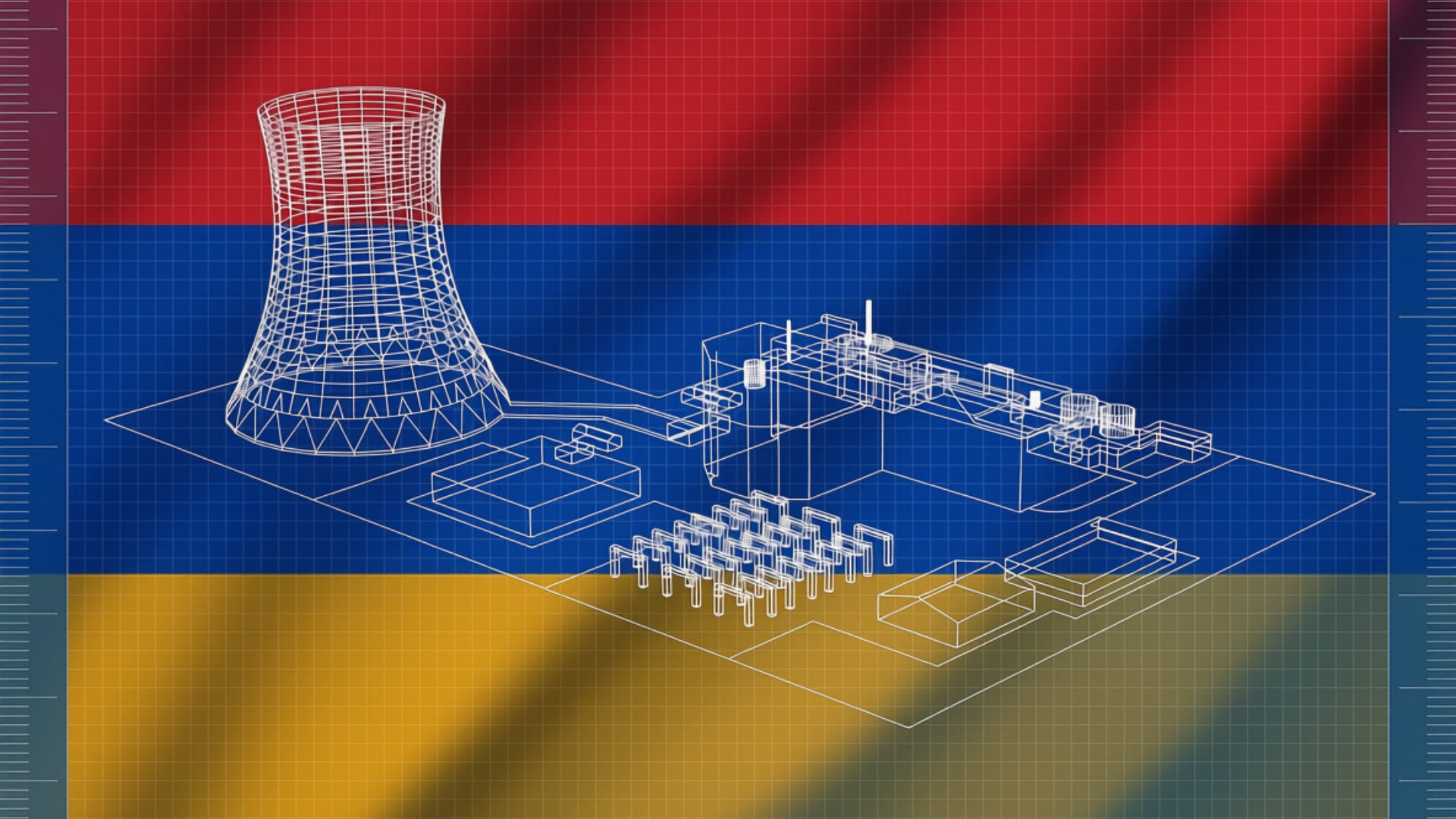
Armenia must decide on its nuclear technology path. The upper-middle-income state in the South Caucasus depends on nuclear energy for upwards of 30% of its energy mix; building a new plant would require a decade. Yerevan looks determined to extend the operation of the Metsamor’s nuclear power plant for as long as possible, potentially until 2036. What happens thereafter is a decision that must be taken by the end of 2026 or early 2027. 


This paper explores the technological, political, and economic factors Armenia must factor in as it considers moving away from its long-standing commitment to Russian technology with Rosatom.


Read the full paper here.


Key conclusions:

1. The consensus for analysts interviewed for this paper is that Rosatom’s value proposition cannot be matched from an industrial policy perspective, particularly given unique spent-fuel-take-back and soft financing elements.


2. There is no apparent benefit for countries that assume the cost of de-risking private investment in experimental US SMR technology, such as Romania, Poland, or indeed Armenia.


3. The one measure Armenia can take to hedge its singular dependence on Rosatom is to consider an alternative supply of nuclear fuel, in cooperation with Westinghouse.


4. The South Caucasus is no longer dominated by a single military power. In this sense, technological ‘lock-ins’ and economic influence are factors that are likely to become diplomatically significant.


Dr Ilya Roubanis (PhD, EUI Florence) is Senior Fellow at the Institute of International Relations in Athens (IDIS) and Research Fellow at the Aletheia Research Institution. His business intelligence work spans energy and security, driven by HUMINT and strategic analysis across Europe and the MENA regions.


Disclaimer: The views expressed in this piece are those of the individual author and do not reflect the views of The Foreign Policy Centre.

Footnotes
    Related Articles

    Op-ed | Armenia’s 2026 Parliamentary Election and the Future of the South Caucasus

    Article by James Stanley and Stefan Wolff

    June 4, 2026

    Op-ed | Armenia’s 2026 Parliamentary Election and the Future of the South Caucasus

    The upcoming Armenian elections are often framed as a choice between Russia and the West. In reality, the outcome will shape the country’s evolving relationship with Russia, the West, and its neighbours in the strategically important South Caucasus. This article forms part of the Foreign Policy Centre’s work on democracy and elections.


    In the shadow of war in the Middle East and Russia’s ongoing war waged against Ukraine, Armenia is heading into parliamentary elections on 7 June that will not only be critical for the country’s own direction but are also likely to have an impact for the wider South Caucasus region; itself of broader geopolitical significance at a crucial north-south and east-west crossroads.


    At stake is first of all the future of incumbent Prime Minister Nikol Pashinyan and his Civil Contract party government, which came to power in 2018 after the Velvet Revolution. The movement ousted the government of long-term leader Serzh Sarkisian, who had tried to prolong his stay in power “by moving from the office of president to that of prime minister”.[1] This triggered nation-wide protests propelling Pashinyan to the premiership that May and to electoral victory in December.


    Under Pashinyan, who was re-elected in 2021, Armenia has generally gravitated towards the European Union and away from Russia.[2] The latter is mostly a result of Russia’s failure to support Armenia during the Azerbaijani offensive in Nagorno-Karabakh in September 2023. The offensive resulted in Azerbaijan retaking control over the territory, which Armenia had illegally occupied since the first Karabakh war in the early 1990s – causing the displacement of around 100,000 Armenians from the region. These events unfolded in the presence of Russian ‘peacekeepers’ deployed under the terms of a cease fire agreement that ended the second Karabakh war in 2020.[3]


    Armenia’s election on 7 June therefore marks an important milestone not only domestically, but also for the wider region. Pashinyan campaigns on a platform “to reopen the country’s borders, lower dependence on Russia, and diversify its foreign and economic profile by normalising relations with traditional adversaries Azerbaijan and Turkey”.[4] If Pashinyan secures another term, this would give him the mandate to carry out a major shift in Armenia’s foreign policy orientation, and in this sense, the elections are also a “strategic referendum on Armenia’s geopolitical orientation.”[5]


    A popular endorsement of Pashinyan’s agenda would enable the continuation of three important trends in the region: first, the gradual emergence of regional ties between Georgia, Armenia and Azerbaijan; second, further declining Russian influence in a region where Moscow once was the undisputed hegemonic power; and third, a strengthening foothold for the EU and the US in a region that is a strategic land bridge towards Central Asia and China.


    The relationship between Moscow and Yerevan has steadily deteriorated over the past decade.[6] Since the beginning of Russia’s full-scale invasion of Ukraine in 2022, the weight and significance of Russia in the region has clearly diminished, but this has been a gradual process, rather than an abrupt rupture.[7]


    While Russia retains significant influence in Georgia, and the Georgian Dream government in Tbilisi is, for now, seemingly more closely aligned with Moscow than with either Brussels or Washington, it is also trying to balance its relationship more carefully between Russia and the West. This includes forging closer ties with Azerbaijan and Türkiye.[8] A victory for Pashinyan and his pro-Western agenda is likely to reinforce the trend towards the geopolitical re-orientation of the region, but this will remain a more careful multi-vector balancing act – with a mixture of political, economic, and cultural relationships to different actors outside the region – rather than a more one-directional pivot towards the West.[9]


    Although Russian influence may be declining, Moscow’s strategic interests in the South Caucasus, including in Armenia, remain strong. Russia is poised to use whatever tools and leverage it still has to prevent a further decline of its role as erstwhile regional hegemon, including by using cultural and religious channels of influence.[10] Economically, Russia remains Armenia’s most important trade partner and energy supplier.[11] Many opposition forces also remain closely aligned with Russia, including the Strong Armenia bloc led by billionaire Samvel Karapetyan.[12] Most Armenians favour diversification of relations rather than an outright rejection of Russia. According to recent polling, 43% see Moscow as the country’s most important partner, compared to 42% who think of Washington in that way, and 29% who think of Brussels.[13]


    The geopolitical dynamics in and around Armenia are therefore more complex and nuanced than the political rhetoric accompanying them. Yet, Russia’s capacity to exercise real influence effectively – and comparably to its previous dominance – is more constrained than ever. For example, Armenia has completely shifted away from Moscow as a security provider not only rhetorically but also in terms of who now supplies most of its arms: where Russia once accounted for over 90% of Armenia’s weapons purchases, its share has now dropped to somewhere between 5% and 10%, while France and India have become Armenia’s primary defence partners.[14]


    Armenia, thus, has not, and most likely will not, replace its close alignment with Russia with one that solely relies on the West. However, the change in foreign policy direction under Pashinyan has clearly shifted away from Russia and towards Brussels and Washington. On the European side, this has been reciprocated with the back-to-back European Political Community summit and first bilateral Armenia-EU summit held in Yerevan in May 2026.[15]


    The United States under President Donald Trump has also demonstrated a continuing interest in the region, which is most evident in Trump’s engagement in trying to broker a permanent peace agreement between Armenia and Azerbaijan. While this has yet to be achieved, several pieces of this puzzle have been put in place, including, most recently, a bilateral framework agreement on the Trump Route for International Peace and Prosperity (TRIPP).[16] Given the transactional and erratic nature of much of Trump’s foreign policy, this is unlikely to be a pivotal game changer either for peace between Armenia and Azerbaijan or for long-term US commitment to the country or the region, but it is part of the broader picture of the geopolitical importance of Armenia and the South Caucasus – and the opportunities that this may create for Pashinyan’s agenda.


    A careful balance therefore needs to be struck between dismissing Armenia’s parliamentary elections as the continuation of Armenia’s historic dependence on Russia, and exclusively reorienting strategic alignment in the much bigger geopolitical game surrounding the South Caucasus. The outcome of the elections will be important for the country’s direction, and speed of travel: whoever forms the next government in Yerevan will still have a range of pre-existing problems to resolve in an environment where external support is neither certain nor dependably benign.


    James Stanley is an M.A. International Relations student at the University of Birmingham. He has experience in policy research and public engagement, including contributing to the Helios exhibition at The Exchange. His research interests include Russia, European security, and the wider Eurasian region.


    Stefan Wolff is Senior Research Fellow at the Foreign Policy Centre and Professor of International Security in the Department of Political Science and International Studies, at the University of Birmingham. A political scientist by background, he specialises in the management of contemporary security challenges, especially in the prevention and settlement of ethnic conflicts, in post-conflict state-building in deeply divided and war-torn societies, and in contemporary geopolitics and great-power rivalry. Wolff has extensive expertise in the post-Soviet space and has also worked on a wide range of other conflicts elsewhere, including in the Middle East and North Africa, in Central Asia, and in sub-Saharan Africa. Wolff holds degrees from the University of Leipzig (Erstes Staatsexamen), the University of Cambridge (M.Phil.), and the LSE (Ph.D.).


    Image: © European Union 2026 – Source : EP


    Disclaimer: The views expressed in this piece are those of the individual authors and do not reflect the views of The Foreign Policy Centre.


    [1] Miriam Lanskoy and Elspeth Suthers, Armenia’s Velvet Revolution. Journal of Democracy, April 2019, https://dx.doi.org/10.1353/jod.2019.0027

    [2] Council of the European Union, EU Relations with Armenia, https://www.consilium.europa.eu/en/policies/armenia/

    [3] Michael Ertl, Nagorno-Karabakh: Conflict between Azerbaijan and Armenians explained, BBC News,September 2023, https://www.bbc.co.uk/news/world-europe-66852070

    [4] Thomas de Waal, Armenia’s Election Is a Foreign Affair, Strategic Europe, November 2025, https://carnegieendowment.org/europe/strategic-europe/2025/11/armenias-election-is-a-foreign-affair

    [5] Robert Lansing Institute, Armenia’s Parliamentary Elections 2026: A Battle for the State’s Geopolitical Future,May 2026, https://lansinginstitute.org/2026/05/18/armenias-parliamentary-elections-2026-a-battle-for-the-states-geopolitical-future/

    [6] Ulviyya Asadzade, Russia’s Grip Weakens In The South Caucasus, Opening Doors To New Players, Radio Free Europe/Radio Liberty, July 2025, https://www.rferl.org/a/south-caucasus-russia-losing-influence-armenia-azerbaijan/33475018.html

    [7] Emil Avdaliani, “Russian Influence Drains Away in the South Caucasus”, Center for European Policy Analysis, 22 May 2026, https://cepa.org/article/russian-influence-drains-away-in-the-south-caucasus/

    [8] Mark Temnycky, Caught Between NATO And Russia, Georgia Turns To The South Caucasus, Forbes, December 2025, https://www.forbes.com/sites/marktemnycky/2025/12/13/caught-between-nato-and-russia-georgia-turns-to-the-south-caucasus/

    [9] Laurence Broers, Armenia’s election: Voters to decide on Pashinyan’s peace agenda”, Chatham House, May 2026, https://www.chathamhouse.org/2026/05/armenias-election-voters-decide-pashinyans-peace-agenda

    [10] Mikayel Zolyan, “Russia Won’t Give Up Its Influence in Armenia Without a Fight”, Carnegie Politika, 3 February 2026, https://carnegieendowment.org/russia-eurasia/politika/2026/01/armenia-russia-drifting-apart; Davit Gasparyan, Russian Religious Networks and Armenia’s Church-State Confrontation, Central Asia-Caucasus Institute, March 2026, https://substack.com/home/post/p-188618614

    [11] SpecialEurasia, Trade as Leverage: Russia’s Enduring Economic Role in Armenia, March 2026, https://www.specialeurasia.com/2026/03/11/trade-russia-armenia-leverage/

    [12] Sergey Kanev, Grabbing him by the ‘Beard’: The Insider identifies the FSB, GRU, and SVR agents Russia sent to Armenia to take on PM Nikol Pashinyan, The Insider, May 2026, https://theins.press/en/inv/292740

    [13] International Republican Institute, Public Opinion Survey: Residents of Armenia, February 2026, March 2026, https://www.iri.org/resources/public-opinion-survey-residents-of-armenia-february-2026/

    [14] Leonid Nersisyan and Sergei Melkonian, Escaping Russia’s Backyard: Armenia’s Strategic Defense Shift, War on the Rocks, November 2024, https://warontherocks.com/escaping-russias-backyard-armenias-strategic-defense-shift/

    [15] Rayhan Demytrie, European leaders converge on Armenia as Russia looks on, BBC News, May 2026, https://www.bbc.co.uk/news/articles/cgkp1124y3yo

    [16] Office of the Spokesperson, The United States and Armenia Announce the Trump Route for International Peace and Prosperity (TRIPP) Framework Agreement and Sign the Strategic Partnership Charter and Critical Minerals Memorandum of Understanding, US Department of State, May 2026, https://www.state.gov/releases/office-of-the-spokesperson/2026/05/the-united-states-and-armenia-announce-tripp-framwork-agreement-and-sign-the-strategic-partnership-charter-and-critical-minerals-mou/

    Footnotes
      Related Articles

      Op-ed | The Taiwan Trap: Why Beijing Needs Russia’s War in Ukraine

      Article by William Dixon and Maksym Beznosiuk

      January 7, 2026

      Op-ed | The Taiwan Trap: Why Beijing Needs Russia’s War in Ukraine

      For the past four years, only one global superpower has had the capacity and influence to stop the war in Ukraine: China. Yet it has chosen not to – why?


      Through a combination of proactive sanctions avoidance, direct military support, and help to keep the Russian economy alive, Beijing has enabled Putin’s war machine to continue long after it should have been exhausted.[1] Russia might be the junior partner in material terms, but the West needs to understand: Beijing needs Moscow even more than Moscow needs Beijing.


      Last month, French President Emmanuel Macron made a direct appeal to Beijing, urging it to exert pressure on the Kremlin to agree to a ceasefire with Ukraine.[2] German Foreign Minister Johann Wadephul made similar efforts, and the same messages have been communicated from the highest levels of EU leadership.[3] Ursula von der Leyen and EU Council President Antonio Costa travelled to meet with President Xi Jinping in June, specifically to seek Chinese leverage to pressure Russia to end the war.[4] However, the deeper insight from all of these European efforts is continued miscalculation.


      When the continent’s leaders appeal to President Xi Jinping to “pressure Putin” toward a ceasefire, they fundamentally misunderstand Beijing’s incentives. They assume China shares an interest in restoring regional stability. It does not. Beijing’s interest lies in Western distraction and fracture, and Russia’s ongoing war in Ukraine is the perfect tool for this.


      China does not support Russia because Moscow is powerful or ideologically aligned – but because it is strategically useful. The asymmetry of the partnership benefits China: it enables Beijing to externalise the costs of confrontation with the West while advancing its geopolitical aims without engaging in direct conflict. What Western leaders fail to understand is that this relationship will continue to deepen and harden. Not despite Ukraine, but because of it – and for three strategic reasons:


      1. Russia is Beijing’s Strategic Lever: It Forces the West to Choose

      China’s most sophisticated gain from Russia’s war on Ukraine is that it forces the West to make difficult strategic choices. By enabling Russian aggression across multiple theatres – from Europe to the Arctic and the Indo-Pacific – Beijing has weaponised the Kremlin’s instability. This diverts Western focus, fractures strategic coherence, and drains resources from the Indo-Pacific competition, which remains China’s principal concern. The Chinese Foreign Minister, Wang Yi, underscored this point explicitly with his European counterpart, Kaja Kallas.[5] He warned that China could not accept Russia losing the war, arguing that such an outcome would allow the United States and the West to shift their full attention toward China and the wider Indo-Pacific.


      The mechanism is straightforward: Russia creates crises faster than the West can address them simultaneously. European capitals are forced to commit defence budgets to the eastern flank; the US Navy divides its attention between NATO’s northern exposure and its forward deployment in the Indo-Pacific. NATO members debate Arctic strategy while China consolidates regional dominance.[6] Each Russian escalation in Ukraine compounds these trade-offs, forcing alliance members to divide attention and resources between simultaneous threats, rather than focusing efforts in a single direction.


      Recent US actions in Venezuela underscore that US power remains decisive but increasingly prioritised by theatre and proximity, reinforcing Beijing’s incentive to sustain the Kremlin’s war in Ukraine as a means of complicating and delaying a complete US strategic concentration on the Indo-Pacific region.


      This is where Beijing’s force multiplier advantage becomes decisive. Recent joint-bomber patrols near Japan – involving Russian nuclear-capable Tu-95 strategic bombers operating alongside Chinese H-6 bombers – demonstrate the operational principle.[7] China signals regional resolve and stretches Japanese air-defence responses without incurring the full political cost of independent action. Russia absorbs the diplomatic friction; China gains the strategic benefits.


      Critically, this approach works because Russia and China operate on different timescales and objectives. Russia seeks immediate battlefield gains in Ukraine. China, by contrast, is playing the longer game of regional dominance. Russia’s urgency becomes China’s strategic cover.


      2. Ukraine is Beijing’s Spanish Civil War: The Taipei Testing Ground

      Just as the 1930s War in the Iberian Peninsula was a live test-bed for the Soviet Union and Nazi Germany, China is now using Russia and Ukraine as its own military and strategic test-bed. The objective is not to conquer Kyiv, but to understand Chinese efforts to take Taipei as we enter the critical “Davidson Window.”[8]


      Beijing has treated the war in Ukraine as a case study for analysing Russian successes and failures across logistics, air defence, reconnaissance-strike integration, and electronic warfare. It has already translated these lessons into the People’s Liberation Army (PLA) doctrine, training, and force development.[9] The PLA increasingly reflects observations drawn from Russia’s adaptations and failures.[10] This is most noticeable in integrated air defence, logistics, and information dominance, accelerating joint operations readiness for high-intensity conflict scenarios, including a potential Taiwan contingency.


      The Kremlin’s experience under sanctions, such as rewiring its economy, rerouting trade flows, and operating under long-term export controls, allows Beijing to test its own economic resilience and evaluate which sanction mechanisms are effective and how to circumvent them.[11] Crucially, this learning comes at minimal cost to Beijing, as Russia absorbs the political, economic, and military risks of experimentation while China refines its own preparedness for an anticipated potential Taiwan escalation in the years ahead.


      3. Russia is Beijing’s Legitimacy: It Accelerates an Alternative Global Order

      While the West exhausts itself debating the future of Ukraine, Beijing exploits Russia’s isolation to accelerate construction of an alternative global economic and political architecture centred not in Washington, but in Beijing. Russia’s sanctions experience and forced pivot toward non-Western partners does not weaken this alternative order – it legitimises and accelerates it.


      Beijing has weaponised Russia’s ostracism to demonstrate that the Western financial system is no longer essential for major powers to thrive. As Russia pivots toward CIPS – the Chinese Cross-Border Payment System – rather than SWIFT, toward bilateral trade settlement rather than dollar-denominated transactions, it becomes a living laboratory proving that economic decoupling from the West is survivable.[12] When Russia joins Chinese-led technology standards initiatives – such as 5G, semiconductors, and AI – while the West maintains separate ecosystems, it proves that both can function independently and in parallel.[13]


      China does not need to force this transition; Russia’s desperation does the work for Beijing. Every successful Russian workaround to sanctions further affirms the viability of Beijing’s own alternative infrastructure. More broadly, Russia’s defiance has accelerated the expansion of the BRICS forum and other solidarity mechanisms that marginalise Western leverage.[14] The BRICS+ bloc now encompasses over 30% of global GDP and is growing. Russia’s willingness to absorb Western punishment while Beijing remains unblemished positions China as the rational, rising power within this alternative consensus – the partner that benefits from Western overreach without bearing its costs. Russia becomes the test case proving that confronting the West-led order is possible.


      Looking Ahead

      The China-Russia partnership succeeds not because it resembles a traditional alliance, but because it resembles a relationship where the latter does not yet realise it is infected. Moscow absorbs costs across every dimension – military escalation, sanctions pressure, political isolation, diplomatic friction – while Beijing extracts strategic value with minimal risk or exposure. This is not a partnership. It is calculated exploitation disguised as alignment.


      Every month that the Kremlin keeps the West locked into European crisis management is a month China gains in the Indo-Pacific with minimal Western involvement. Russia’s willingness to absorb military, diplomatic, and sanctions-related risks enables Beijing to apply cumulative pressure across multiple regions without direct confrontation, stretching US and allied planning capacity while China consolidates military readiness and improves its strategic positioning.


      Every NATO defence dollar committed to the eastern flank is a dollar unavailable for contingency planning for Taiwan. Every Western political argument about burden-sharing and allied commitment is an opening for Beijing to consolidate regional dominance without direct confrontation. NATO has spent four years strengthening European deterrence while inadvertently weakening its position in the theatre that will define the 21st century.


      The real question is not why Beijing supports Moscow: it is whether the West will recognise a trade-off it has unknowingly accepted before it becomes irreversible.


      The architecture of this asymmetry is likely permanent. As long as Ukraine drags on, Beijing wins. As long as the West divides its attention, China advances. Western leaders who continue to appeal for Chinese restraint are asking Beijing to abandon its most significant strategic advantage at precisely the moment it matters most. As soon as the West recognises this reality, Beijing will accelerate its Taiwan timeline, in order to act before Western unity and coordination can emerge to confront them.


      William Dixon is a Senior Associate Fellow of the Royal United Service Institute, specialising in cyber and international security issues.


      Maksym Beznosiuk is a strategy and security analyst & writer whose work focuses on Russia, Ukraine, and international security. 


      Disclaimer: The views expressed in this piece are those of the individual authors and do not reflect the views of The Foreign Policy Centre.


      [1] RFE/RL’s Russian Service, EU Finds China Responsible For 80 Percent of Russia Sanctions Avoidance, Says German Report, May 2025, https://www.rferl.org/a/german-report-eu-china-russia-sanctions-avoidance-80-percent/33425633.htm; Seth G. Jones, China And Russia Bolster Their ‘No Limits’ Alliance, WSJ Opinion, December 2025, https://www.wsj.com/opinion/china-and-russia-bolster-their-no-limits-alliance-c6bc6e49; Keith Bradsher, How a Chinese border town keeps Russia’s economy afloat, The Japan Times, July 2025, https://www.japantimes.co.jp/news/2025/07/25/world/politics/chinese-border-town-russia-economy/; Huileng Tan, Russia’s wartime lifeline from China comes with a price: an ‘embarrassing reversal’ for Moscow, Business Insider, December 2025, https://www.businessinsider.com/russia-economy-china-reliance-oil-exports-embarrassing-reversal-2025-12

      [2] Le Monde with AFP, Macron calls on China to help end war in Ukraine, rebalance trade, Le Monde, December 2025, https://www.lemonde.fr/en/international/article/2025/12/04/macron-tells-xi-that-france-and-china-must-overcome-their-differences_6748135_4.html

      [3] Ministry of Foreign Affairs China, Wang Yi holds talks with German Foreign Minister Waldfol, December 2025, https://www.mfa.gov.cn/wjbzhd/202512/t20251208_11768951.shtml

      [4] Zoya Sheftalovich, EU warns China to push Putin to end war as relations hit ‘inflection point’, Politico, July 2025, https://www.politico.eu/article/eu-warns-china-push-vladimir-putin-russia-end-ukraine-war-relations-hit-inflection-point-summit/

      [5] Reuters, Exclusive: Chinese engines, shipped as ‘cooling units’, power Rssian drones used in Ukraine, July 2025, https://www.reuters.com/business/aerospace-defense/chinese-engines-shipped-cooling-units-power-russian-drones-used-ukraine-2025-07-23/

      [6] Patrik Andersson, China and Russia challenge the Arctic order: But understanding how means looking beyond their partnership, DIIS Policy Brief, July 2025, https://www.diis.dk/en/research/china-and-russia-challenge-the-arctic-order

      [7] Reuters, Russian bombers join Chinese air patrol near Japan as Tokyo-Beijing tensions simmer, CNN World, December 2025, https://edition.cnn.com/2025/12/09/asia/south-korea-japan-china-russia-warplanes-intl-hnk-ml

      [8] Davidson Window signals the period during which senior US defence officials have warned China might attempt military action against Taiwan.

      [9] Colin Christopher, China Accelerates Modernization by Applying Lessons From Russia-Ukraine War, TRADOC Intelligence Post, September 2025, https://oe.tradoc.army.mil/product/china-accelerates-modernization-by-applying-lessons-from-russia-ukraine-war/

      [10] Howard Wang and Brett Zakheim, China’s Lessons From the Russia-Ukraine War: Perceived New Strategic Opportunities and an Emerging Model of Hybrid Warfare, RAND, May 2025, https://www.rand.org/content/dam/rand/pubs/research_reports/RRA3100/RRA3141-4/RAND_RRA3141-4.pdf

      [11] Georgi Kantchev and Lingling Wei, China Is Studying Russia’s Sanctions Evasion to Prepare for Taiwan Conflict, The Wall Street Journal, December 2024, https://www.wsj.com/world/china/china-is-studying-russias-sanctions-evasion-to-prepare-for-taiwan-conflict-5665f508

      [12] Natalia Chabarovskaya, Going Steady: China and Russia’s Economic Ties are Deeper than Washington Thinks, CEPA, June 2025, https://cepa.org/comprehensive-reports/going-steady-china-and-russias-economic-ties-are-deeper-than-washington-thinks/; Gleb Bryanski, Darya Korsunskaya, Elena Fabrichnaya and Gleb Stolyarov, Russia eyes China trade revival as Putin prepares for Xi summit, sources say, Reuters, August 2025, https://www.reuters.com/world/china/russia-eyes-china-trade-revival-putin-prepares-xi-summit-sources-say-2025-08-28/

      [13] Daniel Balazs, IP25091 | China-Russia Dual-Use Technology Cooperation: Geopolitical Bifurcation in the Age of Emerging Technologies, September 2025, RSiS, https://rsis.edu.sg/rsis-publication/idss/ip25091-china-russia-dual-use-technology-cooperation-geopolitical-bifurcation-in-the-age-of-emerging-technologies/

      [14] BRICS is an acronym for a bloc of emerging economies including: Brazil, Russia, India, China and South Africa. With a further expansion in 2024 to include Egypt, Ethiopia, Iran, Saudi Arabia and the United Arab Emirates, it is sometimes referred to as BRICS+. Stewart Patrick et al., BRICS Expansion and the future of World Order: Perspectives from Member States, Partners, and Aspirants, Carnegie Endowment for International Peace, March 2025, https://carnegieendowment.org/research/2025/03/brics-expansion-and-the-future-of-world-order-perspectives-from-member-states-partners-and-aspirants?lang=en

      Footnotes
        Related Articles

        Op-ed | A Camel Called the Investor Visa

        29/07/26
        Article by Foreign Policy Centre

         Join our mailing list 

        Keep informed about events, articles & latest publications from Foreign Policy Centre

        JOIN