Skip to content

Op-ed | Iran Attack Shows Limits of Starmer’s ‘Trump-Whispering’

Article by Dr Andrew Gawthorpe

March 4, 2026

Op-ed | Iran Attack Shows Limits of Starmer’s ‘Trump-Whispering’

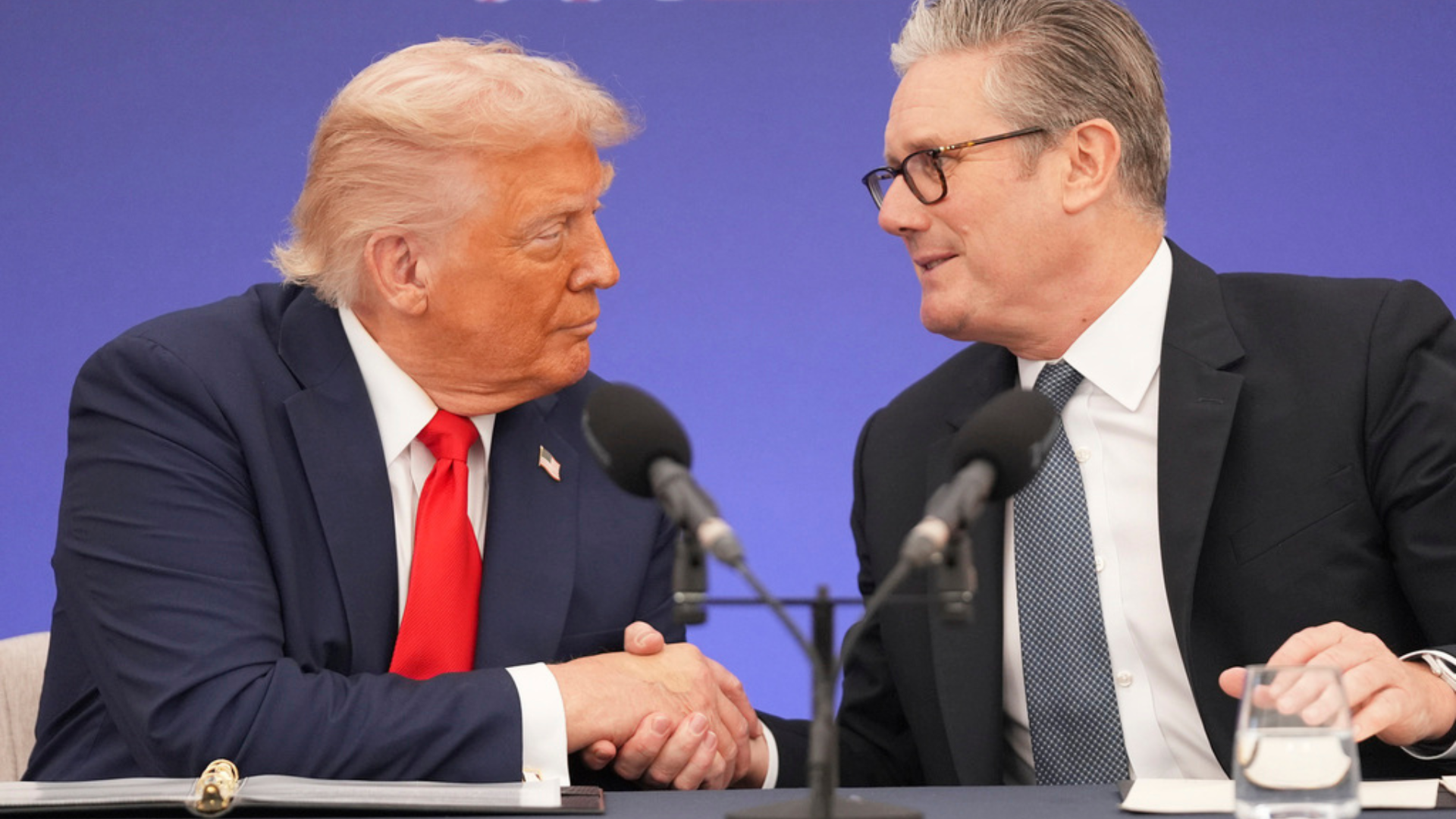
Ever since Donald Trump returned to office in 2025, Keir Starmer has had to perform a difficult balancing act.


On the one hand, he has sought to avoid open confrontation with Trump despite policies that have directly affected British interests, including imposing trade tariffs on the UK and threatening to annex Greenland, the territory of a NATO ally. On the other hand, the British Prime Minister has tried to carve out a space in which to pursue what he perceives as Britain’s national interests. One of the main bases of this strategy was the idea that appeasing Trump would allow Starmer to become “the Trump whisperer”, nudging the US President towards more amenable policies.[1]


With the joint US-Israeli attack on Iran, this effort has reached an ignominious end. Like many UK prime ministers before him, Starmer appears to have discovered that a policy predicated on accommodating 90% of an American president’s agenda in the hope of influencing the remaining 10% is doomed to failure. When Washington decides to act, it will do so anyway – and London will often be left picking up the pieces.


Starmer is not wrong that US foreign policy is very important for the United Kingdom, and that influencing it is desirable. In particular, the US commitment to NATO and the defence of Europe more broadly is vital to British security. Faced with trade-offs in other less vital areas – for instance the exact level of tariffs affecting US-UK trade – pragmatic concessions might be necessary to maintain it. Keeping channels of communication open and friendly is certainly wiser than engaging in unnecessary diplomatic spats.


Ultimately, the administration of President Trump is not one that can be constrained through careful diplomatic management alone. Trump has an expansive view of his right to use military force across the world, scant respect for alliances or international law, and a chaotic decision-making process. It is not so easy to ‘nudge’ him in constructive directions.


Starmer recognised the dangers inherent in the US military build-up in the Middle East at an early stage. He decided to deny the use of Diego Garcia and RAF Fairford as launching points for strikes on Iran and kept quiet about his views on the coming war. At the same time, Starmer – ever the balancer – did not directly state his opposition to it, either.


Had he done so, he would have been on extremely firm ground for two reasons. The first is international law. The US and Israel’s attack on Iran was patently illegal. The UK government recognised this and it was apparently one reason why the use of UK territory for striking Iran was denied.[2] Whatever the horrendous crimes committed by the Iranian government against its own people, further weakening of the norm of non-aggression is clearly not in the UK’s interest.


The second reason is geopolitical. At a time when the UK desperately needs the US to recommit to European security, Trump is once again leading his country down the path of launching a costly war of choice in the Middle East. Rather than preserving their military assets and diplomatic goodwill to deter Russia, both the United States and Europe are now expending them to justify and deal with the consequences of a war of aggression of their own. The economic consequences and strain on military readiness could significantly damage European and British security.


Yet now that the war has begun, despite what appeared to be Starmer’s obvious private opposition, the UK once again finds itself being swept up in America’s wake. After Iran’s predictable retaliation against both Israel and Arab nations, the Prime Minister has authorised the use of Diego Garcia and RAF Fairford for what he terms “defensive” strikes on Iranian missile launchers.[3] Legal gymnastics aside, these “defensive” strikes are indistinguishable from the “offensive” operations that Starmer only a few days ago refused to allow Trump to launch from British bases.


Nor can we be certain that this will end up being the full extent of British involvement. Already, an explosive drone has struck RAF Akrotiri, a British base in Cyprus, and others have been intercepted en route.[4] There are hundreds of thousands of British citizens in Israel and in the Arab nations that are now under Iranian bombardment. The possibility of UK involvement in opening shipping lanes threatened by Iran and its regional allies cannot be ruled out.


In other words, the UK now shares much of the risk that the United States has taken on with this reckless war of choice. Starmer’s policy of balance could not prevent it, and nor can it protect Britain from its consequences.


Disclaimer: The views expressed in this piece are those of the individual author and do not reflect the views of The Foreign Policy Centre.


Andrew Gawthorpe is a Senior Fellow at the Foreign Policy Centre. He isa specialist in US politics and foreign policy at Leiden University. He also writes a newsletter called America Explained. He was previously a teaching fellow at the UK Defence Academy, a research fellow at the Harvard Kennedy School, and a civil servant in the Cabinet Office.


[1] Rowena Mason, Starmer Faces Great Quandary Over ‘Special Relationship’ After Iran Attack, The Guardian, March 2026, https://www.theguardian.com/politics/2026/mar/01/keir-starmer-donald-trump-uk-us-special-relationship-iran.

[2] Brad Lendon, Britain Blocking Use of Air Bases Trump Says Would Be Needed for Strikes on Iran, UK Media Reports, CNN, February 2026, https://edition.cnn.com/2026/02/20/europe/britain-air-base-access-us-iran-intl-hnk-ml.

[3] Lucy Fisher and George Parker, Keir Starmer Will Let US use UK Bases for Attacks on Iranian Missile Sites, Financial Times, March 2026, https://www.ft.com/content/b988499b-1a89-4e56-b0cf-19d5a8ac7111.

[4] Cachella Smith and Nikos Papanikolaou, Two Drones Intercepted Heading for RAF Base, Cyprus Says, BBC, March 2026, https://www.bbc.com/news/articles/cm2r0q310e3o.

Footnotes
    Related Articles

    Op-ed | One Year into Trump 2.0: Domestic Instability and Foreign Policy Disruption

    Article by Dr Andrew Gawthorpe

    February 3, 2026

    Op-ed | One Year into Trump 2.0: Domestic Instability and Foreign Policy Disruption

    Over the past month, President Donald Trump has proven that he still has the capacity to shock the world. On 3 January, he ordered the US military to capture Venezuelan president Nicolás Maduro. A few days later, he renewed his threats to forcibly annex Greenland. This prompted one of the most severe crises in the history of transatlantic relations – before Trump abruptly backed off in a speech at Davos. Trump then authorised a substantial military build-up to take place around Iran, in what may be a precursor to an attempt to overthrow the country’s government – or just another negotiating ploy.


    At the same time, domestic tensions escalated sharply during what some have called the ‘Battle of Minneapolis’ – the most intense confrontation between the federal government and local citizens in modern American memory.[1] The struggle eventually left two people dead and called into question whether the Trump administration could continue implementing its immigration agenda so aggressively.


    In many ways, January 2026 has been a microcosm of Trump’s first year back in office. His foreign policy has been alternatively aggressive, flexible, and – to many allies – just plain confusing. Domestically, he has sought to implement a radical version of his nationalistic and frequently openly racist ‘Make America Great Again’ agenda. In doing so, Trump appears to have gone beyond what most of the public support, causing a huge electoral headache for his party ahead of the midterm elections later this year.


    Domestic woes

    Trump won the 2024 election extremely narrowly. His victory in the popular vote was by a margin of just 0.6%, 7.5 times smaller than Joe Biden’s margin in 2020.


    Although this narrow victory was mostly driven by voter concern over high inflation, since his inauguration Trump has governed as if he had received a broad-based mandate to pursue a radical version of his MAGA agenda.[2] He has attempted to persecute his political opponents and pursue a deportation campaign which has involved flagrant abuses of the rights of countless citizens and residents. When confronted by judges or disapproving members of Congress, he has branded their resistance as a betrayal.[3] At every step, he has sought to sow division rather than unite the nation.


    Americans do not appear to be enjoying the spectacle much. In a recent poll, Trump’s approval rating stood at just 37%, not far from its all-time low.[4] Voters are particularly frustrated that the President has done little to reduce the cost of living, which remains extremely high.[5] With Trump so unpopular, even members of his own party are becoming more willing to criticise him, and they only become more so as the midterms approach.


    Trump’s signature domestic policy initiative of mass deportation has received the most attention. Over the past year, the White House has fundamentally changed how immigration enforcement works. Gone are targeted raids on known undocumented persons with criminal records. Instead, immigration agents have taken to aggressively patrolling urban areas, demanding to see the papers of anyone whose skin colour raises their suspicion. This campaign has involved violations of constitutional rights on a massive scale.[6] It has been justified by openly racist rhetoric from Trump himself, who has referred to the members of some communities as “garbage” who come from “hellholes”.[7]


    Voters have been souring on Trump’s deportation campaign for some time, but events in Minneapolis over the past month led the dam to burst. For weeks, protesters in the city resisted attempts by immigration agents to arrest their neighbours, creating scenes that sapped support for the administration’s aggressive approach. After federal agents then killed two citizens – one a young mother, Renee Nicole Good, and the other a nurse at a veterans’ hospital, Alex Pretti – the nationwide backlash was extreme. In response, Trump removed Greg Bovino, the deputy in charge of the deportation campaign, and signalled a change of course. What comes next is unclear, but now even Trump’s signature domestic policy initiative is being challenged.


    Foreign adventures

    It is common for leaders who face frustration at home to instead look for achievements abroad. American presidents are remarkably free to chart their own course in foreign policy, with few formal requirements to consult Congress or civil servants. Trump has taken full advantage of this freedom, with the result that his foreign policy has been characterised by wild swings, ambitious goals, and little attention paid to practical implementation.


    Perhaps the biggest change from Trump’s first term has been his increased comfort with using military force. Both the capture of Maduro and the bombing of Iran showed that Trump is now looking to the military to score quick wins. Even Greenland became the subject of explicit military threats, prompting alarm among NATO allies. In each and every case, what seems to be missing is any long-term plan for what happens after the military action or threat is over. It rarely seems like Trump is engaging in a rational calculation of means and ends.


    The Greenland affair is a good example. Almost everything that Trump says he wants from Greenland – an increased military presence and mineral mining rights – could be accomplished with simple negotiations and no change of ownership. Instead, he threatened to seize the island outright, doing perhaps irreparable damage to the transatlantic alliance in the progress. He then retreated from his position, indicating that a negotiated arrangement within the existing territorial framework would suffice. All the damage, it seemed, was for nothing.[8]


    Another feature of Trump’s second-term foreign policy is its expansive scope. Trump is sometimes called an isolationist, but if he is then it is hard to explain why he took the time to try to broker peace between Thailand and Cambodia or Azerbaijan and Armenia. He often boasts that he has ended eight wars.[9] Even if his real impact on these conflicts has usually been temporary and marginal, his desire to play global peacemaker is another sign that he is trying to rack up wins on the world stage. It may also be an attempt to distract from his failure to end the war in Ukraine.


    Many European leaders entered the second Trump administration thinking that the main threat facing them was an American withdrawal. But over the last year, it has become increasingly apparent that the more immediate challenge may be something different: focused and hostile intervention in European affairs. From his threats to seize Greenland to his administration’s sustained criticism against European migration policy and liberal values, Trump seems to reshape Europe more than he wants to abandon it.


    For Europeans, this is an uncomfortable and dangerous place to be in. Since the dawn of American global power a century or so ago, every region of the world except Europe has been subject to Washington’s capricious and often destructive power. The alliances and bonds of affection that seemed to shield Europe from these attentions are fraying, and it is natural for Europeans to wonder what awaits them.


    It would be unwise for European leaders to assume that Trump’s domestic problems will constrain his international agenda. In fact, the harder things get at home, the more his gaze might shift abroad – with unpredictable consequences for us all.


    Andrew Gawthorpe is a Senior Fellow at the Foreign Policy Centre and a specialist in U.S. politics and foreign policy at Leiden University. He also writes a newsletter called America Explained.


    Disclaimer: The views expressed in this piece are those of the individual author and do not reflect the views of The Foreign Policy Centre.


    [1] Ryan Cooper, The Battle of Minneapolis is Not Over, Prospect, January 2026, https://prospect.org/2026/01/29/ice-trump-minneapolis-alex-pretti-border-protection-kristi-noem-stephen-miller/

    [2] Oxford Economics, Inflation was the Main Driver for Trump Victory, November 2024, https://www.oxfordeconomics.com/resource/inflation-was-the-main-driver-for-trump-victory/

    [3] Kevin Frey and Mychael Schnell, Trump Suggests Some Democrats should be Hanged – and Some Republicans Rush to his Defence, MS NOW, November 2025, https://www.ms.now/news/trump-calls-democrats-seditious-traitors-republicans-rcna245028; Dan Maurer, ‘On Treason and Traitors’, Lawfare, June 2025, https://www.lawfaremedia.org/article/on-treason-and-traitors

    [4] Hannah Hartig and Jocelyn Kiley, Confidence in Trump Dips, and Fewer Now Say They Support his Policies and Plans, Pew Research, January 2026, https://www.pewresearch.org/politics/2026/01/29/confidence-in-trump-dips-and-fewer-now-say-they-support-his-policies-and-plans/.

    [5] Kathryn Palmer, How is Trump on Affordability? What Most Voters Said in New Poll, USA Today, January 2026, https://eu.usatoday.com/story/news/politics/2026/01/22/trump-worse-affordability-new-poll/88302812007/

    [6] Kyle Cheney, Judges Across the Country Rebuke ICE for Defying Court Orders, Politico, January 2026, https://www.politico.com/news/2026/01/30/ice-immigration-court-orders-00757894; Walter Olsen, In Minnesota, ICE is Assaulting the Constitutional Rights of Citizens, Cato Institute, January 2026, https://www.cato.org/blog/ice-versus-fourth-amendment

    [7] Melissa Hellmann, Donald Trump in his Own Words – the Year in Racism and Misogyny, The Guardian, December 2025, https://www.theguardian.com/us-news/2025/dec/29/donald-trump-racism-dei-misogyny-2025-review

    [8] Katya Adler, Confronted over Greenland, Europe is Ditching its Softly-Softly Approach to Trump, BBC News, January 2026, https://www.bbc.com/news/articles/c0lx7j1lrwro

    [9] Jake Horton and Nike Beake, How Many Wars has President Trump Really Ended?, BBC News, October 2025, https://www.bbc.com/news/articles/c5y3599gx4qo

    Footnotes
      Related Articles

      Op-ed | Patterns of History in Transatlantic Relations

      Article by David Harley

      January 30, 2026

      Op-ed | Patterns of History in Transatlantic Relations

      In this op-ed, David Harley, FPC Advisory Council member and former EU diplomat, offers an insider perspective on the historical continuities in US foreign policy and their implications for the future of transatlantic relations.


      The slogan ‘America First’ has a long history. Often used by President Donald Trump, the phrase was first coined by President Woodrow Wilson during his 1916 presidential campaign, when he pledged to keep the United States (US) out of the First World War. The US nevertheless entered the war in April 1917. The non-intervention movement in America remained strong during the inter-war years, personified by the pro-Nazi stance taken by Joseph P. Kennedy, the US ambassador to the UK from 1938 to 1940 and father of John F. Kennedy. 


      Despite strong pleading from Winston Churchill, President Franklin Roosevelt would not commit the US to enter the Second World War after the start of hostilities in September 1939. It was only after the Japanese attack on Pearl Harbor on 7 December 1941 that Congress, at Roosevelt’s bidding, unanimously voted to declare war. Six days later, in conditions of utmost secrecy, Churchill set sail for America in the battleship Duke of York. At Roosevelt’s invitation, he was to stay for three weeks in the White House: from their conversations, often until long into the night, the special relationship was born and an alliance forged with the ultimate goal of defeating Nazi Germany and restoring freedom to Western Europe.


      Transatlantic relations today are, in many respects, very different, yet with certain similarities. Trump 2.0 and the machinations of the President himself represent and greatly accentuate a deep-seated historical trend of US foreign policy. Once again, Britain and Europe are under threat of war, this time from Russia, but Trump is clearly no Roosevelt, and clear, decisive leadership on the European side is notably absent. Moreover the scourge of populist nationalism is on the rise, on both sides of the Atlantic. The strong likelihood is that the US under President Trump will disengage from Europe and NATO. 


      Not since the Suez crisis in 1956 has an American president treated Britain with such disdain as the current incumbent. A particularly low point was reached by Trump’s remarks at Davos regarding British soldiers who lost their lives in Afghanistan. These comments have intensified concerns about the future of the transatlantic partnership. The British government now faces an urgent strategic question: how did the UK reach this position, and what should its next course of action be? The current British government’s line of refusing to choose between the US and the EU is becoming increasingly less tenable. 


      As a senior EU official, I witnessed at first hand, at various meetings in Washington and New York, the continued trend of ruthlessly promoting American interests as they defined them. This was evident both under President Clinton and President George W. Bush. In the case of Iraq, both administrations used unproven allegations of WMD (weapons of mass destruction) held by Sadam Hussein as justification for first bombing and then waging war. The Blair government seemed to swallow the American line unquestioningly.


      President Trump’s recently stated objective of taking over Venezuela’s oil reserves echoes words spoken by Vice-President Dick Cheney at a meeting I attended at the White House in July 2002. Cheney made clear that the primary US concern about Iraq was that ‘Saddam is sitting on 10% of the world’s oil reserves, which it cannot allow to fall into the hands of a rogue state or a murderous dictator who refuses to cooperate with the international community’. At the time, Cheney had recently served as CEO of the oil and gas company Haliburton (1995-2000), and as Vice-President he still retained significant stock options. 


      At a meeting later that day with Condoleezza Rice, national security adviser to President Bush, she began with a little joke that policy differences between Europe and the US had always existed, ever since American independence and even to the burning of the White House by British Forces in 1814. She went on to state forcefully the US’s ‘profound reservations’ about ever submitting to judgments of the International Criminal Court. Rice made it abundantly clear that the US would only recognise or cooperate with international institutions ‘such as the UN or even the EU if and when it served their national interest’. 


      Although Britain backed the Bush administration over Iraq, other political leaders in mainland Europe were not blind to these long-standing features of US foreign policy and took a very different view. During a lunch I attended in June 2003 at the Élysée Palace, President Jacques Chirac launched into a furious diatribe against US policy. I discreetly noted down the President’s words as follows: ‘Since the fall of the Berlin Wall, Europe has no longer been strategically important for the US. The Balkans conflict masked this change. The main objective of US foreign policy is to break up Europe.’


      If Chirac’s analysis may have sounded exaggerated at the time, over 20 years later his words have proved prescient. The warnings from the patterns of history were there but we – Britain and Europe – chose to ignore them. We must hope that it is not too late to change course as we face the dual threat of Russian expansion and American withdrawal. As Mark Carney memorably said earlier this month in Davos nostalgia is not a strategy.’ In today’s turbulent times, nor is the special relationship.


      David Harley is a former EU diplomat, political communications consultant, and author. Posts held include Deputy Secretary-General of the European Parliament and Senior Advisor at the Brussels public affairs agency Burson Cohn & Wolfe. He holds a degree in Modern Languages from the University of Cambridge and a Diploma in Creative Writing from the University of East Anglia. In 2021 David published the transcription of his political diaries in ‘ Matters of Record – Inside European Politics’ and in 2022 co-edited ‘The Forgotten Tribe – British MEPs 1979-2020’. He is currently a member of the Foreign Policy Centre’s Advisory Board, and is a regular speaker and commentator on UK-EU relations.


      Disclaimer: The views expressed in this piece are those of the individual author and do not reflect the views of The Foreign Policy Centre.

      Footnotes
        Related Articles

        Expert Look | Venezuela in Focus: Human Rights, Geopolitical Dilemmas, and International Law

        Article by Foreign Policy Centre

        January 19, 2026

        Expert Look | Venezuela in Focus: Human Rights, Geopolitical Dilemmas, and International Law

        The capture of Nicolás Maduro by the US military has triggered an immediate and polarised international debate. Questions of sovereignty, legality, and precedent have rightly come to the fore, reviving anxieties about the erosion of the rules-based international order and the risks of unilateral military action.


        However, Venezuela’s collapse did not begin on the night of the intervention. It is the result of decades of institutional dismantling, systematic repression, and the hollowing out of democratic accountability. Over time, this internal erosion became entangled with external interests, regional power dynamics, and repeated failures of international engagement. The result is a crisis that is at once legal, political, humanitarian, and geopolitical, and one that resists explanation through any single analytical lens.


        This expert analysis brings together four perspectives that speak to different, but interconnected, dimensions of the Venezuelan crisis. Laura Vidal, digital rights researcher and civil society observer, centres the human rights reality inside Venezuela, highlighting that legal debates detached from lived experience risk normalising repression and compounding victimisation. Andrew Gawthorpe, FPC Senior Fellow, analyses the emerging US strategy towards Venezuela, arguing that Washington is moving away from ‘regime change’ towards a more coercive model of ‘regime management’, with uncertain leverage and destabilising consequences. Dame Audrey Glover, FPC’s Chair of Trustees, sets out the international legal implications of the US operation, underscoring the dangers posed by selective adherence to foundational legal norms. Stefan Wolff, FPC Senior Fellow, examines the dilemmas facing Europe as it seeks to reconcile its commitment to a rules-based order with alliance politics and shifting power realities.


        Taken together, these contributions expose the risks of selective concern: invoking international law only at moments of crisis, privileging geopolitical stability over accountability, or debating legality while disregarding human suffering. If Venezuela is to be understood and addressed in a meaningful way, these dimensions need to be held together, not treated as competing narratives.


        The Human Rights Dimension of Venezuela’s Crisis

        By Laura Vidal


        Any assessment of Venezuela’s current crisis that sidelines human rights is necessarily incomplete. The most visible entry point remains the situation of political prisoners.[1] Detentions continue to function as a revolving door: individuals are arrested, released under opaque conditions, and replaced by new detainees.[2] Deaths in custody, enforced disappearances, and prolonged incommunicado detention remain documented practices.[3] Torture centers continue to operate, and releases are often negotiated, partial, or discretionary rather than grounded in due process or judicial review. The pace of releases has been extremely slow, even as new arrests routinely follow moments of political tension, reinforcing a system based on fear rather than accountability.


        This pattern, however, represents only one layer of a much longer process of deterioration. Venezuela’s human rights crisis has unfolded over years through the systematic dismantling of institutions, the erosion of checks and balances, and the capture of the justice system. The result is a complex humanitarian emergency that predates recent geopolitical escalations. Nearly a third of the population has left the country, many under precarious conditions that expose them to exploitation, abuse, and trafficking networks along migration routes. Those who remain face chronic shortages of basic services, including healthcare, electricity, and access to potable water.[4]


        The media landscape has been progressively constrained through closures, licensing pressures, legal harassment, and digital censorship. Accessing information online increasingly requires the use of circumvention tools, exposing users to heightened risks of surveillance and criminalisation. Reporting, documentation, and civic organising have consequently become high-risk activities.[5]


        This reality is often misrepresented as the consequence of international sanctions alone, despite the fact that economic collapse and institutional erosion began years before sectoral sanctions were imposed. Framing the crisis exclusively through sanctions obscures its structural roots and diverts attention from long-standing patterns of repression, impunity, and state failure.[6] Human rights violations in Venezuela are not episodic; they are systemic, cumulative, and deeply embedded in the country’s governance model.


        From Regime Change to Regime Management

        By Andrew Gawthorpe


        The US military operation against Nicolas Maduro represents a novel approach to foreign policy. “Regime change” is out and “regime management” is in. The Trump administration’s intention appears to be to leave the current Venezuelan government formally in place, while coercing it into adopting policies that will benefit US security and economic interests. Washington’s main demands for the government in Caracas include opening up the country’s oil wealth to American investment and control, severing friendly relations with China and Russia, and ending support for the government in Cuba.


        Trump’s methods are nakedly imperial – a throwback to the “gunboat diplomacy” of the nineteenth century. It is notable that they even lack the justification, common in previous US military interventions, with the familiar claim that intervention will liberate the Venezuelan people from a dictatorial government. Instead, Washington is proposing to work with that dictatorial government in order to deliver profits for American oil companies.


        From the perspective of the Trump administration, this strategy has obvious appeal. It lacks the commitment of resources and potentially lives to a long-term military occupation designed to transform Venezuela’s government, as was attempted in Iraq and Afghanistan. At the same time, it remains unclear whether this approach gives the US enough leverage over the government in Venezuela to achieve its goals.


        Venezuela’s new leader, Delcy Rodríguez, has to avoid angering nationalist opinion at home – not least in her country’s military. She cannot go too far in appeasing the US. For their part, American oil companies also have little interest in investing in Venezuela, particularly while the current government remains in place. Meanwhile, President Trump’s attention seems to have wandered, with him now threatening new military action against Iran. As a result, what’s coming next in Venezuela remains highly unclear.


        International Law and the Erosion of Legal Restraint

        By Dame Audrey Glover


        Article 2(4) of the UN Charter states:

        “All members shall refrain in their international relations from the threat or use of force against the territorial integrity or political independence of any State, or in any other manner inconsistent with the Purposes of the United Nations.”


        This article, part of the foundation of the post-Second World War international rules-based order, establishes a core principle against aggression, subject only to narrowly defined exceptions: self-defence and UN Security Council authorisation. This provision is binding on all States, regardless of whether they are members of the United Nations.


        The action of US Forces entering Venezuela uninvited at night to detain President Maduro and his wife, Cilia Flores, and place them in custody in the US to await trial, constitutes a breach of Article 2(4). Under International law, only an assault on another country by military means qualifies as a trigger for self-defence.


        The consequence of the US operation is therefore a violation of Venezuela’s sovereignty, contrary to International Law. Furthermore, the intervention has not resulted in an attempt to restore democratic governance in the country. Maduro has been replaced by his Deputy, Delcy Rodríguez, without an election or consultation of the electorate and opposition– particularly significant given that Maduro himself overturned a prior electoral outcome to retain power. Her appointment undermines any argument that the intervention was undertaken in pursuit of democratic principles.


        For his part, President Trump has said he will ‘run’ Venezuela remotely, a proposition that raises serious questions about both feasibility and legitimacy. It also prompts broader concerns regarding regional security and the future of Venezuela’s oil sector, including how it might be rebuilt and governed under such circumstances.


        Stephen Miller, an adviser to President Trump, has said: “Forget international law. We live in a world that is governed by strength, that is governed by force, that is governed by power”. Such rhetoric reflects an explicit rejection of the legal norms that underpin international stability.


        Recent events including the ongoing Russian invasion of Ukraine, have further imperilled the rules-based international order at the core of which are the principles of individual liberty, intellectual and religious freedom, constitutional democracy and free trade. The most damaging has been the rejection of the principles of international law that the US helped to create. Venezuela stands as the latest example of this deterioration. The time has come to save these principles from extinction.


        Europe and the Dilemmas of the Rules-Based Order

        by Stefan Wolff


        The apprehension of Venezuelan President Nicolas Maduro by the US military on the night of 3rd January is the first time in over three decades that the White House has conducted such an operation. The operation reflects Washington’s new national security strategy and its emphasis on hemispheric dominance, even as it sits in clear tension with international law. For Europe, the operation, and how to respond to it, poses multiple dilemmas.


        The first dilemma concerns how to reconcile hitherto unwavering European support for a rules-based international order with the need to preserve what is left of the transatlantic alliance. This includes American security guarantees for European allies and continuing support for Ukraine’s war effort. The display of American capability and the meek reactions not only by Europe but also by Russia and China also demonstrated that for all the talk of a multipolar world order, Moscow and Beijing have few credible options to respond to American assertions of power. From a European perspective, this reality is in some respects reassuring, especially in the context of the Kremlin’s apparently insatiable revisionism in eastern Europe.


        Closely related is a second dilemma: US ambitions for absolute dominance in the western hemisphere have revived Trump’s designs for Greenland, returning them to the transatlantic agenda where they spell potential for disruption—both in the sense of distracting attention from the actual threat of the Russian aggression against Ukraine and Moscow’s broader hybrid campaign elsewhere on the continent, and of potentially diverting critical resources away from deterring further Russian adventurism in Europe towards Arctic security, an area long neglected by both Europe and the United States.


        The third dilemma is that the removal of Maduro from power is in line with long-stated European preferences for a democratic transition in the country, and as such should be welcomed. However, what seems to have resulted from the US operation is at best a face lift at the top of the Venezuelan regime, followed by internal power consolidation and increased external subservience to the demands of the mercurial incumbent of the White House. This dilemma also has wider implications. Europe may lack the hard power to effect regime change, but not the desire to do so. With probably more than half an eye on the situation in Iran, there are likely some figures in Europe’s political class who would not object too loudly or strongly if the US and/or Israel were adopting a more proactive stance on supporting protesters in Tehran and dozens of other cities. Yet externally driven regime change is hardly ever cost- or consequence-free, as the experiences in Afghanistan, Iraq, and Libya, among others, vividly demonstrate.


        European equivocation and prevarication in response to the US military operation against Maduro reflects the difficulty of navigating these dilemmas. Such ambivalence is neither a long-term solution nor will it allow Europeans to avoid discussing two equally unpalatable options: submitting to the whims of Trump, or an attempt to act independently in an increasingly hostile and lawless world. As so often, Europe is likely to fall back on muddling through: seeking to placate and flatter President Trump while ignoring the flaws and dangers of his foreign policy, and simultaneously trying to build towards the mythical promise of strategic autonomy. This approach rests on the hope that unconstrained, illiberal great power dominance within distinct spheres of influence does not become the new normal – one in which Europe is permanently downgraded to Washington’s, let alone Moscow’s or Beijing’s vassal.


        For a comprehensive examination of the decades-long institutional erosion, systemic human rights abuses, and profound humanitarian crisis that have shaped contemporary Venezuela, see Laura Vidal’s Op-Ed: International law, institutional collapse, and the danger of selective concern, which situates the country’s current situation within a broader history of democratic decay, international inaction, and the human cost.


        Disclaimer: The views expressed in this piece are those of the individual authors and do not reflect the views of The Foreign Policy Centre.


        [1] Human Rights Watch, Venezuela: Political Prisoners Cut Off From the World, September 2025, https://www.hrw.org/news/2025/09/22/venezuela-political-prisoners-cut-off-from-the-world

        [2] Efecto Cocuyo, Efecto Paz #11 – Presos políticos después del 3E, January 2026, https://www.youtube.com/watch?v=EhV_CpfoBpw&t=2821s

        [3] United Nations News, Venezuela’s National Guard linked to killings, torture and repression, UN probe finds, December 2025, https://news.un.org/en/story/2025/12/1166565

        [4] Human Rights Watch, World Report 2025: Venezuela, 2025, https://www.hrw.org/world-report/2025/country-chapters/venezuela

        [5] Puyosa, Azpúrua, Suárez Pérez, How Venezuela became a model for digital authoritarianism, Atlantic Council, July 2024, https://www.atlanticcouncil.org/in-depth-research-reports/how-venezuela-became-a-model-for-digital-authoritarianism/; VE sin Filtro, Censura y represión digital en las elecciones presidenciales en Venezuela, 2025, https://vesinfiltro.org/noticias/2025-03-12-reporte-elecciones-presidenciales/

        [6] Nizar El Fakih, Aproximación al Régimen de Sanciones Internacionales y al caso de Venezuela, IDB, December 2020, https://www.google.com/url?sa=t&source=web&rct=j&opi=89978449&url=https://publications.iadb.org/en/node/29550&ved=2ahUKEwiWtLq81IiSAxWFVKQEHW0vBnUQFnoECBYQAQ&usg=AOvVaw3Ega3sYVRtvTyuCerIVUlw

        Footnotes
          Related Articles

           Join our mailing list 

          Keep informed about events, articles & latest publications from Foreign Policy Centre

          JOIN