Skip to content

One year on: The impact of Russia’s war in Ukraine on Moldova

Article by Iulian Groza

February 24, 2023

One year on: The impact of Russia’s war in Ukraine on Moldova

Russia’s brutal and unjustified war against Ukraine has damaged European security architecture irremediably. One year later, Ukraine is winning, Russia is losing, while the European Union and The North Atlantic Treaty Organization (NATO) are much stronger and united. 


After Ukraine, Moldova is perhaps the most affected state, facing multiple challenges – amplified security threats, an unprecedented influx of refugees, massive trade disruptions, economic slowdown with an inflation rate exceeding 30 per cent in 2022, and a severe energy crisis. To increase energy security, Moldova has: connected to the EU’s power grid together with Ukraine, sourced natural gas from the market, and stored in Romania and Ukraine, with support from the EU and other international partners. 


Russia’s hybrid aggression against Moldova has intensified using local political proxies, conducting cyberattacks, weaponising Moldova’s energy dependency and promoting disinformation campaigns to destabilise the country. The EU and NATO are helping Moldova to increase its security and defence capabilities. For example, thanks to the EU’s Peace Facility, Moldova’s defence budget has doubled over the last year. Positive historical developments have also emerged, with Moldova and Ukraine being granted EU candidate status in June 2022. 


Amidst new security risks, Russia’s plots to destabilise the country have been exposed with threats from the Kremlin implying Moldova could meet the same fate as Ukraine. In the meantime, a mid-term reshuffle by the governing majority took place. The newly-elected Moldovan government appointed on 16th February 2023, has to further increase the domestic institutional resilience to revive the economy. Moreover, Moldova also needs to expedite the implementation of domestic systemic reforms in the justice sector, as well as the EU approximation process aiming to start EU accession negotiations. 


Moldova’s resilience in the face of these multiple challenges is growing, but the country must continue to rely on international support to continue to overcome them and continue its path towards becoming part of the EU.


Iulian Groza is an expert in international relations, European affairs and good governance. He is a former Deputy Foreign Minister of the Republic of Moldova in charge for European integration and international law. He was posted to Brussels at the Moldovan Mission to the EU. Currently, Groza leads the Institute for European Policies and Reforms (IPRE) – a Moldovan think-tank that aims at supporting the European integration process of the Republic of Moldova. He also is a Board member of the Institute for Strategic Initiatives (IPIS). Since 2022, Groza is of of the representatives of Moldovan civil society in the Supreme Security Council and the National Committee for European Integration chaired by the President of the Republic of Moldova. He holds a University Degree in Law. He also did postgraduate European Studies at Birmingham University and NATO Security Studies at SNSPA in Bucharest. He is fluent in English, Russian and Romanian (native) languages. Groza is a career diplomat and holds a diplomatic rank of Minister-Counsellor. He is also an FCO Chevening Scholar.

Footnotes
    Related Articles

    One year on: Rethinking Germany’s defence and foreign policy

    Article by Dr Ed Turner

    One year on: Rethinking Germany’s defence and foreign policy

    For anyone interested in contemporary Germany, the war in Ukraine has had a huge impact.


    First and foremost, Germany has had to rethink some fundamental tenets of its post-war foreign policy: a sense that prioritising peace in Europe meant prioritising peace with Russia no longer worked, and the idea that change could be achieved by trading with Russia has also been comprehensively discredited (posing some difficult questions for Germany’s policy towards China, too). 


    Germany has shown a willingness to send heavy weapons to Ukraine – it has exported arms in the past, but not with the expectation of them being used against Russia. The German-favoured division of labour amongst NATO members, where Germany was more engaged in diplomacy and economic support for nations in conflict rather than tasked with a harder military edge, has come to an end. 


    There remains debate, however, about the extent to which Germany has really had a rethink: the domestic opposition, and countries to Germany’s east, are sceptical about the extent to which the country has lived up to the expectations raised by Chancellor Olaf Scholz’s “watershed moment” (Zeitenwende) speech in the federal parliament after war broke out.


    The crisis has also posed other challenges: to Germany’s economic model, arguably dependent upon cheap energy supplies from Russia; and on domestic political cohesion and indeed on keeping the ruling coalition together (with Scholz’s SPD more cautious towards Russia than his partners in the liberals and Greens). Lastly in the sphere of public opinion, the old divide between eastern and western Germany has been exacerbated, with easterners more sceptical about supporting Ukraine than their counterparts in the west.

    Footnotes
      Related Articles

      One year on: The EU and the UK’s role in multilateral spaces

      Article by Anna Chernova

      One year on: The EU and the UK’s role in multilateral spaces

      Last year’s massive escalation of the Russian invasion into Ukraine has put global and regional organisations to the test. State capacities for foreign defence and development in European Union (EU) member states, as well as among EU’s allies, were already strained by the economic impacts of the COVID-19 pandemic, compounded by the multitude of other crises in the wider European neighbourhood. 


      Military escalation in the EU’s eastern neighbourhood has highlighted both unifying and divisive policy issues. While there has been general consensus towards support for Ukraine, approaches to containing and addressing the Russian threat vary between some member states. Key policy shifts in states like Germany, as well as consensus building challenges with members like Hungary may widen policy gaps as the crisis further protracts. 


      As the UK plays an important role in supporting Ukraine’s defensive capabilities, aid and recovery efforts – relations with the EU will be critical. Important policy gaps in security cooperation tools and mechanisms left by the FCDO’s Integrated Review, call for the UK to further define what close collaboration with the EU should look like. 


      Greater British investment in multilateral spaces shared with EU stakeholders, such as the OSCE, Council of Europe, G7 and other multilateral spaces, as well as support to an expanding NATO will be important. The EU and its institutions remain key to promoting human security approaches in responding to conflict. Defining and coordinating a values-based foreign policy, grounded in human security values will be a key regional challenge in wider Europe moving forward.

      Footnotes
        Related Articles

        One year on: Is the war creating an existential crisis inside the OSCE?

        Article by Prof Stefan Wolff

        One year on: Is the war creating an existential crisis inside the OSCE?

        Russia’s illegal and unprovoked full-scale invasion of Ukraine has fundamentally changed the dynamics of the Euro-Asian and Euro-Atlantic security order. It poses the gravest threat to security in the Organization for Security and Co-operation in Europe (OSCE) region and to the organisation itself. As a consequence, the OSCE is far from able to play an effective role in dealing not only with the challenge of the war in Ukraine but also with a number of other threats to the security of its participating States and their societies. In fact, the war in Ukraine simultaneously paralyses and consumes the organisation in ways that prevent it from fulfilling its mandate as a provider of comprehensive and cooperative security in the Euro-Asian and Euro-Atlantic space.


        This is particularly problematic because the war in Ukraine is not the only security challenge for the OSCE and its participating States. Threats that pre-date the beginning of the war continue to exist, including the unresolved protracted conflicts in Moldova and the South Caucasus; ongoing boundary disputes in Central Asia; challenges related to violent extremism and radicalisation leading to terrorism (VERLT); and persistent risks emanating from violations of human and minority rights. 


        New threats have emerged that directly relate to the war in Ukraine or are exacerbated by it, such as those related to food and energy security, trade, the still uneven post-pandemic recovery, and endemic problems with corruption. Yet other threats have acquired new prominence on the political agenda, such as the climate emergency. In addition, there are new security issues facing participating States and their societies from outside the OSCE region, such as those related to the crisis in Afghanistan.


        By not being able to perform its role as a platform for dialogue and joint problem-solving, the narrative of the OSCE as being ‘useless’ in dealing with the very issues it was meant to manage constructively becomes a self-fulfilling prophecy, and the organisation’s participating States are in danger of condemning it to a slow and agonising death.

        Footnotes
          Related Articles

          One year on: Kyrgyzstan’s balancing act between Russia and the West

          One year on: Kyrgyzstan’s balancing act between Russia and the West

          Since February 2022, the impact of Russia’s war in Ukraine has rippled across the foreign policies of many countries.


          Central Asian countries have had to quickly adjust their foreign policy narratives and strategies, on various bilateral and multilateral cooperation platforms, to navigate between their long-term strategic partners – Russia and their Western counterparts.


          Kyrgyz foreign policy found itself in a particularly uncomfortable situation as it had to take into account the large population of Kyrgyz labour migrants in Russia alongside their reliance on development aid, a large part of which comes from North American and European countries.


          Russia’s influence on Kyrgyzstan can hardly be underestimated. It is deeply rooted in the shared past and current economic and political ties. Russia trains a significant number of Kyrgyz security service professionals at the FSB Academy. Meanwhile the majority of Kyrgyz labour migrants find employment in Russia, as it is cheaper and easier to travel there. These, and many more factors, certainly shape public and policy-makers’ opinions. 


          However, it would be wrong to say that Russia has Kyrgyzstan’s full support in its war against Ukraine. Kyrgyzstan is one of the most free and dynamic countries in Central Asia. As such, the society is diverse and has so far shown different opinions on the war. Some support Russia, others Ukraine, but the majority are likely busy facing the immediate day-to-day struggles against the backdrop of the post-pandemic and war-time global order. 

          Footnotes
            Related Articles

            One year on: Shifting western perceptions of China and India

            Article by Dr Chris Ogden

            One year on: Shifting western perceptions of China and India

            The war in Ukraine has had a revealing impact concerning how the West perceives Asia’s two behemoths, China and India, as well as the evolving strategic expectations that the US, the UK and others now have towards these two returning great powers.


            Towards Beijing, Western insecurities have come to the fore. Not only of an emergent Moscow-Beijing axis that could herald the coming of a Second Cold War, but also a concern that if Russia’s invasion of Ukraine is not effectively counteracted, China will then feel emboldened to attack Taiwan. Taken together, these concerns flow into a larger fear that the existing liberal international order is about to be eclipsed by an authoritarian alternative. As a result, international criticism has risen vis-à-vis any actions by China. 


            Concerning New Delhi, Western assumptions that India would be naturally aligned with the world’s democracies have been deeply challenged. Moscow’s military action has instead revealed India’s long standing strategic partnership with Russia, as shown by the former’s unwillingness to criticise the latter’s actions in Ukraine. Such a stance has forced Western governments and analysts to reassess their understanding of India’s position in international affairs. And no longer can they strategically take New Delhi for granted.

            Footnotes
              Related Articles

              One year on: The reverberations of the war in the Middle East

              Article by Prof Simon Mabon

              One year on: The reverberations of the war in the Middle East

              A year into the Russian invasion of Ukraine, the reverberations of the conflict continue to be felt across the Middle East. The centrality of the Middle East within global supply chains and geopolitical calculations means that such reverberations are hardly surprising, yet the second order consequences for the people of the region remain catastrophic. In the early days of the conflict, Antonio Gutierrez warned that the conflict risked pushing “tens of millions of people” into food insecurity. A year later, there appears little respite. 


              In Yemen, 30-40 per cent of the country’s wheat imports – which account for 95 per cent of the country’s total usage – come from Russia and Ukraine, meaning that shortages and price rises of around 15 per cent from the previous year have had a devastating impact on people; similar experiences can be found in Syria and Lebanon. In Egypt, where the Sisi regime sought to placate rising unrest with bread subsidies, rising prices have pushed the cost of subsidies up $1.5 billion, prompting Cairo to seek a loan from the IMF. 


              Many of the grievances that led to the mass protests of 2011 known as the Arab Uprisings remain, namely authoritarianism, corruption, inflation, a lack of economic opportunities, and rising food prices. Foreign policy agendas have also been a source of anger for many, such as Iran’s costly support for Hizballah in Lebanon, or the Saudi and Emirati involvement in the Yemen war. A year into the war in Ukraine, the second-order long-term consequences for people and states across the Middle East may be huge.

              Footnotes
                Related Articles

                Old enemies make new friends: Caucasus and India-Pakistan rivalry

                Article by Ilya Roubanis (PhD)

                February 23, 2023

                Download PDF
                Old enemies make new friends: Caucasus and India-Pakistan rivalry

                Summary:

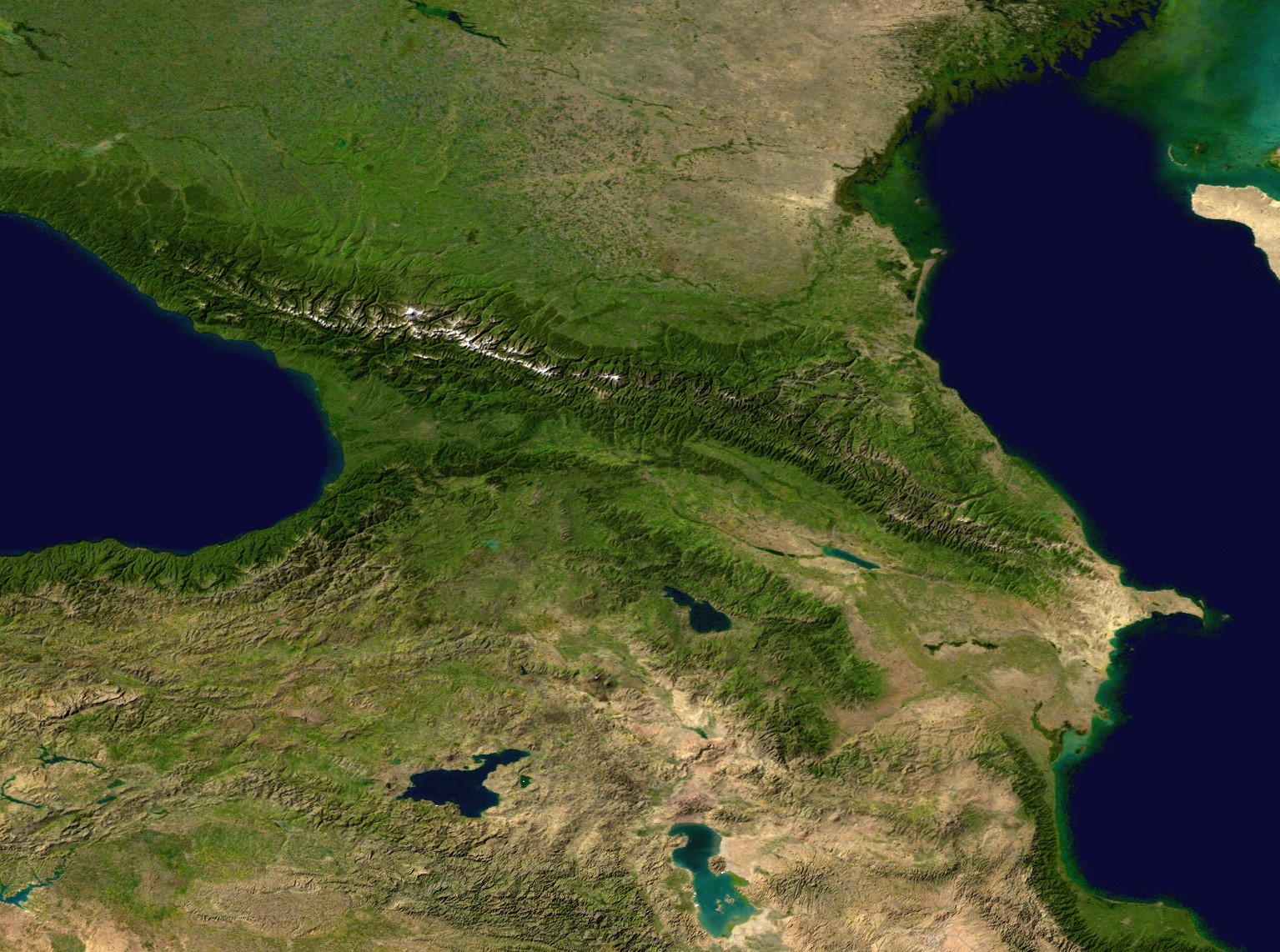
                Ukraine is changing the world. The fact that India and Pakistan are selling arms and military consulting services in the Caucasus is symptomatic of the withering of the Russian military-industrial complex. However, Russia’s loss is not straightforwardly a Western triumph.


                Russia’s 16 per cent share of the global military procurement market has an uncertain future as the war in Ukraine depletes its arms inventory. This development has global strategic implications as arms trade has been fundamental to Moscow’s claim to global power status. From Myanmar to Venezuela, the draining of Russian arms supply strips the Kremlin of its claim to global power. Russia’s sphere of influence is in this sense up for grabs, including the Caucasus, a region formerly regarded as ‘the Near Abroad,’ where the Kremlin had exclusive rather than merely privileged strategic oversight. Symptomatic of Russia’s strategic retreat is the advent of India and Pakistan as new arms suppliers. 


                India is in effect ‘stepping in’ for Russia in Armenia. Pursuing a post-colonial policy of self-reliance, New Delhi has insisted on co-production rights of the arms it buys. For decades, Russia has been India’s military-industrial partner, willing to share its most advanced weapons technology, offering good value for money as well as extending credit. As India’s economy grows, New Delhi accounts for ten per cent of the global military procurement market and Russia has claimed over 80 per cent of this Indian pie. The tables were turned as a result of the war in Ukraine. As Russia can no longer supply arms, Moscow’s clients have looked to India to fill the vacuum. India has obliged and post-Soviet Armenia is New Delhi’s first major customer. As Yerevan is transiting from its own reliance to Russia, Ukraine could turn ‘Made in India’ weapons into a global brand.


                A reflection of this process can be seen in Baku. As Russia is losing the role of the preeminent arms supplier of post-Soviet Azerbaijan, Turkey is cementing its position, extending to its strategic partner arms, consulting, and training. Part of Ankara’s service package has been subcontracted to Pakistan, a key Turkish defence partner. Islamabad, in turn, is taking the chance to pitch jet fighters co-produced with China to Baku and, perhaps in time, Ankara. In sum, while we think of Ukraine as a polarising force that consolidates Western resolve, the withering of the Russian military-industrial complex is a crisis with disruptive consequences that cannot be fully contained. India, Turkey, France, Israel, and Pakistan are rushing to fill the Russian vacuum, snatch new lucrative contracts, and create partnerships that do not neatly fit our current diplomatic taxonomy of ‘East’ and ‘West.’ As value chains are disrupted, so is the global security system.


                Read the full piece here.


                Disclaimer: The views expressed in this piece are those of the individual author and do not reflect the views of The Foreign Policy Centre.


                Ilya Roubanis (PhD, European University Institute) is a British-born International Relations analyst of Greek heritage. He is a fellow of the Observatory on Contemporary Crisis (Madrid) and the International Relations Institute in Athens (IDIS). For over a decade, he has worked in the South Caucasus as a government affairs consultant, risk analyst, and journalist.


                Image by My Past under (CC).

                Footnotes
                  Related Articles

                  Carole Cadwalladr, Investigative Journalist

                  Article by Foreign Policy Centre

                  February 15, 2023

                  Carole Cadwalladr, Investigative Journalist

                  “The personal, physical, psychological and professional toll of fighting this case has been profound. But it’s not my win, it belongs to the legal team and the 28,887 people who stood alongside me. Banks could […] appeal against Mrs Justice Steyn’s interpretation of the law. But not the facts.”[1]

                  Carole Cadwalladr, June 2022


                  STATUS: Ongoing– The case brought by Arron Banks against Carole Cadwalladr was initiated in July 2019, with a preliminary ruling on meaning in December 2019. The full trial was held in January 2022, and the ruling was handed down in Cadwalladr’s favour in July 2022. In February 2023, of the three claims under appeal the Court of Appeal found two in Cadwalladr’s favour and one in Banks. On April 28th, the Court of Appeal ordered Cadwalladr to pay banks £35,000 in damages, costs are yet to be decided.


                  In January 2022, Carole Cadwalladr, best known for her work uncovering the Facebook – Cambridge Analytica scandal in 2018 and investigations into campaign funding around the 2016 Brexit referendum, spent five days in the Royal Courts of Justice defending herself against a libel claim brought by millionaire businessman and Leave.EU funder Arron Banks. Banks had filed a case against Cadwalladr in July 2019 regarding two tweets and two public talks she made between April and July 2019.


                  After a preliminary ruling in December 2019, in which the judge decided the legal meanings of the contested publications, Banks withdrew two of his claims in January 2020.[2] The judge had found the remaining claims, statements made within a TED talk and a tweet that linked to it, to mean that: “On more than one occasion Mr Banks told untruths about a secret relationship he had with the Russian Government in relation to acceptance of foreign funding of electoral campaigns in breach of the law on such funding”.[3] Cadwalladr, however, contested this interpretation, stating in an interview in 2020: “But these are not words I have ever said. On the contrary, I’ve always been very clear that there is no evidence that Banks accepted Russian funding”.[4] Ultimately, this impacted her defence strategy as she would need to prove the truth of the ‘legal meaning’ defined by the judge. As a result, in November 2020, Cadwalladr decided to drop the ‘truth defence’ and she had to pay Banks £62,000 in costs. Much was made of this by Cadwalladr’s detractors to imply she does not believe in her own reporting. Far less widely reported was the Judge’s comments calling Bank’s interpretation of the two claims he ultimately dropped “far-fetched and divorced from the specific context in which those words were used”.


                  Cadwalladr would ultimately go on to win, but her three-year battle came at great personal cost and was, as she has described, akin to stepping ‘into the pages of a Kafka novel’. The judgment handed down by Justice Steyn in June 2022 was heralded as a landmark case for media freedom, as a test case for the public interest defence. However, the judge also took the unprecedented step of stating she found it “neither fair nor apt” to describe the case as a SLAPP suit. Whilst Banks has strenuously denied that he had pursued a SLAPP, and his lawyers stated during the trial that “to suggest it was issued in bad faith simply to stop her reporting is a complete fabrication”, this is not a view shared by members of the UK Anti-SLAPP Coalition (whose co-chairs outlined why in a guest article for the Bar Council).[5]


                  Banks decided to sue Cadwalladr as an individual rather than The Observer, which published her original reporting, or TED, the publisher of her talk. It is this type of tactic that can characterise SLAPPs, not simply the merits of the claim. Isolated from institutional support and funding, Cadwalladr had to risk financial ruin and was only able to defend the case thanks to a successful crowdfunding campaign. Moreover, Cadwalladr wrote on twitter after her trial that in her case 180,000 documents had been subject to forensic keyword searches, narrowed down to 20,00, before 4,000 were ultimately handed over to the other side.


                  Aside from the pressure caused by the legal case itself, the case against Cadwalladr highlighted how there are wider pressures at play. Legal threats and SLAPP cases can feed into broader online harassment and trolling, coordinated or otherwise. Every time there has been a development in Cadwalladr’s case, there was also an influx in online abuse against her. The pattern of abuse Cadwalladr faced has been documented in a case study by UNESCO, which found that “55% of obvious abuse detected [as targeting] Cadwalladr occurs at the personal level. It was highly gendered and designed to hold her up to ridicule, humiliate, belittle and discredit”.[6] The UNESCO study concluded that “the online violence Carole Cadwalladr experienced is a feature of the enabling environment of her online legal harassment”.[7]


                  In November 2022, Cadwalladr spoke at length for the first time about her case and the impact it had on her at the UK Anti-SLAPP Conference, organised by FPC and our partners the Justice for Journalists Foundation and the International Bar Association’s Human Rights Institute. The conversation was moderated by Rebecca Vincent, Director of Operations and Campaigns at Reporters without Borders. The full event is available to watch here:


                  On 7th February 2023, Bank’s appeal, relating to three claims, was heard at the Court of Appeal in London, presided over by President of the King’s Bench Division Dame Victoria Sharp, Lord Justice Singh and Lord Justice Warby. [8]


                  Later that month, on 28th February, the appeal judgment was handed down, which found one claim in Banks’ favour and the other two in Cadwalladr’s. [9] In her original judgment, Judge Steyn had found that Cadwalladr’s public interest defence was no longer applicable after April 2020 (when the Electoral Commission found no evidence that Banks had committed any criminal offence), but that the continued publication of the TED Talk did not cause serious harm to his reputation. The appeal judges overturned this aspect of the ruling, finding that as there was “no public interest defence (nor any other defence) in respect of that period of publication it follows that the claimant is entitled to judgment for damages to be assessed in respect of the publication of the TED Talk” after April 2020.


                  Notably, the appeal judgment accepts that Cadwalladr is not the publisher of the TED Talk, stating: “Although the defendant has admitted responsibility for the publication of the words complained of up to trial, it is common ground that she is not able to control what the TED organisation does. There is an issue about the extent to which she should seek to persuade it to edit the TED Talk or cease publication of the talk in its current form.”


                  On 1 March 2023, members of the UK Anti-SLAPP Coalition issued a statement reiterating their support for Carole Cadwalladr and welcoming that the majority of the appeal had been dismissed.[10]  On April 28th, the Court of Appeal ordered Cadwalladr to pay banks £35,000 in damages, costs are yet to be decided.[11]


                  This case is covered in the London Calling report on pages: 20-21, 23, 62-66, 84 & 87.


                  [1] Carole Cadwalladr, Arron Banks almost crushed me in court. Instead, my quest for the facts was vindicated, The Guardian, June 2022, https://www.theguardian.com/uk-news/commentisfree/2022/jun/19/arron-banks-set-out-to-crush-me-in-court-instead-my-quest-for-the-facts-was-vindicated

                  [2] Owen Bowcott, Arron Banks drops two parts of libel claim against Carole Cadwalladr, The Guardian, January 2020, https://www.theguardian.com/uk-news/2020/jan/23/arron-banks-drops-two-parts-of-libel-claim-against-carole-cadwalladr

                  [3] Bailii, England and Wales High Court (Queen’s Bench Division) Decisions, Banks v Cadwalladr, December 2019.

                  [4] Charlotte Tobitt, Carole Cadwalladr drops truth defence in Arron Banks libel battle but insists claims were in public interest, PressGazette, November 2020, https://pressgazette.co.uk/news/carole-cadwalladr-drops-truth-defence-in-arron-banks-libel-battle-but-insists-claims-were-in-public-interest

                  [5] Co-Chairs of the UK Anti-SLAPP Coalition, SLAPP: A question of definition?, The Bar Council, June 2022, https://www.barcouncil.org.uk/resource/slapp-a-question-of-definition.html

                  [6] Julie Posetti et al, Chapter 4 – Carole Cadwalladr: The networked gaslighting of a high-impact investigative reporter, Carole, UNESCO April 2021, https://en.unesco.org/sites/default/files/the-chilling_chapter4.pdf

                  [7] Ibid.

                  [8] Charlotte Tobitt, Appeal court told Carole Cadwalladr has ‘doubled down’ on Arron Banks ‘covert Russian relationship’ claim, PressGazette, February 2023, https://pressgazette.co.uk/media_law/carole-cadwalladr-arron-banks-libel-appeal/

                  [9] Courts and Tribunals Judiciary, Banks -v- Cadwalladr, February 28 2023, https://www.judiciary.uk/judgments/banks-v-cadwalladr-3/

                  [10] Index on Censorship, UK Anti-SLAPP Coalition reiterates its support for Carole Cadwalladr, March 2023, https://www.indexoncensorship.org/2023/03/uk-anti-slapp-coalition-reiterates-its-support-for-carole-cadwalladr/

                  [11] Press Gazette, Charlotte Tobitt, 2nd May 2023, https://pressgazette.co.uk/media_law/arron-banks-wins-carole-cadwalladr-libel-appeal/ & Scribd, Paul Staines, 2nf May 2023, https://www.scribd.com/document/641654987/Cadwalladr-Ordered-to-Pay-Banks-35-000-Damages#


                  Footnotes
                    Related Articles

                    Eliot Higgins, founder of Bellingcat, an open source news agency

                    Eliot Higgins, founder of Bellingcat, an open source news agency

                    “Prigozhin’s SLAPP case against me was one of the most blatant SLAPP cases I’ve encountered, with evidence indicating it was a direct response to EU sanctions against Prigozhin in part referencing Bellingcat’s work as justification for the sanctions. I also found myself in the perverse situation of Prigozhin receiving sanctions relief from the UK Treasury so he could sue me for saying the thing that he was sanctioned for. It’s clear the current UK laws around SLAPPs are not fit for purpose, and urgent reform is needed.”

                    Eliot Higgins, November 2022


                    STATUS: Concluded – Filed in December 2021, the case was thrown out of court in April 2022. Ongoing questions remain around the granting of licences by the UK Government to allow Yevgeny Prigozhin to pursue the legal case in the UK, despite being under sanctions since 2020.


                    In December 2021, Eliot Higgins had a libel case filed against him in London by Yevgeny Prigozhin, a Russian oligarch often referred to as ‘Putin’s Chef’. The claims related to five tweets, published in August 2020, in which the Bellingcat founder had linked to the investigations published by Bellingcat, CNN and Der Spiegel that reported on Prigozhin’s connections with the Wagner Group. None of the media outlets were sued. Prigozhin had been sanctioned by the UK Government in October 2020 for significant foreign mercenary activity in Libya and multiple breaches of the UN arms embargo, which has been linked to the Wagner Group, a private military company.[1] At the time, Prigozhin denied any association with the Wagner Group, which was also sanctioned in March 2022.[2]


                    At an early hearing, on 23rd March 2022, Edward Miller from Discreet Law LLP successfully applied to withdraw the law firm from representing Prigozhin and asked for said withdrawal to be discussed in private with the judge as it regarded confidential information.[3] The first substantive hearing in the case was scheduled for 13th April 2022 but was postponed due to a last minute request from Prigozhin due to his lack of legal representation. On 18th May 2022, Justice Nicklin struck out the claim from the High Court as Prigozhin repeatedly failed to comply with court orders.[4] According to a press release by Higgins’ lawyers McCue Jury and Partners: “This followed [Prigozhin’s] legal representatives, Discreet Law, withdrawing due—according to Prigozhin—the increased negative attention representing Prigozhin would attract following Russia’s invasion of Ukraine”.[5]


                    In order for a person under sanctions to be able to pay for legal services in the UK, they would have needed a licence from the Office of Financial Sanctions Implementation (OFSI) in HM Treasury. It was initially thought that this licence was given as Prigozhin succeeded in serving Higgins with the lawsuit in London’s High Court, however how this process had happened was unclear until January 2023 (see reference to the openDemocracy article below).[6] However, Higgins’ lawyers also noted in their May 2022 press release: “Discreet Law did not see through the request to HM Treasury for a licence for payment on account of costs that would have enabled Higgins to enforce any costs order issued by the Court against Prigozhin.” This means that Higgins’ was left out of pocket for this failed case against him.


                    Higgins’ lawyers statement also confirmed that they had made a complaint to the SRA and acknowledged that “Free Speech NGOs, such as FPC and Index on Censorship, recognise Prigozhin’s case against Mr Higgins as a Strategic Litigation Against Public Participation (SLAPP).”[7] In September 2022, Higgins posted a twitter thread in which he pointed out that Prigozhin has now admitted his involvement with Wagner and cited it as “a perfect example of how crooks like Prigozhin get to game the UK legal system to attack genuine investigative work”.[8]


                    In November 2022, Eliot Higgins’ lawyer, Matthew Jury, spoke at an evening event Legal intimidation, legal ethics & the role of lawyers? held as part of the UK Anti-SLAPP Conference, organised by FPC and our partners the Justice for Journalists Foundation and the International Bar Association’s Human Rights Institute. The full event is available to watch here.


                    In January 2023, the case came to prominence again when openDemocracy published an article titled ‘Revealed: UK government helped sanctioned Putin ally sue British journalist’, in which it was revealed that OFSI had granted licences for Discreet Law to work on behalf of Prigozhin, and moreover agreed for lawyers to travel to St Petersburg to meet with Prigozhin to discuss the case.[9]


                    FPC’s Director Susan Coughtrie was quoted in the article, stating that the decision-making process for granting licences needed “much closer scrutiny”.


                    “This could not be more pertinent now, with many more individuals sanctioned in light of the Russian invasion of Ukraine,” … “We need assurances from the UK government, which has already committed to addressing SLAPPs, that sanctioned individuals will not be given licence to abuse the UK courts to bully journalists and suppress information in the public interest.”


                    In a subsequent House of Lords Digital and Communications Select Committee session on the 24th January, FPC’s Director raised Higgins’ case and the concerns around the granting of licences by OFSI to sanctioned individuals to pursue SLAPP cases in the UK. The session can be watched here.


                    This development in Higgins’ case subsequently provoked considerably outcry in Parliament where it was raised by several MPs and Peers, with David Lammy MP filing an urgent question in the House of Commons asking the Secretary of State for the Foreign Secretary of State for Foreign, Commonwealth and Development Affairs to make a statement regarding the UK’s involvement in assisting Prigozhin.[10] In response, the Exchequer Secretary to the Treasury, James Cartlidge, stated that the government was committed to SLAPPs reform and regarding sanctioned individuals he added: “we will undertake an internal review to see how such cases are considered in the future.”[11]


                    This case is covered in the London Calling report on pages: 23, 34, 38-39, 80, & 86-87.


                    [1] FCDO, UK sanctions Alexey Navalny’s poisoners, Gov.uk, October 2020, https://www.gov.uk/government/news/uk-sanctions-alexey-navalnys-poisoners

                    [2] FCDO, Foreign Secretary announces 65 new Russian sanctions to cut off vital industries fueling Putin’s war machine, Gov.uk, March 2022, https://www.gov.uk/government/news/foreign-secretary-announces-65-new-russian-sanctions-to-cut-off-vital-industries-fuelling-putins-war-machine

                    [3] Ibid.

                    [4] Jonathan Ames, ‘Putin’s chef’ loses court case against Bellingcat founder, The Times, May 2022, https://www.thetimes.co.uk/article/putins-chef-loses-court-case-against-bellingcat-founder-cvnmjghvg

                    [5] McCue, Jury & Partners, Yevgeniy Prigozhin’s SLAPP action against Bellingcat founder is struck out, May 2022, https://www.mccue-law.com/yevgeniy-prigozhins-action-against-bellingcat-founder-struck-out/

                    [6] CoE’s Safety of Journalists Platform, British Journalist Eliot Higgins Facing SLAPP from Russian Oligarch in London, April 2022, https://fom.coe.int/en/alerte/detail/107637414;globalSearch=true

                    [7] McCue, Jury & Partners, Yevgeniy Prigozhin’s SLAPP action against Bellingcat founder is struck out, May 2022, https://www.mccue-law.com/yevgeniy-prigozhins-action-against-bellingcat-founder-struck-out/

                    [8] Eliot Higgins, Twitter Post, September 2022, https://twitter.com/EliotHiggins/status/1442501201468264452

                    [9] Jim Fitzpatrick, Revealed: UK government helped sanctioned Putin ally sue British journalist’, openDemocracy, January 2023, https://www.opendemocracy.net/en/prigozhin-government-russia-ukraine-hack-libel-slapp/

                    [10] House of Commons, Urgent Question: Wagner Group: Sanctions Regime, Hansard, January 2023, https://hansard.parliament.uk/Commons/2023-01-25/debates/54EFDF55-C956-45FC-8500-C47444EAF09F/WagnerGroupSanctionsRegime

                    [11] Ibid.

                    Footnotes
                      Related Articles

                       Join our mailing list 

                      Keep informed about events, articles & latest publications from Foreign Policy Centre

                      JOIN