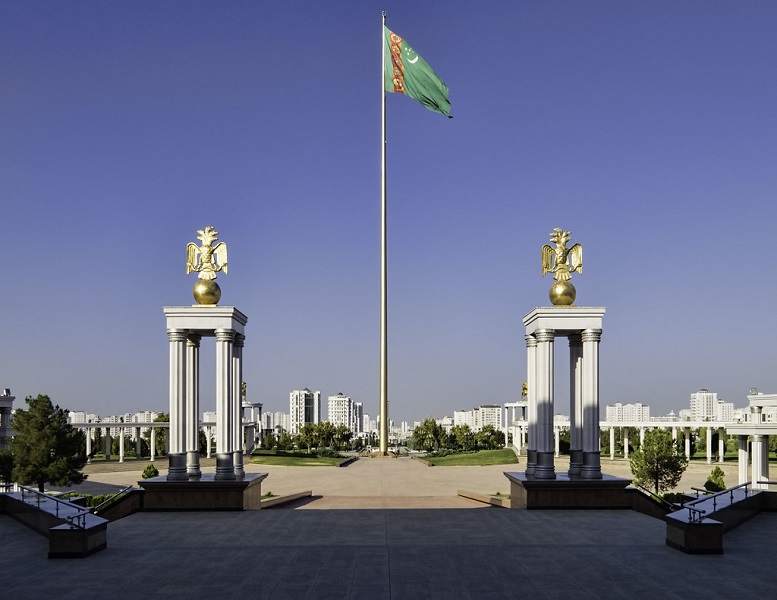
Turkmenistan is a country often overlooked and one that has often courted its own isolation. When international attention is paid the focus tends to be either on the size of its bountiful gas reserves, the sixth largest in the world, or on the eccentricities and excesses of its leadership. This research seeks to shine a spotlight into a country that despite the former, and in no small part because of the latter, finds itself in the middle of a sustained economic crisis that has seen hyper-inflation in the lives of ordinary people and widespread food shortages. This economic crisis has in turn led to the regime’s repression of its people becoming ever tighter. Turkmenistan has always been a country that takes the standard tropes of authoritarian rule in Central Asia and takes them to extremes, turning it ‘up to 11’ when it comes to the scale and scope of its abuses. However its current woes have seen the personality cult of its leadership and the intrusion into the lives of its citizens both rise to new heights as the regime seeks to maintain control of the situation. This publication examines the country’s recent history, political structures, economic performance and international relations to try to understand how Turkmenistan reached this point and discusses what can be done to improve the situation.
A brief history of Turkmenistan
The area covered by modern day Turkmenistan has historically been inhabited by tribes of pastoral nomads, notionally falling under the influence of the Seljuk Empire, the Mongol Khanates of Khiva and Bukhara and the Russian Empire before their incorporation into the Soviet Union. The largest group is the Teke, including the Mary Teke and the Ahal Teke subgroups, the latter which had dominated political life before and after the Soviet Union and to which current President Gurbanguly Berdimuhamedov is a member and former President Saparmurat Niyazov was affiliated, alongside the majority of senior officials.[1] The others include the Yomut (with historic links to fishing and modern linkages in the oil and gas sector), Ersari, Chowdur and Saryk. Under the Soviet Union Turkmenistan was established as a Soviet Socialist Republic in 1925 and attempts were made not only to share power more widely amongst the existing clan structures but to build a sense of shared Turkmen identity. This was met with limited success and was an identity to be subsumed within the larger Soviet identity. Demands for local control had been on the rise as the Union of Soviet Socialist Republics (USSR) unravelled, for example with the Supreme Soviet of Turkmenistan claiming the sovereignty of its laws over those of the USSR in 1990, but its identity remained relatively inchoate.[2] The Agzybirlik (unity) movement of local intellectuals helped spark a revival in the Turkmen language and in the promotion of tribal cultural practices, before being banned as a potential source of political competition.[3]
So the structural challenges facing President Niyazov, who was elected as the chairman of the Supreme Soviet of the Turkmenistan in January 1990 and declared as President of Turkmenistan in October 1991 before formally achieving recognised independence that December, was the same as those facing many of the other leaders of the newly independent Soviet successor states, keeping the country together and independent from domination by its larger neighbours. These strategic challenges remain central to the present day, to some extent providing the method to the madness of the leadership cults that have helped define Turkmenistan.
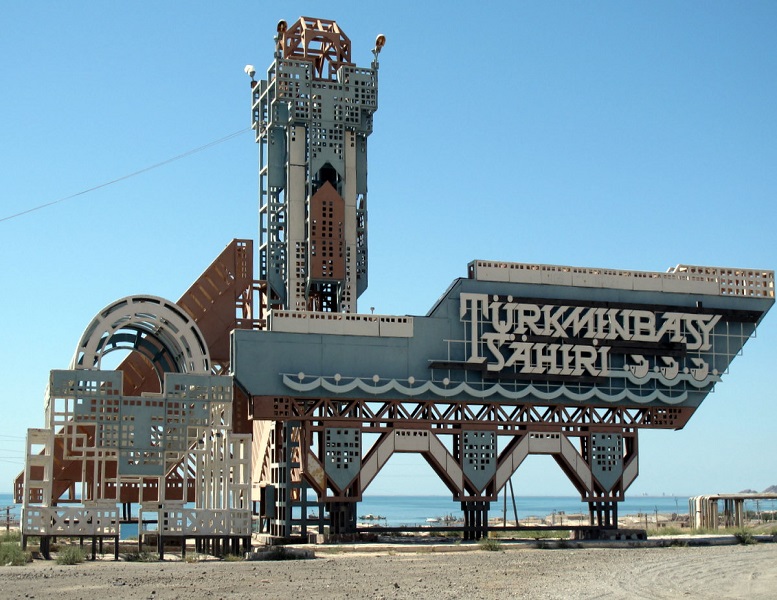
Niyazov had been one of the least reforming members of the final pre-independence Soviet leadership, backing the coup against Gorbachev and initially resistant to calls for independence. However once independence came he took to the task of not only building a new state but of trying to create a shared national history and national identity, inextricably weaving it around his own personality and presenting himself as the embodiment of those national ideals. He drew inspiration from the legacy of Mustafa Kemal Ataturk, whose honorary surname means ‘Father of the Turks’, in shaping the identity of Turkic peoples, and in 1993 would give himself the honorific he is most widely remembered by, Turkmenbashi (‘Head of the Turkmen’).
The Ruhnama (‘the book of soul’), written by Niyazov in two volumes released in 2001 and 2004, which would be seen as totemic of the excesses of his rule, was at its origin a collection of Turkmen history and folklore that aimed, at least in part, to provide a previously non-existent national story.[4] The publication of course was used to glorify Niyazov and his family and to outline what could be loosely described as his thoughts on politics and morality. During his leadership knowledge of the contents and even the ability to recite passages was a standard part of the curriculum and a requirement for passing exams, even for obtaining a driving licence or joining the civil service. These requirements were only phased out gradually after his death.[5] Between 2002 and 2008 the stories from the Ruhnama were used as names for months of the year, including directly naming January as ‘Türkmenbaşy’ and September ‘Ruhnama’. A giant mechanical monument of the book was built in Ashgabat that opens at 8pm each night with a light display and a reading of a passage of its content.[6] The idiosyncratic attachment to Turkmen folklore was also on display in the US $50 million Turkmenbashi’s Land of Fairy Tales theme park in Ashgabat.
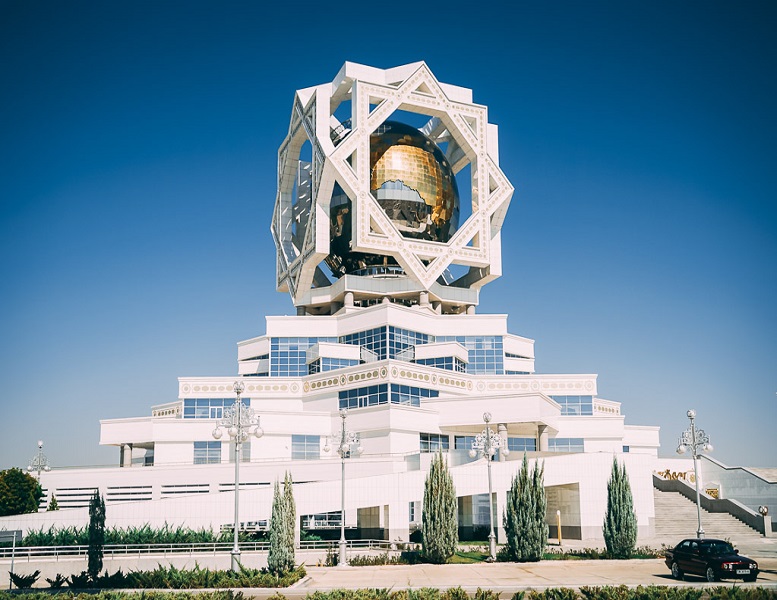
Other grandiose projects include the US $75 million golden Arch of Neutrality, a tripod topped by a golden statue of Niyazov that rotated to constantly face the sun, originally in the centre of Ashgabat. Other than glorifying Niyazov the arch sought to celebrate Turkmenistan’s loudly declared international neutrality, uniquely endorsed by the United Nations (UN) General Assembly in 1995, and aimed to demonstrate to its larger neighbours, Iran and Uzbekistan as well as to Russia and the West, that it posed no threat to their interests and therefore should be left alone. The arch was moved to a new location away from the Presidential Palace in 2010 but is still standing.[7]
At a more direct human level under Niyazov ballet, opera and gold teeth were banned, alongside beards for the young and a prohibition of smoking in public places, an anti-smoking campaign that has been intensified under his successor.
The extent of the bizarre behaviour was so extreme that there was, and is, a tenancy to believe anything and often overlook its purpose and the more prosaic problems. A 2004 story about an ‘ice palace’ provides an illustrative example where a number of international sources heard President Niyazov announce that he wanted to build a ‘palace of ice’ that could house a 1,000 people and assumed he was proposing building a giant igloo.[8] The reality, a €135 million 10,000 seater Winter Sports Complex and ice rink, may not necessarily be the best use of public money in a country with such challenges and clearly speaks to a desire to deliver large, ‘statement’ public projects, but it is in keeping with authoritarian practice elsewhere in the region. [9] Under both of Turkmenistan’s Presidents such grand projects are often underused or empty despite the significant economic and social cost, such as from the home demolition programmes discussed below. In a closed society it is simple to project and maintain an image that even, if it does not persuade the entire population, makes the regime’s rule seem all encompassing and inevitable.
Upon taking office in 2006 at Niyazov’s death President Gurbanguly Berdimuhamedov’s initially maintained key elements of Niyazov’s personality cult whilst gradually toning them down or side-lining them. This was not however to make space in a meaningful sense for liberalisation but to provide room to develop his own personality cult.
At time of writing President Gurbanguly Berdimuhamedov’s public behaviour is becoming increasingly erratic and as widely mocked internationally as his predecessor. Stunts aiming to show the vitality of the President have ranged from videos of a solo gym session with Berdimuhamedov to the internationally mocked footage of him weightlifting a solid gold bar at a cabinet meeting. These displays dovetail in with the campaign to eradicate smoking by 2025, and other efforts aimed to make healthiness a mandatory part of Turkmen culture.[10] A focus on horses and horsemanship is both a strong reference to Turkmenistan’s nomadic heritage and a personal obsession of the President, who is regularly portrayed riding and preforming ‘feats of skill’ atop a horse, as now immortalised by a large gold and marble statue of him in Ashgabat.[11] The bizarre musical performances, sometimes featuring his grandson, lack an equivalent rationale although one of his more recent efforts was about his favourite horse.[12] The President’s public escapades are all set to the backdrop of furious clapping from whichever group of people has the misfortune of being forced to watch on. Like his predecessor he has collected self-bestowed honorifics, from the ‘people’s horse breeder’ to the more regularly used ‘Arkadag’ (the protector).
Though their outlandishness may provide a distraction, both externally and to some extent internally, the personality cults of Turkmenistan’s leaders highlight how the regime operates and what it means for those living and working in Turkmenistan.[13] Erratic behaviour atop a highly centralised political power structure that dominates the economic, social and political life of the country, creates a paranoid approach to governing. This structure, where the whim and caprice of the leader leads to overreactions and excesses by the cabinet and government functionaries, fearful of finding themselves on the wrong side of the leadership, has obvious repercussions for the lives of Turkmenistan’s citizens and presents huge risks for those seeking to invest in the country. So despite the perception of stability and regimented order, bureaucratic chaos swirls under the surface, buffeted by an increasingly bleak economic picture to which there are no easy answers.
An economy in crisis
Turkmenistan’s economy is reliant on gas with total proved reserves of 19.5 trillion cubic metres or 9.9 per cent of total world reserves.[14] It also has a smaller amount of oil, though at 10.6 million tons per year this only marginally exceeds domestic consumption (7.1million tons per year). Based on internationally comparable statistics it is also the world’s 9th largest cotton producer.[15] The economy is heavily centralised and state dominated. Its performance is so weak as not to be listed in the World Bank’s 189 country ‘Doing Business’ rankings, a metric often touted by other authoritarian regimes as a sign of their effectiveness.[16] The European Bank for Reconstruction and Development (EBRD) describes it as being the ‘least competitive economy among the EBRD’s countries of operations’ and argues that a ‘heavy state presence dominates economic decision-making’ and that ‘corporate governance is hampered by a lack of managerial independence even in private firms’.[17]
Currently Turkmenistan is in the grip of its worst economic crisis since the immediate post-independence period, driven in part by low gas prices, the suspension of gas exports to Russia between 2016 and 2019 (when they have notionally been reinstated) and poor harvests.[18] The headline GDP growth figures and other metrics do not convey the scale of the challenge. As the UK’s Department of International Trade dryly puts it ‘no reliable economic data are published in Turkmenistan. Most sources cite figures which the government releases to the international financial institutions. These do not always square with observation on the ground.’[19]
For example the World Bank recorded growth of 6.2 per cent in 2018 and projects a slight decline to 5.6 per cent in 2019 and 5.1 per cent in 2020.[20] The Asian Development Bank forecast a slightly higher 6 and 5.8 per cent for 2019 and 2020.[21] However these notional growth figures are not enough to overcome even the official rate of inflation based on official statistics which is running at 9.4 per cent in 2018 and is projected to be 9 per cent and 8.2 per cent for 2019 and 2020 respectively. However given the combination of the lack of credible official statistics, currency pressures (as discussed below) and an enormous black market many experts, such as Professor Steven Hanke of the Cato Institute, placed the real rate of inflation as experienced by consumers outside of the tightly rationed state sector as being as high as 294 per cent as of June 2018.[22]
At the heart of this inflation crunch is the collapse in the real exchange rate of the manat, Turkmenistan’s currency. While the manat’s official exchange rate has remained pegged at 3.5 manat to the dollar in the summer of 2018 the unofficial exchange rate, through which citizens of Turkmenistan can meaningfully access dollars, fell from 10 manat to the dollar at the start of 2018 to 29 manat to the dollar by June 2018.[23] As of spring 2019 the black market rate was still hovering at around five times the official rate (18 manat to the dollar) according to the EBRD.[24] Inflation and product scarcity has been driven by the dramatic reduction in gas revenue and the hard currency that it had previously brought into Turkmenistan’s import reliant domestic economy, as well as the poor domestic harvests discussed below. The resulting currency controls and shortage of physical cash in circulation have seen the amount of money that Turkmen citizens can take out of their bank accounts or receive via money transfer significantly reduced, with limits of between 400-700 manats.[25] Access to hard currency is more limited to outlets such as the State Bank for Foreign Economic Activity. Those Turkmen able to travel abroad (or to send their bank cards abroad) face retractions in withdrawing money from their bank accounts but when they are able to do so there is a significant money making opportunity by being able to obtain dollars or other international currencies at the official state rate and being able to convert these currencies back home into manats at the black market rate.[26]Attempts to regain control of the domestic currency situation by moving transactions to a Turkmenistan only debit card system have had limited success.
The currency and inflation crises have hit sectors particularly reliant on imported components. For example the chief executive of Coca Cola Turkmenistan is believed to have committed suicide due to financial problems caused by the bottler facing raw material shortages and black market price spikes, which was making Coca Cola unaffordable for most Turkmen.[27]
The government resources are highly strained. One of the casualties of economic crisis has been the provision of previously free electricity, water and natural gas that were phased out by the start of 2019.[28] Furthermore in January 2019 President Berdimuhamedov announced the privatisation of much of the state run transportation system, though it is unclear if it will be open to international investment.[29] Irrespective of the nature of ownership clearly reform of the sector is needed as for example in February 2019 the European Aviation Safety Agency withdrew permission for the state run Turkmenistan Airlines to fly within the EU for safety reasons, leaving thousands of travellers stranded.[30]
Foreign investment risk and corruption
The current economic environment combines with deep and longstanding structural problems to create an environment for foreign direct investment (FDI) that is fraught with risk. For example the lack of available funds and hard currency feed into a major problem of underpayment and non-payment. This has been a major problem for international investors with the Turkmen government and its business subsidiaries prioritising payments on the basis of political connections (including corruption) and strategic importance, leaving some debts for work completed unpaid for years. For example Turkish construction company, the Cakiroglu Grup,[31] suspended operations in Turkmenistan in the summer 2018 due to non-payment of several million dollars, owed to it for up to five years.
Where businesses have had success in Turkmenistan it has tended to be firms that are not making significant capital investment in the country, those that are not reliant on sustained market stability and access to it to obtain a return, or where their services are essential for the government to extract their own revenue.[32] For example the farming equipment manufacturer, John Deere, has had a long-standing relationship with Turkmenistan, with a current phased deal due to export 1350 combine harvesters, tractors and ploughs.
The official regulatory environment has a degree of stability on paper due in part to the founding laws in many sectors mostly unchanged since the immediate post-Soviet period. These are for the most part poorly drafted but their lack of revision (or reform) does provide some perverse reassurance in an uncertain environment. However the system remains reliant on working with government officials both officially and through informal channels (both legal and illegal) to get things done. It is at this level where the Berdimuhamedov regime’s practice of regularly and repeatedly reprimanding, side-lining and shuffling officials, from senior ministers to junior functionaries, in order to blame them for the governmental failings creates a fundamental instability of interlocutors. For most firms this just creates instability, political risk and further adds to the opportunities for corruption. However some argue that this gives some larger investors greater ability to shape the agenda of joint project boards as the internationals partners have the understanding of issues that incoming officials can often defer to. As Eimear O’Casey’s article in this collection argues there is also the de facto requirement for international investors in Turkmenistan to be members of the ‘Union of Industrialists and Entrepreneurs’ to contend with.[33] The union is run by the President’s long-time friend Alexander Dadayev. [34]
Unsurprisingly for a system reliant on official fiat, corruption is an endemic feature of Turkmenistan’s economic life, with Transparency International ranking it 161st out 180 countries surveyed.[35] Relatives of the ruling family have been seen to benefit from state expenditure. For example, despite the current economic crisis at least US $2.3 billion is being spent on a ‘Turkmen Autobahn’, an 8 lane motorway between Ashgabat and Turkmenabat that is being funnelled through a consortium of four companies, two of which are mostly unknown and of the other two one is being run by the President’s brother-in-law and his nephew and the other by a former Construction minister. The joint venture firm is being supported by Austrian technical advisers Vienna Consulting Engineers (VCE) ZT GmbH.[36]
As the UK Government puts it, in Turkmenistan ‘the law does not adequately protect contracts, and can be changed by decree or ignored with impunity by vested interests. Both domestic and foreign businesses can be forced out of the market for specious, or undisclosed, reasons.’[37] Turkmenistan’s legal system is extremely inexperienced in dealing with matters of commercial law, not that their lack of capacity would be the primary issue when trying to take on politically connected or state affiliated defendants. It has been argued that were international companies more willing to attempt to try the cases through the Turkmen legal system this would be an important capacity building exercise and may create openings for political pressure to unblock cases. Few international investors have been willing to act as a training exercise for the Turkmen legal system, instead preferring opportunities for international arbitration to seek redress when they believe their rights have been abused. The World Banks’ International Center for the Settlement of Arbitration Disputes (ICSID) is where many of the larger disputes are litigated, with five cases currently pending.[38] If Turkmenistan is serious about trying to attract increased FDI in the absence of robust domestic mechanisms it will need to show investors that it is complying with the provisions of bilateral investment treaties and other international frameworks such as the 2010 EU-Turkmenistan Interim Agreement on trade and trade related matters and the US-Central Asia Trade and Investment Framework Agreement (TIFA).[39]
Despite the UK listing the country as a country of concern in its human rights report, detailing the deep structural challenges in its trade advice and the self-evident economic chaos, one of its main points of ongoing diplomatic and political interaction in Turkmenistan is through the Turkmenistan United Kingdom Trade and Industry Council (TUKTIC), established by the British Embassy in Ashgabat and the Government of Turkmenistan in 2010.[40] TUKTIC receives sponsorship from British firms interested in the Turkmen market such as Shell, BP, Buried Hill, De La Rue, Aggreko, JCB, Petrofac and Rolls Royce, with organisational support from the Mayfair based Strategy International and Business Expertise International who run the Central Asia and Transcaucasus Business Information Group (CATBIG).[41] TUKTIC works closely with Baroness Nicholson who serves as the UK Prime Minister’s Trade Envoy to Turkmenistan.[42] Warm words of praise for the regime including praise for Ashgabat’s marble buildings, and only tangential comments about the importance of human rights frame the nature of the relationship.[43]
The EBRD is currently finalising its country strategy for Turkmenistan covering the period 2019-2024, a strategy described as ‘engaged but calibrated’.[44] Its involvement so far has wholly been in Turkmenistan’s private sector with loans to what it classes as small and medium-sized enterprises (SMEs) such as breweries Berk and Yager, Turkmenistan’s Coca Cola bottling company, the TOPAK paper company and PVC window manufacturer Turkmen Penjire.[45] Human Rights Watch, Transparency International and the International Partnership for Human Rights (IPHR) have argued that the EBRD should adopt the European Parliament’s proposed benchmarks on human rights in Turkmenistan and not expand lending to the public sector until there is clear progress against them, a conditional approach that this author would endorse.[46] At present the EBRD is considering a conditional expansion to support municipalities, a risk given the extent of forced labour amongst local government workers, with possible long-term expansion into transport and energy projects. Question marks remain even over existing support to the local private sector which needs to be set in the context of the deeply corrupt and politically beholden nature of large swathes of the Turkmen private sector.
Record harvests or wide spread hunger?
The common Turkmen story of authoritarian self-promotion, imaginary statistics and barely discussed chaos come together in the regular announcement of record crop yields. The 2018 harvest figures were dutifully announced by cabinet Deputy Chairman Esenmyrat Orazgeldiev who reported that Turkmenistan had harvested some 1.099 million tons of cotton, more than the target figure of 1.050 million tons. However, opposition websites have claimed the records from the Agriculture and Water Resources Ministry, showed the real amount collected as being less than half that at 450,000 tons,[47]while the International Cotton Advisory Committee puts the 2018 cotton production figure at 300,000 tons.[48] These lower figures tally much more closely with the patterns relating to forced labour discussed below. Similarly it is believed that the wheat harvest had failed by only achieving a yield of 538,000 tons (rather than the 1.6 million target) of which 30 per cent was unfit for consumption.[49] Given the lack of external verification it is difficult to know for sure the real situation but given the widespread reports of rising food prices, rationing, drought, salt penetration into arable land and salt storms it seems plausible.[50]
The reduction in domestic production combined with imports being hard to come by and the currency crisis mean that staple food products are no longer subsidised, as set out above, but have also been subject to supply shortages. Lines to receive bread have been reported since the autumn of 2017 as well as increased rationing since the spring of 2018. As of a recent report, state run stores have been limiting flour sales to 50 kilogram per family per month. [51]
The prodigious black market has seen food bypass the state run stores where prices are nominally regulated, but instead be sold at significant mark ups. For example chicken legs at almost double the official price led to rioting in the summer of 2018.[52] Official vendors have taken to requiring passports or other identity documents to prevent people from taking multiple rations. [53] Despite this the President has announced that the recent generous harvest has enabled Turkmenistan to become an exporter of wheat. Neither of the two most relevant UN agencies, the World Food Programme and the Food and Agriculture Organisation, have a presence on the ground in the country to provide independent verification or assistance.
Trapped?
As Bruce Pannier’s essay points out the food shortages are believed to have led to further restrictions on internal movement, with those from the regions finding it difficult to visit Ashgabat since October 2018 and those trying to bring food out of the city being penalised. This builds on pre-existing restrictions that make it difficult for citizens of the regions to change their residency to allow them to live in Ashgabat. Further efforts to stem population inflow have included Presidential decrees urging Ashgabat officials to choose existing Ashgabat residents for employment rather than those currently residing outside the city.[54]
Turkmens are not only being restricted in their internal movement but face challenges when leaving. Despite exit visas being ostensibly removed in 2004, citizens of Turkmenistan often find it difficult to get out of the country. The substantial Migration Service blacklist that had targeted regime critics has grown to encompass other groups trying to leave as the economy has worsened.[55] In 2018 it was widely reported that potential economic migrants, particularly from outlying regions such as Dashoguz and Lebap, that are particularly struggling, were being prevented from boarding planes.[56] A particular focus had been placed on stopping those trying to exit to Turkey and Dubai where there are communities of Turkmen migrant workers, leading to an expansion of migrants heading to Uzbekistan and Kazakhstan and a growth in people smuggling on the border with Uzbekistan.[57] Where workers have gone abroad the regime is putting pressure on their families in order to demand their return.[58] These restrictions provide a significant opportunity for bribery by the migration service with reports from RFE/RL that the going rate for bribes to make it past passport control had risen from the old rate of US $200 to an extortionate rate of 60,000-70,000 manat ($3300-$3800 at the black market rate).[59]
For a long time Turkmen students have faced significant restrictions in studying abroad. In 2009 restrictions were placed on attending the American University of Central Asia (AUCA) in Bishkek (Kyrgyzstan), KIMEP in Almaty (Kazakhastan) and then on attending the American University of Bulgaria.[60] This restriction was itself a concession after earlier attempts to impose a blanket ban on attendance to all foreign ‘private universities’, a term covering everything from elite US institutions to placements like AUCA. This was a move impacting around 150 students at AUCA and many others beyond, particularly from ethnic minority groups, who had been able to study abroad in large part due to international funding grants and scholarships. The restrictive climate towards international study has continued ever since and in April 2019 the Government of Turkmenistan published a list of international universities (and courses) whose degrees would be recognised from September 2019. The list excludes many universities where students from Turkmenistan are currently studying including no institution from Tajikistan leaving the estimated 4,000 students based there in limbo.[61] No university in Western Europe or the United States is listed, though there is a somewhat nebulous exception stated that qualification from the ‘Top 1,000’ most respected universities in the world will, as an exception, be recognized, though without any clarity as to how these institutions would be identified. Given the limited nature of Turkmenistan’s domestic education system, replete with rote learning and a narrow focus on official texts (including the pronouncements of their leaders), this approach limit’s the country’s pool of highly skilled workers essential for improving its productive capacity. It also ignores the experiences of neighbouring Azerbaijan and Kazakhstan who have both used internationally trained young workers to enhance their bureaucracies and internationally focused businesses without undermining the authoritarian character of those states.
How many citizens have actually been able to permanently leave Turkmenistan is the subject of much debate and uncertainty. Recent claims, which need to be treated with some caution, have been as high as almost two million, around a third of the official population figures, not including short-term labour migrants.[62] There certainly are risks for family members who remain in Turkmenistan with pressure placed upon them to encourage migrant relatives to return to the country, an atmosphere that militates against the further development of an open-remittance system, something that would be helpful for the economy but embarrassing for the regime. At present the official figures suggest that less than 1 per cent of GDP is sourced from remittances, though the reality is likely to be higher.[63] Of course if the Turkmen diaspora was to come out of the shadows more there might also be opportunities for mobilising dissent that the regime would find unwelcome.
Home Demolition
Turkmenistan is not alone in conducting home demolition as part of delivering major vanity projects[64], however it has been seen to do so on a massive scale, brutally (with residents sometimes given only hours’ notice of eviction) and often for no apparent purpose. In 2015 Amnesty International documented the displacement of up to 50,000 people in Ashgabat.[65] One of the main drivers for demolition of neighbourhoods and the related construction boom was the Asian Indoor and Martial Arts Games (AIMAG) 2017, whose Olympic village was believed to have cost US $5 billion to build, along with a US $2.3 billion new international airport and the related construction and beautification works. [66] A common thread is the lack of support given to those displaced by these schemes, even in situations where their land title and other legal rights were clear, again drawing attention to the lack of effective property rights and rule of law.
Forced Labour
Turkmenistan remains reliant on the widespread use of forced labour to bring in its cotton harvests. At the heart of the process is the continuation of the Soviet-era practice of Subbotnik work (‘Saturday’ work) where civil servants and other government linked professions such as doctors, dentists, teachers, students and military personnel are required to pick cotton under threat of dismissal, salary reductions, or other penalty. For example the 2016 cotton harvest was believed to involve about 49,000 teachers. [67]The luckier workers are bussed in and out from local fields in a day. Others, often from lower status jobs or sectors such as the postal service or energy companies, may be required to be posted over night or for longer stretches in squalid makeshift accommodation in more remote farms. Those on higher salaries are able to pay people to pick cotton on their behalf.
As a practice it is both ubiquitous and a source of official embarrassment. One farcical example recently saw such workers asked to hide for several hours ahead of the arrival of the President’s motorcade. [68] Not only is the practice immoral and the source of significant disruption to the lives of Turkmenistan’s citizens, but clearly requiring large swathes of public sector workers to undertake arduous manual labour leaves institutions either closed or understaffed, and with exhausted workers, undermining bureaucratic efficiency.
At the heart of the problem is a rigid and centralised national harvest quota system that springs from the mouth of the president down to regional governors and local officials, whom do their best to deliver, irrespective of how ridiculous the quota figure is. The local quota is then parcelled up amongst schools, hospitals and other public institutions, whose staff are then given their own personal quotas (such as 50 kilogram per person per day).
Local administrators face losing their jobs if they fail to deliver and farmers face the threat of land being taken away if quotas are not met. So perversely the poor harvest in 2017 saw an increase in forced labour due to the pressure on local farmers and administrators to show they were doing all they could to meet their unreachable quotas despite ever diminishing returns from labour.
Child labour is notionally prohibited but children may end up working the fields alongside their parents during school holidays and other times when childcare is not available or where they are under pressure to meet their quotas. There have been isolated reports the local administrators have required school children to participate in a coordinated fashion during school holidays.[69]
Groups such as Anti-Slavery International, the Cotton Campaign and the Responsible Sourcing Network through their Turkmen Cotton Pledge and Investor Statement have been increasing awareness of the forced labour problem in Turkmenistan’s cotton industry.[70] While the pressure has yet to have the transformative change that similar action is seen to have had in Uzbekistan their work is increasing pressure on companies that might seek to use cotton from Turkmenistan, such as the US $300 million exported to Turkey each year.[71] In May 2018 US Customs and Border protection officials announced that they would be formally banning the import of goods made with or containing cotton from Turkmenistan.[72]
There have been a number of announcements about efforts to increase mechanisation in Turkmenistan’s agricultural sector, not least in the announcement of the purchase of hundreds of mechanised cotton harvesters from John Deere mentioned above. However there have been limited signs so far that this equipment has been deployed in significant enough numbers to alter Turkmenistan’s approach to forced labour. [73]
Unlike in Uzbekistan the International Labour Organisation (ILO) has yet to establish a presence on the ground in Turkmenistan. While there is understandable concern that without guarantees on freedom to operate such a presence could be used as a fig leaf or propaganda tool but if an ILO office was able to provide a proper mapping and monitoring of forced labour in the country then it would have potentially important transformative effect. Negotiations have been underway for several years but seem focused around a less ambitious agenda of monitoring more general compliance with the ‘Decent Work and Economic Growth’ Sustainable Development Goal.
Human rights
The country is ranked 119th out of 129 countries in the Bertelsmann Transformation Index[74] and 204th out of 210 in Freedom House’s Freedom in the World Index.[75] The Foreign and Commonwealth Office’s (FCO) most recent Human Rights and Democracy Report listed Turkmenistan as one of its Human Rights Priority Countries and summaries its key concerns as ‘the continuing allegations of torture and poor prison conditions, a lack of freedom of opinion and expression (including access to information), limited freedom of religion or belief, significant gender discrimination, and a failure to protect the rights of LGBT people.’[76] Turkmenistan has historically been the worst performing country in the human rights blackspot that is Central Asia.
Unsurprisingly the Organization for Security and Cooperation in Europe’s Office for Democratic Institutions and Human Rights (OSCE ODIHR) report on the 2018 Parliamentary elections stated that Turkmenistan ‘lacked important prerequisites of a genuinely democratic electoral process. The political environment is only nominally pluralist and does not offer voters political alternatives. Exercise of fundamental freedoms is severely curtailed, inhibiting free expression of the voters’ will. Despite measures to demonstrate transparency, the integrity of elections was not ensured, leaving veracity of results in doubt’.[77]
47 of the deputies in the 125 Mejlis were elected from the President’s Democratic Party of Turkmenistan with the remainder been elected on behalf of Parties representing large stakeholder groups: the Organisation of Trade Unions of Turkmenistan with 33 deputies, the Women’s Union of Turkmenistan with 16, The Party of Industrialists and Entrepreneurs 14 deputies, the Magtymguly Youth Organisation with eight deputies and seven other ‘citizens’ representative who are all fully loyal to the President.
Turkmenistan’s prison system can be a black hole for those imprisoned on long sentences, with family and friends unable to contact loved ones for many years. The Prove They Are Alive campaign argues that hundreds of people have been victims of enforced or involuntary disappearances within the Turkmen prison system with a list of 121 specific named cases. Of these named cases there has either been no verifiable information about their whereabouts and condition since trial or for some since arrest; no contact with or information provided to their family; and/or no access to legal representation, external medical experts and international monitoring organizations.[78] The group have also documented prison beatings and other forms of torture amid unsanitary and inhuman conditions in the prison system.[79]
Gulgeldy Annaniyazov was initially arrested in 1995 over a peaceful protest, served four years of a 15 year sentence but fled to Kazakhstan in 2002 after years of surveillance and harassment. Under pressure from the Turkmen authorities he was arrested under claims of traveling on a false passport but was able to obtain asylum in Norway in 2002 after international pressure. After unfortunately misreading the political climate in the wake of Turkmenbashi’s death he returned to Ashgabat in 2008, was promptly arrested and then disappeared without any contact until 2015, when in a report to the UN Human Rights Council Government officials stated that he was serving an 11 year sentence for illegal border crossing and holding false documents. However shortly before his notional release date this year his sentence was extended by a further five years. [80]
Turkmenistan’s security services are active in trying to suppress protest by exiled activists. Akmukhammet Baikhanov was attacked the street in Moscow in what was seen to be a failed abduction attempt shortly after the publication of a report about his experiences in the notorious Ovadan Depe jail.[81] The Central Asian Political Exiles (CAPE) database has identified 40 well known activists at risk,[82] while we know pressure is placed on the relatives of those not even involved in politics to encourage their return.
Turkmenistan has only recently appointed a human rights ombudsman. Embarrassingly significant sections of the ombudsman Yazdursun Gurbannazarova’s first report were borrowed from a Master’s thesis about the ombudsman of Kazakhstan.[83] The content of her work so far unsurprisingly contains mostly reports of relatively uncontroversial issues, such as direct requests for assistance in housing issues, overturning court decisions and the migration service rather than the more challenging human rights abuses.[84]
Turkmenistan’s women face increasing enforcement of rules requiring them to wear traditional national clothing, a long embroidered dress. This is particularly being enforced amongst public sector workers who have also faced instructions not to dye their hair, wear nail varnish, or use eyelash and nail extensions. They also face periodic efforts to prevent them from driving or from buying and smoking cigarettes. The rules managing personal behaviour fluctuate depending on the whims of the leadership and how they are interpreted by functionaries at any given time.[85]
The LGBTI community in Turkmenistan remains heavily repressed by the state. Consensual sex between men remains criminalised and subject to a two year prison sentence.[86] It remains one of the eight countries in the world where ‘law enforcement officials, working in tandem with medical personnel subject men and transgender women who are arrested on homosexuality-related charges to forced anal examinations, with the purported objective of finding “proof” of homosexual conduct’.[87] The legal situation provides a significant bribery and extortion opportunity for law enforcement officials and LGBTI people are at risk of assault, including ‘honour’ based violence from family members and their local communities.
Freedom of Media and Speech
For a long period Turkmenistan has been amongst the most repressive states for journalists, alongside North Korea and Eritrea. However in 2019 Turkmenistan found itself at the coveted bottom spot as the lowest ranked country in the Reporters without Borders (RSF) World Press Freedom rankings. Freedom House’s Freedom and the Media 2019 report concurs by placing Turkmenistan in its worst ranked group of countries.[88] RSF note that over the last three to four years the situation has deteriorated with further crackdowns on journalists and efforts to limit access to media.
Nominally as part of the wide ranging efforts at ‘beautification’ outlined above there has been major crackdown on satellite dishes, which were banned in Turkmenistan in 2015.[89] Satellite is the main point of access to Radio Free Europe/Radio Liberty’s (RFE/RL) Turkmen service ‘Radio Azatlyk’, the most widely accessed source of independent news on the country, and it is no surprise that as the economic situation on the ground has deteriorated the Government is intensifying its efforts to block access to independent news. Satellite dish removal is particularly important in the context of Turkmenistan’s persistently low internet penetration rate, believed to be less than 20 per cent. [90]
Turkmenistan is believed to be using German technology, from Rohde &Schwarz who have an office in Ashgabat, to flag and block websites and spyware and to monitor phone and internet use.[91] It is also believed to be able to identify users that are deploying a Virtual Private Network (VPN) to avoid censorship and are targeting them for reprisals. The scope of sites and apps that are blocked at any one time is evolving but RFE/RL and news sites run by Turkmen exiles such as Turkmen News and[92] Chronicles of Turkmenistan remain heavily restricted, while encrypted messaging apps such as Signal and WhatsApp are currently blocked.[93]
For those brave enough to work on the ground as journalists for, or activists who collaborate with, RFE/RL or the exile websites the human cost can be steep. Saparmamed Nepeskuliev, a freelance contributor to RFE/RL has recently completed a three year prison term for drugs charges that were denounced as politically motivated by the UN and the international community. [94] Nepeskuliev was accused of possession of tramadol, banned in Turkmenistan, something he claims was planted in his hotel when working a story. He was held for weeks without contact with the outside world prior to his conviction. Former RFE/RL affiliated freelancer Soltan Achilova, who now works for the Chronicles of Turkmenistan, has been given a travel ban that bars her from leaving the country, while in the past she has been assaulted and harassed by the security forces numerous times, including recently in both 2016 and 2018.[95]Gaspar Matalaev, an activist who provided photographs documenting child labour in the cotton harvest to Alternative News of Turkmenistan (the forerunner to Turkmen News), is currently serving a three-year sentence in a labour camp on bogus fraud charges.[96] Further back RFE/RL contributor Ogulsapar Muradova died in custody in 2006, with the UN Human Rights Committee finding the Government responsible for her death in a 2018 ruling.[97]
Civil Society
The UK FCO’s 2017 Human Rights and Democracy Report bluntly noted that ‘in Turkmenistan, independent human rights NGOs were unable to operate’.[98]As Turkmenistan transitioned directly from Soviet to local authoritarians so there was limited space for independent civil society to gain a foothold in the 1990s and the subsequent regime consolidation has limited the space for government critical civil society action to a few very brave activists. For example, with the Government conducting mass extermination of stray dogs and cats, notably around the Asian Indoor Games in 2017, animal rights activist Galina Kucherenko[99] was arrested and detained for her activism. Similarly one of the few independent civil society activists who works openly in Turkmenistan Natalya Shabunts, also faced harassment for her work in attempting to stem the dog cull, having previously been under house arrest and constant surveillance for her activities.[100]
This is not to say there are no civil society organisations at all, as with many other authoritarian states there is a limited space available for those addressing sport and cultural, and in a more tightly defined way, women’s and environmental issues, provided that any activity does not challenge the structures of power in Turkmenistan. Large centrally organised groups such as the Magtymguly Youth Organisation, the Women’s Union of Turkmenistan and the National Centre of Trade Unions of Turkmenistan remain major organising blocks in the civic space and partners for international donors. As set out above they also provide the frameworks for the ‘alternative’ political parties recently elected to the Mejlis.[101] The national Red Crescent Society of Turkmenistan is a major provider of healthcare services in the country and its executive director is Gulnabat Dovletova, a sister of the President. [102]
The legal environment for NGOs remains restrictive with registration with the Ministry of Justice required and with penalties for unregistered groups. Any organisation seeking to operate nationally must have 400 members in order to receive registration. Foreign funding also needs to be documented with the Ministry of Justice. Notice of holding a large event requires formal permission that must be given no earlier than 15 days before such an event and no later than 10 days creating significant risks and restrictions on free assembly. [103]
There have been some limited collaborations between Turkmenistan’s official civil society and state institutions with international organisations. Examples include the UN Development Programme (UNDP) on environmental issues,[104] and with the UN Educational, Scientific and Cultural Organization (UNESCO) and University College London (UCL) over the archaeological excavation and preservation of the ancient city of Merv.[105]International donors USAID and the German development agency GIZ also are active on the ground. The OSCE’s presence is limited to a ‘centre’ in Ashgabat involved primarily security matters such as the training of border patrol agents under the leadership of Ambassador Natalya Drozd from Belarus.
Freedom of Religion
As with many other Central Asian states religion is tightly regulated through a centralised state controlled Turkmenistan Muslim Religious Board (Muftiate). In Turkmenistan it is taken to even greater extremes with regards to interference in personal religious life. The official religious institutions did not publicly announce the start of Ramadan and there was no coverage about it on state media. There have been a number of reports that people have felt unable to observe the fast or meet for Iftar meals due to the risk of being perceived as extremist, with city curfews that can prevent people being away from home after 11pm and a general government aversion to groups of people congregating causing problems around breaking the fast.[106] There have even been reports of police attempting to intimidate and block worshipers from attending Mosques.
The use of anti-extremism legislation and language has been used to arrest and imprison non-violent religious groups such as five followers of Turkish Cleric Said Nursi who were jailed for 12 years in the summer of 2018.[107] Despite the country’s widely publicised neutrality there is compulsory military service of two years for men aged between 18-27 and with no mechanism of alternative service there has been regular jailing of conscientious objectors, with 12 objecting Jehovah’s Witnesses in Seydi Labour camp as of June 2019.[108] The fallout from the 2016 attempted coup in Turkey has seen pressure in Turkmenistan increase on the Gulen movement, including over 100 members and school teachers arrested with some sentenced to long-periods in prison.[109] The 2016 law on religion required all religious groups to re-register with the authorities, which was used to close down a number of groups, and it imposed a restriction on registration for groups with fewer than 50 members.[110]
Younger men face potential police harassment and fines if those under 40 are found to have a beard[111], something that has its roots in a 2004 decree by former President Niyazov but is used primarily today to limit outward signs of religious piety.[112] The conservative cultural practices in relation to women and LGBTI rights noted above are as much rooted in the regime’s conception of traditional Turkmen culture than the specifically in Islam, devotion to which could potentially undermine a citizen’s ability to prioritise support for the President’s personality cult.
The regional dimension and gas politics
For years, Turkmenistan’s enormous gas reserves and strategic location made it an important part of discussions around a potential Trans-Caspian pipeline that would connect Central Asian gas resources directly to the EU’s Southern Gas Corridor, without using Russian networks. This would spark periodic western interest in Turkmen gas as a silver bullet for Europe’s energy security woes but the project has been stalled for a generation. Often talked about but never appearing it is the Godot of international projects. Historically the sticking points have been opposition from Russia and Iran that centred on disputes over ownership of the Caspian seafloor that in part acted as a cover for their fears over competition and the diversion of gas away from their own pipeline networks and markets. After 25 years of wrangling the five littoral states surrounding the Caspian signed the Convention on the Legal Status of the Caspian Sea in 2018, which while not resolving all potential legal issues does provided a framework that could allow the construction of such a pipeline.[113] However this has finally taken place at a time where the European energy security situation is rapidly changing due to the expansion of Liquefied Natural Gas (LNG) terminals which when combined with the related weak gas prices makes it widely seen as an uneconomic project to deliver.
The gas fields that would provide any Trans-Caspian route are predominantly in the east of Turkmenistan and the export focus for these fields has been eastward rather than westward through two main routes: the Chinese built and very real Central Asia–China pipeline network; and the as yet illusory Turkmenistan–Afghanistan–Pakistan–India pipeline (TAPI).
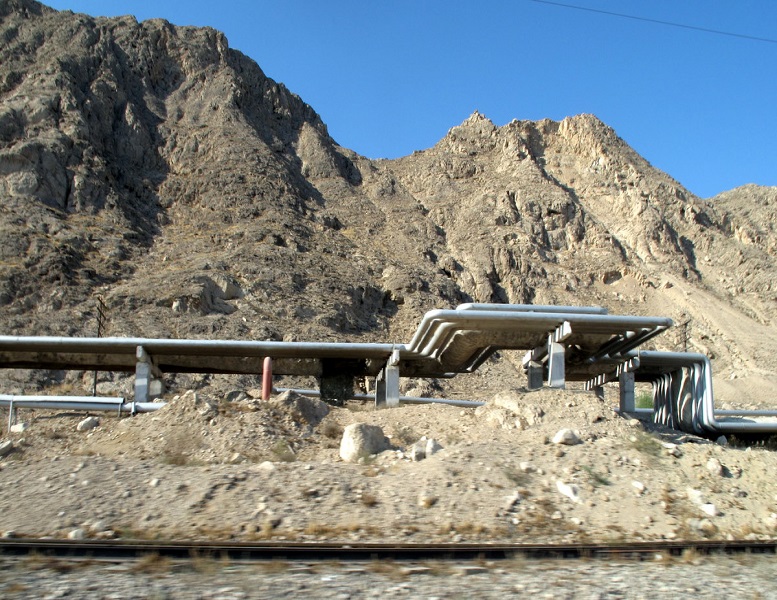
China has been Turkmenistan’s primary, and at times only, gas export market for the last ten years. Chinese demand for natural gas, oil and other resources has placed Turkmenistan as an important part of Beijing’s Belt and Road strategy that seeks to further develop economic ties, improve infrastructure and increase political influence in the wider region. As the result of a push for cleaner burning fuel Chinese gas demand is growing rapidly, by 30-40 billion cubic metres (BCM) per year, something which should be good news for its largest gas supplier Turkmenistan. However China is rapidly expanding its access to LNG and the Asian LNG market is experiencing a major supply glut, with spot prices falling by 60 per cent since the summer of 2018 making it more competitive against land based suppliers, giving Beijing more options.[114] It means that while China may well have increased demand for gas, this does not translate to a need to pay more for it. Indeed reports suggest that it has been able to persuade its Turkmen counterparts to lower their prices in 2017 although all details of the deal remain secret.[115] In the first quarter of 2019 analysts have suggested there may have been a significant (26 per cent) spike in exports,[116] after a previously depressed supply in 2018.[117]
However, at least in the short-to-medium term, sales of gas to China are not seen as a major source of revenue due to a significant portion of the sales believed to be servicing and paying down debts Turkmenistan owes China, including for the development of the Galkynysh Gas Field (formerly South Yolotan) and the infrastructure that connected it to Chinese gas markets.[118] The Chinese building the infrastructure themselves and sending Turkmenistan the bill at least ensured that the project was delivered swiftly and efficiently. Other projects seen as helpful to the development of China’s Belt and Road strategy, including new port facilities at Turkmenbashi, are believed to have been funded by Chinese investment. Not all of the loan amounts given have been made public but as Dr Luca Anceschi’s essay suggests the figures are believed to be around or above US $10 billion.
Like its spiritual cousin the Trans-Caspian TAPI remains mostly on the drawing board, game changing in theory but far from being put into practice. If ever completed the project could be transformative for Turkmenistan, Afghanistan and South Asia as a whole. It could provide access to markets for 33 BCM of Turkmen gas per year, it could enable Pakistan to resolve its gas shortages, provide opportunities for gasification in Herat and other Afghan cities along the route (as well as much needed transit fees) and provide opportunities to further diversify India’s growing gas market. The Government of Turkmenistan has made a series of confusing and contradictory claims about progress on the sections within its territory. In February 2018 the CEO of the Turkmen consortium working on the project announced that work in Turkmenistan had been completed, yet later that year announcements were made of more deliveries of materials, notably 35 km of pipeline, needed to complete the building works.[119] In April 2019 a contract for further 214km of piping was announced, while a Turkmen State News Agency story about the success of the gas sector in Turkmenistan noted that work on the Turkmen sections of TAPI were under construction.[120] Progress reports for the Afghan section of the project are just as vague, with little sign that significant progress is being made. Helpfully for the security of project on the Afghan side, though yet another area of concern from a human rights perspective, Turkmenistan has long cultivated a working relationship with the Taliban, as evidenced by them forcing up to 150 Afghan Army Soldiers, who had fled over the boarder after losing a confrontation with Taliban, back into Taliban custody and it is believed for many to their deaths.[121]
Unhelpfully for Turkmenistan Pakistan appears to be seeking to reduce the proposed gas sale price before taking any action to build pipeline on its territory, potentially stalling notional plans to break ground in October 2019 and completion by the end of 2020.[122] India too has been attempting to renegotiate the price structure which was set in 2013 between the four participating states at 55 per cent of the current oil price plus transit fees.[123] India also may need to further expand its LNG options to give a diversity of supply options before it allows itself to become reliant on a route coming from Pakistan.
At present Turkmenistan is the project manager and notionally committed to providing 85 per cent of the project’s equity, investment capital it self-evidently lacks.[124] The Islamic Development Bank has provided US $700 million loan but this is far from enough to enable project completion, with potential UAE or Saudi financial backing and an experienced project manager perhaps required to turn it from pipedream into reality.[125]
With the Chinese export routes not providing significant cash in hand and TAPI far from complete the government of Turkmenistan has been searching around for other options to diversify its export routes. As of April 2019 it was announced that gas supplies to Russia had resumed, albeit with very little detail.[126] It subsequently transpired that an initial short-term deal was in place for 1.2 BCM of gas, ahead of a more substantial five year deal that would restore supplies of 5.5 BCM per year going to Russia announced in July 2019. This amount, while helpful to the desperate Turkmen economy, pales in comparison to the 40 BCM that it used to supply before the first round of tensions in 2009 over a gas explosion, or even the 10-11 BCM it exported between 2011 and 2015 before the dispute over prices that led to the 2016-19 export freeze.[127] Most analysts believe that the restoration of Russian gas supply is first and foremost ‘political gas’, a supply Gazprom doesn’t really need but which helps to bring Turkmenistan back into closer alignment with Russia in return for hard currency that Turkmenistan desperately needs. While the details of the deal remain confidential, given the current sale price for Gazprom gas to its neighbours and on European Markets it is likely that the unit price Turkmenistan is getting will be well below the levels it received in the 2000s, not least when factoring in Turkmenistan’s weak bargaining position. [128]
US engagement with Turkmenistan is limited compared to that of some of its neighbours due to relatively few US players in the Turkmen energy sector and Turkmenistan’s wider military and diplomatic posture of neutrality. However President Trump has publically urged progress on the Tran-Caspian Pipeline, while its incoming Ambassador to Ashgabat has identified border security, particularly with Afghanistan and Iran, as being on the US agenda. [129]
Strong relations between Turkmenistan and the UAE have seen Dragon Oil, owned by the Emirates National Oil Company, become one of the more successful players in the Turkmen energy market. As mentioned above Dubai has been a focus for Turkmen migrant workers and the close relations enable Ashgabat to put pressure on migrants to return.
The EU’s engagement in Turkmenistan has been seen as relatively limited, but is likely to expand as it has recently opened a delegation in Ashgabat to give it a full diplomatic presence in the country. The newly updated EU-Turkmenistan Partnership and Cooperation Agreement (PCA) is pending ratification by the European Parliament. The relationship is also framed by the new EU-Central Asia strategy, with a better than expected focus on human rights but unambitious on trade.[130] The new EU Special Representative to the region in Peter Burian is also well-respected.[131]
The European Parliament is importantly seeking to set a series of concrete human rights benchmarks as its condition for the ratification of the EU-Turkmenistan PCA.[132] The EU has conducted 11rounds of its standard format human rights dialogues with Turkmenistan, such as in March 2019. However no public mention about the economic or human rights crisis was made by EU High Representative, Federica Mogherini, at the opening of the new EU Delegation in Ashgabat, though she was more forthcoming at the subsequent EU-Central Asia summit in Bishkek.[133]The EU has been undertaking education initiatives and is running a joint project aimed at supporting SME’s in partnership with the EBRD.[134]
What our authors say
Bruce Pannier argues that it is clear Turkmenistan’s economy has been in sharp decline for more than four years, but the full extent of the country’s economic problems remains unknown. Turkmenistan’s government claims the country continues to prosper. Authorities regularly tout growth and continue to spend lavishly on vanity projects – white marble hotels and government buildings, even a golf course. Independent verification of such claims is impossible as Turkmen authorities severely restrict the entry of foreigners into the country. But Turkmenistan’s people have found ways of telling to people outside the country, the story of the situation inside Turkmenistan. Their tale is one of chronic shortages of basic goods, rationing, lines outside stores and banks, cuts in benefits, and rising prices.
Eimear O’Casey examines the challenges facing businesses in the country. She outlines the entrenched nepotism, cronyism, lack of recourse to justice and increasing reputational concerns that define the investment environment. She cites examples of the formal and informal obstacles that have faced foreign businesses as they seek to navigate the country’s opaque and restrictive regulatory climate, and argues that increasing pressure on the economy in recent years, rather than encouraging liberalisation or reform, has only reinforced these barriers.
Dr Luca Anceschi explores the nexus between Turkmenistan’s foreign
economic relations and the country’s national gas industry, which represents
the core sector of the Turkmen economy as a whole. The rentier logic of
economic development promoted by the regimes that led Turkmenistan since the
collapse of the USSR entrenched a relationship of dependency on natural
resources that, at international level, translated into a dependency on energy
export infrastructure, and pipelines more in particular. This brief article
looks at four pipelines—some already existing, some nothing more than a project—to
describe the precarious economic juncture at which Turkmenistan has found
itself since the commercialisation of its gas ties with the People’s Republic
of China.
Photo by David Lundberg, published under Creative Commons with no changes made.
[1]According to the 2008 US State department cables released by WikiLeaks at the time 26 of 31 top Government of Turkmenistan officials are descended from the Ahal Teke tribe see WikiLeaks, Turkmenistan: Ahal Teke Tribe Dominates Government, January 2008, https://wikileaks.org/plusd/cables/08ASHGABAT55_a.html
[2] Facts and Details, Turkmenistan Becomes Independent, http://factsanddetails.com/central-asia/Turkmenistan/sub8_7a/entry-4803.html and David Roger Smith, Edward Allworth, Denis Sinor, Viktor Borisovich Zhmuida and Gavin R.G. Hambly, Turkmenistan, Encyclopaedia Britannica, https://www.britannica.com/place/Turkmenistan#ref342789
[3] Something that similar groups in Armenia, Azerbaijan and elsewhere would become.
[4] Suparamat Niyozov, Ruhnama, 2001-2004 http://intersci.ss.uci.edu/wiki/eBooks/Asia/BOOKS/Ruhnama%20Niyozov.pdf
[5] Atlas Obscura, Giant Ruhnama, https://www.atlasobscura.com/places/giant-ruhnama
[6] See Louis Lafferty, Ruhnama Statue Opening-Turkmenistan, YouTube, December 2011, https://www.youtube.com/watch?v=h1WhLZp_ocg also read Chronicles of Turkmenistan, Turkmenistan Is Finally Putting the ‘Ruhnama’ Behind Them, August 2014, https://en.hronikatm.com/2014/08/turkmenistan-is-finally-putting-the-ruhnama-behind-them/
[7] Richard Orange, Turkmenistan rebuilds giant rotating golden statue, Daily Telegraph, May 2011, https://www.telegraph.co.uk/news/worldnews/asia/turkmenistan/8533427/Turkmenistan-rebuilds-giant-rotating-golden-statue.html
[8] Monica Whitlock, Turkmen leader orders ice palace, August 2004, http://news.bbc.co.uk/1/hi/world/asia-pacific/3554626.stm [Plans for an accompanying ski resort have been put on hold due to economic conditions]
[9] Turkmenistan.ru, Winter sports Center to be built in Ashgabat, August 2009, http://www.turkmenistan.ru/ru/node/26521
[10] Chronicles of Turkmenistan, Turkmenistan still experiences a shortage of cigarettes, January 2017, https://en.hronikatm.com/2017/01/turkmenistan-still-experiences-a-shortage-of-cigarettes/; BBC News, Turkmenistan: The regime that throws cigarettes on bonfires, December 2016, https://www.bbc.co.uk/news/magazine-38266078 and Bruce Pannier, The Perils Of Smoking Cigarettes In Turkmenistan, RFE/RL, May 2016, https://www.rferl.org/a/qishloq-ovozi-turkmenistan-smoking-crackdown/27728410.html
[11] Shaun Walker, A horse, a horse … Turkmenistan president honours himself with statue, The Guardian, May 2015, https://www.theguardian.com/world/2015/may/25/horse-turkmenistan-president-statute-berdymukhamedov
[12] ITV, Turkmenistan president all singing and dancing in bizarre video ‘dedicated to his horse’, April 2019, https://www.itv.com/news/2019-04-30/turkmenistan-president-gurbanguly-berdymukhamedov-singing-grandson-horse/ https://www.youtube.com/watch?v=JsNioEnxeNs
[13] Most citizens are not thoroughly inured to the excesses of their leaders
[14] BP, Statistical Review of World Energy 2019, https://www.bp.com/en/global/corporate/energy-economics/statistical-review-of-world-energy.html
[15] Statistica, Cotton production by country worldwide in 2017/2018 (in 1,000 metric tons), https://www.statista.com/statistics/263055/cotton-production-worldwide-by-top-countries/
[16] World Bank Group, Doing Business 2019: Training for Reform, October 2018, https://www.worldbank.org/en/region/eca/brief/doing-business
[17] EBRD, Turkmenistan Country Strategy 2019-2024, https://www.ebrd-consultations.com/assets/Country-Strategies/Turkmenistan/67961d1592/turkmenistan-strategy-2019.pdf
[18]Bruce Pannier, Is Turkmenistan Being Pulled Into Russia’s Orbit?, RFE/RL, January 2019, https://www.rferl.org/a/iqshloq-ovozi-turkmenistan-pulled-into-russia-s-orbit/29713898.html
[19] UK Government, Overseas Business Risk – Turkmenistan, June 2019, https://www.gov.uk/government/publications/overseas-business-risk-turkmenistan/overseas-business-risk-turkmenistan
[20] World Bank Group, Europe and Central Asia Economic Update, Spring 2019 : Financial Inclusion, April 2019, https://openknowledge.worldbank.org/handle/10986/31501
[21]Turkmenistan: Rebuilding bridges, April 2019, https://eurasianet.org/turkmenistan-rebuilding-bridges and https://www.adb.org/sites/default/files/publication/492711/ado2019.pdf
[22] Kanat Shaku, Bread sellers demand passports as Turkmenistan’s economic crisis goes from bad to worse, BNE News, June 2018, https://www.intellinews.com/index.php/bread-sellers-demand-passports-as-turkmenistan-s-economic-crisis-goes-from-bad-to-worse-143613/
[23] Ibid.
[24] EBRD, Turkmenistan Country Strategy 2019-2024, https://www.ebrd-consultations.com/assets/Country-Strategies/Turkmenistan/67961d1592/turkmenistan-strategy-2019.pdf
[25] Turkmen News, Turkmenistan: Customers Pay Bribes to Withdraw Cash, February 2019, https://en.turkmen.news/news/turkmenistan-customers-pay-bribes-to-withdraw-cash/
[26] Turkmen News, Turkmenistan: In the conditions of economic crisis, people are fighting for their money, June 2019, https://turkmen.news/news/valyutnyy-krizis-turkmenistan/
[27] Eurasianet, Turkmenistan: Suicide of Coca-Cola executive casts more gloom, February 2019, https://eurasianet.org/turkmenistan-suicide-of-coca-cola-executive-casts-more-gloom
[28] RFE/RL, Turkmenistan Cuts Last Vestiges Of Program For Free Utilities, September 2018, https://www.rferl.org/a/turkmenistan-cuts-last-vestiges-of-program-for-free-utilities/29511308.html
[29] Turkmenistan: More Cuts and Bad Business, The Diplomat, February 2019, https://thediplomat.com/2019/02/turkmenistan-more-cuts-and-bad-business/
[30] BBC News, Banned Turkmenistan Airlines leaves thousands stranded, February 2019, https://www.bbc.co.uk/news/business-47115732
[31] Turkmenistan: More Cuts and Bad Business, The Diplomat, February 2019, https://thediplomat.com/2019/02/turkmenistan-more-cuts-and-bad-business/
[32] An example of this latter case would be the oil and gas services company Petrofac has had an extended presence in the country
[33] CIS Legislation, LAW OF TURKMENISTAN About the Union of Industrialists and Entrepreneurs of Turkmenistan, May 2011, http://cis-legislation.com/document.fwx?rgn=43515
[34] WikiLeaks, TURKMENISTAN: LOCAL BUSINESS COUNCIL MEETING TOOK PLACE, January 2009, https://wikileaks.org/plusd/cables/09ASHGABAT110_a.html
[35] Transparency International, Turkmenistan, https://www.transparency.org/country/TKM
[36] Turkmen News, Turkmen President’s Brother-in-Law Involved in Construction of $2.3bn Expressway, July 2019, https://en.turkmen.news/news/turkmen-president-s-brother-in-law-involved-in-construction-of-2-3bn-expressway/ and Chronicles of Turkmenistan, Turkmenistan’s Union of Industrialists and Entrepreneurs, which received a $3 billion government loan for the construction of motorway, seeks additional investments in Austria, September 2018, https://en.hronikatm.com/2018/09/turkmenistans-union-of-industrialists-and-entrepreneurs-which-received-a-3-billion-government-loan-for-the-construction-of-motorway-seeks-additional-investments-in-austria/
[37] UK Government, Overseas Business Risk – Turkmenistan, June 2019, https://www.gov.uk/government/publications/overseas-business-risk-turkmenistan/overseas-business-risk-turkmenistan
[38] Catherine Putz, Turkmenistan Faces 2 New Arbitration Cases, October 2018, https://thediplomat.com/2018/10/turkmenistan-faces-2-new-arbitration-cases/
[39] UNCTAD, Investment Policy Hub – Turkmenistan, https://investmentpolicy.unctad.org/country-navigator/223/turkmenistan
[40] UK Government, Turkmenistan United Kingdom Trade and Industry Council in Ashgabat, April 2019, https://www.gov.uk/government/news/turkmenistan-united-kingdom-trade-and-industry-council-in-ashgabat
[41] Strategy International, Turkmenistan-UK Trade & Industry Council (TUKTIC), January 2018, https://www.strategyinternational.co.uk/programme/2018/1/22/9g7ea13aggryxpmnhnxlnw97o5q5u3
[42] UK Government, Trade Envoys, https://www.gov.uk/government/groups/trade-envoys
[43] Abassador Thorda Abbott-Watt, Britian and Turkmenistan, August 2018, http://www.ocamagazine.com/britain-and-turkmenistan
[44] EBRD, Turkmenistan Country Strategy 2019-2024, https://www.ebrd-consultations.com/assets/Country-Strategies/Turkmenistan/67961d1592/turkmenistan-strategy-2019.pdf
[45] Svitlana Pyrkalo, EBRD loan supports Turkmen brewer Berk’s move into snacks, September 2016, https://www.ebrd.com/news/2016/ebrd-loan-supports-turkmen-brewer-berks-move-into-snacks.html; Svitlana Pyrkalo, EBRD funds first private mill for production of recycled cardboard in Turkmenistan, July 2013, https://www.ebrd.com/news/2013/ebrd-funds-first-private-mill-for-production-of-recycled-cardboard-in-turkmenistan.html; Svitlana Pyrkalo. EBRD finances first PVC profile maker in Turkmenistan, January 2017, https://www.ebrd.com/news/2017/ebrd-finances-first-pvc-profile-maker-in-turkmenistan.html
[46] IPHR, Joint Letter: Turkmenistan Country Strategy Review by the EBRD, June 2019, https://www.iphronline.org/joint-letter-turkmenistan-country-strategy-review-by-the-ebrd.html
[47] Bruce Pannier, Turkmenistan’s Unreal Harvest, February 2019, RFE/RL, https://www.rferl.org/a/turkmenistan-s-unreal-harvest-wheat-cotton/29772430.html
[48] International Cotton Advisory Campaign, Cotton this month, January 2019, https://www.icac.org/Content/PublicationsPdf%20Files/4b1e0c03_e012_4e94_abf2_e1afd5404b2d/cotton-this-month-e1_18.pdf.pdf
[49] Bruce Pannier, Turkmenistan’s Unreal Harvest, February 2019, RFE/RL, https://www.rferl.org/a/turkmenistan-s-unreal-harvest-wheat-cotton/29772430.html
[50] Alternative News of Turkmenistan, As grain harvest ends in Turkmenistan, media are silent about harvest victory, July 2018, https://habartm.org/archives/9318 and Alternative News of Turkmenistan, Once fertile Dashoguz turns into Turkmenistan’s salty wasteland, April 2018, https://habartm.org/archives/8956
[51] RFE/RL, Turkmen Leader Hails ‘Generous’ Harvests Despite Food Shortages, May 2019, https://www.rferl.org/a/turkmen-leader-hails-generous-harvests-despite-food-shortages/29947575.html
[52] Alternative News of Turkmenistan, Security services quell a riot in a Turkmen market, July 2018, https://habartm.org/archives/9324
[53] Kanat Shaku, Bread sellers demand passports as Turkmenistan’s economic crisis goes from bad to worse, BNE News, June 2018, https://www.intellinews.com/index.php/bread-sellers-demand-passports-as-turkmenistan-s-economic-crisis-goes-from-bad-to-worse-143613/
[54] Alternative News of Turkmenistan, Apartheid “in Ashgabat.” President-approved document discriminates residents of regions, February 2018, https://habartm.org/archives/4564
[55] Eurasianet, Turkmenistan protests too much as citizens are halted from leaving country, April 2019, https://eurasianet.org/turkmenistan-protests-too-much-as-citizens-are-halted-from-leaving-country
[56] Pete Baumgartner, Turkmenistan Clips Wings Of Citizens Fleeing Economic Woes, April 2018, https://www.rferl.org/a/turkmenistan-clips-wings-of-citizens-fleeing-economic-woes/29170508.html
[57] RFE/RL, Turkmenistanis now go to Uzbekistan and Kazakhstan to earn money, April 2018, https://rus.azathabar.com/a/29142683.html
[58] RFE/RL, Turkmen authorities discuss measures to bring Turkmen migrant women home, March 2018, https://rus.azathabar.com/a/29124851.html
[59] RFE/RL, At Ashgabat airport, passengers are removed from flights, “assistance” is more expensive to leave, March 2019, https://rus.azathabar.com/a/29833886.html
[60] Eurasianet, Turkmenistan: Students Slapped with Five-Year Travel Ban, November 2009, https://eurasianet.org/turkmenistan-students-slapped-with-five-year-travel-ban and Rebecca Stonawski, (Not) Leaving Turkmenistan? A Survey of Students from Turkmenistan at the American University of Central Asia, April 2012, https://journals.sagepub.com/doi/pdf/10.2304/power.2012.4.2.196
[61] Pete Baumgartner, ‘Killing Hope’: Turkmenistan’s List Of ‘Accepted’ Universities Deals (Another) Blow To Students, Radio Free Europe/Radio Liberty (RFE/RL), April 2019, https://www.rferl.org/a/killing-hope-turkmenistan-s-list-of-accepted-universities-deals-(another)-blow-to-students/29901588.html
[62] Farangis Najibullah, Escape From Turkmenistan: Almost 2 Million Have Fled, But The President Looks The Other Way, June 2019, https://www.rferl.org/a/escape-from-turkmenistan-almost-2-million-have-fled-but-the-president-won-t-hear-of-it/29987972.html
[63] The World Bank lists it as 0.0%, https://data.worldbank.org/indicator/BX.TRF.PWKR.DT.GD.ZS, but other sources also suggest lower than 1% Federal Reserve Bank of St. Louis, Remittance Inflows to GDP for Turkmenistan, https://fred.stlouisfed.org/series/DDOI11TMA156NWDB and Turkmenistan-Migrant Remittance, https://countryeconomy.com/demography/migration/remittance/turkmenistan
[64] Azerbaijan for example -see Adam Hug (ed.), Spotlight on Azerbaijan, May 2012, https://fpc.org.uk/publications/spotlight-on-azerbaijan/
[65] Amnesty International, Turkmenistan: Satellite images reveal how mass forced evictions blight upcoming Asian Games, October 2015, https://www.amnesty.org/en/latest/news/2015/10/turkmenistan-satellite-images-reveal-how-mass-forced-evictions-blight-upcoming-asian-games/
[66] Human Rights Watch, Turkmenistan: Hosting Asian Games Amid Widespread Repression, July 2017, https://www.hrw.org/news/2017/06/07/turkmenistan-hosting-asian-games-amid-widespread-repression
[67] Anti-Slavery International, Turkmen cotton and the risk of forced labour in global supply chains, April 2019, https://www.antislavery.org/wp-content/uploads/2019/04/Turkmenistan-Turkey-report.pdf
[68] Fergana News, Subbotnik participants in Turkmenistan were forced to hide from the president, May 2019, http://fergana.agency/news/107520/
[69] Solidarity Centre, Children, Pregnant Teachers Forced to Pick Turkmenistan’s Cotton, February 2018, https://www.freedomunited.org/news/children-teachers-turkmenistan-cotton/
[70] Responsible Sourcing Network, Turkmen Cotton Investor Statement, June 2019, https://www.sourcingnetwork.org/turkmen-investor-statement
[71] Anti-Slavery International, Forced Labour Tainted Cotton: from Turkmenistan via Turkey, April 2019, www.antislavery.org/forced-labour-tainted-cotton-from-turkmenistan-via-turkey/
[72] Responsible Sourcing Network, U.S. Customs Halts Imports of Forced Labor Cotton and Cotton Goods from Turkmenistan, May 2018, https://www.sourcingnetwork.org/press-release-turkmenistan-imports
[73] Alternative News of Turkmenistan, Cotton pickers struggle with low pay, poor crop in southern Turkmenistan, November 2018, https://habartm.org/archives/9737
[74] Bertelsmann Stiftung Transformation Index, BTI 2018- Turkmenistan Country Report, https://www.bti-project.org/en/reports/country-reports/detail/itc/TKM/
[75] Freedom House, Freedom in the World Index 2018, https://freedomhouse.org/report/freedom-world-2018-table-country-scores
[76] FCO, Human Rights and Democracy: the 2018 Foreign and Commonwealth Office report, https://assets.publishing.service.gov.uk/government/uploads/system/uploads/attachment_data/file/806851/human-rights-democracy-2018-foreign-and-commonwealth-office-report.pdf
[77] OSCE, Turkmenistan Parliamentary Elections, 25 MARCH 2018 ODIHR Election Assessment Mission Final Report, https://www.osce.org/odihr/elections/382915?download=true
[78] Prove They Are Alive, The Disappeared List, http://provetheyarealive.org/the-disappeared/
[79] Prove They Are Alive, Ovadan Depe Medieval Torture in modern Turkmenistan, http://provetheyarealive.org/ovadan-depe-medieval-torture-in-modern-turkmenistan/
[80] Rachel Denber, End A Dissident’s Ordeal in Turkmenistan, Human Rights Watch, May 2019, https://www.hrw.org/news/2019/05/13/end-dissidents-ordeal-turkmenistan
[81] Exeter Central Asian Studies Network, Central Asian Political Exiles (CAPE) database- Bayhanov, Akmukhammet, https://excas.net/exile/bayhanov-akmukhammet/ and The Borgen Project, The realities behind human rights in Turkmenistan, July 2017, https://borgenproject.org/human-rights-in-turkmenistan/
[82] Exeter Central Asian Studies Network, Central Asian Political Exiles (CAPE) database, https://excas.net/exiles/
[83] Eurasianet, Turkmenistan: What’s left of rights?, June 2018, https://eurasianet.org/turkmenistan-whats-left-of-rights and Alternative News of Turkmenistan, The Turkmen Ombudsman submitted her first report. Half of the document – plagiarism, June 2018, https://habartm.org/archives/9222
[84] Turkmen News, Housing, Court Rulings — Main Targets of Public Complaint, Turkmen Ombudswoman’s Report Shows, July 2019, https://en.turkmen.news/news/turkmen-ombudswoman-2018-report/
[85] Amnesty International, Turkmenistan- Submission to the United Nations Committee on the Elimination of Discrimination Against Women, July 2018, https://www.amnesty.org/en/documents/eur61/8474/2018/en/ and Turkmenistan still experiences a shortage of cigarettes, Chronicles of Turkmenistan, January 2017, Turkmenistan still experiences a shortage of cigarettes, https://en.hronikatm.com/2017/01/turkmenistan-still-experiences-a-shortage-of-cigarettes/
[86] Amnesty International Public Statement, Amnesty International urges Turkmenistan to resolve all enforced disappearances and end criminalization of same sex relations, September 2019, https://www.amnesty.org/download/Documents/EUR6191262018ENGLISH.pdf
[87] Human Rights Watch, Dignity Debased- Forced Anal Examinations in Homosexuality Prosecutions, July 2016, https://www.hrw.org/report/2016/07/12/dignity-debased/forced-anal-examinations-homosexuality-prosecutions
[88] Sarah Repucci, Freedom and the Media: A Downward Spiral, 2019, https://freedomhouse.org/report/freedom-media/freedom-media-2019
[89] Chris Forrester, Satellite dishes banned in Turkmenistan, April 2015, https://advanced-television.com/2015/04/22/satellite-dishes-banned-in-turkmenistan/
[90] Freedom House had listed it at 15% in 2017 according to the Freedom of the Press 2017, https://freedomhouse.org/report/freedom-press/2017/turkmenistan while others put the figure at 18% in 2018 according to a We are Social/Hootsuite, Digital 2018, https://www.slideshare.net/DataReportal/digital-2018-turkmenistan-january-2018 and a similar figure for 2016 from the CIA World Factbook-Turkmenistan, https://www.cia.gov/library/publications/the-world-factbook/geos/tx.html
[91] RFE/RL, German Tech Firm’s Turkmen Ties Trigger Surveillance Concerns, February 2019, https://www.rferl.org/a/german-tech-firm-s-turkmen-ties-trigger-surveillance-concerns/29759911.html and Human Rights Watch, Turkmenistan: Report of Inquiry to German Cybersecurity Firm, June 2018, https://www.hrw.org/news/2018/06/25/turkmenistan-report-inquiry-german-cybersecurity-firm
[92] Who are supporting the FPC with this project.
[93] Committee to Protect Journalists, Turkmenistan journalist Soltan Achilova barred from traveling abroad, March 2019, https://cpj.org/2019/03/turkmenistan-journalist-soltan-achilova-barred-fro.php
[94] RFE/RL, Jailed, Harassed RFE/RL Correspondent Leaves Turkmenistan, March 2019, https://www.rferl.org/a/jailed-harassed-rfe-rl-correspondent-leaves-turkmenistan/29839464.html
[95] RSF, Turkmenistan bans journalist Soltan Achilova from travelling abroad, March 2019, https://rsf.org/en/news/turkmenistan-bans-journalist-soltan-achilova-travelling-abroad and RFE/RL, RFE/RL Correspondent Forcibly Detained In Turkmenistan, May 2018, https://www.rferl.org/a/rferl-correspondent-achilova-detained-brutalized-security-forces-turkmenistan/29220474.html
[96] Gaspar Matalaev is a relative of the editor of Turkmen News, the FPC’s partner for this project. Joanna Ewart-James, Gaspar Matalaev: serving time for reporting on forced labour in Turkmenistan’s cotton fields, Independent, February 2018, https://www.independent.co.uk/voices/campaigns/voicesindanger/serving-time-for-reporting-on-forced-labour-in-cotton-fields-a8194961.html
[97] Human Rights Watch, Turkmenistan: UN Blames Government for Activist’s Death, August 2018, https://www.hrw.org/news/2018/08/09/turkmenistan-un-blames-government-activists-death
[98] FCO, Human Rights and Democracy: the 2017 Foreign and Commonwealth Office report, October 2018, https://www.gov.uk/government/publications/human-rights-and-democracy-report-2017/human-rights-and-democracy-the-2017-foreign-and-commonwealth-office-report
[99] RFE/RL, Jailed Turkmen Animal Rights Activist Visited By Daughter After Days Held Incommunicado, December 2017, https://www.rferl.org/a/turkmenistan-kucherenko-animal-rights-activist-arrested/28912076.html
[100] Eurasianet, Has Turkmenistan Learned to Love Dogs? (Hint: No), August 2017, https://eurasianet.org/has-turkmenistan-learned-to-love-dogs-hint-no and Institute for War and Peace Reporting, Rights Activists Say World Must Act on Turkmenistan Abuses, March 2011, https://iwpr.net/global-voices/rights-activists-say-world-must-act-turkmenistan-abuses
[101] Turkmenistan, Results of the elections to the National Parliament, December 2013, http://www.turkmenistan.gov.tm/_eng/?id=3069
[102] Chronicles of Turkmenistan, Turkmen Red Crescent to be funded by residents, February 2017, https://en.hronikatm.com/2017/02/turkmen-red-crescent-to-be-funded-by-residents/ and Red Crescent Society of Turkmenistan, https://www.ifrc.org/en/what-we-do/where-we-work/europe/red-crescent-society-of-turkmenistan/
[103] The International Center for Not for Profit Law, Civic Freedom Monitor: Turkmenistan, July 2018, http://www.icnl.org/research/monitor/turkmenistan.html
[104] UNDP, Turkmenistan, http://www.tm.undp.org/content/turkmenistan/en/home.html
[105] UCL, Ancient Merv Project, https://www.ucl.ac.uk/archaeology/research/ancient-merv-project
[106] Forum 18, TURKMENISTAN: In Ramadan, Muslims fear “extremism” accusations, May 2019, http://www.forum18.org/archive.php?article_id=2481
[107] Felix Corley, TURKMENISTAN: Appeals against 12-year jail terms fail, July 2018, http://www.forum18.org/archive.php?article_id=2399
[108] CIA, World Factbook- Turkmenistan, https://www.cia.gov/library/publications/the-world-factbook/geos/tx.html and Felix Corley, TURKMENISTAN: Second 2019 conscientious objector jailing, Forum 18, June 2019, http://www.forum18.org/archive.php?article_id=2483
[109] Naz Nazar, The tragic echoes of Turkey’s anti-Gülen campaign in Turkmenistan, Open Democracy, April 2018, https://www.opendemocracy.net/en/odr/anti-gulen-campaign-in-turkmenistan/
[110] Felix Corley, TURKMENISTAN: Appeals against 12-year jail terms fail, July 2018, http://www.forum18.org/archive.php?article_id=2399
[111] The Chronicles of Turkmenistan, Turkmenistan re-launches the anti-beard campaign, January 2019, https://en.hronikatm.com/2019/01/turkmenistan-re-launches-the-anti-beard-campaign/
[112] Monica Whitlock, Young Turkmen face beard ban, BBC News, February 2004, http://news.bbc.co.uk/1/hi/world/asia-pacific/3486776.stm
[113] Freshfields Bruckhaus Deringer, Legal Status of the Caspian Sea: New Opportunities and New Challenges, November 2018, http://knowledge.freshfields.com/en/Global/r/3848/the_new_convention_on_the_legal_status_of_the_caspian_sea and Robert Cutler, Third time lucky for Trans-Caspian Gas Pipeline?, Petrolium Economist, June 2019, https://www.petroleum-economist.com/articles/politics-economics/europe-eurasia/2019/third-time-lucky-for-trans-caspian-gas-pipeline
[114] Chen Aizhu and Henning Gloystein, China gas demand to surge in 2019, but maybe not enough to sop up LNG glut, Reuters, April 2019, https://uk.reuters.com/article/us-china-gas-beijinggas/china-gas-demand-to-surge-in-2019-but-maybe-not-enough-to-sop-up-lng-glut-idUKKCN1RK0BW
[115] Chen Aizhu and Henning Gloystein, China gas demand to surge in 2019, but maybe not enough to sop up LNG glut, Reuters, April 2019, https://uk.reuters.com/article/us-china-gas-beijinggas/china-gas-demand-to-surge-in-2019-but-maybe-not-enough-to-sop-up-lng-glut-idUKKCN1RK0BW
[116] Sam Bhutia, Twitter traffic- Turkmenistan’s Goods Exports to China, May 2019, https://twitter.com/sam_bhutia/status/1130819093286641664/photo/1
[117] Expert views on the reason for this vary from unexpectedly reduced Chinese demand given the rise of LNG and capacity/supply problems, notably in November 2018- for the latter see Chu Daye and Zhang Hongpei, Natural gas supply shortage from Turkmenistan driving up prices in China amounts to ‘hype’: NDRC, Global Times, January 2019, http://www.globaltimes.cn/content/1135213.shtml. It is possible that both factors were in play.
[118] Eurasianet, China Figures Reveal Cheapness of Turkmenistan Gas, October 2016, https://eurasianet.org/china-figures-reveal-cheapness-turkmenistan-gas
[119] Bruce Pannier, Analysis: TAPI And Other Turkmen Tales, December 2018, RFE/RL https://www.rferl.org/a/tapi-turkmen-tales-pipeline-qishloq-ovozi-pannier/29632356.html and Bruce Pannier, Another Turkmen Pipe Mystery, RFE/RL, April 2019, https://www.rferl.org/a/qishloq-ovozi-tapi-turkmen-pipe-mystery/29862029.html
[120] State News Agency of Turkmenistan, Turkmenistan is actively developing new forms of international energy business, February 2019, http://www.turkmenistan.gov.tm/?id=18454
[121] Najim Rahim and Rod Nordland, Taliban Capture About 150 Afghan Soldiers After Chase Into Turkmenistan, New York Times, March 2019, https://www.nytimes.com/2019/03/17/world/asia/afghanistan-soldiers-taliban-turkmenistan.html
[122] Khalid Mustafa, Pakistan links TAPI work initiation with gas price review, The News, June 2019, https://www.thenews.com.pk/print/481480-pakistan-links-tapi-work-initiation-with-gas-price-review
[123] The Economic Times, India seeks re-negotiation in gas price from TAPI pipeline, August 2018, https://economictimes.indiatimes.com/industry/energy/oil-gas/india-seeks-revision-in-gas-price-from-tapi-pipeline/articleshow/65497724.cms?from=mdr
[124] Business Recorder, Equity in TAPI: proposal approved by ECC, December 2015, https://fp.brecorder.com/2015/12/201512191257147/
[125] Alex Forbes, Turkmenistan sees light at the end of the tunnel, June 2019, https://www.petroleum-economist.com/articles/upstream/exploration-production/2019/turkmenistan-sees-light-at-the-end-of-the-tunnel
[126] NEBIT-GAZ, Turkmenistan resumed natural gas supplies to Russia, April 2019, http://www.oilgas.gov.tm/blog/2653/turkmenistan-vozobnovil-postavki-prirodnogo-gaza-v-rossiyu
[127] RFE/RL, Gazprom Reaches Five-Year Gas Deal With Turkmenistan, July 2019, https://www.rferl.org/a/gazprom-reaches-five-year-gas-deal-with-turkmenistan/30035528.html
[128] A discussion between Dr Luca Anceschi, Bruce Pannier, political analyst Sam Butia and energy analyst Laurent Ruseckas, https://twitter.com/anceschistan/status/1144606148273852417?s=11
[129] Dr Victoria Clement, What Are US Interests in Turkmenistan?, The Diplomat, June 2016, https://thediplomat.com/2019/06/what-are-us-interests-in-turkmenistan/
[130] Sam Bhutia, The EU’s new Central Asia strategy: What does it mean for trade?, Eurasianet, June 2019, https://eurasianet.org/the-eus-new-central-asia-strategy-what-does-it-mean-for-trade
[131] EEAS, Joint Communication on the EU and Central Asia: New opportunities for a stronger partnership, May 2019, https://eeas.europa.eu/headquarters/headquarters-homepage/62411/joint-communication-eu-and-central-asia-new-opportunities-stronger-partnership_en
[132] IPHR, The EU adopts important benchmarks, as repression continues in Turkmenistan, May 2019, https://www.iphronline.org/the-eu-adopts-important-benchmarks-as-repression-continues-in-turkmenistan.html and the European Parliament resolution of 12 March 2019 on the draft Council and Commission decision on the conclusion by the EU and the European Atomic Energy Community of the Partnership and Cooperation Agreement establishing a Partnership between the European Communities and their Member States, of the one part, and Turkmenistan, of the other part (12183/1/2011 – C8-0059/2015 – 1998/0031R(NLE)), http://www.europarl.europa.eu/doceo/document/TA-8-2019-0146_EN.html?redirect
[133] European External Action Service, Mogherini Full Intervention, July 2019, https://twitter.com/eu_eeas/status/1147545602391248897
[134] EU Project: Support to the Education Sector in Turkmenistan, https://education-turkmenistan.eu/