Skip to content

FPC Briefing – Assessing successes and shortcomings in the EU’s approach to conflict resolution in the Eastern Partnership region

Article by Craig Oliphant OBE

May 21, 2018

FPC Briefing – Assessing successes and shortcomings in the EU’s approach to conflict resolution in the Eastern Partnership region

The next Geneva International Discussions (GID) meeting focused on conflict in Georgia is due to take place on 19-20th June 2018, the 44th round in a process running since 2008 and co-chaired by the EU, OSCE, and UN. Nearly 10 years on from the five-day Georgia-Russia war in summer 2008 it might be a timely moment to take stock of the EU’s approach towards unresolved conflicts in Georgia and in the other Eastern Partnership (EaP) countries similarly affected.

From a British perspective too, and in the current context of Brexit, a consideration of these particular issues should be accompanied with a degree of concern at what a possible departure from collective efforts in this sphere might mean. Unresolved conflicts in Europe’s east beset 5 out of 6 EU neighbourhood partner countries (Georgia, Armenia, Azerbaijan, Moldova, Ukraine, with Belarus as the notable exception). Most of these conflicts go back to eruptions over 25 years ago, as in South Ossetia and Abkhazia, Nagorny Karabakh, and Transnistria. The situation in Donbas in eastern Ukraine, for its part, has now rumbled on for over 4 years – a period which, particularly since the annexation of Crimea in 2014, has marked a paradigm shift in European capitals’ relations with Moscow.

As in all conflicts, there are different levels at which these standoffs play out – the local, the inter-state, and the geopolitical level. Today, geopolitics is squeezing everything, and strategic challenges trump local concerns, reducing the space for dialogue and other initiatives at the local level. That said, the geopolitical dimension of challenges does not fully, and cannot be allowed to, derail efforts for what can be done locally. The local is strategic – and what happens at the lower level can at times have strategic significance.

Stability and security in the neighbourhood region are crucial and depend on a number of factors which, self-evidently, go beyond the protracted conflicts themselves.  They are not least about what kind of Russia, what kind of Europe we are looking for. In the countries where unresolved conflicts persist there is a need, by the same token, for the international community to stay the course and guard against tendencies in western capitals towards ‘Ukraine fatigue’ or ‘Georgia fatigue’.

In terms of the EU’s approach, and in a situation where the challenges have grown, and the long-haul nature of the standoffs underscored,  there needs to be a realistic and sober assessment of what can (and cannot) be achieved in conflict resolution terms.  Indeed, it is probably more appropriate to speak of ‘conflict management’.  For years, in fairness, many EU diplomats and NGO practitioners have been focused and careful on managing expectations, while trying to work within the ‘art of the possible’.  Most on the policy and practitioner side, reflecting also what is known in and on the region, would say there is unlikely to be any clear resolution, and certainly not any time soon.  The modus operandi has been shaped by working within the confines and constraints of trying to ‘nudge’ things – and in a context where local partners are routinely being squeezed and pressured.  The civil society sector (CSO), on the one hand, is a key motor for engagement – but that is also in conditions wherein a number of countries  CSO representatives can be extremely vulnerable and subject to harassment.

Faced with these problems, the EU is hampered by a persistent reality: It is not the sum of its parts.   And that applies in particular to its approach towards conflict management & resolution in the neighbourhood, which could well explore more scope for ‘synergies’ of different mechanisms, opportunities (where these occur) for leverage and conditionality, and including through effective multilateralism.

Any assessment of ‘successes’ and ‘shortcomings’ on EU policies in this sphere needs to factor in that the pros and cons are heavily qualified, and involve many grey areas,  which are covered briefly below.

Conflict dynamics

Firstly, a word or two about conflict dynamics.  Differentiation here is important. Each conflict is unique. The lapse of years has tended to widen that differentiation – and each conflict is ‘stuck in its own way’, and at different levels.  A truism that pertains is that the ‘status quo’ is not static but is evolving all the time. It is not helped either by the fact that one side or the other tries to focus only on one level and play down (‘airbrush’ out) other layers of the standoff. There are palpably different narratives across the divides about what has happened in the region. And none of that should at all mask some of the generic features of these situations (‘all conflicts are conflicts’) and there are lessons to learn and share from different contexts and different layers.

It is worth reminding ourselves, in more detail, of timescales across a calibrated spectrum of developments. 2008 was a watershed year, on Georgia; and 2013/2014 a big wake-up call for EU on Ukraine. And there are many lessons – good and bad – to draw out from that on EU policy and practice. It is probably true to speak of a partial success for EU in a crisis management role in 2008 – and there has been notably no further major eruption on the ground since then. Elsewhere in the South Caucasus, on Nagorno Karabakh, it has been a different story, as seen in April 2016 with, what became known as the ‘4-day war’.

The Non-Recognition but Engagement policy (NREP) was adopted in Brussels as long ago as December 2009, which itself was 15-16 years on from the ‘hot phase’ of the conflicts, in Georgia/Abkhazia, Georgia/South Ossetia, and elsewhere in the eastern neighbourhood).  And 2019, in its own way, will mark a decade since NREP was introduced, and over a quarter of century since the initial ceasefires from the early 1990s. That reflection on timescales prompts a question: Is it valid still to say that time is of the essence – or is time no longer on the side of those trying to work for resolution? During that period, and over the past 10 years in particular, the drift and absorption of Abkhazia and South Ossetia into the Russian Federation has been happening incrementally, and not least through securitisation, and ‘borderisation’ – the installation of barbed-wire and other impediments to mark off boundary lines of separation.

NREP

Non-Recognition but Engagement consists of 2 parts – ‘non-recognition’ and ‘engagement’ – which are mutually re-inforceable and inseparable.  The two key pillars of, firstly, a firm commitment to Georgian territorial integrity and non-Recognition of Abkhaz and South Ossetian independence; and secondly to the need to engage with the people of Abkhazia and South Ossetia. NREP itself begs a question:  ‘Engage, yes, but engage with whom?’ There are no easy answers in disparate situations, and with context-specific approaches. In the Georgian/Abkhaz context, the engagement the EU is talking about in the region has different strands: There is the engagement the EU has directly with the Abkhaz – civil society AND the authorities; (and there is the task of convincing the Georgians that that is in their interests too). There is also the engagement the EU tries to facilitate between the Georgians and Abkhaz; (and the EU needs to convince the Abkhaz that that is in their interests).    And overall the EU needs to reassure the Georgians that the more engagement there is does not erode the principle of non-recognition. A valid further question, though, comes to the fore: Should there be more scope for direct and structured dialogue with Sukhumi?

The EU has shown through its track-record of involvement it can engage but not recognise.  Indeed, it gets full marks for non-recognition; but ‘barely satisfactory’ – or certainly on the low side – for engagement. The main constraint has been the ‘red lines’ set out in the metropolitan capitals in the region, and notably in Baku and Tbilisi. In the latter case, and over 8 years on from the inception of NREP, and given the empirical evidence on the EU’s approach, there is still an argument to be won:   To what extent, can the Georgian government be persuaded to cut some slack and allow for flexibility and creative approaches?  Do they understand that NREP – and status-neutral options – are not slippery slopes towards ‘creeping recognition’ or designed to sell Georgia down the river. It is crucially an issue of trust. If engagement is to be allowed to happen and take root it does not need to be smothered by non-recognition at every turn. The Georgian stance is, of course,  shared by other governments embroiled in separatist disputes e.g. Azerbaijan, Moldova, Ukraine that international engagement in Abkhazia could lead to ‘creeping recognition’ or ‘de facto sovereignty’ in which a territory builds up a kind of state capacity that somehow makes it eligible for de jure recognition].

Freedom of movement & travel are important, and particularly for young people, for study opportunities abroad. Flexible and pragmatic approaches are required, to help on de-isolation, and indeed a more concerted policy from EU member states, around mobility for people from the unrecognised entities. And there needs to be some fresh thinking on information policy to promote EU messages to local people, and in the quest to help shift attitudes and mind-set.

Track I engagement

On Georgia, the EU has been an important player, as mentioned, at the level of the Geneva International Discussions (GID). Together with the other two co-chairs (OSCE and UN) the EU has done a virtuous job since autumn 2008, and in a process that will mark its tenth anniversary later this year. The regional nature of the format, however, leaves the various sides in their ‘comfort zone.’ Furthermore, it is difficult to see how any breakthrough can be achieved under current arrangements. As already alluded, the GID process is a conflict management (crisis management) mechanism rather than a conflict resolution one. There are limitations on what the EU can do, but the humanitarian working group has managed to address some issues pragmatically. And the two IPRM formats (Incident Prevention and Reduction Mechanism), meeting in Ergneti and Gali respectively since Feb 2009 (the latter underwent an enforced 4-year hiatus, until 2016), have each been useful for facilitated, and ostensibly ‘status-neutral’, interaction across the divides on local, practical issues (e.g. detention, kidnapping, missing persons, ecology, irrigation).

On Nagorny Karabakh, the EU is involved mainly at the civil society level.  The EU has funded the European Partnership on NK (I, II & III) – and with a mixed track-record.  What more could the EU do on NK, when it does not participate in the Track I process, unless one includes the role of France as a co-chair, and ‘wearing an EU hat? Recent political changes in Yerevan have underlined once again the fluidity of developments in the region. For its part, Nagorny Karabakh – alongside the situation in Ukraine- is the most dangerous of the conflicts in the ENP region. If scope emerges for the EU to play a more active part, one way might be to not get too hung up around format. The key issue, as ever, is one of political will- and also the role and stance of regional players.

So how do things stand on relative successes and shortcomings on EU policy in this area – or is it more appropriate to talk of ‘grey areas’?

‘Qualified Pluses’

In general, the EU ‘brand’ remains a genuine long-term pole of attraction for people in the neighbourhood (although with different perceptions in the breakaway areas).  Most want to integrate with the EU in some form or other, however imperfectly, or at least have access to what it offers and stands for. Integration with the EU has proceeded patchily at best, but has still been a powerful impetus for internal governance reform, rule of law, and the mobilisation of civil societies.  But, overall, something of a mixed success.

On Moldova and Transnistria, there has been some modest success. The EU is to be commended for seeing a window of opportunity and doing the Deep and Comprehensive Free Trade Agreement (DCFTA) deal.  And the OSCE got it right by plugging away at a few achievable things, which have now created a much better climate. This is a rare but decent example, in current circumstances, of some effective multilateralism at work. It is worth noting that there is a big difference on DCFTA incentive for Transnistria, as opposed to the situation in Abkhazia. Tiraspol has a lot of ‘trade’ with the EU, whereas the Abkhaz do not. In short,  the EUBAM/Association Agreement package has helped to stabilise the (Moldova/Transnistria) divide, by breaking down barriers and establishing common interests, despite the fact that it has not (yet) reconciled the sides.

The EUSR envoy role, with the network of advisers, has provided useful and practical focus of efforts.  That has been seen, not least, in collaboration with other co-chairs in the GID process, and albeit working on seemingly intractable situations.  And one lesson has been that the humanitarian agenda is always very close to the security agenda. The EUMM (EU Monitoring Mission) and EUBAM (European Union Border Assistance Mission to Moldova and Ukraine) in another context, have been relatively effective, within the confines of their respective mandates.  And these provide some evidence that ‘small can be beautiful’.

Funding:  Since 2008 alone, the EU has funded projects worth over €42m in Abkhazia and on projects involving Abkhaz partners. But the visibility of the EU has remained low, as these projects have been implemented by other partners, and notably UNDP.

On NREP, important to note that the Georgian Law on Occupied Territories (LOOT) copied quite a lot of the ideas – and albeit inserted a number of key red lines. The LOOT reflected a debate between the Georgian leadership at the time of its adoption (October 2009) – and it is legislation still in place and untouched today. That in itself posed a challenge. Yes, the EU should respect the principles of the Georgian strategy; but also be distinct from it.

On Ukraine, the 2014-18 period is the focus of another forthcoming essay. This brief overview will leave aside the handling of EU policy on Ukraine in the build-up to the EU Summit in November 2013. It is worth stressing, though, that in 2004 the EU with others played an important mediating role that helped to defuse the political crisis in Ukraine at that time. We tend to overlook the extent to which that could easily have ended up in a bloodbath. The Association Agreement (AA) has since been a reform anchor, even if reforms have advanced with difficulty.  [On the debit side, and a broader fallout point:  what unfolded in Ukraine in 2014 has naturally prompted very serious concerns, as viewed from the perspective of other conflict contexts in the region. While it is seen as a sui generis situation, there is the tacit acknowledgement in most quarters that the conflict in Ukraine has added a further layer of complexity to resolving other, already fairly intractable, conflict situations].

Relative Minuses

There is no getting away from the fact that there are divergent views within the EU about the significance of the Eastern Neighbourhood. Some member states have tended to prioritise relations with Russia; others prioritise the southern neighbourhood; and there are those who attach primary importance to Ukraine but give less consideration to other parts of the region. That has undermined some of the focus.

A self-evident point – and a crucial problem and constraint – is that the EU’s Russia policy has consistently been all over the place — variously, unrealistic, excessively sanguine and deeply divided. It is perhaps true to say that in the past year or more there has been more cohesion than before.  But certainly, without a clear, coherent and consistent view of Russia, its policy towards the region and the fundamental incompatibility of core Russian/EU interests in the region, the EU will continue to struggle to deal with the Kremlin as effectively as it should.

Geopolitics, as mentioned, are squeezing the space even further against practical peacebuilding efforts. So, despite what we are trying to promote, the factors conspire to edge things towards entrenched separation and increased reliance on the ‘patron’ states. It also has the effect of increasing the consolidation of the entity.

The Association Agreement template is extraordinarily ambitious yet it, firstly, does not offer the carrot of membership and, secondly, makes available only limited financial/technical assistance relative to the scale of the reform task facing signatory-countries. Also, the EU continues to be singularly ineffective in selling the AA concept to local constituencies-government, business, society.

Given the complexities, the assessment overall is necessarily a blurred one and there are many ‘Grey Areas’. Here, in conclusion, are just two of many:

  • The EUSRs who inherited NREP had their work cut out for them in trying as practitioners to implement NREP.  It can lead to the conundrum (‘going in circles’) where a EUSR has to ask permission of Abkhaz before the (EUSR) does something. Then there are Georgian constraints. And, on the latter, a health initiative from EU side ran up against familiar objections in Tbilisi, along with the lines of ‘No way,  that is tantamount to capacity-building, you can’t do that’. And indeed the Georgian stance has been that they do not want to see health-care enhanced in Abkhazia – as that will lessen dependency on coming to Georgia).     From the other perspective, in Sukhumi, a similarly dispiriting approach has been noted:   The education initiative promoted by the EU was depicted as attempts at ‘brainwashing’ or trying to prompt a ‘brain-drain’. These issues are supposed to be finessed partly by adopting a ‘status neutral’ approach, which can be a useful tool. However, the term also prompts a key question whether status neutrality can really exist. It can only happen if sides are willing to set aside the issue of status.
  • On the de-isolation issue, there is still a siege mentality that grips people. But many of these issues (e.g. freedom of movement) should be seen as a humanitarian issue rather than through the human rights lens, as such. It requires pragmatic, political approaches – and the EU should use all the tools it has available to promote flexible approaches with the authorities concerned.

Finally, and on a broader point in conclusion, the EU is well positioned  to promote sharing of experience and expertise, through more effective multilateralism. That includes better co-ordination among EU member states themselves and within & between EU structures, bilateral dialogue with key regional actors and engagement with other multilateral and intergovernmental organisations.  The EU should focus on what it already does well rather than get drawn into areas where it risks treading on others’ toes. The UK should think long and hard, not least, about ways it will seek to support collective efforts in this important sphere post-Brexit, and (where it can) to help to build synergies for these efforts from the outside, and partly through continued funding of CSO (Track II and Track III) initiatives. That is not to suggest there will be anything less than concerted British backing for a coordinated approach.  But it needs to be given due priority at a time of many other (self-inflicted) competing demands.

Footnotes
    Related Articles

    The recent crisis between Greece and Turkey: Two NATO allies on the brink of war, again

    Article by Dr Yaprak Gürsoy

    April 24, 2018

    The recent crisis between Greece and Turkey: Two NATO allies on the brink of war, again

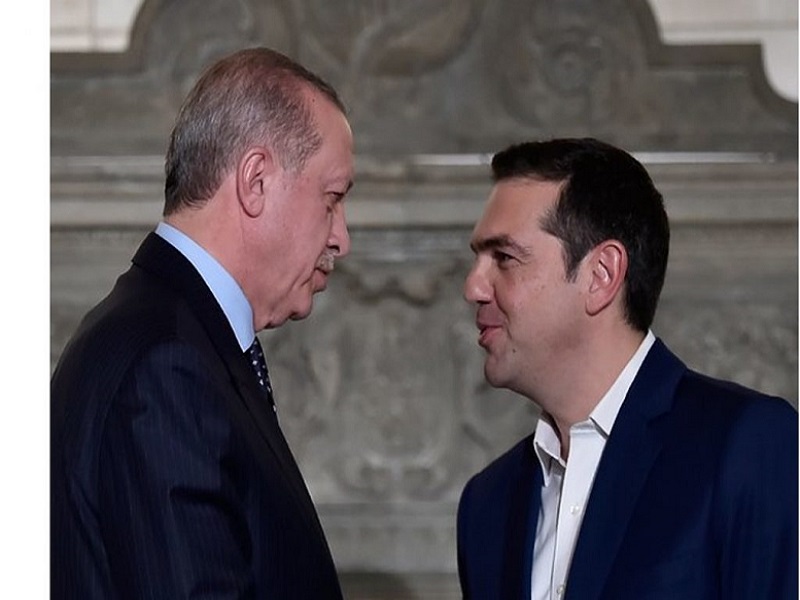
    The old issue of Greek-Turkish animosity has resurfaced as the last addition to the series of problems that has inflicted damage to the southern flank of NATO. Just within the span of a week in mid-April, Greek soldiers opened fire on a Turkish helicopter, a Greek fighter jet crashed into the Aegean on its return from one of the mock dog fights with Turkish warplanes, it was reported that Prime Minister Tsipras’ helicopter was harassed by Turkish aircraft and Ankara claimed to have removed a Greek flag planted on an uninhibited islet in the Aegean.[1]


    Based on news reports from both sides, things are appearing to spiral out of control fast. What are the root causes of these tensions and what can we expect in the near future?


    A History of Animosity

    Conflict between Greece and Turkey is nothing new. The two countries fought their independence wars against each other and formed their national identities against one another. Greece seceded from the Ottoman Empire in 1830 and the Turkish Republic was founded after the Greek army was defeated in Asia Minor in 1922. The Treaty of Lausanne was signed in 1923 by the Allies of the First World War, set the borders of Modern Turkey and has been the main text that has regulated Greek-Turkish relations since then.


    Historical animosities, however, were hardly resolved by the peace treaty. Over the years, the perceptions of the enemy was stereotyped and perpetuated in both countries through education, historiography and literary texts.[2] Past conflicts were compounded by the experience of ongoing intercommunal conflicts. In September 1955, the Greek minority of Istanbul was attacked, killing tens of people, damaging millions of dollars’ worth of property and leading thousands of Greeks to flee.[3]  Both countries still blame each other for the mistreatment of their minorities and not recognizing their rights. On the island of Cyprus, where the two communities lived together, civil strife dragged on for decades until the Turkish forces’ de facto partition of the island in 1974.[4]  The dispute over Cyprus, as well as memories of the bitter war that has left thousands of deaths and many more displaced in its wake, continues to casts a shadow over bilateral relations.


    Among all of the issues that afflict relations, however, the main problem today is the Aegean –a unique, relatively narrow, semi-closed sea separating the mainlands of both countries. The Aegean has around 3000 islands, islets and rocks scattered around, with no explicit ownership of the smaller formations given to either county in international treaties. Since the 1970s, the two sides have had disputes over the extent of territorial waters, continental shelves, national airspaces and the Flight Information Region (FIR), as well as the militarization of the Greek islands on the Eastern Aegean. Ankara claims that Greece is trying to turn the Aegean into a Greek lake, whereas Athens argues that Turkey violates Greek sovereignty.[5]


    The disputes over the Aegean could have been easily solved through diplomatic channels. Indeed, the two countries have shown that with appropriate political leadership and mutual will, it is possible to reduce dissent. After the 1922 war, for instance, there was a period of relative calm in the 1930s. Similarly, only three years after Greece and Turkey came close to armed combat over the uninhabited small islets of Imia/Kardak, there was a period of rapprochement, with increased levels of diplomatic, as well as economic and social interactions.[6] Despite high hopes, the last episode of rapprochement failed in resolving the Aegean dispute or even putting it on the back burner for the long-term, as the current escalation of tensions clearly demonstrate.


    The Current Imbroglio

    Given the historical hostility of the two countries, the current crisis is perhaps not unusual. Yet, it has been still surprising in some respects. First, it has occurred after nearly two decades of comparative tranquillity. Sure, the two countries had continued to show their teeth, especially through dog fights between aircrafts and sometimes with fatal accidents,[7]  but these had not led to continuous vicious circles of discord as we are witnessing today. Second, both countries should have been ‘busy’ with other priorities –Athens, with the continuing economic crisis, and Ankara, with the Syrian war and the Kurdish conflict.


    Although pinpointing the start of the current rise of tensions is difficult, one of the first signs of the upcoming set of events was the fleeing of eight air force pilots to Greece following the 15 July 2016 failed coup attempt in Turkey. In January 2017, the Greek Supreme Court decided against the extradition of the soldiers. President Erdoğan remarked that bilateral relations and confidence between the two countries would be damaged with this decision, mentioning that Prime Minister Tsipras had personally promised the repatriation of the soldiers.[8] To the dismay of the Turkish side, later in the year, one of the pilots was granted asylum by a committee of judges and experts.[9]


    This was, in fact, one of the many issues that President Erdoğan had brought up in his visit to Athens prior to the committee’s decision. While the Greek side was expecting the first visit of a Turkish President after 65 years to be an opportunity to mend ties, Erdoğan astonished government officials with his rebukes. Aside from the fate of the soldiers, he claimed that the Lausanne Treaty should be reconsidered, accused Greece of mistreating the Turkish Muslim minority in Western Thrace and blamed the Greek side for the failure of peace talks in Cyprus.[10] A few months later, in what appeared to be a case of retaliation for the eight pilots, Turkish forces arrested two Greek soldiers who claimed to have accidently crossed the border in bad weather. The soldiers were arrested and charged with espionage.[11]

    In the meantime, confrontations both in the Aegean Sea and air have significantly escalated. In July 2017, a Turkish vessel was shot at by the Greek coastal guard,[12] and in February 2018, two patrol boats collided near the Imia/Kardak islets,[13] setting the stage for the unusual week in mid-April. With the leaders of both countries persistent in making declarations that do not calm nerves down, there seems to be no quick de-escalation in sight.


    Why Now?

    It is clear that, despite historic animosity and many clashes before, relations have not been this much strained for this long. Since the Aegean dispute is hardly new, the main reasons for the recent entanglement must be sought in the changing domestic and regional context. Both Greece and Turkey have nationalistic political cultures. Historical animosities are easy to tap into whenever the approval of governments must be increased for domestic purposes. With the next general elections scheduled for June in Turkey and next year in Greece, politicians in Athens and Ankara can expect to achieve personal gain from escalating tensions.


    Additionally, on the Turkish side, the 15 July 2016 coup attempt changed both domestic politics and foreign relations in fundamental ways. According to the Turkish government, the coup itself was masterminded by Fethullah Gülen, a preacher residing in Pennsylvania.  The US has refused to extradite Gülen, leaving bilateral relations between the NATO allies in disarray. In fact, Turkey has been in a series of rows with other European powers and losing the battle in persuading the West that Gülen himself was behind the coup.[14] Many Gülen affiliates still reside in the West and, without the cooperation of foreign powers, it would be impossible to secure the return of these people and their trial. This is why Ankara is insistent on the return of the eight pilots who fled to Greece. Their extradition can be instrumentalized for the domestic audience as an achievement and can force the hands of other countries in especially South East Europe to agree on the return of other Gülen affiliates.[15] Thus, the issue of the repatriation of eight soldiers is a sine qua non for the de-escalation of the imbroglio from Ankara’s point of view. Athens, however, maintains that this is a judicial matter out of the authority of the elected government.


    Despite holding democratic principles on this matter, the SYRIZA-ANEL government is also partly responsible for the current state of affairs. The smaller partner of the coalition, the right-wing ANEL, holds 9 seats in the 300-seat parliament, barely above the 3% threshold. The ultra-nationalist leader of party, Panos Kammenos, is also the Minister of National Defence, who has personally taken a tough stance against Turkey contributing to the rise in hostilities. When Kammenos received his ministerial post in January 2016, his first act was to visit Imia/Kardak, drop a wreath in memory of the soldiers who died in the 1996 incident and remind everyone that the dispute still continued.[16] In February 2017, Kammenos threatened that if the Turkish Foreign Minister set foot on Imia/Kardak he would  “be dealt with” and more recently, implied that there was no way to speak with President Erdoğan because he was “crazy” and acted like a “sultan”.[17] These types of personal outbursts of the Minister are not helping in easing tensions.


    In past crises, hostilities would be brought down with the intervention of the US, warning both NATO allies and mediating between the parties. This was how the 1996 Imia/Kardak crisis was prevented from turning into a prolonged battle. But, this option is not available at the moment. Turkey’s relations with the US are already strained because of the failed coup and the two are on the opposing sides in the bigger crisis of the region, namely the Syrian War. NATO itself is in disorder after the comments of the American administration regarding differences in defence spending among the allies. The dissent within NATO and the so-far disinterest shown by the American administration over the Aegean conflict, as well as the lack of another alternative intermediator, explain why now things are spiralling out of control in contrast to previous crises.


    Conclusion: Future Prospects

    Turkey and Greece have never fought an actual war since the 1920s. We can expect hostilities to continue for some time but fall short of an actual war. Both sides should be perfectly aware that any type of aggression on the mainland of the enemy would result in thousands of deaths and the possible involvement of other NATO allies.  A disaster of this sort is something both sides would want to avoid.

    The worst case scenario for Greece and Turkey is the possibility of almost continuous, small-scale military operations especially on and around the Aegean islets. Such military operations might lead to limited combats, with military and even civilian casualties on both sides. An ‘accident’” could lead to more serious battles unless political leadership on both sides of the Aegean make a conscious effort to ease off their rhetoric both diplomatically and publically.


    Dr Yaprak Gürsoy is a Lecturer in Politics and International Relations at Aston University. She would like to thank Othon Anastasakis, Evangelos Liaras and İlke Toygur for fruitful discussions on the recent developments in the Aegean.


    [1] “Greek Fighter Pilot Killed in Crash”, TRTWorld, 12 April 2018, https://www.trtworld.com/turkey/greek-fighter-pilot-killed-in-crash-16678 ; “Turkish Fighter Jets Harass Tsipras’s Helicopter”, Ekathimerini, 17 April 2018, http://www.ekathimerini.com/227758/article/ekathimerini/news/turkish-fighter-jets-harass-tsiprass-helicopter; “Turkey Warns Greece After Hoisting of Flag on Aegean Islet”, Reuters, 16 April 2018, https://uk.reuters.com/article/uk-turkey-greece/turkey-warns-greece-after-hoisting-of-flag-on-aegean-islet-idUKKBN1HN2BX.

    [2] Hercules Millas, “National Perception of the ‘Other’ and the Persistence of Some Images” in Mustafa Aydin and Kostas Ifantis eds., pp. 53-66, Turkish-Greek Relations: The Security Dilemma in the Aegean (London: Routledge, 2005).

    [3] Dilek Güven, Cumhuriyet Dönemi Azınlık Politikaları Bağlamında 6-7 Eylül Olayları (Istanbul: Tarih Vakfı, 2005).

    [4] James Ker-Lindsay, The Cyprus Problem: What Ever yone Needs to Know (Oxford: Oxford University Press, 2011).

    [5]For the claims of both countries, see, Hellenic Republic Ministry of Foreign Affairs, “Issue of Greek-Turkish Relations”, https://www.mfa.gr/en/issues-of-greek-turkish-relations/, and  Republic of Turkey, Ministry of Foreign Affairs, “Turkish-Greek Relations/Aegean Problems, http://www.mfa.gov.tr/sub.en.mfa?deb1dc4c-926f-45bd-9a7c-27b45654c0e4.

    [6] Leonidas Karakatsanis, Turkish-Greek Relations: Rapprochement, Civil Society and the Politics of Friendship (Abingdon, Oxon and New York: Routledge, 2014).

    [7] See, for instance, “Mid-air Fighter Plane Collision Risks New Greek-Turkish Crisis”, The Guardian, 24 May 2006, https://www.theguardian.com/world/2006/may/24/turkey.topstories3.

    [8] “Erdogan Expresses Anger over Turkish Officers, Suggests Tsipras promised their return”, Ekathimerini, 27 January 2018, http://www.ekathimerini.com/215665/article/ekathimerini/news/erdogan-expresses-anger-over-turkish-officers-suggests-tsipras-promised-their-return.

    [9] “One of Eight Turkish servicemen Granted Asylum by Greece”, Ekathimerini, 30 December 2017, http://www.ekathimerini.com/224544/article/ekathimerini/news/one-of-eight-turkish-servicemen-granted-asylum-by-greece.

    [10] “Confrontational Erdoğan Stuns Greek Hosts on Athens Visit”, The Guardian, 07 December 2017, https://www.theguardian.com/world/2017/dec/07/turkish-president-erdogan-to-make-landmark-visit-to-greece.

    [11] “Turkey Refuses to Release Greek Border Guards in Spy Row”, The Guardian, 05 March 2018, https://www.theguardian.com/world/2018/mar/05/turkey-refuses-to-release-greek-border-guards-in-spy-row.

    [12] “Greek Coast Guards Fire on Turkish Vessel in Aegean”, The Telegraph, 03 July 2017, https://www.telegraph.co.uk/news/2017/07/03/greek-coast-guards-fire-turkish-vessel-aegean/.

    [13] “Greece Protests to Turkey over Boat Incident, Ankara Denies Fault”, Reuters, 13 February 2018, https://www.reuters.com/article/us-greece-turkey/greece-protests-to-turkey-over-boat-incident-ankara-denies-fault-idUSKCN1FX2AO.

    [14] The German intelligence agency, for instance, was not “convinced” that Gülen was behind the attempt. See, “Coup in Turkey Was Just a Welcome Pretext”, Der Spiegel, 20 March 2017, http://www.spiegel.de/international/germany/german-intelligence-chief-bruno-kahl-interview-a-1139602.html.

    [15] “Gulen Schools Fight Provokes New Tensions in Bosnia”, Balkan Insight, 26 July 2016, http://www.balkaninsight.com/en/article/gulen-schools-fight-provokes-new-tensions-in-bosnia-07-26-2016; “Turkey Presses Albania To Extradite Key ‘Gulenist’ Suspect”, Balkan Insight, 13 October 2017, http://www.balkaninsight.com/en/article/albania-to-face-turkish-request-to-extradite-gulen-supporter-10-13-2017; “Kosovo Parliament to Probe Arrests of Turkish Nationals”, Reuters, 04 April 2018, https://www.reuters.com/article/us-kosovo-turkey-security/kosovo-parliament-to-probe-arrests-of-turkish-nationals-idUSKCN1HB2VH, “Turkey Presses Albania To Extradite Key ‘Gulenist’ Suspect”, Balkan Insight, 13 October 2017, http://www.balkaninsight.com/en/article/albania-to-face-turkish-request-to-extradite-gulen-supporter-10-13-2017.

    [16] “New Greek Nationalist Defence Minister Resurrects Old Tensions with Turkey”, The Guardian, 30 January 2015, https://www.theguardian.com/world/2015/jan/30/greece-turkey-imia-kardak-tensions-fighter-jets.

    [17] “Kammenos Threatens Turkey: Don’t Step Foot on Greek Islands”, The National Herald, 27 February 2017, https://www.thenationalherald.com/152186/kammenos-threatens-turkey-dont-step-foot-greek-islands/; “Erdogan ‘Has Gone Completely Crazy’ says Kammenos”, Ekathimerini, 03 April 2018, http://www.ekathimerini.com/227339/article/ekathimerini/news/erdogan-has-gone-completely-crazy-says-kammenos.

    Footnotes
      Related Articles

      Sleight of hand: How to make a journalist disappear – Afgan Mukhtarli’s case

      Article by Mariam Uberi & G. Khoo

      April 10, 2018

      Sleight of hand: How to make a journalist disappear – Afgan Mukhtarli’s case

      Azerbaijani investigative journalist Afgan Mukhtarli lived in self-imposed exile in Georgia from 2015-2017, but in May 2017 he was allegedly abducted in Tbilisi and forcibly transferred to a  detention center in Azerbaijan. During his abduction, he was allegedly ill-treated and later sentenced to six years imprisonment by the Balakan District Court in Azerbaijan on trumped-up charges.

      This paper analyses the procedural violations Mr Mukhtarli experienced both in Georgia and in Azerbaijan after his detention and subsequent imprisonment. It will also review the political implications for both countries following the incident and examines human right breaches against the Mr Mukhtarli perpetrated by both countries.

      Procedural Violations related to Mukhtarli’s abduction

      On 29 May 2017, Mr Mukhtarli was abducted by unidentified Georgian men some wearing police uniforms and forced into a car where his captors beat him.[1] The journalist later told his lawyer that he was forced to change cars twice and in the second car his captors spoke Azerbaijani.[2] After crossing the border into Azerbaijan, Mr Mukhtarli was accused by the Azerbaijani authorities of illegally crossing the border, smuggling EUR 10,000 and assaulting a police officer.[3]

      During his detention, Mr Mukhtarli was denied any medical examination to attend to his bruises and diabetes that he was diagnosed with before his apprehension. He also had restricted access to his lawyer.[4] In January 2018, Mr Mukhtarli was sentenced to prison but many commentators observed that at his trial judge had unfairly and systematically dismissed all favourable evidence. This included the examination of the fingerprints on the allegedly smuggled banknotes and the footage from the official border crossing point where the journalist was brought.[5]Mr Mukhtarli appealed against the judgment and on four occasions the Appeal Court postponed his appeal hearings.[6]The explanation given for the latest adjournment was that the State Prosecutor was not available to attend the appeal hearing.[7]

      Meanwhile, the Georgian Ministry of Interior opened an investigation into the unlawful deprivation of liberty of Mr Mukhtarli under Article 143 (1) of the Criminal Code of Georgia. However, the charges do not cover the aggravating circumstances including ‘‘premeditated illegal deprivation of liberty by transferring the victim abroad by an organised group.’’ [8] Moreover, Mr Mukhtarli was not granted a ‘victim status’,[9]this, however, has not impeded his Georgian lawyers from accessing files related to Mr Mukhtarli’s case.[10]The Public Defender’s Office maintained that the CCTV recording on the day Mr Mukhtarli was abducted was completely altered as the time and weather conditions appeared altogether different.Nevertheless, the Georgian Prosecutors’ Office argued that the video recordings were authentic and that there were no grounds to undertake further forensic examination.[11]

      Not one of the 200 questioned witnesses provided any information about the incident. Georgian authorities failed to identify the car that Mr Mukhtarli was transported in or trace its trajectory near the Georgian-Azerbaijani border. As an indication of the lack of independence of the investigation, the investigation was first opened by the Ministry of Interior and subsequently transferred to the prosecutor’s office after an unexplained two -month delay.[12]

      Political responses

      The Prime Minister of Georgia, dubbed the disappearance to be a serious challenge to Georgian sovereignty.[13]At first, the Georgian authorities denied any involvement in the abduction of Mr Mukhtarli.[14]A member of the Azerbaijani government said that the abduction of Mr Mukhtarli was a result of a successful joint operation between Georgian and Azerbaijani forces. The State Security Service of Georgia, however, rejected any links to the abduction.[15]Meanwhile, the President of Georgia called on the authorities to effectively investigate the case.[16]

      Georgia and Azerbaijan received international condemnation for the illegal abduction and imprisonment of the journalists.[17]The European Parliament (EP) reminded Georgia of its responsibility to ‘‘provide protection to all those third country nationals living in Georgia’’ or grant ‘’political asylum’’ to safeguard those who face persecution back home for their human rights activities.[18]Separately, the Georgian authorities were urged to conduct an effective investigation into Mr Mukhtarli’s disappearance[19] and bring the perpetrators to justice.[20]Mr Mukhtarli’s imprisonment was widely perceived as an attack against ‘’free Media’’ in Azerbaijan[21]as authorities were urged to drop charges against him.[22]Baku, however, hit back at the accusations that the trial was politicised. Advisors close to President Aliyev argued that Mr Mukhtarli should not escape unpunished even if this meant curtailing his fundamental freedoms.[23]

      In December 2017, amid international pressure, the Georgian Prime Minister admitted that Mr Mukhtarli’s disappearance from Georgia was a ‘‘serious failure and it should not have happened.’[24] He also claimed that the firing of the chiefs of border police and counterintelligence to be an ‘‘adequate response.’’[25] Later, the Head of the Human Rights Committee at the Georgian Parliament maintained that Georgian law enforcement was ready to question Mr Mukhtarli but the Azerbaijani authorities would not permit it.[26]Yet ten months following his abduction, local civil society organisations are still calling for the Parliament to establish a Parliamentary Investigative Committee to investigate the incident.[27] At the time of the writing, no investigation had been started.

      Judicial safeguards

      Both Georgia and Azerbaijan are members of the Eastern Partnership agreement (EaP) which aims to deepen and strengthen relations between EU and its member states. One of the priorities for its member states is to enhance respect for rule of law and develop justice sector through the strengthened institution and good governance.[28]Moreover, through  European Neighbourhood Instrument (ENI), EU geared most efforts towards criminal justice and human rights for Georgia[29] and Azerbaijan.[30]

      Other than that, both countries have ratified the European Convention of Human Right (ECHR) and the UN Convention against Torture (CAT). Georgia therefore faces a responsibility for the journalist’s disappearance either through the direct involvement of State agents or through a failure to fulfil its obligation to protect him against the risk of the disappearance.[31] It should conduct a ‘‘thorough and effective investigation into his disappearance’’ and determine a ‘‘plausible explanation on injuries’’ occurred whilst in the custody by Georgian authorities.[32]

      Georgia had an obligation to examine whether based on ‘‘political affiliation and activities’’ Mr Mukhtarli might have been subjected to torture upon his return to Azerbaijan. Moreover in light of the consistent reports of intimidation and conviction of independent journalists in Azerbaijan,[33]Georgia should have taken into consideration a ‘’likelihood of the danger of torture’’ for Mr Mukhtarli.[34]

      Leniency towards the classification of the criminal act allegedly perpetrated by the criminal police “risks to undermine remedial effect’’ of the ECHR and undermines adequate degree of ‘‘public scrutiny’’ of his case.[35]

      Azerbaijan too has largely failed to provide Mr Mukhtarli with legal safeguards ranging from the legality of his arrest to correct court procedure. These guarantees would entail the right to a lawyer from the outset of a person’s deprivation of liberty’[36]and equality of arms during his trial,[37] as well as access to an independent medical examination.[38]The delay of the Appeal Court to reach the final verdict, according to the journalist is to impede him from including his name into the pardoning decree expected to be issued by the President of Azerbaijan in May 2018.[39]The prosecutor has not used the provision of the Azerbaijan Criminal Code to summon the victim by force, in case he fails to appear before the court. Azerbaijan’s deliberate actions to curtail ‘‘reasonable time’’ largely constitutes to the ‘‘aggravating circumstances of the violation of right to fair trial Article 6 (1)’’.[40]

      On 3 June 2017 Mr Mukhtarli’ lawyers filed a request for interim measures to the European Court of Human Rights (ECtHR) to release him from pre-trial detention on the grounds of ill health, which was refused by the ECtHR.[41]The Court highlighted that Azerbaijan authorities should provide Mr Mukhtarli with requisite medical assistance and prioritised the case. In June 2017 Mr Muktarli’s lawyers lodged a complaint before the ECtHR contesting a range of violations against Georgia and Azerbaijan varying from violation of fair trial, freedom of expression and limitation on the use of restrictions on rights taken in conjunction with unlawful deprivation of liberty.[42]

      These breaches, including ‘‘dubiously motivated criminal prosecutions and disproportionate sentences in relation to journalists’’[43] have been constantly highlighted by the Council of Europe (CoE). Azerbaijan was also called to establish a judicial system to comply with the requirement of the right to fair trial of the ECHR.[44] Moreover, the ECtHR considered a number of cases from Azerbaijan on the detention of journalists and members of the opposition punished by the authorities for their dissenting voices. The Court’s jurisprudence pointed out a pattern of unlawful deprivation of liberty including the interference with their freedom of expression and political participation.[45]In the Mammadov case, Azerbaijan refused to abide to the ECtHR judgment all together to release a politician detained based on flawed criminal procedures.[46]The ECtHR, therefore in a rare move launched an inquiry into whether Azerbaijan had failed to comply with its obligations under the Convention. [47]

      Enforced disappearance versus enabling environment for human right defenders

      Georgia has co-sponsored UN resolution on human rights defenders where it condemned the ‘‘practice of enforced disappearance’’ used against human rights defenders[48]. Moreover, by supporting another UN Human Rights Council resolution on the safety of journalists in 2016, Georgia took a commitment to take action to Protect, Prosecute and Combat impunity against journalists. These commitments are rooted in its international human rights law obligations.[49] It is bound to ensure through policy and law an ‘‘enabling environment’’ for journalists to carry out their work independently. Through prosecution, it must respond to any violence and hold those responsible ‘‘accountable.’’[50]Combating impunity against journalists requires investigations undertaken by special investigative units.[51]These obligations are further echoed in the ECHR jurisprudence where countries should not only refrain from interference with individuals’ freedom of expression but also have a positive obligation to safeguard freedom of expression against the threat of attack, including from ‘‘private individuals’’, by introducing the effective system of protection.[52]

      Through these remits, Azerbaijan is also bound to safeguard freedom of expression and provide enabling the environment for journalists. Azerbaijan, however, has been criticised for curtailing judicial freedoms and enhancing its susceptibility to political pressure. It was in relation to this that the UN Committee Against Torture stated that it “remains concerned at the lack of independence of the judiciary vis-à-vis the executive branch.”[53]As a follow-up procedure, Azerbaijan has an obligation to report on measures it has taken to eradicate arbitrary imprisonment, torture of human rights defenders and develop fundamental legal safeguards. [54]

      Conclusion

      Mr Mukhtarli’s case provides an important illustration of the shortcomings existing in the area of freedom of expression and the functioning judiciary in Azerbaijan. It also highlights the ill practice of using criminal law to punish dissenting voices and the role of the judiciary that leads to arbitrary arrest and detention. It is also followed that Azerbaijan must immediately free Mr Mukhtarli from the imprisonment.

      Azerbaijani activists see the EaP as a missed opportunity for the EU to empower civil society and democratic institutions in Azerbaijan.[55] Some civil society actors think the EU should try harder to persuade the Government of Azerbaijan to get activists released. Azerbaijani members of the EaP’s Civil Society Forum Steering Committee have beseeched the EU to desist from signing the new EU-Azerbaijan agreement until Mr Mukhtarli and other political prisoners are released.[56]

      The Georgian context underlines the State’s failure to safeguard a journalist from enforced disappearance and other procedural guarantees. It also shows Georgia falling short on its deliverables through the EaP agreement including ‘‘impartiality and effectiveness of law enforcement bodies’’ as part of the legal reform.[57]

      The Georgian authorities should launch an effective investigation into the case to punish those who forcibly removed Mr Mukhtarli from Georgia.  It also has to provide Mr Mukhtarli and his family with appropriate remedies including compensation or socio-economic support.[58]

      On a general level, both Azerbaijan and  Georgia should reinvigorate its efforts to implement the international human rights framework with robust guarantees for the safety of the journalists.

      [1]Human Rights Watch. Azerbaijan Should Free Abducted Journalist.Afgan Mukhtarli Had Sought Safety in Georgia.. June 2017.

      [2] Ibid.

      [3] Afgan Mukhtarli was charged under Article 318.1 (illegal border crossing) and Article 206.1 (smuggling) and Article 315.2 ( violence against police authority) of the Criminal Code of Azerbaijan.

      [4] Mr Mukhtarli’s lawyers were present at his initial hearing, however, it was not until 7 June 2017, that he was allowed an audience with his lawyer without supervision. Freedom Now. Report: Repression Beyond Borders: Exiled Azerbaijanis in Georgia.  . September 2017. p.15.

      [5] Jamanews. The Trial of Afgan Mukhtarli commences in Azerbaijan. . December 2017.

      [6]The hearing was postponed  three times since  a police officer allegedly beaten by Mr Mukhtarli did not attend the trial. Article 42.Monitoring of Mr Mukhtarlis’ trail in Azerbaijan. available in Georgian. https://bit.ly/2JmHRbC. 14 March 2018.

      [7] Facebook status of Elchin Sadigov, Mukhtarli’s lawyer. Available in Azerbaijani . 2 April 2018

      [8]Public Defender’s office: Public Defender of Georgia Appeals to Chief Prosecutor of Georgia concerning Mukhtarli Mukhtarli case.. July 2017.

      [9] Ibid.

      [10] By the Georgian Criminal law if person is not granted a victim status he/she does not have access to case files. Email correspondence with the Head of Article 42, Natia Katsitadze. 29 March 2018.

      [11] Public Defender’s office: Public Defender Echoes Investigation into Mukhtarli Mukhtarli Case.. November 2017.

      [12] Public Defender’s Office: General Prosecutor’s office in Georgia considered the recommendation of the Defenders’ office partially. July 2017.

      [13] Statement by the Prime-Minister  Giorgi Kvirikashvili, 3 June 2017 in Freedom now. p. 15.

      [14] Civil. ge.Georgian Officials on Azerbaijani Journalist’s Alleged Abduction. . June  2017.

      [15] Statement of the Security Service of Georgia.. December  2017.

      [16]Tabula, President Margvelashvili:Mukhtarli’s disappearance a challenge to our statehood. May 2017.

      [17] Article 19. Azerbaijan: Mukhtarli Mukhtarli abducted in Georgia and detained on smuggling and trespassing charges. June 2017.See also Pen International and other: Georgia/Azerbaijan: open letter on the cross-border abduction and detention of Mukhtarli Mukhtarli.. June 2018. Council of Europe Parliamentary Assembly: Rapporteur calls for release of Azerbaijani journalist Afqan MukhtarliJune  2017.

      [18]Joint motion for Resolution.European Parliament on the case of Azerbaijani journalist  Afgan Mukhtarli. (2017/2722(RSP)) June 2017.

      [19] Ibid.

      [20] ibid.

      [21]Amnesty International. Sentenced journalist latest victim of Azerbaijan’s ‘repressive apparatus of fear’. June 2017. See also CPJ:  Azerbaijani court sentences local journalist to six years in prison.. No date.

      [22] Parliamentary Assembly. Resolution 2185. Azerbaijan’s Chairmanship of the Council of Europe: what follow-up on respect for human rights. http://bit.ly/2rIHJyf.

      [23] News.az Ali Hasanov: OSCE Office on Freedom of Media shouldn’t show tendentious approach towards Azerbaijan, .January 2018.

      [24] Tabula.Prime Minister:Mukhtarli case was a big failure. . December 2017.

      [25] Ibid.

      [26] Sophio Kiladze: “Investigation of the case of Afgan Mukhtarli is delayed due to the fact that Georgian law enforcers are not allowed to question him  February 2018.

      [27] Open Letter: Georgia/Azerbaijan: Abduction of journalist Mukhtarli Mukhtarli., February 2018.

      [28] Eastern Partnership.https://bit.ly/2taFO68.

      [29] Programming of the European Neighbourhood Instrument (ENI) – 2014-2020. Single Support Framework for EU support to Georgia.https://bit.ly/2m70PKc. (2014-2017).p.8.

      [30] Programming of the European Neighbourhood Instrument (ENI) – 2014-2020 Single Support Framework for EU support to Azerbaijan. https://bit.ly/2uYFxnT. (2014-2017).p.5.

      [31] Kasymakhunov v. Russia/ (App no. 29604/12).14 November 2013,para 120.

      [32] Ribitsch v. Austria. (App no 42/1994/489/57 ). 4 December 1995, para 32.

      [33]Report of the Working Group on Arbitrary Detention on its mission to Azerbaijan.A/HRC/36/37/Add.1. 2017,para 85.

      [34] Pauline Muzonzo Paku Kisoki v. Sweden. Communication No. 41/1996, U.N. Doc,paras 82. and 9.3.

      [35]Enukidze and Girgvliani  v Georgia.(App. no. 25091/07). April 2011, paras 275 and 258.

      [36] Salduz v Turkey. (App no. 36391/02).  November 2008 para 54.

      [37] Foucher v France.(App. no. 22209/93). March 1997, para 34.

      [38] Case of Kudla v. Poland. (App. no. 30210/96).26 October 2000,para 91.

      [39]Before big holidays usually once or twice a year the President of Azerbaijan Ilham Aliyev pardons convicts by issuing a  pardoning decree. With that  public  expectations raise that political prisoners too will be pardoned. This year around it is expected the President to  issue a pardoning decree in May on the occasion of the 100 years of independence of the Republic of Azerbaijan. Email correspondence with Giorgi Gogia,South Caucasus Director, Human Rights Watch. 29 March 2018. See also, Human rights House and Article 21. Monitoring of Afgan Mukhtarli’s trial in Azerbaijan. 24 March 2018.

      [40] Case of Bottazi v Italy. (App no. 34884/97).July 1999,para 22.

      [41]Rule 39 of its Rules of Court- indicates interim measures to any State party to the ECHR. Interim measures are urgent measures which, apply only where there is an imminent risk of irreparable harm. Email correspondence with the lawyer of Afgan Mukhtarli, Archil Chopikashvili, Article 42. 23 March 2018.

      [42] Ibid.

      [43]Council of Europe, Parliamentary Assembly. Resolution 2062.The functioning of democratic institutions in Azerbaijan. 2015.http://bit.ly/2o64nOi, para 6.

      [44] Council of Europe, Parliamentary Assembly. Resolution 2185 (2017). Azerbaijan’s Chairmanship of the Council of Europe: what follow-up on respect for human rights? ,October 2017.

      [45] Ilgar Mammadov v. Azerbaijan (Application No. 15172/13); Khadija Ismayilova v. Azerbaijan (Application No. 30778/15); Rasul Jafarov v. Azerbaijan (Application No. 69981/14); Ibrahimov and Others v. Azerbaijan. (Applications nos. 69234/11, 69252/11 and 69335/11); in UN Report of the Working Group on Arbitrary Detention on its mission to Azerbaijan. (2017).p.15.

      [46]To this date, Mammadov, three years after the final ECtHR judgment, still remains in detention.

      [47]In light of the ongoing failure for Azerbaijan to  implement the  judgement Ilgar Mammadov v Azerbaijan , Bureau of the Congress calls the authorities to implement it as soon as possible the Procedure foreseen under Article 46 of the Convention. Council of Europe: Azerbaijan: Congress supports the call from the Parliamentary Assembly in the case of Ilgar Mammadov 20 October 2017.

      [48] UN Resolution 34/5 by the Human Rights Council, with Georgia voting in favour, see Joint Open Letter: GEORGIA/AZERBAIJAN: Abduction of journalist Mukhtarli.. March 2017.

      [49] Article 19. Acting on UN Human Rights Council Resolution 33/2 on the Safety of Journalists. Prevent, Protect, Prosecute.https://bitly.is/1g3AhR6.  2017,p.7.

      [50] Ibid.p.16.

      [51] Ibid.p.20.

      [52] Ibid.p.38.

      [53] UN Committee Against Torture (CAT), Concluding observations:Azerbaijan, 27 January 2016, CAT/C/AZE/CO/4 2016.para 14.

      [54] Ibid. para 39.

      [55] The Eastern Partnership: the view from Azerbaijan  May 2015.

      [56] Email correspondence with Anar Mammadli, a member of the EaP’s CSF Steering Committee, 2 April 2018.

      [57] Association Agreement between European Union and Georgia. . 2014.p.8.

      [58] Article 19. Acting on UN Human Rights Council Resolution 33/2. pp.25.

      Footnotes
        Related Articles

        Egypt’s faltering legitimacy: Sisi’s contested victory and pressing challenges

        Article by Dr. Lucia Ardovini

        April 4, 2018

        Egypt’s faltering legitimacy: Sisi’s contested victory and pressing challenges

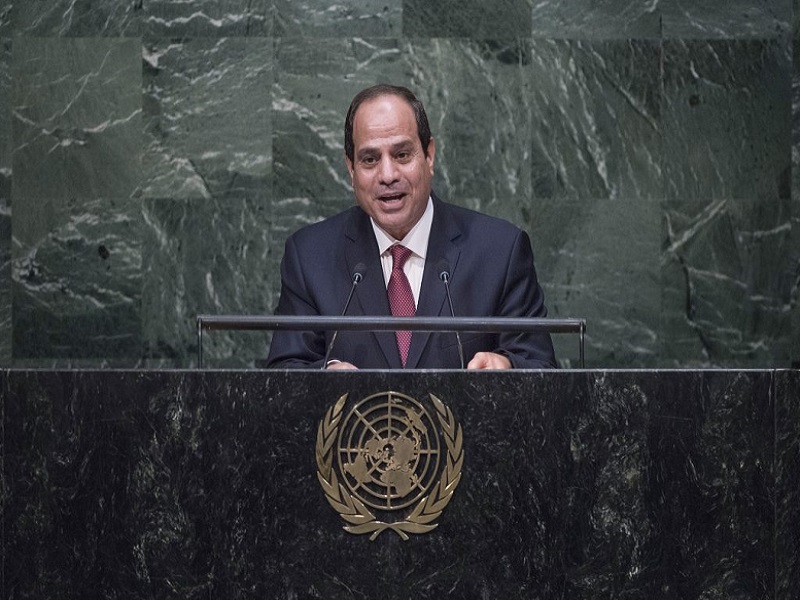
        In Egypt polls have now closed after a three-day presidential election that has been characterised by unprecedented levels of repression and state-led propaganda –something that is very far from the cries for “fair and free elections” that resonated in Tahrir Square just over 7 years ago. In a result that comes as no surprise, President Abdel Fattah al Sisi is said to have achieved a landslide victory with 97% of the vote, securing another 4 years in power.[1] However, many are openly condemning the elections as a sham. The Cairo Institute for Human Rights Studies has released a statement undersigned by other Human Rights organizations that denounces the National Elections Committee, stating that ‘the Commission has lost its political legitimacy by watching the electoral process as it transformed into a debacle (…) the pervasiveness of violence, repression, intimidation and persecution (…) renders this week’s election illegitimate, and its results cannot be recognised’.[2]  As the status quo remains untouched in Egypt once again this statement resonates with many, and the question determining the future of the country is whether or not these results are enough to keep up the illusion of Sisi’s legitimacy.


        The circumstances surrounding these elections are all too familiar: Sisi was the only viable candidate, as his sole challenger, Mousa Mostafa Mousa, is the head of a party that endorsed Sisi before entering its own candidate seven minutes before the deadline for nominations.[3] Interestingly enough he allegedly only won less than 3% of the vote, which is also considerably less than the 1.76 million invalid ballots cast.[4] Sisi’s other four potential opponents, three of whom were from the military, were arrested, intimidated, or threatened into withdrawing. While this further de-legitimises the Electoral Commission’s claim that these have been ‘fair and free elections’, it also shows that there still is some opposition to Sisi’s regime despite the ever-escalating levels of state-led repression. Most importantly some of this opposition even comes, surprisingly, from within his own regime and certainly from within the circles of those who supported him in 2013 during the coup against the Muslim Brotherhood.


        This time around, the regime’s harassment and targeting of potential opposition candidates has led to 150 political figures and 7 political parties calling for a national boycott of the presidential elections.[5] Voters’ turnout is said to have been around 41.5%, significantly lower than the 47% registered in the 2014 elections.[6] This is despite of the regime’s continuous call to the polls through its media agencies, which shows that the deep state was fully aware of just how much rested on these electoral results – namely, Sisi’s own legitimacy and credibility. In a push to increase turnout Egypt’s state news agencies have even reminded Egyptians that failing to vote was an offence punishable by fines up to $28 and there have been reports by international observers of citizens being bribed into voting.  [7]Sisi has apparently secured a landslide victory, but at what cost?


        Stability VS Democracy: what do these elections really stand for?

        These elections would be better described as a referendum on Sisi’s performance. Seven years after the Arab Uprisings and nearly five years after the Muslim Brotherhood’s removal from power, Sisi’s legitimacy is steadily crumbling away as the economy continues to collapse and the threat of domestic terrorism escalates at an alarming rate. With over 60,000 political prisoners and a set of anti-terrorism legislation that have seen the complete annihilation of political space, Egypt is now in the midst of the worst human rights crisis of its history so far. Human rights abuses, torture and extrajudicial killings have now become the norm, alienating not only those defined as Islamists, but even the secular opposition that cheered Sisi’s coup d’etat in 2013. As the unprecedented wave of arrests even within the military shows, these elections have never been about the end result. Rather, what Sisi needs is not a popular endorsement, but one last illusion of legitimacy to consolidate the power of the deep state.


        Several international media outlets have portrayed these elections as a choice between stability and democracy, but Maha Azzam, head of Egypt’s Revolutionary Council, argues that it is neither:


        “What we have is the search for a mandate. A mandate to carry on a form of political repression that we have seen over the past 4 years and that we have seen over decades in Egypt. (…) There was only a short blip during 2011-2012, when we could have said that the beginnings of the democratic process could have gone underway, but they were interrupted by a military coup.”[8]


        In addition, the unprecedented levels of repression and the way in which Sisi’s ruthlessly targeted any other military-affiliated candidate has shown the extent to which the armed forces remain Egypt’s most powerful institution. While Sisi came to power with their backing he must also be aware of the fact that the military could turn against him, as it happened to Mubarak and Morsi before him. While these are hard to corroborate, there have been rumours of dismissal and purges taking place within the armed forces all throughout his presidency, allegedly to contain discontent over Sisi’s controversial decision to ‘gift’ two islands to Saudi Arabia.[9] Moreover, the decision of former Prime Minister and air force commander Shafiq and chief of staff Annan to run against Sisi in these elections further show that there are deep cracks in the military, leading many to believe that Sisi will take advantage of this landslide victory to amend the constitution in his favour.


        If anything, the events following 2011 have demonstrated that the military forces fear instability above all else,[10] and are prepared to force a change when the possibility of chaos and subsequent disruption to their power becomes too high. Sisi’s political survival therefore depends on how much popular support he manages to hold on to after these elections, as it could likely counter-balance the perceived costs of his removal.


        The high cost of a landslide victory: where to next?

        Sisi is arguably very aware of the threat that comes from its own military comrades, but what he probably does not realise yet is that his ‘triumph’ will come with a renewed set of domestic and international challenges. His victory will undoubtedly tighten autocracy’s grip on Egypt even more, putting the country into a worse state than it was in even after 30 years of Mubarak’s rule.  However, it will also raise the expectations of the millions of people that are still living under the poverty line in Egypt today, and whose lives have significantly worsened in the seven years that followed the Arab Uprisings.


        The two main challenges that urgently need addressing are still represented by the economy and security. The ever-worsening state of the economy means that daily hardships are now being faced not only by Egypt’s poorest, but have become a reality even for those who under Mubarak belonged to the working/middle-class.[11] It is easy to draw a correlation between military rule and the drastic drop in economic and living conditions, with Egypt’s external debt under Sisi jumping from $38bn to more than $80bn, while taxes on hundreds of products and services have skyrocketed even further.[12]


        Unless there is significant political change living conditions will continue to falter, adding to the same grievances that made the 2011 Uprisings a reality and that still remain unaddressed today. It would not be the first time Egypt witnesses a ‘revolution of the hungry’, especially now that its citizens have touched first-hand the change that popular mobilization can bring about. In addition, another serious concern is the steady decline in security conditions across the country, with insurgency and radicalization not being confined to the Sinai anymore. So far counterterrorism legislations have only restricted the rights of the average citizens and have achieved very little in terms of preventing or even containing violence from jihadists and rebel groups that have taken control of the country’s unpatrolled territories. While a decline in security conditions is less central in the outbreak of yet another round of popular uprisings, providing security is central to the armed forces’ image as the defender of the Egyptian nation, and failure to do so could lead to even lower levels of the regime’s perceived legitimacy.[13]


        In conclusion, regardless of the legitimacy of Sisi’s landslide victory, what is clear is that Egypt needs structural change now more than ever. While Sisi is still backed by a considerable part of the population and by the military, the real test of power will be his ability to rise up to these challenges. Only then it will become clear whether or not these electoral results represent the further consolidation of the power of the deep state, or instead mark the beginning of its fragmentation.


        Dr. Lucia Ardovini, Research Fellow –  MENA Programme – The Swedish Institute of International Affairs


        [1] Hamza Hendawi, Egypt’s president wins re-election with 97 percent of vote, AP, April 2018, https://apnews.com/16adfce98b7d4f6b8441f52d0b2156e0

        [2] Cairo Institute for Human Rights Studies, Rights groups: Egypt’s illegitimate presidential election must not be recognized, April 2018, https://cihrs.org/egypts-illegitimate-presidential-election-must-not-be-recognized/?lang=en

        [3] Gail Buttorf, In Egypt, the opposition is calling for a boycott of this month’s election. Will it work? Washington Post, March 2018,  https://www.washingtonpost.com/news/monkey-cage/wp/2018/03/12/will-a-boycott-work-in-egypts-elections/?utm_term=.a59533873315

        [4] Hendawi ibid, https://apnews.com/16adfce98b7d4f6b8441f52d0b2156e0

        [5] Egypt Independent, January 2018, https://www.almasryalyoum.com/news/details/1252594

        [6] Hendawi ibid, https://apnews.com/16adfce98b7d4f6b8441f52d0b2156e0

        [7] Al Jazeera,  Egypt’s elections come to a close with Sisi set to win, March 2018, https://www.aljazeera.com/news/2018/03/egypt-elections-close-sisi-set-win-180328135457231.html See also Declan Walsh and Nour Youssef, For as Little as $3 a Vote, Egyptians Trudge to Election Stations, New York Times, March 2018,  https://www.nytimes.com/2018/03/27/world/middleeast/egypt-election-sisi.html

        [8] Egyptian Revolutionary Council on France 24, What next for Egypyt, March 2018,  https://www.facebook.com/EgyRevCouncil/videos/1472764162851164/

        [9] Hossam Bahgat, A Coup Busted, October 2015, https://www.madamasr.com/en/2015/10/14/feature/politics/a-coup-busted/

        [10] Andrew Miller and Amy Hawthorne, Egypt’s Sham Election, March 2018, Foreign Affairs,  https://www.foreignaffairs.com/articles/egypt/2018-03-23/egypts-sham-election?cid=int-fls&pgtype=hpg

        [11] Ahram Online, Egypt’s poverty rate surges to 27.8% in 2015: CAPMAS

        October 2016, http://english.ahram.org.eg/NewsContent/3/12/245899/Business/Economy/Egypts-poverty-rate-surges-to–in–CAPMAS-.aspx

        [12] Taha Ozhan,  What Sisi’s ‘victory’ means for Egypt’s future, April 2018, http://www.middleeasteye.net/columns/what-sisis-victory-means-egypts-future-1166881278

        [13] Miller and Hawthorne ibid, https://www.foreignaffairs.com/articles/egypt/2018-03-23/egypts-sham-election?cid=int-fls&pgtype=hpg

        Footnotes
          Related Articles

          International Women’s Day in Iran: What it means to those outside

          Article by Tahirih Danesh and Drewery Dyke

          March 8, 2018

          International Women’s Day in Iran: What it means to those outside

          In the past year alone, women around the globe have challenged entrenched patriarchal structures. Individually and collectively, women have set about establishing a new social order in which greater equality exists or will exist, not only between men and women, but those who self-identify with neither or with elements of both; and indeed in respect to racial, ethnic and religious communities that have previously faced discrimination or, at best, that majority, male-dominated societies have ignored.

          In what many in the West may brand as post-Weinsteinian, Time’s Up and #MeToo-era appears to have hastened the end of the reign of those who want to wield power over women’s bodies, minds and futures. But what about Iran?

          The country, from which we get vast shipments of oil and natural gas, filling our petrol tanks and heating our homes; whose foreign policy is pivotal for peace in the Middle East and beyond; whose markets for goods and services have been opening in the years since the conclusion of an international agreement regulating Iran’s nuclear programme, is also facing significant social change. A reality, at least in the longer term, could well change how the country governs itself and, crucially for those outside Iran, how it pursues its interests abroad. For that reason alone, we need to be vigilant about the rights of women in Iran.

          In recent days and weeks, women in Iran have circulated calls to demonstrate on International Women’s Day, 8 March, including, for example, outside the Ministry of Labour – as this piece goes to print, arrests were taking place there. Women have shared moving clips about women’s struggles and aspirations and have called for the re-claiming of public space.

           “We want to be able to leave our homes on this one day out of an entire year and to remain in the streets. After all, these are the same streets in which we have struggled for our rights. We have had a revolution in these same streets. We have been bombed in these same streets. We have demanded our rights and have faced crackdowns and repression in these same streets. We have had acid thrown on our faces and for the crime of not observing proper hejab we have been arrested in these same streets. We have stood atop platforms in these same streets and have gone to prison with broken bones as a result. We have passed through these same streets to go to sports stadiums only to end up in detention centers. We women live in these cities and we want to spend this day, our day, in the streets of our cities.”  Statement posted on Iranian Women. 

          The emerging generation of activists, the grandchildren of the 1979 revolution, has come of age since the post-election unrest in 2009, seen by many as an election stolen by the authorities, determined not to allow a now-imprisoned, reform-minded candidate to win. This generation, raised in equal measure in the shadow of state repression as well as the glow of a screen linked to the internet, appear to no longer harbour illusions about ‘reformists’ or ‘conservatives’ in Iran’s political landscape. Arguably more empowered – or simply too fed up to care anymore – their calls are not steeped in political sloganeering but rather the brutally blunt calling out of economic marginalisation; stifling corruption and impunity of political leaders.

          In December and January, in some 80 smaller cities and towns, mainly in the north east and across the west of Iran, swathes of people demonstrated their exasperation with their plight and the bleak environment facing them. The demonstrators came from a wide variety of social strata but tended not to be linked with political groups present or allowed in Iran. The government detained thousands but the demonstrators’ near-existential cri de coeur shook the government, possibly to its very core.

          Emerging from this wave of unrest came Vida Movahed. She stood in Tehran’s Revolution Street, on a utility box, removed her mandatory headscarf, or hejab, and waved it on the end of a stick. Amidst wider social upheaval, she said no to compulsory hejab. She now faces prosecutions for this peaceful act, thus becoming an Iranian Rosa Parks, but for gender rather than racial equality.

          Mandatory hejab laws are a physical symbol of the post-1979 revolutionary Iran. From 1981 onward, the government enforced this clothing restriction, along with other forms of social limitations through a systemic national implementation process termed the ‘Islamic Cultural Revolution’. Everything from women’s clothing; images of women and an array of places and people; TV shows, school text books and university departments placed women under the de facto control of men. It came to alter the minds of the first post-revolutionary generation, in respect to women and their place in society, both in public and private spaces.

          Yet in the few months since Vida Movahed’s brave act, many others have emulated her, re-staging her actions. Termed in Persian the Daughters (or women and girls) of Revolution Street (Dokhtaran-e Khiyaban-e Enghlab) are now a quasi-political movement, holding a candle to an issue long covered-up by successive leaders in the Islamic Republic: that since its inception the state’s particular interpretation of Sharia law has meant women’s access to their rights must be controlled by men.

          These women activists are writing a new chapter in the annals of women’s rights in Iran. On 28 February 2018, Amnesty International reported that dozens of women faced ill-treatment and were at risk of long jail terms for peacefully protesting compulsory veiling. More than 35 women have been violently attacked and arrested in Tehran alone since December 2017 for taking part in the ongoing peaceful protests against compulsory veiling. On 23 February, the police warned that women would now be charged with ‘inciting corruption and prostitution’. This carries a maximum sentence of 10 years’ imprisonment.

          On Thursday 22 February 2018, a video emerged showing a police officer pushing another woman, Maryam Shariatmadari off one of the utility boxes in Tehran while she waved her headscarf. She reportedly required hospitalisation and the authorities now hold her in Shahr-e Rey Prison, just west of Tehran. Officials also detained her mother, Mitra Jamshidzadeh, on 23 February, for some 30 hours, during which time she faced beatings for seeking information about her own daughter’s whereabouts. All this since a handful of women acting alone have stood on elevated street furniture, and have removed their legally required headscarves, and quietly and peacefully waved them on the end of sticks.

          Judicial officials have denigrated the women who have protested, ill-treating or torturing some of them; claiming also that they are linked to foreign enemies or that they are inciting moral corruption or even prostitution. The reaction betrays the home-grown threat these brave women exemplify to a deeply misogynist political order. Today, we have reached an Iranian #MeToo and Time’s Up moment.

          Women’s rights in Iran

          Women face deeply entrenched discrimination through Iran’s laws and practices. Their testimony counts for less in criminal matters; their access to divorce, employment, equal inheritance and political office are all restricted. These restrictions, in turn, make it harder to fight widespread violence against women and girls; or early and forced marriage. The government and monitors harasses women’s rights activists. But it was not always thus.

          State recognition of women’s rights in Iran arguably began with the Constitutional Revolution in 1906. The 1936 ban on hejab itself and 1963 provisions granting women the right to vote extended women’s place in society. The 1967 Family Protection Law guaranteed women rights of divorce, child custody, and marriage. But by the mid-1970s, opponents to the then Shah, Mohammed Reza Pahlavi termed such measures as Westoxification – denigrating such measures as those taken in unthinking awe of ‘western’ values rather than as measures in line with international human rights standards.

          The 1979 establishment of Islamic Republic facilitated the popularisation of a hybrid approach to religious interpretation of laws regarding women that, amongst other things, manipulated the education of both women and men about the status and rights of women. By 1983, basic manifestations of this reality, such as hejab laws, public gender segregation and limited rights to marriage, divorce, inheritance and custody were in place.

          Though the government denies it, the ideological pillars of the Islamic Republic meant that women’s aspirations alone constituted an existential threat to foundations of the state itself. Government supporters, accordingly, cast universal rights a western-inspired, ideological poison. The ideology of discrimination coupled with state violence in order to “promote virtue and prevent vice” meant that every woman’s existence was predicated on serving the interests of and strengthening the legitimacy of the – discriminatory – state itself. Amongst other things, these measures limited women and girls’ space particularly with regards to education, thus hindering their socio-economic and political progress.

          Granted, within even this context there has been a small degree of ebb and flow: under President Mohammed Khatami (1997-2005) there were moderate advances: civil society in Iran began to flourish and the presidency established a Centre for Women’s Participation in the Office of the Presidency, which encouraged the formation of non-governmental organisations (NGOs) working to promote the rights of women and children and they flourished.

          Between 2000 and 2004, Iranian parliamentarians passed bills to improve the position of women, although most – including a proposal that Iran should ratify the UN Convention on the Elimination of All Forms of Discrimination against Women – were rejected by the Council of Guardians, the body, composed of clerics and lawyers, that assesses legislation for conformity with Islamic law and the Constitution.

          Khatami’s successor, Mahmoud Ahmadinejad (2005 – 2013), among other things, rolled back women’s access to higher education and the space for civil society. During a speech amid widespread protests following Ahmadinejad’s disputed 2009 re-election, the Supreme Leader called for the ‘Islamisation’ of universities and claimed fields such as sociology, were too western-influenced and had no place in Islamic Iran.

          This trend continued until further controversial measures implemented in 2012 restricted women from studying 77 specific academic fields at 36 government universities. However, Iranian universities lacked the faculty and the resources to enforce this policy among all subjects. Those universities that did follow the policy, faced significant financial challenges. And so, the application of sex segregation and gender quotas in Iran was ineffective.

          Armed with education, the women of Iran are fierce

          According to Saeed Moidfar, a retired sociology professor from Tehran: “Traditional politicians saw educated and powerful women as a threat.” There are plenty in Iran and in the future, arresting and forbidding women from entering stadia to attend football matches will be the least of the government’s concerns.

          Flying straight into the face of the state’s discriminatory laws and practices; its repression, education is a way that the Iran of tomorrow – one that perhaps better adheres to international human rights standards – may well be born. In Iran, education can be as political as the hejab itself: it is the struggle for the minds of tomorrow’s leaders.

          Yet, education is also something the government needs to act upon to maintain its legitimacy. In a 2016 report to the United Nations (not available online), the state’s High Council for Human Rights set out measures to uphold women’s rights. Reading between the lines, it is clear that the authorities are wary of women’s aspirations, including in the field of education, yet are compelled to set out measures currently in place or those planned in order to advance women’s rights, such as access to and participation in, notably, higher education.

          Despite chronic challenges facing Iranian women, such as lack of an organised approach to women’s movement or regular, continued access to newer feminist literature, state imposed quotas and segregation and educational bans, they have continued to excel in education: the numbers of women attending university rose at unprecedented levels. In 1997, women formed 37% of all university students. By the year 2000, they this number rose to 45%, in 2005 it grew to nearly 60%, though in recent years faced a roll back following Ahmadinejad’s presidency.

          Fuelled by incendiary references to a feminist conspiracy against the core of the Islamic Republic, the charged and complex dynamics around the perpetual power struggle between women and the Islamic Republic’s interests are in the balance as never before. We are in the second half of the political football match that women are not currently allowed to attend, and there is everything to play for.

          The starting point of the Daughters of Revolution Street and activists of today is one of absolute equality. They may not feel entitled to speak, but they certainly feel entitled to be heard. The aspirations of the Islamic Cultural Revolution have been swallowed up by #MeToo and Time’s Up demands. Iranian women are, in many, though not all respects, as much a part of our world as they are of theirs.

          Today Vida Movahhed and the other Daughters of Revolution Street are lifting the veil off the state agenda that has replaced education and empowerment with discrimination and repression; development with demagogues of power. But Iranian women, too, are saying Time’s Up.

          Iran women impose themselves today and every day on state structures in Iran that keep them down. They demand their #MeToo rights and – leaving aside their willingness – paying a price to assert their rights. Iranian women are not victims, they don’t need saving by foreign powers; we are seeing a new, home-grown generation that is amongst the most highly educated in the region; plugged-in and nearly fully charged. This is the promise of the Iran; and indeed the promise for us all, globally.

          Footnotes
            Related Articles

            In memoriam: Asma Jahangir

            Article by Tahirih Danesh

            February 12, 2018

            In memoriam: Asma Jahangir

            The Iran Human Rights Review Editorial team are saddened to hear of the sudden passing of valiant human rights icon, Asma Jahangir, and offer her family our condolences. Having served as the UN Special Rapporteur on freedom of religion or belief,  Special Rapporteur on the situation of human rights in the Islamic Republic of Iran, and Special Rapporteur on extrajudicial, summary & arbitrary executions, she made great strides in advancing the cause of human rights for all Iranians. Ms Jahangir was a fearless advocate for minorities and women’s rights everywhere, and an incomparable champion of truth and transparency before those in positions of power. She leaves behind a great legacy as a member of the human family, and a body of work as a human rights expert that can only help to inspire a new generation to re-imagine institutions, communities and lives that help better living conditions for all who inhabit the planet.

            To learn more about the mandate of the United Nations Special Rapporteur on the Situation of Human Rights in Iran, please click here.

            Footnotes
              Related Articles

              FPC Briefing-Election Observation in the European Space: The Role of the OSCE/ODIHR, the Council of Europe and EU

              Article by Dr Beata Martin-Rozumilowicz

              January 25, 2018

              FPC Briefing-Election Observation in the European Space: The Role of the OSCE/ODIHR, the Council of Europe and EU

              As the history of structured and methodologically-based election observation is nearing its twenty-fifth anniversary, it seems that the time is ripe to take stock of the current state of play with regard to election observation in the European space. Over this time-period, the Organization for Security and Co-operation’s Office for Democratic Institutions and Human Rights (OSCE / ODIHR) has been instrumental in moving this rights and principles-based election observation approach forward considerably, with ground-breaking publications such as its Election Observation Handbook, first published in 1996 and now in its sixth edition. A number of methodological handbooks published over the years have built upon and nuanced this initial approach.[1]


              Other organizations, such as the Council of Europe (CoE) and the European Union (EU) have very much modelled their approach on the one of the OSCE / ODIHR. While the former often joins OSCE / ODIHR election observation missions (EOMs) under the auspices of the Parliamentary Assembly of the Council of Europe (PACE), the later has adopted its own independent methodology and structure (large based on the OSCE / ODIHR model). Also, while the PACE observers in many EOMs, they rarely are involved in Election Assessment Missions, primarily deployed in European Union countries. The EU as a whole doesn’t send Election Observation Mission (EUEOMs) to observe in OSCE participating States.[2] The European Parliament, however, sometimes sends delegations to participate in OSCE/ODIHR EOMs, which in addition to signing up to the overall findings of an EOM, sometimes also report internally to the EP upon return.


              As well, a community of good practice, based around the Declaration of Principles for International Election Observation (DoP), has contributed to the methodological rigours of election observation in the European space as well as globally. The DoP is now in its thirteenth year and it has been endorsed by more than 50 organizations, including the UN, the EU, the European Parliament, the CoE, the International Foundation for Electoral Systems (IFES), the National Democratic Institute (NDI), the International Republican Institute (IRI), the Carter Center, the Westminster Foundation for Democracy and many others.[3] Institutionally, the DoP community helps buttress and constantly builds upon the methodological foundations of credible international observation and further developments in emerging issues of concern.


              At the same time, a ‘community of bad practice’ has sprung up with a plethora of organizations and individuals without methodological rigour or transparency as to their methods for reaching the conclusions that they do. Often, reports emanating from this community are not public or are rudimentary in their nature, their means of financing opaque, and they are often responsible for the phenomena of deployment of ‘zombie observers’ to many countries.[4]


              As such, the time seems ripe for an evaluation of the current state of play of election observation in the European space. This piece will look at some of the outstanding problems and examine some of the remedies that are available. It is hoped that the essay will offer a comprehensive view forward on how international election observation can continue to be relevant in the years and decades to come.

              The Problems Extant

              One fundamental issue with election observation is that without a firm grounding in standards and principles, there is always a risk of it becoming politicized and arbitrary. This reduces both the meaning and the impact of the exercise. Of course, context is always important (and no observer will dispute this), but fundamental human rights principles and rights can’t be ignored and are not relative (rights such as the freedom of expression, association, assembly, etc.)


              Throughout the course of the development of election observation as an institution, I would pose that there has been a fundamental tension between this rights-based approach, and an instrumental approach that sees it as a political tool to national-interest ends. This is true of both the good and the bad practice communities. This tension is particularly dangerous, as it introduces relativity and subjectivity to an electoral assessment process, which then can (and is) being used by opponents to destroy the institution of election observation.[5]


              Part of the problem historically has also been the tension between parliamentary ‘leaders’ of observation efforts and the electoral experts that draw these assessments, based on certain pre-defined parameters. I would argue while both elements are necessary, both sides also need to understand their comparative strengths as well as the possible blind spots that make their involvement in election observation less effective. For instance, without the political weight and profile of parliamentary leaders, observation risks being shunted into unimportance or irrelevance by those who would rather ignore the findings. Thus, parliamentarians bring a higher degree of exposure to the process of election observation.


              At the same time, for purely bandwidth reasons, such individuals don’t have the time to devote the level of depth of analysis and understanding to truly and credibly evaluate an electoral process. Almost all in the field now agree that election day is only one part of the process; one which starts months before the day with the delineation of constituency boundaries, the registration of voters and candidates, the ability of those candidates to campaign, the role of money in politics, the freedom of the media space to allow voters to make informed choices free from pressure and intimidation, the process of procurement and implementation of any technological aspects to the process, the adjudication of complaints and appeals and the declaration of final results. All of these processes are as important (if not more so) than the actual casting of ballots, counting of them and tabulation of the preliminary results.


              In addition is the ability of women, minority groups, disabled persons, youth and other marginalized groups to understand and access the process equally to other citizens. This is an aspect which is receiving an ever-greater attention in modern election observation assessments.


              In order to respond to these challenges there is a clear need for a complex evaluation mechanism that requires experts in each field of properly evaluate whether international obligations, standards and good practices have been met and then to balance these factors in an overall evaluation of a particular electoral process. Parliamentarians are crucial in helping find this evaluatory balance, but they should not be seeking to change reality for their own political ends, as happens far too often. The most recent allegations and investigations into various, high-profile cases of corruption and venality through this problem into stark relief.[6]


              As discussed in the introduction above, on the other side of the equation is what I have come to term the ‘community of bad practice’, which mirrors and mimics this rights-based approach. This community is driven by certain States that seek to show that everything is relative, that there is no such thing as a rights-based approach, that all that is relevant is transactional foreign policy, and that all processes are ultimately corruptible. The current political climate both in Europe and in the United States has recently buoyed proponents of this point of view and it is to some degree gaining traction amidst all the furore of ‘fake news’ and ‘alternative facts’.


              This grouping has made significant progress in undermining the institution of election observation in a variety of ways. They meet regularly amongst themselves to share experiences that undermine observation and are increasingly engaging in alternative electoral technical assistance amongst their like-minded associates. They more regularly deploying ‘zombie’ observers and organizations to counter credible observation reporting and fill the media space with such alternative truths to confuse and mislead citizens and voters.[7] More insidiously, there is the work done corrupting individual politicians on election missions to in an effort to alter the findings as well as at an organizational level to limit funding and political support for election observation and to administratively hamper such credible observation.


              There is also some evidence to suggest that they are more regularly funding political parties throughout Europe and in other parts of the world to actively change the political space and discourse.[8] More overtly, the recent attempts to make incursions into electoral / voter registration systems during the 2016 Presidential Election in the United States, which targeted new voting technologies with the aim of potentially tampering with results is a particularly worrying development.[9] It’s altogether likely that the lessons learned from these incursions will be increasingly used in other country contexts. While the United States to some extent may have been saved by the fragmented and de-centralised electoral systems in place, it is somewhat frightening to think what might be possible in a smaller, more unitary and less tech-savvy state in the future.


              All of these elements described above are individually dangerous and undermining to international election observation in the European space. Taken together, however, they spell a significant danger for elections, in general, and for the democratic process itself.

              International Response and Remedy

              Given the situation described above, what can be done about the current situation? In this section, a few recommendations are offered that may provide food for thought in these discussions. One, and probably the primary, is for individual States to recommit to the human rights principles espoused in the 90s, namely that a rights-based, evidence-grounded approach to election observation is still valued and necessary in promoting democratic principles worldwide (including amongst Western countries themselves).


              Secondly, organizations such as the EU, the CoE and the OSCE should introduce internal checks and balances to weed out any potential corruption in their organizations. Recent moves in the CoE to have observer delegation members to investigate past corruption fully and to have members declare potential conflicts of interest in advance of deployment is a step in the right direction. This should go hand-in-hand with such organizations understanding the need for a balanced role between parliamentary personalities and technical electoral experts as equally indispensable and mutually supportive to credible election observation, and to develop institutions in this direction.


              More attention must also be given to appropriate evaluation and attention to all parts of the electoral process, starting months before election day and continuing until all electoral disputes have been resolved and a final electoral result has been reached that enjoys integrity and public confidence.[10] The over-reliance of parliamentarians on their specific experiences on a single day or days of this process should be tempered and balanced against the longer-term narrative, which is integral to such an assessment.


              Finally, it is important that organizations which observe election are properly resourced, both humanly and financially, so that these exercises remain robust and meaningful. This is particularly challenging in a time of global economic downturn, shrinking government budgets and populist political agendas. Ensuring such sustainability, however, is essential if the gains of the past two decades and a half are not to suffer setbacks and erosion. It is also necessary for these organizations (and the States and comprise them) to work at all levels to rebut the growing narrative that all values and principles are relative and that, therefore, no independent and impartial electoral evaluation is possible or desirable.

              Conclusion

              In conclusion, the challenges that currently face election observation in the European space are numerous and growing. Greatest of note is the concerted push-back to the exercise which is growing amongst a number of states and which is likely to increase in the coming years. With continuous examination and self-reflection, however, as well as with continued developments and consistent financial support, international election observation is an institution that continue to yield benefits in the years to come.


              Although the current environment, both politically and economically, may seem bleak for the continuation of such multilateral exercises, the gains made over recent years both in terms of methodological soundness and international consultation and cooperation give hope that all is not lost. With consistent and systematic support, it is expected that election observation will continue to play a key role in the European space for many years to come.

              [1] Amongst the set of methodological publications are the recently published Handbook on Observing and Promoting the Electoral Participation of Persons with Disabilities, the Handbook on the Follow-up of Electoral Recommendations, the Handbook for the Observation of New Voting Technologies and the Handbook for the Observation of Campaign Finance, amongst others. See http://www.osce.org/odihr/elections/handbooks

              [2] EUEOMs are coordinated by all branches of the EU system with the HRVP confirming the countries to observe (as suggested by EEAS and in consultation with the Council of Ministers and the European Parliament), the European Parliament often providing the lead observer, supported by experts chosen by EEAS and the Commission and observers picked by them from suggested participants from member states. Kosovo is not an OSCE participating State and on this basis the country has been observed by the EUEOMS and not the OSCE / ODIHR.

              [3] For a full list of endorsing organizations, see https://www.ndi.org/declaration_endorsing_orgs

              [4] See http://foreignpolicy.com/2013/10/31/vote-of-the-living-dead/ and https://www.ndi.org/merloe-democracy-journal-article-story

              [5] If one imagines a financial audit that states that for a company in country X, it is fraudulent to embezzle company funds, but for a company in another country Y, some level of embezzlement is acceptable or can be overlooked, this would be a nonsense line of argument.

              [6] For stark detail, see https://www.theguardian.com/world/2017/sep/04/everything-you-need-to-know-about-the-azerbaijani-laundromat, http://www.esiweb.org/pdf/ESI%20-%20The%20Swamp%20-%20Caviar%20Diplomacy%20Part%20two%20-%2017%20December%202016.pdf and https://www.occrp.org/en/azerbaijanilaundromat/

              [7] See, for instance, Merloe (2015) “Authoritarianism Goes Global: Election Monitoring vs. Disinformation”, Journal of Democracy, vol.26, no. 3, http://muse.jhu.edu/article/586480/pdf

              [8] See, for instance, http://www.telegraph.co.uk/news/worldnews/europe/russia/12103602/America-to-investigate-Russian-meddling-in-EU.html and https://www.nbcnews.com/news/world/europe-s-far-right-enjoys-backing-russia-s-putin-n718926

              [9] In at least one U.S. State, there is evidence of voter registration data having been changed or deleted, although the incursion was noticed and resolved before it became a problem on election day. With other States, the degree of incursion remains unclear. See https://www.nytimes.com/2017/09/22/us/politics/us-tells-21-states-that-hackers-targeted-their-voting-systems.html and https://www.washingtonpost.com/news/the-fix/wp/2017/09/23/what-we-know-about-the-21-states-targeted-by-russian-hackers/?utm_term=.4783db2d9663

              [10] This will become increasingly challenging as more countries turn to new technologies to aid their processes, presenting the danger that a greater part of the process may become ‘black-boxed’. To counter this, credible election observation organizations should pay greater attention to how fundamental principles, such as equality are translated into a technology evaluation framework and to cultivate experts that are knowledge in both elections and technology who can make their findings understandable to the general audience.

              Footnotes
                Related Articles

                FPC Briefing – Thinking Big: Modi’s Foreign Policy Priorities for India

                Article by Dr Chris Ogden

                January 19, 2018

                FPC Briefing – Thinking Big: Modi’s Foreign Policy Priorities for India

                Following the landslide general election victory by the Bharatiya Janata Party (BJP) in May 2014, India’s Ministry of External Affairs (MEA) proclaimed a ‘renewed energy, vigour, and planning in India’s engagement with the rest of the world’[1].  Under Narendra Modi, India’s foreign policy priorities have indeed become more self-assured, visionary and global in scope, displaying a dynamism and energy often absent in previous regimes. Further reflecting the greater pragmatism, self-confidence and assertiveness associated with the diplomatic style of both Modi and the wider BJP, Indian officials now explicitly and consistently seek to present their country as ‘a confident, articulate, (and) rising power … no longer content to merely react to international developments’[2].


                Evermore proactive and pre-emptive in their diplomacy, India’s diplomatic footprint has also substantially increased. This expanding bandwidth has been accompanied by a significant upswing in political missions, visits and summits under Modi, which have vastly exceeded those of Manmohan Singh during the previous ruling government. At the core of this approach, the BJP are less ambivalent in promoting India internationally, and more explicit in achieving greater status, recognition and power on the global stage. A negotiation style typified by the BJP’s frequently hard-nosed and nationalist bravura has also meant that ‘pragmatism, not principle, and delivery, not doctrine … (are) the marks of Modi’s approach’[3].  Strong personal drive and focus underpins such a style, whereby India’s Prime Minister follows a mantra of ‘thinking big’ in all possible ways concerning India’s place in the world.

                Three Core Strategic Priorities

                Concerning foreign affairs, the BJP’s 2014 election manifesto clearly stated that; ‘the vision is to fundamentally reboot and reorient the foreign policy goals, content and process, in a manner that locates India’s global strategic engagement in a new paradigm’[4]. At the heart of this vision are three core strategic priorities that have all been solidified under the Modi regime concerning the basic guiding orientation of Indian foreign policy. These policy preferences – achieving great power recognition; constructing a multipolar world order; and pursuing the “Act East” policy – are now fully evident across New Delhi’s various international diplomatic activities. They are each internationally focused and aim to augment India’s global standing through specific bilateral and multilateral ties.


                Achieving Great Power Recognition

                Making India one of a handful of the world’s great powers has been the first major strategic priority of the Modi regime. As Modi announced to his supporters in 2014; “I assure you that this country [India] has a destiny”[5], which would play a significant role in international politics. The BJP’s tapping into nationalist sentiments across both its supporters, and India more generally, has underpinned such assertions, whereby India aims to be at the upmost level of the international hierarchy. Encapsulating these narratives, upon gaining office Modi furthermore declared that the twenty-first century was to be “India’s century”[6] during which the country’s status ambitions would be fulfilled.


                Gaining self-sufficiency in its international affairs is the mainstay of this priority. In particular, via the concept of ‘strategic autonomy’, New Delhi seeks to possess sufficient amounts of power to independently express its own interests and its own vision of the world order.  Prevalent within such narratives is increasing India’s position as a large developing economy that can be of potential benefit to the current global economic system, as well as bolstering ‘Brand India’ as a means to enhance her domestic modernisation programme. A slew of innovations such as ‘Make in India’, ‘Skill India’, ‘Digital India’, and ‘Start Up India’ has accompanied this focus, and are all intended to boost foreign direct investment, create jobs, enhance workforce skills and increase production standards.  So as to reinforce this aim, New Delhi has also sought new trade and energy partners across Asia, Africa and South America. These ties have included heightened Saudi Arabia relations, as well as major investment promises worth $35 billion and $22 billion respectively from Japan and China. In combination with ensuring her energy and trade security, the ongoing cultivation of India’s defence and multilateral capabilities is also required to achieve greater strategic autonomy.


                Modi has further sustained, refreshed and intensified relations with the US. Underscoring these sentiments, when Narendra Modi and President Obama met in 2014 they issued a statement broadcasting that ‘we will have a transformative relationship as trusted partners in the 21stcentury’[7].  Since then, relations have centred upon deepening cooperation in the fields of defence, trade, civil nuclear affairs and Asian security. Indian officials have also noting mutual ties concerning ‘shared values of freedom, democracy, universal human rights, tolerance and pluralism, equal opportunities for all citizens, and rule of law’[8], which underscore the political commonalities between them. Close ties to an established great power such as the US is also central for fulfilling India’s status aspirations.


                In June 2015, the Indo-US ‘New Framework for Defence Cooperation’ was formally renewed for ten years, and led to the signing of a ‘Master Information Exchange Agreement’ between the Pentagon and India’s Ministry of Defence to share aircraft-carrier technology heavily desired by New Delhi.  The highly significant ‘Logistics Exchange Memorandum of Agreement’ has also been signed, which allows both sides mutual access to military supplies, spare parts and services. With the new Trump administration, both countries further declared themselves to be ‘democratic stalwarts … resolved to increase cooperation, enhance diplomatic consultations, and increase tangible collaboration’[9].

                Constructing a Multipolar World Order

                At the core of the BJP’s wider vision of global politics is constructing a multipolar world order, whereby multiple powers – not just one – compete for influence.  Within this worldview, the multiple poles are argued – in addition to the US – to be China and Russia, and potentially the EU, as well as India once the country has fully reached great power status. It is underpinned by collective cooperation concerning mutual development, equality, and non-intervention – all of which are core, longstanding principles within Indian foreign policy. When they came to power in 2014, the BJP further argued that India was a vishwaguru (‘world guru’) capable of actively re-crafting, rather than passively acquiescing to, international affairs – a sentiment central to this foreign policy priority.


                With this proactive image in mind, Modi’s diplomacy has encompassed an approach of ‘multi-alignment’ that is centred upon engaging with regional multilateral institutions, and creating specific strategic partnerships. As part of this latter process, in 2015 for instance, India entered into new strategic partnerships with Canada, Mongolia, Oman, Seychelles, the United Arab Emirates and the United Kingdom. India’s strong economic profile (with an average rate of 7.5% between 2014 and 2016)[10] heightens such linkages, as does her growing middle class population who provide a potentially major consumer market for the goods of any external trading partner. As India’s economic prowess increases, so too has her voice in any discussion of global financial governance.


                Ensuring better ties with other great powers is also central to achieving this foreign policy priority.  The most longstanding of these are with Russia, who has been a steadfast strategic partner of India since 1947, providing it with economic, military and political support. Under Modi, the relationship remains firmly ‘rooted in longstanding mutual trust, characterized by unmatched reciprocal support to each other’s core interests’[11]. In 2015, the two sides carried out joint exercises for both their naval and ground forces. Crucially, both sides also subscribe to a similar world order vision that seeks a ‘system based on the central role of the United Nations and international law, common interests, equality, mutual respect and non-interference in the internal affairs of countries’[12]. Along with China, Russia also subscribes to being part of India’s vision of creating a multipolar world order.


                Elsewhere the BJP’s assertive pragmatism has been highly visible towards China. At the core of Modi’s attitude to Beijing is the conviction that their ‘simultaneous re-emergence … as two major powers in the region and the world, offers a momentous opportunity for (the) realisation of the Asian Century’[13]. Both sides cooperate in a variety of multilateral settings, which reflects a shared strategic preference for a multipolar world order. Major trade and investment deals have bolstered relations but have been offset by continued friction concerning their ongoing border disputes. Here however, the BJP has been very forceful in its use of India’s military capabilities, especially along the Himalayan border and has strongly responded to infiltrations by Chinese troops (which have occurred at several junctures). Indian officials have also openly pledged that Arunachal Pradesh (which the two sides dispute) is an indisputable part of India, and to which the Indian Home Minister openly visited in 2015. In order to put greater diplomatic pressure on Beijing, New Delhi has also pursued an unprecedented policy of coalition-building with the US, Vietnam, Japan and Australia.


                The final part of the priority to achieve multipolarity is institutional, whereby India is now more willing to take the lead in creating, joining and running groupings. Pointing to this new-found self-confidence, in October 2014 India helped set up the Asian Infrastructure Investment Bank, as well as the New Development Bank in July 2014. In 2017 India also became a full member of the Shanghai Cooperation Organisation, which Modi deemed to be ‘a logical extension India’s age old ties with the region; … India’s engagement … will help us build a region which is an engine of economic growth for the world; (and) is more stable’[14]. These efforts point to an international system that is in flux and which concurrently enhance New Delhi’s strategic preference for evoking a multipolar world order.

                Pursuing the ‘Act East’ Policy

                Following the ‘Act East’ policy has been the third priority of the Modi government, which extends the ‘Look East’ policy first introduced under P.V. Narasimha Rao to create deeper common military, economic, and diplomatic ties with South East Asia. Act East seeks to realise the core assumption of the twenty-first century being the Asian Century, as well as inter-connecting India to the Asia-Pacific region through the new formulation of the ‘Indo-Pacific’. India’s continued domination of the Indian Ocean Region is a major feature of this policy, whereby the region is considered to be essential to ensuring her economic, military and territorial self-sufficiency, as well as India’s modernisation of its naval capabilities towards a blue-water capacity. Within these parameters, and as a means to counter the presence of competitors in the region, the Modi government has carried out sustained and frequent diplomacy included the formation of strategic partnerships with Singapore and Vietnam. Concerning the latter, New Delhi has offered a US$100 million line of credit, considered the transfer of BrahMos supersonic cruise missiles, and signed treaties on coast guard cooperation. In turn, the lucrative ASEAN-India Free Trade Area entered into force in July 2015, which delivered a further foundation for the proactive diplomacy that is the hallmark of the Act East policy.


                Amplifying other particular bilateral relations has also been imperative to the Act East policy. Thus, within the Indo-Pacific region, Modi has elevated ties with Japan to that of a ‘Special Strategic and Global Partnership’. Prime Minister Shinzo Abe’s 2015 visit to India saw the announcement of the ‘Vision 2025’ statement ‘which reflects a broad convergence of their long-term political, economic and strategic goals’[15] and centred upon professed political congruence concerning pluralism, tolerance, the rule of law, and democracy. India invited Japan to become a permanent participant in the India-US Malabar naval exercises, which Tokyo took up in 2016, and pointed to a heightening triadic relationship between these countries. The addition of an explicit security element to India-Japan relations epitomized a noteworthy step-change in relations, whilst their intensifying political and strategic conjunction continued to be reinforced by economic ties. These included the signing of a major infrastructure deal for Japan to build a bullet train system from Mumbai to Ahmedabad.


                Further afield, relations with Australia have ameliorated the desired pursuit of the Act East policy, as well as wider strategic linkages with the US and Japan. The first Indian prime minister to visit Australia since 1987, Modi’s 2014 mission acknowledged a bilateral relationship ‘anchored in shared values, expanding economic engagement, converging strategic interests and a growing shared agenda in regional and multilateral institutions’[16]. Signing agreements on security, defence and counter-terrorism cooperation, and the sale of uranium to India, have all enhanced relations. In turn, India and Australia’s first ever bilateral naval exercise in 2015 – AUSINDEX-15 – further advanced ties, as did the trilateral India-Japan-Australia security dialogue held since 2015, and as will their first bilateral Army-to-Army exercises in 2018. Officials have additionally noted how ‘Australia and India share a commitment to democratic values, rule of law, international peace and security, and shared prosperity’[17].  These elements show a major increase in India-Australia relations, primarily via the dynamism central to Modi’s diplomatic style but also based upon their shared values and interests.

                Global Power India

                The core strategic aim underpinning Modi’s three foreign policy priorities is to augment, heighten and embolden India’s position as a significant and important international actor. As such, whether is it about increasing India’s status (to become a great power), crafting a new form of world order (based upon multipolarity) or establishing itself as a major Indo-Pacific player (via the Act East policy), India’s global focus is the hallmark of the current BJP government. Within these dynamics, the other major powers, especially in Asia, are of especial focus as seen concerning the emphasis on enhancing relations with the US, Russia and China, as well as second tier countries such as Japan and Australia. Such a focus fits with New Delhi’s desired future self-image as a major Asian global power.


                Augmenting New Delhi’s national power resources flow into these dynamics, such as through sustaining high rates of economic growth with which to attract others to India, bolstering her domestic development and thereby enabling her to gain an ever greater say in the management and nature of global governance. Enhancing India’s trade and energy security links to this growth, so as to fuel her continued economic expansion, as does the continued acquisition of superior military capabilities and higher levels of security cooperation with other countries through new agreements or more inter-force exercises. India’s ever-increasing diplomatic presence also bolsters her general global standing, which is aided by having a proactive and assertive leader, in the guise of Narendra Modi, who is able to forcefully and visibly promote India’s interests on the international stage in a manner not seen for several decades.


                In these ways, the global edge is what defines Indian foreign policy and will continue to do so in the coming years and decades, especially if the BJP wins the next Indian general elections scheduled for 2019, which looks increasingly likely. Such a victory will act as a reinforcing mechanism that will essentially legitimise this approach. This edge also has repercussions for those countries who are not placed – or who are not perceived to be placed – within the higher echelons of world affairs, or who do not have something obvious to offer New Delhi in either economic, military or diplomatic terms.  This observation will have a definitive impact for the UK, which – given the current uncertainties surrounding the pathway to an eventual Brexit, whatever that may be – appears to be significantly weakened in the aftermath of the referendum result to leave the EU. Such doubts do not offer any clear succour to Indo-UK relations, and suggest a downgrading of relations as New Delhi focuses on those countries that will be its probable peers and competitors in the new Asian-centric world order.


                [1] MEA, Ministry of External Affairs, Annual Report 2015-16 (New Delhi: Policy Planning and Research Division, Ministry of External Affairs, 2016), i.

                [2] MEA (2016) Annual Report 2015-16, i.

                [3] Ian Hall, “Is a ‘Modi Doctrine’ Emerging in Indian Foreign Policy?”, Australian Journal of International Affairs 69 (3): (2015): 258.

                [4] BJP, Election Manifesto 2014 (New Delhi: Bharatiya Janata Party, 2014), 39.

                [5] Quoted in “India, 20 Others Set up Asian Infrastructure Investment Bank,” Indian Express, 24 October 2014, http://indianexpress.com/article/business/economy/india-20-others-set-up-asian-infrastructure-investment-bank/

                [6] Quoted in Annie Gowen and Rama Lakshmi, “Modi Promises a ‘Shining India’ in Victory Speech,” The Washington Post, 16 May 2014, https://www.washingtonpost.com/world/hindu-nationalist-narendra-modis-party-heads-to-victory-in-indian-polls/2014/05/16/c6eccaea-4b20-46db-8ca9-af4ddb286ce7_story.html

                [7] MEA, “Vision Statement for the US-India Strategic Partnership: Chalein Saath Saath: Forward Together We Go,” Ministry of External Affairs, September 29 2014, http://mea.gov.in/bilateral-documents.htm?dtl/24048/Vision_Statement_for_the_USIndia_Strategic_PartnershipChalein_Saath_Saath_Forward_Together_We_Go

                [8] MEA, “India-US Joint Statement During the Visit of Prime Minister to USA (The United States and India: Enduring Global Partners in the 21st Century),” Ministry of External Affairs, June 7 2016, http://mea.gov.in/bilateral-documents.htm?dtl/26879/IndiaUS_Joint_Statement_during_the_visit_of_Prime_Minister_to_USA_The_United_States_and_India_Enduring_Global_Partners_in_the_21st_Century

                [9] MEA, “Joint Statement – United States and India: Prosperity through Partnership,” Ministry of External Affairs, June 27 2017, http://www.mea.gov.in/bilateral-documents.htm?dtl/28560/Joint_Statement__United_States_and_India_Prosperity_Through_Partnership

                [10] World Bank, “GDP Growth (Annual %) – India”, The World Bank, https://data.worldbank.org/indicator/NY.GDP.MKTP.KD.ZG?locations=IN

                [11] MEA, “India-Russia Joint Statement during the Visit of the President of Russia to India: Partnership for Global Peace and Stability,” Ministry of External Affairs, October 15 2016, http://mea.gov.in/bilateral-documents.htm?dtl/27482/IndiaRussia_Joint_Statement_during_the_Visit_of_President_of_the_Russia_to_India_Partnership_for_Global_Peace_and_Stability

                [12] MEA, “India-Russia Joint Statement”.

                [13] MEA, “Joint Statement between India and China during Prime Minister’s Visit to China,” Ministry of External Affairs, May 15 2015, http://mea.gov.in/bilateral-documents.htm?dtl/25240/Joint_Statement_between_the_India_and_China_during_Prime_Ministers_visit_to_China

                [14] MEA, “Speech by Prime Minister at SCO Summit’, Ministry of External Affairs, June 24 2016, http://mea.gov.in/Speeches-Statements.htm?dtl/26948/Speech_by_Prime_Minister_at_SCO_Summit_June_24_2016

                [15] MEA, “Joint Statement on India and Japan Joint Vision 2025: Special Strategic and Global Partnership Working Together for Peace and Prosperity in the Indo-Pacific Region and the World,” Ministry of External Affairs, December 12 2015, http://mea.gov.in/bilateral-documents.htm?dtl/26176/Joint_Statement_on_India_and_Japan_Vision_2025_Special_Strategic_and_Global_Partnership_Working_Together_for_Peace_and_Prosperity_of_the_IndoPacific_Region_and_the_World

                [16] MEA, “Joint Statement on the State Visit of Prime Minister of Australia to India,” Ministry of External Affairs, September 5 2014, http://mea.gov.in/bilateral-documents.htm?dtl/23976/Joint_Statement_on_the_State_Visit_of_Prime_Minister_of_Australia_to_India

                [17] MEA, “India-Australia Joint Statement During the State Visit of Prime Minister of Australia to India,” Ministry of External Affairs, April 10 2017, http://www.mea.gov.in/bilateral-documents.htm?dtl/28367/IndiaAustralia_Joint_Statement_during_the_State_visit_of_Prime_Minister_of_Australia_to_India

                Footnotes
                  Related Articles

                  FPC Briefing: Competing norms- Why defence of human rights is strategically important in a multipolar era

                  Article by Jacqueline Hale

                  December 14, 2017

                  FPC Briefing: Competing norms- Why defence of human rights is strategically important in a multipolar era

                  Since the financial crisis of 2008 and the outbreak of the Syrian war many of the received wisdoms and institutions that have underpinned international action 70 years are being shaken. The US shows weakness in global leadership at a time when the tectonic plates of power are shifting. The UN is increasingly enfeebled, and the Bretton Woods institutions are sidelined as economic centre of gravity moves eastwards.


                  Closer to home the European Union, which together with NATO has played a role in in guaranteeing the longest stretch of European peace in history, lurches from crisis to crisis.  Brexit looms on the horizon as populists seek to renationalise policy, and question the post-war liberal consensus which underpinned the European social contract. As power shifts away from the liberal west, illiberalism, and fringe politics are on the rise in Western democracies. Whilst democratic elections and referenda across the West deliver victories to populists, elsewhere it seems that – unfettered by elections – long-standing authoritarians are consolidating power. Both the populists and authoritarians are aligned in pursuing national security at the expense of individual liberties.


                  It is tempting to see the ‘’values’’ battle as a sideshow to the bigger geopolitical, systemic power shift that we may now be witnessing. Charles Kupchan  has written in realist terms about how we are entering a period of global hegemonic power transfer from the US to China (starting with a putative conflict in the South China sea) but that for now we have to be content with an uncertain multi-polar ‘’No-one’s world’’.[1] The hobbling of the Security Council, with its divisions and inaction over Syria would seem to attest to this power vacuum. Academics on the left have also long-predicted America’s imperial overreach, some with more prescience than others, such as Johan Galtung, who described back in 2004 that by 2020 the US would have lost global hegemony and would be grappling with fascism.[2] But if it is true that there is a loss of a global superpower (and norm maker), it will not mean there is an ideational vacuum. In fact the global contestation of ideas is very much wound up with the practice of politics amid this power shift and it is of strategic importance both internationally and domestically to stand by the norms and standards which have built the ways of life we wish to continue.


                  Norms Competition


                  China and Russia are spoken of as realist powers, but they are working to promulgate norms too. Some are aligned with the status quo of international law and the UN Charter: For example, “non-interference” in the affairs of sovereign states, long promoted by China, has seemingly surpassed liberal interventionism, latterly embodied by Responsibility to Protect (R2P). Western misadventures in Libya, Iraq and Afghanistan have boosted the norm of non-interference in Western circles, so the UK House of Commons decision in August 2013 not to militarily intervene in Syria in response to the use of chemical weapons by the regime, and similar US inaction, marked a clear difference in approach from the interventionism of the 1990s.[3] The symbiotic relationship between power and norm setting is clear in the US increasing unwillingness to play the policeman to existing rules (for example in response to the case of Russia’s flouting of the UN Charter through its annexation of Ukraine’s Crimea), or set new ones (exemplified by Trump’s threats to pull out of the Paris Climate Agreement). Whilst R2P could be seen in retrospect as a liberal norm-setting failure, existing decades-long liberal universalist norms enshrined in international human rights law are under renewed attack. An emboldened group of states at the Human Rights Council are frequently uniting behind Russia’s concept of “traditional values”, a byword for denying rights and freedoms to women, sexual and other minority groups.[4] So doing, they are asserting a world view not only at odds with universalism, but with perceived Western moral decay.


                  This phenomenon of “counter-norms’’ can also be seen where these norms influence behaviour in other states, as with the copy-cat LGBT laws in Central Asia, or through regional organisations founded on norms of “respect for civilizational diversity’’ and non-interference such as the Shanghai Cooperation Organisation, a regional bloc comprised of Russia, China and four Central Asian states. It has been argued that the support for non-interference has undermined liberal democratic principles of the Organisation for Cooperation and Security in Europe and standardised behaviours involving the extra-territorial investigations and collusion in seizing of wanted suspects who are then bundled across borders – a practice we have seen as far west recently as Georgia.[5] In the sphere of international development assistance, new donors emerge who require much fewer conditionalities as a basis for assistance, and give more money witnessed in China’s activities in Africa, Central Asia and Latin America.[6]


                  But norms of liberty and universal human rights championed by the West have also been threatened from within. The state security and counterterrorist paradigm which was exacerbated post 9/11 has prevailed over existing ideas of liberty and democracy since UN Security Council Resolution 1267, which made it acceptable to blacklist ‘terrorists’ with no rules or transparent criteria for listing or delisting, a practice upheld by reciprocal nods from other states in return for support for listing their persona non-grata. Hand in hand with this undermining of the international human rights legal framework, the activities of civil society are increasingly being restricted – not only through Interpol Red Notices issued by authoritarian governments to prevent dissidents from travelling,[7] but also including within Western societies. Since the mid-2000s we have seen restrictive NGO laws developed across all continents, including within the EU, as countries have copycatted the Russian ‘’foreign agents’’ law, or sought other ways to restrict foreign funded NGOs, through legal constraints on funding, registration and other forms of intimidation. The most recent case of Hungary’s NGO law, follows this model.[8] In fact, the ramifications of Budapest’s turn to illiberalism illustrate the interplay between domestic and foreign policy in the undermining of norms and values: its position on foreign policy issues has seen it promote the use of development assistance aimed at preventing migration from Africa, and block a firm EU common position on atrocity crimes in Myanmar.[9]


                  This context of normative competition requires an active strategy to support the norms and values that Britain and its allies wish to see carried forward and accepted. In the first instance, this involves identifying counter-norms, but also practices of accommodation or even emulation. In the tradition of authoritarian countries seeking to claim their ‘’Democratic’’ credentials (witness Democratic Republic of Congo, GDR, and Peoples Democratic Republic of North Korea) we now have competitor schemes, such as the Russia-centred Eurasian Economic Union, which seeks to emulate, but falls short of, the European model of integration. Likewise, the emergence of Chinese-led Banks such as the Asian Infrastructure Investment Bank (AIIB Bank) which resemble in some ways the World Bank and Asian Development Bank.[10]


                  Standing up for universal norms and ‘’values’’


                  The rise of powers which contest and emulate existing liberal international norms points to the political significance of these norms and the need to defend and promote them. The relationship of liberal norms to soft power, the kind of power defined by Joseph Nye as exerting a power of attraction over actors without the need for coercion – remains as relevant as ever. Authoritarian actors continue to emulate (even if while subvert) Western Institutions in part to tap into soft power. But soft power of Western political and economic ideas and ways of life is also why persecuted and impoverished populations vote with their feet to come to Europe. The answer is not to stop the tired, poor, huddled masses yearning to breathe free. Stymying their hopes would undermine the very soft power, arising from the European social contract that drives their ambition. It is also a cognitive mistake to think that actively undermining Europe’s social contract to the detriment of lives of its own citizens is necessary to “compete” in a level playing field with China and Russia. The policy of levelling down and competing on purely geopolitical terms with rising powers whereby the highest bidder wins, risks abandoning our standards at home. It also effectively concedes that the norm is being set elsewhere.


                  A more practical policy response may be to examine inherent weaknesses in the system that allow illiberal leaders to benefit from rights and privileges beyond their borders which they deny their citizens at home. It should involve fostering rules to prevent the exploitation of loopholes to entrench their positions, such as the ability of authoritarians to invest in the liberal economic and political systems – settling legal and commercial disputes in British courts, acquiring status symbols such as buying property in London, purchasing expensive private education, launching fashion lines or starting private foundations.[11] As we have seen with the Azerbaijani laundromat, this is not a problem of curtailing the ambitions of a few elite individuals, but has far broader political ramifications: it has the added corrosive effect of undermining Western institutions – be it the Council of Europe, Westminster or the European Parliament through buying politicians and influencing domestic and foreign policy.[12] Addressing this means being prepared to identify areas where economic tenets of liberalism can undermine the liberal political project of the rule of law, human rights and democracy. It may also mean introducing safeguards to foster equality of outcomes – through tougher regulations to close loopholes on areas of economic policy ranging from property ownership to taxation.[13]

                  This also calls for a ‘robust liberalism’ in the practice of diplomacy. The EU’s Global Strategy for foreign policy refers to a rules-based international order as one of its priorities. But political leaders and diplomats should go further, and continue to insist on the types of rules, which means bringing issues of human rights and governance to the table in political dialogues with third countries, being willing to point out violations, but also be prepared to congratulate and reward good governance, transparency, and openness to civil society. This is not primarily about positive conditionality and increasingly insignificant financial rewards, but rather about incentives linked to the prestige of belonging to a “club’’. This means examining new treaties and agreements for their compatibility with human rights standards and commitments, and being prepared to fight for – and implement – a human rights clause in trade and investment agreements. With the rise of state mercantilism by some of the West’s norms competitors in places like Africa and Latin America, it may not only be a matter of principle, but also in the interest of Western governments – including the EU – to revisit a binding international treaty on business and human rights. It means developing standards and best practices in areas where counter-norms challenge existing practices, such as electoral observation, news coverage, data sharing and privacy standards, in order to prevent what Alex Cooley terms the “anything goes’’ of multi-polarity.[14]


                  Being prepared to stand up for liberal norms and standards is of existential importance: practices we perceive as neutral are not a given, but could actually be contested, and ceded, if we do not fight for them. The field of ICT is illustrative: While the digital revolution offers much mileage in the liberal marketplace of ideas, it needs to be understood how the free flow of ideas and freedom of expression via social media, online and broadcast media has been understood and subverted by authoritarian actors, with political consequences. Rising state corporations such as the aptly named CCTV (China Central Television) and Russia’s Sputnik seek international influence, alongside use by Russia of social media platforms as open channels for manipulating mass audiences. The latter has allegedly influenced recent domestic Western policy debates, notably the Brexit vote, and the US Presidential election.  For promoters of freedom of speech and liberal standards the challenge will be to counteract state-sponsored influence which violates and undermines democratic principles and processes, whilst avoiding entering equivalent laws to prevent ‘foreign agents’. Rules for the concentration of media ownership and distribution will need to be tightened. Meanwhile, in the white noise of fake news, democratically elected governments will need to call out cases where standards have been flouted and norms and rules violated.  If you don’t speak up others will speak up, and define the truth, instead.


                  In this context foreign policy should keep a healthy distance from a discourse of values which can be relativized.  The use of the “traditional values” debate to undermine the rights of LGBT communities and sexual and reproductive health and rights (SRHR) of women testifies that appealing to “values’’ in foreign policy opens the pathway to contestation and undermining of principles enshrined in international law, or conventions, and even customs that have been formally, or informally agreed at the international level. Values are seen as culturally or ideologically determined and they can also slippery and manipulated over time. They can also be divisive and exclusionary: Assertions of British “values’’ surfaced in the aftermath of the Brexit vote which were repudiated by people who felt the values did not speak for them. Likewise, appeals to “European values’’ have been seen as paternalistic and exclusionary and have not been well received by counterparts.


                  By contrast, the discourse based on human rights, grounded in international law, provides the firmest ground we have for a normative foreign policy. It empowers the individual affected by grounding sovereignty in their experience as opposed to that of a particular nation-state, and gives minority groups (who would lose out in a majority vote) a voice. Whilst human rights are also subject to criticisms of cultural imperialism, although as I have made the case elsewhere, they and equality under the “rule of law’’ remain a language that is more universal than the exclusive notion of “values’’. New intergovernmental agreements, such as Agenda 2030 Sustainable Development Goals, which have been backed by 193 countries point to a way forward. Their new language of equity, “leaving no-one behind’’,  tackling exclusion and providing for access to justice for all and build effective, accountable and inclusive institutions[15] attests to the ongoing relevance of human rights principles of “universality’’ and indivisibility of rights, and tackling discrimination.


                  Conclusion – on the strategic importance of coherence


                  If the objective is a world in 30 to 50 years’ time governed with predictability, and a level playing field among and between nations, in which citizens enjoy human rights and fundamental freedoms, it would be via the rule of law, and rules-based international order, rather than the arbitrary interpretation of values by power holders – be they American, Chinese or other. In reality, there has always been hegemonic privilege in breaking as well as setting rules, ranging from free trade to the International Criminal Court, to non-proliferation and use of nuclear weapons. Yet the role of rule setting and rule taking in the last 70 years of the post-War liberal order makes it of crucial interest to ensure that norms enshrined in key UN treaties are transferred and that a new hegemon is invested in these concepts as part of maintaining international order which suit them and others. This means it becomes strategic to speak out in favour of the rules-based international order, call out human rights violations in political dialogues, and increasingly relate normative questions of fundamental rights and freedoms to a broader set of environmental, public health and safety norms standards in fields as disparate as aviation and international trade. Policy areas where multilateral agreement has been found, such as the Paris Climate Agreement, and Agenda 2030 with its focus on universality and equity, could be instructive in navigating the choppy waters of multipolarity.


                  Finally, it means not allowing the practising of different standards at home from abroad. The problem of internal-external policy coherence will be an increasingly central one to defending the concepts of norms and standards, not only in the West, but also among those authoritarian actors who seek out human rights protections for themselves and their cronies, whilst suppressing those same rights at home. As the populist tide continues to set policy in the West, the biggest challenge for normative approaches in foreign policy and human rights may not be to implement robust liberalism in its diplomacy, but in the undermining of universalist and rights-based approaches in domestic policy discussions. It becomes imperative for the foreign policy community to reach across the increasingly false divide between the domestic and foreign policy arena and to reframe normative standard setting and support for human rights as part of a project grounded in everyday realities rather than abstract propositions which could be labelled “elite’’ and alien to the interests of the majority opinion.

                  [1] Kupchan, C., No-One’s World, The West, The Rising Rest, And the Coming Global Truth, 2012

                  [2] Galtung, J., On the Decline and Fall of the US Empire, 2004

                  [3] Realists would argue that geography and spheres of influence still matter most: Unlike the response in Europe’s backyard to protect the Kosovar Albanians, there will be no responsibility to protect the Rohingya in Myanmar, China’s neighbour.

                  [4] This group includes Egypt, Russia and Saudi Arabia frequently introduces resolutions around concepts such as the ‘’family’’. It frequently clashes with a group involving the EU and other Western democracies seeking to reassert universalism

                  [5] Cooley, A., Authoritarianism goes global: Countering Democratic Norms, in Journal of Democracy, 2015, https://www.journalofdemocracy.org/article/authoritarianism-goes-global-countering-democratic-norms

                  [6] ibid

                  [7] Hug, A., et. Al No shelter: the harassment of activists abroad by intelligence services from the former Soviet Union, Foreign Policy Centre, November 2016, https://fpc.org.uk/publications/noshelter/

                  [8] Hungary’s NGO law introduced in June 2017, has prompted the European Commission to open an infringement proceeding

                  [9] Hungary led calls for EU development aid to be tied to countries’ willingness to take back migrants; and it was the only EU member state not to sponsor an OIC resolution condemning atrocities in Myanmar against Rohingya in November 2017

                  [10] There is an open question as to whether these new Banks will be able to adopt different norms and standards in their practices to those existing methods, and this question should be considered explicitly by Western members of the board in negotiating guidance for how they operate.

                  [11] The cases of fugitive Kazakh businessman Mukhtar Ablyazov, and Gulnara Karimova, daughter of the former President of Uzbekistan are two prominent among many cases.

                  [12] Azerbaijan Laundramat reporting, The Guardian, and see also Caviar Diplomacy, European Stability Initiative

                  http://www.esiweb.org/index.php?lang=en&id=540

                  [13] Recent Paradise Papers focus on tax avoidance prominent Western individuals yet the foreign policy ramifications of abuse by authoritarians of these systems should be part of the policy response. See https://www.icij.org/investigations/paradise-papers/

                  [14] Cooley, A., Authoritarianism goes global: Countering Democratic Norms, in Journal of Democracy, 2015, https://www.journalofdemocracy.org/article/authoritarianism-goes-global-countering-democratic-norms

                  [15]Sustainable Development Goal 16 (the governance goal) is the closest to a civil and political rights vision. However, the ambition of goals across the agenda to achieve for everyone (without exception) access to food, health, education, and a clean environment is a rights-based approach when compared to the Millennium Development Goals;

                  Footnotes
                    Related Articles

                    Closing the Door: Executive summary

                    Article by Adam Hug

                    December 4, 2017

                    Closing the Door: Executive summary

                    The expert contributors to this essay collection describe an extremely challenging situation for political and NGO activists, along with other at-risk people from the former Soviet Union (FSU) who are trying to claim asylum or get temporary refuge from persecution. In the face of rising populism and the continuing pressures of the Mediterranean migrant crisis it is becoming even harder for activists from the region to get protection.


                    The publication notes with concern the wildly variable asylum acceptance rates across different European countries for applicants coming from the same former Soviet Union countries. It shows that some states are deliberately allowing onward transit to neighbouring countries who are more willing to offer asylum, and that for example Poland is preventing large numbers of people from Tajikistan and Chechnya from crossing their border with Belarus to claim asylum.


                    The publication raises concern about the increased use of ‘safe third country’ (where people are returned to the country they transited through) and ‘internal protection alternative’ (where people are told to move to supposedly safer areas of their country of origin) processes to return people to Russia or Belarus, where they may be at risk of being forcibly returned to their country of origin or face targeting from the Russian or Chechen security services. Where asylum applicants are identified as being at genuine risk they should not be made to return to Russia or Belarus, which cannot be trusted to give them protection. In relation to this, the UK and a number of other European countries need to play a more proactive role, directly working with Russian civil society groups to facilitate LGBTI Chechens to be able to claim asylum. Western countries also need to improve the ways in which they assess the risk faced by family members of activists who may be being targeted by their home regimes.


                    The publication also examines the deteriorating situation inside Russia for those from Central Asia and elsewhere in the former Soviet Union who are trying to seek shelter from their home regimes. It explores the surprising continued cooperation between the Ukrainian and Russian security services over extraditions. It also investigates the way in which Crimean Tatars and other opponents of the Russian occupation of Crimea are being deported from the area.


                    Western nations and the international community should: 

                    • Refrain from mandatory use of safe third country concepts for those deemed to be at risk in their country of origin. Russia and Belarus should not be considered safe third countries for citizens of other post-Soviet states.
                    • Resist the obligatory use of the internal protection alternative. It should not be applied in Russia, particularly not in relation to at-risk citizens from Russia’s North Caucasus republics such as Chechnya.
                    • Work with Russian NGOs to provided safe routes for LGBTI Chechens to receive asylum in the UK and other countries which are not yet providing direct support.
                    • Take appropriate measures to ensure people can apply for asylum at border crossings, with particular note to the Poland-Belarus border.
                    • Improve the ways in which they assess the risk to the family members of activists and look to provide additional opportunities for those under threat.
                    • Persist with efforts within INTERPOL to deliver on recently enacted reforms that restrict the ability of states in the former Soviet Union to use its mechanisms to harass opponents abroad.
                    • Work to ensure all Council of Europe member states fully abide by European Court of Human Rights rulings in relation to protection against refoulement (being returned to face persecution).
                    • Address deportations and the transfer of population from Crimea within resolutions and other human rights decisions, while looking at the use of enhanced sectoral and individual sanctions in relation to this issue.
                    Footnotes
                      Related Articles

                       Join our mailing list 

                      Keep informed about events, articles & latest publications from Foreign Policy Centre

                      JOIN