
Skip to content

Introduction: Closing the door on those in need

Article by Adam Hug

December 4, 2017

Introduction: Closing the door on those in need

It is not a good time to be seeking refuge from authorities who wish you harm. The cumulative impact in recent years of the Mediterranean migrant crisis, increasing fear of terrorist attack, and rising nationalist and anti-immigrant sentiment have all helped to frame an international approach to asylum, extradition and temporary refuge that is increasingly unsympathetic to those seeking assistance. Some governments have been fanning the flames of political pressure against migrants, while others who have traditionally been welcoming to those seeking asylum are beginning to reach the limit of their willingness and their capacity to help. From the rise of the radical-right AfD in Germany, seen as a response to Merkel’s decision to provide sanctuary for up to a million refugees, to the wider implications of immigration forming the driving force behind the UK’s move to leave the European Union, this is a debate that has real consequences. Inside the former Soviet Union, too, anti-migrant tensions further encourage the Russian government to put expediency and collaboration with the regimes of Central Asia over returning those at risk ahead of the country’s commitments under European Human Rights law.


So across Europe and the former Soviet Union (indeed the world) negative public attitudes towards migrants, stoked by populist politicians and press, help create an environment where there is public pressure to reject claims for asylum and send back individuals who may be at real risk of harm upon return to their home countries. As the paper in this publication by Claire Rimmer Quaid and Minos Mouzourakis shows, there are dramatically different acceptance rates across the main European receiving countries. For example, in relation to the main European recipients of asylum claimants from Tajikistan, the 2016 protection rate ranges from 11% of those who went to Poland for assistance, to 81% in Austria.[1]


At the same time across the former Soviet Union the human rights picture has for the most part continued to decline, most notably in Tajikistan, Azerbaijan and Russia, from which there was an increase in asylum applications to European countries in the most recent 2016 figures compared to recent years.[2] Not only has the internal political and human rights climate worsened, making it more likely that civil society and opposition activists may seek to leave for their own safety, but in the wake of the St Petersburg bombing in April the atmosphere in Russia towards migrants from Central Asia (who include those utilising freedom of movement within the CIS to avoid political pressure at home), and indeed Russian citizens from the North Caucasus, has got more fraught, as the two contributions by  Daniil Kislov and Ernest Zhanaev, and Daria Treninina and Kiril Zharinov show.


The primary focus of this publication is on the ways in which European and other Western countries are responding to those activists and other at-risk groups from the countries of the former Soviet Union. In numerical terms the countries of the FSU are far from being the most common countries of origin for those seeking international protection in the West, the numbers being dwarfed by the total flows from Syria and other flows received across the Mediterranean, although Russia accounts for 2% of total EU asylum applicants, making it the ninth most common country of origin.[3] Nevertheless this publication highlights a number of significant challenges in relation to those seeking shelter from the repression they face by the governments of the former Soviet Union.


The publication also brings to attention the surprising continued collaboration between Ukraine and Russia on extradition and the way in which Russia is deporting minority groups and political opponents from occupied Crimea. It also seeks to build on the work of the previous Shelter from the Storm and No Shelter publications to look at the risks people from elsewhere in the former Soviet Union face within Russia.[4]


Safe third countries and internal protection

As governments wrestle with the domestic challenges posed by asylum requests, an increasing focus has been placed on trying to abide by their international obligations to ensure applicants remain safe whilst ‘passing the buck’ elsewhere.


Firstly of concern is how the ‘safe third country’ concept is being applied to countries a person may have passed through before arriving in the country where they lodge their asylum application. The principle is that this provision should only be applied where the country they passed through could have adequately provided them with international protection. In the context of this publication, however, it is clear that the transit countries for many activists and at-risk persons from the former Soviet Union are countries with dubious human rights records of their own and a history of collaboration with their home country security services, most notably Russia, Belarus and Turkey.


In early 2016 Norway classified Russia as a ‘safe third country’ in an attempt to reduce the number of people crossing its land border with Russia[5]as part of an overall package of restrictive measures that has seen the number of applicants drop by 95%. Bulgaria has also classified Russia as a safe third country for several years.[6]In 2016 the Estonian government attempted to apply the safe third country concept to asylum applicants who transited through Russia; however this was thrown out by its courts who deemed that there ‘are serious obstacles in the Russian Federation with effective access to its asylum procedure as well as substandard protection of rights of asylum seekers, including respect of the principle of non-refoulement’.[7]


As shown in the No Shelter publication Turkey is not able, or in some cases willing, adequately to protect citizens from the former Soviet Union from the predations of their home country security services, with notable cases relating to Tajikistan. Yet under the EU-Turkey Joint Action Plan for refugees, the returns programme attempting to stem the flows of migrants across the Mediterranean, Turkey has been designated as a safe third country – a designation that could put Tajikistanis and others at potential risk in future.[8]


Georgia and Armenia increasingly being added to ‘safe country of origin lists, where the presumption is made automatically to return nationals from those countries.[9]Following the concerns set out in the previous No Shelter publication about Georgia’s vulnerability to pressure from Azerbaijan’s security services, the subsequent abduction in late May of Azerbaijani journalist Afgan Mukhtarli would suggest the need for a reappraisal. It is important to ensure that this trend does to extend to adding the country to safe third country lists where they exist. Similarly it cannot be assumed that Armenia would be able to fully provide international protection were Russia seeking the return of one of one its nationals.


The situation in Poland is highlighted by Elena Kachanovich-Shlyk and Yan Matusevich in their essay contribution showing the particular risks that citizens from Chechnya and Tajikistan face at the Poland-Belarus border, also spelling out the significant risks faced by those forced to wait in Belarus. Human rights organisations are also concerned that Poland is looking to create lists of safe countries of origin and safe third countries that could potentially include the Russian Federation, Belarus, and Ukraine.[10] As Kachanovich-Shlyk and Yan Matusevich show in relation to Belarus, and many in this and past publications have shown in relation to Russia, the level of security service collaboration and poor human rights protections in these countries mean that returnees face a clear and unavoidable risk of refoulement, i.e. being transferred back to their country of origin, often outside legal processes, to face the risk of torture and ill treatment.


Similarly, as shown in this publication, the No Shelter publication and a range of others, it is beyond doubt that Chechen security services are able operate without restriction, often approaching impunity, across the whole of the Russian Federation, as well as being increasingly active outside its borders. Yet a number of European countries still consider it appropriate to use Internal Protection Alternative (IPA)/ internal flight mechanisms, whereby asylum applicants are made to return to other ‘safe’ parts of their country of origin, as a first option for Chechens. For example Germany and Poland have directed Chechen applicants to ‘unspecified urban areas, or areas where Chechen communities are established elsewhere in Russia’, even though the latter scenario may actually put those from minority groups more at risk.[11] Finland has applied a test of whether the Chechen applicant is ‘publically known’ to determine whether internal flight might be applicable, while many others operate on a case-by-case basis assessing the suitability of this process for those who might be at risk.[12]


LGBTI Chechens

Of particular current relevance to the suitability of the internal flight approach and the wider response to asylum applicants from the former Soviet Union is the situation regarding LGBTI Chechens. 2017 has seen Chechnya’s small LGBTI community targeted with shocking brutality by the local regime of Ramzan Kadyrov.[13]While politically discouraged, homosexuality is not illegal within the Russian Federation, of which Chechnya remains part. While Chechen citizens therefore remain notionally under Russian constitutional and legal protections, in practice they are at the mercy of a local regime operating semi-autonomously even elsewhere in the Federation or beyond. The Kadyrov regime is known to have undertaken a spate of kidnappings and detentions in what have been described as concentration camps, and there are claims of extrajudicial killings, including by family members of LGBTI people at the encouragement of the authorities. Not only is the Russian government attempting to deny and deflect that such practices are occurring, but a July 2017 report by the Russian LGBT Network also shows that there is collaboration between the Chechen and Russian security services in relation to Chechens who have fled to other parts of Russia, despite the fact that being LGBTI is not a crime in Russia and therefore not within the remit of law enforcement.[14] This cooperation apparently has included the disclosure of the addresses of safe houses elsewhere in the Russian Federation. This again highlights the dangers of applying the internal protection/internal flight principle in the context of Chechens being returned to Russia.


Given the UK’s strong statements against the actions of the Chechen authorities, its global commitments to LGBTI rights, and both a comparatively welcoming environment for LGBTI people and sizable communities of Russian speakers without a major Chechen diaspora, it should be well placed to provide protection to LGBTI Chechens seeking shelter. However, while Germany, France, Lithuania and Canada worked directly with local NGOs to facilitate asylum procedures, is disappointing that the UK has so far refused to work with Russian LGBTI organisations to help find safe havens for LGBTI Chechens at risk.[15]


What our authors say


Closing the Door contains contributions from a range of leading experts in the field of asylum and extradition:


Claire Rimmer Quaid and Minos Mouzourakis discuss current issues for those from the former Soviet Union seeking international protection in Europe and how changes to the Common European Asylum System (CEAS) may affect them in future. They note that current obstacles faced by some asylum seekers from the region include widely divergent chances of obtaining asylum depending on the country of destination; the Internal Protection Alternative (IPA) being invoked to deny refugee status to persons at risk of being persecuted for a Convention reason in part, but not all, of their country of origin; physical barriers to accessing EU territory; the use of “safe third country” and “safe country of origin” concepts; and the risk of refoulement. Proposals to change the CEAS as they stand mean these obstacles could continue and become worse in some cases, for example in the case of a mandatory examination of the internal protection alternative by Member States.


Elena Kachanovich-Shlyk and Yan Matusevich explain that Poland has been a major destination for asylum seekers from Russia’s North Caucasus, and recently from Tajikistan. Most asylum seekers transit through Belarus and then lodge an application for international protection at the Polish border crossing Terespol, which for years has been the most accessible and affordable route for those fleeing persecution. Since 2016, however, the Polish Border Guard has started to systematically deny the right to lodge an application for asylum in Terespol. The problem persists despite ongoing legal pressure, including from the European Court of Human Rights. Denial of the right to ask for asylum not only contradicts Polish, EU and international law, but also puts asylum seekers in a situation of uncertainty and potential danger both in Belarus or back home. What is more, those who manage to apply for international protection face the reality of the low recognition rates and the increasing number of forced returns to Russia. This article looks at the reasons why so many asylum seekers prefer to make numerous attempts (even up to 50!) to cross the border rather than settle in Belarus, apply for asylum there or return back home.


Dr Leila Alieva argues that the dramatic fate of political refugees and asylum seekers from energy-rich authoritarian Azerbaijan shows their increasing vulnerability under the influence of regional and global trends. Their increasingly difficult position also reflects the growing tension between international norms and interests of states worldwide. This tension is more profound in the regions with weaker democracy, such as the former Soviet Union, where norms on protection of refugees become hostage to the strategic cooperation between the neighbouring states. Nevertheless Dr Alieva believes that in Europe the issue should also be watched to prevent possible effects of the refugee crisis, increasing illiberal trends, and the EU’s (and UK’s) internal problems on the status and safety of asylum seekers escaping from Azerbaijan, which is tied to Europe by close economic partnership.


Dr Edward Lemon, Dr Saipira Furstenberg and Dr John Heathershaw explain that following the banning of Tajikistan’s leading opposition party, the Islamic Renaissance Party, in 2015 and the widespread crackdown on dissenting voices in the country, hundreds of citizens have fled and sought asylum in the European Union. While the government of Tajikistan had cooperated with the local authorities to have activists detained and returned to the country from Russia and Turkey, when targeting exiles in the EU it has fewer options. Faced with these limitations, the authoritarian regime of Tajikistan is increasingly trying to silence its dissidents abroad by threatening and targeting family members on the basis of their association with the individual in exile. The government has subjected them to public humiliation, detained them, confiscated their passports, and seized their property. Given the situation, it is imperative that foreign governments place greater pressure on the government of Tajikistan to halt these human rights abuses and for countries in the EU to grant asylum to exiles from Tajikistan and their family members.


Bruno Min discusses how issues around the recent arrests of journalists and writers from Azerbaijan, Central Asia and Turkey have highlighted how INTERPOL Red Notices and Diffusions continue to be misused by certain states that use international cooperation mechanisms to export human rights abuses. The adoption of various reforms by INTERPOL is a positive sign that the organisation is aware of this challenge, and that it is trying to address it, but it is apparent that the success of these reforms will depend heavily on the roles that INTERPOL, the Commission for the Control of INTERPOL’s Files, and civil society play towards ensuring their effective implementation. There should also be further efforts to ensure that abuses of other international cooperation mechanisms are identified and prevented.


Eugenia Andreyuk and Philipp Gliesche argue that in Crimea, occupied by the Russian Federation, deportations and state-driven transfers of civilian populations are used to achieve loyalty to Russia from the local population. Forced Russian citizenship automatically granted to the whole population of the peninsula enables the de facto authorities to deport anyone who refuses it. They write that the deportations took place including those living permanently in Crimea. The other forms of population transfer have included a planned policy of persecution of disloyal groups of population, such as Crimean Tatars, Crimean Muslims, Ukrainians and others to encourage their (often forced) displacement to the mainland of Ukraine. Going in the other direction Russia is encouraging ‘loyal’ Russian nationals to settle in Crimea.


Halya Coynash believes that both the major political changes of recent years in Ukraine and Russia’s ongoing aggression and occupation of Crimea have created new challenges and highlighted the disturbing lack of reform within Ukraine’s SBU and Migration Service. With a million and a half Ukrainians forced to flee their homes, Ukraine is not in a position to take in large numbers of refugees, but its track record on asylum seekers is, nevertheless, pitiful. Recent statements from Migration Service officials suggest that there is awareness of the mounting repression in Russia and the number of Russians who are or could be in danger for their support of Ukraine and/or opposition to Russia’s undeclared war. This has not so far been reflected in the attitude towards Russian asylum seekers, and a change in policy towards such people, and a rejection once and for all of old methods of SBU collaboration with the Russian Security Service, are urgently needed.


Daria Trenina and Kiril Zharinov’s essay deals with the problem of the lack of effective remedies in Russia at the national level able to prevent expulsion of aliens to countries where they might be subjected to torture and other forms of ill-treatment prohibited by Article 3 of the European Convention on Human Rights. The authors show that although the Russian legal system provides some remedies in theory, they do not work in practice in the majority of expulsion cases. Particular attention is paid to the recent alarming trend of using deportation procedure instead of extradition or administrative expulsion, which hardly provides any legal guarantees at all. As a conclusion the authors suggest a number of practical recommendations aimed at improving the situation.


Daniil Kislov and Ernest Zhanaev discuss the reality of external migration to Russia, providing case studies of asylum seekers and terror suspects. It also discusses the atmosphere of xenophobia and corruption that has been partially encouraged federal officials. It reveals details of continuous abuse of vulnerable migrants in Russia and indulged by the governments of Central Asia.


[1]UNHCR Global Trends 2016 Survey Annex, Table 12 Asylum applications and refugee status determination by origin and country/territory of asylum, http://www.unhcr.org/globaltrends2016/
[2]Tajikistan’s figures have increased substantially in 2015 and further into 2016 while the Russian figures for 2016 were the highest since its 2013 peak. http://popstats.unhcr.org/en/asylum_seekers
[3]European Asylum Support Office, Annual Report on the Situation of Asylum in the European Union 2016, 2017 https://www.easo.europa.eu/sites/default/files/Annual-Report-2016.pdf
[4]Adam Hug ed. No Shelter: the harassment of activists abroad by intelligence services from the former Soviet Union, Foreign Policy Centre, November 2016, https://fpc.org.uk/publications/noshelter/ and Adam Hug ed. Shelter from the Storm? The asylum, refuge and extradition situation facing activists from the former Soviet Union in the CIS and Europe, Foreign Policy Centre, April 2014, https://fpc.org.uk/publications/shelter-from-the-storm/
[5]Lizzie Dearden, Refugee crisis: Number of asylum seekers arriving in Norway drops by 95%, The Independent, http://www.independent.co.uk/news/world/europe/refugee-crisis-number-of-asylum-seekers-arriving-in-norway-drops-by-95-a7114191.html
[6]European Migration Network, Ad-Hoc Query on safe countries of origin and safe third countries, Requested by the BG EMN NCP on 10th October 2014 https://ec.europa.eu/home-affairs/sites/homeaffairs/files/what-we-do/networks/european_migration_network/reports/docs/ad-hoc-queries/return/2014.615_emn_ahq_list_of_safe_countries_of_origin_(wider_diss).pdf
[7]European Asylum Support Office, Annual Report on the Situation of Asylum in the European Union 2016P.101 https://www.easo.europa.eu/sites/default/files/Annual-Report-2016.pdf
[8]The case of Turkey is not a significant focus of this publication and it is worth noting that non-Europeans do,  Bill Frelick, Is Turkey Safe for Refugees, https://www.hrw.org/news/2016/03/22/turkey-safe-refugees and Orçun Ulusoy, Turkey as a safe third country, March 2016, Oxford Faculty of Law, https://www.law.ox.ac.uk/research-subject-groups/centre-criminology/centreborder-criminologies/blog/2016/03/turkey-safe-third
[9]European Asylum Support Office, Annual Report on the Situation of Asylum in the European Union 2016,  https://www.easo.europa.eu/sites/default/files/Annual-Report-2016.pdf;see also European Commission, AN EU ‘SAFE COUNTRIES OF ORIGIN’ LIST https://ec.europa.eu/home-affairs/sites/homeaffairs/files/what-we-do/policies/european-agenda-migration/background-information/docs/2_eu_safe_countries_of_origin_en.pdf
[10]ECRE, Poland: Draft amendment to the law on protection of foreigners – another step to seal Europe’s border, Op-ed by Polish Helsinki Committee, March 2017, https://www.ecre.org/poland-draft-amendment-to-the-law-on-protection-of-foreigners-another-step-to-seal-europes-border-op-ed-by-polish-helsinki-committee/
[11]ECRE, Asylum Aid et al., Actors of Protection and the application of the internal protection alternative (see p 58), July 2014, https://www.ecre.org/wp-content/uploads/2016/07/ECRE-Asylum-Aid-DCR-and-HHC_Actors-of-Protection-and-the-Application-of-the-Internal-Protection-Alternative_July-2014.pdf
[12]European Migration Network, Ad-Hoc Query on Asylum Seekers from the Russian Federation, 2013, http://emn.ee/wp-content/uploads/2016/02/503_emn_ahq_on_asylum_seekers_from_the_russian_federation_01nov2013_wider_dissemination.pdf
[13]Benjamin Butterworth, Chechnya: Names of 27 men slaughtered and buried in bloody night revealed as gay purge continues, July 2017, http://www.pinknews.co.uk/2017/07/11/chechnya-names-of-27-men-slaughtered-and-buried-in-bloody-night-revealed-as-gay-purge-continues/
[14]Russian LGBT Network, LGBT Persecution in the North Caucasus: a Report, July 2017, https://www.ilga-europe.org/sites/default/files/chechnya_report_by_rus_lgbt_n_31_july_2017.pdf
[15]As confirmed to the author by a leading Russian NGO working directly on the issue. See also Aleksandra Eriksson, Only five countries are helping gay Chechens leave Russia, EU Observer, July 2017, https://euobserver.com/lgbti/138680

Footnotes
    Related Articles

    The region less-explored: Europe’s response to persons coming from the former Soviet Union in a changing Common European Asylum System

    Article by Claire Rimmer Quaid and Minos Mouzourakis

    The region less-explored:  Europe’s response to persons coming from the former Soviet Union in a changing Common European Asylum System

    In the Foreign Policy Centre’s 2014 publication ‘Shelter from the Storm’, The European Council on Refugees and Exiles (ECRE) gave an overview of the development of the Common European Asylum System (CEAS) and the types of issues that could be faced by someone fleeing persecution from the Russian Federation[1]. In this essay we will discuss current issues for people seeking international protection in Europe, particularly those from the former Soviet Union, and how proposed changes to the CEAS may affect this group in future.

    Although refugees from the former Soviet Union are not in the media as often as those from some other countries, the on-going conflict in Ukraine[2], recent horrific reports of internment ‘camps’ for homosexuals in the Chechen Republic[3] and crackdowns in Tajikistan[4] are among the issues that remind us that people are still being forced to flee their countries of origin to seek international protection.

    Of the countries of the former Soviet Union, only the Russian Federation was present in the top ten countries of origin in 2016 in the European Union (EU), ranking in 9th place with 27,875 asylum applications. This was a slight increase on 2015 but a drop since 2013[5] when Russian citizens were in second place[6]. The European Asylum Support Office (EASO) reports that applicants from Russia were gender balanced and approximately half were children, indicating that larger numbers of families came from Russia last year[7]. Russian citizens applied for asylum most often in Germany and were the highest nationality of applicants in Poland. There were also sizeable numbers of people seeking international protection in Europe in 2016 from Ukraine (12,475); Armenia (8,505); Georgia (8,315); Azerbaijan (5,735); Moldova (3,655); and Tajikistan (3,210)[8].

    The predicament of those fleeing the former Soviet Union in search of protection is not equally felt across the European continent, however. While Russia, Ukraine and Tajikistan figured among the top countries of origin in Poland[9], and Ukraine represented the top nationality in the Czech Republic and Slovakia and third largest country of origin in Spain, the majority of European countries have mostly received asylum seekers originating from other regions such as the Middle East or Northern Africa[10]. As a result, national asylum systems have not necessarily dealt with the protection needs of those coming from former Soviet Union countries extensively over the past year.

    Protection rates and the ‘safe country of origin’ concept

    People coming from the former Soviet Union face widely divergent chances of obtaining asylum depending on the EU country of destination. According to 2016 figures published by the EU’s statistical office, Eurostat, disparities in recognition rates were particularly strong for nationals of Russia, Ukraine and Tajikistan:

    Recognition rates for all nationalities and for some former Soviet Union countries: 2016
    EU country All nationalities Russia Ukraine Tajikistan Georgia
    Germany 68.7% 8.8% 2.5% 24% 2.6%
    France 32.8% 30.3% 23.1% 40% 13.3%
    Poland 12.2% 8.1% 9.1% 12.5% 0%
    Spain 66.9% 37.5% 15.5% 0%
    Austria 71.6% 42.6% 17.6% 53.8% 8.3%
    EU total 60.8% 20.2% 24.4% 30.4% 6.3%

    Source: Eurostat[11]

    Overall, while Poland has maintained some of the lowest protection rates for asylum seekers originating from the region, EU countries have not been consistent in the treatment of protection claims from the former Soviet Union. Recognition rates for Russia have varied from 8.1% in Poland to 42.6% in Austria, thereby dispelling the relevance of common legislative standards and guidance at the EU level. The disparity in protection opportunities persists despite efforts from EASO to promote convergence in country of origin information (COI) on Russia through a Country of Origin Information (COI) Specialist Network on the Russian Federation and a COI report on the Russian Federation – State Actors of Protection, published in March 2017[12].

    The Internal Protection Alternative (IPA) can also be invoked to deny refugee status to persons at risk of being persecuted for a Convention reason in part, but not all, of their country of origin. The IPA concept is not currently used consistently across the countries applying the CEAS[13] but has been used in the past in the case of applicants from the Russian Federation. A European Migration Network (EMN) ad-hoc query from 2013 shows that whilst some countries applied the IPA concept to applicants who were or who had aided insurgents from the North Caucasus and their family members (Norway, UK, Hungary), others used it sometimes or rarely (Finland, Cyprus), whilst others countries did not use it at all (France). In fact France saw the fact that a person had relocated inside Russia as a potential indicator of problems[14]. In 2015 another EMN ad-hoc query looked at whether there had been any increase in LGBTI asylum seekers from Russia and included a question on the application of the IPA in these cases. The few Member States who responded to this question indicated that it might be difficult ascertaining the degree of protection available at the local level, but every case would be assessed individually. If it was clear from the documents that there was an IPA available then there would be no obstacle to applying it in a given case[15]. More recently there has also been case law from Austria[16] and Poland[17] on the use of the IPA in cases from Ukraine.

    EU Member States have been more convergent towards claims from Georgia, which have mostly been treated as unfounded. In some EU Member States, this country is also classified as a country whose nationals are presumed to run no risk of persecution or harm. Georgia was recently reaffirmed as a ‘safe country of origin’ in France[18] and was added to ‘safe country of origin’ lists in Austria, Belgium and the Netherlands in 2016[19]. This designation means that the examination of asylum applications are processed under accelerated procedures, subject to fewer safeguards and shorter time limits[20]. In addition to Georgia, the Netherlands also added Ukraine to its list of ‘safe countries of origin’ at the end of 2016[21].

    A new deflection zone for the EU? Access to the territory and the ‘safe third country’ concept

    As the numbers of applications for asylum rose in Europe over the course of 2015, we witnessed various strategies to cope with higher numbers of arrivals. Many of these have taken the forms of physical or legal barriers designed to keep people from arriving in the EU and to externalise responsibility for those seeking international protection outside of its borders. Whilst most of the attention has been focused on the Central and Eastern Mediterranean route where the majority of people arrived, as well as the Western Balkan route which was closed in 2016, there have also been reports of problems and push backs in the east.

    Poland has spearheaded attempts to prevent asylum seekers from entering through its Belarusian border in search of protection, mainly affecting those coming from Chechnya and Tajikistan[22]. Push backs in Terespol, already reported in previous years, have intensified since 2016, resulting in individuals refused the right to enter Poland and to lodge asylum applications despite clearly formulated requests invoking persecution in their home countries. Reports claim that the border guards ignore the requests of persons who ask for international protection, and often act purposely to humiliate foreign nationals through the use of derogatory and offensive language[23]. More recently, despite an interim measure imposed by the European Court of Human Rights, access to the asylum procedure was denied to a Chechen asylum seeker trying to enter Poland from Belarus. According to a press statement by the Polish Ministry of Foreign Affairs, the interim measure is not applicable as the “foreigner to whom the order of the Court in Strasbourg was issued did not actually enter the territory of Poland”[24].

    Beyond refusals of entry which have affected those coming from the region, European countries have also relied on legal concepts to deflect asylum applications and shift protection responsibilities to former Soviet Union countries. The use of the ‘safe third country’ concept, allowing authorities to dismiss applications without examining their merits on the ground that another country is able to afford protection to the claimant, emerged in the practice of countries such as Norway, Finland and Estonia in the case of individuals transiting through Russia[25].

    These designations have been rigorously scrutinised by national courts, however. The Administrative Court of Helsinki in Finland considered in a series of decisions the situation of applicants arriving to Finland from the Russian Federation while having a valid visa or residence permit for Russia (granted on grounds other than international protection). The Court found that they could not be considered to have received protection in Russia solely on the grounds that the appellants had been granted visas or residence permits and they could reside there and so other grounds for such a consideration would be required. In this way, Russia could not be considered a safe third country for the appellants on the grounds presented by the Finnish Immigration Service[26].

    In 2016 Estonia also started to apply the ‘safe third country’ concept to reject asylum applications lodged by individuals transiting through Russia. Several decisions were reviewed by Estonian courts, including the Tallinn Circuit Court, which concluded that the Russian Federation cannot be considered a safe third country. Estonian courts concluded that there are serious obstacles in the Russian Federation with regard to effective access to its asylum procedure, as well as substandard protection of rights of asylum seekers, including respect of the principle of non-refoulement[27].

    Piece of a bigger puzzle: The changing architecture of the Common European Asylum System

    Several of the issues that are obstacles to refugees and asylum seekers from the former Soviet Union accessing international protection in Europe form part of a broader change in the EU’s vision of its asylum policy.

    In 2016, the European Commission issued proposals to overhaul the Common European Asylum System as a reaction to higher numbers of arrivals in a proclaimed ‘refugee crisis’. The CEAS will be redesigned on the basis of seven legislative proposals for reform, including proposals to reform the Dublin Regulation and to transform the Asylum Procedures Directive and the Qualification Directive into Regulations[28], to reduce differences in recognition rates and procedural guarantees and standards from one Member State to the next. Whilst there are some positive changes in all of the reformed instruments, ECRE has profound concerns about the speed of their introduction and the key principles underlying them. Overall, these proposals shift the CEAS to a situation whereby ‘protection in the region and resettlement from there to the EU should become the model for the future’[29].

    ‘Safe country’ concepts as a mandatory control device

    The reform of the Dublin Regulation proposes to reject a substantial part of asylum applications, if not most, before they ever reach the Dublin responsibility-allocation mechanism. New requirements would make Member States of first entry assess whether an asylum seeker can be transferred to a ‘safe third country’ or a ‘first country of asylum’, or be subjected to an accelerated examination for ‘safe country of origin’ or security reasons first. The proposed architecture of the Dublin system would therefore require the majority of asylum seekers to stay in the first EU country they enter, except where their claims may not be rejected on the aforementioned grounds. This seems in line with Poland’s position, as expressed in the Polish Parliament (Sejm)’s resolution on the Dublin proposal[30].

    The proposed Asylum Procedures Regulation brings about a mainstreaming of ‘safe third country’ and ‘safe country of origin’ concepts by making their use mandatory in the EU, in addition to imposing extremely short deadlines for applicants to comply with often onerous procedural requirements. The mandatory use of those concepts will be coupled with mandatory EU-wide lists not only of countries presumed safe for their own nationals (safe country of origin lists)[31], but also for those deemed safe for persons seeking protection (safe third country lists), as confirmed by EU leaders’ most recent political commitments[32]. The lists would be adopted by EU legislation, although EU law would still allow Member States to go beyond their scope by using national lists or, in the case of safe third countries, by applying the concept in individual cases even in the absence of lists.

    These are likely to result in increasing numbers of applicants, including those originating from or transiting through former Soviet Union countries, being denied a careful examination of the merits of their claim.

    Opportunities for obtaining protection will be further reduced through the proposed Qualification Regulation, a new mandatory application of the internal protection alternative would oblige states to reject asylum applications if they find that a person could have sought protection in another part of their home country.

    A push for returns

    High numbers of arrivals in Europe in 2015 also raised concerns for the European Commission and Member States about the gap between the number of third country nationals who receive a return decision and those who leave the EU. As a consequence, increasing return rates has become part of the discussion of how Europe could ‘regain control’ of its borders. The European Agenda on Migration from 2015 proposed that third countries fulfil their international obligations to take back their own nationals residing irregularly in Europe as well as that Member States apply the Return Directive. The EU Action Plan on Returns, the Return Handbook, the renewed Action Plan and the European Commission Recommendation on making returns more effective when implementing the Return Directive soon followed[33]. ECRE does not dispute the fact that governments have the right to return asylum seekers whose applications have been correctly rejected. However, people should only be returned after a fair and efficient examination of their asylum claims. Priority should always be given to voluntary return and returns should be carried out in a safe, dignified and sustainable manner.

    The current approach favours the deterrence of migration and removal of obstacles to return through decreasing safeguards, decreasing the period and opportunities for voluntary departure, increasing the length of detention and increasing possibilities for sanctions. At the same time the bar for reintegration packages is being lowered. Reintegration packages provide a small level of support to people who have just returned to their country of origin or habitual residence and usually comprise of a small cash sum and in-kind support[34]. In discussions to reduce reintegration support for fear of ‘return shopping’, the EU is echoing approaches taken in countries like the Netherlands, which, following an increase in the requests for return support by Ukrainians reported by the International Organisation for Migration (IOM) and DT&V, decided to exclude Ukrainians as of 22 March 2016 from additional financial support and return support in-kind[35]. A study of a small sample of returnees to Russia from Norway in 2014 showed the limitations of reintegration support and how this challenges the sustainability of returns[36].

    There are also concerns after a recent meeting of the European Council discussed adjustments that may be needed in EU legislation to further link return and asylum policies, including the link between ‘safe third country’ concepts and ensuring well-functioning readmission agreements are in place with the countries concerned[37]. The EU currently has readmission agreements in place with Armenia, Azerbaijan, Georgia, Moldova, the Russian Federation and Ukraine to take back their own nationals, third country nationals and stateless persons found to have illegally entered, be illegally present or residing in a requesting EU Member State. Many applicants for asylum from Central Asia and other countries cross the Russian Federation before applying for asylum in EU Member States and as discussed earlier the ‘safe third country concept’ has been applied by some EU countries to Russia[38]. Meanwhile, in December 2016, the European Court of Human Rights ruled that Russia’s mass expulsion of Georgians in 2006 had seriously violated their rights[39]. There have also been several cases against Russia at the European Court of Human Rights, notably by citizens from Central Asia who have faced difficulties defending their rights in Russia and consequently faced potential refoulement[40]. There are also reports of hundreds of people expelled from the Russian Federation with no regard for their procedural or other rights[41].

    Conclusions

    In summary, we can see that people continue to flee the countries of the former Soviet Union to seek international protection in Europe, particularly from Russia, Ukraine, Armenia, Georgia and Azerbaijan. There can be barriers to physically access Europe, for example not being able to cross the EU border from Belarus into Poland. Their treatment and whether they are granted a status can be very different depending on the country where they seek protection – although this also depends on the specifics of the individual case. Concepts such as the Internal Protection Alternative, safe third country and safe country of origin have been used in cases of people seeking protection from the region and further restrict access to their fundamental rights. Current changes in the CEAS look set to increase this trend, for example by making it obligatory for the Internal Protection Alternative to be considered by Member States. There are also concerns about the push for returns, reductions in safeguards during return procedures and a focus by Member States on links between the asylum and return regimes, particularly given the difficulty asylum seekers face in accessing their rights in Russia and the risk of refoulement.

    Recommendations:

    1. The EU should refrain from a mandatory use of safe country concepts (‘safe third country’ and ‘first country of asylum’) to deflect responsibility for asylum applications to its neighbouring regions, as such a move would run contrary both to international cooperation on fair responsibility-sharing in refugee protection, and requirements set out in international human rights law.
    2. The EU should equally resist the obligatory use of the Internal Protection Alternative (IPA), a control device whose place in the international refugee regime remains highly contested. The reform of the CEAS would result in consolidating an additional criterion of eligibility for refugee status, contradicting the Refugee Convention and the interpretation given to it by several EU countries[42].

    [1] Adam Hug (ed.), Shelter from the storm? The asylum, refuge and extradition situation facing activists from the former Soviet Union in the CIS and Europe, Foreign Policy Centre, April 2014, http://fpc.org.uk/publications/shelter-from-the-storm

    [2] Radio Free Europe has a regularly updated blog with news from the conflict, available at: .

    [3] ILGA Europe has regular updates on the situation at: https://www.ilga-europe.org/Chechnya

    [4]  For example, see Human Rights Watch https://www.hrw.org/europe/central-asia/tajikistan

    [5] 41,470 Russian citizens applied for asylum in Europe in 2013 (source Eurostat).

    [6] European Asylum Support Office (EASO), Annual report on the situation of asylum in the EU+ 2016, July 2017, available at: , 14.

    [7] Ibid, 16.

    [8] Eurostat, migr_asyappctza.

    [9] Asylum Information Database (AIDA), Country Report Poland, 2016 Update, February 2017, available at: , 6.

    [10] AIDA, Refugee rights subsiding? Europe’s two-tier protection regime and its impact on the rights of beneficiaries, March 2017, available at: , 29.

    [11] Eurostat, Table migr_asydcfsta, http://ec.europa.eu/eurostat/web/asylum-and-managed-migration/data/database

    [12] EASO, Annual report on the situation of asylum in the EU+ 2016, July 2017, 39.

    [13] See ECRE, Actors of Protection and the Application of the Internal Protection Alternative, European Comparative Report, October 2014, available at: .

    [14] EMN, Ad-Hoc Query on asylum seekers from the Russian Federation, November 2013, available at: .

    [15] EMN, Ad-Hoc Query on asylum seekers from the Russian Federation, June 2015, Open Summary available at: https://www.udi.no/globalassets/global/european-migration-network_i/ad-hoc-queries/fi-compilation-on-asylum-applicants-from-the-russian-federation.pdf

    [16] Austrian Federal Administrative Court, Decision W111 2131009-1, November 2016, available at: .

    [17] Polish Voivodeship Administrative Court, Decision IV SA/Wa 685/15, October 2015, available at: .

    [18] AIDA, ‘France: Council of State upholds list of safe countries of origin’, January 2017, available at: .

    [19] EASO Annual Report 2016.

    [20] See more at ECRE, Accelerated, prioritised and fast-track asylum procedures in Europe, May 2017, available at: .

    [21] AIDA, Country Report Netherlands, 2016 Update, March 2017, available at: , 46.

    [22] AIDA, ‘Poland: Worsening restrictions and refusals of entry at the Eastern border’, September 2016, available at: ; ‘Poland: Access to asylum denied at the Eastern borders’, July 2016, available at: .

    [23] AIDA, Country Report Poland, 2016 Update, February 2017, available at: , 16-17.

    [24] Polish Ministry of Foreign Affairs, ‘Wyjaśnienie MSZ w sprawie zarządzenia Europejskiego Trybunału Praw Człowieka z 8 czerwca 2017r’ (Explanation of the Ministry of Foreign Affairs on the regulation of the European Court of Human Rights of June 2017, unofficial translation by ECRE), available at https://goo.gl/JHNVrd.

    [25] See e.g. EASO, Annual report on the situation of asylum in the EU+ 2016, July 2017, 89, 101, 104; Human Rights Watch, ‘Norway/Russia: Don’t jeopardize asylum seekers’, 3 February 2016, available at: .

    [26] EASO, Annual report on the situation of asylum in the EU+ 2016, July 2017, 104.

    [27] Ibid, 101.

    [28] See European Commission, Proposal for a [Dublin IV Regulation], COM (2016) 270, May 2016; Proposal for [an Asylum Procedures Regulation], COM(2016) 467, July 2016; Proposal for [a Qualification Regulation], COM(2016) 466, 13 July 2016. See ECRE’s comments on the proposals at: .

    [29] European Commission, Proposal for a Dublin IV Regulation, COM (2016) 270, May 2016, Explanatory Memorandum, 2.

    [30] Sejm, Resolution on the Commission proposal for a Dublin IV Regulation, October 2016, available at: .

    [31] An EU list is already foreseen in the proposed Asylum Procedures Regulation, which includes Albania, Bosnia-Herzegovina, FYROM, Kosovo, Montenegro, Serbia and Turkey as safe countries of origin.

    [32] European Council, Conclusions 22-23 June 2017, available at: , para 23.

    [33] See European Commission, Action plan on return, COM(2015) 453, September 2015: https://ec.europa.eu/home-affairs/sites/homeaffairs/files/what-we-do/policies/european-agenda-migration/proposal-implementation-package/docs/communication_from_the_ec_to_ep_and_council_-_eu_action_plan_on_return_en.pdf ; Commission Recommendation of October 2015 establishing a “Return Handbook”, C(2015) 6250: https://ec.europa.eu/home-affairs/sites/homeaffairs/files/what-we-do/policies/european-agenda-migration/proposal-implementation-package/docs/commission_recommendation_establishing_a_return_handbook_for_member_states_competent_authorities_to_deal_with_return_related_tasks_en.pdf ; On a more effective return policy in the European Union – a renewed action plan, COM(2017) 200, March 2017: https://ec.europa.eu/home-affairs/sites/homeaffairs/files/what-we-do/policies/european-agenda-migration/20170302_a_more_effective_return_policy_in_the_european_union_-_a_renewed_action_plan_en.pdf ; Commission Recommendation of March 2017 on making returns more effective when implementing the Return Directive, C(2017) 1600: http://data.consilium.europa.eu/doc/document/ST-6949-2017-INIT/en/pdf.

    [34] All countries differ in the reintegration package they offer and it depends on the country of origin. However, an example of reintegration support from Norway can be found here: http://iom.no/en/varp/vg

    [35] EASO, Annual report on the situation of asylum in the EU+ 2016, July 2017, 142.

    [36] Ksenia Volosovtsova, Going back with a future? The case of rejected asylum seekers returning from Norway to Russia, June 2014. https://brage.bibsys.no/xmlui/bitstream/handle/11250/218173/Going%20back%20with%20a%20future%3f%20KVolosovtsova.pdf?sequence=1&isAllowed=y

    [37] European Council, Conclusions 22/23 June 2017, available at: , paras 22-23.

    [38] European Commission, Readmission agreements, available at: .

    [39] EHRAC, ‘European Court rules Russia’s detention and deportation of Georgians ten years ago contravened Convention rights’, December 2016, available at: .

    [40] ECtHR, Khamrakulov v. Russia, Application No 68894/13, Judgment of April 2015, available at: .

    [41] See Civic Assistance Committee, Administrative Expulsion from Russia: Court Proceedings or Mass Expulsion? http://refugee.ru/en/news/deportations-from-russia-court-proceedings-or-mass-expulsion/

    [42] For more information on ECRE’s recommendations on the Common European Asylum System, see ECRE Comments on our publications page available here: https://www.ecre.org/ecre-publications/

    Footnotes
      Related Articles

      The pushback of asylum seekers from the North Caucasus and Central Asia at the Polish border

      Article by Elena Kachanovich-Shlyk and Yan Matusevich

      The pushback of asylum seekers from the North Caucasus and Central Asia at the Polish border

      The situation at the Belarusian-Polish border

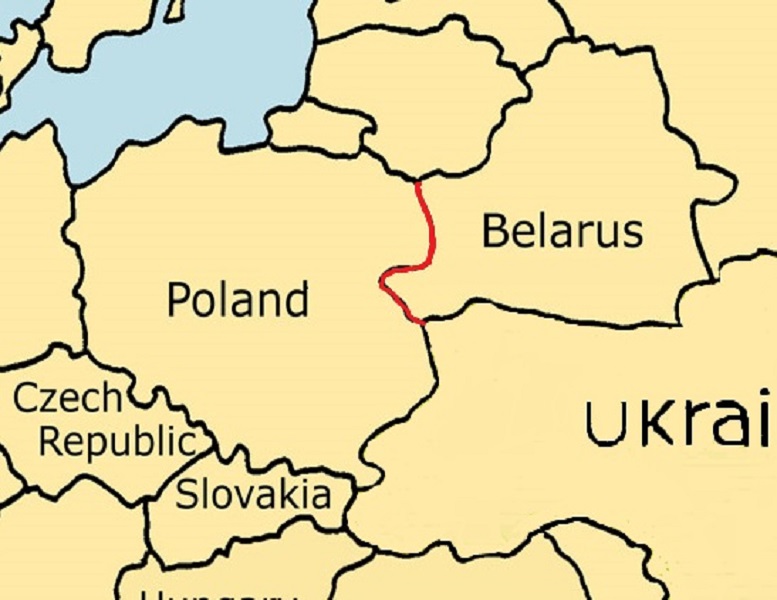
      For many years, refugees from countries of the former Soviet Union have transited through Belarus in order to seek international protection in Poland. The absence of formal land border controls between Belarus and Russia[1], the existence of a visa-free regime between Belarus and most CIS countries combined with a relatively affordable 15-minute train connection between the city of Brest and Poland make this route the most readily accessible for those seeking international protection from persecution in Russia and Central Asia. While the lion’s share of asylum seekers come from Russia’s North Caucasus republics, particularly Chechnya, there has also been a recent increase in the number of arrivals from Tajikistan as of the end of 2015.


      Although the Polish Border Guard has been found to occasionally turn around asylum seekers at the border in the past[2], Poland has over the past several decades received more asylum claims from Chechnya than any other EU state. Between 2008 and 2016 alone, 30 percent of all Russian asylum applications in the EU were lodged in Poland, with the overwhelming majority of applicants declaring Chechen nationality[3][4]. While Poland did briefly extend international protection to several thousand Chechens back in 2008-2009, refugee recognition rates for Chechens have remained extremely low since 2010[5]. Given that prospects for obtaining international protection in Poland are low, those asylum seekers who have managed to cross the Polish border often continue onwards to Germany, Austria, France and Sweden where many have family ties and access to a broader network of co-nationals. As a result, almost 80 percent of all asylum applications lodged in Poland were discontinued due to the fact that the applicants had absconded to a neighbouring country[6]. Out of the few who followed through with their applications in Poland, just 12 percent were granted some form of international protection in 2016. To put this in perspective, a total of 10 Russian and 6 Tajik citizens, for example, actually managed to obtain the coveted official refugee status in Poland.


      Despite the ongoing efforts by Polish Border Guards to prevent migrants from applying for asylum at the Polish-Belarusian border, a few families are allowed to cross into Poland on any given day. Over the course of 2016, over 12,000 asylum seekers applied for international protection in Poland, with over 70 percent of applicants coming from the Russian Federation, comprised predominantly of Chechens and other ethnic minorities from the Northern Caucasus[7].


      The fact that Poland has been the major country of transit and destination for Chechen asylum seekers is nothing new, but the situation on the ground has undergone a dramatic change since July 2016 when the Polish Border Guard began to systematically deny asylum seekers the right to lodge an application for international protection at the border. The absence of a valid travel document such as a Schengen visa or residence permit is the most common formal reason for these rejections.


      Despite difficulties in obtaining access – only the Polish Commissioner for Human Rights has observed the process directly[8] – several NGOs have documented numerous accounts of asylum seekers being pushed back at the border. As a rule, Polish border guards pre-interview foreigners in batches without allowing them any privacy. Many asylum seekers have reported being humiliated and mistreated by border guards during this process[9]. Averaging just one to four minutes, according to inspectors from the Polish Commissioner for Human Rights, these interviews are extremely rushed and perfunctory with the aim of quickly dismissing any grounds for asylum. There have been several documented cases of foreigners not being allowed to lodge applications despite clearly stating their intent on seeking protection[10]. After being stopped at the border, these individuals are sent back by train to Belarus the very same day with written documents stating that their entry into Poland has been refused due to lack of a valid visa. Every day just a few families are allowed to cross and have their application evaluated by Poland’s Office of Foreigners, often after undertaking anywhere between 30 and 50 crossing attempts.


      These unlawful practices have been criticised by the Polish Commissioner for Human Rights and numerous NGOs as a breach of the Geneva Convention as well as EU and Polish law. In June 2017, the European Court of Human Rights intervened in the matter, issuing interim measures with regard to six applicants that instructed the Polish government to cease sending asylum seekers back to Belarus[11]. At the time of writing, Poland had largely ignored the orders of the Court, allowing just two families to apply for asylum. In response to the ECtHR rulings, the Polish Ministry of Foreign Affairs stated that border guards are in their right to conduct pre-screening interviews because they are not conducted on Polish soil, but are technically on neutral territory in the border zone[12].


      Moreover, the Polish Minister of Interior Mariusz Blaszczak has openly stated that Poland perceives Muslim immigrants as a threat and disqualified asylum seekers from Chechnya and Central Asia as economic migrants with false intentions[13]. Mounting legal pressure from civil society and the ECtHR has not so far resulted in any changes in practices at the border as Polish guards continue to push back asylum seekers at the Terespol-Brest border crossing despite continuing arrivals[14]. Most recently, a group of three Syrians have undertaken several unsuccessful attempts to lodge an application in Terespol. Interim measures issued by ECtHR with regard to their case have not helped either[15].


      The situation with these pushbacks is problematic on several levels. Not only are they a blatant violation of national and international law, but they have created an untenable humanitarian situation in Brest, the nearest city on the Belarusian side of the border. As migrants run out of money, entire families are forced to sleep rough at the railway station, depriving children of access to schooling. Stuck in Belarus, these people are left to fend for themselves in a state of legal limbo. Those who do not apply for asylum in Belarus – and only a few do – do not fall under the mandate of UNHCR and are therefore left without access to assistance, relying on the support of local NGOs and volunteers. Since most of these stranded asylum seekers are Russian citizens, they could in theory live and work in Belarus with few restrictions, but are afraid to stay in the country due to security concerns. More worryingly still, the European Commission has recently earmarked funds for strengthening Belarus’ migration management capacities, which includes the construction of detention facilities designed for accommodating irregular migrants apprehended on Belarusian territory[16]. With the first of these centres slated to open as early as 2018[17], asylum seekers stranded in Belarus could soon find themselves under the threat of internment and subsequent deportation.


      Why asylum in Belarus is not an option

      Citizens of 11 former Soviet states – all apart from Turkmenistan, Estonia, Latvia, and Lithuania – can come to Belarus without a visa[18]. Additionally, citizens of the Russian Federation can stay in Belarus for 90 days without registering[19] with local authorities and have the possibility to obtain temporary residence if they manage to find permanent accommodation. As a result, most of those waiting to cross into Poland are legally present in the country. There have, however, been some cases of Belarusian authorities placing so-called deportation stamps in the passports of those stranded asylum seekers who surpassed their registration-free period of stay[20].


      The absence of border controls between Belarus and Russia as part of the supranational Union State coupled with a long history of close cooperation among post-Soviet security services makes refugees afraid to remain in Belarus. Not only does Belarus not offer effective international protection, it has a known track record of extraditing political dissidents to law enforcement officials from Russia and other CIS countries. According to Human Rights Watch, Chechens and Tajiks risk being sent back to Russia where they could potentially face retribution at the hands of their respective security forces[21].


      Between 2004 and 2016, 73 Russian citizens applied for asylum in Belarus[22]. Not a single one of those applicants received any form of international protection. As for Tajik citizens, a mere 35 applied for protection in Belarus over the past 13 years – all to no avail.


      Belarus’ asylum system has been described as dysfunctional by Human Rights Watch[23], although a few individuals nevertheless applied for asylum in Belarus in 2017 according to volunteers from the humanitarian mission of Human Constanta, a Belarusian NGO helping asylum seekers in Brest.


      How safe is it for asylum seekers to wait in Belarus?

      For almost a year now, those who have tried on countless occasions to have their asylum application accepted by Polish authorities have been largely tolerated by local Belarusian authorities. Local police officials and President Lukashenko have highlighted that they see no problem with the current situation as these foreign citizens largely abide the law and have not caused any trouble. Although most of them have the legal right to stay in Belarus for a relatively long period of time, there have been cases when Belarusian police forced foreign citizens to leave the country within a certain period of time. At the same time, Tajik and Chechen asylum seekers are afraid to stay longer in Belarus, fearing the security services of their countries of origin – and for good reason. There have been reports of undercover agents of Chechen security forces intimidating asylum seekers stranded in Brest as well as the presence of Tajik security officials at the interrogation of a Tajik political dissident in a Belarusian jail[24].


      The Foreign Policy Centre has already published detailed pieces on the methods used by both Chechen and Tajik authorities to persecute their nationals abroad[25].

      In 2014-2015 three Tajik opposition movements – Group 24, Youth for the Revival of Tajikistan and Islamic Renaissance Party of Tajikistan (IRPT) – were outlawed and labelled extremist organisations, triggering a witch-hunt for their members as well as journalists, lawyers and critics of the Tajik authorities at home and abroad[26].


      On 15 June 2015, Belarusian authorities detained Shabnam Khudoydodova, a former member of Group 24. She had previously lived in Russia, but fearing extradition to Tajikistan, she headed to Terespol to ask for asylum in Poland. Having been turned around at the border on the grounds of not having a visa, Shabnam was promptly detained by Belarusian authorities upon her return at the request of Tajik authorities. Shabnam then asked for asylum in Belarus, thereby suspending her extradition to Tajikistan[27]. After a major outcry from the international community, including the US Department of State and OSCE, Shabnam was granted refugee status in February 2015 and released after having spent eight months in prison. She then successfully applied for asylum in Poland[28].


      In September 2016, Human Constanta reported that it received information from several sources about the presence of Chechen security officials – referred to colloquially as kadyrovtsy – at the railway station in Brest where they questioned and visited Chechens stranded there. After a TV programme aired on Belarus’ ONT channel in which a Chechen woman was interviewed, the kadyrovtsy tried tracking her down in Brest. Thankfully, the woman in question managed to cross the border in time and did not face any repercussions according to eyewitnesses[29]. In January 2017, a Humana Constanta volunteer reported to the police that he had been threatened for his work by an unknown Chechen man near the railway station[30].


      A statement from Chechen President Ramzan Kadyrov from September 2016 appears to confirm the presence of his agents in Brest: “[I] sent people there [to sort out the situation] but none of those who are trying to cross the border [to Poland] could explain clearly who they were, where they came from, [and] why they went there.”[31]


      More recently, on June 7th 2017, Belarusian border guards detained Murad Amriyev, a well-known Chechen mixed-martial-arts fighter living in Kiev. Having moved to Ukraine in 2013 after being allegedly tortured by Chechen police seeking information about his brother who lives in Germany, Amriev was arrested in Russia when trying to obtain new documents. After initially escaping detention and attempting to return to Ukraine via Belarus, Amriev was detained by Belarusian border guards who promptly handed him over to Russian law enforcement. Though released by Chechen authorities after signing a pledge to not abscond from justice, Amriev told journalists at a press conference in Grozny that he had attempted to ask for asylum in Belarus, but was prevented from doing so[32].


      Getting by into the EU under the threat of return

      While there were few to none Tajik asylum seekers prior to 2015, the crossing of large numbers of Chechen asylums seekers into Poland is hardly a new phenomenon. In fact, Poland saw a record number of asylum applications from Russian nationals back in 2013 with over fifteen thousand requests for international protection. What has changed since then is the number of rejections of entry at the border. Whereas in the past, most asylum seekers managed to lodge their claims at the border, there has been a radical change in policy at Polish border crossings since 2016. This is particularly noticeable when you look at the number of rejections of entry to Poland at its external borders, which have more than doubled in 2016 in comparison to 2015 (118,060 to 53, 146)[33], particularly at the Belarusian border where rejections have tripled from 28,237 to 88,268 in the span of a year.


      Asylum seekers who decide to try their luck in another EU country face the daunting task of trying to get by in Western Europe with very limited possibilities for regularising their stay through the European asylum system. Under the Dublin regulation, these asylum seekers are liable to be transferred back to Poland where they initially entered the EU. There has already been an increase in the number of Dublin transfers with Germany deporting 884 individuals, mostly Russian nationals, back to Poland in 2016 where they are most likely to receive a negative asylum decision and receive an order to leave the country. Following a peak in 2013, returns from Poland to Russia are on the rise again with over one thousand Russian nationals leaving the country in 2016[34].


      While the mechanics of asylum in the EU are complicated, bureaucratic and time-consuming, it is safe to assume that, given the high rejection rates across Europe, asylum seekers from Russia and Central Asia are faced with the choice of either living in the shadows or going through a painful and lengthy deportation procedure. In 2016, there was an increase in forced returns to Russia from countries such as Norway and France. According to the last openly available Russian statistics on return, Russian authorities gave the green light to 1,504 return requests from the EU out of a total 1,927 in 2015 under the EU-Russia readmission agreement[35].


      Questions remain about what happens to those who are returned to Russia after failing to secure international protection in the EU. Based on Polish asylum statistics, many asylum seekers arrive as families, having sold all their belongings back home. There are, however, a number of worrying cases in Russia involving Chechen deportees. Three months after being deported from Sweden back to Chechnya after a rejected asylum claim, Kana Afanasyev was detained, tortured and subsequently killed by local Chechen law enforcement authorities in February 2015[36]. Yet it is not only inside Chechnya that returnees run the risk of extra-legal persecution – Chechen security forces have been known to act with impunity across Russia. In July 2015, a 30-year-old Chechen man named Zaurbek Zhamaldaev, who had been recently deported from Poland after trying for three years to obtain international protection there, was kidnapped in broad daylight in Moscow and has never been heard from since[37]. The total number of such cases involving Chechen returnees is difficult to estimate given that the families of victims are often either too afraid to speak up or try to bail out their loved ones using informal channels.


      Gaining political asylum in Poland has long been a difficult task, but the current policy of pushing back asylum seekers at the border is unprecedented in its scale and blatant disregard of Polish and European law. New amendments to the Law on Asylum put forth by the Polish Ministry of Interior seek to de facto legalise ongoing unlawful practices at the border by introducing a so-called border procedure that would allow border guards to assess an applicant’s eligibility for international protection on the spot. Under these proposals Belarus and the Russian Federation could be identified as safe countries of origin and asylum seekers would be placed in detention for the duration of their asylum procedure[38]. By expanding the grounds for detention and severely curtailing refugee rights, these draconian measures aim to discourage potential asylum seekers from attempting to enter Poland. Dwindling chances of obtaining any kind of international protection in the EU leave Russian and Central Asian asylum seekers with few options to find safety for themselves and their families. The extremely difficult situation at the Polish-Belarusian border has also turned into a test of the EU’s willingness to uphold its own human rights norms in the context of a proliferation of restrictive migration policies. Poland’s refusal to abide by ECHR rulings sets a worrying precedent for the rule of law in the EU, putting the lives of asylum seekers in danger. The current toxic mix of populist anti-migrant rhetoric, unilateral border closures by EU member states such as Poland and legal deadlock leaves these people with their backs against the wall – unable to return home but with no viable escape route.


      With few legal paths available for asylum seekers from Central Asia and the North Caucasus, it is paramount that the Polish Border Guard ensures that those who express fear of persecution in their home country and, importantly, do not feel safe in the country of transit, are given immediate access to due procedure for the granting of international protection.


      [1] Treaty on Friendship, Neighbourhood and Co-Operation Between the Russian Federation and the Republic of Belarus was signed in 1995, providing for an open border between the two states (http://www.soyuz.by/about/docs/dogovor1/). In 1997, Russia and Belarus formed a Union State, equalising the rights of citizens of the two countries (http://www.soyuz.by/about/docs/dogovor5/). However, following the introduction of a unilateral 5-day visa-free regime between Belarus and 80 states, Russia partially re-introduced border controls in February 2017 (Polina Khimshiashvili, Ilya Rozhdestvenskiy, Georgiy Makarenko, Как Россия и Белоруссия дошли до восстановления границы, RBC.RU, February 2017, http://www.rbc.ru/politics/02/02/2017/589300f49a79471d0bc4add9).

      [2] Aleksandra Chrzanowska, Patrycja Mickiewicz, Katarzyna Słubik, Joanna Subko and Anna Trylińska, At the border. Report on monitoring of access to the procedure for granting international protection at border crossings in Terespol, Medyka, and Warszawa-Okęcie Airport, Association of Legal Intervention, 2016, http://interwencjaprawna.pl/en/files/at-the-border.pdf

      [3] The Office for Foreigners, Napływ cudzoziemców ubiegających się o objęcie ochroną międzynarodową do Polski w latach 2009-2015, https://udsc.gov.pl/statystyki/raporty-specjalne/ochrona-miedzynarodowa-trendy/

      [4] The Office for Foreigners, Sprawozdanie z wykonywania ustawy o ochronie międzynarodowej w 2016 r., March 2016, https://udsc.gov.pl/statystyki/raporty-okresowe/raport-roczny-ochrona-miedzynarodowa/2016-2/

      [5] Krisztián Stummer, Forgotten Refugees: Chechen asylum seekers in Poland, Political Critique, February 2016, http://politicalcritique.org/cee/poland/2016/forgotten-refugees-chechen-asylum-seekers-in-poland/

      [6] Eurostat database 2016.

      [7] Information by the Head of the Office for Foreigners on the application of the Act of 13 June 2003 on Granting Protection to Foreigners within the Territory of the Republic of Poland in 2016 (consolidated text Journal of Laws of 2016, item 1836) in terms of implementation of obligations of the Republic of Poland resulting from the Geneva Convention on the Status of Refugees and the New York Protocol relating to the status of refugees.

      [8] Commissioner for Human Rights, Inspection of the railway border crossing in Terespol, September 2016, https://www.rpo.gov.pl/en/content/inspection-railway-border-crossing-terespol

      [9] Human Rights Watch, Poland: Asylum Seekers Blocked at Border, March 2017, https://www.hrw.org/news/2017/03/01/poland-asylum-seekers-blocked-border

      [10] Commissioner for Human Rights, Inspection of the railway border crossing in Terespol, September 2016, https://www.rpo.gov.pl/en/content/inspection-railway-border-crossing-terespol. One of the conclusions of the Commissioner for Human Rights’ Inspectors were that ‘Provisions of the Act of 13 June 2003 on granting protection to foreigners on the territory of the Republic of Poland (Journal of Laws – Dz.U. of 2012, item 680, as amended) do not provide for the possibility of any preliminary verification of data provided by a foreigner performed by the Border Guard officer. The procedure used by the Border Guard for conducting such interviews should be carefully checked, especially in terms of its compliance with applicable legal provisions.’

      [11] See Amnesty International, Poland: EU Should Tackle Unsafe Returns to Belarus, July 2017, https://www.amnesty.org/en/latest/news/2017/07/poland-eu-should-tackle-unsafe-returns-to-belarus/ and also https://www.facebook.com/notes/human-constanta/европейский-суд-по-правам-человека-вмешался-в-ситуацию-с-беженцами-на-беларусско/1902205446705058/?fref=mentions

      [12] Ministry of Foreign Affairs of the Republic of Poland, Wyjaśnienie MSZ w sprawie zarządzenia Europejskiego Trybunału Praw Człowieka z 8 czerwca 2017r, June 2017, http://www.msz.gov.pl/pl/p/msz_pl/c/MOBILE/aktualnosci/dla_mediow/sprostowania/tytul_strony_1

      [13] Maciej Orłowski, Mariusz Błaszczak w TVP Info straszy uchodźcami, myląc pojęcia i fakty, Gazeta Wyborcza, April 2017,

      http://wyborcza.pl/7,75398,21631484,mariusz-blaszczak-w-tvp-info-straszy-uchodzcami-mylac-pojecia.html

      [14] European Council on Refugees and Exiles, Human rights organisations: Poland violates international law by blocking entry of asylum seekers from Belarus, July 2017, https://www.ecre.org/human-rights-organisations-poland-violates-international-law-by-blocking-entry-of-asylum-seekers-from-belarus/

      [15] Helsinki Foundation for Human Rights, Straż Graniczna po raz kolejny ignoruje zarządzenia Europejskiego Trybunału Praw Człowieka, July 2017, http://www.hfhr.pl/straz-graniczna-po-raz-kolejny-ignoruje-zarzadzenia-europejskiego-trybunalu-praw-czlowieka/

      [16] European Commission, Commission Implementing Decision of 20.7.2016 on the Annual Action Programme 2016 in favour of the Republic of Belarus to be financed from the general budget of the European Union, July 2017, https://ec.europa.eu/neighbourhood-enlargement/sites/near/files/neighbourhood/pdf/key-documents/belarus/20161027-belarus_aap-2016.pdf

      [17] Belta.by, Центры для незаконных мигрантов будут созданы в Витебске, Гомеле и Лиде не ранее 2018 года – Шуневич, February 2017, http://www.belta.by/regions/view/tsentry-dlja-nezakonnyh-migrantov-budut-sozdany-v-vitebske-gomele-i-lide-ne-ranee-2018-goda-shunevich-235184-2017/

      [18] Ministry of Foreign Affairs of the Republic of Belarus, Безвизовое передвижение (общие сведения), http://mfa.gov.by/visa/freemove/e75b142c77b4df66.html

      [19] Ministry of Foreign Affairs of the Republic of Belarus, Режимы пребывания иностранцев на территории Республики Беларусь, http://mfa.gov.by/visa/ruterms/

      [20] Galina Petrovskaya, Чеченцы в Бресте: чужие среди своих и чужих, Deutsche Welle, February 2017, http://www.dw.com/ru/чеченцы-в-бресте-чужие-среди-своих-и-чужих/a-37359218

      [21] Human Rights Watch, Poland: Asylum Seekers Blocked at Border, March 2017, https://www.hrw.org/news/2017/03/01/poland-asylum-seekers-blocked-border

      [22] Ministry of Interior of the Republic of Belarus, Cтатистические данные о вынужденной миграции в Республику Беларусь, http://mvd.gov.by/main.aspx?guid=69883

      [23] Lydia Gall, Poland Ignores European Court Over Return of Asylum Seeker, Human Rights Watch, June 2017, https://www.hrw.org/news/2017/06/15/poland-ignores-european-court-over-return-asylum-seeker

      [24] Грамадская актывістка з Таджыкістану: Мяне збілі ў беларускім часовым ізалятары / Шабнам Худайдодова – BelsatTV, YouTube video, https://www.youtube.com/watch?v=MxYxOCroUx8

      [25] See Civil Rights Defenders, Chechnya – Repression without borders, Foreign Policy Center and Edward Lemon, Tajikistan: The trans nationalisation of domestic struggles, in Adam Hug (ed.), No shelter: the harassment of activists abroad by intelligence services from the former Soviet Union, November 2016, http://fpc.org.uk/publications/noshelter

      [26] Human Rights Watch, Tajikistan: Severe Crackdown on Political Opposition, February 2016, https://www.hrw.org/news/2016/02/17/tajikistan-severe-crackdown-political-opposition

      [27] Irina Khalip, Таджикская активистка освобождена из брестского СИЗО, February 2016, Novaya Gazeta, https://www.novayagazeta.ru/articles/2016/02/29/67605-belarus-proyavila-sodruzhestvo

      [28] Philippe Dam, EU’s Latest Bid to Curb Migration, Human Rights Watch, October 2016, https://www.hrw.org/news/2016/10/18/eus-latest-bid-curb-migration

      [29] Human Constanta, Invisible refugees on Belarus-Poland border. Primary assessment of local migration crisis in Brest-Terespol sector, September 2016, http://programy.hfhr.pl/uchodzcy/files/2016/10/Invisible-Refugees-on-Belarus-Poland-border_Human-Constanta_16-09-2016_web.pdf

      [30] Radio Free Europe/Radio Liberty, «Я заб’ю цябе», — праваабаронцу, які працуе з чачэнскімі ўцекачамі ў Берасьці, пагражалі расправай, January 2017, https://www.svaboda.org/a/28227874.html

      [31] Tut.by, Кадыров о “белорусских” чеченцах: покинули республику в поисках легкой жизни, September 2016, https://news.tut.by/society/512512.html

      [32] Andrey Dubrovskiy, Бойца ММА Амриева отпустили под подписку о невыезде, Novaya Gazeta, June 2017, https://www.novayagazeta.ru/news/2017/06/10/132390-boytsa-mma-amrieva-otpustili-pod-podpisku-o-nevyezde

      [33] Polish Border Guard, Statystyki SG, https://www.strazgraniczna.pl/pl/granica/statystyki-sg/2206,Statystyki-SG.html

      [34] Eurostat database 2016, Third country nationals returned following an order to leave – annual data (rounded) [migr_eirtn]

      [35] Russian Federal Migration Service, Yearly Summary Report 2015, https://xn--b1ab2a0a.xn--b1aew.xn--p1ai/upload/site1/document_file/Itogovyy_doklad_na_19.02.16.pdf

      [36] Liz Fuller, New wave of detentions reported in Chechnya, Radio Free Europe/Radio Liberty, March 2015, https://www.rferl.org/a/new-wave-of-detentions-reported-in-chechnya/26888189.html

      [37] Yuliya Orlova, В Москве исчез уроженец Чечни, депортированный из Польши, Civic Assistance Committee, June 2015, http://refugee.ru/news/v-moskve-ischez-urozhenets-chechni-deportirovannyj-iz-polshi/

      [38] Jacek Białas, Poland: Draft amendment to the law on protection of foreigners – another step to seal Europe’s border, Op-ed by Polish Helsinki Committee, European Council on Refugees and Exiles, March 2017, https://www.ecre.org/poland-draft-amendment-to-the-law-on-protection-of-foreigners-another-step-to-seal-europes-border-op-ed-by-polish-helsinki-committee/

      Footnotes
        Related Articles

        Azerbaijan: Challenges to migrants and asylum seekers from the oil-rich state

        Article by Dr Leila Alieva

        Azerbaijan: Challenges to migrants and asylum seekers from the oil-rich state

        Political migration from Azerbaijan during the last decade was consistently on the rise due to the increasingly authoritarian rule in the country, boosted by high world oil prices. The cautious approach to the empowerment of democratic institutions in the country by Europe out of fear of losing an important energy supplier to European markets contributed to the resilience of this political system[1]. The most recent flow of political migration from Azerbaijan was a result of the infamous crackdown on civil society by the authorities in 2014, which coincided with the major flow of refugees to Europe from the Middle East. To get hold of the emigres or to control their activities abroad, the Azerbaijani authorities are using various means, including international instruments, such as Interpol and taking advantage of the economic dependence of neighbouring states on energy-rich Azerbaijan. The survival and activities of migrants after leaving the country has been under increasing pressure from geopolitical factors, such as the strategic nature of relations between states with common interests in the region, based on energy projects and security, reflected in threats of deportations, extraditions or abductions, even in the relatively democratic Georgia; growing authoritarian trends in the major regional powers of Russia and Turkey; and limited resources due to the increased flow of refugees and migrants from the Middle East to the EU and other Western states. The protection and safety of refugees and asylum seekers has been a test of resilience of the international norms and values to which most countries have formally signed up to.


        Reasons for asylum seeking: Economic and political conditions in Azerbaijan

        The Azerbaijani statistics show the number of people who left the country for permanent residency abroad from 2014 to 2017 more than doubled. According to a report on asylum seekers in Germany, in these years the number of asylum applications increased threefold[2]. Azerbaijan made only partial use of its resource advantage – rich oil and gas deposits. The country did not escape the faith of ‘Dutch disease ’[3]. After the successful establishment of macroeconomic stability in the mid-90s, the government did not succeed in translating impressive economic growth into decent social indicators and by 2016 Azerbaijan was characterised by one of the lowest average salaries among former Soviet republics, being behind even resource-poor neighbouring republics[4]. The economic growth, boosted by high oil prices, was accompanied by a steady decline in the country’s democracy and human rights record.


        The major political reasons for migration from the country have been the government policies of discrimination against opposition groups and the suppression of dissent as part of a consistent trend of encroaching on major freedoms. The restrictions of major freedoms, both at the level of policy and legislation which coincided with high world oil prices and the arrival of major oil revenues directly affected the power of society to resist and after a long period of persecution of political activists and journalists, eventually made NGOs also vulnerable to the government crackdown on civil society in 2014 by President  Ilham Aliyev, resulting in dozens of leading human rights and other NGOs being shut down, bank accounts frozen, some of their leaders being arrested, some having escaped abroad, while others staying in the country unable to leave due to  imposed travel bans. The significant scale of election fraud, as well as increasingly limited freedoms, such as freedom of association, freedom of assembly and freedom of expression, both at policy and legislative levels were factors contributing to the weakening of the opposition. Besides being the subject of unjustified arrest, torture or harassment, political and civil society activists and journalists were frequently fired from their jobs, or encountered extreme difficulties finding jobs due to their political affiliation. Most importantly, the government applied the principle of collective responsibility, meaning that the family members of the activists were subject to the same measures of punishment or discrimination[5]. The authorities often used threats against family members/children of the activists as means of exerting pressure on them – that is why some of them tried to send their children abroad to enable them to be freer in their opposition or human rights activities[6]. The major characteristics of the persecution of activists have been exceedingly high prison sentences, the resistance of authorities to the decisions of and pressure from international bodies and multilateral institutions, torture and beatings, in some cases resulting in deaths in prison[7].


        A special category of persecuted activists are women. Besides arrests on bogus charges, the government extensively uses smear campaigns against women[8], using the conservative traditions of the predominantly Muslim community, although it is relatively secular overall. Women activists are particularly vulnerable to psychological pressure, usually involving the illegal recording of private lives by cameras installed in their apartments, serving as an additional source of trauma, which affects their families and the psychological health of their children[9].


        The foreign funding of NGOs, that before the Ukraine ‘EuroMaydan’ events worked in favour of activists’ political and financial empowerment, has turned into a disadvantage and made them targets of government persecution since 2014. A few criminal cases, opened against NGOs caused a new wave of emigration of civil society activists. The geography of where emigres initially went varied – Georgia, Turkey, Ukraine, but none of them proved to be a safe hub for the emigres of Azerbaijan.


        Geopolitics and its influence on deportations and extraditions

        Azerbaijan quickly gained its importance in the post-Soviet period due to its role as an alternative energy supplier to Western markets and the extensive investments in the energy and infrastructure sector by major multinational corporations such as BP, Chevron, UNOCAL, STAOIL, etc. The major energy regional and international infrastructure projects involving neighbours, especially Georgia and Turkey, cemented the already strategically close foreign policy orientations of the three states. At the same time, relations with Azerbaijan, which was a crucial energy supplier and evolved into one of the major investors in these countries’ economies influenced the situation with regard to political refugees and dissidents. For instance, the close relations of Aliyev and Saakashvili affected the plans of the Azerbaijani opposition National Council to hold a meeting in Tbilisi during the last half year of Saakashvili’s term in office and it was cancelled[10].


        In April 2014 Rauf Mirgadirov the correspondent and critical columnist of one of the major independent newspapers Ayna/Zerkalo, was deported from Turkey only to be detained in the airport in Baku and locked in solitary confinement for nearly two years by the National Security Agency on charges of ‘espionage’ in favour of neighbouring Armenia, with whom Azerbaijan is in conflict. He has lived and worked as a correspondent in Turkey since 2010, but did not seek asylum and his accreditation was valid until the end of 2014. As his deportation took place after the visit of Turkey’s then Prime Minster Erdogan to Baku, concerns were raised that the cancellation of the accreditation and deportation were agreed upon at the highest political level[11].


        Over the last few years the Azerbaijani leadership has been in cooperation with the Turkish authorities, united by the common perception that the sources of the regional ‘revolutions’ are in the US or Europe, exchanging information about Gulenist ‘agents’ and independent NGOs, the latter whom official media in Azerbaijan call a fifth column of the West, fearing repetition of the Ukrainian events of EuroMaydan. As a result of this cooperation a few people from the Azerbaijani government were sacked after the Gezi Park protests in 2013. The second campaign was undertaken after the failed coup in Turkey in 2016 – most of the Gulen-supported institutions, private universities and newspapers in Azerbaijan were shut down, or changed their source of funding. Some prominent opposition activists were arrested, being unjustifiably blamed as ‘Gulenist agents’[12].


        No less vulnerable vis-à-vis pressures resulting from strategic relations between the states in the region appeared to be the political migrants who escaped to a nearest safe destination – neighbouring Georgia. For many activists who fled the country in 2014 this was a first safe shelter, although for most of them only temporary. Yet, for some this appeared to be a place of prolonged stay. Dashgin Aghalarli, an activist from the opposition Musavat party, who escaped from Azerbaijan in 2014, was arrested on the Georgian border at the request of the Azerbaijani authorities as a ‘tax evader’, and spent 6 months in a Georgian prison. The decision on granting him asylum dragged on for almost two years, revealing the dilemmas which the Georgian government was caught in. The uncertainty of the legal status and absence of protection kept the asylum seeker in security and financial limbo, with inevitable consequences for his health, his financial situation and the wellbeing of his dependents, as apart from short term and inconsistent support from NGOs, there was no other support. In March 2017 the Tbilisi City Court of Appeals denied him asylum and he was notified to leave the country in one month. At the same time UNHCR, instead of offering a shelter in the third country, suggested that he apply for temporary residence in Georgia.


        A series of persecutions of Azerbaijanis who resided or found refuge in Georgia started after the publication by a pro-government website of an article about ‘underground activities’ in Tbilisi[13]. On 20 May Georgian authorities arrested the head of a Tbilisi-based clinic Lancet, Prof. Farman Jeyranli, who was an Azerbaijani surgeon[14], while the Azerbaijani government on the 25 May 2017 arrested the deputy chairwoman of the Popular Front Party, Gozel Bayramli, upon return from her treatment in Georgia, who was a patient of that clinic. All, along with a journalist Afgan Mukhtarli, were mentioned in the article on the news website.


        The general situation of Azerbaijani refugees in Georgia became high profile, when on 29th May 2017 Afghan Mukhtarli was abducted near his place of residence in Georgia and taken to Azerbaijan to be prosecuted. Although the journalist had earlier reported that he was often monitored, the process of abduction rather than the use of the official procedures of extradition or deportation came as a surprise to all, including the victim itself. The illegal capture of the journalist from a country praised for its democratic achievements, was an unprecedented case for Georgia and led to both a significant domestic and international outcry, including a resolution by the European Parliament[15]. While the resolution  urged the Georgian government to investigate the case, the journalist’s wife Leyla Mustafayeva commented that during the investigation it appeared that hardly any street, shop or other cameras appeared to be properly working on the  on the day of abduction[16], which cast doubts about the effectiveness of the investigation. She tied the abduction of Afgan Mukhtarli to his journalistic investigation of President Aliyev’s family business in Georgia. There were increased difficulties with obtaining status and permits in Georgia, for the migrants connected with the political situation in the country. In his interview before his arrest Afghan Mukhtarli stressed that the situation for them worsened after the 2016 Georgian parliamentary elections, when the dominating majority of the seats was won by the ruling Georgian Dream Party[17]. The refusal to grant asylum to Azerbaijani migrants was justified by the authorities as ‘threats to the national interests and security’. This attitude was extended even to the visitors to the country, who already obtained their status in Europe. The rapper and producer for the critical Meydan TV Jamal Ali was denied entry to Georgia and had to return back to Berlin[18].


        Ukraine did not appear to be a safe haven for Azerbaijani migrants either. Azerbaijan sent five requests to Ukraine for extradition in 2015, and four in 2016[19]. In July 2016 the Presidents of Azerbaijan and Ukraine signed an agreement on cooperation in several areas, including the arms trade, oil transportation and support to Azerbaijani investors in Ukraine, as well as supporting each other’s territorial integrity. This context of relations affected the security of Azerbaijani asylum seekers who were coming and temporarily living in Ukraine.


        For instance, a former employee of the Ministry of Interior, Emin Ahmedbekov, who was arrested on trumped up charges for three years and after being released left the country for Ukraine with his wife, who was also fired from her job in the same ministry. The authorities however continued their pressure[20] and the couple had to move from one place to another while in Ukraine, as Azerbaijan security agents found and threatened them. Ukraine in turn refused asylum to the Ahmedbekovs[21]. After that the family left for Bulgaria, but it also refused to grant them asylum. Eventually, after 3 years they were given a humanitarian visa to live in France.


        On a few occasions Azerbaijani authorities have used Interpol channels to get hold of people who escaped persecution: for example the author of the campaign Do Not Keep Silence (Susma in Azerbaijani), a businessman Huseyn Abdullayev was searched abroad on a red notice of Interpol, as well as the ex-deputy defence minister Isa Sadiqov[22].


        It is mainly due to the low probability of getting refugee status, the lack of safety and uncertainty with regard to protection guarantees (both legal and physical), that these states in the region evolved to make them an unlikely place of permanent asylum for refugees from Azerbaijan, with the case of abduction of Afghan Mukhtarli in Georgia, or the monitoring of the Ahmedbekovs in Ukraine as its convincing evidence. The only case of granting asylum in Georgia is that of Vidadi Iskandarli. These cases are taking place in spite of all three states- Azerbaijan, Georgia, Ukraine – being members of the Council of Europe and parties to international conventions obliging them to protect the rights of refugees and asylum seekers.


        European states and asylum seekers

        The average of the number of asylum seekers in the EU (per 1,000 population) in 2016 was 2.4. The UK scores quite low (0.6) especially compared to Germany (8.4), Austria (4.8) and Malta (4.5). Overall, there are 18 countries who are higher than the UK. The UK is also more likely not to grant refugee status compared to some other countries[23]. A study by the Guardian, which analysed the experience of refugees and asylum seekers in 5 big nations (the UK, France, Germany, Spain and Italy) concluded that the UK does not compare well with France, Germany and Spain. It takes fewer refugees, offers less generous financial support, provides substandard housing, does not give asylum seekers the right to work, punishing even those who volunteer, ‘and routinely forces people into destitution and even to homelessness, when they are granted refugee status due to bureaucratic delays’[24].


        In addition, the grant rate in the UK is also low – as of the first quarter of 2016 it reached only 28% against the average grant rate in Europe of 63-65%[25].


        Thus the general trend of applications for asylum in the UK has been in decline, with Azerbaijanis being no exception. The number of applications by Azerbaijanis dropped from 164 in 2002 (only 9 were granted asylum status) to 18 in 2016[26]. In 2016, of the 18 applications by asylum seekers from Azerbaijan, only two were granted asylum. The overflow of migrants from the Middle East has also affected the situation with South Caucasus asylum seekers in Europe. The European Union returned 485 people in 2015 and 625 in 2016 to Azerbaijan[27]. This is compared to Georgia: returns from the EU – 3,140 in 2015 and 3,360 in 2016.


        The Azerbaijani Turan agency, referring to the German edition of the RP-online.de, reported that Germany began the mass deportation of migrants from Armenia, Georgia and Azerbaijan through the airport in Dusseldorf, announcing that 23,750 migrants would be deported before November 2017[28].


        The case of ‘N’ in the UK, a young Azerbaijani opposition activist who asked for asylum in 2014 after a major crackdown on civil society, is indicative of the challenges in the asylum seeking process in Britain. N had left Azerbaijan, when he was searched by police after one of the protest meetings. His other male family members were also the target of persecution for a few years. None of his applications for asylum in the UK were satisfied. The Home Office said that he was a junior member of the political party and was not under threat deemed sufficient to be granted asylum. The decision however did not take into account the peculiarities of politics in the country, some of which are mentioned above. Arrests and detentions in Azerbaijan are often unpredictable in character, and relatively minor violations of law can be used as a pretext for punishment with very high sentences, as in the case of two young activists who were sentenced to 10 years each for graffiti[29].


        In addition, the government usually puts pressure on political activists, journalists and human rights defenders by means of threatening their children. As N was from the family of the political activist of the governing body of the leading opposition party, he was exposed to government pressure, as a member of the same party. Having exhausted the benefits of legal aid as a result of his failed claims and while waiting to file a fresh claim, N had to work to support himself in a restaurant, but was detained by immigration officers, who were inspecting the restaurant. He was put in the Brook House Immigration Removal Centre of the Gatwick Detention Centre, which is a place for the detention of immigrants with a criminal record[30]. For the young man, who showed outstanding talent at school and was committed to the struggle for democracy since an early age, to share a cell with people with actual criminal records was shocking, especially considering his previous issues with depression. He was provided with a free solicitor, and visited by the representatives of the Gatwick Detainees Welfare Group[31], who helped him with advice and softened the trauma. Facing the dilemma of a prolonged stay in Brook house or being deported, he agreed to be deported by the Assisted Voluntary Return scheme [32] after two and a half years of asylum seeking in the UK. While N due to a mixture of precautions and luck managed to reach home safely, he had to undertake prolonged medical treatment and both his father, family and himself remain exposed to the threat of further persecution. One should also consider that political activists, especially the young, working in authoritarian regimes like Azerbaijan usually have high expectations regarding the attitudes and capacity to sympathise with their plight in states with established democracies such as the United Kingdom, which sometimes contrasts with reality. While the issue of the safety of asylum seekers is more real for those trying to seek refuge in the states of the Former Soviet Union, journalists in exile reported about indicators of plans by the Azerbaijan authorities of the assassination of the active blogger and journalist Habib Muntazir in Berlin, who by that time had acquired German citizenship[33].


        In the UK political refugees from Azerbaijan face the necessity of finding a high quality lawyer, suffer the challenges of the waiting period, when they are not allowed to work, have insufficient knowledge of the language, and have to rely on the expertise of the Home Office if they are detained. The issue is also complicated by the reported cases of fraud, when asylum seeking is managed by illegal groups, benefitting mainly the economic migrants, who manage to acquire fake IDs of membership of the opposition parties and tourist visas mainly through the Central and Eastern European states’ embassies[34].


        An alternative route is the provision of temporary refuge, such as for scholars at risk who are usually taken care of by CARA (Council for at Risk Academics) – the oldest and prominent organisation in the UK, which has been helping academics who have fled persecution in their home countries since the 1930s[35]. While creating unique opportunities for the persecuted scholars to be based in the best universities in the UK for up to 2 years, it is struggling with limited funding as compared to the funding for scholars being placed in US universities by organisations such as the Scholars Rescue Fund, while the number of recipients in the UK is steadily increasing. For instance, after an inflow of refugees from the Middle East in 2014, CARA in 2016, as a result of the failed coup in Turkey, had to deal with another inflow of academics, who managed to leave the country before the travel ban was imposed. Besides the limited funding, the immigration rules of the UK are strict regarding family members of the temporary residing scholars. For instance while the definition of dependents includes spouses and children but it does not normally include the parents, however there is a clause regarding adult dependent relatives for ‘British citizens, persons settled in the UK, or those with refugee leave and humanitarian protection’[36], which is not extended to the holders of the other type of visas. This does not take into account the collective responsibility principle applied by the authorities in persecution, and also when persecuted activists (women more frequently) are the only caretakers of their parent(s), especially if the parent is ill and weak, this makes it impossible for the parent dependent on the academic to accompany him/her and forces the academic to leave the old person behind without any support and care, as it allows only a visitor visa which is limited to 90 days. This puts before the scholar a hard moral dilemma. Some other problems also include a short term solution to the problems, discouragement of asylum seeking during the time of support and extreme uncertainty about the fate of the scholar after a maximum of two years of fellowship, if the situation in the home country does not change, although the organisation suggests all possible assistance in finding jobs as a long term solution.


        Conclusions and recommendations

        After the end of the Cold War, Azerbaijan did not avoid the trap of the energy dependent economy and developed into a non-free state. The Soviet legacy and the geopolitical challenges combined with the windfall of oil revenues contributed to the regime strengthening its grip on power and increasing its pressure on dissent. The prioritisation of energy and security interests by Europe and the US in their foreign policy, including Azerbaijan positioning itself as an important actor in their energy security and as an economic and transportation hub in the region also contributed to the worsening of the political situation. The latter in turn resulted in growing flows of outmigration and numbers of asylum seekers.  In spite of being parties to international conventions, the states in the region hosting political refugees were prioritising their bilateral relations with Azerbaijan, often at the expense of the safety and protection of refugees, which resulted in deportations, extradition or even the abduction of asylum seekers. The regional dynamics of relations between these states has so far has overpowered their commitments to international conventions. While the situation in European states is better, the still high percentage of refusals and deportations of asylum seekers exposes some deportees to the high risk of persecution at home.


        The following recommendations follow from this study for those countries receiving migrants and asylum seekers from Azerbaijan and more widely, the international community:

        • Particular attention should be paid to political opposition, journalists, and civil society representatives, as many of them, being promoters of the democratic and liberal values, are staunch critics of the regime and represent a special target for the authorities.
        • Due to the dependence on energy-rich Azerbaijan and strategic cooperation with each other on energy and security issues, asylum seekers are particularly vulnerable in the states of the post-Soviet region. Special attention should be paid to states in the FSU region and countries should be held responsible for their actions in cases of the extradition and deportation of asylum seekers.
        • Deportations and extraditions of activists should be prevented where possible, and the fate of asylum seekers should be monitored by international organisations and local and international NGOs.
        • Mobilise donor aid to help refugees waiting for status applications while temporarily residing in the countries of the FSU.
        • Review the legislation in the UK to allow asylum seekers to work while awaiting the outcome of their decisions.
        • Amend the legislation regarding the granting long term visas to adult dependent relatives of visa holders in the UK, supported as scholars or activists at risk who have caring responsibilities.
        • Increase financial support to the organisations taking care of asylum seekers and scholars and activists at risk such as aid NGOs, human rights NGOs and CARA.


        [1] “In Azerbaijan, EU focuses on energy instead of democracy” by Roman Goncharenko, Deutche Welle Europe, 08.10.2013 http://www.dw.com/en/in-azerbaijan-eu-focuses-on-energy-instead-of-democracy/a-17145518

        [2] Report. Prepared on the basis of the survey on the occasion of the World Day of Refugees of Azerbaijani migrants to Germany, 20 July 2017, LEGAT Integration Center, in cooperation with Azerbaijan Culture and Sport Society and Integration and Development Center.

        [3] Guliyev, Farid, Azerbaijan’s Uneasy Transition to the Post-Oil Era. Domestic and International Constraints, PONARS Eurasia Policy Memo, May 2017. http://www.ponarseurasia.org/sites/default/files/policy-memos-pdf/Pepm475_Guliyev_May2017_2.pdf

        [4] Economic Notes, Average Monthly Salary in the Former Soviet Union Republics, 09.08.2016, Reinis Fischer, https://www.reinisfischer.com/average-monthly-salary-former-soviet-union-republics-2016

        [5] Family members remaining in Azerbaijan of a few activists and journalists, who continued their activities abroad were pressed or arrested; of Emin Milli and Gunel Movlud of “ Meydan TV”,  Ganimed Zahid of “Azerbaijan Saati”, activist Ordukhan Temirkhan, etc.

        [6] The daughter of a prominent human rights defender Leyla Yunus, for instance, was granted asylum in the Netherlands after her mother received threats in her daughter’s address. ‘Europe is Closing its Eyes to Human Rights: Daughter of Jailed Activist Leyla Yunus Pleads for Help’ by Kayleen Devlin, November 7, 2014, vice news, https://news.vice.com/article/europe-is-closing-its-eyes-to-human-rights-daughter-of-jailed-azerbaijan-activist-leyla-yunus-pleads-for-help.

        [7] The journalist and blogger Mehman Galandarov was found hanged in his cell on 28th April 2017. ‘The rapporteurs call for investigation into the death in prison of Azerbaijani blogger’ Parliamentary Assembly Council of Europe, News, 04/05/2017. http://www.assembly.coe.int/nw/xml/News/News-View-EN.asp?newsid=6631&lang=2&cat=9

        [8] For instance,  video cameras were installed in the apartment of the prominent female journalist Khadija Ismayilova with recordings used in smear campaign to make her stop the series of investigative articles with regard to the private business of the President’s family.

        [9] Similar cases of blackmail were reported to the author by a few women activists, who emigrated in 2014.

        [10] Is Georgia Still Safe for Azerbaijani Refugees? By Lamiya Adilgizi, 24 May 2017, Open Democracy, https://www.opendemocracy.net/od-russia/lamiya-adilgizi/is-georgia-still-safe-for-azerbaijani-dissidents.

        [11] Turkey/Azerbaijan: Journalist Deported, Imprisoned. Baku should Free Reporter, Ankara Should Investigate Expulsion, Human Rights Watch, April 24, 2014. https://www.hrw.org/news/2014/04/24/turkey/azerbaijan-journalist-deported-imprisoned

        [12] “Azerbaijan Continues Anti-Gulen Campaign” by Afgan Mukhtarli, IWPR, 2 Sept.2016, https://iwpr.net/global-voices/azerbaijan-continues-anti-gulen-campaign

        [13] Anti-Azerbaijani Underground in Tbilisi:  Secret Addresses, Money, Instructions. By Eynulla Fatullayev, 4 May 2017, Haggin.az ( in Russian) https://haqqin.az/comics/99120

        [14] As article on the website of the channel 1 of Georgian TV “City Court Discussing the Case of Lancet Clinic’s Director” reports,  the charges which were brought against Farman Jeyranli are “ misappropriation of money from the patient through swindling and conceal of information about threat to life and death” 23.05.2017, http://1tv.ge/en/news/view/162023.html.

        [15] European Parliament Resolution on the case of Afghan Mukhtarli and the situation of media in Azerbaijan (2017/2722(RSP) http://www.europarl.europa.eu/sides/getDoc.do?pubRef=%2F%2FEP%2F%2FTEXT%2BMOTION%2BB8-2017-0414%2B0%2BDOC%2BXML%2BV0%2F%2FEN&language=EN

        [16] The wife of Afgan Mukhtarli is unhappy with the investigation being conducted by the Georgian police, Turan news agency, 12 July 2017, http://www.contact.az/indexc_ru.html

        [17] Now Georgia is also not  a safe place for us anymore” by Vugar Behmenzade, May 26 2017, Voice of America ( in Azerbaijani) https://www.amerikaninsesi.org/a/efqan-muxtarli-musahibe/3870872.html

        [18] Is Georgia Still Safe For Azerbaijani Dissidents? By Lamiya Adilgizi, Open Democracy, ODR, Russia and Beyond, 24 May 2017, https://www.opendemocracy.net/od-russia/lamiya-adilgizi/is-georgia-still-safe-for-azerbaijani-dissidents

        [19] Ukraine Helps Post-Soviet States to Persecute Political Opponents and Refugees. Realizing illegal extraditions, violating rights of refugees, Ukrainian authorities assist political persecutions in Moldova, Russia, Kazakhstan, Azerbaijan and Belarus (2014-2016), Open Dialogue Foundation, Kiev, 12.12.2016 ( in Russian).

        [20] Ahmedbekov filed appeals to the European Court for Human Rights on a few occasions.

        [21] See 19.

        [22] Famous people who are searched through Interpol, Bizim yol, 12.10.2016 http://brifinq.com/news/interesting/30275-interpolun-axtardigi-askarda-olan-taninmislar (in Azerbaijani)

        [23] Asylum Seekers in Europe, Refugee Council. Information. March 2017, p.3-4.

        https://www.refugeecouncil.org.uk/assets/0004/0083/Asylum_in_Europe_March_2017.pdf

        [24] Britain is one of the worst places in Western Europe for asylum seekers, Kate Lyons, Eva Thone in Hamburg, Stephanie Kirschgaessner in Rome, Marilyne Baumard in Paris, Nayra Galrraga in Madrid, The Guardian, Wednesday 1st March, 2017, https://www.theguardian.com/uk-news/2017/mar/01/britain-one-of-worst-places-western-europe-asylum-seekers

        [25] Ibid.

        [26] How many people do we grant asylum or protection to? National Statistics, Home Office. Published 27 May 2017, Asylum table, https://www.gov.uk/government/publications/immigration-statistics-january-to-march

        [27] Deportation global information project. Global Statistics, Azerbaijan, 2017, http://postdeportation.org/statistics/

        [28] German Authorities Deport Citizens of South Caucasus Countries, Turan agency, Baku, 04.07.17.

        [29] Giyas Ibrahimov and Bahram Mammadov were sentenced each for 10 years in prison on the bogus charges of drug possession after they made a critical graffiti on the statue of the father of the current President in 2016.Both are recognised as prisoners of conscience by  Amnesty International. https://www.amnesty.org/en/latest/news/2016/10/azerbaijan-ten-years-in-jail-for-youth-activist-who-sprayed-graffiti-is-a-travesty-of-justice/

        [30] Brook House has 400 male detainees, illegal migrants, mainly ex-prisoners, In 2010 Brook House was recognised as “not safe” https://www.theguardian.com/uk/2010/jul/12/gatwick-deportation-centre-conditions. In 2013 the inspectors noted “sustained improvement”, while in 2017 expressed concerns that the residential units “very closely resembled a prison”. http://www.bbc.com/news/uk-england-sussex-39221869

        [31] Gatwick Detainees Welfare Group – is  a registered charity set up in 1995 with the mission “to improve the welfare and well-being of people in detention by offering friendship and support and advocating for fair treatment” http://www.gdwg.org.uk/aboutus-who.php#.WWuPgI9OJPY

        [32] According to the UK immigration rules there are three main categories of the state-enforced or enforceable departures: deportations, administrative removals and voluntary departures. There are three kinds of voluntary departures: by Assisted Voluntary Return Scheme; arranging departure themselves and notifying the authorities; and leaving without notification. Source: Dr. Scott Blinder, Dr. Alexander Betts, “Deportations, Removals and Voluntary Departures from the UK”, Briefing, The Migration Observatory, July 19, 2017.

        http://www.migrationobservatory.ox.ac.uk/resources/briefings/deportations-removals-and-voluntary-departures-from-the-uk/

        [33] “Emin Milli: EuroGames are PR for the Ruling Family”, by ilyana Ovshiyeva, Meydan TV, source: Deutche Welle, 10 June, 2015. https://www.meydan.tv/en/site/news/6330/

        [34] “Escape Into Deception: How the Attempt to Emigrate from Azerbaijan Turns into a  Swindle” Meydan.TV. https://www.meydan.tv/ru/site/opinion/23057/ ( in Russian).

        [35] See Cara, http://www.cara.ngo/

        [36] Appendix FM to the Immigration Rules: Adult Dependent Relatives. https://www.gov.uk/government/uploads/system/uploads/attachment_data/file/576644/Adult_dependent_relatives-review.pdf, Family visas: apply, extend or switch  https://www.gov.uk/uk-family-visa/adult-dependent-relative

        Footnotes
          Related Articles

          Tajikistan: Placing pressure on political exiles by targeting relatives

          Article by Dr Edward Lemon, Dr Saipira Furstenberg and Dr John Heathershaw

          Tajikistan: Placing pressure on political exiles by targeting relatives

          In September 2016, a crowd of students, teachers and local journalists burst into a school in Kulob, a city in the south of Tajikistan. When they found the nine-year-old girl they had been looking for, they began to shout at her hysterically, calling her the “child of an enemy of the people and extremist”[1]. One day later, another mob gathered outside the small girl’s house, pelting rocks at her relatives. Police stood by and refused to help the family. The intelligence services had been harassing them for a number of months, targeting them because the girl’s mother Shabnam Khodoydodova was accused of being member of the political opposition Group 24[2]. Deemed a threat to national security and accused of ‘extremism,’ Khodoydodova fled from Russia to Poland in the summer of 2015. But the harassment of her family back in Tajikistan only intensified as she continued to criticize the government’s human rights record.


          Tajikistan’s transnational repression

          Since being placed in power by a coalition of warlords at the height of the country’s civil war in November 1992, President Emomali Rahmon has gradually outmanoeuvred his rivals, slowly consolidating his position by jailing, exiling and killing his opponents. In the past three years, the human rights situation in the country has rapidly deteriorated. Following defeat in a rigged election in March 2015, the country’s leading opposition party the Islamic Renaissance Party (IRPT) was blamed for plotting a ‘coup’ in September 2015 and declared a terrorist group.[3] Websites have been blocked by the government and journalists forced to self-censor. A number of human rights lawyers defending political prisoners have been jailed on falsified fraud charges.[4] Fearing for their safety, many former regime insiders, journalists, pious Muslims, members of the political opposition and those accused of ‘terrorism’ have fled the country. Although many of those fleeing the country travel directly to Russia and Turkey, where there are direct flights and visa-free entry, these countries are no longer considered safe for political refugees from Central Asia. As a result, many have sought asylum in the European Union. In 2016, for example, 830 Tajik citizens applied for asylum in Poland, up from 105 in 2014, the second largest group of applicants in the country[5]. Other communities of exiles have emerged in Germany, Austria, the Czech Republic and Lithuania. But the government has continued to target these individuals even after they have left the country.


          As part of the Central Asian Political Exiles database project, we have documented 50 cases of citizens from Tajikistan being targeted abroad[6]. The process by which the government targets these exiles usually proceeds in three stages. First they are placed ‘on notice,’ subjected to informal measures such as intimidation and threats, and placed on international wanted lists through Interpol and regional organisations such as the Shanghai Cooperation Organization. Second, exiles are arrested or detained by law enforcement outside of Tajikistan. Lastly, they are forcibly transferred, or rendered, back to their home country, or in some cases attacked and assassinated. These latter cases obviously gain the most publicity with 14 incidents recorded in the 2016 edition of the database – 12 in Russia and two in Turkey. Within the territory of the European Union, stage two and stage three measures are far less likely to be successful. At least two political opponents have been temporarily detained based on arrest warrants issued by the government of Tajikistan through Interpol within the EU[7]. But both were subsequently released based on concern that their refoulement to Tajikistan would result in mistreatment. Faced with these restrictions, the security services have resorted to using stage one measures, routinely harassing and intimidating exiles and their families, as the opening example indicates.


          Our ongoing research suggests that one of the main reasons why harassment and intimidation succeeds against many exiles is the credible threats made against their loved ones at home. While we have at least 50 publicly documented cases of citizens of Tajikistan being targeted by the government beyond the country’s territorial borders, this appears to be the tip of the iceberg. Hundreds of their family members have suffered reprisals as a result of their political activities. These activities are aimed at forcing the exiles to return home and face trial, or coercing them into stopping their political activities. This kind of activity by Central Asian security services has long been common practice. But pressure appears to have intensified in recent years in Tajikistan as highlighted by a number of Human Rights Watch reports[8].


          Types of targeting

          Repressive measures against opponents or individuals perceived as a threat to the regime are gradually becoming normalised in Tajikistan. As one of the exiled members of Group 24 reports:


          “In Tajikistan there are two categories of crime: the first one concerns the real act of committing a crime. This can be murder, rape or involvement in the narco-trafficking business. The second category is the worst one and the most frightening one. This is when the individual hasn’t committed any crime, but simply does not agree with the regime of Rahmon. Then this is the end of your destiny and your career. All the members of your family are under pressure from the regime. The government’s apparatus will attack you and all the members of your family and will tear you apart and take everything that you possess. This is the worst crime that an individual can commit; expressing his dissatisfaction with the regime of Rahmon.” [9]


          Most of those whose family have been targeted by the government in recent years are guilty of the second crime: opposition to the regime. In trying to place pressure on the relatives of political exiles, the government has resorted to a number of tactics, including arbitrary detention, threats, humiliation and confiscation of passports and property. In at least one case, law enforcement officers have physically assaulted the relative of an exile. Rahmatulloi Rajab, a member of the IRPT who was sentenced to 28 years in prison in June 2016 for his involvement in the party, was kept in solitary confinement and severely beaten as a result of the activities of his son Shukhrati Rahmatullo, a journalist at Payom.net, an opposition news outlet based in Turkey[10]. The officers told Rahmatulloi that “if your son stays quiet, we will stop.”


          More frequently the relatives of opposition members are subject to arbitrary arrest and intimidation. On 22 September 2016, an estimated 200 protesters descended on exiled IRPT member Ilhomjon Yaqubov’s house in Khujand, chanting and holding banners declaring him to be a ‘traitor’[11]. His sister’s apartment was targeted the next day. The security services detained his brother Alijon and father in law, threatening to confiscate the family’s property if he did not force Ilhomjon to stop his activism. In the following months, many of his relatives fled the country and his elder brother, Farrukh, disappeared[12]. To punish them further, the government has seized their property. Seizing the property of the exile’s family members not only places pressure on them, but forms another way for the corrupt law enforcement agencies to enrich the regime. Assets seized as part of the crackdown include the Islamic Renaissance Party’s headquarters, and a paper napkin and toilet roll factory, and construction firm owned by Kabiri’s brother[13].


          In addition, the government has exercised economic pressure on the family members of banned opposition groups by denying them access to employment and healthcare[14]. One former member of the Special Forces and businessman fled the country in 2007 after having his business seized by a member of the presidential family[15]. After his departure, his sister lost her job at the State Committee for Investment and State Property Management. Her colleague informed her that she was fired because of her brother’s criticism of the government.


          To prevent relatives from joining family members outside the country, the government has started to confiscate their passports. The mother and daughter of dissident Shabnam Khudodoyeva, for example, had their passports seized, preventing them from travelling beyond Kulob. Relatives of Muhiddin Kabiri have also had restrictions placed on their freedom of movement. His sister, brother, daughter-in-law and grandchildren remained in Dushanbe. Kabiri’s 95 year old father Tillo was removed from a flight to Istanbul in January 2016 and subsequently had his passport confiscated. As well as losing their passports, his relatives are banned from speaking with or visiting each other[16].


          Humiliation plays a central role in the psychological pressure exerted on family members. The authorities frequently remind local residents about the ‘shame’ that the exiles have brought on their family members[17]. On 10 July 2017, local government officials in Samsolik, Nurobod, organised a local meeting. Former resident Islomiddin Saidov had participated in an opposition-organised conference in Dortmund to commemorate the 20th anniversary of the Peace Accord which ended the civil war in 1997. At the meeting, the local officials called Islomiddin a ‘traitor’ and forced his father to stand up as they made their accusations. In other cases, the government has not been content humiliating and stigmatising family members in front of their neighbours, and has resorted to making them denounce their exiled relatives on national television. Ahead of the conference in Dortmund, for example, the security services coerced the parents of Gulbarg Saifova, a relative of party leader Muhiddin Kabiri, to appear on camera condemning their daughter and Kabiri.


          Finally, the violence against family members has taken on a sexual nature. After the brother of jailed human rights lawyer Buzurgmehr Yorov spoke at a conference organised by the opposition in Dortmund in July 2017, the security services visited his wife Dilbar. They pressured her to divorce her husband and threatened to rape her 15 year old daughter[18]. In another case, journalist Haramgul Qodir, a friend of Kabiri, was subjected to months of harassment from the authorities who accused her of having a sexual relationship with him. Bowing to pressure, Qodir allowed doctors to subject her to a ‘virginity’ test to disprove the allegations and demonstrate her honour[19]. Such sexual violence constitutes the most severe form of humiliation that the government can level against the relatives of political exiles.


          Effectiveness of state repression

          State repression involves the use of credible threats and intimidation with a view to imposing a cost on the target in order to deter specific activities and/or beliefs perceived to be challenging to state power[20]. In other words, repression is effective if it is successful in deterring undesired behaviour. Academic research on state repression has not generated a consensus as to the conditions in which it succeeds in reducing dissent and those in which it merely provokes activists further[21]. Emerging evidence from the Tajik cases does not provide a firm conclusion regarding the effectiveness of repression. In at least two cases, citizens have returned home after their families were threatened. Suspected Group 24 activists Umedjon Solihov and Sherzod Komilov returned to Tajikistan in early 2015 to be sentenced to 17.5 years in jail[22]. Farrukh, a businessman and IRPT activist based in Moscow, also quit the party in mid-2015, a few months before the Supreme Court labelled it a ‘terrorist’ organisation. He cited pressure on his family still residing in Tajikistan as the major reason he decided to step away from politics[23]. As he recounts:


          “My brother, who still lives in Tajikistan, called me. He said that the security services had visited him and said “your brother is a terrorist.” He implored me to stop, saying I was being selfish and that “we are paying for your activities.” My mother is sick and the stress is making her worse. I decided at that point to withdraw my support for the party.”


          Clearly personal ties with their home country hamper the autonomy and freedoms of individuals living in exile. But while a few exiles have been intimidated into retreating from politics, the majority of the 28 we have collectively interviewed remain defiant in the face of government pressure on their families[24]. In spite of the government targeting their relatives after the opposition in exile organised protests and meetings in Warsaw in September 2016, Prague in December 2016 and Dortmund in July 2017, the opposition remains undeterred. One member of the IRPT now based in Poland summarises a commonly held feeling among those in exile:


          “They have humiliated my family in public, detained my brother, sisters and parents. But if I stop, then the government wins. The world needs people who stand up for what is right.”[25]


          This statement demonstrates the complex dilemma that activists abroad face. Those willing to express their views against their home government might have all the rights to do so in in their host country in the EU. However, they must weigh the consequences of their political acts, as these have the potential to threaten their families still living in their home state who are punished by virtue of their connection to the activist. Despite facing this pressure, evidence from our ongoing study indicates more often than not that proxy repression is not an effective tool in deterring dissent. The best option for exiles is to help their family members join them in the European Union. Although some family members have managed to leave Tajikistan and join their exiled relatives abroad, the government has responded to this by confiscating the passports of those who have remained. At present, most relatives are trapped in Tajikistan.


          Concluding remarks

          Today, authoritarian regimes are increasingly enmeshed and integrated in the processes of globalisation. As the social mobilisation of protestors during the ‘Arab Spring’ demonstrates, exile communities abroad have the capacity to challenge their home regimes in times of political instability[26]. Improvements in information technology and international financial liberalisation have facilitated the rise and empowerment of the political activities of exiled activists. They have further enabled them, to some extent, to bypass the national authoritarian politics of control and repression[27]. But they have also been manipulated by authoritarian regimes to monitor and target those opponents living in exile. Despite being physically separated from their homeland, exiles have not cut their ties completely. As the analysis above has shown, these ongoing kinship ties are being utilised by the government of Tajikistan to place pressure on dissidents living abroad.  But even as incidences are becoming more frequent, the opposition remains defiant, vowing to fight for sanctions against the government of Emomali Rahmon[28]. Given this situation, we can expect the government to continue to target their relatives at home. Abuse of relatives at home is becoming routine and increasingly violent.


          These widespread abuses call for a response from foreign governments who need to call for an end to the persecution of family members of exiles and for them to have their passports returned so that they can join their families abroad. This response could take at least three forms. First, foreign governments can publicly call Tajik officials to account in bilateral and multilateral meetings. Reputation clearly matters to many Tajik officials; the Tajik delegation walked out of an OSCE conference in Warsaw in September 2016 following criticism of the country’s human rights record. Second, foreign governments should make continued assistance to law enforcement in the country contingent on an improvement in the state’s human rights record. Third, given the dangers that exiles face, countries within the EU should grant asylum to members of the opposition who have fled Tajikistan and to their family members who also remain in danger.


          [1] Edwards, Maxim and Khudoydodova, Shabnam, “What Kind of Terrorist am I?” Open Democracy, 12 December 2016,  https://www.opendemocracy.net/od-russia/maxim-edwards-shabnam-khudoydodova/what-kind-of-terrorist-am-i-tajikistan

          [2] Group 24 is an opposition group in Tajikistan which calls for the replacement of the current government. It was founded in 2012 by Umarali Quvvatov, a businessmen who had dealings with the president’s family before being forced to leave the country.

          [3] Formed in 1990, the Islamic Renaissance Party fought with the opposition during the civil war (1992-1997).  As part of the Peace Accord, the opposition was awarded 30% of government positions. After re-establishing itself as a legal opposition party, it held two seats in the 63-seat Assembly of Representatives (Majlisi Namoyandagon) between 2000 and 2015.

          [4] On the crackdown, see Edward Lemon, “Tajikistan,” Nations in Transit 2017, https://freedomhouse.org/report/nations-transit/2017/tajikistan

          [5] “830 Tajik Nationals Reportedly Applied for Political Asylum in Poland Last Year,” Asia Plus, 12 June 2017, https://news.tj/en/news/tajikistan/society/20170612/830-tajik-nationals-reportedly-applied-for-political-asylum-in-poland-last-year

          [6] For a full list of cases and selection criteria, see the Central Asian Political Exiles Database. https://excas.net/exiles-project/

          [7] Group 24-linked activist Sharofiddin Gadoev was arrested in Spain in 2014. Another accused affiliate of the group, Sulaimon Davlatov, was detained in Finland in 2015.

          [8] “Tajikistan: Stop Persecuting Opposition Families”, Human Rights Watch, 18 July 2017,

          https://www.hrw.org/news/2017/07/18/tajikistan-stop-persecuting-opposition-families; “Tajikistan: Abuse of Dissidents’ Families,” Human Rights Watch, 20 December 2016, https://www.hrw.org/news/2016/12/20/tajikistan-abuse-dissidents-families

          [9] Interview with a member of the Group 24.

          [10] “Tajikistan: Abuse of Dissidents’ Families,” Human Rights Watch, 20 December 2016, https://www.hrw.org/news/2016/12/20/tajikistan-abuse-dissidents-families

          [11] Ilhom Yoqubov, “Tajikistan Uses My Family Members as Hostages,” Letter to OSCE ODHIR http://www.osce.org/odihr/269711?download=true

          [12] “Tajikistan: Abuse of Dissidents’ Families,” Human Rights Watch, 20 December 2016, https://www.hrw.org/news/2016/12/20/tajikistan-abuse-dissidents-families

          [13] “Tajikistan Moves to Seize Banned Party’s Property,” EurasiaNet, 15 September 2015, http://www.eurasianet.org/node/75086

          [14] Interview with member of the Group 24.

          [15] Interview with Tajik businessman, July 2017.

          [16] “Muhiddin Kabiri on Interpol, IRPT ban, General Nazarzoda and Exiled Opposition’s Future,” Ferghana News, 17 April 2017, http://enews.fergananews.com/articles/2999

          [17] Maintaining honour (nomus) remains important in Tajik culture. Accusations of shameful behaviour can have a detrimental impact on a family’s standing in the community.

          [18] “Tajikistan: Stop Persecuting Opposition Families,” Human Rights Watch, 18 July 2017,

          https://www.hrw.org/news/2017/07/18/tajikistan-stop-persecuting-opposition-families

          [19] Salimov, Mirzo and Frud Bezhan. 2016. “The Islamic Party, The Reporter, And The Virginity Test”, Radio Free Europe/Radio Liberty, January 7, http://www.rferl.org/content/tajikistan-islamic-renaissance-party-love-virginity-test-reporter-kabiri/27473804.html

          [20] Christian Davenport, 2007. “State Repression and Political Order,” Annual Review of Political Science, 10:1-23, p. 2.

          [21] See Christian Davenport, 2007. “State Repression and Political Order,” Annual Review of Political Science, 10: 1-23; Dana Moss, 2016. “Transnational Repression, Diaspora Mobilization and the Case of the Arab Spring.” Social Problems, 63: pp. 480-498.  Emma Lundgren Jörum, 2015. “Repression across Borders: Homeland Response to Anti-regime mobilization among Syrians in Sweden, Diaspora Studies, 8:2, pp. 104-119.

          [22] See Nadezhda Ataeva. Arrests of the Tajik Activists. In Moscow, Maksud Ibragimov is Missing, Blog, January 2015, http://nadejda-atayeva-en.blogspot.ca/2015/01/arrests-of-tajik-activists-in-moscow.html

          [23] Author follow up interview with Farrukh via Skype, June 2017.

          [24] Inevitably, exiles who have been successfully intimidated are less likely to want to speak to researchers, placing limits on our knowledge about their circumstances.

          [25] Author interview with Tajik exile, Warsaw, May 2017.

          [26] See Dana Moss, 2016. “Transnational Repression, Diaspora Mobilization and the Case of the Arab Spring. Social Problems, 63: pp.480-498; Joel Beinin, J., & Frederic Vairel, (eds.). 2013. Social Movements, Mobilization, and Contestation in the Middle East and North Africa. Stanford, CA: Stanford University Press. Claire Beaugrand & Vincent Geisser, 2016. Social Mobilization and Political Participation in the Diaspora During the “Arab Spring”, Journal of Immigrant & Refugee Studies, 14:3: pp.239-243.

          [27] See Marcus Michaelsen, 2016. “Exit and Voice in a Digital Age: Iran’s Exiled Activists and the Authoritarian State.” Globalizations, 1-17

          [28] Agnieszka Pikulicka-Wilczewska,”Tajikistan: Opposition Beds Down and Plots in Polish Exile,” EurasiaNet, 6 July 2017, http://www.eurasianet.org/node/84261

          Footnotes
            Related Articles

            Crimea: Deportations and forced transfer of the civil population

            Article by Eugenia Andreyuk and Philipp Gliesche

            Crimea: Deportations and forced transfer of the civil population

            On February 27th 2014, the Russian Federation (RF) began a military operation to occupy Crimea, which is a part of Ukraine. Within a few weeks the RF had established military control over the peninsula and concluded an agreement with the puppet government about the ‘entry’ of Crimea into the Russian Federation. Afterwards Russia began to establish control over other spheres of public life and the civilian population. On 1st April 2014, legislative and other normative legal acts of the Russian Federation, as well as a new system of state administration, were introduced. Until January 1st 2015 there was a transition period for the ‘integration’ of new entities (the Republic of Crimea and the city of Sevastopol) into the financial, economic, credit and legal systems of the RF. This process included the appointment of new civil servants and judges, the nationalization of state, municipal and private property, the introduction of a system of re-registration of economic entities and non-profit organizations and the media, and the application of Russian legislation into other areas of social life.


            As well as the state administration, the civil population has also became an object of the political ‘integration’. For the Russian Federation Crimea is a region which has ‘returned’ to the RF and there is an increasing demand for the civil population to show loyalty to the occupying authorities. Disagreement or any form of protest, whether public statements, public events or other forms of dissent, are not allowed by the occupation authorities and so groups expressing disagreement are systematically persecuted.


            Since 2014, the Russian Federation has actively pursued a policy of population transfer with the aim of displacing the disloyal population from the territory of the peninsula through deportations, entry prohibitions and the creation of conditions that make it impossible to live in Crimea. Such groups include Crimean Tatars, Crimean Muslims and people with pro-Ukrainian political positions. These groups are subjected to systemic pressure, including serious human rights violations such as enforced disappearances, torture and politically motivated criminal and administrative cases. During the period of annexation at least 30,000 Crimeans have left for the mainland of Ukraine and have been registered as internally displaced persons (IDPs). However, civil society organizations report that the number of IDPs from Crimea may range from 50,000 to 200,000.[1] Along with this, the Russian Federation has increased the number of Russian military and state officials moving in and supports migration from the territory of the RF to Crimea. According to different data, between 100,000 and 300,000 citizens of the Russian Federation have moved to the territory of the Crimea since the period of annexation.[2]


            The first step towards forced loyalty and complete control over the civil population was the automatic application of Russian citizenship. In accordance with Article 5 of the treaty between the Russian Federation and the Republic of Crimea on the admission of new subjects to the RF, all persons who resided in the territory of Crimea at the time of ‘accession’ automatically became citizens of the Russian Federation if they did not renounce the citizenship in accordance with the established procedure. The procedure of renouncing the Russian citizenship was so complex that it was nearly impossible; moreover, there was pressure and threats from paramilitary armed groups and occupying authorities. Within the indicated period, 3,500 people announced their renunciation of this Russian citizenship.[3] At the same time, Ukrainian citizens who lived in Crimea without registration found themselves as categorised as illegal migrants. For these and other reasons, some people did not apply for a Russian passport or for the preservation of Ukrainian citizenship. The number of such persons remains unknown, but according to different sources it could be from 100,000 to 300,000 people.[4]


            The Crimeans who renounced Russian citizenship or did not receive a Russian passport became foreign citizens and had to go through a complicated process of obtaining a residence permit. If they cannot obtain a residence permit, they have the right to stay legally for no more than 180 days a year in Crimea. They are also limited in a number of socio-economic rights. Discrimination based on citizenship has become the policy of the de facto authorities and is systematically practised in health care, employment, education and other areas. The de facto authorities began to apply migration legislation in relation to these people, meaning that they could be deported if they violate the legislation. This means that since 2014, a person who has lived permanently in Crimea, and may have property and a family there, can now be deported from Crimea. Entry bans for the Russian Federation and Crimea for Ukrainian politicians, journalists and civil activists have become more widespread and popular. A number of known entry bans and expulsions relate to the violation of migration legislation or the inability to obtain new residence permits even for those who used to have one before 2014.


            According to human rights organizations including the Office of the United Nations High Commissioner for Human Rights (OHCHR) mission to Ukraine, at least 20-25 such cases have been recorded,[5] but it is assumed that there are many more. However, more detailed information is not available due to the lack of access for independent journalists and human rights defenders to the territory of Crimea. The most famous and flagrant cases are described below:

            • Sinaver Kadyrov, a veteran of the Crimean Tatar national movement, the co-founder and coordinator of the Committee for the Protection of the Rights of the Crimean Tatar People, was deported from Crimea in 2015. In January 2015, during his return to Crimea from the mainland of Ukraine, he and two his colleagues were arrested. The de facto court found Sinaver Kadyrov guilty of violating migration legislation and he was punished by a fine and deportation from the peninsula. Sinaver Kadyrov had lived in Crimea before the annexation, but refused to accept the Russian citizenship. He was also accused of making public appeals to carry out actions aimed at violating the state integrity of the Russian Federation (Part 2 280.1 of the Criminal Code of the Russian Federation).[6] During the same period, deputy chairman of the Mejlis Crimean Tatar people Akhtem Chiygoz was arrested, and there were mass searches and detentions in Crimean Tatar settlements.
            • On November 7th  2016 Crimean Tatar activist Nedim Khalilov, who lived in Crimea, was found guilty of violating the migration legislation of the Russian Federation and deported. Nedim Khalilov lived in Crimea, but he refused Russian and Ukrainian citizenship, insisting on the statehood of the Crimean Tatars. In protest of deportation in November 21st 2016, he went on a hunger strike that lasted more than 40 days. In December 29th 2016 Khalilov was transferred to a special institution for deportees in the settlement of Gulkevichi in the Rostov Region of the RF.[7]
            • On January 20th 2017, the ‘de facto court’ of Evpatoria found Konstantin Sizarev, a Crimean resident, lawyer and activist with Ukrainian citizenship, guilty of violating Russian migration legislation. In accordance with para 3 of art. 20.25 of the Administrative Code of the Russian Federation he got a fine and deportation. After the court announced the verdict, Sizarev was forcibly taken to the Central Institution of temporary detention for foreign citizens and stateless persons to the village Novoukrainskoye in the region of Krasnodar in Russia, for a subsequent deportation to the mainland of Ukraine. Sizarev also refused the Russian citizenship. Before annexation, he worked as a lawyer, lived in Crimea and was engaged in human rights activities.[8]


            Crimean Tatars who had returned to Crimea from the places they were deported, usually Uzbekistan, by the Soviet regime in 1944 , being Uzbek citizens are in extremely vulnerable situation. At the end of 2014, there were about 3,000-4,000 individuals in such a situation in Crimea.[9] In 2017, according to the deputy head of the Mejlis of Crimean Tatar people, there were still several thousand such individuals on the peninsula.[10] These people used to have the right to receive Ukrainian citizenship in a simplified manner. In April 2017, Russia similarly adopted a law on a simplified procedure for obtaining a residence permit for repatriates. However, in practice it is very difficult to exercise this right, because of the difficulties of obtaining documents confirming political repression.[11]Deportations and repatriations of this group of the Crimean Tatars to Uzbekistan are observed, but currently there is no precise statistical information on such deportations.


            More widespread measures than deportations are entry bans to the territory of the Russian Federation. Entry bans are given at the administrative border with Crimea, usually fora period of five years. On March 21st 2014, the de facto State Council of Crimea updated the list of persons whose stay is undesirable on the territory of the peninsula. This list also includes people with a permanent place of residence in Crimea, among them Andrej Senchenko, Lyudmila Denisova and Sergei Kunitsyn.[12]


            The leaders of the Crimean Tatar people, Mustafa Dzhemilev and Refat Chubarov, received a ban preventing them from entering Crimea. On April 22nd 2014, Mustafa Dzhemilev, Ukrainian people’s deputy and leader of the Crimean Tatar people, was handed a ban prohibiting him from entering the territory of RF (and hence Crimea) until 2019. On May 2nd 2014, Mustafa Dzhemilev was refused entry to the territory of the Russian Federation in Moscow. On May 3rd 2014 he tried to enter Crimea at the administrative border through the checkpoint ‘Turkish Val’ in Armyansk and was also refused.[13] On July 5th 2014 the head of the Mejlis of Crimean Tatar people, Refat Chubarov, was barred from entering Crimea. The Crimean de facto prosecutor Natalya Poklonskaya took the decision to impose an entry ban of five years on Chubarov.[14] In 2014 another eight members of the Mejlis of the Crimean Tatars got entry bans.[15]


            At least 20 cases of entry bans for journalists, lawyers and activists living in Crimea are known. Among them are Oleg Khomenyuk, a well-known journalist, media expert and trainer, who was banned in March 2014;[16] Yaroslav Pilunsky, a Ukrainian director and cameraman was banned in May 2014;[17] Ismet Yuksel, coordinator of the Crimean News Agency, advisor to the head of the Mejlis of Crimean Tatar people and member of the Union of Journalists of Turkic-speaking countries; who was banned in August 2014;[18] and the journalist Anastasia Ringis and the lawyer Evgenia Zakrevskaya, who were banned from entering in 2016.[19]


            ‘Undesirable’ foreign citizens were subjected to de facto deportations through being refused residence permits. In July and August 2014, Islamic teachers from Turkey had to leave Crimea because of their inability to extend their residence permits.[20] On October 24th  2014 Father Peter Rosokhatsky, one of two priests of the Simferopol Roman Catholic parish of the Assumption of the Blessed Virgin Mary, was forced to leave Crimea the day before his residence permit ended, as the Russian authorities refused to extend it. Other clerics also had to leave in 2014 for the same reasons.[21] In January 2016, only one priest of Ukrainian Orthodox Church of the Kyiv Patriarchate remained in Crimea. The others left because of their inability to obtain a residence permit.[22]


            Beside entry bans, deportations and repatriations, the de facto authorities pressure the civil population through politically motivated administrative and criminal persecutions, interrogations, searches and informal threats against disloyal citizens in order to force them to leave the territory of Crimea. The displacement is characterized by individualized persecution and human rights violations. As a result of this policy political leaders, civil activists and independent journalists were forced to leave the peninsula in large numbers. In 2014 in particular the pressure to force people to leave was very intense, and remained stable in the following years.


            In March 2014, the de facto authorities kidnapped activists and journalists and tortured them. The following examples provide evidence of those practices. Andrei Shchekun, former head of the Crimean Center for Business and Cultural Cooperation ‘Ukrainian House’, together with Anatoly Kovalskiy, coordinator of the Crimean Euromaidan, were abducted by representatives of the local ‘self-defense’ forces. After eleven days of torture and imprisonment they were released. Shchekun and Kovalsky left the peninsula with their families. In February and March 2014, there were at least 19 victims of abductions. All of them left the peninsula.[23]


            After the occupation in Spring 2014, the following activists, who supported Euromaidan, had to leave Crimea: Sergei Mokrenyuk, Ismail Ismailov, Alexandra Dvoretskaya, Sergei Kovalsky, Andrei Ivanets, Evgeny Novitsky, Alexei Shubin,[24] Airie Agiosman,[25] Igor and Elena Kiryushchenko,[26] Olga Skrypnyk, Father Kvich, Anna Andrievskaya and Natalia Kokurina, Omar Aslan,[27] Nikolai Podolyaka,[28] Asan and Eskender Bujurov,[29] Maria Sorokoumova,[30] Sergei Mokrushin and Vladlen Melnikov,[31] Galina Dzhikaeva,[32]and Victor Neganov.[33]


            The most recent examples of such forced displacement took place in August and September 2017. On June 20th 2017, the Ukrainian activist Natalia Kharchenko was forced to leave the territory of Crimea because of constant interrogations, searches and criminal proceedings against her.[34] On August 11th 2017 after a search in a Crimean Tatar’s house the father and one of his sons left Crimea.[35] On September 1st 2017 Leonid Kuzmin, an activist of the Ukrainian Cultural Center in Crimea, was forced to leave the peninsula due to constant threats and harassment.[36]


            Apart from the at least 30,000 individuals who left Crimea, a lot of institutions and companies have also left, due to a lack of opportunities. Among them are Tauride National University, media and public organizations, and Ukrainian and international companies.


            The recent most disturbing trend is the changes to the Russian law on citizenship, which were introduced in 2017. According to these changes, persons convicted of terrorism can be deprived of citizenship after being found guilty. This means that in Crimea people accused of terrorism for political reasons may subsequently be deprived of their citizenship and deported. Accusations of terrorism are putted forward against disloyal Crimean Tatars and the legislation is used as another tool to drive them out of Crimea. Such measures once again testify to the use of arbitrary deprivation of citizenship when it is convenient for de facto authorities.


            All these measures taken by de facto authorities since 2014 have to be seen in the framework of the Russian occupation of Crimea. They are all driven by the attempts of the occupation authorities to establish control and to change the composition of the population of Crimea and force the civil population of Crimea into loyalty towards Russia. In case of ’disloyalty’ affected people, regardless of their place of residence or citizenship, must either leave Crimea or keep silent. If in 1944 the Soviet policy was to have the whole Crimean Tatar people forcibly deported from the peninsula, the present day policy of Russia continues it by various hybrid means which are more difficult to monitor, record and protest.


            Recommendations:

            • To provide international independent monitoring and research of the situation in Crimea, including demographic changes since 2014;
            • To include deportation and transfer of population as an issues within resolutions and other human rights decisions taken by the international organizations or European states;
            • To enhance the sectoral and individual sanctions for human rights violations in Crimea
            • To continue support provided to Ukrainian governments, civil society organizations, internally displaced persons and victims of human rights violations in Crimea.


            [1] David Blair, 100,000 flee ‘worsening oppression’ as Russia tightens grip on Crimea, The Telegraph, June 2016, http://www.telegraph.co.uk/news/2016/06/11/100000-flee-crimea-as-russia-tightens-grip/; Igor Tyschkevich, How Russia inhabits Crimea with “anti-Ukrainian elements”, Nik Vesti, March 2017, http://nikvesti.com/articles/103851

            [2] Hromadske Radio, For three years 200 thousands Russian moved to Crimea. 30 thousand of apartments have been built for military and FSB, Donetskie Novosti, March 2017, https://dnews.dn.ua/news/583144; Aleksandr Alikin, Massive arrival of Russian to Crimea connect the peninsula to Russia more closely, InoSMI, January 2017, http://inosmi.ru/economic/20170120/238565218.html

            [3] High Commissioner for Human Rights in the Russian Federation, Report of Ombudsperson of Russian Federation for 2014, High Commissioner for Human Rights in the Russian Federation, 2015, http://ombudsmanrf.org/www/upload/files/docs/appeals/doklad2014.pdf

            [4] Sergej Kuznezov, Federal Migration Service: issue of passports to Crimeans has been fully accomplished, RIA Novosti, December 2014, https://ria.ru/crimea_today/20141219/1039147488.html; Crimea territorial deportment of Federal service of state statistic, Population division at citizenship and age, Crimea territorial deportment of Federal service of state statistic, December 2014, http://crimea.gks.ru/wps/wcm/connect/rosstat_ts/crimea/resources/eb615c80498558668be0eb2d12c3261e/pub-04-13.pdf; Sevastopol territorial department of Federal statistic service, Population division on citizenship and age, Sevastopol territorial department of Federal statistic service, April 2013, http://sevastopol.gks.ru/wps/wcm/connect/rosstat_ts/sevastopol/resources/ee394000499b00a69d3bfd2d12c3261e/pub-04-13.pdf; Anton Kolodyazhnyj, Russia seriously violated human rights while occupying Crimea – UN, Reuters, September 2017, https://ru.reuters.com/article/topNews/idRUKCN1C01ZR-ORUTP

            [5] Office of the United Nations High Commissioner for Human Rights, Report on the human rights situation in Ukraine 16 May to 15 August 2017,  Office of the United Nations High Commissioner for Human Rights, September 2017, http://www.ohchr.org/Documents/Countries/UA/UAReport19th_EN.pdf

            [6] Krym.Realii, The court decided to deport the activist of Crimean Tatar national movement, Krim.Realii, January 2015, https://ru.krymr.com/a/26809604.html

            [7] Ivan Putilov, «To fight by own life». Crimean Tatar activist Khalilov has been on hunger strike for a week, Krym.Realii, November 2016, https://ru.krymr.com/a/28144548.html; Grani.ru, Crimean Tatar activist Khalilov has terminated his hunger strike, Grani.ru, January 2017, https://grani-ru-org.appspot.com/Politics/World/Europe/Ukraine/m.257847.html

            [8] Ivan Putilov, New deportation: how a human rights defender was expelled from Crimea, Krym.Realli, February 2017, https://ru.krymr.com/a/28300738.html

            [9] Musatafa Chaush, How not to become a victim of deportation in new year?, Krym.Realli, December 2014, https://ru.krymr.com/a/26749350.html

            [10] Ivan Putilov, Semi-benefits for Crimean repatriants, Krym.Realli, April 2017, https://ru.krymr.com/a/28439590.html

            [11] Ibid.

            [12] State Council of Republic of Crimea, Decision of the Presidium – On persons involved in anti-Crimean activities, whose presence in the territory of Republic of Crimea is undesirable, State Council of Republic of Crimea, March 2014, http://crimea.gov.ru/act/11790; State Council of Republic of Crimea, Decision of the Presidium – On presence of some persons at the territory of Republic of Crimea, State Council of Republic of Crimea, April 2014, http://crimea.gov.ru/act/12067; Press-service of State Council of the Republic of Crimea, Parliamentary committee reconsidered the list of persons, whose stay at the territory of the Republic of Crimea is undesirable, State Council of Republic of Crimea, November 2014, http://crimea.gov.ru/news/21_11_14

            [13] Enver Abibulla, Mustafa Dzhemilev is not allowed to enter Crimea, BBC Ukraine, May 2014, http://www.bbc.com/ukrainian/ukraine_in_russian/2014/05/140503_ru_s_dzhemilev_crimea_return

            [14] Korrespondent.net, Head of Medzhlis Chubarov is banned entry to Crimea, Korrespondent.net, July 2014, http://korrespondent.net/ukraine/politics/3388533-hlave-medzhlysa-chubarovu-zapretyly-vezd-v-krym

            [15] Vitalij Cherwonenko, Medzhlis: ban, prison, emigration, BBC Ukraine, May 2016, http://www.bbc.com/ukrainian/ukraine_in_russian/2016/05/160518_ru_s_mejlis_tatars_history

            [16] Sergey Zaets, Roman Martynovsliy, Daria Svyrydova, Crimea without rules, Freedom of movement and freedom to choose the place of residence, Ukrainian Helsinki Union, Regional Center for Human Rights, CHROT, Kyiv, 2015, p.10

            [17] Gordonua.com, Operator of Babylon’13 Pilunskiy: Any “national-betrayer” for Putin is “Pravyi Sektor”, Gordonua.com, May 2014, http://gordonua.com/news/politics/operator-babylon13-pilunskiy-lyuboy-nacional-predatel-dlya-putina-eto-i-est-pravyy-sektor-22766.html

            [18] Glavred.info, FSD did not let the Crimean Tatar activist to Crimea: “authorities” banned entry for 5 years, Glavred.info, August 2017, http://glavred.info/politika/fsb-ne-pustila-v-krym-krymskotatarskogo-aktivista-zapretili-vezd-na-5-let-287126.html

            [19] Anastasiya Ringis, Four years of ban on entry home, Ukrainskaya Pravda, February 2016, http://www.pravda.com.ua/rus/columns/2016/02/25/7100316/

            [20] Gordonua.com, Turkish teachers of Islam leave Crimea because of legislation of occupants, August 2014, Gordonua.com, http://gordonua.com/news/crimea/tureckie-uchitelya-islama-pokidayut-krym-iz-za-zakonodatelstva-okkupantov-36032.html

            [21] Catholicnews.org.ua, The shutdown of religious communities continues in Crimea, Catholicnews.org.ua, November 2014, http://catholicnews.org.ua/u-krimu-trivaie-zachistka-religiynih-gromad

            [22] Yana Stepankovskaya, How Ukrainian churches in Crimea manage to remain Ukrainian, Krym SOS, Januray 2016, http://krymsos.com/ru/news/yak-ukrayinskim-tserkvam-u-krimu-vdayetsya-zalishatisya-ukrayinskimi/

            [23] Krym SOS, Enforced disappearance in Crimea for the period of annexation by the Russian Federation 2014-2016, Krym SOS, May 2017, http://krymsos.com/reports/analitichni-zviti-po-krimu/nasilnitski-zniknennya-v-krimu-za-period-aneksiyi-rosiiskoyu-federatsiyeyu-20142016-rr/

            [24] Igor Osipchuk, Igor Kiruschenko: «People from ‘Russkiy blok” came to my home»: «Get ready, will get the confession from you», Fakty.ua, March 2014, http://fakty.ua/178391-igor-kiryucshenko-ko-mne-domoj-nagryanuli-lyudi-iz-russkogo-bloka-i-potrebovali-sobirajtes-poedem-na-blokpost-budem-vybivat-iz-vas-priznaniya

            [25] Anna Andrievskaya, Faces of Crimean Euromaindan. Two years later, Krym.Realii, February 2016, https://ru.krymr.com/a/27563818.html

            [26] Tamila Tasheva, From blank page. Life of internally displaced persons, Ukrainska Pravda, 2015, http://www.pravda.com.ua/cdn/cd1/migrants/index.html

            [27] Vitalij Chervonenko, Medzhlis: ban, prison and emigration, BBC Ukraine, May 2016, http://www.bbc.com/ukrainian/ukraine_in_russian/2016/05/160518_ru_s_mejlis_tatars_history

            [28] Aleksandra Wagner, Crimean forced departure, Radio Europa Libera, May 2014, https://www.europalibera.org/a/25390426.html

            [29] Tamila Tasheva, From blank page. Life of internally displaced persons, Ukrainska Pravda, 2015, http://www.pravda.com.ua/cdn/cd1/migrants/index.html

            [30] Ibid.

            [31] Ukrainskaya Pravda, “Crimean self-defence” abducted and beaten chief editor and film director, Ukrainskaya Pravda, June 2014, https://www.pravda.com.ua/rus/news/2014/06/2/7027808/

            [32] Dmitrij Bolchek, Galina Dzhikaeva: «Russian monster came to Crimea», Telekritika, August 2014, http://ru.telekritika.ua/daidzhest/2014-08-09/96808

            [33] Krym.Realii, Activist Viktor Neganov: many Ukrainian patriots stay in Sevastopol, Krym.Realii, August 2014, https://ru.krymr.com/a/26551634.html

            [34] Alena Badjuk, We were forced to leave Crimea due to persecutions of FSB, – family of Kharchenko-Vinogradov, Hromadske Radio, June 2017, https://hromadskeradio.org/ru/programs/kyiv-donbas/yz-za-presledovanyy-fsb-ukraynskaya-aktyvystka-natalya-harchenko-byla-vynuzhdena-pokynut-krym

            [35] AVDET, Following the search in Belogorsk district: one is arrested, two left Crimea, Avdet, August 2017, https://avdet.org/ru/2017/08/11/posle-obyska-v-belogorskom-rajone-odin-arestovan-dvoe-pokinuli-krym/

            [36] 112.ua, Activist of Ukrainian cultural centre Kuzmin left Crimea: I was threatened, RF “clean the field before the elections”, 112.ua, September 2017, https://112.ua/politika/aktivist-ukrainskogo-kulturnogo-centra-kuzmin-pokinul-krym-mne-ugrozhali-rf-zachishhaet-pole-pered-vyborami-409131.html

            Footnotes
              Related Articles

              Ukraine’s strange collaboration with Russia over deportations

              Article by Halya Coynash

              Ukraine’s strange collaboration with Russia over deportations

              Ukraine has been in a state of undeclared war with Russia since the latter’s invasion of Crimea in early 2014 and its aggression in eastern Ukraine. The Ukrainian Security Service [SBU] are not loath at times to make use of this, claiming a ‘Russian link’ where there is almost certainly none.  More often, however, they demonstrate a baffling willingness to collaborate with their counterparts in the Russian Federal Security Service [FSB]. Neither the SBU nor Ukraine’s Migration Service have undergone any reform since Euromaidan, which is highlighted by their treatment of Russian asylum seekers.


              Abduction

              In September 2016, the SBU effectively abducted 26-year-old Amina Babaeva, who had just applied for asylum in Kharkiv. Babaeva is originally from Dagestan, but had been expelled from Turkey, after the authorities learned that her ex-husband had become involved with ‘so-called Islamic State’.  She was deported, but allowed to choose another country rather than Russia. Sadly, her belief that Ukraine could be trusted because of its conflict with Russia proved unfounded. Initial attempts to prevent her entering Ukraine were thwarted by human rights activists, and after almost two days at the airport, Babaeva was freed on September 11. She lodged an asylum application the following day. Migration officials, however, then used various pretexts to keep her in in their offices until the evening when she was abducted, taken by force to the border and handed over to the FSB. The SBU claimed against all evidence that the young woman had voluntarily left for Russia. The FSB on that occasion had not asked for Babaeva to be handed over to them, and did not try to detain her. This was not something that the SBU could have anticipated.


              Human rights activists had been alerted from the outset and the case gained considerable publicity[1].   Babaeva had a friend in Kharkiv who knew to ring NGOs.  It is possible that others in a similar situation to Babaeva never succeeded in entering Ukraine at all.


              Extradition

              Over the past year Ukraine has detained at least ten people whom Russia has put on the Interpol Red Notice List. The State Migration Service and SBU work in close collaboration, with both stubbornly oblivious to multiple reasons for not viewing Russia as a safe and law-based country.  Such reasons include the ever-mounting number of Ukrainians, like Crimean filmmaker Oleg Sentsov, Crimean Tatar leader Akhtem Chiygoz and journalist Roman Sushchenko, whom Russia is holding in detention or has imprisoned after politically-motivated trials. In some of these cases, serious doubts arise over the adequacy of Interpol’s checking procedure before adding names to its list.


              The most disturbing example came to light in May 2017 after Ildar Valiev, a Russian Tatar, was detained at the airport in Odesa, where he had been living with his wife and four children. He was detained on May 24 by border guards, apparently because he had been placed on the Interpol Red Notice List, at Russia’s request, on charges of ‘involvement in a terrorist organisation’.  The organisation – Hizb ut-Tahrir – is legal in Ukraine, and Russia has never provided an adequate explanation to justify the terrorist label. It is nonetheless using this to sentence men, often on the basis of a secret witness testimony, to very long sentences[2]. Russia’s Memorial Human Rights Centre considers all those convicted of such ‘involvement’ to be political prisoners, which Interpol could surely have ascertained before issuing an alert on Valiev.


              His detention was especially galling as Russia is now persecuting Ukrainian Muslims on identical charges in occupied Crimea with 19 men either convicted or indefinitely remanded in custody. Valiev was released by the court of appeal on June 8. There were no grounds for delay since Ukraine’s legislation specifically prohibits extradition where criminal prosecution is not possible in Ukraine. Other situations have been no less clear, making the SBU’s behaviour particularly worrying. Ruslan Meyriev is a 31-year-old lawyer, originally from Ingushetia, who has lived in Ukraine since 2013, first in Crimea, where he met his Crimean Tatar wife, and then, after Russia’s invasion, in mainland Ukraine.  Interpol placed him on the list although the ‘terrorism’ charges concerned supposedly ‘encouraging another person to carry out terrorist activities and planning a terrorist act’ while Meyriev himself was in Ukraine. While in detention, SBU officers pressured Meyriev to ‘confess’ to a firearms charge so as to enable them to keep holding him in custody. Meyriev was finally released from detention only after the Head of the Crimean Tatar Mejlis, or self-governing body, and member of Ukraine’s Parliament, Ukrainian MP Refat Chubarov offered to act as guarantor.


              The Migration Service has, however, rejected his application for refugee status. Asked why, during the appeal hearing in March 2017, the migration official asserted that the charges against Meyriev were ‘under an article of the criminal code which is not political’, and that the Russian Prosecutor General’s Office had sent a letter guaranteeing that the prosecution was just and that he would face no danger[3]. The Memorial Human Rights Centre has already recognised as political prisoners seven Ukrainians convicted on such ‘non-political’ charges, and will certainly do the same with respect to 15 other Ukrainians in Russian-occupied Crimea[4].


              It sometimes seems that Interpol has also decided that ‘terrorism’ charges are not political, and need not be checked. It saw nothing untoward about Russia’s wish to prosecute Shakhban Isakov, a 41-year-old father of seven from Dagestan under Article 208 § 2 of the RF criminal code. This speaks of participation in an ‘armed formation in another country for purposes which run counter to the interests of the Russian Federation’[5].


              Refat Chubarov has pointed out that he and fellow Crimean Tatar leader Mustafa Dzhemilev were first banned from their homeland and then also charged with the same supposed activities ‘running counter to Russian interests’. Chubarov’s willingness to act as guarantor helped to secure Isakov’s original release from custody, however he was arrested again on April 2. This was supposedly on instruction from the Prosecutor General’s Office, though almost certainly instigated by the SBU. This was despite Isakov now also being an asylum seeker. Isakov was later released on an appeal and, thankfully, no one has actually been extradited. Such repeat arrests and reports of pressure on the men while in custody to ‘confess’ to various charges all point to inexplicable collusion between the security services.


              Asylum seekers

              How many people Ukraine really refuses asylum to is hard to know since the State Border Service tries not to let people planning to seek asylum, like the above-mentioned Amina Babaeva, into the country.  Those that do get in have a major hurdle with the State Migration Service which can simply refuse to accept a person’s application for refugee status. SBU claims that this has nothing to do with them are dismissed by human rights groups who point out that the border guards ask the SBU in any unclear cases, while the Migration Service needs an assessment from the SBU, with the latter seldom positive.


              The difficulties are experienced by asylum seekers from any country, however the situation is particularly baffling in the case of an ever-increasing number of Russians who are fleeing persecution at home or who would face persecution because of their support for Ukraine.


              During the first nine months of 2016, 316 people applied for asylum in Ukraine, with 54 of them from the Russian Federation[6]. Twelve people received asylum, five of them Russian citizens. On June 20, 2017, Natalya Naumenko from the Migration Service reported that 100 Russian citizens had applied for asylum in 2016. She went on to say that the number of political asylum seekers in 2017 from the RF had significantly increased. Neither during her briefing, nor in the statistics on the site as of the start of June 2017, were figures given for the numbers of Russian citizens granted asylum.


              The Migration Service issued decisions regarding 484 asylum seekers in 2016. 20 received refugee status; 48 were recognised as in need of additional protection, while a staggering 416 applications were rejected [7]. These statistics do not include those whose application was simply not accepted.  While Naumenko listed the multiple reasons why Russians are seeking refuge in Ukraine, it is not at all uncommon for the Migration Service to claim that a person would not face any danger if returned to Russia, citing the Russian Constitution or empty assurances from the Russian Prosecutor General to back such a claim.


              Human rights groups have expressed concern at the uncertainty and lack of protection of foreign nationals, mainly from Russia, who took part in Euromaidan or defended Ukraine in the conflict in Donbas. Clarification of the current situation, and likelihood of persecution, from UNHCR would be very helpful. This could be cited when Ukrainian officials deny the obvious danger that people who supported Maidan and Ukraine’s war effort, or who publicly opposed Russia’s annexation of Crimea will face if forced to return to Russia. Plans were announced by President Petro Poroshenko on April 15, 2015, to simplify the procedure for Russians, especially those facing persecution at home, to receive Ukrainian citizenship[8].


              Alexei Vetrov is one of the many who can confirm that Poroshenko’s plans have so far remained words. He was rejected at all stages of the asylum procedure despite considerable evidence of persecution in Russia, including brief jail terms for peaceful protests. The fact that the UN High Commissioner for Refugees had recognised him as a mandate refugee in need of international protection was of no interest to Ukraine’s Migration Service, who, Vetrov says, ‘does not believe it possible to distrust the Russian authorities’. If his documents say that he was prosecuted for ‘hooliganism’, then that is what they will believe.


              Vetrov notes one important reason – namely that the same people who automatically turned down applications during the regime of Viktor Yanukovych (and before) remain in their posts and are continuing the same practice now.


              It is not all hopeless. Two Kuban civic activists Pyotr Lyubchenkov and Viacheslav Martynov who fled to Ukraine after a third activist Darya Polyudova was arrested have finally both received refugee status. The three had planned a peaceful march in support of more say in the running of their region. Polyudova remains imprisoned to this day and all three were placed on Russia’s Federal List of Terrorists and Extremists[9], yet the Migration Service for a long time tried to claim that the men had nothing to fear back in Russia.


              One cheering thing is that Ukrainian courts often overturn the decisions taken by the Migration Service, although the latter seems to always come back for more. One of the worst examples must be around the battle for asylum waged by 45-year-old Sergei Anisiforov who was active in Euromaidan from the beginning. There seems no adequate reason for the Odesa Migration Service’s stubbornness. Anisiforov had once served two prison sentences, but had then become a fairly prominent actor in Russian television serials. This meant that his open support for Maidan and later public criticism of Russia’s invasion of Crimea were noticed back in Russia, and he has frequently received threats.


              He first applied for refugee status in July 2014, with the Migration Service initially refusing to even accept his application. He began lodging appeals and won them all, though each time the Migration Service challenged the ruling.


              The arguments they presented were extraordinary. They refused to accept that he was in danger in Russia, since the latter is allegedly a democratic country. In August 2015, for example, a migration official claimed that the case of Crimean filmmaker Oleg Sentsov and civic activist Oleksandr Kolchenko was not relevant since they were members of Right Sector, a Ukrainian nationalist organisation banned in Russia, while Anisiforov did not belong to any such group. Sentsov and Kolchenko did not belong to Right Sector either, but neither that, nor the lack of any evidence against them, stopped a Russian court from sentencing them to 20 and 10 year sentences respectively. Two Ukrainians – Oleksandr Kostenko and Andriy Kolomiyets – are currently imprisoned illegally in Russia for allegedly throwing a stone (in Kostenko’s case) or a Molotov cocktail (Kolomiyets) at Ukrainian Berkut riot police officers in Kyiv during Euromaidan. Even had these actions been recorded at the time or been provable in any other way, Russia still could have no jurisdiction to prosecute for them. Anisiforov would be in direct danger of prosecution if forcibly returned to Russia, and almost certainly of physical reprisals.


              On February 22, 2017 a court gave the Migration Service one month to provide all documents to the SBU for Anisiforov’s refugee status. Typically, they took over three months, but on June 14, 2014, almost three years after his initial application, Anisiforov was finally granted asylum.


              It is certainly true that the Migration Service and SBU remain largely untouched by reforms, but they are nonetheless located in a country which has been ravaged by Russian aggression. There are currently 44 Ukrainians held illegally in Russia and Russian-occupied Crimea, with those already convicted having had trials that were a travesty of justice[10].


              The SBU and Migration Service often ignore not only compelling grounds for not sending a Russian back to face danger, but also Ukraine’s own interest. Vladimir Radyuk can provide vital testimony regarding Russia’s military engagement in Donbas which he was originally forced to take part in. He surrendered to the Ukrainian authorities and served a sentence for that involvement. While in prison, the SBU put huge pressure on him to agree to be part of an exchange to get Ukrainian hostages released. Following publicity about his case, Russia came up with an extradition request, which Ukraine’s authorities have chosen to accept at face value, while rejecting his asylum application. Radyuk faces real danger if forcibly returned to Russia.


              As mentioned, the SBU does not balk at arresting people to claim a Russian link where there is none.  Three Russians: Anastasia Leonova, Olga Sheveleva and Pavel Pyatakov were taken into custody in December 2015 accused of taking part in an FSB plot. The justification for holding them in custody was that they could supposedly flee to Russia, although each would have been in danger in Russia for their support of Ukraine. There are strong grounds for believing that a person whom all three knew, though in one case, only fleetingly, had been planning something illegal, and an arsenal of arms was found. Oleh Muzhchil was a Ukrainian nationalist who had become disillusioned with the post-Maidan government which he considered to be controlled by oligarchs. He was killed in a shootout, so could not be questioned about his motives, and the arrest of the three Russians enabled the SBU to claim that Russia was behind something illegal that probably had been planned by the dead man and one Ukrainian accomplice[11]. All three Russians were finally released, though the criminal proceedings aimed at backing the SBU’s implausible plot have yet to be terminated.


              Recommendations

              • Safeguards are needed to protect the rights of asylum seekers at the Ukrainian border. There is a need for much greater accountability from the SBU, State Migration Service and Border Guard with respect to why people are prevented from entering the country or from lodging applications for asylum.
              • It would be helpful if Interpol could introduce more stringent checks on Red Notice applications from the Russian Federation, especially where these are for alleged ‘involvement in a terrorist organization’.
              • While updated reports from, for example, UNHCR on the current human rights situation in the Russian Federation (RF) would be helpful, Ukraine has more than enough evidence of its own citizens facing persecution in Russian-occupied Crimea and the RF. Political will and reforms are needed to ensure, in particular, that all Russian citizens who could face persecution at home for their support of Maidan, condemnation of Russia’s annexation of Crimea and its undeclared war against Ukraine can feel certain that they will not be forcibly returned.

              Given Russia’s ongoing aggression against Ukraine and mounting human rights abuses in occupied Crimea, it is vital that the SBU spurn all forms of previous cooperation with their Russian counterparts.

              [1] Vlada IV, SBU abducted and forcibly handed a Russian citizen over to Russia, volunteer says, September, 2016  http://vlada.io/news/sbu-vykrala-i-prinuditelno-otdala-rossii-grazhdanku-rf-volonter/;  Hromadske.ua, Ukrainian security service took Amina Babaeva on to Russian territory, friend says, September 2016, https://hromadske.ua/posts/ukrainski-spetssluzhby-vyvezly-aminu-babaievu-na-terytoriiu-rosii-podruha/; 15 Minutes, SBU hands over to Russia a woman who had fled persecution in the RF, human rights activists say,  September, 2016  https://www.15minut.org/news/163443-sbu-peredala-rossii-zhenschinu-kotoraya-bezhala-ot-presledovanij-v-rf-pravozaschitniki

              [2] Memorial Human Rights Centre, Five men in Moscow received sentences of from 15 to 18 years on 16.06.2107, June 2017  https://memohrc.org/monitorings/po-ocherednomu-moskovskomu-delu-hizb-ut-tahrir-dali-sroki-ot-15-do-18-let; Halya Coynash:  Crimean Tatar Ruslan Zeytullaev gets 12-year sentence to meet Russian FSB quota, April 2017, http://khpg.org/en/index.php?id=1493205732

              [3] Maria Tomak, May 2017,  https://www.facebook.com/maria.tomak/posts/1592122277488164

              [4] In June 2016, Memorial HRC declared the first four Crimean Muslims accused of ‘involvement in a terrorist organization’ (how Russia describes Hizb ut-Tahrir) political prisoners, see Memorial HRC, Memorial HRC declares four defendants in a Hizb ut-Tahrir case from Sevastopol political prisoners, June 2016  https://memohrc.org/news/memorial-priznal-politzaklyuchennymi-chetveryh-obvinyaemyh-iz-sevastopolya-po-delu-hizb-ut. The reasons given apply equally to the other 15 men held in custody, it is just that Memorial normally waits until the trial has begun. Memorial also declared Ukrainian filmmaker Oleg Sentsov and civic activist Oleksandr Kolchenko political prisoners, and soon afterwards, Gennady Afanasyev, see Memorial HRC, The Memorial Human Rights Centre considers Oleg Sentsov, Oleksandr Kolchenko and Gennady Afanasyev political prisoners, October 2015,  https://memohrc.org/news/pravozashchitnyy-centr-memorial-schitaet-olega-sencova-aleksandra-kolchenko-i-gennadiya. They were also accused of a ‘terrorist plot’ solely on the basis of two confessions, one of which was retracted in court as given under torture. The case has aroused international condemnation.

              [5] Isakov’s lawyer says that his client was first charged under the same article in 2003, with this over alleged involvement in an armed formation in Chechnya from 1995–2003. He was acquitted, but continued to receive threats of reprisals, and left Russia for Egypt where he was living until 2016, see Halya Coynash, Ukrainian Prosecutor’s strange attempt to help Russian FSB foiled, April 2017, http://khpg.org/en/index.php?id=1492132040

              [6] Ukrainian Helsinki Human Rights Union,  Human Rights in Ukraine 2016, December 2016,  https://helsinki.org.ua/wp-content/uploads/2016/12/Prava-2016-povna-versiya.pdf

              [7] Radio Svoboda, Migration Service, Over the last year 100 Russians have asked for asylum in Ukraine, June 2017  https://www.radiosvoboda.org/a/news/28567001.html; Migration Service: Statistics for  2016 http://dmsu.gov.ua/statistichni-dani/2945-statystyka

              [8] Ukrainska Pravda, Poroshenko wants to make it easier for Russians to get citizenship, April 2015,  http://www.pravda.com.ua/rus/news/2015/04/15/7064819/?attempt=1

              [9] Federal Financial Monitoring Service, List of Terrorists and Extremists http://www.fedsfm.ru/documents/terrorists-catalog-portal-add

              [10] Halya Coynash, Ukraine moves to support political prisoners held in Crimea & Russia and their families, Kharkiv Human Rights Protection Group,  May 2017, http://khpg.org/en/index.php?id=1495750719

              [11] Vladimir Ivakhnenko, Nastya and Lesnyk, Radio Svoboda, January 2016  https://www.svoboda.org/a/27478139.html

              Footnotes
                Related Articles

                From Russia to torture: Lack of or deficient remedies against prohibited treatment in extradition and other types of removal proceedings

                Article by Daria Trenina and Kiril Zharinov

                From Russia to torture:  Lack of or deficient remedies against prohibited treatment in extradition and other types of removal proceedings

                The analysis below is based on the work of lawyers of the ‘Right to Asylum’ project.[1] It complements the brief explanation of the extradition and administrative removal procedures, as well as the asylum proceedings included in Shelter from the storm? The asylum, refuge and extradition situation facing activists from the former Soviet Union in the CIS and Europe first published in 2014[2].


                According to the well-established case law of the European Court of Human Rights the obligation of non-refoulement to face a real risk of torture, inhuman or degrading treatment is absolute and cannot be overridden by considerations of public interest[3]. Thus, the issue of availability of effective remedies against the violation of human rights is crucial, especially in the removal cases where the potential harm is of irreversible nature. Such remedies must ensure the rigorous scrutiny of the claims to be subjected to prohibited treatment in a country of destination and have a suspensive effect on the execution of a removal order. The requirements to an effective remedy in a case of extradition or expulsion were formulated in the jurisprudence of the European Court of Human Rights[4] and can also be found in the practice of the UN Human Rights Committee. According to the latter ‘a remedy which is said to subsist after the event which the interim measures sought to prevent occurred is by definition ineffective, as the irreparable harm cannot be reversed by a subsequent finding in the author’s favour by the domestic remedies considering the case’[5].


                As the European Court recently noted, ‘the Russian legal system – in theory, at least – offers several avenues whereby the applicant’s removal … could be prevented, given the risk of ill-treatment he faces [in the destination country]’[6]. However, most of the Russian cases before the Court have demonstrated that the claims under Article 3 (prohibition of torture) of the European Convention on Human Rights and Fundamental Freedoms are not adequately considered in the domestic extradition, administrative removal (as penalty for violation of migration rules) and asylum proceedings[7].


                Additionally, some of the cases have shown that a person wanted by law-enforcement authorities of the CIS countries could be deliberately stripped of any guarantees and denied any remedies by use of a speedy deportation procedure whereby the time and effort consuming extradition procedure is often replaced.


                Extradition: ineffective remedies

                On 10 January 2017 the European Court of Human Rights delivered a judgement in I.U. v. Russia[8] where it found a would-be violation of Article 3 of the European Convention if the applicant were to be returned to Uzbekistan. This is the first extradition case against Russia considered by the Court sitting as a Committee composed of three judges. Thus, the answer to the question of whether a forced return to Uzbekistan of a person charged there with extremist crimes constitutes a violation of Article 3 is now the subject of well-established case law of the Court.


                Though the Court tends not to examine the complaints concerning the risk of torture under Article 13 (right to an effective remedy), this judgement, as many others before and after, spotted a well-known problem of ineffectiveness of the remedies against violation of rights guaranteed by Article 3.


                The Court found that in the extradition proceedings the Russian domestic authorities did not carry out a rigorous scrutiny of the applicant’s claim that he faced a risk of ill-treatment in his home country. The Court came to this conclusion having considered the national courts’ ‘simplistic rejection – without reference to evidentiary material – of the applicant’s claims as hypothetical and lacking specific indications as to the level of risk, together with the comment that the situation in a requesting state might change over time’. The Court also noted and called tenuous the domestic courts’ ‘unquestioning reliance on the assurances of the Uzbek authorities, despite their formulation in standard terms’. It was stressed with references to Abdulkhakov v. Russia[9] and Tadzhibayev v. Russia[10] that the Court had consistently considered similar assurances unsatisfactory.


                Thus, despite the Court’s extensive jurisprudence, findings and criticism that are repeated in case after case, the Russian law-enforcement authorities and courts do not protect Article 3 rights in the vast majority of cases where a person is wanted by another CIS member country[11]. The authorities continue to dismiss claims under Article 3 in a summary fashion and to rely on assurances of the country requesting extradition, though they do not even come close to satisfying the Othman[12] test.


                The possible underlying reason is that the Russian authorities accord priority to their obligations under the Minsk Convention[13] over the absolute obligation of non-refoulement to face a real risk of torture, inhuman or degrading treatment.


                Extradition in disguise: no remedies at all

                On 2 September 2017, Mr. Boltayev[14], a Tajikistani national and an asylum seeker whose extradition had been sought by Tajikistan, was released from the pre-trial detention facility in Moscow as the maximum term provided by law for the detention pending extradition had elapsed. He was immediately rearrested and then deported to Tajikistan within 48 hours due to an undesirability decision[15] of the Federal Security Service of Russia. He and his lawyers were not informed of the deportation order until Mr. Boltayev was brought to the airport; so he had no chance of lodging an appeal against the order or asking to suspend its execution. In fact he was unable even to call his relatives and representatives as his cell phone and other belongings were not returned to him by the pre-trial detention facility. At the same time the police and migration authority were giving misleading information to Mr. Boltayev’s relatives and lawyers concerning his whereabouts and the proceedings that were going to take place.


                Mr. Boltayev had requested refugee status in early June 2017 by a letter to the Moscow migration authority while in detention. However, according to the regulations, the applicant is considered as an asylum seeker only after an official interview conducted by a migration authority officer. Mr. Boltayev had not been visited by a migration authority officer to complete the procedure for over two months until his actual removal. Thus, the migration authority deliberately exempted him from the protection against non-refoulement afforded to asylum seekers by law, and ordered his deportation.


                Regrettably it is a common practice of the Russian authorities to deny access to the asylum proceedings and to substitute extradition, if it fails, with administrative expulsion (a penalty imposed on a foreigner by a court at the request of police or migration authorities for violation of migration rules) or deportation proceedings. The recent tendency to resort to deportation is very alarming. While administrative expulsion proceedings have at least the potential of eventually becoming an effective remedy against violation of the right not to be subjected to prohibited treatment in case of removal (according to the Code of Administrative Offences the decision is taken by a court after hearing the defendant, and an appeal has a suspensive effect on the execution thereof), the deportation proceedings provide no room for guarantees whatsoever.


                A migration authority makes a deportation order automatically if a foreigner does not leave Russia voluntarily within three days of the adoption of the undesirability decision in his or her respect[16]. The latter might be based on the conclusion by the security services that a specific person poses a threat to national security and public order. In this case the particular grounds to believe, and evidence proving, that a person is threatening security are normally classified and thus not disclosed to him or her (or even to the court if a person brings an action against the decision). The threat to public order is presumed if a person had been imprisoned in Russia, and in this case the Ministry of Justice takes a decision following the person’s conviction to imprisonment. The law directly specifies that foreigners who have served a criminal sentence in a Russian prison are to be deported immediately after being released and thus, foreigners of this category are deprived of any chance to leave the country voluntarily before the adoption of a deportation order by force of law (paragraphs 11 and 12 of Article 31 of the Federal Law on the Legal Status of Foreign Citizens in the Russian Federation).


                It is obvious from the above that an undesirability decision is adopted without any involvement of the person concerned. Thus, a foreigner cannot refute the findings leading to undesirability and advance arguments against his or her forced removal. This is important given that forced removal is practically unavoidable if an undesired alien does not leave Russia.


                Further, there exists no special appeal procedure and the decision can be appealed against in accordance with general rules of the new Code for Administrative Procedure (CAP) that entered into force in September 2015 (Chapter 22, challenging decisions of officials and public bodies). However, filing such an appeal does not anyhow prolong the three-day period during which a foreigner must leave Russia and does not prevent the adoption of a deportation order. Moreover, the case of Mr. Boltayev shows that sometimes the authorities do not give a foreigner any time at all to leave the country voluntarily. Thus, after the maximum term of detention of Mr. Boltayev pending extradition elapsed, he was arrested again and detained at the police station until the very moment the deportation order was issued in his respect. In other words, he was not given any chance to depart voluntarily. In this regard it is also important to note that the Russian laws regulating deportation[17] do not stipulate that a foreigner should have any real ability to leave Russia voluntarily within the three-day period provided by these laws.


                In addition, the deportation procedure does not provide for any time-lapse between notification of the deportation order and its enforcement; therefore a person can be, and in practice often is, deported immediately after the deportation order is issued.


                Again, the law does not provide for a specific appeal procedure (Article 31 of the Law on the Legal Status of Foreign Citizens in the Russian Federation), and a deportation order, as with an undesirability decision, may be challenged in accordance with general rules of the Chapter 22 of the CAP.


                However, lodging an appeal does not automatically suspend the execution of a deportation order. According to the CAP (Articles 85-87), upon a request for application of provisional measures, a judge may suspend execution of the decision and must take the decision within one day. Lodging such request does not suspend the enforcement of a deportation order. Granting such provisional measures, in theory, does suspend the enforcement of the deportation order; however the lawyers of the Institute for Human Rights, who represent Mr. Boltayev and many other applicants to the ECtHR, have not had a chance to observe this mechanism being effectively applied in practice so far.


                For example, the applicant in O.O. v. Russia (application no. 36321/16, case pending before the European Court) was denied application of the provisional measures under Article 85 of the CAP with reference to public order and public interest in executing the deportation order, which predominated, in the Russian court’s view, over his claims. In case of S.S. v. Russia (application no. 2236/16, case pending before the European Court) multiple requests for application of the provisional measures were never considered by a court.


                Finally, it should be pointed out that the authorities do not analyse on their own initiative any potential harm that might be inflicted upon the deported person by execution of the deportation decision. They do not tend to do so either even if requested by a person who seeks asylum or supposes that deportation order might be taken in his or her respect and submits arguments to prevent it (e.g. an alien who is about to complete his or her sentence in a Russian prison and fears to be returned to home country due to persecution).


                Asylum: failed remedy

                Though in many cases before the European Court the Russian Government claims that the asylum proceedings (refugee status and temporary asylum proceedings regulated by the Law on Refugees) afford effective protection from removal, in fact they do not. In many cases including the above-mentioned cases of Mr. Boltayev and O.O. v. Russia deportation orders were issued after the applicants applied for refugee status and before the decisions on their applications were adopted. They and many other persons in detention were denied access to the proceedings having their applications simply ignored or not considered on the merits. The access to the asylum proceedings has been denied in most cases of detained seekers whose interests the authors have represented since the Federal Migration Service was dissolved in April 2016 and its functions including the consideration of asylum requests were taken over by the Ministry of Interior.


                In case of U.A. v. Russia (application no. 12018/16, case pending before the European Court) the deportation order was issued by the same regional office of the migration authority, as the one examining the applicant’s request for refugee status and temporary asylum. Thus, it was for the same officers to decide when to schedule the date of interview and when to issue the deportation order.


                The Law on Refugees expressly guaranties non-refoulement only to those who have been recognised as refugees or granted temporary asylum and seekers of refugee status[18].


                Those who applied for temporary asylum are not protected pending the final decision. But even seekers of refugee status are considered by law enforcement as protected from refoulement only until the federal migration authority dismisses their applications. The subsequent judicial proceedings are often ignored and thus do not protect from removal.


                Therefore, having examined the law and its application in practice, the European Court found in the recent case of Allanazarova v. Russia[19] that refuge or temporary asylum procedures do not in practice provide an opportunity of rigorous scrutiny of claims under Article 3, do not have suspensive effect and therefore are not effective remedies in respect of such claims.


                The above analysis shows that although the Russian legal system provides certain remedies in theory, they do not work in practice in the majority of expulsion cases. Despite the European Court’s repeated criticism in case after case, the Russian authorities and courts fail to protect the rights guaranteed by Article 3 of the Convention. The use of the deportation procedure instead of the extradition or the administrative expulsion procedures in several recent cases is particularly alarming as deportation proceedings hardly provide any legal guarantees for a foreigner at all. The situation is further aggravated by the ineffectiveness of asylum proceedings.


                Thus, a number of steps should be taken to improve the current situation.

                First of all, the regulation must be amended to oblige the migration authorities to consider the potential harm that could be inflicted upon a foreigner by return to the country of origin when adopting a deportation order. Further, the law should specify a period for a deportation order to enter into force and stipulate that challenging of an order has a suspensive effect on its execution.


                As regards the asylum proceedings it must be ensured that the migration authorities provide access to the asylum procedure as soon as practicable. Additionally, the Law on Refugees should be amended so as to expressly protect from refoulement seekers of temporary asylum and those who are challenging the refusal to grant a refugee status or temporary asylum before the courts of first and second instances.


                [1] The ‘Right to Asylum’ project was launched in 2010 by Elena Ryabinina, a prominent human rights activist, in the Russian non-governmental organization ‘Institute for Human Rights’. It has its headquarters in Moscow and works in cooperation with lawyers from all over Russia. The principal partner and sponsor of the project is the Russian Office of the UNHCR. The aim of the ‘Right to Asylum’ project is to effectively protect asylum seekers from forcible removal to their country of origin where they are persecuted on political, religious or ethnic grounds or where they will be subjected to treatment incompatible with human rights standards (torture, arbitrary detention, flagrant denial of justice and so on). The project operates all over Russia providing legal assistance to asylum seekers who try to get access to the Russian territory and to those who are to be extradited, deported or in other way forcibly removed from Russia. The lawyers of the project represent the applicants before the national authorities and at the European Court of Human Rights or the UN Human Rights Committee. There are constantly more than 50 pending cases within the frame of the project concerning removals to Uzbekistan, Tajikistan, Kyrgyzstan, Azerbaijan, Syria, Iraq, Somalia and South Sudan at various national and international stages of the proceedings. Every year the lawyers of the project provide legal assistance to over a hundred asylum seekers.

                Since its foundation, the project has protected a great number of applicants and the European Court of Human Rights has delivered over 40 judgments on the project’s cases finding violations of Article 3 (prohibition of torture), Article 5 (right to liberty and security) and Article 6 (2) (presumption of innocence) of the European Convention on Human Rights. Among the judgments are those of precedent-setting significance (Savriddin Dzhurayev v. Russia, Azimov v. Russia, Kholmurodov v. Russia, I.U. v. Russia and other).

                [2] Daria Trenina in Adam Hug ed., Shelter from the storm? The asylum, refuge and extradition situation facing activists from the former Soviet Union in the CIS and Europe, Foreign Policy Centre, April 2014, http://fpc.org.uk/publications/shelter-from-the-storm

                [3] ECtHR. Saadi v. Italy, Application no. 37201/06, GC, §138, 28 February 2008.

                [4] ECtHR. Yuldashev v. Russia, Application no. 1248/09, §§ 110-111, 8 July 2010.

                [5]HRC, Sholam Weiss v. Austria, Communication No. 1086/2002, U.N.Doc. CCPR/C/77/ D/1086/2002, 3 April 2003, § 8.2.

                [6] ECtHR. I.U. v. Russia. Application no. 48917/15, § 32, 10 January 2017.

                [7] The cases concerning the extraction of ethnic Uzbeks to Kyrgyzstan, whose extradition have been recently denied or annulled by the courts with references to Article 3 of the Convention, are an exception.

                [8] ECtHR. I.U. v. Russia. Application no. 48917/15, 10 January 2017.

                [9] ECtHR. Abdulkhakov v. Russia. Application no. 14743/11, §§ 149-50, 2 October 2012.

                [10] ECtHR. Tadzhibayev v. Russia. Application no. 17724/14, § 46, 1 December 2015.

                [11] The exemption is extradition of ethnic Uzbeks to Kyrgyzstan that is often denied or prevented by courts quashing extradition orders with references to persecution on ethnic grounds and the risk of torture.

                [12] ECtHR. Othman (Abu Qatada) v. UK. Application no. 8139/09, 17 January 2012. For explanation of the test see ‘Shelter from the storm? The asylum, refuge and extradition situation facing activists from the former Soviet Union in the CIS and Europe’/ Edited by Adam Hug/First published in April 2014 by the Foreign Policy Centre at http://fpc.org.uk/publications/shelter-from-the-storm

                [13] Minsk Convention on Legal Assistance and Legal Relations in Civil, Family and Criminal Matters, 1993. In force between: Armenia, Belarus, Kazakhstan, Kyrgyzstan, Moldova, Russian Federation, Turkmenistan, Tajikistan, Ukraine, Uzbekistan.

                [14] Daria Trenina supervises the work of lawyers who represent Mr. Boltayev before the domestic authorities, both authors represent him before the ECtHR.

                [15] A formal decision adopted by the Ministry of Justice of Russia, Federal Security Service of Russia or some other executive bodies in respect of a foreigner illegally residing in Russia or a foreigner who is prohibited from entering Russia or in regard to a foreigner legally staying in Russia if such foreigner was found to pose a threat to national security, public order or public health (Article 25.10 of the Law on the Procedure of Exit from the Russian Federation and Entry into the Russian Federation of 15.08.1996 (No. 114-FZ)).

                [16] A deportation order may be also issued in some other cases that are beyond the scope of this article.

                [17] Law on the Procedure of Exit from the Russian Federation and Entry into the Russian Federation and Law on the Legal Status of Foreign Citizens in the Russian Federation.

                [18] Paragraph 1 of Article 10 and paragraph 4 of Article 12 of the Law on Refugees of 19.02.1993 (No. 4528-I).

                [19] ECtHR. Allanazarova v. Russia, Application no. 46721/15, §§ 111, 114, 115, 14 February 2017.

                Footnotes
                  Related Articles

                  Russia: Xenophobia and vulnerability of migrants from Central Asia

                  Article by Daniil Kislov and Ernest Zhanaev

                  The continuous migration to Russia from Central Asia proves the mutual interdependence between the Russian labour market and migrant workers from former Soviet Union Republics due to the agreement between the Commonwealth of Independent States (CIS) countries on free movement. Recent migration levels in 2012-2016 replenished the loss of the Russian working age population (16-54 years old for female, 16-59 years old for male), which is about 15% annually and fell to 83.7 million people in 2016, while the net migration figure from other CIS countries to Russia in 2016 was 235,300 compared with 268,400 in 2012, with 8.2 million migrants at the end of 2016 in total for the period[1]. Simultaneously, there has been an increasingly xenophobic mood among the general public in the big cities of Russia. Since city elections in Moscow in 2013, in particular, tensions between ordinary citizens and labour migrants have resulted in daily abuse and harassment, which sharply rose after the suicide terror attack in St Petersburg metro in April 2013.


                  Public attitudes are just another hardship that migrants are challenged with. In early 2017 the Deputy Prime Minister of Russia Olga Golodets accused migrants of undermining development in Russia, having ‘low qualifications and being a burden for social services with their families needing education and care,’ with a ‘negative surplus’ for the economy, and called on employers to refuse cheap and unqualified labour in favour of highly productive labour[2]. Another criticism against migrants is the fact that jobs are not always available, and some of them remain unemployed for a while until they find stable work.


                  It is also not always the case that rule of law and international obligations are observed when federal legislation is drafted or administrative procedures are enforced by migration, police, or judicial authorities. Administrative offences breaching migration law are strictly punishable by deportation, and it is also a direct consequence of contradictions between the federal legislation, by-laws, and its enforcement, which creates a wide range of opportunities for abuse. The only ‘guarantee’ for economic migrants to secure their presence in Russia is a bribe. The report prepared by the Grajdanskoe Sodeistvie Committee (Civic Assistance) in 2016 revealed massive abuses of labour rights of foreign migrants admitted jointly by the migration, judicial and police authorities[3]. Probably, it is a coincidence that since April 2016 migration authorities are now a part of the Ministry of Internal Affairs, which also includes the police and drug control department[4], so they are now integrated and part of each other officially.


                  Moreover, Russia still remains an unwelcoming place for asylum seekers. Those people, who were denied asylum by the authorities outside Moscow are deported along with their families according to the decision of the court based on administrative violations of the immigration law[5]. At the same time, while local migration services may also send notifications about the asylum seeker’s appeals that are not satisfied by the next level judicial authority, in fact often no legal procedures are observed, even formally, indicating a total ignorance of the law by local officials in respect of labour/economic migrants. The law on refugees is not applied at all, though the applicants clearly claimed asylum. Therefore, the number of deported asylum seekers is not reflected in the migration authority statistics. Officially, there were only 598 refugees in Russia in 2016[6], and 99% of the 228,392 people given ‘temporary asylum’ were citizens of Ukraine, while detailed and updated statistics are not publicly available. For those given ‘temporary asylum’ the government is not responsible for all matters, including employment, education, housing, and other financial assistance. In 2016, only 39 asylum seekers were granted refugee status in Russia which is a statistical record since 2007, when this data started to be tracked[7].


                  Public opinion is dominated by xenophobia and false statements about labour/economic migrants from former Soviet republics with claims that they are more involved in criminal activity than citizens of Russia during municipal elections in Moscow. The Levada-Centre revealed about half of the surveyed population believes in violent conflicts based on ethnic grounds, while around a third of respondents stated that ‘residence in Russia for natives of Caucasus and Central Asia must be limited’, while only a quarter of the survey participants insist that ‘no measure of restriction should be imposed on residents who are foreign born’[8]. WCIOM made similar findings in a 2017 survey among Russians on immigrants coming to Russia, revealing that a third of the respondents would welcome ‘restriction of the federal procedure on residence in Russia for migrants from CIS countries,’ while the same proportion also ‘would agree not to change the procedure,’ with only around one fifth of those surveyed saying they ‘would simplify the procedure.’[9] WCIOM previously revealed in 2013 that three quarters of their respondents ‘think that a large number of migrants from other countries is a negative phenomenon’ with half of the interviewees agreeing with ‘tightening immigration legislation’[10].


                  At the end 2016, the findings published by WCIOM were even worse, more than half of respondents thought that ‘there are a lot of or too many migrants in their area,’ with 81% believing that it is more profitable for employers to hire migrants than local people, as well as 71% thinking that their own salaries are restricted by migrants agreeing to accept lower salaries, creating wage competition[11]. And, moreover, 78% would prefer limiting the flow of migrants into Russia, and 57% are not interested in the culture and traditions of migrants, with 29% of respondents saying they would limit a friendship of their child with children of foreign migrants by all means necessary[12].


                  Statistical data, at the same time, shows a different picture. The proportion of crime committed by migrant workers from former Soviet Union republics comprises 3.2% of all crimes registered in 2016, while this level, at the same time, is 8.5% lower than in 2015[13].


                  Despite this depressing picture some positive steps have been undertaken such as by introducing migration centres in former Soviet countries, such as Uzbekistan. Three centres have been officially opened in Tashkent based on the agreement between the governments of Russia and Uzbekistan. The centres will test applicants for knowledge of Russian, history and the basis of the legislation and maintain an electronic database[14]. Another centre supported by the municipal authorities of St Petersburg in Samarkand will provide services for those wishing to work in Leningrad oblast for half the cost than if they arrived directly at St Petersburg, collecting the necessary documents and making job applications before they travel to Russia[15]. But such examples of progress are rare, despite the opportunities for creating pathways for foreign employment in a more organised manner and reducing opportunities for corruption in this process.


                  The increasing military and economic presence of Russia in Central Asia drives the governments of former Soviet states towards deeper integration[16], which reflects not only increasing Russian investment in its former counterparts and favouring their labour migrants working on its territory without obstacles. It also deepens the more uncompromising cooperation in law enforcement, which is helping the governments of Central Asia to sustain their regimes through the persecution of opposition and all those citizens who express dissent. However, Russian interests in the regions have not collided with Chinese business due to Russia being more involved with military and strategic cooperation with the region, while China is represented by business interests and a revival of the Silk Road strategy entitled ‘One Belt, One Road’[17].


                  The case of Ashyrbai Bekiyev shows how strongly the law enforcement, prosecution and judicial authorities of Russia favour extradition requests of the governments of Central Asia[18] despite clear contradiction with Russia’s international obligations, violating the rights of individuals to be protected from torture. However, it is the intervention of the European Court of Human Rights (ECtHR) that prevents tragedies[19], and while the Russian government allowed itself to deny the decisions of the international courts, including ECtHR, it still observes the regulations in their entirety[20].


                  Ashyrbai Bekiyev left Turkmenistan in 2009 and lived in St. Petersburg together with his family (wife and five children). In 2015, the Ministry of National Security of Turkmenistan started criminal proceedings against him according to clause 1 of Article 177 (‘Raising Social, National or Religious Enmity’) of the Criminal Code which provides up to three years in prison as a punishment[21]. The prosecution authorities of Russia ordered the extradition of Ashyrbai Bekiyev according to the procedures stipulated by the Minsk Convention which the CIS countries signed on 22 January 1993, and he was detained on 22 May 2016[22]. He was held in a pre-trial detention centre in St. Petersburg until his release on 19 May 2017, when his defence insisted that the charges against him do not have a serious justification and are based on speculation and rumours.


                  Despite the FSB document certifying Bekiyev is a law-abiding resident of Russia, the accusation against him in Turkmenistan is based on assumptions about his alleged involvement in terrorist activities in Russia.


                  Although the trial hearings at all levels decided not to satisfy complaints about the process made by Bekiyev, it was Rule 39 of the ECtHR Rules (interim measures suspending extradition) that stopped the extradition procedure, while the lawyers stressed the insufficiency of the ‘diplomatic guarantees’ not to violate the human rights of the detainee presented by the Turkmen side[23]. Bekiyev was released from detention in St Petersburg, though the risk of being caught again at the request of the Turkmen government remains high as long as no final decision on the destiny of Bekiyev in Russia has been reached yet[24].


                  Other notable cases showing the efficiency and importance of Rule 39 to prevent ill-treatment include G. Saliyev vs Russia[25], or B. Mamashev and M. Kadirzhanov vs Russia[26], all of them wanted by Kyrgyzstan, but blocked by the ECtHR due to the practice of torture which is widespread in law enforcement authorities (especially against ethnic Uzbeks in the aftermath of the June 2010 violence).


                  The terrorist attack in St Petersburg in April 2017 again shocked the public in Russia and caused another strong wave of pressure against migrants from Central Asia, which resulted in mass deportations without the legal opportunity for the deportees to appeal the decision of the authorities who were to a certain extent acting randomly. Such actions by authorities have already been marked as random and tough previously by the report of human rights defenders[27].


                  The case of Ali Feruz (Hudoberdi Nurmatov), a Novaya Gazeta journalist in Russia, is another remarkable example of how the Russian authorities ignore their international obligations along with the provisions of their own national laws. Though, Ali Feruz was born in Russia, he worked as a journalist in Uzbekistan and a citizen of that country, but was forced to leave the Central Asian country due of the pressure imposed by the security services. He applied for asylum in Russia because he lost his passport, but when his application was denied he was detained by the migration authorities ahead of proposed deportation to Uzbekistan.


                  Ali Feruz appealed[28] the initial rejection of application for asylum and was freed in May 2017. However, the Russian police confined him again on 1stAugust 2017 and on the same day the Basmanny District Court of Moscow decided to deport the journalist on the grounds of violation migration law due to his stay in Russia, which his lawyers have slammed as completely unlawful. Despite the verdict of the Moscow City Court on 8th August confirming the need to comply with the ECtHR Rule 39 interim measure suspending his deportation, he remains confined in the detention centre awaiting deportation.[29]


                  If his is deported back to Uzbekistan he faces persecution and punishment for his activity as a journalist and for his sexual orientation. Moreover, a diplomat from a European country requested the Russian authorities legalise Ali Feruz (which would mean to give him a travel document) so that they could provide him with asylum, but the Russian migration authorities have so far prevented such an action[30].


                  A fact that one suspect in the St Petersburg terror attack case, Akram Azimov, was detained by the special services in Kyrgyzstan, and then ‘captured’ again in Russia as he had been walking in a nearby Moscow village did not cause any disturbances among the leading human rights organisations in Russia.[31] Even in Kyrgyzstan, where human rights defenders are more independent than anywhere else in Central Asia, they are very cautious about allegations of kidnapping and staging the arrest of the suspect. It shows how the special services in Kyrgyzstan are growing aggressive towards the human rights community, but are still dependent on the almighty FSB at the same time. There is nothing about rule of law or observing international obligations in protecting human rights and freedoms in either country.


                  The media spread a video of his apprehension by FSB officers, showing how he had been taken away from a private clinic by the GKNB (State Committee for National Security) of Kyrgyzstan. This was reported in a letter of the head physician of the Hosiyat clinic Zina Karimova and the physician Sanjarbek Tokhtashev, who had been administering Azimov’s treatment of his acute sinusitis, according to reports by the Rosbizneskonsalting (RBC) on 21 April[32]. According to the mother of Akram Vazira Mirzaakhmedova, her son did not have a passport and money for the ticket during the hospitalisation and he could not fly to Moscow independently.


                  The GKNB refused to comment to the RBC about the letter from the Hosiyat clinic, and the official representative of the Committee Rakhat Sulaimanov said: ‘All questions go to the Investigative Committee of Russia and to the FSB. Do not call us on this issue.’ RBC sent inquiries to the Investigative Committee of Russia (SKR) and the FSB.


                  Other brutal operations undertaken by the FSB in capturing terror suspects led to the deaths of some of them[33]. However, the public accepted this brutality as a sign of the government’s fervour to protect civilians in Russia and only increased xenophobic attacks against migrants, which were supported by the major mass media and politicians in Russia. There are reports about terror suspects, such as the Azimov brothers mentioned above, being subjected to torture in secret prisons in Russia before being shown on TV as apprehended and pressured during the further investigation and interrogations. This raises serious concern about the continuous inability of the law enforcement authorities of Russia to treat foreign citizens of Central Asia fairly and impartially during the fulfilment of their duties[34].


                  The logic of how labour migrants become extremist is explained quite frankly by local experts in Russia. The President of the ‘Religion and Society’ Information and Analytical Centre Aleksei Grishin described how newcomers are radicalised in a sophisticated (more criminal-like) way by radicals residing in Russia, inventing a variety of approaches to frame financially and legally vulnerable people and render them ‘assistants’, when they are ‘captured’ by fake police officers. Only after that these ‘groups extort them to join their closed community of most devoted believers’[35]. These radicals, the experts believe, came from state persecution in the early 2000s from Central Asia to Russia. This is how easily the recent radicalism in Russia can be explained.


                  Usually discussions about the reasons for radical extremism in Russia are complete with the naming of globally known foreign organisations like Al-Qaeda or ISIS. Although the statement above made by the experts shows no roots or analysis of radical extremism by any foreign or local organisation, it is telling of an already existing mechanism of recruitment and consequences appearing in the news, or at least, that is the situation as it is seen by these local experts.


                  It seems that the issue has not been examined deeply or thoroughly by anyone yet. If there is any high quality reporting or analysis done, for example, by the security services, it remains unavailable to a wider audience. In the end, it seems the people responsible for the radicalisation of labour migrants and Russian-born citizens have been found. They are, actually, migrants from Central Asia too, just those who had arrived in Russia earlier. Given that it is the only ‘substantiated’ interpretation of the situation in Russia other than those speculations, far from reasonable analysis, proclaimed by the mass media on a regular basis.


                  Conclusion

                  Surveys that studied xenophobic trends among the population in Russia revealed mostly a negative attitude towards labour migrants coming into the country. And it is not the people that must be singled out, but the government that has control over the media promoting and increasing hatred for any difference: ethnic, religious or sexual. Labour migrants in low-paid jobs associated with customer services, street cleaning or construction are more visible and easily targeted as the main reason for government economic, security or political failures.


                  It is the authorities of Russia that deny any guarantees of fundamental human rights for migrants, substituting them with the introduction of legal acts that promote abuse of the federal legislation, whether for political gains or corruption, thus ignoring international obligations and rule of law. A federal norm able to overturn any judicial ruling compliant with international law only increases impunity at local levels. It calls for ignorance and undermines any achievement made by Russia after the Soviet era.


                  ‘Identifying behaviours universal to all humans from cultural and idiosyncratically personal to a particular individual in a specific situation’[36] is a factor of the culturally intelligent leader championing diversity and sustainable development. It is the duty of the government, civil society and international community leaders to promote cultural intelligence as a way of celebrating difference. Accommodating and integrating migrants is in the interests of society and it is common sense for survival of the state responsible for the prosperity and wealth of the people, both hosting and joining. While respect and promotion of fundamental human rights guarantees for individuals, who find themselves on the territory of the Russian Federation as labour migrants, asylum seekers or victims of human trafficking, is essential not only for a constructive dialogue between the Kremlin and the international community, but also and more importantly, for the Russian community itself.


                  [1] Российская экономика в 2016 году. Тенденции и перспективы, Выпуск 38, Институт экономической политики им Е.Т. Гайдара, 19 апреля 2017 года, https://iep.ru/files/text/trends/2016/05.pdf

                  [2] Голодец обвинила гастарбайтеров в демотивации развития в РФ, Интерфакс, 12 января 2017 года, http://www.interfax.ru/russia/545026

                  [3] Константин Троицкий, «Административные выдворения из России: судебное разбирательство или массовое изгнание?», «Гражданское содействие», 2016, http://refugee.ru/publications/moskovskayamashinapomassovomuvydvoreniyuizrossiiv2016goduzamedlilasnoprodolzhilasvoyurabotu/

                  [4] Указ Президента Российской Федерации от 05.04.2016 г. № 156, http://kremlin.ru/acts/bank/40681

                  [5] Константин Троицкий, «Административные выдворения из России: судебное разбирательство или массовое изгнание?», «Гражданское содействие», 2016, http://refugee.ru/publications/moskovskayamashinapomassovomuvydvoreniyuizrossiiv2016goduzamedlilasnoprodolzhilasvoyurabotu/

                  [6] 39 признанных беженцев в 2016 году. Российские антирекорды и почему Мальта сильнее России, Комитет “Гражданское содействие”, http://refugee.ru/publications/39-priznannyh-bezhentsev-v-2016-godu-rossijskie-antirekordy-i-pochemu-malta-silnee-rossii/

                  [7] 39 признанных беженцев в 2016 году. Российские антирекорды и почему Мальта сильнее России, Комитет “Гражданское содействие”, http://refugee.ru/publications/39-priznannyh-bezhentsev-v-2016-godu-rossijskie-antirekordy-i-pochemu-malta-silnee-rossii/

                  [8] Ксенофобские и националистические настроения среди россиян: данные репрезентативных опросов 2002-2015 гг., Левада-Центр, 25 августа 2015 года, http://www.levada.ru/2015/08/25/ksenofobiya-i-natsionalizm/

                  [9] Иммигранты из стран СНГ в Россию: любим, но … Не ждем!, ВЦИОМ, 10 февраля 2017 года, https://wciom.ru/index.php?id=236&uid=116061

                  [10] «Добро пожаловать» – или «посторонним вход воспрещен»?, ВЦИОМ, 07 августа 2013 года, Пресс-выпуск №2366, https://wciom.ru/news/tematicheskiy_catalog?cat=111

                  [11] Мигранты в России: эффекты присутствия, ВЦИОМ, Пресс-выпуск № 3254б 29 ноября 2016 года, https://wciom.ru/index.php?id=236&uid=115969

                  [12] Мигранты в России: эффекты присутствия, ВЦИОМ, Пресс-выпуск № 3254б 29 ноября 2016 года, https://wciom.ru/index.php?id=236&uid=115969

                  [13] Состояние преступности январь – декабрь 2016 года, Ministry of Internal Affairs of Russian Federation https://xn--b1aew.xn--p1ai/upload/site1/document_news/009/338/947/sb_1612.pdf

                  [14] Узбекистан: В Ташкенте создаются три центра по тестированию трудовых мигрантов, ИА Фергана, 26 июня 2017 года, http://www.fergananews.com/news/26558

                  [15] В Самарканде будет создан российский центр по организованному набору трудовых мигрантов, Новости Узбекистана, 20 июня 2017 года, https://nuz.uz/trudovaya-migraciya/24055-v-samarkande-budet-sozdan-rossiyskiy-centr-po-organizovannomu-naboru-trudovyh-migrantov.html

                  [16] Россия усиливает военные базы в Таджикистане и Киргизии, 7 июня 2017 года, РИА Новости, https://ria.ru/defense_safety/20170607/1495984607.html

                  [17] Central Asia’s Silk Road Rivalries, International Crisis Group, 27 July 2017, https://www.crisisgroup.org/europe-central-asia/central-asia/245-central-asias-silk-road-rivalries

                  [18] Fergana News Agency, European Court of Human Rights suspends extradition of Turkmen citizen from Russia, May 2017, http://enews.fergananews.com/news.php?id=3348&mode=snews

                  [19] Fergana News Agency, Russia Turkmen citizen released from detention thanks to ECHR intervention, May 2017, http://enews.fergananews.com/news.php?id=3350&mode=snews

                  [20] Путин подписал закон, разрешающий КС признавать неисполнимыми решения ЕСПЧ, 15 декабря 2015 года, ТАСС, http://tass.ru/politika/2528052

                  [21] Дело Ашырбая Бекиева: Европейский суд по правам человека приостановил экстрадицию в Туркменистан, 18 мая 2017 г., https://memohrc.org/news/delo-ashyrbaya-bekieva-evropeyskiy-sud-po-pravam-cheloveka-priostanovil-ekstradiciyu-v

                  [22] Commonwealth of Independent States, (Yelena Burova English Translation), Minsk Convention on Legal Assistance and Legal Relations in Civil, Family and Criminal Matters, via CIS Arbitration.com, January 1993, http://www.cisarbitration.com/2017/02/03/minsk-convention-on-legal-assistance-and-legal-relations-in-civil-family-and-criminal-matters/

                  [23] European Court of Human Rights, Interim Measures, http://www.echr.coe.int/Documents/FS_Interim_measures_ENG.pdf

                  [24] The information about Ashyrbai Bekiyev is actual as of 19 May 2017.

                  [25] ECHtR, CASE OF GAYRATBEK SALIYEV v. RUSSIA, no. 39093/13, ECtHR (First Section), Judgment (Merits and Just Satisfaction) of 17.04.2014, via Eurocases, April 2014, http://freecases.eu/Doc/CourtAct/4547132

                  [26] ECHtR, CASE OF KADIRZHANOV AND MAMASHEV v. RUSSIA, no. 42351/13, ECtHR (First Section), Judgment (Merits and Just Satisfaction) of 17.07.2014, July 2014, http://freecases.eu/Doc/CourtAct/4533377/11

                  [27] Константин Троицкий, «Административные выдворения из России: судебное разбирательство или массовое изгнание?», «Гражданское содействие», 2016, http://refugee.ru/publications/moskovskayamashinapomassovomuvydvoreniyuizrossiiv2016goduzamedlilasnoprodolzhilasvoyurabotu/

                  [28] The information about Ali Feruz is actual as of 08 August 2017.

                  [29] Moscow city court suspends deportation of Novaya Gazeta journalist, Fergana News Agency, 08 August 2017, http://enews.fergananews.com/news.php?id=3426&mode=snews

                  [30] Журналист «Новой газеты»: «Я застрелюсь, но не поеду в Узбекистан», Открытая Россия, 1 июня 2017 года, https://openrussia.org/notes/710029/

                  [31]Maryse Godden, Prepped to Kill?, April 2017, The Sun, https://www.thesun.co.uk/news/3372578/st-petersburg-bombers-brother-akram-azimovis-arrested/

                  [32] В Киргизии опровергли версию ФСБ о задержании фигуранта дела о теракте, РБК, 21 апреля 2017 года, http://www.rbc.ru/society/21/04/2017/58f9cd009a794792f9887fde

                  [33] Террористы сбежали от ФСБ, 20 апреля 2017 года, https://www.gazeta.ru/social/2017/04/20/10635917.shtml

                  [34] Илья Рождественский, Поиски «секретной тюрьмы» ФСБ, Republic, https://republic.ru/posts/85167

                  [35] Ekaterina Ivashchenko, Russia, Central Asia, migrants. Where and how extremism threatens? Fergana News Agency, 25 May 2017, http://enews.fergananews.com/articles/3018

                  [36] Van Dyne, L., Ang, S., & Livermore, D. (in press). 2009, Cultural intelligence: A pathway for leading in a rapidly globalizing world. In K.M. Hannum. B. McFeeters, & L. Booysen (Eds.), Leadership across differences: Cases and perspectives. San Francisco, CQ: Pfeiffer.

                  Footnotes
                    Related Articles

                    INTERPOL reforms and the challenges ahead for cross-border cooperation

                    Article by Bruno Min

                    INTERPOL reforms and the challenges ahead for cross-border cooperation

                    There is increasing awareness that criminal activity is more globalised than ever before, and that states can only tackle this problem successfully through effective cross-border cooperation. In this context, the role of INTERPOL, as the world’s largest police organisation, is essential. INTERPOL facilitates cross-border cooperation between the police authorities of 190 countries, including through its system of Red Notices and Diffusions (‘INTERPOL alerts’) which seek a wanted person’s arrest and detention with a view to extradition.


                    While INTERPOL alerts are undoubtedly helpful tools for the promotion of international security, it cannot be ignored that amongst the 190 member states of INTERPOL are many that systemically exploit criminal justice systems for political purposes, and fail to uphold even the most basic human rights standards. INTERPOL has provisions in its Constitution[1] which enshrine its respect for international human rights standards (Article 2), and its political neutrality (Article 3), but this has not prevented countries from abusing INTERPOL alerts to track down and harass individuals for political reasons, and in ways that violate their human rights. This means that INTERPOL alerts have been used to target recognised refugees, political dissidents, journalists, and human rights defenders, with devastating impacts on their reputations, freedom, and safety.


                    This challenge has been illustrated potently in recent months by the cases of Dogan Akhanli and Hamza Yalcin, both writers of Turkish origin, who were arrested in Spain reportedly on the basis of Red Notices issued by Turkey, despite having been recognised as refugees in Germany and Sweden respectively.[2] Red Notices issued by Azerbaijan, Uzbekistan, and Kazakhstan are also believed to have triggered the recent arrests of journalists in Ukraine, who risk being extradited to countries where they could face persecution.[3]


                    Reforms

                    Concerns about the misuse of INTERPOL have been highlighted by civil society organisations like Fair Trials, which in 2013 published a major report, entitled Strengthening Human Rights, Strengthening INTERPOL[4] outlining changes that needed to be adopted in order to prevent human rights abuses caused by INTERPOL alerts. According to Fair Trials, there were three main challenges that needed to be addressed:

                    • Firstly, INTERPOL needed to adopt a more thorough system of internal reviews to prevent abusive alerts from being disseminated;
                    • INTERPOL needed to improve and clarify how it interprets its rules on political neutrality and human rights; and
                    • Finally, INTERPOL had to make changes to the Commission for the Control of INTERPOL’s Files (‘CCF’), INTERPOL’s complaints mechanism for individuals seeking to challenge Red Notices and Diffusions, to make it more effective and compliant with due process standards.


                    INTERPOL has been responsive to calls for reform, and since the publication of Fair Trials’ 2013 report, it has adopted a series of ground-breaking reforms aimed at preventing the misuse of its systems, and reinforcing the legitimacy of INTERPOL alerts[5]. These included the introduction of the ‘Refugee Policy’ in 2015[6], which provided recognised refugees an easier route to challenge INTERPOL alerts against them, and measures to strengthen the ex ante review of Red Notices, including by setting up a specialist team to detect alerts that violate INTERPOL’s rules before they are disseminated.


                    Following the work of INTERPOL’s Working Group on the Processing of Information (‘GTI’), INTERPOL adopted comprehensive reforms to the CCF at its 85th General Assembly in November 2016. These reforms include a new Statute of the Commission for the Control of INTERPOL’s Files[7] (‘CCF Statute’), which contain provisions relating to the CCF’s organisation and its procedures. The CCF Statute came into force in March 2017, and it was supplemented by new Operating Rules of the CCF in the same month[8]. These reforms respond to criticisms about the CCF’s weakness, ineffectiveness, and its lack of transparency, and they are a close reflection of the recommendations made by Fair Trials, in its contributions to the work of the GTI[9]. In particular, reforms introduced by the CCF statute included the following[10]:

                    • The CCF’s independence and influence was strengthened, with the CCF now being able to make decisions that are binding on INTERPOL[11]. Previously, the CCF was only able to make ‘recommendations’;
                    • The CCF was reorganised to ensure that complaints about INTERPOL alerts are handled by a chamber of legal experts, including those who have expertise in human rights;[12]
                    • The rules on the disclosure of information were changed so that countries responsible for INTERPOL alerts are only able to withhold information about them to individuals, if there are good reasons for doing so;[13]
                    • Timeframes were introduced to the CCF’s procedures, so that individuals can expect the CCF to make a decision in relation to their requests within a specified period of time[14]; and
                    • The requirement to give reasoned decisions was codified[15], eliminating the CCF’s previous practice of providing non-specific decisions which were rarely more than two or three paragraphs long.


                    It must also be noted, however, that the CCF Statute does not address all of the concerns raised about the CCF. For example, the CCF Statute did not introduce a right to appeal the decisions made by the CCF, meaning that complainants still have no further recourse if they disagree with the CCF’s interpretation or application of INTERPOL’s rules.


                    Effective implementation

                    The reforms that INTERPOL have adopted in recent years are no doubt positive changes, but the extent to which they will prevent the misuse of INTERPOL alerts will depend largely on how they are implemented[16]. Effective implementation, however, is evidently a challenging task for INTERPOL, especially given the large numbers of INTERPOL alerts in circulation[17], and the limited capacity of the CCF, which was expanded only slightly as a result of the reforms[18].


                    For example, there are already signs that despite INTERPOL’s efforts to strengthen its internal review procedures, the organisation is still facing difficulties preventing the dissemination of Red Notices that violate its rules. This challenge is illustrated by the publication of the Red Notice against Muhiddin Kabiri, the chairperson of the Islamic Renaissance Party of Tajikistan (‘IRPT’), within months after IRPT leaders were convicted in trials criticised by human rights activists as being politically motivated[19].


                    Given that information about Kabiri and the trial of IRPT’s leaders were both widely reported in the media, the publication of the Red Notice against Kabiri raises questions about what information is consulted by INTERPOL to identify abusive alerts, and it highlights that there are cases in which INTERPOL needs external help to ensure that its review procedures are effective. This is an area in which non-governmental organisations could play a crucial role. For instance, NGOs reacted promptly to reports that Azerbaijan was seeking the arrest of Leyla Yunusova and Arif Yunus, by notifying INTERPOL that any attempt made by Azerbaijan to use INTERPOL’s alert system against them would violate INTERPOL’s constitution[20].


                    The effective implementation of INTERPOL’s reforms will also depend on how INTERPOL, and in particular the CCF, interprets the newly adopted rules and policies, including the provisions of the CCF Statute. In particular, the extent to which changes to the CCF’s procedures will lead to greater transparency will be determined by how the CCF interprets Article 35 of the CCF Statute, which sets out the bases on which the CCF can disclose and withhold information about INTERPOL alerts to individuals. Although Article 35 adopts a presumption of disclosure, this is subject to various exceptions, and the failure by the state responsible for the INTERPOL alert to justify the withholding of information will not necessarily result in the disclosure of information[21]. The transparency of the CCF’s procedures in practice will thus depend heavily on how broadly the CCF chooses to interpret these exceptions.


                    Alternative mechanisms

                    As the world’s largest policing organisation, INTERPOL plays a prominent role in international police cooperation, but it is not the sole information-sharing mechanism that can put individuals at risk of human rights violations. In the past fifteen years, a number of regional police and criminal cooperation mechanisms have been established, including GCCPOL in the Gulf Cooperation Council and the African Union Mechanism for Police Cooperation (‘AFRIPOL’), and the Shanghai Cooperation Organisation and the Association of South East Asian Nations (‘ASEAN’) have also adopted various multi-lateral agreements to promote regional cooperation on security[22]. The increasing awareness of the need to reform international mechanisms set up to promote international security is illustrated by the campaign to reform Recommendation 8 of the Financial Action Task Force (‘FATF’)[23].


                    INTERPOL’s reforms could provide a leading example that could help to strengthen other international and regional cooperation mechanisms, and to protect them from abuse. However, as INTERPOL strengthens its systems to prevent misuse, there is a risk that states will resort increasingly to other cooperation mechanisms which do not benefit from the same levels of protection. This challenge is illustrated by the case of Alexander Lapshin, a blogger who was arrested in December 2016 at the request of the Azerbaijani authorities, and subsequently extradited to Azerbaijan. It was widely believed that Lapshin’s arrest in Belarus had been triggered by an INTERPOL Red Notice, given reports of a statement by the Belarusian President Alexander Lukashenko suggesting that Lapshin’s detention was made in accordance with an ‘INTERPOL decision[24]’.


                    The accusations that formed the basis of Azerbaijan’s extradition request were that Lapshin had entered Nagorno-Karabakh unlawfully, and that he had allegedly made statements in support of the territory’s independence. Given that Azerbaijan does not exercise effective control over Nagorno-Karabakh, an area with an unrecognised government that has been subject to a longstanding territorial dispute, there were strong indications that the accusations were political in nature. Had Lapshin’s arrest indeed been caused by an INTERPOL alert, this could have amounted to a clear example of INTERPOL’s failure to prevent the dissemination of alerts that violate its political neutrality. However, subsequent reports stated that Lapshin had never been subject to an INTERPOL alert, implying that his arrest was triggered by a different information-sharing mechanism[25].


                    It is difficult to speculate whether the Azerbaijani authorities had chosen not to use INTERPOL’s systems to seek Lapshin’s arrest, or they had attempted to do so but were blocked as a result of INTERPOL’s improved internal review process. While the Lapshin case provides little concrete evidence of the effectiveness of INTERPOL’s reforms, it does highlight that the reform of INTERPOL will not eliminate the misuse of international cooperation mechanisms to track and harass individuals for political purposes, and in ways that violate their human rights[26]. It is crucial therefore, that the misuse of ‘alternatives’ to the INTERPOL alert system are identified, and that the faults that enable these abuses to occur are also fixed.


                    Conclusions

                    The effectiveness and reliability of international cooperation mechanisms depend not only on tackling security threats directly, but also on ensuring that individuals are not unfairly targeted for political purposes or in ways that violate their human rights. Through the adoption of various reforms aimed at preventing the misuse of its alert system, INTERPOL has demonstrated that although it does not have a human rights mandate, it recognises that its ability to uphold human rights is crucial to the sustainability of its work.


                    Efforts to prevent states from using international cooperation mechanisms inappropriately to target refugees, political dissidents, and human rights defenders should not, however, stop with the adoption of INTERPOL’s latest reforms. Not only is it important to ensure that these reforms have the desired impact, there must also be recognition that the problem is far greater than INTERPOL. It is crucial that comparable international and regional cooperation mechanisms follow INTERPOL’s example, and that they do not become alternative tools for exporting oppression.


                    [1] INTERPOL, Constitution of the ICPO-INTERPOL [I/CONS/GA/1956(2008)]

                    [2] The Economist, ‘Turkey is trying to extradite its political opponents from Europe’, 22 August 2017; Index on Censorship ‘Exiled Turkish journalist Hamza Yalcin arrested in Spain’, 9 August 2017, https://www.indexoncensorship.org/2017/08/exiled-turkish-journalist-hamza-yalcin-arrested-spain/

                    [3] Reporters without Borders, ‘Ukraine arrests second journalist on Interpol red notice’, 18 October 2017, https://rsf.org/en/news/ukraine-arrests-second-journalist-interpol-red-notice

                    [4] Fair Trials,  ‘Strengthening respect for human rights, strengthening INTERPOL’, November 2013,  https://www.fairtrials.org/wp-content/uploads/Strengthening-respect-for-human-rights-strengthening-INTERPOL4.pdf

                    [5] For a more detailed analysis on the drivers of reform, see Libby McVeigh, ‘Vision restored? Reform of INTERPOL to strengthen protection of human rights’ in Adam Hug (ed.) Institutionally Blind? International organisations and human rights abuses in the former Soviet Union, Foreign Policy Centre, February 2016, http://fpc.org.uk/publications/institutionallyblind

                    [6] INTERPOL, IPCQ dated 18/02/2015 (LA/ 51489-4/5.1) This policy has not been formally published by INTERPOL, but it has been shared with Fair Trials, see https://www.fairtrials.org/wp-content/uploads/INTERPOL-TEXT-ON-REFUGEE-POLICY.pdf

                    [7] INTERPOL, Statute of the Commission for the Control of INTERPOL’s Files [II.E/RCIA/GA/2016] (‘CCF Statute’)

                    [8] Commission for the Control of INTERPOL’s Files, Operating Rules (CCF/100/d488), https://www.interpol.int/Media/Files/CCF/Documents/Operating-Rules-of-the-Commission-for-the-Control-of-INTERPOL’s-Files

                    [9] See for example Fair Trials, ‘Submission to INTERPOL Working Group on the Processing of Information’ (10 December 2015), https://www.fairtrials.org/wp-content/uploads/Fair-Trials-Submission-to-GTI-Dec-2015.pdf?platform=hootsuite

                    [10] A more detailed analysis of the reforms can be found in Fair Trials, ‘Strengthening INTERPOL: An Update’ (2017), https://www.fairtrials.org/wp-content/uploads/2017/05/Strengthening-INTERPOL-update.pdf

                    [11] CCF Statute, Article 38

                    [12] Article 6

                    [13] Article 35

                    [14] Articles 40-42

                    [15] Article 38

                    [16] This challenge was recognised the report of the Parliamentary Assembly of the Council of Europe, ‘Abusive use of the Interpol system: the need for more stringent legal safeguards’, Doc. 14277, March 2017, http://assembly.coe.int/nw/xml/XRef/X2H-Xref-ViewPDF.asp?FileID=23524&lang=en

                    [17] According to INTERPOL’s own statistics, over 19,000 INTERPOL alerts issued in 2015 alone, and there were 67,000 alerts in circulation that year. See INTERPOL, ‘Annual Report 2015’, https://www.interpol.int/content/download/33054/424655/version/11/file/Annual_Report_%202015_EN.pdf

                    [18] The Requests Chamber of the CCF consists of 7 members (Article 8, CCF Statute), and meets three times a year (Article 16, CCF Statute)

                    [19] The Guardian, ‘Tajikistan human rights fears as banned party’s ex-leaders jailed for life’, June 2016, https://www.theguardian.com/world/2016/jun/02/tajikistan-human-rights-fears-banned-irpt-party-leaders-jailed-life; Radio Free Europe / Radio Liberty, ‘Tajikistan’s Islamic Party Leader Added to Interpol Wanted List’, September 2016, https://www.rferl.org/a/tajikistan-islamic-party-chief-interpol-list/27968735.html

                    [20] International Partnership for Human Rights, ‘Joint NGO appeal: Prevent the misuse of INTERPOL in the case of prominent Azerbaijani human rights defenders’, June 2017, http://iphronline.org/joint-ngo-appeal-prevent-misuse-interpol-case-prominent-azerbaijani-human-rights-defenders.html

                    [21] For a more detailed analysis, see Alex Tinsley, ‘Echoes of Kadi: Reforms to Internal Remedies at INTERPOL’, EJIL: Talk! (20 January 2017) https://www.ejiltalk.org/echoes-of-kadi-reforms-to-internal-remedies-at-interpol/

                    [22] For example, the Shanghai Cooperation Organisation’s ‘Regional Anti-Terrorism Structure’, and the ASEAN Convention on Counter-Terrorism

                    [23] Iva Dobichina, ‘The Big Impact of the Little-Known “Recommendation 8”’, Open Society Foundations,  July 2016, https://www.opensocietyfoundations.org/voices/big-impact-little-known-recommendation-8

                    [24] Alex Dackevych, ‘The blogger jailed for visiting a country that ‘doesn’t exist’’,  BBC News , February 2017, http://www.bbc.co.uk/news/blogs-trending-38804499

                    [25] Armenpress, ‘Lapshin has never been internationally wanted – Interpol informs Armenian Police’, February 2017, https://armenpress.am/eng/news/878141/lapshin-has-never-been-internationally-wanted-E28093-interpol-informs-armenian-police.html

                    [26] By contrast, INTERPOL reportedly blocked an attempt made by Azerbaijan to issue an INTERPOL alert against Jaromir Stetina, a Czech Member of the European Parliament, for entering Nagorno-Karabakh. Chris Johnstone, ‘INTERPOL rejects international warrant request for Czech MEP’ Radio Praha July 2017), http://radio.cz/en/section/news/interpol-rejects-international-warrant-request-for-czech-mep

                    Footnotes
                      Related Articles

                       Join our mailing list 

                      Keep informed about events, articles & latest publications from Foreign Policy Centre

                      JOIN