Skip to content

How countries and institutions in the former Soviet Union help create legal tools of repression

Article by Eka Iakobishvili

May 24, 2016

How countries and institutions in the former Soviet Union help create legal tools of repression

The recent history of law making in Eastern Europe and Central Asia has been characterised by a significant number of countries adopting laws that suffocate civil society and limit human rights activism. The governments of Russia, Belarus, Azerbaijan, Kyrgyzstan, Kazakhstan and Tajikistan have adopted laws to promote their world views on suppressing civil society, sharing bad ideas and putting pressure on dissidents abroad. Considering the common characteristics of these countries and the common enemy their regimes all face (in the form of Non-Governmental Organisations (NGOs)), it is by no means a coincidence that after Russia adopted a so-called ‘foreign agents law’, former Soviet countries with totalitarian tendencies started to look at ways in which similar repressive laws could be developed.


The political context of former Soviet countries varies, from totalitarian regimes trying to maintain their political power and economic advantages that only benefit certain political elites, to countries that have undergone numerous revolutions in the struggle to find an identity and form a modern state. While countries such as Kazakhstan and Azerbaijan have enjoyed economic freedom of action due to their energy reserves, widespread social and economic hardship in Kyrgyzstan and Tajikistan have made these countries fundamentally dependent on Russia. Belarus, on the other hand, has always maintained the closest partnership with the Russian Federation. Other countries of the former Soviet Union (except the Baltic States that are now part of the European Union), Moldova, Ukraine and Georgia have paid a heavy price in recent years for turning their backs on the Kremlin but have nonetheless enjoyed relative freedom from external political pressure.


This article aims to look into the available legal tools shared for the purposes of repression in the former Soviet countries. Soviet law-making in many ways still underpins the legal culture of the region. Hence, in order to establish the origins of collaboration between countries that aim to promote laws that curb the existence of NGOs, it is important to draw analysis from the historical understanding of the shared history of law-making in the post-Soviet countries. This article aims to help the reader understand the post-Soviet legal culture and also the ways in which friendly experience-sharing takes place with the aim of fighting a common enemy – NGOs.


For this reason, I will focus on countries that have already adopted laws to limit civil society space (the so-called NGO laws). These include the Central Asian countries, Azerbaijan, Belarus and Russia. For the purposes of this article, I will refer to these countries as former Soviet countries, unless otherwise indicated. Where other former Soviet countries are mentioned I will use individual country names.


The crafting of socialist law

The Russian Federation has had a historical role in law-making in all of the former Soviet countries. This is particularly true in the context of Central Asia, where only after Russian conquest, and later Soviet rule, were modern type administrative institutions introduced.[1] This also meant that the Soviet regime isolated all five Central Asian countries (as all other Soviet states) from worldwide movements towards national independence and the development of new national identities and institutions. Indeed, popularisation of Soviet consciousness, and intensified attempts at the ‘Russification’ of ethnic minorities in Central Asia also distanced these five Soviet countries from the rest of the world.[2]
Following the October revolution in 1917, the Bolsheviks created the system of socialist law that, despite having roots in the civil law tradition, is recognised as being distinct from it.[3] This permutation of European law only took place in the Soviet context and largely ignored local customs, including in countries occupied by the Soviet Union in the wake of World War Two.[4]


Soviet law acted to maintain the existing political system and to prevent social unrest, and was used as a blatant instrument to these ends in the hands of the Soviet political establishment. At the same time, Leninism was giving rise to a legal system under which the powerful were able to manipulate the laws to serve their own institutional and individual interests. In this context, Soviet law was generally viewed as a coercive and effective instrument for imposing its policy goals on an often reluctant but, out of necessity, politically passive citizenry. It also meant that law had become a flexible tool for repression and for establishing a strict authoritarian regime, by manipulating legal institutions and incapacitating courts and legal systems.[5] Furthermore, this meant that for ordinary citizens, law represented a symbol of repression and terror, and only contributed to the estrangement of Soviet citizenry from participating in public life.


Current political affairs in former Soviet countries

The countries discussed in this article are diverse, however they all share Soviet history. These countries never had statehood before the Soviet Union was created and therefore after the fall of the Union they faced the crisis of seeking an identity, as nationalism was on the rise. All of these countries are largely governed by the same political elite that ruled during the Soviet era. The exception is Kyrgyzstan, which underwent a number of revolutions. Elections in these countries are compromised by falsification of results, harassment of political opponents, and most of all by ‘overwhelming support’ for the ruling parties.[6]


Rulers in post-Soviet countries have hardly changed. In Uzbekistan, Islam Karimov, former Communist Party leader, has ruled the country since before its independence.[7] In the same vein, Kazakhstan has been ruled by Nursultan Nazarbayev – former chief of the Communist Party since the independence of the country.[8] Azerbaijan is governed by Ilham Aliyev – who took over from his father Heydar Aliyev’s presidency.[9] After a referendum in 2009, the Constitution was amended to remove the two-term limit on the presidency. Aliyev was elected for a third five-year term in 2013. In Tajikistan, Emomali Rakhmon, former cotton farm boss, has been in charge since 1994.[10] The country is expected to have a referendum in May 2016 to make Emomali Rakhmon the president for life. In Belarus, President Lukashenko has been in charge since 1994.[11] In Russia, Vladimir Putin has been a dominant political figure since 2000. A former FSB chief of the Russian Federation, he served two terms as president between 2000 and 2008 and resumed the presidency again in 2012. The country that remains the most isolated from the outside world in Central Asia is Turkmenistan, considered an authoritarian state. Neither independent political activity nor opposition candidates are allowed in Turkmenistan, and political gatherings are illegal.


Kyrgyzstan has been the black sheep of the neighbourhood, undergoing a number of political changes and revolutions. Despite all the human rights problems that have harmed the country’s good reputation,[12] the country stands out in Central Asia for its parliamentary democracy. Almazbek Atambayev, a businessman and former prime minister, was elected president in October 2011. His election represents the country’s first peaceful transfer of presidential powers since the collapse of the Soviet Union.[13] Despite this, recent changes discussed below will show that the Kyrgyzstan political elite also developed ways of suppressing civil society and curbing NGO activism in the country.


Modern governance of civil society and the legacy of socialist law

Hangover from socialist law

Despite the fact that the Soviet Union collapsed 29 years ago, socialist law still continues to have a profound influence on what is and what will be. The spirit of the law that Leninism created is strongly held by current political establishments in former Soviet countries and nihilism towards the rule of law is deeply rooted in the fibre of these societies. As such, a hangover from the Socialist laws is manifested in multiple ways, including a vagueness in the law, the poor quality of many statutes, and laws that have only compounded the problems of instability. Laws often are riddled with vague language and internal inconsistencies, often intentionally crafted to be used for political repression.


Even in cases where good intentions are evident, the relative inexperience of the legislators, who have gone without any training in how to draft a workable statute or how to manoeuvre it through a faction-ridden legislative body, still affects the quality of laws made in former Soviet countries. If one compares current law-making practices in the former Soviet countries to the experiences of the earlier days of the Soviet Union, it is clear that the nature of this political use of law has been deeply cemented into the socio-political culture of these societies.


To sum up, writing in 1986, a group of academics from the University of Illinois stated: ‘it is impossible to develop a satisfying logical structure for Soviet legislation. The difficulty is that the legislative bodies sometimes pass laws codifying one part of the system of Soviet law; while at other times they pass legislation dealing with a particular social problem by applying the methods of a number of different branches of law.[14]


The modern function of civil society in former Soviet countries

The resistance towards NGOs and attempts to undermine dissident opinion in former Soviet countries should not be surprising. It is widely understood that the establishment of international norms, by which the conduct of states can be measured or judged, is the primary preoccupation of NGOs.[15] This means that there is a constant tension between socialist law – that allows existing political establishments in former Soviet states to subordinate the law to politics and use it as a repressive mechanism – and international norms that oblige states to create an environment for the realisation of human rights and fundamental freedoms.


One of the many threats that NGOs pose to existing political regimes in the region is the possibility of political opponents using human rights NGOs for their own purposes. This would mean that NGOs are working alongside opposition parties to undermine political stability in the country in question. This tension is evident in all former Soviet states, where NGOs leaders are charged with politically motivated charges.[16] In an environment where the only independent information on human rights abuses is provided by NGOs, it comes as no surprise that the dictatorial regimes of the former Soviet Union blame NGOs, accusing them of being enemies and agents of Western countries that use human rights to attack more vulnerable and non-Western countries. In almost all of these countries poverty is widespread (often due to corruption, as social welfare is not available for the community) and institutions are either incapacitated or unable to perform their state function. Therefore, NGOs increasingly perform roles to fill these gaps, including seeking redress and access to justice on behalf of citizens. Increasingly, NGOs have provided legal aid in all the former Soviet countries, in addition to providing healthcare, education and welfare in some cases. The legal aid system is almost non-functioning in all of the former Soviet countries and NGOs are the only bodies providing free legal aid. Extreme levels of corruption within government institutions have also dissuaded international aid agencies and institutions from working closely with state institutions, and hence an increased shift has been observed in donor policies.


This, on the one hand, demonstrates the state’s failure to protect human rights and sends a message to society about its inability to properly fulfil its functions and obligations under human rights law. On the other hand, it indicates that NGOs are and can be important players in providing social services and influencing social processes in society. In circumstances where states are weak and corrupt, the only way to help them maintain their position is to curb dissident viewpoints. This not only undermines state sovereignty but also political stability in these countries (where political stability = existing political regimes).


Russia, civil society and an affair of law making

The current President of the Russian Federation came from a Soviet KGB background, and shows a rather ambivalent approach to civil society. He has been suspicious of its independence, and particularly of its often foreign sources of funding, and therefore its goals. [17] Putin’s attitude towards civil society and NGOs in particular was challenged by the cascade of colour revolutions that took place in the neighbouring countries of Georgia (2003), Ukraine (2004) and Kyrgyzstan (2005).[18] At this point, the head of the FSB, Nikolai Patrushev, started to complain that foreign NGOs were damaging the national security of Russia and requested a legal basis to enable him to deal with them.[19] Patrushev’s appearance in the State Duma marked the start of the war on civil society in Russia. Numerous vague changes in legislation put an ‘onerous bureaucratic burden on the operation of non-commercial and non-governmental organisations’ [20] to specifically affect their ability to receive foreign funding. The government of Russia from this point onwards began to promote the establishment of Government Organised Non-Governmental Organisations (GONGOs), which continuously engaged in smear campaigns against individual NGOs by accusing them of being covers for espionage or otherwise serving foreign interests. Considering the history of the Soviet Union and the concept of espionage, it is no surprise that the citizens of Russia started to fall under the trap of the state and believed the fabricated news produced by the state media.


In parallel, a ‘demand’ was created in Russian society and from the law-makers to ‘protect the national security’ of the Russian Federation, which seemed under attack from foreign-funded NGOs. By adopting the ‘foreign agents’ law, Russian legislators and society increasingly believed that if NGOs are funded by foreign donors, they must have ‘foreign orders’, and if they have ‘foreign orders’ this means they are against Russian ‘national security’. This is indeed a notion widely held within the FSB[21], and by President Putin himself, who sees groups which make up civil society serving as a front for international espionage and attempts from abroad to undermine the Russian state and way of life. Hundreds of NGOs are now forced to enlist themselves as ‘foreign agents’ further discrediting them in the eyes of the public.[22] Whilst this law was aimed at suppressing civil society in-house, Russia has gone a step further by adopting the law on ‘undesirable NGOs’ which targets international NGOs operating in Russia. When an international NGO is listed as undesirable, any cooperation with them is pronounced illegal, meaning that prosecution will be sought of individuals. Amnesty International has reported that such a list mostly includes US-based donors.[23]


Sharing worst practices

The countries of the former Soviet Union have different reasons for adopting the same viewpoints as the Russian Federation. Whilst the role of NGOs may be different in these countries, depending on their economy and social acceptance, there is a shared interest in maintaining political power and eradicating a space for freedom. For example, all former Soviet countries have been under some influence from Russia, some more then others. This can be explained by a number of reasons, though the main reason remains its heavy political and legal reliance on Soviet, now Russian, governance. A longing for the certainties of Soviet rule is still strong in all five Central Asian nations, making it important to remain close to the Russian Federation with its political, legal and social culture. Even more, in the Caucasus, the culture of Socialist law and a dictatorial political regime has allowed the government of Azerbaijan to share worst practices with Russia without ‘direct consultations’. This includes restrictions on foreign funding for NGOs. Such support can only be made in pursuant to the Ministry of Justice of Azerbaijan. Furthermore, both sides will have to be registered with the government to obtain a right to give and receive a grant. NGOs have been made to adhere to numerous reporting obligations to the government, either before receiving or after implementing the grant, making it difficult for civil society to operate.[24] Similar changes have been proposed and adopted in Central Asian countries. In Kazakhstan, new amendments to the Law on Non-Profit Organisations were adopted, creating a central ‘operator’ to raise funding and administer state and non-state funds to NGOs, including foreign funding, for projects and activities that comply with a limited list of issues approved by the government. [25] Similar laws were adopted in Tajikistan in August in 2015, when NGOs had been facing significant fines from multiple state institutions.[26] Belarus, Uzbekistan and Turkmenistan have traditionally restricted NGO operations that has largely included access by foreign donors.


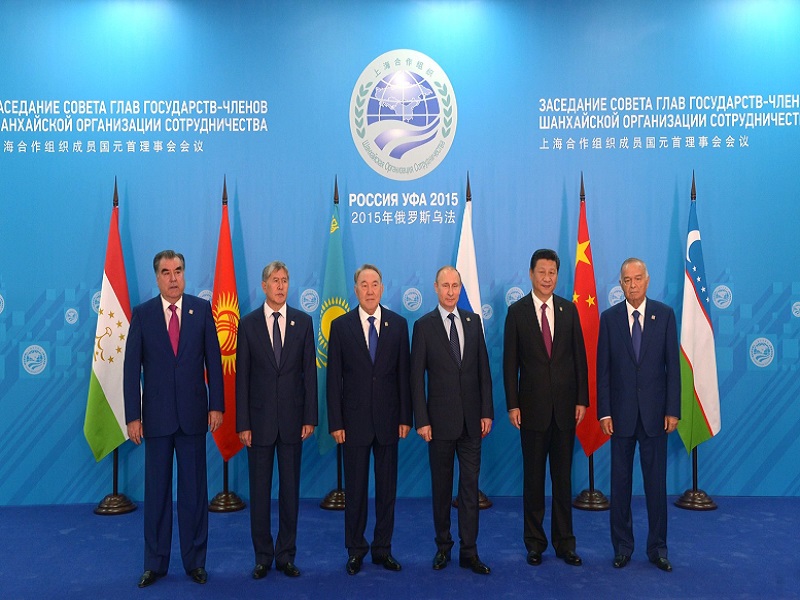
Kyrgyzstan remains the only country so far in the region to have not adopted restrictions on civil society. Though it was discussed in a first plenary hearing in the parliament, the law was withdrawn in June 2015. A political rhetoric exists, however, that states the need for closer ties with Russian politics and cohesion with its socio-legal and political systems. Therefore, there is a belief that the adoption of such a law is only is a matter of time. This is particularly true when considering how Russia has maintained and reinforced its economic ties with Central Asia. It has established a number of institutions that oversee political, economic and other major aspects of policies in the region. The Eurasian Economic Union (EEU), initiated by Russia, which now counts Armenia, Belarus, Kazakhstan, Kyrgyzstan and the Russian Federation as member states[27], began as a body that dealt with the economy, but has grown to have political ambitions. [28] The Shanghai Cooperation Organisation (SCO)[29] – a political body established by China, Russia, Kazakhstan, Kyrgyzstan, Tajikistan – members of the Shanghai five mechanism[30] – and Uzbekistan[31] – has declared protecting human rights as a main objective. Yet the SCO has been widely criticised for being a vehicle for enabling states to commit human rights abuses.[32]


These two institutions, as well as individual political and economic ties with the countries, allow Russia to not stop at the borders of the Russian Federation when ‘protecting national security’. Fear of civil society-fuelled revolutions means that the government has to engage with neighbouring countries to stop ‘attacks from civil society’. For this reason, regional institutions such as the EEU, SCO and other, wider bodies such as the Commonwealth of Independent States[33] allow Russian leadership in the region, and actively promote its legal and political systems alongside formalising Chinese influence in the case of the SCO. Similarities in political leadership, governance and government institutions make it easy for these countries to adopt similar laws, but it also makes it easy for them to subordinate such laws to their political tastes and views.


Conclusion

The governments of Russia, Belarus, Azerbaijan, Kyrgyzstan, Kazakhstan and Tajikistan have abused the power given to them by their constituencies to act as gatekeepers for the protection of rights and freedoms. While practicing different methods of suppressing civil society, the foundation upon which these countries have based methods of operation lies within the Soviet legal and political culture. This not only acts as a source of political inspiration for bad law-making, but also heightens societal nihilism towards government institutions, which feeds back into creating a breeding ground for the usurpation of power by political elites.


Sharing practices will continue to play a significant role in legal professionals’ lives in the region. Trapped in remote geographical locations, law-making can often be a difficult task and can only be determined by taking into account existing political and economic pressures. In societies where the political viewpoints of the leaderships have a higher value than the constitution, and where rule of law is a neglected concept, it becomes important to call for wider reforms, not only at the national level, but internationally. Reforms should continue to pressure former Soviet states to respect the rule of law, good governance and the accountability of government.


There needs to be a shift from sharing bad practices to sharing best practices, making the law superior to politics. Only the rectification of historical error will allow former Soviet nations to free themselves from the legacy of Socialist law and develop a system that is based on modern legal culture; a culture that respects rule of law and civil society.

[1] Waugh, Daniel Clarke, Ruffin, M. Holt and Center for Civil Society International. 1999. Civil society in Central Asia. Seattle: University of Washington Press.

[2] H. Seton-Watson
Source. 1956. Soviet Nationality Policy. The Russian Review, Vol. 15, No. 1 pp. 3-13
. Published by: Wiley on behalf of The Editors and Board of Trustees of the Russian Review Stable.

[3] Kathryn Hendley Kathryn Hendley. 1996. Trying to Make Law Matter: Legal Reform and Soviet Labour Law in the Soviet Union Ann Arbor: University of Michigan Press.

[4] Waters, Christopher P. M. 2004. Counsel in the Caucasus: Professionalization and Law in Georgia. Leiden, NLD: Brill Academic Publishers.

[5] Supra, note 2.

[6] For more information on elections in the Former Soviet Countries see: http://www.osce.org/what/elections

[7] In April 2015, he won another five-year term, with 90.39% of the vote amid little competition. OSCE/ODIHR, Limited Election Observation Mission – Final Report, Republic of Uzbekistan: Presidential Election, 29 March 2015, p 25. Available at: http://www.osce.org/odihr/elections/uzbekistan/126818. EurasiaNet, News, Uzbekistan: Karimov Heads for Landslide in Competition-Free Vote, 26 March 2015, http://www.eurasianet.org/node/72721; The Guardian, 30 March 2015: http://www.theguardian.com/world/2015/mar/30/islam-karimov-re-elected-uzbekistans-president-in-predicted-landslide. Karimov has undertaken his fourth term of office, even though article 90 of the constitution stipulates a clear limit of two consecutive presidential terms. Transparency International has put Uzbekistan under one of the world’s 10 most corrupt countries. See: http://www.transparency.org/country/#UZB.

[8] The constitutional limit of two consecutive terms for the presidency was abolished in 2010, allowing President Nazarbayev to stay in the power until 2020 without facing election. OSCE/ODIHR Election Observation Mission – Final Report, Republic of Kazakhstan: Early Presidential Election, 26 April 2015, http://www.osce.org/odihr/elections/kazakhstan/153566?download=true.

[9] Heydar Aliyev was previously the Soviet leader of Azerbaijan from 19691982.

[10] President Emomali Rahmon has been in charge for 23-years.

[11] Lukashenko re-elected in September 2001. After the 2004 change to the Constitution, allowing a president to run for more than two terms, President Lukashenko was re-elected in March 2006, again in December 2010 and most recently on 11 October 2015. More information on elections in Belarus: http://www.osce.org/odihr/elections/belarus.

[12] Human Rights Watch, Briefing Memorandum on Human Rights Concerns in Central Asia, October 2015, https://www.hrw.org/news/2015/10/21/briefing-memorandum-human-rights-concerns-central-asia.

[13] BBC News, Kyrgyzstan country profile, January 2016, http://www.bbc.com/news/world-asia-16186907

[14] Olimpiad S. Ioffe, Peter B. Maggs. 1986. The Soviet Economic System: A Legal Analysis, University of Illinois with the support from National Council for Soviet and East European Research.

[15] Marcinkutė, Lina. 2012. The Role of Human Rights NGO’s: Human Rights Defenders or State Sovereignty Destroyers?. Baltic  Journal of Law & Politics. Volume 4, Issue 2.

[16] Amnesty International. Amnesty International Report 2015/16 – Europe and Central Asia Regional Overview, https://www.amnesty.org/en/documents/pol10/2552/2016/en/. For Central Asia’s politically motivated imprisonment see HRW world report, Central Asia: Worsening Rights Record,

https://www.hrw.org/news/2015/01/29/central-asia-worsening-rights-record

[17] Greene, Samuel. 2014. Moscow in Movement: Power and Opposition in Putin’s Russia. Palo Alto, CA, USA: Stanford University Press.

[18] Georgia underwent the so-called ‘Rose Revolution’ in 2003 – a peaceful transition of power after widespread falsification of the election results in November 2003; Ukraine followed in 2004 with the ‘Orange Revolution’ – also spurred by falsified elections and this largely forced a transfer of power in Ukraine; Kyrgyzstan also underwent number of changes and its first change of power via revolution took place in 2005. The 2005 (First) Kyrgyz Revolution became known as the Tulip Revolution however, arguably, it saw some violence in the beginning. These revolutions should be considered milestones in freeing up these states from Soviet style governance and stepping into a new era of statehood.

[19] News release: ‘Шеф ФСБ нашел виновников ‘’бархатных революций“’. 12 May 2005. http://www.dw.com/ru/шеф-фсб-нашел-виновников-бархатных-революций/a-1581944.

[20] Supra, note 17.

[21] Putin was the head of the FSB and secretary of the Security Council in July 1999, shortly before he became prime minister and then a president in 2000. In 1999 President Putin – then a prime minister – gave an interview stating that ‘foreign security services, under diplomatic cover, very actively use in their work various ecological and social organisations, commercial firms, and charitable foundations. This is why these structures … will always be under our fixed attention. The interests of the state demand this from us.’

[22] Supra, note 16.

[23] Ibid. This includes the Open Society Foundations who are supporting this publication.

[24] International Centre for Not for Profit Law (ICNL), NGO Law Monitor: Azerbaijan, http://www.icnl.org/research/monitor/azerbaijan.html. Also. Venice Commission, Opinion 787/2014 Azerbaijan, http://www.venice.coe.int/webforms/documents/default.aspx?pdffile=CDL-AD(2014)043-e

[25] Supra, note 16.

[26] Ibid.

[27] For more information on the Eurasian Economic Union, see: http://www.eaeunion.org/?lang=en#

[28] Eurasian Economic Union, What’s the EEU and What Are Its Chances?, 2 January 2015, http://www.eurasianet.org/node/71511

[29] Charter of the Shanghai Cooperation Organization, http://www.hrichina.org/sites/default/files/PDFs/Reports/SCO/2011-HRIC-SCO-Whitepaper-AppendixA-SCO-Docs.pdf

[30] The ‘Shanghai five’ mechanism was established between 1996 and 2001 in order to facilitate multilateral negotiations on border issues among its members. It also handled the demilitarisation of border areas. European Parliament, Briefing, June 2015: The Shanghai Cooperation Organization, p 2, http://www.europarl.europa.eu/RegData/etudes/BRIE/2015/564368/EPRS_BRI(2015)564368_EN.pdf

[31] Shanghai Cooperation Organization website: http://www.sectsco.org/EN123/

[32] FIDH, Publication of a report: “Shanghai Cooperation Organisation: a vehicle for human rights violations”, 3 September 2012: https://www.fidh.org/en/region/europe-central-asia/Publication-of-a-report-Shanghai-12031

[33] For more on the Commonwealth of Independent States: http://www.cisstat.com/eng/cis.htm

Footnotes
    Related Articles

    Russia’s influence in shrinking civic space in Central Asia

    Article by Joanna Hoare and Maisy Weicherding

    Russia’s influence in shrinking civic space in Central Asia

    Since gaining their independence in 1991, the five countries of Central Asia have never been easy places to be a human rights defender (HRD). From the very beginning, when international donor organisations began operating in the region in the early 1990s, human rights organisations, as well as other NGOs involved in projects that are far less politically contentious – from environmental monitoring to renovating children’s homes – have been accused of representing ‘outsider interests’, and seen as threats to the authority of the state and its institutions. In Uzbekistan and Turkmenistan, harassment, restrictions on funding and acceptable activities, and state co-option have effectively closed down civic space, with no independent national or international NGOs (whether engaged in human rights work or anything else) able to operate openly (since the early 2000s in the case of Turkmenistan[1] and the mid 2000s in the case of Uzbekistan).[2]


    In the other three countries – Kazakhstan, Kyrgyzstan, Tajikistan – NGOs have until recently faced less overt pressure, although methods of bureaucratic control have been used by authorities to constrain their activities, with complicated re-registration or taxation procedures being common examples. But since 2014, HRDs and other civil society actors are now reporting an increase in the pressure they are facing, most marked in Tajikistan (and accompanying what appears to be an attempt by President Emmomali Rahmon to consolidate control and eliminate all potential opposition to his rule), but evident in all three countries.[3]


    Different methods are being employed in each country, but the aim appears to be the same: the delegitimisation of the idea that an independent civil society is a necessary component to a stable, prosperous, functioning society. The rhetoric of civil society and human rights is being rejected as ‘Western propaganda’, and civil society activists are being smeared as ‘foreign agents’ attempting to impose ‘alien’ values on ‘traditional’ Central Asian societies, whether or not the groups that they are involved with receive money from abroad. While this is an attack on civil society in its broadest sense (encompassing the silencing of independent media and of alternative political voices, as well as ever increasing restrictions on the rights to protest and dissent in other forms), its most obvious manifestation has been attacks on, and the delegitimising of, NGOs.


    Kyrgyzstan, long regarded as the most open and democratic country in the region, has recently seen smear campaigns against individual HRDs on social media, aimed particularly at those who’ve spoken out against Kyrgyzstan joining the new Eurasian Economic Union, or in favour of LGBTI rights, as well as the high profile raid on ‘national security’ grounds of the Osh-based offices of one of the country’s most long-established and well-respected human rights organisations, Bir Duino.[4] Punitive inspections and prosecutions for alleged administrative and/or tax violations are being used in Tajikistan in an apparent attempt to harass individual HRDs and close down the organisations that they work with; these have also been justified on ‘national security’ grounds.[5] The fines imposed have been high enough as to jeopardise the financial survival of the organisations concerned. In Kazakhstan, vaguely worded clauses on ‘social discord’ in the country’s new Criminal Code (which came into force in January 2015) have been used to prosecute (or threaten with prosecution) civil society activists for posts on social media sites, including posts disseminating information about human rights abuses.[6]


    In addition to these varied tactics, all three countries have also seen attempts (in some cases, successful) to introduce legislation designed to further delegitimise NGOs or to increase state control over them. In Tajikistan, amendments to the Law on Public Associations mean that NGOs registered as public associations now have to notify the Ministry of Justice about any foreign funding that they receive, and proposals have also been put forward that would effectively require re-registration for all NGOs. In Kazakhstan ‘leaders’ of associations convicted under the ‘social discord’ clauses in the Criminal Code face stiffer penalties,[7] and a new law that came into force in December 2015 will lead to the creation of a central, state-run ‘operator’ to administer and distribute state and non-state grants to NGOs, including funding from outside of Kazakhstan. Finally, a draft law to force NGOs receiving foreign aid and engaging in any form of vaguely defined ‘political activities’ to adopt and publicly use the label of ‘foreign agents’ was adopted at its first reading by the Kyrgyzstani parliament. The bill seemed designed to serve no other purpose than to stigmatise organisations that rely on foreign funding for support.[8]


    The influence of Russia on these attempts to close down civic space is most evident in the draft ‘foreign agents’ law in Kyrgyzstan, which mirrored closely similar legislation passed in Russia in 2012.[9] Legislation passed or under consideration in Tajikistan and Kazakhstan is not so obviously aligned, and in both cases more closely reflects authorities’ focus on national security concerns.


    However, the influence of Russia is evident in other tactics being used to delegitimise and attack NGOs, such as the use of punitive prosecutions on tax or administrative grounds against NGOs and individual HRDs, even though the specific legislation used in each of these three countries by the authorities for such prosecutions is unique to that country. In Russia, March 2013 and May 2014 saw raids on NGO offices,[10] followed by steep fines for failure to comply with the ‘Foreign Agents’ law. While this may be a tactic that was not pioneered in Russia (countries such as Azerbaijan and Belarus have long made use of it), Russia’s considerable political, economic, and cultural influence over the Central Asia region has meant that Russia has ‘led by example’ and played a role in emboldening authorities in these countries to adopt the tactic themselves.


    Much of the rhetoric attacking human rights and human rights defenders in the state-controlled media in Central Asia[11] has echoed language around the ‘clash of civilisations’ between immoral, decadent and corrupted ‘Western values’ and wholesome (Russian) ‘traditional values’ that has come to dominate official and media discourse in Russia.[12] Labelling NGOs in receipt of funding from abroad as ‘foreign agents’ (whether or not this is done using legislation) serves to cement their association with (corrupted) ‘Western values’, discrediting them and setting them up for further attack.


    Following on from this, as has again also been the case in Russia, the institutions pushing the association between human rights, NGOs and ‘Western values’ have focused almost exclusively on a short list of sensationalised thematic areas related to the wider human rights agenda. Top of this list are LGBTI rights, but it also includes women’s rights, the rights of ethnic and religious minorities and work on strengthening democratic institutions (such as election monitoring), all of which are presented as alien and a threat to the stability and wellbeing of wider society. Work on these thematic areas is undertaken by a very small number of NGOs in Russia as in Kazakhstan, Kyrgyzstan and Tajikistan, where the vast majority of NGOs are concerned with social welfare. Yet these thematic areas have come to represent ‘what NGOs do’, and the way they are portrayed – with such hostility – has come to shape how wider society views NGOs and their agendas. Once again, this makes it much easier for NGOs to be attacked and their legitimacy undermined. That said, while the influence of Russia and Russian discourse around NGOs on the worsening climate for civil society in Kazakhstan, Kyrgyzstan and Tajikistan is clear, it is important not to ignore other important factors influencing this trend in Central Asia.


    The most significant of these is the growing strength of national security agendas. In Kyrgyzstan and Tajikistan, raids and punitive inspections of NGOs’ premises have been justified on the grounds of possible links to militant groups; in Tajikistan, this has left human rights NGOs extremely vulnerable to ‘guilt by association’ and unwilling to speak out against human rights abuses that are going on under the current crackdown. In Kazakhstan, prosecutions for posts on social media breaking the laws on national and social ‘discord’ have been linked to upholding the sovereignty and integrity of Kazakhstan, again justified on national security grounds.


    The worsening economic climate across the region is another factor. As economic conditions worsen and unemployment rises, the demonising of independent civil society fulfils the dual purpose of silencing a source of potential criticism of the authorities’ handling of the economic situation, and providing a useful distraction from economic woes.


    Finally, this trend is not limited to Central Asia (or indeed, the wider former Soviet space). All over the world, governments are challenging the autonomy and legitimacy of civil society groups, and restricting their activities using a combination of legislation and logistical barriers, as well as public attacks and threats.[13] Receipt of funding from abroad is a particular area of contention and in many countries national NGOs are finding that their ability to access foreign funding is becoming more and more compromised. This includes countries where civil society groups have historically been well organised and outspoken, such as India, Bangladesh, and Hungary.[14]


    It is hard to say whether Kazakhstan, Kyrgyzstan, and Tajikistan will continue their trajectory towards the complete shut down of civic space witnessed in neighbouring Turkmenistan and Uzbekistan. In Kyrgyzstan, in the event, by the time the draft ‘foreign agents’ law returned to the parliament for its second reading, the bill had been considerably revised, including the removal of any mention either of ‘foreign agents’ or of ‘political activities’.[15] Even with these changes, it was ultimately rejected by the parliament on its third and final reading.[16] Meanwhile, the downturn in the Russian economy (which is resulting in a withdrawal of Russian investment and a reduction in migrant remittances) may be prompting the government in Kyrgyzstan to rethink its relationship with Western donors. In Kazakhstan, an uneasy status quo has long existed between the authorities’ desire to stifle dissent on the one hand, but present Kazakhstan as a progressive, outward-looking state on the other, meaning that a full-scale crackdown seems unlikely.  In Tajikistan, however, the situation seems far, far bleaker, with NGOs fearing that it will not be long before they are prohibited from operating at all.

    [1] See Bohr, Annette. 2016. Turkmenistan: Power, Politics and Petro-Authoritarianism. London: Chatham House, pp. 46-47.

    [2] See CIVICUS. 2013. The situation is becoming dire for civil society in Uzbekistan | an interview with Sukhrobjon Ismoilov, CIVICUS, 10 May, http://www.civicus.org/index.php/en/news-and-resources-127/1691-the-situation-is-becoming-dire-for-civil-society-in-uzbekistan-an-interview-with-sukhrobjon-ismoilov and Human Rights Committee. 2015. Concluding observations on the fourth periodic report of Uzbekistan. CCPR/C/UZB/CO/4. Geneva: Human Rights Committee.

    [3] For a comprehensive overview of the state of civil society and freedom of expression and association more generally in Kazakhstan and Tajikistan, see: Kazakhstan International Bureau for Human Rights / Nota Bene / Turkmen Initiative for Human Rights / International Partnership for Human Rights. 2015. SPOTLIGHT: FUNDAMENTAL RIGHTS IN CENTRAL ASIA Recent developments in Kazakhstan, Tajikistan and Turkmenistan. Brussels: IPHR. For Kyrgyzstan, see: IPHR. 2015. Submission to EU-Kyrgyzstan Human Rights Dialogue, 18 May 2015: The civil society situation in Kyrgyzstan. Brussels: IPHR. See also individual country entries in Amnesty International. 2016. Amnesty International Annual report 2015/16. The State of the World’s Human Rights. London: Amnesty International.

    [4] Amnesty International, Public Statement. Five Years On: Justice Still Denied. EUR 58/1846/2015, 2015, London: Amnesty International; Chris Rickleton, Kyrgyzstan Arrests American Journalist, Raids NGO Office. Eurasianet, March 2015. http://www.eurasianet.org/node/72756.

    [5] Kazakhstan International Bureau for Human Rights et al, Spotlight: Fundamental Rights in Central Asia Recent Developments in Kazakhstan, Tajikistan and Turkmenistan.

    [6] Bruce Pannier, The Victims Of Kazakhstan’s Article 174. Radio Free Europe Radio Liberty, February 2016, http://www.rferl.org/content/qishloq-ovozi-kazakhstan-article-174/27527738.html

    [7] Article 174, Criminal Code of the Republic of Kazakhstan.

    [8] See individual country entries in: Amnesty International, Amnesty International Annual report 2015/16. The State of the World’s Human Rights. 2016, London: Amnesty International.

    [9] International Center for Not-for-Profit Law. 2016. NGO Law Monitor: Russia. http://www.icnl.org/research/monitor/russia.html

    [10] Farangis Najibullah, Russia Launches New Wave Of Raids On NGOs. Radio Free Europe Radio Liberty, May 2014 http://www.rferl.org/content/russia-new-raids-ngos/25384948.html; BBC. Fears for NGOs in Russia as tax raids multiply. BBC, March 2013, http://www.bbc.co.uk/news/world-europe-21952416

    [11] For a flavour, see this response to Amnesty International’s annual report: focus.kg. 2016. Amnesty International желает очередной смуты в Кыргызстане? focus.kg, February 2016. http://www.gezitter.org/politic/48048_Amnesty_International_jelaet_ocherednoy_smutyi_v_kyirgyizstane___/. See also: focus.kg. Разве позволяется Америке навязывать чуждые менталитету кыргызского народа устои и традиции? focus.kg, January 2016, http://www.gezitter.org/society/46887_razve_pozvolyaetsya_amerike_navyazyivat_chujdyie_mentalitetu_kyirgyizskogo_naroda_ustoi_i_traditsii/

    [12] Masha Gessen, Russia is remaking itself as the leader of the anti-Western world. The Washington Post, March 2014, https://www.washingtonpost.com/opinions/russia-is-remaking-itself-as-the-leader-of-the-anti-western-world/2014/03/30/8461f548-b681-11e3-8cc3-d4bf596577eb_story.html.  For an extensive account of how the ‘traditional values’ discourse has become institutionalised in Russia, see: Chandler, Andrea, Democracy, Gender, and Social Policy in Russia: A Wayward Society, 2013, London and New York: Palgrave.

    [13] Thomas Carothers and Saskia Brechenmacher, Closing Space: Democracy and Human Rights Support Under Fire. Washington D.C, Carnegie Endowment for International Peace, 2015, http://carnegieendowment.org/files/closing_space.pdf

    [14] Carothers and Brechenmacher, Closing Space, p.9; Carothers, Thomas. 2015. The Closing Space Challenge: How Are Funders Responding? Carnegie Endowment for International Peace, November 2015 http://carnegieendowment.org/2015/11/02/closing-space-challenge-how-are-funders-responding/ikrg

    [15] Kloop.kg, Парламент принял во втором чтении измененный законопроект об «инагентах». Kloop.kg, April 2016, http://kloop.kg/blog/2016/04/14/live-parlament-rassmatrivaet-izmenennyj-zakonoproekt-ob-inagentah/. The revised law was passed on its second reading, but still needs to go before the parliament a third time and to be signed into law by the President. The revised draft law retains the requirement that NGOs provide information about their sources of funding, and publish yearly financial reports.

    [16] Adilet Makenov, Депутаты отклонили законопроект об НКО. Kloop.kg, May 2016, http://kloop.kg/blog/2016/05/12/parlament-otklonil-v-zaklyuchitelnom-chtenii-zakon-ob-nko/.

    Footnotes
      Related Articles

      Legislating against foreign funding of human rights – A tool of repression in the former Soviet Union

      Article by Kate Levine

      Legislating against foreign funding of human rights – A tool of repression in the former Soviet Union

      The ability of civil society organisations (hereinafter referred to as non-governmental organisations or ‘NGOs’) to seek, secure and use resources, including foreign funding, is a fundamental component of their right to exist and effectively operate. The latter is given legal expression in the right to freedom of association, as codified in international human rights law. That states are permitted to regulate, in accordance with the law and subject to certain criteria, the establishment and operation of NGOs within their jurisdiction is not disputed. However, lawful regulation of NGOs must be distinguished from violations of their right to freedom of association, including through unjustified attempts to restrict their access to funding (foreign or local). An alarming increase in legislative efforts to severely limit access to foreign funding for NGOs (often under the guise of ‘protecting national security’) has been widely documented in recent years.[1] The examples are by no means geographically limited, and encompass the Middle East and North Africa, south Asia, sub-Saharan Africa, and Latin America, as well as the former Soviet Union. This article focuses on the particularly hostile tactics employed by the Russian Government, and the efforts of the Yanukovych regime in Ukraine and the incumbent Government of Kyrgyzstan to mirror these practices. It also looks at amendments to existing NGO laws in Azerbaijan that have made it practically impossible for local human rights NGOs to receive foreign funding. The harm caused by the application of these laws is twofold: not only has it become incredibly challenging for local human rights NGOs in these countries to sustain themselves (in some cases resulting in their closure), but navigating the new legal landscape diverts considerable time and resources away from the core work of protecting human rights. Furthermore, foreign donors have in many cases been forced out. This article highlights some of the reactions of NGOs and international bodies to these challenges, and concludes by considering possible shared motives behind the laws in question.


      Access to foreign funding within the international human rights law framework

      At international level, the right to freedom of association is enshrined in Article 22 of the International Covenant on Civil and Political Rights (ICCPR).[2] Although the text of Article 22 does not expressly refer to the right of civil society to access funding, the United Nations (UN) Human Rights Committee and the UN Special Rapporteur on the Right to Freedom of Association have underlined that this provision incorporates the ability of individuals and NGOs to seek, receive and use resources (human, material and financial) from domestic and foreign, public and private, sources.[3] Further, Resolution 22/6 of the UN Human Rights Council, Article 6(f) of the Declaration on the Elimination of All Forms of Intolerance and of Discrimination Based on Religion or Belief and Article 13 of the UN Declaration on Human Rights Defenders refer to the right of individuals and NGOs to seek and use financial resources for the promotion and protection of human rights and the concomitant duty of states to not unreasonably restrict the exercise of this right. Within the Council of Europe, the right to freedom of association is guaranteed by Article 11 of the European Convention on Human Rights (ECHR), and the incorporation of the right of access to financial resources is affirmed by resolutions, reports and statements issued by the Committee of Ministers, the Expert Council on NGO Law of the Council of Europe Conference of INGOs and the Parliamentary Assembly, among others.[4] It is therefore not disputed that the obligation on states to enable individuals and NGOs to seek, secure and use financial resources is fundamental to the exercise of the right to freedom of association. For restrictions on any aspect of the right to freedom of association to be lawful under the ICCPR and the ECHR, they must be ‘prescribed by law’, ‘necessary in a democratic society in the interests of national security or public safety’, including for the protection of public order, public health or morals, or for the protection of the rights of others.[5] The recent attempts by Russia, Azerbaijan, Ukraine and Kyrgyzstan to restrict the freedom of association of NGOs through impeding access to foreign funding (as discussed below) are clearly unlawful and form part of a wider crackdown on independent civil society and the protection of human rights.


      Russia’s stigmatisation of foreign funding

      Following President Putin’s re-election in 2012, a raft of repressive laws were enacted, one of the key aims of which is to stifle dissent and the work of human rights defenders.[6] Key among these laws is the Federal Law introducing Amendments to Certain Legislative Acts of the Russian Federation Regarding the Regulation of Activities of Non-Commercial Organisations Performing the Function of Foreign Agents, otherwise known as the ‘Foreign Agents Law’, which was enacted on 21 November 2012.[7] The ‘Foreign Agents Law’ requires Russian NGOs to register as ‘foreign agents’ with the Ministry of Justice if they engage in ‘political activity’ and receive foreign funding.[8] The initial definition of ‘political activity’ was very vague, and an amended definition adopted by the Duma in February 2016 may encompass all aspects of advocacy and human rights work.[9] Further, the connotation of ‘foreign agent’ as a spy or a traitor in the post-Soviet context is unambiguous. In May 2014, the Ministry of Justice was granted authorisation to unilaterally register NGOs as ‘foreign agents’ without their consent if the Ministry decides that they are engaged in ‘political activity’ and they are in receipt of foreign funding.[10] NGOs refusing to register within six months of being designated a ‘foreign agent’ by the authorities face potentially crippling fines, or even suspension (without a court order) at the discretion of the Ministry of Justice.[11] Further, any information published by an NGO on the registry of ‘foreign agents’ must be marked as being published and distributed by an organisation ‘performing the functions of a foreign agent’. As noted by Amnesty International, the Law was ‘designed to stigmatise and discredit NGOs engaged in human rights, election monitoring and other critical work. It is providing a perfect pretext for fining and closing critical organisations and will cut often vital funding streams’.[12]


      Building on the efforts of the ‘Foreign Agents Law’, on 23 May 2014 President Putin signed Federal Law No. 129-FZ on Amendments to Certain Legislative Acts of the Russian Federation (Law on Undesirable Organisations), which entered into force on 3 June 2015.[13] Under the new law, foreign or international organisations (such as donors) can be declared ‘undesirable’ by the Prosecutor General’s Office (with agreement of the Ministry of Foreign Affairs) if they are deemed a threat to the state’s ‘constitutional order, security of the State or its defence capacity’.[14] Organisations labelled ‘undesirable’ (through a process which is not disclosed) are prohibited from operating or distributing information in Russia.[15] Moreover, Russian organisations are not only required to cease ‘involvement’ (defined in broad terms) with ‘undesirable’ organisations but must also refuse funds from such groups. Continued cooperation exposes local groups to heavy fines and even criminal prosecution.[16] Although on its face a direct attack on foreign and international groups, the Law is ultimately aimed at ‘suffocating Russian civil society, cutting them off from their international partners, and leaving them in limbo’.[17]


      ‘Copycat’ measures in Ukraine and Kyrgyzstan

      Less than a year after the adoption of the ‘Foreign Agents Law’ in Russia, its attraction to other repressive governments in the region was becoming evident. In response to the growing momentum of the anti-government protests at Maidan, in January 2014 the Ukrainian Parliament adopted a number of measures designed to restrict human rights. One such law amended the existing legal framework on NGOs so as to allow groups receiving foreign funding and engaging in so-called ‘political activities’ to register as ‘foreign agents’.[18] The law was then swiftly repealed by Parliament when pro-Russian President Yanukovych fled the country and an interim Government was formed.[19] In May 2014, a group of Parliamentarians in Kyrgyzstan introduced a draft law that imposed much of the same requirements through enacting amendments to a number of existing laws regulating NGOs.[20] Pursuant to the draft, the Kyrgyz authorities would be able to label NGOs receiving foreign funding and conducting ‘political activity’ (broadly defined) as ‘foreign agents’.[21] As of April 2016, the Kyrgyz Parliament is considering a revised draft of the law that no longer includes the provisions on ‘foreign agents’ but imposes burdensome (and arguably unnecessary) reporting requirements on all NGOs.[22]


      Azerbaijan’s shrinking space for foreign funding 

      In 2013 and 2014, Azerbaijan introduced a number of restrictive amendments to its NGO laws.[23] Of particular significance for groups seeking or relying on foreign funding were amendments to the Laws on NGOs and on Grants introduced in October 2014. Pursuant to these changes, local NGOs are allowed to receive foreign funding only if the foreign donor has an agreement with the Ministry of Justice, a registered local branch or representative, and has obtained the right to give a grant in Azerbaijan (for which an opinion on the financial need of the grant issued by a state body is required).[24] These changes followed amendments to the Law on NGOs introduced in February and December 2013 respectively. The former impose a threshold (AZN 200, approx. £90) for cash grants, require larger grants to be made by bank transfer to an account held by the organisation itself, and require grants to be registered with the Ministry of Justice in order to qualify for tax exemption.[25] Under the December 2013 amendments, individual recipients of grants must also register grants in the same way as registered organisations.[26] Given the burdensome registration requirements and severe delays in registration of NGOs, many unregistered groups would have received funds via the bank accounts of their chairs or founders; under the 2013 amendments, this is effectively prohibited.[27] All of the amendments also introduced hefty sanctions, including fines.[28] Adopted at a time of increasing repression of independent civil society in Azerbaijan, these amendments have been used to convict leading NGO leaders (such as Rasul Jafarov, Chair of the Human Rights Club, and Intigam Aliyev, renowned human rights lawyer and Chair of the Legal Education Society) on politically motivated charges stemming from alleged failures to comply with the NGO laws.[29] Notwithstanding that some of the human rights defenders who were convicted (including Intigam and Rasul) have now been released, they and others are still forced to operate within an even more obstructive legal environment.


      Impact of these laws and reactions from NGOs and international actors 

      In Russia, over 122 NGOs have been designated as ‘foreign agents’, including many of the most prominent human rights groups such as Human Rights Centre ‘Memorial’, Public Verdict Foundation and the interregional NGO ‘The Committee Against Torture’.[30] The majority of groups on the register were identified as ‘foreign agents’ following a series of invasive state inspections in March 2013, as a result of which the groups were then forced to register or face administrative charges.[31] Some groups decided to shut down instead of carry the shameful label of ‘foreign agent’.[32] Although a handful of these groups have restructured under a different name, others have closed down forever and their staff are either working independently or for other organisations (some outside of Russia). Nearly 60 groups have been subject to administrative court proceedings and fined for failing to register as a ‘foreign agent’, and the leaders of at least eight NGOs have faced administrative charges personally.[33] Further, as a direct result of the enforcement of the ‘Law on undesirable organisations’, several large foreign donors have either been banned from grant-making in Russia (the Washington based National Endowment for Democracy, and George Soros’ Open Society Foundations and the Open Society Institute’s Assistance Foundation), or have decided to cease doing so in light of the risk of being labelled ‘undesirable’ (the MacArthur Foundation and the Charles Stewart Mott Foundation).[34] Russian NGOs and have also sought to fight back through a combination of legal action, advocacy, and attempts to circumvent the laws. In February 2013, Memorial Human Rights Centre and the European Human Rights Advocacy Centre brought a case against Russia at the European Court of Human Rights on behalf of originally 13 (now 15) Russian NGOs, in which the applicants allege that the ‘Foreign Agents Law’ and its enforcement violates their rights to freedom of association and expression under the ECHR.[35] A positive judgment from the Court would give international judicial support to the unanimous condemnation of the Law by international civil society, the United Nations, the European Union, the Council of Europe Commissioner for Human Rights and the Parliamentary Assembly, and the European Commission for Democracy through Law (‘Venice Commission’).[36] A serious concern though, is that by the time the Court issues a judgment, the landscape of Russian civil society may have irreparably changed. There has also been unequivocal condemnation of the ‘Law on undesirable organisations’, though no legal challenges have yet been brought.


      The enforcement of recent amendments to the NGO laws in Azerbaijan has only intensified the repression of organisations that have been critical of the Government.[37] As noted, it has also facilitated the prosecution of leaders of these organisations in what have widely been classified as politically motivated prosecutions.[38] The majority of these cases were brought during Azerbaijan’s Chairmanship of the Council of Europe’s Committee of Ministers, prompting even fiercer criticism from some organs of the regional grouping; though others argued that this ‘fait accompli’ has merely underlined the increasing loss of influence of foreign diplomacy on the Aliyev regime.[39] International organisations, including donors operating in Azerbaijan have also come under attack, with several (such as the National Endowment for Democracy and Oxfam) being forced to close down their operations in the country.[40]


      The impact of the short-lived imitation of the ‘Foreign Agents Law’ in Ukraine is perhaps difficult to discern in the aftermath of the Maidan protests and the overthrow of President Yanukovych. However, it did underline the political influence of Russia on Ukraine, which continues to be evidenced in the conflict between pro-Russian ‘separatists’ and Ukrainian forces in eastern Ukraine.[41] In Kyrgyzstan, it remains to be seen whether the draft amendments to the NGO laws have nearly the same impact as in Russia, Ukraine or Azerbaijan.


      Conclusion

      While Azerbaijan adopted a different model to Russia, Ukraine, and Kyrgyzstan, the underlying rationale of all of these laws is the same: to reduce the space within which independent civil society can operate, including through restricting access to foreign funding. Where the laws in question have been implemented (Russia and Azerbaijan), civil society (and human rights defenders and their NGOs in particular) have come under significant pressure, including through being forced to allocate scarce resources to managing the effect of the laws’ implementation while continuing to seek protection and redress for victims of human rights abuses. These laws have also succeeded in bringing to a halt the operations of a number of foreign donors in these countries.


      There does not appear to be irrefutable evidence that Azerbaijan was directly encouraged by Russia to adopt the various amendments to the NGO laws; although analysed together, the ‘Foreign Agents Law’ and the Azerbaijani NGO laws (and the examples from Ukraine and Kyrgyzstan) certainly point towards a trend in the region to clamp down on civil society through attacking the credibility of NGOs and cutting off a key source of support. The promulgation of these laws appears to be based on a shared mistrust by these states of independent NGOs who receive foreign funding and who may have the potential to influence the political status quo. In Ukraine, for example, foreign support for local organisations involved in the 2004 ‘orange revolution’ led some, including the Russian Government, to claim that the political changes then and in 2014 were orchestrated by Western governments and private philanthropists, acting from behind the scenes.[42] This suspicion has only worsened in Russia in particular where, following the annexation of Crimea, President Putin claimed that: “Western special services do not give up their attempts to use non-governmental groups to discredit Russian authorities and destabilise the internal situation in Russia. They are already planning actions for the period of the forthcoming elections in 2016 and 2018”.[43]


      Given the express similarities in the language used in the Ukrainian and Kyrgyz ‘Foreign Agents Laws’ and the Russian law, it is difficult to avoid the conclusion that the former took direct inspiration from the latter. Without access to the machinations of political elites, it is much harder to determine whether the adoption of these laws was the result of active collaboration between the States in question. However, on the evidence that we have available to us so far, it seems clear that Russia has, and continues to, fuel the notion that Western interference in the state’s ‘internal affairs’ must be blocked through, for example, cutting off access for local civil society to Western support and engagement. The distrust of independent national and international civil society evidenced by these states is fundamentally opposed to the norms of international human rights law, which, as discussed, protects the right to freedom of association, including the right of NGOs and individuals to seek, secure, and use resources.

      [1] See for example: The Observatory for the Protection of Human Rights Defenders, ‘Violations of the right of NGOs to funding: from harassment to criminalisation’, Annual Report 2013; T Carothers and S Brechenmacher, ‘Closing Space – Democracy and Human Rights Support Under Fire’, Carnegie Endowment for International Peace, 2014; Report of the Special Rapporteur on the rights to freedom of peaceful assembly and of association, Maina Kiai, 24 April 2013, A/HRC/23/39; The Economist, ‘Foreign funding of NGOs – Donors: keep out’, 13 September 2014.   

      [2] The ICCPR was adopted and opened for signature, ratification and accession by General Assembly resolution 2200A (XXI) of 16 December 1966, and entered into force on 23 March 1976. The full text can be found here: http://www.ohchr.org/en/professionalinterest/pages/ccpr.aspx. The ECHR was drafted by the Council of Europe in 1950 and entered into force on 3 September 1953. The full text can be found here: http://www.echr.coe.int/Documents/Convention_ENG.pdf.

      [3] Communication No. 1274/2004, Viktor Korneenko et al- Belarus, United Nations (UN) Document CCPR/ 12 C/88/D/1274/2004, November 10, 2006, paragraph 7.2; Report of the Special Rapporteur on the rights to freedom of peaceful assembly and of association, 24 April 2013, pp. 4-6.

      [4] See for example: Recommendation CM/Rec(2007)14 of the Committee of Ministers to Member States on the Legal Status of Non-governmental Organizations in Europe; Parliamentary Assembly Report on ‘How to prevent inappropriate restrictions on NGO activities in Europe?’, Doc. 13940 08 January 2016; Non-Governmental Organisations: Review of Developments in Standards, Mechanisms, and Case Law 2013-2015, OING Conf/Exp (2015) 2, November 2015.

      [5] Article 22(2) ICCPR and Article 11(2) ECHR.

      [6] The repressive laws enacted in 2012 included those seeking to clamp down on peaceful protests, restrict freedom of speech. For further information on these laws, see: http://www.icnl.org/research/monitor/russia.html#snapshot and

      [7] The law came into effect on 21 November 2012 (http://www.icnl.org/research/monitor/russia.html)

      [8] HRW, Russia: Government against Rights Groups, 16 April 2016 https://www.hrw.org/russia-government-against-rights-groups-battle-chronicle

      [9] For an unofficial translation of the amended definition, see: http://www.icnl.org/research/monitor/russia.html#snapshot

      [10] Human Rights Watch, Russia: Government against Rights Groups, 16 April 2016 https://www.hrw.org/russia-government-against-rights-groups-battle-chronicle

      [11] See for example the case of the Sakharov Centre, one of the most well established NGOs in Russia: A Semyonov and A Bayer,  ‘A cloud over Russia’s civil society’, Washington Post, 6 March 2015, https://www.washingtonpost.com/opinions/a-cloud-over-russias-civil-society/2015/03/06/b47504b8-c022-11e4-ad5c-3b8ce89f1b89_story.html

      [12] Amnesty International, Russia: A year on, Putin’s ‘foreign agents law’ choking freedom, 20 November 2013, https://www.amnesty.org/en/latest/news/2013/11/russia-year-putin-s-foreign-agents-law-choking-freedom/

      [13]  International Center for Not-for-Profit Law, NGO Law Monitor: Russia, 24 March 2016, http://www.icnl.org/research/monitor/russia.html

      [14] ibid

      [15] ibid

      [16] HRW, Russia: Stop Draft Law on ‘Undesirable’ Groups, 15 May 2015, https://www.hrw.org/news/2015/05/15/russia-stop-draft-law-undesirable-groups

      [17] Alec Luhn, Russia bans ‘undesirable’ international organisations ahead of 2016 elections, The Guardian, 19 May 2015, http://www.theguardian.com/world/2015/may/19/russia-bans-undesirable-international-organisations-2016-elections

      [18] International Center for Not-for-Profit Law (ICNL), Ukraine Amendments Highly Restrict Civil Society, 22 January 2014, http://www.icnl.org/news/2014/22-Jan.html; Human Rights Watch, Ukraine: Repeal Repressive New Legislation, 18 January 2014, https://www.hrw.org/news/2014/01/18/ukraine-repeal-repressive-new-legislation; International Media Support, New law in Ukraine a degradation of human rights, says Ukrainian civil society organization, 17 January 2014, https://www.mediasupport.org/new-law-in-ukraine-a-degradation-of-human-rights/

      [19] Freedom House, Nations in Transit 2015: Ukraine, https://freedomhouse.org/report/nations-transit/2015/ukraine

      [20] ICNL, NGO Law Monitor: Kyrgyz Republic, 13 May 2016, http://www.icnl.org/research/monitor/kyrgyz.html

      [21] Freedom House, Kyrgyzstan: Don’t Copy Russia’s Foreign Agents Law, 13 September 2013, https://freedomhouse.org/article/kyrgyzstan-dont-copy-russias-foreign-agents-law

      [22] These requirements may be deemed ‘unnecessary’ restrictions on the right of NGOs to freedom of association. See OMCT World Organisation Against Torture, Kyrgyzstan: Parliament must reject discriminatory bill targeting NGOs, 13 April 2016, http://www.omct.org/human-rights-defenders/urgent-interventions/kyrgyzstan/2016/04/d23709/

      [23] See for example the commentary on these laws in the report of the Parliamentary Assembly Committee on Legal Affairs and Human Rights, How to prevent inappropriate restrictions on NGO activities in Europe?, 8 January 2016, pp 14-15; and Amnesty International, Guilty of Defending Rights: Azerbaijan’s Human Rights Defenders and Activists Behind Bars, March 2015, https://www.amnesty.nl/sites/default/files/public/guilty_of_defending_rights_-_az.pdf

      [24] Transactions involving foreign funding can only take place once grantees submit information on the amount received and on the donors to the Ministries of Justice and Finance. ICN, NGO Law Monitor: Azerbaijan, 23 March 2016, http://www.icnl.org/research/monitor/azerbaijan.html

      [25] Amnesty International, Guilty of Defending Rights: Azerbaijan’s Human Rights Defenders and Activists Behind Bars, March 2015, https://www.amnesty.nl/sites/default/files/public/guilty_of_defending_rights_-_az.pdf

      [26] Ibid

      [27] In several judgments, the European Court of Human Rights has found that the burdensome registration requirements and delays in registering NGOs breached the European Convention on Human Rights (see for example: Ramazanova and Others v. Azerbaijan, Application No. 44363/02, judgment of 1 February 2007; Aliyev and Others v. Azerbaijan, Application No. 28736/05, judgment of 18 December 2008; Nasibova v. Azerbaijan, Application No. 4307/04, judgment of 18 October 2007; Ismayilov v. Azerbaijan, Application No. 4439/04, judgment of 17 January 2008).

      [28] ICNL, NGO Law Monitor: Azerbaijan, 23 March 2016, http://www.icnl.org/research/monitor/azerbaijan.html

      [29] Following conviction on trumped-up charges of tax avoidance, illegal entrepreneurship and abuse of power in April 2015, Intigam Aliyev and Raslu Jafarov were ultimately released in March 2016. See Amnesty International, Guilty of Defending Rights: Azerbaijan’s Human Rights Defenders and Activists Behind Bars, March 2015, https://www.amnesty.nl/sites/default/files/public/guilty_of_defending_rights_-_az.pdf; and Amnesty International, Azerbaijan: Release of 10 prisoners of conscience is a glimmer of hope for those still behind bars, 17 March 2016, https://www.amnesty.org/en/latest/news/2016/03/azerbaijan-pocs-release/

      [30] A list of the 122 organisations registered as ‘foreign agents’ has been compiled by Human Rights Watch: https://www.hrw.org/russia-government-against-rights-groups-battle-chronicle

      [31] Council of Europe, How to prevent inappropriate restrictions on NGO activities in

      Europe?, 8 January 2016, http://semantic-pace.net/tools/pdf.aspx?doc=aHR0cDovL2Fzc2VtYmx5LmNvZS5pbnQvbncveG1sL1hSZWYvWDJILURXLWV4dHIuYXNwP2ZpbGVpZD0yMjMxMCZsYW5nPUVO&xsl=aHR0cDovL3NlbWFudGljcGFjZS5uZXQvWHNsdC9QZGYvWFJlZi1XRC1BVC1YTUwyUERGLnhzbA==&xsltparams=ZmlsZWlkPTIyMzEw

      [32] Human Rights Watch, Russia: Government against Rights Groups, 16 April 2016, https://www.hrw.org/russia-government-against-rights-groups-battle-chronicle

      [33] Human Rights Watch, Russia: Government against Rights Groups, 16 April 2016, https://www.hrw.org/russia-government-against-rights-groups-battle-chronicle

      [34] Alec Luhn, National Endowment for Democracy is first ‘undesirable’ NGO banned in Russia, The Guardian, 28 July 2015, http://www.theguardian.com/world/2015/jul/28/national-endowment-for-democracy-banned-russia; Shaun Walker, Russia bans two Soros foundations from disbursing grants, The Guardian, 30 November 2015, http://www.theguardian.com/world/2015/nov/30/russia-bans-two-george-soros-foundations-from-giving-grants; MacArthur Foundation, The MacArthur Foundation in Russia: 1991-2015, https://www.macfound.org/tags/russia/ ; http://www.mott.org/news/news/2015/20150724-Statement-on-Russia

      [35] European Court of Human Rights, Ecodefence and Others v. Russia, Application No. 9988/13. The case is currently pending communication to the Russian Government. For further information on the application, see http://ehrac.org.uk/news/leading-russian-human-rights-ngos-launch-challenge-at-european-court-to-foreign-agent-law/. A legal challenge to the Law was also mounted before Russia’s Constitutional Court, although ultimately the Court upheld the Law – Human Rights Watch, Russia: Government against Rights Groups, 16 April 2016, https://www.hrw.org/russia-government-against-rights-groups-battle-chronicle

      [36] See for example: CommDH(2015)17, 9 July 2015; Venice Commission opinion, 27 June 2014; press release by the UN Special Rapporteurs on freedom of association, human rights defenders and freedom of expression, Russia: increasingly hostile environment for NGOs and rights defenders is unacceptable, 14 May 2013, http://www.ohchr.org/EN/NewsEvents/Pages/DisplayNews.aspx?NewsID=13323&LangID=E#sthash.UeHOP6Md.dpuf; European Parliament resolution of 10 June 2015 on the state of EU-Russia relations (2015/2001(INI)) http://www.europarl.europa.eu/sides/getDoc.do?pubRef=-//EP//TEXT+TA+P8-TA-2015-0225+0+DOC+XML+V0//EN&language=EN

      [37] Independent Azerbaijani civil society also faced significant pressure prior to the 2013-2014 amendments. Council of Europe, How to prevent inappropriate restrictions on NGO activities in

      Europe?, 8 January 2016, http://semantic-pace.net/tools/pdf.aspx?doc=aHR0cDovL2Fzc2VtYmx5LmNvZS5pbnQvbncveG1sL1hSZWYvWDJILURXLWV4dHIuYXNwP2ZpbGVpZD0yMjMxMCZsYW5nPUVO&xsl=aHR0cDovL3NlbWFudGljcGFjZS5uZXQvWHNsdC9QZGYvWFJlZi1XRC1BVC1YTUwyUERGLnhzbA==&xsltparams=ZmlsZWlkPTIyMzEw

      [38]  See for example, the interventions of the Council of Europe Commissioner for Human Rights in the cases of Intigam Aliyev, Rasul Jafarov, and Leyla and Arif Yunus: Third party intervention by the Council of Europe Commissioner for Human Rights under Article 36, paragraph 3, of the European Convention on Human Rights. Application No. 68762/14 – Intigam ALIYEV v. Azerbaijan; Third party intervention by the Council of Europe Commissioner for Human Rights under Article 36, paragraph 3, of the European Convention on Human Rights. Application no. 69981/14 – Rasul JAFAROV v. Azerbaijan; and Third party intervention by the Council of Europe Commissioner for Human Rights under Article 36, paragraph 3, of the European Convention on Human Rights. Application No. 68817/14, Leyla YUNUSOVA and Arif YUNUSOV v. Azerbaijan.

      [39] G Knaus, ‘Europe and Azerbaijan: the end of Shame’, Journal of Democracy Volume 26, Number 3 July 2015

      [40] Freedom House, Nations In Transit 2015: Azerbaijan, https://freedomhouse.org/report/nations-transit/2015/azerbaijan

      [41] Stephen Blank, Putin Cannot afford the Frozen Conflict in Ukraine, Newsweek, 29 January 2016, http://europe.newsweek.com/putin-cannot-afford-frozen-conflict-ukraine-421083

      [42] T Carothers and S Brechenmacher, ‘Closing Space – Democracy and Human Rights Support Under Fire’, page 10; The Economist, ‘Foreign funding of NGOs – Donors: keep out’, 13 September 2014.   

      [43] Quote from President Putin delivered at the Federal Security Service board meeting on 26 March 2015, cited in K Giles et al, ‘The Russian Challenge’, Chatham House, June 2015, page 10.

      Footnotes
        Related Articles

        Russia’s ‘traditional values’ leadership

        Article by Melissa Hooper

        Russia’s ‘traditional values’ leadership

        The trend: State enforcement of traditional values

        Over the last ten years, the countries of the former Soviet Union have seen a growing trend of legislation aimed at protecting the sensibilities of religious believers in Christian and Orthodox countries from information they deem ‘blasphemous’ or harmful, and institutionalising the promotion of religious values. Examples range from Georgian legislation that allows ‘believers’ to engage in private discrimination against LGBT persons in accordance with their religion, to Russian legislation that punishes offence to the sensibilities of Orthodox believers.


        The steady development of conservative values-based legislation has been followed in the last five years by growing rhetoric at a grander level that has placed these legislative initiatives within a new context. This new context, described by Vladimir Putin as he prepared to begin his third term as president, is a growing cultural dichotomy – sometimes now called a culture war – between states such as the United States that espouse ‘liberal values’ and the ‘conservative’ or ‘traditional’ values associated with Russia. Within this framework Russians refer to Europe as Gayropa to emphasise its acceptance of altered gender roles and LGBT relationships that Russians deem ‘deviant’; a framing that has perhaps been more about solidifying a Russian identity than about describing a culture. And it has contributed greatly to a new Russian identity – that of the global saviour of humanity from the degeneracy of the West.


        Indeed, recently Russia has not only espoused internally the values associated with a ‘traditional’ or religious right agenda under Putin’s guidance, but has taken on a leadership role to promote them internationally. This leadership has at least two components, one being leadership by example: the political leadership in Russia works with the Orthodox Church to prepare and pass legislation and to direct public opinion about human rights activists, NGOs, artists and current events. The effectiveness of this campaign – which treats the church as a political force – has been admired and its strategies adopted by conservatives in other places such as Georgia, Latvia and now even Poland. The other component of Russia’s leadership in this sphere has been direct pressure on other countries to adopt similar values and legislation that supports them. These countries include Central Asian states such as Kyrgyzstan and Kazakhstan that draw much of their media from Russian language sources originating in Russia, as well as fellow Eurasian Economic Union participants Armenia and Belarus that receive large amounts of funding from Russia.


        How has Russia stepped into this role of the global defender of traditional values? What strategies has it used? I argue below that it is not only Russia’s relationship with the Russian Orthodox Church that has given it this power, but also its relationship with multinational religious right organisations. I also note that Russia’s monopoly on Russian language media, and its recent forays into influencing non-Russian language media, especially in Europe, have not only increased acceptance of the culture war theory globally, but also have helped propel Putin and Russia to a perceived leadership role within this context.


        Russia promotes traditional values agenda internally: Propaganda laws

        Russia’s recent leadership of the traditional values global agenda has been most effectively shaped by its development of anti-LGBT ‘propaganda’ laws, which were passed within the country as early as 2006 at the regional level in Ryazan.[1] Yet, the language of ‘propaganda of homosexuality’ was not confined to discussions of this law or to Ryazan. It seems to have caught on much more widely in the early 2000s in Russia. The first federal law banning ‘propaganda’ of homosexuality was proposed as early as 2003 by Duma deputy Alexander Chuev. When this effort failed, he proposed it again in 2004 and in 2006.[2] In 2005, Chuev proposed a bill denying teaching positions or other rights in public life to anyone engaging in ‘propaganda for homosexuality,’ whether through ‘a public speech, work displayed in public, or mass media, in particular including public demonstrations.’ Although the bill ultimately failed, it gained the support of over one-fifth of the 450-member Russian Duma.[3]


        Federal law prohibiting LGBT propaganda – to protect minors – passes in Russia

        In March 2012, after 11 regional laws had been passed in Russia, and over 20 others considered, the Duma representative from Novosibirsk Oblast introduced the federal law prohibiting propaganda showing LGBT relationships as equal to heterosexual relationships.[4] Draft Law 6.13.1, as it was known, was the subject of great internal discussion, though it did not seem to grab international attention until the law was passed. Yelena Mizulina, leading proponent of the federal law, adopted the language of LGBT rights as part of a deviant and Western-associated identity/norm. When asked about the proposal, she stated that there was a need for the legislation because LGBT persons were falsely presenting their relationships to children as if they were normal. Mizulina has become a force in the Russian community pushing its version of ‘family values’, she is now the head of the Duma committee on the family.


        The law passed in the Duma unanimously, 436-0, with just one deputy abstaining from the vote.[5] The final language of the law banned the dissemination of ‘propaganda of non-traditional sexual relations’ among minors, in effect making it illegal to equate straight and gay relationships, and prohibited the distribution of material on gay rights.[6] It introduced fines of up to 100,000 rubles (about 3000 USD at the time) for individuals who use the media or internet to promote ‘non-traditional relations’.[7] Organisations that violate the law can be fined up to 1 million rubles (about 30,000 USD at the time) and closed down for up to 90 days. Foreigners can be detained for up to 15 days and deported, as well as fined up to 100,000 rubles, for breaking the law.[8] The anti-LGBT propaganda legislation was signed by Putin on 29 June 2013, in the face of protests by the US, European countries and the local LGBT community.[9]


        While not enforced more than a handful of times, the law ushered in a spike in anti-gay discrimination and violence, as well as immense fear on the part of LGBT groups who not only understood that they might be arrested at a moment’s notice, but also increasingly became targets, as the law legitimised a message that they were unprotected deviant citizens.[10] Many gay and lesbian people were fired from teaching positions in universities and schools,[11] LGBT persons reported an increase in medical personnel refusing them health care, and organisations like the Russian LGBT Network documented an uptick in physical attacks.[12]


        The Russian propaganda law and others like it (such as the Lithuanian law passed in 2009) have been found to violate international law principles of freedom of opinion and expression, as well as principles of equal treatment, by the European Court of Human Rights, the Venice Commission and European Parliament.[13] In 2014, the Committee on the Rights of the Child recommended that the Russian authorities repeal the law and ‘ensure that children who belong to LGBTI groups or children of LGBTI families are not subjected to any forms of discrimination by raising the awareness of the public on equality and nondiscrimination based on sexual orientation and gender identity.’[14] Despite this, the Russian Constitutional Court found the Russian law did not violate the Russian Constitution or international principles in 2014.[15]


        Beyond propaganda laws, other forms of traditional values legislation

        The propaganda law was only one piece of Russia’s strategic implementation of a traditional values agenda.


        In 2010, the Duma passed the Law on Protection of Children from Information Harmful to their Health and Development, which mandates standards for all mass media for children and requires review by a panel of experts. Amendments to the law restricted information about LGBT relationships that can be shown to children.[16] Similar laws have been passed in the Baltics and have been proposed in Poland. In 2011, Russia began restricting the ability of clinics to discuss abortions.[17] In June 2013 the Duma passed a law banning foreign same-sex couples from adopting children in Russia.[18] In February 2014 a government decree banned unmarried individuals from countries where same-sex marriage is legal from adopting Russian children.[19] A number of countries in the region have similar bans on adoption by same-sex couples – domestic or international (Belarus, Hungary, Lithuania). The City of Moscow banned Pride parades for 100 years, a ban that was upheld in the courts.[20] Pride parades have similarly been banned in Moldova, Belarus, Latvia, Lithuania, Ukraine, Poland and Serbia.


        And significantly, just minutes after passing the propaganda law in third reading, the Duma passed a law allowing jail sentences of up to three years for ‘offending religious feelings’, a legislative initiative launched in response to the Pussy Riot protest in the Cathedral of Christ the Saviour in February 2012.[21] The two laws vastly increased the power of the Orthodox Church in governing everyday life in Russia.


        With the passage of these policies, it became clear that certain viewpoints, those that deem LGBT relationships as normal and healthy, would be deemed offensive and subject the speaker to prosecution, whereas speech criticising human rights workers and NGOs, calling them ‘traitors’ or ‘fifth column’ (referring to their status as spies) would be protected.[22] Indeed, in March 2016, Patriarch Kirill, the leader of the Russian Orthodox Church, described human rights as ‘global heresy’ and faced no criticism or consequences.[23] He said that many Christians mistakenly consider human rights ‘more important than the word of God.’[24] Media statements like this, which have been made on behalf of both the Orthodox Church and the Russian government, contribute to what might be termed a Russian campaign to redefine human rights as limited by state sovereignty and the family unit. This campaign can also be seen in Putin’s speeches and in Russian-sponsored resolutions at the United Nations Human Rights Council.


        This trend continued in 2016 with the proposal of legislation by Duma member Ivan Nikitchuk that would have prohibited any display of ‘non-traditional sexual relations’ such as hand-holding in public.[25] Nikitchuk stated that the propaganda law had proved ‘insufficiently effective’. However his draft law was pulled from consideration in late January 2016.[26]


        Also in January 2016, a Russian Orthodox Church Commission on family issues approved a resolution on priorities to support family life, and notably stated that one of the greatest threats to the family is the effort ‘to introduce in Russia a law on the so-called prevention of family violence.’[27] The Commission indicated that such a law undermines the protected family unit. This notion of the inviolability of the family, as against the individual, in order to protect a parent’s right over the child, is the hallmark of Russia’s traditional values leadership at home, and increasingly also in the international sphere.


        The increased links between the Russian Orthodox Church and the Russian government during Putin’s current term have been decried by speech and tolerance activists as a source of worry; this relationship was the subject of Pussy Riot’s famous performance in the Cathedral of Christ the Saviour in 2012. But this relationship is not only worrisome in Russia. Conservative ‘traditional values’ churches are focusing more on politics throughout Eastern and Central Europe, especially in countries like Latvia – where Alexsey Ledyaev’s megachurch is growing, in Georgia and Serbia where the Orthodox Church holds great sway, and in Poland where the newly-elected conservative government has claimed that it knows the Catholic religion better than the Pope.


        This method of fusing conservative religious ideology with political ideology in mainstream media and governance is one that Russia is pioneering as a political strategy, and Eastern Europe and the former Soviet Union are taking notice.


        Russia’s leadership in the international sphere

        In addition to pushing a traditional values agenda internally, Russia has taken its international leadership of and role as the protector of conservative values and religious believers seriously, pushing or supporting consistent legislation in a number of countries. It has either pushed for copycat anti-LGBT propaganda laws, putting the weight of Russian language media behind these laws, in places like Central Asia and Armenia, or borrowed and improved upon strategies that have been used by other governments, for example in the Baltics and Poland.


        Central Asia – Russian language media influence

        In 2014, two bills, one entitled ‘On protection of children from information harmful to their health and development’, and one that would have prohibited broadcasting such information, were introduced in Kazakhstan, modeled upon Russia’s propaganda law, with its focus on protecting children from supposedly harmful information about LGBT relationships.[28] Russian influence has also appeared in Kazakhstan in the form of legislation regulating NGOs, including limits on foreign funding similar to Russia’s ‘foreign agents’ law – again based on a fear of foreign influence from the West.[29] Neither law has passed. It is possible that Kazakhstan’s bid to host the 2022 Olympics led to an initial rejection of the draft propaganda laws. In May 2015, the Constitutional Court invalidated the drafts, stating they contained vague wording and were not in line with the Constitution.[30] Supporters said they may introduce the laws again.[31]


        In countries such as Kazakhstan and Armenia, Russian influence seems to include pressuring the governments as members of the Eurasian Economic Union, through backchannel lobbying, to adopt ‘Russian-style’ traditional values, in the form of conservative values and anti-foreign influence legislation, and specifically anti-LGBT propaganda laws. However, both countries have are wary of allowing outside pressure to dictate their values. After the incursions into Ukraine, Kazakhstan has become more wary of Russian influence, for example its ability to turn ethnic Russians living in Kazakhstan against the government or to divide the nation.[32] The government has therefore curtailed Russian media within the country, by requiring that TV stations use Kazakh commercials – a requirement that Russian stations cannot meet – to limit this influence, a method that has also been adopted by Tajikistan and Baltic countries that have outright de-licensed or shut down Russian outlets.[33] Yet, a strong preference for conservative family values remains in Kazakhstan, making it a country to watch for future legislative proposals.


        Kyrgyzstan has, more than Kazakhstan, embraced Russian media and influence within the country. Legislators, such as Tursunbai Bakir Uuely, author of Kyrgyzstan’s foreign agent-style legislation, has admitted publicly that he was influenced by Russian approaches in developing his draft law on NGOs.[34] As a result of Russian influence, rhetorical trends similar to those in Russia have appeared in public discussions of foreign organisations, who are often called ‘traitors’ or ‘fifth column’, and in discussion of LGBT issues.[35] A propaganda law that was even more severe than the Russian law, because it banned all information regarding ‘non-traditional sexual relationships,’ and carried criminal penalties, was proposed in 2014 and received popular support.[36] The proposal also led to a 300 %increase in violence against LGBT persons, gang rapes, corrective rapes and the firebombing of one organisation.[37] However, Kyrgyzstan’s need to balance Russian influence and support against that of the United States, where it seeks additional financial support – especially now that Russia’s economic troubles have had significant financial repercussions throughout Central Asia[38] – have created an opportunity for EU and US voices to exert influence that might prevent the law’s passage. The law has gone through second reading and is poised for final consideration at the time of writing (April 2016). Russian language media definitely provides support in Kyrgyzstan, with a steady stream of messaging that decries American and Western ‘liberal values’ that threaten the family and the local way of life, in contrast to the traditional values protective of the family promoted by Russia.


        Armenia, Moldova, Belarus – Caught between the EU and Russia

        Armenia and Moldova are increasingly at a crossroads as they are small countries considered by Russia to be within its sphere of influence. While each has received substantial financial support from Russia, most recently, both have rejected propaganda laws in the hope of developing closer ties with the EU.


        Armenia cannot ignore Russia’s pressure and influence, since Russia is its major patron, especially at a time when Russian support is acutely necessary for Armenia to defend its interests in Nagorno-Karabakh. For its part, Russia needs to increase its power in Armenia to protect what it sees as its sphere of influence, especially in light of Ukraine’s increased dealings with the EU and US. To do so, Russia has encouraged influential conservative Armenians from Russia to enter Armenian politics to promote Russian values, and continues to seek an isolated Armenia disconnected from the EU and US and more reliant on Russia.


        In 2013, Armenia briefly introduced a proposed law aimed at protecting Armenian family values from public promotion of ‘non-traditional sexual relationships’ – language similar to the Russian law. Opponents of the law said it was introduced ‘in Russia’s shadow’, similar to the anti-NGO law Russia had pushed for in Armenia, on the basis that NGOs corrupted Armenian society by encouraging ‘European values.’[39] However, Armenian authorities were not convinced; sponsors of the bill withdrew it within days, stating that the issue was not a priority for Armenian authorities.[40]

        That same year, 2013, Moldova passed legislation that prohibited ‘relationships [other] than those linked to marriage and the family,’ but then repealed the law a few months later.[41] Authorities stated that the repeal was due to Moldova’s interest in signing an Association Agreement with the EU, which occurred in 2014.[42] The repeal was opposed by Russia and by Moldovan religious activists, who gathered in front of the parliament building to try to prevent entry of officials as they came to repeal the law. However, more recently, frustration has grown with the pro-European government, and pro-Russian politicians – who would be inclined to support joining the Russia-led Customs Union over the EU – have gained power.[43]


        Belarus, a member of the Eurasian Economic Union (with Armenia and Kazakhstan) has also proposed its own version of Russia’s propaganda law, which was first discussed right after Moldova’s law was proposed in 2013, the year it seems Russia decided to export the propaganda law idea.[44] It was not formally introduced until 2015, and passed first reading in October 2015.[45] It remains under consideration, but has still not been passed. Similar to Central Asia, Belarus’s economic concerns with Russian alignment may provide an opportunity for the EU and US, and may help defeat the draft law at this time.  With increased fears of Russia encroaching on Belarus, or gaining too much control, President Lukashenko now may be distancing himself from Russia. Recently the EU lifted most sanctions against Belarus after the release of five political prisoners,[46] and Lukashenko has even threatened to leave the Eurasian Economic Union.[47]


        Ukraine and Georgia – Espousing traditional values

        Russia’s promotion of traditional values in politics and media has taken hold in Ukraine and Georgia. Even as the conflict with Russia continues, and as the country’s far-right remains virulently anti-Russian, many conservative Ukrainians espouse Russian-style traditional values.[48] Ukraine was the first country to consider an anti-LGBT propaganda law similar to Russia’s.[49] In October 2012, the parliament passed first reading of a law that would have introduced sanctions for the import, production or distribution of products that promote homosexuality.[50] The law was scheduled for second reading, but did not move forward after President Poroshenko took office, likely as part of attempts to improve Ukraine’s chances of EU affiliation. However, the sensibility linked to passage of the law has not disappeared. A gay pride march in 2015 in Kyiv was met with attacks and firecrackers containing nails injured several police officers, wounding one seriously.[51] An attempt to hold an LGBT Equality Festival in Lviv in March 2016 was cancelled after local politicians and police spoke out against the event, and the venue cancelled the reservations of the organisers.[52] When the event was moved to another hotel, over 200 far-right protesters surrounded the venue shouting ‘kill, kill, kill’; only one police car responded to the distress call from the festival-planners.[53] Eventually, at a court hearing, the judge banned the event. However, the Ukrainian Orthodox Church, while condemning the Pride event in 2015, did call for its supporters not to use force against protesters.[54]


        Georgian conservatives seem recently to be working with their Russian counterparts, even though the governments of the two countries are at odds. Pavel Astakhov, the Russian children’s rights ombudsman, has appeared at conferences on conservative values in Georgia, and the same international and American conservative organisations that work in Russia, such as the World Conference of Families, also work with Georgian conservatives.[55] A 2013 attempted LGBT march was famously met by violent religious protestors that were largely led by religious clerics.[56] Shortly after these violent attacks on LGBT persons, the Georgian Patriarch declared the day a holiday to celebrate family values.[57] And a year after that, the World Congress of Families – an international organisation that unifies religious opponents to LGBT rights, women’s sexual and reproductive rights and children’s rights – decided to hold its annual conference in Tbilisi.[58] The conference will take place in May 2016, with the participation of both leaders from the Russian Orthodox Church as well as members of state organisations and Putin allies – not just from Russia but from elsewhere, such as Marine Le Pen from France and Larry Jacobs and Allen Carlson from the US.[59] Most recently, Georgian conservatives have drafted a bill that would amend the Constitution to define marriage as a union between a man and a woman, though it does not yet have the 76 votes required in parliament.[60] Advocates for the bill say that they are following the lead of Croatia, Hungary and Latvia, all of which already have constitutional language that bans gay marriage.[61]


        Before signing an agreement with the EU in 2014 to allow visa-free travel for Ukrainian citizens, the EU dropped its requirement that the country pass anti-discrimination laws protecting gay and transgender citizens, in light of government reluctance.[62] The government eventually added sexual orientation to its nondiscrimination law in late 2015.[63] In Georgia, consideration of the required anti-discrimination amendments led conservative activists to claim that moving toward Europe is an assault on Georgia’s traditional values. Georgian Orthodox Church officials stated that they consider the anti-discrimination legislation ‘propaganda’ and the ‘legalisation of deadly sin’. To appease the church, the government added an exception to the anti-discrimination statute stating that if an action is taken to protect ‘public order and morals’ it cannot be deemed discrimination.[64] NGOs have spoken out against this change.


        While the Ukrainian and Georgian churches play a significant role in supporting these legislative proposals and actions, their leaders often espouse the Russian framing of cultural conflicts between the West and Slavic peoples. In Georgia, economics and media also matter. After Georgian Dream came to power in 2012, it opened the door to Russian media in the country, which had previously been banned.[65] Russian channels are now the most-watched news source.[66] In addition, pro-Russian NGOs have been growing rapidly in recent years, as has trade with Russia.[67] All of this has increasingly presented Russia and Russian views and values, in a positive light. Georgians also seem to be impatient with progress on the side of the EU. In mid-2015, one study indicated that 26% of Georgians were willing to give up ties with the EU and move toward Russia, and 31% were willing to join the Russia-led Eurasian Economic Union.[68] Russian media messaging has also had an effect in Ukraine itself, where pro-Russian militants have dismantled local media stations in Crimea and Eastern Ukraine, and tried to replace them with Russian messaging.[69]


        Fuelling Russia’s leadership:  Russia’s media monopoly and its relationship with a worldwide religious movement

        Two key aspects of support for these initiatives are Russian language media – largely monopolised by Russia where the government has a stranglehold on the messaging that is presented, and Russia’s relationship with worldwide conservative religious strategists that have assisted in its ascendancy to the role of guardian and protector of conservative values.


        Conservative messaging in Russian media

        Russian language media has played a huge role in garnering support for traditional values initiatives in places such as Kazakhstan and Kyrgyzstan, and to a lesser extent in Tajikistan and Uzbekistan, since large majorities of those citizens speak Russian and engage with Russian-language media, which is almost entirely produced by or with the assistance of Russia.[70] Consulting firm M-Vector has reported that Russian-backed media makes up approximately 90% of the media consumed by Central Asians every day.[71] Similarly, a Kremlin-backed television station is the second most trusted source of political news in Kyrgyzstan, while internet penetration is only 20 %.[72] Just recently, news reported significant Russian language media now being beamed into Georgia.[73] Each of these countries therefore has a large Russian-speaking population watching and interacting with media largely controlled by Russia, who are therefore exposed regularly to conservative messaging that emphasises a lack of tolerance towards and even hatred of gay and transgender people. As reported by the BBC, since Russia’s propaganda law was enacted, the number of news reports on Russian channels referring to homosexuality has skyrocketed, and nearly all reports are negative or even hostile. The main messaging describes LGBT people as an ‘aggressive minority’ who are opposed to ‘parents fighting to give their children a healthy upbringing.’[74]


        Russian language resources on LGBT issues overwhelmingly present certain facts – even citing discredited studies, for example, that children raised in gay and lesbian households are disadvantaged compared with children raised by heterosexual parents. Alternative studies, or the information discrediting this information, is not readily available in Russian.[75]


        With Russian government, foundation and other Kremlin-friendly entities buying up media outlets in Europe[76] in places like France, the Czech Republic and Slovakia, Russian messaging is expanding beyond Russian language media and reaching out to conservatives more deeply throughout Europe, bringing its language of a culture war, the evils of Western immoral norms that are imperiling the world, the deviance of Western concepts of gender and its threats to the family, and anti-LGBT beliefs.


        Connections to the global religious right

        Russia’s rhetoric of a culture war between the West and Russia helps Russia set itself up as the guardian of conservative religious values on the international sphere. However, its rhetoric is not new. A similar conflict has been promoted by Christian right leaders in the West, including in the US, for years. While their narrative has traditionally been less geographically focused, it also pits liberal values such as LGBT rights, gender equality and individual control over reproductive rights, against conservative beliefs that give the state or church power to regulate family, reproduction, limits on LGBT rights. Indeed, Russia has ‘copied … the experience of American fundamentalists’ in developing some of its legislation and ideology.[77]


        While it has borrowed this rhetoric to support its moral values leadership, the concept of Russia as a leader meant to save the spiritual world harks back centuries to a popular nineteenth century form of nationalism called Slavophilism.[78] This ideology imbued Russian civilization with a special mission to enlighten other nations, and protect religious believers.[79] More modern religious Russian thinkers expanded this theory to include a type of imperialism and to connect it to the Russian conservative belief in a Russkiy Mir, or Russian World,[80] based on the idea that eventually all Slavs will unite globally and be led by Russia.[81] The concept of Russkiy Mir no doubt plays a part in Russia’s attempts to persuade other regional countries to adopt Russian-style laws. Russia is now expanding this theory to portray itself as the leader in protecting the ‘natural family’ values on behalf of religious conservatives worldwide. Many religious leaders agree that Russia is well-placed to take on this role. World Conference of Families Managing Director Larry Jacobs declared in 2013 that ‘the Russians might be the Christian saviours of the world.’[82]


        The Russian Orthodox Church has worked hard in recent years to link its political ideas to those of like-minded leaders in Europe and the USA. It has developed connections with powerful American businessmen with ties to Russia, including individuals connected to the Koch Brothers[83], and the World Conference of Families, an international network of socially conservative groups funded by the religious right.[84] In November 2010, Russia’s Sanctity of Motherhood organisation presented its first-ever national congress on the issue of solving the ‘crisis of traditional family values.’[85] One of the speakers, Larry Jacobs, offered to create an alliance of American evangelicals in support of Russia’s traditional values crusade.[86] Researchers claim that this alliance marked the beginning of traditional values fervour in Russia and the former Soviet Union.[87]


        Local nationalist churches, similar to local nationalist parties in France, Hungary and elsewhere, have also worked to support Russian conservative values leadership by passing local initiatives.  A member of this coalition is the Latvian megachurch of Alexsey Ledyaev, a pastor of Russian descent whose New Generation Church based in Riga serves as the nerve centre for a worldwide Christian values movement.[88] Ledyaev has close ties to the American religious right[89], Watchman on the Walls and Scott Lively.[90] In a recent documentary, Lively called Latvia ‘the battle line where homosexual powers are trying to push their way into the former Soviet Union.’ [91]


        ‘Culture War’ messaging in a slumped economy

        Putin’s circle has used this rubric of the culture war between Russia and the West to negatively frame the intentions of the US and EU in Ukraine. They began using this rhetoric even before Russia felt the threat of Ukraine joining Europe, at the time when Russia first began aggressively pushing anti-LGBT propaganda laws, in 2013. That year, Chair of the Foreign Affairs Committee in the Duma, Alexei Pushkov wrote on Twitter: ‘The release of [jailed politician Yulia] Timoshenko will provoke EU demands that Ukraine should broaden the reach of gay culture. Instead of victory parades, Kiev will be holding gay-pride marches.’[92] The Kremlin similarly referred to Moldova’s interest in an accession agreement to the EU (in 2013) as a turn towards gay marriage. Pushkov commented to a newspaper that, as a condition of the agreement, Moldova was instructed to ‘organise regular gay-pride parades.’[93] Consistent with its foreign policy, Russia perceives positive views of gay culture on its borders – i.e. in Ukraine – as a symbol of an encroaching Western culture, such that it is not only considered a threat to fundamental values and the gender order of society, but also to its national identity, national security and political stability. Identifying these threats allows Russia to assure not only its own population, but also traditional values conservatives in its perceived sphere of influence, that they must look to Russia to save Europe, and the world, from this degeneration and the threats it poses.


        When Ukraine’s Maidan protests began, the Kremlin referred to them as the Gayromaidan to try to reframe the situation in a way that might work to Putin’s benefit: to suggest that what Ukraine was moving toward was the embrace of gayness, rather than a more general move toward democratic freedoms, pluralism and growth.[94] Putin made clear that the values that Ukrainians looking Westward were buying into were counter to Russian and Slavic values. Downplaying and devaluing interests in individual rights protection, tolerance and pluralism, Putin and his regime equate Western values with gay marriage and with the supremacy of LGBT rights for two reasons. First, this has the effect of suggesting to Ukrainians, or Moldovans, or others in the region who have not yet decided whether to join the EU and US in supporting human rights and open democratic values, that if they do they will become members of a club that does not share their values.  At the same time, this messaging also persuades Russians that they do not want to follow in the footsteps of a country like Ukraine – to invite a period of instability by asserting their rights to greater freedoms – and therefore helps protect Putin’s rule at home.


        While Russian influence in the former Soviet Union and in Europe has been growing over the last ten years, due to its increased economic support of Central Asia and the Caucasus, energy deals with Europe and funding of political parties and politicians, the current economic slump in Russia provides a window of opportunity for the EU and US. Russia’s waning financial support to some states has led many, such as Belarus, Armenia and Moldova, to re-consider whether Russian ‘values’ are really a good fit. If the EU and US take concerted action to support these countries that are on the fence between traditional values and the ideas of equality, growth, and democracy, this may be a time for them to consolidate and solidify movements toward democracy in the region.


        The risk of allowing Russia to continue to exert leadership on the traditional values front is that, with its zeal for protecting gender ‘norms’ and traditional families as against the rights of individuals to equality and respect, Russia will successfully change the global understanding of human rights as inherent in the individual against the encroachment of the state. Indeed, this seems to be Russia’s intent, as evidenced by its international rhetoric, UN Human Rights Council resolutions, and the limitations it places on human rights at home. With greater Russian leadership in the sphere of values internationally, the concept of an alternative to individual rights could be established – one in which individual rights must be limited by the interests of groups such as the family (as defined by the state) or the state itself. If the EU, the US and other pro-human rights states want to preserve international human rights norms, they need to act, at the UN, in the realm of international media, and by honouring, expressing and explaining the significance of their own democratic and pluralist-based values.

        [1] Why this region was suddenly moved to pass the law is still a mystery, though there is speculation that at least some of the impetus can be traced back to relationships between Orthodox leaders in Russia and Alexey Ledyaev’s church in Latvia, which prioritized anti-LGBT legislation as part of its international policy, as well as with the U.S. religious right organization Watchman on the Walls led by Scott Lively (who visited Ryazan in the mid-2000s). See Jeremy Hooper, Scott Lively Stirring Russia’s Pot: A Timeline, GLAAD, May 7, 2014, http://www.glaad.org/blog/scott-lively-stirring-russias-pot-timeline.

        [2] Human Rights First, Convenient Targets the Anti- ‘Propaganda’ Law & the Threat to LGBT Rights in Russia, pp. 8-9, August 2013, http://www.humanrightsfirst.org/uploads/pdfs/HRF-russias-anti-gay-ban-SG.pdf.

        [3] Human Rights Watch and the European Region of the International Lesbian and Gay Association, “We have the Upper Hand” Freedom of Assembly in Russia and the Human Rights of Lesbian, Gay, Bisexual, Transgender People, June 2007, No. 1, https://www.hrw.org/legacy/backgrounder/lgbt/moscow0607/5.htm#_Toc169499782.

        [4] Human Rights First, Convenient Targets the Anti- ‘Propaganda’ Law & the Threat to LGBT Rights in Russia, pp. 9-10, August 2013, http://www.humanrightsfirst.org/uploads/pdfs/HRF-russias-anti-gay-ban-SG.pdf.

        [5] Miriam Elder, Russia passes law banning gay ‘propaganda’, The Guardian, 11 June 2013, http://www.theguardian.com/world/2013/jun/11/russia-law-banning-gay-propaganda.

        [6] Ibid.

        [7] HRW, License to Harm: Violence and Harassment against LGBT People and Activists in Russia, December 2014, https://www.hrw.org/report/2014/12/15/license-harm/violence-and-harassment-against-lgbt-people-and-activists-russia.

        [8] Ibid.

        [9] Ibid.

        [10] Kieran Guilbert, Russia’s LGBT youth left isolated, victimized by ‘gay propaganda’ law, Reuters, 14 September 2015, http://news.trust.org/item/20150914000140-wx20w; HRW, License to Harm: Violence and Harassment against LGBT People and Activists in Russia, December 2014, https://www.hrw.org/report/2014/12/15/license-harm/violence-and-harassment-against-lgbt-people-and-activists-russia.

        [11] Joshua Keating, The Chilling Effects of Russia’s Anti-Gay Law, One Year Later, Slate, 9 October 2014, http://www.slate.com/blogs/outward/2014/10/09/russian_lgbt_activists_on_the_effects_of_gay_propaganda_law.html.

        [12] Oleg Kucheryavenko, Kirill Guskov, Michael Walker, Cost of indulgence: rise of violence and suicides among LGBT youth in Russia, Health and Human Rights Journal, 18 December 2014, http://www.hhrjournal.org/2013/12/cost-of-indulgence-rise-in-violence-and-suicides-among-lgbt-youth-in-russia/

        [13] Written statement submitted by the International Commission of Jurists, a non-governmental organization in special consultative status, UN General Assembly Human Rights Council, A/HRC/22/NGO/11,11 February 2013 http://icj.wpengine.netdna-cdn.com/wp-content/uploads/2013/02/A.HRC_.22.NGO_.11.pdf.

        [14] HRW, ‘That’s When I Realized I was Nobody’ A Climate of Fear for LGBT People in Kazakhstan, 23 July 2015, https://www.hrw.org/node/279496.

        [15] Grani.ru, КС запретил расширительно применять закон о запрете ЛГБТ-пропаганды [Constitutional Court prohibited broad application of law prohibiting LGBT propaganda], 25 September 2014,http://grani.ru/Society/Law/m.233351.html; GayRussia.ru, Конституционный Суд запретил расширительное толкование федерального закона о запрете гей-пропаганды [Constitutional Court prohibits expansive interpretation of federal law prohibiting gay propaganda], 25 Sep 2014,  http://www.gayrussia.eu/russia/10026/; Human Rights First, Russian Constitutional Court Rules on Anti-Gay Law, 26 September 2014 http://www.humanrightsfirst.org/press-release/russian-constitutional-court-rules-anti-gay-law

        [16] PEN America, Discourse in Danger: Attacks on Free Expression in Putin’s Russia, pp. 7-8, January 25, 2016, http://www.pen.org/sites/default/files/PEN_Discourse_In_Danger_Russia_web.pdf.

        [17] Adam Federman, How US Evangelicals Fueled the Rise of Russia’s ‘Pro-Family’ Right, The Nation, 7 January 2014, http://www.thenation.com/article/how-us-evangelicals-fueled-rise-russias-pro-family-right/.

        [18] David M. Herszenhorn and Erik Eckholm, Putin Signs Bill that Bars US Adoptions, Upending Families, New York Times, 27 December 2012, http://www.nytimes.com/2012/12/28/world/europe/putin-to-sign-ban-on-us-adoptions-of-russian-children.html; Human Rights Watch, License to Harm: Violence and Harassment against LGBT People and Activists in Russia, December 2014, https://www.hrw.org/report/2014/12/15/license-harm/violence-and-harassment-against-lgbt-people-and-activists-russia

        [19] The Telegraph, Russia bans adoptions from countries that allow gay marriage, 13 February 2014, http://www.telegraph.co.uk/news/worldnews/europe/russia/10635821/Russia-bans-adoptions-from-countries-that-allow-gay-marriage.html;  Human Rights Watch, License to Harm: Violence and Harassment against LGBT People and Activists in Russia, December 2014, https://www.hrw.org/report/2014/12/15/license-harm/violence-and-harassment-against-lgbt-people-and-activists-russia.

        [20] BBC, Gay parades banned in Moscow for 100 years, 17 August 2012, http://www.bbc.com/news/world-europe-19293465

        [21] Yekaterina Metelitsa, Госдума приняла «закон Pussy Riot» – о защите чувств верующих [State Duma passes ‘Pussy Riot law’ – on protection of religious feelings], Slon, 11 June 2013,  http://slon.ru/fast/russia/gosduma-prinyala-zakon-pussy-riot-o-zashchite-chuvstv-veruyushchikh-952817.xhtml;

        [22] PEN American Center, Discourse in Danger, pp. 20-21, 25 January 2016, http://www.pen.org/sites/default/files/PEN_Discourse_In_Danger_Russia_web.pdf

        [23] Anna Dolgov, Russia’s Patriarch Kirill: Some Human Rights are ‘Heresy’, The Moscow Times, 21 March 2016, http://www.themoscowtimes.com/news/article/russias-patriarch-kirill-some-human-rights-are-heresy/563065.html

        [24] Marc Bennetts, Putin Brings God – and potential jail time for atheists – to Russia, Washington Times, 4 April 2016, http://www.washingtontimes.com/news/2016/apr/4/vladimir-putin-patriarch-kirill-alliance-puts-athe/?page=all.

        [25] Andrew Roth, New Russian legislation could ban holding hands in public if you’re gay, Washington Post, 14 January 2016, https://www.washingtonpost.com/news/worldviews/wp/2016/01/14/new-russian-legislation-could-ban-holding-hands-in-public-if-youre-gay/; Olga Slobodchikova, Коммунисты предложили сажать за каминг-аут – но не лесбиянок [Communists propose punishment for coming out – but not for lesbians], BBC, 23 October 2015,

        http://www.bbc.com/russian/society/2015/10/151023_tr_communists_gay_fines.

        [26] The Moscow Times, New Anti-Gay Law Rejected by Russian Duma Committee, 18 January 2016, http://www.themoscowtimes.com/news/article/new-anti-gay-law-rejected-by-russian-duma-committee/556217.html.

        [27] Lena Zezulin, The Russian Orthodox Church, the law, and family violence, Wheel Journal, 9 February 2016, http://www.wheeljournal.com/blog/2016/2/9/lena-zezulin-the-russian-orthodox-church-the-law-and-family-violence.

        [28] Meredith Kucherov, Kazakhstan Following Russia on Gay ‘Propaganda’ Law, Human Rights First, 24 September 2014, http://www.humanrightsfirst.org/blog/kazakhstan-following-russia-gay-propaganda-law.

        [29] Catherine Putz, Kazakhstan Considering A New NGO Law, The Diplomat, 19 October 2015, http://thediplomat.com/2015/10/kazakhstan-considering-a-new-ngo-law/.

        [30] Joanna Lillis, Kazakhstan Strikes Down ‘Gay Propaganda’ Law After Olympics Outcry, Eurasianet, 27 May 2015, http://www.eurasianet.org/node/73606.

        [31] Human Rights Watch, ‘That’s When I Realized I was Nobody’ A Climate of Fear for LGBT People in Kazakhstan, 23 July 2015, https://www.hrw.org/node/279496.

        [32] Joanna Lillis, Jouranlists Fred as Russian Media Swamps Kazkhstan, Eurasianet, 18 November 2014, http://www.eurasianet.org/node/70971.

        [33] Paul Goble, Nazarbayev Blocks Russian TV in Kazakhstan, Eurasia Daily Monitor, Vol 13 Issue 2, 5 January 2016, http://www.jamestown.org/programs/edm/single/?tx_ttnews%5Btt_news%5D=44943&cHash=2c0e68298c153f528b8e586e5b8e2883

        [34] Asel Kalybekova, Kyrgyzstan Q&A: Author of ‘Foreign Agents’ Bill Seeks to Thwart ‘Sabotage’, 3 October 2013, http://www.eurasianet.org/node/67580.

        [35] Interview of Human Rights Watch researcher, August 2015, Bishkek; Glenn Kates, ‘Traitors’ Slur Goes Mainstream in Russia, Radio Free Europe/Radio Liberty, 26 March, 2014, http://www.rferl.org/content/russia-nationalism-traitors-crimea-media/25310606.html; Theodore P. Gerber and Jane Zavisca, What 18 Focus Groups in the Former USSR Taught Us About America’s Image Problem, Wilson Quarterly, Summer 2015, http://wilsonquarterly.com/quarterly/summer-2015-an-age-of-connectivity/what-18-focus-groups-in-former-ussr-taught-us-about-americas-pr-problems/.

        [36] Catherine Putz, Kyrgyz Anti-Gay Propaganda Law Moves Forward, The Diplomat, 16 June 2015, http://thediplomat.com/2015/06/kyrgyz-anti-gay-propaganda-law-moves-forward/.

        [37] Andrew North, A Violent Struggle Over National Identity, CodaStory, 3 May 2016, http://www.codastory.com/lgbt-crisis/kyrgyzstan-homophobia

        [38] Ankit Panda, Central Asia’s Ruble Awakening, The Diplomat, 3 February 2015, http://thediplomat.com/2015/02/central-asias-ruble-awakening/; Marlene Laruelle, EUCAM Policy Brief: Russia and Central Asia, September 2014, http://www.eucentralasia.eu/uploads/tx_icticontent/National-PB17-RU.pdf.

        [39] Armine Sahakyan, Armenia’s anti-NGO laws inspired by Moscow, EurActiv, 24 March 2015, http://www.euractiv.com/section/europe-s-east/opinion/armenia-s-anti-ngo-laws-inspired-by-moscow/.

        [40] Dan Littauer, Armenia withdraws proposed Russian-like anti-gay propaganda law, LGBTQ Nation, 8 August 2013, http://www.lgbtqnation.com/2013/08/armenia-withdraws-proposed-russian-like-anti-gay-propaganda-law/.

        [41] James Nichols, Moldova Overturns ‘Gay Propaganda’ Ban in Anticipated EU Membership Move, Huffington Post, 14 October 2013, http://www.huffingtonpost.com/2013/10/14/moldova-gay-propoganda_n_4096947.html.

        [42] Ibid.

        [43] Mansur Mirovalev, Moldova and the Russia-EU tug-of-war, AlJazeera, 30 June 2015, http://www.aljazeera.com/indepth/features/2015/06/moldova-russia-eu-tug-war-150623090310129.html.

        [44] Freedom House, Belarus: Freedom in the World 2015, 2015, https://freedomhouse.org/report/freedom-world/2015/belarus.

        [45] Slava Bortnik, Belarus weighs Russian-style anti-‘gay propaganda’ law, Erasing 76 Crimes, 27 January 2016, https://76crimes.com/2016/01/27/belarus-weighs-russia-style-anti-gay-propaganda-law/.

        [46] Jennifer Rankin, EU lifts most sanctions against Belarus despite human rights concerns, The Guardian, 15 February 2016, http://www.theguardian.com/world/2016/feb/15/eu-lifts-most-sanctions-against-belarus-despite-human-rights-concerns.

        [47] Christopher Harriss, Propaganda? Belarus President Lukashenko distancing himself from Russia, International Business Times, 31 January 2015,  http://www.sott.net/article/292152-Propaganda-Belarus-President-Lukahsenko-distancing-himself-from-Russia.

        [48] In this way, the Ukrainian far right resembles the Polish far right, which also despises Russia, yet has begun proposing and passing legislation that in many ways mirrors Russian legislation in its religious focus (such as anti-abortion legislation), curtails LGBT rights (a propaganda law was proposed in 2007), aims to protect believers (the Polish and Russian laws prohibiting offense to believers have almost the same language), and reframing human rights activists as traitors (the head of Poland’s Law and Justice Party has called opposition figures enemies of the state, and has proposed an anti-terror law that would punish individuals for “interfering” in policy decision-making, very similar to the Russian foreign agent law which restricted the “political activity” of NGOs.

        [49] Amy McKinnon, The Kremlin’s Reach, Coda Story, 18 January 2016, http://www.codastory.com/lgbt-crisis/gay-propaganda-law-spreads;

        [50] Written statement submitted by the International Commission of Jurists, a non-governmental organization in special consultative status, United Nations General Assembly Human Rights Council, A/HRC/22/NGO/11,11 February 2013 http://icj.wpengine.netdna-cdn.com/wp-content/uploads/2013/02/A.HRC_.22.NGO_.11.pdf.

        [51] Randy R. Potts, Kiev Pride: A Success Despite Attacks, The Daily Beast, 6 June 2015, http://www.thedailybeast.com/articles/2015/06/06/kiev-pride-a-success-despite-attacks.html.

        [52] Shaun Walker, LGBT festival in Ukraine abandoned after far-right protest, 20 March 2016, http://www.theguardian.com/world/2016/mar/20/lgbt-festival-in-ukraine-abandoned-after-far-right-protest.

        [53] Ibid.

        [54] National LGBT Portal of Ukraine, Київський Фестиваль Рівності відбудеться у травні [The Position of the Clergy on March of Equality], 5 June 2016, https://www.lgbt.org.ua/news/show_2891/; Randy R. Potts, Kiev Pride: A Success Despite Attacks, The Daily Beast, 6 June 2015, http://www.thedailybeast.com/articles/2015/06/06/kiev-pride-a-success-despite-attacks.html.

        [55] Christopher Stroop, Russian Social Conservatism, the U.S.-based WCF, & the Global Culture Wars in Historical Context, The Public Eye Magazine, Winter 2016; http://www.politicalresearch.org/2016/02/16/russian-social-conservatism-the-u-s-based-wcf-the-global-culture-wars-in-historical-context/#sthash.jYaOTO2S.dpbs.

        [56] Natalia Antelava, What Was Behind Georgia’s Anti-Gay Rally?, The New Yorker, 23 May 2013, http://www.newyorker.com/news/news-desk/what-was-behind-georgias-anti-gay-rally.

        [57] DFWatch Staff, Georgian patriarch declares May 17a day of family values, Democracy & Freedom Watch, 12 May 2014, http://dfwatch.net/georgian-patriarch-declares-may-17-a-day-of-family-values-92135-28547.

        [58] Christian News Wire, Georgia Chosen As Site for World Congress of Families X, 3 November 2015, www.christiannewswire.com/news/37076974.html.

        [59] World Congress of Families News, World Congress of Families X-Civilization at the Crossroads: The Natural Family as the Bulwark of Freedom and Human Values, Vol. 9 No. 3, April-May 2016, http://worldcongress.org/pdf/WCF%20News%20April_May%202016.pdf; World Congress of Families Part of the Tentatively Scheduled Speakers, http://worldcongress.ge/content/14-Speakers.

        [60] Peter Montgomery, Country of Georgia Considers Constitutional Marriage Ban, Religion Dispatches – Annenberg: University of Southern California, 19 March 2016, http://religiondispatches.org/country-of-georgia-considers-constitutional-marriage-ban-hindu-nationalist-leader-surprises-india-with-call-to-decriminalize-homosexuality-no-end-to-anti-lgbt-propaganda-campaign-in-indonesia-globa/ ; Michael K. Lavers, Georgian prime minister seeks marriage amendment, Washington Blade, 3 April 2014, http://www.washingtonblade.com/2014/04/03/georgian-prime-minister-seeks-marriage-amendment/; DFWatch Staff, Georgia may amend Constitution to bar same-sex marriage, Democracy & Freedom Watch, 2 February 2016, http://dfwatch.net/georgia-may-amend-constitution-to-bar-same-sex-marriage-39970.

        [61] Michael K. Lavers, Georgian prime minister seeks marriage amendment, Washington Blade, 3 April 2014, http://www.washingtonblade.com/2014/04/03/georgian-prime-minister-seeks-marriage-amendment/; DFWatch Staff, Georgia may amend Constitution to bar same-sex marriage, Democracy & Freedom Watch, 2 February 2016, http://dfwatch.net/georgia-may-amend-constitution-to-bar-same-sex-marriage-39970.

        [62] Agence France-Presse, Ukraine eschews visa-free EU travel by blocking law to protect gay people, The Guardian, 5 November 2015,  http://www.theguardian.com/world/2015/nov/05/ukraine-visa-free-european-travel-anti-gay-law.

        [63] European Parliament’s Intergroup on LGBT Rights, MEPs welcome Ukraine’s new LGBT anti-discrimination clause, 12 November 2015, http://www.lgbt-ep.eu/press-releases/meps-welcome-ukraines-new-lgbt-anti-discrimination-clause/

        [64] Cristina Maza, Georgia is a Terrible Place to Be Gay, Balkanist, 24 May 2014, http://balkanist.net/gay-rights-arent-getting-better-in-georgia/.

        [65] Economist, As Georgia chooses between Europe and Russia, attitudes to homosexuality are caught in the crossfire, 20 May 2015, http://www.economist.com/news/europe/21651689-attitudes-homosexuality-become-staging-ground-countrys-choice-between-west-and.

        [66] Ibid.

        [67] Ibid.

        [68] Economist, As Georgia chooses between Europe and Russia, attitudes to homosexuality are caught in the crossfire, 20 May 2015, http://www.economist.com/news/europe/21651689-attitudes-homosexuality-become-staging-ground-countrys-choice-between-west-and.

        [69] Naja Bentzen and Martin Russell, Briefing: Russia’s manipulation of information on Ukraine and the EU’s response, European Parliamentary Research Service, May 2015, http://www.europarl.europa.eu/RegData/etudes/BRIE/2015/559471/EPRS_BRI(2015)559471_EN.pdf; Jill Dougherty, Everyone Lies: The Ukraine Conflict and Russia’s Media Transformation, Harvard Kennedy Center Shorenstein Center on Media, Politics and Public Policy, July 2014, http://shorensteincenter.org/wp-content/uploads/2014/07/d88-dougherty.pdf.

        [70] Peter Rollberg and Marlene Laruelle, The Media Landscape in Central Asia, Demokratizatsiya: The Journal of Post-Soviet Democratization, vol. 23 n. 3, Summer 2015, https://muse.jhu.edu/article/587594.

        [71] Paul Coyer, The Media Battle for Hearts and Minds in Russia and Central Asia, Forbes, 31 December 2014, http://www.forbes.com/sites/paulcoyer/2014/12/31/does-public-opinion-matter-to-authoritarian-leaders/#2d527784123b.

        [72] Ibid.

        [73] Felix Kartte, Russian beams message into Georgia: ‘You belong to us’, Politico, 7 May 2016, http://www.politico.eu/article/russia-message-to-georgia-you-belong-to-us-eu-allure-waning-tbilisi/.

        [74] Stephen Ennis, Homophobia spreads in Russian media, BBC, 17 January 2014, http://www.bbc.com/news/world-europe-25778272.

        [75] Human Rights Watch, ‘That’s When I Realized I was Nobody’ A Climate of Fear for LGBT People in Kazakhstan, 23 July 2015, https://www.hrw.org/node/279496.

        [76] Nicole Gallina, Russia has opened up another front in the Czech Republic, Euromaidan Press, 29 March 2015, http://euromaidanpress.com/2015/03/29/russia-has-opened-up-another-front-in-the-czech-republic/; Van Herpen, Marcel H. 2016. Putin’s Propaganda Machine. London. Rowman & Littlefield. Pp. 81-90.

        [77] Adam Federman, How US Evangelicals Fueled the Rise of Russia’s ‘Pro-Family’ Right, The Nation, 7 January 2014, http://www.thenation.com/article/how-us-evangelicals-fueled-rise-russias-pro-family-right/.

        [78] Christopher Stroop, Russian Social Conservatism, the US-Based WCF, and& the Global Culture Wars in Historical Context, Political Research Associates,16 February 2016, http://www.politicalresearch.org/2016/02/16/russian-social-conservatism-the-u-s-based-wcf-the-global-culture-wars-in-historical-context/#sthash.HFaHqaPf.dpbs.

        [79] Ibid.

        [80] Christopher Stroop, Russian Social Conservatism, the US-Based WCF, and& the Global Culture Wars in Historical Context, Political Research Associates,16 February 2016, http://www.politicalresearch.org/2016/02/16/russian-social-conservatism-the-u-s-based-wcf-the-global-culture-wars-in-historical-context/#sthash.HFaHqaPf.dpbs.

        [81] Ibid.

        [82] Brian Tashman, World Congress of Families Praises Russian Laws ‘Preventing’ Gays from ‘Corrupting Children’, Right Wing Watch, 13 June 2013, http://www.rightwingwatch.org/content/world-congress-families-praises-russian-laws-preventing-gays-corrupting-children.

        [83] Adam Federman, How US Evangelicals Fueled the Rise of Russia’s ‘Pro-Family’ Right, The Nation, 7 January 2014, http://www.thenation.com/article/how-us-evangelicals-fueled-rise-russias-pro-family-right/.

        [84] Cole Parke, US Conservatives and Russian Anti-Gay Laws – The WCF, Political Research Associates, 17 October 2013, http://www.politicalresearch.org/2013/10/17/u-s-conservatives-and-russian-anti-gay-laws-the-wcf/#sthash.a3H4uIfS.dpuf.

        [85] Hannah Levintova, How US Evangelicals Helped Create Russia’s Anti-Gay Movement, Mother Jones, 21 February 2014, http://www.motherjones.com/politics/2014/02/world-congress-families-russia-gay-rights

        [86] Ibid.

        [87] Ibid.

        [88] Christian Telegraph, Christian Movement ‘New Generation’ Celebrated 25th Anniversary, Crossmap, 5 December 2014, http://www.crossmap.com/news/christian-movement-new-generation-celebrated-25th-anniversary-14403; Phoebe A. Greenwood, Crucible of Hate, The Guardian, 1 June 2007, http://www.theguardian.com/world/2007/jun/01/gayrights.poland.

        [89] Phoebe A. Greenwood, Crucible of Hate, The Guardian, 1 June 2007, http://www.theguardian.com/world/2007/jun/01/gayrights.poland.

        [90] Southern Poverty Law Center, Extremist Files: Scott Lively, 2014, https://www.splcenter.org/fighting-hate/extremist-files/individual/scott-lively.

        [91] Aarian Marshall, Happy Pride, Just 200 Miles from the Russian Border, The Atlantic: CityLab, 19 June 2015, http://www.citylab.com/politics/2015/06/happy-pride-just-200-miles-from-the-russian-border/396314/.

        [92] Oleg Riabov, Tatiana Riabova, The decline of Gayropa? How Russia intends to save the world, Eurozine, 5 February 2015, http://www.eurozine.com/articles/article_2014-02-05-riabova-en.html.

        [93] Oleg Riabov, Tatiana Riabova, The decline of Gayropa? How Russia intends to save the world, Eurozine, 5 February 2015, http://www.eurozine.com/articles/article_2014-02-05-riabova-en.html.

        [94] Ibid.

        Footnotes
          Related Articles

          Freedom of the media under attack across the former Soviet Union

          Article by Katie Morris

          Freedom of the media under attack across the former Soviet Union

          Leaders in the majority of countries of the former Soviet Union have long viewed the expression of alternative viewpoints and dissent as a threat, establishing economic and legislative environments that stifle independent media and limit civic space. Since the Ukraine crisis, the climate for freedom of expression has deteriorated even further: having already brought traditional media to heel, authoritarian leaders are now focused on extinguishing the few remaining spaces for free expression – particularly the internet. National security is often invoked as a pretext for restricting free speech, although the extent and focus of repression differs according to country: [1]

          • In Russia, having ensured the dominance of state-owned or state-affiliated media, the government continues to employ legislative tools to silence the few remaining independent voices, increasingly refusing to tolerate any criticism of its policies, particularly with regard to Ukraine.
          • In Central Asia, Turkmenistan and Uzbekistan have long been among the most repressive states in the world, and continue to develop new means to prevent dissent. Concerned by the potential for spill-over from Ukraine, their declining economies and the threat from violent Islamic extremism, Kazakhstan, Kyrgyzstan and Tajikistan have undertaken a renewed clampdown on freedom of expression in the name of stability, targeting expression about inter-ethnic relations, protest, political Islam, minority religions and criticism of government. The speed of deterioration in Tajikistan, focused on the political opposition, is very alarming, while regression in Kyrgyzstan is also of concern, given earlier signs of reform.
          • The situation in Belarus remains stably repressive, while Azerbaijan seems to have used the diversion of events in Ukraine to accelerate a crackdown on all criticism of the government, waging a crude campaign of repression against independent journalists, bloggers and civil activists alike.
          • Finally, despite a far more positive environment for free expression following reforms post-Maidan, Ukraine is nevertheless failing to ensure a climate for pluralistic debate, and specifically with regard to those criticising the war effort or voicing pro-Russian opinions.


          This essay addresses trends within three broad categories pertaining to increasing violations of the right to freedom of expression: 1) increasingly restrictive legislative environments, targeting the media online and offline, as well as expression more broadly; 2) the expansion of digital technologies, particularly surveillance, to crack down on freedom of expression; and 3) persecution and harassment of the few remaining independent media outlets, alongside bloggers and social media.


          Increasingly restrictive legislative environments

          The legislative environment is extremely dynamic across the region, with governments in several countries frequently amending existing legislation, in order to restrict freedom of expression, in violation of their obligations under international law. The development of legislation covering both media and the internet is often reactive or opportunistic, responding to specific social and political developments in the country, with the aim of preventing expression on sensitive topics, rather than constituting a plan to develop a coherent framework for media or internet regulation.


          For example, in July 2014, Russian President Vladimir Putin approved amendments to Article 280 of the Criminal Code, increasing the liability for public calls to action aimed at violating the territorial integrity of the Russian Federation from three to four years and adding increased penalties for using the internet for such calls, stipulating a penalty of up to five years’ imprisonment.[2] This was designed to prevent criticism of the Russian government’s actions in Crimea, and has since been used against those speaking out on this topic, amidst widespread criticism from human rights groups that charges are groundless.[3] As the conflict continued, in May 2015, Putin extended the law on state secrets, in order to classify any information revealing Russian military casualties as a state secret, regardless of whether they occurred during times of war or peace,[4] presumably aimed at preventing the circulation of information about Russian military casualties during covert operations in Ukraine.


          Meanwhile, in April 2014, Kazakhstan announced amendments to an existing law on ‘emergency situations’, requiring all media outlets operating in areas where a state of emergency has been declared to submit content to the government for approval prior to publication. While, in extremely limited circumstances, international law permits prior censorship in the interests of protecting national security during a public emergency which threatens the life of the country, this provision is open to abuse as it assumes an automatic derogation from the right to freedom of expression allowing for unnecessary application. Moreover, Kazakhstan lacks safeguards to prevent arbitrary invocation of a state of emergency – for example during times of protest. Adil Soz, a Kazakh media rights advocacy group, believes that the amendments provide a legal basis for the government to prevent the dissemination of information about unrest in Kazakhstan, responding to fears that Kazakhstan might see its own Maidan movement, inspired by events in Ukraine.[5]


          Ukraine adopted a package of four laws in May 2015, introducing criminal penalties for propaganda of Communist and/or Nazi regimes and their symbols, providing for up to 10 years in prison for repeated offences or if committed using the media.[6] Since its introduction, the legislation has been used to ban Ukraine’s Communist Party,[7] and has been criticised by the Venice Commission of the Council of Europe for including overly broad provisions that could ‘stifl[e] public debate about… modern Ukrainian history’, as well as explicitly targeting the media, ‘enabl[ing] the authorities to shut down media and/or control media output at their discretion.’[8] The legislation is symptomatic of Ukraine’s desire to cut itself off from its history and extinguish pro-Russian feeling.


          The greatest novelty over the past few years is the extension of legislation regulating mass media to explicitly include internet resources – as we have seen in Kazakhstan (2009); Russia (2010; 2014); and Belarus and Uzbekistan (2014).[9] Theoretically, this may confer additional rights and protections for people publishing on the internet; however in reality, given the regressive nature of media law in the region, this confers burdensome requirements on independent journalists and bloggers. Such legislative changes allow for a more efficient crack down on online speech, by increasing internet users’ liability to broadly worded criminal charges, and providing stronger penalties where prohibited information is disseminated on a website recognised as mass media.[10] In some cases, distribution of content specifically over the internet may act as an aggravating feature, thereby incurring additional sanctions – for example, this is the case in Russia regarding incitement to extremism and incitement to separatism, following 2014 amendments to the criminal code.[11] Meanwhile, amendments to the Law on Informatisation in Uzbekistan introduced criminal charges for content posted exclusively online.[12]


          Governments are using such legislation to explicitly target bloggers and independent/non-affiliated journalists – the only people still providing independent and critical assessments of events in country – who do not have sufficient resources to comply with extensive media law provisions, nor to protect themselves against extremely broadly worded criminal charges. If facing criminal charges, few have the means to mount any sort of defence, encouraging self-censorship. The clearest example is Russia’s infamous Bloggers Law, which requires bloggers with more than 3,000 daily visitors to register with Roskomnadzor, the state media regulatory body, and to comply with the same legislation as traditional media.[13] Uzbekistan’s Law on Informatisation also expanded the definition of a blogger to include any ‘physical person, who posts on his/her website and/or pages of others’ websites on the Internet generally accessible information of a socio-political, economic and other nature, particularly for its discussion by users,’[14] and imposed extremely burdensome requirements on them, including an obligation to verify the truthfulness of information before posting.


          Authorities have also sought to limit access to information by introducing new legislation and strengthening the powers of regulatory bodies to block online content without a court order, in violation of international standards.[15]


          In December 2013, the Russian Law on Information, Information Technologies and the Protection of Information was amended to grant the Prosecutor General and his deputies the power to directly order Roskomnadzor to block information deemed to contain illegal content such as incitement to unsanctioned public protests and to ‘extremist’ activities.[16] Combined with 2012 amendments to the Law on Protection of Children, which allowed Roskomnadzor to blacklist and remove information deemed harmful to children, this further strengthened the authorities’ ability to arbitrarily remove content and removed safeguards that allow content owners to challenge unfair removal. Changes to the Russian law were swiftly followed by amendments to legislation in Belarus, Kazakhstan and Uzbekistan, enabling relevant government bodies to block websites without court orders – often on arbitrarily defined grounds of national security.[17]


          States use blocking as a crude way to try to regulate the internet and limit the freedom to exchange information and ideas online, rather than focusing on legitimate restrictions, recognised under international law, such as child pornography. Indeed sites across the region are regularly blocked by governments in order to stifle dissent. A notable case of this is the blocking of various social media and independent news websites in Tajikistan on the evening of 4 October 2014, following the publication of critical reports about the government of Tajikistan, as well as open letters by the opposition movement ‘Group 24’, based outside Tajikistan, calling on people to gather for an anti-government rally in Dushanbe.[18] In Russia, opposition sites, Grani.ru, Kasparov.ru and EJ.ru, have been blocked since March 2014 on the grounds that they ‘contain calls for illegal activity and participation in public events held in violation of the established order.’[19]


          A lack of transparency over blocking processes makes it very difficult for website owners to challenge decisions to remove content. In Central Asian states, governments frequently deny having blocked websites[20]; while in Russia, notices from Roskomnadzor to remove content do not need to specify what content was problematic or why. Failure to respond to a warning to take down the content within 24 hours, however, can lead to the website in question being completely blocked and the imposition of serious administrative sanctions. Such lack of clarity leads to self-censorship to prevent websites being blocked. Alongside these relatively newer legislative projects, numerous broadly worded charges remain on the Criminal Codes of countries across the region – and some have had their scope or penalties extended – and are evoked in similar ways across the region to supress dissent. Defamation charges remain a widely used tool for preventing criticism of government officials and public figures. Despite positive overtures towards reform a few years ago, a number of countries have recently strengthened defamation provisions and continue to actively apply them.


          For example, Russia decriminalised defamation in 2011, only to reintroduce defamation as a criminal offence in 2012 on Putin’s return to the presidency. Meanwhile, despite partially decriminalising defamation in 2011;[21] Kyrgyzstan adopted amendments to its criminal code in 2014, undermining any progress, by introducing a clause prohibiting the dissemination of ‘knowingly false messages about the commission of crimes’, effectively re-criminalising defamation. A month previously, Kazakhstan, which already had eight criminal provisions prohibiting defamation, amended its criminal code to include a new offence of ‘knowingly disseminating false information’, which includes both facts and opinions and provides for up to 10 years in prison. Even where defamation has been fully or partially decriminalised – for example in Tajikistan – excessive civil defamation cases, which lack fair protections and defences, provide a mechanism to prevent criticism of governments and stifle small media outlets.[22]


          States also retain various legislative acts and criminal charges with the stated aim of preventing violent extremism. While this is a legitimate aim in itself, such laws fail to precisely define ‘extremism’, or other key terms[23], and confer broad powers on the state, which allow for disproportionate restrictions on the right to freedom of expression.[24] These are aggressively used throughout the region. In Russia, where a court may order the closure of media outlets and websites if it deems them extremist, Roskomnadzor frequently issues warnings on spurious matters to newspapers and websites, whereby three such warnings precipitates a court trial to consider closure.[25] Similarly, clauses included in criminal codes aimed at preventing incitement to discrimination, hostility or violence, a legitimate aim under international law, lack clear definitions, enabling arbitrary application.[26]


          The expansion of digital technologies to crack down on freedom of expression

          Governments have sought to strengthen their surveillance powers, to increase state access to communications (both private and on social media), while also cracking down on anonymity and encryption. Given high levels of censorship and regressive legislation, this poses a significant threat to freedom of expression, where anonymity is vital to allow individuals to meaningfully express themselves – a fact recognised by the United Nations Special Rapporteur on Freedom of Expression.[27]


          Since the late 1990s, Russia has gradually increased the capabilities of its ‘System for Operational Investigative Measures’ (SORM), initially developed in the Soviet Union, which requires Internet Service Providers to install equipment that directs all internet traffic to an FSB terminal – enabling them to monitor all internet activity, including private communications.[28] Some level of SORM capabilities almost certainly exists in other post-Soviet countries; although it is difficult to assess the extent of this given the lack of transparency around questions of national security. Certainly, increasingly alarmed about the threat of popular protest, other states in the region have looked to expand their SORM capabilities: since 2011, Belarus, Ukraine and Kyrgyzstan have all used Russian technology suppliers to update their systems.[29]


          At the same time, a number of states have sought to outlaw anonymity. For example, in Russia Roskomnadzor stated that the aim of the infamous ‘Bloggers’ Law’, which requires real name registration of bloggers, was to de-anonymise popular internet pages to ensure that those writing online could be held responsible for what they publish.[30] Belarus has legislated to ban anonymisers, which allow internet users to circumnavigate censorship and access banned resources.[31] Several states, including Kazakhstan and Tajikistan, routinely block anonymising sites.[32]


          Governments have long sought to regulate encryption technologies, while Kazakhstan has looked to go even further and ensure government access to encrypted data, announcing in December 2015, that all internet users would need to install a ‘national security certificate’ that would act as intermediary between them, and websites, allowing the government to access all encrypted transactions occurring within the country.[33] It is currently not clear if this will go ahead, however, as it is difficult to understand how it would be technologically implemented.


          Harassment and intimidation of independent media and bloggers

          Pervasive surveillance and broadly-worded, aggressive legislation expedite the application of charges to silence independent media or bloggers writing about abuse of power or expressing dissent. This is facilitated by ambiguous interpretation of laws and the absence of an independent, impartial judiciary.


          There are two broad approaches to the application of criminal charges to restrict expression: first, the abuse of broadly-termed legislation and charges, outlined in section one, which gives a veneer of legality to politically-motivated prosecutions; and second, the more crude application of trumped up criminal charges, such as blackmail, fraud or narcotics. While Russia has increasingly focused on the first approach,[34] Azerbaijan, which has led the most aggressive crackdown on freedom of expression of any state in recent years, tends to have favoured the latter.[35] Meanwhile, the most repressive states, including Kazakhstan, Tajikistan and Uzbekistan, employ a combination of the two – often applying multiple charges against those they deem a threat.[36]


          It would be impossible to list all examples of the abuse of criminal charges to restrict public interest journalism in this publication. Some of the most egregious recent cases include:

          • In Azerbaijan, Khadija Ismayilova, an independent award-winning journalist who prominently investigated government corruption in Azerbaijan, remains in prison. She was jailed in December 2014 and sentenced on 1 September 2015 to seven and a half years on charges of libel, tax evasion, illegal business activity and abuse of power.[37]
          • In Kazakhstan, in November 2015, Yaroslav Golyshkin, the editor-in-chief of Versiya, an independent newspaper in Kazakhstan, was convicted to eight years in prison on charges of financial extortion. The charges were made after the newspaper published an article implicating a local Governor’s son in the rape of a woman.[38]
          • In Russia, Sergey Reznik, known for investigative reporting on corruption in Southern Russia, received three years imprisonment on charges of insult and misleading authorities. He was already serving an 18 month sentence on similar charges.[39]
          • In Tajikistan, Mahmadyusuf Ismoilov, a journalist from Asht known for his reporting on corruption among local authorities, was sentenced to eleven years in prison in April 2014, after being convicted on charges of blackmail and fraud.[40]


          Worryingly, and despite progress on media freedoms, Ukraine has also applied unfounded criminal charges to silence unwanted expression. Ruslan Kotsaba, a blogger and journalist, has been held in pre-trial detention since February 2015, after he was arrested on charges of treason and obstructing the work of the armed forces, following the publication of a video on YouTube, in which he criticised the armed conflict in Eastern Ukraine and called upon Ukrainians to reject military conscription.[41] International standards set a high threshold for determining when speech may be restricted, which Kotsaba’s video clearly did not meet. As such, the decision to prosecute him is an attempt to silence legitimate expression considered undesirable by the Ukrainian state. As well as targeting well known journalists, criminal charges are increasingly brought against ordinary internet users, many of whom have limited influence over others. The purpose of such prosecutions, which are often widely covered in local media, seems to be to set precedents of impermissible speech, and to encourage self-censorship among the internet community.


          In February 2016, a Russian court in Yekaterinburg sentenced Ekaterina Vologzheninova to 320 hours of ‘corrective labour’ for ‘inciting hatred and enmity on the grounds of ethnicity’, following posts on the social media site, Vkontakte, criticising Russia’s annexation of Crimea.[42] A month later, Viktor Krasnov, a resident of Stavropol, was charged with insult of the religious convictions or feelings of citizens, following comments on the social media site, Vkontakte, in which he crudely criticised God and the Bible.[43] In both cases, human rights activists who have viewed the texts in question believe the charges to be unfounded. Meanwhile, in March 2015, a Kazakh court convicted Tatiana Shevtsova-Valova under Article 174 of the Criminal Code, ‘incitement to hatred’, after posting comments on Facebook in support of the policy of Russia in the conflict with the Ukraine, which were deemed as insulting ethnic Kazakhs.[44] She was the first social media user to be prosecuted for incitement online, and received a four-year suspended sentence. Throughout the year, incitement charges were brought against several other bloggers and social media users.[45]


          [1] This essay focuses primarily on the context in countries where ARTICLE 19 is working.

          [2] RFE/RL, ‘Putin Toughens Punishment For Public Calls For Separatism’, 22 July 2016 http://www.rferl.org/content/putin-extremism-internet-law-bill-rights-separatism-ukraine/25466010.html

          [3] For example, in September 2105 a Russian Court in Tartarstan sentenced Rafis Kashapov, an activist, to three years in prison on charges of undermining Russia’s territorial integrity and inciting hostility towards the Russian people following his posts on social media, including a piece titled “Crimea and Russia Will be Free from the Occupants!” (See: Human Rights Watch, ‘Dispatches: Russia, Crimea, and the Shrinking Space for Free Speech’, 28 September 2015, https://www.hrw.org/news/2015/09/18/dispatches-russia-crimea-and-shrinking-space-free-speech

          [4] The Guardian, Vladimir Putin declares all Russian military deaths state secrets, http://www.theguardian.com/world/2015/may/28/vladimir-putin-declares-all-russian-military-deaths-state-secrets

          [5] RFE/RL, Kazakhstan’s Emergency Media Law, 8 April 2014 http://www.rferl.org/content/kazakhstans-emergency-media-law/25326095.html

          [6] Kharkiv Human Rights Protection Group, Ukraine’s Decommunisation Law hammered by Venice Commission for violating democratic standards, 12 December 2015, http://khpg.org/en/pda/index.php?id=1450571329

          [7] Amnesty International, Ukraine: Communist Party ban decisive blow for freedom of speech in the country’, 17 December 2015 https://www.amnesty.org/en/latest/news/2015/12/ukraine-communist-party-ban-decisive-blow-for-freedom-of-speech-in-the-country/

          [8] Venice Commission Opinion no. 823/2015 ODIHR Opinion no. FOE-UKR/280/2015 CDL-AD(2015) 041, Joint Interim Opinion on the Law of Ukraine on the Condemnation of the Communist and National Socialist (Nazi) Regimes and Prohibition of Propaganda of their Symbols’, Adopted by the Venice Commission at its 105th Plenary Session Venice (18-19 December 2015), http://www.venice.coe.int/webforms/documents/default.aspx?pdffile=CDL-AD(2015)041-e

          [9] In 2009, Kazakhstan amended its Mass Media law to recognise all internet resources, including blogs, discussion platforms and social media sites, as mass media outlets. A year later, Russia passed a law allowing mass media regulation to apply to internet resources; and in August 2014, Russia’s so-called “Bloggers Law”, entered into force requiring bloggers with more than 3,000 daily visitors to register with Roskomnadzor and to comply with laws governing mass media. In 2014, Belarus amended its Law on Mass Media; and Uzbekistan, its Law on Informatisation, to extend Mass Media law to cover a larger array of internet resources, including bloggers.

          [10] The Criminal Codes of Belarus, Russia, Kazakhstan and Uzbekistan all include increased penalties for certain crimes when committed by a mass media outlet – for example, in Belarus, media outlets face more severe penalties for libel; defamation; insult of the President; calls to harm Belarus’s national security; in Kazakhstan, media face more severe penalties for defamation, libel and insult charges, and calls to separatism or terrorism.

          [11] SOVA Centre, ‘Inappropriate Use of Anti-Extremist Legislation from January 2014 through August 2015, in Brief’, 10 September 2015 http://www.sova-center.ru/en/misuse/reports-analyses/2015/09/d32768/

          [12] IRIS 2014-10:1/32, Uzbekistan Statute regulates blogging, http://merlin.obs.coe.int/iris/2014/10/article32.en.html

          [13] Human Rights Watch, ‘Russia: Veto Law to Restrict Online Freedom’ 24 April 2016 https://www.hrw.org/news/2014/04/24/russia-veto-law-restrict-online-freedom

          [14] IRIS 2014-10:1/32, Uzbekistan Statute regulates blogging, http://merlin.obs.coe.int/iris/2014/10/article32.en.html

          [15] The UN Special Rapporteur on Freedom of Expression has clearly stated that blocking provisions should be clearly laid out by law; any determination on what content should be blocked must be undertaken by a competent judicial authority and any blocking decision must be based on a clear law, necessary and proportionate. (See: http://www.ohchr.org/Documents/Issues/Opinion/A.66.290.pdf.)

          [16] Cappello M. (ed.), Regulation of online content in the Russian Federation, IRIS extra, European Audiovisual Observatory, Strasbourg, 2015 http://www.obs.coe.int/documents/205595/264641/IRIS+extra+Regulation+of+online+content+in+the+Russian+Federation.pdf/92fbce3f-b736-4c7f-a12d-534b198a26a5

          [17] Freedom House, Freedom on the Net 2014, https://freedomhouse.org/report/freedom-net/freedom-net-2015

          [18] ARTICLE 19 and PEN International, Submission to the UN Universal Periodic Review of Tajikistan, September 2015, https://www.article19.org/data/files/medialibrary/38110/ARTICLE-19,-PEN-Intl-&-English-PEN-Submission-to-UPR-of-Tajikistan.pdf

          [19] Human Rights Watch, Russia: Halt Orders to Block Online Media, 23 March 2014 https://www.hrw.org/news/2014/03/23/russia-halt-orders-block-online-media

          [20] For example Tajikistan denies involvement in the blocking of social media sites on 3rd October (described above): http://www.osce.org/fom/125218

          [21] The Telegraph, ‘OSCE hails Kyrgyzstan decision to decriminalise libel’, 19 July 2011, http://www.telegraph.co.uk/news/worldnews/asia/kyrgyzstan/8648135/OSCE-hails-Kyrgyzstan-decision-to-decriminalise-libel.html

          [22] For example, in February 2013, a Dushanbe district ordered the newspaper, Imruz News, to pay 50,000 Somoni (approximately USD 8,000) in compensation for “moral harm” under Article 174 of the Civil Code, which protects honour, dignity and business reputation. The case concerned an article published in 2012 about the son of Rustam Khukumov, head of the Tajik Rail Road, who was sentenced to 9.5 years imprisonment in Russia for involvement in narcotics trafficking and later released in a prisoner exchange for Russian pilots in Tajikistan. The defence argued that it was reasonable to publish the article, as it did not contain offensive material, and was based on information published in many Russian newspapers. (See: ARTICLE 19 and PEN International, Submission to the UN Universal Periodic Review of Tajikistan, September 2015, https://www.article19.org/data/files/medialibrary/38110/ARTICLE-19,-PEN-Intl-&-English-PEN-Submission-to-UPR-of-Tajikistan.pdf

          [23] Kazakh legislation prevents the ‘promotion’ or ‘glorification’ of extremism.

          [24] For example, the Kyrgyz Law On Countering Extremist Activity enables the authorities and the prosecutor’s office to demand the dissolution of NGOs and religious organisations engaged in ‘extremism activity in violation of human rights’. Similarly, the activities of mass media involved in the distribution of extremist materials may be terminated. In the absence of a clear definition of ‘extremist activity’ or what constitutes a ‘violation of human rights’ this is a very broad power, which is clearly open to abuse.[24] For example, see: ARTICLE 19 Legal Analysis, ‘Kyrgyzstan: Law on Countering Extremist Activity’, December 2015, https://www.article19.org/data/files/medialibrary/38221/Kyrgyzstan-Extremism-LA-Final.pdf Similarly, the Russian Law on Extremism.

          [25] U.S. Department of State, Bureau of Democracy, Human Rights and Labor, ‘Country Reports on Human Rights Practices for 2015: Russia http://www.state.gov/j/drl/rls/hrrpt/humanrightsreport/index.htm?year=2015&dlid=252893

          [26] See for example, Freedom House, Freedom on the Net 2015: Kazakhstan, https://freedomhouse.org/report/freedom-net/2015/kazakhstan This charge has been criticised by the European Parliament (http://www.europarl.europa.eu/sides/getDoc.do?type=MOTION&reference=B8-2016-0375&language=EN)

          [27] Report of the Special Rapporteur on the promotion and protection of the right to freedom of opinion and expression, A/HRC/23/40, 17/04/2013, PARA 47.

          [28] CSIS, Reference Note on Russian Communications Surveillance, 18 April 2014, http://csis.org/publication/reference-note-russian-communications-surveillance

          [29] Privacy International, In ex-Soviet states, Russian spy tech still watches you, 10 January 2013, https://www.privacyinternational.org/node/338

          [30] The Calvert Journal, ‘Mass media law for bloggers comes into effect’, 01 August 2014, http://calvertjournal.com/news/show/2952/mass-media-law-for-bloggers-comes-into-effect

          [31] Global Voice, ‘Belarus Bans Tor and Other Anonymizers’, 25 March 2015 https://advox.globalvoices.org/2015/02/25/belarus-bans-tor-and-other-anonymizers/

          [32] Freedom House, ‘Freedom on the Net 2015: Kazakhstan’, https://freedomhouse.org/report/freedom-net/2015/kazakhstan; Eurasianet, Tajikistan Blocks Websites Again, Holds Anti-Riot Simulation, 6 October 2014 http://m.eurasianet.org/node/70326

          [33] Digital Report, ‘Experts Concerned Kazakhstan Plans to Monitor Users’ Encrypted Traffic’, 5 December 2015 https://digital.report/experts-concerned-kazakhstan-plans-to-monitor-users-encrypted-traffic/

          [34] See, for example, the SOVA Centre for extensive monitoring on how anti-terror legislation is applied in Russia (http://www.sova-center.ru/en/misuse/)

          [35] Although this has been expedited by changes to legislation governing NGOs, increasing the vulnerability of activists and human rights defenders to criminal charges concerning financial crimes.

          [36] An example of this is the ongoing campaign against Nakanune.kz, successor to Respublika, an independent newspaper which was highly critical of the Kazakh authorities, until its closure was forced in 2012, on charges of extremism. In December 2015, charges of narcotics possession were brought against Yuliya Kozlova, a journalist with the paper, who was acquitted in a rare not-guilty verdict in February 2016. The site’s owner, Guzyal Baydalinova remains in pre-trial detention, charged with “deliberately spreading false information”. See: https://www.article19.org/resources.php/resource/38229/en/kazakhstan:-raid-on-nakanune.kz-aims-to-silence-critical-reporting

          [37] The Guardian, ‘Azerbaijan journalist Khadija Ismayilova vows to continue fight from prison’. 1 September 2015 http://www.theguardian.com/world/2015/sep/01/azerbaijan-khadija-ismayilova-verdict

          [38] Open Dialogue Foundation, ‘Kazakhstan: The oppression of journalists and bloggers’, 22 January 2016 http://en.odfoundation.eu/a/7228,kazakhstan-the-oppression-of-journalists-and-bloggers1

          [39] Committee to Protect Journalists, ‘Imprisoned Russian journalist sentenced to new three-year jail term’, 22 January 2015 https://cpj.org/2015/01/imprisoned-russian-journalist-sentenced-to-new-thr.php

          [40] ARTICLE 19, Central Asia: Legalised harassment of journalists must stop, 8 September 2016 https://www.article19.org/resources.php/resource/38096/en/central-asia:-legalised-harassment-of-journalists-must-stop

          [41] ARTICLE 19, ‘Ukraine: Government must release blogger imprisoned for over a year on treason charges’ 9 February 2016 https://www.article19.org/resources.php/resource/38252/en/ukraine:-government-must-release-blogger-imprisoned-for-over-a-year-on-treason-charges

          [42] Human Rights in Russia, ‘Person of the Week: Ekaterina Vologzheninova’, 29 February 2016, http://www.rightsinrussia.info/person-of-the-week/ekaterinavologzheninova-1

          [43] RFE/RL, ‘Russian Man Could Be Jailed For Saying God Doesn’t Exist’, 2 March 2016  http://www.rferl.org/content/russian-man-could-be-jailed-for-saying-god-doesnt-exist/27585757.html

          [44] RFE/RL, ‘The Victims Of Kazakhstan’s Article 174, 2 March 2016, http://www.rferl.org/content/qishloq-ovozi-kazakhstan-article-174/27527738.html

          [45] Ibid

          Footnotes
            Related Articles

            Practices relating to freedom of assembly in the former Soviet Union

            Article by Dr Michael Hamilton

            Practices relating to freedom of assembly in the former Soviet Union

            Despite being a constitutionally protected right, freedom of peaceful assembly remains undervalued, over-regulated and inadequately protected in many countries in the former Soviet Union.[1] Some of the most egregious responses to public gatherings have occurred in the context of opposition mobilisation during election periods.[2] As Graeme Robertson has noted, maintaining electoral advantage in post-Soviet ‘hybrid regimes’[3] depends on portraying ‘an air of invincibility or permanence’ by ‘pre-empting threats that emerge from outside the elite in the form of mass protest or unrest’.[4] Pre-emption may take the form of intensified repression of opposition protesters and also the mobilisation of pro-government activists (‘counter-organising’).[5] Evidently, such impulses preclude the emergence of functioning, let alone pluralist, democracies (though they have also sometimes inspired novel forms of protest, such as the handclapping protests in Belarus,[6] and toy protests in Barnaul, Siberia).[7]


            This short essay does not attempt to comprehensively catalogue violations of the right to freedom of assembly in the former Soviet Union. Nor does it focus on those examples of repression characterised by excessive use of force against demonstrators,[8] targeted crackdowns on opposition movements,[9] or the repeated failure of states to uphold their positive obligations to adequately protect assemblies from violent counter-demonstrators,[10] particularly those organised in support of LGBTI rights.[11] Instead, the essay aims simply to highlight three key background factors (relating to powers, procedures and penalties) which continue to thwart the full realisation of this fundamental right in the post-Soviet space. These are, respectively: the excessive discretion conferred on regulatory authorities; notification requirements that are tantamount to authorisation requirements; and the imposition of disproportionate penalties for relatively minor infractions of the law.


            Legal framework: Cut from the same cloth?

            It is important first to emphasise that while the notion of regional contagion suggests that states ‘mimic internationally illegitimate actions that are deemed regionally appropriate’,[12] the restrictive practices discussed here are neither uniform within, nor unique to, the post-Soviet space.[13]  Furthermore, while it might be thought that the restrictive practices of today are simply a legacy of the former Soviet regime, and that the legal frameworks within the region were ‘cut from the same cloth’, this would be an over-simplification. Certainly, in some countries, the Decree of the Chairmanship of the Supreme Soviet of the USSR on ‘Rules for Organising and Holding of Assemblies, Rallies, Street Processions and Demonstrations in the USSR’ (28 July 1988) continued to be applied post-independence.[14] This Decree emphasised the need to apply for permission for assemblies, the ‘right’ of the authorities to offer another time and place for an assembly, and the obligation on the authorities to stop an assembly where no application had been submitted. The continued influence of this Decree today is perhaps especially pronounced in Ukraine where no specific law on public assemblies has yet been enacted, thus enabling local councils to arbitrarily restrict assemblies.[15] Indeed, the European Court of Human Rights has required the urgent implementation of specific reforms in Ukraine’s legislation and administrative practice to remedy this ‘structural’ problem.[16]


            However, throughout the 1990s, many of the newly independent states adopted bespoke laws on freedom of assembly against the backdrop of fundamental constitutional reform.[17] Indeed, some countries (such as Armenia and Moldova)[18] have since introduced significant liberalising amendments to their laws on assembly, sometimes after consultation with civil society representatives and with legislative support provided by international bodies such as the OSCE and the European Commission’s Technical Assistance and Information Exchange (TAIEX) programme.[19] In this light, the increasingly remote common legal heritage does not adequately explain the present day sharing of bad practices within the region – regard must also be had to perceived internal security imperatives, the development over time of a stock repertoire of police responses to public gatherings, the combination of a regulatory mind-set (which prioritises the management and control of assemblies over their facilitation) and high levels of discretion enjoyed by the regulatory authorities.


            Bans and restrictions: Excessive discretion

            The Russian Assembly Law, for example, has been roundly criticised for conferring ‘too broad discretion on the executive authorities to restrict assemblies.’[20] Such discretion commonly translates into restrictions that wholly undermine the very essence of the right to peacefully assemble – particularly the principle that ‘the right to freedom of assembly includes the right to choose the time, place and modalities of the assembly.’[21] In several countries, widely framed discretionary powers have enabled the excessive prioritisation of ‘traffic’ considerations over assemblies,[22] reliance on unsubstantiated threats to public order or national security,[23] bans imposed because another demonstration is taking place at the same location,[24] or because the proposed assembly coincides with a public holiday or significant date.[25]


            In some countries, there remains only a power to prohibit (or ‘temporarily ban’) assemblies, rather than a power to impose more narrowly tailored restrictions.[26] Indeed, many countries retain blanket bans on assemblies in central or symbolic locations (or designate specified assembly locations which are routinely ‘preferred’ by the authorities).[27] The implications of unchecked discretion for freedom of assembly are stark. For example, in Ukraine, just before the Euromaidan demonstrations began in November 2013, the UN Human Rights Committee expressed concern at reports that the success rate of local authorities’ applications to court seeking a ban on peaceful assemblies was as high as 90 per cent.[28] Likewise in Kazakhstan, a study by the Kazakhstan International Bureau for Human Rights and Rule of Law (KIBHR) found that between October 2012 and March 2013, 76 per cent of all applications to hold gatherings were rejected.[29]


            Procedural problems: Notification in name, authorisation in practice

            Underlying this broad discretion in many countries is a more fundamental procedural problem, namely, the subjection of assemblies to a de facto authorisation procedure. In the Russian Federation, for example, Article 5 of the Assemblies Act provides that an ‘organizer of a public event shall have no right to hold it when … no agreement has been reached with the executive authority’. This requirement to ‘agree’ the conditions for an assembly with the authorities is far removed from a simple notification process (where neither agreement nor approval is expected). Moreover, the ‘take it or leave it’ nature of any ‘agreement’ reached under this ‘notification and endorsement’ process is one that significantly imperils the right to freedom of assembly.[30] The erosion of the right is compounded by two further related practices that commonly also arise – the default dispersal of spontaneous assemblies (or those that depart in any way from the terms authorised), and the prohibition on any prior promotion of a public event that has not yet been ‘agreed’.[31] Recently in Kazakhstan, for example, Ermek Narymbaev, was convicted of organising an unsanctioned protest after posting on Facebook that he was going to Almaty’s central square to hand-deliver a list of demands to local government representatives.[32] Such practices undermine the principle that peaceful assemblies should take place without impediment (and the corresponding negative obligation of states not to interfere with this fundamental freedom). Indeed, as the European Court of Human Rights recently emphasised (in a case against Azerbaijan), the enforcement of notification or authorisation requirements ‘cannot become an end in itself’.[33]


            Punitive sanctions for minor infractions and an over-emphasis on organiser’s ‘responsibilities’

            In recent years, concerns have been raised about a trend towards ever harsher penalties and sanctions. By way of example, the Commissioner for Human Rights of the Council of Europe raised serious concerns in relation to the introduction in Azerbaijan of possible fines for assembly participants of up to two-and-a-half times – and for organisers, of up to seven-and-a-half times – the average monthly salary.[34] Similarly, in relation to the Russian Federation, the UN Human Rights Committee lamented ‘the strong deterrent effect’ of amendments introduced in 2012, and amended in July 2014, which impose high administrative sanctions on assembly organisers previously convicted of similar administrative offences.[35] The 2014 reforms included the possibility of custodial sentences for participation in an unauthorised public gathering and a maximum fine of 1 million roubles or five years’ imprisonment for repeat violations. These concerns were recently borne out in the conviction of Ildar Dadin, initially for three years (later reduced to two years and six months).[36] Such provisions exist in clear tension with the principle stated by the European Court of Human Rights, that ‘the freedom to take part in a peaceful assembly is of such importance that a person cannot be subjected to a sanction – even one at the lower end of the scale of disciplinary penalties – for participation in a demonstration which has not been prohibited, so long as this person does not himself commit any reprehensible act on such an occasion.’[37] Moreover, in several countries there have been attempts to shift certain responsibilities onto assembly organisers that ought properly to lie with the state (for example, for maintaining order, providing emergency medical cover, or cleaning-up in the aftermath of an assembly). The attendant administrative or criminal liability that such laws also impose (should these responsibilities not be met) has a further chilling effect on the enjoyment of the freedom to assemble.


            Conclusion

            In large part, this essay identifies a failure to adequately embed the principle of proportionality in the regulatory framework governing the right to freedom of peaceful assembly (whether in relation to powers, procedures or penalties). While there are undoubtedly regional exceptions, there are also discernible patterns that evidence the sharing of bad practice. The underlying problem that must be remedied (albeit one that is not unique to countries in the former Soviet Union) is the persistent belief that peaceful assemblies are to be managed and controlled rather than facilitated.

            [1] Translations of several assembly laws in the region are available at: http://www.legislationline.org/topics/topic/15.

            [2] See, for example, A/68/299, Report of the UN Special Rapporteur on the rights to freedom of

            peaceful assembly and of association, Maina Kiai, on the exercise of the rights to freedom of peaceful assembly and of association in the context of elections, 7 August 2013, paras 18-19, 29, highlighting the intimidation and arbitrary detention of opposition activists, and use of excessive force against protesters, in Belarus in December 2010, and in the Russian Federation in both December 2011 (Parliamentary elections) and May 2012 (Presidential elections). See also, Final Human Rights Assessment of the Events of 19 December 2010 in Minsk, Belarus  (CIC: December 2011) http://belhelcom.org/sites/default/files/Final_HRights_Assessment_of_19-12-2010_in_Minsk-eng_final.pdf; and, International Expert Commission, Evaluation of events on Bolotnaya Square on May 6, 2012 (Moscow: December 2013) http://6maycommission.org/sites/default/files/iec_report_eng.pdf.

            [3] Regimes in which there is some degree of open political competition but where the prevailing institutional landscape renders this competition unfair. See Robertson, Graeme, B. 2011. The Politics of Protest in Hybrid Regimes: Managing Dissent in Post-Communist Russia. New York: Cambridge University Press, 6.

            [4] Robertson, 169. Indeed, the perceived risks associated with protest are heightened in hybrid regimes which ‘are without the full-blown institutional repressive apparatus of closed authoritarians’ (Robertson, 173).

            [5] See also Freedom House, ‘Voices in the Streets: Mass Social Protests and the Right to Peaceful Assembly’, 24, https://freedomhouse.org/report/voices-streets-mass-social-protests-freedom-assembly#.Vy8WFPmDFBc describing the co-option of assemblies in Kyrgyzstan by ‘political and business forces wishing to create the impression of public support for a cause or initiative’, and the related widespread practice of ‘payment for participation in assemblies’.

            [6] Protest in Belarus: Clapping ’bout a revolution, The Economist, 28 June 2011, http://www.economist.com/blogs/easternapproaches/2011/06/protest-belarus

            [7] Toys protest against government in Barnaul, Siberia – video, Reuters, 20 February 2012, http://www.theguardian.com/world/video/2012/feb/20/toys-protest-siberia-video; Russia mayor bans election activists’ toys protest, BBC, 6 March 2012, http://www.bbc.co.uk/news/world-europe-17049745.

            [8] The most notorious events are perhaps those of 16 December 2011, when police shot at and killed at least 12 striking oil workers in Zhanaozen, Kazakhstan (see, Norwegian Helsinki Committee. The Right to Public Protest: A freedom of assembly and association issue in Kazakhstan); The killing of eight protesters in Yerevan, Armenia on 1 March 2008 when police cleared an opposition protest camp in Liberty Square in the wake of the Presidential elections of 19 February (see ‘Eight killed in Armenia protests’, BBC News, 2 March 2008); and the killing of hundreds of protesters in Andijan, Uzbekistan on 13 May 2005. See further, McClinchey, Eric. 2013. States of Protest in Central Asia. PONARS Eurasia Policy Memo No. 299, http://www.ponarseurasia.org/sites/default/files/policy-memos-pdf/Pepm_299_McGlinchey_Sept2013.pdf

            [9] See, for example, Human Rights Watch, Tajikistan: Severe Crackdown on Political Opposition, 17 February 2016 https://www.hrw.org/news/2016/02/17/tajikistan-severe-crackdown-political-opposition

            [10] In relation to Kyrgyzstan, for example, see Freedom House, ‘Voices in the Streets: Mass Social Protests and the Right to Peaceful Assembly’, 28-29, https://freedomhouse.org/report/voices-streets-mass-social-protests-freedom-assembly#.Vy8WFPmDFBc

            [11] There are many examples. Key cases include Bączkowski v Poland, Appl No. 1543/06, 3 May 2007; Alekseyev v Russia, Appl Nos. 4916/07, 25924/08 and 14599/09, 21 October 2010; Identoba v Georgia, Appl No. 73235/12, 12 May 2015; and Milica Đorđević v Serbia, currently before the European Court of Human Rights.  See also, UN Human Rights Committee, Concluding observations on the seventh periodic report of the Russian Federation, CCPR/C/RUS/CO/7, 28 April 2015, para. 10(a); UN Human Rights Committee, Concluding observations on the fourth periodic report of Georgia, CCPR/C/GEO/CO/4, 19 August 2014, para. 8; UN Human Rights Committee, Concluding observations on the seventh periodic report of Ukraine, CCPR/C/UKR/CO/7, 22 August 2013, para. 10.

            [12] Cardenas, Sonia. 2007. Conflict and Compliance: State Responses to International Human Rights Pressure. Philadelphia: University of Pennsylvania Press, 110. See also, Ambrosio, Thomas. 2010. Constructing a Framework of Authoritarian Diffusion: Concepts, Dynamics, and Future Research. 11 International Studies Perspectives, 375-392.

            [13] This is clear, for example, from the OSCE/ODIHR Freedom of Assembly Monitoring reports which have also found such practices to be prevalent elsewhere. See, OSCE, Monitoring of Freedom of Peaceful Assembly in Selected OSCE Participating States (May 2013 – July 2014), 17 December 2014  http://www.osce.org/odihr/132281?download=true; OSCE, Report on the Monitoring of Freedom of Peaceful Assembly in Selected OSCE Participating States, May 2011–June 2012, 9 November 2012, http://www.osce.org/odihr/97055. As a recent report by Thomas Carothers and Richard Youngs implicitly recognises, totalising conclusions should be avoided even whilst recognizing that regional contagion effects may be evident. Carothers, Thomas and Youngs, Richard. October 2015. The Complexities of Global Protests. Carnegie Endowment for International Peace, 6, http://carnegieendowment.org/files/CP_257_Youngs-Carothers-Global_Protests_final.pdf.

            [14] See the Decree of the Chairmanship of the Supreme Soviet of the USSR on “Rules for Organising and Holding of Assemblies, Rallies, Street Processions and Demonstrations in the USSR” (28 July 1988). Continued reliance on this Decree has been held by the European Court of Human Rights to lack the requisite legal foreseeability. See, Mkrtchyan v. Armenia, Appl. No. 6562/03, 11 January 2007, paras 30-45; Vyerentsov v Ukraine, Appl. No. 20372/11, 11 April 2013, para. 54.

            [15] See, A/HRC/31/CRP.7, UN Human Rights Council, Report of the Office of the United Nations High Commissioner for Human Rights on the situation of human rights in Ukraine, 17 March 2016, para. 127. Also, Concluding observations on the seventh periodic report of Ukraine, CCPR/C/UKR/CO/7, 22 August 2013, para. 21. Jagland, Thorbjørn. State of Democracy, Human Rights and the Rule of Law: A security imperative for Europe. Report by the Secretary General of the Council of Europe (April 2016), at 56 and 58. https://rm.coe.int/CoERMPublicCommonSearchServices/DisplayDCTMContent?documentId=0900001680646af8

            [16] Vyerentsov v Ukraine, Appl. No. 20372/11, judgment of 11 April 2013, para. 95; Shmushkovych v. Ukraine, Appl. No. 3276/10, 14 November 2013.

            [17] Notably, in Hungary, the Act of Assembly (which remains in force today) was one of the last reforms introduced by the Communist Parliament in 1989. See, Szabó, Máte. 2009. Demonstration Democracy in Hungary: Policing Protest – from the Catacomb of Unofficial Activities to Rioting. In Sajó, András (ed) 2009. Free to Protest: Constituent Power and Street Demonstration. Utrecht: Eleven International Publishing, 221-242.

            [18] See, Jarman, Neil and Hamilton, Michael. 2009. Protecting Peaceful Protest. 1(2) Journal of Human Rights Practice 208-235, at 224-226. While the legislative framework is but one explanatory factor at play, one might contrast, for example, the apparently permissive attitude of the authorities to the tent encampments in Chisinau in September 2015 with the grave violations committed against protesters following post-election demonstrations in April 2009. See, UN Human Rights Committee, CCPR/C/MDA/CO/2, Concluding Observations in relation to the second periodic report submitted by the Republic of Moldova, 4 November 2009, para. 8. See also, for example, Vasilie Ernu, Vitalie Sprinceana, and Ovidiu Tichindeleanu, Moldova’s Movement From Below, 17 March 2016, https://www.jacobinmag.com/2016/03/moldova-chisinau-protests-russia-eu-ukraine/

            [19] For example, in Montenegro in September 2015.

            [20] Venice Commission, CDL-AD(2013)003, Opinion No. 686/2012 on Federal Law No. 65-FZ of 8 June 2012 of the Russian Federation, 11 March 2013, para. 36. http://www.venice.coe.int/WebForms/documents/default.aspx?pdffile=CDL-AD(2013)003-e See also, UN Human Rights Committee, Concluding observations on the seventh periodic report of the Russian Federation, CCPR/C/RUS/CO/7, 28 April 2015, para. 21.

            [21] Sáska v Hungary, Appl. No. 58050/08, 27 November 2012, para. 21.

            [22] See, for example, Körtvélyessy v. Hungary, Appl No. 7871/10, 5 April 2016. Such ‘traffic logic’, as Nicholas Blomley has argued in a different context, serves to reconstitute public space as a ‘transport corridor’ rather than as a ‘site for citizenship.’ Blomley, Nicholas. 2007. Civil Rights Meet Civil Engineering: Urban Public Space and Traffic Logic.  22 Can J. L. & Soc: 55-72, 64.

            [23] For example, UN Human Rights Committee, Concluding Observations on the initial report submitted by Kazakhstan, CCPR/C/KAZ/CO/1, 19 August 2011, para. 26 (‘applications for permission to hold assemblies are often declined on the grounds of public order and national security’).

            [24] For example, Alec Luhn, Pro-Federalism protests in Siberia banned after at least nine activists held, The Guardian, 17 August 2014, http://www.theguardian.com/world/2014/aug/17/pro-federalism-protests-banned-siberia-russia-nine-activists-held

            [25] See, for example, Paul Goble, Easter Becomes Latest Official Excuse To Limit Freedom Of Assembly In Russia – OpEd, Eurasia Review, 1 May 2016 http://www.eurasiareview.com/01052016-easter-becomes-latest-official-excuse-to-limit-freedom-of-assembly-in-russia-oped/

            [26] This was, for example, a point criticized by the Venice Commission in relation to the Georgian Law prior to July 2011. See, Venice Commission, CDL-AD(2011)029, Final Opinion on the Amendments to the Law on Assembly and Manifestations of Georgia, Opinion no. 547/2009, 17 October 2011, para. 8. See also Article 9 of the Serbian Public Assembly Act 1992 (as amended). Yearbook of the Balkan Human Rights Network Editorial Board, Freedom of Peaceful Assembly, Human Rights Report (Ljudska Prava Izveštaj), Issue: 01 / 2012, 209-228, at 226.

            [27] See, for example, CDL-AD(2007)042, para. 25; Joint OSCE/ODIHR, Venice Commission Opinion on the Public Assembly Act of the Republic of Serbia, CDL AD(2010)031,para.38; Venice Commission Opinion on Federal Law No.65-FZ of 8 June 2012 of the Russian Federation amending Federal Law No.54-FZ of 19 June 2004 on Assemblies, Meetings, Demonstrations, Marches and Picketing, 11 March 2013, CDL-AD(2013)003, paras 39-40. UN Human Rights Committee, Concluding Observations on the initial report submitted by Kazakhstan, CCPR/C/KAZ/CO/1, 19 August 2011, para. 26 (designation of areas for holding assemblies, ‘routinely located in the outskirts of city centres’) and similarly Report of the Special Rapporteur on the rights to freedom of peaceful assembly and of association, Maina Kiai, Mission to Kazakhstan, A/HRC/29/25/Add.2, 16 June 2015, para. 53 and Norwegian Helsinki Committee. The Right to Public Protest: A freedom of assembly and association issue in Kazakhstan.

            [28] UN Human Rights Committee, Concluding observations on the seventh periodic report of Ukraine, CCPR/C/UKR/CO/7, 22 August 2013, para. 21.

            [29] Norwegian Helsinki Committee. 2015. The Right to Public Protest: A freedom of assembly and association issue in Kazakhstan, 6.

            [30] See also, Report by Nils Muižnieks, Commissioner for Human Rights of the Council of Europe, following his visit to Azerbaijan, from 22 to 24 May 2013, CommDH(2013)14, 6 August 2013, paras 63-67. https://wcd.coe.int/ViewDoc.jsp?p=&id=2089109&direct=true; Jagland, Thorbjørn. State of Democracy, Human Rights and the Rule of Law: A security imperative for Europe. Report by the Secretary General of the Council of Europe, April 2016, at 56 and 58, https://rm.coe.int/CoERMPublicCommonSearchServices/DisplayDCTMContent?documentId=0900001680646af8

            [31] Venice Commission, CDL-AD(2013)003, Opinion No. 686/2012 on Federal Law No. 65-FZ of 8 June 2012 of the Russian Federation, 11 March 2013, paras 34-36. http://www.venice.coe.int/WebForms/documents/default.aspx?pdffile=CDL-AD(2013)003-e

            [32] Human Rights Watch. Kazakhstan: Activist Jailed over Currency Protest, 25 August 2015. https://www.hrw.org/news/2015/08/25/kazakhstan-activist-jailed-over-currency-protest

            [33] Ibrahimov and Others v Azerbaijan, Appl Nos. 69234/11, 69252/11 and 69335/11, 11 February 2016, para. 79.

            [34] Report by Nils Muižnieks, Commissioner for Human Rights of the Council of Europe, following his visit to Azerbaijan, from 22 to 24 May 2013, CommDH(2013)14, 6 August 2013, paras. 70-73. https://wcd.coe.int/ViewDoc.jsp?p=&id=2089109&direct=true

            [35] Human Rights Committee, Concluding observations on the seventh periodic report of the Russian Federation, CCPR/C/RUS/CO/7, 28 April 2015, para. 21.

            [36] Moscow Activist Handed Three-Year Sentence for Breaching Protest Laws, Moscow Times, 7 December 2015  http://www.themoscowtimes.com/news/article/moscow-activist-handed-three-year-sentence-for-breaching-protest-laws/552136.html; Sentence Reduced for Moscow Activist Accused of Violating Protest Laws, The Moscow Times, 31 March 2016 http://www.themoscowtimes.com/news/article/sentence-reduced-for-moscow-activist-accused-of-violating-protest-laws/564149.html

            [37] Gasparyan v. Armenia (no. 1), Appl. No. 35944/03, 13 January 2009, para. 43.

            Footnotes
              Related Articles

              The legal framework of the Shanghai Cooperation Organization: An architecture of authoritarianism

              Article by Professor Thomas Ambrosio

              The legal framework of the Shanghai Cooperation Organization: An architecture of authoritarianism

              The Shanghai Cooperation Organization (SCO) purports to be a broad-based international organisation formally tasked with promoting multilateral cooperation within Central Asia. However, a deeper look at this organisation illustrates that it is dedicated, at a fundamental level, to preserving the authoritarian status quo in Central Asia under the guise of combating the ‘Three Evils’ of terrorism, separatism and extremism. This essay utilises social network analysis to depict the legal framework which has emerged since the SCO’s formation in 2001 and identifies those multilateral agreements which are most central to this framework. Policymakers wishing to promote democracy within Central Asia must understand that they are not only confronting state-level, domestic impediments to liberalisation, but also a complex, interconnected and self-reinforcing interstate structure which is antithetical to such aims. Consequently, political change is going to be very difficult to achieve in the short-to-medium term.


              The Shanghai Cooperation Organization (SCO) has emerged as one of the most important multilateral organisations in the former Soviet Union and the most important in Central Asia, serving as a key means for promoting cooperation amongst Kazakhstan, Uzbekistan, Tajikistan, Kyrgyzstan, Russia and an external, regional power, China. It began as a series of meetings to resolve border issues and produced two treaties on confidence-building and reducing forces along their mutual borders in 1996 and 1997 respectively. This grouping came to be known as the ‘Shanghai Five’ after the city of the talks and its number of members.[1] Subsequent meetings led to the formation of a formal international organisation in 2001 and the signing of the SCO Charter in 2002. Since then, the organisation has grown, serving as a forum for the discussion of mutual concerns, as well as an umbrella for cooperation in a variety of areas.


              Like most international organisations of this type, its member states have many shared interests and the organisation itself purports to serve many functions. However, one function has stood out: the SCO’s role in advancing a regional agenda which runs counter to promoting democratic political development and human rights by prioritising regime stability over political change. This has been examined from a broad perspective,[2] but systematic, data-driven analysis which reveal the mechanisms of this role, is lacking. This essay attempts to fill this gap.


              The Sharing Worst Practice project of the Foreign Policy Centre seeks to investigate how authoritarian practices are shared or replicated in the former Soviet Union by exploring the legal frameworks which facilitate these processes. This essay contributes to this project through an application of the ‘treaty nestedness’ analysis to the SCO. This approach focuses on the links between international agreements and other important documents to identify which are the most central to a legal framework and how they form an interconnected network of treaties. This essay examines a unique database of 48 SCO documents from 2001 to 2015 to illustrate how these authoritarian practices are deeply embedded in the structures of the SCO through a treaty network which places combatting the so-called ‘three evils’ of terrorism, separatism and extremism, as well as the Regional Anti-Terrorist Structure (RATS), at the very heart of this organisation.


              Treaty nestedness analysis

              International agreements are the cornerstones of international law and international relations. They serve as primary vehicles of interstate cooperation, as well as for the transmission and strengthening of international norms. This can occur bilaterally or multilaterally, with the latter most likely happening within the context of an international organisation. However, these agreements do not exist within a vacuum, but rather occur within a broader legal framework which binds states together. One only needs to consider the core treaties of the European Union, and how they in turn led to a whole host of additional agreements, to understand how such a legal framework has institutionalised cooperation amongst the EU member states. Similarly, the values of democracy and human rights identified in these earlier EU documents have been strengthened by subsequent agreements.


              These legal frameworks can be understood by utilising an approach which focuses on how treaties and other key documents connect to one another through references to prior treaties and documents. This is called ‘treaty nestedness’ analysis,[3] since a treaty which references a prior treaty is said to be ’embedded’ or ‘nested’ within that earlier document. These references buttress the earlier agreements through a reaffirmation of both the obligations and norms expressed in these earlier documents. As this process continues, an increasingly complex, interconnected and self-reinforcing legal structure is created in the form of a ‘treaty network’ – a web of obligations and norms. The documents which are the most referenced serve as the foundations of this network and are referred to as ‘lodestones’.


              Although the legal framework of the SCO pales in comparison to that of the European Union, over thirty international agreements have been signed under its auspices, from which the core functions and purposes of the SCO can be discerned. Moreover, the SCO is not meant to be a supranational organisation, like the EU. Instead, “…the SCO organization model is less legalistic and more normative in nature than a Western democratic undertaking.”[4] Consequently, the political statements by its heads of state, released as annual declarations, play a very important role in elaborating these functions and purposes. Thus, in addition to the formal legal documents, these declarations need to be included in any analysis of the SCO’s legal framework.


              From these agreements and annual declarations, a network analysis of the SCO has been conducted and a visual representation of this legal framework created. This process codes each document by year and number — with the most prominent and relevant (such as the SCO Charter and the agreements on combating the ‘three evils’ and creating the RATS[5]) specified by name. Each is represented in Figure 1 below as a ‘node’ which links to other documents.[6] Nodes are symbolised by two shapes: squares and circles. Squares represent documents that are primarily referenced by other documents; circles represent agreements which primarily reference other documents. Nodes are sized in accordance with the number of agreements which reference them or the number which they themselves reference – the larger the node, the more it serves as a lodestone of the legal framework. Thus, the SCO Charter (in the centre of the network) is the largest square since it is the most mentioned document in the network.


              The SCO legal framework

              Figure 1 depicts the SCO network of forty-eight documents: thirty-three agreements and fifteen declarations. Although this means that there are a lot of nodes and connections between them – hence, the web imagery identified above – a clear pattern emerges. In the centre of the network are four key documents, sized in regard to how many times they are referenced:  the SCO Charter, the UN Charter, the Shanghai Convention on Combating Terrorism, Separatism and Extremism (‘Three Evils Conv’), and the Agreement on the Regional Anti-Terrorist Structure (‘RATS’).[7] These four agreements constitute the lodestones of the SCO’s legal framework.


              Figure 1 – SCO legal network


              It should be expected that the SCO Charter would be the most referenced document since it serves as the foundation upon which the entire organisation is based. It is wide-ranging and not only establishes the organisation’s institutional structure, but also outlines its founding principles. Beyond conflict avoidance and promoting general cooperation amongst its members, a central theme which emerges is the organisation’s mission in fighting what Chinese officials have referred to as the ‘three evils’ of terrorism, separatism and extremism. This is reflected in the organisation’s list of ‘goals and objectives’, its ‘areas of cooperation’, and the inclusion of the Regional Anti-Terrorist Structure as one of the organisations’ two permanent bodies. It is also reflected in the content of the documents which were adopted under the auspices of the SCO between 2001-2015, as seen in Figure 2. Of the thirty-three SCO agreements, thirteen (nearly forty percent) dealt specifically with the issue of combatting the ‘three evils’, compared with fifteen which covered a variety of single-issue agreements.[8] Clearly, this is a priority for the SCO – more so when one considers that that some of the single-issue and organisational structure agreements also reference this anti-terrorism mission.


              Figure 2 — Content of SCO Agreements


              The 2001 declaration which transformed the informal Shanghai grouping into a formal international organisation and the Shanghai Convention on Combating Terrorism, Separatism and Extremism were signed the same day, fundamentally linking this mission with the SCO itself. This convention and its principles are therefore unsurprisingly the second-most referenced amongst the SCO documents. Although the definitions of these three concepts all include some sort of use of violence by its perpetrators, in practice these definitions have been criticised by human rights groups[9] for being overly broad and utilised to cover any political threat to the SCO governments, all of which are rated ‘not free’ by Freedom House, with the exception of Kyrgyzstan, which is rated ‘partly free’.[10] Threats to the government are portrayed as threats to the state itself and therefore the labels of terrorist, separatist and extremist have been applied quite liberally to place non-violent political opponents under their umbrella: ‘These definitions offer significant scope…to act preemptively to nullify any threat to the integrity of their nation-states or regimes. This provides legitimacy to act with force to defend their position against any opposition that can be defined as representing a violent challenge to their authority’.[11] This agreement commits the SCO states to ‘cooperate in the prevention, detection and suppression’ of these activities, to provide legal assistance to their fellow SCO governments, and to exchange information on individuals and groups. Possibly the most controversial section of this agreement is the requirement to extradite suspects, ensuring that there is no safe haven for political dissidents within the region as long as one member of the Convention deems a suspect. Cooley referred to this Convention as creating ‘the legal and cooperative framework’ for a ‘wave of renditions’ which has ensured that the governments of the region are not challenged.[12] Cooley cited numerous cases of multilateral cooperation amongst security officials in the transfer of Uighurs from several SCO countries to China, Uzbeks living in Russia to Uzbekistan, and the leader of the opposition Democratic Party of Tajikistan to Tajikistan where he was sentenced to a prison term of twenty-three years. Even those with refugee status granted by the United Nations High Commissioner for Refugees are not immune to politically-motivated extraditions.


              The primary mechanism for implementing this framework is the Regional Anti-Terrorism Structure (RATS), created through a 2002 treaty, which is the third most prominent agreement in the SCO legal network. Although the name would seem to suggest that it is focused on only one of the ‘three evils’, it is in fact charged with combatting all three – thus, seeking to delegitimise all political dissent with the label of terrorism. The primary function of the RATS is to amass and analyse information on groups and individuals suspected of taking part in terrorism, separatism or extremism and to compile an extensive database which can be accessed by its members. This database has been used as the basis of extradition requests, in accordance with the RATS’s role in carrying out the 2001 Shanghai Convention. It is unclear exactly how large the database is, but in 2010 it was reported that there were 42 groups and 1,100 individuals listed, reflecting a nearly three-fold increase since 2006.[13] The list is kept secret by the SCO and the RATS has not released the criteria by which groups are added. It is suspected that, in addition to clear terrorist groups such as al-Qaida and the Taliban, peaceful opposition groups have also been blacklisted. Since the events of the Arab Uprisings in 2011, the SCO members have intensified their crackdown against potential sources of opposition and the database is now most likely considerably larger. The RATS does not have enforcement powers of its own but instead coordinates activities amongst the internal security services of its member states and assists them in counterterrorism operations by providing expertise and organisational support. It also organises joint exercises to promote interstate cooperation on counterterrorism, holds training sessions to improve the technical practical aspects of these operations, and facilitates the ‘exchange of experiences’ amongst member states.[14] In short, the RATS serves as the central locus of the process of ‘sharing worst practices’ amongst the SCO member states.


              The final lodestone agreement in the SCO legal network is the UN Charter. Obviously, this broad document contains many purposes and principles, some of which are contradictory. While many of the references by SCO documents to the UN Charter are vague expressions of general support for its ideals, a consistent theme which emerges is the UN’s foundation upon the principle of state sovereignty. This is particularly apparent in the SCO heads of state declarations beginning in 2012, coinciding with the Arab Uprisings and an increasing resistance by these states to democracy promotion. Statements are found in each of these declarations which link the principles of the UN to the ‘independent choice’ of states to their own path of ‘political and socio-economic development’.[15] This defence of state sovereignty over human rights and democracy should be read as justification for preserving the political status quo and rejecting external criticisms of authoritarianism. These statements aim to create a rhetorical defence of autocracy by presenting both the desire for political change as an infringement on state sovereignty and external criticisms as representing disrespect for the ‘historical background and national peculiarities of each State’.[16]


              Conclusion

              The SCO has many functions, such as fostering interstate cooperation, preventing regional conflict, and even advancing some geopolitical aspirations. However, Cooley is correct when he referred to the SCO as a ‘league of authoritarian gentlemen’, primarily interested in regime survival, rather than democracy or human rights.[17] This perspective is validated by the core SCO agreements and echoed by the SCO heads of state declarations. The interconnected and self-reinforcing web created since 2001 should therefore be seen as seeking to establish an ‘architecture of authoritarianism’ – a legal framework which promotes and strengthens non-democratic norms and practices within the region.


              Policymakers wishing to promote democracy within Central Asia must understand that they are not only confronting state-level, domestic impediments to liberalisation, but also a complex, interconnected, and self-reinforcing multilateral order which is antithetical to such aims. In order to change this dynamic, policymakers will need to put pressure on these governments to be more transparent about their intraregional extradition processes and the blacklisting of opposition groups through SCO institutions, as well as to challenge these governments’ expansive definitions of the ‘Three Evils’. Nonetheless, given that authoritarianism is reinforced at the state and regional levels, political change is going to be very difficult to achieve in the short-to-medium term.

              [1] Uzbekistan had yet to join.

              [2] Ambrosio, Thomas.  2008.  Catching the ‘Shanghai Spirit’:  How the Shanghai Cooperation Organization Promotes Authoritarian Norms in Central Asia.  Europe-Asia Studies 60(8):  1321-1344; Aris, Stephen.  2009.  The Shanghai Cooperation Organization:  ‘Tackling the Three Evils’.  Europe-Asia Studies 61(3):  457-482.

              [3] Slobodchikoff, Michael.  2013.  Strategic Cooperation:  Overcoming the Barriers of Global Anarchy.  Lanham, Maryland, Lexington Books.

              [4] Aris, p.477.

              [5] In both cases, direct references found in these documents to combating the ‘three evils’ of terrorism, separatism, and extremism, as well as the functioning of the Regional Anti-Terrorist Structure, have also been included in the database, even if explicit references to these two treaties are not made. For example, the SCO Charter identifies the RATS as one of the most significant, permanent bodies of the organization – even listing it before the secretariat – but does not specifically reference the 2002 treaty which created it. This slightly looser definition of the embedded agreements is therefore more reflective of their actual importance to the SCO.

              [6] Other, prominent, international agreements are also included in this database, as they are referenced by these documents. For example, the United Nations Charter figures prominently in SCO texts. For a full list of the database, see the following website:  https://www.ndsu.edu/pubweb/~ambrosio/sharing.html.

              [7] There are two other things to note about this network:  there are three nuclear non-proliferation treaties found in the upper-left corner of the network (NPT, CANWFZ, and CZNWFZ_2) and the 2007 Treaty of Long-Term Good-Neighborliness, Friendship and Cooperation (2007-02), found in the upper-right corner of the network is repeatedly referenced as signifying one of the cornerstones of cooperation amongst the SCO member states.

              [8] Each of the following is covered by a separate agreement:  economics, anti-drugs, emergency management, education, customs, military exercises, culture, information security (two), agriculture, crime, health, science/technology, transportation, borders.

              [9] For example, Human Rights in China.  Counter-Terrorism and Human Rights:  The Impact of the Shanghai Cooperation Organization, 2011, http://www.hrichina.org/sites/default/files/publication_pdfs/2011-hric-sco-whitepaper-full.pdf p.3.

              [10] Freedom House, Freedom in the World: 2015, https://freedomhouse.org/sites/default/files/01152015_FIW_2015_final.pdf

              [11] Aris, p.467.

              [12] Cooley, Alexander.  2012.  Great Games, Local Rules.  Oxford, UK:  Oxford University Press.  p.107.

              [13] Human Rights in China, p.85.

              [14] Regional Anti-Terrorist Structure.  Activities.  http://ecrats.org/ru/news/activity/.

              [15] Dushanbe Declaration of Heads of State of the SCO.  2014.  http://mfa.tj/en/news-and-events/dushanbe-declaration-of-the-heads-of-sco-member-states.html

              [16] As cited in the 2007 Treaty on Long-Term Good-Neighborliness, Friendship and Cooperation Between the Member States of the Shanghai Cooperation Organization.

              [17] Cooley, Alexander, The League of Authoritarian Gentlemen, Foreign Policy, 30 January 2013,  http://foreignpolicy.com/2013/01/30/the-league-of-authoritarian-gentlemen/

              Footnotes
                Related Articles

                Sharing Worst Practice Conclusion: Shared interests, similar practices

                Article by Adam Hug

                Sharing Worst Practice Conclusion: Shared interests, similar practices

                The findings of this publication show that there are clear similarities in the types of repressive practices being undertaken by countries across the former Soviet Union. First and foremost this is a function of the nature of their domestic political systems, whether they be authoritarian, semi-authoritarian or troubled democracies, they all feature ruling elites with at least some interest in extracting rents for themselves and their allies from their political dominance. Shared concerns from popular protest and current economic weakness to the age of the regime leaders are at the heart of encouraging similar legislation and forms of repression. All contributors to the publication agree that the current situation in the region is a mix of different influences: Russian and other neighbours’ encouragement to draft repressive legislation (either through bilateral diplomacy or supported by regional instructions), the autonomous emulation of worst practice (building on both regional and global trends) or self-generated bad practice (building on their Soviet legacy and current authoritarian systems). The balance differs in each country in the region depending on local circumstances and their strategic outlook.


                Russia is not the author of all the repressive legislation in the region but it has significant direct influence and helps shape and promote an emerging conservative regional values agenda, alongside what David Lewis describes as the ‘Moscow Consensus’ of a strong commitment to state sovereignty, that is attractive to repressive regimes. Russia’s approach mimics Western structures and techniques but combines them with anti-Western discourse, deep media manipulation, management of civil society and a fusion of the political and economic elite, often through the families of the President or senior ministers. Russia promotes these ideas effectively through its significant regional Russian media penetration and through proxy groups, from NGOs to the Orthodox Church, promoting a conservative, traditional values agenda that it argues is more in keeping with the history and culture of the region, than Western alternatives.


                Though there may be some encouragement for repressive action through regional institutions and bilateral diplomacy, regimes in the region will seek ideas for legislation and practice that help sustain their political and structural control, templates of which are willingly provided by Russia and other countries in the region. For example, Uzbekistan and Turkmenistan need no direction from Russia or indeed China to clamp down on dissent but remain open to new methods of how to do so. For the most part regional institutions act to reinforce the status quo, promoting authoritarian cultural norms rather than developing rule based systems, echoing their domestic political environments where informal power structures have influence far in excess of codified law and formal procedures. Such structures reinforce and expand the primacy of national sovereignty narratives and frame challenges to a regime as a threat to the independence of the country.


                So while there is some ‘sharing of worst practice’ amongst the countries of the former Soviet Union, both formally through regional institutions and through Russian diplomacy. However it is authoritarian and semi-authoritarian regimes informally collaborating and perhaps more importantly learning from each other, about methods that can help them consolidate their own power, that are primarily driving the spate of similar looking repressive legislation and practice that spreading across the region.

                Recommendations for international policy makers and civil society


                • Strengthen support for creative and flexible funding streams, through organisations such as the European Endowment for Democracy, given the pressures on NGO funding and traditional grant-making under new legislation in the region;


                • Protect the future of Russian and local language broadcasting and web resources by the BBC World Service, Radio Free Europe/Radio Liberty and other credible outlets, whilst supporting diaspora media initiatives to facilitate access to independent information and an alternative world view to challenge the ‘Moscow Consensus’;


                • Reach out to a wider pool of organisations, including trade unions in the region, tackling social welfare and migration issues to help build a wider support base for reform in former Soviet societies and to show that donors share local concerns;


                • Incentivise further the compliance (and penalise non-compliance) with UN treaties and with the European Convention on Human Rights, supporting these alternative, pre-existing and more positive legal and values models. States in the region should be further encouraged to invite and facilitate access for UN and Council of Europe Special Rapporteurs and specialist bodies such as the OSCE-ODIHR Assembly Monitoring project. Where their recommendations are implemented this should be rewarded;


                • Reassess and strengthen schemes providing legislative, legal and technical support to governments and institutions in the former Soviet Union. There may be potential for further dialogue at a technocratic level with the, somewhat limited, bureaucratic structures of regional organisations such as the CIS, SCO and the emerging EEU, albeit with little hope of short term success. This must be set in the context of recognising the limits of technical programmes in countries that lack a genuine will to reform. Therefore particular effort should be put into Georgia, Ukraine and Moldova where some political incentive exists to achieve change;


                • Reverse the downgrade of human rights promotion in EU policy towards the former Soviet Union and look at ways to reinvigorate both ‘more for more’ and ‘less for less’ conditionality and the promotion of European soft-power. Ensure new agreements, such as the Enhanced Partnership and Cooperation Agreement with Kazakhstan or a possible agreement with Azerbaijan are not ratified without improvements in their human rights situations. Without further compromising on principle, the EU should work to reduce the geo-politicisation of Eurasia’s politics, showing that engagement with the EU and ties with Russia need not be mutually exclusive;


                • Reform European and US behaviour by avoiding complicity in torture and unlawful actions in the fight against terrorism and preventing abuse of shared international institutions. There is a particular need to tackle corruption, money laundering and tax evasion, including the use of Western capitals such as London by post-Soviet elites. Such efforts can help rebuild Western credibility as a positive role model for change and encouraging the sharing of best practice.
                Footnotes
                  Related Articles

                  Russian Pragmatism: making the right choices in 2016

                  Article by Samuel Rogers

                  March 23, 2016

                  Russian Pragmatism: making the right choices in 2016

                  Internally, increasing social divisions persist. With chronic underinvestment in services such as health, housing and education, Russia runs the risk of underestimating the potential for widespread social discontent, which may be exercised on the streets, such as the Moscow Protests in 2012, led by opposition figure Alexei Navalny. Worse still for the incumbent regime, potential outcomes could mirror the fate of Yanukovich in neighbouring Ukraine who was ousted in 2014. While this may seem a dramatic outcome, the continued lack of engagement with these situations compounds its potential.

                  Another key area, which successive Russian governments have failed to take initiative on is economic diversification. The heavy overreliance on the extractive energy industry, through sales to foreign markets has been exposed by the unprecedented decrease in global oil prices – which are at their lowest since the 1990s – and this decrease is having an adverse impact on the Russian economy. While attempts have been made to participate more strongly in areas other than energy, such as the Skolkovo technology hub,  investment is limited and fails to have the impact anticipated by former President Medvedev when he championed the idea during his time in power.

                  Perhaps most pressing of all internal concerns in Russia are the persistent high levels of corruption relative to other European countries. The more prevalent forms of corruption in Russia occur on the judicial and public procurement level, greatly impeding efforts to counteract this problem through legal frameworks. The effect of this is debilitating to civil society as a whole, preventing the establishment of genuine democratic creations such as NGOs, opposition groups and internet and media freedoms.

                  Externally, Russia is facing a schism in the post-Soviet status quo vis-à-vis its former adversaries. Since the <http://carnegieendowment.org/2000/04/01/russia-s-2000-presidential-elections-implications-for-russian-democracy-and-u.s.-russian-relations first election of Vladimir Putin in 2000>, Russia had sought to involve itself more heavily with the West and western institutions e.g. the WTO. As the first decade of this century continued, Russian desire for integration into such institutions waned, culminating in Putin’s speech at the <https://www.securityconference.de/en/about/munich-moments/a-breeze-of-cold-war/ Munich Security Conference> in 2007. Nine years on, such institutions have effectively turned their backs on Russia and in some instances become openly hostile to it (though Russia <https://www.wto.org/english/thewto_e/acc_e/a1_russie_e.htm did join the WTO> in 2012). Most importantly, this has been driven by the onset of the Ukraine crisis, begun in Kiev – <http://russiapedia.rt.com/russian-history/early-days/ the origin of Russian culture> – in <http://www.theguardian.com/world/2014/nov/21/-sp-ukraine-maidan-protest-kiev November 2013> in the city’s Maidan square, which culminated in the fleeing of <http://www.theatlantic.com/photo/2014/02/ukraines-president-voted-out-flees-kiev/100686/ President Yanukovich> in February 2014.

                  This widely unpredicted alteration in political structure on Russia’s border is <http://www.ecfr.eu/article/commentary_in_the_shadow_of_ukraine_seven_years_on_from_russian_3086 considerably more significant> than the Georgian War of 2008, not least because of the de facto divide, which has split Ukraine into government vs rebel military skirmishes, loosely kept in check by the fragile <http://www.bbc.co.uk/news/world-europe-31436513 Minsk Protocol>. Russia’s external difficulties have increased as a direct result of the conflict in Ukraine. Primarily, these have materialised through <http://www.themoscowtimes.com/opinion/article/how-much-have-sanctions-really-hurt-russia/525228.html Western-imposed economic sanctions>, designed to weaken Russia through bans on food imports and access of Russian banks to Western credit lines.

                  Additional external challenges for Russia include, but are not limited to, first the recent decision to <http://www.independent.co.uk/news/world/middle-east/putin-russia-syria-conflict-continue-isis-air-strikes-hours-after-withdrawal-a6932101.html partially withdraw from military action in Syria>, which is intended to (a) challenge ISIS directly and (b) show support for long-term ally, President Assad. Second, strains in relations with strategic allies – or at least those states with the potential to become so – as set out by Russia’s pro-Western integration drive in the early 2000s such as the <http://eurodialogue.eu/eastern-partnership/Ukraine-Russia-Europe-the-Triangle-of-Problems European Union states> and <http://www.nytimes.com/2015/11/25/world/europe/turkey-syria-russia-military-plane.html?_r=0 Turkey, the first NATO member to shoot down a Russian plane for fifty years>.

                  The potential to over or under react to these challenges would be present for any state in Russia’s situation. At a time when <http://www.themoscowtimes.com/business/article/russias-budget-deficit-to-reach-21bln-in-2016–finance-ministry/552575.html Russia’s budget deficit> is predicted to reach $21.7bn in 2016, meaning this year will be the <http://thediplomat.com/2015/11/russias-military-spending-to-increase-modestly-in-2016/ first since 2011 where military spending has not increased significantly>, which is in line with maintaining the deficit at 3% of GDP, pragmatic financial decisions will have to be undertaken, which do not threaten the government’s domestic and international position. What is clear is that Russia cannot afford to maintain conflict in Ukraine, airstrikes in Syria, finance large energy projects such as <http://www.rosatom.ru/en/presscentre/nuclear_industry/d0f0700048434429b0e1fd94f9d71864 the planned nuclear power plant construction in Hungary>, while sanctions and low oil prices persist. Russia is at a critical juncture. Never in the post-Soviet period has it endured such internal and external pressures with genuine potential to undermine the economic and political power – and will – of the regime. 2016 will be a year in which tough choices have to be made.

                  One key question is, which of the outlined challenges is most important for Russia and the current government’s longevity, especially given the next Presidential elections are just two years away? Internally, Russia should do more to strengthen the rule of law, which will lay the foundations towards the creation of a truly independent judiciary, which is a key step in tackling corruption at the legal level. Russia’s best option externally will be to engage with the US and its allies and to negotiate the terms of sanctions, thus freeing up financial mechanisms allowing it to diversify its economy in the longer term. By doing so, higher potential will be generated to find a political solution in the Ukraine and further, a broader international coalition could then be formed, which includes Russia as a key partner, to counteract ISIS, especially in Syria. Regardless of these issues, there persists a culture of informality in the annals of Russian political power, whereby many of the close associates of the Kremlin are engaged in a culture of <http://www.cer.org.uk/sites/default/files/publications/attachments/pdf/2012/e_3views_russia_23jan12-4553.pdf clientelism and opaque methods of decision-making>. The trusted personnel surrounding Putin help to ensure that the ruling party, United Russia, maintain power but simultaneously, it is crucial they do not repeat the mistakes of other post-socialist governments who typically underinvest domestically, <http://www.ibtimes.co.uk/russia-sees-threats-nato-colour-revolutions-1535598 resulting in popular protest>.

                  Samuel Rogers is a PhD Candidate at the School of Sociology, Politics and International Studies (SPAIS)at the University of Bristol.

                  Topics
                  Footnotes
                    Related Articles

                    Oman – The Quiet Diplomat

                    Article by James Denselow

                    February 16, 2016

                    Oman – The Quiet Diplomat

                    The country is conscious that whilst its oil and political stability has given it the opportunity to significantly develop over the past forty years, it is not immune to the chaos that is gradually creeping across the entire region. Of particular concern considering the Sultanate’s geography is the spectre of Iranian-Saudi relations deteriorating further. Oman has the political and economic motivations to push for a wider peace agenda across the region and is worthy of a closer look.

                    The country is undergoing a transition. The collapse in oil prices has had a significant impact on the Omani economy forcing the government to reduce public spending and remove subsidies around fuel in particular. The price of unleaded petrol went up earlier this year by a one third after a 17 year freeze moving Oman from the 9th to 13th cheapest place in the world to fill up your car. This could have a silver lining if the country is able to genuinely diversify its economy. One sector that has vast potential is that of tourism. Long, unspoilt beaches (some of which have Turtle nesting zones) coastline views of Dhows fishing out to sea and the spectacular Green Mountains are arguably more sustainable assets than oil and gas. Yet for this sector to flourish the ‘brand’ of the region has to be less ISIS and more ‘peaceful oases’.

                    As an Arab League and GCC player Oman’s diplomacy is based around the primacy of avoiding conflict. Last year’s decision by Saudi Arabia to start military operations in Yemen placed huge pressure on the Omani ‘peace first’ strategy, but the Sultanate managed to avoid getting dragged in and preserved its relationship with Saudi Arabia. Oman’s relationship with Tehran and Riyadh allowed it to play a key role as host to the Iranian nuclear talks, a potential game changer for the region. The country is perhaps unique in having had joint military training with both Iran and the US and with the Straits of Hormuz on its doorstep, where a 5th of the world’s oil passes through, is very much in the centre of a potential global flashpoint.

                    Speaking to senior Omani diplomats you get a clear sense of the role that they see the country playing. One spoke of how “globalisation for Oman started a thousand years ago when our sea faring history saw us engage and build friendships across the world. We do good things in the region for security and peace yet we don’t get any recognition in the West – because we’re too modest”. Such modesty could be a valuable asset and I was struck when visiting the country that there is huge potential for the Sultanate to be the home of conflict resolution efforts for the region.

                    Indeed as the set piece peace efforts around Syria’s conflict have failed to date under the glare of the publicity of the Geneva, Vienna and Munich conferences, Muscat sits well placed as the site for more ‘modest’ track two efforts. Essentially could Muscat be to Geneva what Oslo was for Madrid?

                    Oman’s problem solving potential has also seen it take in Guantanamo Bay prisoners, reliving pressure from President Obama who may still make his pledge to close the camp before he leaves office. This January ten Yemeni men were sent to Oman bringing the detainee population below 100 for the first time. In Muscat a new National Museum is preparing to open in April that within the modern era section focuses on Oman’s values of tolerance and moderation. One Omani journalist I met described the country’s foreign policy as ‘keep everyone as a friend’. Their diplomats regular cite the importance of inclusiveness and dialogue as a priority and despite the obvious challenges to such well meaning thoughts the country appears to be effectively walking the fine line keeping onside with all.

                    The track record and potential of Oman as a diplomatic pivot is of particular interest for the United Kingdom who’s historical, cultural and economic connections place it at the top of the league table of allies. If the UK can further support the bridge into economic diversification that Oman is attempting then it could find relations even closer. There is an obvious UK interest in supporting Oman’s efforts to become the region’s indispensable peace maker, although I would argue that maintaining its ‘quiet’ approach is essential for continued effectiveness.

                    Footnotes
                      Related Articles

                       Join our mailing list 

                      Keep informed about events, articles & latest publications from Foreign Policy Centre

                      JOIN