Skip to content

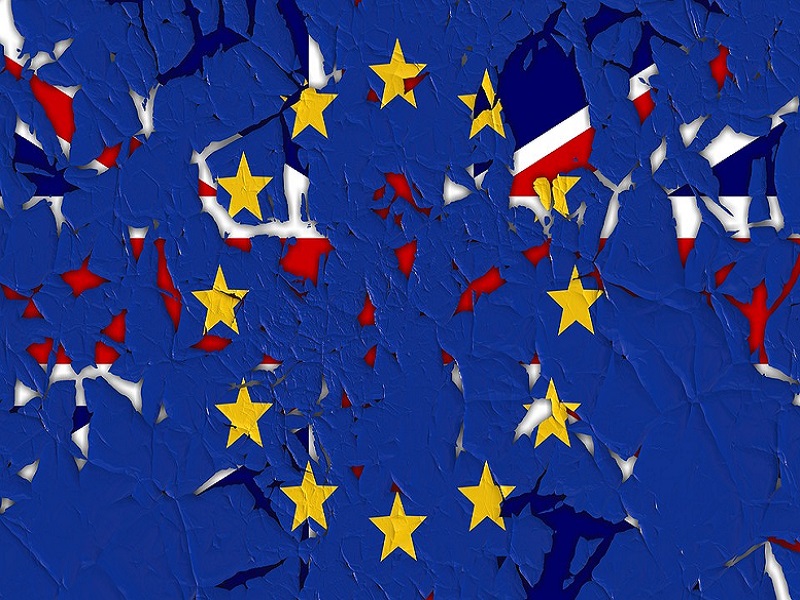
Europe and the people: After Brexit: Can we build a new democratic foundation for UK-EU relations? panel video

Article by Foreign Policy Centre

October 26, 2016

Europe and the people: After Brexit: Can we build a new democratic foundation for UK-EU relations? panel video

From the FPC’s Europe and the people: Examining the EU’s democratic legitimacy London Conference on October 26th 2016 the After Brexit: Can we build a new democratic foundation for UK-EU relations? panel comprising: Rt Hon Dominic Grieve QC MP, Emma Reynolds MP, Douglas Carswell MP, Professor Vernon Bogdanor (Kings College) and Stephen Booth (Open Europe),with Marie Le Conte (Buzzfeed) chairing is available to watch:

Topics
Footnotes
    Related Articles

    US Elections 2016: Russia’s Preferred Choice

    Article by Samuel Rogers

    September 13, 2016

    US Elections 2016: Russia’s Preferred Choice

    The Democrat nominee Hilary Clinton has been seen to personally insult President Putin on occasions. For example, comparing him to Hitler over Russia’s 2014 annexation of Crimea resulted in reciprocated derogatory comments from Putin. Whilst this is unlikely to seriously harm bilateral relations, a Clinton Presidency would benefit from a reversal in such rhetoric if US-Russia relations are to improve. Putin and Clinton would likely retreat from using personal insults should she be elected to the White House, though with a string of personal insults on record, Russia would initially find this hard to work with and this may hinder initial policy progress.

    However, a Clinton Presidency also creates opportunities for Russia to work with. For example, Clinton is considerably experienced in politics, particularly in foreign affairs following her tenure as Secretary of State. This is underscored by her knowledge of engaging positively with Russia; the 2009 ‘reset’ being a case in point. Personal networks within the upper echelons of the Kremlin will be a strong point from which to start for a Clinton Presidency and Russia will benefit from the experience that her team will bring, in terms of understanding international positions and the ability to create mutually beneficial deals i.e. when Russia allowed transit of US weapons and personnel across Russian territory, ratified in 2011.

    Significantly,<http://rbth.com/defence/2016/04/13/why-has-russian-defense-spending-fallen_584397 Russia has usurped by Saudi Arabia as the world’s third largest investor in defence>. Russia’s <https://themoscowtimes.com/articles/russias-military-budget-ranks-fourth-worldwide-report-52390 defence budget for 2015 was $66.4bn> though figures for 2016 suggest this has <http://money.cnn.com/2016/03/31/news/saudi-arabia-russia-military-spending/ dropped to $49.1bn>. As a rational actor, however, Russia will want to create and maintain a consistent upward trend in defence spending should Clinton be elected due to her continued history of criticism regarding Russian foreign policy. This is further underscored by Russia’s <https://www.stratfor.com/analysis/russia-defense-cuts-were-inevitable medium term strategic aims in Syria and Ukraine> – though cost pressures point to a weakened position for Russia in terms of bargaining in these conflicts. Positively, too, working with Clinton on issues such as nuclear non-proliferation has the potential to assist in mutual trust and would allow Russia to see itself as an equal partner in international affairs, along with the US, which is a longstanding aim of Putin’s. In general, Clinton <https://www.youtube.com/watch?v=cS5Yz88mvhc “does not have much time for Russia”>, though as President, she would be likely willing to work with Russia on the key contemporary geopolitical issues, namely the Syrian conflict, European security and combatting ISIS.

    Conversely, a Trump Presidency would harbour little political experience from the new President himself. This is underscored by the contradiction between his positive rhetoric on Russia and the Republican Party’s longstanding anti-Russian position. Engaging with a politically-untested US President is an unprecedented situation, which not only Russia but the whole world will need to adapt to. Trump’s pro-Russian rhetoric on the campaign trail may not stand up to scrutiny when in the Oval Office, however. Once elected, Trump would likely be restricted in implementing certain promises made during his election campaign, not least because they have often been at odds with the established status quo on US-Russia relations. However, recent reversals in senior Republican rhetoric have been unexpected and will likely be beneficial to the architects of Russian foreign policy. For example, Newt Gingrich said “<http://www.cbsnews.com/news/newt-gingrich-trump-would-reconsider-his-obligation-to-nato/ I’m not sure I would risk a nuclear war over some place, which is the suburbs of St. Petersburg>”, which was in reference to Trump’s statements that the Baltic states would need to “<https://www.ft.com/content/4bf335c6-5005-11e6-8172-e39ecd3b86fc fulfil their obligations to us>” in return for US guarantees on NATO involvement in the unlikely eventuality of a Russian military invasion. Russian foreign policy would be heavily influenced by such reneging in terms of institutional commitments – specifically regarding NATO’s <https://www.ft.com/content/d6b35740-4f01-11e6-8172-e39ecd3b86fc commitment to all members> – giving the Kremlin increased flexibility in regard to activities in countries of close proximity, particularly Ukraine.

    Rather than producing a line of personal insults to Putin, as Clinton has, Trump has consistently praised the Russian President. Rhetoric is easy to produce and it is important to consider, however, that these complements shield the lack of political experience Trump has and perhaps more importantly for the candidate himself, the lack of business experience in Russia, reflecting his “<https://www.washingtonpost.com/news/wonk/wp/2016/08/07/what-is-hillary-clinton-trying-to-say-with-this-ad-about-donald-trump-and-putin/ abysmal lack of connections to influential Russians>”. Further, Trump has tweeted, he has “<https://twitter.com/realdonaldtrump/status/758071952498159616 zero investments in Russia>”. This lacuna in relations with Russian business and political elites is both potentially advantageous to Russia in the sense that there is open ground on which to generate new policies and business deals beneficial to the Kremlin, though simultaneously this reality has pitfalls. That is to say, inexperience on these matters has the potential to create misunderstandings and more broadly negatively affect Russian foreign policy, especially through inexperienced policy implementations on part of the US. It is important to note, however, that <https://www.theguardian.com/us-news/2016/jul/30/donald-trump-paul-manafort-ukraine-russia-putin-ties the true nature of Trump’s investments in Russia and Russian investments within the Trump business empire> remain opaque.

    There are strong reasons, however, for Russia to desire a Trump Presidency. First of all, Trump has argued against continued membership of the institutions, which represent the post-Second World War liberal peace, most noticeably NATO and the WTO. Trump’s comments on the fulfilment of Article V, in regard to protecting other member states – in this case, the Baltics – have significant ramifications for the security situation in Eastern Europe. While it is unlikely that Russia will invade these states, the possibility of the US not coming to their aid in response to external threats should their obligations to the US not be met, has shaken the organisation and would have widespread repercussions for other NATO members, too.

    More broadly, a Trump Presidency would see a break with over sixteen years of broken efforts in terms of securing and maintaining strong US-Russian relations. These include Russia’s aim to reintegrate with the West, particularly after 9/11; the vetoing of the Iraq War; NATO enlargements; Putin’s 2007 Munich Speech; the lack of cooperation following the 2009 ‘reset’; plans to locate missiles in Czech Republic and Poland; and sanctions since 2014. These challenges have represented the volatile nature of US-Russia relations since Putin was first elected in 2000. The Kremlin will see Trump’s anti-establishment rhetoric as refreshing with the potential to create a genuine ‘reset’ in relations, with Russia’s position in terms of bargaining power, considerably leveraged. More profoundly though, a Trump Presidency would give Russia more confidence to act within its near-abroad i.e. Ukraine. Whilst the Baltic states are not the primary concern of Russian foreign policy, maintaining influence in Ukraine is, and can be seen through a series of events since the Orange Revolution in 2004.

    Overall, Russia will have contingency plans for either outcome. While the election result is too hard to call with opinion polls showing potential victory for either candidate, it is nonetheless essential for Russia to be able to move forward in bilateral relations with the US. Russia has broken with the post Cold War peace order but a return to continuous candid relations is not beyond reach. There are challenges that are significant for both countries to consider and where cooperation can be achieved. For example, the Syrian Civil War; efforts to combat ISIS; and most recently maintaining stability in Turkey – that is to say, from the US perspective, maintaining Turkey’s international commitments i.e. to NATO and from a Russia perspective, solidifying the volatile nature of bilateral relations since 2015 and mutually utilising Turkey as a key player in fighting ISIS and the wider Syrian conflict. Less pressing issues where cooperation can be made include further downsizing of respective nuclear arsenals and visa-free programmes, which remain longer-term issues.

    In 2013, RT – a Russian state-run television outlet – published <https://www.rt.com/usa/complete-emails-guccifer-clinton-554/ emails between Clinton and former advisor Sidney Blumenthal>, which eventually resulted in a political scandal during the US Presidential elections. This has been recently compounded as <http://www.nytimes.com/2016/07/27/us/politics/assange-timed-wikileaks-release-of-democratic-emails-to-harm-hillary-clinton.html?_r=0 further emails were acquisitioned on the eve of the Democrat Convention in July 2016>, leading to accusing rhetoric against Russia, citing Putin’s desire to compromise Clinton resulting in a Trump Presidency. Soon after these leaks, Trump’s Presidential Campaign Chairman, Paul Manafort resigned following the discovery of handwritten ledgers from former Ukrainian President, Viktor Yanukovych, <http://www.nytimes.com/2016/08/15/us/politics/paul-manafort-ukraine-donald-trump.html totalling $12.7mn, stressed as illegal by Ukraine’s National Anti-Corruption Bureau>. It is uncertain how the documents were discovered but the timing is significant, and ultimately damaging for the Trump campaign.

    As the election nears, it appears that Russia is laying its cards on the table as to whom it considers its preferred choice for President. For the first time, there is a lack of bipartisanship towards Russia from within the two main US political parties. This is what makes the 2016 election unique from a Russian perspective.

    September 2016

    Samuel Rogers is a PhD Candidate at the University of Bristol and was recently a visiting fellow at the Harriman Institute at Colombia University. He will be joining a panel discussion with General Richard Shirreff at the Bristol Festival of Ideas entitled <http://www.ideasfestival.co.uk/events/richard-shirreff/ 2017: War with Russia?> taking place on Monday October 24th 2016 from 6.30-pm-8.00pm.

    Footnotes
      Related Articles

      Summary note 5- Investing in women’s economic resilience & social wellbeing

      Article by Foreign Policy Centre

      September 5, 2016

      Download PDF
      Summary note 5- Investing in women’s economic resilience & social wellbeing

      How does private sector development support structural transformation and enhance sustainable development outcomes? This might range from wealth and investment creation to employment-led growth. Private sector development might also drive innovation and technological development to building essential infrastructure. Furthermore, business and enterprise can also support entrepreneurship, help improve the quality of work and provide much needed increases in labour productivity.

      How can sustainable business support, strengthen and champion its impact on women’s resilience and wellbeing? In addition, how might governments, in partnership with civil society, provide support to facilitate and influence the development impact of business on women? By examining the transformative effect of business on women’s lives, livelihoods and wellbeing, the event series aims to explore a number of key themes including:

      • Female entrepreneurship, employment and agricultural development: Promoting food and nutritional security by improving support to women producers.
      • Bridging the gap between science, technology and innovation for development transformation in Africa: Tackling development dilemmas in agriculture (e.g. food and livestock security) and the environment (e.g. biodiversity and forestry). What works, what doesn’t and how can success be appropriately scaled-up and replicated?
      • Women and environmental resource management: Adapting to a changing environment and balancing conservation and consumption in an age of scarcity and uncertainty.

      The event series is scheduled to take place 2014-16. Following the roundtable discussion series, the FPC will produce a report (to be launched in 2016/17) which will build on the discussions and insights exchanged during the course of the event series. The report will capture the salient issues discussed and key findings identified. This event forms part of a wider Foreign Policy Centre series entitled: Africa Rising? Building Africa’s Productive Capacity for Inclusive Growth. Additional project supporters include Barclays and CDC Group.

      Topics
      Footnotes
        Related Articles

        Chinese Expansion in Central Asia: Problems and Perspectives

        Article by Dr Catherine Owen

        July 14, 2016

        Chinese Expansion in Central Asia: Problems and Perspectives

        This short article summarises research into Chinese activity in the region, conducted on the ESRC-funded grant, ‘Rising Powers and Conflict Management in Central Asia’ led by John Heathershaw at the University of Exeter. The research team conducted approximately 50 interviews with cultural and political elites in Kyrgyzstan and Tajikistan between 2013 and 2015. Specifically, we wanted to find out how Chinese economic incursions into Central Asia are perceived locally and the extent to which they are countered or embraced. After summarising China’s interests and activities in the Central Asian region, the article highlights both physical and discursive attempts by locals to undermine Chinese activity. It suggests that although nascent Chinese soft power initiatives have had some positive effects, on-going improvements to relations could be threatened by the economic downturn in China.

        The Logic behind Chinese Interests in Central Asia
        Although Chinese government rhetoric is unreservedly effusive about the growing cooperation with the region, two caveats are worth mentioning. First, Central Asia occupies a significantly lower status in Chinese foreign policy-making than other strategic areas such as the ASEAN and the South China Sea. Secondly, Chinese scholars and officials are aware that Central Asia forms part of Russia’s area of special interest and that Russia is deeply mistrustful of Chinese activities in the region. Yet although its footprint is softer in Central Asia than elsewhere in the world, China has three very concrete reasons behind its interest in the region.

        The first reason concerns energy security. China is the world’s largest energy consumer but only has 1% of global reserves. According to the US Department of Defense, China has invested in the energy-related projects in over 50 countries. However, China has become dependent on politically unstable countries in the Middle East and Africa, which in 2014 supplied over half of its crude oil imports. Central Asia represents a more stable and more convenient source of energy for China’s mushrooming domestic markets.

        Secondly, China’s interest in Central Asia stems from its desire to ensure stability in its restive Xinjiang Uyghur Autonomous Region, which borders Kazakhstan, Kyrgyzstan and Tajikistan. The region is plagued by ethnic tensions between the Uyghur Muslim and Han Chinese populations, and is home to a number of Uyghur independence movements. According to China’s development logic, economic investment improves security by rendering separatist call less attractive. As such, the Central Chinese government has promised to invest nearly $25 billion in infrastructural projects in the troubled region in 2016.

        Thirdly, China’s expansion into Central Asia takes on a new significance as a means to sidestep US containment policies in the South China Sea. Russia has expressed support for China’s stance vis-à-vis the US on this issue, and the joint desire to see a reduction of American influence in the Far East may facilitate greater collaboration in Central Asia. With the Chinese media of the view that tensions between the US and China are likely to increase in the short-term, the Central Asian region, now free from US influence since 2014, appears a relative playground.

        China’s Central Asian Projects
        China’s flagship project in Central Asia is the Silk Road Economic Belt (SREB), that is, the land-based component of its One Belt One Road (OBOR) initiative (the other component being the Maritime Silk Road). Conceived in 2013, the SREB is an ambitious project to connect East Asian and European markets via Central Asia, increasing trade and connectivity, with Xinjiang seen as its core region. Currently, Chinese products are shipped 26,000 miles through the Suez Canal to Europe, a journey that takes up to 45 days. The SREB aims to reduce that journey time to less than two weeks and cut the mileage to 6,500. The SREB will be financed by the newly-created intergovernmental Asian Infrastructure Investment Bank (AIIB) and by the Chinese venture, the Silk Road Fund.

        There are too many individual China-funded infrastructural and energy projects already underway in Central Asia to list here. However, notable projects include the development of the Galkynysh oilfields in Turkmenistan; the Central Asia-China gas pipeline that runs from Turkmenistan through Uzbekistan and Kazakhstan to Xinjiang; the Datka-Kemin electricity power line in Kyrgyzstan that allows the country energy independence from Uzbekistan; and the Khorgos Gateway on the China-Kazakh border, a key logistical hub for the SREB. This is in addition to the development of oil refineries in Kazakhstan, Kyrgyzstan and Tajikistan, and the construction of a plethora of roads across the region. In the year to May 2015, total trade between China and the five Central Asian states totalled $41.7 billion. Central Asians have thus witnessed an enormous increase in the number of Chinese companies, workers and settlers in the region, with Chinese restaurants and cafes and springing up near construction sites, and other small businesses opening in the towns.

        Local Reactions to Chinese Expansion
        Although local Central Asians generally saw the financial aspect of Chinese presence as a positive thing, many struggle with a deep-rooted fear of their large neighbour, instilled from infancy. One Bishkek resident explained, ‘In my childhood, if we didn’t eat the food that our grandmother prepared, she would scare us by saying that the Chinese will come.’ This Sinophobia manifests itself in Central Asia both physically and discursively.

        Firstly, unfortunately, as Chinese presence increases, so do incidences of violence. Local media outlets have noted a wave of criminal attacks on Chinese businesses, often targeted by gangs demanding protection money. High profile cases include the 2013 murder of the owner of Bishkek-based Chinese optician for refusing to pay extortion fees and the 2014 deportation of a group of Chinese workers from Kyrgyzstan for rioting over a pay dispute. Ethnic violence has also periodically broken out, both in terms of larger-scale conflicts and attacks on individuals, in particular near Chinese construction projects. In April this year, protests erupted across Kazakhstan over land reforms allowing foreigners to rent Kazakh land for up to 25 years. Protestors cited fears that Chinese investors will purchase the land and never leave.

        Secondly, conspiracy theories of Chinese intentions in Central Asia abound both online and in face-to-face discussions, and mostly consist of variations on the idea that China wants to ‘take over’ in Central Asia. For instance, the development assistance given by China in the south of Kyrgyzstan, such as hospitals and televisions, are ‘all part of a plot to exploit some piece of land in Osh that the Chinese know about and that others do not’. There is a perception that a lot of outward migration from China is occurring, both through promotion by the Chinese government and illegal border crossings. Many locals fear that immigration to the region is ‘out of control’, and that Chinese men arrive in Central Asia with the aim of marrying local women to thereby ‘dilute’ the region. Some believe that Kyrgyzstan will eventually become the PRC’s most westerly province. Others suggest that Russia and China are planning to take over the region together, which Russia providing the security and China the finance.

        Despite these problems, there is room for optimism regarding everyday relations between Chinese and Central Asians living in the region. For instance, local Chinese soft power initiatives are generally well received: the Kyrgyz language Chinese television channel is highly regarded and the Confucius Institutes are seen to provide exciting opportunities for students to obtain internships and travel abroad. The Chinese language is becoming an increasingly popular subject for study at university, and growing numbers of Central Asian young people are travelling to China on exchange or language programmes. Students invariably return with positive stories of their time in China, often surprised at the level of development in the country. This suggests that longer term investment by China in education and cultural exchange could reduce the fear and ignorance of China in the region.

        However, perhaps the most important question for local China-Central Asian relations concerns the nascent economic downturn in China. Although, Chinese construction companies will benefit from new building opportunities and, once completed, the SREB will substantially reduce transit costs for Chinese goods, the initiative requires a vast amount of capital injection to get the project off the ground: indeed, the China Development Bank recently revealed plans to invest $900 billion in a slew of projects connected to OBOR. However, Chinese premier Xi Jinping has indicated that he wants to check debt-fuelled growth. It is argued that a multi-trillion dollar bailout is required in order for the Chinese economy to stay afloat. And given that the South China Sea dispute takes clear precedency, in the event of a crisis, SREB funding will be the first to be cut. Will the ambitious vision for the region reach completion and enter operation, or will Central Asia begin to resemble the outskirts of a Chinese city: mile after mile of empty high rises and abandoned construction projects. If the latter turns out to be true, the level of discontent among Central Asians will, quite reasonably, be look set to rise.

        July 2016

        Footnotes
          Related Articles

          Summary note 4- Investing in women’s economic resilience & social wellbeing

          Article by Foreign Policy Centre

          June 14, 2016

          Download PDF
          Summary note 4- Investing in women’s economic resilience & social wellbeing

          How does private sector development support structural transformation and enhance sustainable development outcomes? This might range from wealth and investment creation to employment-led growth. Private sector development might also drive innovation and technological development to building essential infrastructure. Furthermore, business and enterprise can also support entrepreneurship, help improve the quality of work and provide much needed increases in labour productivity.

          How can sustainable business support, strengthen and champion its impact on women’s resilience and wellbeing? In addition, how might governments, in partnership with civil society, provide support to facilitate and influence the development impact of business on women? By examining the transformative effect of business on women’s lives, livelihoods and wellbeing, the event series aims to explore a number of key themes including:

          • Female entrepreneurship, employment and agricultural development: Promoting food and nutritional security by improving support to women producers.

          • Bridging the gap between science, technology and innovation for development transformation in Africa: Tackling development dilemmas in agriculture (e.g. food and livestock security) and the environment (e.g. biodiversity and forestry). What works, what doesn’t and how can success be appropriately scaled-up and replicated?

          • Women and environmental resource management: Adapting to a changing environment and balancing conservation and consumption in an age of scarcity and uncertainty.

          The event series is scheduled to take place 2014-16. Following the roundtable discussion series, the FPC will produce a report (to be launched in 2016/17) which will build on the discussions and insights exchanged during the course of the event series. The report will capture the salient issues discussed and key findings identified. This event forms part of a wider Foreign Policy Centre series entitled: Africa Rising? Building Africa’s Productive Capacity for Inclusive Growth. Additional project supporters include Barclays and CDC Group.

          Footnotes
            Related Articles

            FPC Briefing: Da’ish, the Ikhwan and Lessons from History

            Article by Grant Helm and Dr Simon Mabon

            June 9, 2016

            Download PDF
            FPC Briefing: Da’ish, the Ikhwan and Lessons from History

            This FPC Briefing from Dr Simon Mabon and Grant Helm explores the historical antecedents of Da’ish and their complicated relationship with the rulers of Saudi Arabia.

            Footnotes
              Related Articles

              FPC Briefing: Saudi Arabia – US Relations and the Failure of Riyadh’s Securitization Project

              Article by Prof Simon Mabon

              May 30, 2016

              Download PDF
              FPC Briefing: Saudi Arabia – US Relations and the Failure of Riyadh’s Securitization Project

              Following the signing of the nuclear deal between the P5+1 and Iran in late 2015, relations between Saudi Arabia and the United States have become increasingly fractious. Since then, with questions about the release of a number of classified pages of the 9/11 commission report, along with increasing concerns at the kingdom’s human rights record, the relationship between Riyadh and Washington is at the lowest point in decades. This briefing by Dr Simon Mabon offers an explanation for the deterioration of the relationship between the two.

              Topics
              Footnotes
                Related Articles

                Sharing Worst Practice Executive Summary

                Article by Adam Hug

                May 24, 2016

                Sharing Worst Practice Executive Summary

                The findings of Sharing worst practice: How countries and institutions in the former Soviet Union help create legal tools of repression highlight the clear similarities in the types of repressive practices being undertaken by countries across the former Soviet Union. First and foremost this is a function of the nature of their domestic political systems, whether they be authoritarian, semi-authoritarian or troubled democracies, they all feature ruling elites keen to maintain their position of political dominance. Shared concerns, from popular protest and current economic weakness to the age of the regime leaders are at the heart of encouraging similar legislation and forms of repression across the region. The expert contributors to the publication agree that the current situation in the region combines a mix of different influences: Russian and other neighbouring countries’ encouragement to draft repressive legislation (either through bilateral diplomacy or supported by regional instructions), the autonomous emulation of worst practice (building on both regional and global trends) or self-generated bad practice (building on their Soviet legacy and current authoritarian systems). The balance of this mix differs in each country in the region depending on local circumstances and their strategic outlook.


                Russia is not the author of all the repressive legislation in the region but it has significant direct influence and helps shape and promote an emerging conservative regional values agenda, alongside what David Lewis describes as the ‘Moscow Consensus’ of a strong commitment to state sovereignty that is attractive to repressive regimes. Russia’s approach mimics Western structures and techniques but combines them with anti-Western discourse, deep media manipulation, management of civil society and a fusion of the political and economic elite, often through the families of the President or senior ministers. Russia promotes these ideas effectively through its significant regional Russian media penetration and through proxy groups, from NGOs to the Orthodox Church, promoting a conservative, traditional values-agenda that it argues is more in keeping with the history and culture of the region, than Western alternatives.


                Though there may be some encouragement for repressive action through regional institutions and bilateral diplomacy, regimes in the region will seek ideas for legislation and practice that help sustain their political and structural control, templates of which are willingly provided by Russia and other countries in the region. For example, Uzbekistan and Turkmenistan need no direction from Russia or indeed China to clamp down on dissent but remain open to new methods of how to do so. For the most part regional institutions act to reinforce the status quo, promoting authoritarian cultural norms rather than developing rules-based systems, echoing their domestic political environments where informal power structures have influence far in excess of codified law and formal procedures. Such structures reinforce and expand the primacy of national sovereignty narratives and frame challenges to a regime as a threat to sovereignty and independence of the country.


                So while there is some ‘sharing of worst practice’ amongst the countries of the former Soviet Union, for the most part it is authoritarian and semi-authoritarian regimes informally collaborating and perhaps more importantly learning from each other about methods that can help them consolidate their own power, that are primarily driving the spate of similar looking repressive legislation and practice that spreading across the region.

                Footnotes
                  Related Articles

                  Introduction: Sharing worst practice in the former Soviet Union

                  Article by Adam Hug

                  Introduction: Sharing worst practice in the former Soviet Union

                  Sharing worst practice: How countries and institutions in the former Soviet Union help create legal tools of repression examines the extent to which governments across the former Soviet Union (FSU) collaborate in the development of repressive practices that underpin their rule. It looks at the development of ‘copycat’ legislation and behaviour within the region, examining to what extent this is the result of direct collaboration, independent emulation of such restrictive practices and where such actions are extensions of past poor practice within a particular country.


                  Following the collapse of the Soviet Union, some states made tentative steps to open up their societies in the early 90s, others such as Uzbekistan, Turkmenistan and Kazakhstan never even began down that path.[1] Of those who did initially seek to move away from the Soviet authoritarian model, a number were plunged into civil conflict out of which arose more restrictive forms of Governments (such as in Tajikistan, Azerbaijan, Armenia and Georgia). The 2000s brought what were described as colour revolutions to Georgia (Rose Revolution, 2003), Ukraine (Orange Revolution, 2004/5) and Kyrgyzstan (Tulip Revolution, 2005), bringing to power pro-Western governments in Tbilisi and Kiev. The growing repressive streak in the Georgian government under Saakashvili saw it removed in elections in 2012, while in Ukraine the failings of the Orange Revolution leadership (and of the West) paved the way for the victory in 2010 of their 2004 opponent Viktor Yanukovych and his subsequent ousting in 2014 following the Maidan protests. Put simply, across the region beyond the Baltic states, there has been no consistent progress towards reform in those that have undergone political change, and the recent region-wide trends have been far from positive.


                  After the chaos of the 1990s, the region has seen the rise of a resurgent Russia seeking to restore its regional influence and dominance, the waxing and waning of US influence in Central Asia in response to the war in Afghanistan, and China making rapid economic and tentative political gains particularly in Central Asia, while the EU has been expanding its offer of partial integration, through the development of its neighbourhood policy – the Eastern Partnership. The influence of these external actors is an important part of this publication, examining the extent to which the promotion of the values agenda of these major powers shapes political and legislative agendas in the region.


                  Russia: Role model or ringleader?

                  Russia, once imperial master and dominant Soviet partner for the states of the region, continues to loom large across the human rights landscape. Through its leadership role in regional institutions and its often strong bilateral links, including security service and judicial collaboration, it plays a significant part in the promotion of practices that undermine human rights. Russia’s role as the primary export market and source of remittances from migrant workers for many in the region, combined with its role as security guarantor through the Collective Security Treaty Organisation (CSTO) provides it with considerable in-built leverage. Russian media and websites have significant penetration across the region, promoting Moscow’s news agenda and socially conservative cultural attitudes. Russian soft power is further projected through think-tanks and NGOs in receipt of Russian funding, assisted by local law makers with strong ties to Russia[2] and in a number of countries through the influence of the Russian Orthodox Church. Russia proactively promotes the twin themes of Russkiy Mir (Russian World), a project of linguistic and cultural values projection, and the concept of ‘sovereign democracy’, providing attempts at ideological depth to its support of existing regimes and opposition to Western engagement, in what it sees as its ‘near abroad’ or sphere of influence. This use of soft-power helps set a political tone rather than directs a specific course of action.


                  Russia continues to play the lead role in a range of post-Soviet successor agreements including the CIS, whose Minsk Convention on Legal Assistance and Legal Relations in Civil, Family and Criminal Matters[3] provides a legal framework for cooperation between security services facilitating potential abuses in extradition and other areas[4] and the CSTO. These regional bodies, as with the SCO discussed below, for the most part do not seek to bind or determine the activities of member states. However, at a political level they provide a forum for sharing and entrenching shared approaches to issues of security, governance and human rights, while at a technical and practitioner level, meetings held under the auspices of these groups provide opportunities for bureaucrats and security officials to meet and exchange ideas. These bodies seek to influence rather than direct, and for the most part they entrench and strengthen existing behaviours by the regimes of the region.


                  The Eurasian Economic Union (EEU) is rapidly emerging as Russia’s preferred mechanism for promoting regional integration under its terms. It is a project with considerable Russian political momentum and a more ambitious scope perhaps than previous agreements. While nominally economic in character, the greater the potential integration in one area, the greater the scope for informal influence and pressure in other areas. For example, Russia is believed to be putting pressure on Armenia and Kyrgyzstan to implement restrictions on internet freedom in line with Russian practice.


                  While Soviet nostalgia may persist, as Eka Iakobishvili notes a desire for the certainties of such rule remains notable amongst older generations particularly in Central Asia, this does not translate into a meaningful desire to subsume their newly regained (or created) national identities entirely into a Russian-led regional project. The regimes of the region for the most part value their independence, if not for anything else than for their ability to independently generate rents from local control without direct Russian competition. It has been notable however, that non-Russian EEU members have recently been trying to revive diplomatic ties with the EU and US to try to counter-balance Russian influence and maintain their independence and strategic room for manoeuvre. Kazakhstan, perhaps the second most powerful state within the EEU, is particularly wary of attempts to impinge on its international freedom of action and, with a sizable Russian minority and internal concerns over Russian media penetration for example, it has reasons to be watchful.[5] It is perhaps unsurprising that December 2015 saw Kazakhstan agree an Enhanced Partnership and Cooperation Agreement with the EU.[6] It is not alone, Armenia has revived its talks with the EU over visas and other cooperation, Kyrgyzstan has amended or withdrawn Russian inspired legislation and even Belarus has sought to defy Moscow on sanctions against Ukraine (as the others have), attempted to play peacemaker (hosting the Minsk Agreements) and negotiating the end of most EU sanctions following dialogue and political prisoner releases.[7]


                  While this publication examines a broad range of themes, two notable trends have been seen across the region in recent years: increasing pressure on NGOs and particular restrictions on LGBTI rights activists. While in both cases these issues are building on pre-existing political and cultural norms, they are both in part taking inspiration from recent Russian legislative developments.


                  NGO legislation

                  The rash of new anti-NGO legislation may have gained its momentum from the regional regimes’ responses to the events of the Arab Spring, the 2012 Russian Presidential Elections and the Maidan protests in Ukraine. However, new legislative efforts re-building on a firm bedrock of restrictive practices against NGOs across the region going back to the Soviet period, in a number of cases strengthened in the mid-2000s following the series of ‘colour’ revolutions in Georgia, Ukraine and Kyrgyzstan. Informal bureaucratic barriers to NGO registration and management have existed for a considerably longer, with regime critical groups often waiting months or years for basic bureaucratic tasks to be completed by government officials. However, whereas previously in several countries NGOs that were being informally blocked from official registration could operate on an unregistered basis, not receiving taxation or other benefits of registered status but operating legally, recent legislation as explored by Kate Levine, has sought to close down this work-around, requiring the registration of all significant payments irrespective of official status.


                  The use, or attempted use, of the Soviet-era term ‘foreign agent’ as part of civil society restriction attempts has its genesis in Russia, whose 2012 legislation, as examined in a number of the contributions contained herein, set down a firm marker against civil society groups receiving foreign funding. [8] The framing of human rights NGOs as political tools of Western powers seeking to undermine the independence of sovereign states is neither new nor restricted to this region, though both the Soviet legacy and Russian-promoted narratives bolster the influence of such thinking. As David Lewis points out, the extended essay by Azerbaijani Presidential Administration chief Ramiz Mehdiyev attacking Western, most notably US, NGOs as a threat to national sovereignty in 2014 is illustrative.[9] Mehdiyev is a Russia sympathetic voice within the Azerbaijani elite, but part of an administration seeking balanced relations with both Moscow and the West which jealously guards its own independence and control, a veteran of the Soviet-era practice but with new reasons to fear the influence of independent civil society groups undermining the regime.


                  Across the region a mixture of relative societal poverty, the link between the wealth of individuals and proximity to the regime and the often extreme pressure preventing potential donors or sponsors from working with regime-critical NGOs provides a formidably tough environment for NGOs to find alternative sources of local funding. Developing methods of blocking or restricting foreign funding and unregistered NGOs makes it very difficult for them to survive financially and may place activists in ambiguous legal positions as they search for alternative routes to funding, putting them at risk of prosecution.


                  LGBTI rights

                  Across the region there have been attempts to promote legislation restricting the ability of LGBTI activists, or indeed ordinary citizens, to discuss issues related to homosexuality, framing it in terms of the protection of children.[10] As Melissa Hooper explains, the Russian Federal law ‘for the Purpose of Protecting Children from Information Advocating for a Denial of Traditional Family Values’ adopted in 2013, followed years of local efforts at similar regulations and forms the template for similar, so far failed or pending, legislative attempts in Armenia, Moldova, Belarus, Ukraine and Kazakhstan.[11] Not only would such legislation significantly restrict public education, it is designed to prevent discussion of LGBTI issues in wider society because all freely available media and public platforms could potentially be accessed by minors.


                  While homosexuality was in legalised in a number of states during the 1990s and early 2000s, this was often in part as a result of preparations for (or conditions of) membership of the Council of Europe, or other international pressure, rather than a deep-rooted domestic desire for reform. Male homosexuality remains illegal in long-standing pariah countries Turkmenistan and Uzbekistan. Culturally conservative and homophobic attitudes are an ingrained part of the social fabric across much of the region, providing fertile ground for socially conservative values promotion. For example, in a 2011 Caucasus Barometer survey, 96% of Armenians, 87% of Georgians and 84% of Azerbaijanis stated that ‘homosexuality can never be justified’, with little to no variation by age group.[12] LGBTI matters provide a perfect cultural ‘wedge’ issue for Russian television and other institutions, contrasting ‘traditional’ Russia with a decadent West. While basic anti-discrimination legislation has been part of EU requirements for visa liberalisation, Russian-led propaganda has promoted the idea that Eastern Partnership Countries would be required to adopt same-sex marriage, despite equal marriage being legal in only 11 EU member states. Recent attempts to crack down on LGBTI rights and groups represents both sharing and already shared worst practice.


                  Western worst practice

                  It is not only the countries of the region that are complicit in the development and spread of bad ideas and behaviour. The first publication in the FPC Exporting Repression series, Institutionally Blind: International organisations and human rights abuses in the former Soviet Union, addressed some of the ways in which Western politicians and institutions collude in downplaying human rights abuses in FSU.[13] It also looked at the ways in which Western indifference or opposition to international human rights institutions, such as the long-running British debate over its continued membership of the European Convention on Human Rights, helps influence narratives rejecting restrictions on ‘sovereignty’.[14] Similarly, some of the increasingly sophisticated public relations and communications strategies deployed by regimes in the region are often learnt from or organised in the West, the subject of an upcoming publication in the series entitled The Information Battle. In this publication, Melissa Hooper explores the role played by the US-based religious right in the promotion of Russian initiatives restricting LGBTI rights in the region. However, it is worth noting in addition that, in the security sphere Western actors, most notably the US, played a direct and significant part in sharing worst practice in the period after 9/11.


                  In his 2014 book Great Games, Local Rules, Alexander Cooley documents how Uzbekistan was used in the mid-2000s as a hub for the interrogation and, in all likelihood, torture of terrorist suspects in the custody of the CIA and other US intelligence agencies.[15] Detainees suspected of involvement in terrorism may also have been rendered to Turkmenistan, Azerbaijan and other states. That US intelligence agencies were willing to flout the principle of non-refoulement in the mid-2000s does make it significantly harder for Western voices, even those in no way involved in the practice, to be taken as sincere by governments in the region when challenging cases of detainee transfer and the kidnapping of activists back to countries suspected of torture, or indeed the practice of torture itself.[16]


                  The Shanghai Cooperation Organization and state security

                  As Western influence on the security landscape fades in the wake of the withdrawal from Afghanistan, China’s role continues to develop. In his contribution to this collection, Thomas Ambrosio points out that the Shanghai Cooperation Organization (SCO) provides a mechanism for encouraging cooperation between the two authoritarian big-beasts, Russia and China, concerning influence in Central Asia, where China’s rapidly growing economic involvement has the potential to create competition with Russia. However, both the major powers share a similar approach to tackling threats to their political control, whether that be from peaceful opposition or extremist violence, often seeking to elide the two concepts. As a number of authors explain in this publication, security legislation is often used to pressure NGOs and activists, particularly those representing minority groups or pious (but non-violent) religious communities. The national security and stability rationale is also used to underpin the restrictions on NGO funding from the West, particularly in the wake of events in Ukraine as the Russian government’s argument is that these events were driven by NGOs funded by Western security services, as noted by Levine and others.


                  The structural approach to law of the SCO embeds the primacy of national sovereignty over internal rules and norms. As Cooley noted, while the US in the Bush era sought ways to circumvent international law when dealing with prisoners of war from non-state actors (‘enemy combatants’) and other prisoners in the ‘War on Terror’, China and Russia through the SCO have sought to override such obligations by formally placing state (and regime) security concerns above any formal rights requirements through regional treaties that aim to override UN and other obligations.


                  Ambrosio examines the impact of the organisation’s agreements, such as the Convention on the ‘three evils’ of terrorism, separatism and extremism on the regional order and the role of its Regional Anti-Terrorism Structure (RATS) that works under considerable secrecy to coordinate and strengthen national security services.[17] The SCO structures are light on bureaucratic depth and, as a regional organisation designed to help resist efforts to undermine national sovereignty/hold regimes accountable for breaches of human rights best practice, the level of sovereignty pooling is limited to non-existent. This ‘national first’ approach is evident, for example in their approach to online freedom. At the 2014 SCO Summit in Danshube its members strengthened their approach to restricting online access with the declaration stating that internet governance should be based on the principle of respect ‘for national sovereignty and non-interference in the internal affairs of other countries. ’[18] The stated aim would be ‘preventing the use of information and communications technologies which intend to undermine the political, economic and public safety and stability of the Member States, as well as the universal moral foundations of social life, in order to stop the promotion of the ideas of terrorism, extremism, separatism, radicalism, fascism and chauvinism by the use of the Internet’. To do this they would ‘support the development of universal rules’, only of course if such rules enshrined the right of states to police internet access as they wish, for their own benefit.


                  This publication brings together a range of different international experts to assess the different areas of authoritarian collaboration and learning that help to shape repressive behaviours in the region.

                  What our authors say

                  David Lewis argues that across the former Soviet Union, a new type of authoritarianism has become the default political system. From Azerbaijan to Tajikistan, political development in most post-Soviet states reflects a ‘Moscow Consensus’, a set of ideas and principles that underpin a particular regional form of authoritarianism. Although these regimes mimic liberal ideas such as civil society and democratic elections, in practice they are highly concentrated authoritarian systems, centred on a single leader. ‘Political technologists’ construct narratives to legitimise the system, while intelligence and security agencies constrain any independent journalism or political activism. Politics and business are fused into a single system of power that ensures control over any independent entrepreneurs and enrichment for a small elite. These states insist on their own sovereignty, but rely on offshore companies to manage personal wealth, and use Interpol and foreign courts to track down opponents in exile. So far, such regimes have been remarkably resilient, partly because democratic initiatives in the region have failed to offer a convincing alternative. But as the economic model of the Moscow Consensus comes under strain, unresolved social and political problems are likely to become an increasing challenge for governments in Eurasia.


                  Eka Iakobishvili discusses how countries and institutions in the former Soviet Union help create legal tools of repression. She uses the example of the ‘NGO law’ to demonstrate how totalitarian regimes in former Soviet countries share worst practices whilst trying to maintain their power. Eka argues that the closer the ties former Soviet countries have maintained with the Russian Federation, the stronger the political influence has been. Moreover, Eka goes beyond the current legal and political discourse to suggest that historical understandings of the shared history of law-making in post-Soviet countries is important when studying the post-Soviet legal culture and the ways in which ‘friendly experience-sharing’ takes place. Though keen for a change from the early stages, the crisis of seeking an identity has haunted these nations with civil unrests, dictatorial regimes and widespread social nihilism fuelled by corruption and disrespect for the rule of law. Russia’s attempts to retain control over the former Soviet states goes hand in hand with the creation of a number of regional bodies aimed at promoting economic growth and maintaining security in the region. This is also combined with a shared interest in curbing civil society and muting the opinions of dissenters as a way of maintaining power. Eka argues that all these together, as well as Russia’s continued support for some of the most fragile countries in Central Asia, aligned with longing for the certainties of Soviet rule, and most importantly, the shared practice of law, make it easy for laws to travel and for worst practices to be shared.


                  Joanna Hoare and Maisy Weicherding write that NGOs in Kazakhstan, Kyrgyzstan and Tajikistan have faced an increasingly hostile environment over the last two years. This is due in part to authorities in these countries adopting tactics borrowed from Russia, namely a combination of concerted efforts to smear and delegitimise NGOs as ‘foreign agents’, legislation designed to control and restrict their activities and sources of funding, and the punitive use of tax and other bureaucratic inspections. That said, to get the full picture as to why civic space in these countries is shrinking, it is important to look beyond Russia’s influence.


                  Melissa Hooper writes that Russia has begun to incorporate a ‘traditional values’ agenda as part of its foreign policy platform. Coinciding with policy developments within Russia, it has pushed other nations to enact laws restricting the rights of LGBT persons, limiting information available to minors about ‘non-traditional relationships’, and protecting the rights of parents over their children.  We see evidence of this pressure on the borders of the EU (Armenia, Moldova, Belarus, Ukraine, Georgia), where governments must decide whether to ally themselves with the values of democracy and individual rights and accept support from the EU, or implement policies that limit LGBT rights and Western influence in the name of protecting the ‘traditional family’. Russian messaging has exacerbated this divide by describing it as a ‘culture war’ between traditional values protected by Russia and the EU’s ‘Gayropa, where foreign policy centers on hedonistic policies that prioritise gay marriage. So far, all of these countries have rejected propaganda laws put forward in late 2012 and 2013, immediately after Russia passed its own law. Some specifically did so in order to obtain funding from the EU. However, opportunities still exist in this region for Russian influence and ‘traditional family values’ to take hold – especially in Georgia and Ukraine where local orthodox churches wield great political power – like the Russian Orthodox Church – and themselves advocate for these policies, and especially where Russian language media holds sway. In Central Asia, especially Kazakhstan and Kyrgyzstan, the combination of a conservative society and a reliance on Russian language media, has led governments to seriously consider propaganda laws and other Russian-style policies. Playing into Russian foreign policy priorities is the historical notion of Russkiy Mir, or the unification of the Russian-speaking world under Russia.  Factors contributing to and supporting Russian leadership in the traditional values sphere are Russia’s control of content in Russian language media and the development of relationships between Russian political conservatives and the Russian Orthodox Church and conservative politicians and religious figures in the West, especially the United States.


                  Kate Levine argues that the ability of civil society organisations to seek, secure and use resources, including foreign funding, is a fundamental component of their right to exist and effectively operate. International human rights bodies have affirmed this right. However, in recent years, there has been an alarming increase in the number of states seeking to use the law to severely limit access to foreign funding for NGOs. Evidence of this trend has been documented globally, as well as in the former Soviet Union. This article focuses on repressive laws designed to restrict access to foreign funding and ultimately stifle the work of independent civil society in Russia and Azerbaijan, and attempts to introduce similar provisions in Ukraine and Kyrgyzstan. The implementation of these laws has made it significantly more difficult for local human rights NGOs to survive, and has required them to divert valuable time and resources away from their core work of protecting human rights. Further, some foreign donors have either been banned from operating locally, or have chosen to withdraw for fear of being found to violate the repressive national legal framework. This article highlights some of the consequences of these laws, the reactions of some of the affected NGOs and international organisations, and considers the possible motives of the states concerned.


                  Katie Morris argues that freedom of expression is in decline in most states of the former Soviet Union, although the extent and focus of repression differs according to country. The Ukraine crisis precipitated a renewed assault on freedom of expression: having already brought traditional media to heel, authoritarian leaders are now focusing on extinguishing the few remaining spaces for free expression – particularly the internet, frequently justifying their actions on the grounds of national security. This essay explores how increasingly restrictive legislative environments and the expansion of digital technologies, particularly surveillance, are being used to censor expression. New restrictions do not just target well known journalists or dissidents, but increasingly ordinary people, often expressing themselves online, creating a chilling effect that encourages self-censorship.


                  Michael Hamilton examines the sharing of bad practices in the legal regulation of the right to freedom of peaceful assembly in ‘hybrid regimes’ in the former Soviet Union. Whilst noting persistent concerns about the excessive use of force by law enforcement officials, and repeated failures to adequately protect assembly participants from violent counter-demonstrators, the essay focuses instead on three recurring characteristics of the legal framework: excessive discretion conferred on regulatory authorities (powers); notification requirements that are tantamount to authorisation requirements (procedures); and the imposition of disproportionate sanctions for relatively minor infractions of the law (penalties). Although there are clearly regional exceptions, the essay argues that there has broadly been a failure to embed the principle of proportionality in the legal framework governing the right to freedom of peaceful assembly (especially in relation to these powers, procedures and penalties). It is suggested that this failure is underpinned by a regulatory mind-set focused primarily on the management and control of assemblies, rather than their facilitation.


                  Thomas Ambrosio writes that the Shanghai Cooperation Organization (SCO) purports to be a broad-based international organisation formally tasked with promoting multilateral cooperation within Central Asia. While it has done this by creating institutional links between its members and ensuring that that the region does not become an arena for geopolitical competition between Russia and China, a deeper look at this organisation illustrates that, at a fundamental level, it is dedicated to preserving the political status quo in Central Asia. This essay examines forty-eight SCO documents and utilises social network analysis to depict the legal framework which has emerged since the SCO’s formation in 2001. It shows that authoritarian practices are deeply embedded in the core of this framework under the guise of combating the so-called ‘Three Evils’ of terrorism, separatism and extremism. Consequently, those factors resisting democratisation at the domestic level are reinforced by a non-democratic regional order.

                  [1] The Baltic states, annexed by the Soviets during the Second World War, provide a clear exception to the rule as their transition into broadly stable democracies and EU member states has been so dramatic as to place them outside the scope of this publication.

                  [2] Not that Russia should be restricted from providing support to organizations in the region, simply that appropriate rules on NGOs should apply to both Western and Russian backed organisations equally. It is worth noting that the recent decision to dramatically water down the restrictive provisions from the Kyrgyz anti-NGO legislation took place after its initial proponents, legislators strong Russian links, were not returned in Parliamentary elections . Anna Lelik, Kyrgyzstan: Sting Removed From Foreign Agents Bill, Eurasianet, April 2016, http://www.eurasianet.org/node/78261

                  [3] See for example, The Convention on Legal Assistance and Legal Relations in Civil, Family and Criminal Matters,  http://nbe.gov.ge/files/documents/MINSKI.pdf

                  [4] As documented in Adam Hug (ed.), Shelter from the storm?, Foreign Policy Centre, April 2014, http://fpc.org.uk/publications/shelter-from-the-storm

                  [5] Joanna Lillis, Journalists Fret as Russian Media Swamps Kazakhstan, November 2014, http://www.eurasianet.org/node/70971

                  [6] Yet to be ratified.

                  [7] For more see Dr Rilka Dragneva and Dr Kataryna Wolczuk, The Eurasian Economic Union – What kind of alternative to the Eastern Partnership, in Adam Hug (ed.), Trouble in the Neighbourhood, Foreign Policy Centre, February 2015,  http://fpc.org.uk/publications/trouble-in-the-neighbourhood

                  [8] Norwegian Helsinki Committee, Russia’s Foreign Agent law: Violating human rights and attacking civil society, June 2014,

                  http://nhc.no/filestore/Publikasjoner/Policy_Paper/NHC_PolicyPaper_6_2014_Russiasforeignagentlaw.pdf

                  [9] Contact.Az, Mehdiyev Accuses US of ‘Color Revolution’, December 2014,

                  http://www.contact.az/docs/2014/Politics/120400098728en.htm#.VMaWXS7QCjG For the full text in Russian visit http://www.1news.az/chronicle/20141203110515850.html

                  [10] There are echoes of the 1998-2003 UK legislation ‘Section 28’ which prohibited local authorities, public bodies  and schools from taking measures that would ‘intentionally promote homosexuality or publish material with the intention of promoting homosexuality’, which though without creating a criminal offense restricted the ability of schools and other organisations debating issues relating to LGBTI issues. The Russian legislation however takes this prohibition to society as a whole rather than just about the use of public money.

                  [11] Human Rights First, Spread of Russian-Style Propaganda Laws, March 2016, http://www.humanrightsfirst.org/resource/spread-russian-style-propaganda-laws EU member state Lithuania is the only state in the wider region to recently pass and maintain such legislation.

                  [12] Caucasus Research Resource Centre, Attitudes towards homosexuality to in the South Caucasus, July 2013, http://crrc-caucasus.blogspot.co.uk/2013/07/attitudes-towards-homosexuality-in.html

                  [13] Adam Hug (ed.), Institutionally blind? International organisations and human rights abuses in the former Soviet Union, Foreign Policy Centre, February 2016, http://fpc.org.uk/publications/institutionallyblind

                  [14] Most recently British Home Secretary Theresa May, a front-runner in the long-race to replace David Cameron as UK Prime Minister, recently called for Britain to leave the convention and the jurisdiction of the European Court of Human Rights.

                  [15] Alexander Cooley, Great Games, Local Rules: The New Great Power Contest in Central Asia, January 2014, Oxford University Press. EU member states including the UK were used for over flight and refueling purposes as part of this programme.

                  [16] As documented in the FPC’s 2014 Shelter from the Storm publication.

                  [17] Richard Weitz, Uzbekistan: A Peek Inside an SCO Anti-Terrorism Center

                  http://www.eurasianet.org/node/65960

                  [18] INCYDER Information Security Discussed at the Dushanbe Summit of the Shanghai Cooperation Organisation NATO Cooperative Cyber Defence Centre of Excellence, October 2014, https://ccdcoe.org/information-security-discussed-dushanbe-summit-shanghai-cooperation-organisation.html

                  Footnotes
                    Related Articles

                    The ‘Moscow Consensus’: Constructing autocracy in post-Soviet Eurasia

                    Article by Dr David Lewis

                    The ‘Moscow Consensus’: Constructing autocracy in post-Soviet Eurasia

                    For the past decade, the annual report from Freedom House on political and civil liberties has made for sombre reading. Every year for the past 12 years it has marked an annual decline in political and civic freedoms in Eastern Europe and Eurasia. In much of the former Soviet Union authoritarianism has become the default political system, informed by a remarkably unified set of ideas about the world, the state, and about politics and society, that resonate among elites in much of the post-Soviet space. This ‘Moscow consensus’ over norms and values poses a significant challenge to liberal ideas and practices across the region.


                    Authoritarian rule has multiple causes, most of them related to domestic politics, and historical and cultural factors. But the international and regional environment probably plays a role. Across the Eurasian region, authoritarian states increasingly band together to resist liberal values and pro-democracy initiatives. Groups such as the Shanghai Cooperation Organisation (SCO) or the Russian-led Collective Security Treaty Organization (CSTO) increasingly resemble what Alex Cooley calls a ‘League of Authoritarian Gentlemen’.[1]  Regional organisations and institutions such as the SCO play an important role in supporting non-democratic governments in the region, through legal agreements such as multilateral counter-terrorism mechanisms or extradition procedures such as the Minsk Treaty.


                    Yet these bodies are often not very effective in formal terms. They mostly exist as virtual bodies, marked by high-flown rhetoric and grandiose summits. They are more influential as mechanisms that help to diffuse non-liberal ideas and norms and help to develop a common worldview among their members. Alongside these multilateral organisations, a range of other channels, such as Russian media, education and training initiatives, social media and multiple, informal links among ordinary people, all contribute to a shared conversation about the world and politics that has profound ramifications for political developments in the region.


                    Despite many political differences among post-Soviet states, common ideas about political order can be identified across the region. In many states these underpin a new type of authoritarian regime that craves international status and mimics some liberal ideas, but is at heart a ruthless consolidation of political and economic power. States such as Azerbaijan, Russia and Kazakhstan are the most advanced versions of this political model, but regimes in Tajikistan, Uzbekistan, Turkmenistan and Belarus all share some of their common features.


                    The ‘Moscow Consensus’

                    Although regional powers such as Russia and China are often accused of ‘exporting’ their ideas and values,[2] it is misleading to suggest that Russia or China export a political model in the way that Western states promote democracy. In a critique of the idea, Oisín Tansey concludes that ‘there is in fact little evidence of ideologically driven autocracy promotion since the end of the Cold War’.[3] Rather, we see authoritarian states pursuing their strategic objectives in ways that support allied regimes, which often happen to be authoritarian, and spaces and networks have emerged in which illiberal ideas, strategies and tactics circulate freely. As a result, in the post-Soviet world it is more accurate to talk about a kind of ‘Moscow Consensus,’ a shared view among elites of how post-Soviet states should be governed and what a modern state should look like. This gives leaders in the region a common language and a common worldview that makes it difficult for outsiders – particularly those with liberal ideas – to gain much traction.


                    This is a very different process from the active promotion of an ideology, such as Moscow’s one-time sponsorship of Marxism-Leninism or Western promotion of democracy. Russian leaders have promoted the idea of a new ideological campaign, with Russia as the centre of a new ‘Conservative International’. But so far these efforts have been marginal and have limited resonance in other post-Soviet states. What Alexander Morozov calls the ‘maximum Putinization of the surrounding world’– the export of conservative social and political values through events such as the organising of the International Russian Conservative Forum in 2015 – has so far not developed into a coherent ideological campaign, but remains a rather ad hoc and inchoate critique by Russian politicians of ‘multiculturalism’, LGBT rights and ‘political correctness’ in Europe.[4]


                    Much more significant has been the resonance of often unspoken assumptions and rules that inform Russia’s contemporary political system and have resonance – again, sometimes unrecognised – across the region. The ‘Moscow Consensus’ combines:

                    • a view of political order that is essentially Hobbesian, promoting a strong state and hierarchical political elite as a bulwark against chaos, and subordinating all other actors to the political regime;
                    • a profound suspicion of Western influence, combined with a constant search for international respect, status and acceptance;
                    • a view – shared with Machiavelli – of  the masses, as ‘ungrateful, fickle, false, cowardly, covetous’[5], prone to manipulation by Western intelligence agencies or unscrupulous opposition leaders;
                    • a commitment to the mantras of economic growth and structural reform, and full integration into a global financial elite, while refusing to allow a genuine market economy to develop at home.


                    This often contradictory worldview has produced a particular model of authoritarianism that has wider, global resonance and poses a major challenge to liberal democracy. Here, I highlight six key features of the model that are shared throughout the region. Some of these are common to many authoritarian regimes, such as a visible and often populist leader, control of media and information, or a reliance on intelligence services. But others are more innovative, such as the active use of technology and PR to produce their own legitimising narratives, the management and construction of civil society in ways that support the political status quo, the fusion of business with political power and the use of international spaces and mechanisms – offshore zones, courts, Interpol – to maintain their regimes in power.


                    In all these areas, states and elites have influenced and learned from each other, and in doing so have produced a new type of post-Soviet autocracy.


                    Six pillars of post-Soviet autocracy

                    1) The sovereign leader

                    When Vladimir Putin came to power in Russia in 2000, he was the embodiment of an old-fashioned, mythical idea – the effective, energetic leader who can cut through the malaise of bureaucracy and political infighting to resolve deep-seated social and economic problems. Fragmented parliaments and weak presidents had proved incapable of managing post-Soviet chaos. Not surprisingly, there was popular support for an updated version of a notion of the ideal leader that had deep cultural and historical roots in the region.


                    These leaders have become such fundamental elements of the political system that they now are considered indispensable. Since May 2010 Kazakh president Nursultan Nazarbayev has enjoyed the title of Elbasy, or Leader of the Nation, and enjoys lifelong immunity from prosecution and protection for his family property. A new law also prohibits insults against the president.[6] This fashion has begun to spread. In December 2015 President Emomali Rahmon of Tajikistan received the title of Father of the Nation, and essentially was made president for life.[7]


                    In Russia, President Putin prefers to follow the letter of the Constitution, and his personality cult has a sense of irony absent in, say, Uzbekistan. But the construction of his image through television has been relentless and remarkably successful. His opinion poll ratings rarely fall below 80 per cent inside Russia. In Kyrgyzstan 90 per cent of the population say they admire him. He has achieved what Machiavelli once said was a rare combination – being both loved and feared. Other authoritarian leaders also like to think that they have popular appeal. Hence Chechen leader Ramzan Kadyrov’s enormously popular Instagram account or the construction of President Nazarbayev as an avuncular national patriarch.


                    Although they are presented as decisive implementers of much-needed decisions, in practice this style of leadership is often ineffective. Even in Russia’s much–vaunted ‘Power vertical’, many presidential decrees go unfulfilled. In 2010, only one-fifth of presidential decrees were implemented on time; many were not implemented at all.[8] Lower-level officials fail to pass information up the chain, leaving political leaders struggling to know what is going on. Although autocratic leaders seek political sovereignty, they instead become bound by gatekeepers, advisers, oligarchs, family members and an unwieldy bureaucracy.


                    Former Kremlin insider Gleb Pavlovsky argues that ‘despite his image as an all-powerful tsar, Putin has never managed to build a bureaucratically effective state’.[9] Instead, Richard Sakwa describes a Dual State, in which the formal, constitutional state works alongside informal mechanisms of power: real power resides in this parallel world. The same duality is evident in Central Asian states, where it is often termed neopatrimonial, combining a formal state with extensive patron-client networks. The ineffective formal system of power requires constant intervention – what in Russia is called ‘manual control’. Presidents appoint special envoys or unofficial ‘curators’, fixers who will bang heads together to get a result.


                    These authoritarian systems can be good at managing political crises, building new capital cities or managing foreign policy. They are less good at achieving the kind of mundane socio-economic development, based on rule-based institutions, that determines long-term stability. And they are very poor at managing political change. While they are alive, leaders become the embodiment of the political system, even of the country. Deputy Chief of Staff Vyacheslav Volodin proclaimed in 2015 that “there is no Russia today if there is no Putin”.[10] Yet such a situation has obvious implications for any succession process. There is no succession plan in place for leaders such as Islam Karimov in Uzbekistan (78) or Nursultan Nazarbayev in Kazakhstan (75).


                    2) A discursive dictatorship

                    Autocratic leaders need not be born great, because in post-Soviet reality, greatness can be created through smart television coverage and public relations initiatives. This postmodern reality redoubles the importance of information and media for these new autocrats. Not only do they wish to suppress critics, they also wish to produce a positive narrative that is not simply government propaganda, but is shared by much of the population. Russia has led the way in media production, using television to create a new reality, where – as Peter Pomerantsev puts it – ‘nothing is true and everything is possible’.[11] High production values, strong narratives and powerful presentation have turned Russian television into a major asset of the regime.


                    Control of the means of production is a first step. In Russia, this involved a gradual process whereby owners were forced to sell television stations to pro-regime businesspeople or to state enterprises. In Kazakhstan by 2015 Freedom House could report that ‘Major broadcast media, especially national television networks, are partly or wholly owned by the state or by members or associates of the president’s family’.[12] A similar situation holds across the region, where private ownership in media is only permitted to close allies of the ruling family.


                    The second, all-too familiar step involved harassment and prosecution of journalists, on a variety of trumped-up charges. The Azerbaijani authorities regularly imprison journalists, including Khadija Ismayilova, imprisoned for 7 and a half years in Azerbaijan for her reporting on allegations of elite corruption. It has encouraged the burning of books by Akram Aylisli, a novelist who rejects the government’s hyper-nationalist narrative of the conflict with Armenia. Uzbekistan holds the grim record for the longest imprisoned journalists in the world: Muhammad Bekzhanov and Yusuf Ruzimuradov have both been incarcerated since 1999.


                    But at their most effective, the new authoritarians can marginalise alternative views without resorting to violence. This involves a careful shaping of the agenda, influencing discourse and creating a pro-regime narrative that resonates with a broad majority of the population. The hashtag #Krymnash [Crimea is ours] in Russia in 2014 is the most successful example of the circulation of these kind of tropes in social media in ways that support the regime. Kazakhstan has been very effective at making sure its government narrative circulates in social media in ways that make it much harder to promote any alternatives.[13]


                    These discourses share some important tropes. Anti-Westernism is one of them, fuelling paranoia and creating the kind of sharp distinction between ‘Friend’ and ‘Enemy’ promoted by Nazi political theorist Carl Schmitt.[14] In Azerbaijan, a state with close security and commercial ties with the West and often troubled relations with Moscow, the basic concepts of the ‘Moscow Consensus’ on world order are nevertheless present. In December 2014 the powerful presidential chief of staff in Azerbaijan, Ramiz Mehdiyev, published a dossier that claimed the US was plotting a revolution in Baku aided by an internal fifth-column of liberals and NGOs.[15] Similar worldviews can be found among officials and society across the region, from Minsk to Dushanbe, with Moscow fuelling the discourse through its official media.


                    These views are not solely the work of Russian media, but it does contribute to a collective worldview, particularly on international affairs. Russian television is particularly influential in Central Asia, where its news coverage and entertainment are often preferred to local channels. Russia has also established well-funded outlets of its news agency Sputnik in former Soviet states, developing local language content that reflects an official Russian point of view. Alongside these deliberate efforts has been a less obvious dominance of Russian-language content in cyberspace.[16]


                    3) Managed civil society

                    The anti-Western narrative that is ubiquitous across Eurasia reserves a special place for NGOs. The idea of civil society played a central role in Western models of political transition for the post-Soviet republics. This policy was only partially successful: many NGOs failed to put down roots in society, and a lack of local funding ensured that they became dependent on external donors.  Nevertheless, NGOs filled important gaps left by the state and highlighted human rights and other abuses. However, Russian officials blamed Western-funded NGOs for fomenting the ‘colour revolutions’ in Georgia (2003) and Ukraine (2004), leading to a clampdown on NGO activities across the region.  In countries like Uzbekistan almost all independent associations were closed and many activists were prosecuted or fled the country. The Russian government introduced new laws constraining NGO activities in 2006, and developed further legislation in 2012, following major protests in Moscow in 2011 and the revolutions of the Arab Spring. The new law, adopted in July 2012, forced foreign-funded NGOs to register as ‘foreign agents’.[17] Kazakhstan and Tajikistan followed suit in 2015 with new laws increasing government scrutiny over NGO funding.[18]


                    Yet the suppression of NGOs was only part of the story. In parallel with these repressive measures, Russian political technologists – led by uber-technologist Vladislav Surkov – developed what was termed a ‘Counter-Revolutionary Technology’ to fill the gap left by civil society with patriotic, pro-government groups. Surkov established youth groups, such as ‘Nashi’, a right-wing activist group for young Russians that stressed patriotism, anti-Western propaganda and anti-liberalism. In Azerbaijan, youth movements such as Ireli and the National Assembly of Youth Organization of Republic Azerbaijan (NAYORA) spawned pro-government demonstrations and active campaigns on social media.[19] These groups took on much of the form of Western NGOS, organising summer camps, music festivals, fashion shows and small grants competitions, but with content dominated by narrow, nationalist slogans and anti-liberal rhetoric.[20]


                    The concept of political technologist is unfamiliar in the West, but it is part of the shared political experience across the post-Soviet space. Political technologists manage elections, create virtual parties, plant PR stories and organise fake demonstrations of support.[21] They subvert all forms of autonomous social and political activity – civil society – until they become meaningless. According to Peter Pomerantsev, ‘The brilliance of this new type of authoritarianism is that instead of simply oppressing opposition, as had been the case with 20th-century strains, it climbs inside all ideologies and movements, exploiting and rendering them absurd.’[22] This virtualisation of politics has profound long-term consequences. Politics is viewed with profound cynicism, as a fake activity, a front for oligarchic manoeuvring and geopolitical clashes.


                    These tactics of the political technologists are no longer confined to specialists from Moscow, but have moved into the international arena, organised by Western PR companies and consultancies, who offer much the same mix of media manipulation, planted op-eds, lobbying of political leaders and discreditation of political opponents. One company even organised a fake demonstration in favour of the Kazakh regime in London, employing actors to play the role of demonstrators, a move straight out of the Moscow playbook.[23]


                    4) The sistema: Fusing business and politics

                    Unlike their Soviet predecessors, the new autocrats are not opposed to business, just as long as they control it. One of the fundamental pillars of the Moscow Consensus is the amalgamation of money and power into a single system – or what Alena Ledeneva has dubbed the sistema. In the sistema, there is no outside, no autonomous institutions such as courts or regulators, and no real division between the private and public sector.[24]


                    There is no space in the sistema for powerful independent entrepreneurs. Putin’s first major step as president was to act against independent oligarchs, the group that in the 1990s had been dubbed the semibankirschina – the rule of the seven bankers. Unpopular oligarchs such as Vladimir Gusinsky and Boris Berezovsky fled the country, while Mikhail Khodorkovsky lost his Yukos oil company and spent 10 years in prison. Other business leaders quickly stepped into line.


                    Other countries followed this model closely. The Kazakh authorities went after Mukhtar Ablyazov, also an oligarch-oppositionist, who fled the country amid charges of bank fraud in 2009. Businesspeople close to the Nazarbayev family came to control all the most lucrative sectors of the economy, starting with energy and mining, and culminating in a takeover of the banking sector.[25] In Uzbekistan, after President Karimov declared in 2010 that there would be no oligarchs in Uzbekistan, the authorities pursued a campaign against prominent business figures.[26] In Azerbaijan the presidential family has consolidated both political and economic power into an all-embracing system of control.


                    Since political loyalty is the main criterion for commercial success, in many post-Soviet states business is a family affair. The lists of oligarchs and emerging businesspeople in Eurasia is replete with the nephews, sons-in-law and daughters of presidents and ministers. This new generation includes many successful, well-educated potential leaders. They enjoy extensive international connections and a foreign education. But at home they exploit local economic and political monopolies to produce a powerful new class, often characterised by wealth, cynicism and indifference.


                    In this system of fused politics and business, entrepreneurs with suspect loyalties are quickly replaced with figures close to the regime. The circle of wealth and power gradually tightens into a remarkable concentration of money and power. According to the 2015 Credit Suisse Global Wealth Report, in Russia the top 10 per cent of wealth-owners own 87 per cent of all household wealth. This is much more than in other major economies, such as the US (76 per cent) or China (66 per cent).[27] Although the data are not always available, patterns of wealth concentration are probably even greater in Kazakhstan, Azerbaijan and other Eurasian autocracies.


                    Despite these shortcomings, post-modern autocracies following the Moscow model promote themselves as attractive destinations for investors. Kazakhstan is much more concerned about its rating in the World Bank’s Doing Business rankings than in Freedom House’s democracy league. Some of this reflects real improvement, but as Charles Hecker has pointed out, Eurasian states have also become adept at gaming the system.[28] Fundamental structural problems in the model came to the fore as commodity prices slumped in 2014-15. In 2016 the IMF predicts a 1.8 per cent fall in Russian GDP, almost zero growth in Kazakhstan, and a 3 per cent decline in Azerbaijan.


                    5) Policing money & knowledge: The intelligence services

                    Information and money are the key currencies in Moscow’s model of political power. Excessive, visible violence is eschewed, at least by its more sophisticated practitioners. The high priest of the new authoritarianism, Vladislav Surkov, once said that he “categorically rejected all forms of tyranny and violence – from the aesthetic point of view of course”.[29] Hence the reliance on intelligence services, with their ability – as Putin once put it – to ‘work with people’.[30]


                    In reality, this aversion to violent repression is more myth than reality. But it is the various successor forces to the Soviet KGB that play the key security role in all these regimes, rather than the military. These agencies collate compromising information (kompromat) on opponents, track financial and business deals, surveil and detain dissidents, and harass and prosecute journalists, NGO activists and political opponents. Although these services now answer to their national governments, not to Moscow, they retain many elements of the ethos, worldview and functions of their common predecessor.


                    They also continue to maintain close relations with their counterpart institutions in other CIS states. Formal, multilateral links within the CIS have not always been successful.[31] And intelligence services cooperation within the framework of the SCO Regional Anti-Terrorist Secretariat (RATS), based in Tashkent, also appears to have been rather ineffective. But informal and bilateral links are important. Despite sometimes difficult political relations, Uzbek security services appear to operate quite freely in the Russian Federation, policing their extensive diaspora and sometimes participating in forced renditions back to Uzbekistan.[32]Russia provides training and support for intelligence agencies in Kyrgyzstan and Tajikistan, and cooperates closely with counterparts in Kazakhstan.


                    There is increasing cooperation in cybercrime and internet monitoring. At an SCO summit in 2011 President Nazarbayev called for the concept of electronic sovereignty, in which states could control information and websites across their territories.[33] Most post-Soviet states have implemented increasing controls on internet access, although cooperation in this area is still developing.[34]


                    6) The extraterritorial State

                    A fundamental principle of the Moscow Consensus is an aversion to external – i.e. Western – interference in domestic affairs. Eurasian states increasingly resist any intrusive monitoring mechanisms, whether OSCE election monitoring or UN Special Rapporteurs on human rights. Yet the same states are willing to use international organisations and the courts and institutions in foreign jurisdictions to bolster their regime at home.


                    • They use offshore zones and foreign jurisdictions to store their funds and invest their profits.[35] Oliver Bullough has termed Russian elites ‘offshore bandits’, extracting resources from rents, not to invest at home, but to stash overseas.[36] Western lawyers and bankers have been only too willing to lend a hand. Not surprisingly, officials and businesspeople from the region have featured heavily in recent revelations from the so-called ‘Panama Papers’.
                    • Despite the dominant anti-Western discourse that forms such a central element of the Moscow Consensus, the children of post-Soviet elites are still predominantly educated in Western schools and universities. Their cultural and leisure activities take place primarily outside their own borders, in the clichéd spaces of the global rich. This new privileged elite is more at home in Geneva, London and New York than in their own countries.
                    • Having suppressed political opposition at home, post-Soviet regimes have been targeting opponents outside the country.
                      • The Russian government has been accused of complicity in the murder of Alexander Litvinenko in London, and of misusing the Interpol system to target dissidents;
                      • Swedish prosecutors have accused the Uzbek regime of involvement in an assassination attempt against Uzbek cleric Obidkhon Nazarov in Sweden;
                      • Tajikistan has been accused of pursuing political opponents in exile, including forced renditions and alleged physical attacks and assassinations.[37]
                    • Authoritarian regimes regularly misuse Interpol and other criminal cooperation mechanisms to target political opponents. Kazakhstan is reported to have used private intelligence companies to track and surveil opponents and to have relied on diplomatic and political pressure to accelerate extradition claims.[38]


                    Conclusion

                    Russian and Chinese-led organisations in Eurasia, such as the SCO or the CSTO are often dismissed as ineffective talking shops. Yet the shared conversations in these forums have an important political impact. Ideas and norms that circulate in the post-Soviet space – among political leaders, opinion-formers, businesspeople or in cyberspace – all inform new forms of authoritarianism across the region.


                    Although post-Soviet autocracies have very diverse histories, cultures and political challenges, there are common features in their political development that owe much to Russian political debate and innovation over the last decade. Ideas and norms that contributed to the Russian political order often dubbed ‘Putinism’ are at the heart of a ‘Moscow Consensus’ that has resonance across the post-Soviet space. These shared ideas produce some common ideas about a new authoritarianism that mimics some formal attributes of a liberal state – civil society, market economy and multiple media outlets – combines them with a highly controlling system of political and economic power.


                    This model of post-Soviet autocracy is resilient, and poses a major challenge to liberal democracies. Its ideas have global resonance: many of its features can be seen in African developmental states, such as Ethiopia or Rwanda, or in the neoliberal electoral autocracies of Turkey or Algeria. For sure, China’s influence – and the notion of a ‘Beijing Consensus’ comprising a hierarchical, developmental state – remains a fundamental marker. But in many places, it is a combination of Moscow’s anti-Western discourse, post-Soviet media manipulation, a managed civil society and the oligarchic fusion of money and power that lays the basis for contemporary authoritarianism.


                    In the long term this model will fail to manage adequately the complex social and political challenges of globalisation and rapid technological change. But in the short term, this authoritarian model remains a temptation for societies undergoing rapid change. Western states and international civil society needs to do better at demonstrating alternatives to the Moscow Consensus that might begin to challenge the default authoritarianism of post-Soviet Eurasia.

                    [1] Alex Cooley, “The League of Authoritarian Gentlemen”, Foreign Affairs, 30 January 2013.

                    [2] Freedom House, Exporting Repression, March 2013, https://freedomhouse.org/blog/exporting-repression

                    [3] Oisín Tansey, The problem with autocracy promotion, Democratization (2016), 23:1, 141-163.

                    [4] Brian Whitmore, Vladimir Putin, Conservative Icon,  The Atlantic, 20 December 2013;

                    Alexander Morozov, Novyi Komintern, Colta, 10 December 2013, http://www.colta.ru/articles/media/1466

                    [5] Nikolai Machiavelli, The Prince, Ch. 17

                    [6] Sébastien Peyrouse, ‘Neopatrimonial Regime: Balancing Uncertainties among the “Family,” Oligarchs and Technocrats’, Demokratizatsiya: The Journal of Post-Soviet Democratization, 20(4) (2012), pp. 345-370, p. 347.

                    [7] “Tajikistan: Leader of the Nation Law Cements Autocratic Path”, Eurasianet, 11 December 11 2015, http://www.eurasianet.org/node/76521

                    [8] Andre Monaghan, The Power Vertical: Power and Authority in Putin’s Russia.

                    [9] Gleb Pavlovsky, Russian Politics under Putin, Foreign Affairs, May/June 2016, p. 10.

                    [10] ‘No Putin, No Russia,’ Says Kremlin Deputy Chief of Staff, Moscow Times, 23 October 2014, http://www.themoscowtimes.com/news/article/no-putin-no-russia-says-kremlin-deputy-chief-of-staff/509981.htm

                    [11] Peter Pomerantsev, Nothing is True and Everything is Possible: The Surreal Heart of the New Russia (Public Affairs, 2014).

                    [12] https://freedomhouse.org/report/freedom-press/2015/kazakhstan

                    [13] David Lewis, Blogging Zhanaozen:  Hegemonic Discourse and Authoritarian Resilience in Kazakhstan, Central Asian Survey, 2016.

                    [14] Schmitt, Carl, The Concept of the Political (Chicago, 2007), p. 26.

                    [15] Joshua Kucera, Azerbaijan Snubs the West, The New York Times (online), 8 January 2015.

                    [16] Dirk Uffelmann, Post-Russian Eurasia and the proto-Eurasian usage of the Runet in Kazakhstan: A plea for a cyberlinguistic turn in area studies, Journal of Eurasian Studies, 2(2), 2011, pp. 172-183.

                    [17] Russia: Government against Rights Groups”, Human Rights Watch, 16 April 2016, https://www.hrw.org/russia-government-against-rights-groups-battle-chronicle

                    [18] Cholpon Orozbekova, Will Kyrgyzstan Go Russian on NGOs?, The Diplomat, 22 October 2015, http://thediplomat.com/2015/10/will-kyrgyzstan-go-russian-on-ngos/

                    [19] US Dept of State, GOAJ: The Next Generation, 10 September 2009, published by Wikileaks, Cable 09BAKU722_a, https://wikileaks.org/plusd/cables/09BAKU722_a.html

                    [20] Many of the leaders of such groups have studied or worked abroad. Former chairman or Ireli Ceyhun Osmanli worked for three years at the Council of Europe in Strasbourg.

                    [21] Andrew Wilson, Virtual Politics.

                    [22] Peter Pomerantsev, The Hidden Author of Putinism: How Vladislav Surkov invented the new Russia, The Atlantic, 7 November 2014, http://www.theatlantic.com/international/archive/2014/11/hidden-author-putinism-russia-vladislav-surkov/382489/

                    [23] James Cusick, Anastasiya Novikova: Advertising company Media Gang unwittingly stage faked protest demanding justice for dead journalist, Independent, 24 October 2015, http://www.independent.co.uk/news/uk/home-news/anastasiya-novikova-advertising-company-media-gang-unwittingly-stage-faked-protest-demanding-justice-a6707556.html

                    [24] Alena Ledeneva, Can Russia modernise?: Sistema, power networks and informal governance (Cambridge University Press, 2013).

                    [25] Sébastien Peyrouse, Neopatrimonial Regime: Balancing Uncertainties among the “Family,” Oligarchs and Technocrats, Demokratizatsiya: The Journal of Post-Soviet Democratization, 20(4) (2012), pp. 345-370.

                    [26] Maxim Baileys, Loss of time, business and freedom: that’s all foreign investors get in Uzbekistan, Fergana.ru, 23 May 2012, http://enews.fergananews.com/article.php?id=2757

                    [27] Credit Suisse Global Wealth Report, 2015, p. 53, https://publications.credit-suisse.com/tasks/render/file/?fileID=F2425415-DCA7-80B8-EAD989AF9341D47E

                    [28] Charles Hecker, Lending, governance and emerging markets: Challenges and responses, in Adam Hug (ed.), Institutionally blind? International organisations and human rights abuses in the former Soviet Union, Foreign Policy Centre, February 2016, http://fpc.org.uk/publications/institutionallyblind

                    [29] Interview with Trebugova, cited in Hill & Gaddy, 2015, fn. P 449.)

                    [30]During Putin’s professional career, an important instrument in the work of the post-Stalinist KGB was the notion of the beseda, a chat or conversation; operatives prided themselves on their powers of persuasion.  As Julie Fedor describes it, the chat – as depicted in popular culture –  involved “cosy heart-to-hearts with chekists at once paternal and erudite, with twinkling eyes, which left one feeling relieved, unburdened, reassured and enlightened”. Fedor, Julie, Russia and the Cult of State Security: The Chekist Tradition, From Lenin to Putin (Routledge, 2011), p. 51.

                    [31] The Council of the Leaders of CIS Security Organs and Special Services (Sovet rukovoditelei organov bezopasnosti I spetsialnikh sluzhb – SORB), which was set up in March 1997, continues to meet on an annual basis, but mutual suspicions probably restrict formal intelligence sharing.

                    [32] Lewis, David, Illiberal Spaces: Uzbekistan’s Extraterritorial Security Practices and the Spatial Politics of Contemporary Authoritarianism, Nationalities Papers: The Journal of Nationalism and Ethnicity, 43(1), 2015, pp. 140-159.

                    [33] Sergei Rasov, Прощай Kaznet, привет Runet!, Respublika, 3 February 2012, http://www.respublika-kz.info/news/politics/20431/

                    [34]Eurasia’s Leaders Urged to Close Their Cyber-Borders, Eurasianet, 18 February 2016, http://www.eurasianet.org/node/77411

                    [35] See Heathershaw, John and Alex Cooley, Offshore Eurasia: An Introduction, Central Asian Survey, 34(1) (2015).

                    [36] Oliver Bullough, Russia’s Offshore Bandits: Hypocrisy Laid Bare by Panama Revelations, Moscow Times, 7 April 2016, http://www.themoscowtimes.com/opinion/article/russias-offshore-bandits-hypocrisy-laid-bare-by-panama-revelations/564937.html

                    [37] Edward Lemon, The long arm of the despot, Open Democracy, 24 February 2016, https://www.opendemocracy.net/od-russia/edward-lemon/long-arm-of-despot

                    [38] Guy Dinmore, Kazakh envoys in Rome accused of kidnap, Financial Times, 24 September 2013, http://www.ft.com/cms/s/0/019bb71c-2530-11e3-b349-00144feab7de.html;  David Lewis, Exporting repression: Extraterritorial practices and Central Asian authoritarianism, in Adam Hug (ed), Shelter from the Storm: The Asylum, Refuge and Extradition Situation facing Activists from the former Soviet Union in the CIS and Europe,  Foreign Policy Centre, April 2014, http://fpc.org.uk/fsblob/1630.pdf; Guy Adams, Baroness Hypocrite: How the Blairite law chief with an illegal immigrant cleaner has cosy links to two vile despots that raise grave questions about her suitability to be new boss of the Commonwealth, Daily Mail, 16 April 2016, http://www.dailymail.co.uk/news/article-3542759/Baroness-Hypocrite-Blairite-law-chief-illegal-immigrant-cleaner-cosy-links-two-vile-despots-raise-grave-questions-suitability-new-boss-Commonwealth.html


                    Footnotes
                      Related Articles

                       Join our mailing list 

                      Keep informed about events, articles & latest publications from Foreign Policy Centre

                      JOIN