Skip to content

Long Read | The State of the UN

Article by Fred Carver

September 7, 2026

Long Read | The State of the UN

As the international order becomes increasingly fragmented, the United Nations appears weaker than it has for decades. But what has actually been lost, and what does the UN still provide that states cannot easily replace? Ahead of the 81st session of the UN General Assembly, Fred Carver examines what a weakened UN means for the UK and where the new Government should invest its political capital.


The United Nations (UN) is not in good shape, but it is worth considering a little more carefully what precisely it is that is not working, and what actually still is.


The UN delivers an extraordinary amount of development and humanitarian work. For a long time the organisation leaned into this aspect of its work because it showed tangible results.Yet commendable as much of this work is,  it was not an irreplaceable function, and perhaps others are far better placed to deliver it. Donors, Trump foremost among them, are now demanding a drastic and rapid downgrading of this capability, resulting in much short-term pain and waste.


When people think about the UN, they mostly think about its role in setting standards and expectations for behaviour. Human rights is often called the “forgotten pillar” of the UN’s work, and receives less than 1% of the organisation’s funding, but it is perhaps its most irreplaceable function, and certainly the most visible.[1] The UN’s standard setting role also extends well beyond the narrow field of human rights, providing a common language of diplomatic expectation across global cooperation and bringing predictability and process, particularly when it comes to conflict.


A lot has been written about how and when the UN can act in “binding” and “non-binding” ways. This is an important technical and legal distinction, but its political effect is exaggerated. As the UN’s work on apartheid in South Africa and decolonisation has shown, if enough states are willing to put enough political capital into implementing non-binding resolutions they can still have dramatic impacts, whereas when binding resolutions have no enforcement mechanisms, or when states have no interest in applying them, then the binding nature of those resolutions becomes moot – Israel colonisation of the West Bank, for instance, has taken place in the face of multiple “binding” Security Council resolutions over the decades.[2]


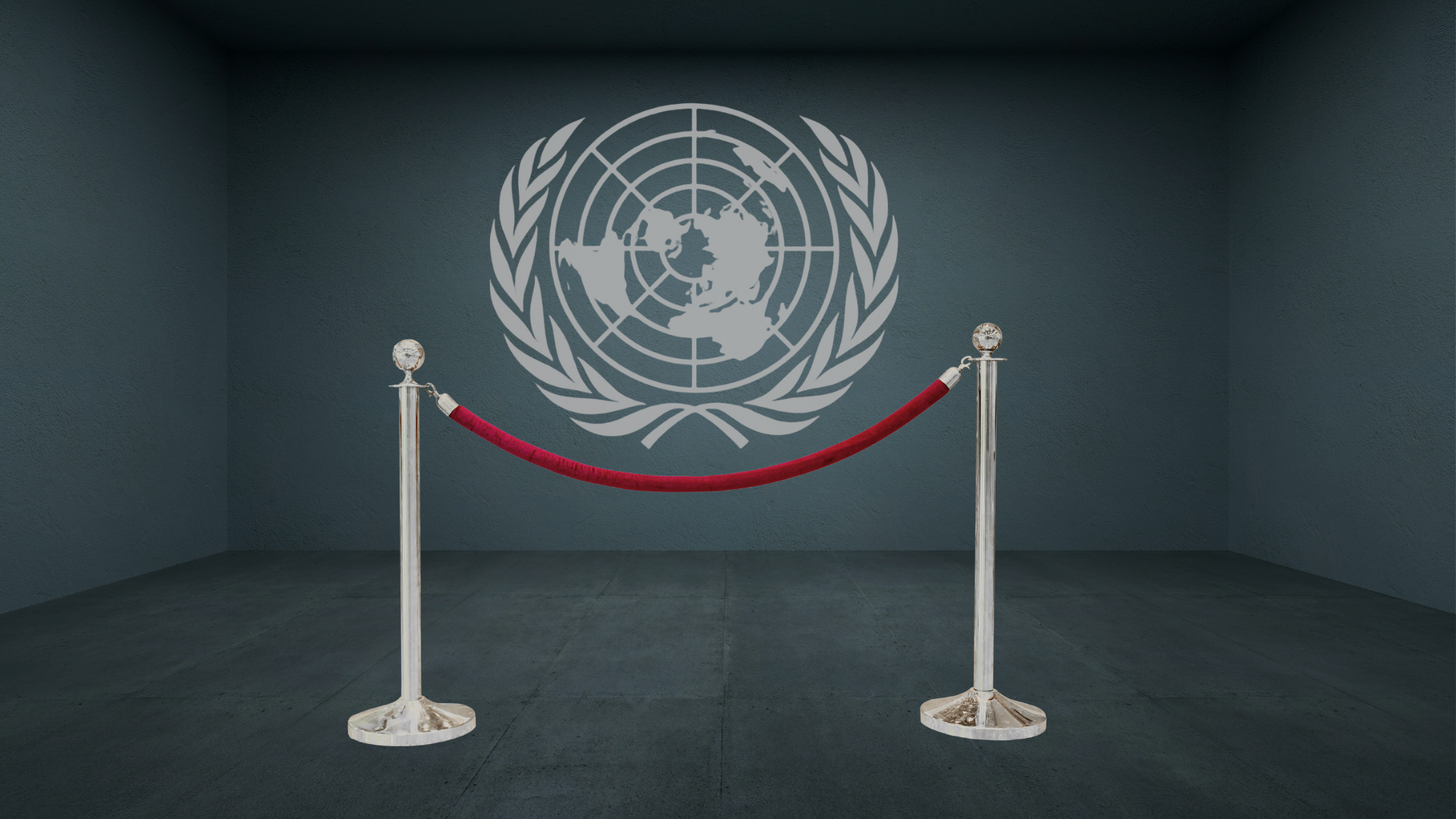
The UN can therefore be thought of as the velvet rope of diplomacy. It cannot really stop anyone who wants to cross it from doing so, but nevertheless has an extraordinary ability to shape behaviour. However, as soon as some people start crossing it, everyone else does, and the rope ceases to serve any purpose beyond signalling that something is amiss.


Many would say that that is what has happened recently. Others would counter that the UN has never meaningfully constrained the behaviour of the world’s major powers – whether that be French or American actions in Vietnam, the Soviet invasion of Afghanistan, or the British and French invasion of Suez. A more nuanced view is that, while major powers have certainly ensured the uneven application of international law, they have at least played lip service to the concept, and tried to avoid too publicly and egregiously violating it for the most part (at least without some semblance of an excuse – however flimsy). They do so because they recognise how much they benefit from such a system, and it is this restraint that may now be lost. Others would place the departure from this approach earlier, with the US-UK invasion of Iraq rather than Trump’s exceptionalism or Russia’s invasion of Ukraine. There’s probably some truth to all of the above.


A System Designed for Another World

The UN was not necessarily intended to be a mere velvet rope. As the International Crisis Group expert Richard Gowan likes to point out, the UN Charter even allows for the creation of a UN air-force, and discusses at some length provisions to cut off rail, telephone, and postal connections to states that do not play ball.[3] The UN was born out of the alliance that won World War II, and some participants saw it as a means to continue that alliance – or,  as Frantz Fanon famously described it, the “card used by the imperialist interests when the card of brute force has failed.”[4]


However, the organisation quickly became, and has continued to be, one that does not provide more than the softest of challenges to national sovereignty. This is largely because baked into the design of the organisation was a desire to avoid the fate of the League of Nations – which fell apart when powerful states walked away from it. By establishing itself as an organisation whose power to limit state behaviour is highly limited, the UN ensured that states remained bought into it. Such success as the UN has had, notably in preventing conflict between major powers, probably owes much to that.


The UN is, however, an organisation designed for a world we no longer live in. It is not just that the major powers of 1945 – whose privileges when it comes to preventing collective action are enshrined in the UN Charter – are no longer the major powers of 2026, it is that today’s distribution of global power is itself less clear. The US has recently very publicly demonstrated the limits of its ability to shape global politics, while China’s interest and ability to do so are still largely untested. The UN Security Council is therefore increasingly anachronistic. Africa remains underrepresented, as do major population centres such as India and Brazil, while former imperial powers such as Russia, the UK, and France retain permanent seats.


But it is an anachronism we are stuck with. The Security Council can veto its own reform, and none of the five permanent members – the US, the UK, Russia, China, or France – will willingly give up their privileges. And any that suggest otherwise do so knowing the others will ensure their bluff is never called.


The Security Council is increasingly ignored, but there is more to the UN. However, the other parts of the organisation, notably the General Assembly, have not really stepped up to fill the leadership gap. Meanwhile the Secretariat, who once upon a time showed incredible creativity and willingness to ask forgiveness rather than permission in pushing the limits of what the UN can do, has been ground down by resource constraints and fearful leadership into a culture of meek compliance. Perhaps this will change if and when a new Secretary-General is selected this autumn, but given it is the Security Council who largely decide upon the choice of Secretary-General we should not assume that the next Secretary-General will be a transformational figure.[5]


All these things limit the UN’s ability to set standards, but do not abolish it entirely, and taking the UN down risks further constraining the good it can do. Even Vladimir Putin is not quite as unconstrained as he would be if the UN truly did not matter, in part because the UN still matters to him as one of the last remaining global institutions that still treats Russia like a global power.


The UN as a Venue, Not an Actor

The UN is perhaps best understood not as a political actor but as a venue in which political actors, primarily states, operate. Former US Ambassador to the UN Richard Holbrooke famously described blaming the UN for the Rwandan genocide as the equivalent of blaming Madison Square Gardens when the New York Knicks lose (neglecting to mention that in that analogy he would be a Knick who had missed a number of shots).[6]  The UN undoubtedly receives blame that should more rightly be directed at the states who behave so appallingly within it.


Nevertheless, forums do have a powerful ability to shape the conversations that take place within them, and it is here that the UN really has worth. It gives states somewhere to theatrically let off steam, forums in which states can meet and discuss on terms closer to equality, access to expertise and mediation, and processes through which negotiated outcomes can be validated in treaties or resolutions.


If the UN’s enduring value lies in providing a venue for diplomacy, the question is what kind of diplomacy remains possible in the current political climate. In January, Canadian Prime Minister Mark Carney, during the World Economic Forum in Davos made a speech suggesting that the decline in our international system’s ability to set and impose standards probably did spell the death of a universalist rules-based global order in favour of more ad-hoc and transactional diplomacy.[7] But transactionalism need not be value free or amount to might-makes-right. He emphasised the long-term value of consistency, reliability, predictability, cooperation in mutual self-interest, and the potential for collective action by the many to rein in the excesses of the mighty.


The problem is that, while there is undoubtedly a long-term net benefit to building a reputation as a reliable partner, few of our political economies currently reward taking the long-term beneficial option over the immediate return. There is a clear logic to such an approach, but little political reward. So far, we have seen little sign of this form of leadership.


The UN is undoubtedly in poor shape, but it is far from useless. It continues to provide the tools and location to allow states to conduct diplomacy in a more sustainable and reliable way, alongside mechanisms to uphold international standards that benefit us all. But it cannot compel states to make use of the international machinery it provides. You can lead a government to the negotiating room, but you cannot make them talk.


What Does this Mean for the UK?

The UK’s ability to affect change at or through the UN is hamstrung by the loss of one of the main sources of added value: its status as a development superpower.[8] This also limits the resource base the UK can mobilise in order to help the UN pivot to its core areas of standard-setting and mediation. Nevertheless, in the context of global peace and security budgets, or even development budgets, these are relatively cheap functions. Often a major part of the difference between successful and failed peace processes has been external human rights monitoring with a cost in the low millions. Likewise effective mediation and peacebuilding work is similarly cheap but not free, and has been neglected in recent years.[9] Relatively small, strategic, investments in resources to strengthen the UN’s monitoring and mediating functions could have a significant multiplier effect on the organisation’s effectiveness.


Meanwhile the UK’s political engagement needs to be sophisticated and context specific: it is neither the strongest nor the weakest state at the UN, and has neither the best nor the worst reputation. It can and should be confident and firm, as long as it does not sound arrogant or hypocritical. The UK can look to states that punch above their weight at the UN (among them Ireland, Spain, above all tiny Liechtenstein) who combine being useful, being principled (and thus predictable), and articulating a clear vision for the kind of global institution they want to see. Generally speaking British diplomats have done a reasonable job of displaying such sophistication in recent years, but it has not always been reflected by the political leadership in either their decisionmaking or their presentation on the global stage. Having senior political leaders genuinely invest time and interest in building a safer and more prosperous world for its own sake, and not merely to perform statesmanship for a domestic audience, is vitally necessary, if insufficient, first step.


Fred Carver is a Managing Director at Strategy for Humanity, which works with mission-driven organizations and those who fund them on a range of policy and strategy issues. He has written a number of articles on international relations, with specific expertise on the United Nations, Peacekeeping, Atrocity Prevention, civil wars and political violence. From 2011-2016 he ran the Sri Lanka Campaign for Peace and Justice, a human rights NGO, and from 2016-2020 he was head of policy at UNA-UK, a UK campaigning organisation for multilateralism. Prior to that he worked as a researcher specialising in South Asia (primarily Pakistan) and in UK politics. He lives in Norway.


Disclaimer: The views expressed in this piece are those of the individual author and do not reflect the views of The Foreign Policy Centre.


[1] United Nations Association – UK, Strengthening the UN’s Human Rights Pillar, May 2025, https://una.org.uk/publication/think-piece-strengthening-the-uns-human-rights-pillar; Hilary Power, UN Financial Crisis Threatens to Halt Human Rights Work, Human Rights Watch, February 2026, https://www.hrw.org/news/2026/02/13/un-financial-crisis-threatens-to-halt-human-rights-work

[2] UN Security Council, Resolution 446 (1979) (S/RES/446), United Nations, March 1979, https://docs.un.org/S/RES/446(1979)

[3] Richard Gowan, Once Again, the U.N. Will Have to Adapt to Survive, World Politics Review, October 2025, https://www.worldpoliticsreview.com/un-day-guterres-trump/

[4] Frantz Fanon, Toward the African Revolution, trans. Haakon Chevalier, Grove Press, 1967, https://files.libcom.org/files/%5BFrantz_Fanon%5D_Toward_the_African_Revolution(BookZZ.org).pdf

[5] Ben Donaldson and Fred Carver, Compromised Candidates: How backroom deals shape the race for secretary-general and prevent U.N. reform, Foreign Policy, July 2026, https://foreignpolicy.com/2026/07/28/united-nations-security-council-secretary-general-corruption-reform/

[6] Samuel Moyn, Imperial Graveyard, London Review of Books, February 2020, https://www.lrb.co.uk/the-paper/v42/n03/samuel-moyn/imperial-graveyard

[7] World Economic Forum, Davos 2026: Special Address by Mark Carney, Prime Minister of Canada, January 2026, https://www.weforum.org/stories/forum-institutional/davos-2026-special-address-by-mark-carney-prime-minister-of-canada/

[8] United Nations Association – UK, Global Britain in the United Nations, February 2019, https://una.org.uk/publication/global-britain-in-the-united-nations/

[9] United Nations Office of Internal Oversight Services, Evaluation of the United Nations Verification Mission in Colombia (IED-23-005), June 2023, https://oios.un.org/system/files/confidential-files/Reports/2023_ied_23_005.pdf; Ian Martin and Tamrat Samuel, Being Serious About Peace, PassBlue, August 2026, https://passblue.com/2026/08/30/being-serious-about-peace/
Footnotes
    Related Articles

    Op-ed | Armenia’s 2026 Parliamentary Election and the Future of the South Caucasus

    Article by James Stanley and Stefan Wolff

    June 4, 2026

    Op-ed | Armenia’s 2026 Parliamentary Election and the Future of the South Caucasus

    The upcoming Armenian elections are often framed as a choice between Russia and the West. In reality, the outcome will shape the country’s evolving relationship with Russia, the West, and its neighbours in the strategically important South Caucasus. This article forms part of the Foreign Policy Centre’s work on democracy and elections.


    In the shadow of war in the Middle East and Russia’s ongoing war waged against Ukraine, Armenia is heading into parliamentary elections on 7 June that will not only be critical for the country’s own direction but are also likely to have an impact for the wider South Caucasus region; itself of broader geopolitical significance at a crucial north-south and east-west crossroads.


    At stake is first of all the future of incumbent Prime Minister Nikol Pashinyan and his Civil Contract party government, which came to power in 2018 after the Velvet Revolution. The movement ousted the government of long-term leader Serzh Sarkisian, who had tried to prolong his stay in power “by moving from the office of president to that of prime minister”.[1] This triggered nation-wide protests propelling Pashinyan to the premiership that May and to electoral victory in December.


    Under Pashinyan, who was re-elected in 2021, Armenia has generally gravitated towards the European Union and away from Russia.[2] The latter is mostly a result of Russia’s failure to support Armenia during the Azerbaijani offensive in Nagorno-Karabakh in September 2023. The offensive resulted in Azerbaijan retaking control over the territory, which Armenia had illegally occupied since the first Karabakh war in the early 1990s – causing the displacement of around 100,000 Armenians from the region. These events unfolded in the presence of Russian ‘peacekeepers’ deployed under the terms of a cease fire agreement that ended the second Karabakh war in 2020.[3]


    Armenia’s election on 7 June therefore marks an important milestone not only domestically, but also for the wider region. Pashinyan campaigns on a platform “to reopen the country’s borders, lower dependence on Russia, and diversify its foreign and economic profile by normalising relations with traditional adversaries Azerbaijan and Turkey”.[4] If Pashinyan secures another term, this would give him the mandate to carry out a major shift in Armenia’s foreign policy orientation, and in this sense, the elections are also a “strategic referendum on Armenia’s geopolitical orientation.”[5]


    A popular endorsement of Pashinyan’s agenda would enable the continuation of three important trends in the region: first, the gradual emergence of regional ties between Georgia, Armenia and Azerbaijan; second, further declining Russian influence in a region where Moscow once was the undisputed hegemonic power; and third, a strengthening foothold for the EU and the US in a region that is a strategic land bridge towards Central Asia and China.


    The relationship between Moscow and Yerevan has steadily deteriorated over the past decade.[6] Since the beginning of Russia’s full-scale invasion of Ukraine in 2022, the weight and significance of Russia in the region has clearly diminished, but this has been a gradual process, rather than an abrupt rupture.[7]


    While Russia retains significant influence in Georgia, and the Georgian Dream government in Tbilisi is, for now, seemingly more closely aligned with Moscow than with either Brussels or Washington, it is also trying to balance its relationship more carefully between Russia and the West. This includes forging closer ties with Azerbaijan and Türkiye.[8] A victory for Pashinyan and his pro-Western agenda is likely to reinforce the trend towards the geopolitical re-orientation of the region, but this will remain a more careful multi-vector balancing act – with a mixture of political, economic, and cultural relationships to different actors outside the region – rather than a more one-directional pivot towards the West.[9]


    Although Russian influence may be declining, Moscow’s strategic interests in the South Caucasus, including in Armenia, remain strong. Russia is poised to use whatever tools and leverage it still has to prevent a further decline of its role as erstwhile regional hegemon, including by using cultural and religious channels of influence.[10] Economically, Russia remains Armenia’s most important trade partner and energy supplier.[11] Many opposition forces also remain closely aligned with Russia, including the Strong Armenia bloc led by billionaire Samvel Karapetyan.[12] Most Armenians favour diversification of relations rather than an outright rejection of Russia. According to recent polling, 43% see Moscow as the country’s most important partner, compared to 42% who think of Washington in that way, and 29% who think of Brussels.[13]


    The geopolitical dynamics in and around Armenia are therefore more complex and nuanced than the political rhetoric accompanying them. Yet, Russia’s capacity to exercise real influence effectively – and comparably to its previous dominance – is more constrained than ever. For example, Armenia has completely shifted away from Moscow as a security provider not only rhetorically but also in terms of who now supplies most of its arms: where Russia once accounted for over 90% of Armenia’s weapons purchases, its share has now dropped to somewhere between 5% and 10%, while France and India have become Armenia’s primary defence partners.[14]


    Armenia, thus, has not, and most likely will not, replace its close alignment with Russia with one that solely relies on the West. However, the change in foreign policy direction under Pashinyan has clearly shifted away from Russia and towards Brussels and Washington. On the European side, this has been reciprocated with the back-to-back European Political Community summit and first bilateral Armenia-EU summit held in Yerevan in May 2026.[15]


    The United States under President Donald Trump has also demonstrated a continuing interest in the region, which is most evident in Trump’s engagement in trying to broker a permanent peace agreement between Armenia and Azerbaijan. While this has yet to be achieved, several pieces of this puzzle have been put in place, including, most recently, a bilateral framework agreement on the Trump Route for International Peace and Prosperity (TRIPP).[16] Given the transactional and erratic nature of much of Trump’s foreign policy, this is unlikely to be a pivotal game changer either for peace between Armenia and Azerbaijan or for long-term US commitment to the country or the region, but it is part of the broader picture of the geopolitical importance of Armenia and the South Caucasus – and the opportunities that this may create for Pashinyan’s agenda.


    A careful balance therefore needs to be struck between dismissing Armenia’s parliamentary elections as the continuation of Armenia’s historic dependence on Russia, and exclusively reorienting strategic alignment in the much bigger geopolitical game surrounding the South Caucasus. The outcome of the elections will be important for the country’s direction, and speed of travel: whoever forms the next government in Yerevan will still have a range of pre-existing problems to resolve in an environment where external support is neither certain nor dependably benign.


    James Stanley is an M.A. International Relations student at the University of Birmingham. He has experience in policy research and public engagement, including contributing to the Helios exhibition at The Exchange. His research interests include Russia, European security, and the wider Eurasian region.


    Stefan Wolff is Senior Research Fellow at the Foreign Policy Centre and Professor of International Security in the Department of Political Science and International Studies, at the University of Birmingham. A political scientist by background, he specialises in the management of contemporary security challenges, especially in the prevention and settlement of ethnic conflicts, in post-conflict state-building in deeply divided and war-torn societies, and in contemporary geopolitics and great-power rivalry. Wolff has extensive expertise in the post-Soviet space and has also worked on a wide range of other conflicts elsewhere, including in the Middle East and North Africa, in Central Asia, and in sub-Saharan Africa. Wolff holds degrees from the University of Leipzig (Erstes Staatsexamen), the University of Cambridge (M.Phil.), and the LSE (Ph.D.).


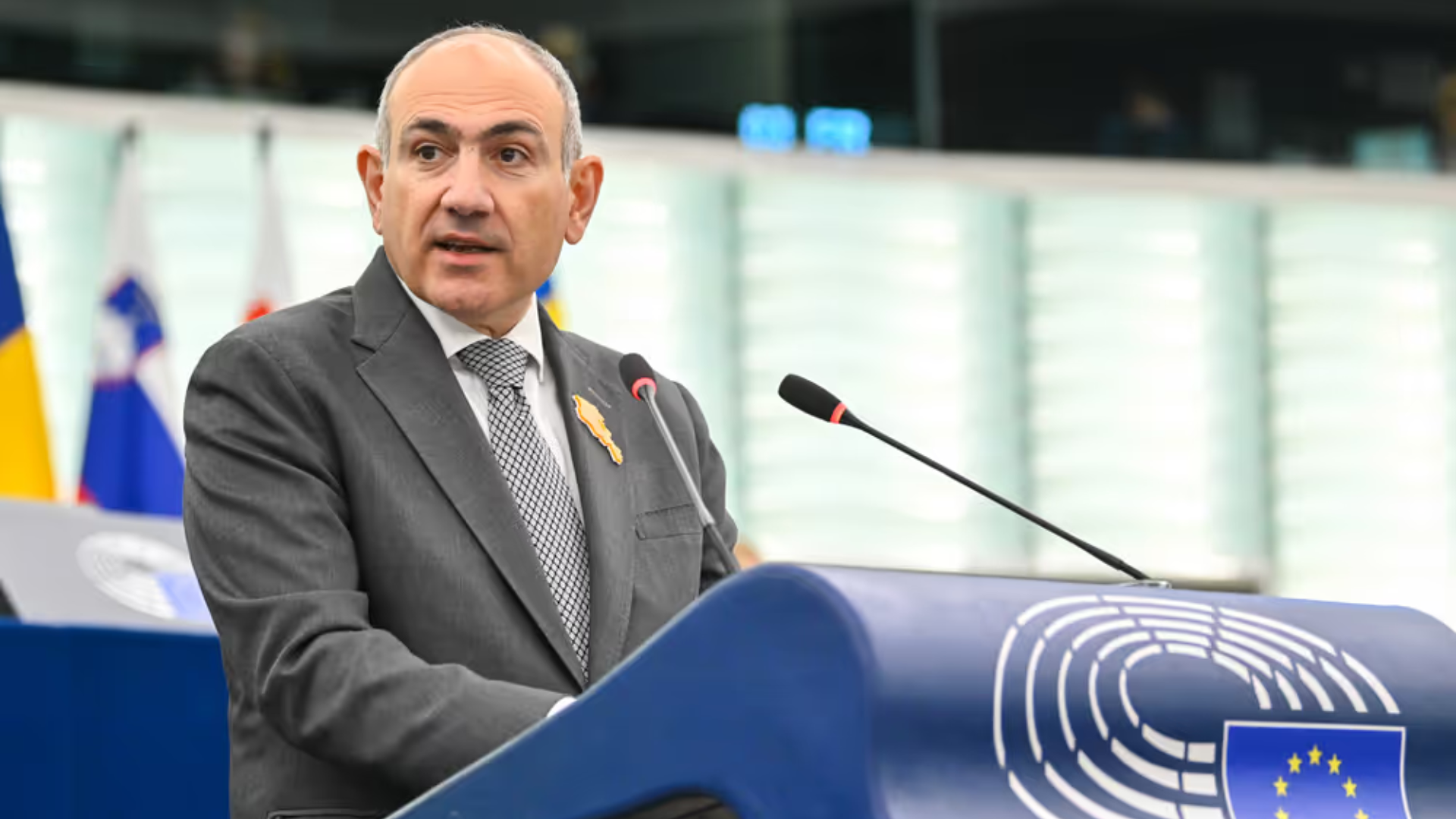
    Image: © European Union 2026 – Source : EP


    Disclaimer: The views expressed in this piece are those of the individual authors and do not reflect the views of The Foreign Policy Centre.


    [1] Miriam Lanskoy and Elspeth Suthers, Armenia’s Velvet Revolution. Journal of Democracy, April 2019, https://dx.doi.org/10.1353/jod.2019.0027

    [2] Council of the European Union, EU Relations with Armenia, https://www.consilium.europa.eu/en/policies/armenia/

    [3] Michael Ertl, Nagorno-Karabakh: Conflict between Azerbaijan and Armenians explained, BBC News,September 2023, https://www.bbc.co.uk/news/world-europe-66852070

    [4] Thomas de Waal, Armenia’s Election Is a Foreign Affair, Strategic Europe, November 2025, https://carnegieendowment.org/europe/strategic-europe/2025/11/armenias-election-is-a-foreign-affair

    [5] Robert Lansing Institute, Armenia’s Parliamentary Elections 2026: A Battle for the State’s Geopolitical Future,May 2026, https://lansinginstitute.org/2026/05/18/armenias-parliamentary-elections-2026-a-battle-for-the-states-geopolitical-future/

    [6] Ulviyya Asadzade, Russia’s Grip Weakens In The South Caucasus, Opening Doors To New Players, Radio Free Europe/Radio Liberty, July 2025, https://www.rferl.org/a/south-caucasus-russia-losing-influence-armenia-azerbaijan/33475018.html

    [7] Emil Avdaliani, “Russian Influence Drains Away in the South Caucasus”, Center for European Policy Analysis, 22 May 2026, https://cepa.org/article/russian-influence-drains-away-in-the-south-caucasus/

    [8] Mark Temnycky, Caught Between NATO And Russia, Georgia Turns To The South Caucasus, Forbes, December 2025, https://www.forbes.com/sites/marktemnycky/2025/12/13/caught-between-nato-and-russia-georgia-turns-to-the-south-caucasus/

    [9] Laurence Broers, Armenia’s election: Voters to decide on Pashinyan’s peace agenda”, Chatham House, May 2026, https://www.chathamhouse.org/2026/05/armenias-election-voters-decide-pashinyans-peace-agenda

    [10] Mikayel Zolyan, “Russia Won’t Give Up Its Influence in Armenia Without a Fight”, Carnegie Politika, 3 February 2026, https://carnegieendowment.org/russia-eurasia/politika/2026/01/armenia-russia-drifting-apart; Davit Gasparyan, Russian Religious Networks and Armenia’s Church-State Confrontation, Central Asia-Caucasus Institute, March 2026, https://substack.com/home/post/p-188618614

    [11] SpecialEurasia, Trade as Leverage: Russia’s Enduring Economic Role in Armenia, March 2026, https://www.specialeurasia.com/2026/03/11/trade-russia-armenia-leverage/

    [12] Sergey Kanev, Grabbing him by the ‘Beard’: The Insider identifies the FSB, GRU, and SVR agents Russia sent to Armenia to take on PM Nikol Pashinyan, The Insider, May 2026, https://theins.press/en/inv/292740

    [13] International Republican Institute, Public Opinion Survey: Residents of Armenia, February 2026, March 2026, https://www.iri.org/resources/public-opinion-survey-residents-of-armenia-february-2026/

    [14] Leonid Nersisyan and Sergei Melkonian, Escaping Russia’s Backyard: Armenia’s Strategic Defense Shift, War on the Rocks, November 2024, https://warontherocks.com/escaping-russias-backyard-armenias-strategic-defense-shift/

    [15] Rayhan Demytrie, European leaders converge on Armenia as Russia looks on, BBC News, May 2026, https://www.bbc.co.uk/news/articles/cgkp1124y3yo

    [16] Office of the Spokesperson, The United States and Armenia Announce the Trump Route for International Peace and Prosperity (TRIPP) Framework Agreement and Sign the Strategic Partnership Charter and Critical Minerals Memorandum of Understanding, US Department of State, May 2026, https://www.state.gov/releases/office-of-the-spokesperson/2026/05/the-united-states-and-armenia-announce-tripp-framwork-agreement-and-sign-the-strategic-partnership-charter-and-critical-minerals-mou/

    Footnotes
      Related Articles

      Op-ed | One Year into Trump 2.0: Domestic Instability and Foreign Policy Disruption

      Article by Dr Andrew Gawthorpe

      February 3, 2026

      Op-ed | One Year into Trump 2.0: Domestic Instability and Foreign Policy Disruption

      Over the past month, President Donald Trump has proven that he still has the capacity to shock the world. On 3 January, he ordered the US military to capture Venezuelan president Nicolás Maduro. A few days later, he renewed his threats to forcibly annex Greenland. This prompted one of the most severe crises in the history of transatlantic relations – before Trump abruptly backed off in a speech at Davos. Trump then authorised a substantial military build-up to take place around Iran, in what may be a precursor to an attempt to overthrow the country’s government – or just another negotiating ploy.


      At the same time, domestic tensions escalated sharply during what some have called the ‘Battle of Minneapolis’ – the most intense confrontation between the federal government and local citizens in modern American memory.[1] The struggle eventually left two people dead and called into question whether the Trump administration could continue implementing its immigration agenda so aggressively.


      In many ways, January 2026 has been a microcosm of Trump’s first year back in office. His foreign policy has been alternatively aggressive, flexible, and – to many allies – just plain confusing. Domestically, he has sought to implement a radical version of his nationalistic and frequently openly racist ‘Make America Great Again’ agenda. In doing so, Trump appears to have gone beyond what most of the public support, causing a huge electoral headache for his party ahead of the midterm elections later this year.


      Domestic woes

      Trump won the 2024 election extremely narrowly. His victory in the popular vote was by a margin of just 0.6%, 7.5 times smaller than Joe Biden’s margin in 2020.


      Although this narrow victory was mostly driven by voter concern over high inflation, since his inauguration Trump has governed as if he had received a broad-based mandate to pursue a radical version of his MAGA agenda.[2] He has attempted to persecute his political opponents and pursue a deportation campaign which has involved flagrant abuses of the rights of countless citizens and residents. When confronted by judges or disapproving members of Congress, he has branded their resistance as a betrayal.[3] At every step, he has sought to sow division rather than unite the nation.


      Americans do not appear to be enjoying the spectacle much. In a recent poll, Trump’s approval rating stood at just 37%, not far from its all-time low.[4] Voters are particularly frustrated that the President has done little to reduce the cost of living, which remains extremely high.[5] With Trump so unpopular, even members of his own party are becoming more willing to criticise him, and they only become more so as the midterms approach.


      Trump’s signature domestic policy initiative of mass deportation has received the most attention. Over the past year, the White House has fundamentally changed how immigration enforcement works. Gone are targeted raids on known undocumented persons with criminal records. Instead, immigration agents have taken to aggressively patrolling urban areas, demanding to see the papers of anyone whose skin colour raises their suspicion. This campaign has involved violations of constitutional rights on a massive scale.[6] It has been justified by openly racist rhetoric from Trump himself, who has referred to the members of some communities as “garbage” who come from “hellholes”.[7]


      Voters have been souring on Trump’s deportation campaign for some time, but events in Minneapolis over the past month led the dam to burst. For weeks, protesters in the city resisted attempts by immigration agents to arrest their neighbours, creating scenes that sapped support for the administration’s aggressive approach. After federal agents then killed two citizens – one a young mother, Renee Nicole Good, and the other a nurse at a veterans’ hospital, Alex Pretti – the nationwide backlash was extreme. In response, Trump removed Greg Bovino, the deputy in charge of the deportation campaign, and signalled a change of course. What comes next is unclear, but now even Trump’s signature domestic policy initiative is being challenged.


      Foreign adventures

      It is common for leaders who face frustration at home to instead look for achievements abroad. American presidents are remarkably free to chart their own course in foreign policy, with few formal requirements to consult Congress or civil servants. Trump has taken full advantage of this freedom, with the result that his foreign policy has been characterised by wild swings, ambitious goals, and little attention paid to practical implementation.


      Perhaps the biggest change from Trump’s first term has been his increased comfort with using military force. Both the capture of Maduro and the bombing of Iran showed that Trump is now looking to the military to score quick wins. Even Greenland became the subject of explicit military threats, prompting alarm among NATO allies. In each and every case, what seems to be missing is any long-term plan for what happens after the military action or threat is over. It rarely seems like Trump is engaging in a rational calculation of means and ends.


      The Greenland affair is a good example. Almost everything that Trump says he wants from Greenland – an increased military presence and mineral mining rights – could be accomplished with simple negotiations and no change of ownership. Instead, he threatened to seize the island outright, doing perhaps irreparable damage to the transatlantic alliance in the progress. He then retreated from his position, indicating that a negotiated arrangement within the existing territorial framework would suffice. All the damage, it seemed, was for nothing.[8]


      Another feature of Trump’s second-term foreign policy is its expansive scope. Trump is sometimes called an isolationist, but if he is then it is hard to explain why he took the time to try to broker peace between Thailand and Cambodia or Azerbaijan and Armenia. He often boasts that he has ended eight wars.[9] Even if his real impact on these conflicts has usually been temporary and marginal, his desire to play global peacemaker is another sign that he is trying to rack up wins on the world stage. It may also be an attempt to distract from his failure to end the war in Ukraine.


      Many European leaders entered the second Trump administration thinking that the main threat facing them was an American withdrawal. But over the last year, it has become increasingly apparent that the more immediate challenge may be something different: focused and hostile intervention in European affairs. From his threats to seize Greenland to his administration’s sustained criticism against European migration policy and liberal values, Trump seems to reshape Europe more than he wants to abandon it.


      For Europeans, this is an uncomfortable and dangerous place to be in. Since the dawn of American global power a century or so ago, every region of the world except Europe has been subject to Washington’s capricious and often destructive power. The alliances and bonds of affection that seemed to shield Europe from these attentions are fraying, and it is natural for Europeans to wonder what awaits them.


      It would be unwise for European leaders to assume that Trump’s domestic problems will constrain his international agenda. In fact, the harder things get at home, the more his gaze might shift abroad – with unpredictable consequences for us all.


      Andrew Gawthorpe is a Senior Fellow at the Foreign Policy Centre and a specialist in U.S. politics and foreign policy at Leiden University. He also writes a newsletter called America Explained.


      Disclaimer: The views expressed in this piece are those of the individual author and do not reflect the views of The Foreign Policy Centre.


      [1] Ryan Cooper, The Battle of Minneapolis is Not Over, Prospect, January 2026, https://prospect.org/2026/01/29/ice-trump-minneapolis-alex-pretti-border-protection-kristi-noem-stephen-miller/

      [2] Oxford Economics, Inflation was the Main Driver for Trump Victory, November 2024, https://www.oxfordeconomics.com/resource/inflation-was-the-main-driver-for-trump-victory/

      [3] Kevin Frey and Mychael Schnell, Trump Suggests Some Democrats should be Hanged – and Some Republicans Rush to his Defence, MS NOW, November 2025, https://www.ms.now/news/trump-calls-democrats-seditious-traitors-republicans-rcna245028; Dan Maurer, ‘On Treason and Traitors’, Lawfare, June 2025, https://www.lawfaremedia.org/article/on-treason-and-traitors

      [4] Hannah Hartig and Jocelyn Kiley, Confidence in Trump Dips, and Fewer Now Say They Support his Policies and Plans, Pew Research, January 2026, https://www.pewresearch.org/politics/2026/01/29/confidence-in-trump-dips-and-fewer-now-say-they-support-his-policies-and-plans/.

      [5] Kathryn Palmer, How is Trump on Affordability? What Most Voters Said in New Poll, USA Today, January 2026, https://eu.usatoday.com/story/news/politics/2026/01/22/trump-worse-affordability-new-poll/88302812007/

      [6] Kyle Cheney, Judges Across the Country Rebuke ICE for Defying Court Orders, Politico, January 2026, https://www.politico.com/news/2026/01/30/ice-immigration-court-orders-00757894; Walter Olsen, In Minnesota, ICE is Assaulting the Constitutional Rights of Citizens, Cato Institute, January 2026, https://www.cato.org/blog/ice-versus-fourth-amendment

      [7] Melissa Hellmann, Donald Trump in his Own Words – the Year in Racism and Misogyny, The Guardian, December 2025, https://www.theguardian.com/us-news/2025/dec/29/donald-trump-racism-dei-misogyny-2025-review

      [8] Katya Adler, Confronted over Greenland, Europe is Ditching its Softly-Softly Approach to Trump, BBC News, January 2026, https://www.bbc.com/news/articles/c0lx7j1lrwro

      [9] Jake Horton and Nike Beake, How Many Wars has President Trump Really Ended?, BBC News, October 2025, https://www.bbc.com/news/articles/c5y3599gx4qo

      Footnotes
        Related Articles

        Op-ed | Patterns of History in Transatlantic Relations

        Article by David Harley

        January 30, 2026

        Op-ed | Patterns of History in Transatlantic Relations

        In this op-ed, David Harley, FPC Advisory Council member and former EU diplomat, offers an insider perspective on the historical continuities in US foreign policy and their implications for the future of transatlantic relations.


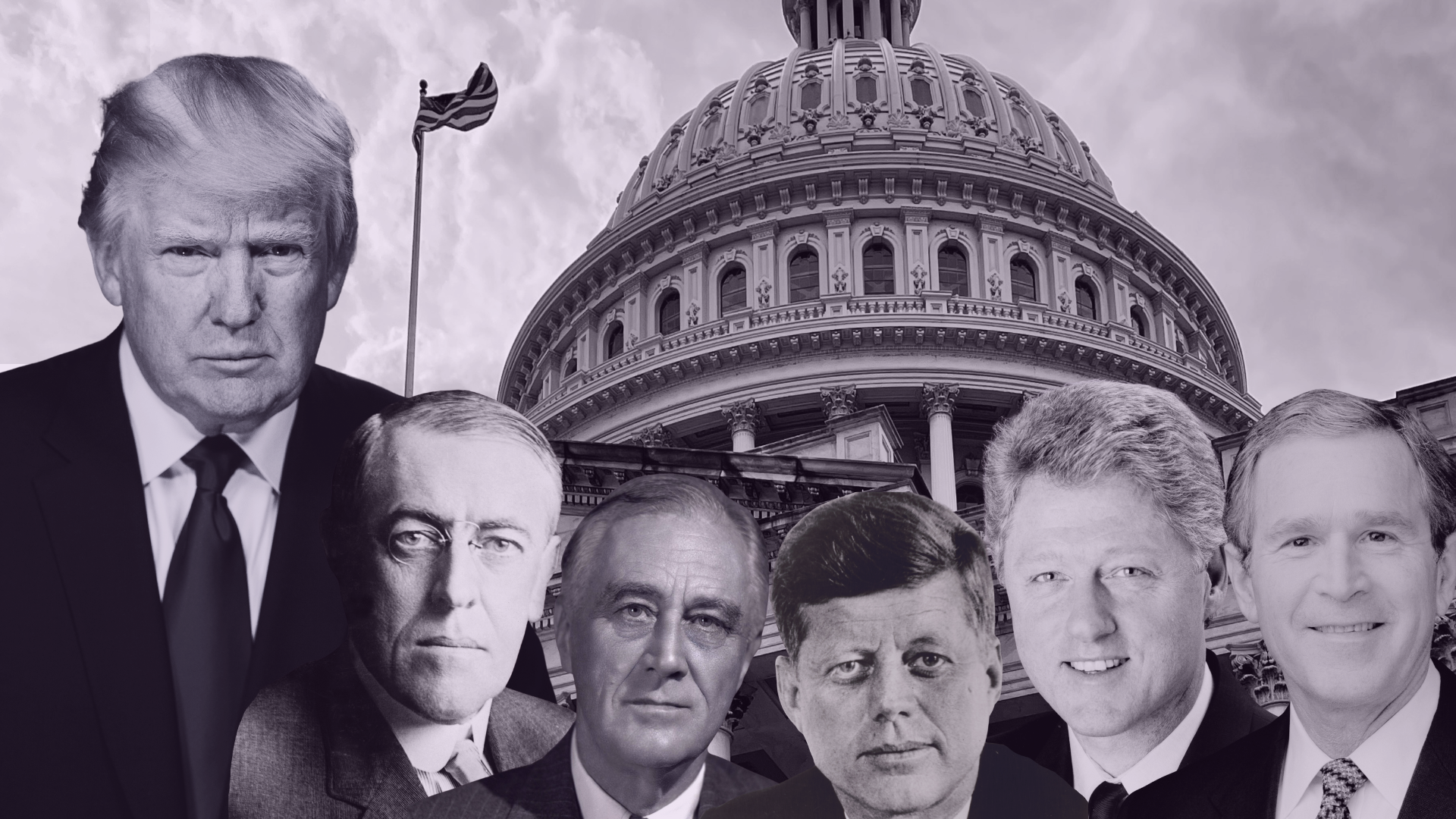
        The slogan ‘America First’ has a long history. Often used by President Donald Trump, the phrase was first coined by President Woodrow Wilson during his 1916 presidential campaign, when he pledged to keep the United States (US) out of the First World War. The US nevertheless entered the war in April 1917. The non-intervention movement in America remained strong during the inter-war years, personified by the pro-Nazi stance taken by Joseph P. Kennedy, the US ambassador to the UK from 1938 to 1940 and father of John F. Kennedy. 


        Despite strong pleading from Winston Churchill, President Franklin Roosevelt would not commit the US to enter the Second World War after the start of hostilities in September 1939. It was only after the Japanese attack on Pearl Harbor on 7 December 1941 that Congress, at Roosevelt’s bidding, unanimously voted to declare war. Six days later, in conditions of utmost secrecy, Churchill set sail for America in the battleship Duke of York. At Roosevelt’s invitation, he was to stay for three weeks in the White House: from their conversations, often until long into the night, the special relationship was born and an alliance forged with the ultimate goal of defeating Nazi Germany and restoring freedom to Western Europe.


        Transatlantic relations today are, in many respects, very different, yet with certain similarities. Trump 2.0 and the machinations of the President himself represent and greatly accentuate a deep-seated historical trend of US foreign policy. Once again, Britain and Europe are under threat of war, this time from Russia, but Trump is clearly no Roosevelt, and clear, decisive leadership on the European side is notably absent. Moreover the scourge of populist nationalism is on the rise, on both sides of the Atlantic. The strong likelihood is that the US under President Trump will disengage from Europe and NATO. 


        Not since the Suez crisis in 1956 has an American president treated Britain with such disdain as the current incumbent. A particularly low point was reached by Trump’s remarks at Davos regarding British soldiers who lost their lives in Afghanistan. These comments have intensified concerns about the future of the transatlantic partnership. The British government now faces an urgent strategic question: how did the UK reach this position, and what should its next course of action be? The current British government’s line of refusing to choose between the US and the EU is becoming increasingly less tenable. 


        As a senior EU official, I witnessed at first hand, at various meetings in Washington and New York, the continued trend of ruthlessly promoting American interests as they defined them. This was evident both under President Clinton and President George W. Bush. In the case of Iraq, both administrations used unproven allegations of WMD (weapons of mass destruction) held by Sadam Hussein as justification for first bombing and then waging war. The Blair government seemed to swallow the American line unquestioningly.


        President Trump’s recently stated objective of taking over Venezuela’s oil reserves echoes words spoken by Vice-President Dick Cheney at a meeting I attended at the White House in July 2002. Cheney made clear that the primary US concern about Iraq was that ‘Saddam is sitting on 10% of the world’s oil reserves, which it cannot allow to fall into the hands of a rogue state or a murderous dictator who refuses to cooperate with the international community’. At the time, Cheney had recently served as CEO of the oil and gas company Haliburton (1995-2000), and as Vice-President he still retained significant stock options. 


        At a meeting later that day with Condoleezza Rice, national security adviser to President Bush, she began with a little joke that policy differences between Europe and the US had always existed, ever since American independence and even to the burning of the White House by British Forces in 1814. She went on to state forcefully the US’s ‘profound reservations’ about ever submitting to judgments of the International Criminal Court. Rice made it abundantly clear that the US would only recognise or cooperate with international institutions ‘such as the UN or even the EU if and when it served their national interest’. 


        Although Britain backed the Bush administration over Iraq, other political leaders in mainland Europe were not blind to these long-standing features of US foreign policy and took a very different view. During a lunch I attended in June 2003 at the Élysée Palace, President Jacques Chirac launched into a furious diatribe against US policy. I discreetly noted down the President’s words as follows: ‘Since the fall of the Berlin Wall, Europe has no longer been strategically important for the US. The Balkans conflict masked this change. The main objective of US foreign policy is to break up Europe.’


        If Chirac’s analysis may have sounded exaggerated at the time, over 20 years later his words have proved prescient. The warnings from the patterns of history were there but we – Britain and Europe – chose to ignore them. We must hope that it is not too late to change course as we face the dual threat of Russian expansion and American withdrawal. As Mark Carney memorably said earlier this month in Davos nostalgia is not a strategy.’ In today’s turbulent times, nor is the special relationship.


        David Harley is a former EU diplomat, political communications consultant, and author. Posts held include Deputy Secretary-General of the European Parliament and Senior Advisor at the Brussels public affairs agency Burson Cohn & Wolfe. He holds a degree in Modern Languages from the University of Cambridge and a Diploma in Creative Writing from the University of East Anglia. In 2021 David published the transcription of his political diaries in ‘ Matters of Record – Inside European Politics’ and in 2022 co-edited ‘The Forgotten Tribe – British MEPs 1979-2020’. He is currently a member of the Foreign Policy Centre’s Advisory Board, and is a regular speaker and commentator on UK-EU relations.


        Disclaimer: The views expressed in this piece are those of the individual author and do not reflect the views of The Foreign Policy Centre.

        Footnotes
          Related Articles

          Op-ed | A Camel Called the Investor Visa

          29/07/26
          Article by Foreign Policy Centre

          The Psychological Roots of Democratic Disengagement

          15/07/26
          Article by Foreign Policy Centre

           Join our mailing list 

          Keep informed about events, articles & latest publications from Foreign Policy Centre

          JOIN