Skip to content

‘Countries at crossroads: UK engagement in Central Asia’: Experts respond to the Foreign Affairs Committee’s latest report

Article by Foreign Policy Centre

November 11, 2023

‘Countries at crossroads: UK engagement in Central Asia’: Experts respond to the Foreign Affairs Committee’s latest report

The Foreign Affairs Committee (FAC) published yesterday the findings from its recent inquiry into the UK’s engagement in Central Asia, the first such inquiry into the region since 1999. The aim of the inquiry was to “establish the nature of the [UK] Government’s current engagement as well as to identify opportunities for broadening and deepening engagement”.[1]


The Committee’s report ‘Countries at crossroads: UK engagement in Central Asia’ highlights a number of key areas of concern, from illicit finance, human rights, trade and the environment, and sets out twenty-eight recommendations for the UK Government to take forward in order to be “both a reliable long-term partner and a critical friend” to the countries in the region.

“The UK Government now needs to adopt a clear, values-led approach to engagement in Central Asia”[2]

– the Foreign Affairs Committee


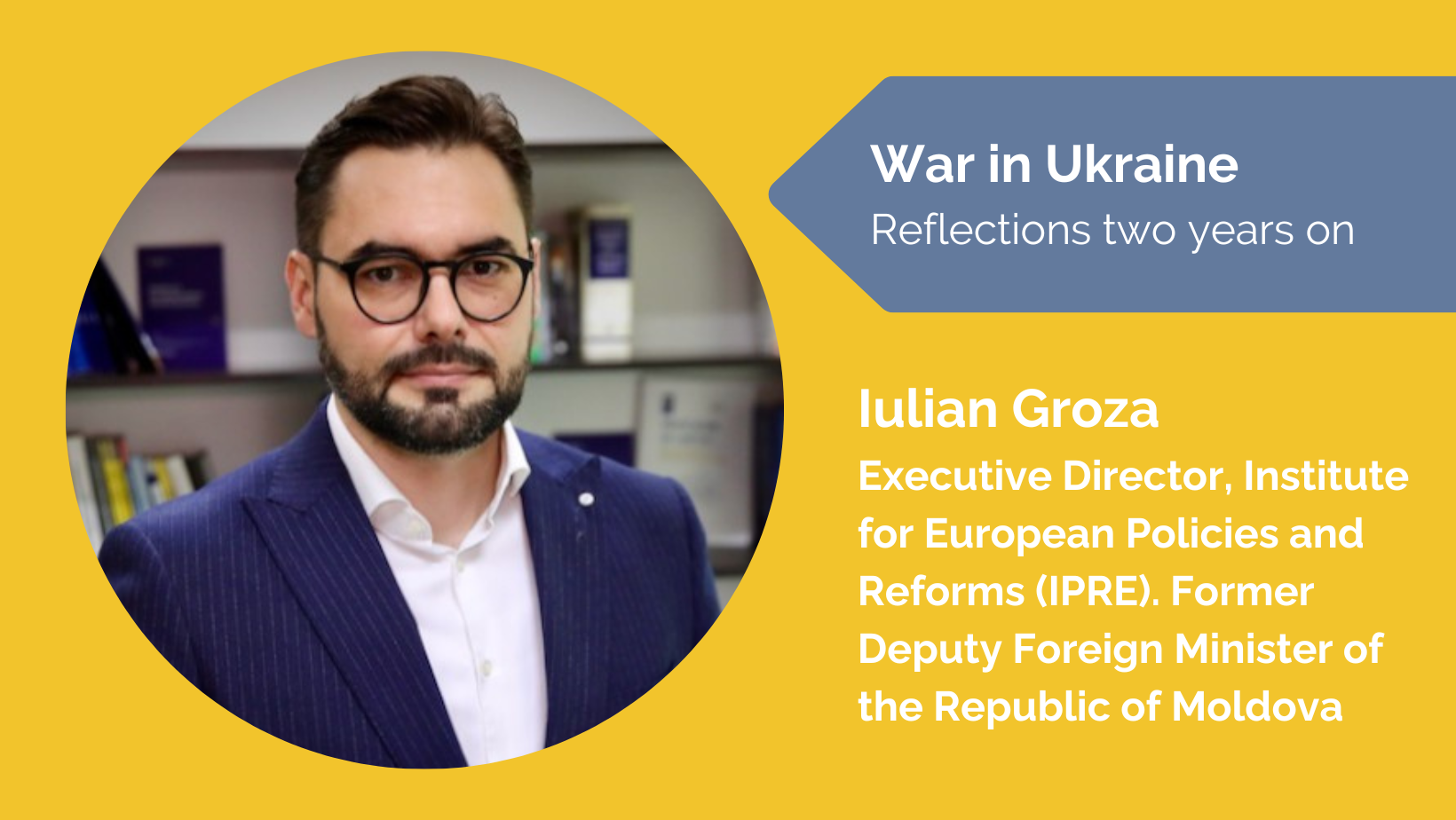
Below is a summary of FPC’s engagement with the inquiry, as well as the FAC’s key findings and recommendations included in the report. FPC Research Fellow Dr Aijan Sharshenova and Professor John Heathershaw at the University of Exeter, who both gave oral evidence to the Committee’s inquiry (transcripts of which are available here), have also provided their initial reactions to the Committee’s report.


Background to FPC’s Engagement with the Inquiry


In March 2023, the Foreign Policy Centre (FPC), based on our publication series Can Britain be a ‘force for good’ in Central Asia?, submitted written evidence to the inquiry, which is available to read here.[3] In June 2023, FPC and the John Smith Trust co-organised an online roundtable with experts from the region with the aim of providing an opportunity for a timely discussion on these themes. The outcomes and recommendations of this roundtable were also shared with the Committee, and are available here. FPC’s has been referenced in the FAC’s report seven times, and our Research Fellow Dr Sharshenova thirteen times.


Responding to the report’s release yesterday, Dr Aijan Sharshenova, said:

“[The report spotlights] the UK’s link to illicit financing and the Central Asian states, with an emphasis on the need to get its own house in order if the UK’s going to lead a values-based approach and promote democracy in the region.”


“This report goes further than anticipated on spotlighting the UK’s link to illicit financing and the Central Asian states, with an emphasis on the need to get its own house in order if the UK’s going to lead a values-based approach and promote democracy in the region. The report also looks more closely at the often overlooked tensions in Gorno-Badakhshan.”


“As a Chevening scholar myself, I am pleased the Committee took on my recommendation and is arguing for the expansion of Chevening scholarships for applicants from the Central Asian states.”


“The UK’s soft power influence and how the UK can restore its credibility in this area is outlined, but the report does not officially recommend the need for restoring funding to the BBC World Service in the region as was put forward by multiple expert witnesses as a way of countering the Russian-language monopoly. It does however state the need to combat Russian disinformation.”

“The report […] fails to mention media freedom, which is an omission as the UK is seen as a frontrunner in promoting this value alongside the US and the EU”


“The report also fails to mention media freedom, which is an omission as the UK is seen as a frontrunner in promoting this value alongside the US and the EU, especially in Kyrgyzstan where the UK Embassy supports independent local media jointly with the EU, Germany, France and the US.[4] More support and measures could be done earlier in this area. This seems a missed opportunity, given the importance for people in the region to be able to access a range of independent information regarding the issues that concern their societies, and would have sat well alongside the human rights recommendations made by the report.”


And, Professor John Heathershaw, University of Exeter:


“This is a strong report which is especially hard-hitting on the kleptocracy problem. It also shines a light on little-known problems such as the terrible oppression of the people of the Pamirs by the dictatorship in Tajikistan.”


“As the report itself acknowledges, British financial and legal services have brought the kleptocracy problem to the UK. The BBC was a major source of free media in the region but has been harmed by government cuts. The Chevening scholarships to study in UK universities should be expanded, as the report argues.”


“The weakness of the report is that it’s too focused on geopolitics – where the UK has almost-zero power – and not on business and culture where UK-based non-state actors have huge global significance.”


“It is not realistic to form a CA5+UK forum at anything other than a junior level. Such a forum would be largely performative and achieve little. The UK is simply not at the level of the US, EU, Russia, and China who have similar forums with Central Asian states. The reason that France and Germany have far greater diplomatic engagement with Central Asia is not just a matter of choice but of their membership of the EU.”

“The power of ‘Global Britain’ is its non-state actors – in business and culture – not its shrunken aid budget, its relatively small armed forces, its beleaguered diplomatic service, and the diminished global position of the UK state following Brexit.”


“The power of ‘Global Britain’ is its non-state actors – in business and culture – not its shrunken aid budget, its relatively small armed forces, its beleaguered diplomatic service, and the diminished global position of the UK state following Brexit. British business and culture can either worsen or improve corruption and human rights violations in Central Asia when they engage in the region. It is the business of foreign policy of a middle power such as the UK to ensure that British institutions make things better not worse. They can do so, for example, by increasing scholarships to the UK and enforcing economic crime laws – as the report recommends.”


A Summary of the Key Recommendations in the Committee’s Report:

“For too long UK engagement has been characterised by reactiveness and short-termism […] We urge the Government to be considerably bolder and more ambitious in approaches to trade, human rights, regional cooperation, cultural exchange, and the environment.”

 – the Foreign Affairs Committee


  • On UK engagement, the report calls for a Central Asia 5+UK meeting to be held in 2024 and recommends further high-level ministerial engagement with the region outside this meeting and to be held more regularly over the coming three years.


  • On illicit finance, an issue that features heavily in the report, the Committee lays out key actions for the Government to take domestically and regionally for the UK to lead by example, as well as, outlines the implications of not doing so on the UK’s engagement with the Central Asia states.[5]


  • On the environment, the vulnerability of the region to climate change is emphasised and roadmaps for the UK to offer assistance are suggested, particularly on how to foster collaboration regionally on water use and renewable energy through the use of the UK’s convening power.


  • On human rights issues, the report recommends:
    • Ways to “prevent tensions and escalation of violence in Gorno-Badakshan”.[6]
    • Implementing the recommendations made in the Committee’s previous report – Never Again: The UK’s Responsibility to Act on Atrocities in Xinjiang and Beyond.[7]
    • Applying lessons learned from the reforms on forced labour in Uzbekistan to forced cotton picking in Turkmenistan.
    • An overhaul of how the UK Government supports local civil society organisations and makes appropriate amendments to reduce the reporting burden on recipients of UK funding.
    • Coordinating action with the EU and US on suspending trading arrangements with Central Asian industries that are perpetuating human rights abuses, when and where appropriate.


  • On education, the report outlines key areas where the UK can be ‘force for good’ and develop its soft power influence through establishing permanent British Council offices in Tajikistan and Kyrgyzstan (a recommendation from the 1999 report);[8] supporting Uzbekistan’s World Conference on Creative Economy through high-level ministerial presence; expanding the Chevening scholarships available for Central Asian applicants; and responding to calls for engagement with UK expertise on educational reform.


  • On security, the report calls for the UK to not “shirk its responsibilities” when it comes to drug trafficking with both drugs themselves and the illicit gains derived from them having links to the City of London.[9] Secondly, it recommends that the Government focus on offering training to Central Asian armed forces when and where appropriate, keeping in mind the potential of misuse of the security apparatus by authoritarian leaders.


  • On trade and investment, the report calls for a longer-term coordinated strategy in regards to the UK and its business community’s engagement with the region, making sure that ethical standards are maintained and “choosing noregret investments, which can be adjusted in light of any changing political situations on the ground.”[10]


Disclaimer: This is a rapid analysis of the Committee’s report. The views expressed in this piece are those of the authors and do not reflect the views of The Foreign Policy Centre.
 

[1] Foreign Affairs Committee, Countries at crossroads: UK engagement in Central Asia – Report Summary, UK Parliament, November 2023, https://publications.parliament.uk/pa/cm5803/cmselect/cmfaff/1158/summary.html

[2] Ibid, summary.

[3] Adam Hug, Can Britain be a ‘force for good’ in Central Asia?, Foreign Policy Centre, December 2022, https://fpc.org.uk/publications/can-britain-be-a-force-for-good-in-central-asia/

[4] UK in Kyrgyzstan, Twitter statement, Twitter, November 2023, https://twitter.com/ukinkyrgyzstan/status/1720132078820381040?s=46&t=L6RXrVacL1Z6pVUonYmAbA

[5] Ibid, paragraph 36, page 22.

[6] Ibid, paragraph 51, page 31.

[7] Foreign Affairs Committee, Second Report of Session 2021–22, “Never Again: the UK’s responsibility to act on the atrocities in Xinjiang and beyond”, HC 198

[8] Foreign Affairs Committee, Sixth Report of Session 1998–90, South Caucasus and Central Asia (HC 349-I)

[9] Ibid, paragraph 78, page 49.

[10] Ibid, paragraph 88, page 53.

Footnotes
    Related Articles

    Is a Russian veto on leadership about to provoke the downfall of the OSCE?

    Article by Dr Cornelius Friesendorf and Prof. Stefan Wolff

    November 9, 2023

    Is a Russian veto on leadership about to provoke the downfall of the OSCE?

    The survival of the world’s largest regional security organisation—the 57-member Organization for Security and Co-operation in Europe (OSCE)—is under threat from Russian ambitions to upend the existing international order.[1] Whether, and how, the OSCE will continue is likely to be decided on 30 November and 1 December, when OSCE Foreign Ministers convene in Skopje, under the current Chairpersonship of North Macedonia, for their annual Ministerial Council.[2]


    Some might argue that not much would be lost if the OSCE were to perish in Russia’s war on multilateralism. However, this misjudges the important role the OSCE has played in the past, setting standards on issues from election observation to minority rights and the fight against human trafficking. Nor would the OSCE be without use in the future: the organisation’s arsenal of confidence and security-building measures remains relevant for reducing the risk of an unwanted escalation of the war in Ukraine. In the event of a ceasefire or peace agreement, the need for a civilian peacekeeping mission could conceivably be met by the OSCE. Other protracted conflicts in Moldova, the South Caucasus and Central Asia, too, require careful management in the shadow of the war against Ukraine.


    None of this, however, will be relevant if the OSCE is left without leaders, and Russia has already vetoed the only current candidate for the 2024 Chair, Estonia. At the top of the agenda at the Skopje Ministerial Council will therefore be the question of which country should take over the chairpersonship in 2024. If the participating States fail to agree on a Chair for next year, the consequences will not be insignificant. More than any other international organisation, the OSCE relies on its Chair, to broker consensus, set priorities, lead meetings and fill key posts. Without one there is a danger that it will become rudderless and ineffectual.


    However, a Russian veto is not inevitable. The Kremlin has long viewed the OSCE as a threatening Western instrument for democratising post-Soviet states. Yet, Moscow also considers the OSCE as a forum for its own propaganda and for gathering information on Ukraine’s Western supporters. Threatening and using vetoes is also a useful tool for the Kremlin to retain some influence in the European security architecture.


    For now, a showdown in Skopje is likely because Estonia has declined to withdraw its candidacy.[3] With the European Union (EU) supporting this position, an earlier offer by Austria to step in had no chance of being taken up.[4] Discussions that are apparently under way with Malta to be a potential alternative will face the same hurdle.[5] At a meeting of the OSCE Permanent Council on 26 September, Russia showed only limited willingness to compromise.[6] According to Alexander Lukashevich, Russia’s Permanent Representative to the OSCE, Russia is open to alternative candidates, as long as they are not members of the North Atlantic Treaty Organization (NATO). This means that there is at least the potential for Austria’s candidacy to be revived or Malta’s be considered as a last-minute solution at the Ministerial Council meeting in December.


    Any such eleventh-hour deal will likely depend on whether the Russian Foreign Minister, Sergey Lavrov, is able to attend the meeting in Skopje. An added complication is whether Russian government representatives like Lavrov, who are subject to Western sanctions, will be granted entry permits and overflight rights to participate in person.[7] Thus, supporters of the OSCE also have a choice to make: do they stick to lofty principles, or do they swallow a pragmatic compromise to enable the survival of the OSCE?


    One might argue that the organisation will endure somehow even if this issue of next year’s chair is not resolved. After all, the OSCE has muddled through since the beginning of Russia’s full-scale invasion into Ukraine on 24 February 2022. Yet, such optimism is ill-advised. Should there be no agreement by the end of the year, North Macedonia, with the support of NATO and EU members among the participating States, might declare that it will continue in the role out of a sense of responsibility to the OSCE. The aim would be to keep the OSCE running until Finland takes over the Chairpersonship in 2025, the year of the 50th anniversary of the Helsinki Final Act of the Conference on Security and Co-operation in Europe (CSCE), the predecessor of the OSCE.[8]


    In such a scenario, Russia would likely refuse to recognise North Macedonia as Chair and try to persuade other participating States not to do so either. The Kremlin could even withdraw from the OSCE and pressure others to follow suit, thus effectively spelling the end of the organisation as an inclusive forum for east-west security dialogue.


    Hence, the search for an alternative candidate has to remain a priority and appears to be high on the agenda of the current Chair, Bujar Osmani, the Foreign Minister of North Macedonia.[9] Malta, whose potential candidacy was revealed by Security and Human Rights Monitor (SHRM), has yet however to officially declare its intentions and is unlikely to do so unless there is an agreement that Estonia will withdraw its bid, thus clearing the way for EU support.[10] Similarly, some indication from Russia that it would at least not veto a Maltese Chair for 2024 will likely be necessary for Malta to step up officially.


    These complications and the fact that we are now less than four weeks away from the Ministerial Council meeting brings us back to Austria as an alternative. Vienna as the host of the OSCE’s headquarters could take over certain Chair functions on a provisional basis, likely in consultation with North Macedonia and Finland, the properly elected Chairs of 2023 and 2025. This would not require a formal, and thus vetoable, decision. The pro-Ukrainian alliance would be able to argue that it had not bowed to the threatened Russian veto. And given Austria is a non-NATO member, it would fulfil one of Russia’s conditions for alternative candidates.


    Any such compromise will require careful preparation, including dialogue via backchannels between key western capitals and Moscow. Moreover, any compromise will also need to be palatable to Ukraine, which, like every OSCE participating State, also has the power to veto decisions. In light of the ever more visible signs of a fraying western consensus on support for Kyiv, the key players in Washington, Brussels, London, Paris, and Berlin may decide that preserving the pro-Ukrainian coalition is more important than the OSCE. While this is not an either-or choice, it remains unclear whether supporters of the OSCE east and west of Vienna can muster the political will to defend the organisation against Russia’s destructiveness.


    Dr Cornelius Friesendorf is Head of the Centre for OSCE Research (CORE), Institute for Peace Research and Security Policy at the University of Hamburg (IFSH). Previously he worked as a senior advisor for an EU police reform support project in Myanmar and as a researcher for institutions including Goethe-University Frankfurt, the Peace Research Institute Frankfurt, the Geneva Centre for Security Sector Governance, and ETH Zurich. He holds degrees from the University of Zurich, the London School of Economics and Political Science (LSE), and the Free University Berlin. His research focuses on the OSCE, Western-Russian relations, and security sector governance and reform. He also analysed asymmetric war (publications include How Western Soldiers Fight, Cambridge University Press 2018) and strategies against drug trafficking and human trafficking. Cornelius is co-editor of OSCE Insights, a series of policy briefs published in English and Russian and Co-Coordinator of the OSCE Network of Think Tanks and Academic Institutions. He speaks German, English, French, and Russian.


    Stefan Wolff is a Professor of International Security and Head of Department, Political Science and International Studies, at the University of Birmingham, co-coordinator of the OSCE Network of Think Tanks and Academic Institutions, and Senior Non-resident Fellow at the Foreign Policy Centre. A political scientist by background, he specialises in the management of contemporary security challenges, especially in the prevention and settlement of ethnic conflicts, in post-conflict state-building in deeply divided and war-torn societies, and in contemporary geopolitics and great-power rivalry, especially in the post-Soviet space.


    Disclaimer: The views expressed in this piece are those of the authors and do not reflect the views of The Foreign Policy Centre.
     

    [1] OSCE Homepage, Organization for Security and Co-operation in Europe (OSCE), see: https://www.osce.org

    [2] OSCE Chairpersonship, Organization for Security and Co-operation in Europe (OSCE), see: https://www.osce.org/chairpersonship; OSCE Ministerial Councils, Organization for Security and Co-operation in Europe (OSCE), see: https://www.osce.org/ministerial-councils

    [3] ERR News, Estonia not withdrawing OSCE chairmanship candidacy, September 2023, https://news.err.ee/1609117244/estonia-not-withdrawing-osce-chairmanship-candidacy

    [4] Stephanie Liechtenstein, How creative diplomacy has averted a collapse of the OSCE – until now, Security and Human Rights Monitor, July 2023, https://www.shrmonitor.org/how-creative-diplomacy-has-averted-a-collapse-of-the-osce-until-now/

    [5] Stephanie Liechtenstein, Exclusive: Malta under consideration to become OSCE Chair in 2024, Security and Human Rights Monitor, November 2023, https://www.shrmonitor.org/exclusive-malta-under-consideration-to-become-osce-chair-in-2024/

    [6] Statement by Mr Alexander Lukashevich, Permanent Representative of the Russian Federation, at the 1443rd (Reinforced) meeting of the OSCE permanent Council, Organization for Security and Co-operation in Europe (OSCE), September 2023, https://www.osce.org/files/f/documents/c/0/555324.pdf

    [7] 30th OSCE Ministerial Council to be held in Skopje, North Macedonia, Organization for Security and Co-operation in Europe (OSCE), November 2023, https://www.osce.org/chairpersonship/557175

    [8] Helsinki Final Act, Organization for Security and Co-operation in Europe (OSCE), August 1975, https://www.osce.org/helsinki-final-act

    [9] Official X (Formerly Twitter) of Bujar Osmani, November 2023, https://twitter.com/Bujar_O/status/1719669045463765124

    [10] Stephanie Liechtenstein, Exclusive: Malta under consideration to become OSCE Chair in 2024, Security and Human Rights Monitor, November 2023, https://www.shrmonitor.org/exclusive-malta-under-consideration-to-become-osce-chair-in-2024/

    Footnotes
      Related Articles

      Transforming Technology & Digital Public Infrastructure

      Article by Dr Joe Devanny and Catherine Stihler

      November 7, 2023

      Transforming Technology & Digital Public Infrastructure

      In this interview, Dr Joe Devanny (King’s College London) and Catherine Stihler (Creative Commons) examine whether the UK’s approach is fit for purpose in the age of digital transformation, especially in regards to Artificial Intelligence, and discuss the challenges and opportunities this presents. Full series around the G20 can be read here.


      In your view, how has digitisation transformed the international system in recent history?


      Dr Joe Devanny: Digitisation has not transformed the international system, but it has created a new series of challenges and opportunities for states to address and exploit. Technological transformation is firmly on the international agenda – for example, in the UN’s Global Digital Compact – but the underlying realities of the international system have not shifted.

      “Digitisation has not transformed the international system, but it has created a new series of challenges and opportunities for states to address and exploit.”


      Where states have significantly increased their ‘cyber power’ over the last 20 years – for example, in China – this is principally symptomatic of wider, non-cyber factors in the international system. And where states perceive vulnerabilities as a result of dependence on technology – for example in the cyber security of critical infrastructure, or the domestic political threat from digital disinformation – these can be seen as new examples of perennial problems against which states have always needed to defend.


      Catherine Stihler: We live increasingly interconnected lives which makes access and the speed of access to information both a challenge and opportunity. At the tap of your phone you can now access knowledge it may previously have taken weeks to gather. Yet the rise of misinformation and disinformation can be witnessed daily leaving citizens questioning what is real and what is not.


      Back in 1996 Fukyyama recognised this in his book ‘Trust: The Social Virtues and the Creation of Prosperity’:“By contrast, people who do not trust one another will end up cooperating only under a system of formal rules and regulations, which have to be negotiated, agreed to, litigated, and enforced, sometimes by coercive means. This legal apparatus, serving as a substitute for trust, entails what economists call “transaction costs.” Widespread distrust in a society, in other words, imposes a kind of tax on all forms of economic activity, a tax that high-trust societies do not have to pay.”[1]


      What we witness today in our international system is a breakdown at a time where we require international institutions to step up. At last month’s UN General Assembly, few of the key leaders attended, signalling a lack of importance in the meeting. Without political support, no international organisation can succeed.

      “[…] we need clear rules of engagement, accepted internationally, to provide a digital operating framework for governments, organisations and society at large.”


      In order to ensure trust can thrive, we need clear rules of engagement, accepted internationally, to provide a digital operating framework for governments, organisations and society at large.


      How do you perceive the continual, and accelerating, sophistication of technology affecting public space, privacy and equality? And how can it be regulated both domestically and internationally?


      Dr Joe Devanny: Technological change – and the pace of that change – certainly affects the public space, our privacy and equality. A good example of how the accelerating pace of technological change is shaping government reactions is the last year of frenzied activity relating to generative Artificial Intelligence (AI).


      International forums had discussed AI for several years beforehand, and states had increasingly issued public statements or developed national strategies about AI, but the urgency of this agenda has undoubtedly intensified in the last year. Regulation is certainly possible, but there are inevitable trade offs and consequences of different approaches. And it remains the case that some states have more choices available than others. For example, the recent initiatives by both the European Union and the United States to regulate AI are examples of what can be done (and indeed of the limits of what can be done) by two powerful international actors. Most states in the international system cannot hope to have the same impact. That is why international cooperation is so important, notwithstanding how difficult it is to reach substantive agreement.


      Catherine Stihler: The rise of AI is proving that the acceleration witnessed in the past 20 years with the Internet is once again morphing, at ever increasing speed, into something different which is more disruptive. No longer do we need websites to navigate information. Just like the way mobile technology has transformed the way we work, AI will set change to another level.


      AI also means changes which we cannot currently even imagine. Only the EU is at the final stages of a cross national state system of agreed regulations on AI across 27 independent member states. This will set a global standard in AI which countries who want to trade with the EU will have to follow. Just like GDPR before, the EU is pushing on openness, transparency and accountability — all important to gain the public’s trust.

      “Without the pluralist system of international organisations helping nation states agree to rules which transcend their borders, we are not going to see technology regulated at a global level anytime soon.”


      Without the pluralist system of international organisations helping nation states agree to rules which transcend their borders, we are not going to see technology regulated at a global level anytime soon. This will have an impact on standard setting, norms and holding AI companies to account globally. It may also create unlevel playing fields between competing jurisdictions, with some nations wilfully gaming the system, potentially for nefarious activities, undermining the entire order. How can we set standards which are not regulatory? Creative Commons set a global standard of sharing because we created a solution to the problem of all-rights-reserved copyright. Today we are being called upon to apply our creative thinking to solve the challenges which creators face concerning AI.


      What security risks and threats do you see, or anticipate, with technology advancing at a faster rate than technological policy?


      Dr Joe Devanny: There is certainly a risk that innovation, occurring at a faster rate than policy or regulation can match, will lead to adverse consequences. This was the premise of the recent Bletchley Park Summit on AI safety.[2] As so much of the innovation occurs in the private sector – and in a relatively small number of countries – there is a clear need for effective dialogue between these private sector actors and governments. The challenge for governments is to strike the right balance between supporting innovation and reducing risk. This is particularly difficult in circumstances in which the potential risks are not well understood. In this context, initiatives such as the AI Policy Observatory, supported by the Organisation for Economic Co-operation and Development (OECD), are valuable ways in which states can improve both shared understanding of the potential and risks of new technologies, and also share knowledge about how to pursue effective policy-making.


      Catherine Stihler: I think the security risks concern holding the technology companies who are driving change to account. We know from practice that voluntary measures do not work and if we want AI that serves the public interest, it is hard to see how with a concentration of power in the hands of a few US companies, we will see transparency, responsibility and accountability.


      From a policy specific angle there are clearly important political and ethical challenges for policymakers to consider when it comes to ensuring fundamental rights are preserved within AI frameworks, particularly in areas such as defence/national security; healthcare; and access to basic (digital) services.


      Which countries are leading the way in their strategies to mitigate the challenges, and seize the opportunities, of the digital age?


      Dr Joe Devanny: The question highlights the two sides of this policy dilemma: how best to seize opportunities whilst also mitigating challenges. The more prescriptive and prohibitive the regulation, the greater the risk of stifling innovation and missing out on opportunities. Conversely, the looser and more permissive the framework, the greater the risk of harm.

      “There is a genuine competition for influencing the world’s digital future.”


      Using the example of AI again, the European Union and the United States are showcasing different approaches to this challenge, the former based on legislation and the latter – to date – on executive action. Both approaches are proceeding in tandem and it is too early to say what the combined impact of both will be on the future development of AI. Similarly, being first in the lead doesn’t mean you will remain out in the lead. For example, China has started to articulate a more global vision for its approach to AI. There is a genuine competition for influencing the world’s digital future.


      Catherine Stihler: The EU is leading the way with General Data Protection Regulation (GDPR), Digital Services Act (DSA) and Digital Markets Act (DMA) rule setting. The new rule setting on AI could be transformational on how AI globally will be regulated.

      “The UK Government’s AI Safety Summit was an important exercise in attempting to bring together multiple jurisdictions in search of common solutions to shared problems.”


      The UK Government’s AI Safety Summit was an important exercise in attempting to bring together multiple jurisdictions in search of common solutions to shared problems. Having said this, it remains unclear as to whether or not developed and developing, as well as democratic and non-democratic jurisdictions will be willing and able to find common ground when it comes to regulating AI and creating a shared vision for the digital age.


      What can the UK Government be learning, and prioritising, from these strategies?


      Dr Joe Devanny: The recent Bletchley Park AI Safety Summit was prominently associated with the current Prime Minister, but AI-related deliberations in Whitehall pre-date and will inevitably outlive this premiership. The UK already has a national AI strategy, a defence AI strategy, and has prioritised technological innovation in its national security strategy (currently called an ‘Integrated Review’).

      “The Government deserves credit for recognising the national priority of having a thriving sector of science and technology, but the boldness of its ambition is not matched by the necessary scale of resources.


      Arguably, the most important lesson the UK should learn from recent experience is that the UK’s freedom of action is limited. It can achieve more through cooperating with other states than it can achieve alone. The Government deserves credit for recognising the national priority of having a thriving sector of science and technology, but the boldness of its ambition (for the UK to be a ‘science and technology superpower’ – irrespective of the vagueness of the term) is not matched by the necessary scale of resources. Increasing investment and reducing hyperbole would not be a bad place to start.


      Catherine Stihler: The UK Government is wise to consult with other countries with the AI Summit in November which provides an effective way to listen and learn from others.

      “By becoming the world’s largest advocate for open source, [the UK Government could demonstrate] its ongoing ability to be a global leader in forefront technologies.”


      The UK Government should become the world’s biggest advocate for open source, push open technologies as a differentiator against closed systems which are not transparent and accountable and lead on public interest AI. By becoming the world’s largest advocate for open source, could provide the UK Government with an effective new voice, demonstrating its ongoing ability to be a global leader in forefront technologies.


      Dr Joe Devanny is a Lecturer in the Department of War Studies and deputy director of the Centre for Defence Studies at King’s College London. He is writing in a personal capacity.


      Catherine Stihler has been an international champion for openness as a legislator and practitioner for over 25 years. In August 2020, Catherine was appointed Chief Executive Officer and President of Creative Commons, a global non-profit organisation that helps overcome legal obstacles to the sharing of knowledge and creativity to address the world’s pressing challenges. More recently Catherine has been called upon to apply her expertise in public interest technology to Generative AI serving on the Governor of Pennsylvania’s AI Task force and the World Economic Forum’s AI Alliance. She was selected to the Fellowship of Scotland’s National Academy, the Royal Society of Edinburgh (RSE), in 2022.


      [1] Fukuyama, Francis. 1995. Trust: the Social Virtues and the Creation of Prosperity. New York :Free Press.

      [2] Foreign, Commonwealth & Development Office and Department for Science, Innovation and Technology, AI Safety Summit 2023, Gov.uk, November 2023 https://www.gov.uk/government/topical-events/ai-safety-summit-2023

      Footnotes
        Related Articles

        2024 US Presidential Elections: A fork in the road for the future of American foreign policy?

        Article by Dr Andrew Gawthorpe

        November 6, 2023

        2024 US Presidential Elections: A fork in the road for the future of American foreign policy?

        Barring some unforeseen event, or unexpected late addition to the race, the next US presidential election is shaping up to be a contest between Joe Biden and Donald Trump. With a year to go until the election, it’s far too early to say who will be the winner. But it’s not too early to think about what the consequences of a victory by either candidate might mean. Biden and Trump offer sharply divergent views on American foreign policy, the future of the international order, and the fate of global democracy. For the world outside of the United States, this means that the stakes of the coming election are unusually high.


        Let’s start with Biden. After winning the 2020 election, Biden declared that “America is back”.[1] During the campaign he pledged to restore multilateralism and democracy to the heart of American foreign policy, and he has taken many initiatives in this direction. He re-joined the Paris Climate Accords and the World Health Organization and stopped treating the United Nations and European Union (EU) as enemy combatants. He has frequently framed American foreign policy as a contest between democracy and autocracy – one which will define the coming century and in which America must be firmly on the side of democracy.[2]


        A Biden victory in 2024 would therefore deliver predictability and stability in American foreign policy. We could expect the administration to stay engaged with multilateral institutions, prioritise relations with America’s traditional allies, and keep attempting to construct coalitions to contain Russia and China. Biden’s experience and basic competence at both diplomacy and governing – two things sorely lacked by Trump – mean that America would continue to fill the leadership role that much of the world has come to expect of it. America would indeed be back.


        On the other hand, it’s important not to get too carried away by Biden’s own rhetoric. The administration’s policy has also been marked by contradictions which make a simple story of multilateralism and democracy misleading.


        In particular, Biden has been willing to bend his principles abroad if he deemed it necessary to protect American democracy at home. Early on, the administration promised to run a “foreign policy for the middle class” which would deflate the appeal of Trumpian populism by putting the economic interests of American citizens first.[3] This has sometimes come into conflict with the administration’s commitment to democracy and human rights abroad, for instance when Biden abruptly reversed his decision to isolate Saudi Arabia’s Mohammed bin Salman in a quest for lower oil prices – despite the latter’s brutal murder of journalist Jamal Khashoggi.[4]


        More broadly, the administration has sought a quiet transformation of the international economy which would continue to reverberate into a second Biden term. Believing that globalisation has empowered populism, the Biden administration has refused to negotiate new multilateral free trade agreements or even increased market access with individual allies. New trade agreements are so politically toxic in the United States that there’s little reason to expect that this would change even in a second Biden term.


        The administration has even declared the death of the “Washington consensus” of pro-market policies which has been central to the international economy for decades.[5] Worried about economic competition with China, the administration has sought to build a new system of managed trade and investment which concentrates the supply chains for key sectors in the United States. At the same time, the policy risks fragmenting the world into competing economic blocs and leaving many regions – from the EU to developing nations – behind.[6] In a second Biden term, other countries will continue having to scramble to adapt.

        “…Biden offers: strong American leadership which places a priority on democracy and alliances but which also puts US interests first, even if they conflict with those other values.”

        This, then, is what Biden offers: strong American leadership which places a priority on democracy and alliances but which also puts US interests first, even if they conflict with those other values. Compared to what’s on offer from Donald Trump, that’s not such a bad deal.


        During his first term, Trump distinguished himself from every other modern president in the severity of his hostility to multilateralism, his disdain for democracy both at home and abroad, and his approval of foreign autocrats. He described the EU as a “foe” while speaking glowing words about Vladimir Putin and Xi Jinping.[7] He withdrew from the Paris Climate Accords, the Iranian nuclear deal, and even from the World Health Organization amid a deadly global pandemic. He started trade wars not just with China, but also with the EU and the United Kingdom. And he has hinted that in a second term, he would do all this again and more.[8]


        Pinning down Trump’s precise foreign policy views is somewhat tricky. He is often described as an isolationist, but in his first term at least, this wasn’t really true – he proved willing to use American military force against Syria and Iran, and even his trade wars had the ostensible purpose of rebalancing international trade in the favour of the United States, not ending it entirely. It’s more fruitful to see Trump as part of an American tradition of unilateralism – the belief that the United States is powerful and righteous enough to do whatever it wants without the help of others, and that US allies are free riders looking for a handout rather than force multipliers who help Washington achieve its goals.

        “It’s more fruitful to see Trump as part of an American tradition of unilateralism – the belief that the United States is powerful and righteous enough to do whatever it wants without the help of others.”


        There are at least three reasons to think that this worldview would make Trump especially dangerous in a second term. Firstly, the world is confronting multiple serious crises that require American leadership of a bloc of nations rather than America acting alone. Some of these crises are global – such as climate change – whereas others afflict regions, such as Ukraine and the Middle East. Trump shows no appetite for leading on the former and on the latter, his instinct is to accommodate local strongmen. For instance, he has suggested that he would pressure Ukraine to settle its conflict on terms favourable to Russia, and it’s clear that his vision for the future of the Middle East involves no accommodation of Palestinian aspirations.[9]


        Secondly, Trump’s second term is likely to be even more chaotic and unconstrained than his first. Not only is he now advancing more radical ideas – such as invading Mexico or placing a 10% tariff on all US imports – but he would also face far fewer institutional restraints.[10] Trump’s allies are developing plans to gut the civil service and place America Firsters in control of the foreign policy bureaucracy, and the “axis of adults” – experienced officials who helped contain Trump’s worst impulses in his first term – are unlikely to return.[11] If he returns to power having survived two impeachments and multiple criminal indictments, Trump is also likely to feel able to get away with almost anything.


        But perhaps the most serious consequence of a Trump second term is what its very possibility says about the future of American democracy – and, by extension, democracy around the world. After losing the 2020 presidential election, Trump embarked on a campaign to overturn the result, culminating in the deadly insurrection on January 6th. If he were to overcome both the legal and political consequences of this and return to power regardless, the entire future of democracy in America would be in question.


        This is especially the case because it seems likely that Trump would accelerate his attacks on democracy at home during any second term. He has said that he would seek to use his office to shield himself from accountability for his past actions while politicising law enforcement agencies and persecuting his political opponents.[12] Whilst, he would surely once again seek to interfere with the functioning of America’s electoral process, casting doubt on its outcomes and using the powers of his office to tilt the results in his favour.


        This matters to the world not only because it would plunge America into political and constitutional chaos, making any stable foreign policy difficult to maintain, but also because of the precedent it would set for other countries. Political trends which begin in the United States rarely stay there, and a crisis of democracy at the heart of the Western alliance would likely weaken the commitment to democratic and legal norms throughout the rest of the world.

         “An America that could elect Donald Trump once might be redeemable  –  one which elects him twice, perhaps not.”

        The result would be a far cry from Biden’s vision of a global struggle between democracy and autocracy – if anything, what Trump is offering is more of a case of autocracy versus autocracy. Faced with such a world, America’s democratic allies would have to consider the possibility that American leadership and commitment to international rules, however merely aspirational the latter might sometimes be, is a thing of the past. An America that could elect Donald Trump once might be redeemable – one which elects him twice, perhaps not. In a world of rising challenges to democracy, both at home and abroad, such a future would look very bleak indeed.


        Andrew Gawthorpe is an expert on US foreign policy and politics at Leiden University and the creator of America Explained, a podcast and newsletter. He was formerly a research fellow at the Harvard Kennedy School, a teaching fellow at the UK Defence Academy, and a civil servant in the Cabinet Office.


        Disclaimer: The views expressed in this piece are those of the author and do not reflect the views of The Foreign Policy Centre.


        Image by Emma Kaden under (CC).


        [1] The White House, Remarks by President Biden on America’s Place in the World, February 2021, https://www.whitehouse.gov/briefing-room/speeches-remarks/2021/02/04/remarks-by-president-biden-on-americas-place-in-the-world

        [2] The White House, National Security Strategy of the United States, October 2022, https://www.whitehouse.gov/wp-content/uploads/2022/10/Biden-Harris-Administrations-National-Security-Strategy-10.2022.pdf

        [3] Andrew Gawthorpe, Taking US Foreign Policy for the Middle Class Seriously, The Washington Quarterly, 45:1, 57-75, April 2022,https://scholarlypublications.universiteitleiden.nl/access/item%3A3285186/view

        [4] MJ Lee and Kevin Liptak, ‘There Is Only So Much Patience One Can Have’: Biden Appears To Back Off Vow to Punish Saudi Arabia, CNN, February 2023, https://edition.cnn.com/2023/02/03/politics/joe-biden-saudi-arabia-opec/index.html

        [5] The White House, Remarks by National Security Advisor Jake Sullivan on Renewing American Economic Leadership at the Brookings Institution, April 2023, https://www.whitehouse.gov/briefing-room/speeches-remarks/2023/04/27/remarks-by-national-security-advisor-jake-sullivan-on-renewing-american-economic-leadership-at-the-brookings-institution/

        [6] Andrew Gawthorpe, Biden’s ‘New Washington Consensus’ is Weaponizing Trade, World Politics Review, May 2023, https://www.worldpoliticsreview.com/us-china-trade-war-globalized-united-states-economy-policy-biden/

        [7] Andrew Roth, David Smith, et. al., Trump calls European Union a ‘foe’ – ahead of Russia and China, The Guardian, July 2018, https://www.theguardian.com/us-news/2018/jul/15/donald-trump-vladimir-putin-helsinki-russia-indictments

        [8] Daniel W. Drezner, Bracing for Trump 2.0, Foreign Affairs, September 2023, https://www.foreignaffairs.com/united-states/bracing-trump-possible-return-allies-rivals; Joseph S. Ny, If Trump Returns, Project Syndicate, May 2023, https://www.project-syndicate.org/commentary/trump-2024-election-us-foreign-policy-by-joseph-s-nye-2023-05

        [9] Jack Forrest, Trump won’t Commit to Backing Ukraine in War with Russia, CNN, May 2023, https://edition.cnn.com/2023/05/10/politics/ukraine-russia-putin-trump-town-hall/index.html; Aron Heller and Matthew Lee, Trump Peace Plan Delights Israelis, Enrages Palestinians, AP, January 2020, https://apnews.com/article/donald-trump-ap-top-news-international-news-jerusalem-politics-f7d36b9023309ce4b1e423b02abf52c6

        [10] Asawin Suebsaeng and Adam Rawnsley, Trump Asks Advisers for ‘Battle Plans’ to ‘Attack Mexico’ if Reelected, Rolling Stone, March 2023, https://www.rollingstone.com/politics/politics-features/donald-trump-mexico-military-cartels-war-on-drugs-1234705804/; Jeff Stein, Trump vows Massive new Tariffs if Elected, Risking Global Economic War, Washington Post, August 2023, https://www.washingtonpost.com/business/2023/08/22/trump-trade-tariffs/

        [11] Allan Smith, Trump Zeroes in on Key Target of his ‘Retribution’ Agenda: Government Workers, NBC News, April 2023, https://www.nbcnews.com/politics/donald-trump/trump-retribution-agenda-government-workers-schedule-f-rcna78785

        [12] Maggie Haberman and Shane Goldmacher, Trump, Vowing ‘Retribution’, Foretells a Second Term of Spite, The New York Times, March 2023, https://www.nytimes.com/2023/03/07/us/politics/trump-2024-president.html

        Footnotes
          Related Articles

          Progressing Women-Led Development

          Article by Marissa Conway and GAPS

          October 24, 2023

          Progressing Women-Led Development

          In this interview, Marissa Conway (UNA-UK) and GAPS (Gender Action for Peace and Security – the UK’s Women, Peace and Security civil society network) discuss what women-led development should, and could look like, as well as how the UK can be ambitious to make progress in this area moving forward. Full series around the G20 can be read here.


          Why has there been a shift from ‘women’s development’ to ‘women-led development’?


          Marissa Conway: The recent multilateral push towards women-led development stems out of the 2023 G20 New Delhi Leaders’ Declaration, which cites a commitment to the social and economic empowerment of women.[1] India in its capacity as G20 President has championed this shift as one of its six priorities, the rationale being that the terminology of ‘women-led’ invokes a framing in which women are not passive participants or recipients of development and aid but rather active leaders in their own right.[2] Interestingly, India seems to recognise the importance of implementing this agenda domestically as well as encouraging wider take up amongst the G20. This consistency in application across the local and global is laudable and seems to mark a new chapter of the Indian Government’s engagement with gender equality initiatives; for example, it has never implemented a National Action Plan on Women, Peace, and Security despite widespread international take up and only a few years ago downplayed the United Nations’ criticism of the high numbers of cases of sexualised violence against women. I am hopeful about the emphasis on domestic cohesion alongside the wider calls for multilateral engagement.[3]


          GAPS: Women’s development follows a tradition of where women are treated as the passive recipients of foreign policy, and especially as aid predominately goes to the global majority, there is a strong racialised and colonial component to who gives and who receives. Within this paradigm, women still barely receive any funding, as 1% of global peacebuilding funding goes to women and a majority of that goes to north-based organisations.

          Women-led development understands that women in all their diversity must be in the driver’s seat for successful development and sustainable peace.”


          The shift to women-led development is important because it aims to redistribute power across intersecting axes of difference. Women are on the frontlines, they face the consequences of conflict the hardest, as they do with climate change and other transnational challenges, yet their expertise and experience is not included at the table. Core to their communities, they hold solutions to complex problems as local experts, and we know their participation in peace processes will lead to longer and more sustainable peace. Women-led development understands that women in all their diversity must be in the driver’s seat for successful development and sustainable peace.


          How does this shift need to be a priority within international multilateral systems? And do you see progress towards greater dialogue on ‘women-led development’ in multilateral forums?


          Marissa Conway: Language is a powerful tool for creating normative changes, something which the development sector indeed needs. At best, development is a method to redistribute resources between High Income Countries (HICs) and Low and Middle Income Countries (LMICs). At worst, it’s a tool used by HICs to leverage economic influence to ensure global adherence to certain commercial and political interests. For example, under the Trump administration, the United States prohibited American aid spending to foreign organisations that discussed abortion as a family planning option.[4]

          “For women-led development to be successful, it must also seek to challenge the patriarchal, racist, and capitalist principles that shape our societies today.”


          Drawing a more explicit link to women’s leadership in development initiatives will no doubt help to establish a new and needed expectation about women’s agency and action. However, the gendered and racialised themes seen across the development sector cannot be addressed by women’s leadership alone, nor should women be expected to bear this burden alone. For women-led development to be successful, it must also seek to challenge the patriarchal, racist, and capitalist principles that shape our societies today. And these are challenges that require everyone, regardless of gender.


          GAPS: The shift to using ‘women-led’ and ‘women’s rights organisation-led’ development needs to be a priority within all international systems including the multilateral space, as it is an influential and agenda-setting space that can help shift the approach to development of governments and international NGOs. It moves away from a top-down and patriarchal approach where global institutions can make the decisions as to how to ‘develop’ women, and towards an approach that allows for initiatives to truly reflect the self-identified needs of a broad range of women. There has been progress within some multilateral forums such as UN Women to recognise the need for meaningful participation of women in all development, humanitarian and peacebuilding fora, and UN Secretary-General Antonio Guterres publicly stated the need for greater and more meaningful participation of women in mediation efforts, saying that this meant “supporting peacebuilding at the local level, even during conflict … We must consistently support the local women’s groups that negotiate humanitarian access and support community resilience; learn from them; and build peace from the ground up”.[5]


          What examples have you seen of countries effectively investing in women-led development? What lessons can the UK learn from these approaches?


          Marissa Conway: The principles of women-led development are not unfamiliar. As listed in the 2023 G20 New Delhi Leaders’ Declaration, women-led development includes reducing the gap in labour force participation, providing equal access to education, closing the gender pay gap, addressing the unequal distribution in paid and unpaid care, eliminating gender-based violence, promoting women’s inclusion in the financial sector, and eliminating gender stereotypes and biases.[6] All these goals can be found across other feminist and gender equality initiatives, such as feminist development or aid policies, the Women, Peace and Security agenda, or Feminist Foreign Policy frameworks. But outside of government-implemented agendas, these themes have long been championed by grassroots and civil society feminist movements.

          “The goals found in women-led development must be connected to wider efforts to reduce sexism and racism within society.”


          The above goals, while fundamentally important to achieve equality, are also the symptoms of a patriarchal society. Increasing women’s inclusion in any given sector, institution, or system, without efforts to change the unequal power hierarchies within those spaces, won’t result in any material change to women and girls’ rights. The goals found in women-led development must be connected to wider efforts to reduce sexism and racism within society.


          GAPS: Some other countries have incorporated women-led approaches into their development work, such as in Canada, Jordan and Lebanon where civil society is part of the development and implementation of key policies including National Action Plans (NAPs) on Women, Peace and Security. There are further examples of governments, including the Netherlands, undertaking feminist grant making, which removes some of the arduous requirements that are not feasible for small and local women’s rights organisations to access their funding opportunities.[7] The UK should take on a more feminist approach to funding, with its current approach to grantmaking inaccessible to women-led organisations diminishing the UK’s ability to commit to truly women-led development. It has to be noted that the UK has made a start by granting 33 million to the Equality Fund.


          In 2023 the UK Government renewed their Women, Peace and Security (WPS) agenda for the next 5-year period, and their International Women and Girls Strategy for 2023-2030. In what areas do you see the UK’s policy succeeding or what should they be doing differently with regard to women-led development?


          Marissa Conway: The commitments outlined in these agendas echo the principles of women-led development as interpreted by the G20. Significant resources have been spent on the UK Government’s Preventing Sexualised Violence Initiative, for example, and the Women and Girls Strategy commits the UK Government to “defend the gains and drive progress for women and girls” in pursuit of a safer, fairer, and greener world.[8] These agendas are aspirational, robust, and position the UK as a champion of women and girls’ rights.


          However, the Government often acts in opposition to these outlined commitments.[9] A stark example is its decision to cut foreign aid, the first round of which saw a reduction of £1.1 billion in 2020. At this point the United Nations Population Fund’s aid was reduced by 85%.[10] Had this not been cut, it is estimated that 250,000 child and maternal deaths, 14.6 million unintended pregnancies, and 4.3 million unsafe abortions would have been prevented.


          The commitments in its gender equality initiatives and the consequences of the UK’s actions elsewhere cannot be separated. If the UK is to truly champion women and girls’ rights, then these aims must be incorporated across all areas of domestic and foreign policy.


          GAPS: The UK has been successful in a number of areas of women-led development including investing in knowledge development through the Women, Peace and Security Helpdesk which provides an expert call-down facility for flexible, responsive and easy-to-use technical advice and support on WPS and gender in conflict and crisis contexts, for the UK Government.[11] The UK has also supported the development of NAPs in Colombia and Jordan, supporting the participation of women-led organisations in the process.


          There are also areas where the UK must change their approach, especially in order to be coherent with their stated aims and objectives on WPS and women-led development, for example the lack of policy coherence between the UK’s WPS NAP and migration policies, including the recently passed Illegal Migration Bill and announced Rwanda deportation plan which directly impacts the same women human rights defenders (and others) who the UK purports to support. Furthermore, the UK’s foreign policy and defence policy in relation to supporting Ukraine has been inconsistent with their approach and lack of support to women in Palestine, by supporting collective punishment and blockades by Israel.


          Looking ahead, how could the UK be more ambitious in its approach to women-led development within its foreign policy agenda?


          Marissa Conway: There are several important mechanisms the UK Government must have in place in order to see significant progress on the aims of women-led development, mirrored in its current gender equality initiatives. Firstly, such work cannot be siloed into stand-alone programmes, but must be incorporated across the entire Government as priorities in domestic and foreign policy. Secondly, the UK must put its money where its mouth is and provide sufficient resources to achieve these agendas. Such efforts also require close working relationships with feminist civil society, where the input of activists and academics are prioritised and compensated. Lastly, and crucially, the UK must take accountability and recognise its own role in creating the global instability that leads to violence against women and girls. Then and only then can we expect to see progress toward safeguarding women and girls’ rights.


          GAPS: Essential for building peace and eliminating poverty is women-led development, however in July 2021, the UK Parliament voted to reduce spending on Official Development Assistance (ODA) from 0.7% to 0.5% of GNI until the economy meets a series of criteria that the sector has branded as unlikely to be met for several years. In 2022, further pressures were placed on the budget as spending for other purposes – including hosting refugees in the UK – were counted towards ODA spend. UK ODA cuts have already had a severe and disproportionate impact on women and girls. This was identified by the Government in an Equalities Impact Assessment published in July 2023, which recognised that the reduction of ODA has lead to a significant reduction of funding to programmes aimed at reaching those ‘furthest behind’, including women and girls and disabled people, and warned that the proposed reductions to specific gender interventions, including violence against women and girls and sexual and reproductive health and rights, would have a negative impact on wider efforts to advance gender equality and achieving peace.

          “Ambition means not only restoring the aid budget… [the UK…] must also change how it funds: providing core, flexible, long-term funding directly to women’s rights organisations on the ground.”


          Ambition means not only restoring the aid budget to a level where the UK is able to meaningfully confront the consequences of transnational challenges including rising conflict, climate change and a growing anti-gender movement, it must also change how it funds: providing core, flexible, long-term funding directly to women’s rights organisations on the ground.


          Marissa Conway is the CEO of United Nations Association UK. She is a feminist activist and foreign policy expert with a focus on human rights, peace and security, and systemic change. She has received numerous accolades for her work and in 2019 was named on the Forbes 30 Under 30 List. Originally from Silicon Valley in California, Marissa began her advocacy career in human trafficking prevention. From 2016-2022 she was Co-Founder and the UK Executive Director of the Centre for Feminist Foreign Policy. She has a BA in Political Science and a BA in Music from Chapman University in California, as well as an MA in Gender Studies from SOAS University of London. Follow her on Instagram or TikTok at @marissakconway and learn more about her work at www.marissaconway.com.


          Gender Action for Peace and Security (GAPS) is the UK’s Women, Peace and Security civil society network. They are a membership organisation of 19 multi-mandate international NGOs, peacebuilding organisations, women’s rights organisations and human rights organisations. They were founded to progress the United Nations Security Council Resolution 1325 on Women, Peace and Security. GAPS role is to promote, and hold the UK government to account on, its international commitments to women and girls in conflict areas worldwide. GAPS does this by working with GAPS members and global partners.


          [1] G20 New Delhi Leaders’ Declaration, September 2023, http://www.g20.utoronto.ca/2023/230909-declaration.html

          [2] G20 Ministerial Conference on Women’s Empowerment, Chair’s Statement, August 2023, https://www.g20.org/content/dam/gtwenty/gtwenty_new/document/G20_Chair%27s_Statement_Women%27s_Ministerial.pdf

          [3] Shivangi Seth, India’s inconsistent adherence to the Women, Peace and Security agenda, The Interpreter, Lowy Institute, June 2022, https://www.lowyinstitute.org/the-interpreter/india-s-inconsistent-adherence-women-peace-security-agenda; Sparshita Saxena, ‘Unwarranted comments’: India rejects UN criticism of violence against women, Hindustan Times, October 2020, https://www.hindustantimes.com/india-news/unwarranted-comments-india-rejects-un-criticism-of-violence-against-women/story-alC071oosRAizeCehcA1YO.html%22%20%5Ct%20%22_blank

          [4] Trump Revives Ban on Foreign Aid to Groups That Give Abortion Counseling, The New York Times, January 2017, ​​https://www.nytimes.com/2017/01/23/world/trump-ban-foreign-aid-abortions.html

          [5] United Nations Peacebuilding, Security Council Open Debate on Women, Peace and Security, 2018, https://www.un.org/peacebuilding/news/security-council-open-debate-women-peace-and-security

          [6] G20 New Delhi Leaders’ Declaration, September 2023, http://www.g20.utoronto.ca/2023/230909-declaration.html

          [7] Kellea Miller and Rochelle Jones, Towards a Feminist Funding Ecosystem, Awid, October 2019, https://www.awid.org/sites/default/files/2022-02/AWID_Funding_Ecosystem_2019_FINAL_Eng.pdf

          [8] Foreign, Commonwealth & Development Office, Preventing Sexual Violence in Conflict Initiative, https://www.gov.uk/government/organisations/preventing-sexual-violence-in-conflict-initiative; Foreign, Commonwealth & Development Office, International Women and Girls Strategy 2023–2030, March 2023, https://assets.publishing.service.gov.uk/government/uploads/system/uploads/attachment_data/file/1141525/international-women-and-girls-strategy-2023-2030.pdf

          [9] Keya Khandaker, Opinion – The Hypocrisy of the UK Government’s Plans for Girl’s Education in the Global South, E-International Relations, July 2021, https://www.e-ir.info/2021/07/19/opinion-the-hypocrisy-of-the-uk-governments-plans-for-girls-education-in-the-global-south/

          [10] GAPS, Assessing UK Government Action on Women, Peace and Security in 2021, May 2022, https://gaps-uk.org/wp-content/uploads/2022/09/Assessing-UK-Government-Action-on-WPS-in-2021-1.pdf

          [11] Women, Peace and Security Helpdesk, see: ​​https://wpshelpdesk.org/

          Footnotes
            Related Articles

            The new great game continued? How the West is trying to get (back) to Central Asia

            Article by Anastassiya Mahon & Stefan Wolff

            October 20, 2023

            The new great game continued? How the West is trying to get (back) to Central Asia

            A decade ago, in September 2013, Chinese President Xi Jinping launched what became known in English as the Belt and Road Initiative (BRI) in the Kazakh capital Astana.[1] This did not mark the beginning of China’s engagement with Central Asia region, but it signalled the start of increasing geopolitical competition in a region that had been at the heart of the so-called ‘great game’ between Russia and the British empire throughout most of the 19th century.


            The United States and its European allies had generally taken a backseat in Central Asia in the first decade-and-a-half after the end of the Cold War, with their main focus being on the challenges of stabilising Afghanistan. However, the geopolitical transformations of 2014, marked by Russia’s annexation of Crimea and the occupation of parts of eastern Ukraine, compelled a more robust western engagement with Central Asia, aligning with the proactive and containment-oriented facets of US foreign policy.


            Inaugurated in November 2015 by then US Secretary of State John Kerry during a visit to the region, the C5+1 diplomatic format was born as a platform for dialogue and cooperation involving five Central Asian countries (Kazakhstan, Kyrgyzstan, Tajikistan, Turkmenistan, and Uzbekistan) and the United States.[2] With a primary focus on regional security, economic development, and political stability in Central Asia, the C5+1 format aimed to enhance cooperation between the United States and the five Central Asian states in an attempt to reduce Russia’s influence in the region and to counteract the growing Chinese presence and activities there.


            During the years that followed, C5+1 meetings routinely happened at the level of foreign ministers and addressed issues of common interest, including the risks posed by instability in Afghanistan, energy security, and the increasing challenges of climate change.[3] In the wake of the crisis in Afghanistan, interaction in the C5+1 format intensified, including ministerial meetings in the margins of the 76th and 77th UN General Assembly meetings in 2021 and 2022.[4]


            In a notable departure from the traditional ministerial format, the September 2023 C5+1 gathering took the form of a presidential-level meeting for the first time. In their joint statement, the six leaders reaffirmed their commitments to partnership and cooperation.[5] This New York Declaration on ‘C5+1 Resilience through Security, Economic, and Energy Partnership’ indicates the minimum consensus among these six distinct countries and glosses over some differences in terms of their individual priorities. Hence, each capital’s readout of the meeting between the presidents tells us a lot about the more concrete opportunities for engaging more systematically with Central Asia. For example, the White House emphasised the need for an improved environment for trade and private sector investment with a particular focus on critical minerals and connectivity (including the Middle Corridor).[6]


            Economic cooperation was also high on the agenda of the C5, with Kyrgyzstan and Uzbekistan expressing particular interest in green energy projects.[7] Kyrgyzstan additionally noted the country’s openness to foreign private investment, notably in water management – a key environmental and economic challenge for the country that often dangerously overlaps with security concerns arising from unresolved border disputes with neighbouring Tajikistan.


            Kazakhstan put particular emphasis on the development of its extractive industries such as oil and minerals.[8] Security concerns, notably terrorism, were another key issue for the country as was the request for U.S. assistance in establishing a UN Regional Centre for Sustainable Development Goals for Central Asia and Afghanistan.


            The official Tajik press release about the C5+1 meeting similarly underscored the dual challenges of economic development – the transition to a green economy in light of the challenges of climate change – and security, especially in the context of the risks continuously emanating from Afghanistan.[9] While the political, economic, and humanitarian situation in Afghanistan is one of the key security challenges for all of the C5, and remains on the US agenda as well, Tajikistan is arguably the most exposed because of its long border with its southern neighbour.


            The most likely elephant in the room during the meeting of the presidents will have been the war in Ukraine and western sanctions against Russia. While neither got an explicit mention in any of the read-outs, “the need to respect the sovereignty and territorial integrity of all nations” was the formula that the C5+1 agreed in their joint declaration.[10] The official Turkmen statement on the meeting reiterated that there was a unanimous consensus among the participants regarding the importance of upholding the norms of independence, sovereignty, and territorial integrity.[11]


            This indicates that there is a relatively solid basis for continuing interaction between the US and the countries of Central Asia. Less politically sensitive topics, such as climate change and economic cooperation, as well as some areas of security cooperation, such as the fight against terrorism, appear promising areas for further engagement.


            The EU has also put greater effort into top-level engagements with Central Asia, including at a summit-like gathering of the five Central Asian presidents with the President of the European Council at the end of October 2022.[12] Among its member states, Germany has been among the more active ones – with a visit by the foreign minister to the region immediately after the EU-Central Asia meeting and a top-level summit of the five Central Asian presidents with senior German government officials, including the country’s President and Chancellor, at the end of September 2023 in Berlin, just after the C5+1 in New York.[13] The Berlin summit ended with a notably more substantive joint declaration than the one in New York.[14]


            The UK has been more active in the region as well. The Foreign Secretary travelled to Kazakhstan at the end of March and the Minister for Europe followed up in June with a visit to Kyrgyzstan, Kazakhstan and Uzbekistan.[15] A parliamentary inquiry on the UK’s foreign policy in Central Asia is currently underway.[16]


            Yet, the US and its allies are not alone in courting Central Asia. China has been an increasingly important player in the region for some time. In fact, the president-level meetings between Xi and his Central Asian counterparts are almost routine at both the bilateral level and in multilateral contexts, such as the Shanghai Cooperation Organisation.[17] The first dedicated China-Central Asia Summit preceded the New York C5+1 by four months and produced an impressive array of 54 agreements, 19 new cooperation mechanisms and platforms, and nine multilateral documents, including the Xi’an declaration.[18] The Russia–Central Asia Summit in October last year was a less glamorous affair but demonstrated that Russia cannot be discarded as a player in the region.[19]


            While there clearly is alignment between Russia and China when it comes to Central Asia, and particularly when it comes to keeping ‘the West’ out of the region after the withdrawal from Afghanistan, Russia is unlikely to relinquish completely its traditional grip on the region, nor is China likely to actively wrestle Moscow for greater control in the near future. While there is undoubtedly a rebalancing of power afoot between Russia and China, this is likely to take the form of a gradual power transition.


            That Russia is still keen, and capable, to project influence in the region was apparent from the launch of Russian gas supplies to Uzbekistan via Kazakhstan – with the three countries’ presidents personally in attendance at a ceremony in Moscow on 7 October 2023 – and from Putin’s subsequent visit to Kyrgyzstan on 12 and 13 October.[20] The visit was both a bilateral state visit marking the 20th anniversary of establishing a Russian air base in Kyrgyzstan and facilitating Putin’s attendance of the meeting of the Heads of State Council of the Commonwealth of Independent States (CIS).[21]


            Putin’s 6 October speech at the Valdai Club with its focus on an indivisible Russian civilisation and the signature at the CIS summit of the ‘Treaty on the Establishment of the International Organization for the Russian Language’ and the adoption of the ‘Statement on the Support and Promotion of the Russian Language as a Language of Interethnic Communication’ will have done little to assuage fears in Central Asia about Russian imperial impulses.[22]


            Given the presence of the Secretary-General of the Shanghai Cooperation Organisation (SCO), Zhang Ming, at the meeting, Putin’s visit to Bishkek is less of a challenge to growing Chinese regional dominance than it is a show of support for increasingly autocratic regimes in Bishkek and the Central Asian region as a whole, which plays a critical role in undermining western sanctions against Russia, including by providing a route for the re-exporting of Chinese goods to Russia.[23] Add to that the dependency of Central Asian states on Russia as a source of remittances from labour migration and on Chinese loans and investments for infrastructure development, any hegemonic power transition from Russia to China is unlikely to create any sense of regional or national strategic autonomy in Central Asia.


            While the West will hardly be seen as an alternative in such a hegemonic power transition from Russia to China, the transition itself, nevertheless, offers opportunities. The US, the UK, and the EU can strengthen their own engagement and cooperation with Central Asia precisely because this presents the states there with a chance for some re-balancing of their own and for strengthening their traditional aspiration for a multi-vector foreign policy.


            The emphasis that the Central Asian states, the West, and China put on trade and connectivity, including the Middle Corridor, creates a window of opportunity for potentially more cooperation with China as well. At a minimum, Chinese and western interests are not completely at odds in this regard: China needs alternatives for its largely blocked northern trade corridor through Russia and Belarus, and the West has an interest in maintaining a credible sanctions regime against Russia. A viable Middle Corridor can potentially serve both purposes while also strengthening economic development in Central Asia.


            The prospects of cooperation between China and the West in, and on, Central Asia, however, will depend, in part, on the further development of geopolitical and geoeconomic relations between Beijing, Moscow, Brussels, and Washington. The visit to China by the EU’s foreign policy chief, Josep Borrell, emphasised the need for, and possibility of, EU-China cooperation.[24] Prospects for that materialising, however, have hardly been enhanced by the subsequent bilateral meeting between Xi and Putin in the margins of the tenth-anniversary celebrations of the Belt and Road Initiative in Beijing on 18 October 2023 – while Xi did not mention the “no-limits partnership”, there was no sign either of cooling relations between Russia and China.[25] The key question now is whether there will be a meeting between US President Joe Biden and his Chinese counterpart, Xi Jinping, at the APEC summit in San Francisco in November and what its outcomes are.[26] This, in turn, is likely to depend, in part, also on how hawkish the EU-US summit in Washington on 20 October 2023 will be on China as an economic competitor and geopolitical rival.[27]


            Notably absent from a lot of these economic and security-focused discussions are human rights concerns.[28] While the Berlin summit declaration includes references to the importance of human rights, these are absent in the New York declaration, and only briefly alluded to in the White House readout from the meeting. The danger is that human rights issues will be sacrificed on the altar of political expediency – gaining a foothold in Central Asia, procuring oil and gas from there, weakening Russia, and pushing back against China may all seem more important and potentially even appear as stepping stones to future engagement on human rights issues.


            The problem with such an approach is that without transparency, accountability, rule of law, and other ‘trappings’ of free societies, the countries of Central Asia will not become resilient to the challenges that await them – be that climate change, a more assertive China, an aggressively resurgent Russia, or an imploding Afghanistan.


            Anastassiya Mahon is an independent researcher based in the UK, specialising in the intricate dynamics of global security. As the founder of Unlimitedpolitics.com, she is working towards creating a dedicated community interested in exploring profound issues within the realm of global security. Mahon’s research primarily focuses on the interplay of (in)security in shaping policy, particularly in the context of illiberal regimes. Her works have been published in International Studies Perspectives, Critical Studies on Terrorism, and Studies of Transition States and Societies. Through her academic pursuits, Mahon continues to make significant contributions to the understanding of how security threats influence political landscapes and societal structures.


            Stefan Wolff  is a Professor of International Security and Head of Department, Political Science and International Studies, at the University of Birmingham, co-coordinator of the OSCE Network of Think Tanks and Academic Institutions, and Senior Non-resident Fellow at the Foreign Policy Centre. A political scientist by background, he specialises in the management of contemporary security challenges, especially in the prevention and settlement of ethnic conflicts, in post-conflict state-building in deeply divided and war-torn societies, and in contemporary geopolitics and great-power rivalry, especially in the post-Soviet space.


            Disclaimer: The views expressed in this piece are those of the authors and do not reflect the views of The Foreign Policy Centre.
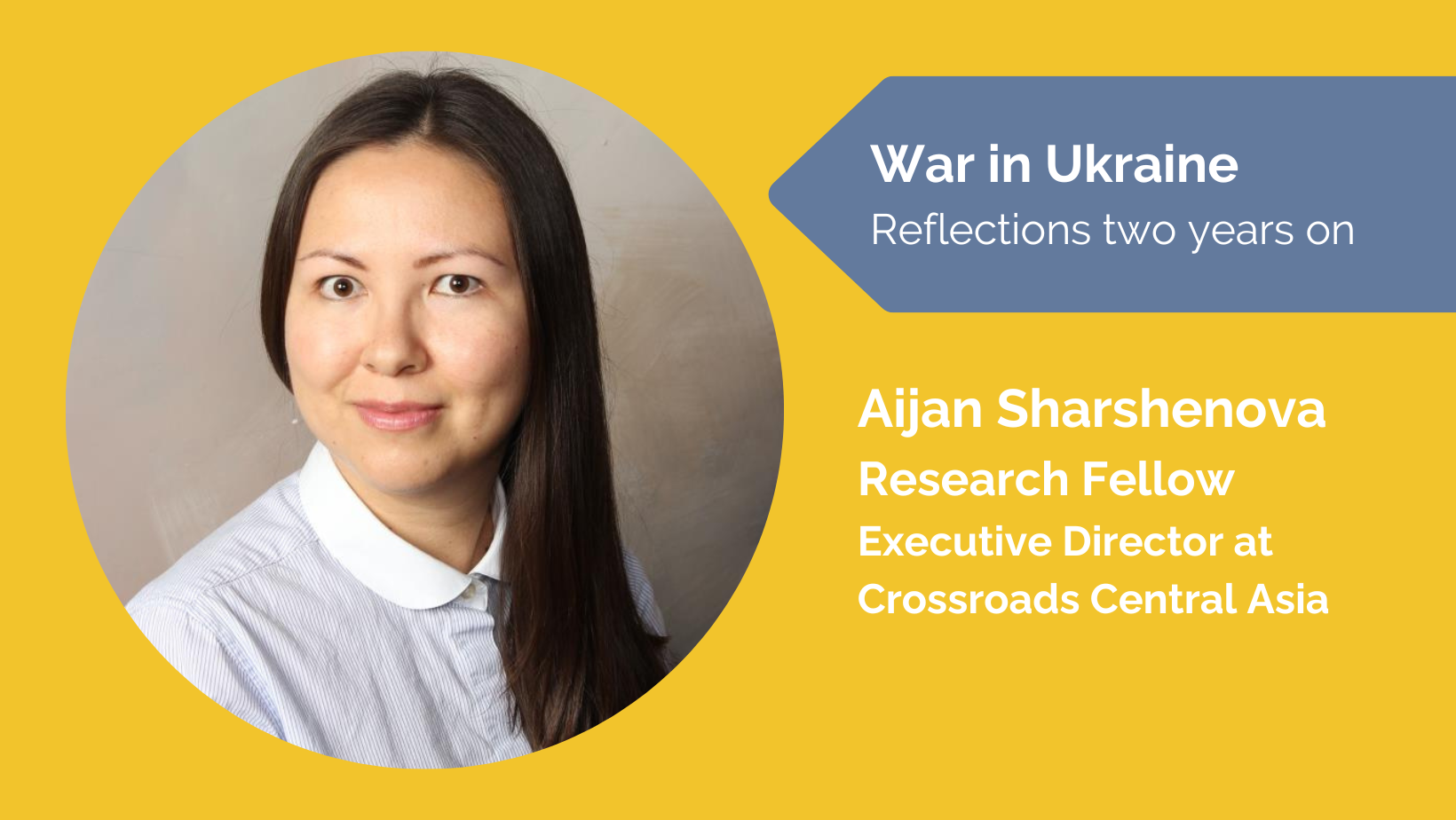
            Image by Official White House Facebook Page.


            [1] Wu Jiao, Xi proposes a ‘new Silk Road’ with Central Asia, China Daily, September 2013, https://www.chinadaily.com.cn/china/2013xivisitcenterasia/2013-09/08/content_16952228.htm

            [2] U.S. Department of State, Remarks at the Opening of the C5+1 Ministerial Meeting, November 2015, https://2009-2017.state.gov/secretary/remarks/2015/11/249046.htm

            [3] U.S. Department of State, C5+1 Joint Statements and Releases, https://www.state.gov/c51-joint-statements-and-releases/

            [4] U.S. Department of State, Joint Statement on the C5+1 Meeting during UNGA 76, September 2021, https://www.state.gov/joint-statement-on-the-c51-ministerial-during-unga-76/; U.S. Department of State, Joint Statement on the C5+1 Meeting during UNGA 77, September 2022, https://www.state.gov/joint-statement-on-the-c51-meeting-during-unga-77/

            [5] The White House, C5+1 Leaders’ Joint Statement, September 2023, https://www.whitehouse.gov/briefing-room/statements-releases/2023/09/21/c51-leaders-joint-statement/

            [6] The White House, Readout of President Biden’s Meeting with the C5+1 Leaders at UNGA, September 2023, https://www.whitehouse.gov/briefing-room/statements-releases/2023/09/19/readout-of-president-bidens-meeting-with-the-c51-leaders-at-unga/

            [7] Daria Podolskaya, A view from across the ocean. Why did the United States pay attention to Central Asia?, 24.kg, September 2023, https://24.kg/vlast/275526_vzglyad_iz-za_okeana_pochemu_vssha_obratili_vnimanie_natsentralnuyu_aziyu/; The President, Republic of Uzbekistan, The President of Uzbekistan outlined the vision of priorities for cooperation between the states of Central Asia and the United States, September 2023, https://president.uz/ru/lists/view/6676

            [8] Government of Kazakhstan, Kassym-Jomart Tokayev took part in the summit of heads of state “Central Asia – USA”, September 2023, https://www.akorda.kz/ru/kasym-zhomart-tokaev-prinyal-uchastie-v-sammite-glav-gosudarstv-centralnaya-aziya-ssha-2083649

            [9] President of the Republic of Tajikistan, Participation in the meeting of the heads of state of Central Asia and the United States of America, September 2023, http://www.president.tj/ru/node/31509

            [10] The White House, C5+1 Leaders’ Joint Statement, September 2023, https://www.whitehouse.gov/briefing-room/statements-releases/2023/09/21/c51-leaders-joint-statement/

            [11] Government of Turkmenistan, The President of Turkmenistan took part in the first meeting of multilateral cooperation “C5+1”, September 2023, https://turkmenistan.gov.tm/ru/post/75727/glava-turkmenistana-prinyal-uchastie-v-pervoj-vstreche-mnogostoronnego-sotrudnichestva-s51

            [12] European Council, Joint press communique by Heads of State of Central Asia and the President of the European Council, October 2022, https://www.consilium.europa.eu/en/press/press-releases/2022/10/27/joint-press-communique-heads-of-state-of-central-asia-and-the-president-of-the-european-council/

            [13] Federal Foreign Office, Foreign Minister Baerbock travels to Kazakhstan and Uzbekistan, October 2022, https://www.auswaertiges-amt.de/en/aussenpolitik/-/2560918

            [14] Bundesregierung, Joint Declaration by Heads of State of Central Asia and the Federal Chancellor of Germany, September 2023, https://www.bundesregierung.de/resource/blob/998352/2226656/45f64011ff425e6db0dab0c60ff50310/2023-09-29-z5-erklaerung-en-data.pdf?download=1

            [15] British Embassy Astana, UK Foreign Secretary visits Kazakhstan, Gov.uk, March 2023, https://www.gov.uk/government/news/uk-foreign-secretary-visits-kazakhstan; FCDO and Leo Docherty MP, Europe Minister to forge closer relations in Central Asia, Gov.uk, June 2023, https://www.gov.uk/government/news/europe-minister-to-forge-closer-relations-in-central-asia

            [16] Foreign Policy Centre and John Smith Trust, Views from Central Asia on the UK’s Foreign Policy in the Region, FPC, August 2023, https://fpc.org.uk/views-from-central-asia-on-the-uks-foreign-policy-in-the-region/

            [17] Rebecca Nadin, Ilayda Nijhar and Elvira Mami, Shanghai Cooperation Organisation Summit 2022: key takeaways, ODI, September 2022, https://odi.org/en/insights/shanghai-cooperation-organisation-summit-2022-key-takeaways/

            [18] Stefan Wolff, How China is increasing its influence in central Asia as part of global plans to offer an alternative to the west, The Conversation, May 2023, https://theconversation.com/how-china-is-increasing-its-influence-in-central-asia-as-part-of-global-plans-to-offer-an-alternative-to-the-west-206035; China News, China-Central Asia Summit Xi’an Declaration, May 2023, https://www.chinanews.com.cn/gn/2023/05-19/10010552.shtml

            [19] President of Russia, Russia-Central Asia Summit, October 2022, http://en.kremlin.ru/events/president/news/69598

            [20] President of Russia, Launch of Russian gas supplies to Uzbekistan via Kazakhstan, October 2023, http://en.kremlin.ru/events/president/news/72453; Reuters, Russia’s Putin visits Kyrgyzstan in first foreign trip since ICC arrest warrant, October 2023, https://www.reuters.com/world/russias-putin-visits-kyrgyzstan-first-foreign-trip-since-icc-arrest-warrant-2023-10-12

            [21] President of Russia, Official event marking the 20th anniversary of establishing a Russian air base in Kyrgyzstan, October 2023, http://en.kremlin.ru/events/president/news/72489; President of Russia, Meeting of the CIS Heads of State Council, October 2023, http://en.kremlin.ru/events/president/news/72499

            [22] President of Russia, Vadai International Discussion Club meeting, October 2023, http://www.en.kremlin.ru/events/president/news/72444; CIS Executive Committee, The Council of Heads of State of the CIS signed the Treaty on the Establishment of the International Organization for the Russian Language and adopted a Statement on the support and promotion of the Russian language as a language of interethnic communication, CIS Internet Portal, October 2023, https://e-cis.info/news/564/112780/

            [23] Carl Schreck, Kubat Kasymbekov, Manas Qaiyrtaiuly, Riin Aljas, Kubatbek Aibashov, Kyrylo Ovsyaniy, Kyrgyz, Kazakh Companies Send Western Tech To Firms Linked To Kremlin War Machine, RFE/RL, June 2023, https://www.rferl.org/a/kyrgyz-kazakh-firms-investigation-western-tech-russia-war-ukraine/32467795.html

            [24]EEAS Press Team, China: Press remarks by High Representative Josep Borrell after concluding his visit to the country, EEAS, October 2023, https://www.eeas.europa.eu/eeas/china-press-remarks-high-representative-josep-borrell-after-concluding-his-visit-country_en

            [25] euters, Moscow-Beijing partnership has ‘no limits’, February 2022, https://www.reuters.com/world/china/moscow-beijing-partnership-has-no-limits-2022-02-04/; Joe Leahy and Max Seddon, Xi Jinping hails ‘deep friendship’ with Vladimir Putin as leaders meet in Beijing, Financial Times, October 2023, https://www.ft.com/content/fd028975-462e-4b70-912e-3e1e441517e5

            [26] Kevin Liptak, Ongoing planning underway for potential Biden and Xi meeting in San Francisco in November, sources say, CNN, October 2023, https://edition.cnn.com/2023/10/05/politics/potential-biden-and-xi-meeting/index.html

            [27] Suzanne Lynch, Borrell to join EU-US summit as Brussels seeks to present united foreign policy front, Politico, October 2023, https://www.politico.eu/article/josep-borrell-to-join-eu-us-summit-as-brussels-seeks-to-present-united-front/

            [28] Hugh Williamson, Germany Should Keep Focus on Rights in Central Asia Talks, Human Rights Watch, September 2023, https://www.hrw.org/news/2023/09/28/germany-should-keep-focus-rights-central-asia-talks


            Footnotes
              Related Articles

              Accelerating progress on Sustainable Development Goals (SDGs)

              Article by Lilei Chow and Dr Abigael Baldoumas

              October 10, 2023

              Accelerating progress on Sustainable Development Goals (SDGs)

              In this interview, Lilei Chow (Save the Children) and Dr Abigael Baldoumas (Policy and advocacy consultant) discuss if there is evidence of accelerating progress on SDGs, and whether the UK is doing enough to remain on track to achieve all 17 goals by 2030. Full series around the G20 can be read here.


              Quick explainer: The Sustainable Development Goals (SDGs), setup in 2015 and adopted by all United Nations Member States, are 17 global goals designed to be a “blueprint to achieve a better and more sustainable future for all”.[1] The interconnected goals address global challenges and the aim is to achieve them by 2030.


              In July, ‘The Sustainable Development Goals Report 2023’ was published by the United Nations, marking the halfway point between the creation (2015) and projected achievement (2030) of the SDGs. At this stage, what markers of progress do you see towards reaching the SDGs?


              Lilei Chow: Early efforts to implement the SDGs were showing positive signs, for example on reducing child mortality, improving access to vaccination and universal health coverage and tackling extreme poverty. Unfortunately, at the halfway point and with the overlapping, compounding crises of COVID-19, climate, inequality, hunger and conflict, the report paints a rather dire picture on where the world is at the moment in collectively delivering on the SDGs, with only 12% of targets on track, roughly half making insufficient progress and about a third reversing in the wrong direction.


              Analysis by Save the Children shows that unless the current rate of progress rapidly accelerates, by 2030:[2]

              • 3.16m of the 942m children born will not survive to celebrate their 5th birthday.
              • Malnutrition will leave more than 1 in 5 babies stunted.
              • 2 in 5 children who start school will not be able to read and understand a simple sentence by age 10.
              • 67m of the 414m girls who should be finishing primary school will marry as children.
              • 2.6 billion – 4 in 5 – children will have experienced at least one extreme climate event including flooding, drought and heatwaves.


              These figures are of course alarming, but behind every statistic is a child whose voice matters. Ultimately the SDGs are about people. It is also important to underscore that while the lack of progress on the SDGs is almost universal, it is low-income and climate-vulnerable countries and children and communities most affected by inequality and discrimination within those borders that are bearing the brunt of this collective failure.


              Dr Abigael Baldoumas: The overall picture of progress towards the SDGs is bleak. The pandemic, war in Ukraine and subsequent global economic repercussions of both have contributed to a step backwards across a number of goals. The unfolding climate and nature crisis is already undermining progress, hitting those with the least hardest. In 2023, sustainable economic growth, food security, vaccine coverage, reduction in greenhouse gases, removing fossil fuel subsidies, preventing species extinction, ensuring sustainable food stocks and reducing unsentenced detainees are all deteriorating.

              “The pandemic, war in Ukraine and subsequent global economic repercussions of both have contributed to a step backwards across a number of goals.”


              Since 2020 progress towards ending extreme poverty, ending preventable deaths under five, ensuring primary education, access to electricity and reducing homicide rates has been reversed. There are pockets of hope. Increased internet use and mobile access are on track. The 2023 review found increasing skilled birth attendance, full employment, and sustainable and inclusive industrialisation close to meeting the target.


              Overall, it is clear that business as usual will not deliver. The recent SDG Summit on the fringe of the UN General Assembly set an ambitious tone in the final political declaration. At one point over the summer it was not certain that the declaration would be agreed. So to have a clear reaffirmation of the goals and acknowledgement of the scale of action needed to achieve them is an important prerequisite to further progress.


              What would you pinpoint as the biggest opportunities as well as obstacles to accelerating progress towards the SDGs? And how can these be maximised and mitigated respectively?


              Lilei Chow: Having just returned from the SDG Summit at the UN General Assembly in September, I do believe that the world is at a crossroads. There is now consensus that the status quo has to change. Broadly speaking, we can hope to see opportunities emerge around four major themes – the first, as I mentioned, on international financial reform, including reform of the Multilateral Development Banks, the second around climate ambition, the third around the proposed “SDG Stimulus Package” and the fourth around reform of the multilateral system.

              “[Political] vision and commitment needed to undertake long-term decisions that may be difficult and to invest in our collective future.”


              These broad areas offer the opportunity to usher in systemic reforms that are needed to unlock progress across the SDG framework. The challenge, of course, lies in political will and leadership – the vision and commitment needed to undertake long-term decisions that may be difficult and to invest in our collective future. For us in civil society, it’s about building on the momentum created by the Summit to push for accountability on the SDGs.


              Dr Abigael Baldoumas: One of the biggest hurdles to progress towards the SDGs is the lack of adequate and appropriate finance. The Organisation for Economic Co-operation and Development (OECD) and UN Development Programme (UNDP) estimated the annual financing gap had reached $4.2 trillion USD in 2020 as needs increased while resources declined.[3] Substantial public investment in public goods like healthcare, education, water and sanitation and social protection systems is needed. This will require:

              • Fair and effective national tax systems, backed by a UN tax convention that tackles international tax avoidance and offshore tax havens.
              • Fast and meaningful debt relief. Unsustainable debt burdens are pushing too many countries into crisis. The current system for negotiating debt relief is not fit for purpose. Countries in debt distress need a comprehensive debt restructuring and forgiveness mechanism that includes bilateral, multilateral and private debt. Debt relief, including forgiveness, would free up resources for progressing the SDGs.
              • A dramatic scale up of Official Development Assistance (ODA) and climate finance. OECD members need to meet their 0.7% commitment, and ensure that ODA is both focused on meeting the SDGs and aligned with the Paris Agreement. Climate finance should be additional to ODA as pledged in Paris.

              “Decolonising development is a huge opportunity to progress the SDGs.”


              It is not just about more money, and it definitely is not just about ODA. Low- and middle- income countries (LMIC) and their populations need to be in the driving seat of their own development, including investment in gender-transformative public services and social protection. Decolonising development is a huge opportunity to progress the SDGs. This includes national ownership of development strategies and programmes, increased LMIC voice and agency in multilateral institutions like the World Bank and IMF, and more direct access to development finance including ODA. Furthermore, it also includes fair and effective national tax systems, backed by a UN tax convention that tackles international avoidance and offshore tax havens.


              Are the current UN reporting mechanisms doing enough to ensure governments deliver on their SDGs commitments?


              Lilei Chow: The follow-up and review mechanism negotiated as part of the 2030 Agenda was modelled after existing human rights reporting practices such as the Universal Periodic Review. The challenge has not been in the mechanism per se as opposed to the process of follow-up and review, and in particular, the voluntary nature of it, which means there is a tendency for governments to cherry pick what they report on.

              “Review process is like a country’s “report card” on the SDGs, but it is written by governments.”


              The Voluntary National Review (VNR) process is like a country’s “report card” on the SDGs, but it is written by governments. Likewise, there is a huge gap in reporting on SDG commitments by the private sector and other actors. There has also been a disconnect between the review mechanisms at the local level through to the regional and global levels, although this is improving. There is now a rich body of spotlight or complementary reporting on the SDGs by civil society, including reports written by children that we have supported that are important accountability tools although much more needs to be done to include them in the High-Level Political Forum. The upcoming High-Level Political Forum review provides an opportunity to strengthen the follow-up and review mechanism on the SDGs, but national parliaments and local councils also offer avenues to strengthen accountability at the national level, for example through parliamentary select committees.


              Dr Abigael Baldoumas: The distance to reaching many of the SDGs suggests that the current reporting mechanisms are insufficient. Measuring progress is dependent on data and information provided by national and subnational governments statistical agencies and through the voluntary national review process. While the 2023 SDG progress report paints a bleak picture of progress today as well as an ambitious and transformative agenda for achieving the goals by 2030, there are very clear limits to the UN’s ability to compel action by its members. They do help to track progress and understand the gaps. Transparency and accountability are the cornerstones of good development, the SDGs will only be realised if concerted effort is taken by all stakeholders.

              “The SDGs should be incorporated into strategies and policies at the national level with clear milestones and budgeted action plans”


              Reporting mechanisms are not a substitute for national-level action. As the ultimate duty bearers, governments need to take the steps necessary to get the SDGs back on track. The SDGs should be incorporated into strategies and policies at the national level with clear milestones and budgeted action plans, including commitments to conduct and publish regular voluntary reviews. This will improve their reporting and more importantly incorporate the SDGs into national-level systems of accountability.


              How should external expertise, the private sector, and civil society be engaged to support progress towards the SDGs? And are there positive examples you can point to?


              Lilei Chow: There are many examples out there now of multistakeholder partnerships on the SDGs.

              “There has been little progress in bringing together these actors to deliver on the SDGs in a meaningful way.”


              The UK is fortunate to have a largely engaged private sector, strong civil society that works in some of the hardest to reach places and with the most marginalised communities around the world and active local governments, but to date, there has been little progress in bringing together these actors to deliver on the SDGs in a meaningful way. There are many examples of how this can be done in practice, for example by looking towards Denmark, the Netherlands, Germany, Sweden, South Korea and Indonesia.


              Dr Abigael Baldoumas: The ambition of the SDGs and the scale of transformation needed to achieve them require a coordinated effort. Civil society, scientific and other experts, the private sector and governments all have a role to play. Multi-stakeholder engagement mechanisms are one way of engaging broad support towards SDG implementation. The UK Government should deliver on their 2019 voluntary national review commitment to establish a multi-stakeholder engagement mechanism as a way to mobilise cross-sectoral support. This should be accompanied by specific support to civil society organisations, who play a critical role representing people, holding governments and others to account and supporting communities.

              “Governments need to ensure that private sector investment is focused on delivering the SDGs and reaches those further behind.”


              The role of the private sector is critical. Much has been made of the potential for private investment to bridge the financing gap. However ‘billions to trillions’ remains a slogan and the promised returns on public finance have not materialised. Moreover investments have been limited to a few sectors and higher income countries. Governments need to ensure that private sector investment is focused on delivering the SDGs and reaches those further behind. One way to achieve this is to require all private sector partners meet human, labour, and women’s rights standards as well as environmental regulations. For example, adopting a polluter pays model could help to bridge the SDG financing gap while improving environmental and climate outcomes. At the same time, the potential of the LMIC private sector, especially small- and medium-sized enterprises, to contribute to the goals, with the proper incentives and support has been undervalued. Investing in local economies and job creation, builds resilience and serves local needs.


              What policies should the leading British parties prioritise in order to accelerate progress towards the SDGs as we approach the next UK general election?


              Lilei Chow: The simple answer is that the UK needs leadership and strategy at the very top levels of government in order to deliver the SDGs not just internationally but domestically as well.

              “UK needs leadership and strategy at the very top levels of government in order to deliver the SDGs”


              The UK needs to strengthen the means of implementation on the SDGs so that they can be implemented in a way that promotes integration and policy coherence across the framework. This includes meaningfully engaging all stakeholders and to improve accountability and transparency around how SDG gaps and progress are being monitored. As one of the major creditors of multilateral development banks, it is positive to see that the UK has announced its intention to get behind some of the key reforms of the international financial architecture that are being proposed – however, there needs to be clarity on how these will now be taken forward and to ensure that these proposals do not further entrench debt unsustainability of low and middle-income countries. Finally, it is important that the UK’s approach on the SDGs is grounded in the transformative principles of the 2030 Agenda, namely the pledge to Leave No One Behind, universality and human rights.


              Dr Abigael Baldoumas:

              • Ensure that the SDGs and Leave No One Behind Agenda are championed at the highest level, and demonstrate that commitment by:
                • Publishing a clear roadmap for getting back to 0.7% and meeting climate commitments.
                • Establishing multi-stakeholder engagement mechanisms in line with the 2019 VNR commitments.
              • Meet commitments to become a locally-led donor that puts countries and their populations in charge of their own development. This will require:
                • An ambitious action plan with transparent targets and metrics on local funding, addressing internal roadblocks to equitable partnerships and rebalancing power dynamics in favour of local and national actors.
                • Centering collaboration and co-creation rather than prioritising British interests and expertise.
                • Investing in diverse, long-term partnerships with LMIC civil society, including women’s rights organisations, youth movements, human rights defenders, groups that represent ethnic, religious and indigenous communities and people living with disabilities.
              • Level the playing field by:
                • Promoting policy coherence based on the SDGs through development, diplomatic and trade relationships as well as domestically, ensuring that domestic policies do not undermine progress.
                • Ensuring that the UK’s trade strategy aligns with international development and international climate finance strategies. Any trade strategy and all trade deals should respect LMIC development strategies, prevent the export of social and environmental risks.
                • Supporting the transformation of the international financial architecture to increasing LMIC voices and agency in multilateral institutions and spaces, making the rules of the game fair, so that they work for people and the planet.


              Lilei Chow is the global technical lead on the SDGs for the Save the Children global movement, with a particular focus on accountability to the Pledge to Leave No One Behind. Lilei has over fifteen years of experience working in international development, including within the UN system, mostly with vulnerable and marginalised groups such as indigenous communities and persons with disabilities. She also has a background in field research. Lilei graduated Summa Cum Laude with Distinction from Boston University in International Relations, and holds a Master’s in Public Policy from the Lee Kuan Yew School of Public Policy, National University of Singapore and a Master’s in Public Affairs from Institut d’études politiques de Paris (Sciences Po), Paris Magna Cum Laude.


              Abigael Baldoumas is a senior policy, advocacy and research professional with over a decade of experience in global development and humanitarian response. She has a track record of delivering high quality, evidence-based policy analysis and a proven ability to shift government policies and practices. She has a masters and doctorate in political science with a focus on social justice activism. She led the UK international development sector’s response to successive rounds of cuts and the 2022 international development strategy. Her recent work on the future of international development research brought together leading thinkers and practitioners from across global development and adjacent sectors to challenge current narratives and surface opportunities. Her work on fair share analysis provided an innovative advocacy tool for humanitarian funding. Her work includes policy analysis and development, research and project management, managing donor relations for advocacy and fundraising, leading field-based research for advocacy and communications, drafting policy briefs and high profile reports, briefing high-level representatives, lobbying to improve ODA quality and transparency, humanitarian assistance and gender justice, with a focus on women, peace and security.


              [1] UN, Sustainable Development Goals, Take Action for the Sustainable Development Goals, https://www.un.org/sustainabledevelopment/sustainable-development-goals/

              [2] Child Atlas, The SDG Summit must unlock new financing and raise ambition with and for children, September 2023, https://www.childatlas.org/blog/sdg-summit-must-unlock-new-financing-and-raise-ambition

              [3] OECD, Closing the SDG Financing Gap in the COVID-19 era: Scoping note for the G20 Development Working Group, October 2021, https://www.oecd.org/dev/OECD-UNDP-Scoping-Note-Closing-SDG-Financing-Gap-COVID-19-era.pdf

              Footnotes
                Related Articles

                Meeting the Challenge of Transnational Human Rights Violations in the UK: The case for a Transnational Rights Protection Office

                Article by Dr Andrew Chubb

                September 28, 2023

                Meeting the Challenge of Transnational Human Rights Violations in the UK:  The case for a Transnational Rights Protection Office

                Today’s authoritarian actors, including powerful authoritarian states, can remotely surveil, threaten and harass individuals inside the United Kingdom (UK). The most frequently targeted are those within diaspora communities, students, activists, human rights defenders, exiled political figures and journalists. A result of the confluence of evolving digital communications and rising global authoritarianism, the problem of transnational human rights violations is currently a major blind spot in the UK’s democratic institutions, in particular its human rights protection arrangements. Simply put, the UK Government is legally obliged to protect those living here who are at risk of, or have faced, repercussions as a result of exercising their democratic rights.


                The UK Home Office’s Defending Democracy Taskforce, established in late 2022 and chaired by Security Minister Tom Tugendhat, has transnational repression within its mandate.[1] Yet with its primary focus on issues related to national security – electoral security, threats to politicians, improper foreign lobbying and the protection of sovereignty – the taskforce offers little support to targeted communities and individuals.[2] In the United States, the FBI has launched a series of criminal cases against alleged perpetrators of transnational repression since 2020 by applying pre-existing offences such as harassment and stalking.[3] While law enforcement is a necessary step, the agency’s cases do not constitute a systematic institutional response to this issue, as acts of transnational repression can often occur via digital platforms, without any crime being committed on the physical territory of the host state.[4]


                The absence of UK institutional frameworks designed to meet these complex challenges constitutes a dereliction of the UK’s obligations under international human rights law. A focused and effective way  to address these violations of the human rights of vulnerable communities and individuals would be the establishment of a Transnational Rights Protection Office (TRIPO) as part of the UK’s national rights protection institutions.[5] This new office should monitor transnational human rights issues and their manifestations in the UK; provide information, support and safe points of contact to affected individuals; advise the UK Government; and develop future legal avenues of redress.


                Problem: The blind spot of transnational human rights violations

                In an era of growing authoritarianism globally, transnational rights violations are on the rise.[6] From the Stalinist Soviet Union’s executions of Saudi Arabia’s murder of Leon Trotsky to Jamal Khashoggi, autocrats have often gone to extreme lengths to silence independent voices and political rivals in exile abroad. But today a broad array of authoritarian actors including states, organisations and individuals can surveil and threaten critics and everyday citizens from afar, with minimal cost.[7] Chinese political activists and persecuted groups including Uyghurs and Tibetans face well-documented threats from the People’s Republic of China (PRC) ranging from social media harassment to coercion of family members through to extrajudicial rendition.[8] Political exiles from numerous Central Asian countries have commonly encountered violence outside their home country, and Cambodia, Ethiopia, Eritrea, Russia, Rwanda, Vietnam and at least two dozen other states have made well documented attempts to suppress critics abroad.[9]


                The UK is not a safe haven free from these kinds of threats. Saudi, Libyan and Syrian exiles have faced technology-enabled threats to their exercise of basic political rights in the UK in recent years.[10] Persian-language broadcaster Iran International was forced to shut down its London studio earlier this year after British police warned of escalating “state-backed threats”.[11] The Eritrean Government attempts to levy a 2 percent income tax on UK-based diaspora community members, with those who refuse to pay facing visa denials, and threats against family members and property there.[12] SLAPPs (strategic lawsuits against public participation) have threatened to bankrupt UK journalists and media investigating wealthy kleptocrats in Russia, Kazakhstan, Malaysia and elsewhere.[13] Overseas students, scholars, activists and journalists are subject to technical surveillance of their communications, extraterritorial censorship, employment discrimination and threats of future criminal prosecution for the exercise of basic human rights in the UK.[14]


                These practices constitute transnational human rights violations: infringements on human rights against a target located remotely across national borders from the originator of the threat. Such situations give rise to a host country’s duties to protect under international human rights law.[15] Under the International Covenant on Civil and Political Rights (ICCPR) States have the obligation to “ensure within its territory” the rights in the Covenant, and “ensure that any person whose rights or freedoms as herein recognized are violated shall have an effective remedy.”[16] The International Covenant on Economic, Social and Cultural Rights (ICESCR), meanwhile, requires states to ensure the “conditions safeguarding fundamental political and economic freedoms to the individual” and “to guarantee that the rights enunciated… will be exercised without discrimination of any kind as to race, colour, sex, language, religion, political or other opinion.”[17] The UK’s Human Rights Act accordingly obliges the Government to ensure individuals can exercise their fundamental rights such as freedom of speech, association and protest.[18]


                Transnational human rights violations that take effect inside the UK are a longstanding challenge significantly exacerbated by globalisation and technology. Today’s authoritarian governments have unprecedented abilities to reach beyond their own borders. New digital communications channels, coupled with intensified cross-border linkages, have created new and effective modes of extra-territorial coercion and punishment to which liberal democracies have yet to develop meaningful responses. In the UK, members of some targeted communities have even reported being afraid to seek help from local UK authorities for fear that doing so would place family members – or themselves – at even greater risk.[19]


                While direct harassment and intimidation on the basis of political or religious beliefs taking place in Britain is illegal, numerous UK diaspora communities nonetheless face serious encroachments on their rights due to surveillance and repression implemented both from inside the UK and from overseas. The result is that many members of vulnerable communities cannot in practice exercise fundamental human rights in the UK without fear of adverse consequences. Often, such transnational repression is implemented via threats or harm to the target’s family members located in another country.[20]


                Government must equip the UK’s human rights institutions to provide meaningful support to individuals and communities and others facing issues of transnational coercion, and establish mechanisms to prevent impunity for the actions taken against them. Most importantly, targets of transnational repression need to know where to get support, and trust that the institutions they reach out to understand the specific nature of these types of violations and the driving factors behind them.


                Proposal: Transnational Rights Protection Office


                Establishing a UK Transnational Rights Protection Office (TRIPO) would directly mitigate the human rights impact of foreign states’ interference and help meet the UK’s obligations towards vulnerable individuals and groups disproportionately affected by transnational repression. The new office should serve at least five key functions:


                1. Providing accessible information, advice and support to individuals facing threats of transnational human rights infringements;[21]
                2. Collecting data, research and reporting on the prevalence and forms of transnational infringements against UK residents’ human rights;[22]
                3. Supporting individuals, communities and vulnerable family members to access legal assistance, humanitarian visas and potential avenues of redress;
                4. Advising and supplying information to other UK government agencies to ensure extradition, deportation and freezing of assets are not used to violate human rights;[23] and
                5. Investigating future legal avenues of remedy against perpetrators of transnational human rights violations against UK residents.


                These functions align closely with existing activities of the Equality and Human Rights Commission, though TRIPO would not necessarily need to be institutionally part of the EHRC, which is already overstretched and underfunded. Yet, as the UK’s national human rights institution, the EHRC has the mandate and experience in promoting awareness, understanding and protection of human rights in the UK.[24] While a range of models should be considered, the TRIPO would benefit from affiliation with the EHRC – not only because the matters of sit within its remit, but also because its membership of the Global Alliance of National Human Rights Institutions means it may establish an example for other jurisdictions that likewise have currently unfulfilled human rights obligations in respect of transnational repression.


                The UK Government currently lacks a dedicated body to handle the specific types of challenges that transnational repression creates, and ensure that the UK meets its human rights obligations. TRIPO would provide a focal point for monitoring the issues, delivering direct support, and closing the blindspot of transnational human rights violations in the UK.


                Dr Andrew Chubb is a Senior Lecturer in Chinese Politics and International Relations in the Department of Politics, Philosophy and Religion at Lancaster University, and a Fellow in the Center for China Analysis at the Asia Society Policy Institute.


                Disclaimer: The views expressed in this piece are those of the author and do not reflect the views of The Foreign Policy Centre.


                [1] UK Government, Ministerial Taskforce meets to tackle state threats to UK democracy, November 2022, https://www.gov.uk/government/news/ministerial-taskforce-meets-to-tackle-state-threats-to-uk-democracy

                [2] Ibid

                [3] FPI, Transnational Repression, see: https://www.fbi.gov/investigate/counterintelligence/transnational-repression

                [4] Sarah Lehmkuehler, Countering Transnational Repression: The importance of integrating new immigrants into society, Foreign Policy Centre, December 15, 2020, https://fpc.org.uk/countering-transnational-repression-the-importance-of-integrating-new-immigrants-into-society/

                [5] The TRIPO could potentially be affiliated to the UK’s national human rights institution, the Equality and Human Rights Commission, https://www.equalityhumanrights.com/en

                [6] Yana Gorokhovskaia and Isabel Linzer, Transnational Repression: Understanding and Responding to Global Authoritarian Reach, Freedom House, https://freedomhouse.org/report/transnational-repression

                [7] Gerasimos Tsourapas, Global Autocracies: Strategies of Transnational Repression, Legitimation, and Co-Optation in World Politics, International Studies Review, 2021, 616-644; Marlies Glasius, Extraterritorial authoritarian practices: a framework, December 2017, https://www.tandfonline.com/doi/full/10.1080/14747731.2017.1403781

                [8] Chen Jie, Political Science and International Relations, The University of Western Australia, Australia, The Overseas Chinese Democracy Movement: Assessing China’s Only Open Political Opposition, 2019, https://www.e-elgar.com/shop/gbp/the-overseas-chinese-democracy-movement-9781784711023.html

                [9] See Alexander Dukalskis, Making the World Safe for Dictatorship (Oxford: OUP, 2021), pp. 67-91 and online appendix at https://alexdukalskis.files.wordpress.com/2021/04/online-appendix-aaad_making-the-world-safe-for-dictatorship-2.pdf. Ethiopian and Rwandan Government critics have seen family members arrested over their participation in protests, and Cambodian dissidents have complained of threats and surveillance by agents or supporters of Hun Sen’s Government. Vietnamese agents abducted a businessman in Berlin in 2017, sparking fears among dissident exiles that have reverberated in Vietnamese communities elsewhere. Before Taiwan’s democratisation, the ruling Kuomintang also engaged in intimidation and violence against its critics overseas, including the infamous murder of KMT critic Henry Liu in California in 1984. See: Human Rights Watch, Australia: Protests Prompt Ethiopia Reprisals, November 2016, https://www.hrw.org/news/2016/11/07/australia-protests-prompt-ethiopia-reprisals; Amy Greenbank, Spies in our suburbs: Unearthing an alleged shadowy network of spies and their efforts to silence dissent, ABC News, August 2019, https://www.abc.net.au/news/2019-08-25/spies-in-our-suburbs-alleged-spy-web-silencing-rwandan-refugees/11317704; Stephen Dziedzic, Hun Sen: Calls for Cambodian sanctions intensify in Canberra ahead of key Julie Bishop meeting, ABC News, August 2018, https://www.abc.net.au/news/2018-08-15/calls-for-cambodian-sanctions-intensify-ahead-of-bishop-meeting/10117972; Silke Ballweg, Berlin bloggers fear the long arm of Hanoi, DW, January 2018, https://www.dw.com/en/berlin-bloggers-fear-the-long-arm-of-hanoi/a-42158554; Reuters Staff, Germany charges Vietnamese man in ex-oil executive kidnapping, Reuters, March 2018, https://www.reuters.com/article/us-germany-vietnam-idUSKCN1GJ1BI

                [10] Dana Moss, The Arab Spring Abroad: Mobilization among Syrian, Libyan, and Yemeni Diasporas in the U.S. and Great Britain, 2016, https://escholarship.org/uc/item/8dd2k20p; Siena Anstis & Sophie Barnett, Munk School of Global Affairs and Public Policy, Digital Transnational Repression and Host States’ Obligation to Protect Against Human Rights Abuses, https://munkschool.utoronto.ca/research/digital-transnational-repression-and-host-states-obligation-protect-against-human-rights

                [11] Geneva Abdul, UK-based Iranian TV channel moves to US after threats from Tehran, The Guardian, February 2023, https://www.theguardian.com/media/2023/feb/18/uk-iranian-tv-channel-moves-us-threats-tehran

                [12] Eritrea Hub, Eritrea’s 2% Diaspora Tax and its impact in the UK, October 2022, https://eritreahub.org/wp-content/uploads/2022/10/Eritreas-2-Diaspora-Tax-and-its-impact-in-the-UK.pdf

                [13] Susan Coughtree, London Calling: The Use of Legal Intimidation and SLAPPs Against Media Emanating From the United Kingdom, February 2023, https://fpc.org.uk/wp-content/uploads/2022/04/London-Calling-Publication-February-2023.pdf

                [14] Joshua Rozenberg, A Lawyer Writes, Saudi spyware claim goes ahead, August 2022, https://rozenberg.substack.com/p/saudi-spyware-claim-goes-ahead; Samantha Craggs, CBC News, McMaster cuts Chinese institute, worried by discrimination, February 2013, https://www.cbc.ca/news/canada/hamilton/headlines/mcmaster-cuts-chinese-institute-worried-by-discrimination-1.1321862

                [15] United Nations, International Human Rights Law, https://www.ohchr.org/en/instruments-and-mechanisms/international-human-rights-law

                [16] United Nations, International Covenant on Civil and Political Rights, December 1966, https://www.ohchr.org/en/instruments-mechanisms/instruments/international-covenant-civil-and-political-rights

                [17] United Nations, The International Covenant on Economic, Social and Cultural Rights, December 1966, https://www.ohchr.org/en/instruments-mechanisms/instruments/international-covenant-economic-social-and-cultural-rights

                [18] Human Rights Act 1998, https://www.legislation.gov.uk/ukpga/1998/42/contents

                [19] Index on Censorship, Landmark report shines light on Chinese “long arm” repression of ex-pat Uyghurs, February 2022, https://www.indexoncensorship.org/2022/02/landmark-report-shines-light-on-chinese-long-arm-repression-of-ex-pat-uyghurs/; Sophia Yan, The Telegraph, Exclusive: China continues to harass exiles on British soil, claim victims, August 2020, https://www.telegraph.co.uk/news/2020/08/16/exclusive-china-continues-harass-exiles-british-soil-claim-victims/

                [20] Ibid, Safeguard Defenders; Dana Moss, Oxford Academic, Transnational Repression, Diaspora Mobilization, and the Case of The Arab Spring, September 2016, https://academic.oup.com/socpro/article/63/4/480/2402855

                [21] This could be coordinated with community organisations such as Citizens’ Advice and refugee support organisations.

                [22] Ibid, CESCR, General Comment No.10.

                [23] Freedom House, Special Report 2022, United Kingdom: Transnational Repression Host Country Case Study

                https://freedomhouse.org/report/transnational-repression/united-kingdom

                [24] Equality Act 2006, https://www.legislation.gov.uk/ukpga/2006/3/section/9

                Footnotes
                  Related Articles

                  Multilateral Institutions for the 21st Century

                  Article by Thomas E. Garrett and Fred Carver

                  September 26, 2023

                  Multilateral Institutions for the 21st Century

                  In this article, Thomas E. Garrett (Secretary General of the Community of Democracies) and Fred Carver (Managing Director of Strategy for Humanity) look at what role multilateral institutions have in the 21st century, and how the UK should interact with international organisations, especially now it is no longer part of the European Union. Full series around the G20 can be read here.


                  How do you see the current role of multilateralism within the international system? And what changes are needed to strengthen it?


                  Thomas E. Garrett: Multilateralism will encounter change, but at its core the United Nations (UN) system is not fading away. With increasing frequency, we are confronted by global issues that ignore national borders and natural barriers. Issues such as climate disruption, the most recent pandemic, irregular migration or nuclear proliferation tie all nations to a multilateral system.


                  Yet, as the many challenging voices raised during the current 77th General Assembly of the UN shows, the multilateral framework needs reform. No country should be kept out of universal membership bodies such as the UN, even authoritarian nations which are often the source of many of the world’s challenges, as in Russia’s unjustified war on Ukraine with its impact on world food supplies and its gross violation of human rights.


                  The appropriate counter to the challenges of weakness or ineffectiveness within today’s multilateral system is for democracies to unite at every global decision-making forum, to work as a bloc across traditional regional groupings, offering the solutions that self-correcting representative political systems provide.


                  Fred Carver: Doubtless the multilateral system is outdated, but I fear many of the attempts to change that structure amount to hoping that a different shaped cup will change the taste of the liquid. So while many people including myself have made policy suggestions which would help to renew the multilateral system;[1] I think political capital is better invested directly in attempting to achieve political outcomes than in pushing for structural changes, few of which thread the needle between cosmetic and impractical.


                  In terms of those political outcomes: if you look at the UN Secretary-General’s New Agenda for Peace you see an acceptance of the idea that right now the primary value of multilateralism is to mediate between states.[2] As a means of doing this it has some unique advantages over bi- or ‘minilateral’ diplomacy: by providing a mechanism which is a) open to all and b) allows states to converse on terms closer to equality, global divergence can be limited, smaller states are better able to pool their impact and shape the agenda, and the outcomes have an unmatched legitimacy and credibility.[3]


                  A few years back I would have answered more ambitiously: then the early 21st century dream of a broader multilateralism which shifted global governance, and ultimately power, around, and among, sub-state, non-state and super-state actors still appeared possible. That idea is out of fashion now, but it must not be forgotten entirely.

                  “If multilateralism, and sovereignty, do not keep pace they risk long term irrelevance.”


                  The long-term trend of increasing global interconnectivity – at least with respect to information and finance – is still working to make mid-21st century sovereignty a much fuzzier and less absolute concept than its previous versions. If multilateralism, and sovereignty, do not keep pace they risk long term irrelevance.


                  Volatility in the international system — exemplified by food insecurity, resource shortages and climate change — has implications for multilateral international cooperation. What type (or model) of multilateralism is needed in the face of this?


                  Thomas E. Garrett: A new model of multilateralism must prioritise the genuine, substantial inclusion of non-state actors from civil society and informal civil society.

                  “There should be an immediate inclusion of young people in the international system – their time isn’t coming, it is now”


                  Within this, there should be an immediate inclusion of young people in the international system – their time isn’t coming, it is now, and they are presenting non-ideological and fresh concepts to long-standing problems.


                  A multilateralism model which is successful in countering the volatility in the international system must frankly acknowledge issues such as food insecurity or declining adherence to a norms-based human rights framework are not occurring organically or due to time – these and similar issues are direct consequences of an assault on the international system by authoritarian states: China, Russia, and their allies. These countries do not seek reform of the system but to replace it with principles such as might makes right, or a hyper-sovereignty which cloaks human rights abuses.


                  Fred Carver: I’m concerned about the shift to a multilateralism based around adversarial clubs of countries. This is very damaging to the efficacy of the global system particularly with respect to issues like food insecurity and climate change. And while states do approach certain conversations – notably around rights and sovereignty – from different perspectives, history – including recent history – teaches us that even when adversarial groupings purport to be based around shared values those values are likely to be the first thing sacrificed on the altar of competition.


                  That said, I think the idea that we are in a ‘new cold war’ is overstated, at least at the UN. During the 1950s you could see months on months go by when the UN Security Council would scarcely meet or pass any resolutions. In contrast nowadays, away from the geopolitical bluster you get under the limelight, you see quite a lot of collaboration between supposed adversaries at the UN; the High Seas Treaty being a clear example.[4] And while I doubt there is much direct coordination between diplomats from, say, the UK and Russia, you certainly see them in lock step when it comes to protecting their privilege in the process of appointing senior UN officials.[5]


                  What is needed is a nimble (and thus resource intensive) approach which looks to build ad hoc coalitions both to secure progress on specific issues and to subvert this unhelpful and artificial separation of states into permanent interest groups. At the same time states must be sophisticated enough to not be entirely transactional – one of the primary long-term powers of the multilateral system is its ability to build normative standards and expectations of behaviour, which requires consistency in the application of principles.


                  How can partnerships and regional cooperation be better leveraged to restore credibility in the multilateral system, particularly with non-G20 members and the Global South?


                  Thomas E. Garrett: A great step towards this goal occurred recently in India, as the African Union (AU) joined the G20, moving from a past status as an ‘invited international organisation’ to membership as a regional bloc, alongside the European Union. The G20 had already served as a model of the developing and developed world in partnership and the AU ascension further enhances this high level of cooperation.


                  Fred Carver: We need to start by recognising that the reasons non-G20 members and the Global South think the multilateral system lacks credibility are often different to the reasons the West thinks the multilateral system lacks credibility.

                  “Global South critics tend to be more concerned with hypocrisy and inconsistency in the application of the rules of that order.”


                  Many western critics are concerned that the multilateral system is no longer able to maintain the post-war liberal order. Global South critics tend to be more concerned with hypocrisy and inconsistency in the application of the rules of that order. Further, many southern political elites were never sold on this order in the first place and – at best – accepted it as a quid pro quo for a project of political and economic equalisation. They resent the neglect of this agenda and fear it has been abandoned. Restoring credibility with states in the Global South therefore requires consistency – holding oneself and one’s allies to the same standard as one’s adversaries – and requires a willingness to spend money and share power in exchange for influence.


                  Pursuing “subsidiarity” (devolving global governance to regional mechanisms) is certainly a means of transferring money and control.[6] But it is not a panacea. It’s also a concept which is most developed with respect to Africa and which might be harder to apply in other contexts. Smaller South Asian states, for example, might prefer to take their chances in New York than under an inevitably India dominated regional mechanism, and the very idea of pursuing subsidiarity in West Asia is exhausting. If you speak to truly small states – as opposed to mid-tier powers with regional influence – it is often non-regional projects for transferring money and control at the UN (such as Bridgetown) that excite them.[7]


                  What role should the UK play in this multilateral system, and what opportunities and threats do you see impacting the UK’s approach moving forward? From this, what changes would you advise to the leading parties as we look forward to a general election?


                  Thomas E. Garrett: As a country that recently left a regional bloc, the UK should ensure it maintains its historic leadership role in international fora. A nuclear powered country, a G7 member, and one with strong ties with increasingly influential states such as Nigeria, Kenya, and South Africa, the UK should focus its role in promoting greater inclusion of these and other countries and support substantial roles for them in the multilateral, democratic ecosystem.

                  “The UK should reinforce its role as a leading country in international law and multinational fora.”


                  In terms of opportunities and threats, the UK should more consciously link, or sync, its domestic and foreign policies, for instance, on the difficult but essential issues such as refugees or de-nuclearisation. In moving forward in its relationship with China, or in dealing with Vladimir Putin’s Russia, the UK should reinforce its role as a leading country in international law and multinational fora.


                  Fred Carver: British politicians have not yet come to terms with how significantly the UK’s global stock has waned. While Brexit hardly helped, the main reasons for this are longer term shifts towards the South and East and away from former colonial powers. Perceptions of the UK at the UN have never entirely recovered from the Iraq war, and the absence of much contrition or reckoning following what many in the Global South saw to be a Ukraine-level outrage. In the General Assembly they were further harmed by the UK’s highly unpopular position on the Chagos Islands, although this may now change.[8]

                  “Forging an independent foreign policy is hard, but it becomes a lot easier if rather than starting from scratch one looks around the world for building blocks of best practice to emulate.”


                  This reduction in influence means that the UK needs to make clear strategic choices to maximise its impact. Regardless of the merits of doing so, the current political climate probably does not allow the UK to take the easy option here and closely align its foreign policy with either the US or EU, leaving the direction setting to them. Forging an independent foreign policy is hard, but it becomes a lot easier if, rather than starting from scratch, one looks around the world for building blocks of best practice to emulate.


                  British political parties should look at states that are punching above their weight in the multilateral system, particularly those that have commonalities with the UK, either as fellow members of Europe’s periphery or as fellow minor anglosphere powers. Ireland is a major and popular player in both peace and security and human rights. New Zealand’s words have significant clout in the world of nuclear disarmament and non-proliferation. Switzerland and Liechtenstein are adept at convening and building both issue specific and values-based coalitions.


                  This approach will need some adaptation in view of the UK’s particular strengths and weaknesses.

                  “The UK has significant amounts of soft power and its diplomatic corps is still strong and capable; but its politicians sometimes exude a sense of exceptionalism and a lack of historical memory”


                  The UK has significant amounts of soft power and its diplomatic corps is still strong and capable; but its politicians sometimes exude a sense of exceptionalism and a lack of historical memory that does not play well on the world stage.[9] Again, it would be worth looking comparatively at how other political leaders have navigated historic and more recent foreign policy blunders for examples of best practice.


                  Regardless, it is difficult to get more out of the multilateral system than you put in. As is well known the UK’s retreat from spending on ODA has been noticed and has come at a cost in terms of global credibility, particularly on critical issues such as climate, finance and health.[10] What is less often mentioned is the UK’s retreat as a troop contributor to UN peacekeeping. While the UK’s mission to Mali was no longer sustainable, the fact that it was not replaced by a similar deployment elsewhere has seen the number of UK blue helmeted troops shrink back to pre-2016 levels.[11] It is perhaps here, and in voluntary funding for the UN Office of the High Commissioner for Human Rights, that the best value for money can be found when contributing to the multilateral system.[12]


                  Thomas Garrett is in his second term as the Secretary General of the Community of Democracies, a global intergovernmental coalition comprised of Member States coordinating efforts on the rule of law, democracy, and human rights. Previously, Mr. Garrett was Vice President of Global Programs at the U.S. based International Republican Institute (IRI) a pro-democracy, non-partisan NGO supporting elections, civil society, and democratic governance in 80+ countries.  From 1994 to 2015, he was chief of party for IRI democracy support programs in Ukraine, Moldova, Belarus, Mongolia, and Indonesia. 


                  Fred Carver is a Managing Director at Strategy for Humanity, which works with mission-driven organizations and those who fund them on a range of policy issues. He has written a number of articles on international relations, with specific expertise on the United Nations, Peacekeeping, Atrocity Prevention, civil wars and political violence. From 2011-2016 he ran the Sri Lanka Campaign for Peace and Justice, a human rights NGO, and from 2016-2020 he was head of policy at UNA-UK, a UK campaigning organisation for multilateralism. Prior to that he worked as a researcher specialising in South Asia (primarily Pakistan) and in UK politics. He lives in Norway.


                  [1] Fred Carver, Renewing the UN system: Taking stock after 75 years, UNA-UK, March 2022, https://una.org.uk/sites/default/files/Final%20-%20Renewal%20of%20the%20UN%20system%20_2.pdf

                  [2] Political and Peacebuilding Affairs, A New Agenda for Peace, https://dppa.un.org/en/a-new-agenda-for-peace

                  [3] Moises Naim, Minilateralism, Foreign Policy, June 2009, https://foreignpolicy.com/2009/06/21/minilateralism/

                  [4] Karen McVeigh, High seas treaty: historic deal to protect international waters finally reached at UN, The Guardian, March 2023, https://www.theguardian.com/environment/2023/mar/05/high-seas-treaty-agreement-to-protect-international-waters-finally-reached-at-un

                  [5] Blue Smoke, P5 Frenemies, July 2023, https://bluesmoke.blog/2023/07/19/p5-frenemies/

                  [6] “Subsidiarity”, see definition: https://en.wikipedia.org/wiki/Subsidiarity

                  [7] Ministry of Foreign Affairs and Foreign Trade – Barbados, The 2022 Bridgetown Initiative, September 2022, https://www.foreign.gov.bb/the-2022-barbados-agenda/

                  [8] Seventy-Third Session, 83rd & 84th Meetings (AM & PM), General Assembly Welcomes International Court of Justice Opinion on Chagos Archipelago, Adopts Text Calling for Mauritius’ Complete Decolonization, UN, May 2019, https://press.un.org/en/2019/ga12146.doc.htm; Patrick Daly, Foreign office rejects Boris Johnson’s Chagos Islands handover fears, Independent, September 2023, https://www.independent.co.uk/news/uk/boris-johnson-britain-chagos-islands-mauritius-international-court-of-justice-b2416963.html

                  [9] UNHCR, UK Illegal Migration Bill: UN Refugee Agency and UN Human Rights Office warn of profound impact on human rights and international refugee protection system, July 2023, https://www.unhcr.org/uk/news/speeches-and-statements/uk-illegal-migration-bill-un-refugee-agency-and-un-human-rights-office

                  [10] Jess Gifkins, Samuel Jarvis and Jason Ralph, Global Britain in the United Nations, UNA-UK, February 2019, https://una.org.uk/sites/default/files/UNA-UK_GlobalBritain_20190207d.pdf

                  [11] Louisa Brooke-Holland, UN ends peacekeeping force in Mali, House of Commons Library, July 2023, https://researchbriefings.files.parliament.uk/documents/CBP-9827/CBP-9827.pdf

                  [12] See: Q129, Foreign Affairs Committee, Oral evidence: The UK’s role in strengthening multilateral organisations, HC 513, House of Commons, September 2020, https://committees.parliament.uk/oralevidence/944/html/

                  Footnotes
                    Related Articles

                    Ukraine’s efforts to investigate conflict related sexual and gender-based violence and the role of the ‘complementarity’ in International Criminal law

                    Article by Mariam Uberi

                    September 21, 2023

                    Ukraine’s efforts to investigate conflict related sexual and gender-based violence and the role of the ‘complementarity’ in International Criminal law


                    Disclaimer: This article references topics that readers may find distressing and/or triggering.


                    Sexual violence has long been part of armed conflict. Despite prohibitions against sexual violence having been codified in international law it continues to be perpetrated. Under international humanitarian law and international criminal law, rape can constitute a war crime, crime against humanity, torture, or a constitutive act with respect to genocide when the other elements of the crimes are present. The Rome Statute of the International Criminal Court (ICC) and the Elements of Crime[1] reflect the latest trends in the treatment of sexual violence.[2]


                    There has been significant evidence collated that suggests conflict-related sexual violence (CRSV) has been a prevalent issue in eastern Ukraine and occupied Crimea since 2014. The escalation of Russia’s advances to the illegal invasion of Ukraine in 2022 has led to a notable increase in both the magnitude and volume of cases of CRSV across the country. When perpetrated in the context of an armed conflict, sexual and gender-based violence (SGBV) is a serious violation of international humanitarian law and classified as a war crime. This underscores the urgency and importance of Ukraine’s attempts to address and investigate these crimes, by holding perpetrators accountable and providing justice and support to the victims.


                    Legal Context

                    The Government of Ukraine has not ratified the Rome Statute, it has, however, accepted the jurisdiction of the ICC.[3] It also follows that Ukraine is now duty-bound to assist the ICC. The principal obligations of Ukraine under the Rome Statute of the ICC fall within two major areas: “complementarity” and “cooperation”. The Rome Statute also requires the Government of Ukraine to ensure that it is able to cooperate with the Court fully and to adopt laws to this effect where necessary.[4] The principle of complementarity, defines the relationship between the ICC and its States Parties, confirming the primary state jurisdiction whilst limiting admissibility of cases before the ICC.[5] Complementarity is being dubbed as an “express will of States Parties” that acknowledges “the primary responsibility of States to exercise criminal jurisdiction”.[6] To further support this process, the ICC’s  Office of the Prosecutor (OTP) adopted a policy of “positive complementarity”, that encourages “genuine national proceedings” where possible, relying on national and international networks, participating in a system of international cooperation.[7] It provides the ICC with a mechanism that compels states to pursue an acceptable measure of accountability for major crimes including sexual violence. This stems from the OTP’s public commitment, made in 2006, to pay particular attention to methods of investigations of sexual and gender-based crimes.[8]


                    Article 17 of the Rome Statute identifies the circumstances in which a case becomes admissible before the ICC: when it is not being investigated or prosecuted nationally, or when the state is unwilling or unable to carry out the investigation and prosecute the case. The case must also be of sufficient gravity to justify investigation and prosecution by the ICC. A ‘case’ is described as proceedings against the same person in question, for the same conduct. This means that if a person is acquitted or convicted of a crime, they cannot be tried or punished again for the same crime, even if the second prosecution is for a different violation of law. Surprisingly, it is sufficient for a state to prosecute the subject’s conduct as a domestic crime rather than an international crime, as long as it is the same conduct as the issue.[9]


                    The possible conclusion that can be drawn as a result of this is that rape, even when undertaken as part of systematic or widespread attack or with genocidal intent, would be prosecuted as a domestic crime, as opposed to a crime against humanity.


                    Complementarity and Legislative Limitations

                    The complementarity in itself does not explicitly require the adoption of the crimes nationally. It has, however, often been referred to as the catalyst of domestic reform in introducing international crimes.[10]  Despite the “margin of appreciation” that states retain in the extent of domestic legislation, coupled with the lack of clear guidance from the ICC, many member states have introduced far reaching legislative reforms.


                    Basic presumption found in the case law of the ICC and ad hoc tribunals is that the rape committed during an armed conflict differs from the one committed during the peace time. It is often used as a military tactic where sexual assault becomes a crime against the whole community.[11] The UN Resolutions 1325 and 1820, both of which Ukraine supported, highlighted the need to protect women and support “maintenance and promotion of international peace and security”.[12] Resolution 1325 emphasised that sexual violence as a tactic of war can significantly exacerbate armed conflicts and impede international peace. It also affirmed that rape can constitute a war crime, crime against humanitry and/or genocide. The Resolution urged all states to establish effective systems for investigating and punishing perpetrators of sexual violence within the context of armed conflict.


                    Resolution 1820 stresses that the state bears a responsibility for respecting and ensuring the human rights of their citizens as well as individuals on their territory.[13] A report by the UN Commission on Human Rights investigating systematic rape committed during the armed conflict, concluded that nations must establish awareness of the seriousness of crimes of sexual and gender-based violence at the national level and deal properly with such crimes in international or non international armed conflicts. It reaffirmed the importance of states having clear legislation prohibiting rape and other forms of sexual violence and to provide adequate penalties commensurate to the gravity of such acts.


                    The Independent International Commission of Inquiry on Ukraine has documented a number of SGBV cases.[14] Based on the evidence collected, some members of Russian armed forces committed the war crime of rape and sexual violence involving women, men, and children, ranging from four to 82 years old.[15] As of June 2023, the Office of the Prosecutor General of Ukraine recorded 208 cases of war-related sexual violence.[16] However, according to the Special Representative of the UN Secretary-General on Sexual Violence in Conflicts, for every officially registered case of war-related sexual violence, in Ukraine, there are ten to 20 unregistered ones.[17] Ukraine has been taking a number of steps to investigate and document war crimes committed by Russian forces. This included the creation of a special group within the structure of the National Police to document crimes committed during the armed invasion and occupation of Ukraine. This also involved granting investigative security bodies the power to investigate war crimes.


                    On 26 June 2023, the Prosecutor General of Ukraine signed the Strategic Plan for the Implementation of the Powers of the Prosecutor’s Office in the Field of Criminal Prosecution for Conflict-Related Sexual Violence. Its purpose is to improve access to justice for victims of CRSV through the improvement of investigation and criminal prosecution processes.[18] Joint investigative teams (JITs) have been set up to investigate war crimes committed in Ukraine. These teams consist of prosecutors and investigators from Ukraine and other countries, and include digital tools to help gather evidence of war crimes.[19]


                    Prosecuting SGBV Crimes in Ukraine

                    The Ukrainian Criminal Code contains two articles which could be applied specifically to cases of conflict-related sexual violence. Paragraph 1 of Article 433 envisages criminal responsibility for violence against the civilian population in a conflict area, which may include sexual violence, and is punishable with three to eight years of imprisonment. Article 438 foresees criminal responsibility for the violation of laws and customs of war, which includes cruel treatment of prisoners of war or civilians (and thus may include sexual violence), and shall be punishable by imprisonment from eight to 12 years. Article 438 of the Criminal Code of Ukraine is often dubbed as a blanket provision by the human rights commentators. It provides liability for violations of the laws and customs of war (war crimes) and is usually invoked to cover sexual and gender-based violence. However, it contains no reference to the often gendered nature of crime, although it should be noted that SGBV can be carried out on persons of any gender.


                    Nevertheless, cases of sexual violence officially communicated by the Prosecutor’s office are investigated under Article 438, that is, as war crimes. The present provision seems to include common crimes for prosecution that do not cover all war crimes including rape, and/or other forms of sexual violence. It is thus void of any reference to SGBV. According to the statistics corroborated by the Ukrainian Women Lawyers Association JurFem, the absence of reference to ‘sexual crimes’ in the unified register of the pre-trial investigation system makes it difficult to discern how many cases refer to the act of sexual violence during the conflict.[20]


                    Further to this, over the course of March to May 2022, Ukraine’s prosecutorial body has opened over 14,000 criminal proceedings under Article 438 and 111 proceedings under Article 152 of the Criminal Code of Ukraine (“Rape”) punishable by three to five years and Article 153 of the Criminal Code of Ukraine (“Sexual Violence”) punishable by five years.[21] It can then be followed that the Office of the Prosecutor’s Office has qualified sexual violence committed during the conflict as rape (conducted in peacetime) under Article 152 as opposed to the war crime.[22]


                    Notwithstanding the fact that the ICC allows crimes committed during armed conflict to be tried as ‘ordinary’ domestic ones, criminal law commentators perceive that judging them as such is similar to denying a crucial contextual and systematic aspect to their acts. It can be viewed as a partial “unwillingness” to try the perpetrators for what they did.[23] According to Human Rights Watch, States should be aware that certain procedural or evidentiary rules that “effectively prevent the proper investigation and prosecution of crimes” may lead the ICC to establish an “unwillingness” by the state to take action.[24] Most importantly, the comparative ease of prosecuting domestic crimes, compared to international crimes, may wrongly motivate Ukrainian prosecutors to refrain from identifying crimes in their broader social context in favour of increasing the prospect of convictions. This raises two further issues.


                    Contrary to the existing statutory limitations adhered to invoking Article 152, under international law there should not be any period of limitation in any circumstances for prosecuting the perpetrators of SGBV, whether their crimes are carried out in times of peace or conflict. There is a difference in evidentiary burden too, including the absence of the requirement for the testimony of the victim to be otherwise corroborated in order for that testimony to be considered credible to secure conviction.[25] Finally there is a disproportionate difference between the sentence awarded to the perpetrators to appropriately punish the crime of genocide, crimes against humanity and war crimes. International law, however, prompts that sanctions are not proportional to the gravity of the crimes committed, so de facto impunity may arise.[26] Most importantly, Ukraine is under an obligation to analyse and report conflict-related sexual violence, including rape in situations of armed conflict, relevant to the implementation of Resolution 1888 (2009). By the same token, under General Recommendation No.19 of the UN Committee on the Elimination of Discrimination Against Women (CEDAW), state parties should encourage the compilation of statistics including the ‘effects of violence’.[27]


                    Crimes against humanity refer to specific acts committed as part of a widespread or systematic attack directed against any civilian population. These acts can include murder, extermination, torture, enslavement, persecution, enforced disappearance, and other inhumane acts. They can be committed in both times of war and peace, whereas war crimes are specific violations of the laws of war committed during an armed conflict. Moreover, crimes against humanity can be perpetrated against nationals of any state, including a state’s own citizens, if the state is involved in the attack. Otherwise, these are the norms reaching the ius cogens that require the state concerned to adopt necessary implementing legislation.[28] As a consequence the state in question may be held accountable in such cases when it fails to enact legislation.[29] For example, in 1998, the International Court Against Former Yugoslavia (ICTY), in its judgement against Anto Furundzija, acknowledged state responsibility if the maintenance or passage of national legislation that is inconsistent with international rules is evidenced.[30]


                    Since rape may constitute a crime against humanity as well as torture, war crime and genocide, its investigation requires the adoption of domestic criminal law. With a view to improving Ukraine’s criminal legislation on war crimes, the Parliament of Ukraine adopted a bill in May 2021,  that, among other changes, incorporated a detailed catalogue of war crimes into the Criminal Code of Ukraine. The bill, however, did not enter into force since the President of Ukraine had not signed it.[31] On 23 May 2022, a Kyiv appeals court tried a Russian soldier convicted for war crimes following the killing of a civilian under Article 438.[32] Convictions of other members of Russian armed forces for wilful killing, rape, sexual violence, torture and other violations also followed. This also included conviction of 53 individuals and 207 indictments for war crimes since 24 February 2022.[33]


                    Domestic war crime proceedings have been carried out in a number of countries including Bosnia and Herzegovina, where the prosecution and criminal sanctioning of war crimes was prioritised in the aftermath of the conflict in the early 90s. A decade after the end of the conflict, the focus shifted from internationally led efforts to pursue justice towards strengthening the capacity of domestic courts. This also included enhancing the capacity of the prosecutorial offices to ensure the continuation of the prosecution of war crimes.[34] This process however has been marred by the lack of harmonisation of the legislation and jurisprudence on international crimes throughout the country.[35] It then follows that even with the involvement of the ICC and prosecution by foreign countries, relying on the principle of universal jurisdiction, the Ukrainian authorities face a daunting task to prosecute war crimes committed during the current conflict internally. However, it is important that they do so in a fair and impartial manner and with adequate expertise.


                    Procedural Limitations

                    Ukrainian authorities have set up consultation points where lawyers deliver free legal aid and provide legal support to victims in order to lodge a complaint before the national Ukrainian law enforcement authorities, should they come forward. There is a plan to introduce a  draft  law “On the legal status of victims of sexual violence related to the armed aggression of the Russian Federation against Ukraine and the family members of the deceased persons.” This new law  will entail granting SGBV survivors  victim status as well as   the provision of compensation.[36] However, the UN Committee against Torture emphasised that this form of redress must be combined with a non-monetary reparation mechanisms, as money alone is not sufficient to repair the damage suffered by victims.The UN treaty body encourages a long-term, collaborative approach to ensure all aspects of the victim’s life have a chance for rehabilitation. This includes the provision of psychological and health services, as well as legal and social assistance and any other reintegration support. As suggested “rehabilitation for victims should aim to restore, as far as possible, their independence, physical, mental, social and vocational ability; and full inclusion and participation in society.”[37]


                    To overcome the inherent limitations to procedural guarantees, however, one needs to effectively prosecute sexual violence. Ukraine is yet to develop witness protection programmes, which is a problem since sexual violence complainants and witnesses are at particular risk, and are likely to refuse to participate at trial. Ukrainian authorities should ensure that trained female officers conduct witness interviews in cases where the victim is also female, that there is continuity in case management, and that the victim does not encounter the perpetrator at court. These steps are needed to limit the potential re-traumatisation of the victim.


                    There is a further requirement to collect necessary evidence and testimony to prosecute sexual and gender-based crimes, and therefore interviews with women and victims of sexual violence should be conducted in secure and confidential settings. On top of this, failure to allocate resources to gender sensitisation training to those conducting interviews with women and victims of sexual violence or recruitment of female law enforcement officers may account for the insufficiencies of the judicial system with respect to these crimes, which might result in the inability to prosecute. Further, the current constraints on state resources can compound the re-traumatisation, stigma, or discrimination experienced by the victims of SGBV, highlighting the need to increase capacity-building support offered by other states or individual donors to Ukraine.


                    Conclusion

                    The Ukrainian Government has taken some important steps in the right direction, including: developing a strategy for investigating sexual violence related to the current conflict; creating a special unit on SGBV; and enacting a draft law on compensation for the victims of conflict-related sexual violence.[38] However, more needs to be done to ensure that SGBV crimes are effectively prosecuted.


                    Specifically, the Ukrainian Government should accurately capture statistics on SGBV crimes. This will help to identify the scale of the problem and to target resources where they are most needed. It will also require training for law enforcement and prosecutors on how best to investigate and prosecute SGBV crimes in a victim-centric, trauma-informed, and gender-sensitive manner. Ukraine should also adopt a gender-sensitive legislation that defines SGBV crimes and provides for appropriate penalties. Finally, it should introduce Rome Statute standards into national law and prosecutorial practices for international crimes. This will help to ensure that SGBV crimes are prosecuted in accordance with international law.


                    By taking these further steps, the Ukrainian Government can help to ensure that those responsible for SGBV crimes are held accountable and that victims receive justice. In addition to the above, the Ukrainian Government can further:

                    • Provide support to victim and witness units, including specialised training on SGBV crimes.
                    • Create a comprehensive system for collecting and preserving evidence of SGBV crimes.
                    • Establish a national SGBV database to track cases and provide data for research and policy development.
                    • Promote public awareness of SGBV crimes and the importance of reporting them.


                    By taking these additional steps, the Ukrainian Government can help to create a more supportive environment for victims of SGBV and to ensure that SGBV crimes are effectively prosecuted.


                    Mariam Uberi is an FPC Research Fellow, Qualified Georgian criminal lawyer and a Human Rights analyst.


                    [1] Elements of Crime, https://www.icc-cpi.int/sites/default/files/ElementsOfCrimesEng.pdf

                    [2]Rome statute of the International Criminal Court, https://www.icc-cpi.int/sites/default/files/RS-Eng.pdf

                    [3]According to the declarations signed by the Ukrainian Government, the jurisdiction of the ICC in relation to its preliminary examination in Ukraine extends to events from 21 November 2013 for an indefinite period and includes prosecutions for any war crime, crime against humanity or genocide falling under the ICC’s governing law. Ukraine is not a State Party to the Rome Statute, but it has twice exercised its prerogatives to accept the Court’s jurisdiction over alleged crimes under the Rome Statute occurring on its territory, pursuant to article 12(3) of the Statute.

                    [4] The ICC relies mainly on the cooperation of national institutions and officials for essential tasks such as gathering evidence, handling of witnesses, protection of victims and the detention and transfer of indictees. Global Rights Compliance. 2021. The domestic implementation of the International Humanitarian law in Ukraine. p14.

                    [5] Anna Kapur, Complementarity as a catalyst for gender justice in national prosecutions, The Oxford Handbook of Gender and Conflict, December 2017, pp. 225–239,https://doi.org/10.1093/oxfordhb/9780199300983.013.18

                    [6]ICC-OT, Report on the Prosecutorial Strategy, 14 September, 2006, see. Available at: https://www.icc-cpi.int/news/report-prosecutorial-strategy

                    [7] Ibid.

                    [8] Ibid.

                    [9] Committee Against Torture (2012). General Comments No. 3 of the Committee Against Torture.UN Committee Against Torture (CAT), General comment no. 3, 2012: Convention against Torture and Other Cruel, Inhuman or Degrading Treatment or Punishment: Implementation of article 14 by States parties, December 2012, see: https://www.refworld.org/docid/5437cc274.htm

                    [10] Eriksson, Maria. 2011. Definitions Rape: Emergings Obligations for States under International Law. Martinus Nijhoff Publishers.

                    [11] Ibid.

                    [12] UN GA Resolutions 1325 and 1820, see:https://monusco.unmissions.org/en/resolutions-1325-and-1820

                    [13]UN Doc.S/RES/1325, 31 October 20000, SC Res. 1820 on Omen, Peace and Security, UN Doc. S.RES/1820, 19 June 2008,SC Res. 18888 on Women, peace and Security.

                    [14]Report of the Independent International Commission of Inquiry on Ukraine (A/HRC/52/62)[EN/RU/UK] (Advance Unedited Version), see:https://www.ohchr.org/en/documents/reports/a77533-independent-international-commission-inquiry-ukraine-note-secretary

                    [15]Report of the Independent International Commission of Inquiry on Ukraine (A/HRC/52/62)[EN/RU/UK] (Advance Unedited Version).

                    [16] Iryna Didenko, the prosecutor in charge of sexual violence cases of the Office of the Prosecutor General of Ukraine,  stats mentioned during the  the U4J conference in Bucha, available at: see: Anna Steshenko, Officially recorded 175 facts of sexual violence by the occupiers, – Office of the Prosecutor General, LB.ua, March 2023, https://lb.ua/society/2023/03/31/550648_ofitsiyno_zafiksovani_175_faktiv.html

                    [17] JurFem, Evidence in cases related to sexual violence at the International Criminal Court: The Ukrainian context, November 2022, https://jurfem.com.ua/dokazuvannya-snpk-u-mizhnarodnomu-kryminalnomu-sudi-ukr-kontext/

                    [18] ICC-OT, Paper on Some Policy Issues Before the Office of the Prosecutor, September 2003, https://www.icc-cpi.int/news/paper-some-policy-issues-office-prosecutor

                    [19] Including Lithuania, Poland, Slovakia, Estonia, Germany, Sweden, Latvia, Norway, and France. See: JurFem, Evidence in cases related to sexual violence at the International Criminal Court: The Ukrainian context, November 2022, https://jurfem.com.ua/dokazuvannya-snpk-u-mizhnarodnomu-kryminalnomu-sudi-ukr-kontext/

                    [20] Ibid.

                    [21] Ibid.

                    [22] Ukrainian Women Lawyers Association “JurFem”, The analytical research ‘Gender dimensions of war’, April2023, https://jurfem.com.ua/en/the-analytical-research-gender-dimensions-of-war/#:~:text=The%20analytical%20research%20%E2%80%9CGender%20Dimensions%20of%20War%E2%80%9D%20contains%2010%20expert,to%20restore%20justice%20for%20the

                    [23] Frederic Marget. The International Criminal Court and Complementarity: From Theory to Practice Implementation and the Use of Complementarity, p.384.

                    [24]Human Rights Watch, International Criminal Court, Making the International Criminal Court Work: A Handbook for Implementing the Rome Statute, vol.13, no 4 (G), 16, September 2011, https://www.hrw.org/legacy/campaigns/icc/docs/handbook_e.pdf

                    [25]Committee on the Elimination of Discrimination Against Women (CEDAW)No.19: Violence against Women, CEDAW General Recommendation No.19:Violence against women, 1992, see:https://www.refworld.org/docid/52d920c54.html

                    [26] Accountability: Prosecuting and punishing gross violations of human rights and serious violations of international humanitarian law – Report of Special Rapporteur on the promotion of truth, justice, reparation and guarantees (A/HRC/48/60) EN/AR/RU/ZH].p.12. (2021).

                    [27]Committee on the Elimination of Discrimination Against Women (CEDAW) No.19: Violence against Women, CEDAW General Recommendation No.19:Violence against women, 1992, see: https://www.refworld.org/docid/52d920c54.html

                    [28] Peremptory norm of general international law (jus cogens) is a norm accepted and recognised by the international community of States as a whole as a norm from which no derogation is permitted.

                    [29] Eriksson, Maria. 2011. Definitions Rape: Emerging Obligations for States under International Law. Martinus Nijhoff Publishers.

                    [30] Prosecutor v. Anto Furundzija (Trial Judgement), IT-95-17/1-T, International Criminal Tribunal for the former Yugoslavia (ICTY), December 1998, see: https://www.refworld.org/cases,ICTY,40276a8a4.html

                    [31]Draft Law of Ukraine No 2689 of 27 December 2019 on Amendments to Certain Legislative  Acts of Ukraine on the Implementation of International Criminal and Humanitarian Law. See also Human Rights Watch, ‘Ukraine: International Crimes Bill Adopted’ (21 May 2021) https://www.hrw.org/news/2021/05/21/ukraineinterna+onal-crimes-bill-adopted in Nuridzhanian, Gaiane, Ensuring Fairness of War Crime Trials in Ukraine (July 18, 2023). Available at SSRN: https://ssrn.com/abstract=4565541

                    [32]RFE/RL.Life Sentence Handed To Russian Soldier For Killing Ukrainian Civilian Reduced To 15 Years. 29 July 2022.https://www.rferl.org/a/ukraine-russian-soldier-sishimarin-life-sentence-reduced/31965731.html#:~:text=An%20appeals%20court%20in%20Kyiv,to%20arise%20from%20Russia’s%20invasion.

                    [33]Nuridzhanian, Gaiane, Ensuring Fairness of War Crime Trials in Ukraine (July 18, 2023). Available at SSRN: https://ssrn.com/abstract=4565541,supra note 30.

                    [34]Visit to Bosnia and Herzegovina: Report of the Special Rapporteur on the promotion of truth, justice, reparation and guarantees of non-recurrence (A/HRC/51/34/Add.2)p.8.

                    [35]Ibid.

                    [36]Ministry of Justice::Sexual violence during war is  a war crime that does not have a statute of limitation. https://minjust-gov-ua.translate.goog/news/ministry/valeriya-kolomiets-seksualne-nasilstvo-pid-chas-viyni-tse-voenniy-zlochin-yakiy-ne-mae-stroku-davnosti?_x_tr_sl=uk&_x_tr_tl=en&_x_tr_hl=en&_x_tr_pto=wapp 5 May 2023..

                    [37]Committee Against Torture (2012). General Comments No. 3 of the Committee Against Torture. UN Committee Against Torture (CAT), General comment no. 3, 2012: Convention against Torture and Other Cruel, Inhuman or Degrading Treatment or Punishment: implementation of article 14 by States parties, December 2012, see: https://www.refworld.org/docid/5437cc274.htm

                    [38] Prosecutor’s Office, Strategic plan for the implementation of the the Powers of Prosecutor’s Office in the field of criminal investigation for sexual violence related to the conflict, June 2023, (in Ukrainian), https://gp.gov.ua/ua/posts/andrii-kostin-pidpisav-strategicnii-plan-realizaciyi-povnovazen-prokuraturi-u-sferi-kriminalnogo-peresliduvannya-za-seksualne-nasilstvo-povyazane-z-konfliktom-snpk

                    Footnotes
                      Related Articles

                       Join our mailing list 

                      Keep informed about events, articles & latest publications from Foreign Policy Centre

                      JOIN