As like-minded partners, sharing many policy traditions, norms and standards the EU and UK have every strategic interest in working together on a values-based foreign policy post-Brexit.
In the ongoing white noise of the Brexit negotiations, we hear very little spoken about UK-EU relations on foreign policy and development assistance. Yet this is an area where the UK and the EU have every interest in working closely together, in a way which recognises the strong alignment of the UK and EU on norms, values and priorities. The UK can work with the EU post-Brexit to ensure its vision remains at the heart of a future relationship, and that the vision remains based on shared values, grounded in human rights, democracy and the rule of law. The UK should also recognise where in the past it has been able to capitalise on its membership to advance its normative vision and seek ways to recreate the relationships that emulate this.
A closer cooperation to pursue interests and values
The UK has long been a key shaper of EU foreign policy. British thinking lay behind the EU’s enlargement policy, which aimed to reach out to former Warsaw Pact countries and transform their societies and norms through engagement and regulatory approximation. On tough foreign policy issues, the UK has led innovative work to convene like-minded member states and to win decisions to impose sanctions on Syria and Russia, using the EU’s strength-in-numbers to deliver a more impactful message than it could through applying its own bilateral sanctions. It has also used the EU to deliver tougher messages than it is willing to do bilaterally, as when the EU recently imposed sanctions on Myanmar. (This influence works both ways: the UK has also held back the ambition of EU common positions as a blocking minority, for example regarding Saudi Arabia on the Yemen conflict. This is an example of UK power amplification in the opposite direction, as a blocker).
In terms of foreign assistance, the UK – as a top development donor – has shaped and led many initiatives that have been adopted across the EU from prioritising poverty eradication to the focus on global health and education initiatives such as the Global Fund, GAVI (providing cheaper vaccines to poorer countries) and the Global Partnership for Education. The UK played a critical role in supporting and shaping a generous EU response to the humanitarian crisis in Syria, and to the Ebola outbreak in West Africa. The UK also influenced the European Council’s vote in 2015 to re-affirm the EU’s commitment to sustain a development assistance target of 0.7%.[1] DFID’s (UK’s Department for International Development) multilateral aid review in 2016 found European aid to be particularly impressive and closely aligned to UK aid priorities.[2] It is not clear that another multilateral donor is as well aligned to UK priorities as the EU, therefore, the case for continuing funding and programmatic collaboration is high.
The UK annually channels about £1.3 billion, equivalent to 8% of its total ODA (Official Development Assistance) budget of £12.1 billion via the EU institutions[3], and also leverages the EU’s funding, networks and delegations. DFID often works in Joint Actions with the EU, notably in West Africa and on the flagship Joint Programming at scale, such as the Bangladesh Suchana programme on Ending Undernutrition. Together with its member states, the EU is the largest development donor and much of EU development and humanitarian policy thinking, as well as in-country operations, has been shaped by DFID’s policy approaches.
With regard to the EU’s most substantial development funding pot, the European Development Fund[4] both the EU and the UK benefit from the current situation with the UK currently contributing up to 15% towards the EU’s European Development Fund and in return uses its seat on the relevant technical committees to set the EU’s aid priorities through the fund. The challenge the EU post-Brexit will be to make less funding go further in transforming lives and supporting change, whilst the UK may face a new hurdle of seeking buy-in for its ideas in a more competitive and fractured normative market without direct influence over the spending of the largest development donor in the world.
After Brexit, what next?
Whilst a UK-EU partnership is no substitute for UK membership of the EU, there are ways which, even without a vote, the UK can still cooperate with the EU to amplify each other’s voice and impact as well as jointly promote their shared values: As likeminded partners, the UK and the EU mostly share a legacy of policy alignment in multilateral fora such as the UN. The majority of EU members are members of NATO, EU member states have collaborated with likeminded non-EU member states at the Human Rights Council (where the EU does not have a formal seat), and the UK could continue to play an active role in those groups as part of a continued burden-sharing arrangement.
In the current era of budget cuts and donor fatigue, the pooling of funding via the EU offers possibilities for the UK to continue to work to achieve its development policy objectives, while the EU could also still support UK led initiatives if it chose. This could be via voluntary Trust Funds, which are new pooled funding vehicles with flexibility to provide individual EU members states and third countries the opportunity to ‘buy-in’ to the fund and are worth around 2.3 billion Euros from European Development Fund and EU budgets[5]. Alternatively, a modality could be developed which allows the UK to ‘pay to play’ so that the UK can contribute to shaping the bloc’s spending priorities in its former colonies (along with the lines of the existing off-budget European Development Fund). The UK has already indicated in a non-paper earlier this year that this is something of interest. [6] Even outside the EU funding structures there would continue to be complementarity – i.e. the EU could rely on the UK as a quicker mover in crisis situations. For its part, the UK could also make use of the structures of the EU to complement its own activities – notably accessing the 120 EU Delegations and diplomatic offices in third countries where the UK may not be present, or likewise the dedicated European humanitarian aid field offices in over 40 countries.
The EU and UK can also build on existing strategic alignment on foreign policy priorities. The EU’s 2016 Global Strategy focuses predominantly on security threats and societal challenges in the EU’s immediate neighbourhood, particularly the Southern Mediterranean and the Middle East. This aligns with the priorities the UK government is pursuing through its Stabilisation Unit. The UK has a strong interest in continuing to work to shape funding mechanisms, such as EU Trust Funds, to ensure that they are complementary to its own efforts. In Eastern Europe, the fact that the EU continues to exercise a power of attraction through its promise of higher standards: clean water, safe transport, travel opportunities through easier access to Europe and potential to sell goods to a market of, currently, 500 million is also of interest to Britain. On the one hand, it’s no small irony that countries from the Western Balkans to Ukraine are queuing to join the bloc and enjoy the benefits which the UK is on the cusp of foregoing. Yet the reality is that the UK and the EU will have a shared interest in a stable neighbourhood to which the EU will have complementary reach and a viable offer.[7]
Further afield, the UK and the EU will need to find agreements to operate in a complementary manner – from coordinating as donors to ensure adequate coverage of different countries and issues to sharing strategies and hosting UK embassies in EU delegations and vice versa. It will be important that the UK is able to cooperate and contribute to EU geographical and thematic development programming in the new long-term EU budget (Multi-Annual Financial Framework) to ensure funding continues to reach priorities the UK has pursued: such as poverty eradication, education and tackling infant mortality. Involving civil society groups in implementing and monitoring funding would achieve twin objectives of ensuring accountability for UK and EU taxpayers’ funding whilst making recipient governments more responsive to their own citizens.
Common values – human rights, support for civil society
If the tone and tactics of the Brexit negotiations are anything to go by, the UK-EU relationship will stand or fall by the extent to which values shared by the UK and EU are at the heart of joint working on external relations. Here there is notable pedigree: the UK and the EU have pursued highly aligned positions together and separately on upholding norms and standards, the importance of human rights and the role of civil society. This has been the case not only as part of EU common positions but also at the UN, the G7 and G20 and the WTO. The UK is a key contributor to EU coordination meetings in Geneva and New York and as part of burden sharing frequently acts as spokesperson for the Union on human rights issues. As one of the EU’s two leading diplomatic powers, the UK has been able to carry EU28 positions on political and security questions at the UN Security Council, together with France (and with the support of EU non-permanent UNSC members).
The EU’s 2016 Global Strategy spells out the EU’s commitment to a rules-based international order. This is a position that British strategists – whichever side of the Brexit debate they fall on – should want to hold dear as we enter an increasingly uncertain world where rules are more frequently broken, and norms and standards of conduct set during the Bretton Woods era are increasingly challenged by rising powers, notably China.
The EU also has a well-developed global human rights policy[8], and in many cases is the key actor in this area, on behalf of its member states. The UK has used this to its advantage, most recently in the case of recent sanctions on Myanmar, where it preferred the EU to take a stronger position than it was prepared to take bilaterally. For many civil society actors as well as third countries, the EU has been traditionally seen as a more ‘honest broker’ than its member states either because of colonial heritage or perceived national interest[9]: Whereas Russia cut off USAID funding in summer 2012, EU funding for civil society has continued under EIDHR and other programmes. With networks mattering more than ever in foreign policy, the EU27’s combined network reach through EU delegations, together with member states embassies, create multiple nodes in third countries for connecting with civil society groups and transmitting European values. British involvement and engagement with EU counterparts in shaping the principles and norms transmitted by EU diplomatic networks would continue to ensure that shared values, interests and priorities prevail.
The UK has also had one of the strongest civil society sectors among EU member states, particularly in the fields of international development and conflict prevention, mediation and peacebuilding. Many of those same players have been active in Brussels in shaping the EU’s external policies and building networks with counterparts from other EU member states. The UK is the largest recipient of EU grants to its CSOs. UK CSOs received 356.9 million Euros in new development and humanitarian funding from the EU in 2016[10]. These CSOs are delivering EU policies and programmes at scale and the UK and EU should reach an agreement to allow them to continue to do so. Correspondingly the UK has driven previous EU efforts to offer a ‘partnership with societies’ (such as during the 2012 revised European Neighbourhood Policy following the Arab Spring). Civic participation and civil liberties remain key to British political life and its self-image – one of the reasons the UK, with notable leadership from Winston Churchill, played such a key role in establishing the separate (non-EU) European institutions that have formed the unofficial ‘aquis’ of rights and values underpinning the Union, notably the Council of Europe and the European Convention on Human Rights. For its part, the EU is among the few actors to have elaborated policies for civil society support through several initiatives ranging from the European Endowment for Democracy, to the European Instrument for Democracy and Human Rights. These pursue compatible goals to well-established UK bodies, such as the Westminster Foundation for Democracy and could reach agreements to burden share in future in parts of the world ranging from Eastern Europe to the Southern Mediterranean.
Finally, and by extension, the UK should also think more seriously about how to use the capacity its diaspora provides to spread its vision beyond its borders. Whereas other countries frequently cultivate and connect with their diaspora the UK – arguably the best- networked diplomacy in the world in terms of government level contacts – has consistently underused its diaspora in the post-colonial era. This group of UK-educated, internationally connected citizens has much to offer ‘Global Britain’ if efforts are made to reconnect them, and providing the idea behind Global Britain is sufficiently cosmopolitan in its outlook[11].
The risk of ‘transactionalism’
By most accounts, the UK is likely to suffer the fall-out from Brexit – at least in the short term – much more than the EU. Yet, the negotiations, currently stuck in zero-sum posturing, would be better served by the UK building bridges in those policy areas like foreign policy and development where there are incentives to cooperate. Instead, the negotiations are dogged by transactionalism – focused on what the UK stands to lose to the EU through any of the scenarios on the table. Yet like transactionalism is at the root of the malaise which has increasingly dominated UK’s approach to relations with other countries since the 1980s be it towards the EU, or in the UK’s relations with bilateral partners (arguably linked to Thatcher’s “rebate” on UK contributions to the EU budget) and lies behind the Brexit decision itself. Whilst the UK foreign policy establishment espoused the European Neighbourhood and Enlargement policies as a means to transform the East normatively, and in effect transform the EU itself along the UK vision of a wider and less deep union, the outlook of Westminster’s political class towards Brussels was and remains very much led by a transactional, quid pro quo approach.
This ‘UK Plc’ approach has the effect of restricting the UK’s foreign policy ambition and its presence, by equating a country with a big history and legacy of ideas, to a corporation. There is a question mark over whether the UK can exercise a transformative or agenda-setting role on the global stage if it does not have a mission and a vision beyond security and markets? The insular foundations of the Brexit idea, and the current circularity of the negotiations, already risks diminishing Britain’s ability to shape the thinking of governmental and non-governmental allies on its doorstep. In a multi-polar world, this bodes ill for Global Britain’s ability to project ‘soft power’ of its ideas in cases where its policymakers feel the UK’s norms and values are under attack down the line.
With its 65 million people, speaking the world’s (and the EU’s) lingua franca, with thriving cultural industries, leading universities and strong tradition in civil liberties, the UK’s leaders would do well to ensure that Global Britain is truly global, offering global opportunities to its citizens to shape the future beyond the coastline of this relatively small island. This means politicians who are prepared to cultivate and exercise the soft power of aspirational ideas to shape outcomes and policies that are sufficiently ambitious to set standards, rather than merely cutting deals and selling its goods and services at knock-down prices or to the highest bidder. Since values and therefore rules are set to be increasingly contested in a multi-polar world, British people therefore have a strategic interest in ensuring that others think and behave like us, but also that our own standards of living and behaving are not lowered through conceding that norms and standards are being set (and undercut) by the likes of China. The EU is a natural ally, having developed a normative posture on the global stage, one which is most closely aligned to the British thinking, after 40 years of close association. But with its own tendency to focus more narrowly on its interests in its backyard, witnessed by its 2016 Global Strategy, and facing a populist backlash elsewhere within its ranks the EU will also need strong allies to remind it to have an active strategy behind the norms and values it is promoting. With the abdication of global leadership by the US, the UK will have more success via cooperating closely with like-minded EU partners on foreign policy than going it alone.
Conclusion
History shows that Britain is at its best as a transformative foreign policy actor and EU partner when it asks more than “What will you give me in return for…?” It should not ignore the power of attraction that the EU continues to exercise. The fact that people risk their lives to enter the EU, and that people in the EU’s neighbourhood would like to be on an Erasmus or attend Bologna-accredited institutions exchange in their own country; find labour in Europe; buy products easily from European countries or go on holiday there cheaply testifies to the EU’s enduring role as a global standards-setter whose citizens enjoy an enviable social contract and a set of rights and freedoms. Continuing to align with these standards – and promoting them globally – should be of interest to British citizens, now that Britain too is set to become a neighbour of the EU. Ensuring that British ‘values’, norms and by extension our way of life can measure up to this gold standard – embodying a better quality of life upheld by democracy, human rights and the rule of law – is essential not only for UK soft power projection, but also for fostering our citizen’s development, which is greatly enhanced through exchange with others.
With the world set to become more multi-polar, and ideas more contested among a range of powers, there is a lot at stake in ensuring that a UK-EU foreign policy partnership remains anchored in shared values and that a potential ‘’Special Relationship’’ on these issues does not become a victim of bad blood in the Brexit negotiations. Let’s hope that the negotiators do not downplay the importance of UK-EU cooperation on a normative foreign policy and pay more attention to this less contentious policy area. To that end, there would be five practical headline recommendations for them to consider:
Recommendations to UK and EU
Diplomatic burden-sharing and collaboration at UN levels. The EU and the UK could work together by instituting ‘European friends’ or ‘like-minded’ coordination groups in New York and Geneva in which the UK is systematically included along the lines of existing practices, and as part of a burden-sharing agreement which allows the EU to continue to benefit from UK technical expertise and networks with non-Western States, and enables otherwise stretched UK diplomats to prioritise key dossiers.
Joint strategies, deployments and shared resources at the field level. The UK and the EU could work together in selective contexts on both programming and outreach at field level drawing on Memorandums of Understanding. Spelling out the commitment to share and pool resources from an official MoU for joint working in development policy to the deployments of UK staff into EU services, would provide a basis for joint cooperation. Efforts should also be made to ensure that UK and EU aid remains complementary and playing to their relative strengths, through an overarching MoU, or joint strategies and through sharing resources such as field offices where it is complementary to do so.
UK observer status in Brussels decision-making. Recognising that the UK’s role in efforts at multilateral level and ad hoc formats – such as Security Council, the E3 (France, Germany, UK) on political and security issues as well as the G7 and HRC and development and human rights and UK peacekeeping – will continue to have a bearing on EU foreign policy formation, the EU and UK should agree a modality to provide for UK ‘observer status’ at EU Foreign Ministerial and working level Council discussions on key areas of collaboration – including on human rights and democratisation. A joint strategic planning committee would be a great confidence building measure to support this.
Flexible arrangements to pool funding. It will be important that the UK is able to cooperate and contribute to EU geographical and thematic development programming in the new long-term EU budget (Multi-Annual Financial Framework) to ensure funding continues to reach priorities the UK has pursued as a top donor: such as poverty eradication, education and tackling infant mortality. The EU should ensure its future funding rules allow sufficiently flexibility for the UK to contribute to and shape pooled funding vehicles, such as EU trust funds, or the European Development Fund. The UK and the EU could continue an existing practice of matching UK and EU funds at the programming level on context-specific Joint Actions where appropriate.
A continued role for UK civil society as experts and deliver on the EU values agenda. The UK and EU should reach an agreement to allow the UK’s often highly expert, professionalised and effective CSOs to continue to deliver EU policies and programmes at scale in sectors ranging from development assistance and humanitarian aid to conflict prevention, mediation and peacebuilding. For its part, the UK should develop a more proactive strategy to engage its diaspora, including in Brussels, as a part of efforts to ensure ‘Global Britain’ remains connected and networked with partners in Europe.
[4] A post-colonial fund which pre-dates the EU’s development policy and dedicated development instrument in the EU’s central budget and is run by bigger EU member states, targeting many of their former colonies
[5] Impact of Brexit on EU Funding for UK CSOs, British Overseas NGOs for Development (BOND), 2018
[7] In the past the UK has used the EU to fill strategic gaps in foreign and security engagement in regions such as the Baltics, the Caucasus and Central Asia. An enhanced cooperation on foreign and security policy could enable this burden-sharing arrangement to continue.
[8] EU Strategic Framework on Human Rights and Democracy (2012) and successive Action Plans
[9] Though the EU’s stance on trade negotiations with African countries, and more recently its hawkish approach to migration prevention, particularly in the African context, has led many in those countries to view the EU increasingly negatively.
[10] The impact of Brexit on EU funding for CSOs, British Overseas NGOs for Development (BOND), 2018
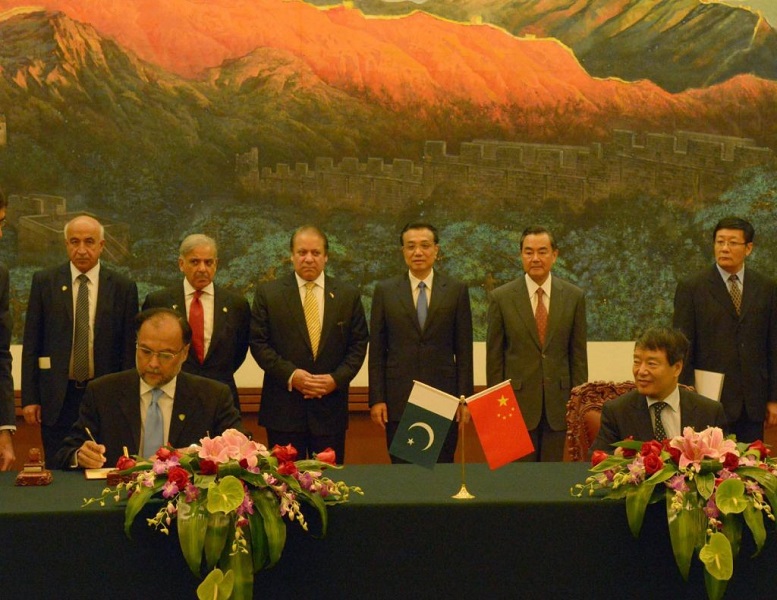
China’s draconian approach to the Uighur Muslim minority in its far-western province of Xinjiang is currently – and rightly – receiving a substantial amount of media attention. Less discussed are the vast infrastructural changes also underway in the region, particularly in Xinjiang’s southern city of Kashgar, an economically deprived, religiously conservative and hitherto deeply isolated area, in which approximately 90% of the population are Uighurs. The centrepiece of this construction frenzy is the China-Pakistan Economic Corridor (CPEC). With a total financial outlay of around US$51 billion, CPEC is expected to be completed by 2030, and will connect China’s far-western Xinjiang Province with Pakistan’s Gwadar port via a network of highways, railways and trading hubs, providing China with important trading access to the Middle East and Africa.[1] While the expansion of infrastructural networks will doubtlessly bring significant economic benefits to the region, the possibility of connecting militant and terrorist networks in the two regions presents a substantial security risk for the two states and the wider region.
The level and pace of infrastructural development underway in southern Xinjiang is unprecedented. A railway extending from Kashgar, passing through Afghanistan, Kyrgyzstan and Tajikistan to connect with railways in Iran, is currently in the first phase of construction. A second railway project linking Kashgar with the Uzbekistani city of Pap in the Ferghana Valley is also under construction. Highway projects connecting Andijan (Uzbekistan) with Osh (Kyrgyzstan) and Kashgar are also underway. Xinjiang already boasts the most airports of any Chinese province, and their number is expected to expand from 17 to 28 by 2020.[2] However, the most significant projects in this sphere are part of CPEC: the Karakoram Highway, which links Kashgar with Hassan Abdal in Pakistan and was originally constructed in the 1970s, is being upgraded with parts to be expanded into a 4-lane motorway and extensions to the Khunjerab railway that will also link the Pakistani rail network to China’s Kashgar-Hotan railway, allowing rail links from the Gwadar Port into Xinjiang. In the next few years, Kashgar will become a major transit hub for mainland China, with rail and road infrastructure connecting it directly with Pakistan and Central Asia. This will have far-reaching consequences for the local way of life, which has remained virtually unchanged for centuries.
Perhaps the most significant security threat concerns the expansion of the East Turkestan Islamic Movement (ETIM), the primary terrorist organization driving the Uighur separatist cause, across the region. After al Qaeda and the Islamic Movement of Uzbekistan (IMU), ETIM has become the third largest foreign militant group located on the porous Pakistan-Afghan border region, known as the Federally Administered Tribal Areas (FATA). ETIM is in alliance with local and international militant terrorist organizations, including al Qaeda and the Taliban, not only sharing their ideology, but also operating with their assistance. ETIM’s primary aims are the liberation of Xinjiang from Chinese rule and the implementation of sharia’ in the region, goals which are increasingly shared by the other militant groups in the region. As such, China has become an important target for militant groups, not only for ETIM, but also for al Qaeda and the Taliban.
Following the July 2009 riots in the Xinjiang capital of Urumqi, al Qaeda leader Abu Yahiya al Libi released a video threatening China. Pakistani security officials believe that in the aftermath of the riots, hundreds of Uighurs joined ETIM in FATA. In 2013, ETIM released a video showing Uighur children being trained in militant camps somewhere in FATA. The following year, the IMU’s Mufti al Burmi released a video entitled ‘Let’s disturb China’, in which he directed all militant groups affiliated to the Taliban and al Qaeda to target Chinese interests in Pakistan. Thus, close and expanding connections between Uighur and non-Uighur militants is driving the latter to take up the cause of the former, and growing trade and infrastructural connections between Xinjiang and Pakistan will doubtlessly facilitate militant connections between these groups. Beijing’s current project to transform Xinjiang into what has been termed by Western media reports as a ‘surveillance state’ constitutes its illiberal response to this threat.
Islamic radical organizations are deeply rooted in Pakistani society and militant activities are threatening longstanding Pakistan-China relations. Following pressure from the Chinese leadership to take action against ETIM, in 2014 the Pakistan Army launched a military operation codenamed Zarb-i-Azb. However, although this massive military offensive destroyed militants’ command and control systems in FATA, numerous splinter groups have formed a new command system across the border in Eastern Afghanistan. The battle to eradicate these militant groups is therefore far from over.
Despite popular concern about the growing levels of Chinese activities in Pakistan, with some Pakistani senators comparing CPEC to the East India Company, formal China-Pakistan relations have never been better. Both Pakistani and Chinese leaders have repeatedly referred to their relationship as ‘sweeter than honey’ and ‘stronger than steel’.[3] And the two big Pakistani religio-political parties, Jamiat Ulama i Islam (JUI) and Jamat i Islami (JI) have signed agreements with China. The Pakistani government has even defended Chinese policy towards Muslims in Xinjiang in the Organization for Islamic Co-operation.
Such allegiance by Pakistan to its Communist neighbour is driven primarily by economics: the Pakistani economy is highly dependent on Chinese trade and investment. According to the 2017 edition of the annual government-authored Pakistan Economic Survey, the volume of trade between Pakistan and China, which was approximately US$4 billion between 2006 and 2007, reached an all-time high at US$13.77 billion in 2015-16. Pakistan’s exports to China have increased by almost 200 percent since the implementation of the FTA, from US$575 million in 2007 to 1690 million in 2016, making China the second largest importer of Pakistani goods after the United States.[4] It is highly unlikely that Pakistan will reduce its co-operation with China.
The Chinese authorities are, of course, well aware of the threats posed by this cross-border infrastructural expansion – and the on-going repression of Muslims in Xinjiang must be seen in this context. In Pakistan, the threat against Chinese activity has become so severe that the Pakistani Army has created a special division whose sole purpose is to protect CPEC and its Chinese workers, and comprises nine army battalions, six civil wings and nearly 13,700 personnel.[5] It therefore seems likely that as CPEC gains momentum, so will the crackdowns on those deemed to pose security risks to the high stakes project. And this of course includes the entirety of Xinjiang’s Uighur population. As crackdowns against practicing Muslims in Xinjiang increase, however, the growing infrastructural connections between Pakistan and China will not only facilitate the transfer of goods, but also the transfer of militant and anti-Chinese ideology.
Note: The essay was written by two academics who wish to remain anonymous.
[1] Andrew Small (2017) ‘First Movement: Pakistan and the Belt and Road Initiative’, Asia Policy, 24: 80-87.
State Transformation and Authoritarian Governance: The Emergence of Participatory Authoritarianism?
Article by
Dr Catherine Owen
September 14, 2018
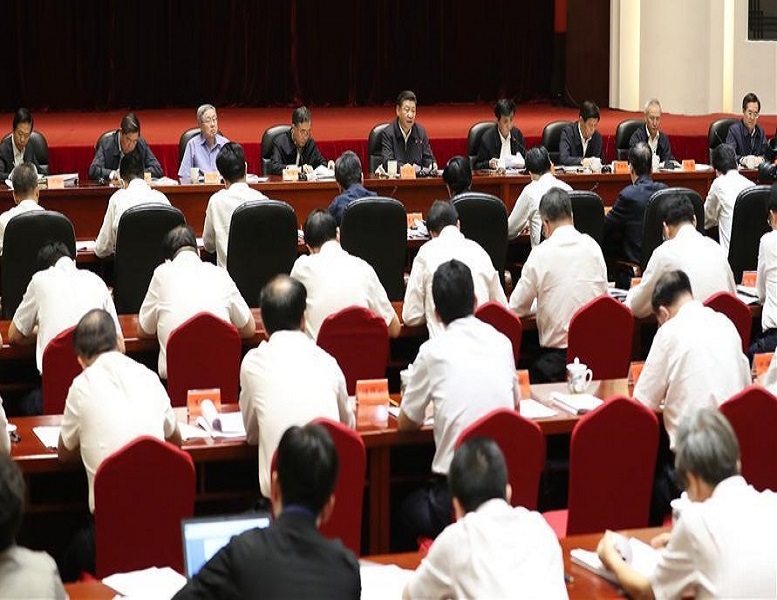
It is commonly assumed that authoritarian governments do not wish to involve citizens in questions of governance or public administration. Instead, conventional wisdom has it that the leaders of such states seek to disengage and depoliticise their citizens and, when ‘mobilization’ is required, ‘the masses’ are either ‘coerced’ on threat of violence or ‘co-opted’ with rewards and bribes. While this may have been true of mid-twentieth Century authoritarianism, recent research by country specialists has revealed an abundance of local, voluntary, participatory mechanisms proliferating across well-established non-democratic states, such as Russia and China. Although national elections in these states are either heavily managed or entirely absent, press freedom is strongly curtailed and those who speak out against the regime are severely targeted, citizens in both countries can freely choose to join civic groups that provide welfare services, engage in participatory budgeting, give feedback on local government performance and debate policy proposals.
In Russia, for example, since the early 2000s new government-organised participatory mechanisms have been developed and implemented throughout the country. First, consultative forums have proliferated at federal, regional and municipal levels. Known as public chambers and public councils, these forums enable certain citizens to engage directly with policy-makers to debate proposals and raise issues of local concern.[1] Second, the category of ‘socially oriented NGO’ was adopted in 2010 to regulate the activities of ‘apolitical’, mostly welfare-providing non-profit organisations, which carry out activities in the sphere of conservation, historical preservation, sports, education and health care.[2] Third, various participatory budgeting schemes, which enable local residents to have a say in the allocation of municipal budgets, have been implemented across Russia, involving both the World Bank and local, independent initiatives.[3]
In China, municipal and regional level governance has always been the object of experimentation; hence, there exists wide variation in practices of governance across the country. Yet, since 2000, local authorities in various provinces have been employing a number of strategies to open up the policy-making process to citizens. In Hangzhou, Zhejiang province, citizens may provide evaluations of government performance across 117 branches of local government activity in a project called the ‘evaluations and examinations system’, which in 2012 had already involved over 15,000 citizens. Likewise, citizens of Hangzhou may debate policy proposals with local officials in a consultative forum known as the ‘Red House Consultations’.[4] Participatory budgeting is also spreading around the country, with thousands of initiatives in place at the village level.[5] And the number of public organisations in China has exploded in recent years, with around 675,000 formally registered with the authorities (and a further estimated 3 million unregistered), leading some to call it an ‘associational revolution’.[6]
One of the main drivers behind the emergence of this new form of participatory authoritarianism has been the marketisation of state bureaucracies, which began in the UK, the USA and New Zealand during the late 1970s and early 1980s and rapidly spread around the world. To varying extents, national governments began to introduce mechanisms drawn from the private sector into domestic public sectors in an ensemble of norms that came to be known as New Public Management (NPM). This included the privatisation of state-owned assets, the devolution of executive power to the provincial or municipal levels, the outsourcing of government functions to businesses and charitable organisations, and the monetisation and means-testing of welfare. The result was a shift in domestic state architecture away from the so-called ‘command and control’ states of the twentieth Century, which provided goods and services directly to citizens, and towards types of regulatory states, which engage in practices of ‘arms’ length governance’. In regulatory states, governments are no longer the primary source of the knowledge and resources required for the effective formulation and delivery of public policy and, consequently, they must establish mechanisms that allow them to access this knowledge and resources in order to manage and oversee the policy process. In authoritarian regimes, such consultative mechanisms are all the more important since other feedback channels, such as a free press and fair elections, are either corrupted or fully absent.
In regulatory states, a new kind of citizen is required: one who actively engages in policy-making processes, assists local authorities in social campaigns and gives constructive feedback on government proposals. However, non-democratic regimes face the additional challenge of fomenting active citizens who are aware of and keep within the boundaries to their participation. And indeed, authoritarian governments are finding increasingly innovative ways to do just that. In Russia and China, leaders are increasingly calling on citizens to become active in areas formerly the preserve of government. In 2012, Chinese President Xi Jinping introduced the 12 core values of socialism in order to invigorate the ideology, and in 2013, introduced the ‘Chinese Dream’ as a means by which individual citizens can link their personal goals to those of the state. In Russia, increased civic participation has been a key theme of President Vladimir Putin’s speeches since his first term in power, in which he has repeatedly called upon the population to shake off its Soviet-era passivity and help the development of the nation by becoming active citizens. However, the fostering of such initiatives comes alongside increasingly draconian crackdowns in both countries on dissenting voices elsewhere in the public sphere. A full exposition of the growing levels of censorship in Russia and China is beyond the scope of this article – hence, a couple of examples will suffice for illustration. In Russia, one can be imprisoned for ‘offending religious feelings’ and anti-systemic opposition and human rights activists are regularly silenced through imprisonment or house arrest. In China, those who speak out publicly against the regime are frequently imprisoned, or ‘disappear’. In both states, the authorities enact ever closer internet surveillance for ‘subversive’ materials.[7] The message to citizens appears to be thus: constructive input on specific policies through approved fora is encouraged, but independent criticism of the Chinese Communist Party, the Russian Orthodox Church or other pillars of these regimes, is not.
Nevertheless, studies in each country suggest that consultative fora do exercise a certain amount of influence on policy outcomes. In Russia, public consultations are likely to have an effect on those areas not seen to pertain to areas of national or strategic importance. Examples of successful lobbying via consultative structures include the introduction of courts of appeal, improvements in prison conditions, changing the law on military service to exempt PhD students from conscription, conservation of city architecture, monitoring of the local government budget and work on the liberalization of the NGO law in 2009.[8] In China, less data is available on precisely which policies have been influenced through these mechanisms, but scholars of China frequently cite the responsive nature of local authorities as a key feature of Chinese governance.[9]
These developments have profound consequences for the way in which we view authoritarian regimes. First, instead of seeing authoritarianism solely as an elite-led project, voluntary practices of civic participation suggest that authoritarian regimes can be deeply embedded at the local level and enjoy grassroots legitimation and support. Citizens are not coerced into participatory activities but act out of a desire to improve their local community through the mechanisms available. Second, rather than seeing authoritarian regimes as the conceptual and logical opposite to democracies, the existence of civic participation in authoritarian settings is a reminder that all states are constituted by combinations of practices that include both ‘democratic’ practices of participation, accountability and justice and ‘authoritarian’ practices of coercion, co-optation and arbitrariness, which are enacted simultaneously by different sections of state apparatus, and whose dynamics are constantly interacting and evolving. Finally, a focus on the globalisation of governance norms shows how ostensibly liberal discourses and practices, such as civic participation in local governance, can be used to sustain illiberal rule at the national level.
[1] These forums have been the subject of much research. See Catherine Owen (2016) ‘A Genealogy of Kontrol’ in Russia: From Leninist to Neoliberal Governance’, Slavic Review, 75 (2): 331–53; James Richter (2009) ‘Putin and the Public Chamber’, Post-Soviet Affairs 25 (1): 39–65; James Richter (2009) ‘The Ministry of Civil Society? The Public Chambers in the Regions’, Problems of Post-Communism, 56 (6): 7–20; Kirsti Stuvøy (2014) ‘Power and Public Chambers in the Development of Civil Society in Russia’, Communist and Post-Communist Studies 47: 409–19.
[2] Rossiiskaya Gazeta (2010), ‘Federal’nyi Zakon Rossiiskoi Federatsii ot 5 aprelya 2010g No. 40 F2: O vnesenii izmenenii v otdel’nyye zakonodatel’nyye akty Rossiiskoi Federatsii po voprosu podderzhki sotsial’no oriyentirovannykh nekommercheskikh organizatsii’, Rossiiskaya Gazeta, 7 April, www.rg.ru/2010/04/07/nko-dok.html
[4] Jane Duckett & Hua Wang (2013) Extending political participation in China: new opportunities for citizens in the policy process, Journal of Asian Public Policy, 6:3, 263-276; For discussion of village level deliberative mechansisms see:
[5] Baogang He (2011) Civic Engagement Through Participatory Budgeting in China: Three Different Logics at Work’, Public Administration and Development 31: 122-133.
[6] Carolyn Hsu, Fang-Yu Chen, Jamie P. Horsley, and Rachel Stern (2016) ‘The State of NGOs in China Today, Brookings Institution, 15 December 2016. Available at: https://www.brookings.edu/blog/up-front/2016/12/15/the-state-of-ngos-in-china-today/; Jessica Teets (2014) Civil Society under Authoritarianism: The China Model (Cambridge: Cambridge University Press).
[8] Catherine Owen and Eleanor Bindman (2017) ‘Civic Participation in a Hybrid Regime: Limited Pluralism in Policymaking and Delivery in Contemporary Russia’, Government and Opposition. Online First.
[9] Kevin O’Brien Kevin and Lianjiang Li (2006) Rightful Resistance in Rural China (Cambridge: Cambridge
University Press); Wenfang Tang (2016) Populist Authoritarianism: Chinese Political Culture and Regime Sustainability (New York, NY: Oxford University Press); Baogang He and Mark E. Warren (2011) ‘Authoritarian Deliberation: The Deliberative Turn in Chinese Political Development’, Perspectives on Politics 9 (2): 269-289.
Join our mailing list
Keep informed about events, latest publications & articles from Foreign Policy Centre
Is Brexit just a choice between the Chequers deal or a ‘hard Brexit’? Supporters of ‘associate citizenship’ believe there is not. The proposed associate citizenship would allow individuals to enjoy some of the benefits of EU citizenship in return for a (likely substantial) fee. While this would undoubtedly bring benefits to those able to take up associate citizenship, it would also have a transformative effect on the concept of citizenship itself, exacerbating existing trends towards transnational forms of citizenship and a reduced role for nation states.
Associate citizenship of the EU will enable UK citizens to ‘buy in’ to EU citizenship.[1] Associate citizens would enjoy access to the same rights as EU citizens but will be required to pay-in to the EU.[2] This proposal has much to recommend it, yet it is likely to prove politically controversial because it will substantially alter the relationship between the individual and the state.
The proposal has been endorsed by Guy Verhofstadt, the European Parliament’s lead on Brexit negotiations and is referred to in the Parliament’s resolution on Brexit,[3] and obtained significant civil society support in the UK. For example, over 300 000 people have signed petitions calling for the inclusion of associate citizenship in Brexit negotiations.[4]
Opponents of associate citizenship argue that it will undermine the Brexit process. For Andrew Bridgen, a Conservative MP and Leave campaigner, it will create “two classes of EU citizen”.[5] Bridgen’s analysis, however, is the wrong way around. Associate citizenship will leave EU citizenship substantively unchanged. Yet it will create two classes of British citizenship: those who enjoy rights in the EU and those who do not. This will alter the nature of national citizenship, establishing a precedent for a form of citizenship that transcends nation-states. This will empower individuals and cities in relation to national governments. The benefits of the proposal are, however, likely to be limited to more affluent urban elites, exacerbating existing social divisions in the UK. This article offers a brief overview of the most significant barriers and likely impacts of associate citizenship, and an assessment of the proposal’s likelihood of success.
What is Associate Citizenship?
The precise nature of associate citizenship is unclear. Any proposal would, in any case, be subject to intensive negotiation before it could be approved. It is possible, however, to identify a few key features likely to be included in any negotiation of a form of associate citizenship. Associate citizens would enjoy a bundle of certain rights and duties. A ‘thick’ form of associate citizenship could include enjoyment of the four freedoms (free movement of goods, capital, services, and persons) and other EU rights subject to the jurisdiction of the Court of Justice of the EU (CJEU). This would likely ease the process of travel from the UK to the EU and provide associate citizens with easier access to EU markets and institutions from the UK. It could also include the right to vote in certain EU elections (although this would require the creation of transnational MEPs, which would require some considerable changes to the current European Parliament’s structures). This would likely come at the cost of a substantial financial contribution by associate citizens. The EU27 are unlikely to grant UK citizens rights in the EU without this. ‘Thinner’ forms of associate citizenship would include some, but not all, of the above but are still likely to come at a significant financial cost.
Associate citizens will likely enjoy a number of political, social, and (perhaps) economic benefits. Access to the four freedoms and other rights will enable associate citizens to travel in the EU, take part in EU political discourse and elections, and interact more directly with their fellow EU citizens. Increased access to EU markets would offer associate citizens economic opportunities not available to those who enjoy only British citizenship. The extent of the benefit enjoyed as a result of associate citizenship would, of course, depend on the thickness of the version of associate citizenship ultimately adopted.
Legal Hurdles
Critics of associate citizenship argue that it is legally impossible.[6] Article 20 of the Treaty on the Functioning of the European Union (TFEU) provides for EU citizenship as ‘co-citizenship’.[7] While national citizenship remains pre-eminent, the individual is a citizen of both their own state and the EU. This is not, however, an insurmountable barrier. It is conceivable that associate citizens would retain their British citizenship as well as their EU citizenship: remaining co-citizens of the UK and EU.[8] A more significant challenge is the likely necessity of treaty change. EU law must be based on the powers conferred in the EU treaties. Article 20 does not, prima facie, appear to confer the power to create associate citizens. A treaty change requires the consent of all member states. It may, however, be argued that the required power is implicit. Article 20 does not rule out associate citizenship, it is merely silent on the matter, meanwhile Article 77 of the treaty empowers the Commission to confer EU passports[9] and Articles 223 to 234 and 314 confer legislative initiative on the Commission and the Parliament.[10] The combination of these powers could form a basis for the argument that the EU already has the power to create associate citizens through its existing legislative processes.[11]
A Challenge to the Nature of Citizenship
Nation states are traditionally the arbiter of citizenship. The state decides who is, and who is not, a citizen, as well as the rights and duties that come with citizenship. [12] This is part of a state’s cultural, social, and political legitimacy.[13] Citizenship and individual identity are interlinked.[14] Our perception of our own identity is heavily influenced by our citizenship because we reflexively understand ourselves as members of a particular group with a particular history.[15] Our membership of these groups is often by our citizenship status. As the ultimate arbiter of citizenship, the state thus plays a role in the formation and re-formation of individual self-understanding. The state is therefore vital to individuals in a social, cultural, and political sense.
As John Urry puts it:
“The concept of society has been central to western notions of what it is to be a human. To be human has meant that one is unambiguously a member of a particular society. Historically and conceptually there has been a strong connection between the idea of humanness and that of membership of a society. Society involves an ordering through a nation-state, clear territorial and citizenship boundaries and a system of governance over its particular citizens.”[16]
Since, at least, 1989 the state’s monopoly on the determination of citizenship has eroded. Social, commercial, and cultural relationships are increasingly transnational.[17] This creates space for informal alternative citizenships. Individuals increasingly self-identify with communities beyond the nation-state.[18] Some national leaders see this as eroding the role of the state and, by extension, their own authority. In her 2016 Conference speech Theresa May attacked those who embrace alternative citizenship identities, arguing that “if you are a citizen of the world, you are a citizen of nowhere”.[19]
EU associate citizenship would represent a quantum change in the nature of citizenship. It would formalise, and further legitimise, alternative citizenship identities. The state would no longer be the ultimate arbiter of citizenship. Individuals would be able to formally elect an alternative form of citizenship that transcends the nation state. The bundle of rights and duties that come with citizenship would no longer be conferred solely by the state. The individual would have the option of additional rights and duties and to formally identify with socio-cultural and, crucially, political communities beyond the nation state. The individual would thus become a co-equal arbiter of citizenship. Associate citizenship would therefore alter the relationship between the individual and the state.
The impacts of associate citizenship
Globalisation
Associate citizenship would empower individuals to interact with a supra-national organisation and with their fellow EU citizens in a manner that transcends the nation state (albeit to a greater or lesser extent depending on whether a ‘thick’ or ‘thin’ version of associate citizenship is adopted). If associate citizenship is taken up by significant numbers of individuals, this will accelerate the transnationalisation of individual relations that has occurred as a result of globalisation.[20] It will consequently erode the status of states at the global level by dispersing the (formerly exclusive) power to confer citizenship status from states to individuals. ‘Globalisation’ is often used in a pejorative sense yet, in empowering individuals and facilitating relationships and identity building beyond the confines of the nation state, associate citizenship will likely have a positive impact.
Cities
Cities play an increasingly prominent global economic and political role.[21] Economic growth tends to be focused in cities and, in the UK, increased devolution has empowered cities to elect their own leaders exercising broad policy making powers.[22] Cities increasingly cooperate transnationally, such as through the C40 initiative on climate change.[23]
In the UK, associate citizenship will further empower cities at the expense of the national government. Cities like London, Manchester, and Birmingham[24] tend to be richer[25] and more pro-EU than rural areas or smaller cities.[26] They thus have both greater means and inclination to benefit from associate citizenship. Associate citizens are therefore likely to be concentrated in major cities. This will incentivise mayors to pursue closer relationships with the EU than those pursued by national government. For the EU’s part, city governments will become an important point of intercession with associate citizens. Cities will thus become increasingly transnational and the role of the national government correspondingly marginalised. Cities are unlikely to participate in EU institutions in the same way as states unless those institutions undergo substantial changes. Their informal role, however, as key intercessors between large concentrations of associate citizens and the EU, combined with a more outward-looking approach to the EU, will give cities an enhanced substantive role.
Social tension
This will exacerbate the existing social and economic divisions in the UK. The economic benefits of associate citizenship will accrue to those who have both the means and inclination to take advantage: wealthier liberals who tend to live in cities. Secondary impacts are likely to be concentrated in cities as well. Urban dwellers already tend to be wealthier than those in rural areas or provincial towns[27] and wealth correlates with likelihood of voting for Brexit and being suspicious about immigration.[28]
Associate citizenship will increase the economic, cultural, and social opportunities of associate citizens, increasing the cosmopolitan attitudes and economic advantages enjoyed by the urban middle class. By contrast, those outside this group, who were already likely to be poorer (and thus unable to afford the – likely – substantial financial cost of associate citizenship) and more anti-European, will be denied these opportunities. The impression will be of one group enjoying special privilege while the other is neglected. This will harden existing scepticism towards globalisation and supra-national bodies like the EU. Associate citizenship is thus likely to further entrench the UKs existing political and socio-economic divides.
The Fatal Flaw: Political Will
While the legal barriers to associate citizenship are not insurmountable, it is likely the project will fail for lack of political will. Those conducting the negotiations have no incentive to advance a project that will marginalise national governments. On the UK side, the national government faces a situation in which the cities most likely to benefit from associate citizenship are either controlled by a hostile political party or an independent minded mayor. On the EU side, Brexit negotiations are overseen by the Council, the body that represents the nation states. While the immediate impacts of associate citizenship will only be felt in the UK, the project as a whole establishes a worrying precedent from the perspective of nation states. It demonstrates that the nation state is no longer necessary as the sole arbiter of citizenship. This exacerbates a trend in which nation states are losing the pre-eminence as both international and domestic actors. There is therefore likely to be little real enthusiasm for the project around the Brexit negotiating table.
Conclusions
The practical barriers to associate citizenship are not insurmountable. The political issues, however, require more careful consideration. The project would undoubtedly empower individuals and cities and, for this reason, has much to recommend it. While it will likely exacerbate existing economic and social divisions in the UK, the root cause of these lies elsewhere. These problems should be addressed, but they will not be solved by opposing associate citizenship. Yet, the projects greatest advantage, that it will redefine the relationship between the individual and the state, is also its greatest political weakness. Those charged with negotiating Brexit stand to lose from associate citizenship. The project is therefore likely to fail for a lack of political will.
[7] European Union, Consolidated version of the Treaty on the Functioning of the European Union, 13 December 2007, 2008/C 115/01, Art. 20(1)
[8] This would be unprecedented – a concept of co-citizenship with a non-member state does not exist in EU law. Yet Brexit is, itself, unprecedented. It is not unreasonable to assume that the process will require precedent-setting solutions in some areas.
[17] Akira Iriye, The Making of A Transnational World, in Iriye (ed), Global Interdependence: The World After 1945, (London; Belknap Press of Harvard University Press, 2014), pp. 679-847
[18] Linda Bosniak, The Citizen and the Alien: Dilemmas of Contemporary Membership, (Princeton, NJ; Princeton UP, 2006), pp. 219-233
[24] See, for example, JLL, Greater Birmingham: An Economic Renaissance? September 2014
[25] See, for example, Danny Dorling and John Pritchard, The Geography of Poverty, Inequality and Wealth in the UK and Abroad: Because Enough is Never Enough, 3 Appl. Spatial Anlysis 81 (2010), pp. 81-106
[28] See Matthew Goodwin and Oliver Heath, Brexit vote explained: poverty, low skills, and lack of opportunities, Joseph Rowntree Foundation, (31st August 2016)
Join our mailing list
Keep informed about events, latest publications & articles from Foreign Policy Centre
How UK foreign policy benefits from EU membership, and the pitfalls of Brexit
Article by
Jacqueline Hale
August 31, 2018
As the UK faces the uncertainty of Brexit, this article examines how its policies towards third countries including enlargement, trade, migration, development and energy policies have been mediated through the EU membership. It demonstrates how the UK has used the EU to amplify power, to protect UK interests and security, and to pursue its foreign policy priorities and interests. Finally, it offers some thoughts as to the risks to the UK’s foreign policy influence following Brexit.
A power amplifier
The UK has had a successful history in normatively influencing the EU through its membership. The impact of the UK and the FCO over the last 40 years in ensuring that its ideas are transmitted via a 28-member bloc and its networks across the world should not be underestimated. Some of the EU’s most enduring policies testify to British ideas at the heart of EU decision-making: From Churchill’s European vision which led to the founding of the European movement, to the widening (as opposed to deepening) of the union via its enlargement and neighbourhood policies the UK has been a thought leader on EU foreign policy. The enlargement of the EU in 2004 to admit 10 new members radically altered the centre of gravity and emphasis of the union to Whitehall’s liking[1]. In recent years, the EU has been more Anglo-Saxon than ever in its interactions beyond its borders – and not just because the language of its business is English. EU Free Trade Agreements – often negotiated by UK trade lawyers – draw the interest of trading giants, such as latterly, Canada, the US[2] and Japan. In a number of foreign policy areas, from the Common Foreign and Security Policy (CFSP) which enables the EU to speak with one voice on political affairs in relation to third countries and articulate EU common interests and values, to policies ranging from border control to energy and climate change to development – the EU amplifies British soft power.
Safeguarding UK interests
The EU has played a key role in safeguarding UK interests ranging from sanctions to Justice and Home Affairs (JHA) policy. On the bigger foreign policy questions, including sanctions on third countries following abuses of power and violations of international norms, the UK has been able to draw on collective bloc decisions which favour its position and avoid being singled-out to face negative political and economic consequences, such as export bans on arms/equipment. The EU is also one of the only mechanisms by which Britain can successfully push its pro-sanctions position (notably on Russia and Syria) since sanctions are frequently rendered impossible via the UN route due to Russian and Chinese veto at the UNSC. The departure of the UK has led some allies (notably Scandinavian countries and the Netherlands) to express concern about a possible shift of the balance of power within the EU on EU-Russia policy. It may make the EU common position more susceptible to pressure from Austria, Italy and other governments to weaken the sanctions policy.
The EU has also offered the UK a useful ‘’bad cop’’ in situations where UK bilateral policy is to appease rather than sanction a third country: The June 2018 EU sanctions on Myanmar generals as a result of suspected crimes against humanity against the Rohingya were tacitly supported by the UK as a means of applying pressure for accountability, whilst allowing the UK, the former colonial power, to pursue a pragmatic, pro-engagement bilateral policy toward Aung San Suu Kyi’s Government. In the case of Libya in 2011, the UK benefited from the unanimous endorsement of EU sanctions, which went further than UNSCR 1970 as well as asset freezing[3]. These coordinated moves by EU member states provided political space for more concerted action by the EU’s two military and diplomatic powers, UK and France – even taking into account Germany’s abstention at the UN Security Council.
In contexts where individual EU member states such as the UK are considered partial, the EU is also able to achieve outcomes as an honest broker – notably in the success of the European External Action Service on the Iran deal, and in current mediation efforts by the EU High Representative in the Western Balkans. Through its work on conflict prevention and civilian crisis management, the EU is doing more on the ground than other conflict prevention formats in which the UK has a stake in the Eastern and Southern European neighbourhood: OSCE, NATO, UN or G20. EU civilian crisis management policy is able to do more in Moldova and Georgia than the OSCE (which remains hobbled by Russia) or NATO for whom the region is too politically sensitive to enter. EU Operation Sofia, in the Mediterranean, for all the challenges of its mandate, mounted a serious smuggling prevention operation.
There is great complementarity and burden sharing opportunities for larger EU member states, such as the UK: The EU mission in Libya on border security supports the UK intervention as well as UK national security concerns, just as by analogy the EU Training Mission (EUTM) in Mali supports France. The multinational pool of expertise for EU deployments to these missions supports wider knowledge sharing and transfer. EU civilian crisis management missions provide an outlet for UK policing ideas via their personnel, whereas in other contexts where the UK has a stake but less cultural reach and expertise (for example Armenia and Moldova), experts from Central and Eastern European states do that job. The EU is also effectively providing a security guarantee for Georgia. Despite the UK’s tough stance on Russia, it is not clear that the UK has the geopolitical capital or financial resources to deploy a mission on the scale of, for example, the 200-strong EU Monitoring Mission (EUMM) in Georgia and would not consider doing so alone. The EUMM complements the FCO’s dedicated bilateral funding ‘niche’, supporting conflict-prevention NGOs in the South Caucasus region.[4]
Free-riding on Home Affairs
The EU has also expanded UK influence in relations with partners – at a limited material cost to the UK. The Enlargement process, and the European Neighbourhood Policy and its successor in the East, the Eastern Partnership, have carried weight in partner countries for whom association with the EU means clean water, safe transport, travel opportunities through easier access to Europe, via budget airlines, and the potential to sell goods to a market of, currently, 500 million people.
This leverage has allowed the EU to demand reforms on migration and asylum in exchange for visas for the Schengen area, such as justice reforms or anti-corruption measures in public procurement which, when implemented by neighbouring countries, also benefit the UK down the line. The obligation on partner countries to cooperate with Eurojust and Europol protects the UK. In the EU’s Eastern Neighbourhood, five out of six countries have signed or are negotiating visa facilitation agreements have been obliged to adopt readmission agreements.[5] Since the visa facilitation agreements apply only to Schengen the UK has valid readmission agreements without giving up anything materially. Other EU member states have borne the cost of the reduction from 60 Euros to 35 Euros for a single-entry Schengen visa[6], or for the free visas offered to an extended list of categories, ranging from students to journalists. With its decision to leave the EU, the UK faces the prospect of concluding bilateral readmission negotiations with each of these third countries which may cost it more in concessions on visa. At the same time, it is not clear that Britain alone would have the leverage to negotiate the accompanying reforms, whose implementation is also supported through pooled EU funding, and trade incentives (see below).
Large trading market
The EU as a trading bloc with a single-market has more clout in a partner country than any single EU member state. Britain has long embraced this vision. In the neighbourhood, as elsewhere in the world, the EU facilitates market access and investment opportunities for British companies through its Common Commercial policy. For many countries outside Europe, the EU collectively is the largest trading partner: In 2015 – EU trade with Ukraine was worth 31 billion USD whereas Britain’s trade with Ukraine was 2.1 billion USD[7]. The Deep and Comprehensive Free Trade Agreements (DCFTAs), negotiated with Eastern neighbours, and considered for the Southern neighbours, are modelled on the successful accession process and aim to increase exports and investment through opening new markets. Because standards are high they also protect the EU’s member states including Britain against dumping. Through ensuring that neighbouring countries align their legislation with EU standards, the EU not only opens but transforms markets. DCFTAs aim at transforming societies on the EU’s periphery by demanding reforms in areas ranging from customs practices to taxation to product standards, with broad implications for the fight against corruption and good governance.
As well as the benefits for British companies, Britain can afford to be clear that regulation is both necessary and useful for its foreign policy, both in strengthening the EU internal market in key geo-strategic areas such as energy – see below – and raising standards among neighbours. Britain alone would be less likely to achieve this level of convergence with its legislation, nor be able to offer sweeteners on the scale of the €12.8 billion offered by the EU to support the reform process in Ukraine[8]. This is a political as well as a technical question in a country like Ukraine, where the EU is its largest trading partner and – together with Russia – accounts for 50% of Ukraine’s trade.
Likewise, the size of the EU energy market gives it real clout in the sector. The EU has taken the lead on negotiating MoUs to establish gas pipelines of strategic importance to the EU27, notably the Southern Energy Corridor. The transnational nature of the issue, as well as the scale of collective EU energy demand, means that the EU Commissioner for Energy has more leverage than a single member state. At the same time, EU energy policy, including the Energy Union and particularly the Energy Security Strategy (2014) links the liberalisation of the internal energy market to the achievement of reduced dependence on particular external actors in a way that national policy could not. By launching an anti-trust case against Gazprom in September 2012, the European Commission’s DG Competition has been fighting the corner for British business and British strategic interest through challenging Gazprom’s monopoly[9]. This is an example of where EU single market rules and regulations in competition policy act in the British interest. Further, the EU has established an Energy Community –which is expanding the EU acquis on the security of supply, energy efficiency, oil, renewable energy and statistics to countries ranging from the Western Balkans to Ukraine, creating reliable markets for British companies.
Global development
In development policy, the UK – as a top bilateral development donor, as well as a net contributor to the EU development budget – leverage the EU’s funding, networks and delegations. The EU, together with its member states, is the world’s largest development donor. Much of EU development and humanitarian policy thinking has been shaped by the UK. The Department for International Development (DFID) has used its own leverage as a top donor historically to shape the EU’s development policy focus on health and education in development and prioritisation of the the Least Developed Countries, as well as funding modalities pursued by the EU’s humanitarian assistance department (ECHO), most recently on cash-programming. DFID often works in Joint Actions with the EU, notably in West Africa. EU and UK ‘super grants’ are fostering development outcomes on a greater scale on issues such as infant nutrition, in Bangladesh[10]. With the UK contributing up to 15% of the EU’s Development Fund annually[11] and ‘paying to play’ in setting the EU’s priorities through the fund, the challenge for the UK (and the EU) post-Brexit, will be to make less funding go further in transforming lives and buying change.
Losing out from the divorce
Whether the EU can continue to exercise the power of attraction at the same level without UK membership is an open question. The Union faces a number of political challenges aside from Brexit, including open challenges to its own values from existing members, most notably ins Hungary and Poland[12]. The new long-term budget of the EU is likely to shrink directly as a result of Brexit, and indirectly as other countries seek to use funding leverage to articulate demands[13].
Yet, all the signs are that challenges for Britain as a result of Brexit will be arguably greater. In an increasingly multipolar world, one which belongs to regional trading blocs and bigger countries, it is unclear what advantages can be derived from the UK’s ‘Global Britain’ policy. A pivot to an Asia-Pacific strategy and a rekindling of colonial ties could prove costly, given that the majority of the UK’s trading partners are next door. The EU accounted for 90% of the UK’s trading in 2017, considering that it was the destination for 44% of UK’s exports, with 53% of the UK’s imports coming from the other 27 EU member states[14]. This market of 500 million people allows the UK to enjoy some 50 trade agreements with countries and regions across the world[15]. It follows that post-Brexit bilateral deals struck for a UK market of 66 million people will be harder to come by, and will take time, during which the UK will be subject to high tariffs under basic WTO rules.
A diminished economic power will also face diminishing returns in foreign policy: With Britain on the sidelines – at best being permitted to observe foreign policy ministerial decisions by the EU27 – there will be less potential to influence EU-bloc decisions that are taken into multilateral fora, from the WTO to the Human Rights Council. Although it cannot yet be quantified, the loss of UK influence in Brussels foreign policy decision-making during the Brexit process indicates worst to come. Put simply, the UK risks losing normative and soft power through exiting the club that it has so successfully shaped.
[1] The fact that the 2004 enlargement arguably was a fact in sowing the seeds of Brexit has more to do with successive UK governments’ poor handling of the migration debate than the policies of the new EU members
[2] The Transatlantic Trade and Investment Partnership has so far failed to come to fruition, but negotiations are quietly ongoing and would see the US submit to EU standards whilst uniting the two markets to form the world’s largest trading bloc.
[8] For an overview of macro-financial assistance from foreign partners to Ukraine see http://www.aalep.eu/financial-assistance-ukraine
[9] The case was concluded in May 2018 without fines to Gazprom, but with a deal outlining significant concessions by the company designed to break its monopoly, including on price-setting and removal of contractual constraints that had prevented clients from reselling gas
[11] The UK is the third biggest contributor to the European Development Fund, behind France and Germany. See UK Parliament: https://publications.parliament.uk/pa/cm201012/cmselect/cmintdev/1680/168005.htm.
[12] The electoral victory for Matteo Salvini in Italy, and an increasingly right-leaning Austria are a sign of a growing populist challenge to the EU across its member states.
[13] Matteo Salvini has invoked the methods of Donald Trump in threatening to withhold Italy’s annual contribution to the EU budget unless the other Member States enact burdensharing arrangements for the reception of migrants and refugees. https://www.theguardian.com/world/2018/aug/24/eu-dismisses-italys-threats-in-migration-ship-row-suspend-budget-payments
Armenia – further changes and challenges ahead in 2018
Article by
Craig Oliphant OBE
August 7, 2018
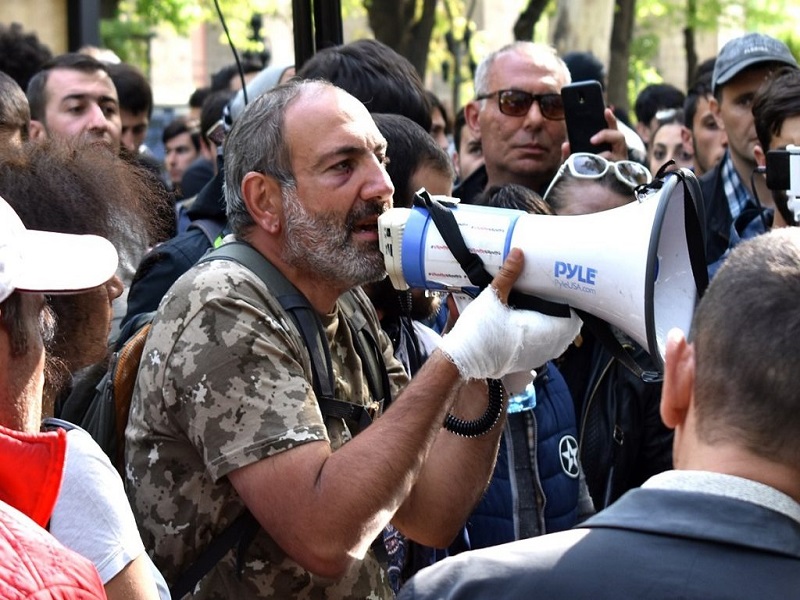
Current developments in Armenia, following the April 2018 revolution (‘Velvet Revolution’) and advent to power of Nikol Pashinian, seem to prompt a mix of optimism and caution. On the upside, while what unfolded in April was dramatic and unexpected, it was peaceful change, and literally without a single shot being fired. As things stand, there is a lot of goodwill towards Nikol Pashinian and his new coalition government. And local popular support for him personally is genuine.
There is certainly a need for significant change in the country – and in particular for urban renewal. There is a need to modernise the agricultural sector – and to diversify energy supplies. There are opportunity areas within the country (R&D ‘hub’ in Yerevan) – and a space to watch is what happens or continues to happen with talented Armenian youth abroad. To what extent are those who left the country looking to return?
On the other hand, there is a massive amount of work to be done. And challenges to be faced, including key vested interests to he grappled with. And Armenia is not going to get the kind of trade and investment it requires unless there is clarity on reforms going forward.
Also on the sobering side, the new government (the Cabinet line-up formed in mid-May 2018) has come to power without much preparation. The new Armenian Government is a coalition made up of members of the ‘Civil Contract Party’ and the ‘Way Out’ bloc (Yelik); plus Dashnaktsutyun and ‘Prosperous Armenia’. The new Foreign Minister (Zohrab Mnatsakanyan) and Defence Minister (David Tononyan) are two well-regarded professional officials who have both previously served as deputy ministers in their respective ministries. These and other ministries have to contend, though, with severe shortages in civil service personnel and funding.
The new government faces a very complex situation. It inherits a legacy where nearly 30% of the country’s population live below the poverty line. Armenia is not in a great position security-wise or from the economic standpoint. But expectations are now high – and time is not necessarily on the side of the new government. So it is constrained too to look for tangible outcomes..
One aspect of ‘tangible outcomes’ is that some eye-catching arrests are starting to happen, despite the early pledge when Pashinian took over power that there would be ‘no vendettas’. The most notable of the arrests was that of former president Robert Kocharyan who was remanded in custody for 2 months from 27 July. That is in connection with the brutal clampdown against protesters on 1st March 2008, as part of a 20-day state of emergency declared in that period to tackle large-scale unrest and demonstrations against the elections that brought Serzh Sargsyan to power. This arrest, along with a similar move against (among others) the former Chief of Staff of the Armenian armed forces, General Yuriy Khachaturov, who is the Secretary General of the CSTO, has prompted an expectedly jaundiced reaction in Moscow. In public remarks at the beginning of August, Russia’s Foreign Minister Lavrov said this “looks like a vendetta”, pointedly using the word for actions that Pashinian a few months ago had pledged to steer clear of (EADaily, 1st August 2018). The reaction of Russia to recent changes in Armenia has thus far been subdued – but it will be a key space to watch in the coming weeks as the tone of commentaries sharpen on the ‘Kocharyan affair’ – ‘Delo Kocharyana’. (See also below on Russian reactions).
New elections?
The current expectation is that snap elections are likely to be called at the end of 2018 or by Spring 2019. In that sense the situation is already one of a ‘pre-election’ buildup. Nikol Pashinian has a tight-rope to negotiate. He naturally wants to demonstrate some tangible outcomes. But he is is also keen to avoid making clear-cut decisions one way or the other so as not to (unnecessarily) alienate the electorate.
On forthcoming elections, a Commission has been formed – in a welcome move – including main political groups & parties in the parliament to discuss possible changes in legislative provisions and the electoral law. Agreement has already been reached to put forward a proposal removing the ‘majoritarian’ system or component (for individual candidates in a first-past-the-post system) which favoured the previous ruling RPA (Republican Party of Armenia) – and replace it entirely with proportional (party) lists alone. Other key issues are still under discussion, including the vexed question of party funding or ‘charitable’ donations which was an ‘open sesame’ for oligarchs to “buy” and control things in the past. The problem area here is that “Prosperous Armenia” – and its tycoon leader Gagik Tsariukian – is part of the current coalition and his automatic approach is one of continuing to engage in familiar practices of buying support locally through largesse and other ‘charitable’ initiatives. So that is likely to be one point of tension within the coalition looking ahead.. But, overall, a key marker on the near-term horizon for domestic politics is going to be the substance and amendments to the Election Law.
Initial achievements:
Among some of the initial achievements – and these are still early days – the new political leadership is taking measures to tackle corruption in many areas – taxation, customs, police, education, health. Oligarchs have been “invited” to pay the taxes they avoided in the past, partly through cosy agreements made with the Sargsyan regime. [In the first 2-3 months since the April Revolution, more than $40mn USD were raised additionally into the budget through this drive on unpaid taxes]. Also, criminal cases have been opened against Sargsyan acolytes including his extended family on a range of charges of embezzlement, corruption.
The medium to longer term challenges are considerable. And the demands of the immediate term, as alluded, constrain room for manoeuvre. But expectations remain high. The medium/longer term demands, once the euphoria fades away, centre on maintaining and further building trust among the wider public towards the government, including ministries, agencies and other structures. The old adage remains as true as ever: ‘trust takes months & years to build but can be lost in a moment’. As part of this there is the slow, incremental process of ensuring that policies are the result of politics and technocratic competence rather than oligarchic rule. In a nutshell, the key long-term challenge will be “regaining” a state which over the past 2 decades or more was treated by the RPA and the oligarchs linked to it as their private property or private ‘network state’ – and without adversely affecting the country’s defence capability.
The situation is likely to continue being very fluid for the months ahead as it has been since the early part of the year. In one sense, it can be said that the ‘Revolution’ has already morphed through 4 shifting phases or objectives: -Get rid of Serzh Sargsyan; -Get rid of the RPA; – Hold Free & Fair elections; and (now, looking ahead) -Win those free & fair elections.
Regional context – more of the same?
On foreign policy and regional implications, Nikol Pashinian has sought to convey since coming to power that internal changes in Armenia do not affect geopolitics i.e. the substance of the country’s external relations remains as is. Despite saying different things in opposition, he has underlined that Armenia will remain in the CSTO, the Eurasian Economic Union (EES), Customs Union and CIS. His first visit abroad after becoming prime minister was to Russia (the EES summit in Sochi) in mid-May. And then to Moscow in mid-June for a bilateral meeting with President Putin. In mid-July he was in Brussels, partly to attend the EAPC (Euro-Atlantic Partnership Council) at summit level as part of the NATO Summit on 11th/12th July. The main message he delivered in Brussels is that Armenia is no longer a corrupt, oligarchic, undemocratic state failing to represent the will of the people. And his strong card in his approach is the ‘legitimacy’ factor. He has enough support from the people who will stand behind him, at least in the short to medium term as he charts the waters ahead.
Russia’s approach:
As mentioned above, Moscow’s stance over the coming months is going to be a very important factor – and a crucial space to watch. Thus far, until the arrest and detention in custody of Robert Kocharyan, the approach had been fairly restrained. But it is clearly looking for a number of assurances behind the scenes. And the ‘levers’ that Moscow has at its disposal are many, whether in the energy sphere, ‘strategic assets’, and the whole issue of arms supplies. One overarching concern that persists comes back to the familiar mindset of Kremlin views: namely, that street protests do not or should not ultimately be seen to win out . In that connection, former Georgian president Mikheil Saakashvili’s reported remarks on 2 August [Mediamax.am], in which he reiterated an earlier claim from April taking some credit for the revolution in Armenia, are (at best) unhelpful in this connection, and really only serve to aggravate perceptions and stir sharp reactions. There are those furthermore who might, for example, draw comparisons between Nikol Pashinian and the Russian opposition activist Aleksandr Navalny. While there are more differences than similarities, nevertheless some uncomfortable (for Moscow) general parallels do exist in terms of two anti-corruption campaigners, who spent time in prison, and resonate with the public mood..
NK prospects:
Finally, on Nagorno Karabakh (NK), the conventional wisdom given regional constraints is there is unlikely to be any read-across or opening from changes in Armenia for the NK situation. On the one hand Nikol Pashinian has made two important statements in recent weeks: Firstly, that he is ready to talk peace with Azerbaijan on Armenia’s behalf, not NK’s simply because he does not represent the people living there who have their own institutions. And, secondly, that there should be peaceful messages and signals coming from Baku in order to consider a compromise settlement or resolution. That is because the current militaristic approach will only constitute a broader threat to peace in the region.. However, President Ilham Aliev made Baku’s position clear in remarks on 2 August. He was dismissive of the idea of a new initiative of talks, involving Stepanakert. He said Baku wants peace – but it also wants its territory back. And until that territory is returned “there will be no peace” (Turan, 2 August 2018).
Based on that stance, and the limited room for manoeuvre for the new government in Yerevan ahead of expected elections, it is hard to see any early prospect for progress in talks. But it may not be beyond the realms of feasibility to achieve at least some easing in the aggressive rhetoric and a ratcheting down in militaristic pressure (from Baku). An area that could or should be explored is the scope for reinstating a senior-level ‘hotline’ between Baku and Yerevan. That might be something to watch, and not least perhaps in the context of President Aliev’s visit to Moscow, scheduled for 1st September. Then again, there is always the disconnect between ‘western’ analysis of what should or might happen – and local patterns of behaviour in the Caucasus which do not always conform to what might seem a desirable or logical way forward.
Join our mailing list
Keep informed about events, latest publications & articles from Foreign Policy Centre
At first sight, EU relations with Switzerland might seem a ‘niche’ topic for a British observer. But in fact current developments are rather important in understanding potential models for the UK’s post-Brexit relationship with the EU, as well as providing insights into some of the difficulties in structuring bilateral relations.
After all, both countries are already highly integrated economically with the EU; at the same time they also grapple with a balance between this and national sovereignty. The Swiss rejected an initiative to begin EU accession negotiations in 2001 by a large majority in a referendum, having earlier rejected (by a hair’s breadth) membership of the European Economic Area in 1992 – issues of national sovereignty are strongly emphasised by Swiss voters and politicians alike, with a strong tendency for discussion of technical matters to become issues of principle. At the heart of the complications in the Swiss relationship are the constitutional provisions for referendums on legislative proposals – allowing the Swiss to retain the sovereignty to conduct such referendums is clearly at odds with the EU’s desire for a common legislative and regulatory framework where single market access is desired. It is easy to see parallels with the UK’s expressed desire for the ability to make its own laws and avoid direct European Court of Justice jurisdiction, while at the same time wishing to maintain the benefits of single market access. Swiss negotiators, too, have noticed that Brexit has heightened interest in whatever deal they are able to strike.
We should not downplay the extent to which Switzerland already co-operates with the EU. It is a member of the Schengen agreement (although that is not without its challenges), allowing free movement without border checks with EU countries. Unlike other members of the European Free Trade Association (EFTA), Switzerland does not enjoy full access to the Single Market (in return for full acceptance of EU law), and instead there is a series of bilateral agreements governing Swiss-EU trade relations. There are two areas in which these are perceived to be inadequate at present. From the Swiss perspective, first, there are areas in which Switzerland would like to see integration with the EU go further (for instance, around equity markets). Secondly, seven Swiss bilateral agreements with the EU are currently affected by a ‘guillotine’, under which if one agreement falls, then, like a house of cards, all agreements cease to apply within six months. This is extremely risky for both parties in a circumstance where Swiss domestic politics may assert itself through a referendum. The EU, too, wants to see change: ever since the Swiss rejected EU accession, EU leaders have urged them to reach an agreement on institutional questions, such as how to update bilateral agreements according to the evolution of EU law (to what extent changes are automatically adopted, for example), and how disputes can be resolved.
The FDP, a centre-right, pro-market political party, which is part of the government and whose member Ignazio Cassis heads the Foreign Ministry, has put forward proposals to break the deadlock that have now been broadly endorsed by the national government. Specifically, Switzerland would agree, in principle, to adopt new EU law provided it had greater influence on EU legislative decisions. These would need to be adopted domestically in Switzerland (with such provisions still having the potential to be defeated by a referendum). If that happened, then there would be a negotiation on compensatory measures between the two countries, and if agreement could not be reached there, an independent court of arbitration would take the final decision. These proposals have received a cautious welcome from Brussels – if adopted, they could perhaps provide a way through the UK’s conundrum of how to reconcile sufficient regulatory alignment to allow an acceptable measure of co-operation and single market access, with ‘red lines’ around national sovereignty and ECJ jurisdiction.
There are further lessons that can be learned from recent Swiss interactions with the EU. First, Brussels has a tendency to become impatient and intolerant of the peculiarities of domestic political processes. A perception of heavy-handedness was generated when it only granted a year’s mutual recognition to Swiss equity traders, rather than the expected ongoing agreement.
Secondly, in both Switzerland and the UK (but increasingly beyond), domestic and foreign policy are become intertwined. This can lead to a certain volatility – for instance, Switzerland’s membership of the Schengen zone has been placed in jeopardy by proposed new measures on handguns (the country might face a referendum on this issue from shooting clubs, and failure to adopt the new Schengen rules would force it out of the zone).
Thirdly, Brexit has complicated the picture for the EU’s relations with third countries. Cassis, when appointed Foreign Minister, decided to spend his first hundred days ‘taking stock’ of the situation. That posed a dilemma for Switzerland – whether to seek to conclude a new agreement with the EU before Brexit or to delay: by going early the Swiss would potentially miss out on concessions that might flow by precedent from a bespoke EU-UK deal and shaped by the UK market’s greater significance; equally, they might avoid unwelcome precedents if the UK ends up with a ‘hard Brexit’. In the end, the country has opted to try to get an institutional agreement with the EU in advance of Brexit (which says something about Bern’s perception of progress on the Brexit negotiations).
Fourth, the Swiss and indeed the UK’s situations are an important reminder that the relations of both EU member states and third countries are driven very much by issues of principle, not just hard economic interests. If only the latter were relevant, Brexit would not have happened, and Switzerland would have compromised on issues of its sovereignty a long time ago.
So we contend that it is important for London’s negotiators to keep looking towards Bern and its dealings with Brussels – there could well be some important tips in how to handle thorny issues of regulatory convergence in areas where single market access is being sought. At the same time, dealings with Switzerland should perhaps give the EU pause for thought about whether it is sometimes rather high-handed in its rejection of concerns about national sovereignty. And both cases prompt us to consider domestic foibles, as well as economic rationalities, when looking to understand relationships with the EU.
Ed Turner is Senior Lecturer in Politics at Aston University and a Research Fellow of the Foreign Policy Centre. Anna Wartmann works for the FDP in Bern. Both write in a personal capacity and the contents of this piece represent their own views.
Join our mailing list
Keep informed about events, latest publications & articles from Foreign Policy Centre
This publication examines the growing influence of illiberal, anti-Western and socially conservative civil society groups, popular movements and political forces in five post-Soviet states: Georgia, Armenia, Ukraine, Kyrgyzstan and Moldova. It finds that illiberal social attitudes remain prevalent across the region, particularly in relation to LGBTI rights, and that they are increasingly being used as opportunities for political mobilisation within these societies. While there have been attempts to create illiberal civil society groups that mirror pro-Western/liberal NGOs or think-tanks, they remain significantly less influential than the institutions and groups linked to the dominant religious organisations in these countries such as the Orthodox Church, or political factions with influence over state resources.
What is clear, however, particularly in Ukraine and Georgia, is that there has been a significant rise in far-right and nationalist street movements, alongside smaller but active homophobic gangs. These ‘uncivil rights movements’ still lack broad public support but their political energy and rate of growth is influencing the wider politics of the region. It is clear that illiberal civil society is on the rise in these five countries but it is growing in its own way rather than simply aping its liberal counterparts.
Russia has an important role in the rise of illiberal civil society across the region, in particular, the way it has disseminated and promoted the concept of ‘traditional values’; however it is important to recognise that while some groups have direct or indirect contact with Russia, many do not and that the primary drivers of such activity are to be found in the local societies of the countries at hand. The Russians are being increasingly joined by US evangelical groups who see opportunities to promote a shared traditionalist agenda in the region. Attempts by the EU and other international actors to encourage or require countries to implement measures on anti-discrimination or tackling domestic violence have been used effectively by illiberal civil society groups, religious institutions and political factions as a rallying point for illiberal opposition.
The publication argues that there is a need to more robustly tackle corruption and malpractice by politicians who may be notionally liberal or pro-European but who are bringing these concepts into disrepute. Civil society should work to identify the ‘moveable middle’ groups in society who are currently skeptical about liberal social values but are not passionate in their opposition to them and who might be open to engagement and persuasion.
The publication makes a number of recommendations:
The Governments of Ukraine, Moldova, Georgia, Armenia and Kyrgyzstan should:
• Take urgent measures to tackle corruption and improve transparency;
• Investigate attacks on minorities and scrap any partnerships with nationalist groups involved;
• Protect the ability of liberal civil society groups to operate freely without intimidation;
• Disband any armed militias affiliated with political parties or extremist groups.
The international community should:
• Increase political pressure and sanctions on the activities of ostensible ‘pro-European’ or ‘liberal’ allies whose corruption or malpractice brings such principles into disrepute;
• Insist on action to tackle hate crimes and offer greater support and resources to do so if political willingness to act can be ensured;
• Look for opportunities for diplomatic dialogue with the dominant religious institutions;
• Continue to refine and improve ‘myth-busting’ and anti-propaganda responses;
• Support efforts to improve survey and research data about illiberal civil society attitudes;
• Work with liberal-minded NGOs to find new ways to engage the ‘movable middle’.
Join our mailing list
Keep informed about events, latest publications & articles from Foreign Policy Centre
From Trump to Duterte, from Orbán to Erdogan, from Putin to PiS, socially conservative, nationalist and populist political forces are on the rise across the globe. The claim that we are living through a crisis for liberal democracy seems less hyperbolic by the day. After almost two decades which saw the advance of liberal democracy in the wake of the cold war, the period since the 2008 financial crisis undermined faith in and the perceived inevitability of the ‘Western model’, just as Russia (actively) and China (somewhat more passively) are displaying alternative economic and political models. It is a time of uncertainty fuelled not only by political instability but increasing concerns over rapid economic, technological and social change. It is this latter dimension – the pace of social change and reactions to it – that are at the heart of this publication which examines the extent of the counter-reaction.
This publication assesses the growing influence of illiberal, anti-Western and socially conservative civil society groups, popular movements and political forces in five post-Soviet states – Georgia, Armenia, Ukraine, Kyrgyzstan and Moldova – looking at who they are and what they are seeking to achieve and trying to understand why. These countries have been selected as they remain the five freest societies in the region that are not already part of the European Union (the Baltic States), and they are the sites of geopolitical competition for influence between the ‘West’ (predominantly the EU but also the historically the US) and Russia. As societies at the more open end of the regional spectrum, they all have the ability for groups of citizens to come together to advocate for political change in relative freedom. These countries also have well established ‘liberal’ non-governmental organisations (NGOs) that often receive funding from international donors including western nations and institutions, as well as private philanthropy such as the Open Society Foundations, the supporters of this publication.
This research is primarily focused on the activity of four, often overlapping, types of group:
NGOs, think tanks and other research institutes that promote socially conservative values, both in relation to domestic policy and as a reason for closer ties with Russia, but whose form and function ostensibly mirrors that of liberal civil society
Socially conservative pressure or campaigning groups
Far-right or radical nationalist groups
Groups linked to religious institutions (which may well include a number of the above)
Social attitudes: the power of religion and tradition
All of the five societies under examination in this publication can be defined as broadly retaining socially conservative social values and traditions, despite their varying degrees of openness to engagement with the West. Since the collapse of the Soviet Union, these countries have been developing – both rediscovering and creating – their national identity. In the context of emerging national identity and the desire for stability in the wake of the political and economic upheavals of the early 90s, it can become easy for individual rights to be seen as a threat to social cohesion (as well as entrenched power structures), something that is particularly pointed in the context of four of these five countries having either an active or unresolved territorial conflict.
Furthermore since the collapse of Soviet atheism religious identification and observance has boomed, with faith returning to the public square in a significant way. The identity of the dominant faith group has been used as a tool to define national identity across the region, either formally with special provisions in constitutions such as in Georgia and Armenia for the dominant church, or informally with politicians using religion as a way to define the identity of the nation, notably in Kyrgyzstan and Moldova.
The dominant religious organisations are the most trusted institutions in the five countries examined, with trust levels far exceeding those of civil society and secular politicians. For example, 70% of Georgians rather or fully trust their religious institution;[1] despite having one of the most established and active NGO sectors in the region, the comparable figure for NGOs is only 23%.[2]
In Georgia and Armenia, the churches are independent institutions. While the Georgian Church leadership is more pro-Russian than the country as a whole, has good relations with the Russian Orthodox Church and shares a distaste for Western social liberalism, it operates on its own terms and has become an extremely powerful force for social mobilisation and political influence. While the Armenian Church has traditionally been a less proactive and more passive part of the previously ruling elite, it stakes a claim to be the keeper of Armenian identity, a role it played for centuries after the destruction of the Armenian state of antiquity. Neither church has a dependent relationship with its Russian counterpart: the Georgian Church is autocephalous (self-governing) within Eastern Orthodoxy, and Armenia’s Apostolic Church is part of the separate Oriental Orthodox church family. This is unlike the situation in Moldova and Ukraine where the largest branches of the Orthodox Church are branches of the Russian Orthodox Church, though in Ukraine its dominance is being challenged by the rival Kiev Patriarchate. In Kyrgyzstan, Islam remains dominated by the Spiritual Administration of Muslims of Kyrgyzstan, a centralised Muftiate with close relations to the state.
As this publication makes clear, these religious institutions are the most-powerful non-governmental actors[3]in their societies and there are clear links with pressure groups on conservative social issues. While overall levels of religious identification and practice have risen, this rise in religious sentiment dovetails with longer-standing cultural attitudes prevalent in these societies, helping to provide a firm foundation for a cultural backlash against liberalising legislation often encouraged by ‘outside powers’, such as the EU through its Eastern Partnership processes.
Persistent hostility to LGBTI rights has been a common feature across the region. In Moldova, 87% of people in 2016 saw homosexuality as not being justified, up from 85% in 2008.[4] Similarly, the 2014 World Values survey showed that 86% of Georgians, 95% of Armenians and 68.5% of Kyrgyzstanis believed homosexuality was never justifiable.[5] There is also data in a number of countries suggesting that there are not the dramatic variations in views by age seen in Western societies (where young people are dramatically more liberal), with Eric McGlinchey’s essay highlighting that levels of homophobia in Kyrgyzstan are broadly static across the age spectrum and data suggesting that examples of extreme homophobia may be higher amongst young Georgians than the older generations.[6] Both Georgia and Kyrgyzstan[7] have taken steps explicitly to outlaw gay marriage in their constitutions.
The one bright spot in the data has been the significant improvement in Ukrainian attitudes on LGBTI rights in the wake of pro-European reorientation brought about by the Maidan protests and the Revolution of Dignity, despite the clear rise in far-right pressure discussed in this publication. Research by the International Lesbian, Gay, Bisexual, Trans and Intersex Association (ILGA) shows that in 2017 56% of Ukrainians supported equal rights protections for LGBTI people while only 21% were opposed, with 59% supporting workplace discrimination laws to protect them.[8] Ten years earlier only 34% of Ukrainians were willing to support equal rights protections for LGBTI people.[9]
Despite its legality during most of the Soviet-era, there are signs that cultural acceptance of abortion remains far from certain. 67% of Georgians believed that ‘an abortion can never be justified’[10] while in Moldova the similar figure was 53%.[11]The essay contributions in this collection show how women’s health issues, issues around sex education, domestic violence, and in the case of Kyrgyzstan bride kidnapping and polygamy, are being used as wedge issues by conservative and religious groups. The term ‘gender’ has been adapted by illiberal actors as a shorthand conflate a range of liberalising measures from attempts to promote gender equality to LGBTI rights as something to resist.[12]
Local politics andexternal actors
The ‘traditional values’ debate is one rooted in power and influence. Given that illiberal social attitudes towards LGBTI rights, immigration and women’s role in society have significant domestic support, it is far from unusual that political figures would seek to harness such forces, in some cases out of genuine support and often for more cynical motives to provide a compelling narrative to distract from state capture and corruption. A number of our authors highlight how leading figures of notionally pro-European governments have been seen to utilise illiberal forces to achieve their political ends, including the close relationship between Georgian Dream and the Georgian Church, Ukrainian Interior Minister Arsen Avakov’s relationships with far-right militias, and the murky relationship in Moldova between pro-European government power broker and oligarch Vladimir Plahotniuc and the socially conservative, pro-Russian President Igor Dodon.
The nature of and tools for Russian influence in promoting illiberal values in the post-Soviet Space have been addressed in detail in the previous Foreign Policy Centre publications Sharing Worst Practice and The Information Battle.[13] These publications show how Russia has tried to promote a ‘traditional values’ agenda that places the Russian political model as a guide for emulation by those in the region wary about the pace of social change, supportive of the Orthodox Church, opposed to LGTBI rights and sympathetic to a vision of a male-headed nuclear family. It disseminates these messages through its media, both domestic television rebroadcast across the region and targeted tools such as the Sputnik News Agency, whose messages are then adapted and repeated by local channels and websites. Media penetration is buttressed by the activities of the Russian Orthodox Church and a series of soft-power foundations and organisations that promote Russian values abroad, such as the state-backed Russkiy Mir (Russian World) Foundation and the private initiatives of oligarchs close to the Kremlin.
When starting this project one of its goals was to seek to analyse the extent of Russian involvement in orchestrating local activities by traditionalist groups. Given the opaque nature of the funding structures of many of the groups analysed,[14] it has been difficult to definitively map direct Russian involvement; however the essay contributions identify a number of groups which are seen to have close ties (in some cases a direct financial relationship) with the Russian government and Russian institutions. For the most part, however, the approach by local groups is emulation or imitation rather than direct control, with a few examples of movements as ‘franchises’, such as the operationally separate but closely related ‘Occupy Paedophilia’ organisations.
As Kristina Stoeckl shows in her essay about the World Congress of Families, Russian influence is increasingly dovetailing with the efforts of a number of radical US evangelical groups that are seeking to form a common front against the spread of liberal values, particularly on LGBTI rights and abortion. [15] Work by Melissa Hooper in previous FPC publications[16] and others such as Chris Stroop[17] and Casey Michel[18], highlight this evolving collaboration to promote illiberalism in the post-Soviet space and across Europe, trends that predate but are magnified by the impact of the Trump presidency on the relationship between the US right and Russia.
The Five Countries: Georgia
In this collection, our three Georgian authors clearly set out the web of interlocking personalities and organisations that have developed a series of illiberal NGOs and institutes. This is the clearest example of mimicking the form of liberal civil society from all five case studies, perhaps unsurprising given Georgia’s comparatively well-established and active NGO sector providing a model for emulation.
The authors confirm the analysis clearly expressed in past Foreign Policy Centre publications that the Georgian Orthodox Church is the most powerful illiberal force within Georgian society.[19] It is clearly the most proactively influential of the religious institutions within the five countries assessed in this publication, and it is probably fair to see it as being the most influential non-state[20] actor within an individual society from across the five countries assessed.
As in Ukraine, the issue of direct Russian involvement in Georgian society is particularly fraught, with the wounds of the 2008 conflict still raw. However, there has been a limited thawing in relations, in part led by contact between the Georgian Church and its Russian counterparts, despite Georgia’s continued steps towards the European Union. Research in 2015 by Nata Dzvelishvili, [21] which is expanded upon in her contribution to this collection, by the Media Development Initiative in 2017[22] and Transparency International Georgia in 2018[23] have helped map some of the potential links between an intertwined set of Georgian organisations and donors and partners in Russia. Some Georgian groups do directly advocate improving ties with Russia; however, it is clear that analysts believe there remain links between Russia and organisations that promote opposition to liberal values who frame such activity as ‘pro-Georgian’ rather than ‘pro-Russian’. This is seen as an attempt in the short term to undermine Western influence, an approach that has a greater potential audience than explicitly pro-Russian activity.
Of particular concern is that the three Georgian authors clearly identify a growing presence on the street of burgeoning nationalist, far-right movements that pose a major challenge to the promotion of liberal values in Georgia. These groups are building on the momentum of past protests by the Church and its allies against the International Day Against Homophobia and Transphobia (IDAHOT)[24] but they have been broadening out their attacks to a wider selection of liberal targets from nightclubs to vegan restaurants. [25] There seems some evidence of links between members of the emerging nationalist protest groups and Russian groups, just at a time when Russia has cracked down on its domestic far-right movements.[26]
Ukraine
The debate over the extent of the involvement of the Ukrainian far-right in the Maidan movement, the Revolution of Dignity and its aftermath can be a painful one. This is in part because of the narrative, projected to the (physical) exclusion of all others to the citizens of Crimea and Donbass, by the Russian government, intelligence service and media outlets, was the ludicrous and slanderous narrative that ‘the fascists have taken Kiev’. It is also due to the deep emotional investment in the Maidan Movement from across large sections of Ukrainian society, particularly amongst liberal civil society. In this context, the analysis provided by Volodymyr Ishchenko here and elsewhere[27], which argues that the far-right had a greater involvement than some observers are willing to recognise, can be challenging for those who see the Maidan as a decisive national moment for liberal social change.
While the extent of its involvement is clearly a matter of heated debate, Ukrainian far-right groups were clearly disproportionately involved in the physical confrontation elements of the protest movement, notably at the denouement when Yanukovych’s security forces ended up shooting protestors – the act that led to his ouster. Furthermore, from the example of protest movements elsewhere in the world, it can be argued that organised groups with clear agendas, structures and experienced members tend to have an outsized role in the coordination of protest action, irrespective of their size relative to the overall number of people ultimately participating in the protest or movement. [28] As a result they may come into contact with new recruits and more broadly their influence may, as a result of their attachment to a popular cause particularly over time, shape the mainstream debate in their direction. This ability to influence the wider political environment is particularly relevant in a society where political parties are primarily personality-led rather than built on firm ideology and organisational structures. Such analysis should be tempered by the recognition that the coalition of forces that came together to support the Maidan was extremely broad, from LGBTI Rights activists to Catholic and Kiev Patriarchate Orthodox priests, while many of the public faces of the movement tended to be a mix of mainstream pro-European politicians and more liberal activists.
What is undoubtedly true is that, while the power and presence of the far-right were strengthened by involvement in the revolution, the outbreak of conflict and the far right’s direct participation in leading pro-government militias, both inside and outside official Ukrainian government structures, has dramatically enhanced their position. Volodymyr Ishchenko’s essay analyses in detail the rise of the three largest organisations:
the Azov Battalion and its affiliated organisations (including the National Corps political party and a vigilante group)[29] which are seen as having ties to the current Minister of Interior Arsen Avakov
the Right Sector far-right coalition (including its Tryzub –Trident- militia, whose members see themselves as heirs of World War II guerrilla movement the Ukrainian Insurgent Army)[30]
the Svoboda (Freedom) party a far-right populist, socially conservative party and organisation, whose influence has somewhat waned with the rise of Azov.[31]
Not only are such groups and their affiliates active on the battlefield in Donbass, but they are seeking to play a role domestically too. For example, despite the Azov-affiliated vigilante group National Druzhyna being involved in intimidation and violence against civil society groups and minorities as noted below, it is seeking under provisions of the law ‘On the participation of citizens in protection of public order and the state border’ to involve 600 of its activists in a legally sanctioned ‘civic formation’ that would seek to shadow the police and notionally assist them in tackling anti-social behaviour and public order issues.[32]
There is also c14, a group often accused of being neo-Nazis, whose structures mirror Azov and which recruits actively amongst football club ‘ultras’, formerly had been affiliated with Svoboda. Its primary focus has been on targeting Russians and institutions seen as pro-Russian, since its time leading street battles against pro-Yanukovych gangs at the time of Maidan.[33] It has been listed by the Terrorism Research and Analysis Consortium as a domestic terrorist group,[34] been involved in attacks on Roma camps across Ukraine[35] and yet it has also been the recipient of government funding from the Youth and Sports Ministry for ‘national-patriotic’ education projects.[36]
As with other countries in the region, there are a number of Ukrainian organisations that seek to copy the model of the Russian Occupy Paedophilia movement such as the White Lions, Heritage and perhaps the most notable group Fashion Verdict.[37]These groups deal in entrapment, public humiliation and violence against LGBTI individuals and groups. [38]
Efforts to promote the rehabilitation and promotion of nationalist groups from Ukraine’s past, such as the World War II nationalist movement the Ukrainian Insurgent Army that fought against both the Soviets and the Nazis, has been supported by more mainstream organisations such as the government-funded ‘Ukrainian Institute of National Memory’.[39]
Despite the substantive improvement in public attitudes towards LGBTI rights and some legislative progress in the post-Maidan period, these anti-LGBTI groups and the larger far-right groups are becoming increasingly brazen in their attacks on LGBTI people and on organisations working with them. Incidents have included an attack on the international human rights groups Amnesty International and Human Rights Watch in a Kiev incident in May 2018[40] and the disruption in April of a Freedom House event in Poltava by the National Corps.[41] As Vyacheslav Likhachev puts it, while these groups are unlikely to achieve direct political power for themselves, they are, however, aggressively trying to impose their agenda on Ukrainian society, including by using force against those with opposite political and cultural views. They are a real physical threat to left-wing, feminist, liberal, and LGBT activists, human rights defenders, as well as ethnic and religious minorities.’[42]
In addition to these violent extremists, a number of non-violent anti-LGBTI groups and movements such as the All Together-for a family! The movement led by evangelical activist Ruslan Kukharchuk are emerging.[43]The All Together for a Family 2017 two-day festival claimed an attendance of 30,000,[44] with musicians, clowns and other family-friendly entertainment to complement the religious preaching and anti-LGBTI activism. There is also the Orthodox conservative group Katehon, relatively small but heavily engaged in homophobic protests in Ukraine and with alleged ties to the much larger conservative group in Russia with the same name. There is also the Orthodox conservative group Katehon, relatively small but heavily engaged in homophobic protests in Ukraine and with alleged ties to the much larger conservative group in Russia with the same name.
The mainstream religious institutions in Ukraine have been somewhat more muted in their attacks on LGBTI rights than their counterparts elsewhere. However, the All-Ukrainian Council of Churches and Religious Organizations (AUCCRO), the umbrella body comprising most of the church groups in the country, does actively promote an annual All-Ukrainian March for the protection of the rights of children and families.[46] Of the major institutions however, it is only really the Moscow Patriarchate which has institutionally spoken out actively against the Equality March and taken a more proactive position.[47]
Given the understandable sensitivities around anything to do with Russia, despite emulating some of the rhetoric and behaviours of the Russian-inspired ‘traditional values agenda’, Ukrainian conservative and religious groups are often looking towards a concept of ‘traditional European values’ that they seek to return to as the country reorients westwards, as opposed to the liberalising tendencies of the EU as in institution. It is worth noting of course that tensions over language rights and historic territorial sensitivities may be limiting the potential for collaboration with the emerging European illiberal forces in Hungary and Poland, a position that may evolve in a more collaborative direction over time.
As Andrew Wilson of ECFR has pointed out, at time of writing in summer 2018, the post-Maidan political environment looks pretty bleak.[48] Continuing political dominance by oligarchs and their supporters has provided fertile ground for anti-elite populists who may seek to fuse their anti-corruption messages to other less savoury populist causes. Such a febrile political environment can only encourage the radical groups identified here to further expand their memberships and influence.
Moldova
Of the five countries under analysis Moldova is the country where the tensions between Russian and Western influence, liberal and illiberal social and political forces are most delicately balanced. What at first glance may seem like a standoff between a pro-Russian President and a pro-European Government with their respective outriders in civil society, is, in fact, a good deal murkier.
The geopolitical fault lines are real and significant, although they are sometimes exaggerated and often used cynically by the ruling elites of both factions to preserve a political system that concentrates their hold on power and access to resources and in ‘rents’. The ingrained anger against corruption in the ruling government, including forces close to it such as former PM Vlad Filat being involved in a $1 billion bank fraud, has helped to undermine the credibility of pro-European forces in Moldova.
At time of writing the EU has frozen a €100m euro aid package as a result of the Moldovan Supreme Court’s decision to nullify the election of a pro-European Mayor of Chisinau who narrowly beat the candidate of President Dodon’s pro-Russian socialist party. The court decision is seen to have been influenced by forces close to billionaire power broker Vladimir Plahotniuc[49] , of whom would be Mayor-elect Andrei Nastase is a longstanding critic. While the power behind Prime Minister Pavel Filip’s Democrat Party and the Deputy President of the Socialist International, many Moldovan observers argue that Plahotniuc has close ties with President Dodon, a ‘binomial’: Plahotniuc-Dodon has become a short hand for the oligarchic nature of the ruling elites.[50]
The EU’s decision is part of a somewhat belated shift in taking concerns about malpractice by its notional allies in the ‘pro-European’ Moldovan government increasingly seriously, given that claims of corruption against the government have been used successfully to undermine support for Europeanisation by both pro-Russian political forces and illiberal civil society actors alike. However it is worth noting that the largest EU political grouping, the centre-right European People’s Party (not always on the side of the angels when it comes to democratic values in the region), has taken as new observer members the two main pro-European but ‘anti-system’ opposition parties, 2016 Presidential Candidate Maia Sandu’s Action and Solidarity Platform and Nastase’s Dignity and Truth platform. Subsequently, EPP President Joseph Daul has been vocal in criticism of the government and in particular the decision to overturn Nastase’s Mayoral win. [51]
EU-required legislation and reforms have provided some of the main cultural flashpoints for the mobilisation of illiberal civil society, most notably the 2014 Anti-Discrimination Law. In their essays both Mihaela Ajder and Dumitru Sliusarenco look at the ways in which illiberal political organisations, civil society groups and the Moldovan Orthodox Church have actively challenged efforts to bring in equalities legislation and pushed back against groups pushing for LGBTI and women’s rights.
Armenia
While, as set out above, Armenian social attitudes remain deeply conservative, the debates on LGBTI issues or women’s rights have been somewhat more muted than in some of their neighbouring countries, lacking the passionate intensity of the debate in Georgia or the sharp geopolitical divides of Moldova. The Armenian Apostolic church, traditionally close to past Armenian governments and its oligarchic elite, has so far not shown concerted efforts to dominate debates over social policy, pursuing a more ‘quietist’ approach, in part with one eye on how its actions be would be seen by US- and French-based diaspora donors.
There is a reasonably small sector of research institutes whose work is often focused directly at internally to government or to an international audience (notably the diaspora) with limited levels of public engagement in their own country.[52] Armenia has also an array of more nationalist organisations either focused on Nagorno-Karabakh and others, such as Aragats Akhoyan’s Return Foundation looking west to Turkey, operating with support both from the state and the diaspora.
It is clear that until now the state has been the dominant institution in promoting nationalist and sometimes socially conservative positions. Anna Pambukhchyan’s essay shows how the state sought to directly engineer popular mobilisation behind its ‘nation army’ concept, bringing together government institutions and agencies with the backing of the church to push a controversial values agenda. Perhaps the longstanding co-option of nationalist positions and rhetoric by the state has somewhat closed the political space for the emergence of street-based far-right organisations along the lines seen in Ukraine and Georgia.
Like elsewhere in the region there have been cases where internationally supported equalities legislation received a backlash from illiberal campaign groups. In autumn 2017 conservative groups targeted the Armenian government’s attempt to pass legislation against domestic violence. Perhaps unsurprisingly the legislation was attached to the conditions for the EU-Armenia Comprehensive and Enhanced Partnership Agreement (CEPA) signed on 24th November 2017. These protests [53] were led by the For the Sake of Sovereignty Restoration organisation headed Hayk Nahapetyan and the Pan Armenian Parental Committee headed by Arman Boshyan[54], a group that was active the 2013 ‘Anti Gender Protests’[55] and has a Facebook following of over 18,000 likes. Boshyan is also President of the pro-Russian Yerevan Geopolitical Club.[56]Arman Gukasyan, leader of a small NGO called International Humanitarian Development, also used the protests against the law as a way of getting public attention, having previously gained notoriety in 2015 claiming that Western-funded NGOs were fomenting a ‘colour’ revolution[57] and became the editor of the ‘Stop-G7’ website dedicated to attacking LGBTI rights and their supporters including the EU and Western donors. [58]
In the wake of the 2018 Velvet Revolution that brought liberal opposition politician Nikol Pashinyan from the streets to the office of Prime Minister, it is clear that Russia will be reconsidering the extent of its soft-power engagement in Armenia. Given Armenia’s security dependency on Russia, Russian control of leading companies and, until recently, a broadly Russia-sympathetic political elite whose governance style followed a similar model, Moscow has not engaged particularly intensively or effectively in promoting its values agenda in the country. Leading Armenian policy analyst Richard Giragosian has described Russia’s soft power in Armenia as ‘neither soft nor powerful’ and that Moscow was taking its dominant position in Armenia for granted[59], particular given the 2015 public protests against the Russian owned energy monopoly (the Electric Yerevan Movement) and over the killing of an Armenian Family by a Russian solider.
However, the sudden collapse of Serzh Sargsyan’s government, in a botched attempt to replicate Putin’s 2008 switch from President to the role of Prime Minister, and his government’s replacement by a reformist group with cautiously pro-Western inclinations has shifted the terms of the debate.
The change in Armenia has not gone unnoticed in Azerbaijan, which has been strengthening its relationship with Moscow in recent years as its engagement with the West suffered setbacks over human rights, with some Russian politicians arguing that Azerbaijan should supplant Armenia as Russia’s primary partner in the South Caucasus.[60] While new Prime Minister Nikol Pashayan shows no sign of wanting to radically shift Armenia’s geostrategic position, going out of his way to reassure Russia about the strength of their partnership and his narrow focus on domestic reform, Yerevan-based analysts are confident that Russian interests may start to play a more active role in Armenian civil society to hedge against future overtures to the West. Particularly given that the anti-corruption crackdown on the business elite close to the formerly ruling Republican Party is likely to lead to resentment against the new government from the groups being targeted it is an open question as to how such forces might choose to retaliate by challenging the popularity of Pashayan’s administration. There are already signs that nationalist activists such as Arthur Danielyan, Narek Malyan, Narek Samsonyan who were involved in the ‘Army Propaganda Team’ to support the nation army concept and with connections to ex-defence minister Vigen Sargsyan are now mobilising to attack the new government as being too liberal (and LGBTI friendly) and not patriotic enough through a new online channel called Adekvad (Relevant).[61] Any snap parliamentary elections may provide an opportunity to assess how both Russia and the old elite are responding to the new political environment.
Kyrgyzstan
The one Central Asian state under examination in this collection displays a number of shared characteristics. As set out in the essay contributions by Rsykeldi Satke and Eric McGlinchey, new nationalist movements have emerged in the last decade, most notably Kalys (Justice), Erkin El and Kyrk-Choro (Forty Knights). Kalys, led by Jenishbek Moldokmatov, staged protests in favour of an anti-gay propaganda law, publically challenged Western funded NGOs and burning a photo of a Ukrainian blogger who they claimed was an LGBTI activist. Erkin El, led by Mavlyan Askarbekov, protested against sex education leaflets, claiming they were ‘destructive brochures that ruin the minds of youth.[62] Kyrk-Choro, the most eye catching (in their traditional felt kalpak hats and often riding on horses echoing the forty knights of the Epic of Manas – the mythological tale after which they are named), has been active in attacking ethnic minority groups, such as ethnic Uzbeks, Uyghurs and Chinese migrant workers[63], as well as those seen as promoting LGBTI or women’s rights. ‘Patriot’ groups linked to Kyrk-Choro have been involved in attacking Kyrgyz women perceived to be dating foreigners – particularly when they are working in Russia as migrant workers. They also claim inspiration in their recent actions from the Ukrainian Right Sector.[64]
These overt nationalist groups are seen as a ‘lunatic fringe’[65]; while we live in times when groups and personalities can move swiftly from the fringe to mainstream, at present these are not the primary non-governmental actors in reinforcing conservative attitudes. As elsewhere in the region it is religious institutions (including their popular social support networks) and clerics, particularly in South Kyrgyzstan, that are the driving force for such change. Both the Grand Mufti Maksat Hajji Toktomushev and the Spiritual Administration of Muslims of Kyrgyzstan have issued Fatwas against same-sex relations, with the Mufti challenging Human Rights Watch and other NGOs by calling on the authorities “to pay special attention to the activities of some public organizations that disseminate social discord while using humanistic ideas.” [66]
With some similarities to Georgia, there is some evidence to suggest that levels of religiosity and conservative social attitudes are higher among young people than older generations who lived through Communist-era official atheism. A 2015 USAID study argued that ‘older people tend to view religion, particularly Islam, with suspicion, and are concerned about the spread of more austere forms of Islam into the Kyrgyz Republic. Younger people, on the other hand, seem to be identifying more with religion. In UNDP’s analysis of young people, 68% of respondents identified themselves first as Muslims and second as citizens of the Kyrgyz Republic’.[67]
As part of the drawdown from Afghanistan the US closed Manas air force base in 2014 under pressure from both former President Atambayev and the Russians. Since that period Western influence has been seen to decline in comparison to Russian and Chinese economic and political influence. There are limited political tools to change this situation, particularly as the country falls outside the range of the EU’s Eastern Partnership initiative.
What our authors say:
Nata Dzvelishvili discusses how a pro-Russian narrative has been renamed as ‘pro-Georgian’, yet its objective still implies a discrediting of the West and stimulating euroscepticism. Some pro-Russian NGOs have stopped functioning, though the number of media organizations remains unchanged. However, there is an apparent increase in the number of Facebook pages that promote anti-Western sentiments, focusing on the cultivation of nationalist ideas and using the fear of losing national values and traditions to distribute anti-Western information, which is mostly homophobic, xenophobic or misinformation. The growth of nationalist aspirations has affected public attitudes and driven legislative changes. The State Security Service has recognized the peril of Russian propaganda, but hasn’t specified the exact responsibly for the distribution of anti-Western or nihilistic sentiments in the country which has dramatically increased.
Eka Chitanava and Katie Sartania examine the rise of socially conservative, illiberal groups in Georgia, who have recently become increasingly active in public spaces, media and social networks. These groups try to shape the modern concept of Georgian nationalism. Chitanava and Sartania attempt to start mapping urban and digital frontiers of social hostilities and put the events in social and political contexts. Their essay briefly provides general profiles of those involved, their demands and targets of their physical and verbal violence. Extremism against liberal groups is not a new phenomenon in Georgia and there are some ideological and institutional affiliations with the Georgian Orthodox Church. The frontline of the conflict between social groups is a public space which embodies political power and cultural hegemony. The article employs the concept of a ‘revanchist city’, where who wins the public space, has his or her national identity reaffirmed.
Mariam Ubari argues that Georgia has witnessed a significant rise in violence and aggression towards liberal groups since 2017. The rise of Neo-Nazi groups has been consolidated as a protest in response to the government’s migration policies or as need to protect national identify from the emerging threats in Georgia. Some ultra-right groups have Russian backing, whilst within others with an openly fascist ideology- no direct Russian links can be established. The Georgian Orthodox Church officially supports the Euro- Atlantic aspiration of the Georgian state, but the behaviour of its clergy and Church policies sometimes suggest otherwise.
Volodymyr Ishchenko’s essay looks at the Ukrainian far right, meaning a range of Ukrainian ultranationalists including parties, organizations and informal groups committed to the ideology of radical Ukrainian nationalism, who see the nation as of absolute value and the nation-state as a tool to realize the nation’s will. Contrary to the position of moderate Ukrainian national-democrats, the radical nationalists see liberal-democratic values as a danger to Ukraine rather than embracing them. Pro-Russian ultranationalists did exist in Ukraine, however, they used to be by far weaker even before Maidan uprising and has become completely irrelevant after the start of the war in Donbass in 2014, with exception of in the breakaway regions of Donetsk and Lugansk. Instead, Ishchenko argues that the strength and political impact of Ukrainian radical nationalists has been systematically underestimated, even as they are significantly contributing to the fragility of the post-Maidan political settlement and have become a real threat to political freedoms and human rights in Ukraine.
Mihaela Ajder‘s contribution catalogues and analyses the range of different groups that seek to challenge liberalism in Moldova. These include far-right organisations and conservative pressure groups that have been building a following in Moldova, often through attacks on and pressure against LGBTI groups and other minorities. However, the most powerful group active on conservative issues remains the very influential Moldovan Orthodox Church. Ajder places these players in the context of a Moldovan political environment lacking in trust due to years of corruption and mismanagement that breeds the societal resentment in which reactionary groups can thrive.
Dumitru Sliusarenco and Ion Foltea write that the Republic of Moldova is a former Soviet Union country facing many difficulties in its transition to democracy. One of the important causes of these is the growing influence of illiberal and conservative groups, which promote an anti-Western values agenda. They are linked in particular with the two largest socially conservative forces in Moldovan society: the Socialist Party and the Moldovan Orthodox Church. The values pursued by these organisations and ‘illiberal civil society groups’ with ties to them can be seen as endangering human rights and fundamental freedoms.
Anna Pambukhchyan’s essay provides a short introduction to the ‘nation-army’ concept, a nationalist education and social mobilisation project that was introduced to the Armenian public in October 2016. The concept which despite being the core of the Armenian defence agenda for one and a half years was never down written on paper. This led to misinterpretation and misrepresentation of the concept. This paper analyses the essence of the concept and argues that rather than being natural ideology it was an artificially created top-to-bottom propaganda tool that was spread through society to deflect criticism over the former Governments’ failure to tackle corruption in the military.
Dr Eric McGlinchey writes that Kyrgyzstan, the only democratic-leaning post-Soviet Central Asian state, has seen periodic upticks in uncivil society. Extreme ethno-nationalism, anti-LGBT rhetoric, and militant Islam have all found a voice among elements of the Kyrgyz polity. One shared driver is behind each of these forms of illiberalism: competitive politics. Illiberalism sells in Kyrgyzstan, just as illiberalism is now popular in Europe and the United States. Kyrgyzstan, along with its European and North American counterparts, demonstrates that democracy is no sure guarantee against illiberalism. Only through sustained and local advocacy for human rights and civil liberties can competitive polities offer enduring safeguards for civil society.
Ryskeldi Satke argues that in these challenging times of transition in a politically unstable region, the rights of women in Central Asia can no longer be ignored as the women’s rights movement picks up speed elsewhere around the globe. He suggests that the international community and donor states that are providing crucial aid and political support to Kyrgyzstan must address the blatant disregard of the rights of women. It is important for policymakers in the West and international development organizations to implement proactive policies on gender equality and women’s rights in Kyrgyz Republic and the wider region.
Kristina Stoekl examines the development of the World Congress of Families looking at the way radical US evangelicals are developing partnerships with conservatives from Russia and elsewhere in the post-Soviet space to promote illiberal values and push back against LGBTI rights and other liberalising social measures. She charts the development of the organisation and looks at the preparations for the meeting in September 2018 in Chisinau.
[5]Inglehart, R., C. Haerpfer, A. Moreno, C. Welzel, K. Kizilova, J. Diez-Medrano, M. Lagos, P. Norris, E. Ponarin & B. Puranen et al. (eds.). 2014. World Values Survey: Round Six – Country-Pooled Datafile Version: http://www.worldvaluessurvey.org/WVSDocumentationWV6.jsp The figure in Kyrgyzstan was notably lower because respondents gave less intense negative answers rather than a significant positive score, with only 4.9% of Kyrgyz respondents saying homosexuality could be to some extent justifiable.
[11]Ovidiu Voicu, Jennifer Cash and Victoria Cojocariu, Church and State in the Republic of Moldova, The Center for Public Innovation and Soros Foundation Moldova, 2017,
[13] Adam Hug (ed.), Sharing worst practice: How countries and institutions in the former Soviet Union help create legal tools of repression, Foreign Policy Centre, May 2016, https://fpc.org.uk/publications/sharingworstpractice/ and Adam Hug (ed.), The information battle: How governments in the former Soviet Union promote their agendas & attack their opponents abroad, Foreign Policy Centre, March 2017, https://fpc.org.uk/publications/infobattle/
[14] While NGO donor transparency is desirable care needs to be taken to avoid encouraging requirements that would echo Russian ‘Foreign Agents’ laws.
[19] Adam Hug (Ed.)Traditional religion and political power: Examining the role of the church in Georgia, Armenia, Ukraine and Moldova, Foreign Policy Centre, October 2015, https://fpc.org.uk/publications/orthodox/
[20] While there is much debate about the closeness of church and state in Georgia, the perception is not that the state controls the church but there are concerns around the extent of the Church’s influence over the state.
[24]JAM News, Georgian ultra-rightists promise to prevent Tbilisi from celebrating International Day Against Homophobia, May 2018, https://jam-news.net/?p=102509
[26] Mariya Petkova, The death of the Russian far right, Al Jazeera, November 2017, https://www.aljazeera.com/indepth/features/2017/11/death-russian-171123102640298.html
[28]For example in a UK context you could note the disproportionate influence of small far and radical left groups in organised protests in the UK. The Socialist Workers Party for example is a tiny organisation, yet their placards are a major feature of all most any left-leaning public demonstration because they are well organised and turn up to each protest with huge numbers of posters and placards with their name and slogans on that are handed to any rally attendee who will take them. Similarly such small groups can play dominant roles in the coordination or executive bodies of ‘popular front’ organisations with a notionally much broader reach and remit.
[29] Open Democracy, The rise of Azov, Denys Gorbach and Oles Petik, February 2016
[35] Halya Coynash, Ukrainian neo-Nazi C14 vigilantes drive out Roma families, burn their camp, Kharkiv Human Rights Protection Group, April 2018, http://khpg.org/en/index.php?id=1524441220
The 2018 State Security Service of Georgia report[1]set out for the first time, the major objectives of ‘foreign intelligence services’ in Georgia:
to encourage anti-Western sentiments in Georgian society;
to damage Georgia’s image as a reliable partner at an international level;
to stimulate distrust, uncertainty, hopelessness and nihilism in society;
to create the grounds for destabilization on ethnic and religious grounds, with the aim to cultivate disintegration processes throughout the country and to promote the polarization of Georgian society.
The State Security Service report suggested that a ‘propagandist media campaign and the disinformation components’ are some of the tools for the implementation of those goals, and added ‘foreign intelligence services attempt to establish expert scientific-research centers and agencies, to affect public opinion and disseminate disinformation’.
A comprehensive list of these centers and media organizations were revealed in a study[2] published in 2015. Two organizations, the Eurasian Institute and Eurasian Choice, were the main pro-Russian organizations in Georgia. The founders of these organizations are also in charge of other organizations. The aforementioned organizations pursued their activity in two directions. The Eurasian Institute is mainly engaged in an analytical activity and the organization of conferences and seminars, whereas Eurasian Choice carries out more proactive activities by holding various rallies and demonstrations in support of the membership of the Eurasian Union. Both of them portray Russia as a partner and friend.
But today, the pro-Russian narrative has been rebranded as ‘pro-Georgian’, yet its objective still discredits the West and stimulates Euroscepticism. Some pro-Russian NGOs stopped functioning, while the number of media organizations remains unchanged. However, there is an apparent increase in Facebook pages that promote anti-Western sentiment, focusing on the cultivation of nationalist ideas and using the fear of losing national values and traditions to distribute anti-Western information, which is mostly groundless homophobic and xenophobic misinformation. However, the growth of nationalist aspirations has affected public attitudes and driven legislative changes.
NGOs
Throughout the years the Eurasian Institute has been a popular pro-Russian NGO, expressing a positive attitude towards Russia and discussing the improvement of Russian-Georgian relations. There are also many other organizations such as Global Research Center, Club of Young Political Scientists, and Center for Globalization Issues which are associated with Eurasian Institute and participated in the joint conferences and organized study tours in Russia, as well as some other activities. However, they have not succeeded in becoming stronger and gaining influence. Moreover, some of these organisations have stopped functioning, while the rest have not engaged in public activities with other civil society members for a long time.
The information published by Eurasian Institute on its website, on December 21 2017, stated that the management of the Institute and its regional representatives decided to suspend the active work of the institution. Head of Eurasian Institute, Gulbaat Rtskhiladze, expressed dissatisfaction with the inactivity on the Russian side, particularly with the functioning of the Russian World Foundation (Russky Mir), the Gorchakov Public Diplomacy Support Foundation, Yevgeny Primakov Georgian-Russian Public Center and Sputnik Georgia. He said that Russian World could not go beyond Russian language courses,and called the activity of the Gorchakov Fund ‘beating the air’, as the Fund had spent considerable funds sending anti-Russian Georgian-based journalists on a trip to Russia including Moscow and Grozny, but only received mocking articles and reports in return[3].
Overall, Eurasian Institute has failed to raise funds, while its members have neither participated in expert debates nor invited to comment on issues by the media. That became the reason for the suspension of its activities. In 2018 there has been no public activity on the part of other pro-Russian organizations associated with Eurasian Institute, such as the Global Research Center, the Club of Young Political Scientists, and the Center for Globalization Issues.
2. Russian foundations in Georgia
As with the Eurasian Institute, the pro-Russian website Saqinform.ge has also published materials criticizing Russian foundations as well, saying that ‘Russian soft power doesn’t actually exist, as the efficiency of the virtual activity of those organizations in Georgia is near zero’. Even though these Russian-funded organizations have essentially ceased functioning, the activity of Russian foundations persists in Georgia implementing various small-scale projects.
Russky Mir is one of the major foundations, still active in Georgia, set up[4] in 2007 by order of the President of the Russian Federation to popularize the Russian language ‘as Russian national heritage and an important cultural element of the world’. Russky Mir has been financing Russian language courses for many years in Georgia and continues to be active in the cultural field. For instance, it sponsored an essay contest for the Russia-Georgia Youth Organization, founded by Irakli (Merab) Kipiani in 2017. Kipiani is a former member of Eurasian Institute known for his pro-Russian statements. The winner of the essay contest could win a visit to Moscow. This organization was going to import chocolate with Russian President Vladimir Putin’s image. According to Irakli Kipiani, he supported Vladimir Putin in the March 18th 2018 elections, and the chocolate portraying the Russian leader symbolized that support[5]. However, the chocolates didn’t make it to the Georgian market. The other activity of the organization remains unknown to the public, except for commemorating the Tomb of the Unknown Soldier with flowers. Their social network page has 600 likes and shows little activity.
Another organizations supported by Russky Mir is the Cultural and Educational Union called the Russian Club. Founded in 2003, it has been organizing cultural evenings over the years in an effort to establish friendly relations between Russia and Georgia[6]. The Russian Club is headed by Nikoloz Sventitsky, who is also the director of the Griboedov Theatre in Tbilisi and chairman of the Coordination Council of the Russian Compatriots’ Organization. During his press conference Sventitsky told the audience about possibilities for Georgian applicants to get free education at Russian universities[7] and other opportunities. Russky Mir conducts Dictation contest in partnership with this organization. The event is aimed at enhancing the knowledge of Russian language. In 2018, only 50 applicants participated in the contest, which is significantly smaller compared to over 100 participants in 2017[8].
Lika (Anzhelika) Zakharova who represents various organizations also collaborates with Russky Mir. The most active of these organizations is the National Congress of Slavic People, which holds discussions about the Russian language. This organization arranged on May 9th 2018 the march of the Immortal Regiment in honor of the victory in the so-called Great Patriotic War (World War II) in various cities of Georgia, using the officially banned Soviet symbols during the rally, which resulted in conflict with the locals. It was Lika Zakharova whom the editor of pro-Russian Saqinform, Arno Khidirbegishvili, accused of hampering ‘the spread of propaganda’, and called ‘Muscovites and their Georgian partners corrupted thieves that steal funds destined for Russian propaganda’[9].
Another Russian foundation which works in Georgia is The Alexander Gorchakov Public Diplomacy Fund. It was founded in 2010 by decree of the former Russian President Dmitry Medvedev. The fund’s board of trustees embraces Russian politicians and businessmen. Similar to other foundations, the Gorchakov Fund has not stepped up the scale of its activity. Its main partner in Georgia is the Yevgeny Primakov Russian-Georgian Public Center which was founded in 2013, initially called the Russian- Georgian Public Center. In November 2017 Dimitri Lortkipanidze became the new head of the organization. Lortkipanidze a politician from the Democratic Movement[10] known for his anti-Western narrative, and is associated with Georgian March-an organization expressing fascist and nationalistic rhetoric. The Russian-Georgian Public Center is basically engaged in a limited number of activities. For instance, it offered free Russian language courses to young people, hosted war veterans on May 9, delivered a series of lectures on ‘Russian-Georgian relations in the context of the US and Europe’, the Karabakh conflict, tourism, investment policy, etc. These lectures have not reached any significant scale.
Media
Studies show that Georgian-language media is the main distributor of anti-Western narratives in the country[11], as Russian-language media lacks popularity in Georgia, parallel to the declining demand for foreign language media in general[12]. As in the case of NGOs, recent years have not seen the appearance of new media outlets linked to Russian foundations on expressing Russian narrative. Russian propaganda in Georgia is mainly associated with boosting anti-Western sentiments. This is the reason why media outlets that essentially use hate speech against the Western world and foreigners concur with the Russian narrative. Such media outlets inherently try to spread hate speech, misinformation and manipulative materials.
The websites that are seen to use profuse Euroscepticism and hate speech (geworld.ge, saqinform.ge SAQINFORM.GE, RU.SAQINFORM.GE, GRUZINFORM.GE, RU.GRUZINFORM.GE) have not made progress in terms of popularity[13]. Judging by the absence of ad banners, they generate no income from advertisement. All domains, including geworld.ge are registered to head of the Historical Heritage NGO Taras Gagnidze. Also, political scientist Alexander Chachia has been a member of the Public Council of the National Heritage since the day of its foundation. In 2008, Russian President Dmitry Medvedev awarded Chachia with an order for “his great contribution to strengthening friendship and cooperation with the Russian Federation”.
The size of the Russian news agency Sputnik’s audience has not grown significantly in recent years. It only functions as an online media platform spreading Russian propaganda. The Georgian version (sputnik-georgia.com) ranks 160th among the websites in Georgia, with its Russian language version (sputnik-georgia.ru) in 109th place[14].
Since 2015, a few other homophobic and xenophobic websites have been established. For instance, TB24.ge and marshalpress.ge, whose founders were journalists that had worked for news portal Info9.ge that belonged to Bidzina Ivanishvili’s Georgian Dream. The founder of marshalpress.ge, Oto Stephanishvili, was also a campaigner for Georgian Dream. The founder of TB24, Gocha Nachkebia, is a member of the board of Public Monitoring Center along with Vladimir Bedukadze that took the spotlight after disclosing footage of inmate tortures in prison[15]. TB24 got an authorization for broadcasting but failed to start broadcasting. According to the data of the regulatory commission, the company did not have any income. As for broadcasters, Obiektivi TV which is founded by members of the Alliance of Patriots of Georgia party remains as a homophobic and xenophobic media outlet with pro-Russian narrative[16].
Facebook pages of neo-Nazi and fascist forces
The failure of NGOs and media outlets to make progress has led to those promoting illiberal values increasingly using Facebook to get their message across with their Facebook pages seeing a rapidly growing number of likes. And even though the content distributed by those pages do not portray Russia as a positive power, describing it as an enemy (a sensible tactic given the lingering resentment following the 2008 war), their basic narrative nonetheless complies with the primary messages of Russian propaganda- that the West tries to destroy national identity. Consequently, recent cases witness the transformation of anti-Western sentiments into a nationalist narrative, with the appearance of groups generally organized through social networks and trying to discredit the West with their content, accusing it of assaulting national values, traditions and identity, and striving to impose homosexuality. This is why they promote racist, xenophobic and homophobic sentiments.
The protest rallies following the police crackdown on nightclubs on May 12th 2018 and May 17thInternational Day against Homophobia and Transphobia have consolidated the country’s neo-Nazi and fascist forces. They have joined forces and organized a counter-rally to stave off so-called ‘LGBT propaganda’ and protect ‘nationality’, fear of which was given by police as the reason for preventing a subsequent rally by liberal opponents of the polices behaviour and supporters of drug liberalisation. The Interior Minister informed the organizers of this rally of the government’s inability to stop the counter-effort of fascist and neo-Nazi forces and asked them to cancel the rally in order to prevent further clashes. They were then taken away by police-escorted buses from the location, which was later taken over by the neo-Nazi and fascist forces.
A few days later the activists were unable to celebrate International Day against Homophobia on May 17, as they had no security guarantees from the authorities. As a result, neo-Nazi and fascist forces once again managed to occupy Rustaveli Avenue. The groups actively employ dozens of pages on social networks mostly created after 2017. These pages are used for spreading their particular narrative and for organizing rallies, as well as for sharing videos and arrangement of events. Currently, their content has thousands of views. The pages often stress their goal to win the information war for against, the liberally thinking society. Some pages manage to increase the number of likes by 2-3 thousand a month.
These pages were banned by Facebook administrators in May 2018. Soon they re-opened
Neo-Nazi forces start to show up in Georgia since 2015 with the appearance of Georgian Power, followed by the creation of Georgian March, which has been an active organization since 2017. Both staged protests with xenophobic appeals. Georgian Power is a more ideology-oriented entity backed up by the youth, while Georgian March is ruled by former politicians and individuals expressing pro-Russian views (Dimitri Lortkipanidze, Sandro Bregadze, Guram Palavandishvili). They have good relations with Levan Vasadze, a businessman with a Russian background who is also lashing out at the so-called LGBT propaganda.
Though the narrative of the nationalist powers comply with Russian propaganda, it’s difficult to prove that they are funded by the Kremlin. However, it’s evident that Georgian March is similar to the xenophobic marches in Ukraine, Russian and Moldova, therefore it is obvious that they have similar agendas. And the fact of its leadership being comprised of former politicians with obvious pro-Russian views confirms these doubts.
As for Georgian Power, its leader is Nikoloz Burnadze, a US citizen living in the USA, which criticizes Georgian March, saying that pro-Russian people manage this organization, which is unacceptable to him.
A fascist organization Georgian National Unity popped up in 2016, and has already managed to conduct a number of demonstrations with xenophobic messages. Regardless of the differences, all three groups (Georgian March, Georgian Power and Georgian National Unity have consolidated under a national idea of ‘fighting against LGBT propaganda’. They engaged dozens of their Facebook pages to organize their protests.
The page Iberian Unity was created in 2017 and became proactive in 2018. It promotes neo-Nazi ideas and claims that users with pro-Russian or pro-Turkey ideas will be blocked. The page shares posts of other anti-liberal pages, supports demonstrations against LGBT people.
Another Facebook large page, the Anti-Liberal Club, appeared in 2015 and has approximately 44K followers posting homophobic and xenophobic’ statuses’ using disinformation and manipulation. The administrator of the page is Shota Martinenko, who also owns web site altinfo.com, which is used for distributing anti- liberal opinions. Its articles are shared by above-mentioned pages.
Georgian Idea is the Facebook page of a political party with the same title founded in 2014 and participated in 2016 parliamentary elections. The leader is Levan Chachua, who was arrested after a fight at TV Kavkasia in 2010. 3 years later he was released as a political prisoner. Georgian Idea cooperates with Georgian March and other neo Nazi groups, participating in homophobic and xenophobic demonstrations.
Change of popular sentiments and legislative regulations
The new ‘pro-Georgian’ narrative basically relies on the fear of losing traditions and national identity, and has manifested itself in two directions- an increasingly negative attitude for foreigners and the ‘protection of families’ from LGBT propaganda. Both issues have translated into particular activities and have also affected the policies of decision makers. Moreover, an entry appeared in the constitution in 2017 defining agricultural land as a resource of special importance that can only be owned by a Georgian citizen, thus precluding foreigners from the acquisition of land in the country. Another entry defined the marriage as a union between man and woman, and being the only kind of union that entitles to marriage-related civil rights. These restrictions did not exist in the Georgian constitution until 2017.[17]
NGOs, media outlets and neo Nazi forces discussed support both, for the protection of Georgian land and the consolidation of heterosexual families. The sharp increase in negative popular attitude for foreigners can be clearly seen in corresponding studies. Period between 2015 and 2017 saw the increase of people dissatisfied with foreigners staying in Georgia over three months from 5 to 16 percent[18], and the number considering Georgian land exclusive property of Georgian citizens, regardless of the type of use, increased from 41 to 64 percent[19].
The Orthodox Church of Georgia has also contributed to the protection of Georgian national values in the fight against LGBT propaganda by declaring May 17, commonly associated with International Day against Homophobia and Transphobia, as the International Family Sanctity Day. The decision was preceded by violent actions by Orthodox believers and clergy against LGBT rights defenders. May 17 has never been celebrated without incidents in Georgia. The already high number (71 percent) of people believing that the proper citizen must protect traditions has increased by 5 percent[20].
The overall increase of negative attitude against foreign citizens and the growing fear of losing traditions, which in turn boosts reluctance towards the Western world, also revealed itself in 2017 data suggesting an increase in the number of people opposing Georgia’s accession to the EU. The number dropped in 2018 and stopped at 15 percent and one of the main reason for 14% is the fear of losing national identity.
Unlike in other post-Soviet countries, it’s very difficult to create an image of ‘saviour’ from Russia, as it had occupied 20 percent of Georgian territory. This is why explicitly pro-Russian organizations and media outlets have failed as ‘shapers’ of popular opinion, having instead turned into marginal groups. The main objective – slurring the West and boosting Euroscepticism- now implements a new strategy, emphasizing the negativity of Europe and America, rather than Russia’s positivity.
This particular narrative is a conveyor of xenophobic and anti-liberal content that seemingly protects national identity, while in fact promoting anti-Western sentiments, which naturally implies resistance to European membership, claiming the West to be the main power that wants to strip national values and traditions. The State Security Service has recognized the peril of Russian propaganda, but has not specified the exact responsibility for the distribution of anti-Western or nihilistic sentiments in the country which has dramatically increased[21]. These organizations have clearly made certain progress in their mission. In these conditions the government’s action plan to respond the looming threats of Russian propaganda becomes ever more important.
The government and donor organizations should have common strategic view for countering propaganda and anti-western narratives. Georgian high quality media needs support, increasing their accessibility especially in the regions near the border and the occupied territories is crucial. The government should create relevant legislation to bolster media pluralism. As the main source of funding for independent high quality media is donor organizations their strategy should be renewed support and engagement. There remains a need for investment in the institutional development and sustainability of media companies and also in promoting media literacy amongst society to reduce vulnerability to media manipulation and disinformation.
Author : Nata Dzvelishvili is the executive director of Georgian Charter of Journalistic Ethics. Prior to this, Nata worked on media issues for NGO Institute for Development Freedom of Information (IDFI). She also was one of the authors of media criticism portal mediachecker.ge and the project coordinator of the Training Center for Liberalism. Both projects were implemented by the Charter. From 2010-2014 Nata worked as a journalist for www.media.ge website. She is the author of several papers and studies
[15] Bedukadze served at No.8 establishment of the penitentiary department and recorded inmate tortures, and was also accused of participating in the violence. He was later released on plea bargain, as he noticeably contributed to the victory of Georgian Dream by releasing the so-called prison footage in the pre-election period.
We use cookies to ensure that we give you the best experience on our website. If you continue to use this site we will assume that you are happy with it.