Skip to content

How Can We Secure a Healthy Political and Social Order in a Fragmented World?

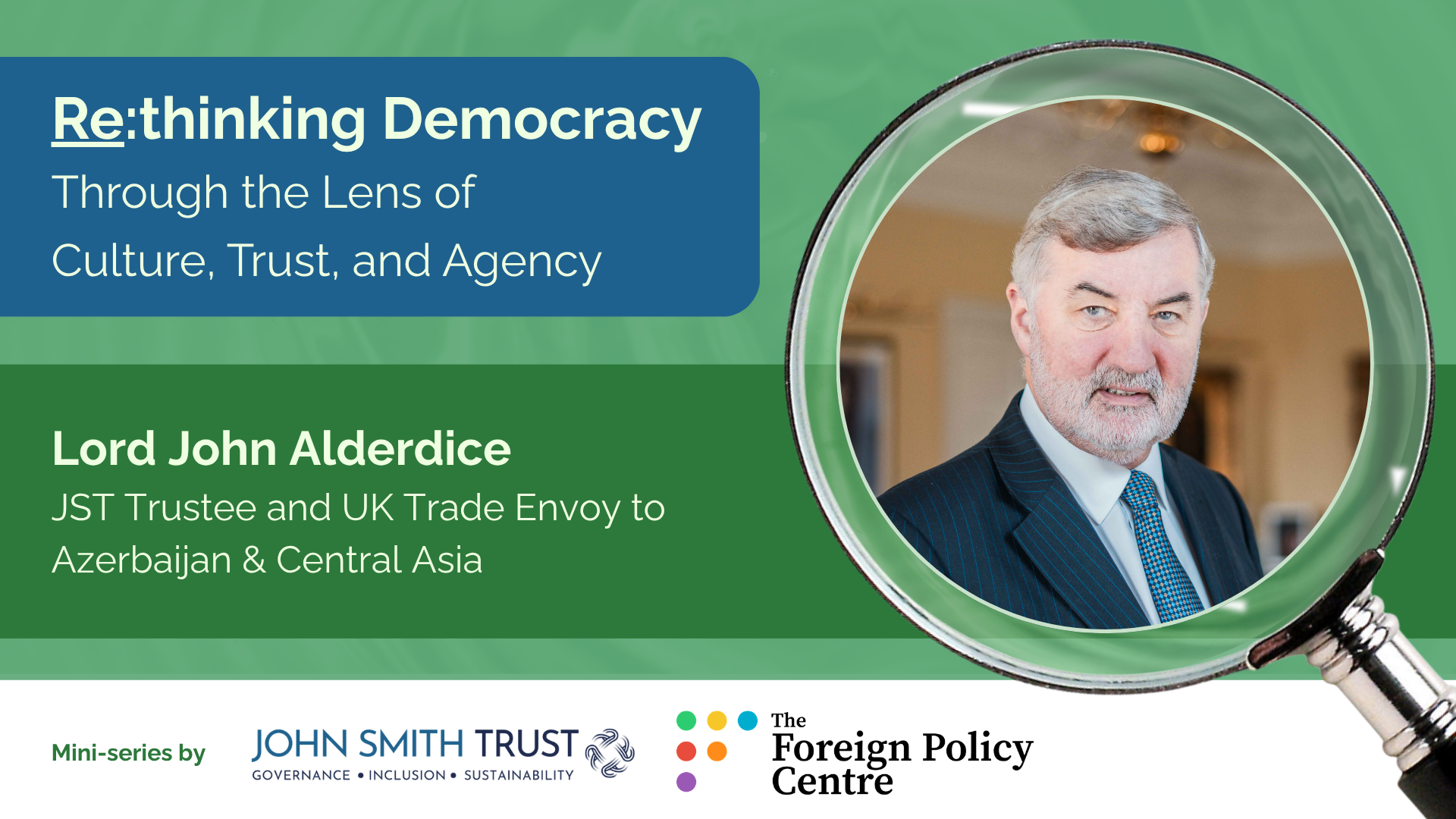
Article by Lord John Alderdice

July 13, 2026

How Can We Secure a Healthy Political and Social Order in a Fragmented World?

This article introduces a new series of short essays by JST Fellows – leaders working across Europe, the South Caucasus and Central Asia – exploring how societies can build the trust, agency and resilience needed for an era of fracture and flux.


We are living through a period of profound change and uncertainty. The erosion of the rules-based international order is causing instability on a global scale. Familiar frameworks and alliances, such as NATO, are no longer seen as providing security guarantees and a basis for shared understanding between states. The institutions that form the foundations of healthy democracy – the media, government, judiciary, and civil society – are not functioning in the way that they should. Media ecosystems no longer offer a shared factual reference point; governments struggle to deliver on the concerns of those they represent; judiciaries face growing pressure on their independence; and civil society is increasingly recast – through propaganda and hostile narratives – as a threat rather than a mechanism for accountability and civic action. It all adds up to a climate of social and political polarisation, creating distrust: in governments, in one another, and in democracy itself.


Added to this, the rapid development of artificial intelligence (AI) presents both opportunities and threats to how our societies and economies function. The political emergence of Gen Z, with youth-led protests in countries as disparate as Georgia, Nepal, Peru and Madagascar, is seen as evidence of growing frustration of young people with inequality, corruption, and the failure of existing institutions to respond to people’s concerns.[1]


These forces are not temporary disruptions but structural shifts reshaping political and social life. As such, they demand a new approach. This is not a time for nostalgia but for a collective rethink. Throughout this mini-series, our contributors delve into experiences of culture, trust and agency in their societies to explore a central question: What actions do we need to take and what stories must we ensure are heard, in order to shape and secure a healthy political and social order for the emerging global era?


In the articles that follow, JST Fellows explore this question in depth, offering diverse perspectives on what it means to rethink democracy through the lens of culture, trust, and agency. They look at opportunities and challenges emerging in media, technology, and information systems. They look at the power of identity and narratives, and their effect on social cohesion. And they look at agency and engagement, with a focus on young people.


These are not separate strands but interwoven dynamics that reinforce each other. Technology drives identity narratives. Identity politics shape how young people engage. And youth movements reshape information ecosystems.


Our Fellows, who come from countries across Europe, the South Caucasus and Central Asia, write about how these forces are playing out in the contexts in which they live and work. Questions of identity, culture and memory also run throughout the series. Olga Reka, from Ukraine, writes about the critical role of the arts, culture, and storytelling in creating meaning and agency as a precondition for democracy. Botagoz Zhumabekova examines the psychological foundations of democratic participation, arguing that active citizenship depends not only on political opportunity but also on people feeling safe enough to engage.


Trust – or its absence – is a common theme. Gulshat Ayydova and Aaron Campbell look at what we can learn from the way young people already engage in informal spaces to encourage meaningful participation and build trust in political processes. Joldoshbek Osmonov, from Kyrgyzstan, looks at the legitimacy crisis facing civil society and how organisations can rebuild trust in the face of propaganda that presents them as a threat. Farrukh Irnazarov explores the role of education in building trust in institutions and civic responsibility across Central Asia.


Looking at democratic renewal through a political lens, Palina Brodik reflects on the future of the Belarusian democratic movement, arguing that preserving collective memory while remaining adaptable is essential to sustaining political agency in exile.


The series concludes with Liliana Gutan’s reflection on Moldova, where democracy is measured not only by elections but by what institutions deliver between them. Her article brings together many of the themes explored throughout the series, arguing that democratic resilience ultimately depends on whether people experience dignity, security, and belonging in their everyday lives.


I hope these articles offer both provocation and possibility – showing what it looks like when values-driven leaders think seriously about the challenges of our time. They are part of the generation of diverse leaders needed in this moment, to shape a new order in which people can live in sustainable, peaceful and just societies.


Explore the full mini-series here.


John Alderdice, Professor, the Lord Alderdice. UK Trade Envoy to Azerbaijan & Central Asia and JST Trustee.


Disclaimer: The views expressed in this piece are those of the individual author and do not reflect the views of The Foreign Policy Centre.


[1] Daniel Boffey, ‘We are very strong’: Georgia’s gen Z drives protests against return to past, The Guardian, May 2024, https://www.theguardian.com/world/article/2024/may/16/georgia-gen-z-drives-protests-against-return-to-past-foreign-agents-law; Omkar Khandekar and Yam Kumari Kandel, How Gen Z-led protests put Nepal’s 1st female prime minister in power, NPR, September 2025, https://www.npr.org/2025/09/20/nx-s1-5545760/nepal-protests-gen-z; Marco Aquino and Alexander Villegas, Peru’s Gen Z rallies against President Boluarte, protesting over pensions and corruption, Reuters, September 2025, https://www.reuters.com/world/americas/perus-gen-z-rallies-against-president-boluarte-protesting-over-pensions-2025-09-27/; AP News, How Gen Z protesters brought down Madagascar’s government and now want the president out, October 2025, https://apnews.com/article/madagascar-protests-gen-z-rajoelina-e39ef11bd1f4a92f1f4b353900348219

Footnotes
    Related Articles

    Op-ed | Conflict Prevention Has Never Been More Important

    21/09/26
    Article by Camila Mateos Betancourt

    Long Read | The State of the UN

    07/09/26
    Article by Camila Mateos Betancourt

    Expert Briefing | ‘Rhetoric, Disorder, and the Crisis of Democracy’

    Article by Foreign Policy Centre

    July 7, 2026

    Download PDF
    Expert Briefing | ‘Rhetoric, Disorder, and the Crisis of Democracy’

    On 15th June 2026, the Foreign Policy Centre (FPC), the Global Disorder Group at City St. George’s, University of London (City), Shout Out UK (SOUK), and the All-Party Parliamentary Group (APPG) on Political and Media Literacy co-hosted a discussion examining the relationship between political rhetoric, information disorder, and democratic resilience.


    The event was chaired by Susan Coughtrie, FPC’s Executive Director, and brought together an expert panel including: Dr Sasikumar Sundaram, Senior Lecturer at the Department of International Politics at City; Professor Inderjeet Parmar, Professor of International Politics at City; Effie Webb, reporter on The Bureau of Investigative Journalism’s (TBIJ) Big Tech team; Amelia Fairney, SOUK’s Head of Strategy and Communications; and closing reflections from Matt Bishop MP, Chair of the APPG on Political and Media Literacy.


    The discussion explored how increasingly polarised political rhetoric, widening inequality, AI-driven misinformation, and fragmented media ecosystems are reshaping democratic discourse. Speakers examined the structural drivers of democratic strain, the role of technology in amplifying division, and practical approaches to strengthening political and media literacy.


    This briefing outlines key themes and insights from the parliamentary panel discussion:

    • Political rhetoric is a symptom of deeper structural transformations.
    • The concentration of economic and technological power is reshaping democratic discourse.
    • AI is accelerating existing vulnerabilities in the information ecosystem.
    • Political and media literacy must be treated as democratic infrastructure.
    • Strengthening democratic resilience requires systemic responses.


    To explore the key thematic takeaways from this expert discussion, you can download the full briefing here.


    “Democracy depends on freedom of speech, just as a democratic international order depends on the free flow of ideas and dialogue. Yet rhetoric has become a mainstay of power politics, displacing democratic dialogue. The rhetoric of civilizational glory, decline of the West, technological inevitability, and ideological discontentments among others reflect deeper inequalities between states, societies, actors, and institutions. Specifically, rising wealth inequalities and oligarchies have displaced state entrepreneurism aimed at public well being, which is driving rhetoric, disorder, and the crisis of democracy. Political and media literacy should therefore cultivate social purpose and critical judgment, asking not only how we communicate, but what kind of good life and accountabilities democratic societies ought to pursue.”

    Dr Sasikumar Sundaram


    “The challenges posed by misinformation, AI, and polarised rhetoric cannot be separated from the wider political economy of contemporary democracy. Extreme concentrations of economic and technological power have contributed to growing public distrust and of political exclusion and alienation. There is a widespread legitimacy crisis which fosters dangerous political movements. Political and media literacy are therefore not optional additions to democracy; they are vital democratic infrastructure. However, lasting democratic resilience will depend not only on helping citizens navigate information environments, but also on addressing the inequalities and imbalances of power that erode trust in the first place.”

    Professor Inderjeet Parmar


    Footnotes
      Related Articles

      Op-ed | Conflict Prevention Has Never Been More Important

      21/09/26
      Article by Camila Mateos Betancourt

      Long Read | The State of the UN

      07/09/26
      Article by Camila Mateos Betancourt

      Op-ed | A Camel Called the Investor Visa

      29/07/26
      Article by Foreign Policy Centre

      Op-ed | Armenia’s 2026 Parliamentary Election and the Future of the South Caucasus

      Article by James Stanley and Stefan Wolff

      June 4, 2026

      Op-ed | Armenia’s 2026 Parliamentary Election and the Future of the South Caucasus

      The upcoming Armenian elections are often framed as a choice between Russia and the West. In reality, the outcome will shape the country’s evolving relationship with Russia, the West, and its neighbours in the strategically important South Caucasus. This article forms part of the Foreign Policy Centre’s work on democracy and elections.


      In the shadow of war in the Middle East and Russia’s ongoing war waged against Ukraine, Armenia is heading into parliamentary elections on 7 June that will not only be critical for the country’s own direction but are also likely to have an impact for the wider South Caucasus region; itself of broader geopolitical significance at a crucial north-south and east-west crossroads.


      At stake is first of all the future of incumbent Prime Minister Nikol Pashinyan and his Civil Contract party government, which came to power in 2018 after the Velvet Revolution. The movement ousted the government of long-term leader Serzh Sarkisian, who had tried to prolong his stay in power “by moving from the office of president to that of prime minister”.[1] This triggered nation-wide protests propelling Pashinyan to the premiership that May and to electoral victory in December.


      Under Pashinyan, who was re-elected in 2021, Armenia has generally gravitated towards the European Union and away from Russia.[2] The latter is mostly a result of Russia’s failure to support Armenia during the Azerbaijani offensive in Nagorno-Karabakh in September 2023. The offensive resulted in Azerbaijan retaking control over the territory, which Armenia had illegally occupied since the first Karabakh war in the early 1990s – causing the displacement of around 100,000 Armenians from the region. These events unfolded in the presence of Russian ‘peacekeepers’ deployed under the terms of a cease fire agreement that ended the second Karabakh war in 2020.[3]


      Armenia’s election on 7 June therefore marks an important milestone not only domestically, but also for the wider region. Pashinyan campaigns on a platform “to reopen the country’s borders, lower dependence on Russia, and diversify its foreign and economic profile by normalising relations with traditional adversaries Azerbaijan and Turkey”.[4] If Pashinyan secures another term, this would give him the mandate to carry out a major shift in Armenia’s foreign policy orientation, and in this sense, the elections are also a “strategic referendum on Armenia’s geopolitical orientation.”[5]


      A popular endorsement of Pashinyan’s agenda would enable the continuation of three important trends in the region: first, the gradual emergence of regional ties between Georgia, Armenia and Azerbaijan; second, further declining Russian influence in a region where Moscow once was the undisputed hegemonic power; and third, a strengthening foothold for the EU and the US in a region that is a strategic land bridge towards Central Asia and China.


      The relationship between Moscow and Yerevan has steadily deteriorated over the past decade.[6] Since the beginning of Russia’s full-scale invasion of Ukraine in 2022, the weight and significance of Russia in the region has clearly diminished, but this has been a gradual process, rather than an abrupt rupture.[7]


      While Russia retains significant influence in Georgia, and the Georgian Dream government in Tbilisi is, for now, seemingly more closely aligned with Moscow than with either Brussels or Washington, it is also trying to balance its relationship more carefully between Russia and the West. This includes forging closer ties with Azerbaijan and Türkiye.[8] A victory for Pashinyan and his pro-Western agenda is likely to reinforce the trend towards the geopolitical re-orientation of the region, but this will remain a more careful multi-vector balancing act – with a mixture of political, economic, and cultural relationships to different actors outside the region – rather than a more one-directional pivot towards the West.[9]


      Although Russian influence may be declining, Moscow’s strategic interests in the South Caucasus, including in Armenia, remain strong. Russia is poised to use whatever tools and leverage it still has to prevent a further decline of its role as erstwhile regional hegemon, including by using cultural and religious channels of influence.[10] Economically, Russia remains Armenia’s most important trade partner and energy supplier.[11] Many opposition forces also remain closely aligned with Russia, including the Strong Armenia bloc led by billionaire Samvel Karapetyan.[12] Most Armenians favour diversification of relations rather than an outright rejection of Russia. According to recent polling, 43% see Moscow as the country’s most important partner, compared to 42% who think of Washington in that way, and 29% who think of Brussels.[13]


      The geopolitical dynamics in and around Armenia are therefore more complex and nuanced than the political rhetoric accompanying them. Yet, Russia’s capacity to exercise real influence effectively – and comparably to its previous dominance – is more constrained than ever. For example, Armenia has completely shifted away from Moscow as a security provider not only rhetorically but also in terms of who now supplies most of its arms: where Russia once accounted for over 90% of Armenia’s weapons purchases, its share has now dropped to somewhere between 5% and 10%, while France and India have become Armenia’s primary defence partners.[14]


      Armenia, thus, has not, and most likely will not, replace its close alignment with Russia with one that solely relies on the West. However, the change in foreign policy direction under Pashinyan has clearly shifted away from Russia and towards Brussels and Washington. On the European side, this has been reciprocated with the back-to-back European Political Community summit and first bilateral Armenia-EU summit held in Yerevan in May 2026.[15]


      The United States under President Donald Trump has also demonstrated a continuing interest in the region, which is most evident in Trump’s engagement in trying to broker a permanent peace agreement between Armenia and Azerbaijan. While this has yet to be achieved, several pieces of this puzzle have been put in place, including, most recently, a bilateral framework agreement on the Trump Route for International Peace and Prosperity (TRIPP).[16] Given the transactional and erratic nature of much of Trump’s foreign policy, this is unlikely to be a pivotal game changer either for peace between Armenia and Azerbaijan or for long-term US commitment to the country or the region, but it is part of the broader picture of the geopolitical importance of Armenia and the South Caucasus – and the opportunities that this may create for Pashinyan’s agenda.


      A careful balance therefore needs to be struck between dismissing Armenia’s parliamentary elections as the continuation of Armenia’s historic dependence on Russia, and exclusively reorienting strategic alignment in the much bigger geopolitical game surrounding the South Caucasus. The outcome of the elections will be important for the country’s direction, and speed of travel: whoever forms the next government in Yerevan will still have a range of pre-existing problems to resolve in an environment where external support is neither certain nor dependably benign.


      James Stanley is an M.A. International Relations student at the University of Birmingham. He has experience in policy research and public engagement, including contributing to the Helios exhibition at The Exchange. His research interests include Russia, European security, and the wider Eurasian region.


      Stefan Wolff is Senior Research Fellow at the Foreign Policy Centre and Professor of International Security in the Department of Political Science and International Studies, at the University of Birmingham. A political scientist by background, he specialises in the management of contemporary security challenges, especially in the prevention and settlement of ethnic conflicts, in post-conflict state-building in deeply divided and war-torn societies, and in contemporary geopolitics and great-power rivalry. Wolff has extensive expertise in the post-Soviet space and has also worked on a wide range of other conflicts elsewhere, including in the Middle East and North Africa, in Central Asia, and in sub-Saharan Africa. Wolff holds degrees from the University of Leipzig (Erstes Staatsexamen), the University of Cambridge (M.Phil.), and the LSE (Ph.D.).


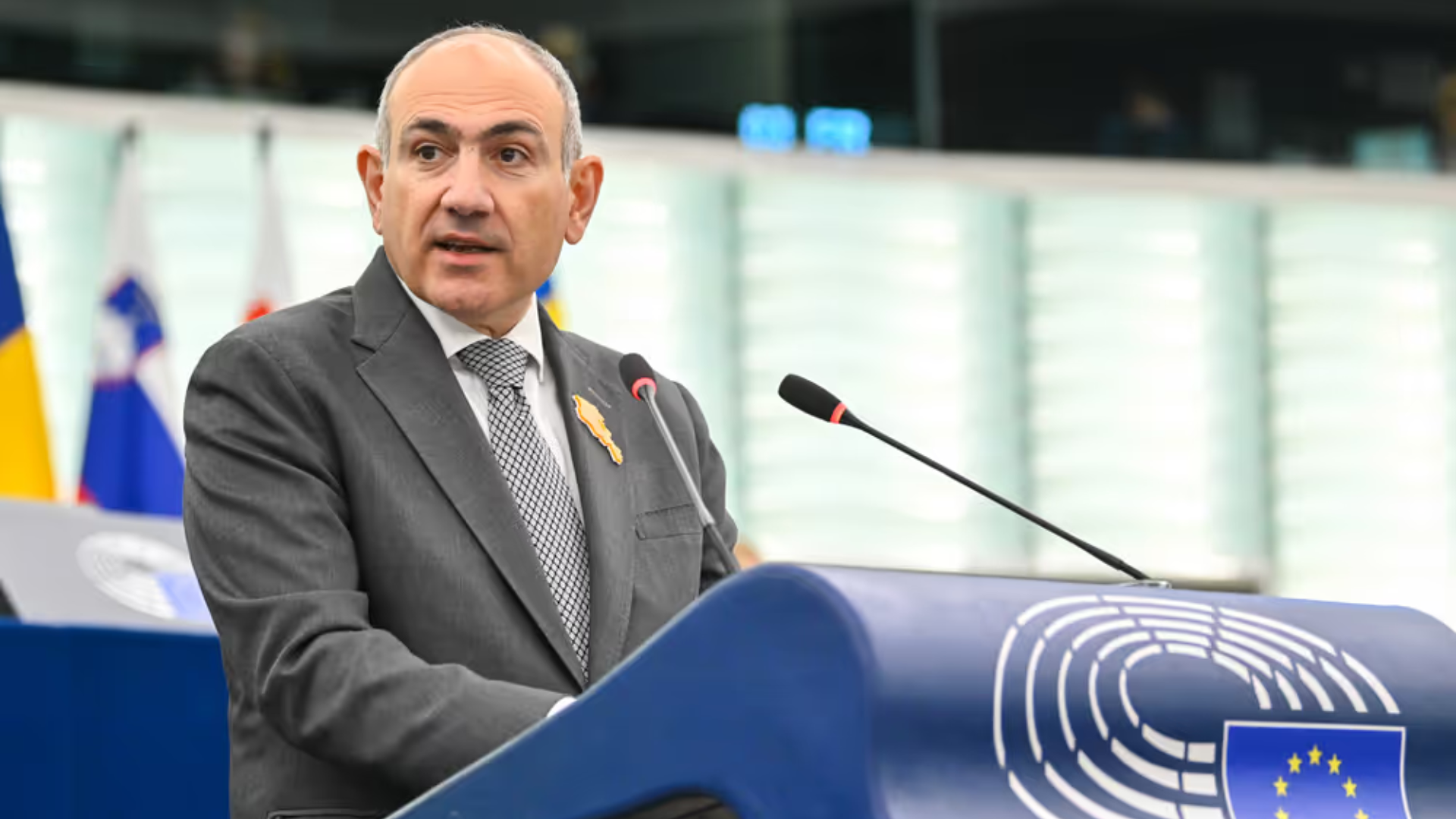
      Image: © European Union 2026 – Source : EP


      Disclaimer: The views expressed in this piece are those of the individual authors and do not reflect the views of The Foreign Policy Centre.


      [1] Miriam Lanskoy and Elspeth Suthers, Armenia’s Velvet Revolution. Journal of Democracy, April 2019, https://dx.doi.org/10.1353/jod.2019.0027

      [2] Council of the European Union, EU Relations with Armenia, https://www.consilium.europa.eu/en/policies/armenia/

      [3] Michael Ertl, Nagorno-Karabakh: Conflict between Azerbaijan and Armenians explained, BBC News,September 2023, https://www.bbc.co.uk/news/world-europe-66852070

      [4] Thomas de Waal, Armenia’s Election Is a Foreign Affair, Strategic Europe, November 2025, https://carnegieendowment.org/europe/strategic-europe/2025/11/armenias-election-is-a-foreign-affair

      [5] Robert Lansing Institute, Armenia’s Parliamentary Elections 2026: A Battle for the State’s Geopolitical Future,May 2026, https://lansinginstitute.org/2026/05/18/armenias-parliamentary-elections-2026-a-battle-for-the-states-geopolitical-future/

      [6] Ulviyya Asadzade, Russia’s Grip Weakens In The South Caucasus, Opening Doors To New Players, Radio Free Europe/Radio Liberty, July 2025, https://www.rferl.org/a/south-caucasus-russia-losing-influence-armenia-azerbaijan/33475018.html

      [7] Emil Avdaliani, “Russian Influence Drains Away in the South Caucasus”, Center for European Policy Analysis, 22 May 2026, https://cepa.org/article/russian-influence-drains-away-in-the-south-caucasus/

      [8] Mark Temnycky, Caught Between NATO And Russia, Georgia Turns To The South Caucasus, Forbes, December 2025, https://www.forbes.com/sites/marktemnycky/2025/12/13/caught-between-nato-and-russia-georgia-turns-to-the-south-caucasus/

      [9] Laurence Broers, Armenia’s election: Voters to decide on Pashinyan’s peace agenda”, Chatham House, May 2026, https://www.chathamhouse.org/2026/05/armenias-election-voters-decide-pashinyans-peace-agenda

      [10] Mikayel Zolyan, “Russia Won’t Give Up Its Influence in Armenia Without a Fight”, Carnegie Politika, 3 February 2026, https://carnegieendowment.org/russia-eurasia/politika/2026/01/armenia-russia-drifting-apart; Davit Gasparyan, Russian Religious Networks and Armenia’s Church-State Confrontation, Central Asia-Caucasus Institute, March 2026, https://substack.com/home/post/p-188618614

      [11] SpecialEurasia, Trade as Leverage: Russia’s Enduring Economic Role in Armenia, March 2026, https://www.specialeurasia.com/2026/03/11/trade-russia-armenia-leverage/

      [12] Sergey Kanev, Grabbing him by the ‘Beard’: The Insider identifies the FSB, GRU, and SVR agents Russia sent to Armenia to take on PM Nikol Pashinyan, The Insider, May 2026, https://theins.press/en/inv/292740

      [13] International Republican Institute, Public Opinion Survey: Residents of Armenia, February 2026, March 2026, https://www.iri.org/resources/public-opinion-survey-residents-of-armenia-february-2026/

      [14] Leonid Nersisyan and Sergei Melkonian, Escaping Russia’s Backyard: Armenia’s Strategic Defense Shift, War on the Rocks, November 2024, https://warontherocks.com/escaping-russias-backyard-armenias-strategic-defense-shift/

      [15] Rayhan Demytrie, European leaders converge on Armenia as Russia looks on, BBC News, May 2026, https://www.bbc.co.uk/news/articles/cgkp1124y3yo

      [16] Office of the Spokesperson, The United States and Armenia Announce the Trump Route for International Peace and Prosperity (TRIPP) Framework Agreement and Sign the Strategic Partnership Charter and Critical Minerals Memorandum of Understanding, US Department of State, May 2026, https://www.state.gov/releases/office-of-the-spokesperson/2026/05/the-united-states-and-armenia-announce-tripp-framwork-agreement-and-sign-the-strategic-partnership-charter-and-critical-minerals-mou/

      Footnotes
        Related Articles

        Op-ed | After the Locals: How Reform and the Greens Could Reshape Foreign Policy

        Article by Dr Thomas Martin

        May 12, 2026

        Op-ed | After the Locals: How Reform and the Greens Could Reshape Foreign Policy

        The local elections have shown how politically fragmented the UK has become in recent years. Both Labour and the Conservatives – the traditional parties of Government – have lost out. Reform UK are the big winners; and the Greens and Liberal Democrats are making gains, with the Greens continuing to make inroads into the UK’s urban centres.


        This turbulence is likely to have impacts on the UK’s foreign and national security politics. It has long been the case that foreign policy in the UK has been driven by a broad, cross-party consensus. Yet the emergence of Reform, and to a lesser extent the Greens, threatens to disrupt this.


        In my research, I have been looking into how people in the UK think about national security and foreign policy. What threats do they perceive as most significant? What makes them feel secure or insecure? And what are people’s national security priorities? My research (conducted at the end of 2025, prior to subsequent developments such as the war in Iran) shows that people’s perspectives on national security have become inseparable from their politics. National security is experienced and perceived differently within the UK – with those in different political communities believing very different things.


        A notable finding is that those saying they would vote Reform UK tended to feel less secure in the UK. It is perhaps unsurprising that a sense of insecurity might lead people to vote for parties outside of the mainstream. They identify migration as their biggest concern, and are much more likely to do so than others in the UK. Conversely, they are much less concerned than others about global instability and climate change. They are more likely to see the UK’s nuclear deterrent as a source of security, and at the time of polling, were the voting cohort who were much more likely to see the UK’s relationship to the US, and President Donald Trump himself, as contributing positively to UK security They felt that UK foreign and economic policies made them less secure, and are less likely to see the UN and NATO as sources of security. Their policy priorities tend to include reducing migration and increasing defence spending.


        Those intending to vote Green shared some similarities with potential Reform voters. They too, were less likely to feel that UK foreign and economic policies would make them secure. Yet their diagnosis of the problem was fundamentally different. Green voters were much less concerned about ‘traditional’ security threats such as terrorism, and instead placed greater emphasis on climate and economic insecurity. They were the voting cohort most concerned about President Trump and the UK’s relationship to the US, as well as the only cohort who overall felt that the UK’s nuclear deterrent made them less secure. They were notably the most opposed to increasing defence spending, instead, they would prioritise human security concerns, such as the economic and health insecurities of those living in the UK, alongside efforts to tackle climate change.


        Green voters nevertheless viewed the UK as a global actor, seeing the UN as a source of security, and the UK as playing a role in global peacebuilding. When asked about the UK Government’s policy towards Ukraine, they were the cohort most likely to state that we have a moral obligation to help Ukraine protect itself. This contrasts with Reform voters, who were most likely to state we should instead prioritise spending money on those in need at home.


        While these findings are not necessarily surprising, they are nevertheless important. In essence, they outline divergent paths for the UK’s national security and foreign policy that depart in significant ways from the current broad consensus.


        Reform voters tend to want a more insular and self-sufficient United Kingdom, with resources focused domestically rather than on involvement in foreign conflicts, while maintaining ties with the US and Trump.


        Green voters, by contrast, tend to be highly critical of the UK’s current tools of deterrence, such as defence spending and the nuclear deterrent, and instead see security as being produced through multilateralism, tackling the climate emergency, and investing in the human security needs of the UK.


        The recent Strategic Defence Review and National Security Strategy both called for a ‘national conversation’ on the future of UK defence and security.[1] My research highlights the challenges involved in that ambition.[2] As the two-party system fractures, questions around what the UK’s national security and foreign policy priorities should be are likely to become increasingly politicised. If the UK is going to achieve cross-societal solidarity in a more difficult and dangerous world – and convince the public to pay for coherent long-term responses to wide-ranging security challenges – it is going to need a much more expansive, democratic conversation about what security is for, who it is for, and how it should be delivered.


        Dr Thomas Martin is a Senior Lecturer in International Studies at The Open University. He is interested in national security politics, public opinion, and terrorism and counterterrorism.


        Disclaimer: The views expressed in this piece are those of the individual author and do not reflect the views of The Foreign Policy Centre.


        [1] Ministry of Defence, The Strategic Defence Review 2025 – Making Britain Safer: secure at home, strong abroad, June 2025 ,https://assets.publishing.service.gov.uk/media/683d89f181deb72cce2680a5/The_Strategic_Defence_Review_2025_-_Making_Britain_Safer_-_secure_at_home__strong_abroad.pdf

        [2] Dr Thomas Martin, Public Opinion & National Security in the UK: A People-Centred Approach, GCSJ Policy Report, Centre for Global Challenges and Social Justice, The Open University, https://fass.open.ac.uk/research/centres/GCSJ/policy-incubator

        Footnotes
          Related Articles

          Op-ed | Conflict Prevention Has Never Been More Important

          21/09/26
          Article by Camila Mateos Betancourt

          Op-ed | A Camel Called the Investor Visa

          29/07/26
          Article by Foreign Policy Centre

          Op-ed | International Aid as a Line of Defence: What Happens to Human Security Without Soft Power?

          Article by Anna Chernova

          April 24, 2026

          Op-ed | International Aid as a Line of Defence: What Happens to Human Security Without Soft Power?

          Securitisation of foreign (and domestic) policy is leading to a prioritisation of hard power approaches over civilian-led, soft power approaches, leaving many wondering about the future. As Europe rearms in response to the Russian threat to its collective security, and as the US proves itself an unreliable security partner, the UK finds itself repositioning within a fractured Euro-Atlantic alliance. This raises a broader question: how to de-securitise and return to “normal” politics?[1]


          If militarism shapes the next generation’s approach to public policy, what are the prospects for addressing the root causes of violence that are driving the skyrocketing humanitarian needs and record levels of forced displacement? The impact of armed conflict is increasingly more severe and violence is becoming the new normal, while political solutions are de-funded and militarised approaches take precedence.[2]


          As the UK and many other democratic states reduce investment into peacebuilding and other soft power efforts, resource constraints are affecting the very institutions that help prevent and mitigate conflict, support collective security, and promote diplomatic solutions.


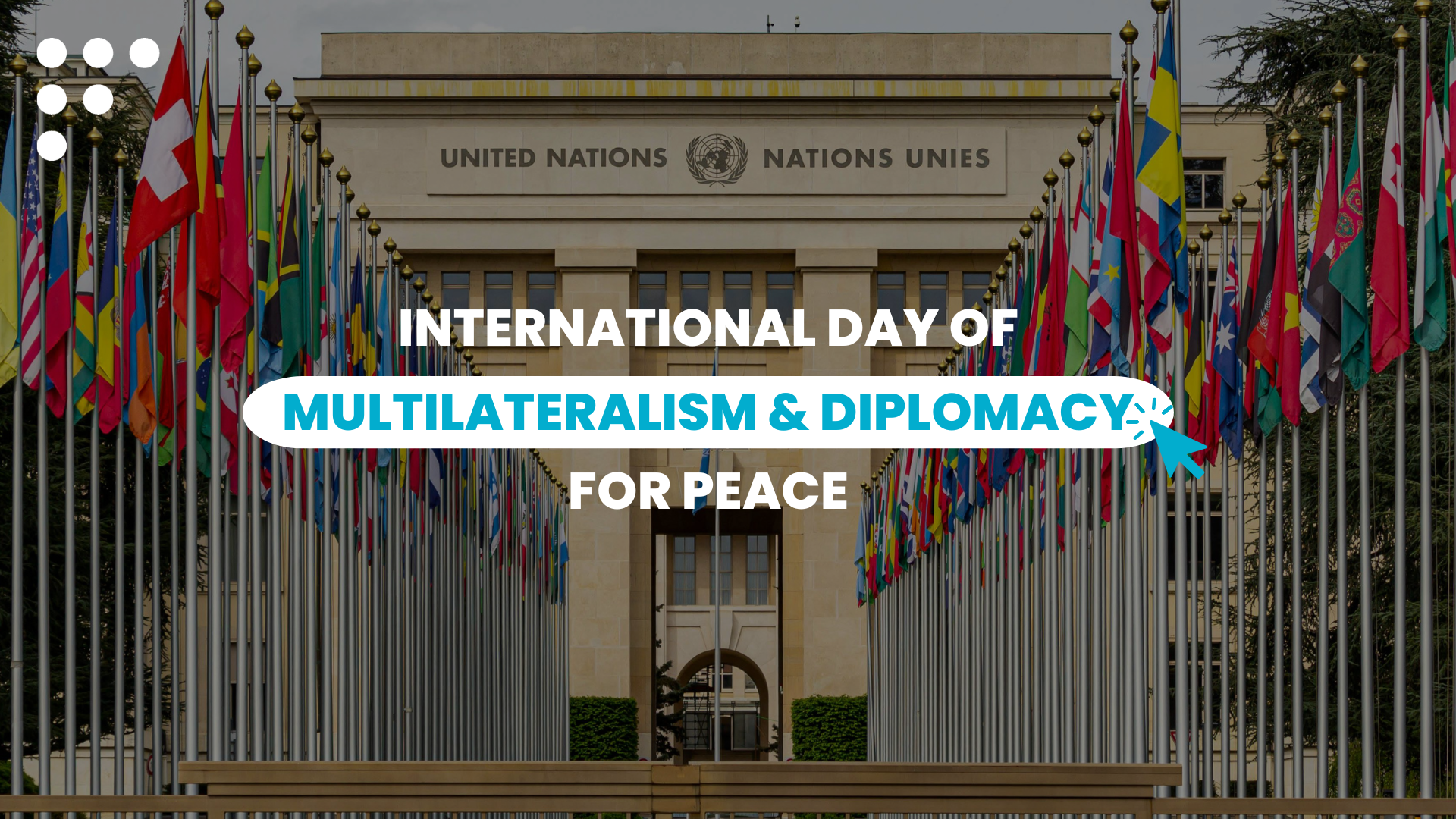
          Today, the international community marks the importance of multilateralism and diplomacy for peace.


          This takes place in a context of increasing global arms transfers, the proliferation of non-state armed groups, a resurgence of international armed conflicts, and systematic violations of the UN Charter across continents.[3] The low cost of entry into conflict for both state and non-state actors (in part enabled by globalisation, including access to technology, finance, and information), combined with social, economic and environmental factors, is undermining peace and other development goals. In a globalised order, military escalations in one region risk pushing millions into poverty, including in already conflict-affected contexts.[4]


          This dynamic is also unfolding alongside increasing inequalities and restrictions on civic space. Democratic backsliding has reduced agency for civil society, including humanitarian actors, women’s rights groups, LGBTQI+ movements and many others relying on a rights-based, rules-based international world order – particularly in contexts where the states are unwilling or unable to adhere to a viable social contract. Without multilateral spaces, civil society voices risk further marginalisation and isolation in the face of expanding authoritarianism.[5] Without civic space, the positive peace agenda is undermined.


          At the same time, significant reductions in aid are reshaping the UN and the multilateral architecture underpinning diplomacy for peace. Regional and global multilateral institutions and their civil society partners are grappling with a steadily increasing wave of violence and militarism with dwindling resources. The private sector, philanthropy, and new donors (e.g. in the Gulf) seem willing to meaningfully engage in ways that come close to replacing USAID’s contribution to pathways for peace, and the wider Nexus approach that brings together Humanitarian Development and Peace.[6]


          Human Development progress, particularly around Women, Peace and Security and gender justice, are stalling and regressing. These trends point to the continued importance of investment in soft power, including support for democracy, human rights, gender equality, the rule of law, and security sector reform. While the UK has historically positioned itself as a leader in this area and continues to recognise its importance, current policy choices suggest a growing gap between this recognition and the protection of funding for peacebuilding, development and humanitarian relief.[7]


          Where does this leave the UK role in the wider European neighbourhood and globally?

          A renewed focus on human security is needed. A purely state-centric approach, driven by self-interest among a growing number of undemocratic and unequal states is likely to lead to a more violent world order that will not yield the desired collective human development dividends. The UK’s historic role in championing human security approaches in institutions like NATO, and reflected in its approaches at the UN Security Council is more needed than ever.  In a shifting global order, where collaboration among middle powers around shared geographic or sectoral interests and values is becoming critical, the UK’s track record on human security lends value regionally and globally.


          The UK’s Ministry of Defence review of strategic trends flagged important human security dimensions, outlining risks around inequalities and other socio-economic factors that are likely to drive instability and diminish UK’s global role and its national security.[8] Yet despite the availability of such detailed and well-considered analysis,  foreign policy and national security decision-makers continue to defund the human security agenda, and inadvertently make the world (and the country) less safe.


          With civic space narrowing, citizens and states must be represented in regional and global dialogues, as well as in the institutions that underpin them. While the UK prides itself on a long historic track record of soft power, particularly through its academic institutions, think tanks, vibrant media, and civil society – these all require public investment. Without a well-resourced and stable civil service to help deliver on these objectives, this historic soft power asset risks weakening, with implications for peacebuilding outcomes.


          Holding the pen, and running out of paper: what happens to penholding at the UN Security Council?

          A major factor in the UK’s global security positioning is in the power of its permanent seat on the UN Security Council. The UK holds the pen on some key thematic and geographic files, convening peace and security conversations across a wide range of diverse states.


          For a post-Brexit middle-power, the UK retains an impressive amount of influence in these soft power spaces. However, much of the political credit goes to historic investments by DFID and  the Foreign Office in regional institutions such as the Organization for Security and Co-operation in Europe, the UN aid systems, and the Human Security agenda within NATO. Without sustained investment in these spaces, including in the civil service staff and structures, the UK’s soft power positioning will not be sustainable and it will not be able to build on its impressive historic track record of conflict resolution and peacebuilding through collective security and human security approaches.


          Without diplomacy and resources to civilian-led processes, military solutions will be increasingly seen as “normal” and viable. A growing share of the population, particularly younger generations coming of age in a renewed period of geopolitical competition, may come to view conflict as an inevitable feature of international relations. Without diplomacy, there will be more bullets.[9]


          Anna Chernova has a background in foreign policy and international development, with a focus on human rights, conflict resolution and humanitarian action. She has worked in diplomatic and non-governmental sectors in Eurasia and West Asia. At the Parliamentary Assembly of the Organization for Security and Co-operation in Europe, she led work on human rights and democracy, including parliamentary diplomacy efforts in conflict resolution, election observation and inquiries. Prior to joining the OSCE, Anna managed large-scale humanitarian operations in Russia’s North Caucasus at the close of the second Chechen war, and had worked on refugee issues with the UN in Bulgaria. Since 2014, she has been advising humanitarian organisations on foreign policy analysis, political risk and transnational threats. Her research and policy work focuses on gender and conflict, human security, counter-terrorism and human rights. She is particularly interested in conflict prevention and addressing root causes of violence driving humanitarian crises, such as extreme inequalities and authoritarianism. Anna’s academic background is in International Studies, Russia/Eastern Europe and Global Security. She is a US Fulbright Research and IREX Public Service Fellow, and is based in the UK.


          Disclaimer: The views expressed in this piece are those of the individual author and do not reflect the views of The Foreign Policy Centre.


          [1] Jonathan Luke Austin, Philippe Beaulieu-Brossard, “(De)securitisation dilemmas: Theorising the simultaneous enaction of securitisation and descuritisation,” Review of International Studies (2017) https://www.cambridge.org/core/journals/review-of-international-studies/article/desecuritisation-dilemmas-theorising-the-simultaneous-enaction-of-securitisation-and-desecuritisation/FE45D2C1D20870EC0E74DF54FA487C06

          [2] ACLED Conflict Watchlist 2026, “What is driving conflict today? A review of global trends,” (2025) https://acleddata.com/report/whats-driving-conflict-today-review-global-trends

          [3] ICRC https://www.icrc.org/sites/default/files/document/file_list/challenges-report_ihl-and-non-state-armed-groups.pdf; SIPRI, Trends in International Arms Transfers, 2025 https://www.sipri.org/publications/2026/sipri-fact-sheets/trends-international-arms-transfers-2025

          [4] UNDP, “Military escalation in the Middle East could push more than 30 million people into poverty worldwide,” (2026) https://www.undp.org/press-releases/military-escalation-middle-east-could-push-more-30-million-people-poverty-worldwide-un-development-programme-warns

          [5] Freedom House – Freedom in the World 2026, “The Growing Shadow of Autocracy,” https://freedomhouse.org/report/freedom-world/2026/growing-shadow-autocracy

          [6] World Bank Group, “Pathways for Peace: Inclusive Approaches to Preventing Violent Conflict,” (2018) https://www.worldbank.org/en/topic/fragilityconflictviolence/publication/pathways-for-peace-inclusive-approaches-to-preventing-violent-conflict

          [7] International Development Committee, “Future of UK aid and development assistance: interim report, Government Response,” https://committees.parliament.uk/publications/52758/documents/293937/default/

          [8] Ministry of Defence, “Global Strategic Trends out to 2055,” 7th edition (2024) https://assets.publishing.service.gov.uk/media/68dba439dadf7616351e4bf8/GST_7_Final_post_pic_change_WEB.pdf

          [9] Forbes, “Heed General Mattis’ Warning, D.C.: Less Diplomacy Means ‘More Ammunition’”, June 2025https://www.forbes.com/sites/andrewtisch/2025/06/18/heed-general-mattis-warning-dc-less-diplomacy-means-more-ammunition/

          Footnotes
            Related Articles

            Op-ed | Conflict Prevention Has Never Been More Important

            21/09/26
            Article by Camila Mateos Betancourt

            Op-ed | A Camel Called the Investor Visa

            29/07/26
            Article by Foreign Policy Centre

            Op-ed | World Health Day: Reimagining UK Leadership in Global Health

            Article by Mike Podmore and Molly Thompson

            April 7, 2026

            Op-ed | World Health Day: Reimagining UK Leadership in Global Health

            The 7 April marks World Health Day, with this year’s theme: “Together for Health. Stand with Science.” The United Kingdom has long excelled at the latter. As a global leader in scientific research and innovation, UK institutions continue to shape the trajectory of global health. Yet the “Together for Health” component is increasingly under strain. Recent reductions in Official Development Assistance (ODA), including cuts to key global health initiatives, risk undermining the partnerships, trust, and sustained engagement required to translate scientific excellence into equitable global impact.


            With only four years left until the 2030 deadline for the Sustainable Development Goals (SDGs), the global health agenda is at a critical inflection point.[1] Progress on many health indicators has stalled; fragile health systems are under strain; new shocks from climate-driven disease patterns to conflict; lingering effects of pandemic disruption; and donor withdrawals all threaten hard-won gains.


            While scientific discovery and innovation continue to expand what is possible in global health, progress on many health targets remains fragile, uneven, and deeply inequitable. This presents a defining opportunity for the United Kingdom to deepen its leadership in global health, not only by advancing science, but by ensuring it is mobilised through meaningful and sustained partnerships. If the UK chooses to bridge its world-leading scientific research and innovation with strategic political will and sustained financing, it can help advance health as a global public good whilst strengthening human rights. This choice is simply not possible if the UK continues to underappreciate and under-invest in its critical global role, impacting development co-operation for global progress and stability as well as reducing the benefit and soft power of the UK.


            UK Soft Power

            UK universities and research institutions remain one of the strongest examples of the UK’s soft power. UK science produces knowledge and innovation that directly shapes global health policy and practice.


            These contributions not only improve health outcomes but also build networks of trust and collaboration, reinforcing the UK’s credibility on the world stage. Yet research alone is not enough. Soft power is most effective when combined with policy influence, sustained financing, and strong partnerships.


            In this context, soft power must be understood not as a tool for advancing narrow national interest, but as a means of enabling collective progress through genuine equal global partnerships. At a time when global health is increasingly shaped by inward-looking, “country-first” approaches, the UK has an opportunity to model a different path, one where scientific leadership, financing, and partnerships are used to advance shared health outcomes and promote greater equity in global systems.


            The UK’s leadership in global health now means turning innovation into accessible, rights-based solutions for those who need them most in close and equal partnership with impacted countries and communities in the Global South. Solutions must be driven by the priorities and needs of those most affected by the issues they are seeking to address, and implementation must be locally led by all impacted stakeholders.


            Reforming the Global Health Architecture

            With multiple recent and upcoming processes taking place on global health architecture reform, from the Lusaka agenda (FGHI) to WHO GHA Reform and UN80 Process, the UK has an opportunity to influence decision-making, align international commitments with domestic expertise, and promote coordinated, sustainable approaches.[2]


            Engaging meaningfully across these parallel reform processes is essential to operationalising a truly “together” approach to global health, ensuring that the UK’s research, diplomacy, and investment are mutually reinforcing. By doing so, the UK can help shape a health architecture that is more equitable, resilient, and responsive to emerging challenges. Convening partners, as the UK will do at the May Global Partnerships Conference, is necessary but not sufficient.[3] True leadership requires sustained engagement and predictable investment; without continued ODA support, the UK risks weakening the very partnerships and multilateral mechanisms that underpin its credibility and impact in global health.


            The example of HIV as a model for International Development

            Looking back over the past two decades of development co-operation, the global HIV response stands out as one of the landmark demonstrations of progress. Among all the SDG targets, many which will not be met by 2030, the target to end AIDS as a public health threat is one of the few that is realistically achievable. As such, looking both back and forward, the HIV response is an arrowhead for demonstrating the power of international development and how it can be reframed and improved for the future.


            The HIV response demonstrates that measurable progress requires sustained investment, strong multilateral coordination, and community-led and human rights-centred approaches. Crucially, the HIV response shows what it means in practice to deliver health “together”; aligning global financing, scientific innovation, and community leadership to achieve shared outcomes. However, these principles, of course, extend beyond HIV, providing a framework for advancing broader health outcomes, including maternal and child health, pandemic preparedness, and universal health coverage as well as development at large.


            The UK’s domestic ambition to eliminate new HIV transmissions by 2030 is a critical target but one that cannot be separated from the global HIV response. By prioritising HIV within its domestic health agenda as well as its broader development agenda, the UK can show how targeted, evidence-based interventions can have mutually reinforcing benefits both at home and abroad.


            Leadership in practice

            Building on lessons from the HIV response, global health leadership is ultimately a matter of choice. This choice must be clearly articulated and framed within bold political commitment. The UK should build on its existing prioritisation of global health to build a strong shared commitment with partners to ending AIDS as a public health threat globally by 2030. This can be achieved through the upcoming UN High Level Meeting on HIV this year but also even through its leadership of the G20 in 2027


            In addition, the UK’s contributions to key global health institutions, such as The Global Fund to Fight AIDS, Tuberculosis and Malaria, Unitaid, UNAIDS, and the Robert Carr Fund, are essential for sustaining progress in the HIV response, supporting country transitions, and protecting vulnerable populations.[4] Strategic, predictable investment not only amplifies impact but also reinforces credibility, strengthens partnerships, and underpins the UK’s reputation as a reliable global health actor. Beyond the moral imperative, such investment reflects a commitment to shared global progress, while prevention and early intervention reduce long-term costs, strengthen economies, and protect societies against future health shocks.


            By pairing sustained investment with world-class research, the UK can translate funding and influence into tangible health outcomes. Its universities and research institutions, working alongside organisations such as Unitaid, help develop cutting-edge health technologies and interventions, ensuring scientific discoveries are transformed into practical solutions that reach the communities who need them most. This combination of research, innovation, and partnership bridges the gap between scientific breakthroughs and real-world impact, demonstrating leadership in action. By strengthening research capacity, linking evidence to policy and practice, and supporting country-led solutions, the UK can ensure that global health innovation is not only advanced, but shared.


            On World Health Day, the UK has a genuine opportunity not only to stand for science but to fully realise what it means to act together to shape the next phase of global health and accelerate progress toward concrete and achievable SDG targets, like ending AIDS as a public health threat. By sustaining investment, leveraging research excellence, and cultivating meaningful partnerships, including with Unitaid and other global health actors, the UK can strengthen health systems, advance equitable landmark outcomes on killer diseases like HIV, and cement its role as a principled and credible leader on the world stage.


            Mike Podmore is Chief Executive Officer of STOPAIDS, and Molly Thompson is a Senior Advocacy Advisor at STOPAIDS. STOPAIDS is an HIV, health and human rights advocacy network of civil society organisations working globally to end AIDS and realise all people’s right to health and wellbeing.


            Disclaimer: The views expressed in this piece are those of the individual author and do not reflect the views of The Foreign Policy Centre.


            [1] United Nations, 17 Goals, Sustainable Development, Department of Economic and Social Affairs, https://sdgs.un.org/goals

            [2] Future of Global Health Initiatives, The Lusaka Agenda: Conclusions of the Future of Global Health Initiatives Process, https://futureofghis.org/final-outputs/lusaka-agenda/; Director-General, Reform of the global health architecture and the UN80 Initiative, Executive Board, 158th session, Provisional agenda item 29.1, EB158/44, World Health Organization, December 2025, https://apps.who.int/gb/ebwha/pdf_files/EB158/B158_44-en.pdf

            [3] Foreign, Commonwealth & Development Office, The Rt Hon Yvette Cooper MP and The Rt Hon Baroness Chapman of Darlington, Global Partnerships Conference to build new international coalitions to tackle shared challenges, Press release, Gov.uk, February 2026, https://www.gov.uk/government/news/global-partnerships-conference-to-build-new-international-coalitions-to-tackle-shared-challenges

            [4] The Global Fund, https://www.theglobalfund.org/en/; Unitaid, https://unitaid.org/; UNAIDS, https://www.unaids.org/en; Robert Carr Fund, https://robertcarrfund.org/

            Footnotes
              Related Articles

              Op-ed | Conflict Prevention Has Never Been More Important

              21/09/26
              Article by Camila Mateos Betancourt

              Op-ed | A Camel Called the Investor Visa

              29/07/26
              Article by Foreign Policy Centre

              Op-ed | How the UK Fuels Child Undernutrition in Low- and Middle-Income Countries by Enabling Illicit Finance

              Article by Sunit Bagree

              Op-ed | How the UK Fuels Child Undernutrition in Low- and Middle-Income Countries by Enabling Illicit Finance

              This article is co-published by the Foreign Policy Centre and Bond


              Examining the devastating consequences of the UK’s complicity in trade-related illicit financial flows

              New research published by Results UK estimates that the countries most affected by child undernutrition experienced at least $309.8bn in trade-related illicit financial flows (IFFs) in 2024.[1] Trade-related IFFs, such as those generated through the manipulation of customs invoices, are considered a major component of IFFs as a whole, which the UN defines as ‘financial flows that are illicit in origin, transfer or use, that reflect an exchange of value and that cross country borders’.[2]


              The consequences for the public purse are punishing. The Results UK report, released to mark World Health Day (7 April), estimates that government revenue losses from trade-related IFFs amount to 86% of India’s and 65% of Nigeria’s domestically funded public health spending.[3] Tackling these and other IFFs would generate substantial funds for low- and middle-income countries, enabling them to address child undernutrition more effectively.


              There is much to be gained by tackling IFFs, but the British Government is failing to take action domestically to end the UK’s status as a hotbed for illicit finance. It is also doing far too little to support low- and middle-income countries directly, and at times even undermines them in global forums relating to IFFs.


              It is little wonder, then, that the UK is responsible for more tax losses linked to IFFsthan any other nation in the world.[4] The consequences of these losses are stark: they are estimated to cause 221,580 under-five deaths and 27,290 maternal deaths every decade.[5]


              Addressing the domestic issues that enable illicit finance

              First and foremost, the British Government must force the UK’s overseas territories and Crown dependencies to publish public registers of beneficial ownership. Such registers disclose the real people who ultimately own and control corporate vehicles.


              In recent years, despite promising greater transparency, most of these jurisdictions have done nothing. For example, by the third deadline of June 2025, imposed by the UK Parliament on the country’s 14 overseas territories to establish such registers, only Gibraltar and Montserrat had done so.[6] It is very odd that the Government continues to call for other overseas territories to establish these registers while simultaneously defending their clear lack of progress..[7]


              The UK also suffers from a massive enforcement gap in relation to professional enablers. These nefarious actors – including lawyers, accountants, estate agents and others – are central to driving IFFs. Last year, the Financial Conduct Authority (FCA) became the sole anti-money laundering supervisor for professional services. Campaigners welcomed this move as it promises more consistent levels of oversight and enforcement.[8] Nevertheless, the FCA needs to be adequately resourced if it is to combat the UK’s money laundering problem, estimated to be worth over £100bn a year.[9]


              Another important domestic reform needed relates to sharing information on foreign account holders. Although financial institutions in the UK collect data on all account holders, HM Revenue & Customs (HMRC) does not receive this data if countries do not implement the Organisation for Economic Co-operation and Development’s (OECD) burdensome standards on the automatic exchange of financial account information between governments.[10] These countries are almost exclusively low- or middle-income. If HMRC published this data, all such authorities could check whether their taxpayers’ reporting aligns with UK records.[11]


              Transforming international policy on illicit financial flows

              The British Government has provided direct support to some countries that receive development assistance to strengthen their laws, institutions and processes relating to IFFs. Yet recent cuts to official development assistance do not only risk that people in need of support – including children – will die (something the Government has admitted, albeit in incredibly anodyne language).[12] Beyond the humanitarian consequences, it also means that funding for work to counter IFFs is in danger.[13]


              Countries like Nigeria, for example, could benefit from investment in digital technologies for customs management and stronger inter-agency collaboration for enforcing laws relating to its own public beneficial ownership register.[14] But whether it will be able to secure such investment remains to be seen.


              The UK has also backed the Stolen Asset Recovery (StAR) Initiative, which seeks to both facilitate the systematic and timely return of corrupt funds and deny safe havens for the proceeds of corruption.[15] However, by the end of 2023, the UK had returned assets to overseas jurisdictions in only 26 out of 78 cases on the StAR database.[16] Clearly, the British Government needs to step up its efforts in this sphere, which should include working with low- and middle-income countries to address wider barriers to cross-border cooperation.


              The British Government’s performance on tackling IFFs at the global level is similarly dire. The UK was one of only nine states to vote against the UN General Assembly resolution initiating negotiations for a UN Framework Convention on International Tax Cooperation.[17] This treaty could see a legitimate and rights-based entity replace the inequitable and ineffective OECD as the premier global body for tax. It is essential that the Government reverses its position.


              Almost as bad is the fact that the British Government is uncritical of the Financial Action Task Force (FATF), a powerful intergovernmental organisation focusing on money laundering and terrorist financing. Unfortunately, the FATF is unrepresentative of low- and middle-income countries and thus unresponsive to their challenges.[18]


              FATF standards have actually been weaponised by some governments to attack human rights.[19] The FATF has also failed to tackle IFFs in high-income countries.[20] As the UK currently holds the FATF vice-presidency, it is well placed to address these concerns.


              No excuses for the damage illicit finance causes

              Of course, properly tackling IFFs would also generate huge sums for the UK, which could be invested in public services at home. That is before even considering the broader benefits of combatting illicit finance, from enhancing financial stability to weakening criminals and despots, which improves the security of all nations.[21] There are simply no excuses for the UK’s atrocious track record in this area.


              The British Government is set to host the Illicit Finance Summit on 23-24 June.[22] Thanks to lobbying by parliamentarians and civil society, what was originally a very narrow summit agenda has been expanded to include professional enablers and asset recovery – though there are concerns their inclusion is only superficial. Moreover, major issues like beneficial ownership and global governance are currently not on the agenda at all. The summit will fall well short of its ambitions if it does not confront the UK’s key position as a promoter of secrecy and facilitator of theft.


              The British Government likes to highlight the assistance it provides to the governments of low- and middle-income countries to increase their tax revenue collection.[23] But this assistance is completely undermined by the UK’s central role in enabling IFFs. It is akin to extending a hand of solidarity while delivering a knockout blow with the other fist.


              Sunit Bagree is a consultant at Results UK and a research associate in international development at the University of Sussex.


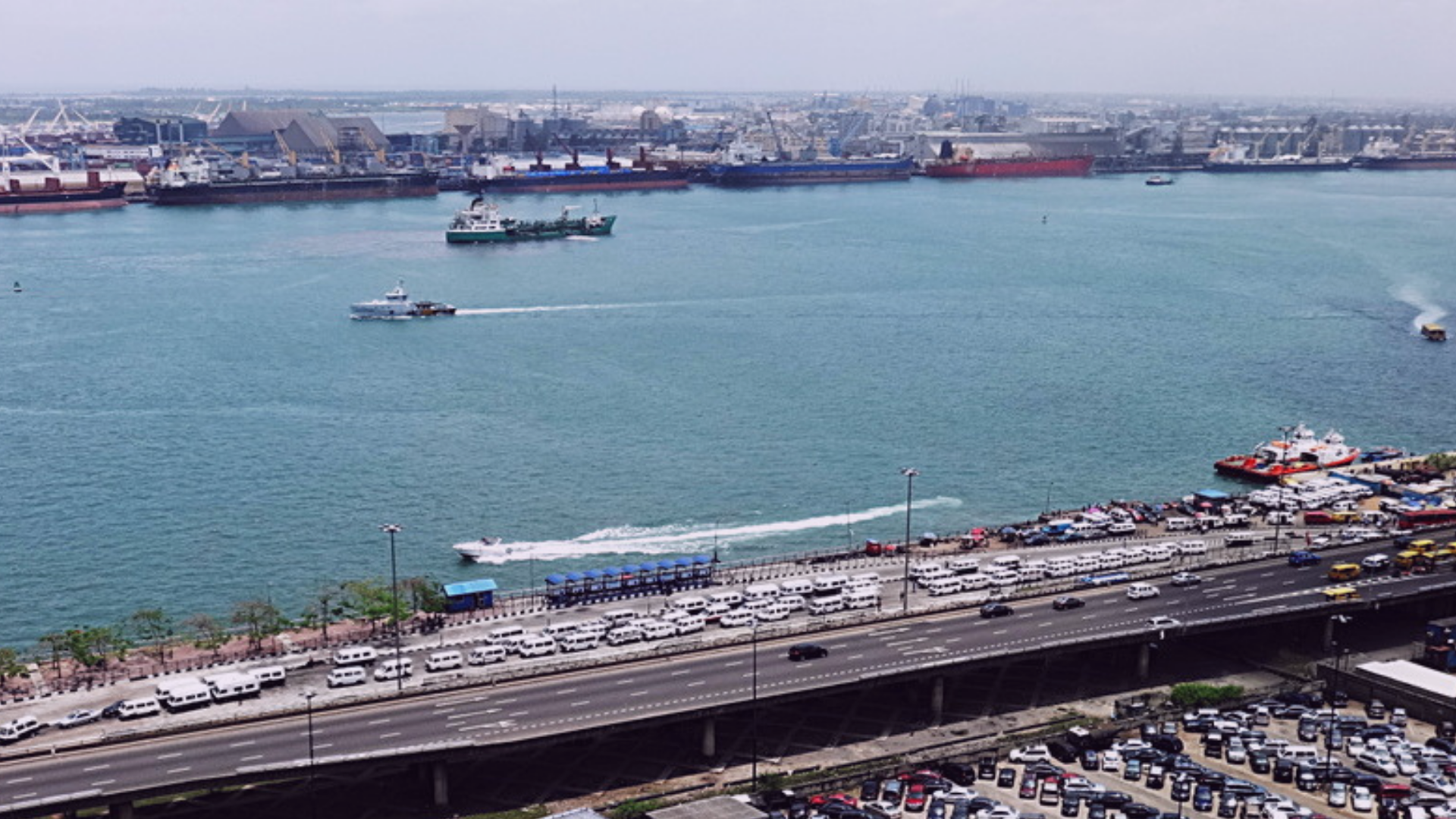
              Image: Apapa Port Complex in Lagos, Nigeria. Credit: Adedotun Ajibade.


              Disclaimer: The views expressed in this piece are those of the individual author and do not reflect the views of The Foreign Policy Centre.


              [1] Results UK, Press release: ‘Trading Hunger’ report, April 2026, https://results.org.uk/2026/04/07/press-release-trading-hunger-report/

              [2] Lourenco S. Paz, Measuring illicit financial flows: A gravity model approach to estimate international trade misinvoicing, Working Paper 2022/24, UNU-WIDER, 2022, https://www.wider.unu.edu/publication/measuring-illicit-financial-flows; UNCTAD and UNODC, Conceptual framework for the statistical measurement of illicit financial flows, October 2020, https://unctad.org/publication/conceptual-framework-statistical-measurement-illicit-financial-flows

              [3] Results UK, Press release: ‘Trading Hunger’ report, April 2026, https://results.org.uk/2026/04/07/press-release-trading-hunger-report/

              [4] Mark Bou Mansour, World losing half a trillion to tax abuse, largely due to 8 countries blocking UN tax reform, annual report finds, Tax Justice Network, November 2024, https://taxjustice.net/press/world-losing-half-a-trillion-to-tax-abuse-largely-due-to-8-countries-blocking-un-tax-reform-annual-report-finds/

              [5] University of St Andrews, University of Leicester, and GRADE (Government Revenue and Development Estimation), Policy Brief – #1.3 Case study – United Kingdom: The impact of the United Kingdom’s tax policies on determinants of Health and Mortality rates, https://medicine.st-andrews.ac.uk/grade/wp-content/uploads/sites/39/2021/04/United-Kingdom.pdf

              [6] Mike Lewis, The transparency registers that weren’t, Tax Watch, August 2025, https://www.taxwatchuk.org/the-transparency-registers-that-werent/

              [7] Stephen Doughty, Implementation of Beneficial Ownership Registers across the Overseas Territories, Statement made on 3 July 2025, UK Parliament, https://questions-statements.parliament.uk/written-statements/detail/2025-07-03/hcws774

              [8] Izzy Lewis, RELEASE: UKACC members welcome new anti-money laundering powers for regulator to crack down on enablers of crooks and kelptocrats, UK Anti-Corruption Coalition, October 2025, https://www.ukanticorruptioncoalition.org/work/release-ukacc-members-welcome-new-anti-money-laundering-powers-for-regulator-to-crack-down-on-enablers-of-crooks-and-kleptocrats

              [9] National Crime Agency, NCA and FCA publish priorities to combat biggest economic crime threats, July 2025, https://www.nationalcrimeagency.gov.uk/news/nca-and-fca-publish-priorities-to-combat-biggest-economic-crime-threats

              [10] Financial Transparency Coalition, Automatic Exchange of Information, https://financialtransparency.org/issues/automatic-tax-information-exchange/

              [11] Matt Colin, Two Ways the UK Could Fight Illicit Finance Just by Publising More Data, CGD, September 2024, https://www.cgdev.org/blog/two-ways-uk-could-fight-illicit-finance-just-publishing-more-data

              [12] Foreign, Commonwealth & Development Office, FCDO Official Development Assistance programme allocations 2025 to 2026: equality impact assessment, Impact Assessment, Gov.uk, July 2025, https://www.gov.uk/government/publications/fcdo-official-development-assistance-programme-allocations-2025-to-2026-equality-impact-assessment

              [13] Justin Moore, A strategic investment: The case for continuing governance and anti-corruption aid, Spotlight on Corruption, June 2025, https://www.spotlightcorruption.org/the-case-for-anti-corruption-aid/

              [14] The Nation, Weighing the strengths, weaknesses of Customs’ B’Odogwu, July 2025, https://thenationonlineng.net/weighing-the-strengths-weaknesses-of-customs-bodogwu/; Naheem Mustapha, Beneficial Ownership Disclosure Under Cama 2020: Balancing Transparency and Privacy, SSRN, June 2025, https://papers.ssrn.com/sol3/papers.cfm?abstract_id=5272728

              [15] Stolen Asset Recovery Initiative, https://star.worldbank.org/

              [16] Aine Clancy, The UK’s Relationship with Overseas Grand Corruption, Chapter 1, Unexplained Wealth Orders and the UK’s Anti-Corruption Regime, November 2025, https://academic.oup.com/book/61638/chapter/539761037?searchresult=1

              [17] United Nations Digital Library, Promotion of inclusive and effective international tax cooperation at the United Nations: resolution / adopted by the General Assembly, 2024, https://digitallibrary.un.org/record/4070016?ln=en

              [18] FACTI Panel, Financial Integrity for Sustainable Development, February 2021, https://factipanel.org/docpdfs/FACTI_Panel_Report.pdf

              [19] Georgios Pavlidis, The dark side of anti-money laundering: Mitigating the unintended consequences of FATF standards, Journal of Economic Criminology, Volume 2, December 2023, https://www.sciencedirect.com/science/article/pii/S2949791423000404

              [20] Eyes on FATF, https://eyesonfatf.org/

              [21] Kathy Nicolaou-Manias, Joelle Traore, and Amelie Ville, Fostering Change: Tax-motivated illicit financial flows, Study on Tax Motivated Illicit Financial Flow, 2024, https://www.eeas.europa.eu/sites/default/files/documents/2024/Study%20on%20Tax.pdf

              [22] Foreign, Commonwealth & Development Office and The Rt Hon Yvette Cooper MP, Illicit Finance Summit to build international coalition against dirty money, Press release, Gov.uk, December 2025, https://www.gov.uk/government/news/illicit-finance-summit-to-build-international-coalition-against-dirty-money

              [23] Tony Diver, UK to give poor countries advice instead of aid, The Telegraph, September 2025, https://www.telegraph.co.uk/politics/2025/09/21/uk-give-poor-countries-advice-instead-aid-jenny-chapman-fco/

              Footnotes
                Related Articles

                Op-ed | Conflict Prevention Has Never Been More Important

                21/09/26
                Article by Camila Mateos Betancourt

                Long Read | The State of the UN

                07/09/26
                Article by Camila Mateos Betancourt

                Op-ed | A Camel Called the Investor Visa

                29/07/26
                Article by Foreign Policy Centre

                Op-ed | A Symptom and a Catalyst: Orbán, Ukraine and the Institutional Remaking of the European Security Order

                Article by Mayank Sethi, Tamzin-Lily Trigg, and Stefan Wolff

                April 1, 2026

                Op-ed | A Symptom and a Catalyst: Orbán, Ukraine and the Institutional Remaking of the European Security Order

                When Hungarians head to the polls on 12th April 2026, there will be more at stake than whether the country’s current Prime Minister, Viktor Orbán, wins another term. The outcome of the elections will reverberate well beyond Hungary, particularly in relation to the dynamics surrounding the Russian war against Ukraine.[1] As a member of both the European Union (EU) and the North Atlantic Treaty Organisation (NATO), the next Hungarian government will have significant influence over a range of major, and closely connected geopolitical issues, especially Russia’s ongoing  war in Ukraine and the future of the transatlantic alliance.


                The current Hungarian government, and Orbán personally, have had strong pro-Kremlin leanings for years.[2] This has on many occasions delayed crucial EU support for Ukraine and the imposition of further sanctions on Russia.[3] At the time of writing, Hungary is holding up the disbursement of an already agreed €90 billion loan to Ukraine over a dispute about the delivery of Russian oil via the Druzhba pipeline that crosses Ukraine. The pipeline was damaged by a Russian strike in late January, and Hungary alleges that Ukraine is deliberately dragging its feet in repairing it.[4] EU leaders, in turn, have accused Hungary of blackmail over the issue; but despite their collective outrage, they have so far failed to release the funds because of the Hungarian veto, which Orbán has also turned into a key campaign issue.[5]


                While Orbán’s defeat could mean progress on this specific issue, it would hardly shift the dial on two other related issues. One is the Hungarian dependence on Russian oil: with the opposition candidate, and Orbán’s main challenger, Peter Magyar,  already stating  that there is no short-term alternative to the continued imports of Russian oil.[6] This potentially sets up a new battle between Budapest and Brussels, as the EU is firmly committed to ending Russian oil and gas imports.[7] A proposal to legally ban any imports of Russian oil into the EU may be currently on hold, but is hardly off the agenda.[8]


                The second issue is that this is not only a ‘Hungarian problem’ for the EU. Orbán’s stance on the loan to Ukraine has also been backed by the leaders of Slovakia (another Russian oil customer) and the Czech Republic, Robert Fico and Andrej Babiš respectively.[9] Both have expressed similar EU- and Ukraine-sceptic views as Orbán, and are likely to continue acting as a thorn in the side of other EU member states and the institutions in Brussels that are more supportive of Ukraine. They also share Orbán’s framing of Ukraine as an economic burden and a security threat, which has been one of the dominant themes of the Hungarian election campaign.[10]


                To complicate matters further, Magyar takes a very similar line and is likely to uphold Hungary’s veto on Ukraine’s fast-track EU accession.[11] Orbán’s election defeat, if it were to happen, might be welcomed in Brussels and other European capitals,–but as others have already commented Magyar’s “victory would not signal an overnight thaw in ties with Kyiv”[12]. Nor would it be an end to divisions within the EU over how to support Ukraine and deal with Russia.


                There is also an important transatlantic angle. Orbán has received strong endorsements from US President Donald Trump and his Secretary of State, Marco Rubio, with the latter telling him that “your success is our success”.[13] This underlines Orbán’s role in the broader global alliance of illiberal populists, ranging from Trump’s MAGA movement in the US to the far right parties the National Rally in France and the AfD in Germany, as well as the Hungarian Prime Minister’s  Czech and Slovak allies.[14] The concept  of ‘the West’ pushed by this alliance sits comfortably with Trump’s vision of a new world order, as articulated by Rubio at the Munich Security Conference earlier this year.[15] However, it is fundamentally at odds with the hitherto prevailing European vision of a rules-based international order.


                This order of old is now under threat from both Russia and the US. A win for Orbán would therefore clearly be as much a setback from a European perspective as it would be celebrated in the White House, as the endorsement of an illiberal Christian nationalist vision of the West. It would potentially boost other ideological allies of the Trump administration in upcoming elections elsewhere in Europe, such as in France and Poland next year (for which the Hungarian elections could be an important bellwether); as well as  further fragment and disrupt what is left of the once solid Euro-Atlantic alliance that underpinned the rules-based international order.


                Despite the setbacks that can be expected, a win for Orbán will not necessarily spell the complete end of a liberal democratic model anchored in the EU. Yet the space within which this model can survive will be a shrinking one in need of allies.


                The Hungarian elections crystallise both the fragility of the EU consensus on Ukraine and the rupture in the transatlantic alliance. Regardless of their outcome, they are a symptom of, and a catalyst for, the further acceleration of the institutional remaking of the European security order, especially around the core of EU and NATO members that have come together in the ‘coalition of the willing’. Such a core, once it has become more firmly established, could also become a more effective counterweight to the undoing of the rules-based order and the unmaking of the West. It would not preserve the liberal order that has already been eroded, but might anchor a new order that is less illiberal than that envisaged by Orbán and his transatlantic and Eurasian supporters and allies.


                Mayank Sethi is a final year Master’s student in International Relations from the University of Birmingham. Mayank has previously served with the Embassy of Denmark in India and other diplomatic missions in Delhi. He has been an active debater and has participated in national and international debates. He actively participates in forums and policy events in London which are hosted by Embassies and think tanks.


                Tamzin Trigg is an MA International Security student at the University of Birmingham, with a BA in Law with Humanities. She is currently a Research Intern at the State Capture Accountability Project.


                Stefan Wolff is Professor of International Security in the Department of Political Science and International Studies, at the University of Birmingham. A political scientist by background, he specialises in the management of contemporary security challenges, especially in the prevention and settlement of ethnic conflicts, in post-conflict state-building in deeply divided and war-torn societies, and in contemporary geopolitics and great-power rivalry. Wolff has extensive expertise in the post-Soviet space and has also worked on a wide range of other conflicts elsewhere, including in the Middle East and North Africa, in Central Asia, and in sub-Saharan Africa. Wolff holds degrees from the University of Leipzig (Erstes Staatsexamen), the University of Cambridge (M.Phil.), and the LSE (Ph.D.).


                Disclaimer: The views expressed in this piece are those of the individual authors and do not reflect the views of The Foreign Policy Centre.


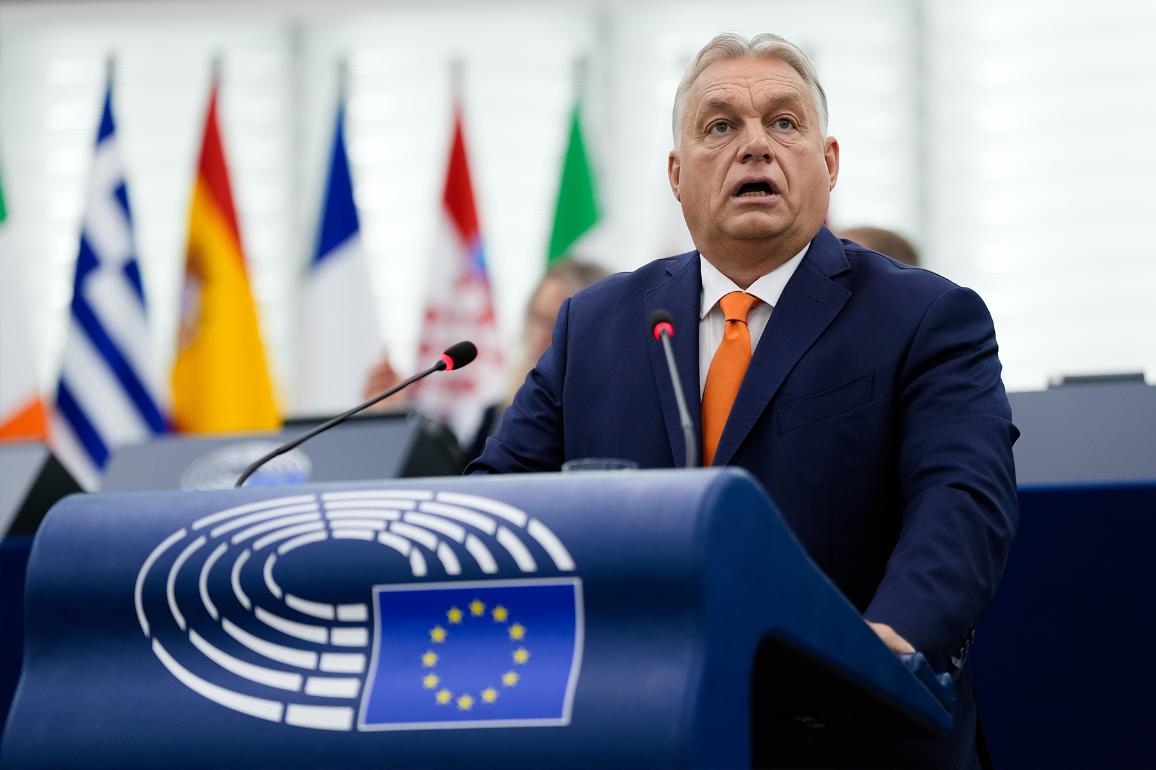
                Image: Prime Minister Viktor Orbán addresses the plenary on the priorities of the Hungarian Council Presidency © European Union 2024 – EP  


                [1] Donatienne Ruy and Maria Snegovaya, What Is at Stake in Hungary’s Election?, Center for Strategic and International Studies, March 2026, https://www.csis.org/analysis/what-stake-hungarys-election.

                [2] Jamie Dettmer, How Viktor Orbán became Vladimir Putin’s best friend in the EU, Politico, March 2026, https://www.politico.eu/article/viktor-orban-vladimir-putin-eu-hungary-russia/.

                [3] Richard Whitman and Stefan Wolff, EU agrees €90 billion loan to Ukraine, but squabbles over frozen Russian assets expose the bloc’s deep divisions, The Conversation, December 2025, https://theconversation.com/eu-agrees-90-billion-loan-to-ukraine-but-squabbles-over-frozen-russian-assets-expose-the-blocs-deep-divisions-272095.

                [4] Nick Thorpe and Vitaliy Shevchenko, Ukraine-Hungary oil pipeline row threatens EU loan, BBC, March 2026, https://www.bbc.co.uk/news/articles/cr71rkeg7xxo.

                [5] Alys Davies, Hungary’s Orbán accused of disloyalty and blackmail over Ukraine loan veto, BBC, March 2026, https://www.bbc.co.uk/news/articles/cq6jrvgqeejo.

                [6] Pablo Gorondi and Ray Furlong, Hungarian Opposition Leader Magyar Tells RFE/RL No Quick End To Russian Energy Imports, RFE/RL, October 2025, https://www.rferl.org/a/hungarian-opposition-leader-magyar-russia-energy-imports/33559475.html

                [7] European Council, Timeline – Ending Russian energy imports, https://www.consilium.europa.eu/en/policies/ending-russian-energy-imports/timeline-ending-russian-energy-imports/.

                [8] Lili Bayer and Kate Abnett, EU to propose permanent ban on Russian oil after Hungary election, document shows, Reuters, February 2026, https://www.reuters.com/business/energy/eu-propose-permanent-ban-russian-oil-after-hungary-election-document-shows-2026-02-24/ and Kate Abnett, EU delays April 15 proposal to permanently ban Russian oil imports, Reuters, March 2026, https://www.reuters.com/business/eu-delays-april-15-proposal-permanently-ban-russian-oil-imports-2026-03-24/

                [9] Alex Stezhensky, Hungary, Czech Republic, Slovakia refuse to join €90 billion EU loan program for Ukraine, The New Voice of Ukraine, December 2025, https://english.nv.ua/nation/hungary-czech-republic-slovakia-opt-out-of-eu-s-90b-loan-plan-to-support-ukraine-in-2026-2027-50569771.html

                [10] Flora Garamvolgyi and Ashifa Kassam, Hungary’s Viktor Orbán seeking to drum up votes by doing down Ukraine, The Guardian, February 2026, https://www.theguardian.com/world/2026/feb/27/hungarys-viktor-orban-seeking-to-drum-up-votes-by-doing-down-ukraine. Hungarian (and/or Czech and Slovak) opposition to Ukrainian EU accession could also impede the prospects of neighbouring Moldova and cause further delay to EU enlargement in the Western Balkans.

                [11] Bohdan Babaiev, Orbán’s top rival shocks with mixed message on Ukraine and Russia, RBC Ukraine, July 2025, https://newsukraine.rbc.ua/news/orb-n-s-top-rival-shocks-with-mixed-message-1753550644.html

                [12] Max Griera, Zoya Sheftalovich and Nicholas Vinocur, Orbán’s gambit to revive his election hopes: A battle against the EU, Politico, February 2026, https://www.politico.eu/article/hungary-viktor-orban-gambit-to-revive-his-election-hopes-a-battle-against-the-eu/

                [13] Ellen O’Regan, “Trump affirms ‘total endorsement’ of Orbán ahead of Hungary election”, Politico, 21 February 2026, https://www.politico.eu/article/trump-affirms-complete-and-total-endorsement-of-orban-amid-clash-with-eu/; Milena Wälde, “‘Golden age’: Rubio praises Orbán ahead of Hungary election”, Reuters, 16 February 2026, https://www.politico.eu/article/golden-age-marco-rubio-gushes-over-viktor-orban-pre-election-meeting/

                [14] Gellert Tamas, The global authoritarian right loves Orbán – and that could cost him in Hungary’s elections, The Guardian, March 2026, https://www.theguardian.com/commentisfree/2026/mar/24/viktor-orban-hungary-elections-global-authoritarian-right.

                [15] Felicia Schwartz, Rubio calls on Europe to join Trump’s new world order, Politico,  February 2026, https://www.politico.eu/article/marco-rubio-msc-europe-we-belong-together/

                Footnotes
                  Related Articles

                  Op-ed | Conflict Prevention Has Never Been More Important

                  21/09/26
                  Article by Camila Mateos Betancourt

                  Op-ed | A Camel Called the Investor Visa

                  29/07/26
                  Article by Foreign Policy Centre

                  Op-ed | Standing up to the Kremlin: Lessons from Moldova for Defeating Russian Election Interference

                  Article by Philip J. Javens and Stefan Wolff

                  March 25, 2026

                  Op-ed | Standing up to the Kremlin: Lessons from Moldova for Defeating Russian Election Interference

                  Foreign Information Manipulation and Interference (FIMI) has been high on the agenda of liberal democracies for years.[1] The European External Action Service has just published its fourth annual report on the subject, and the UK Parliament’s Foreign Affairs Committee is due to release the result of its inquiry into disinformation on 27 March.[2] The threat to liberal democracies from hostile autocrats is real and growing, but democratic states and societies are far from defenceless, as the case of one Europe’s smallest and poorest countries vividly illustrates.


                  On 28 September 2025, Moldova held its parliamentary elections in the shadow of the Russian war against Ukraine while itself being under relentless attack from the Kremlin – not by enemy soldiers, missiles, and drones, but by an army of chatbots, covert operators, and willing proxies.[3] The choice before the Moldovan people was simple: to cast their vote in support of EU integration or to back parties prioritising an amicable relationship with Russia.


                  In many ways it was a litmus test: could a small nation of 2.5 million people preserve the integrity of its electoral process in the face of Russia’s hybrid war? With President Maia Sandu’s pro-European Party of Action and Solidarity (PAS) winning more than 50% of the votes, Moldova has become a success story for how a democracy under attack by a revanchist Russia can protect its sovereignty.[4]  This offers vital lessons for the broader efforts to make liberal democracies more resilient and future-proof them against autocratic subversion.


                  It is estimated that the Russian regime spent between €100m and €200m in its effort to undermine Moldova’s parliamentary elections.[5] These resources were partly poured into a multi-layered interference architecture that applied behavioural insights, cross-platform access, and AI-generated content to coordinate its reach. Pro-Russian narratives were pushed on a myriad of fabricated websites employing deepfakes designed to mimic legitimate news media from across the world to create the illusion of an international consensus aligned to the Kremlin’s interests.


                  In one instance, hackers impersonated the Council of Europe and “fabricated a story portraying Moldova as condemned by European institutions”. Moldova’s government institutions were also targeted by hackers “to gain access to sensitive information”.[6] Evidence has shown that “on TikTok alone, 1,347 fake accounts generated 42 million interactions”, demonstrating Russia’s capability to bypass traditional media to push pro-Kremlin content directly to its targets.[7]


                  Importantly, Russia’s manipulation campaign was not just limited to the digital realm. Another significant part of the resources that Moscow mobilised was used to transfer money to around 130,000 Moldovan citizens in an attempt to buy their votes. Cash from Russia was also used to bribe groups and individuals to provoke disorder and spread fear, including through bomb threats against polling stations for expatriates living in Italy, Romania, Spain and America.[8] The Kremlin even went as far as enlisting Moldovan Orthodox priests to post pro-Russian and anti-European messages on dedicated Telegram channels.[9]


                  Russia’s attempts to manipulate the outcome of the elections clearly presented a grave threat to Moldova’s future. Yet despite the vast resources the Kremlin mobilised and the sophistication of its tools, Moldova’s democracy proved remarkably resilient, offering important insights for strategies to counter election interference.


                  Moldova’s political leaders, civil society, and European partners pushed back against Russia’s unprecedented influence operation on multiple fronts. To pre-empt election fraud, strategic communication was harnessed.[10] Russian lies were proactively exposed in government communications. Senior EU officials and leaders from key member states visited the country in the run-up to the elections to show their support against Russian manipulation efforts.[11]


                  Moldova’s government not only worked to denounce Russian interference, but the country’s law enforcement agencies also made sustained and successful efforts to dismantle Russia’s vote-buying network. This included banning two political parties from participating in the elections, issuing 25,000 fines to individuals who sold their votes and a large-scale public awareness campaign that exposed this fraud through billboards, traditional media and social media.[12]


                  Moldovan authorities also coordinated closely with EU neighbours to defend itself against Russian cyberattacks by sharing intelligence and collaborating on investigations. This cross-border cooperation successfully thwarted major disruptions in the days leading up to the vote and thus protected the integrity of Moldova’s electoral process.[13]


                  EU institutions and Moldovan NGOs also worked together to highlight the benefits of integration into the EU in a campaign that engaged with celebrities, popular magazines, artists and religious leaders to promote EU values and partnership. By focusing on the concrete results of the EU-funded and Moldovan government-led “European Village” programme, that supports local community projects from building playgrounds to repairing roads, the message to voters was very clear: Moldovans will benefit much more from a future inside the EU rather than outside of it.[14] Ultimately, this too, was a message that cut through the fog of Russian disinformation.


                  Moldova’s experience highlights both the vulnerability of countries in the crosshairs of Russian interference campaigns and the limits that these campaigns have in the face of well-conceived and coordinated resistance. Russia’s well-funded and highly sophisticated ‘hybrid war’ poses a real threat. However, European democracies are not defenceless. As the Moldovan experience demonstrates, they can emerge more resilient from the fight back against foreign information manipulation and election interference.


                  Philip J. Javens is a Writer/Producer currently studying an MA in International Relations at the University of Birmingham. His professional credits include working on documentaries for Amazon Prime, Netflix, Apple TV+ and more.


                  Stefan Wolff is Professor of International Security in the Department of Political Science and International Studies, at the University of Birmingham. A political scientist by background, he specialises in the management of contemporary security challenges, especially in the prevention and settlement of ethnic conflicts, in post-conflict state-building in deeply divided and war-torn societies, and in contemporary geopolitics and great-power rivalry. Wolff has extensive expertise in the post-Soviet space and has also worked on a wide range of other conflicts elsewhere, including in the Middle East and North Africa, in Central Asia, and in sub-Saharan Africa. Wolff holds degrees from the University of Leipzig (Erstes Staatsexamen), the University of Cambridge (M.Phil.), and the LSE (Ph.D.).


                  Disclaimer: The views expressed in this piece are those of the individual authors and do not reflect the views of The Foreign Policy Centre.


                  [1] Camilla Cavendish, Britain must be more vigilant to the risk of sabotage by hostile states, Financial Times, March 2026, https://www.ft.com/content/720543d3-bdfc-4008-b64d-5a8abbdb0d61

                  [2] European External Action Service, 4th EEAS Annual Report on Foreign Information Manipulation and Interference Threats, March 2026, https://www.eeas.europa.eu/eeas/4th-eeas-annual-report-foreign-information-manipulation-and-interference-threats_en; UK Parliament, Foreign Affairs Committee, Disinformation diplomacy: How malign actors are seeking to undermine democracy, https://committees.parliament.uk/work/8818/disinformation-diplomacy-how-malign-actors-are-seeking-to-undermine-democracy/

                  [3] David Smith, Engineering Doubt: Cyber Operations and Hybrid Election Interference in Moldova’s 2025 Elections, Watchdog.md, 2026, https://watchdog.md/wp-content/uploads/2026/03/Cyberwarfare-Moldovas-Elections.pdf

                  [4] Stefan Wolff, Moldova: pro‑EU party wins majority in election dominated by Russian interference, The Conversation, September 2025, https://theconversation.com/moldova-pro-eu-party-wins-majority-in-election-dominated-by-russian-interference-266179

                  [5] The Stimson Center relies on an interview with a senior Moldovan police officer by the Moldovan state information agency for the lower figure, while the Economist cites the Moldovan government as a source of the higher figure. See Sanda Sandu, Moldova’s 2025 Elections: A Test Case for Russia’s Hybrid Warfare, September 2025, https://www.stimson.org/2025/moldovas-2025-elections-a-test-case-for-russias-hybrid-warfare/; Moldpres, Interview with the Head of the General Inspectorate of Police, March 2026, https://www.moldpres.md/rom/interviuri/interviu-moldpres-seful-igp-viorel-cernauteanu-federatia-rusa-fie-prin-interpusul-ilan-sor-fie-prin-alte-elemente-va-incerca-continuu-sa-gaseasca-anumiti-algoritmi-prin-care-sa-ajunga-la-dezordini-si-destabilizari; The Economist, Moldova defies Russia by re-electing its pro-European government, September 2025, https://www.economist.com/europe/2025/09/29/moldova-defies-russia-by-re-electing-its-pro-european-government

                  [6] Ancuța (Anna) Hansen, How Russia tried to manipulate Moldova’s election – and what it reveals, The Interpreter, November 2025, https://www.lowyinstitute.org/the-interpreter/how-russia-tried-manipulate-moldova-s-election-what-it-reveals

                  [7] Ibid.

                  [8] Leo Litra and Gabrielė Valodskaitė, From success to strategy: Three lessons from Moldova’s election, https://ecfr.eu/article/from-success-to-strategy-three-lessons-from-moldovas-election; RFE/RL’s Moldovan Service, EU Monitoring Threats To Moldova’s Elections Amid Alleged Russian Plot To Train Provocateurs In Serbia, September 2025, https://www.rferl.org/a/moldova-russia-parliamentary-election-arrests-provocation-marta-kos-european-commission-maia-sandu/33539603.html; Anna Hansen, How Russia tried to manipulate Moldova’s election, November 2025. https://www.lowyinstitute.org/the-interpreter/how-russia-tried-manipulate-moldova-s-election-what-it-reveals

                  [9]  Christian Lowe, Polina Nikolskaya and Anton Zverev, Holy war: How Russia recruited Orthodox priests to sway Moldova’s voters, Reuters, September 2025, https://www.reuters.com/investigations/holy-war-how-russia-recruited-orthodox-priests-sway-moldovas-voters-2025-09-26/

                  [10] The Moldovan parliament established a Centre for Strategic Communication and Countering Disinformation in 2023. See Parliament of Moldova, ‘Law No. 242 of 31 July 2023’, https://www.legis.md/cautare/getResults?doc_id=138661&lang=ro. The website of the Centre for Strategic Communication and Countering Disinformation can be accessed here: https://stratcom.md/en/

                  [11] EU Neighbours East, European Commissioner for Enlargement Marta Kos visits Moldova, September 2025, https://euneighbourseast.eu/news/latest-news/european-commissioner-for-enlargement-marta-kos-visits-moldova/; Alexander Tanas and Andreas Rinke, German, Polish, French leaders visit Moldova in pre-election show of support for pro-EU president, Reuters, August 2025, https://www.reuters.com/world/german-polish-french-leaders-visit-moldova-pre-election-show-support-pro-eu-2025-08-27/

                  [12] Abbey Fenbert, Moldova bans 2 pro-Russian parties on eve of key election, The Kyiv Independent, September 2025, https://kyivindependent.com/moldova-bans-2-pro-russian-parties-on-eve-of-key-election/; Reuters, Moldova bans another pro-Russian party from Sunday’s vote, September 2025, https://www.reuters.com/world/moldova-bans-another-pro-russian-party-sundays-vote-2025-09-27/; ECFR, Leo Litra and Gabriele Valodskaitė, From success to strategy, October 2025, https://ecfr.eu/article/from-success-to-strategy-three-lessons-from-moldovas-election

                  [13] Ibid.

                  [14] The European Village programme (https://www.euvillages.eu/) is a long-standing Europe-wide EU initiative to invest in local rural infrastructure. Its most recent renewal in Moldova was announced in April 2025. See Moldpres, Two new EU-funded government programs launched in Moldova, April 2025, https://www.moldpres.md/eng/economy/two-new-government-programs-launched-in-moldova-funded-by-european-sources; Leo Litra and Gabrielė Valodskaitė, From success to strategy: Three lessons from Moldova’s election, October 2025, https://ecfr.eu/article/from-success-to-strategy-three-lessons-from-moldovas-election

                  Footnotes
                    Related Articles

                    Op-ed | AI in Authoritarian States: Why Belarus’s AI Push Is a Human Rights Problem – and What International Actors Must Do

                    Article by Maria Guryeva

                    March 16, 2026

                    Op-ed | AI in Authoritarian States: Why Belarus’s AI Push Is a Human Rights Problem – and What International Actors Must Do

                    Authoritarian governments are racing to adopt artificial intelligence (AI). While they court international legitimacy by invoking “ethics,” “safety,” and “standards,” the real-world context is marked by systematic violations of human rights. Belarus is a telling example. The authorities are expanding AI across public life, promising high standards on privacy, security and non-discrimination. However, in a political environment marked by authoritarian practices that criminalise dissent and dismantle independent oversight, AI tools are far more likely to reinforce repression than to deliver public benefit.


                    In this setting, where checks and balances are weak or absent, high-risk technologies tend to be repurposed for control; therefore, it will be the political environment in Belarus that will ultimately shape the real-world use of any advanced data system.


                    Currently, Belarus’s civic space remains severely restricted. Independent media operate in exile; peaceful critics face prosecution under expansive “extremism” provisions. Civil society organisations have been dismantled, and people are jailed for what they say online and for content found on their phones.[1] In the past five years, the Human Rights Centre Viasna has documented over 100,000 cases of repression. Currently, over 1,000 political prisoners remain in detention.[2]


                    Given longstanding concerns around the Belarusian government’s unlawful use of surveillance to curb dissent, their efforts to expand into ever-more invasive AI tech should raise serious red flags.[3]


                    Since 2020, Belarusian authorities have used the Kipod, a software developed by Synesis, a local company, previously sanctioned by the EU. This tool allows searching and analysing video, including facial recognition and license plate recognition. The system was allegedly used to identify participants of the anti-government protests of 2020.[4] Additionally, government smart-city programmes emphasise Internet of Things (IoT) sensors, machine learning and large video-surveillance deployments (“Videokontrol”), tying multiple municipal systems together—traffic, environment, utilities, public security. Authorities say pilot projects are live across multiple cities.[5]


                    Officials in Belarus also indicated AI will be implemented “in nearly all sectors of the economy by 2040,” with new management-system standards and a model CIS law prepared by a Belarusian state institute. Authorities also plan to draft a national AI strategy and begin implementing an AI law this year.[6]


                    Public discourse surrounding AI development in Belarus – including policy drafts and official statements – frequently references human rights, safety, and non-discrimination. International actors can be tempted to take this at face value, engaging to “help get AI right.”


                    For example, Belarusian AI ambitions are being supported by the United Nations Development Programme (UNDP). As the agency’s official webpage said: “With the support of the [UNDP], Belarus is developing a comprehensive regulatory framework for artificial intelligence, drawing on international best practices and rooting in national priorities”.[7] This particular programme is focusing on helping countries achieve Sustainable Development Goals, and ensure that society will benefit from the implementation of AI. While these goals are important, the overall approach in Belarus omits the human rights situation and allows risks related to expanded surveillance capabilities and more efficient mechanisms of control.


                    Technologies such as facial recognition in public spaces, large-scale data fusion, and automated content moderation can be framed as service improvements or safety measures while, in practice, they are deterring assembly, suppressing pluralism and entrenching information control. Without independent regulators, free media and access to remedy, harmful or discriminatory outcomes will rarely be detected—let alone corrected.


                    Another red flag indicating the Belarusian AI approach is not grounded in human rights standards is the fact that Belarus is developing its strategy in alignment with Russia’s push for what it describes as “sovereign” AI, based on “traditional values”.[8] It implies shared technical baselines, legislation and institutional cooperation, including with law enforcement. Independent research has already shown high levels of political censorship in leading Russian-language models, which routinely avoid sensitive topics or reproduce official state narratives.[9]If Belarus builds its AI infrastructure on this foundation, censorship is not an aberration to be discovered later; it is a design parameter.


                    Any AI system that affects people’s rights must be governed by safeguards capable of preventing abuses of human rights law and data protection standards. It should meet basic tests: legality, necessity and proportionality; transparency and traceability; independent oversight; and accessible avenues to contest and remedy harmful decisions. Technologies that are incompatible with human rights protections, such as facial recognition technology, should be banned. While these safeguards represent minimum requirements in any context, in Belarus they are particularly critical.


                    The principle is simple: no context-blind engagement. Before funding, advising or lending credibility, responsible actors should conduct and publish human-rights impact assessments that map realistic end-uses, end-users and risks. Where risks cannot be mitigated in practice, the appropriate decision is to refrain from engagement.


                    The approaches and methodologies for such assessment are being actively developed. For example, the Council of Europe created the Methodology for the Risk and Impact Assessment of Artificial Intelligence Systems from the Point of View of Human Rights, Democracy and the Rule of Law (HUDERIA Methodology).


                    While supporting governments that impose authoritarian practices with the development of AI systems is risky, there are important ways international actors can help.


                    Instead of enabling state-driven AI development in authoritarian contexts, international actors should prioritise support that strengthens civil society resilience and protects vulnerable communities. This could include funding digital security for at-risk groups and independent media; documentation of abuses and strategic litigation; invest in a broader education process focusing on media literacy; as well as in access-to-rights services that help people navigate legal aid, asylum or social services without exposing sensitive data to hostile networks.


                    Maria Guryeva is Senior Regional Campaigner, Eastern Europe Central Asia Region, Amnesty International.


                    Disclaimer: The views expressed in this piece are those of the individual author and do not reflect the views of The Foreign Policy Centre.


                    [1]  Amnesty International, Belarus 2024, https://www.amnesty.org/en/location/europe-and-central-asia/eastern-europe-and-central-asia/belarus/report-belarus

                    [2] Viasna, Human rights situation in Belarus, August 2025, https://spring96.org/en/news/118626

                    [3] Amnesty International, Belarus: “It’s enough for people to feel it exists”: Civil society, secrecy and surveillance in Belarus, July 2016, https://www.amnesty.org/en/documents/eur49/4306/2016/en/

                    [4] Katya Pivcevic, Police facial recognition use in Belarus, Greece, Myanmar raises rights, data privacy concerns, Biometric Update, March 2021, https://www.biometricupdate.com/202103/police-facial-recognition-use-in-belarus-greece-myanmar-raises-rights-data-privacy-concern

                    [5] Ministry of Communications and Informatization of the Republic of Belarus, Smart cities of Belarus, https://www.mpt.gov.by/ru/smart-cities-belarus?

                    [6] Belta, Belarus to implement AI in nearly all sectors of economy by 2040, June 2025, https://eng.belta.by/economics/view/belarus-to-implement-ai-in-nearly-all-sectors-of-economy-by-2040-169138-2025; Interparliamentary Assembly of Member Nations of the Commonwealth of Independent States, Model codes and laws, https://iacis.ru/baza_dokumentov/modelnie_zakonodatelnie_akti_i_rekomendatcii_mpa_sng/modelnie_kodeksi_i_zakoni

                    [7] UNDP, How Belarus is improving the quality of AI services, July 2025, https://www.undp.org/belarus/news/how-belarus-improving-quality-ai-services

                    [8] Belta, State Secretary of the Union of Soviet Socialist Republics: Our task is to develop our own AI based on traditional values, July 2025, https://belta.by/society/view/gossekretar-sg-nasha-zadacha-razrabotat-sobstvennyj-ii-osnovannyj-na-traditsionnyh-tsennostjah-725782-2025

                    [9] Meduza, ‘Commitment to providing facts without bias’ Russia’s flagship AI chatbot recommends reading Meduza and other ‘foreign agents’, August 2025, https://meduza.io/en/feature/2025/08/27/commitment-to-providing-facts-without-bias?

                    Footnotes
                      Related Articles

                       Join our mailing list 

                      Keep informed about events, articles & latest publications from Foreign Policy Centre

                      JOIN